







Abstract
Many children with behavior problems perform poorly academically and can disrupt regular classroom instruction. Although good classroom management strategies can benefit children with behavior problems, it is not clear whether these students need consistently good classroom management across the early elementary school years to improve their academic performance. The current study examined the quality of classroom management from kindergarten through third grade experienced by children who were rated as exhibiting symptoms of emotional and behavioral disorders (EBD) in the classroom to understand the cumulative effects in relationship to third-grade reading performance. Results indicated that higher-quality classroom management in the first 4 years of school was significantly related to higher scores on standardized measures of reading achievement in third grade for boys exhibiting EBD, but girls exhibiting EBD appeared unaffected by the quality of teachers’ classroom management during this same time. Practitioner implications and future research needs are discussed.
Young children who are identified as having emotional or behavioral disorders (EBD) typically display disruptive externalizing behaviors (e.g., aggression, noncompliance), internalizing behaviors (e.g., depression, anxiety), or both in the classroom (Walker, Ramsey, & Gresham, 2004). These children are often identified by classroom teachers as exhibiting challenging behaviors that may prevent them from learning as fast or as well as their peers (Sutherland & Oswald, 2005). Fewer than 1% of children are identified for special education services for EBD under the label of emotional disturbance (ED), but even the most conservative estimates suggest an actual prevalence rate of 12%, meaning many students with EBD never receive special education services for ED (Forness, Freeman, Paparella, Kauffman, & Walker, 2012). Despite the lack of specific special education identification, many of the children in early elementary school manifesting symptoms of EBD have been found to adjust poorly to the classroom environment and to have low reading achievement in school (Scruggs & Mastropieri, 2010). In this article, we use the term with EBD to refer to students receiving special education services under the label of ED and the term at risk for EBD to describe students exhibiting symptoms of EBD who were not receiving special education services for ED.
The emotional and behavioral transactions taking place between teachers and students throughout the school day are largely influenced by teachers’ classroom management actions. Positive interactions between teachers and students are especially important in early elementary school and may promote better long-term outcomes for children’s academic and behavioral trajectories (O’Connor, Dearing, & Collins, 2011). These interactions, or proximal processes, have been identified as the drivers of development and are most effective when exhibited over an extended period of time (Bronfenbrenner & Morris, 2006). Unfortunately, young children with or at risk for EBD are likely to experience negative interactions with teachers that can lead to difficult adjustment to the classroom, fewer learning opportunities, and poorer academic performance (Gest, Madill, Zadzora, Miller, & Rodkin, 2014; Sutherland & Oswald, 2005).
Given the known struggles in classroom management for teachers working with students with or at risk for EBD, it should not be surprising that many teachers resort to punitive and reactive practices, which then leads to less time for learning.
Much has been written about the disproportionately high rates of disciplinary sanctions for African American students compared to their Caucasian peers (Skiba et al., 2011), including those with EBD (Krezmien, Leone, & Achilles, 2006), but there is also an issue of gender discrepancies. Between the ages of 6 and 12, boys are identified with EBD four times as often as girls (U.S. Department of Education, 2005), likely because boys exhibit more externalizing, disruptive behaviors in the classroom and girls exhibit more internalizing, nondisruptive behaviors (Walker et al., 2004). The vast majority of research on students with or at risk for EBD has focused solely on boys (Rice & Yen, 2010), even though both internalizing and externalizing behaviors are known to have negative influences on learning in school (Cullinan, Osborne, & Epstein, 2004; Walker et al., 2004). Although there is very little known on gender differences in teachers’ classroom management interactions with children with EBD, research suggests boys are more often the target of teachers’ attention for both positive and negative reasons (e.g., praise, reprimands; Beaman, Wheldall, & Kemp, 2006). Teachers of students with EBD have reported a preference for working with boys, often finding it more difficult to help girls with EBD (Rice, Merves, & Srsic, 2008).
The definition of classroom management has evolved from a narrow focus on discipline to one that includes all teacher actions inside and outside of direct instruction that set the stage for both academic and social-emotional learning to occur (Emmer & Sabornie, 2015). Teachers are expected to be emotionally supportive and to create an organized and efficient classroom to support students’ achievement (Nie & Lau, 2009). Unfortunately, despite the availability of evidence-based classroom management strategies in the research literature (Simonsen, Fairbanks, Briesch, Myers, & Sugai, 2008), teacher preparation programs often have difficulties incorporating this content into their curriculum (Gimbert, 2008). The typical student-teaching experience begins well beyond the beginning of the school year—the most important time for establishing one’s classroom management system (Capizzi, 2009)—and does not provide an opportunity for teacher candidates to develop their own management practices (Dyal & Sewell, 2002). One of the biggest concerns reported from teachers at the end of the student-teaching experience has been knowledge and experience in classroom management (He & Cooper, 2011).
Given the known struggles in classroom management for teachers working with students with or at risk for EBD (Farmer, Reinke, & Brooks, 2014), it should not be surprising that many teachers resort to punitive and reactive practices (e.g., removal from the class), which then leads to less time for learning. On the other hand, teachers who create classrooms characterized by high-quality emotional and organizational supports may help children with or at risk for EBD do better academically by improving their on-task behaviors and engagement (Fruth, 2014; Kortering & Christenson, 2009). Unfortunately, little is known about how high-quality classroom management across multiple years in early elementary school might help young children with or at risk for EBD perform better academically.
Due to a lack of school, family, and community resources, young children living in rural poverty are especially at risk for reading struggles (Tichnor-Wagner, Garwood, Bratsch-Hines, & Vernon-Feagans, 2016) and behavior problems (Sulik, Blair, Mills-Koonce, Berry, & Greenberg, 2015). Results from the National Assessment of Education Progress (2015) suggested 64% of rural students scored at less-than-proficient levels on fourth-grade reading achievement. Further, researchers have found that, more than their urban or suburban counterparts, rural parents feel their children are entering kindergarten without adequate behavioral skills (Sheridan, Koziol Clarke, Rispoli, & Coutts, 2014). Thus, this study examined how good classroom management over as many as 4 years in early elementary school might promote better reading achievement in third grade for rural boys and girls with or at risk for EBD.
Reading Struggles Among Students With or at Risk for EBD
High-quality classroom management, which includes a focus on both behavioral control and teachers’ warmth and care for students (Nie & Lau, 2009), has been identified as a necessary component for effective elementary reading instruction (Brownell et al., 2009; Roskos & Neuman, 2012). When examining school outcomes for students with or at risk for EBD, researchers have often focused on behavioral outcomes rather than academic achievement (Nelson, Benner, & Boharty, 2014; Wills, Kamps, Abbott, Bannister, & Kauffman, 2010), despite the fact that children with behavior problems perform more poorly in reading proficiency than their peers (Rivera, Al Otaiba, & Koorland, 2006; Sutherland, Lewis-Palmer, Stichter, & Morgan, 2008). Some have found students with EBD perform only slightly better in reading than students with learning disabilities (LD; Wei, Blackorby, & Schiller, 2011), whereas others have found students with LD outperform students with EBD in reading achievement (Anderson, Kutash, & Duchnowski, 2001). Students with or at risk for EBD are often one or more grade levels behind their peers in reading proficiency (Reid, Gonzalez, Nordness, Trout, & Epstein, 2004), and their struggles tend to worsen over time (Nelson, Benner, Lane, & Smith, 2004).
Most elementary students who struggle with reading respond positively to early intervention, but students with or at risk for EBD appear to profit less from these supports (Al Otaiba & Fuchs, 2002; Benner, Nelson, Ralston, & Mooney, 2010). The pattern of unresponsiveness may be the result of negative behaviors that interfere with learning, including inattention and difficult teacher–child conflicts (Miles & Stipek 2006). Externalizing behaviors are especially problematic for classroom teachers who do not have good classroom management skills and may lead to the use of ineffective punitive and inconsistent behavior management strategies (Freiberg, Huzinec, & Templeton, 2009). Prolonged struggles with reading can also lead to the expression of internalizing disorders (e.g., emotional distress) because students begin to attribute their struggles to their own failure as a student (Ackerman, Izard, Kobak, Brown, & Smith, 2007). High-quality classroom supports early in children’s schooling may help improve students’ reading achievement by creating more time for learning and increasing student engagement (Farley, Torres, Wailehua, & Cook, 2012; Fruth, 2014), thereby counteracting the negative effects of behavior problems on reading achievement.
Classroom Supports for Students With or at Risk for EBD
Recent intervention work has found that teachers can promote desirable behaviors among children with or at risk for EBD through positive classroom supports. In a study with 10 second-grade students at risk for EBD, researchers implemented a daily report card where children could earn points for positive behaviors, such as displaying respect for others and problem solving on their own (Fairbanks, Sugai, Guardino, & Lathrop, 2007). Results suggested a significant reduction in the incidence of problem behaviors of four of the students (50% female). Four (50% female) of the remaining six students received additional support in the form of individualized, function-based intervention, and their behaviors were found to improve. A separate study with children at risk for EBD in kindergarten through third grade found that the frequency of teachers’ behavior-specific praise was associated with a decrease in disruptive behaviors and an increase in on-task behaviors for the 23 target students (Reinke et al., 2014).
In a study with nine special education teachers working with students with EBD, teachers’ evidence-based classroom management practices (e.g., clearly stating expectations, posting classroom rules) were positively related to students’ on-task behavior, although results were not differentiated by student gender (Jeffrey, McCurdy, Ewing, & Polis, 2009). Finally, a recent randomized controlled trial of the First Step to Success (FSS) behavior management program involving 286 early elementary students demonstrated significant improvements in students’ attention and engagement as well as teacher-perceived academic competence (Sumi et al., 2012). Sumi and colleagues (2012) did not explore moderator effects with respect to student gender, but they emphasized the importance of doing so in future efficacy studies of FSS. Although intervention work appears promising, more observational studies of teachers’ classroom management interactions with students with or at risk for EBD in the general education classroom are needed (Farmer et al., 2014).
Classroom Management and Reading Achievement
A number of studies not focused on students with or at risk for EBD have demonstrated that reading achievement can be improved in elementary school by good classroom management that allows children the organizational and emotional supports needed to engage and learn most effectively (Connor et al., 2009; Saez, Folsom, Al Otaiba, & Schatschneider, 2012). For instance, the Consistency Management and Cooperative Discipline (CMCD; Freiberg et al., 2009) program was designed to help teachers create a caring and respectful classroom climate focused on active learning and student engagement. In a study with children in Grades 4 through 6, students involved in CMCD schools scored in the 64th percentile in reading, whereas students in control schools ranked at the 50th percentile, for an effect size of 0.34 (Freiberg et al., 2009).
In a seminal study of the literacy instruction of 30 first-grade teachers in five different states, defining characteristics of the most effective teachers included excellence in classroom management and the creation of a positive, reinforcing learning environment (Pressley et al., 2001). A more recent study in rural schools found kindergarten and first-grade teachers’ classroom management efficacy positively predicted students’ growth on several early literacy measures across the school year (Varghese, Garwood, Bratsch-Hines, & Vernon-Feagans, 2016). Researchers have also found higher ratings of classroom emotional support were related to greater reading achievement in third and fifth grades, even when controlling for students’ reading proficiency at 54 months of age (Pianta, Belsky, Vandergrift, Houts, & Morrison, 2008). The results from Pianta and colleagues (2008) suggested that unless there was a high level of emotional support in the classroom, no amount of reading instruction was found to improve students’ achievement. Finally, higher ratings of classroom organization have been related to gains in young children’s early literacy development (Cameron, Connor, Morrison, & Jewkes, 2008).
Purpose and Research Questions
The purpose of this study was to understand the relationship between years of observed high-quality classroom management from kindergarten through third grade in relationship to third-grade literacy achievement for a group of rural children who were identified by their teachers as with or at risk for EBD. We investigated two research questions:
How many years of high-quality classroom management were experienced by rural students with or at risk for EBD from kindergarten through third grade?
In what ways did the number of years of high-quality classroom management experienced by rural students with or at risk for EBD from kindergarten through third grade relate to their scores on early literacy assessments in third grade? Was this association moderated by race or gender?
Our hypothesis was that the number of years of high-quality classroom management experienced across children’s first 4 years in school would have a positive association with their early literacy achievement. Given the known racial issues surrounding school discipline for students with EBD (Krezmien et al., 2006), and the evidence that girls manifest more covert internalizing behaviors (Walker et al., 2004), we also hypothesized that the effect of classroom management quality may be different for select groups of students.
Method
Data for this study were drawn from the Family Life Project (FLP; Vernon-Feagans, Cox, & FLP Key Investigators, 2013). Using a developmental epidemiological design, FLP investigators recruited a representative sample (N = 1,292) of every baby born to a mother during a 12-month period between 2003 and 2004 who lived in one of six poor rural counties in eastern North Carolina and central Pennsylvania. The current study was conducted with data from FLP children who had not been retained more than once before third grade and who scored in the borderline or abnormal range on a teacher-rated emotional-behavioral screener. Based on these inclusion criteria, 235 students were included in this study. The students were in the classrooms of 189 teachers (69.31% in North Carolina) with the following demographics: 88.36% female, 77.78% Caucasian, 13.75% African American, 63.50% with a bachelor’s degree, and 29.63% with a master’s degree or higher. Demographic data were missing for 6.88% of the teachers. The average school (N = 81) enrollment was 491.50 (SD = 217.58) students, and an average of 56.23% of students (SD = 25.35) were eligible for free or reduced-priced lunch. Table 1 contains students’ demographic and descriptive data.
Child Demographics, Behavior, and Reading Outcomes.
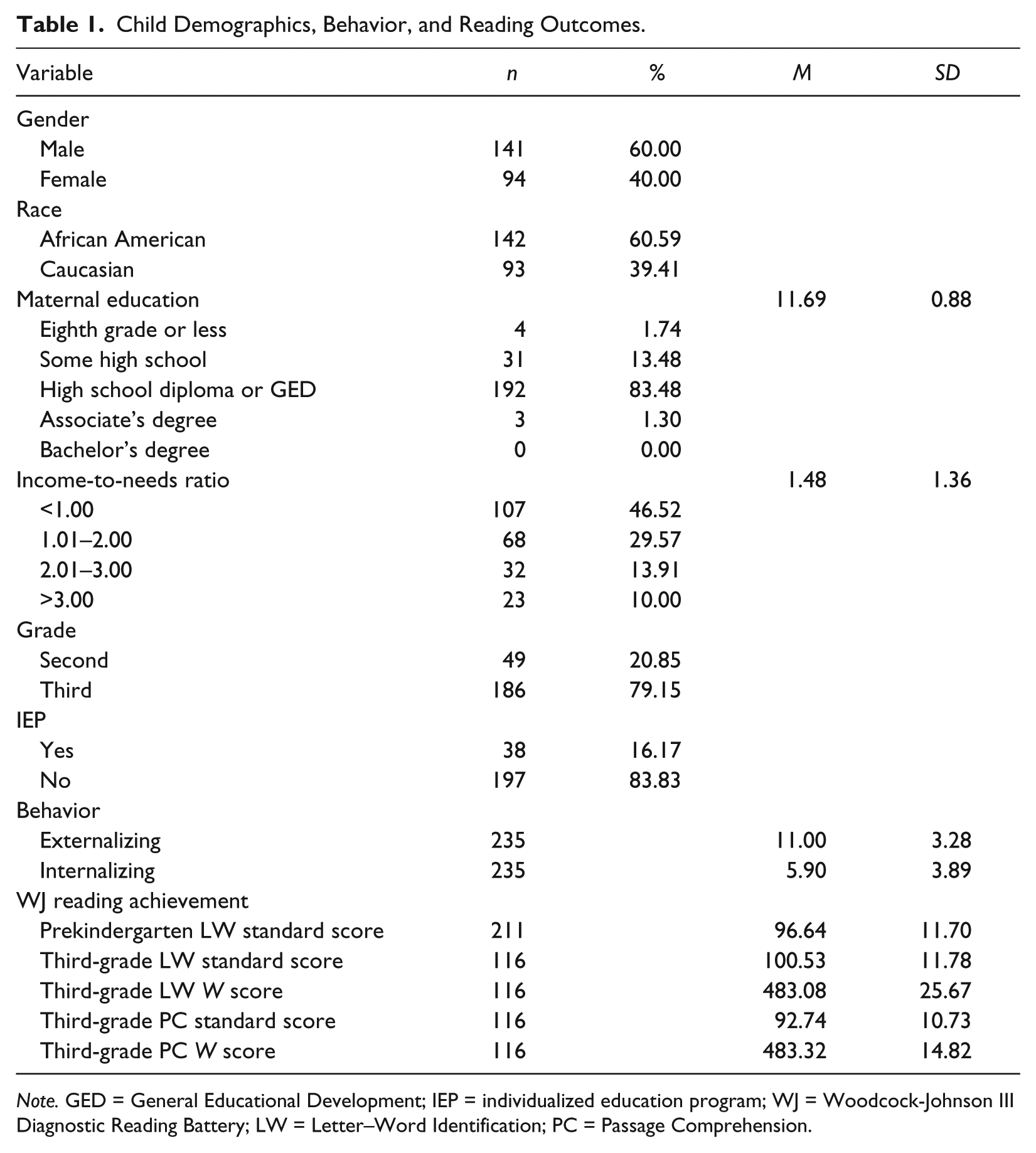
Note. GED = General Educational Development; IEP = individualized education program; WJ = Woodcock-Johnson III Diagnostic Reading Battery; LW = Letter–Word Identification; PC = Passage Comprehension.
Children with or at risk for EBD were identified using the Strengths and Difficulties Questionnaire (SDQ; Goodman, Lamping, & Ploubidis, 2010). In this study, third-grade teachers rated students on 20 items divided into the following subscales: (a) Conduct Problems (e.g., often fights with other children or bullies them), (b) Hyperactive Behaviors (e.g., constantly fidgeting or squirming), (c) Emotional Symptoms (e.g., often unhappy, depressed, or tearful), and (d) Peer Problems (e.g., rather solitary, tends to play alone). Given the reluctance to identify children for EBD early in their school careers and the variability in school readiness due to immaturity, identification in third grade was deemed most appropriate. Although EBD refers to extreme behaviors different from the norm, previous work regarding students at risk for EBD has highlighted the importance of including students with slightly elevated EBD symptoms due to the concerns of underidentification and false negatives (Farmer et al., 2005). All 20 items of the SDQ were scored using a 3-point Likert-type scale (not true = 0, somewhat true = 1, certainly true = 2). All subscales have a range of 0 to 10 and Cronbach’s alpha coefficients exceeding .80. Goodman et al. (2010) suggested the subscales can be combined to categorize the type of problem behavior as internalizing (Peer Problems plus Emotional Symptoms; α = .88, range = 0–20) or externalizing (Conduct Problems plus Hyperactive Behaviors; α = .80, range = 0–20) and that these broader scales are more appropriate for nonclinical samples, such as FLP.
Measures
Reading achievement
The Woodcock-Johnson III Tests of Achievement (WJ-III; Woodcock, Mather, & Schrank, 2004) are a norm-referenced battery of subtests for measuring general scholastic aptitude, oral language, and academic achievement. To measure students’ reading achievement, we used two subtests of the WJ-III. The Passage Comprehension subtest (PC; α = .83) measures symbolic learning and requires that students match a rebus with a picture of an item. The Letter-Word Identification subtest (LW; α = .91) requires children to identify letters presented in large type and, as the test increases in difficulty, pronounce words correctly.
Classroom quality
The Classroom Assessment Scoring System (CLASS; Pianta, La Paro, & Hamre, 2008) is an observational instrument with three distinct subscales (Emotional Support, Classroom Organization, and Instructional Support) designed to assess classroom quality in kindergarten through third grade (K–3) classrooms based on interactions between teachers and students. Each subscale is rated on a 7-point Likert-type scale ranging from low to high. The CLASS dimensions are based on developmental theory and research suggesting interactions between students and adults are the primary mechanism of student development and learning. Research assistants for FLP had a 2-day training period with a staff member certified as a K–3 CLASS trainer and were tested at the end of the second day. The reliability test consisted of watching and scoring five 20-min video segments with no feedback or discussion. To pass the reliability test, research assistants had to score within one point of the master coder on 80% of all codes across segments and score within one point of the master coder on each dimension on at least two of the five segments.
Classroom management
Classroom management in each grade was measured as the mean of the Emotional Support and Classroom Organization domains of the CLASS, which are often highly correlated (Pianta, La Paro et al., 2008). Alpha coefficients between the Classroom Organization and Emotional Support domains in this study in kindergarten (α = .85), first grade (α = .76), second grade (α = .76), and third grade (α = .83) supported the notion of an underlying latent construct, which is defined herein as classroom management. If the classroom management score was below 5.00 for a given year, it was coded as 0 (low); if it was at or above 5.00, it was coded as 1 (high). A meta-analysis of studies using the CLASS suggested threshold values instead of linear relationships between CLASS scores and child outcomes, with a cut point of 5.00 as the most appropriate to distinguish between high- and low-quality emotional support and classroom organization (Burchinal, Kainz, & Cai, 2011). We created a dosage variable representing the proportion of high- versus low-quality classroom management across 4 years. The dosage variable represented the proportion of time students experienced high- versus low-quality classroom management from kindergarten through third grade. A dosage value of 1.00 meant the student experienced 4 years of high-quality classroom management (e.g., 1-1-1-1), whereas a dosage value of 0.50 meant the student experienced 2 years of high-quality classroom management and 2 years of low-quality classroom management (e.g., 1-0-0-1). Data collection for CLASS took place around the middle of the school year each year from the time the children entered school. Some students (n = 26; 11.06%) were missing CLASS data for certain years from K–3. Missing CLASS data occurred when children were temporarily out of the study (e.g., they moved and could not be located). In these cases, the students’ dosage scores were calculated as the average of the available data.
Covariates
Ten variables were used as covariates in analysis: (a) income-to-needs ratio, (b) maternal education, (c) race (0 = Caucasian, 1 = African American), (d) gender (0 = female, 1 = male), (e) externalizing behavior, (f) internalizing behavior, (g) grade (0 = second, 1 = third), (h) individualized education program (IEP) status (0 = no, 1 = yes), (i) entry-level literacy skill, and (j) dosage of classroom instruction quality. We used income-to-needs ratio and maternal education to represent children’s socioeconomic status. We included grade to account for students who had previously been retained for 1 year. Students who had repeated one grade were included in the sample because they were administered the same exams as their peers who had not been retained and because grade retention is a common occurrence for students with or at risk for EBD (Walker et al., 2004). For the purposes of this study, third grade refers to students who were actually in third grade (n = 186) and those who had been retained for 1 year and, consequently, were in second grade (n = 49). To assess students’ entry-level literacy skills and establish a baseline score, the LW of the WJ-III administered in prekindergarten was used. Classroom instruction quality (e.g., quality of teachers’ feedback, language modeling) in each grade was measured by the Instructional Support domain of the CLASS. Based on previous research (Burchinal et al., 2011), the cut point for better- versus low-quality classroom instruction was 3.00. If the classroom instruction score was below 3.00 for a given year, it was coded as 0 (low); if it was at or above 3.00, it was coded as 1 (better). We created a dosage variable representing the proportion of better- versus low-quality classroom instruction that was similar to the dosage variable for classroom management. A dosage value of 0.75 meant the student experienced 3 years of better-quality classroom instruction (e.g., 1-1-0-1), whereas a dosage value of 0.25 meant the student experienced 1 year of better-quality classroom instruction and 3 years of low-quality classroom instruction (e.g., 0-1-0-0).
Of the students with IEPs (n = 38), which was reported by classroom teachers, services were provided under the following labels: other health impairment (OHI; n = 10), LD (n = 7), intellectual disability (ID; n = 4), ED (n = 3), speech or language impairment (SLI; n = 3), and autism (n = 3). Eight students had multiple disabilities on their IEP, including the following: one for ED and LD; one for LD, OHI, and SLI; one for ED and SLI; one for autism and ED; two for ID and SLI; and two for ED and ID. Although students with special education needs are not a homogenous group of learners, all students were included in the general education classroom; therefore, controlling for IEP status was appropriate. Eight students (3.4%) had a label of ED on their IEP. Compared to their peers not receiving special education services, students with IEPs were rated significantly higher on externalizing behaviors, t(233) = 2.24, p = .026, but no significant differences were found on internalizing behaviors, t(233) = 1.41, p = .160.
Analytic Plan
All analyses were conducted using SAS 9.2. We estimated missing data with the multiple imputation (m = 20) procedure in SAS using the PROC MI function. Whereas mean substitution to handle missing data produces inaccurate estimates of both standard errors and group mean differences, multiple imputation employs an iterative method to estimate relationships among variables using available data and then approximates missing values (Schafer & Graham, 2002). Regarding the outcome variables of interest (PC and LW), approximately 52% of the data was missing. FLP researchers implemented a planned missingness design, wherein all children were randomly assigned to one of two data collection groups beginning in second grade. The two groups received different academic assessments each year, so that by the end of third grade, they had all received the same tests. When missing data are planned and the design includes random assignment, the data are considered to be missing completely at random (Collins, Schafer, & Kam, 2001), which does not introduce bias to parameter estimates. Planned missingness is an acceptable approach for longitudinal designs, and multiple imputation is a recommended method for handling such data (Graham, Taylor, Olchowski, & Cumsille, 2006). After imputation, all covariates were mean-centered to aid interpretability.
Although it has become common to use multilevel modeling (MLM) techniques to account for the nesting of research participants (Hox, 2002), we did not use MLM. The ratio of students to classrooms was just 1.24. Of the 189 classrooms, 83.07% (n = 157) had one target child, 11.64% (n = 22) had two target children, 3.70% (n = 7) had three target children, and 1.59% (n = 3) had four target children. The ratio of students to schools (N = 81), although slightly larger than that of classrooms, was just 2.61. Intraclass correlations (ICCs) provide an estimate of the clustering and dependence of the data, with values ranging from 0.0 (independent) to 1.0 (dependent). The ICCs for PC (0.05) and LW (0.05) suggested more traditional methods of analysis were appropriate; therefore, hierarchical multiple regression models were estimated. Variables were entered in three blocks, with covariates in Block 1, main effects in Block 2, and interaction effects in Block 3. Cohen’s d (Cohen, 1992) was used to calculate effect sizes.
Results
Descriptive Results
Table 1 shows the means and standard deviations for the three outcome variables as well as students’ prekindergarten LW scores. Although imputed data were used in the regression models, nonimputed data are presented to provide the most accurate description of the sample included in this study. We used W scores for reading achievement in regression analysis, but to aid in interpretability we presented both standard scores and W scores in Table 1. Correlations between all control and outcome variables using nonimputed data are reported in Table 2. Externalizing behaviors, but not internalizing behaviors, appeared detrimental to classroom management quality at −0.16 (p = .011).
Zero-Order Correlation Matrix.
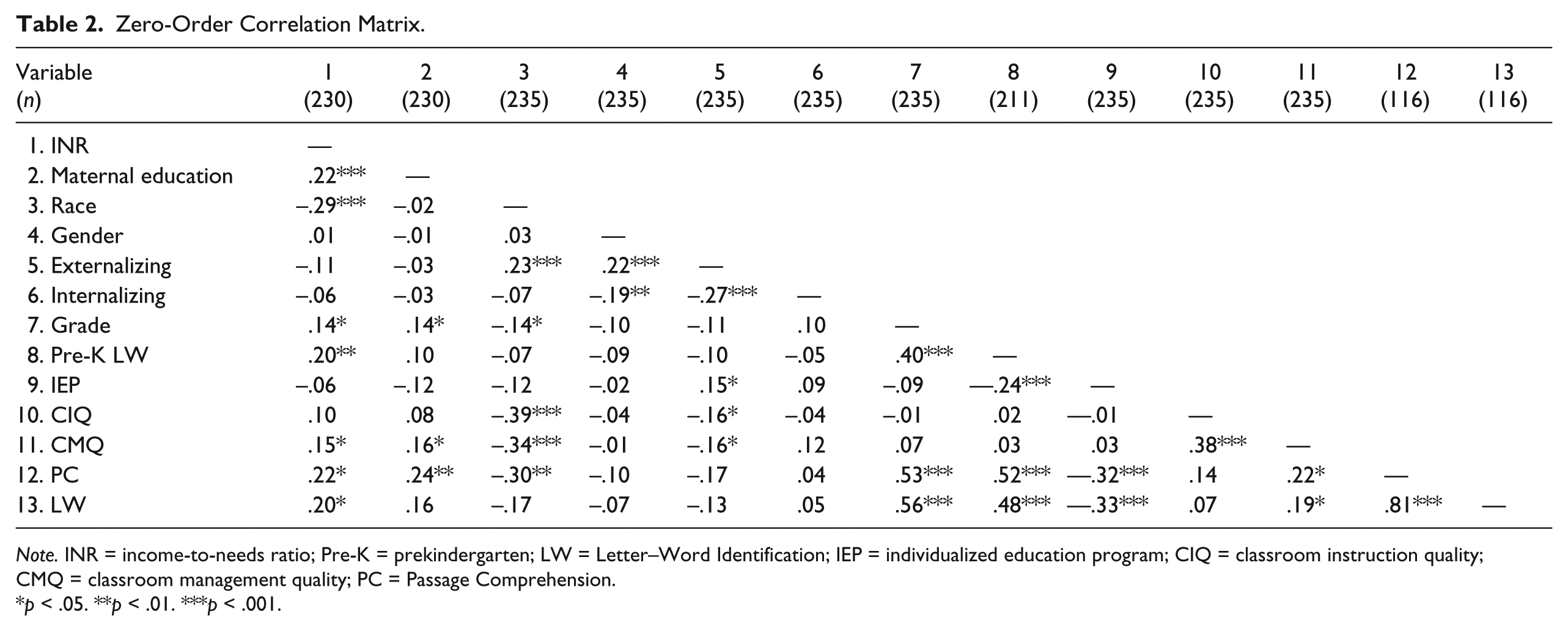
Note. INR = income-to-needs ratio; Pre-K = prekindergarten; LW = Letter–Word Identification; IEP = individualized education program; CIQ = classroom instruction quality; CMQ = classroom management quality; PC = Passage Comprehension.
p < .05. **p < .01. ***p < .001.
Analysis Results
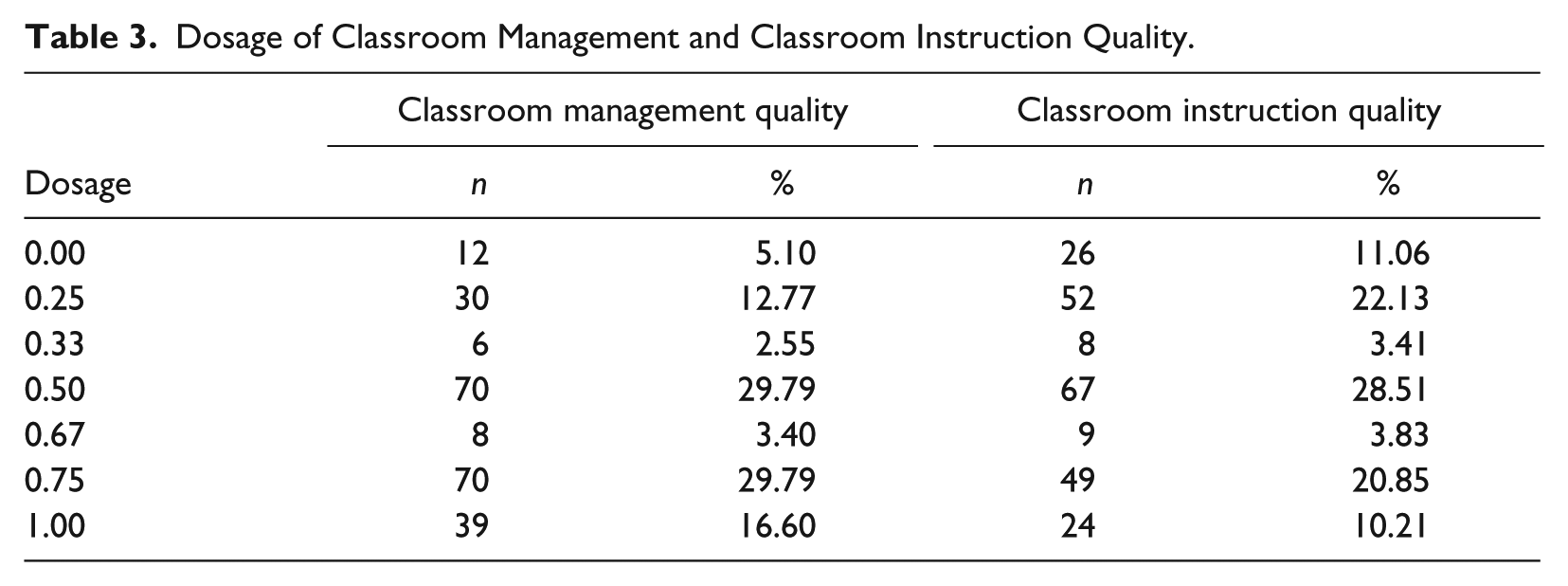
The first research question investigated the number of years of high-quality classroom management experienced by students from kindergarten through third grade. The dosages of classroom management quality and classroom instruction quality (covariate) across the first 4 years in school are presented in Table 3. A total of 12 students (5.10%) had a consistently low-quality classroom management experience, whereas 39 students (16.60%) had a consistently high-quality classroom management experience. The second research question investigated the relationship between the dosage of classroom management quality and students’ third-grade reading achievement using hierarchical multiple regression models and moderation analyses to explore interactions by race and gender.
Dosage of Classroom Management and Classroom Instruction Quality.
PC
The full model for PC (see Table 4) accounted for 55% of the variance, R2 = .55; F(11, 234) = 4.16, p = .018. There was no main effect for dosage of classroom management quality or interaction effect by race related to PC for students with or at risk for EBD; however, the proposed interaction between gender and dosage of classroom management quality as related to PC scores in third grade was significant (B = 16.35, p = .033). The interaction between gender and dosage of classroom management quality is displayed in Figure 1. For girls (n = 94), analysis of the slope indicated the effect was not significant. For boys (n = 141), analysis of the slope indicated the effect was significant (d = 0.37, p = .006).
Hierarchical Regression Results.
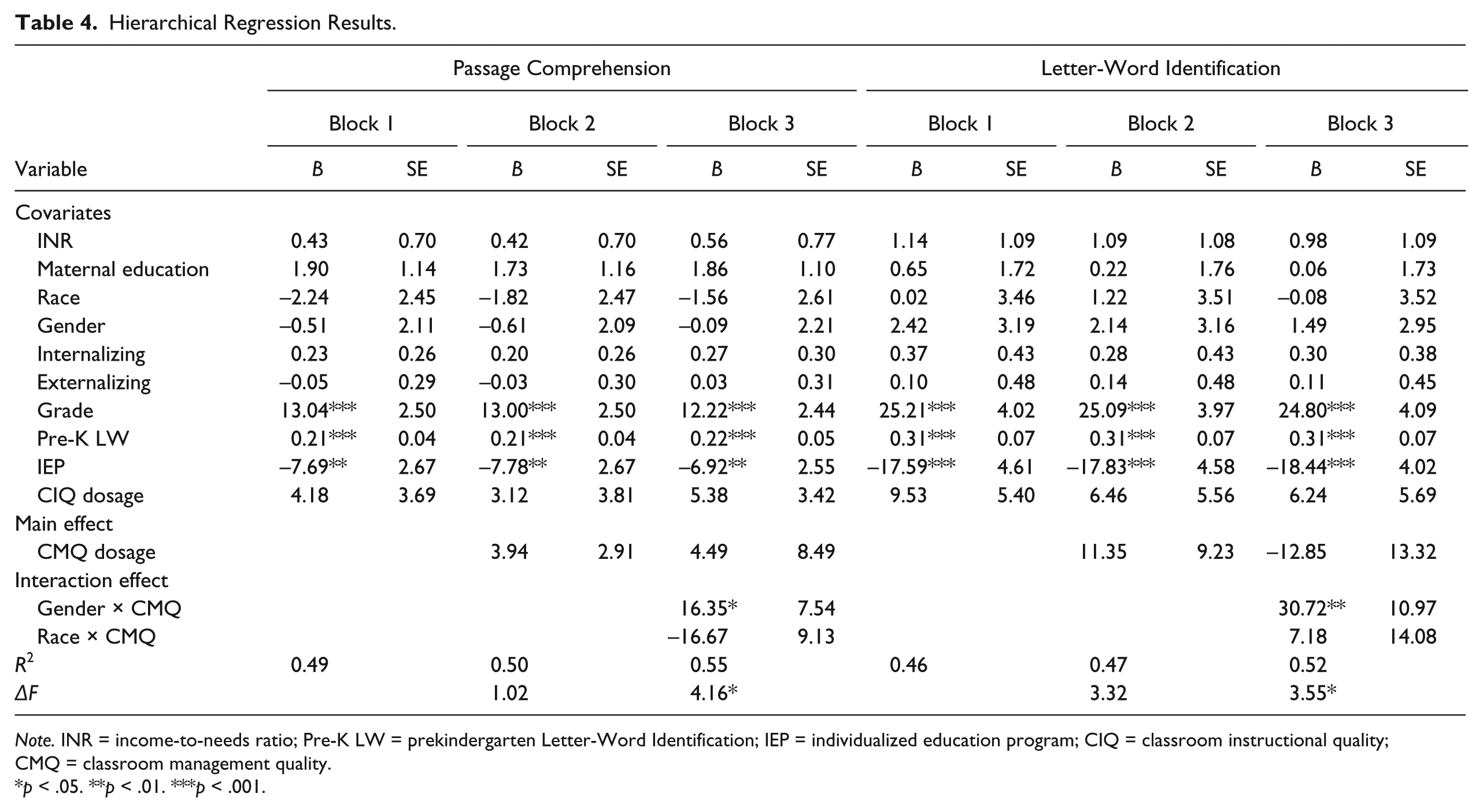
Note. INR = income-to-needs ratio; Pre-K LW = prekindergarten Letter-Word Identification; IEP = individualized education program; CIQ = classroom instructional quality; CMQ = classroom management quality.
p < .05. **p < .01. ***p < .001.
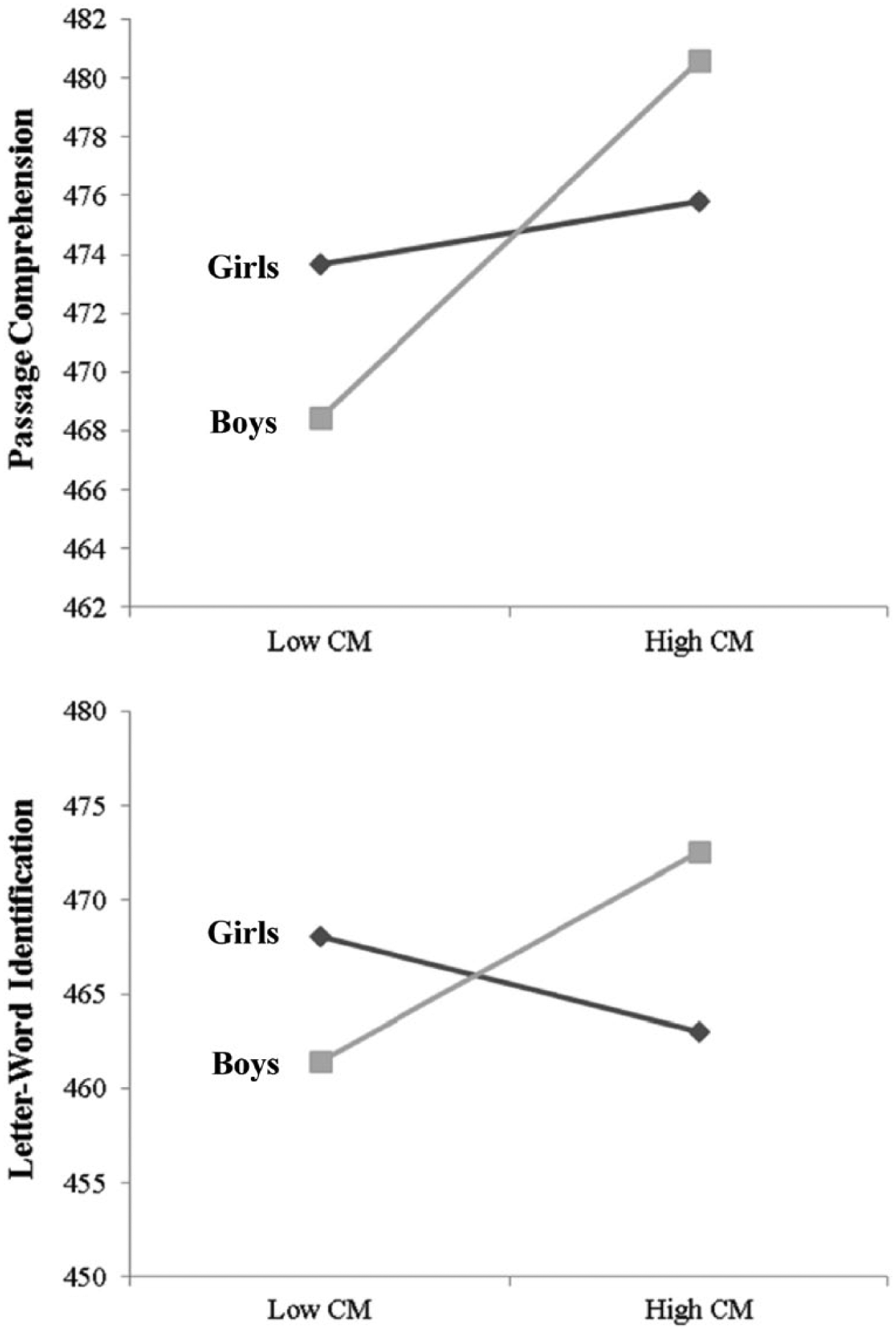
Moderation by gender in Passage Comprehension and Letter-Word Identification.
LW
The full model for LW (see Table 4) accounted for 52% of the variance, R2 = .52; F(11, 234) = 3.55, p = .030. There was no main effect for dosage of classroom management quality or interaction effect by race related to LW for students with or at risk for EBD; however, the proposed interaction between gender and dosage of classroom management quality as related to LW scores in third grade was significant (B = 30.72, p = .005). The interaction between gender and dosage of classroom management quality is displayed in Figure 1. For girls (n = 94), analysis of the slope indicated the effect was not significant. For boys (n = 141), analysis of the slope indicated the effect was significant (d = 0.28, p = .036).
Differences by gender
The significant moderation by child gender suggested the need for a post hoc exploration of possible differences between boys and girls in our sample. Table 5 contains child demographics and descriptive data for the variables of interest in the regression models. The only significant differences between boys and girls were in the types of behaviors they were exhibiting. Boys were rated higher on externalizing behaviors, t(233) = 3.41, p < .001, and girls were rated higher on internalizing behaviors, t(233) = −3.01, p = .003. No significant differences in classroom management quality or classroom instruction quality were detected.
Demographic and Descriptive Statistics for Boys and Girls.
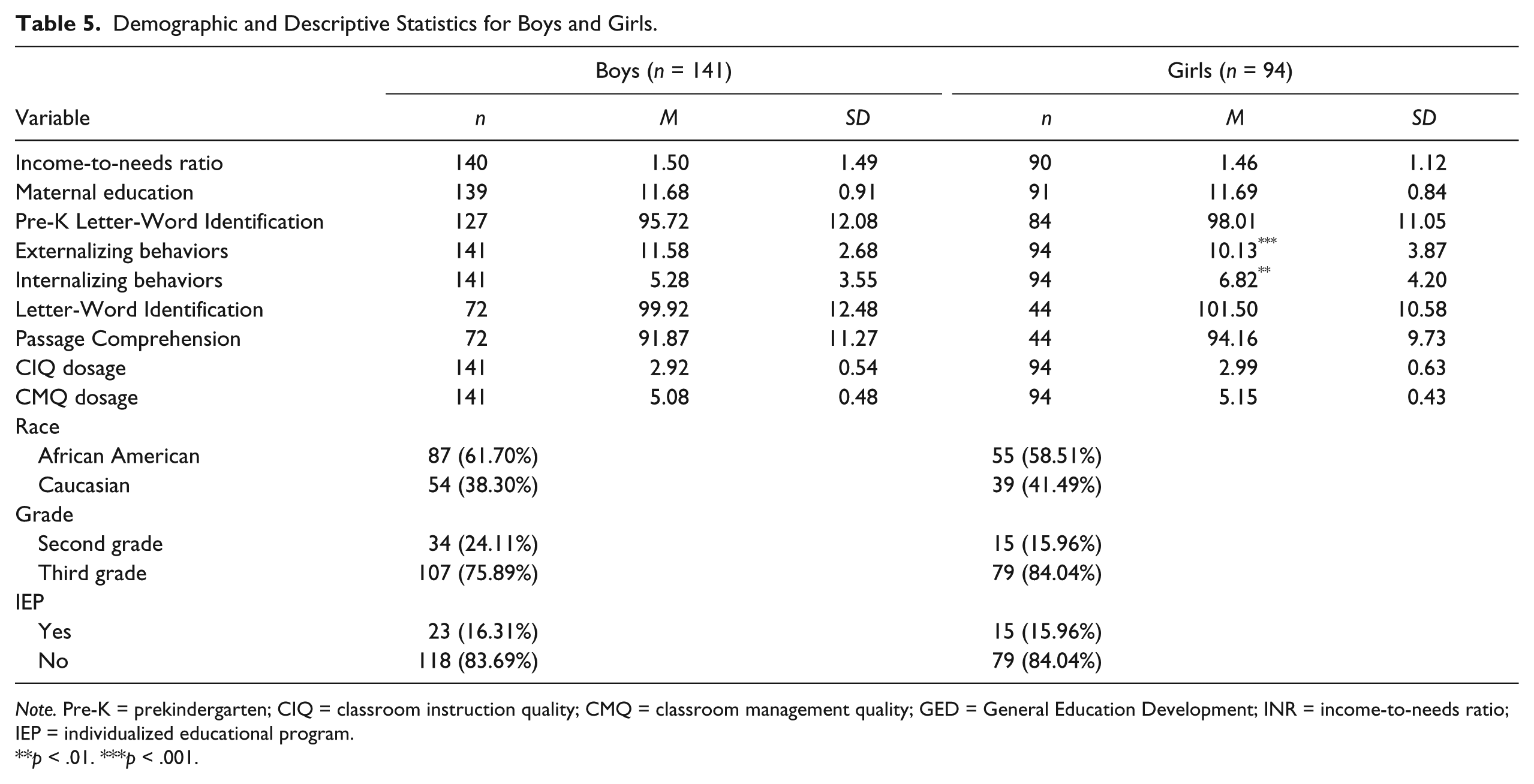
Note. Pre-K = prekindergarten; CIQ = classroom instruction quality; CMQ = classroom management quality; GED = General Education Development; INR = income-to-needs ratio; IEP = individualized educational program.
p < .01. ***p < .001.
Discussion
This is the only known longitudinal study to document the variability in the quality of classroom management experienced by children with or at risk for EBD from the time they enter school to third grade. Our results indicated that an overall higher quality of classroom management experienced across the first 4 years in school was significantly related to higher scores on standardized measures of reading achievement in third grade for boys with and at risk for EBD, but girls appeared unaffected by the quality of teachers’ classroom management during this same time. Although differences in types of behavior problems may account for these effects, it is still concerning to see these gender differences in such young children. Classroom management practices are clearly related to reading outcomes for boys with behavior problems, but not girls, and therefore, further investigations into more nuanced approaches to managing a classroom are warranted.
Insights Into Classroom Management Quality Across Early Elementary School
The classroom conditions provided to children are critical to their ability to meet academic and behavioral expectations (Downer, Rimm-Kaufman, & Pianta, 2007), but very few researchers have explored classroom management quality longitudinally (La Paro, Rimm-Kaufman, & Pianta, 2009; Pianta, Belsky, et al., 2008). Without longitudinal studies, it is impossible for researchers to know whether positive effects in one year are improved upon, maintained, or negated by a different classroom experience in subsequent years. For students already at risk for academic struggles due to their behavior problems, low-quality classroom management from their teachers may exacerbate their difficulties in school. In future studies, it will be important to investigate what specific years in children’s early schooling, if any, are most important in terms of classroom management quality. It could be the case that kindergarten and first grade matter more than second or third grade, or vice versa.
Third-grade students must be able to apply adequate word analysis skills and comprehend texts at a high rate (National Governors Association Center for Best Practices & Council of Chief State School Officers, 2010). Our findings revealed classroom management quality as an important variable relating to the reading comprehension and letter-word identification development of boys in third grade with and at risk for EBD. Although effect sizes related to significant findings for PC (0.37) and LW (0.28) could be considered small to moderate, we employed fairly strict models in our analyses. Not only did we include prior achievement at school entry, restricting our analysis to growth in children’s early literacy achievement, but we also included important antecedent variables, such as family income and maternal education (Hinshaw, 1992), as well as the quality of classroom instruction students had experienced across early elementary school. The significant effects for boys are especially important because boys are more often identified as exhibiting behavior problems and being at risk for learning difficulties (Entwisle, Alexander, & Olson, 2007).
Classroom management practices are clearly related to reading outcomes for boys with behavior problems, but not girls, and therefore, further investigations into more nuanced approaches to managing a classroom are warranted.
Similar to previous research (Nelson et al., 2004; Rice & Yen, 2010), the current study found no significant differences in reading achievement between boys and girls with or at risk for EBD. This leads to the question of why boys, and not girls, benefited from classroom management quality in relation to reading achievement, especially when no significant differences were found in the quality of classroom management they had experienced. The girls in our study scored significantly higher on internalizing behaviors and lower on externalizing behaviors than boys. Although correlations do not allow for causal inferences, externalizing behaviors, but not internalizing behaviors, were negatively correlated with classroom management quality, and classroom management quality was positively correlated with third-grade reading achievement. Internalizing behaviors may go unnoticed or, if identified, unaddressed because teachers are unsure how to intervene (Conley, Marchant, & Caldarella, 2014). It is therefore possible that teachers in this study were rated as high-quality classroom managers based largely on their interactions with externalizing boys, potentially at the cost of the girls with or at risk for EBD in the classroom. Teachers’ emotional support is especially important for young children at risk for EBD (Madill, Gest, & Rodkin 2014), and we included emotional support as a part of our classroom management quality measure. However, future work may need to capture classroom management quality at the child level to understand the specific proximal processes taking place in the classroom, as this information may provide critical insights regarding all children and especially those with internalizing disorders.
Implications for Teachers and Teacher Education
Administrators expect teachers to be able to manage their classrooms effectively (Simonsen, Sugai, & Negron, 2008) and have reported classroom management is their biggest concern for new teachers (Jones, 2006). Despite requests from teachers for more classroom management training (Chesley & Jordan, 2012; Oliver & Reschly, 2010), state licensing agencies have not yet addressed the need for more classroom management course work in teacher preparation (Freeman, Simonsen, Briere, & MacSuga-Gage, 2014). According to Freeman and colleagues’ (2014) review of state accreditation policies and teacher preparation programs, the knowledge gained from research regarding evidence-based classroom management practices has not yet been fully integrated into teacher training. Further complicating the issue is the lack of expertise in classroom management training among many teacher education faculties (Jones, 2006). Classroom management professional development programs for teachers have been effective in reducing students’ off-task and disruptive behaviors (Garwood, Harris, & Tomick, in press; Reinke et al., 2014), but practicing teachers could also pursue collaborations with school psychologists or behavior specialists to create individualized classroom management plans that are sensitive to differences between young boys and girls with behavior problems.
General education teachers in rural early elementary classrooms have reported receiving minimal training in behavior management practices and little familiarity with three-tiered models, such as positive behavior interventions and supports (Tillery, Varjas, Meyers, & Collins, 2010). Teachers in general education classrooms may wish to consult with their special education colleagues for assistance, as they are more likely to have had training in behavior management during their preservice education (Freeman et al., 2014). However, special education teachers in rural areas also have indicated a need for more professional development in classroom management and EBD (Berry, Petrin, Gravelle, & Farmer, 2011).
Further complicating the issue is the lack of expertise in classroom management training among many teacher education faculties.
The geographic isolation of rural schools presents a significant challenge to teachers due to limited economic resources for professional development and a large number of uncertified special education teachers (Butera & Dunn, 2005). It is therefore especially important for teacher education programs serving rural schools to adapt their curriculum to prepare teachers for this unique context (Evans, Williams, King, & Metcalf, 2010). It may also be time to embrace the idea put forth by Brophy (2006) that classroom management become its own discipline, which will require an endorsement by funding agencies in the form of support for more research on teacher preparation.
Limitations and Conclusions
CLASS (Pianta, La Paro, et al., 2008) is a classroom-level observational instrument that is not individualized to each student; therefore, it is possible students in the same classroom experienced a different quality of classroom management based on their individual interactions with the teacher. Also, it is still unclear what specific aspects of classroom management mattered most for the students included in this study. These gaps could be addressed by future observational studies comparing the quantity and quality of different teacher behaviors that fall under the umbrella of classroom management. Also, it is possible that with a larger sample, interaction effects may have yielded significant results for specific groups of students with or at risk for EBD. Although no significant interactions were found by race, and there was no significant difference in the percentage of African American boys and girls in the study, results from correlations suggested African American students experience a lower quality of classroom management. A larger sample size would also allow researchers to better explore effects for internalizing girls and externalizing boys (i.e., three-way interactions), which may provide greater insights into the effects of classroom management quality on early literacy development.
Without high-quality management, classrooms become chaotic and disorganized learning environments that are not conducive to developing students’ reading proficiency (Roskos & Neuman, 2012). Preservice teacher preparation provides an ideal time for instruction in evidence-based classroom management, but more research into what is being taught and what teachers are actually implementing in classrooms would be beneficial. A focus on gender differences in students’ responses to teachers’ management practices may be especially prudent.
Footnotes
Authors’ Note
The authors disclosed receipt of the following financial support for the research, authorship, and/or publication of this article: National Institute on Drug Abuse 10.13039/100000026; National Institute of Child Health and Human Development 10.13039/100000071 P01HD039667.
The authors wish to thank the following people for their assistance with the data used in this manuscript: Lynne Vernon-Feagans, University of North Carolina at Chapel Hill; Mark T. Greenberg, Pennsylvania State University; Clancy B. Blair, New York University; Margaret R. Burchinal, University of North Carolina at Chapel Hill; Martha Cox, University of North Carolina at Chapel Hill; Patricia T. Garrett-Peters, University of North Carolina at Chapel Hill; Jennifer L. Frank, Pennsylvania State University; W. Roger Mills-Koonce, University of North Carolina–Greensboro; and Michael T. Willoughby, RTI International.