






Abstract
Racially minoritized parents frequently face systemic barriers in accessing and navigating equitable supports needed to effectively plan for their child's future after high school. Culturally adapted, transition-focused parent education interventions offer a promising approach to addressing the persistent knowledge and advocacy gaps that these families often encounter. This qualitative study explores the perspectives of six South Asian parents of children and youth with intellectual and developmental disabilities (IDD) who participated in South Asians Accessing Transition and Higher Education Inclusion (SAATHI), a culturally informed, community-based parent training designed to enhance transition-related knowledge, strengthen advocacy skills, and foster a sense of community belonging. Findings indicate that SAATHI enhanced parents’ confidence and capacity to navigate transition planning, engage with schools and adult service systems, and advocate more effectively. Parents also emphasized the critical role of culturally affirming training curricula, peer connections, and practical strategies for collaborating with schools and service providers. Implications for research and practice are discussed.
Keywords
Transition to adulthood is a pivotal milestone for youth with intellectual and developmental disabilities (IDD) and their family members. Recognizing the importance of preparing youth with disabilities for life beyond school, the Individuals with Disabilities Education Improvement Act (IDEA, 2004) mandates that transition planning be included in the Individualized Education Program (IEP) by age 16. However, some states have established regulations requiring transition planning to begin as early as age 12, highlighting the importance of preparing youth and families even earlier for postsecondary goals such as training, education, employment, daily living skills, and community participation (Williams & Price, 2024). Research demonstrates that when youth participate in transition planning early, they are more likely to identify their strengths and skills related to employment goals (Mazzotti et al., 2021), develop self-determination skills as key agents in their postschool plans (Shogren et al., 2025), and engage in community-based employment and career experiences before exiting high school (Rooney-Kron & Dymond, 2022). However, not all youth experience transition planning equitably.
Disconnect Between the Promise and Realities of Postschool Outcomes
Despite longstanding commitments to equitable postsecondary outcomes, youth with IDD consistently experience poorer outcomes across higher education, employment, and community belongingness than their peers without disabilities (Bogenschutz et al., 2024; Butterworth et al., 2024; Grigal et al., 2021; Newman et al., 2011). This persistent disparity reveals a critical gap between the intended policy and the lived realities of individuals with IDD. Employment data further illustrate this deep divide. State service systems remain a primary source for tracking outcomes among individuals with IDD, revealing a concerning reality. According to the 2022–2023 National Core Indicators Survey, which captures responses from adults with IDD receiving at least one service through the state developmental disability system, only 19% of the 25,424 respondents were employed in a paid, community-based setting. Among those employed, the majority worked 14 hours or less per week (National Association of State Directors of Developmental Disabilities Services & Human Services Research Institute, 2023). These findings point to a persistent gap. Individuals with IDD often express strong desires to participate in competitive employment (Barrows et al., 2016). However, their postschool outcomes often fall short of their aspirations.
Similar patterns emerge in postsecondary education. While interest in and access to inclusive postsecondary education (IPSE) programs have steadily increased over the past decade (Lee & Taylor, 2022), participation remains inequitable. Research suggests that IPSE enrollment leads to improved outcomes, including greater access to competitive employment (Grigal et al., 2021), enhanced self-determination (Ju et al., 2017), and strengthened daily living skills (Corby et al., 2020). However, these benefits are not equitably distributed as students enrolled in IPSE programs disproportionately identify as White and middle-class, raising concerns that those with the greatest support needs and from marginalized backgrounds remain excluded (Whirley et al., 2020). Long-term trends further reinforce these inequities. As adults with IDD age, they are increasingly less likely to engage in community-based activities, such as paid and unpaid employment, and report declining social participation, including fewer interactions with friends and broader community members (Bradley et al., 2020). Together, these findings reveal a systemic and enduring disconnect between the promise of meaningful postschool pathways and the realities experienced by individuals with IDD. Addressing this gap requires expanding access to opportunities and building equitable, sustainable, and responsive early systems of support for this population.
Benefits of Family Engagement in Transition Planning
Bridging the gap between postschool promise and outcomes requires a collaborative approach that actively engages families, youth, school-based teams, and community partners. This collaborative approach can guide families through the complex transition from school-based supports to adult services and community life. Family engagement is a critical component of IDEA, which requires that families be included as members of the IEP team and involved in transition planning decisions (IDEA, 2004). Consistent with these federal guidelines, two decades of research on postsecondary transition have identified family members as key drivers of postsecondary success, often engaging in three core areas of transition planning. First, families often hold high expectations for their youth with IDD regarding higher education (Blustein et al., 2016), competitive employment (Wehman et al., 2018), and participation in community and social life (Henninger & Taylor, 2014). These expectations are often a result of higher parental knowledge of transition planning services (Lee & Burke, 2020), being a family member with higher education experiences (Qian et al., 2020), and having a higher socioeconomic status (Qian et al., 2020). These findings demonstrate that when parents are informed and highly educated, they are more likely to guide their youth through transition planning services and remain engaged in the process (Qian et al., 2020; Wehman et al., 2018).
However, only a few families possess such in-depth knowledge of what transition planning entails, and most do not have formal plans in place for their youth. Lee and Burke (2020) conducted a systematic review to understand future planning among family members of individuals with IDD. They found that across 43 studies, only a handful reported that families had concrete plans in place for their youth's future, and most engaged in aspirational planning (e.g., locating an attorney or discussing goals with family members). The authors also noted several barriers to future planning, including uncertainty about their youth's skills or other life stressors, limited information from school systems, and systemic barriers (e.g., limited resources, difficulty navigating the transition planning system, and financial concerns; Lee & Burke, 2020). Despite these significant barriers to formal future planning, families are not passive in the transition process. Rather, they continue to engage in meaningful, action-oriented ways.
Second, families engage in transition planning through active interagency collaboration with K–12 transition teams and adult service personnel. For instance, Hirano and Rowe (2015) document that when families participate as equal partners in decision-making, they report more positive, meaningful, and empowering experiences during the transition planning process. Additionally, family-school collaboration during the transition planning process can shape postsecondary goals and expectations (Rossetti et al., 2025), increase parental agency and voice (Shikarpurya & Gilson, 2023), and lead to improved employment and community engagement for youth with IDD (Aleman-Tovar et al., 2022). Similarly, research demonstrates that collaboration with adult service providers reduces service gaps that many families experience after exiting K–12 systems. These collaborative opportunities are often evidenced when adult service representatives participate in transition planning meetings (Sanderson & Stout, 2025) and when partnerships with vocational rehabilitation systems are established (Schutz & Carter, 2022).
Finally, parent engagement in transition planning is strongly shaped by parents’ own advocacy and self-determination (Wilt & Morningstar, 2018). Research illustrates that parents who demonstrate higher advocacy skills and greater self-efficacy are more likely to take an active, sustained role in IEP and transition planning meetings (Li et al., 2024). For instance, the ASSIST intervention, which trained parents in service advocacy, found that parents who increased their advocacy skills gained greater access to adult services and reported more effective engagement in navigating adult systems (Taylor et al., 2023). Similarly, longitudinal data demonstrate strong correlations between parent advocacy and youth self-determination, suggesting reciprocal benefits for both families and the transition-aged youth (Moser et al., 2025). These findings suggest that when parents are active, confident advocates who believe in their own ability to influence the system, they engage more deeply and effectively in planning for their child's future. Across transition literature, family engagement emerges as a key mechanism to improve postschool outcomes of youth with IDD, shaping the quality of transition planning and access to adult services.
Disproportionality in Youth Outcomes and Family Engagement
Despite the extensive evidence demonstrating the benefits of family engagement in transition planning, research consistently shows that the intersection of race, immigration, and disability shapes families’ access to high-quality transition supports, often resulting in unequal opportunities and outcomes. This inequitable landscape is well-documented across racially minoritized and immigrant-origin communities, where families routinely encounter structural and interpersonal barriers that limit their involvement. For example, Taylor and colleagues (2023) conducted interviews with five Black youth with IDD and their mothers to understand their experiences of transition planning. The researchers found that low expectations, oppositional behavior from school professionals, and racial bias significantly impacted the availability and access to equitable transition planning supports for youth and their families. Researchers have identified similar findings across Latinx (Aleman-Tovar et al., 2022), South Asian (Shikarpurya & Gilson, 2023), Korean (Kim & Dababnah, 2022), and Chinese and Vietnamese families (Lo & Bui, 2020), emphasizing a need to equip racially minoritized and immigrant-origin families with transition planning supports to improve postschool outcomes of youth with IDD.
These inequities reflect broader systemic obstacles that hinder meaningful family participation in the transition planning process. Hirano et al. (2018) conducted a metasynthesis to understand systemic barriers to family involvement in transition planning. The authors identified barriers across three main domains: family, school, and the adult service system. At the school level, families reported experiencing discrimination, disempowerment, and delayed or poor transition planning. Adult service systems were often complex and challenging to navigate, with limited access and coordination for families. Similarly, Pagan and colleagues (2024) interviewed Latino autistic self-advocates, family members, and community providers and noted that access to services was a significant barrier to effective transition planning. They reported that these challenges were further compounded by language barriers and limited access to culturally responsive services (Pagan et al., 2024).
Shikarpurya and colleagues (2024) extended this work through a large-scale survey of 362 racially minoritized parents of youth with IDD who were navigating the transition planning process. More than 60% of parents reported frequent challenges accessing information about adult service systems, employment resources, and financial supports, with notable differences by racial identity. Strikingly, 41.5% of parents reported that their voices were not heard by transition stakeholders at least half of the time, highlighting persistent exclusion and limited agency in decision-making (Shikarpurya et al., 2024). Collectively, research documents the pressing need for enhanced support that actively engages and empowers families of children and youth with IDD from racially minoritized communities. One promising and increasingly recognized approach to addressing these disparities is parent training delivered using culturally adapted, community-driven interventions.
Parent Training Using Culturally Adapted Interventions
The existing literature suggests numerous benefits of transition-focused parent training interventions (e.g., DaWalt et al., 2018; Taylor et al., 2017; Taylor et al., 2022; Young et al., 2016). Researchers have found that providing transition-focused training to parents has resulted in increased knowledge of the transition planning process (Taylor et al., 2017), increased parental advocacy and empowerment (Aleman-Tovar et al., 2024; Taylor et al., 2022), and higher levels of youth engagement and decreased parental distress (DaWalt et al., 2018). Transition-focused interventions have also been shown to strengthen sibling relationships and increase siblings’ knowledge of adult service systems (Lee & Burke, 2021).
Despite the promise and benefits of transition-focused parent training interventions, only a handful of studies have focused explicitly on racially minoritized parents (Shikarpurya et al., 2025). To date, only three transition-specific parent education interventions have been developed and adapted for racially minoritized families in the United States. First, Kuhn and colleagues (2020) adapted the Transitioning Together training developed by DaWalt et al. (2018) for Latinx families. The authors conducted interviews to understand parents’ experiences with the training and found that parents reported high satisfaction and increased confidence in navigating the transition planning process (Kuhn et al., 2020). Similarly, Aleman-Tovar and colleagues (2022) conducted interviews with eight Mexican-American caregivers of youth with autism to explore perceptions on the adapted ASSIST transition curriculum (Taylor et al., 2022). Through this process, the authors received recommendations from participating families regarding the training curriculum and their desire for more information on living opportunities. More recently, Aleman-Tovar et al. (2024) conducted the adapted training (i.e., ASSISTIR) with 28 Latinx caregivers of youth with autism. The caregivers reported significant increases in knowledge, empowerment, and advocacy related to school-based transition planning and adult disability services. Although recent studies demonstrate promising benefits of culturally adapted transition-focused training for Latinx families, there remains a critical need to expand these efforts to other racially minoritized communities. Given this need, the following section discusses the third culturally responsive transition parent education intervention, SAATHI, for South Asian families.
SAATHI Parent Training
Almost 5.4 million South Asians live in the United States (South Asian Americans Leading Together, 2019). Despite this growing population, South Asian and broader Asian American students remain significantly underrepresented in special education, in part due to systemic bias and the persistence of the “model minority” stereotype (Cooc, 2018). Emerging research has begun to fill critical gaps in transition planning literature for South Asian families, highlighting the needs and strengths of this understudied population. For instance, Shikarpurya and colleagues (2024) found that South Asian parents often report limited transition-specific knowledge and reduced agency to advocate. Yet, they simultaneously draw on their social capital and community resources to advocate for their children with IDD (Shikarpurya & Gilson, 2023).
Additionally, no transition-specific interventions had been developed for South Asian families, marking a significant lack of culturally responsive interventions for this population in transition literature (Shikarpurya et al., 2025). Building on these insights, Shikarpurya and Gilson (2025) developed and evaluated a pilot, 6-week, online transition-focused intervention, South Asians Accessing Transition and Higher Education Inclusion (SAATHI), with 31 South Asian parents of children with IDD. Findings demonstrated that participation in SAATHI significantly increased parents’ knowledge of transition-related services, advocacy skills, sense of belonging to a community, and coping skills. Parents also reported that the intervention was both feasible and beneficial, with over 90% indicating they felt confident in their skills after SAATHI and 100% reporting that it increased their knowledge of future planning opportunities (Shikarpurya & Gilson, 2025). These initial findings indicate that culturally tailored, community-driven interventions like SAATHI can play a critical role in equipping families from underserved communities with the tools and confidence to navigate transition planning more effectively. This study focuses on the interviews with parents who participated in the SAATHI intervention to gain a deeper understanding of their experiences, perspectives, and perceived benefits.
Purpose of This Study
The purpose of this study is to explore the perspectives of South Asian parents of children with IDD regarding their participation in the SAATHI training. We aimed to gain a deeper understanding of parents’ lived experiences throughout SAATHI, specifically, how they perceived changes in their transition-related knowledge, advocacy skills, and sense of community belongingness after participating in the training. We aimed to answer the following research questions:
How do parents perceive their advocacy skills after participating in SAATHI? How do parents describe the knowledge and skills gained from SAATHI in planning for their child's future and navigating school-based systems? How do parents experience community and social support within the SAATHI program? What recommendations do parents have for improving SAATHI?
Methods
Researchers’ Positionality
The research team brings both professional expertise and personal lived experience, which have shaped our approach to this study. The first author is a South Asian woman, an Assistant Professor of Special Education, and identifies as a sibling of a person with autism. She also has extensive experience working with immigrant and underrepresented families as they navigate the transition planning process. She also developed the curriculum and led the SAATHI training sessions. Her professional relationships with community organizations, her personal identity, and her caregiving experiences led to greater trust among the participants.
The second author is a doctoral student who identifies as a South Asian woman. She has experience working with racially and ethnically diverse families and, as a school psychologist in training, with students receiving special education services. The third author is a higher education professional who identifies as a South Asian, Sikh woman. She has experience in developing and facilitating curricula for adult learners of diverse backgrounds. The fourth author is a doctoral graduate student who identifies as a Black American man. As an educational psychologist, he has experience working with individuals with intellectual disabilities as they navigate the workforce and postsecondary educational opportunities.
Our research team shares racially minoritized identities and a collective commitment to equity and inclusion. We acknowledge that our positionalities as cultural insiders and allies, as educators and family members, and as individuals who have navigated systems from both professional and personal perspectives have influenced every stage of this study. We approached this study with a shared belief in the strengths of immigrant communities and a critical awareness of how systemic inequities shape families’ experiences. We also acknowledge that our perspectives, while informed, carry inherent biases and preferences that inform our interpretation of the data. Throughout the research process, we engaged in reflexive dialogue during weekly meetings, where we each discussed our biases regarding our expectations for parent experiences, our roles, and how our identities might shape data collection and interpretation. We also sought to bolster participant voices, and remained attentive to the complex interplay of power, culture, and identity in our analysis.
Development of SAATHI
SAATHI was developed using several culturally responsive practices. First, we utilized critical race theory (CRT; Delgado & Stefancic, 2012) and the ecological validity framework (EVF; Bernal et al., 1995) to develop the training curriculum and implementation structure. For instance, CRT was used to emphasize parents’ experiential knowledge, guiding the delivery of the curriculum, breakout groups, and session facilitation. Similarly, EVF informed the curriculum content (e.g., integrating concepts of collectivist cultures, extended families, and diverse social networks to explore employment decisions). SAATHI was also informed by prior research on the transition planning needs of South Asian parents of children with IDD (Shikarpurya & Gilson, 2023; Shikarpurya & Singh, 2021; Shikarpurya et al., 2024), the evidence-based predictors of transition planning (Mazzotti et al., 2021), and partnerships with three community organizations that served South Asian parents of children with disabilities in the Southwestern United States.
SAATHI Training Components
SAATHI consisted of six weekly 90-min sessions delivered synchronously via Zoom. Each session addressed a critical topic related to transition planning: (a) introduction to transition planning, (b) higher education and independent living opportunities, (c) financial planning and governmental benefits, (d) guardianship and legal planning, (e) employment options after high school, and (f) accessing and navigating community-based resources. Informed by prior literature on the strengths, agency, and challenges encountered by South Asian parents (Shikarpurya & Gilson, 2023), each training session followed a consistent four-part structure. The first author, who developed the SAATHI curriculum, served as the primary facilitator. Two doctoral students, trained by the first author in group facilitation, conflict resolution, and navigating cultural nuances, provided logistical support and facilitated small-group discussions.
The session began with a brief check-in, during which parents were invited to reflect on their strengths and share any challenges they had faced from the previous week. Next, the first author introduced the weekly topic using a PowerPoint presentation. This was followed by a modeled case study to demonstrate key advocacy concepts. Parents were then placed into Zoom breakout groups to collaboratively discuss a second case study, applying the skills and knowledge introduced in the session. Finally, all participants reconvened to share insights from their group discussions and complete weekly reflection forms. This interactive structure aimed to foster peer learning through experiential knowledge, build advocacy skills, and promote a sense of community among South Asian parents. Detailed information regarding the development, design, and implementation of SAATHI is available in a prior publication (Shikarpurya & Gilson, 2025).
We implemented several measures to assess the effectiveness and feasibility of SAATHI. Specifically, we used a single-arm, pretest and posttest survey to understand the changes in parents’ outcomes after participating in SAATHI. We also measured parents’ interactions with one another using a checklist assessing their engagement in the SAATHI WhatsApp groups. Social validity was measured via a short, weekly feedback survey and an overall satisfaction survey, which was administered one week after the last day of training. Finally, we measured training fidelity using a fidelity checklist. A prior study provides further information about the quantitative SAATHI findings (Shikarpurya & Gilson, 2025). The SAATHI training has been conducted in multiple cohorts. We conducted the first training in 2023, and the quantitative findings from that cohort have been previously published (Shikarpurya & Gilson, 2025). From January 2024 to February 2024, we conducted a second training with a new cohort of 17 parents, some of whom also attended the 2023 training. We conducted semi-structured interviews with parents in the 2024 SAATHI cohort to understand their perspectives on transition knowledge, advocacy skills, and community belongingness. This manuscript focuses exclusively on interviews with a subset of six participants from the 2024 cohort.
Participants
Overall, six parents participated in post-SAATHI interviews. All participants completed the full six-session SAATHI training and both the pre- and post-surveys. Five participants identified as South Asian, while one identified as a Latina mother who was deeply engaged with the partnering community organization and was parenting a South Asian-Latino child with IDD alongside her South Asian spouse. All participants were mothers born between 1965 and 1982 and had at least some college education. Specifically, four mothers reported having some college experience, while two held professional degrees (either a master's or doctoral degree). Finally, only one parent, Hawra, reported being single, while all the other participants reported being married.
Half of the participants reported living in the United States their entire lives. Two had lived in the United States for 16 to 30 years, and one had immigrated more recently, residing in the United States for 6 to 10 years. Annual household income also varied; three participants reported earnings of $100,000 or more, while the remaining three reported incomes between $30,000 and $49,000. All but one participant had male children. The children ranged in age from 11 to 23, with a mean age of 17.67 years. Most parents reported that their children had diagnoses of either intellectual disability (n = 4) or autism (n = 3), as they could select multiple diagnoses. Notably, only half of the participants reported discussing transition planning with their child's IEP team. All participants were located in Texas (see Table 1 for additional demographic details).
Parent Demographics (N = 6).
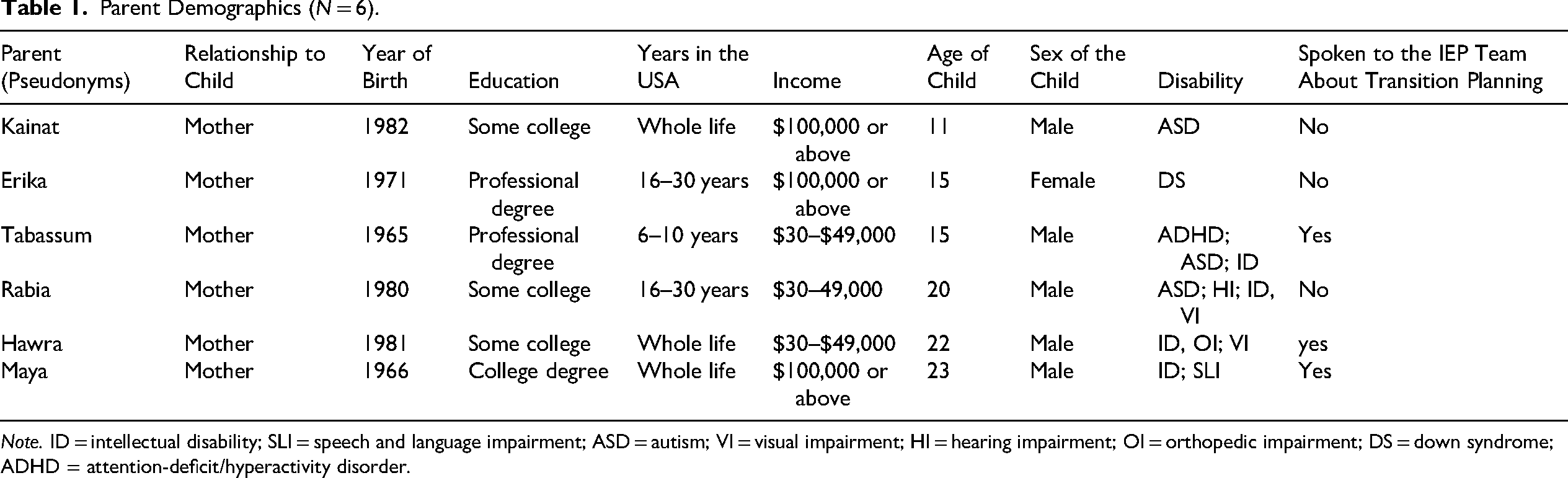
Note. ID = intellectual disability; SLI = speech and language impairment; ASD = autism; VI = visual impairment; HI = hearing impairment; OI = orthopedic impairment; DS = down syndrome; ADHD = attention-deficit/hyperactivity disorder.
The six interview participants were broadly similar to the larger training sample in terms of demographic characteristics. However, they demonstrated somewhat higher levels of transition knowledge and advocacy skills at pretest. This pattern could be due to several parents having prior experience with transition planning from having older children. Among the entire 2024 cohort (N = 17), average pretest scores were 5.72 (out of 10) for transition knowledge and 2.79 (out of 5) for advocacy, compared with higher averages among the six interview participants (transition knowledge M = 7.67 and advocacy M = 3.41). At posttest, the cohort scored an average of 6.44 on transition knowledge and 3.27 on advocacy, while interviewees scored 7.83 and 3.47, respectively. Although the interview participants demonstrated smaller quantitative gains, likely due to starting at a higher baseline, the qualitative interviews provide essential insight into how these parents understood, applied, and expanded their knowledge and advocacy skills through the SAATHI training.
Recruitment and Inclusion Criteria
We partnered with three community organizations that serve South Asian parents of children with disabilities in the Southwestern United States to recruit participants. These organizations were faith-based, disability-specific, or parent-led (Shikarpurya & Gilson, 2025). We shared a detailed flyer about the study, which included the inclusion criteria, consent information, and a link to complete the screening survey to ensure parents meet the eligibility requirements for the study. The flyers were shared via email, listservs, and social media platforms of the three organizations. We also created a short video introducing the research study for the organizations to share with their members. Participants completed the SAATHI training from January 2024 to February 2024 and were asked about their interest in participating in interviews in April 2024. Interviews were completed from May to June 2024.
Eligibility for the study included the following: (a) identify as a South Asian parent aged 18 years or older with a child or youth with IDD; (b) able to read and write in English and communicate in English, Hindi, or Urdu; (c) self-report that their child had a diagnosed intellectual or developmental disability and was between the ages of 3 and 25; (d) complete both the pre-and post-surveys; (e) attend at least four of the six SAATHI training sessions; and (f) have access to Zoom for the interviews. However, all parents communicated in English, so no translation was required.
Additionally, we intentionally included parents whose children were below or beyond the typical transition age (e.g., 14–21 years) to expand access to transition-related knowledge for immigrant families, who have historically been excluded from such opportunities. The SAATHI training covered topics relevant to school-based transition planning (e.g., IEP meetings, advocacy during transition planning) as well as adult service systems (e.g., financial planning, daily living, employment, and higher education). These components were mutually beneficial for parents of younger children preparing for transition and for those whose children were already navigating adulthood and required support across multiple systems.
Data Collection
Upon receiving approval from the Institutional Review Board, recruitment began. Parents first completed a brief screening survey via Google Forms. Once deemed eligible, they were asked to complete the consent form online via Qualtrics. After parents consented and completed the pretest via Qualtrics, SAATHI training began. Parents completed 6 weeks of SAATHI training via Zoom, totaling 90 min per week, led by the first author. Each session was recorded, and the recordings were shared with participants one week after they completed the training. The research team facilitated the breakout rooms and the chat feature and measured the primary researcher's fidelity to ensure that each training session included the same components. On the last day of the training, parents completed the post-test surveys, and 1 week later, completed the satisfaction survey for social validity. Parents received a $25 gift card for completing the quantitative measures and attending all six training sessions.
Two months after the training, we invited all parents who participated in the SAATHI training and met the eligibility criteria (e.g., completed at least four sessions and the pretest and posttest surveys) to participate in post-training interviews. We sent emails and communicated with eligible participants via WhatsApp to recruit for interviews. We contacted parents once a week for 1 month until no additional parents expressed interest. Interested parents were asked to reconsent via Qualtrics before participating. Interviews were conducted via Zoom and lasted between 60 and 90 min. Parents who completed the interview received a $25 Amazon gift card. Overall, six parents expressed interest in participating in interviews using convenience sampling (Glaser & Strauss, 2017). Each interview included the first author and one or more members of the research team. All six interviews were audio-recorded and transcribed via Zoom to ensure a thorough analysis. All interview transcripts were de-identified before analysis and stored in a secure, password-protected Box folder accessible only to the research team. We also assigned pseudonyms to all the participants to maintain their confidentiality. As we analyzed the data, we observed that patterns and themes were repeating, and no new insights emerged after the fourth participant, thereby reaching data saturation (Bowen, 2008). This iterative analysis informed our decision not to pursue additional interviews, although we acknowledge that the sample does not fully represent all training participants. This study focuses solely on the SAATHI interviews, enabling us to capture rich, in-depth accounts of participants’ experiences.
Interview Protocol
The interview protocol was developed based on prior research emphasizing parents’ perspectives following transition-focused parent training (DaWalt et al., 2018; Kuhn et al., 2020; Taylor et al., 2017) and was refined through discussions with the three community organizations to ensure cultural responsiveness. The interview questions were organized into the following six themes: (a) Usefulness of the training (e.g., Which topics from the training helped you the most and/or met your expectations?); (b) parent advocacy (e.g., Can you share an example of how you have advocated outside of the SAATHI training to support your child's future planning?); (c) application of SAATHI knowledge and skills (e.g., Could you share about the preparations you've made for your child's future after SAATHI?); (d) community and social support (e.g., What was your support system like for transition planning before SAATHI, and has it changed since completing the program?); and (e) recommendations for the future (e.g., Were there any topics we did not cover that you would like to learn more about?). In total, the protocol included 13 semi-structured interview questions designed to encourage meaningful responses while allowing flexibility to explore parents’ unique experiences (see supplementary materials). We piloted the interview protocol with two South Asian parents of children with IDD, where we met virtually to discuss and refine the questions. For instance, they recommended adding a specific question about the steps parents plan to take to prepare for their child's future. Overall, the parents shared their comfort and satisfaction with the comprehensiveness of the interview questions.
Data Analysis
Coding Procedures
The research team used thematic analysis (TA; Braun & Clarke, 2021) to examine parents’ experiences in the SAATHI training. Thematic analysis was selected because it supports a flexible yet rigorous approach to identifying trends and patterns across the dataset while centering the lived experiences of racially minoritized immigrant-origin parents. Furthermore, although CRT and EVF primarily guided the development of SAATHI, they also informed our analytical approach by shaping the development and interpretation of codes and themes, with particular attention to parents’ experiential knowledge, cultural context, and systemic influences.
Although our analytical approach was primarily deductive (Gale et al., 2013), guided by a priori domains from our research questions (e.g., advocacy, knowledge, community belonging, and recommendations), we also integrated inductive coding. This hybrid approach allowed us to identify unexpected yet meaningful patterns in the data while remaining anchored in the core domains of our research questions. Four research team members served as the coders. Before analysis, the first author provided structured training on TA and the hybrid deductive and inductive coding approaches. The team met weekly throughout the analysis to discuss decisions, examine any assumptions, and refine coding practices. We used the Dedoose software (Version 9.0.107; SocioCultural Research Consultants, LLC, 2023) to code and analyze our transcripts.
We followed the six-step process for conducting thematic analysis, namely (1) familiarizing ourselves with the data, (2) generating initial codes, (3) developing themes, (4) reviewing and refining themes, (5) defining and labeling themes, and (6) interpreting the findings and reporting (Braun & Clarke, 2006; 2021). First, we independently read all six transcripts in full to gain a holistic sense of participants’ experiences. During this stage, we completed analytic memos documenting our initial impressions, assumptions, and potential alignment to the study's a priori domains (e.g., advocacy, knowledge, community belonging, and recommendations). Second, we independently coded the same first transcript line by line. This allowed us to use a primarily deductive approach informed by the research questions while remaining open to inductive coding driven by novel or emerging insights from the data. We developed 35 initial codes that aligned with, but were not restricted to, the a priori domains. For instance, the code “ongoing future planning concerns” emerged from inductive coding, while “school-parent collaboration” was informed by a priori categories (Figure 1).
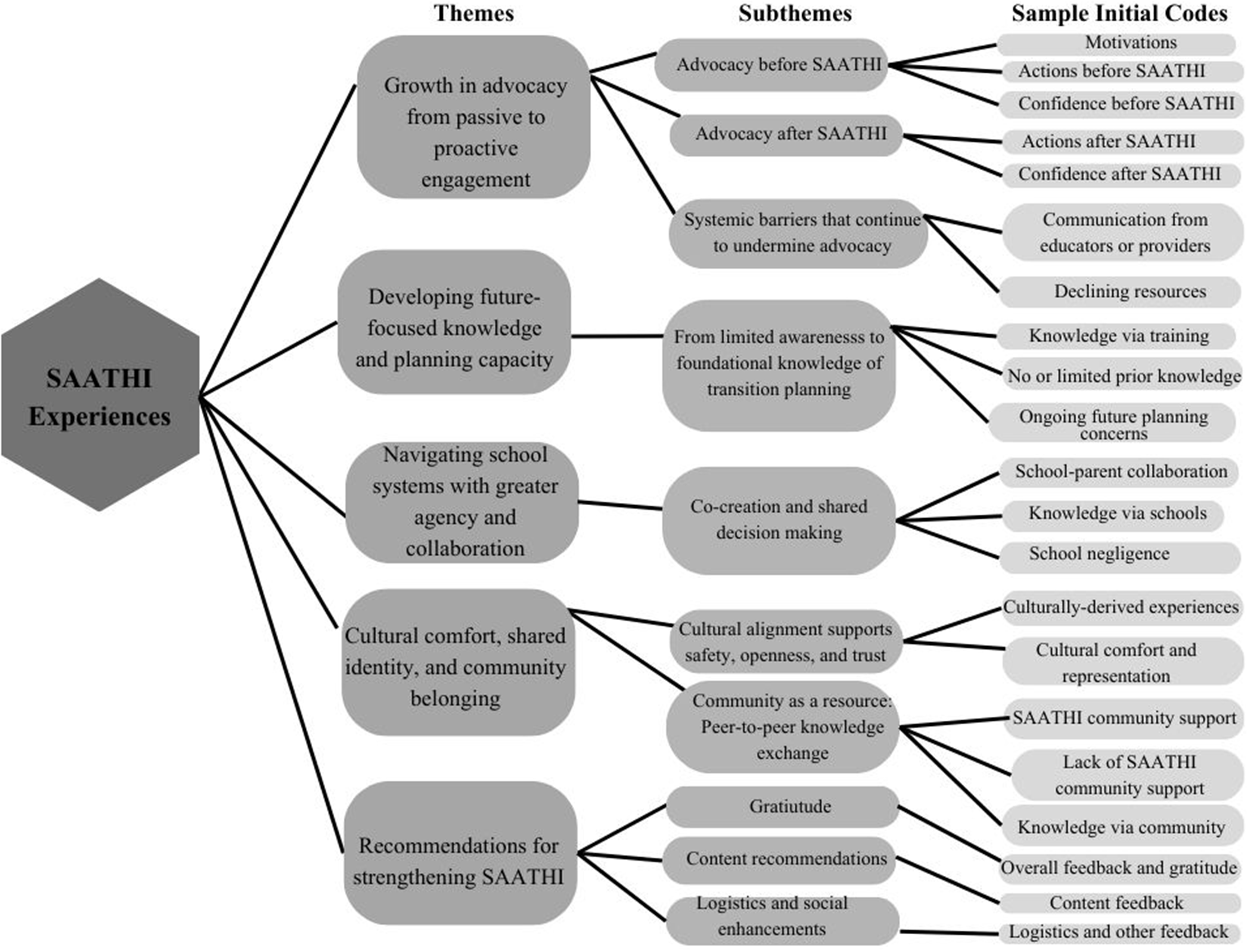
Thematic Analysis Coding Tree.
We applied the initial codes to independently code the second transcript. This allowed us to identify any additional codes that were emerging from the data before finalizing the codebook. For instance, we added the codes “school negligence” and “concerns from the community” to the initial set. Then, we consolidated the initial 37 codes into a preliminary codebook. During this phase, we examined how related codes clustered together within each domain and identified early patterns. For instance, we grouped “ongoing future planning concerns” with “knowledge growth,” as parents were now seeking additional ways to expand their planning capacity and asking more questions about their child's future. We developed the first iteration of the codebook, with clear names, definitions, and decisions, yielding 26 codes. In our codebook, we also counted the frequency of each code within the transcripts, added sample quotes to ensure alignment with the code, and documented any rising assumptions for transparency.
Third, the team independently applied the codebook to the remaining four transcripts, then met in pairs to discuss discrepancies and evaluate whether the codes comprehensively captured the data. The pairs discussed coding strategies, clarified the definitions for specific codes, and reached consensus before presenting their interpretations to the larger team. As part of this phase, we reviewed the excerpts across transcripts to determine whether emerging themes accurately represented participant experiences and whether any codes were redundant, broad, or missing. The whole coding team met to revise the codebook across three iterative rounds. We identified 10 subthemes that aligned with our research questions (Figure 1).
In the fourth step, we discussed what each theme captured, how it connected back to the research questions, and how it differed from other themes. We named the themes to reflect the core meaning across participants’ experiences. This phase also included writing detailed summaries for each theme to ensure consistency and clarity. Finally, we organized the themes to match each research question, using representative quotes to illustrate the nuances across parent experiences. Through multiple iterations, the coding team collectively refined and finalized five themes, co-constructed during team meetings in which we compared coded excerpts, examined patterns, and ensured they were grounded in the data (see Figure 1).
As the final step, the final five themes were shared with participants through member checks via individual summaries using a short Google Forms survey. We shared each theme and asked participants to share whether it reflected their conversations with us during the interview (Lincoln & Guba, 1985). We also included two open-ended questions inviting participants to add reflections on each finding and to share experiences they felt were not represented in the final themes. Of the six participants, one participant completed the member check and shared that the findings accurately matched their experience.
Trustworthiness
We employed multiple strategies to ensure the trustworthiness of this study (Lincoln & Guba, 1982). We conducted member checks to enhance the credibility of the findings, ensuring they accurately reflected participants’ experiences (Birt et al., 2016). However, given that only one participant responded, we integrated additional measures of trustworthiness. The research team also ensured dependability by engaging in a rigorous analytic process, including reanalyzing the same data and comparing interpretations across coders. This iterative process fostered consistency and transparency in the development of findings. Further, we engaged in ongoing dialogue, memo writing, and journal reflections to critically examine our individual and collective biases. We also used triangulation by engaging a four-member coding team with diverse backgrounds and experiences. Each member participated in coding and interpreting the data. Discussions and consensus-based agreements supported both the decision-making process and the diversity of interpretations.
Findings
We conducted interviews with six parents who participated in the SAATHI training. We aimed to understand parents’ perceptions regarding their advocacy skills, knowledge application, community and social support, and their recommendations for improving SAATHI in the future. Findings are organized by each theme below and are available in Figure 1.
Theme 1 (RQ1): Growth in Advocacy From Passive to Proactive Engagement
Advocacy Before SAATHI
For some parents, SAATHI marked a significant turning point in their engagement with school systems and advocacy on behalf of their children. For example, Rabia, the mother of a 20-year-old, reflected on her passivity before the training. She shared that before the SAATHI training, “I usually used to be quiet and accept whatever they [IEP team] tell me, what he [the son] needs. I never argued. I never put my opinion in there.” Similarly, Tabassum, the mother of a 15-year-old, explained how limited knowledge of transition planning had previously hindered her ability to advocate. She shared, “Before SAATHI, I didn't even know what transition is. And he [the son] is at the age that he should have transition assessment or transition goals.”
Advocacy After SAATHI
Parents’ reflections on their advocacy after the SAATHI training revealed a notable growth in knowledge, skills, and self-efficacy. While most participants expressed a strong intrinsic motivation to advocate for their children, often rooted in deep personal commitment, SAATHI enhanced their practical understanding of how to take action and where to seek resources. For instance, Kainat, a mother of an 11-year-old, shared that “If it's for the betterment of my child, I will fight tooth and nail.” Additionally, SAATHI enhanced parents’ understanding of how to advocate and where to access relevant resources for their children. For instance, Kainat shared that after SAATHI, she understood that “If I see something that I don't like, or I don't think it's going the way I think it should be, I will totally speak up. I'm very confident of that.” Maya, a mother of a 22-year-old adult with prior experience in transition planning, shared that she learned about the Texas Workforce Commission through SAATHI, which prompted her to take initiative, saying, “I need to figure out what's going on, how do I make this happen?” Similarly, Tabassum described a transformative realization after working with a special education advocate, stating, “When the advocate was with me, I realized that I could do it by myself. What I told her, she is asking for that. I could ask by myself.” While parents entered the training with the desire to advocate, SAATHI helped build the knowledge, language, and confidence necessary to take meaningful action on behalf of their children and youth with IDD.
Systemic Barriers That Continue to Undermine Advocacy
Participants shared barriers, including limited access to timely and clear information, disorganized service systems, and restrictive eligibility criteria, which often left families feeling isolated or “stuck.” For instance, Hawra, a mother of a 22-year-old, described frustration with a lack of updates regarding vocational rehabilitation services, stating, “The problem is they don’t communicate with you. I didn’t know that it [employment training] hadn’t started yet.” In addition to communication gaps, Hawra noted the sharp decline in available resources once her child turned 19, reflecting, “You can’t really find anything after that, except for the older community.” These insights illustrate how system-level barriers, rather than individual parent limitations, can significantly undermine advocacy efforts and reinforce inequities in the transition planning process and access to adult service systems.
Theme 2 (RQ2): Developing Future-Focused Knowledge and Planning Capacity
From Limited Awareness to Foundational Knowledge of Transition Planning
Before the training, most participants reported having a limited understanding of what transition planning entailed. This lack of knowledge was often linked to systemic communication gaps, in which schools or service providers did not proactively provide critical information. For example, Maya shared that “Nobody really tells you about these things. If you know about it, and you ask them about it, then they’ll tell you.” After completing SAATHI, parents gained knowledge about formal structures (e.g., inclusive postsecondary education programs), available services (e.g., waiver programs), and broader opportunities for youth with disabilities (e.g., employment, community, and housing resources). Kainat reflected, I now know that there are opportunities for our special needs kids, opportunities that we didn't think would be there for them once they leave high school or are college age. There are things that they can do versus just sitting around, at home, and doing nothing. So that was very helpful. Those were things I didn't know that existed.
Similarly, Tabassum shared, “Before getting this training, I didn’t even know that he [the son] should have a transition plan in his IEP.”
Despite this growth, parents continued to harbor deep concerns about their children's long-term future, particularly regarding housing, independence, and safety after high school. As Rabia explained, “After so many years, it was a hard decision. We are not going to live forever. I have started looking at places [housing] for him [the son]. What's best for him? What's gonna work for us?” SAATHI served as a foundational course that helped parents begin to envision their child's future more proactively, while recognizing the possibilities ahead.
Theme 3 (RQ2): Navigating School Systems With Greater Agency and Collaboration
Following SAATHI, parents reported feeling more confident initiating conversations with school personnel and more equipped to navigate IEP meetings and transition planning. SAATHI helped clarify which supports and services should be expected within schools, and, in doing so, highlighted the systemic gaps many families face. Participants commonly described a lack of transparency and communication from school professionals regarding transition services. Several parents reported that key information was not readily provided unless explicitly requested, leaving them confused, neglected, or unsure how to proceed. For instance, Erika, a mother of a 15-year-old female youth, shared, “We are homeschooling right now, because I felt that the school at one point was just trying to make decisions left and right.” Her experience illustrates the erosion of trust that can result from top-down decision-making and minimal parental involvement.
Co-Creation and Shared Decision-Making
Some parents reported that school personnel served as an essential source of knowledge and support, particularly in identifying resources and navigating systems for their child. For these families, the school acted as a central hub, providing access to referrals, resource fairs, and individualized guidance. For example, Maya shared that “The school is the primary [place] for finding all the resources and where you can go. They have resource fairs and things like that to help.” Similarly, Rabia shared an experience where she received support from the school related to her child's visual impairment, sharing, “So the teacher recommended his [current] teacher. She was helping find the best place for visually impaired students. They have a lot of training and a lot of help.” These narratives highlight that, when collaborative and informed, school professionals can play a pivotal role in enhancing parents’ capacity to advocate and plan for their child's future.
Parents emphasized that SAATHI equipped them with the knowledge and confidence to more actively engage with school professionals and adult service providers. Specifically, Tabassum described a clear shift in her role following the training, sharing, “So now, after I learned about the transition planning in SAATHI, I became more involved in his [son's] postsecondary goals. Now, his team always shares the first draft of the goals with me, and we work on them together.” She further elaborated on this partnership by stating, “I asked the school to send me their evaluation of the assessments, so that we could work on goals together.” These conversations demonstrate how SAATHI facilitated a stronger sense of agency and partnership among parents, empowering them to transition from passive recipients of information to active co-creators in the planning process.
Theme 4 (RQ3): Cultural Comfort, Shared Identity, and Community Belonging
Cultural Alignment Supports Safety, Openness, and Trust
Parents reported that SAATHI's cultural adaptations, such as the use of shared language, familiar examples, and facilitators with similar cultural or religious backgrounds, significantly enhanced their comfort. For instance, Tabassum described SAATHI as “Very comfortable because we are all from the same cultural backgrounds, speak the same language, and above all, we all are special needs parents.” The opportunity to connect with others who “understood without needing explanation” allowed parents to speak more openly about challenges and insights. Shared lived experiences reduced feelings of isolation and helped build a sense of community, which, for many, had been lacking in other formal support settings.
Community as a Resource: Peer-to-Peer Knowledge Exchange
Additionally, parents described occurrences of culturally responsive community support extending beyond SAATHI. For example, Rabia shared, “One of the parents from our training who had used the Texas Home Living waiver program explained the program and spoke to me for more than an hour.” Similarly, Tabassum emphasized the support she has received from other parents in SAATHI, stating, “I've been talking to a few parents, they are giving me some tips. I'm getting ready for it, just so I don't miss any kind of opportunity or any, you know, facilities I can get for him.” This illustrates how the relationships formed through SAATHI enabled parents to continue supporting each other informally, reinforcing the value of culturally informed spaces that extend beyond the training.
General Experiences of Community Belonging
Participants described a range of experiences related to their sense of community during SAATHI. For some, the training fostered meaningful, lasting connections that extended beyond the 6-week sessions. These relationships provided informal but essential support, often filling in gaps left by professionals. As Maya reflected, “That's the best thing about this community. They are always very helpful.” However, not all participants experienced this same level of connection or belonging. Some struggled with discomfort or hesitancy in group settings, which influenced their participation. Hawra noted, “I found myself pulling back. It's hard to speak with people you don’t know.” Others, like Erika, shared that dominant voices in the group sometimes limited more inclusive dialogue, stating, “They [SAATHI participants] have a tendency to just explain things from their perspective, but not let others participate.” These reflections suggest that while cultural alignment is essential, individual dynamics, group structure, and facilitation also play a key role in shaping parents’ sense of belonging and community.
Theme 5 (RQ4): Recommendations for Strengthening SAATHI
Overall, participants expressed gratitude for the training and were generally satisfied with the content and outcomes. Participants shared suggestions to improve future iterations of the training, focusing on content, logistics, and community belonging. Content-wise, more employment information could be shared with participants. Further, knowledge related to sexuality education was a suggestion, as many parents were navigating this with their adolescents. Participants also shared that having resources about parent mental health support would be supportive. For instance, Rabia desired support with parental mental health, stating that “Depression is a thing with our community. You know our Desi husbands think that depression is not a thing. But it's a thing, you know.” Regarding logistics, participants overwhelmingly suggested creating different groups based on the age of the child (e.g., parents of teens in one group).
Furthermore, participants preferred an ongoing series of workshops to a once-off, 6-week training session. For instance, Erika shared that “as a parent, I get overwhelmed trying to understand this, and for you to like create the series would help me slow down and understand things better.” Similarly, Tabbasum also expressed that a series of ongoing workshops throughout the year could “help parents address different needs since some have younger children while others have older children.” Finally, participants requested additional ways to connect socially with other parents in the training. For instance, Erika suggested, “I wonder if there's a way to encourage people to participate at least a little bit. Just so the people who are very strong personalities, they just don't take over because you only hear their perspective, right?” Other recommendations included sharing information about living options and resources for older teens and adults. Parents also suggested creating space for parents to share what they have tried in terms of resources, programs, and organizations, with other parents in the training.
Discussion
This study examined the perceptions of six parents who participated in the SAATHI training to understand their advocacy skills, the application of transition-related knowledge, engagement with school-based systems, and experiences with community support. Our qualitative findings build on and deepen the emerging evidence base established by the quantitative evaluation of SAATHI (Shikarpurya & Gilson, 2025), amplifying parents’ lived experiences during and after the training. These findings illuminate the potential of culturally affirming, community-driven interventions, such as SAATHI, to strengthen parental knowledge, advocacy, agency, and sense of community belonging.
Building Knowledge, Advocacy, and Action Through Culturally Affirming Support
Parents in this study described meaningful growth in their advocacy knowledge and confidence following their participation in SAATHI. They reported gaining a clearer understanding of their rights, developing stronger communication and advocacy skills, and feeling more prepared to navigate school and adult service systems—findings that align with prior research on family empowerment and culturally responsive practices (Burke et al., 2016; Taylor et al., 2022). Although many parents entered the training with higher-than-average transition knowledge and advocacy scores, they still lacked foundational information, transition-related terminology, and confidence to advocate for their needs. SAATHI helped strengthen these foundational elements, echoing patterns observed in other culturally responsive family education interventions (Aleman-Tovar et al., 2024; Magaña et al., 2020).
Notably, parents described not only cognitive shifts (e.g., increased understanding and clarity about next steps) but also greater readiness to engage in advocacy-related activities. Some parents noted that they felt more comfortable asking questions during school meetings or exploring available adult services. However, these reflections should not be interpreted as definitive behavioral change attributable solely to the intervention. Instead, they represent parents’ perceptions of increased preparedness and confidence, an essential precursor to advocacy behavior, but not a direct measure of it.
At the same time, parents continued to express concerns about long-term transition-related challenges, including housing, employment, and financial security. These persistent worries mirror the emotional labor widely documented among families of children with IDD (Gilson et al., 2017; Lee & Burke, 2020) and reinforce that short-term training alone cannot resolve longstanding systemic inequities. Furthermore, increased knowledge or confidence did not necessarily translate into enhanced access to services, as families continued to encounter complex bureaucratic processes, inconsistent communication, and restrictive eligibility criteria (Hirano et al., 2018; Shikarpurya et al., 2024). These structural barriers were not reflections of parental capacity but rather the result of broader institutional limitations. As Rabia and Maya shared, even the most empowered parents struggled to navigate unclear or unresponsive adult service systems. Together, these findings suggest that while interventions like SAATHI can support parents’ confidence and preparedness, they must be paired with broader structural reforms to ensure that families’ advocacy efforts lead to equitable outcomes. As such, parent perspectives illuminated how families experience support, where they feel more empowered, and where systemic barriers continue to constrain meaningful participation.
Toward Stronger Family–School Partnerships
Participants also reported changes in their engagement with school-based systems, particularly in interactions with educators and participation in IEP meetings. SAATHI strengthened parents’ capacity to initiate dialogue, co-develop transition goals, and advocate for inclusive services. These changes represent a shift in power dynamics, in which parents who were once passive recipients of school decisions become active collaborators. Prior research has shown that immigrant families often feel excluded from special education decision-making (Xu et al., 2022; Skillern & Carter, 2021), making this shift particularly meaningful. Regardless, challenges with school communication and trust remained for some families. As Erika's experience of withdrawing from public school demonstrates, inconsistent transparency and unilateral decision-making can compromise relationships. These findings emphasize the dual responsibility of schools. Not only must families be equipped to participate, but schools must also be willing to share power and cultivate authentic partnerships (Mazzotti et al., 2021; Schutz et al., 2021).
Community, Culture, and Belonging
A central contribution of SAATHI was its intentional focus on cultural responsiveness and community building. Parents consistently described feeling affirmed and understood through shared language, cultural values, and peer relationships. These features reduced isolation, normalized challenges, and allowed for open dialogue about deeply personal experiences. SAATHI drew upon shared culture as a foundational resource for fostering collective empowerment and belonging. This emphasis on community, culture, and belonging reflected SAATHI's intentional design, grounded in critical frameworks such as CRT and EVF. These frameworks informed the development and implementation of SAATHI by centering family strengths, meaningfully integrating cultural experiences and nuances, and creating affirming spaces for connection and shared learning. As a result, participants gained knowledge about transition planning and also reported strengthened relationships, cultural affirmation, and a greater sense of belonging within the SAATHI community. Parents’ sense of belonging extended beyond the formal training as they continued to support one another informally. These community-based networks reflect the strengths and resilience within immigrant and minoritized family members (Lee & Shikarpurya, 2024; Shikarpurya & Gilson, 2023). However, it is important to note that not all participants felt equally connected. For some, social dynamics or personal comfort levels influenced their engagement. These variations represent the need for flexible, individualized approaches that cater to both individual and collective forms of participation.
Limitations
The findings from this study demonstrate emerging evidence for the benefits of SAATHI training for South Asian parents of children with IDD. However, several limitations must be addressed. Although our study included a small convenience sample (N = 6), we prioritized data saturation over representativeness. The consistency of themes across interviews suggests saturation has been reached, supporting the reliability of our qualitative insights. Second, all participants had completed the full SAATHI training and opted into follow-up interviews, suggesting a subgroup of parents who were particularly engaged or positively affected by it. This bias may have influenced the feedback provided. Third, although we intentionally focused on South Asian families across three community-based organizations, our sample did not capture the full range of diversity within the South Asian diaspora, particularly in terms of ethnicity, language, religion, socioeconomic background, and immigration history. Future research should examine how these intersecting identities shape families’ transition experiences and their engagement with SAATHI. Additionally, although 17 parents participated in the SAATHI training, fewer than half responded to invitations for follow-up interviews, indicating a high level of attrition that may limit the representativeness of our findings. The perspectives captured may reflect the experiences of more engaged parents, who had more time or felt more positively about the intervention.
Furthermore, interviews were conducted 2 to 3 months after the training concluded, which introduces the possibility of recall bias and reduces our ability to capture families’ immediate reactions or the short-term application of skills. Finally, the first author served as the primary interviewer, which may have introduced power dynamics that could have influenced the depth or candor of the participants’ responses. For many participants, this was likely their first time serving as interviewees in a research study, and we prioritized building familiarity and trust to support their comfort in sharing their experiences. As participants interacted most frequently with the first author throughout the training, this continuity was intended to reduce anxiety and support open dialogue. However, the dual role of facilitator and interviewer may still have shaped what participants felt comfortable disclosing. Future studies could consider diversifying the interview team or engaging researchers who were not directly involved in training delivery to ensure that a broad range of experiences and perspectives is captured.
Implications for Future Research
Our findings suggest several important directions for future research on culturally responsive, transition-focused interventions for racially minoritized and immigrant-origin families of children and youth with IDD. First, parents reported increased clarity and preparedness for future planning following SAATHI, highlighting the promise of community-based interventions to strengthen foundational advocacy and transition-related knowledge. To understand the full impact of such interventions, future studies could employ longitudinal research that examines how increases in knowledge and confidence evolve into measurable advocacy behaviors, improved service navigation, and, ultimately, postsecondary outcomes over time.
Second, parents consistently highlighted the importance of peer support, shared culture, and community belonging as core contributors to their engagement. Given that future planning decisions often involve extended family and broader cultural networks, future research could include a wider range of stakeholders, such as siblings, extended family members, community leaders, and individuals with IDD themselves, to capture a more holistic understanding of family systems, cultural dynamics, and collective decision-making in transition planning (Lee & Burke, 2021). Third, future researchers should intentionally recruit diverse members of the South Asian community, reflecting variation in religion, language, ethnicity, and immigration histories, to more fully examine how intersecting identities influence families’ experiences and needs. Replicating and adapting the SAATHI model for other racially minoritized communities could also help establish its relevance and scalability across contexts. Finally, parents’ reflections revealed that even when families feel more prepared or confident, systemic barriers, particularly within school and adult service systems, continue to limit meaningful participation. Future research could therefore examine how school–community partnerships can be developed, structured, and scaled to address structural inequities in transition planning. Together, this ensures that family-focused interventions are complemented by system-level reforms that support equitable access and outcomes.
Implications for Practice
Findings from our study offer several actionable insights for educators, service providers, and community organizations aiming to promote equitable transition outcomes for racially minoritized and immigrant-origin families of children and youth with IDD. First, parents consistently described that SAATHI filled longstanding information gaps, particularly around transition terminology, adult service navigation, and parental rights, which they had not received through schools. These findings suggest that culturally responsive, community-based interventions such as SAATHI can complement school-based transition planning. As such, transition professionals could partner with community-based organizations to deliver information in culturally affirming, linguistically accessible formats that align with families’ lived realities. Parents’ desire for smaller, ongoing workshops throughout the year also indicates a need for sustained, rather than one-time, transition supports.
Second, parents highlighted the importance of cultural responsiveness and shared community as key elements that increased their comfort, trust, and engagement. They emphasized that being in spaces where people “understood” their cultural background, language, and values made it easier to ask questions and share concerns. In practice, this suggests that transition professionals should attend not only to language accessibility but also to cultural alignment and relational safety, creating spaces where families feel valued as equal partners.
Third, as transition decisions are often made within broader family systems, transition planning teams should proactively engage extended family networks, including siblings, grandparents, and other caregivers, recognizing their central role in future planning. Finally, across the interviews, parents shared persistent challenges in navigating adult service systems, citing inconsistent communication and fragmented support. These findings highlight that even empowered parents encounter substantial systemic barriers. To address these challenges, schools, adult service agencies, and community organizations should strengthen cross-system collaboration, formalize communication pathways, and create more transparent and coordinated transition ecosystems.
Supplemental Material
sj-docx-1-ecx-10.1177_00144029261461085 - Supplemental material for South Asian Parents’ Perspectives on Advocacy, Knowledge, and Community Belonging Through the SAATHI Transition-Focused Parent Training
Supplemental material, sj-docx-1-ecx-10.1177_00144029261461085 for South Asian Parents’ Perspectives on Advocacy, Knowledge, and Community Belonging Through the SAATHI Transition-Focused Parent Training by Sehrish Shikarpurya, Anjali Sheth, Amrina Rangar and Carlos Williams in Exceptional Children
Footnotes

Funding
The authors disclosed receipt of the following financial support for the research, authorship, and/or publication of this article: Support Program for Advancing Research and Collaboration (SPARC), (University of Maryland).
Declaration of Conflicting Interests
The authors declared no potential conflicts of interest with respect to the research, authorship, and/or publication of this article.
Supplemental Material
Supplemental material for this article is available online.
References
Supplementary Material
Please find the following supplemental material available below.
For Open Access articles published under a Creative Commons License, all supplemental material carries the same license as the article it is associated with.
For non-Open Access articles published, all supplemental material carries a non-exclusive license, and permission requests for re-use of supplemental material or any part of supplemental material shall be sent directly to the copyright owner as specified in the copyright notice associated with the article.
