






Abstract
The bifurcation of theology and biblical studies has become a longstanding source of lament among confessional scholars. Though biblical theology and the theological interpretation of Scripture have sought to address this divergence, the disciplinary channels remain deeply cut into the academic soil. In both hermeneutical convictions and methodological commitments, theologians and biblical scholars seem to operate in neighboring yet different fields, or to work the same fields yet with different tools and aims.
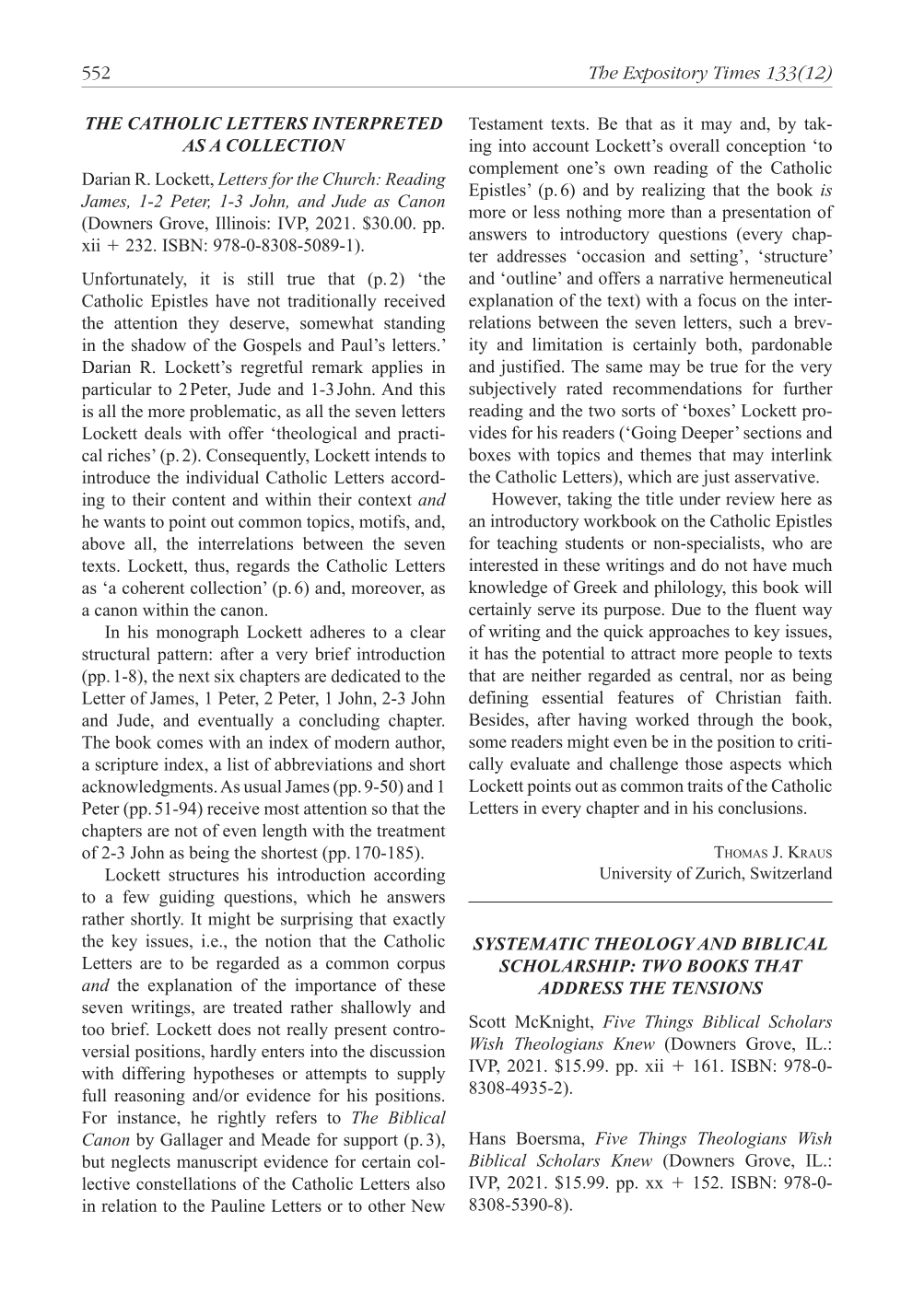
In a pair of companion books, IVP Academic hosts a dialogue between two senior figures designed to promote interdisciplinary partnership and mutual understanding. Since the authors – Scot McKnight and Hans Boersma – each supply a foreword for the other’s work, there is indeed the sense that a conversation is underway and bound to continue, even if off the page. From the titles, their dialogue is ostensibly framed by epistemology, by what and how one knows or does not know the ideas central to each academic discipline. What emerges is not so much an exposé of knowledge gaps but a reasoned critique of the perspectives, assumptions, and objectives underlying both fields of study. Brevity is assured in that each author has been allotted only five areas to discuss.
The five Boersma places onto the table are ‘Christ,’ ‘Plato,’ ‘Providence,’ ‘Church,’ and ‘Heaven.’ From his angle as a theologian, there is no ‘Scripture’ without these. The texts bear no meaningful meaning apart from Christ, whose real presence is to be discerned in holy writ. Authorial intent is persistently relegated to the interpretive sidelines as emphasis shifts to the fuller Christological sense. Alert to the reflex in biblical studies to charge theologians with anachronism, Boersma contends that ‘Christian Platonism’ best articulates and makes sense of the Bible’s core ideas. Anticipating the criticism that such a metaphysic might not accommodate Hebrew and early Jewish thought, Boersma even links Plato with the Shema of Deuteronomy 6:4. Next, he argues that divine providence ensures the Bible’s reliability as divine revelation – as sacrament, even – and that it is the community of faith and its creedal tradition that enables faithful reading. Finally, without elevated sights set on heaven above, there is no hope for transformation and divine encounter: otherworldly contemplation trumps the distraction of this-worldly historical investigation (and academic elitism).
Like Boersma, McKnight cherishes theology as an ecclesial discipline that should lead to an encounter with the Triune God. Both place Scripture at the heart of their discussions, but for McKnight, the biblical texts must be the most weighted points in the hermeneutical circle oscillating between theology and Bible. Retrieval (recovering what the Bible says) and expansion (developing layers upon layers of new ideas) are models that must be integrated, but the former is paramount less the textual moorings slip. McKnight’s call to the primacy of Scripture is not, however, an appeal for biblicism, a pernicious trend he challenges at length. Theology’s role in biblical scholarship is affirmed in the second chapter—the idiom and creedal statements of later theologians can illuminate the exegetical task. Using the example of Barclay’s work on gift, he then shows how ongoing exegesis must reshape systematic theology. In his final two chapters, McKnight urges theologians to take narrative and ethics more seriously—the Bible casts a storied frame (or frames, to go with McKnight’s emphasis on the multiple narratives at work) and envisions an embodied theology lived out in community (with Romans 12:1–2 as test case).
The dialogue is constructive and insightful. Conviction and urgency obtain but without the biting polemic so common in our day. McKnight and Boersma may not be the most representative figures of their guilds, but they are seasoned and duly respected confessional leaders who have long navigated the theology-Bible tensions. As Boersma admits, his interlocutor is more versed in theology than he is in biblical studies; even so, McKnight seems to call theologians to core ideas that theologians have already granted to biblical studies (ethics and narrative theology draw on other wells than biblical scholarship, and Barclay was in part prompted to study Paul and gift by a theologian). I also felt that Boersma works with too rigid a typecast: as he knows, not all biblical scholars are dyed-in-the-wool historical critics. His arguments on Christian Platonism, however—while in need of careful consideration—may reinforce the reservations of those hardcore historians. These observations, however, are intended as follow-up conversation pieces more than critiques because the authors and the editorial team at IVP should be commended for a lively, engaging, and edifying dialogue that constructively addresses the longstanding tension between the Bible and theology.