







Abstract
Romano Romanelli designed the Monumento ai caduti d’Africa at Siracusa in 1938 to commemorate the Italian colonization of East Africa. The structure was originally intended for Addis Ababa, Ethiopia, but it was never constructed within the colonial capital. After the fall of the regime and the collapse of Italy's colonial program, it was eventually installed in Siracusa, a Sicilian port city once considered a springboard for the fascist colonies, in 1968. The bronze statuary and marble relief panels combine to create an artistic program that continues to valorize colonialism and debates surrounding the monument remain unresolved. This paper considers the controversial history of the Monumento ai caduti d’Africa in relation to Italo-African colonial narratives and legacies. I propose the practice of artistic intervention as a potential solution that could neutralize or counter the fascist signification of this structure.
Introduction
Positioned on a rocky cliff overlooking the Sicilian coastline in Siracusa is an often-overlooked colonial monument commonly known as the Monumento ai caduti d’Africa (Figure 1). 1 Like many structures of fascist origin, this monument has largely disappeared from public discourse. An embodiment of the former regime's colonial exploits in Africa, the commemorative work, designed by Romano Romanelli in 1938, has since been distanced from its fascist signification. Its present obscurity is encouraged by the site's apparent lack of critical engagement with its fraught history. Yet the material, iconography, and style of this monument are undeniably fascist in design. Consisting of a concrete base covered in marble from Chiampo, Vicenza, the overall form of the Monumento ai caduti d’Africa resembles a rationalist crypt, out of which a ship's prow rises towards the sea. Steps run around all four sides of the base, leading viewers up to the crypt's entrance, which is surrounded by an engraved record of the battles that had led to the formation of Italo-Africa. Just in front of the doorway, a bronze statue of a cavalry cadet grasping the bridle of a horse lurches forward to greet visitors. His form is dynamic and heroic, signaling the tone of the monument's broader decorative program. Five additional bronze representations of soldiers and workers of the Italo-African colonies surround the structure on the remaining three sides. These personifications embody the different branches of military and colonial service within the fascist empire. Running counterclockwise around the monument are the infantryman, the ascaro (African mercenary), the marine, the aviator, and the worker. Each bears the tools of their trade and are outfitted according to their colonial role—for example, the aviator wears a flight cap and fatigues while holding the kind of missile that would be dropped from his plane hull in battle. The signification of the bronze statuary is reinforced through a frieze of Carrara marble relief sculptures that runs the length of the monument. These renderings combine high and low relief to show men in action. Expanding upon the colonial roles represented in the bronzes, the marble panel's narrative program includes soldiers in battle, workers constructing colonial infrastructure, and indigenous Africans. In one panel, viewers witness the charge of a cavalry unit; in another, soldiers appear to line up a shot from a discreet location beneath a tree canopy. Further panels depict Alpini—members of Italy's famed and revered specialist mountain infantry—scaling a rocky outcrop, colonists using pickaxes and shovels to rework the earth, shirtless gunners crouching amongst vegetation, and soldiers firing a cannon under the direction of an officer observing the scene through binoculars. However, there are also sections depicting indigenous Africans that are more ambiguous. In one scene they appear to charge forward in various states of undress, many barefoot and nude to the waist. In another they sit shrouded on horseback looking out to sea. In a third, these figures lead camels while toting rifles. While they are rendered similarly as heroic figures, the ascari appear exoticized and primitivized compared to their white Italian counterparts. Together the sculptural reliefs and statuary convey a triumphant colonial narrative.
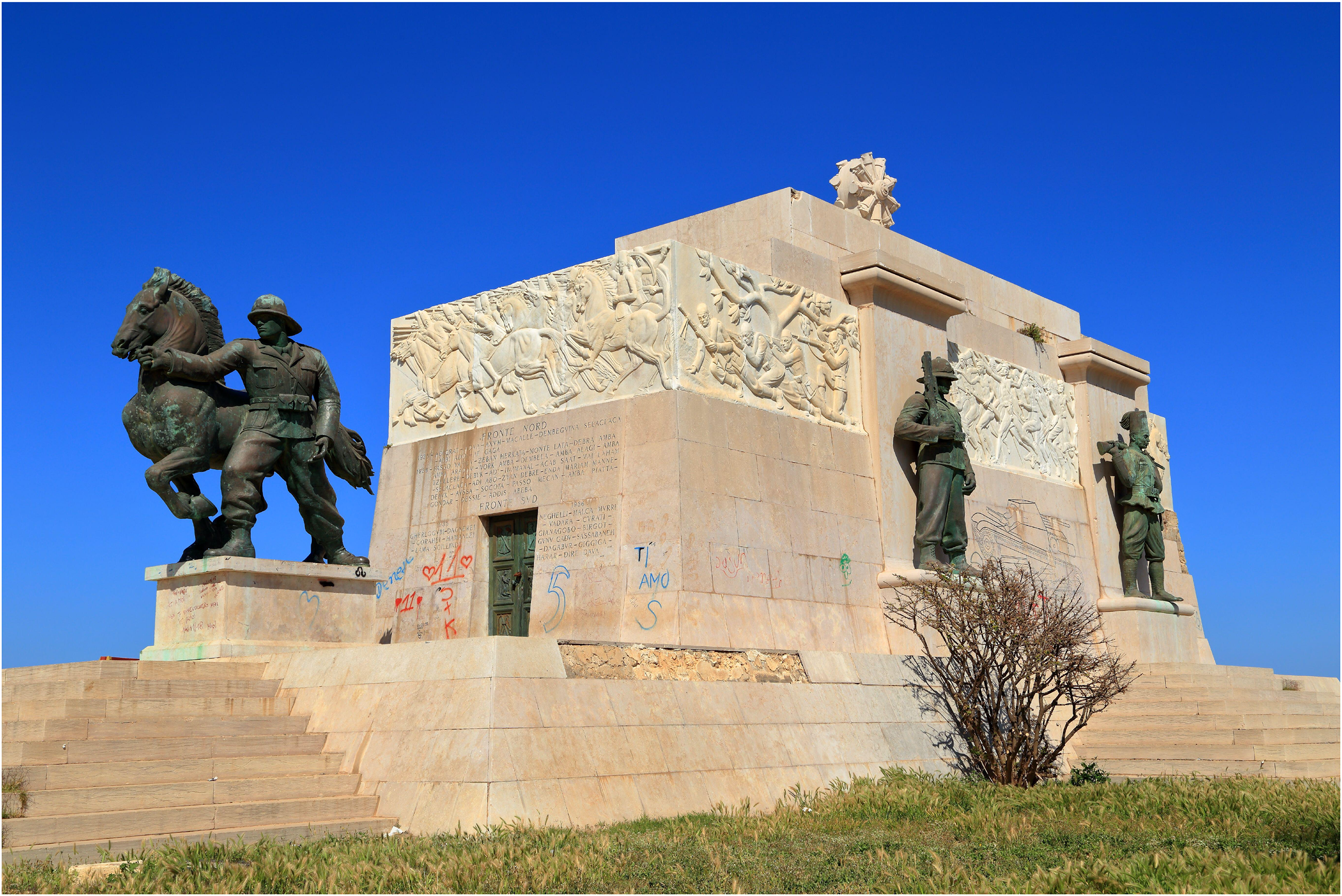
Romano Romanelli, Monumento ai caduti d’Africa, designed 1938, constructed 1968, Siracusa, Italy. Photo by Matthias Scholz/Alamy, 2019.
The commemorative program extends further into the interior of the crypt. Consisting of a large room covered in polished red porphyry from South Tyrol, the crypt follows the example of First World War ossuaries with its focus on the unknown soldier resting on a sarcophagus. Rendered in Carrara marble, the unknown soldier is embodied as a larger-than-life (nearly 10 feet in height) representation of a dead soldier wrapped in a shroud (Armiero et al., 2022: 116). The delicate rendering of the cloth covering the soldier's form speaks to Romanelli's mastery of marble. The soldier's musculature and virility are easily apparent under the seemingly thin veil of the shroud. Yet his face is obscured, reinforcing the notion that the sculptural form serves as a stand-in for one and every soldier of the Italo-African colonial wars. A feeling of reverence pervades the space, suggesting that the soldier had a noble death in distant imperial lands while in service of the Italian empire (Von Henneberg, 2004: 67). Stylistically, the unknown soldier is consistent with the bronze statuary and the relief panels. Romanelli's signature idealizing and classical style favored by the fascist regime in its final years is easily apparent. In particular, the semi-nude forms in battle recall the classical friezes and relief panels often present in Greek and Roman precedents, but the fascist military attire and instruments of modern warfare clearly situate the monument as a work deriving from the ventennio.
Romanelli designed the Monumento ai caduti d’Africa to commemorate the campaign for the colonization of East Africa. The monument was originally intended for Addis Ababa, Ethiopia, but it was never constructed within the colonial capital. After the fall of the regime and the collapse of Italy's empire, Romanelli, backed by postwar government officials, sought a new location for the monument's assembly on Italian soil. There were debates and protests surrounding the installation of this commemorative monument to fascist colonization. Nevertheless, in 1968 it was built in Siracusa, a port city once considered a springboard for the fascist colonies. However, the building site posed a host of problems. Before the monument was installed, the area housed the abandoned remains of deposits and warehouses. Even after the Monumento ai caduti d’Africa was placed on this site it was inaccessible for 20 years. During this period, the monument fell somewhat into a state of disrepair, as several pieces of it were stolen or destroyed. It was not opened to the public until 1986 when the refuse was cleared and a small square was built around the monument (Coriglione, 1999: 41–42). Today, the structure appears typical of fascist-era commemorative constructions and the controversies surrounding the monument remain unresolved. The ongoing vandalism of the site has led to repeated marring of the original design through graffiti and iconoclastic breaks into the marble façade. Nevertheless, the monument continues to valorize colonialist and subjugating pasts. This paper considers the controversial history of the Monumento ai caduti d’Africa in relation to Italo-African colonial narratives and legacies. As this monument was constructed in the postwar era, it both reflects the ideologies of the former fascist regime and represents a continuation of the colonial mindset within Italian politics and society. This grand structure repurposes ideas of italianità (Italianness) codified in the ventennio to ensure a pro-colonial understanding of Italo-African history, which runs counter to the reality of the multiracial and multicultural nation. Considering the Monumento ai caduti d’Africa's continued veneration of colonial era activities and ideologies, I propose the practice of artistic intervention as a potential solution that could neutralize or counter the fascist signification of this structure.
Italian colonial narratives and histories
Despite the relative brevity of Italy's colonial era, which spanned approximately 60 years, the process of colonizing Libya, Somalia, Eritrea, and Ethiopia was diverging and complex. Beginning in 1890 with the naming of Eritrea, the height of Italy's colonial power came during the fascist period with the Second Italo-Ethiopian War (1935–1936). Prior to the invasion of Ethiopia, few Italians had ventured to the Italo-African colonies. Yet a new wave of colonial fervor, fostered by the fascist dictator Benito Mussolini's desire to remake the Italian empire in Rome's image, led to a rapid colonial project encouraging Italians to migrate to Africa and help establish systems of agriculture and infrastructure (Andall and Duncan, 2005: 10–11). In many ways, the speedy victory of the fascist regime in Ethiopia can be attributed to the inhuman practices of the Italian forces—including the use of outlawed gasses. Mussolini was well-aware that the Second Italo-Ethiopian War needed to be a success if he hoped to remain in power. After the shameful loss of the First Italo-Ethiopian War (1895–1896) in the Liberal era, the second attempt at colonizing Ethiopia allowed for a rewriting of distasteful histories. However, it was not long before Italy was divested of its colonies. With the nation's defeat in the Second World War, the killing of Mussolini, and the collapse of the fascist regime, the new Italian Republic experienced a geopolitical transition that rewrote the nation's borders (Distretti and Petti, 2019: 49).
Thus began a new postcolonial era in the second half of the 20th century—one which is characterized alternatively as a period of historical blindness, revision, or shame. In the face of a complicated colonial past full of violence and subjugation, an uncomplicated and singular self-image prevailed: Italiani, brava gente (Italians, good people). Positioning themselves against the so-called “bad Germans”, Italians projected their self-image as quintessentially good people, incapable of the atrocities of their own colonial history. During the postwar era Italy formed a public history of the colonial period that is constructed, manipulated, and full of gaps—particularly surrounding the histories of violence and shame associated with colonialism. Many historians see the Republic as performing a whitewashing of the colonial period or enacting a policy of ‘colonial amnesia’ (Chalcraft, 2018: 1). However, it is important to acknowledge that the Italian people did not suddenly stop speaking of the Italo-African colonies, but rather failed as a society to meaningfully engage in critical heritage-making around colonialism.
In recent years, there have been substantive efforts on the part of scholars, activists, and politicians, both within and outside of Italy, to address the gaps in the historical knowledge of the colonial era. 2 As Jacqueline Andall and Duncan (2005: 3) have stated: ‘Investigating the legacy of Italian colonialism is undoubtedly a complex and vast task. It warrants an approach that encompasses a wide range of perspectives—political, social, cultural, institutional, and economic—as well as one which incorporates the viewpoints of both the colonized and the colonizers.’ This complex and monumental undertaking is underway, but inevitably must be done carefully through the examination of a multitude of sources, including those found in archives, oral histories, and monuments. Seeking to contribute to this growing body of scholarly work, this paper interrogates the ways in which the Monumento ai caduti d’Africa continues to valorize colonial narratives of racial superiority and fascist might in an ostensibly ‘post-colonial’ Italy.
1938: Design
The inception of the Monumento ai caduti d’Africa can be traced back to 1938, when Romano Romanelli received the commission for the monument directly from Mussolini (Armiero et al., 2022: 117). This was not the first commission that Romanelli had received from Il Duce, nor even his first colonial work. By the late 1930s, Romanelli was one of the favored artists of the regime, particularly celebrated for his monumental sculptures (Bellonzi, 1974: 5). During the interwar years the artist became known for work exhibiting fervent patriotism, heroic athleticism, and classical idealism (Bellonzi, 1974: 6). Romanelli's artistic lineage can be traced to several illustrious Florentine sculptors active in the 19th and 20th centuries. Moreover, his style is often seen as evoking the Latin traditions and forms native to the peninsula, infusing them with a ritual nationalism deriving from the Risorgimento era (Torriano, 1941: 10–13). Thus, even before the rise of fascism, he was considered a patriotic artist. As a former squadron commander during the First World War, Romanelli followed the path of many Italian veterans—such as Carlo Carrà, Fedele Azari, and Achille Funi—who returned to the arts during the interwar years. He positioned himself within Mussolini's complex artistic program to continue his service to the state (Bellonzi, 1974: 8). It must be acknowledged that Romanelli was not a passive follower of fascism. Even though he was opposed to the later alliance between fascist Italy and Nazi Germany, he was well-aware of the colonial program in Africa and supported the regime's endeavors to subjugate the indigenous peoples of Libya, Somalia, Ethiopia, and Eritrea (Campana, 1991: 75). In many ways, the intimate relationship Romanelli shared with fascism and its actors caused his name to be largely omitted from the art historical discourse of the 20th century.
Even as Romanelli was a favorite artist of the regime, his commission for the Monumento ai caduti d’Africa was unprecedented (Campana, 1991: 75). His earlier public monuments typically feature a simpler iconographic program consisting solely of bronze figural groupings, such as his Statue of Hercules strangling the Nemean Lion—designed in 1910–1911 and placed in Piazza d’Ognissanti in 1937. With its multipart structure of concrete, marble, and bronze, the Monumento ai caduti d’Africa was undoubtedly a complex commission. As was previously noted, the monument was designed for installation in Addis Ababa. One of two monumental sculptural programs commissioned in the late 1930s on the premise of urban renewal, the public work was designed to fascistize and Italianize the new colonial capital of the Italian Empire. As Marco Armiero, Roberta Biasillo, and Wilko Graf von Hardenberg have discovered, propagandistic news about these monuments was already circulating before their construction (Armiero et al., 2022: 117). They were intended to celebrate the two phases of colonization—war through the commemoration of legionaries and settlement through a tribute to the workers who constructed the new infrastructure of Addis Ababa. However, on the eve of the Second World War, dwindling funds dictated that only one of the two could be built. It was decided that the fallen soldiers should receive recognition with a monument dedicated to their sacrifice before the workers who were still inhabiting the city and the broader colony at that point (Armiero et al., 2022: 117). Therefore, in 1939 Romanelli began to construct the various decorative elements destined for the monument.
Even though this was the first commission of this scale for Romanelli, its design was very much based on the historical precedents already formulated by the regime during the post-First World War period. Soldiers who died in the Great War were honored under fascism as exemplars of heroism and associated with patriotic sacrifice. As Hannah Malone (2022: 35) has argued, the key purpose of ossuaries dedicated to fallen soldiers constructed under fascism was ‘to exploit the example of the dead in order to foster nationalism, militarism, and imperialism.’ The perceived patriotism, militarism, and masculinity of the soldier fallen in battle continued to be valued decades after the Great War and proved a valuable propagandistic tool during and after the Second Italo-Ethiopian War. Fascist ideology demanded a political faith in the regime—often referred to as secular religion—and the fallen served as both martyrs and exemplars in the regime's pantheon (Malone, 2022: 35). As a model established long before fascism, which drew on traditions of European and Italian nationalism, the power of the dead to unite the nation was well understood (Malone, 2022: 37).
However, Romanelli's version of an ossuary takes the fascist narrative a step further as it functions simultaneously as an honorific site to the colonial war's dead and as a statement of Italian racial superiority and might. While the tomb of the unknown soldier promotes ideas of virility and sacrifice, the imagery of Africans in both the relief friezes and the bronze statue of the ascaro is primitivizing. The ascaro, an indigenous Eritrean or Ethiopian fighting on behalf of the colonizing Italian forces, either for pay or through subjugation, is presented as the Italo-African ideal while simultaneously performing an othering of the figure and by extension all Black persons. While the statue stands proudly alongside his white counterparts, he is not presented on equal footing: he stands barefoot and dressed in an exoticizing manner despite his military jacket. The ascaro wears cropped and billowing pants and an outdated shacko (tall canonical military cap with plume or tassels), reminiscent of 19th-century interpretations of African military attire found in orientalist imagery. Moreover, his jacket is cinched tightly at the waist causing the end of the garment to flare out in ruffles. The silhouette of the figure appears softer and feminized, especially when compared to the straight and angular lines formed by the uniforms of the Italian soldiers. The bare feet of the ascaro are the most shocking of the exoticizing elements. It would have been unconscionable for a soldier to enter a battle with the deadly weapons of modern mechanized warfare bootless, but this is not intended as a literal representation of an ascaro. Rather, this figure and his distinctive military attire signal the precarious place of the indigenous colonial soldier, who stands alongside Italians but is not one of them—for he is perceived as less than civilized.
Yet the inclusion of Black bodies on this monument is unusual. As Krystyna von Henneberg discusses in Monuments, Public Space, and the Memory of Empire in Modern Italy, colonial monuments erected under fascism struggled to reason with the racial dimension of colonial engagement. Depictions of African women are virtually non-existent in this context, and representations of African men are extremely rare. These omissions can largely be traced to the sexual and military anxieties of white Italians surrounding Black bodies, which led to fears that their presence would undercut the imperial message of white superiority (Von Henneberg, 2004: 61–63). But it must be remembered that this monument was not originally intended for Italian soil, therefore, the presence of the ascaro and other Black figures serves a different function in the colonial context. The cult of the fedele (loyal) ascaro is promoted through such imagery, encouraging the Ethiopians of Addis Ababa to be faithful to the Italian empire while simultaneously reminding them of Italian dominance and authority (Von Henneberg, 2004: 64–65). Moreover, the white Italian settlers viewing the Monumento ai caduti d’Africa would also be encouraged to follow the model of the faithful soldiers and workers depicted in the monument's iconographic program, while distinguishing themselves from their African neighbors. Therefore, the monument was intended to reinforce the segregation already enacted through the fascist urban planning of Addis Ababa. 3
1968: Construction
The Monumento ai caduti d’Africa was never constructed on African soil and was not installed at its current home in Siracusa until 1968. Its belated installation speaks to the uneasy and controversial relationship in the postwar years between the legacy of fascism and public memorializing of Italian ethnic identities (Ruberto and Sciorra, 2022: 18). As Marco Armiero, Roberta Biasillo, and Wilko Graf von Hardenberg (2022: 117) have outlined, the monument was a costly endeavor. 4 It became difficult during the years of the Second World War for the regime to justify the high costs associated with the construction of the monument in Addis Ababa. The materials for the base of the monument along with Romanelli's decorative elements remained in the care of the Brothers Gondrand National Transport Company, the corporation originally charged with shipping the monument to Ethiopia. The sculptures ended up dispersed in a variety of locations throughout Italy and the drawings and assembly instructions were deposited in Chiampo. 5 During the Second World War, the regime was faced with further legal fees as they attempted to sever the transport contract with the Gondrand company and Romanelli continued to demand the maximum remuneration for his work. After the fall of fascism and Italy's loss of its African colonies, Gondrand no longer wished to hold the monument, but the newly formed Republic could not afford to use its limited resources in the postwar years to construct the work or pay for its holding. Therefore, like the Italian nation itself, the monument remained fragmented and incoherent for decades.
What could be done with this never-erected monument to fascist colonial power? Romanelli sought to recover the money that was owed to him for his work and considered the re-use of his monument in an alternative context to be the best possible outcome. However, he did not want the work to be sold, as he believed that the Italians could still return as colonizers to Ethiopia. In the end, the newly formed government recuperated some of the expenses associated with the monument by selling some of the marble cladding and the massive aviation engine that was once intended to crown the Monumento ai caduti d’Africa. When it became clear that the work would not reach African soil, Romanelli fought to find a public venue in Italy. But for this to happen, the work's fascist and overtly colonial signification needed to be stripped or at least obscured. The simplest solution appeared in the renaming of the work. Originally titled Monumento al Soldato e all’Operaio, the monument was renamed several times, eventually being dubbed Monumento al lavoratore italiano in Africa, only for it to be later recognized by its unofficial title Monumento ai caduti d’Africa. While it is almost never referred to as Monumento al lavoratore italiano in Africa today, this name reflects the postwar government's desire to distance itself from the fascist regime's military exploits in Africa, while celebrating the colonial workers of the interwar period as a means to reunite the nation.
Even after the work's renaming, it was difficult to find a permanent home for the structure. Nearly every kind of location was proposed, from warehouses, to gardens, to public piazzas. Specific suggestions included the Museo nazionale di Castel Sant’Angelo in Roma, the Sovrintendenza alle Gallerie di Firenze, and the Ente autonomo della mostra d’Oltremare e del lavoro italiano nel mondo in Napoli. After several failed attempts at securing a permanent location, it was determined that a site with a sea view would be the best home for the monument. Such a location would present Italy as a Mediterranean power—countering the national loss of the colonies and the numerous military defeats of the Second World War that left Italy appearing weak on the world stage. The first municipality to be contacted about the monument was Roma, who rejected the offer outright. Next, the mayor of Napoli was approached, as many Italian soldiers and workers departed from this city during the interwar years, heading for the colonies. But the offer was once again rejected. Finally, it was determined that Sicily was to be the location for the Monumento ai caduti d’Africa. Sicily appeared to be the best solution for two reasons. First, as the closest Italian landmass to Africa, the placement of the monument here would symbolically serve to reaffirm Sicily as the metaphorical port to the former colonies. Second, there were numerous refugees from the African colonies inhabiting the island. It was believed that labor costs could be reduced due to the perceived willingness of such workers to continue contributing to the glorification of Italian colonialism. Thus, Sicily could serve as a proxy for the African colonies, even providing the cheap African labor that would have similarly been employed in Ethiopia. The negotiations with the Sicilian regional administration proceeded and, in 1952, a piazza close to the Siracusa port was chosen as the final site to host the Monumento ai caduti d’Africa.
Additionally, I propose that the placement of the Monumento ai caduti d’Africa in Sicily aligns with broader colonial discourses surrounding the island's history. From the very formation of the nation, during the Risorgimento, Italy has been a divided country. The South (including Sicily and Sardinia) is treated as a separate entity from the North with its own culture, politics, and social structures. Moreover, the South, and Sicily in particular, has been represented within the Italian imaginary as exoticized and othered. For over 150 years, the conception of due Italie (two Italies) has been employed to distinguish the two halves of the nation, with Roma serving as the dividing line. As Jane Schneider (1998: 1) has noted, the ‘Southern Question’ highlights how the historic poverty and economic underdevelopment of the South has been used as a means of distancing the peoples of these regions from those in the North. Moreover, due to notoriously corrupt politics and manifestations of organized crime, the stereotype of the Southerner as rebellious, lazy, old-fashioned, and incapable of bettering their own society still prevails. The reasons behind this perception and divide are numerous and complex but can be boiled down to three dominant socio-political histories. First, just after the nation was unified a clear difference in the histories and societies of the South became apparent. The South's colonial history has led to the development of a multifaceted culture influenced by numerous ethnic groups. While much of the peninsula has been occupied by external powers at one time or another, the South—especially the islands of Sicily and Sardinia—has almost always been governed by foreigners (Schneider, 1998: 1–4). Consequently, even as Italy incorporated these previously occupied territories, they never really lost their status as colonies. Second, the North experienced the industrial revolution more rapidly and decades before the South. As a result, not only were the northern regions more technologically advanced (and therefore ‘modern’) but they were also more economically sustainable. As such, a dichotomy emerged contrasting a productive, industrial North with that of an underdeveloped, agrarian South. Even today, disparities between monetary capital, employment, tax revenue, trade, and industry remain dramatically high (Schneider, 1998: 3). Third, there is a distinct racial and cultural dimension to the formation of due Italie. Within Europe, there has long been a perception that the Southern nations which surround the Mediterranean are less ‘civilized’ due to the warm climate and the less hospitable (often desert) terrain. As Schneider (1998: 4) has asserted, some of the travelers voyaging from North to South invented theories relating climate and topography to the ‘character’ of the peoples they encountered. This opinion was reinforced by racially dichotomous discourses in which Mediterranean culture was essentialized. Perceived as homogeneous and unchanging, the lands around the sea basin were viewed as tainted by the historical, cultural, and racial interconnections with the Islamic societies of North Africa and the Near East. As a result, the young Italian state condensed all its perceived social ills into the Southern region, thereby allowing the North to define itself as white, Christian, and unpolluted alongside the Northern European nations (Schneider, 1998: 9). Together, these histories have formed an Orientalizing view of the Italian South, with Sicily often upheld as the exemplar of racial and regional difference. Orientalism, as applied to Muslim societies of the Middle East, was frequently used to justify the colonial projects of the emergent European powers. The imperial nations of Europe declared these societies to be inferior and uncivilized, propagating their occupation as beneficial to the indigenous populations. While Sicily and the rest of the Italian south did not need to be converted to Christianity, the peoples of this region were still viewed as ‘others’, separate and distinct from the ‘true’ or ‘pure’ Italians of the North (Schneider, 1998: 5). Therefore, Sicily functions as both Italy's orient and as an internal colony, making it the ideal place to relocate an Italo-African colonial monument. Building the Monumento ai caduti d’Africa in Siracusa simultaneously strengthens the colonial view of Sicily and offers a corresponding locale to Addis Ababa on Italian soil that promotes and interconnects the disparate colonial histories of the nation. 6
Now that the site of Siracusa was determined, all that remained was the question of stripping the monument of its fascist signification. Two major elements were marked for removal. One of the bronze statues depicting a soldier belonging to the Voluntary Militia for National Security was replaced by the sculpture of the laborer, reinforcing the notion that this monument was dedicated to colonial workers rather than fascist soldiers. Additionally, the substituted laborer sculpture provides a visible connection to pre-fascist, liberal Italian settler colonial projects, which are generally regarded in a better light—despite the numerous exploitative and racist practices enacted during that period—than those of the ventennio. It is worth noting that the worker sculpture was not rendered by Romanelli, rather by one of his pupils, and it stands at slightly reduced dimensions to the other bronzes out of respect for the master artist (Coriglione, 1999: 41–42). The overt reference to the regime in the form of the Italian coat of arms under fascism was also removed. However, all of the other elements, including the primitivizing imagery of the ascari, were considered to be in line with the colonial messaging of the postwar period. These elements were not seen as signifiers of fascism, but rather understood to confirm the perception of Italians as brava gente colonizers. While there was an attempt to distance the depictions of national and indigenous fighters and the colonizing worker from their fascist origins, no similar attempt was made to divorce them from the colonial narrative of Italian racial superiority and might.
In 1968, the construction of the Monumento ai caduti d’Africa was finally complete. But there were some difficulties with the chosen site, Piazza Cappuccini. The coastal area was derelict in the postwar period, full of abandoned remains of deposits and warehouses. The clearance of these resulted in further costs added to the already long list associated with the monument's history. Nevertheless, the piazza offers an ideal location for the promotion of Italian colonialism. With sweeping views of the Mediterranean coastline, the placement of the Monumento ai caduti d’Africa in Piazza Cappuccini reinforces the historical signification of Siracusa as a springboard for the former Italo-African colonies and Sicily as a present-day internal colony. However, the monument's construction did not end the complex debates and controversies surrounding the structure.
1986: Public presentation and debate
Although the construction of the Monumento ai caduti d’Africa was finished in 1968, the site was not fully open and accessible to the public for nearly 20 years. Controversies and funding issues continued to revolve around the monument and the piazza was largely closed off during this period. The area around the monument became derelict as the square was immersed in a tangle of scrub and garbage. The view of the terraced monument as seen today was not revealed until 1986, when the square was cleared and refurbished (Coriglione, 1999: 42). In large part, the years of neglect relate to the changing opinions surrounding the history of fascism and colonialism in the last few decades of the 20th century.
As previously discussed, during the postwar period Italy was in a state of upheaval. Although fascism was largely regarded as a blight on the peninsula's history, the colonial exploits of the regime were viewed more favorably. Jasper Chalcraft (2018) has shown that public memorial spaces, alongside other institutions (such as museums, exhibitions, and archives), ignored or masked the difficult aspects of Italian colonial heritage. This led to institutional silences, censorship, and a romanticization of colonial history. Thus, the Monumento ai caduti d’Africa can be seen as one of the many public forms of staged memory, intended to obscure the violent and unsavory aspects of Italy's colonial era in favor of projecting a more palatable history of national pride (Chalcraft, 2018: 2). However, the monument's very presence and iconographic program works against this narrative, revealing the heavy hand Mussolini's regime had in the Italo-African colonies. So, like many fascist structures across the peninsula, Romanelli's monument fell out of public discourse and sight for some years.
While it is true that the peninsula did experience some level of defascistization, the continued presence of such monuments remained largely unchallenged until the 1980s. Furthermore, Italy arguably did not effectively or fully confront the decolonization process until this period. Although the years of 1890 to 1943 are generally regarded as the nation's brief colonial era, Italy sustained other forms of colonial relations after the loss of its official colonies in Eritrea, Somalia, parts of Libya, Ethiopia, the Dodecanese Islands, and Albania. As Cristina Lombardi-Diop and Caterina Romeo (2012: 1) have stated, power was effectively maintained at a political level, as in the case of the Italian Trusteeship Administration in Somalia from 1949 to 1960, and at an economic level, as transpired in Libya until 1970. Only in the 1980s did new scholarship begin to address the divergence between first-hand and revisionist accounts of the country's colonial past (Lombardi-Diop and Romeo, 2012: 8). Von Henneberg (2004) traces this shift to the influx of people from Africa and southeastern Europe into Italy during this period. Immigration challenged the monolithic linguistic and cultural features inherent to the concept of italianità (Lombardi-Diop and Romeo, 2012: 3). The changing demographics of the peninsula altered the way Italians viewed the concepts of race and empire—and how they defined themselves as a nation. These migrations led to some renewed sentiments of xenophobia and racism, but also shed light on previously obfuscated histories of colonialism (Von Henneberg, 2004: 75). The narratives relayed by writers and intellectuals from both Italy and the formerly colonized countries reveal how colonial and fascist history are both intrinsic for Italy's redefinition of its identity as a postcolonial society (Lombardi-Diop and Romeo, 2012: 9). Voices from within and outside of Italy began to challenge the silences and gaps in the public understanding of colonial history, which led to reconsiderations of the monuments derived from this context that remained across the nation.
The Obelisk of Axum (Figure 2) is the most famous fascist colonial monument to experience a shift in public opinion. The enormous 4th-century Ethiopian stela, typically referred to as an obelisk, was located for decades across from the Circus Maximus in Roma. It was seized by Mussolini's colonial forces in the Ethiopian city of Axum and brought back to Italy, where it was placed in the Piazza di Porta Capena, in front of the newly completed fascist Ministry of Italian Africa (Von Henneberg, 2004: 45–46). In this new context it came to symbolize the might and power of the Italian colonialist enterprise. As Ann Thomas Wilkins has argued, the Obelisk of Axum's signification derives from the longstanding tradition of war booty dating back to the Roman Empire. During the reign of the first Roman Emperor, Augustus, many obelisks were taken from Egypt and brought to Roma. Through this seizing and relocation of culturally significant monuments, Augustus granted the obelisks new meaning in the Roman context, where they came to function symbolically as statements of power and empire. In the 1930s, Mussolini revived this Augustan tradition of placing stolen African monuments at crucial locations in Roma and incorporating them into the fabric of the city (Thomas Wilkins, 2005: 61).
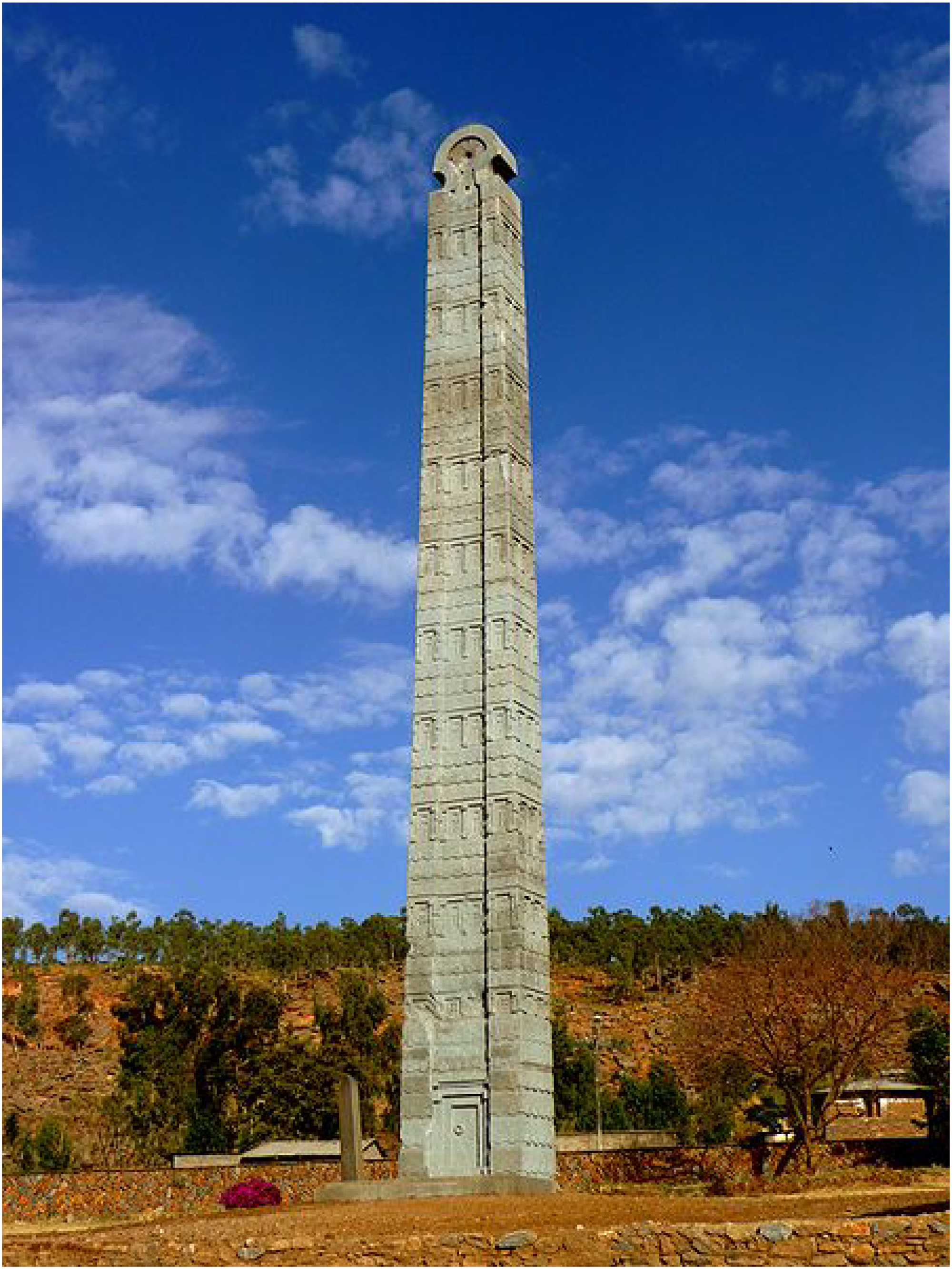
Obelisk of Axum (Římská stéla), c. 4th century, Axum, Tigray Region. Photo by Ondřej Žváček, 2009. Wikimedia Commons, CC-BY-2.5.
The Obelisk of Axum has an unmistakably African appearance. Over 70 feet in height, it is crowned by a semi-crescent cap rather than the Egyptian style pyramidal apex. Carved on all four sides, it features patterns of rectangular sectioning and ridges that are repeated to form an all-encompassing and uniform design. As the style of the piece is markedly different from the Italian architecture—both modern and ancient—that surrounded it in the Roman context, here the stela expressed the power of fascism's victory and emphasized the exotic nature of the vanquished (Thomas Wilkins, 2005: 61). Although it was erected just after the Italian conquest of Ethiopia, a 1947 peace agreement stipulated the return of the obelisk to Ethiopia only a decade later. However, this order was largely disregarded. It was not until the late 1980s that the Italian government seriously entertained returning the structure to Africa (Von Henneberg, 2004: 45–46).
In the years that followed, seemingly endless debates ensued regarding how to dismantle, transport, and relocate the monument to the war-torn region of Axum. The lengthy and indeterminate nature of these discussions served a secondary purpose. As Angelo Del Boca has noted, this stalling tactic was intended to ‘temporize in the hope that the Ethiopians would one day get tired of asking for the restitution of the ill-gotten obelisk’ (Del Boca, 2003: 22). Some Italians saw the value in repatriating the Ethiopian stele, but others saw it as an established part of Roma's artistic program. Moreover, international voices also weighed in on the fate of the Obelisk of Axum, most notably Ethiopians and Ethiopian-American activists. By 1998 the arguments had become so fervent that the obelisk was wrapped in scaffolding and covered with government posters detailing reasons for its imminent departure (Von Henneberg, 2004: 46). However, it was not until the early 2000s that actionable steps were taken to relocate the monument. In 2008, the obelisk was finally reinstalled in its rightful home in Axum.
While the history of the Obelisk of Axum helps to illustrate the changing opinions on both the Italian and international scene regarding fascist-era commemorative monuments to colonialism, the Monumento ai caduti d’Africa presents a largely different set of problems. As a monument that was built by fascist design, rather than seized and reframed, there is no African origin for relocating the monument nor a cultural heritage claim requesting the repatriation of a stolen artifact. Even as the perspectives on colonialism changed in the late-20th century leading to a greater visibility of the monument, it still very much promotes the valorizing and celebratory narrative of fascist colonialism. More research needs to be done on the local dialogues and histories surrounding the Monumento ai caduti d’Africa during this period that led to its transitioning from a neglected site to one included in city guidebooks and maps. Present day debates surrounding the monument can help to address the question of what to do now with such a structure. 7
2022: Present day controversies
Despite being more visible and discussed than ever before, the monument today is often perceived as forgotten, given the frequent iconoclastic attempts at vandalism and graffiti that are enacted on its surface. Moreover, the Monumento ai caduti d’Africa is still largely absent from most scholarly debates surrounding the legacy of fascism. However, in the last few decades several scholars have proposed tangible solutions for this monument. Local historian Paolo Coriglione (1999: 42) suggests that the monument simply requires a proper restoration, as he believes the site should be considered a sacred place of reflection for both the Italians and Ethiopians who fell in the Second Italo-Ethiopian War. However, a straightforward restoration does not properly address the continued fascist and colonialist signification of the monument. Krystyna von Henneberg (2004: 76) concludes that the Siracusa monument should not be destroyed, arguing that to silence such structures with destruction does not resolve the problems of historical memory and representation that they promote. Nevertheless, she does not offer a specific alternative to the physical erasure of the monument.
In recent years, more concrete solutions have been put forward. Stefano Puglisi (2019) proposed the erection of a secondary counter monument that speaks to more recent Italian migratory histories. 8 More specifically, he recommends the construction of a monumentalized version of a boat similar to those that have brought various refugees from Africa to the Sicilian coast. While the suggested boat monument does not directly address the history of the colonial era, it does offer an opposing narrative to the fascist glorification that Monumento ai caduti d’Africa currently promotes. By presenting conflicting African migratory narratives from the postcolonial period, Puglisi's solution is at least more substantive than the simple epigraph currently placed next to the monument, reading ‘Al ricordo dei nostri fratelli d’Africa’. Somali-Italian activist and scholar Igiaba Scego (2020) similarly advocated for the construction of a counter monument or mural to reveal the diverging perceptions of history between European colonial powers and subjugated African nations. While she does not suggest what form such a monument should take, she is clear that it should directly address the history of Italian colonialism—unlike Puglisi's proposal—to transform the piazza into a transcultural space. While I agree with both Puglisi and Scego that the fascist and colonial signification of the monument should be addressed through the addition of a contemporary engagement, I do not view the counter monument as the most impactful solution. Rather, I believe that an artistic intervention onto the surface of the monument itself would offer the best path forward. To better explain my reasoning, I wish to first examine what has already been done across the peninsula to address the legacy of fascist monuments.
The legacy of fascist monuments
In 2017, Ruth Ben-Ghiat posed the question ‘Why Are So Many Fascist Monuments Still Standing in Italy?’ in The New Yorker magazine. Considering that other nations are engaged in the contentious process of dismantling monuments to difficult pasts—such as Confederate statues in the United States—she reflects upon why Italy has been so slow to address its substantive fascist visual culture. Ben-Ghiat determines the issue to be threefold. First, the sheer volume of fascist monuments makes this a difficult problem to address in Italy. Second, the lack of a cohesive defascistization process in the postwar years led to gaps in public and historic knowledge surrounding these structures. And third, monuments are often treated as depoliticized aesthetic objects in Italy. Since Ben-Ghiat's public challenge, numerous scholars both within and outside of Italy have attempted to address the complex issues surrounding the monuments of fascism, presenting several potential solutions. 9
As Hannah Malone (2017: 445) suggests, ‘Fascism is an absent presence in Italy, as its memory is alive, but distorted, fragmented, and obscured.’ While traces of the regime are everywhere, there is no uniform or continuous state policy of how to reason with this difficult heritage. As a result, the enduring visible presence of fascism stands in contrast with the absence of a cohesive public memory. The survival of fascist public works and the continual debates concerning their preservation is contingent on a number of factors, including economics, politics, aesthetics, and the national heritage (Malone, 2017: 453). Beginning in 1945, the meandering process of defascistization in Italy was irregular and incomplete, resulting in a distinct continuity between the fascist and republican states (Malone, 2017: 448). In particular, the expansive infrastructure laid out by the regime—including railway stations, ports, post offices, police headquarters, banks, schools, and buildings of local and national government—continues to be a part of the daily lives of most Italians. Therefore, the lived relationship to this history is rarely understood in exclusively negative terms and elicits a wide variety of responses (Malone, 2017: 447–448). While it is well-acknowledged that this visibly fascist heritage bolsters attempts to rehabilitate fascism in public and political discourse, even members of the political left rarely call for a wholesale obliteration of the built legacy of Mussolini's regime. Those who support preserving fascist monuments often point to aesthetics as a major influence in their positioning (Malone, 2017: 457). Architectural preservationists emphasize the importance of fascist monuments as exemplars of modernist architecture. In doing so, they align themselves with the Italian far right, which also calls for the safeguarding of fascist structures—but with radically different aims (Arthurs, 2010: 114). Therein lies the problem: to treat fascism's monumental remains as depoliticized representations of Italian history offers uncritical legitimation and the valorization of a deeply troubling past (Arthurs, 2010: 124). Iconoclasm and the refashioning of public space seems like a viable option to transform the political and social signification of these sites—but this process has not been adopted in a concerted, coherent, and consistent manner in Italy. In part this is because a critical re-examination of these sites without clear direction and consistency runs the risk of muddying the waters of public perception (Arthurs, 2010: 124–125).
Faced with the question of what to do with buildings and monuments of the regime, the Italian state and local governments have focused on three main options: to destroy, neglect, or reuse them. 10 Destruction, the most costly and proactive option, has been limited to a few high-profile monuments. 11 Many sites have been simply neglected—but neglect can be a calculated or deliberate strategy. Sustained neglect embodies a willful forgetting of the fascist past. Moreover, this is often a strategy adopted from economic necessity and is relatively ideologically neutral, making it the solution that is the least likely to be contested. 12 However, it takes a long time for monuments to become visibly neglected, whether through decay, the reclamation of the space by nature, or vandalism. In the meantime, these works continue to carry their original fascist signification. Therefore, the most common approach is reuse. Reuse covers a wide range of recycling practices, in which buildings are either re-employed in a way that was in line with their intended purpose—as in the case of the train stations in Firenze, Milano, and other Italian cities—or re-purposed to serve a new function—such as Roma's Trastevere district. The reuse of such structures functions on a sliding scale between consistency and subversion, depending on the fascist symbols that remain. This process of recycling often brings changes to the site. Frequently, the fasces, imagery of Mussolini, and other overtly fascist forms, were chiseled from surfaces leaving ghostly outlines, which Malone compares to the ‘gaps’ in the historical record (Malone, 2017: 450). But these selective acts of iconoclasm uphold the norm of ‘uncritical preservation’ without contextualization. Allowing fascist sites to easily blend into the urban and rural landscape, there is little attempt to reason with the troubled history embodied in these monuments or to contest their continued veneration by neo-fascist groups (Malone, 2017: 452).
However, the reuse of fascist monuments and structures could be effectively contextualized through contemporary artistic intervention. The powerful potential of artistic intervention is exemplified in Arnold Holzknecht's and Michele Bernardi's minimalist approach to re-envisioning the Casa del Fascio frieze in Bolzano (Figure 3). Challenging the fascist inscription on the monument's side, Credere, Obbedire, Combattere (Believe, Obey, Combat), Holzknecht and Bernardi superimposed an LED-illuminated inscription upon the bas-relief. The artists selected a quote by the German Jewish philosopher Hannah Arendt that reads ‘Nobody has the right to obey’ in the three local languages: Italian, German, and Ladin. The minimalist style is meant to contrast the grandiose nature of the fascist monument, while the quotation is a rebuttal to the ‘invitation to blind obedience’ contained in the fascist slogan (Bartolini, 2019: 238–239). This form of artistic intervention relies on permanently altering the monument using limited but impactful text-based alterations. Applied to fascist monuments, minimalist text-based artistic interventions like this one allow for a low-waste and high-impact mediation of site-specific monuments. It leaves the original monument visible but contextualized—transforming it into a site and symbol of conversation rather than oppression. Playing with the relationship between text and image, artists can redeploy rhetorical strategies of the regime to alter the lasting perception of these monuments and their relationship to historic narratives.
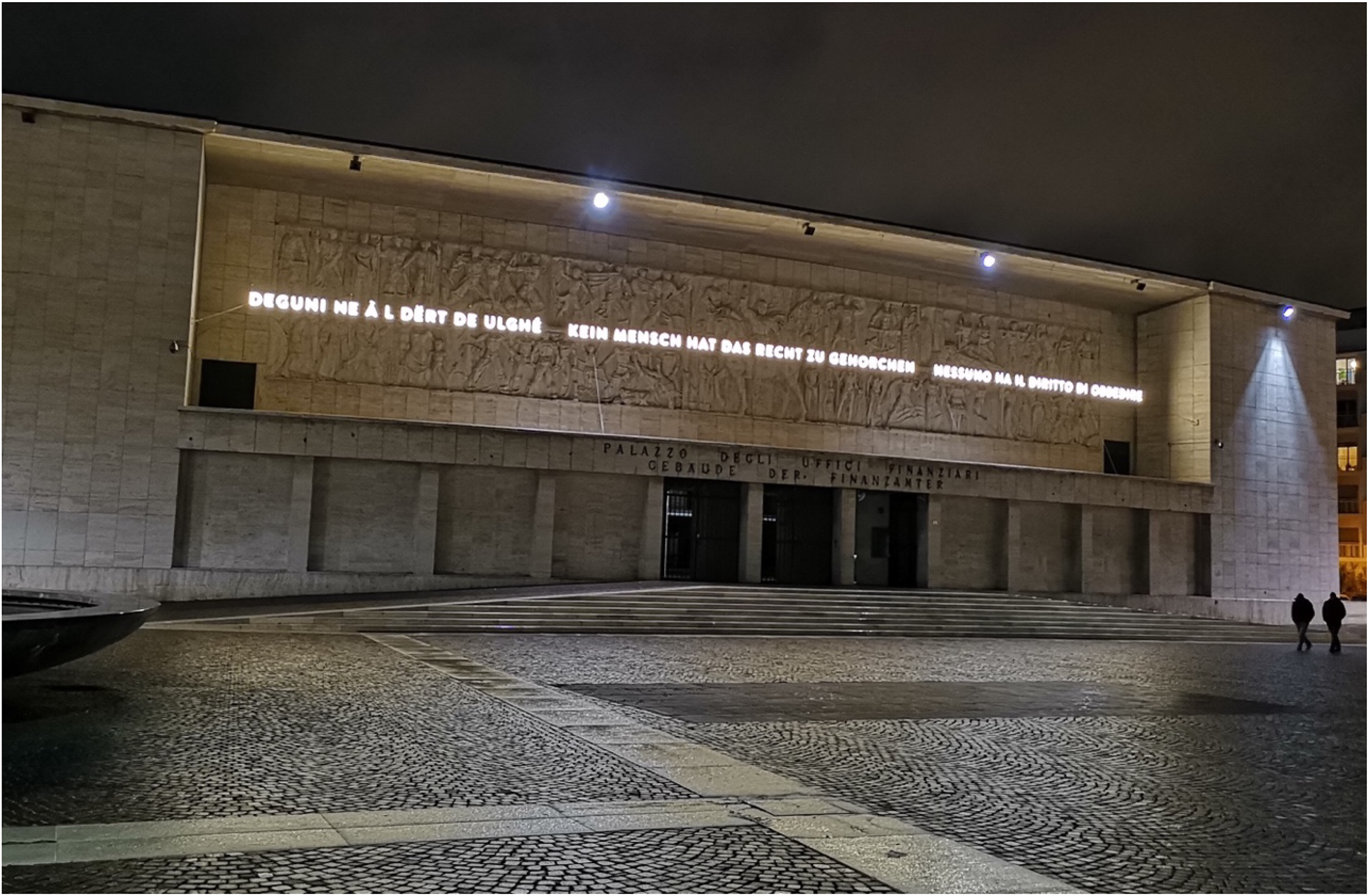
Arnold Holzknecht and Michele Bernardi, ‘Nobody has the right to obey’ Casa del Fascio frieze, built 1939–1956, artistic intervention 2017, Bolzano. Photo by Bartleby08, 2018. Wikimedia Commons, CC BY-SA 4.0.
A similar strategy could be employed as a means of countering the colonialist and fascist narratives projected by the Monumento ai caduti d’Africa at Siracusa. However, as this monument was not fully constructed until after the fall of the regime, it not only reflects the ideologies of fascism, but also the continued romanticization of Italo-African history in the postcolonial era. Therefore, the question of what form an artistic intervention would take, and more importantly who should be invited to trouble the fascist signification of the monument, is of great consequence.
Post-fascist monuments to the Italo-Ethiopian war
The Monumento ai caduti d’Africa is not the only fascist monument glorifying the Second Italo-Ethiopian War to be erected in Italy after the fall of the regime. The infamous Rodolfo Graziani Mausoleum in Affile (Figure 4) honoring the colonial marshal was built as recently as 2012. While some Affile locals celebrate Graziani as a soldier and a patriot, he was a convicted fascist war criminal particularly well-known for his brutality in the Italian colonies (Chalcraft, 2018: 4–5). Nicknamed both ‘the Butcher of Libya’ and ‘the Butcher of Ethiopia’, Graziani is responsible for numerous unconscionable massacres, including the Yekatit 12 mass killings and imprisonment enacted in 1937 in response to an assassination attempt on the marshal's life. 13 Given Graziani's deeply problematic and violent history, how did he come to have a celebratory mausoleum erected in his honor?
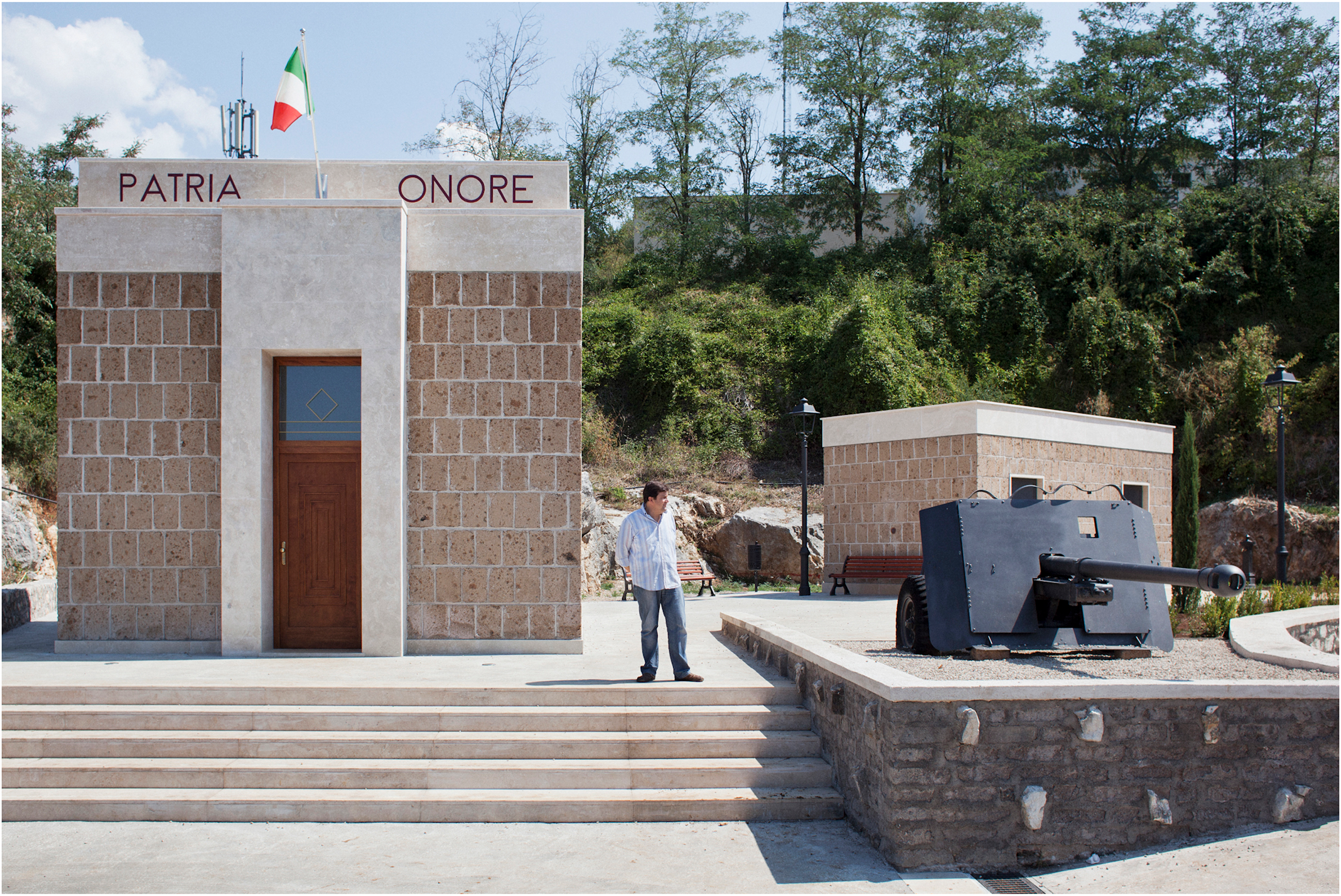
Ercole Viri (former Mayor of Affile) in front of the Rodolfo Graziani Mausoleum, 2012, Affile. Photo by Gianni Cipriano in 2012.
In part, the creation of the Rodolfo Graziani Mausoleum speaks to the diverging records of his deeds in Africa. During the fascist era, Graziani was celebrated as the ‘Pacifier of Libya’ and considered to be an effective military leader in the colonies. In addition to his violent oppression of indigenous Africans, Graziani was one of the most ardent followers of fascism and remained loyal to Mussolini even in the years of the Italian Social Republic of Salò. His loyalty to Il Duce and his actions in service of the colonial project have since been celebrated in neo-fascist circles, and many have fought for the construction and preservation of the mausoleum. The decision to erect the monument in the first place can largely be traced to two right-wing politicians, the regional president, Renata Polverini, and the mayor of Affile, Ercole Viri. Their actions have been recognized as fascist apologism, and the mayor was even sentenced to prison time for his misuse of public funds to cover the cost of the mausoleum. However, even though Viri's trial led to a mandate to destroy the monument, it still stands, if in a vandalized state of disrepair (Bartolini, 2019: 235).
The most innocent explanation of Polverini's and Viri's actions is monetary, as the mausoleum displays an eagerness to embrace the growing field of dark tourism. 14 However, it must be acknowledged that there is a political dimension to their desire to valorize the historical events of Italian colonialism and one of the most brutal perpetrators of fascist violence. The Rodolfo Graziani Mausoleum speaks to the aspirations of the radical right to revise history, by rereading and editing the fascist past with a revisionist agenda. Monuments like Affile's dedication to Graziani present a one-dimensional historical narrative written solely by the victors. Silencing the voices and experiences of indigenous Africans during the fascist colonial era, this monument, like others still standing in Italy, distorts public memory and promotes a false narrative of ‘good fascism’ (Bartolini, 2019: 236–237).
The most obvious solution for the Rodolfo Graziani Mausoleum is to destroy it, leaving no trace of the false and racist histories it promotes. But this would also erase the public recognition that these views are alive and well in Italy—a part of both the nation's history and its contemporary politics. Perhaps, following the suggestion of Puglisi and Scego, a counter monument reminiscent of the Yekatit 12 Monument in Addis Ababa honoring the victims of Graziani could be erected in its place. What makes the case of the Rodolfo Graziani Mausoleum distinct from the Monumento ai caduti d’Africa, and indeed from the majority of colonial monuments still standing in Italy, is that this work was constructed long after the difficult histories of fascist colonialism have been confronted in both scholarly and public discourse. Moreover, the Monumento ai caduti d’Africa is the result of a conscious and longstanding effort on the part of the Italian national government, while the Rodolfo Graziani Mausoleum was rapidly constructed with stolen money under the direction of corrupt local politicians. There is no ambiguity to Rodolfo Graziani Mausoleum. Modelled after structuralist precedents, it may appear to be of the fascist era, while in reality it is of neo-fascist origin. Like many of the confederate statues in the United States, built long after the American Civil War and the defeat of the Confederacy, the Rodolfo Graziani Mausoleum uses Italy's fascist past to reinforce the racist and xenophobic dogma surrounding the refugee crisis today.
Thus, the approaches to recontextualizing the Rodolfo Graziani Mausoleum and the Monumento ai caduti d’Africa will inevitably look markedly different. There is no need to preserve the Graziani structure as evidence of the fascist era, as it does not date to the ventennio. While the Monumento ai caduti d’Africa was also constructed in the post-war period, its commission, design, and signification can all be traced to the regime. Moreover, fascist monuments are often regarded as part of the country's vast cultural heritage legacy. For many these structures have become depoliticized, but for others they stand as symbols of hate and oppression. Therefore, it is necessary to recontextualize the monument through some form of intervention because the removal, relocation, or destruction of the Monumento ai caduti d’Africa will likely never come to pass. In Italy, as in many other countries, the lengthy process of monument reassessment is inhibited by bureaucratic procedures, limited public funding, political infighting, and the impact of such structures on local tourist revenues.
Transnational monuments and postcolonial strategies
As questions about the built legacy of Italian fascism continue to be debated, I propose artistic intervention as a postcolonial strategy for subverting the fascist signification of the Monumento ai caduti d’Africa. Seeking to promote sustainable or low-impact approaches to the recontextualization of fascist monuments, I see artistic intervention as a viable alternative to straightforward preservation or destruction. Contemporary art has the potential to play a key role for cultural sustainability as its practice can build bridges between different communities and encourage discussions surrounding the relationship between cultural heritage and natural or built environments (Jónsdóttir and Antoniou, 2019: 209). Art activism offers unique ways of interpreting and signifying aesthetic experiences and, as such, can invite a more indirect and unforeseen realization of sustainable preservation practices while promoting diverse perspectives.
More specifically, in the case of the Monumento ai caduti d’Africa, I believe that artistic intervention—in a similar manner to Holzknecht's and Bernardi's re-envisioning of the Casa del Fascio frieze in Bolzano—could destabilize the colonial narratives promoted through Romano Romanelli's sculptural program. I will not venture to suggest here how such an intervention might look, as it is the role of the artist to determine what aesthetics and forms are employed, but I will identify whose work and voice I believe to be the most appropriate to design an artistic intervention for the Monumento ai caduti d’Africa. Considering the complex identity politics signified by this monument, I see a member of the Ethiopian artistic community or a person of Italo-African descent to be the best suited to engage in a postcolonial defascistization of the Monumento ai caduti d’Africa. As the monument projects the voices of history's oppressors, it stands to reason that the greatest potential to destabilize and subvert its signification lies in the voice of those oppressed by the legacies of fascism and colonialism. Moreover, by selecting an artist from the former Italo-African colonies, rather than Italy, the Monumento ai caduti d’Africa could become a monumental example of transnational cooperation. Any artistic intervention highlighting cosmopolitan and diverse perspectives would disrupt the hegemonic function of the Monumento ai caduti d’Africa. An African or Italo-African artist would give voice to the ‘other’ who is silenced and exoticized by Romanelli's artistic program, thereby complicating the reductive narrative of victory and racial superiority projected by the monument (Cento Bull and Clarke, 2021). Furthermore, taking such action could help to engage the Italian public in thought-provoking discussions surrounding the legacy of colonialism.
However, it is worth noting that the Italian government—on a local, regional, and national scale—has rarely sponsored or sanctioned the revision or removal of colonial monuments. The reluctancy on the part of present-day government officials is complex and intrinsically tied to both the legacies of colonialism and the contemporary political panorama. With numerous government officials, including the recently elected Prime Minister Giorgia Meloni, espousing right-wing populist, nationalist, and neo-fascist sentiments, it is unlikely that even progressive local officials will be able to enact meaningful change to the Monumento ai caduti d’Africa. Furthermore, as a monument to colonialism, any mediation will prove more difficult at this site than a purely fascist monument that does not evoke Italo-African colonial history (such as the Casa del Fascio frieze in Bolzano). Even today, the desire to hold onto the colonial myth of Italiani, brava gente prevails. While the contemporary Italian government may seek to distance itself from fascist colonialism, it often reestablishes and promotes connections to pre-fascist liberal era colonialism to justify the continued presence of colonial monuments and the deficiency of government's critical engagement with these charged histories.
To overcome the barriers of politics, bureaucracy, and funding, artists could adopt ephemeral and low-impact approaches to the recontextualization of Monumento ai caduti d’Africa. Projected images and lighting displays could offer a low-cost option that has been historically staged without government approval or sponsorship. In 1990, Krzysztof Wodiczko projected images of a supermarket consumer onto the Lenin Monument in Leninplatz of East Berlin to critique the two poles of communism and capitalism. Since then, this kind of display has been utilized by a wide variety of artists from around the world to create impactful engagements with problematic monuments. More recently this strategy has been used by American artists to reimagine Confederate statues through fleeting projections related to the Black experience. For example, in 2020, Dustin Klein and Alex Criqui projected an image of abolitionist Harriet Tubman onto the statue of Confederate General Robert E Lee, along with a quote and the “BLM” acronym (Figure 5). 15 Overlaying the celebratory image of Robert E Lee with Black cultural imagery, this work troubles the positive and uncomplicated narrative of the confederacy, leading audiences to question their own understandings of race and history. A similar approach could be readily applied to the Monumento ai caduti d’Africa, using the imagery and voices of those impacted by Italian colonialism to reveal the work's complicated history. Even though this form of artistic intervention is temporary, the lasting impact lies in the proliferation and continued conversation fostered through replication in galleries and on social media, resulting in a continued existence in the public imaginary.
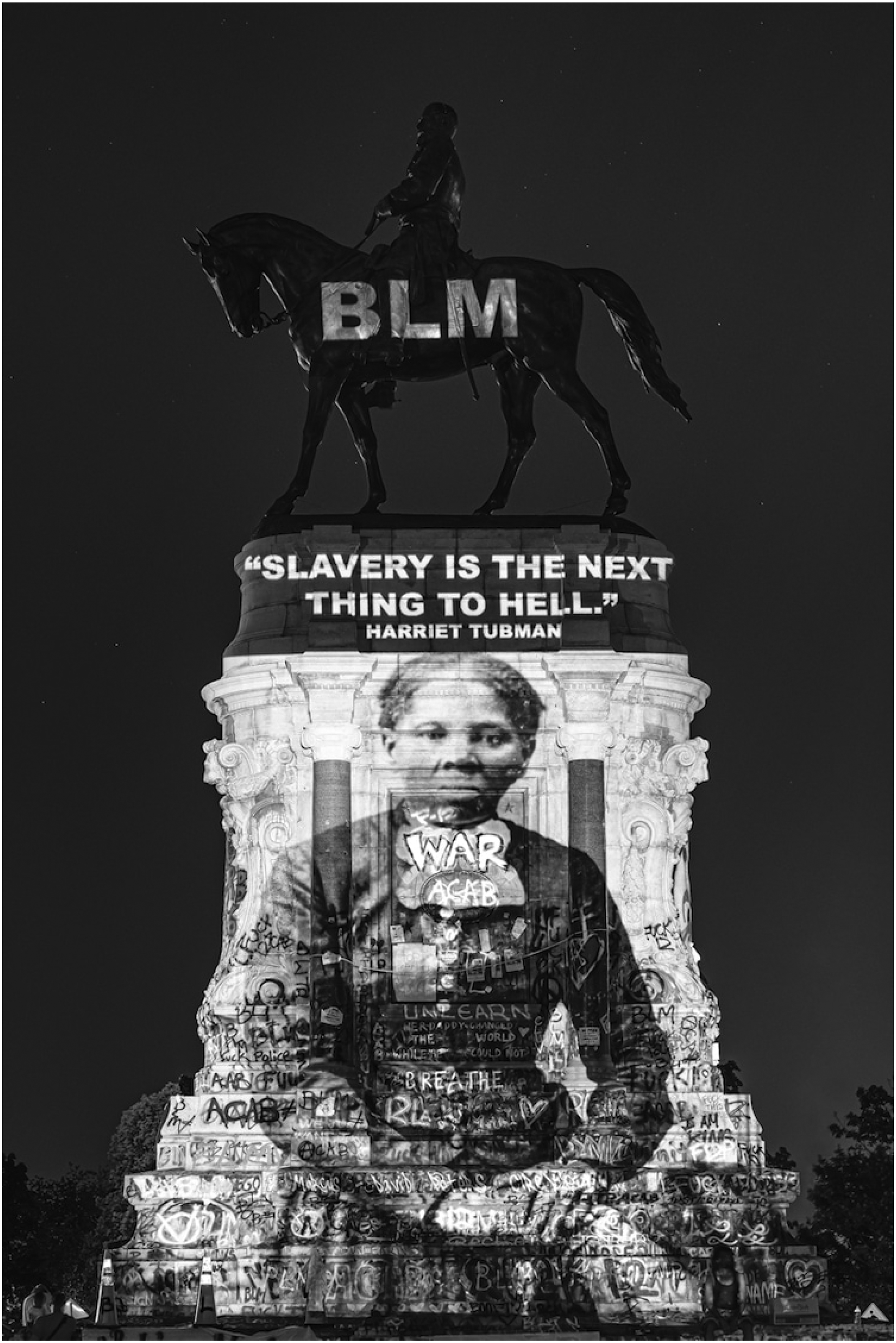
Alex Criqui and Dustin Klein, Reclaiming the monument, projection on the statue of confederate general Robert E Lee, Richmond, Virginia, 2020–Present. Photo by Zach Fichter, 2020.