







Abstract
The article focuses on Andrea Sbarboro's (1839–1923) Italian-Swiss Colony of Asti in Sonoma County and the success of his winemaking company created in 1881. By exploring the relationship between the symbolic space of the vineyard (which I refer to as a ‘winescape’) and the predominant racial narratives of the time in California, I argue that Sbarboro created an Italian space in which Italian Americans could be recognized as ‘white.’ Sbarboro's representations of winemaking as a tradition rooted in Greek/Roman civilization appealed to a Victorian cultural elite that intended to project a Classical and imperialist aesthetic into California. Even today, it is still possible to find in Sonoma and Napa Valley Italian American winemakers that link their business to a similar aesthetic with the unintended result of excising from the landscape non-white contributions to the history of winemaking in California.
Whiteness is inherited through the very placement of things.
(Sara Ahmed, 2007: 155)
Wine is rooted in Europe and its white adjacencies, themselves products of colonial and imperialist histories.
(Miguel de Leon, wine professional of Filipino ancestry; De Leon, 2020)
Introduction: When Italy becomes a California winery
Since the 1980s, ‘Cal-Ital’ has become a popular term to define winemakers in Northern California with Italian origins. The hyphenated word intends to collapse the “Italian ethnic heritage and California place” (Helzer, 2001: 52). By extension, this contrived term implies a transfer of ‘Old World’ cultures and vegetable plants (Italian, specifically North Italian) in the ‘New World’ of California. For decades, Sonoma Valley has manipulated its Italian ethnic heritage to promote a touristic business around the notion of living an authentic Italian experience. A vast network of Italian wineries invites tourists to consume ‘truly Italian’ landscapes and its wine products as if being in the country of origin did not matter. 1
This example speaks about the symbolic and cultural power of wine landscapes in the making of a ‘place.’ Traditionally, wine cultures emphasize the importance of soil, climate, and topography, as the notion of ‘terroir’ maintains that the best wines are the product of the unique characteristic of a particular place that cannot be reproduced elsewhere. However, as David Inglis observed, “what is often occluded in the marketing of wine is the trans-local, trans- regional, trans-national and cross-border nature of wines, vines, and winemaking techniques” (Inglis, 2020: 21; emphasis original). The Cal-Ital phenomenon speaks precisely about the importance of grape vines, people, and their social practices in the making of a place. Sheller and Urry evocatively compared the mobility of places to “ships, moving around and not necessarily staying in one location.” “Places are about … the placing of peoples, materials, images, and the systems of difference that they perform” (Sheller and Urry, 2006: 214). Thus, the performative action of ‘placing’ people and materials, such as vines, sets in motion the construction of this Italian place in the context of its West coast location. Given that wine landscapes, perhaps more acutely than other landscapes, 2 are embedded in discourses of culture and historical heritage, what are the cultural symbols that Italian winescapes generate today in Sonoma County?
Anthropologist Jennifer Helzer suggests that the brave Italian “pioneer” stands out as one of those symbols inscribed in the representation of the Italian heritage through winemaking (Helzer, 2001: 55). For instance, the Martinelli Winery, located in the Russian River Valley, still today owns the vineyard called Jackass Hill (producing Jackass Zinfandel wine) to celebrate the fearless personality of its founder, the Tuscan migrant Giuseppe Martinelli. As the family story goes, Giuseppe Martinelli eloped with Luisa Vellutini from his small Tuscan village to arrive in Sonoma County in the 1880s at the age of 19. After two years of work, he saved enough money to buy a small piece of land where he planted Zinfandel and Muscat Alexandria vines. The name ‘jackass’ derives from the family's decision to honor their ancestor's determination to plant vines on the steepest non-terraced hill in Sonoma County. 3
The myth of the brave pioneer vine planter is particularly problematic in the context of California, for it overlooks the projection of Greco-Roman models of colonization in the construction of this ‘truly’ Italian place (Inglis and Ho, 2022: 417). The connection between Old and New World colonialism cannot be overstated if one considers how the Romans were accustomed to introducing vineyards to newly acquired territories as a symbolic gesture aimed at planting civilization onto these foreign lands (Horden and Purcell, 2000: 219–220). 4 Erica Hannickel has indeed explored the symbolic power of grapes and wine in inscribing United States history “within the accepted Western narrative of world history that claimed all powerful nations, since antiquity, had transcendent grape cultures” (Hannickel, 2013: 15). However, Hannickel's argument about the creation of a grape empire in California does not account for the significant participation of the Italian American winemakers in upholding this narrative of culture, race, and power. Simone Cinotto's Soft Soil, Black Grapes takes a deep dive into the reasons behind the economic success of a group of Piedmontese migrants in California's wine industry. This book aptly dismantles false myths underpinning the image of Piedmontese migrants to California by noticing that the reason for their success did not reside either in their imported wine culture knowledge (as most of them came to America as unskilled workers) or in their familiarity with a landscape similar to the one in Piedmont. According to Cinotto, performing racial ‘whiteness’ and building an ethnic chain of solidarity among Piedmontese migrants offered a hedge against Asian and Latino workers and a solid argument for partaking in California's racially white entrepreneurial class. Undoubtedly, “the stories of Rossi, Guasti, and the Gallos illuminate the contextual power of race in determining the relative success of American ethnic and immigrant groups” (Cinotto, 2012: 23). As this quote shows, Cinotto's argument about race and socioeconomic success is set on a chronological scale: from the promising beginning (Pietro Rossi) to the challenging time of the Prohibition era (Secondo Guasti) to the postwar success (the Gallos), the historical parabola ultimately illuminates the Piedmonteses’ “entrepreneurial skills, tenacity, and business savvy” (Cinotto, 2012: 228) model, as they navigate across the alternating fortunes of the Californian wine industry.
The focus of my article, instead, is space and the particular construction of a space that is a wine landscape. As in the Cal-Ital example I mentioned earlier, I am interested in the cultural references that are embedded in the physical space of a vineyard. More specifically, as I heed the modes of ethnic self-representation by Italian migrants through wine production, I can read stories of Italian migration to California through the lens of colonialism. Indeed, the developing wine industry in California must be located in the larger phenomenon of 19th-century European colonialism and the subsequent migration of both people and plants across oceans and lands.
Transplanting the Eurasian grape species known as Vitis vinifera in conquered territories allowed Western powers to reshape these places within a Greek-Roman narrative of place, on a potentially global scale (Hannickel, 2013: 15; Inglis, 2020: 26–27). As I will show, Italian migrants to California were indirect beneficiaries of the United States’ process of colonizing California as they contributed to it by importing vines and wine culture to the West coast. In fact, by following the threads linking winescapes and ethnicity, a central argument of this article is that major cultural perceptions of wine drinking are caused by the introduction of new grape varieties and winemaking techniques. The association between wine and Catholicism has historically curtailed the development of this drink in traditionally Protestant Anglo-Saxon societies. From the 1830s’ beginning of wine commercialization and up to the 1870s, the dominating grape variety remained the ‘Mission,’ a name that moored the origins of viticulture and vinification in connection with the Jesuits and Franciscan missionaries in Alta California when wine was a liturgical requirement for Mass celebrations (Unwin, 1991: 302). The importation of grape varieties from Europe in the decades between the 1880s and 1920 not only resulted in better-quality wine but also allowed wine producers to culturally reposition their products in line with the Classical revival of Greek-Roman culture that was reshaping California's representation as the new epicenter of Western civilization.
Scant attention has been paid to date to the concomitant—but not necessarily correlated—phenomenon of Italian migration to the West and the construction of the Golden State as the latest frontier of Greek and Roman civilization. From the second half of the 19th century onward, Anglo-Americans in California used architecture and landscape design to forge the state in the image of a Classical empire facing the Asian frontier. They adapted a classical aesthetic in monuments, buildings, and cultural sites in a landscape that would resemble an Arcadian world located in a Southern European region. This transfer of Classical civilization from Athens and Rome to the West Coast is part of a multi-secular cultural and political phenomenon, the so-called ‘translatio studii’ (the transfer of learning from Athens, or Rome, to Charlemagne's Holy Roman Empire). From the Middle Ages onward, Europeans understood Greek and Roman cultures as ‘movable’ civilizations, that is, as an essence in transit from one European power formation to another. Throughout this long historical span, the Greek/Roman civilization transferred, like an Olympic torch, from the Italian and Flemish courts of the Renaissance and appeared at different times and in different cities such as Avignon, Paris, Amsterdam, Weimar, Edinburgh, and London. Finally, late 19th-century Western powers (including England, Italy, France, Germany, and the United States) claimed to be at the apex of this imaginary tradition to justify their colonialist warfare by referring to them as ‘civilizing missions.’ 5
By presenting the case of the Ligurian migrant to California Andrea Sbarboro, and his successful winemaking company Italian-Swiss Colony in California (ISC from now on), this article highlights some aspects of wine culture in the Italian community of San Francisco. First, I will suggest that, for Sbarboro, viticulture was more than a financially rewarding, although risky, business. Cultivating European grapes varieties represented an essential aspect of Sbarboro's self-representation as a legitimate descendant of the Classical civilization. Second, I will analyze the style of his weekend and summer villa, built next to his agrarian estate, to show how the claims of Latin and Victorian heritage percolated from the cultivated field to home architecture by constructing a quasi-copy of an ancient Roman house from Pompei. I will argue that the vernacular imitation of the villa reactivated the imaginary of the British Grand Tour and the place of the Mediterranean as the antecedent of the modern British Empire (Appiah, 2016). Finally, my approach to ethnicity through wine landscapes will also be decisive in the conclusive section of this article, which discusses Sbarboro's fierce, although ultimately unsuccessful, anti-Prohibition campaign. His efforts to reestablish the link between wine and Classical civilization—and away from the association with the Catholic Church—were on display during the 1915 Panama-Pacific International Exposition, where ISC staged a pavilion where grapes and scenes of a rural idyll sought to capture the visual imagination of a Victorian public.
Repositioning Italian migration in the context of California's settler colonialism
Anthropologist Ghassan Hage provided a helpful theory to connect Western environmental and racial domination through colonialism. The action of taming nature and dominating the Other is intersected with the concept of ‘domestication,’ which involves both creating a ‘homely space’ in the colonial territory and marginalizing the people (and animals) who do not belong to it. Intuitively, creating a homely space implies the choice of who has the right to inhabit it, that is, who has the right to become a ‘family member’ rather than a ‘tenant,’ a ‘guest,’ or an ‘outcast.’ Hage defines the transition from ‘domestication of nature’ to an all-encompassing form of domination as ‘generalized domestication.’ He says, “Generalized domestication is the fantasy whereby we make our existence viable by seeking homeliness through aggression and domination” (Hage, 2017: 92). Hage's use of ‘domestication’ offers a key to access racial power relations connected to California becoming a new ‘Mediterranean’ region, and, in particular, Sbarboro's creation of a rural colony dedicated to the wine business.
Working against the grain of a historical tradition considering the ISC as a successful model of migrant integration, 6 I take up this domestication process to associate the ISC with the Anglo-American settler colonialist project in California. According to Kyle Powys Whyte, settler societies eliminate the indigenous claim to their land by inscribing the settler's religious and cultural narratives into the environment. “In doing so – Whyte argues – the goal of settlers is actually to eliminate themselves as settlers. Settlers seek to make another society's homeland their homeland” (Whyte, 2016: 171; emphasis original) by excising the indigenous population's relation with their ecologies and ways of experiencing the world.
Agriculture is an essential aspect of California's colonization because of its deep relation with culture and civilization. The perception of this newly conquered land as primitive and ‘natural’ was the necessary premise for the colonizers to introduce new plants, animals, water, and laborers. Agriculture represents this act of domestication of ‘nature’ through the endless search for technical means to make such transformation more efficient and faster (Knobloch, 1996: 74). It is an expression of the cultural dominion of the land pursued through the violent act of plowing the soil and cropping plants. In the course of this action, a new cultural and physical landscape emerges out of the perceived primitive land. Indeed, the transfer of the Classical civilization to California involved the creation of centers of knowledge (in the form of universities embracing a classical curriculum, academies, journals, etc.) as much as the transferring of plants that embody histories of Western colonialism and whiteness. The landscape they sought to recreate by minimizing, or at times erasing, the Native Americans’ and Californio's territorial marks was a version of a Biblical ‘promised land’ or the pastoral dream of a classical ‘arcadia.’ In Holliday's words: through artful planting they established a landscape evocative of their two primary cultural models: the Holy Land and southern Europe, with each region providing the illusion of what Americans wanted out of the state: a new Eden or a classical Arcadia. (Holliday, 2016: 5)
Therefore, a carefully planned promotion of California as the ideal land for Mediterranean agricultural products—from oranges and vines to olives and prunes—used strategic publicity avenues to draw the attention of the ‘right’ type of white migration from the rest of the country.
By focusing on plant cultivation and landscape construction, rather than literary production on Mediterranean California, I follow Joseph Pugliese's lead in “decolonizing migrant historiography” (Pugliese, 2019: 68), casting aside logocentric accounts that set humans at the center of the epistemic order to privilege other-than-human subjects—particularly plants and buildings. As I put pressure on the human/nature divide, my goal is to heed the transnational histories of empire and colonization that human agency has encoded in the silent realm of the more-than-human. In the specific case of California's viticultural history, the focus is less on the anthropocentric tale of migrants successfully developing the wine industry in California than on the stories that the transplanting of vines from Europe to the West coast has carried along the journey.
It is hard to underestimate the impact of the beginning of the wine industry in California and the Western superiority discourse. The parallelism between wine quality and the history of Western civilization was a popular motif at the time. In 1858, French wine historian Arthaud went as far as to delineate a precise correlation between the evolution of the Western civilization and the prominence of grape culture. In his opinion, “On peut dire avec vérité, et sans restriction, que la civilisation est une fleur qui ne croît spontanement qu’au sein des vignobles” (We can say with truth, and without restriction, that civilization is a flower that grows spontaneously only in the heart of the vineyards) (Arthaud, 1858: 262). As if inspired by Hegelian philosophy, Arthaud's history of wine began in ancient Asia, China, and Japan and depicted an inexorable progressive march toward the West. The Phoenicians introduced vines in Mediterranean islands, and from there, the illustrious plant followed the rising civilizations of Greece, Italy, Spain, and France. Time is not the only factor to demonstrate the parallelism between wine and superior civilizations since Arthaud framed his argument in spatial terms as well. He observed that the most significant civilizations came into existence between the 30th and 50th parallels of latitude, where vineyards are best cultivated. California's viticultural history represented the new chapter of this metanarrative, a chapter that Arthaud's 1859 book did not foresee, unlike California journalists, writers, and promoters of a Mediterranean Western state in Mexico. Long before Arthaud's book, Franciscan Missions in the 18th century are considered the first groups to cultivate grapes, albeit mostly for liturgical reasons (Pinney, 1989: 238), while Natives and Spanish were drinking wine made out of the European Vitis vinifera variety, although not in large quantities. Thus, California was seen as the only privileged land in the States where European varieties could blossom: “in the dry, hot, stony soils of the Southwest, the vine recognized something like its Mediterranean home and readily grew without suffering those afflictions of weather, disease, and insects that invariably devastated it in the East” (Pinney, 1989: 233).
The wine derived from grapes imported by the Jesuits and Franciscans was known as ‘Mission’ and remained the dominant table wine in California until the 1880s. However, around the 1830s, French and German migrants introduced new European varieties in Southern California to replicate European wines’ superior quality. “The advertising literature of nineteenth-century California proclaimed the commonwealth to be one of the few promising viticultural regions of the world; European horticultural and viticultural journals echoed these sentiments” (Carosso, 1951: 5). Even though both wines originated from the same vinifera grapes, consumers perceived the new viticultural production as a ‘foreign’ option while the Mission wine was seen as a ‘local’ one.
However, as more Europeans migrated to California, the pattern of wine consumption changed in favor of the ‘foreign’ choice (Pinney, 1989: 247). New consumers valued the affective “experience” of cultivating and tasting a European wine in the American most remote frontier for its power to generate the fantasy of recreating a “homely space” (Hage, 2017: 417). Indeed, as anthropologists have demonstrated, wine choices are determined by cultural experiences, values, encounters, and discourses embodied in the cultural product represented by the wine's label (Demossier, 2018: 161). In this spirit, journalistic pundits celebrated the emerging viticultural landscape as a transition from a backward-looking form of Spanish and Christian colonialism (‘the Mission’) to the new French, German, Swiss, and Northern Italian waves of migration. Anglo-American cultural elite groups welcomed the change as it enabled the project of constructing a white, Northern European, and Alpine California in a Mediterranean-like region. In fact, the formation of this ‘homely space’ must be seen in the context of the exclusionary laws that aimed at marginalizing subjects who were perceived as not belonging to this emerging winescape. An emblematic example of the relationship between landscape and racial formations is the 1882 Chinese Exclusion Act which targeted a category of workers who largely contributed to the California winegrowing industry. In Pinney's words, “The Italians were all the more welcome after the Oriental Exclusion Act of 1882 shut off the flow of Chinese labor to the vineyards and wineries of the state” (Pinney, 1989: 329).
Andrea Sbarboro's racial and ethnic positioning
As stated in the previous section, it is clear that Italians moving to California in the final two decades of the 19th century could benefit from a changing landscape and cultural context that aimed at transforming the Western frontier into a Mediterranean Arcadia. From this territorial perspective, it is possible to revisit uncontested stories of virtuous Italian migration, such as the Ligurian-born Andrea Sbarboro (1839–1923). A reading of his life and achievements from a de-anthropocentric standpoint brings into focus Italian American participation in the Anglo settler colonialism that has been discounted for too long. The memoir he wrote in 1911 (Sbarboro, 1996–1997) inevitably set up future historians to characterize his biography as an ascending narrative, from a beginning in poverty, as a migrant from a Ligurian town to New York City (1841), to a bright career as an entrepreneur and banker. 7 The story particularly celebrates the value of self-reliance and endurance, as it describes this self-taught young boy, selling toys on the streets and learning to read by looking at posters outside theaters (his mother did not trust secular public schools).
Following the path of an older brother, he moved to San Francisco in 1852, working initially as a bookkeeper and then, for the following 20 years, in a grocery store, eventually becoming the sole owner of the business. “Sbarboro was soon a leader in San Francisco's community of Italian migrants, who must have admired his fluent English, his business intelligence, his powers of application, his cultivated tastes” (Pinney, 2012: 77). As pater familias of the San Francisco Italian community, Sbarboro achieved two critical milestones that would elevate the social status of his compatriots in California: the foundation of the ISC in 1881 and of the Italian American Bank in 1899. With the first philanthropic project, Sbarboro offered employment to Italian peasants who struggled to find jobs because of their lack of English and other skills in demand in San Francisco. The second goal provided the Italian community with the financial capital necessary to launch their businesses. The ‘successful’ narrative of Sbarboro's life continues with the exponential growth of the agricultural colony, which from a grape-growing business, became a wine-producing enterprise that prompted Sbarboro to build a sensational wine cistern of 500,000 gallons capacity in 1897. A closer look at this impressive upward mobility story shows factors at stake other than Sbarboro's ingenuity, perseverance, and philanthropic spirit.
Linking landscape production with Sbarboro's racial and ethnic discourse, this article highlights the role of cultural identity politics in propelling the ISC's rise. To fully grasp the complexity of the ISC's positioning as a socially privileged group of winemakers in California, it is necessary to consider Sbarboro's interconnected discourses on race and ethnicity. By using the concept of ‘social positioning,’ I refer to Stuart Hall's seminal essay ‘Cultural identity and diaspora,’ in which he considers ‘culture’ as a space of identity reconfigurations: Cultural identities are the points of identification, the unstable points of identification or suture, which are made, within the discourses of history and culture. Not an essence but a positioning. Hence, there is always a politics of identity, a politics of position, which has no absolute guarantee in an unproblematic, transcendental ‘law of origin’. (Hall, 1990: 226)
Sbarboro's racial discourse made extensive use of his viticultural activity and winescape representation to culturally position his colony on the highest level of the social hierarchy. In order to avoid the identification of Italians with the ‘inferior’ ‘Mediterranean race,’ Sbarboro resorted to a complex play of cultural identification that implied the scapegoating of the Asian community of grape workers in California. Indeed, Sbarboro's racial construction of Italian ‘whiteness’ began with the foundation of the ‘Asti community’ in 1881, as it coincided with his active role in campaigning against Asian (mainly Chinese) workers and in favor of ‘white’ labor.
8
Only a few months later, the Chinese Exclusion Act (1882) would curtail the labor contribution of Chinese migrants, who had played an essential role in the early development of the Californian wine industry. Despite the Chinese migration ban, Sbarboro continued to fuel his Sinophobic sentiment as a strategy to position the San Francisco Italian community on the side of the “white mobs” who “repeatedly attacked Chinese communities, burning down homes and business and rallying to drive the ‘Yellow Peril’ out of town” (Stern, 2005: 86–87). Indeed, as a President of the Manufacturers’ and Producers’ Association of California, in 1901, Sbarboro gave a speech to the Chinese Exclusion Convention in San Francisco calling for the immediate removal of Chinatown. While scapegoating the Chinese population, Sbarboro made a list of desirable migrant groups: We want our own countrymen from the East to come here among us and to enjoy the bountiful blessings which God has spread over this fair State. We want the Scotchman, who is full of enterprise and who is as strong in his business integrity as the giant rocks of his highlands. We want the Englishman, who brings with him capital, industry and enterprise; the Irish, who build and populate our cities; the Frenchman, with his vivacity and love of liberty and his keen knowledge to develop our viticultural industry; the Swiss freemen, who are supreme in butter and cheese making; the industrious and thrifty Italians, who cultivate the fruit, olives and vines—who come with poetry and music from the classic Iliad or Virgil and who bring to us the best from their native soil; we want the Teutonic race, strong, patient and frugal, to develop the productions of our soil and the inexhaustible opportunities. We want the Danes, the Swedes, the Slavs and the Belgians; we want all good people from all parts of Europe. (Sbarboro, 1901)
The “good people from all parts of Europe” that Sbarboro had in mind were mostly Northern Europeans, with the notable exceptions of Italians, whom he extrapolated from the Mediterranean stock composed of Greeks, Portuguese, and Spaniards (and other non-European subjects). In the course of enlisting Italians in the group of desired ‘white’ migrations, Sbarboro purged them from the association with a darker group of Europeans, considered inferior. 9
Thus, Chinese migrants became the foil to position the ISC on the side of Anglo-Saxons in the hierarchical racial order that regulated California viticulture. In such a context, ‘whiteness’ was a racial marker of modernity and techno-innovation to transform agriculture into an agribusiness; non-white groups, instead, were associated with traditionalist and backward methods of production. For instance, an 1878 illustration in Harper's Weekly by the artist Paul Frenzeny (see Figure 1) offers a visual representation of the racial and ethnic dynamics at play in California's viticulture. On the righthand side, Chinese workers are portrayed using the traditional and filthy method of ‘grape stomping’ to emphasize their backwardness and lack of hygiene. On the lefthand side, the workers contrast the Asian group for being white men using trailblazing and sanitary machines to crush their fruits. As Shana Klein puts it, “Perhaps this is why Frenzeny contrasted Asian workers using primitive grape methods with the newer, sanitary grape machinery as if to signal the old techniques and laborers were artifacts of the past” (Klein, 2020: 38).
The two men elegantly dressed up and posing as wine connoisseurs in the lower-right corner indicate the racial and social class profile and ‘cultural capital’ of the clientele involved in wine consumption.
Despite his anti-Asian rhetoric, Sbarboro needed to do more to elevate the status of his compatriots, as in the public’s eyes, Italian ‘whiteness’ was still easily caught up in the negative stereotyping associated with Southern Europeans. Sbarboro's successful rhetoric aiming to whiten Italians relied not only on racial contrapositions; his discourse presented cultural arguments to position his colony on the same footing as the Victorian ruling elite. As I move away from the racial discourse to focus on ethnic differences within the white race, I follow Pasquale Verdicchio's method of locating the marginality of Southern Italian migrants in North America by looking at ethnic elements beyond the power relations determined by racial classifications. In doing so, I plan to expand his inquiry to include Northern Italian migrants in their quest to turn such cultural discourse to their advantage. 10 Sbarboro's efforts to achieve ethnic inclusion by presenting his colony as culturally non-Southern Italian and Teutonic-like are a substantial aspect of how he developed his community's image. I identify the salient aspect of his ethnic positioning as a modern adaptation of a rural-Roman ethnic identity.
A tipo rural-Roman ethnic identity
Sbarboro's speech at the Chinese Exclusion Convention disclosed, in a nutshell, the essential elements of this ethnic discourse, aimed at constructing an agrarian Roman identity by identifying Italians as those who “cultivate the fruit, olives and vines” and “come with poetry and music from the classic Iliad or Virgil” (Sbarboro, 1901).
As indicated earlier, California's cultural elites appropriated this Roman rural imaginary to present the Golden State as the new frontier of the ‘translatio studii et imperii.’ Sbarboro's ingenuity consisted in refashioning that myth according to this Anglo-Saxon version of it; therefore, his strategy of cultural identification of Italians as ‘rural Romans’ revealed the ambiguity of a discourse that disavowed the Italian national identity in the act of instating it.
Sbarboro's choice of embarking in the wine business betrayed the adherence to California's elite groups that considered cultivating grapes a means of cultural elevation inscribed in the tradition of Western settler colonialism. His awareness of inscribing the Italian identity of the Colony within an Anglo-Saxon imaginary of it is visible in the constitution of the ISC's landscape and the advertising of the Colony in journals and popular magazines.
In this respect, as Simone Cinotto (2012: 19) argues, the name itself of his enterprise betrays a desire to tout his community as Northern Italian by adding the adjective ‘Swiss’ to it, given the marginal (if any) role that the small San Francisco community of Italian-speaking Swiss immigrants from Canton Ticino played among the company shareholders (Pinney, 2012: 79). In doing so, apparently Sbarboro was aware that California's ethnic discourse—even before the scientific influence of Alfredo Niceforo and Cesare Lombroso in Anglo-American anthropology (Caiazza, 2018: 6; Choate, 2008: 156; Giuliani, 2019: 39–41)—sharply distinguished between Southern Italians, belonging to the ‘Mediterranean’ race, and Northern Italians, who were considered more similar to the Germans and English.
At the World's Columbian Exposition in Chicago in 1893, Sbarboro participated in the viticultural exhibit by presenting his ‘Tipo Chianti,’ a red table wine that would become the Italian Swiss colony's flagship product for the years to come. Tipo (which translates from Italian as ‘a kind of’) is a linguistic marker that transfers a general property (Chianti) into a particular instantiation: in this case, the Chianti wine and its unique taste are conceived as the abstract essence while the Tipo Chianti is a particular instance of it. Thus, the prefix tipo connects the national and the transnational by bridging the gap between the Italian vine's origin and the California terroir. 11 Similarly, from now on, I will use this prefix to refer to Sbarboro's adaptation of his putative Roman ancestry. Sbarboro's rendition of his ISC as rural Roman retained the same criteria of actualization and contextualization at stake in California's adaptation of the Classical world and the ‘Chianti’ wine. His ISC presented a tipo rural-Roman identity that conjured up an Italian national heritage inscribed in California's representation as the new frontier of Roman civilization. Sbarboro made an effort to position his ISC within this narrative by transforming his estate into a Victorian appropriation of the Roman agrarian imaginary.
To provide cultural strength and legitimacy to this project, Sbarboro built his private home in 1902 as a Roman-style imitation of the Casa dei Vettii in Pompeii. The choice itself of replicating a landmark from the ancient ruins of Pompeii inscribed this agrarian site in the visual ‘picturesque’ canon of the British Grand Tour. Famously, the excavation of the buried cities of Herculaneum (1738) and Pompeii (1748) ushered in the journey to Southern Italy to discover the birthplace of European art and culture. Sbarboro reactivated the Grand Tour imaginary by presenting the decision to build the villa as prompted by his journey to Italy in 1900. While there, he visited Pompeii and was captivated by the recently excavated Casa dei Vettii, and he returned to California with drawings of the ancient townhouse. Architect Thomas John Welsh (1848–1918) was hired to translate the Casa dei Vettii design into Sbarbaro's new Villa Pompeii. 12 The presentation of this villa, as a cultural landmark of the Italian Swiss Colony, was strategically commissioned in 1910 to Horatio F Stoll (1873–1947), a former journalist of the San Francisco newspaper The Argonaut, who could appeal to the Victorian sensibility of the Anglo-American ruling class by making a case for the association between wine and the superior classical civilization. 13 As a semiotic sign of national identity, the villa represented, according to Stoll, “something distinctive and characteristic of the Italians who had established the Colony” (Stoll, 1910: 383). For Stoll, the classical décor of the villa is what distinguished the ISC. However, the narrative of the journey to Southern Italy and the subsequent decision to reproduce a picturesque element of that landscape in the New World fits into the master narrative of California taking up the mantle of the Roman Empire through a transfer of dominion (translatio imperii). The anecdote of the journey to Southern Italy, culminating in the reproduction of one of its classical landmarks in the New World, sought to inscribe Sbarboro's architectural project within the Victorian cultural craze for replicating classical art at home.
Moreover, such a sign of Italian identity in California was hardly a distinctive element representing a ‘foreign’ culture in discontinuity with the surrounding space. The project responded to California's vision as an agricultural Arcadia, a domesticated space in which cultural and political elites used verbal and visual imagery to recreate an ideal of classical antiquity. Sonoma County had already showcased examples of classical architecture associated with a Mediterranean landscape of vines. This is the case for Hungarian pioneer of California's wine industry Agoston Haraszthy, who in 1857 built a Pompeian, neoclassical villa on top of his 400 acres of vineyards (see Figure 2).
The distinctive attraction of Sbarboro's villa was the peristyle garden (see Figures 3 and 4), which he expected to fully reproduce the original Domus Vettiorum in Pompeii in his Asti, California home. In Stoll's words: The peristyle garden was just what he [Sbarboro] had been looking for. It afforded an opportunity for plenty of sunshine and flowers and was a welcome change from the Spanish patios, Persian gardens and Moorish courts that have been so extensively introduced in pretentious summer homes in California. (Stoll, 1910: 384)
As Stoll indicates, Villa Pompeii presents a pure ‘Italianate’ style that eschews the typical California eclectic design, vaguely called ‘Mediterranean,’ that blends together elements of “Spanish patios, Persian gardens and Moorish courts.” The architect's effort is to redefine a Mediterranean style as a celebration of Renaissance culture by excluding vernacular elements that would belong to a Mediterranean architecture.
14
While peristyle gardens “are found in traditional buildings in many regions of the world” (Holliday, 2016: 267), their identification with Pompeii is what made them famous.
15
The Italian peristyle gardens, or the enclosed gardens of the Renaissance palazzi, fed the California elite's desire for reproducing an Italian ‘outdoor’ lifestyle. New England writer and poet Grace Ellery Channing (1862–1937), who lived for three years in Italy before relocating to California, voiced the cultural project of absorbing this ‘Italian’ style of building in a series of articles published in Out West: One of the first things which strikes the traveler fresh from the gardens of the West is the very different use the Italian, like the Spaniard, has made of substantially the same materials. And this great gulf between the Latin and the Anglo-Saxon, revealed in his conception of his earthly Eden, can be traced in nearly every case, I think, to what must be admitted the great failure of the Eastern American thus far in the West—his inadaptability to an outdoor life. (Channing, 1903: 473)
Channing's article is only marginally a critique of Anglo-Saxon inclination for indoor living and outdoor gardens in contrast to the Italian celebration of outdoor spaces and inner gardens. Instead, she focused on demonstrating how California can improve those gardens by introducing a variety of local vegetation and natural colors far superior to the ones existing in Italy. More than an imitation of an Italian style, the reconstruction of an interior garden in California's villas represented Channing's view of how the newly rising Western civilization could draw on and surpass the Old World's architectural designs. In this context, by making the peristyle garden the centerpiece of his Pompeian villa, Sbarboro integrated an Italian vernacular element that translated Anglo-American phantasies of appropriating and enhancing a homely Italian space in California. Hence, the tipo peristyle of Villa Pompeii in Sonoma County does not directly refer back to a fixed point of origin represented by the Casa dei Vettii in Pompeii, as its selection of cultural references reflected an Anglo-Saxon elite's mode of consuming an Italian domestic space. In the end, the replica of an ancient monument in California enabled a haptic experience of antiquity that emphasized, in turn, how Anglo-Americans perceived it. 16
The architectural design and style of the villa established a relationality with the surrounding winescape to inscribe a political message and a cultural affiliation that exceeds human agency and the power of logos. While Sbarboro painted the ISC as a successful Italian integration model, the more-than-human elements of plants and architecture inscribe these putative signs of Italian identity as forms of belonging to the Anglo-Saxon imperialist project.
The true temperance and Victorian taste
After discussing some of Sbarboro's most effective strategies to position his ISC's cultural identity within the context of an Anglo-American translatio imperii, we can now see from a new angle his most significant contribution to American wine history: the struggle against Prohibition in favor of true temperance. Indeed, the National Prohibition Act (1920) brought to an abrupt pause the flourishing growth of the California wine trade. Sbarboro has been credited for being one of the early activists and one of the relatively few California wine producers to comprehend the destructive potential of this menace and to engage in a fierce cultural and political battle against it. 17 Even though rising associations such as the Woman's Christian Temperance Union (1873) and the Anti-Saloon League (1893) fought any alcoholic beverage out of medical, social, and economic concerns, xenophobic and cultural elements were by far the main reasons backing up the temperance movement. “Many reformers considered alcohol an evil introduced to the United States by Catholic German and Irish immigrants. Some even believed that it represented the weapon with which the papists aimed to undermine the foundations of democratic American society” (Cinotto, 2012: 84).
The Prohibition campaign exploded the inherent contradictions standing behind Sbarboro's integration of his Italian community within the construction of a Roman/Mediterranean California. On the one hand, it demonstrated that the Anglo-American elites’ brand of ‘translatio studii et imperii’ was a West coast import of an English tradition of translating the classical world rather than a direct appropriation of a putative Italian legacy. On the other, Sbarboro's matter-of-fact critique of the anti-alcohol movement shattered the perfect mosaic of Anglo-Northern Italian cultural analogies that he patiently arranged together throughout his career. Indeed, his pamphlet warfare aimed at demonstrating that grape-growing and wine-drinking European countries did not encounter the same problem with drunkenness that affected the English, Irish, and Scottish (Sbarboro, 1909: 3–4). His quantitative and rational approach proved ineffective, as it was merely sidestepping the thorny issue of the cultural divide between an Anglo-Saxon appropriation of the Roman heritage and Sbarboro's claims of partaking in it. By identifying wine as a Catholic symbol, instead of a legacy of Classical tradition, Anglo-Americans positioned wine producers as aliens to their project of appropriating the Imperial Classical heritage.
However, Sbarboro made one late attempt to deploy cultural arguments to recompose the divide. The opportunity came with the ISC pavilion organization at the 1915 Panama-Pacific International Exposition in San Francisco. The ISC's booth was part of a California wine exhibit that was entirely organized by Sbarboro's key collaborator Horatio Stoll. The exhibit's display, oriented at pairing wine and Classical culture, became known as a ‘grape temple’ that comprised 42 booths circling the exterior edge of the display room. Stoll exploited the Victorian fascination for pastoral mythology to assemble a room with grape casks as pillars and statues as well as pictures of Bacchus and Pan raising their wine glasses.
The ISC's booth presented a display where barrels with grape ornaments formed the columns and the entrance presented an arch with art-glass windows decorated with grapes and vines (see Figures 5 and 6). Jacobean furniture of the Italian Renaissance period assured an Elizabethan taste to this classical representation. As Erica Hannickel noticed, both the grape temple and the ISC's booth surrounded the wine exposition with a domestic and feminine ambiance: Such displays forwarded the feminine pastoral ideal surrounding grape cultivation, an aesthetic similar to much high-Victorian homemaking. Positioning wine as a beverage used in moderation with meals in the home perhaps helped dislodge it from association with beer and spirits in saloons. This domestic context seems an effort to further separate wine from other forms of alcohol in a time of growing prohibitionist fervor. (Hannickel, 2013: 185)
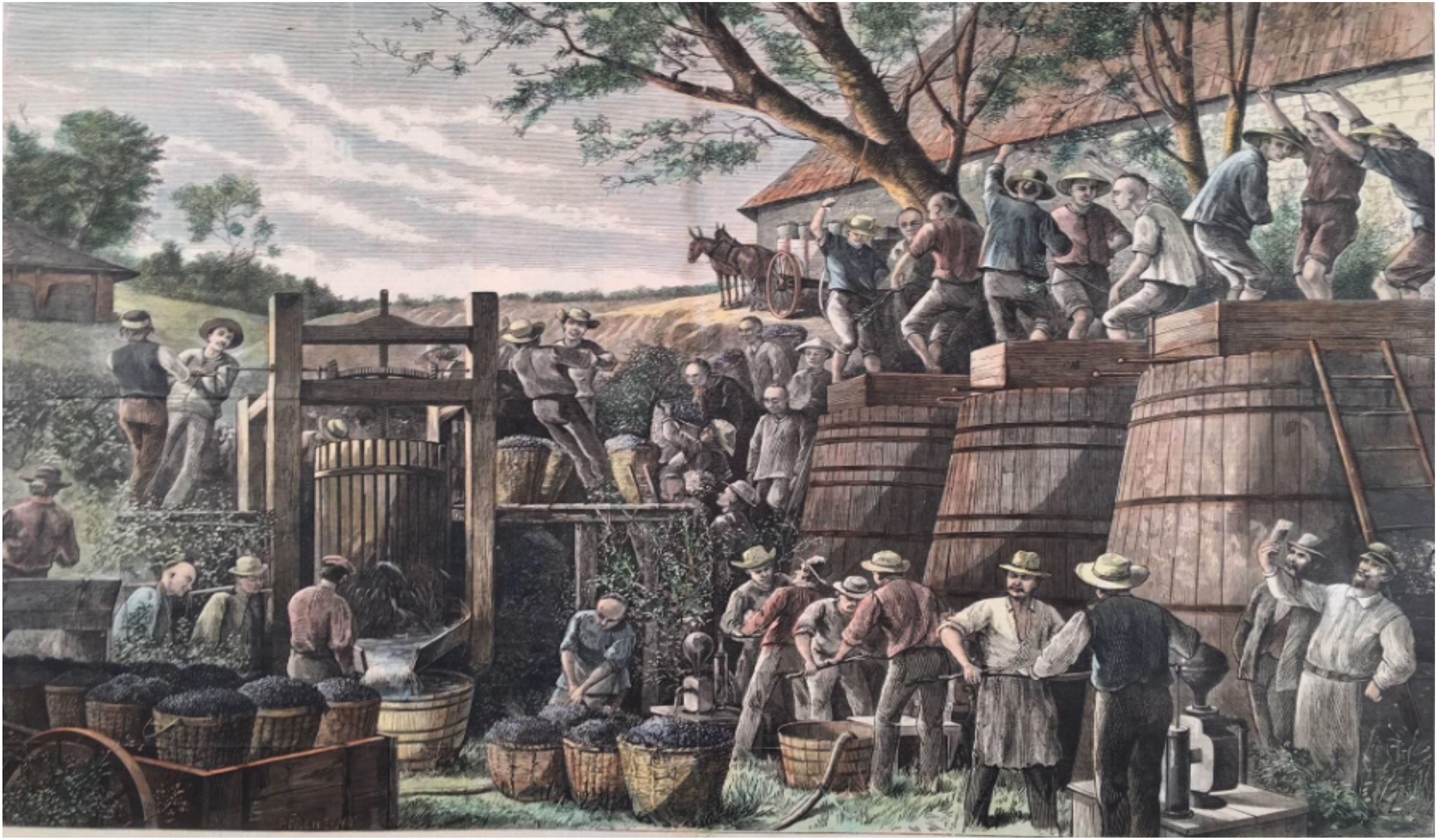
Paul Frenzeny, The Vintage in California – At Work at the Wine Presses. Harper's Weekly, 5 October 1878 (Source: California State Library, Wikimedia Commons).

A reconstruction of Agoston Haraszthy's Pompeian villa, Buena Vista, is now a registered California Historical Landmark (Source: SueA, Wikimedia Commons).
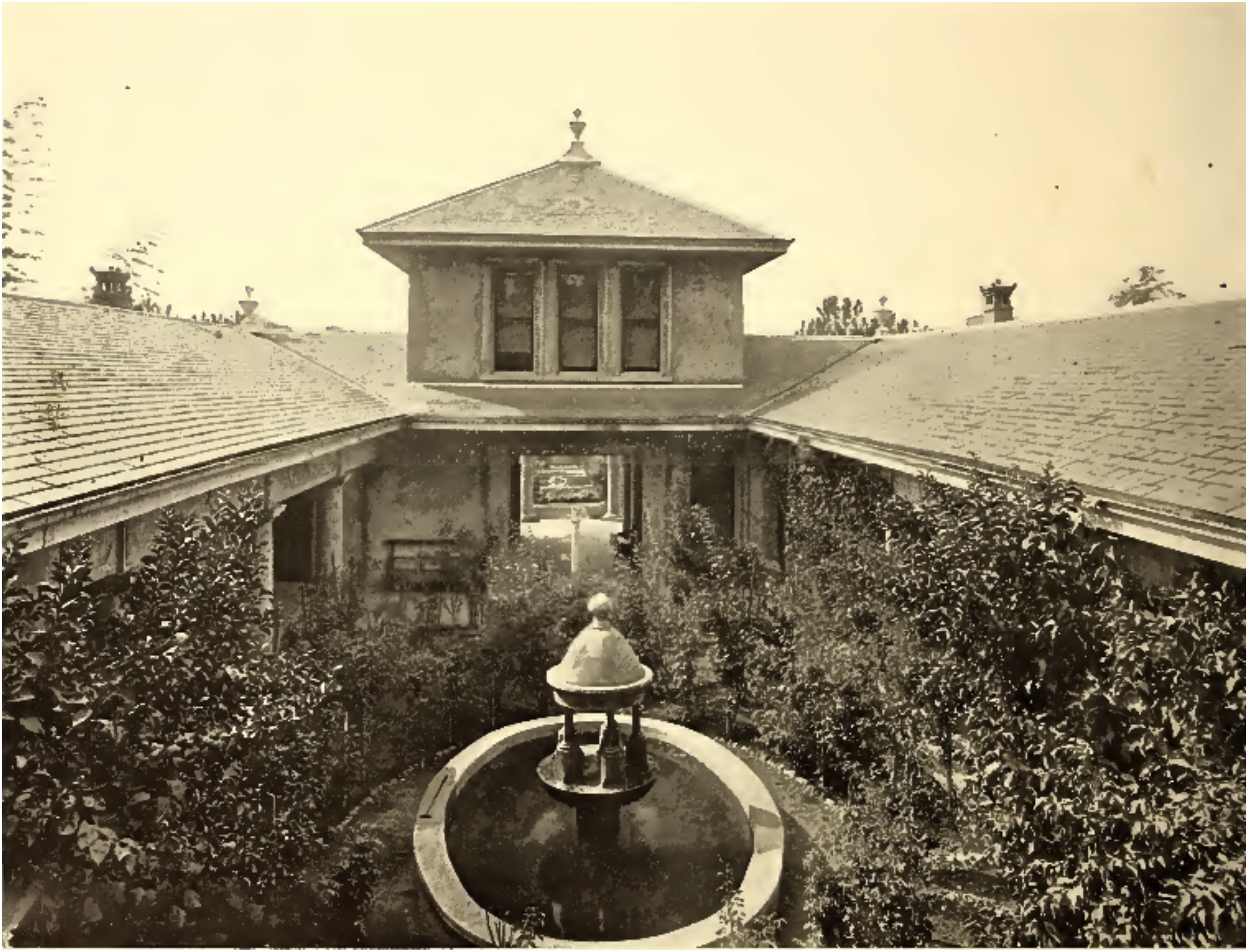
The peristyle garden with the fountain and the pool (Stoll, 1910: 384).

A recent photo (2010) of the peristyle garden (Source: Delores Arabian; Vignette Design blog).
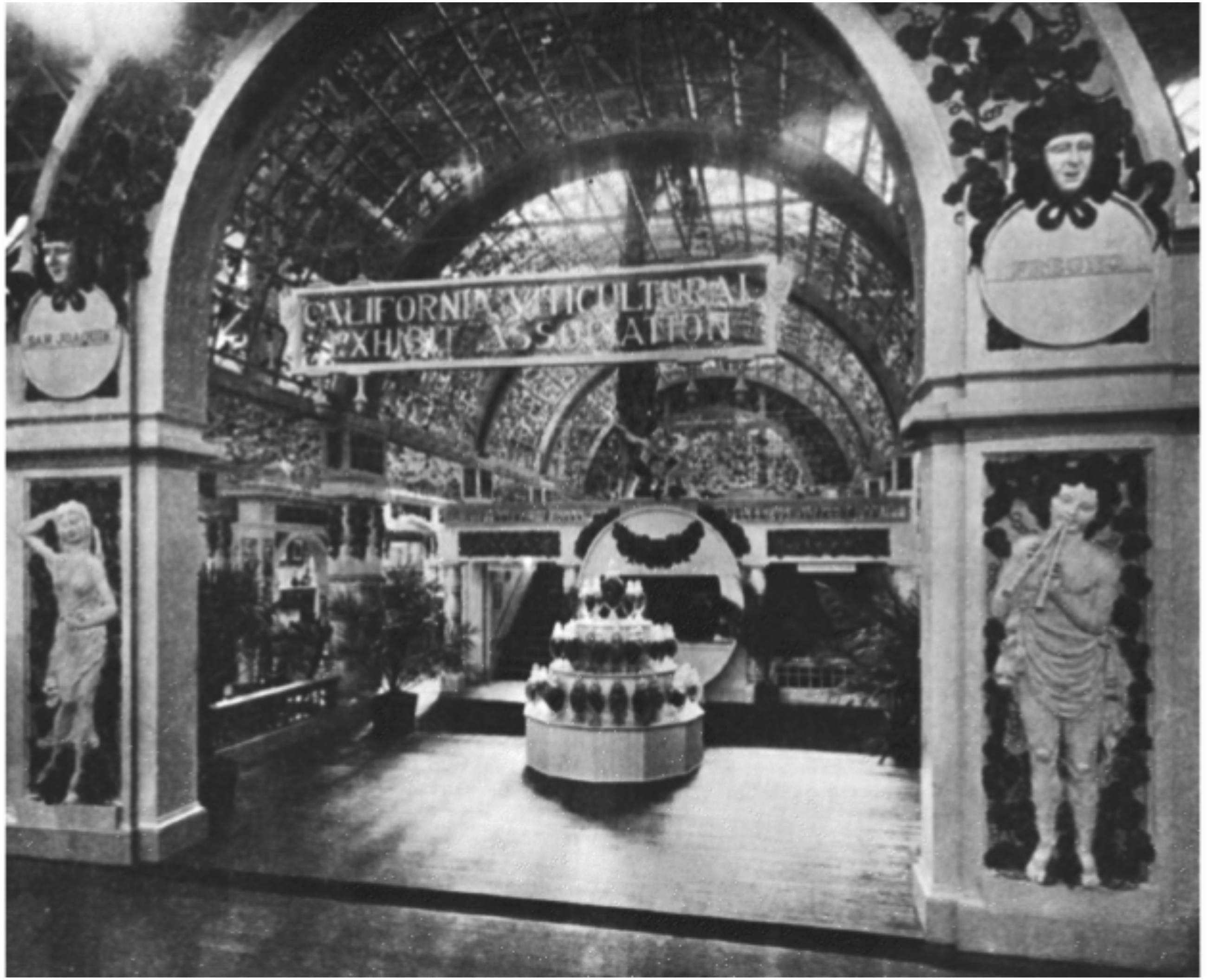
The grape temple, Panama–Pacific International Exposition, San Francisco, California, 1915, ‘Splendid Collective Wine Display.’ Pacific Wine, Brewing & Spirit Review (March 1915), 12 (in Hannickel, 2013: 184).
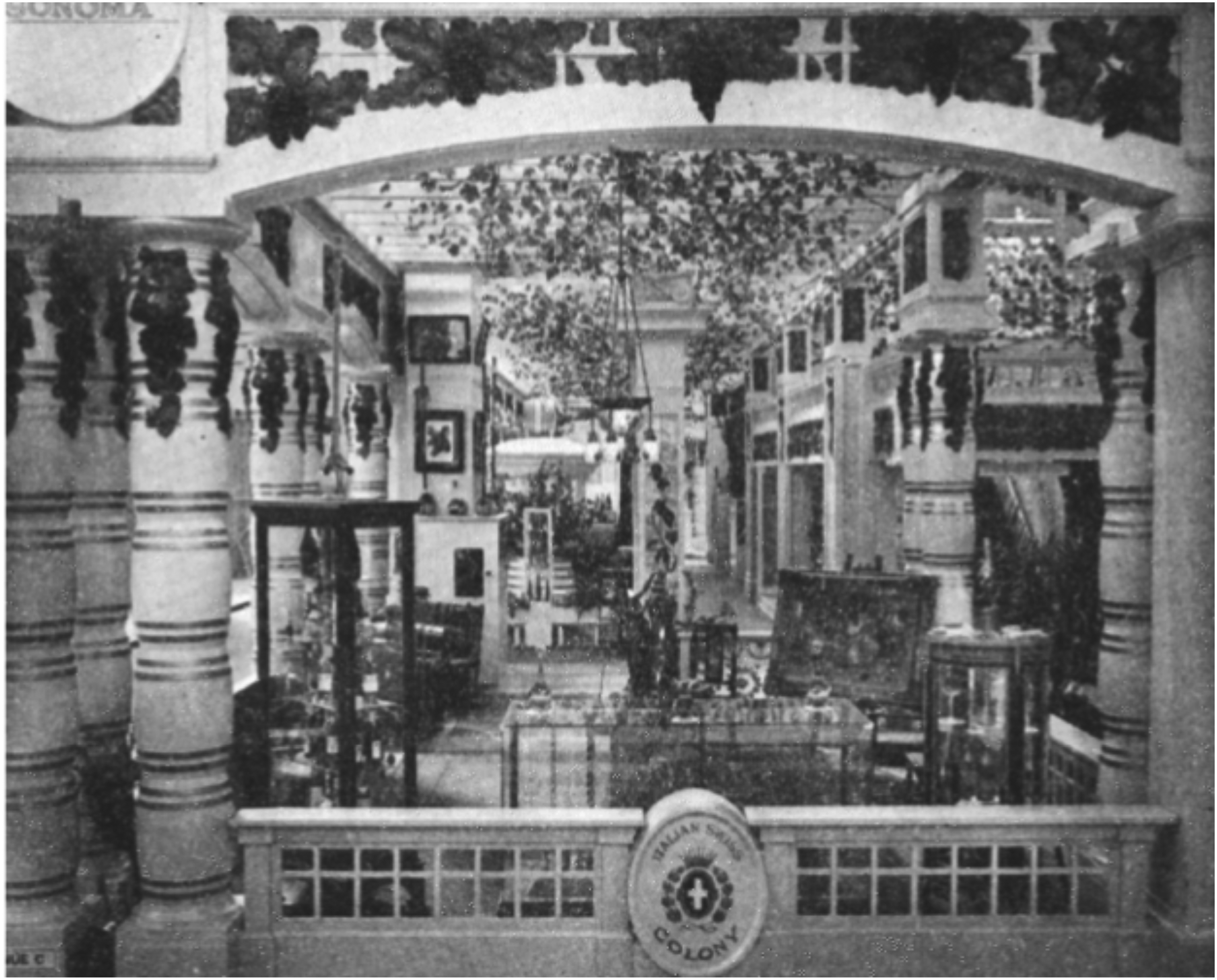
ISC booth, Panama-Pacific international exposition, San Francisco, California, 1915, ‘Splendid Collective Wine Display.’ Pacific Wine, Brewing & Spirit Review (March 1915), 13 (in Hannickel, 2013: 186).
The ISC's booth went one step further in promoting this domestic and feminine pastoral as a Victorian aesthetic marker to legitimize wine consumption for Anglo-American consumers. Sbarboro reinforced this message by exhibiting an original painting by the Italian artist Eugenio Zampighi (1859–1944), aiming to include the ISC within this pastoral mythology (see Figure 7).
At the time, Zampighi was an Italian artist living in Florence and an active member of the Florentine art movement called ‘Macchiaioli’ which was renowned for its effects of light and shadow. 18 Macchiaioli was an anti-academic movement that alternated historical subjects and ordinary landscapes and people, with particular attention to the underrepresented daily life of the Tuscan peasant class. Zampighi's atelier in Florence was a popular destination for British and American tourists, who admired his representations of everyday ‘Italian life’ with its emphasis on family values and rural, pre-industrial, social experiences. However, as Zampighi's painting traveled from his Florentine studio to the ISC booth in San Francisco, it is crucial to frame this work in the context of the local wine culture, besides the tourist desire to bring an image of local Tuscany back home. In this setting, the painting appears to be another example of tipo adaptation of rural Italian identity in California.
Indeed, considering Zampighi's numerous works depicting a domestic family gathering, this one stands out for registering the moment in which the man on the right side, presumably the father, is tasting a glass of wine, right in the brightest part of the image and under the ‘Italian-Swiss Colony’ label. Thus, while the painting responds to an Anglo-American imaginary of the merry, traditional Italian family, it also pays lip service to Sbarboro's campaign to undermine the association between wine and saloons, resituating the alcoholic drink into a domestic and intimate space. Moreover, the image of the mother holding her two children while the grandfather presents them with a toy goat (or sheep) resonates with the “feminine pastoral ideal” that is the aesthetic trademark of the grape temple. The painting displays an almost photographic quality, capturing the immediacy and non-staged effect of a family scene. Nevertheless, the res rustica of the image (the hens and chicks pecking the forage, the shoeless father, and the old-fashioned jar standing on its side) project the grape temple's classicist aesthetic to this typical Italian family portrait. Ultimately, Zampighi's work in the ISC's booth aimed at including Sbarboro's representation of his Italian colony in the Victorian imaginary of the ‘cottage idyll’ (Malcolm, 2021) by echoing the British themes of family frugality, rugged good-naturedness, and coziness reflected in this genre. However, this attempt at repositioning the ISC within the Imperial aesthetic displayed at the Panama-Pacific Exposition was a late call. Indeed, a disillusioned Sbarboro, sensing that the Prohibition era was inevitable, had already sold his ISC shares to the California Wine Association in July 1913. As somebody who knew Sbarboro personally said, “Sbarboro died in 1923 at the age of 83, presumably of influenza, but possibly of disgust at the sight of his beloved Asti meekly bottling grape juice for teetotalers” (Rossi, 1971: 98i).
Conclusion: An enduring legacy
The fight for temperance dismantled the transnational identity that Sbarboro had patiently built for years by claiming a common Roman heritage with Anglo-American elites through landscape construction. By participating in the formation of a Mediterranean landscape as an embodiment of a history of Western colonialism, the ISC collaborated with the genocide and removal of Native Americans and Mexicans from their territory, which was considered ‘virgin soil’ and terra nullius. Of course, I am not suggesting that Sbarboro was directly and explicitly involved in the Native Americans’ displacement from their territories, as, after all, he purchased the land from English owners. The origin of his moral and ethical accountability lies in his participation in the settler colonialist society, by implication, to borrow from Michael Rothberg's recent book (Rothberg, 2019). While not a direct perpetrator of violence, Sbarboro and his colony benefited without any doubt from the historical oppression of Native Americans while profiting from California's cultural turn toward a Classical and imperialist aesthetic. Ultimately, this article offers answers to why some Italian Americans in California succeeded in accessing a privileged social status despite their ‘Mediterranean’ racial profile that located them near the bottom of the white racial hierarchy. By working on the relationship between ethnicity—rather than race—and winescapes, I conclude that viticulture allowed them to construct an exclusive space of ‘whiteness’ in which Italian Americans could be recognized as ‘white.’ As Sara Ahmed noticed, “spaces acquire the ‘skin’ of the bodies that inhabit them” (Ahmed, 2007: 157), and winemaking became a way for Sbarboro to be ‘placed’ as a white European and to avoid his racial privilege being disputed.
It is not surprising today that some social activists calling for a more racially diverse wine industry in California point out that Italian American family businesses have acted as gatekeepers, preventing Black Indigenous and people of color's contributions from being acknowledged (Ornelas-Higdon, 2021). In this sense, Cal-Ital can potentially become an exclusionary space, in which stories celebrating 19th-century pioneer Italians have the effect of excising the non-Italian cultural elements presented in the landscape in the name of celebrating an Italian space, whether in Classical or Medieval forms. Indeed, Sbarboro's legacy of orienting 19 wine culture as an expression of the ‘translatio studii’ continues today in Napa Valley, where in 2007 the Sattui family built and inaugurated a 13th-century Tuscan castle to honor their Italian heritage (see Figure 8).
Built with nearly 1 million antique bricks imported from Europe, Castello di Amorosa in St Helena is a reminder of the place of Italy in California wine country and the embodiment of the proximities between viticulture and the historical tradition that helped Italian Americans to reach a place of belonging and comfort.
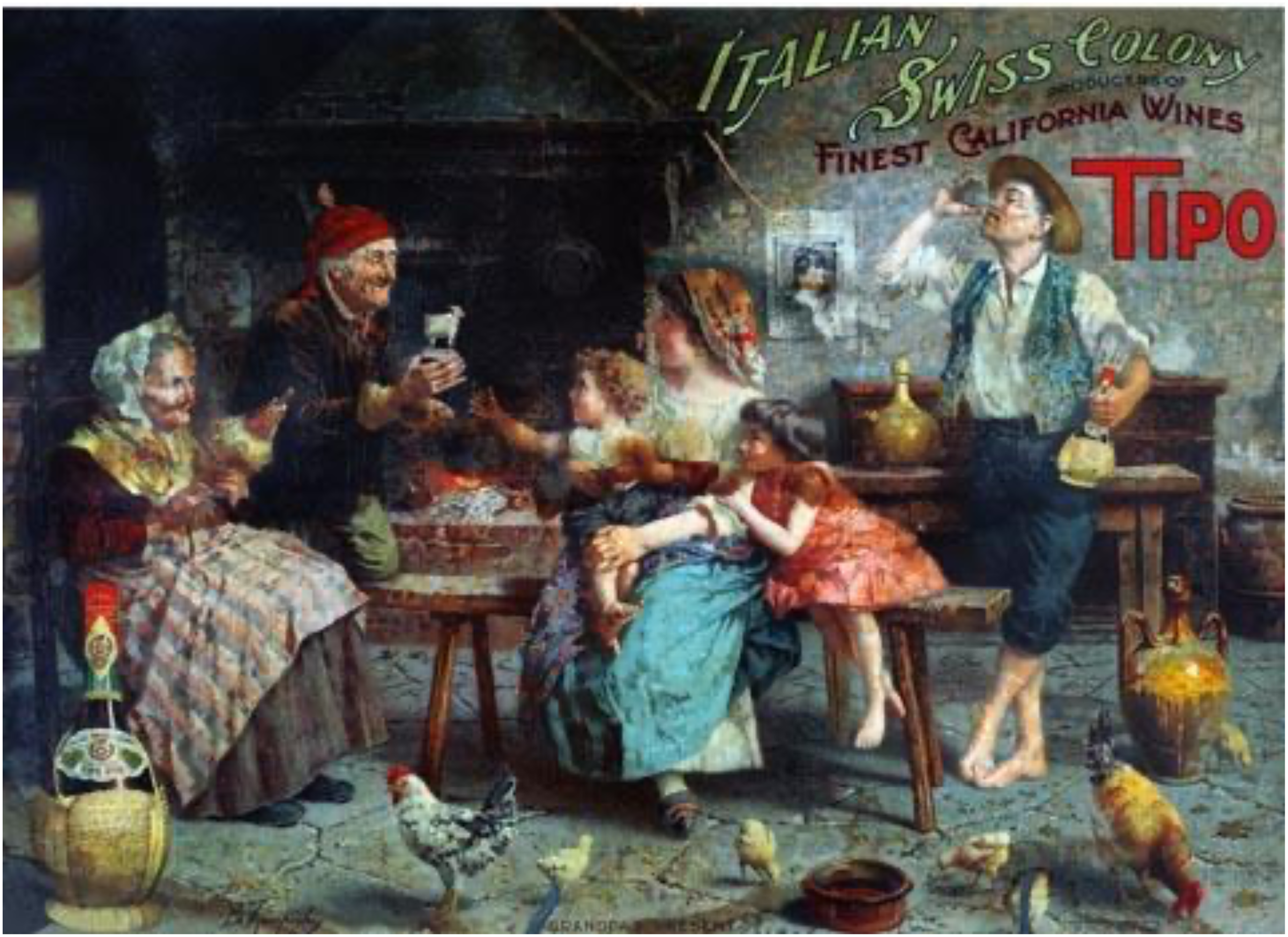
Eugenio Zampighi, Grandpa's Present, 1911 (Source: The Pierce Archive Art Shop).
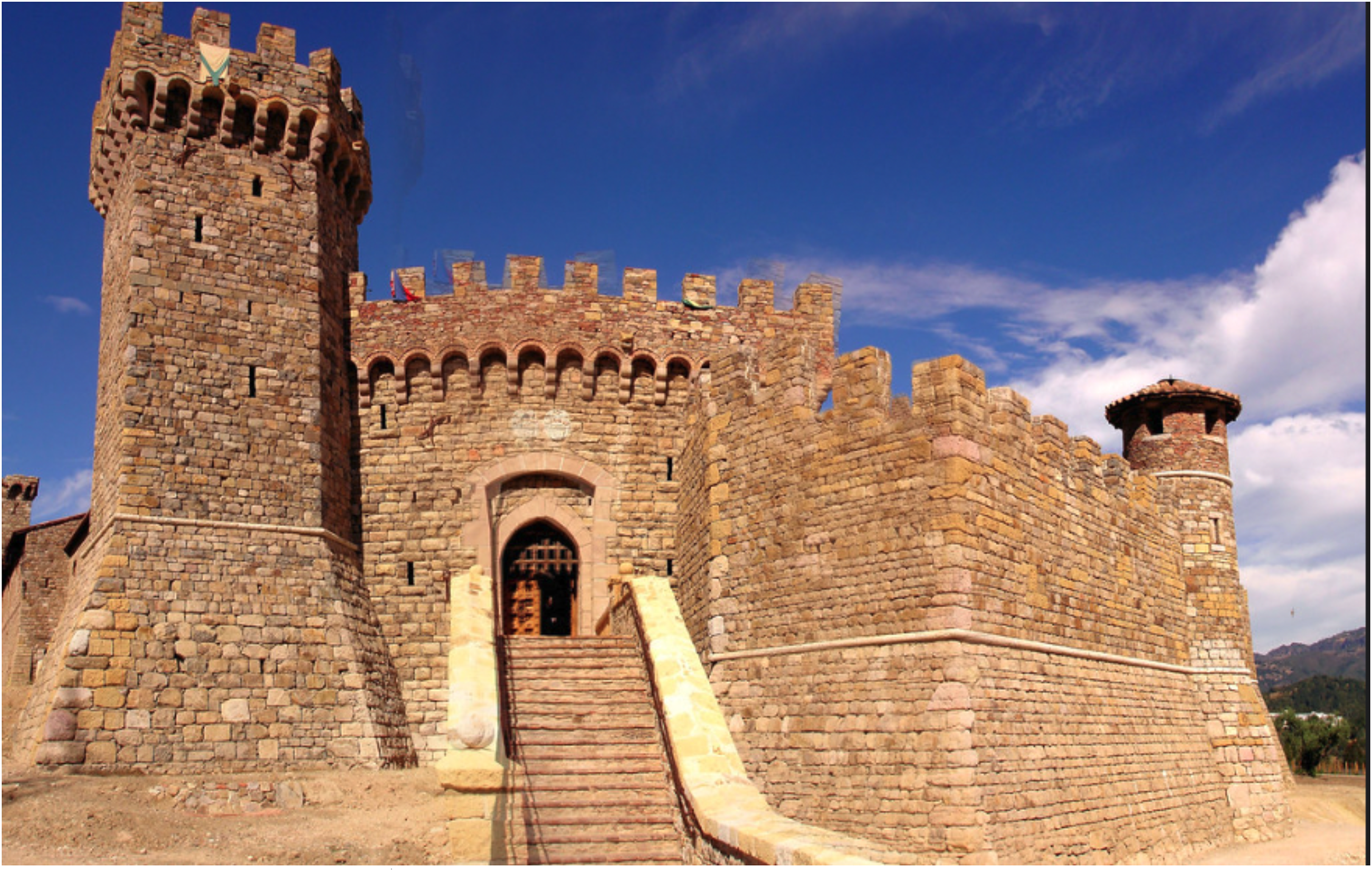
A view of the mock 13th-century Medieval castle located in Calistoga, Napa Valley and opened to the public in 2007 (Source: JimG, Creative Commons and Public Domain, https://creativecommons.org/licenses/by/2.0/).