







Abstract
This article investigates the dynamics of export diversification, economic complexity and economic growth cycles. By applying several econometric techniques for estimating a panel data set of 70 economies over the period from 1996 to 2014, the results have been threefold. First, there is Granger bi-directional causality between economic complexity and export diversification, while unidirectional Granger causality exists from economic complexity to economic growth cycles. Second, the result attained from the three-stage least squares estimate demonstrates that economic complexity and export diversification significantly impact each other. Notably, the effect of economic complexity is found to be negative on economic growth cycles, implying that the dynamics of economic complexity and export diversification generate a reduction in economic fluctuations. Third, by splitting the sample into two subsamples (i.e., 32 high-income economies and 38 low- and middle-income economies) and two sub-periods (i.e., 1994–2007 and 2008–2014), the results show that the positive dynamics between economic complexity and export diversification are consistent with income levels and time periods. However, the negative impact of economic complexity on economic growth cycles is statistically significant only for the group of high-income economies and during the 1996–2007 period. These findings are checked by several estimators and different proxies of export diversification, economic growth cycles and economic complexity.
Introduction
In recent years, export dynamics and economic factors have received considerable attention from economics scholars and practitioners. For instance, Le et al. (2020) document the long-term relationship between export diversification (ED), macroeconomic factors and income inequality. Interestingly, an inverted U-shaped nexus between income inequality and ED is strongly emphasised. In fact, international trade is said to have contributed positively to domestic economic activities through productivity gains and job creation (e.g., see Bresnahan et al., 2016). In the dynamics of international trade, it has been shown empirically that ED has significant influences on domestic socio-economic activities and structures (see Le et al., 2020), especially new economic activities (Osakwe et al., 2018). That is, ED might have a strong link with the domestic economic structure or economic complexity.
The topic of economic complexity has been of intense interest to economists over the recent years (Canh et al., 2020; Lapatinas, 2019), not least with the introduction of a new index of economic complexity, the Economic Complexity Index (ECI) (Hidalgo & Hausmann, 2009). The ECI quantifies the amount of knowledge materialised in a country’s productive structure, which represents not only the structure but also the knowledge in its production system (Lapatinas, 2019). In the same vein, some studies have considered the determinants of economic complexity (e.g., Hidalgo & Hausmann, 2009), while others have examined the impact of economic complexity on economic development, such as income inequality reduction (see Hartmann et al., 2017). In particular, some previous studies (e.g., Bustos et al., 2012; Hidalgo & Hausmann, 2009) indicate the nestedness of the economic complexity among countries in the global markets, which implies an economic link between export dynamics and domestic economic complexity. Moreover, previous studies (Hidalgo & Hausmann, 2009) find positive influences of economic complexity on growth. There is, however, likely no study on the linkage between ED and economic complexity, and the effects of these dynamics on economic fluctuations.
Therefore, this article endeavours to shed some light on the nexus between ED and economic complexity, and also the impacts on economic fluctuations. In doing so, the dynamic links between ED and economic complexity are investigated first. The article then examines the effects of these dynamics on the cycles of economic growth to explore the linkage between domestic economic complexity and international ED and their roles in curbing or enhancing economic growth. Empirically, the analysis uses a global sample of 70 economies, consisting of 32 high-income economies (HIEs) and 38 low- and middle-income economies (LMEs) over the period from 1996 to 2014; this is the best sample, given the availability of data. The panel Granger causality test is used to examine the causality among ED, economic complexity and economic growth cycles. The three-stage least squares (3SLS) is employed as the principal estimator to estimate a system equation of three dependent variables, that is, ED, economic complexity and economic growth cycles. In addition, the two-stage least squares (2SLS) and the two-step system general method of moments (GMM) estimator are applied to provide robustness checks. The ED index, export-extensive margin (EM) and export-intensive margin (IM) are used to proxy for ED, while ECI and an alternative measure of ECI (ECI+) proxy for economic complexity. The study also uses different measures to calculate economic growth cycles for robustness checks.
The empirical results show evidence of the bi-directional causality between economic complexity and ED, while there is also a unidirectional causality from economic complexity to economic growth cycles. The robust results from the 3SLS estimate confirm the positive impacts of economic complexity on ED and vice versa. Interestingly, it documents a significant negative impact of economic complexity on economic growth cycles, which highlights the benefits of economic complexity in reducing economic cycles. In connection with the positive dynamics between ED and economic complexity, another key implication is that the policy advocating ED would help increase domestic economic complexity and would thence result in lower economic fluctuations. The study goes further by examining these relationships in two subsamples (HIEs and LMEs) and two sub-periods (1996−2007 and 2008−2014). The positive dynamics between ED and economic complexity are found to be consistent in the two subsamples and two sub-periods. Meanwhile, the negative impacts of economic complexity on economic growth cycles are justified as being statistically significant in HIEs between 1996 and 2007 (the one before the 2008 global financial crisis with high stable economic growth); this highlights the importance of economic complexity and ED in high-income countries in a period of stable or high economic growth.
The article is structured as follows. The second section reviews the literature. The third section discusses the methodology and data. The fourth section discusses the results. The fifth section concludes the study.
Literature Review
Economic Fluctuations: A Brief of the Theoretical Framework
Economic fluctuations are, in fact, one of the central topics in economic literature (Rose & Spiegel, 2010). The mismanagement of macroeconomic policies, the crises in financial markets and issues in institutional settings are named as the three leading causes of output variations (Malik & Temple, 2009; Phuc Nguyen et al., 2018). Empirically, several previous studies document both demand and supply determinants of economic fluctuations in the short and long run (Wen, 2006). With the motivations from recent crises in the 1970s, 1980s and 1990s, new drivers of economic fluctuations are identified, including shocks from economic integration (i.e., trade openness and capital flows) (Kalemli-Ozcan et al., 2001), shocks from macro-policies (i.e., fiscal policy and monetary policy) (Creal & Wu, 2017), shocks from financial markets (i.e., credit market or stock markets) (Christiano et al., 2010) or shocks in technology and labour supply (Chang & Schorfheide, 2003). Recent studies pay more attention to the financial markets as the results of the 2008 global financial crisis (Gambacorta & Marques-Ibanez, 2011; Nguyen et al., 2020). For example, Furlanetto et al. (2014) indicate financial shocks as major causes of output fluctuations. However, the importance of economic stability and its impacts on social security and sustainability deserve investigation, especially amid the recent context of the Covid-19 pandemic, which already poses truly challenging questions about the economic structure and the stability of output (Ludvigson et al., 2020).
According to Stiglitz (1999), there are strong links between wage and price rigidities with economic fluctuations. Meanwhile, Mendoza (1995) notices that the shocks in terms of trade can explain nearly half of the actual gross domestic product (GDP) variability. In this vein, Hoffmaister et al. (1998) find that external shocks have a more significant influence on output fluctuations in sub-Saharan Africa. Konstantakis et al. (2016) add that imports had a strong procyclical character on output in Greece in the period from 2005 to 2012. Chen (2009) shows that the shocks in technology contributed to most of the fluctuations in output, investment and consumption in China in the period from 1993 to 2005. That is, the roles of internal–external linkages and domestic structures of production should be, in the broader view, of mounting concern.
Economic Complexity and Economic Fluctuations
Production structure, in a narrow view, or economic complexity of a country, in a broad view, has been growing as major concerns in recent decades (Holling, 2001). Economic complexity is defined as ‘the amount of knowledge materialized in a country’s productive structure’ (Hidalgo & Hausmann, 2009). Interestingly, recent studies (Hidalgo & Hausmann, 2009) introduced the ECI, which opens new research directions in the literature, such as the determinants of economic complexity (Hidalgo & Hausmann, 2009) or the contributions of economic complexity to economic development (Lapatinas, 2019). Hidalgo and Hausmann (2009) find that economic complexity is highly correlated with income. Lapatinas (2019) shows the positive impacts of the Internet on economic complexity, whereas, interestingly, Hartmann et al. (2017) document the positive contributions of economic complexity in achieving better social development such as the reduction of income inequality. In general, most economists agree that economic complexity is an important driver of social and economic development (Ferrarini & Scaramozzino, 2016; Oosterlaken, 2015).
As the definition of the amount of knowledge materialised in the structure of a country’s products (Hidalgo & Hausmann, 2009), an increase in economic complexity would reflect the development of economic diversification and production quality (Ivanova et al., 2017). The literature shows that this increase would create substantial opportunities for new economic activities as the first-time appearance of new sectors and new products (Ferrarini & Scaramozzino, 2016). That is, the increases in economic opportunities may help the economy stay more stable during economic turbulence as the benefits of diversification (Scott et al., 2017). In addition, higher economic complexity would also imply higher connectedness among economic sectors, with economic agencies as forming a more complicated system (Bustos et al., 2012). This situation may create both pros and cons in terms of economic stability. On the one hand, the stronger linkages may create an additional capability for every economic agency to fight against shocks. It may, on the other hand, create a greater systematic risk —fall of the whole system. Furthermore, higher economic complexity means that the number of the higher-quality products in the economy increases, which gives rise to more competition. Thus, new entrants to the market, or even existing businesses, would be suppressed by shocks, and, as a result, the economy may be more vulnerable to shocks. Overall, we may expect both positive and negative contributions of economic complexity to economic fluctuations.
Export Diversification and Economic Fluctuations
In line with domestic economic complexity, export activities, especially export orientation strategy, are highly influential the trade liberalisation (Terjesen & Hessels, 2009). The openness of an economy to the world through exports and imports can bring both benefits and costs to the domestic economy. In this vein, ED is documented with several impacts (Le et al., 2020; Osakwe et al., 2018). For instance, Önder and Yilmazkuday (2016) argue that diversification in trading partners has a positive impact on economic growth. Egger and Etzel (2012) add that trade openness with a fully symmetric partner country could induce higher employment and welfare. In exports, diversification can be observed in terms of the exporting markets’ destination or exported products (Samen, 2010). The literature shows that these diversifications can alter domestic production structure and the economic development (Blancheton & Chhorn, 2019). That is, an increase in ED would result in the production of new products or improvements in product quality to meet international standards, and this is the cause of increased economic diversification (Albassam, 2015) and also higher economic complexity.
However, a well-specialised theory in international economics notes that trade liberalisation would stimulate a country to focus on their relative advantages (Lee & Yi, 2018; Sampson, 2016). These advantages are induced by the fact that in the process of ED, it is common to confront the high costs of processing, especially in the initial stage of diversification. For instance, Fillat et al. (2015) show that international activities can have diversification benefits, but gaining these benefits entails fixed and sunk costs of production. Moreover, the costs are mostly exogenous to domestic businesses (Nicita & Rollo, 2015). The cost-benefits of ED may not always be favourable for domestic businesses to expand their production to new products or to improve product quality. Therefore, higher ED may not always result in more economic sectors but in higher concentration on relatively advantaged sectors of a country. That is, with higher ED to more trading partners, the domestic economic structure may not necessarily be diversified. ED, therefore, does not have a strong link with domestic economic complexity in this case.
In summary, there is a need to examine the link between ED and economic complexity and, in particular, the impact of these dynamics on domestic economic growth cycles. The next section presents our methodology and data.
Methodology and Data
The two main aims of this study are to investigate (a) the dynamics between economic complexity and ED and (b) the impacts of economic complexity on economic growth cycles. The study builds a system of three equations of three dependent variables, that is, economic complexity (ECI), ED and economic growth cycles (EGc). In the function of economic complexity, the study follows previous literature to define some control variables, including income level (Income), population density (POPDEN), human capital (HC) and capital formation (CAP) (see Hidalgo & Hausmann, 2009; Lapatinas, 2019). ED is then added as the explanatory variable. In the function of ED, income level (Income), trade openness (TRADE) and foreign direct investment (FDI) inflows are used as control variables (Osakwe et al., 2018). According to Cadot et al. (2011), a non-linear relationship exists between ED and income level. Other studies (Le et al., 2020) also note the non-linear relationship between ED and socio-economic development. This study, hence, adds the square term of income level (Income2) to control for this relationship. Economic complexity is then introduced as the explanatory variable for ED. The dynamic relationships between economic complexity and ED will be investigated through this system. Finally, the function of economic growth cycles is built on three main control variables. These variables include trade openness, FDI inflows and industrialisation (INDUSTRY), and trade openness and FDI inflows will proxy for economic integrations (Kalemli-Ozcan et al., 2001), which would link international shocks to domestic fluctuations (Nguyen et al., 2018). Industrialisation is used as a control variable for the economic development process, which would help reduce country fixed effects. Economic complexity is then added as the explanatory variable of economic growth cycles, which represents not only domestic economic structures but also the quality of production. The equation system is as follows:
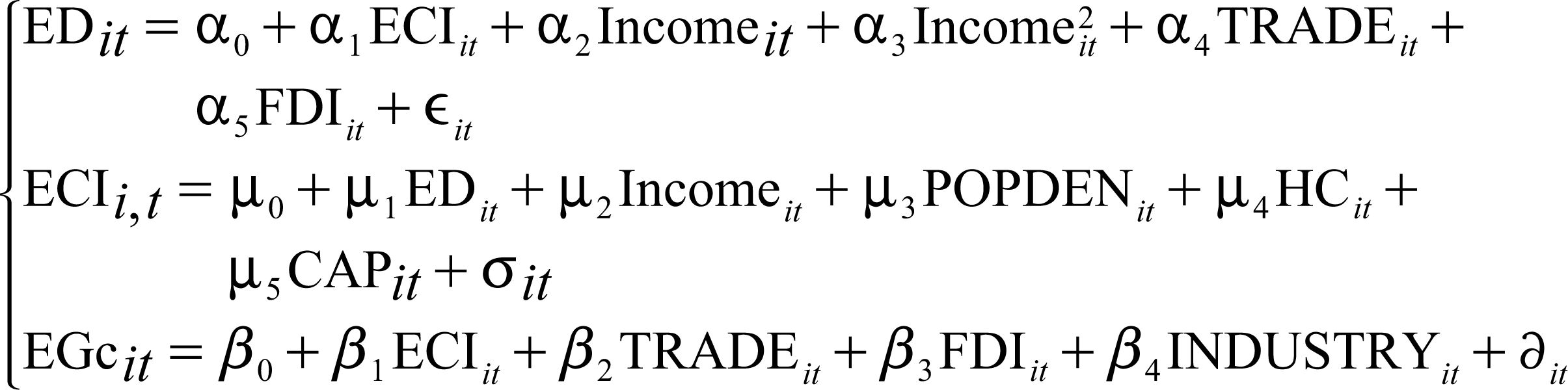
where i and t denote country i at year t; α, μ and β are coefficients; and ϵ, σ and ^ are residual terms.
In terms of data, we first collect from Direction of Trade Statistics-International Monetary Fund (DOT-IMF) the three indices of ED, namely overall ED, EM and IM. In measuring ED (IMF, 2019), the IMF has followed the definitions and methods proposed by Cadot et al. (2011) by focusing on the variety of both products and destinations: (a) the EM index reflects the evolution in export values among existing exports; (b) the IM margin index denotes the evolution in the number of new products exported or in the number of new destinations for existing exports; and (c) the overall ED index is the sum of these two indices (Cadot et al., 2011). According to their explanations, higher values of these indices mean lower ED (IMF, 2019); therefore, we compute these indices with a minus, inferring that higher values of the transformed indices are synonymous with higher ED. In this study, we use all three indices one by one to proxy for ED as a way of robustness check.
Given the economic complexity, this study uses the ECI, calculated by Hidalgo and Hausmann (2009), which is available from MIT Observatory of Economic Complexity. 1 In addition, the alternative ECI ECIa, suggested by Albeaik et al. (2017), is also collected from the same source as a means of robustness check for ECI.
As for economic growth cycles, which are reported in the literature as very difficult to measure (Orphanides & Norden, 2002), this study adopts a traditional approach by measuring the output gaps. We collect real GDP growth rate (%) from the World Development Indicators database of the World Bank (WDIs) to proxy for economic growth. The study then applies three different techniques to estimate output gaps to ensure the robustness of results. First, we calculate the mean of the real GDP growth rate of each country and then estimate the difference between the real GDP growth rate of each country by year with its mean. The difference is assumed to be the output gaps between real GDP growth rate and its period average.
2
To proxy for economic growth cycles, we take the absolute values of these differences (EGc1) before adding to the estimate of Equation (1), which helps evaluate the reduced effects or the exacerbated effects of ECI on output cycles. Second, the study regresses the real GDP growth rate for its 1-year lag and year (time factor) to extract real GDP variable into cyclicality and trend factors (Clark, 1987) as in the following equation:

The trend series represents long-term development, while the cyclicality represents short-term fluctuation. The residuals from this estimate (or the cyclicality) are predicted, and their absolute values (EGc2) are also taken for empirical estimates Third, the study follows the same procedure for the second method with an adjustment by excluding year factor but adding year-effects and country-effects in estimates (EGc3). There is a popular technique in the literature for estimating the output gaps by using the HP filter (Hodrick & Prescott, 1997). However, this method works well specifically for time series data, while this study focuses on a global sample, and the availability of data does not allow us to have a long-time data set. Table A2 reports the estimated results of economic growth cycles, using second and third methods.
Variables, Definitions, Calculations, Sources, Time available Range and Data Description
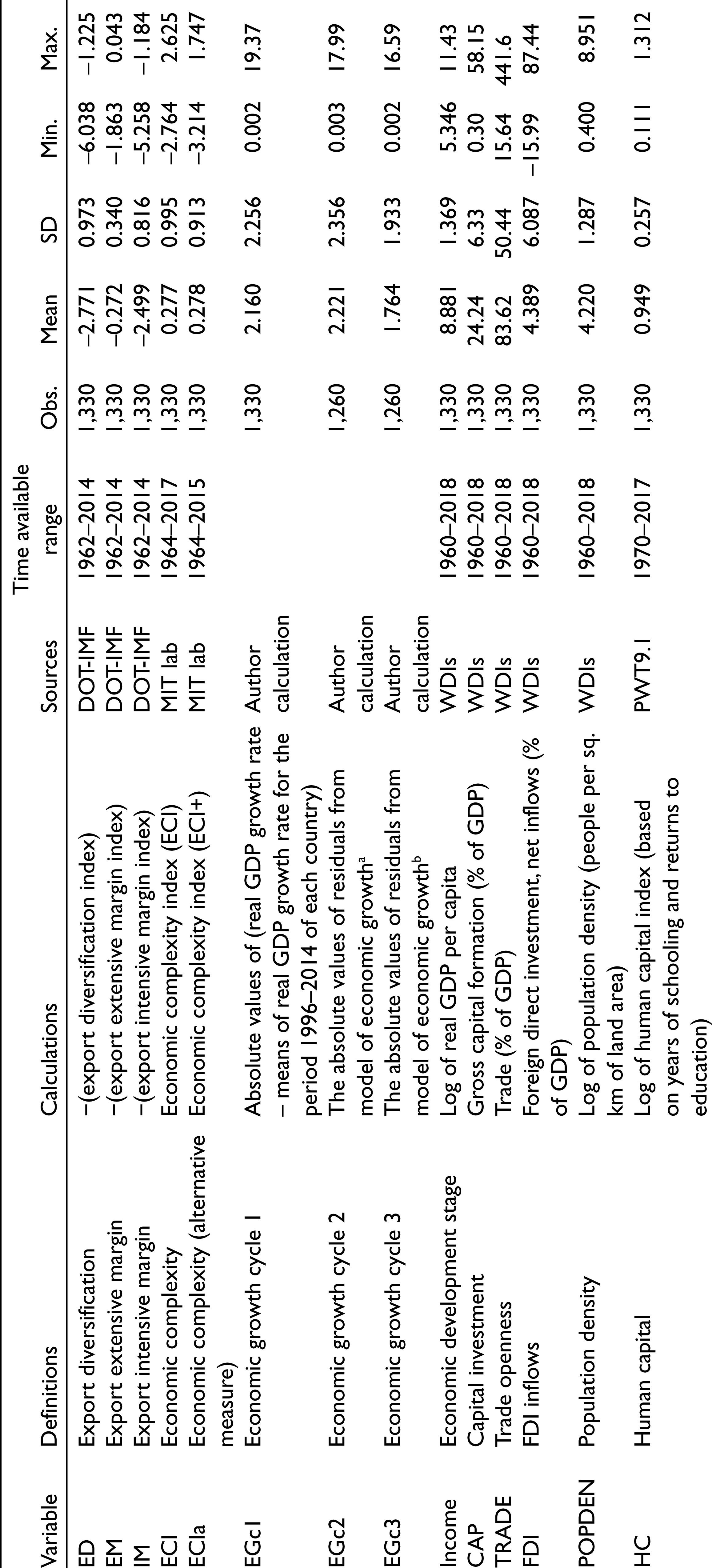

WDIs is World Development Indicators database, World Bank (see PWT9.1 is Penn World Tables version 9.1 (see The economic complexity indices are collected from MIT lab (see According to the definitions in DOT-IMF, a higher value of ED/EM/IM means lower level of diversification in exports (see aThe residuals from the estimations of real GDP growth rate (%) with its one-year lag and year variable are taken in absolute values. Detail of estimation result is shown in Table A2. bThe residuals from the estimations of real GDP growth rate (%) with its one-year lag, year-fixed effects and country fixed effects are taken in absolute values. Detail of estimation result is shown in Table A2. Since the data of ED, EM, IM is available until 2014, while data of ECI and ECIa is available for most countries from 1996. Other variables also have data mostly from 1990s thus the period 1996–2014 is chose as best period for empirical analysis.
Correlation Matrix Among Main Variables
Regarding control variables, the study collects most of these from WDIs (Bank, 2018), including real GDP per capita (logarithm taken) to proxy for income level, gross capital formation (% GDP) to proxy for capital formation, trade (% GDP) to proxy for trade openness, population density (people per sq. km of land area) (logarithm taken) to proxy for population density, the net inflows of FDI (% of GDP) to proxy for FDI inflows and industry (including construction) value added (% of GDP) to proxy for industrialisation. Additionally, the human capital index (based on years of schooling and returns to education) (logarithm taken) is collected from Penn World Tables version 9.1 (Feenstra et al., 2015) to proxy for human capital.
Unit Root Tests
After collecting all variables, we match them all together and find that the data of ED (ED, EM and IM) are available up to 2014, while the data of ECI are mostly available from 1996. Therefore, the period from 1996 to 2014 is chosen as the best period for our empirical study. Moreover, the sample is defined by ruling out countries whose data are missing for certain variables. The final sample, as a result, which includes 70 countries (32 HIEs and 38 LMEs), is employed as our best fit sample (see Table A1 for the list of countries). All variables, definitions, calculations, sources, available time ranges and data descriptions are presented in Table 1.
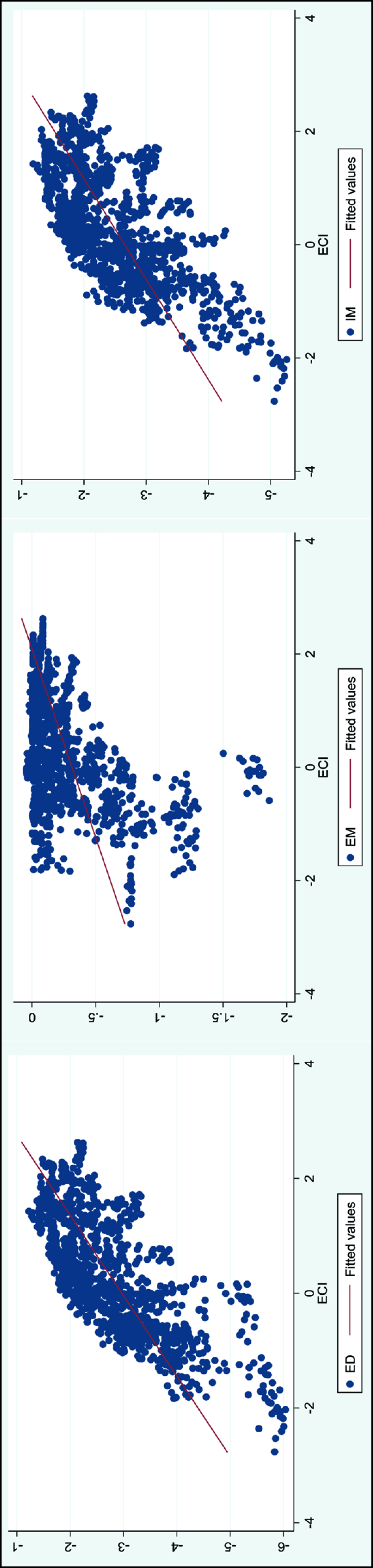
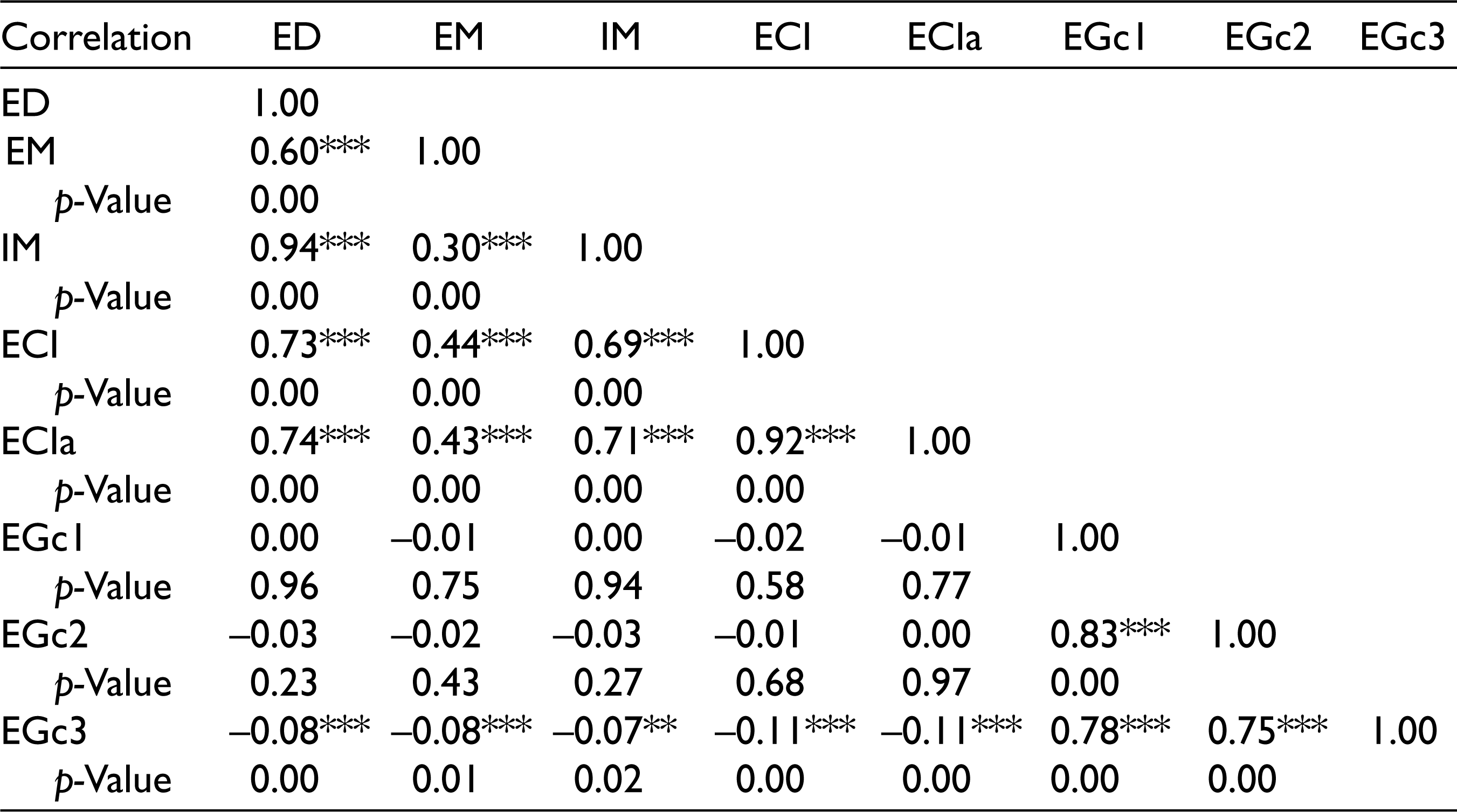
Table 2 reports unconditional correlations between main variables. Observations show positive correlations between both indices of economic complexity (ECI, ECIa) and three indices of ED (ED, EM, IM). Figure 1 elaborates on this fact. There are likely strong related relationships between economic complexity and ED.
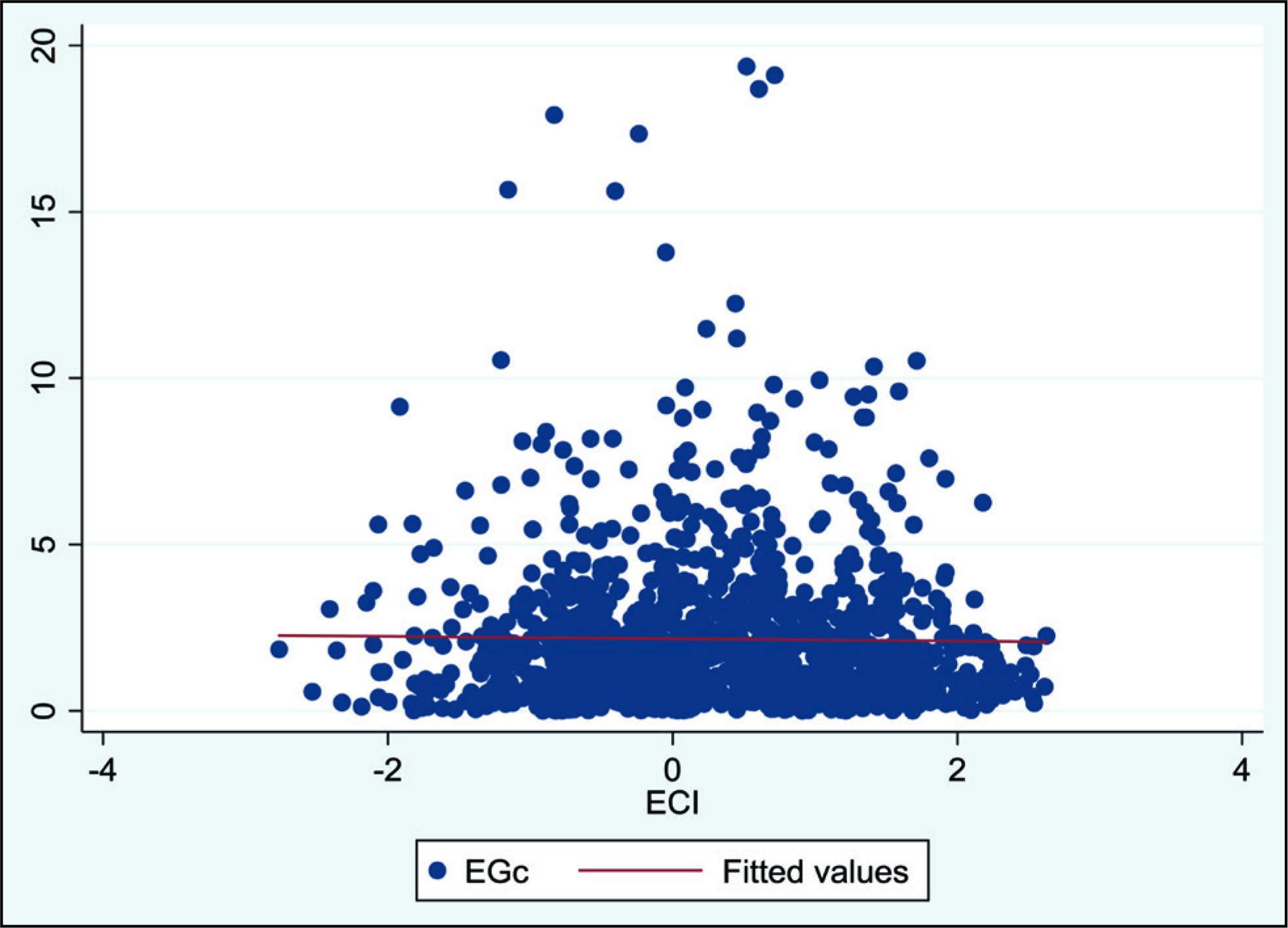
Interestingly, Table 2 shows negative correlations between economic growth cycles and economic complexity; this can be observed through a slight negative relationship between ECI and economic growth cycles in Figure 2.
Cointegration Tests
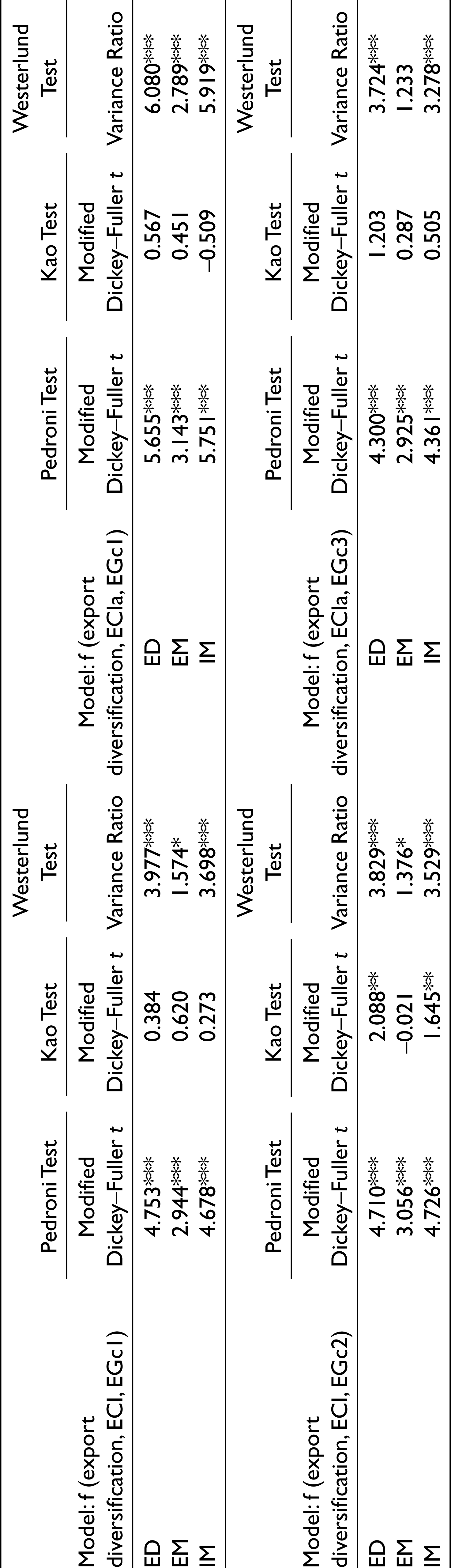
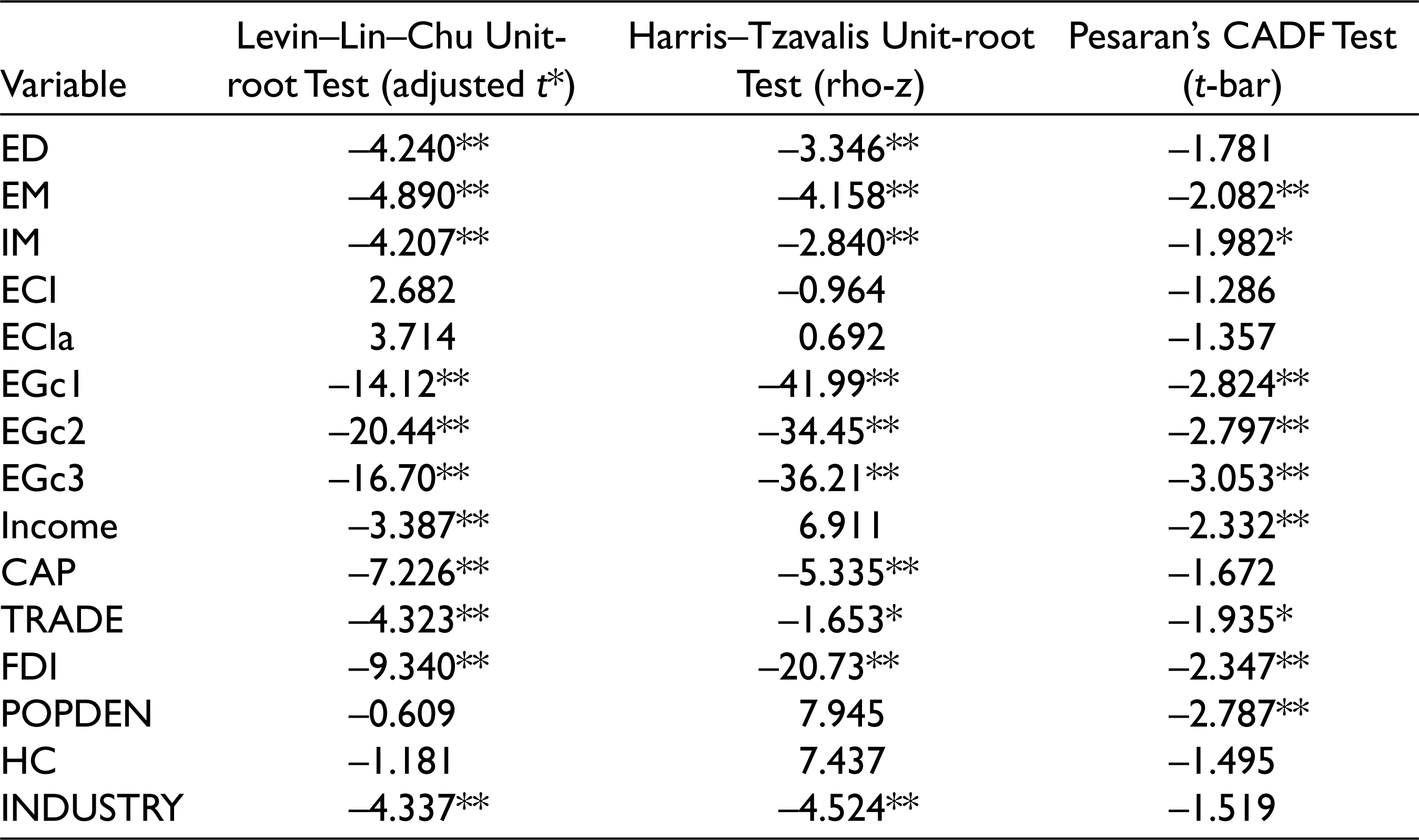
Next, the study recruits a set of unit root tests for panel data, including the Levin–Lin–Chu unit-root test (Levin et al., 2002), the Harris–Tzavalis unit-root test (Harris & Tzavalis, 1999) and the Pesaran’s CADF test (Pesaran, 2007). The results in Table 3 show that most variables are stationary at levels. Three cointegration tests for panel data, including the Kao cointegration test (Kao, 1999), the Pedroni cointegration test (Pedroni, 1999, 2004) and the Westerlund cointegration test (Westerlund, 2005), are conducted to check the cointegration between economic fluctuations, economic complexity and ED. The results in Table 4 show that there is a possible existence of cointegration between three variables. In this context, the study recruits the Granger causality tests for panel data, as suggested by Dumitrescu and Hurlin (2012), to examine the causality relationship between economic complexity and ED, and between economic complexity and economic growth cycles. In the context of cointegration with the causalities between variables, the study uses the 3SLS to estimate Equation (1), which is suitable for the equation system (Belsley, 1988). Moreover, the 2SLS and two-step system GMM estimator are also employed for robustness checks.
Results and Discussion
Granger Causality Among Economic Complexity, Export Diversification and Economic Growth Cycles
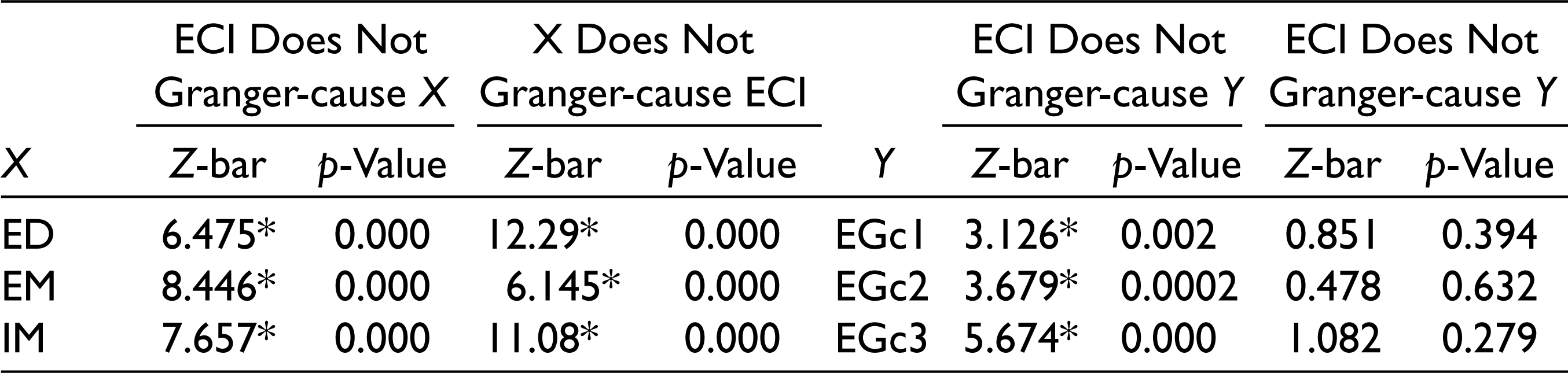
We first test granger causality to predict impact driver among ECI, ED and economic growth cycles. The results of Granger causality tests are presented in Table 5.
The results show the evidence of Granger causality from ED (ED, EM and IM) to economic complexity (ECI) and also the causality from ECI to ED, EM and IM at the 1 per cent level of statistical significance. This means that there is bidirectional causality between economic complexity and ED, which is in line with Khan et al. (2020). Also, Table 5 indicates statistical evidence of one-directional causality from ECI to economic growth cycles (EGc1, EGc2 and EGc3) at the 1 per cent level of significance, suggesting that a change in ECI could lead to a change in economic growth cycles. Nevertheless, observations show that there is no statistical significance demonstrated for the causality of economic growth cycles to ECI, implying that merely unidirectional causality exists from economic complexity to economic growth cycles. The results are then checked for robustness by replacing ECI by ECIa, and these are reported in Table A3. The findings are consistent. That is, there are mutual dynamics between economic complexity and ED, while economic complexity functions as a driver of economic growth cycles. These relationships are further investigated in the next subsection.
Granger Causality
Effects of Economic Complexity and Export Diversification on Economic Growth Cycles: The Global Sample
We, in this part, focus on analysing the linkages between economic complexity and ED, and their impacts on economic growth cycles for the global sample. In computing Equation (1), the study first estimates the relationship between economic complexity and export diversification without including economic growth cycles as a first check by both 2SLS and 3SLS. The results presented in Table A4 exhibit the positive impacts of ECI on ED, EM and IM, implying that an increase in ECI would promote ED. Ivanova et al. (2017) documented that higher economic complexity is accompanied by higher economic diversification and production quality, thus leading to higher export competitiveness (Erkan & Yildirimci, 2015). Also, the positive impacts of ED, EM and IM are found on ECI. This result indicates that an increase in ED would give rise to improvements in product quality to meet international trade standards. As a result, ED would increase economic diversification and economic complexity (Albassam, 2015). In summary, our findings provide evidence to confirm the existence of positive linkages between economic complexity and ED.
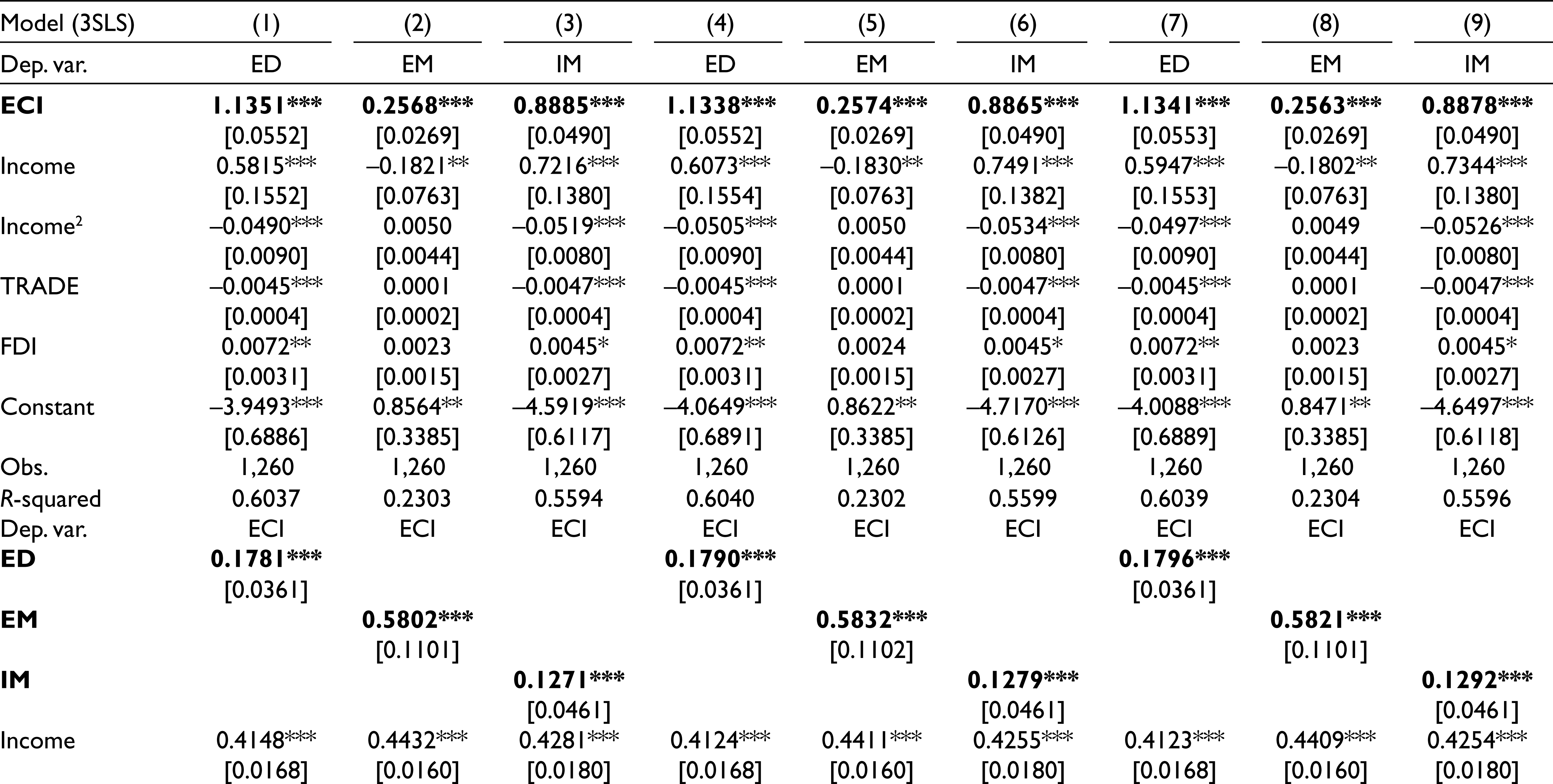
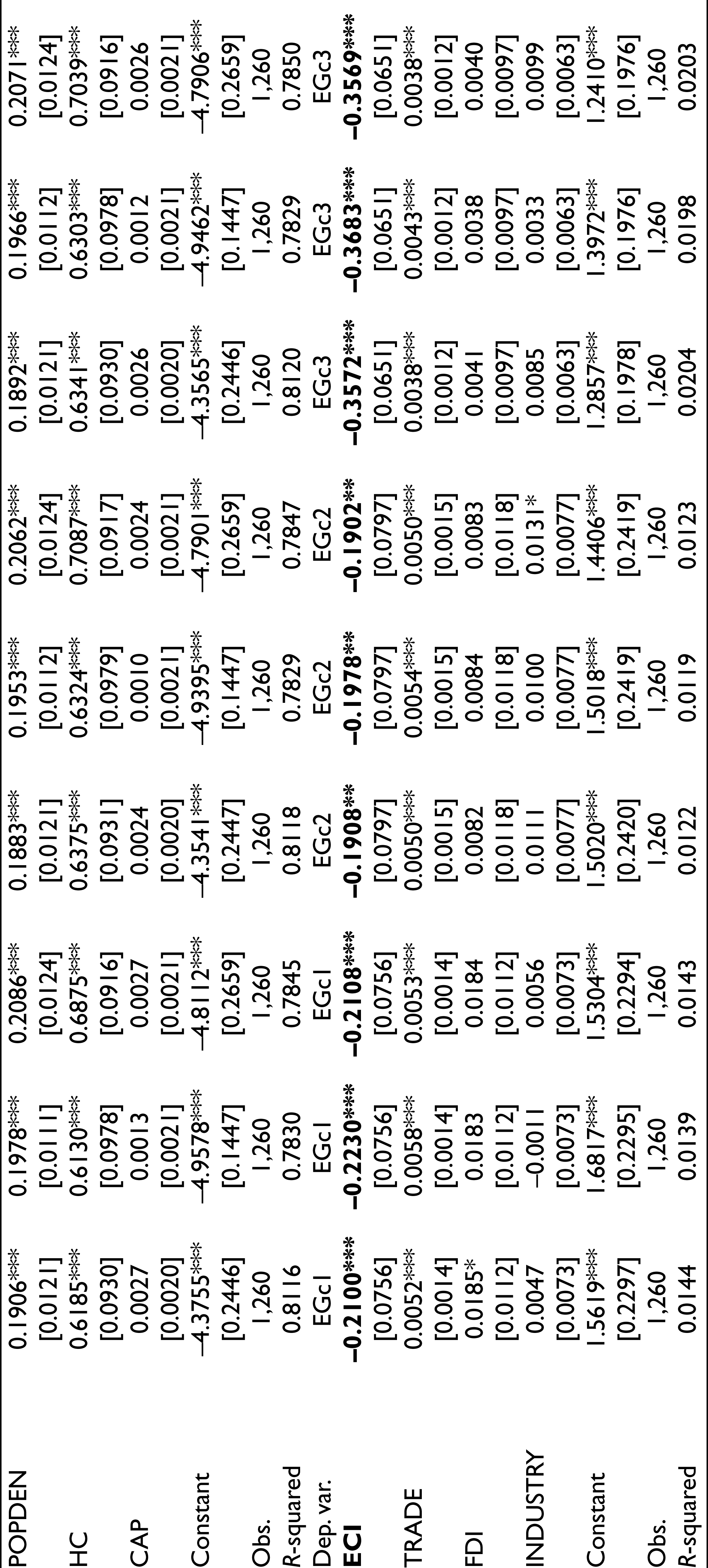
Next, the 3SLS is applied for the full system with three dependent variables, namely economic complexity, ED and economic growth cycles. The results of 3SLS estimates for the equation system in Equation (1) with three cases of economic growth cycles (EGc1, EGc2, EGc3) are illustrated in Table 6. 3 Models 1–3 in Table 4 demonstrate the results for the case of EGc1 and overall ED index, EM and IM, respectively. Besides, models 4–6 in Table 6 clarify the results for the case of EGc2, while models 7–9 are those for EGc3 with ED, EM and IM, respectively.
As reported in Table 6, we first show the consistent significant positive impacts of ECI on ED, EM and IM, and conversely, ED, EM and IM have significant positive impacts on ECI (models 1–9). In other words, economic complexity and ED have positive impacts on each other. This result is consistent with previous findings on bi-directional causality between these two variables. On these grounds, the conclusion can be drawn that economic complexity and ED have mutual causality and positive links, which also imply that domestic economic complexity and ED are positively linked. Interestingly, we find significant negative impacts of ECI on economic growth cycles (all cases of EGc1, EGc2 and EGc3); this means that the increases in economic complexity would reduce the difference between real GDP growth rates and its long-term trend. That is, increasing economic complexity would help minimise economic fluctuations through the proxy of economic growth cycles; this is the first finding, indicating the positive contribution of economic complexity towards economic development through the reduction of economic cycles (Ferrarini & Scaramozzino, 2016; Oosterlaken, 2015), thus reducing income inequality (Hartmann et al., 2017).
The results are checked for robustness by applying 2SLS and two-step system GMM estimators. 4 The results for 2SLS, reported in Table A5 show consistent positive impacts of ECI on ED, EM and IM and the positive impacts of ED, EM and IM on ECI. Also detected are the negative impacts of ECI on economic growth cycles. The study next conducts a further robustness check by using ECIa to replace ECI in the estimate. The results are reported in Table A6, which shows strongly consistent findings.
The Linkage of Export Diversification to Economic Complexity and the Economic Growth Cycle: A Global Evidence
Estimation Results for Subsamples
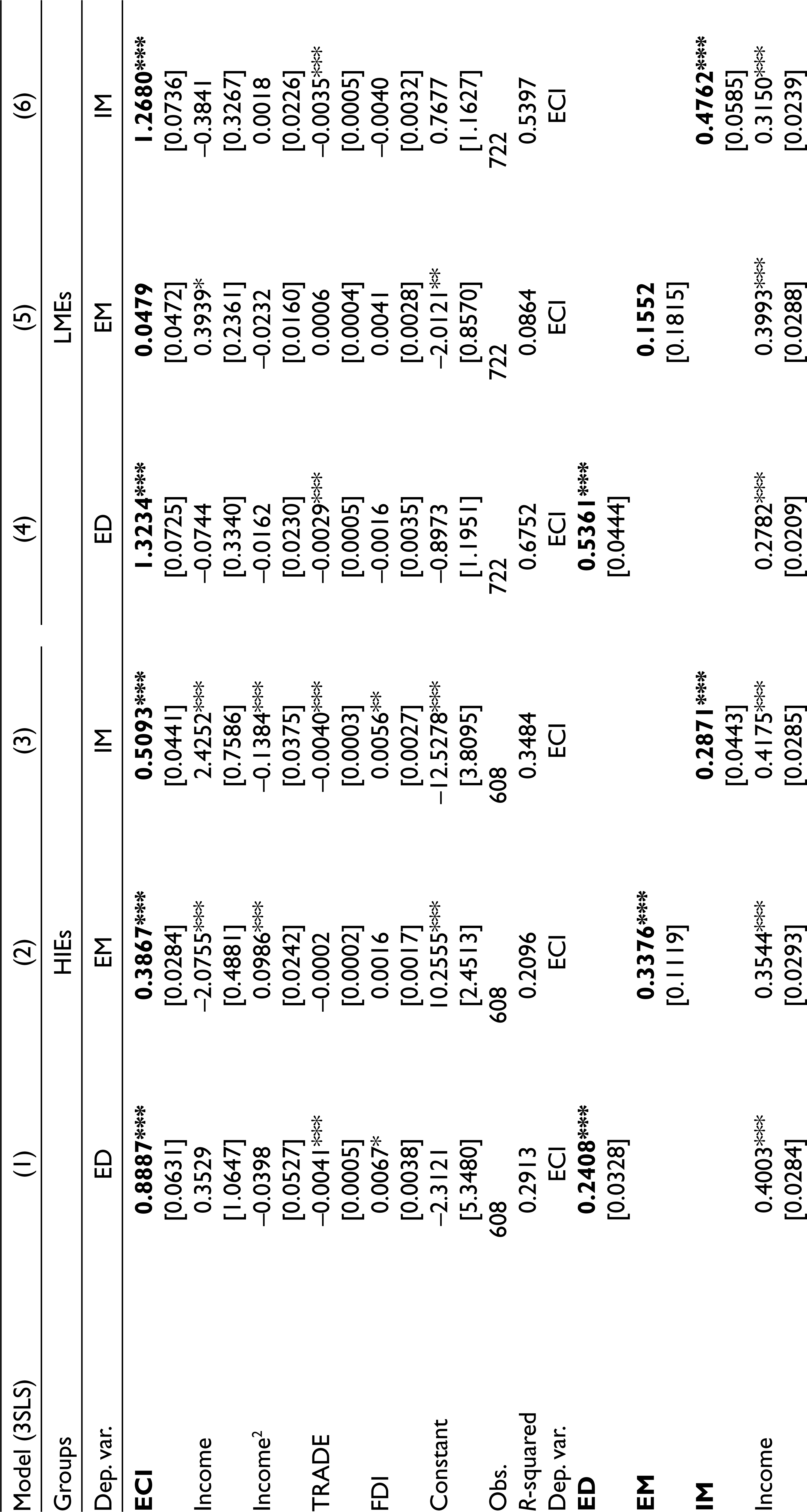
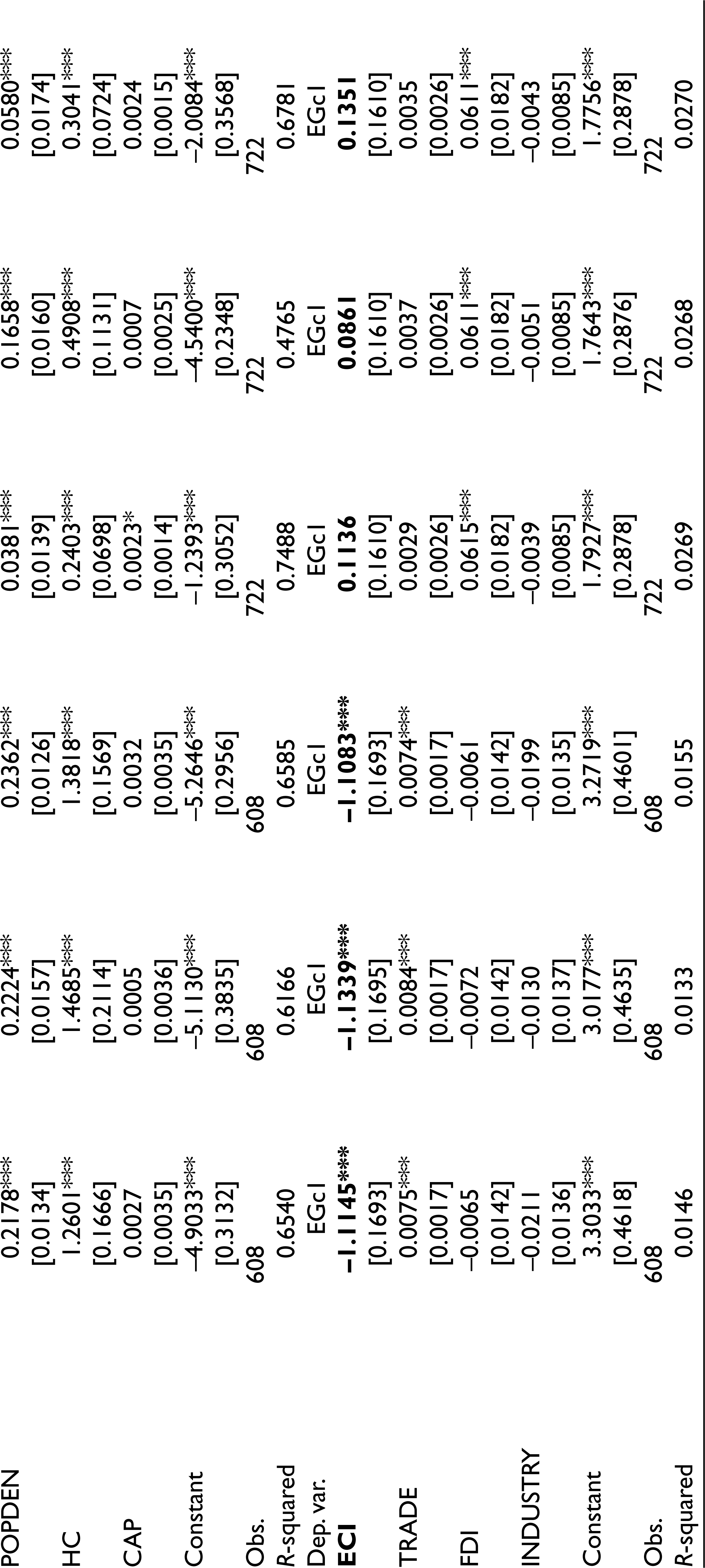
As the economic structure, economic development stage and institutional settings may be different between HIEs and LMEs, the study runs the estimations for two subsamples. Moreover, the period of this study is from 1996 to 2014, whereas the 2008 global financial crisis is, in fact, a period of strong downfall. Therefore, we divide our sample into two sub-periods: 1996−2007 and 2008−2014 to check for these relationships before and during the crisis period. Table 7 presents the results for two subsamples, HIEs (models 1–3) and LMEs (models 4–6) for the case of EGc1. The results for the cases of EGc2 and EGc3 are reported in Tables A7 and A8, respectively.
In the case of HIEs, Table 7 shows that (a) ECI has significant positive impacts on ED, EM and IM; (b) ED, EM and IM have significant positive impacts on ECI; and (c) ECI has significant negative impacts on EGc1. The results are akin to those for the estimates with EGc2 and EGc3 in Tables A7 and A8. These results are consistent with the findings in the case of the full sample, which means that economic complexity and ED have positive impacts on each other, while economic complexity has negative impacts on economic growth cycles. Concerning LMEs, the results in models 4–6 show significant positive impacts of ECI on ED, EM and IM, while ED, EM and IM have positive impacts on ECI with statistical significance for the cases of ED and IM. Surprisingly, ECI is found to exert insignificant positive impacts on economic growth cycles in LMEs. These results are consistent in the case of EGc2 (Table A7), while there are insignificant negative impacts of ECI on EGc3 (Table A8). In summary, the mutual causality positive links between economic complexity and ED are consistent for the group of LMEs, while the negative effects of economic complexity on economic growth cycles are not documented with statistical significance. In other words, the positive contribution of higher economic complexity to lower economic cycles is confirmed for HIEs, but not for LMEs, which may be explained by the fact that HIEs can deliver complex goods and sophisticated services on the world market, thus generating employment in advanced sectors and improving productivity growth (Gala et al., 2018). The economic system in LMEs is in the process of transforming, while their economic system and production seem not to have reached a certain level of complexity. LMEs are only able to produce simple and rudimentary things (Gala et al., 2018). Therefore, the increases in economic complexity may bring both pros and cons in costs and risks, which may not greatly benefit economic stability.
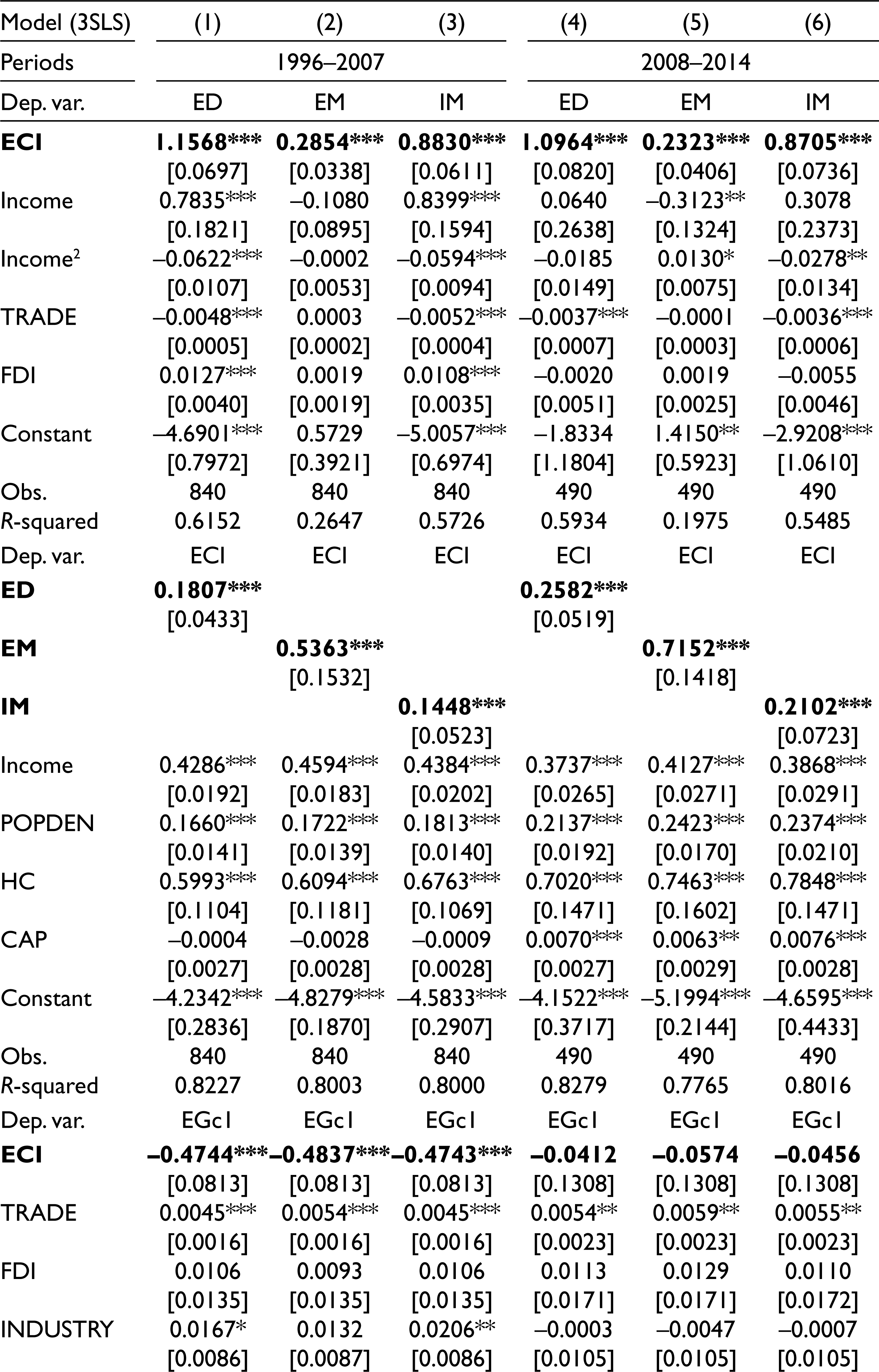
Finally, the linkages between economic complexity, ED and economic growth cycles are examined for two subsamples—1996−2007 and 2008−2014. The results are presented in Table 8 for the case of EGc1, whereas those for EGc2 and EGc3 are reported in Tables A9 and A10, respectively. In both periods (1994−2007 and 2008−2014), the results in Table 8 (or Tables A9 and A10) show that (a) ECI has significant positive impacts on ED, EM and IM; (b) ED, EM and IM, in return, have significant positive impacts on ECI. These results reaffirm the positive association between economic complexity and ED across income groups or periods. In terms of economic complexity and economic growth cycles, the results in Table 8 show a significant negative impact of ECI on EGc1 in the period from 1996 to 2007 (models 1–3); this is consistent in the cases of EGc2 (Table A9) and EGc3 (Table A10). However, the impact of ECI on economic growth cycles is not statistically significant in the period from 2008 to 2014. Specifically, ECI has insignificant negative impacts on EGc1 (models 4–6 in Table 6) and EGc2 (models 4–6 in Table A9), and it also has insignificant positive impacts on EGc3 (models 4–6 in Table A10); this means that the negative impacts of economic complexity on economic growth cycles are statistically confirmed in the period from 1996 to 2007, which may be assumed to be a period of stable development. It is, nonetheless, not effective in the period from 2008 to 2014, which can be seen as a period of crisis, not least the 2008 global financial crisis. This finding can be explained by the fact that the contributions of economic complexity in reducing economic growth cycles are not substantial enough to overcome the systematic risk for economic fluctuations.
The Linkage of Export Diversification to Economic Complexity and the Economic Growth Cycle: Two Subsamples
The Linkage of Export Diversification to Economic Complexity and the Economic Growth Cycle: Two Subperiods

Conclusion
The study concerns the linkages between ED and economic complexity and the impacts of economic complexity on the cycles of economic growth. A global sample of 70 countries, consisting 32 HIEs and 38 LMEs over the period from 1996 to 2014, is examined. Applying the panel Granger causality, the study documents the evidence of bi-directional causality between economic complexity and ED, while there is unidirectional causality from economic complexity to economic growth cycles. Of particular note, the study estimates the determinants of economic complexity, ED and economic growth cycles in a system of equation by 3SLS, which is checked by 2SLS and two-step system GMM estimator. The main findings are twofold.
First, there are positive impacts of economic complexity and ED on each other, which is linked with bi-directional causality between them, thus leading to the conclusion that both economic complexity and ED have positive causality dynamics.
Second, economic complexity is documented with its significant negative impact on economic growth cycles. In conjunction with the unidirectional causality from economic complexity to economic growth cycles, the study reasonably argues that increases in economic complexity would contribute significantly to reducing economic fluctuations. These results are checked for robustness by adopting several estimates, three proxies of ED, two proxies of economic complexity and three different estimates for economic growth cycles. More importantly, all results are appropriately consistent and thus carry crucial implications for policymakers. That is, the strategy in trade openness with the diversification in exports should be of primary concern. This strategy initially helps create employment in the domestic economy, and it can then be linked with economic complexity, which, in turn, reduces the economic growth cycles.
Furthermore, the study expanded the investigations into two subsamples (i.e., HIEs and LMEs) and two sub-periods (1996−2007 and 2008−2014). The results confirm the positive dynamics between economic complexity and ED across income levels and periods. Meanwhile, the negative impacts of economic complexity on economic growth cycles are reaffirmed with statistical evidence in the case of HIEs and the period from 1996 to 2007. As there are no statistically significant impacts of economic complexity on economic growth cycles for the group of LMEs and the period from 2008 to 2014, this may imply a low level of economic complexity in LMEs and a systematic risk in the period of crisis (2008−2014), which limit the contribution of economic complexity to reduce economic growth cycles.
In summary, it is necessary to generate the right policy conditions for establishing the relationship between economic complexity, ED and economic growth cycles. Improving economic complexity would lead to changes in the foundational structure to enhance the sophistication of goods and services, thus increasing ED and then reducing economic growth cycles. Importantly, the relationship between economic complexity, ED and economic growth cycles also reflects fundamental and underlying determinants such as policy and institutions. For this reason, economic complexity and ED should be contemplated in the context of the development strategy for HIEs and LMEs. More specifically, macroeconomic policy and business environment should be improved to attract more investment in new economic sectors, which increase export competitiveness and improve the long-run economic growth.
Supplemental Material
Supplemental material for this article is available online.
Footnotes
Declaration of Conflicting Interests
The authors declared no potential conflicts of interest with respect to the research, authorship and/or publication of this article.
Funding
The authors received no financial support for the research, authorship, and/or publication of this article.