







Abstract
Digital revolution is instrumental to the wave of globalisation and transformation of the global economy. But the pace of digital transformation and service trade is low in the West African region. This article investigates the effect of digital transformation on the development of service trade in the region. This research captured digitisation in two standpoints: internet penetration rate and mobile subscription rate. The Im-Pesaran-Shin unit-root test affirms that the model is appropriate for panel autoregressive distributed lag estimation method. Adopting pool mean group estimator, the results attest for the existence of cointegrations in the model. The estimations reveal that the effect of digitisation on service trade is a long-run phenomenon. While the result is robust with export, it is not consistent with import. The long-run positive impact of digitisation on service export ranges from 0.087% to 0.159%, depending on the proxy for digitisation. The overall short-run effect is not statistically significant in export and not robust in import. It is reportedly consistent in some countries but not robust with some others. The region needs to rally in adopting and adapting to the new face of technology to improve service trade.
Introduction
Massive development in information and communication technologies (ICTs) is rapidly transforming the global economy into a digital economy. Digitisation transforms jobs and skills, it also overhauls industries, especially retailing, wholesale and services. Small-scale businesses tend to gain global recognition through the help of internet. It has multifaceted and decisive roles in various industries and employments. Hence, Raja et al. (2013) acknowledged that digitisation affects occupation in two ways; as an industry and occupational tools (Sabbagh et al., 2013; Sovbetov, 2018). Likewise, Batuo (2015) and Adeleye and Eboagu (2019) opined that digitisation provides stimuli for economic growth. However, Sabbagh et al. (2013) admitted that the effect of digitisation differs in economies and acknowledge that developing economies could benefit more, and Chaudhry (2017) affirmed that the level of implementation is comparatively lower in Africa. Notably, the West African region is lagging in the pace of digital transformation while at the same time its service trade is relatively low thereby stirring the essence of this research; to investigate the impact of digitisation on service trade in West Africa.
The impact of internet/digitisation on international trade has been extensively researched and substantial evidence suggests that improvement and increased use of the internet has a positive and significant effect on bilateral trade, especially in developing economies (Bojnec & Fertö, 2009; Clarke, 2008; Freund & Weinhold, 2004; Kurihara & Fukushima, 2013; Yadav, 2014). These scholars and critics have managed different samples and estimation technique, but the same gravity panel approach and goods trade while results remain analogous. Similarly, Rodríguez-Crespoa and Martínez-Zarzoso (2019) postulated that even though internet usage influences bilateral trade positively, such influence is more sensitive with ‘product complexity’ than income levels. In order words, estimation is similar when segmenting by the level of income. Therefore, knowledge segmentation better explains the differences in the impact of digitisation than income level segmentation.
In another dimension, Freund and Weinhold (2002) examined the influence of internet on USA’s service trade and reported that improvement of internet across the borders of the United States is facilitating the growth in service export to the United States. They further reasoned that a 10% increase in internet penetration leads to about 1.7% growth in service trade, all things being equal. Concurring to this development, Choi (2010) attested that the internet facilitates an increase in bilateral service trade similar to Mallick (2014), and further reports that doubling internet usage in a country will further simulate service trade by 2–4% increase. Both Choi (2010) and Mallick (2014) adopted the augmented gravity model. Even though they implemented some robust estimation techniques, Choi (2010) reportedly omitted distance variable.
It is evident that digital transformation has revolutionised international trade through rebutting an initial biasness towards e-commerce initiatives such as Alibaba, AliExpress, Amazon, eBay, Pinterest, Jumia, Wish, among others. Sovbetov (2018) accepts that it has changed the structure of economics by reducing transaction, distribution and marginal production costs and enhancing accessibility and time efficiency. Salim et al. (2010) noted that searching for business and processing payments is easier with the use of the internet, hence, becoming vital to bilateral trade engagement. Abramovsky and Griffi (2006) ascertain that digitisation reduces transaction costs in form of search costs. Thus, Pomfret (2020) reasoned that digitisation is envisaged to technically reduce trade cost, increased the size of trade flows and permitted greater fragmentation along global value chains.
But this rapid growth in internet usage or adaptation to digital transformation comes with huge consequences, which tend to hinder the better side of it. Even though the internet has been credited for the development of the marketplace and ease in market access, Chaudhry and Stumpf (2013) and Chaudhry (2017) have reported the struggles to contain with the reprehensible sale of fake and illicit products on the internet, especially internationally recognised market platform like Amazon, Alibaba, among others. NetNames (2014) alleged that pirates are taking advantage of diverse ‘infringement ecosystems to supply illicit digital contents and counterfeit goods: cyberlockers and BitTorrents. So many fraudulent activities have become rampant over the internet, which tends to scruple its merits even in the West African region.
While there are some researches on influence of the internet on international trade, less or no effort has been made at determining the possible impact of digitisation on service trade in the West African region, a major research gap exploited in this article to add to existing literature. Unfortunately, due to lack of bilateral service trade data in most West African countries, we will not be implementing full gravity modelling (with bilateral trade) rather we shall concentrate on the aggregate panel of service trade. It should be noted that focus on digital-consistent policies that embrace the all-digital nature of global flow is grossly inadequate in the West African region just as it has recorded comparatively low trade in services. The contribution of this article will also be seen by the implementation of a different approach in modelling, estimation and use of service trade rather than goods.
The region’s governments are making efforts towards sustainable development, and digitisation has been seen as an instrument of sustainable development (Adeleye & Eboagu, 2019; Asongu & Odhiambo, 2018; Asongu & Odhiambo, 2020). Therefore, its adaptation to service trade will aid sustainable growth in the service trade sector. Hence, it becomes decisive to determine the consequences of digitisation on service trade in West African region with more emphasis on both aggregate export and import, respectively, thereby making this research’s contribution very relevant. The analyses disclose, among other things, an element of a long-run positive effect of digitisation on service export in ECOWAS (Economic Community of West African States) countries. Panel Autoregressive Distribution Lag (ARDL) technique is adopted for the estimation with the pooled mean group (PMG) estimator utilised. This technique estimates and distinguishes between the long- and short-run effects unlike gravity estimation as seen in Santo & Tenreyro, (2006), Azu and Muhammad (2020) and Azu, (2020), which mainly study contemporaneous effects, hence adding to trade literature in this regard. More advantages of panel ARDL are discussed in methodological notes.
The successive sections of this article are organised as follow: the second section dwells on the Review of Service Trade and ICT Usage in West Africa. The methodological notes is presented in the third section, with emphasis on variables, data, sources of data and estimation techniques, while the fourth section presents the analyses and discussion and finally, the fifth section is mainly the conclusion.
Review of Service Trade and ICT Usage in West Africa
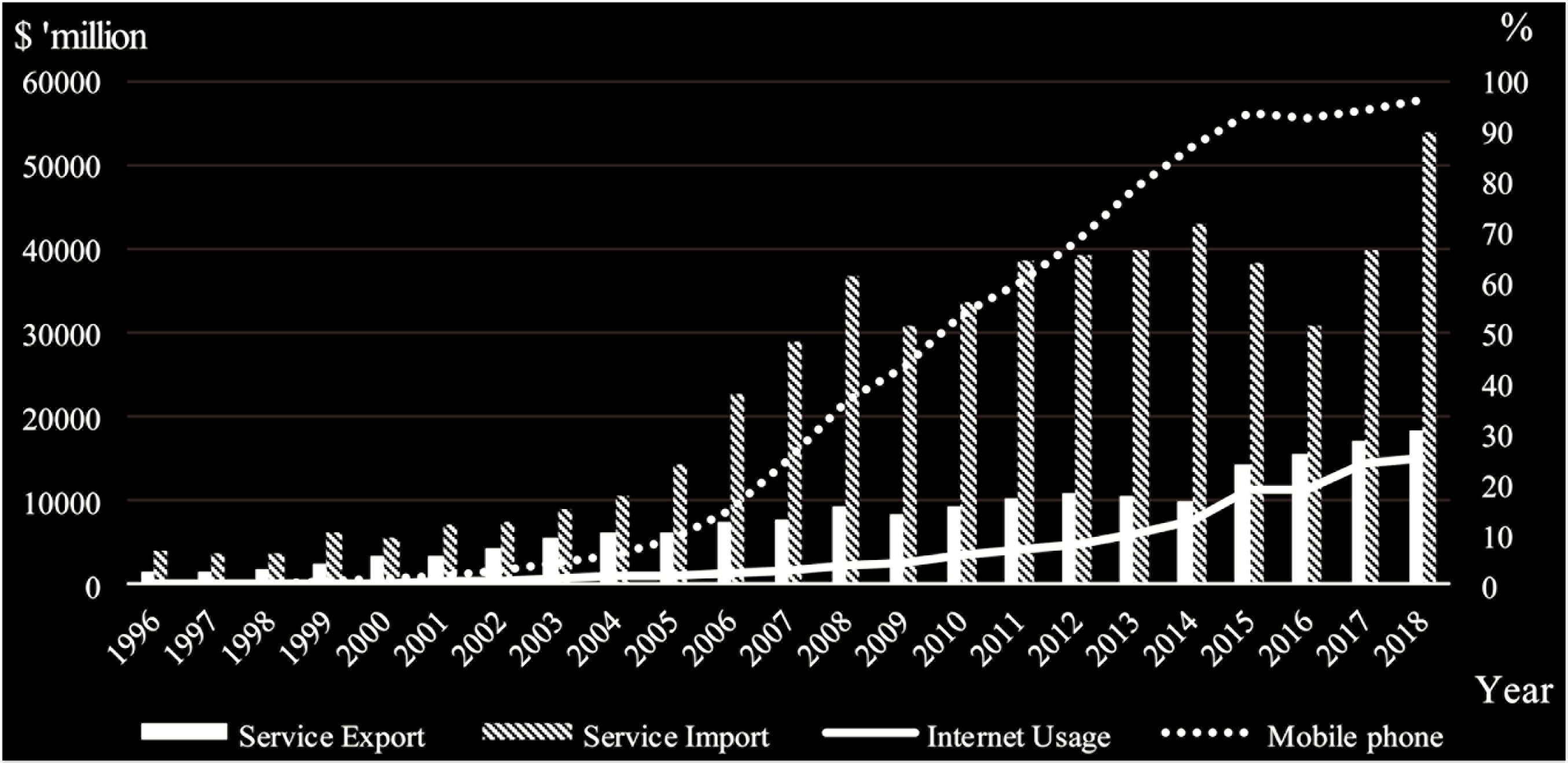
Like most developing countries, the ECOWAS countries have continuous service trade deficits and the percentage increase in service export is relatively low. Trade in services at different sectors is critical for the growth of various economic aspects, which is why the bloc moved in 2016 to reinforce the Regional Services Policy and improve policy formulation. The aim was to improve service trade within and beyond the West African sub-region. This effort may not have been followed up with policy draft and implementation but the region has witnessed relative growth in service trade. According to data from the World Bank, the region exported services worth $1.5 billion in 1996 while its import amounted to $3.97 billion in that year. In 2006, the region’s import and export of services increased substantially, each amounting to around $22.73 billion and $7.24 billion, respectively. Then in 2016, both import and export trade in service increased to around $30.9 billion and $15.34 billion, respectively, while in 2018, import and export trade in service increased by 74.11% and 18.71%, respectively (see Figure 1).
With regards to ICT metrics, adoption was at the low ebb until the late 2000s. There is an indication that Nigeria is sustaining the lead in usage. Statistics show that in 1996 out of the 15 West African nations, Gambia reported the highest percentage of the population using the internet with 0.036% to be followed by Senegal (0.011%), Togo (0.011%) and Nigeria (0.009%). 1 As at this time, there were no internet subscribers in Cape Verde, Guinea Bissau and Liberia. In 2013, Cape Verde reported the highest internet users with 30% of the population, followed closely by Nigeria with 11.5%. The countries with the lowest internet usage include Liberia (2.3%), Mali (2%), Guinea (1%), Niger (0.83%) and Sierra Leone (0.58%). In 2017, Cape Verde remains the highest Internet subscribers based on a percentage of the population with 57%, followed by Senegal (46%), Cote d’Ivoire (43.84%) and Nigeria (42%), while on the average 23.89% of the population of West Africa subscribed for the internet.
On the number of mobile cellular subscriptions (per 100 people), in 1996, Gambia was the highest with 0.27% followed by Cote d’Ivoire (0.092%) and Ghana (0.073%) in that order. As at this time, there were no subscribers in Cape Verde, Guinea-Bissau, Liberia, Niger, Sierra Leone and Togo. The highest users in 2015 were Gambia (130.19%), Mali (130.16%) and Ghana (125.71%), while the lowest users were Burkina Faso (79.77%), Sierra Leone (78.88%), Guinea-Bissau (71.29%), Togo (66.3%) and Niger (44.79%), respectively. Nonetheless, Adeleye and Eboagu (2019) believed that Nigeria has consistently held the lead with the highest number of mobile cellular subscribers in Africa when compared with the number of subscriptions. Mobile cellular subscriptions in the region averaged 0.036 per 100 in 1996, rising to 78.61 per 100 in 2013 and subsequently to 95.98 per 100 in 2018 (see Figure 1).
Methodological Notes
Model Specification and Data
To evaluate the effect of digitisation on service trade, this article will augment a modified gravity equation presented by Choi (2010). Service trade (lnS) represents the dependent variable while the independent variables include internet usage (lnDit); the main variable of interest, GDP (lnG1,it) and population (lnG2,it); which are included to control for country size and income effects following Freund and Weinhold (2002). Finally, financial depth (M2/GDP) is included as an independent variable to control for the overall comparative advantage in services in any given country. It is expected that greater financial depth will stimulate more service trade. Financial depth could have an impact on both the exporter and importer; without high financial depth, the service exporter may not be able to accomplish service assignment while the importer would find it difficult to accomplish its side of service agreement. This is why Kimbrough (1992) noted that monetary policy could have an impact on both the intensive margin and extensive margin. Again, a cash-in-advance policy is service trade could be altered by financial depth. Choi (2010) presented his model as follows:

Distinct from the traditional gravity equation, the distance variable is completely omitted from the equation as it cannot be meaningful without bilateral trade. Likewise, fixed effect and the year control for importer (YRj) will not be appropriate without bilateral trade. The aggregate service trade is handy for this research. Thus, Equation 2 represents the model for our study:

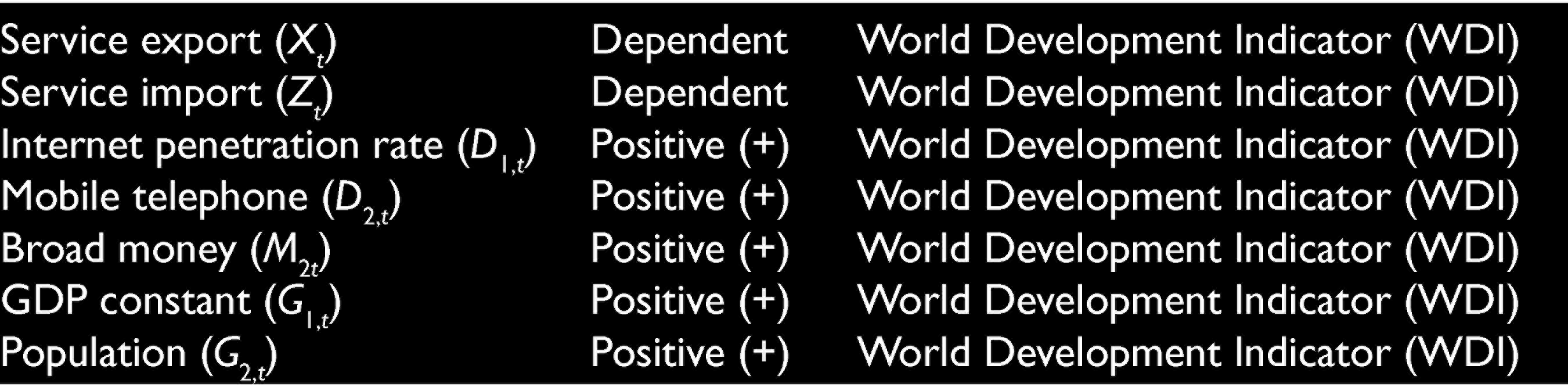
Service trade constitutes of service export and service import; digitisation is proxy with internet penetration (D1) and mobile phone usage (D2). Market size (Git) is proxy with country size-population (G2,it) and income effects-real GDP (G1,it). The internet penetration rate and mobile telephone subscription are taken as a percentage of the population. It is expected that the rate of digitisation will be instrumental to increase in service trade since available literature has affirmed that it reduces trade cost. Table 1 presents the data sources and expected signs of coefficients.
Data Sources and Expected Signs of Coefficients.
Estimation Technique
This study covers all the 15 ECOWAS countries for 23 years ranging from 1996 to 2018. This scope prompts the preference for a panel-ARDL model as proposed by Pesaran and Smith (1995) and Pesaran et al. (1999, 2001) but will be dependent on stationarity level of all the variables (whether integrated of I[1] or I[0]). Therefore, it becomes imperative to apply a stationarity test to determine the suitability of all the variables for the adoption of panel ARDL technique. Thus, we follow Im-Pesaran-Shin (IPS) panel unit-root test as proposed by Im et al. (2003), which assume dependence between individuals and take into account the heterogeneity across sections in the panel.
Pesaran and Smith (1995) proposed the application of the mean group (MG) estimator to remove biases, resulting from heterogeneous slopes in dynamic panels by using the augmented ARDL model, which estimates both the long- and short-run coefficients. Consequently, by determining an average of the long-run ARDL model from parameters for individual countries, the estimated long-run parameters for the overall ARDL panel are presented. The MG estimator calculates the parameters for every nation and the group average. In comparison, if the long-run coefficients are homogeneous across groups, Pesaran et al. (1999, 2001) suggested a more effective estimator. They suggested using Pooled Mean Group (PMG) that allows the short-run parameters to be heterogeneous while the long-run parameters remain homogeneous.
Generally, panel ARDL (p, q, q,…, q) model can be specified as follows:

where yit is the dependent variable,
In this research, the re-parameterised panel ARDL (p, q, q,…, q) error correction model is specified as follows:

λij,
All variables are in natural logarithm.
The choice of panel ARDL estimation technique is most appropriate since the estimators consider the lag form of both dependent and independent variables. The estimation will, therefore, reflect the true impact of digitisation on service trade since the implementation of digitisation will require lags period in adapting to a new process; hence, it will take time to reflect its impact in accelerating service trade.
Estimation and Results
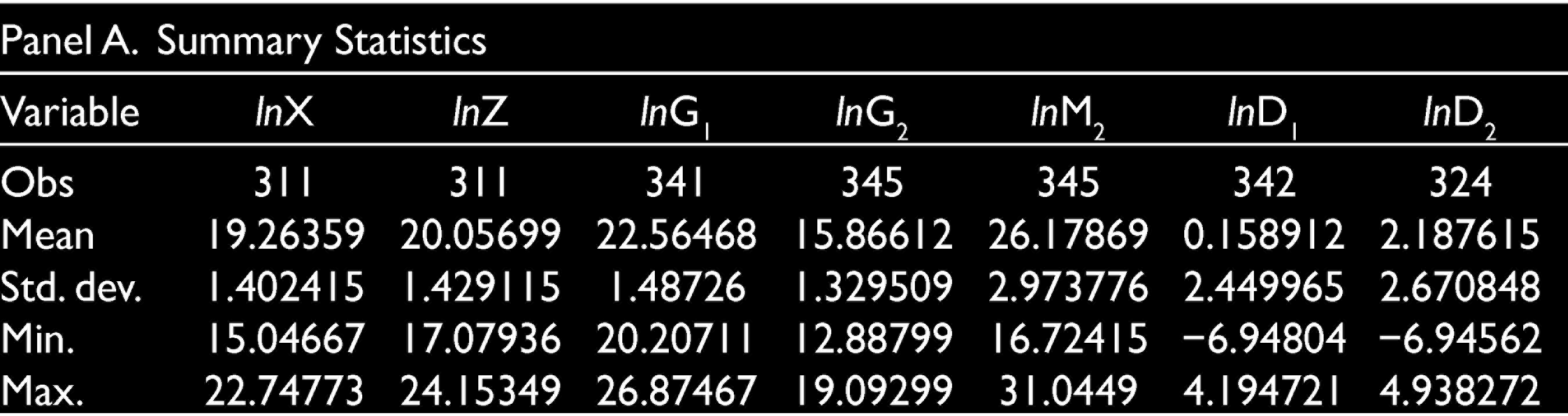
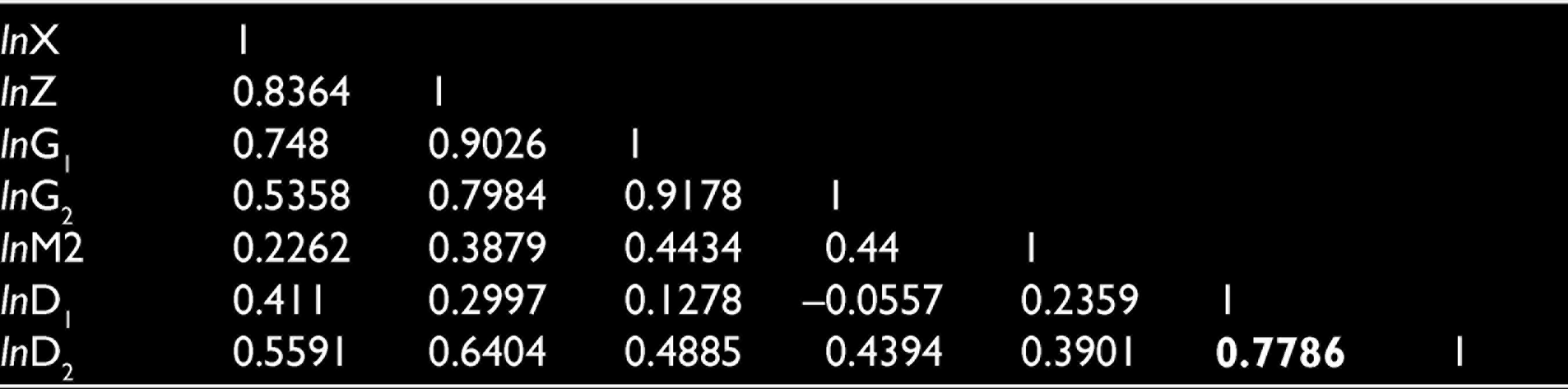
Panels A and B of Table 2 show the descriptive statistics and correlation, respectively. From panel B, some independent variables are apparently correlated. First, population and GDP that are used to measure the market size and income effects are correlated. There is also a correlation between internet penetration rate and mobile telephone usage. These variables are estimated separately to prevent the multicollinearity that is apparent when estimating independent variables that are correlated in a sample. Therefore, for every service export and service import model, the panel ARDL model is estimated in fourfold, respectively. The estimation shows homogenous short- and long-run effect of digital technologies on service trade in West African region, as well as the heterogeneous short-run effect for the respective 15 West African countries. The essence is to display robustness of the impact of digitisation on service trade.
Summary Statistics and Correlation.
First, from the service export direction (as dependent variable), the model is estimated with GDP and internet penetration rate (to be known as XG1D1 model) and then estimated with GDP and mobile telephone subscription (to be known as XG1D2 model). In the same direction, the model is estimated with population and internet penetration rate (to be known as XG2D1 model) and then estimated with population and mobile telephone subscription (to be known as XG2D2 model).
With service import as dependent variable, the model is estimated with GDP and internet penetration rate (to be known as ZG1D1 model) and then estimated with GDP and mobile telephone subscription (to be known as ZG1D2 model). Similarly, the model is estimated with population and internet penetration rate (to be known as ZG2D1 model) and then estimated with population and mobile telephone subscription (to be known as ZG2D2 model).
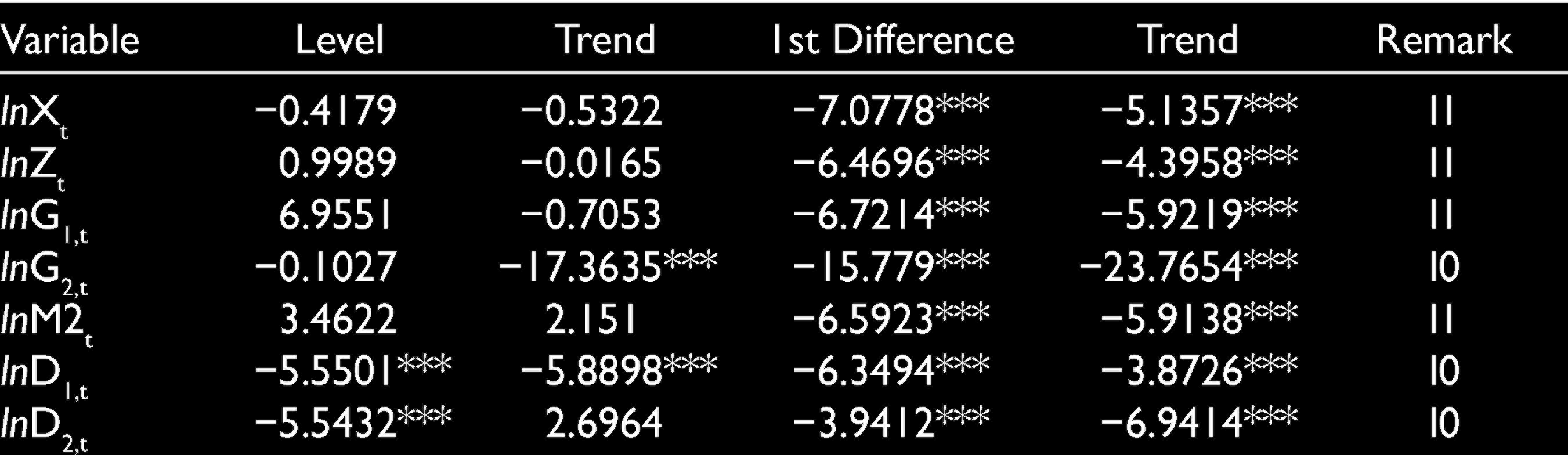
The unit root test as reported in Table 3 indicates all variables are either stationary at level or first difference. Population (G2,t), internet penetration rate (D1,t) and mobile phone subscription (D2,t) are stationary at a level while real GDP (G1,t), service export (Xt), service import (Zt) and broad money (M2 t ) are stationary at first difference. This reflects the suitability of the variables for estimation with panel ARDL technique.
Unit Root Test.
We applied a Hausman (1978) test to determine whether MG estimator or PMG estimator is most appropriate for estimating the panels. It should be noted that the MG estimator provides consistent estimates of the mean of the long-run coefficients but will be inefficient with slope homogeneity while the PMG estimator is consistent and efficient under the assumption of long-run homogeneity. The tests favoured the use of PMG in all the models. XG1D1 model is the base model for service export and the null hypothesis of homogeneity of MG and PMG estimators cannot be rejected; since the p-value >.05. This signifies that the PMG estimator is more efficient for estimating the panel for service export. Likewise, ZG1D1 is the base model for service import and the null hypotheses of homogeneity of MG and PMG estimators cannot be rejected because the p-values >.05. This implies that the PMG estimator is most suitable for all the model estimations, similar to Adams et al. (2016).
Using the unrestricted model (for all the four models), we decide the choice of lags for each country per variable. From the export direction, the most common lag reflects that lag selection for XG1D1 and XG2D1 models are (1, 2, 2, 2) while lag selection for XG1D1 and XG2D1 models is (2, 2, 2, 0). The import direction reflects a uniform lag selection of (2, 2, 2, 1) for all the models- ZG1D1, ZG2D1, ZG1D1 and ZG2D1.
Influence of Digitisation on Service Export in West Africa
This segment focuses on the determination of the short-run and long-run dynamics effects of digitisation on service export in West Africa. All the models established a long-run relationship between the dependent variable and independent variable. This is given by the coefficient of error correction term (ECT), which is negative and statistically significant in all the service export models. The results as posted in Table 4 report coefficients of −0.346 for XG1D1 model and −0.424 for XG2D1 model (see panel A) while the coefficients as determined for XG1D2 and XG2D2 models are −0.245 and −0.299, respectively (see panel B). These coefficients also specify the speed of error correction. This demonstrates that the speed of adjustment to long-run equilibrium is 34.6% annually for XG1D1 model and 42.4% annually for XG2D1 model while the speed of adjustment for XG1D2 and XG2D2 models are 24.5% and 29.9%, respectively. These disclose relatively slow convergence rate, which entails a loose cointegration between the panels. The negative value of ECT is normally bonded between −1 and 0. Following the suggestions of Sovbetov (2018) and Sovbetov and Saka (2018), this implies the absence of serial error correction and instability problem usually caused by a structural break in the panel data.
Influence of Digitisation on Service Export in West Africa.
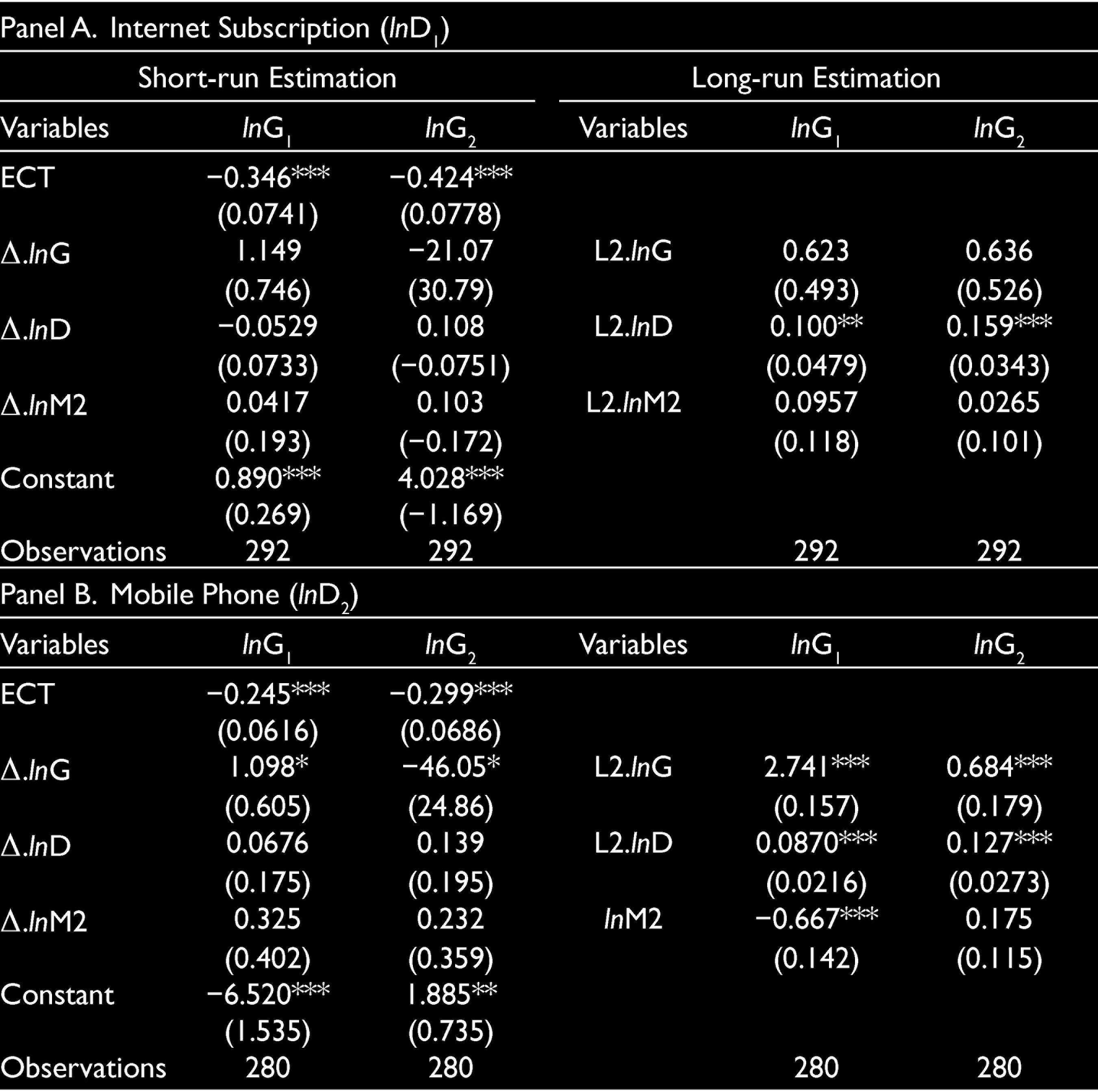
Lag selection for with XG1D1 and XG2D1 models are (1, 2, 2, 2) while lag selection for XG1D1 and XG2D1 models is (2, 2, 2, 0).
There is an indication that the influence of digitisation on service export in the ECOWAS region is a long-run phenomenon. The short-run coefficient of digitisation is reportedly not statistically significant in all the service export models. However, in the long run, the coefficients are consistently positive and statistically significant all through. In XG1D1 model, for instance, the long-run coefficient of digitisation is 0.1 and statistically significant at 5%. This implies that digitisation positively influences service export by 0.1% in the West African region. In other words, as digitalisation increases by 10%, service export increases by 1%, all thing being equal. Similarly, in XG2D1 model, the long-run coefficient is reportedly 0.159 and statistically significant at 1%. The implication is that with this model, a 10% increase in digitisation improves service export in West Africa by 1.59%, ceteris paribus. In essence, digitisation reduces trade cost concerning service export hence returning positive coefficients in the long run.
Results emanating from panel B of Table 4 are not different. Model XG1D2 report a long-run coefficient of 0.0870 for digitisation, which is statistically significant at 1%. The implication is that in the West African region a 10% increase in digitisation contributes to an increase in service export by 0.87%, all things being equal. Also, with XG2D2 model in focus, the long-run coefficient is reportedly 0.127 and statistically significant at 1%. This implies that a percentage increase in digitisation increases service export in West Africa by 0.13%, ceteris paribus. Generally, it is established that the influence of digitisation on service trade in West Africa is progressive with a positive effect. Having considered various available options of measuring digitisation, the estimation herein is robust and consistent.
Even though the overall short-run coefficients are not statistically significant, some countries reported significant individual results. Given the XG1D1 model (see Appendix 1), Burkina Faso and Nigeria reported positive short-run coefficient of 0.340 and 0.506, respectively, and statistically significant at 10%. This implies that both countries are having a positive influence of digitisation on service trade. Other countries like Gambia, Guinea Bissau, Mali and Togo experienced a negative influence of digitisation on the export of service trade and statistically significant. However, with the XG2D1 model (see Appendix 2), Cape Verde experienced cointegration and has a positive short-run impact of digitisation on service import. Other countries like the Gambia and Guinea Bissau are consistent to XG1D1 model; negative and statistically significant while others are not statistically significant. From model XG1D2, a positive and statistically significant short-run effect is reported in Guinea Bissau, Liberia and Mali, while in model XG2D2, Cape Verde, Cote d’Ivoire, Liberia and Mali also witness a favourable impact of digitisation on service export (see Appendices 5 and 6, respectively). The negative effect of digitisation in most of these countries could be attributed to low adaptation and low speed of adopting to the new digital norms consequently resulting in low export of service trade from these countries.
Influence of Digitisation on Service Import in West Africa
Focusing on the determination of the short-run and long-run dynamics effects of digitisation on service import in West Africa, the results are not similar to the export results. All the four different import models concur there is cointegration between the dependent and independent variables. This is shown by the negative and statistically significant error correction coefficient term (ECT). The results as posted in Table 5 reveal coefficient of −0.214 for ZG1D1 model and coefficient of −0.372 for ZG2D1 model (see panel A, Table 5) while the coefficients for ZG1D2 and ZG2D2 models are −0.282 and −0.344, respectively (see panel B, Table 5). These coefficients also specify the speed of error correction to long-run equilibrium. It demonstrates that the speed of adjustment to long-run equilibrium is 21.4% annually for ZG1D1 model and 37.2% annually for ZG2D1 model, while the speed of adjustment for ZG1D2 and ZG2D2 models are 28.2% and 34.4%, respectively. This implies a relatively slow convergence rate, which entails a loose cointegration between the panels. The negative value of ECT is normally bonded between −1 and 0. In agreement to Sovbetov (2018) and Sovbetov and Saka (2018), this suggests there is no serial error correction and instability problem usually caused by a structural break in the panel data.
Influence of Digitisation on Service Import in West Africa.
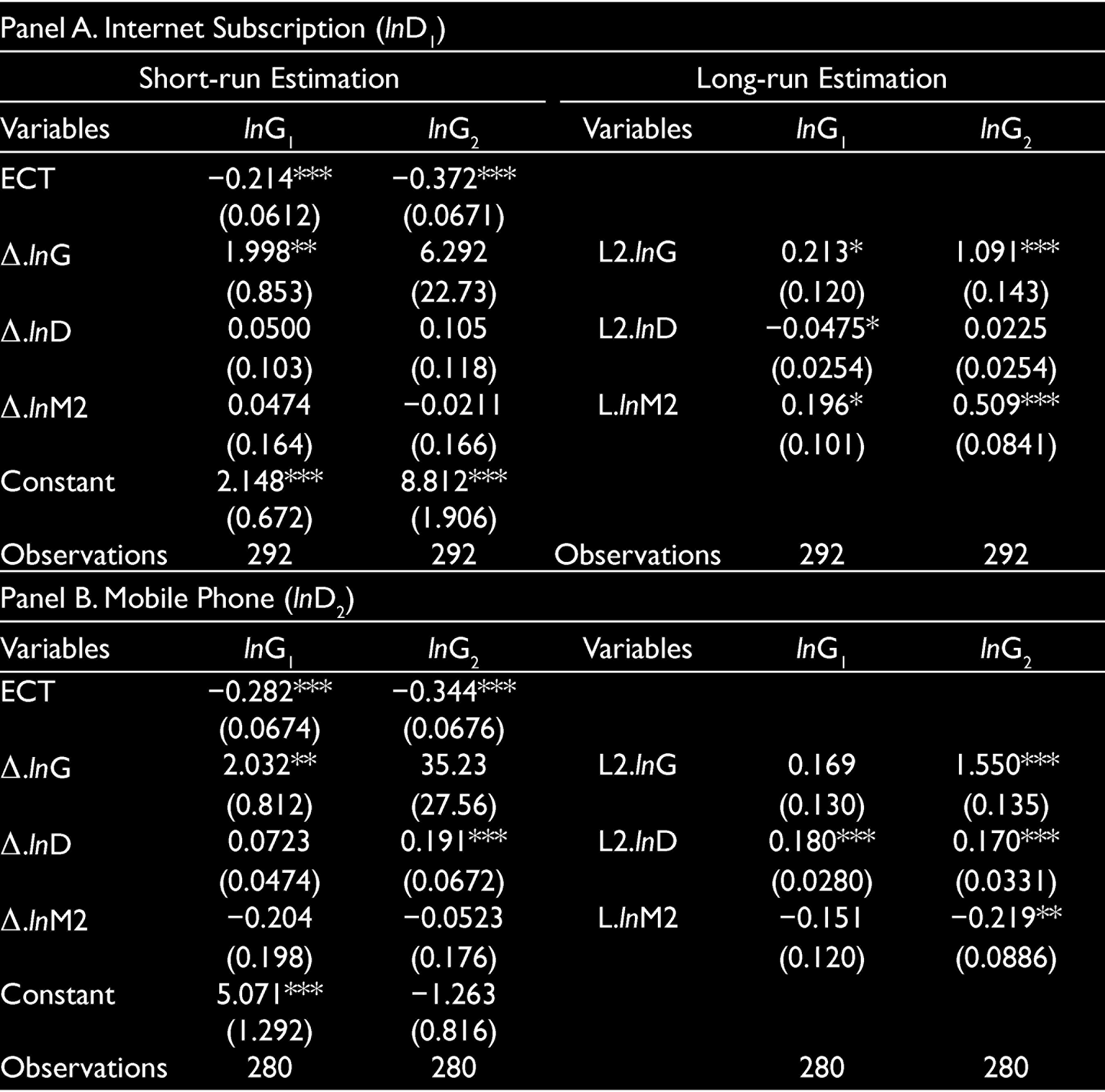
Lag selection for ZG1D1, ZG2D1, ZG1D1 and ZG2D1 models is (2, 2, 2, 1).
The consequences of digitisation on service import in the ECOWAS region seem to be unstable and depend on the combination of other variables. This is expected because the region is more of import-dependent. In model ZG1D1 for instance, the long-run influence of digitisation on service import is negative and statistically significant at 10% but the short-run coefficient is positive and reportedly not statistically significant. This implies that as digitisation increases by 10%, service import decreases by approximately 0.48%, all things being equal. However, with the model ZG2D1 the coefficient of digitisation is consistently positive in long run and short run but not statistically significant.
Results emanating from panel B of Table 5 show a different scenario. Model ZG1D2 reports a long-run coefficient of 0.180 for digitisation, which is statistically significant at 1%. The implication is that in the West African region, a 10% increase in this aspect of digitisation contributes to an increase in service import by 1.8%, all things being equal. Also, with ZG2D2 model in focus, the long-run coefficient is reportedly 0.170 and statistically significant at 1%. That suggests that with this model, a percentage increase in digitisation increases service import in West Africa by 0.17%, ceteris paribus. This model also established a significant short-run impact on service import with a coefficient of 0.191 and statistically significant at 1%. It indicates that in the short run, a 10% increase in digitisation increases service imports by about 1.91%, all things being equal.
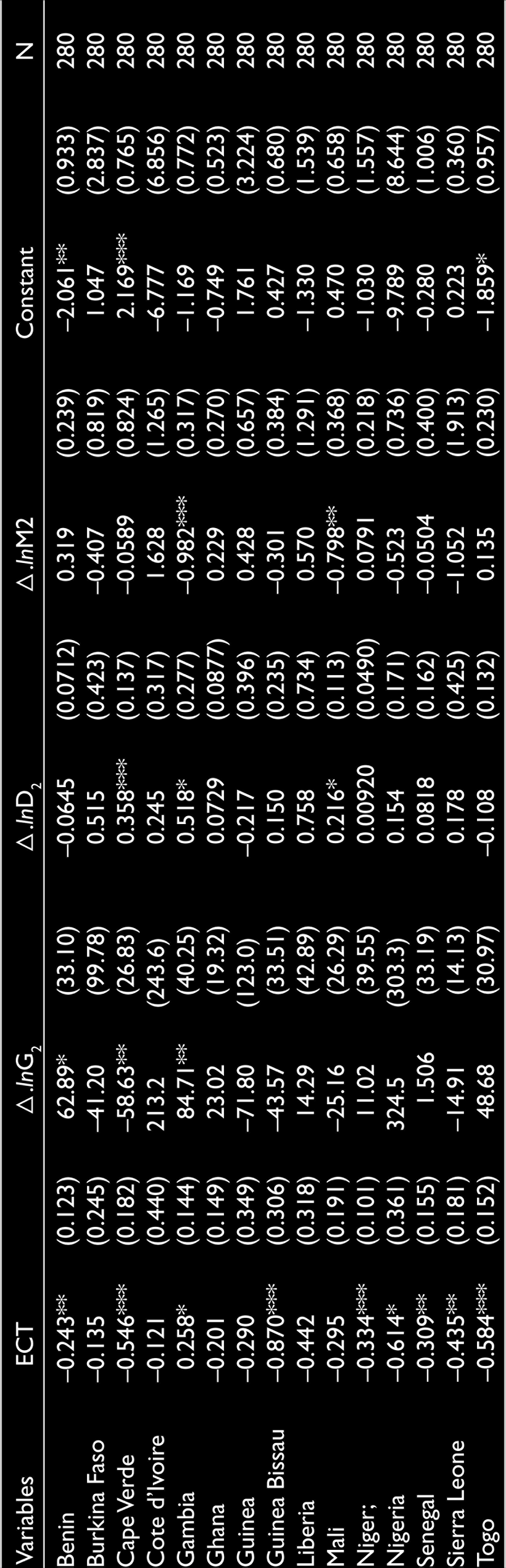
Just like in service export, the overall short-run effect of digitisation on service import is unstable and not robust. Individually, some countries witness positive effect while some experience a negative effect. As it has been highlighted earlier, this is attributed to the level of development of the digital economy in respective countries. From model ZG1D1(see Appendix 3), Burkina Faso and Sierra Leone report positive coefficients, which are also statistically significant. This implies that digitisation favourably influences service import into these countries. However, Benin, Gambia and Togo experience the negative impact of digitisation on service trade. Then from model ZG2D1 (see Appendix 4), Burkina Faso and Guinea Bissau present a positive impact of digitisation on service import while Benin, Gambia and Togo present similar result consistent with ZG1D1 model, negative and significant. In ZG1D2, no country reports statistically significant result (see Appendix 7) while in ZG2D2 Cape Verde, Gambia and Mali report positive and statistically significant results (see Appendix 8).
Conclusion
The concept of digitisation is instrumental to the upsurge of globalisation, which gradually metamorphoses the present global economy into a digital economy. In the last few decades, digitisations have been playing increasingly decisive and multifaceted roles in global trade and the West African region is evolving and gradually tapping these new technologies. Some researchers have argued and echoed on how this digitisation reduces trade cost and as such promotes bilateral trade in goods and services. However, none has been able to reflect on its impact on service trade in the West African region. This constitutes the research gap and springboard, which is central to this study. To accomplish this aim, digitisation is represented with two proxies: internet penetration rate and mobile telephone subscription. The suitability of the adopted panel ARDL estimation technique was verified through IPS unit-root test, which suggests that all variables were at least integrated at first difference. PMG estimator was preferred for the estimation through a Hausman test.
It is revealed that the effect of digitisation on service trade is a long-run phenomenon. The long-run effect is consistently positive and statistically significant in export direction but not robust in import direction. The long-run positive impact of digitisation on service export ranges from 0.087% to 0.159%, depending on the proxy for digitisation-internet or mobile phone while the positive effect on service import ranges from 0.17% to 0.18% but emanates from mobile phone subscription. The short-run effect is consistently not statistically significant, though; some respective countries established that there could be either a positive or negative effect of digitisation on service trade in West Africa. The negative effect of digitisation in most countries in the region could be attributed to low speed in adopting and adapting to the new digital norms, resulting in low export of service trade from these countries. It is, therefore, recommended that the region should rapidly embrace these new technologies, especially as it regards to communication to facilitate more service trades in both export and import. Furthermore, it is recommended that future study consider the composition of exports and imports of services in ECOWAS countries and determine whether imports of services are more ICT-intensive than exports of services.
Footnotes
Declaration of Conflicting Interests
The authors declared no potential conflicts of interest with respect to the research, authorship and/or publication of this article.
Funding
The authors received no financial support for the research, authorship and/or publication of this article.
Appendix
PMG Short Run Estimation for Respective Countries for Import with lnG2and lnD2 (〖ZG〗_2 D_2 model).
| Variables | ECT | Δ.lnG2 | Δ.lnD2 | Δ.lnM2 | Constant | N | |||||
| Benin | -0.243** | (0.123) | 62.89* | (33.10) | -0.0645 | (0.0712) | 0.319 | (0.239) | -2.061** | (0.933) | 280 |
| Burkina Faso | -0.135 | (0.245) | -41.20 | (99.78) | 0.515 | (0.423) | -0.407 | (0.819) | 1.047 | (2.837) | 280 |
| Cape Verde | -0.546*** | (0.182) | -58.63** | (26.83) | 0.358*** | (0.137) | -0.0589 | (0.824) | 2.169*** | (0.765) | 280 |
| Cote d'Ivoire | -0.121 | (0.440) | 213.2 | (243.6) | 0.245 | (0.317) | 1.628 | (1.265) | -6.777 | (6.856) | 280 |
| Gambia | 0.258* | (0.144) | 84.71** | (40.25) | 0.518* | (0.277) | -0.982*** | (0.317) | -1.169 | (0.772) | 280 |
| Ghana | -0.201 | (0.149) | 23.02 | (19.32) | 0.0729 | (0.0877) | 0.229 | (0.270) | -0.749 | (0.523) | 280 |
| Guinea | -0.290 | (0.349) | -71.80 | (123.0) | -0.217 | (0.396) | 0.428 | (0.657) | 1.761 | (3.224) | 280 |
| Guinea Bissau | -0.870*** | (0.306) | -43.57 | (33.51) | 0.150 | (0.235) | -0.301 | (0.384) | 0.427 | (0.680) | 280 |
| Liberia | -0.442 | (0.318) | 14.29 | (42.89) | 0.758 | (0.734) | 0.570 | (1.291) | -1.330 | (1.539) | 280 |
| Mali | -0.295 | (0.191) | -25.16 | (26.29) | 0.216* | (0.113) | -0.798** | (0.368) | 0.470 | (0.658) | 280 |
| Niger; | -0.334*** | (0.101) | 11.02 | (39.55) | 0.00920 | (0.0490) | 0.0791 | (0.218) | -1.030 | (1.557) | 280 |
| Nigeria | -0.614* | (0.361) | 324.5 | (303.3) | 0.154 | (0.171) | -0.523 | (0.736) | -9.789 | (8.644) | 280 |
| Senegal | -0.309** | (0.155) | 1.506 | (33.19) | 0.0818 | (0.162) | -0.0504 | (0.400) | -0.280 | (1.006) | 280 |
| Sierra Leone | -0.435** | (0.181) | -14.91 | (14.13) | 0.178 | (0.425) | -1.052 | (1.913) | 0.223 | (0.360) | 280 |
| Togo | -0.584*** | (0.152) | 48.68 | (30.97) | -0.108 | (0.132) | 0.135 | (0.230) | -1.859* | (0.957) | 280 |