







Abstract
China’s political and economic engagement in Africa has increased over the last two decades, resulting in a significant increase in Chinese foreign direct investment (CFDI) into the region. In this study, the link between CFDI and the productivity of labour is investigated in 22 sub-Saharan African countries from 2003 to 2020. The study utilised panel cointegration techniques that are suitable in the absence of cross-sectional dependence and take stationarity and long-run relationships into consideration. The findings from the panel dynamic ordinary least squares (OLS) and the fully modified OLS revealed that CFDI is important for driving labour productivity in the long run. In the short run, however, the study finds no significant influence of CFDI on labour productivity. Further findings reveal that CFDI Granger causes labour productivity. Additionally, the study finds that capital per labour is a necessity for boosting the productivity of labour in the region. The study recommends that African countries strengthen investment promotion agencies that actively facilitate CFDI and also negotiate favourable trade and investment agreements with China that promote technology transfer and skills development.
Introduction
The rationale for investigating the nexus between Chinese foreign direct investment (CFDI) and labour productivity in sub-Saharan Africa (SSA) is grounded on three primary factors. The first is the underlying importance of labour productivity for economic growth and development; the second is the growing level of CFDI in SSA; and the third is the dearth of literature on the nexus between CFDI and labour productivity in the region. These underlying rationales are further contextualised and presented from a more insightful perspective in the subsequent sections.
On the first rationale, the critical role of labour productivity in boosting economic growth and development in Africa cannot be overemphasised. Labour productivity serves as a key determinant of output growth in classical, neoclassical and endogenous growth theories. It has far-reaching implications for the growth rate of gross domestic product (GDP) (M’baye, 2022), export competitiveness (Dhiman & Sharma, 2019) and economic development (Amato et al., 2022). Past literature has also noted that the difference in labour productivity between countries accounts significantly for the difference in per capita income (Bernanke & Rotemberg, 1997). Supporting this position, the World Bank (2022) revealed that labour productivity accounts for the largest proportion of economic growth. The International Labour Organization (2023) further describes labour productivity as an enabler of business growth and increases fiscal space through an increase in tax revenue. Zulu and Banda (2015) show that labour productivity drives economic growth through an increase in the efficiency of labour. It also enhances cost efficiency because labour produces more output per hour worked, thus reducing the cost of producing each unit of output. According to the United Nations Conference on Trade and Development, UNCTAD (2022), improving labour productivity is the most practical way to reduce poverty. However, Bloom et al. (2010) and Abdelgany and Saleh (2022) have both recognised the lower levels of labour productivity in developing nations, including SSA. Data from the World Development Indicator (WDI) of the World Bank (2023), using output per labour as a proxy for labour productivity, reveals that compared to other regions in the world, the productivity of labour in SSA is low. This is largely attributed to the low level of technological development in the region, accompanied by poor educational outcomes that have constrained the acquisition of skills needed to boost productivity.
On the second rationale, the commitment of China to Africa has grown with regard to trade, aid and investment, in line with the Belt and Road Initiative that seeks to invest in various countries and international organisations across the world. This resulted in an increase in CFDI in Africa, surpassing that of the United States in 2013. CFDI has shown a notable increase, rising from $3.4 billion in 2013 to $4.2 billion in 2020 (China Africa Research Initiative, 2023). Previous studies, such as Asafo-Agyei and Kodongo (2022), argue that FDI can support economic activities and effectively boost the productivity of a country. Similarly, Song (2021) highlights the role of CFDI in supporting the development of the African region. FDI is widely recognised in the literature as an important factor for boosting economic productivity through the introduction of foreign capital, skills and technology (e.g., Claassen et al., 2012; Derado & Horvatin, 2019; Gathaiya et al., 2014; Li & Tanna, 2019; Tang & Gyasi, 2012). The literature further highlights the positive association between FDI and technological transfer, training and skill development, research and development and better management practices, which improve the productivity of labour (Osano & Koine, 2016; Saucedo et al., 2020) and boost economic activity (Makiela & Ouattara, 2018; Matekenya & Moyo, 2023).
Third, the study is positioned as a contribution to the existing literature on the economic importance of CFDI to Africa. Previous studies on the African continent focused on employment, growth and inclusive development (Sylvaire et al., 2022; Khodeir, 2016; Miao et al., 2020, 2021). Our study focuses on labour productivity and is justified due to the essentiality of labour in boosting economic growth and development. Understanding how CFDI influences labour productivity will shed light on the mechanisms through which CFDI contributes to the economic advancement of SSA. Furthermore, understanding how CFDI affects labour productivity would help identify the extent to which the efficiency gains associated with foreign investment improve labour’s performance. The study will additionally offer policy insights into the interconnection between CFDI and labour productivity. This will enable policymakers to comprehend and effectively leverage the advantages of CFDI to support the broader economic development strategies of the region. Furthermore, the study will contribute to the general literature on international business and trade and the benefit that arises from trade facilitation (Ngepah & Udeagha, 2018, 2019).
The study utilises data from 22 SSA countries to examine the influence of CFDI on labour productivity using two-panel cointegration techniques. They include the panel dynamic ordinary least squares (OLS) and the panel fully modified OLS. Both cointegrating techniques are robust to serial correlation and endogeneity bias, which leads to inefficiency in regression estimates (Udeagha & Breitenbach, 2021). The choice of the countries used in the study represents those with the highest foreign investment in Africa and is also based on available data. Prior to the estimation of the models, the study examines the error dependences across countries, the stationarity of the variables in the models and the potential existence of a long-run relationship among the variables in the models. The remaining sections of this study include the literature review, the methodology section and the presentation and analysis of the results. Relevant policy recommendations based on the findings of the study are discussed in the conclusion section of this study.
Literature Review
Theoretical Literature
The theoretical literature presents two essential ways to think about the economic effects of FDI. The more traditional viewpoint is that FDI provides a basis for the transfer of knowledge and technology, which improves production efficiency in the FDI-receiving country and hence benefits economic growth. The intuition here is that when a foreign firm enters the host country to start a business, it takes with it the requisite capital, technology and human resources (Blomstrom & Persson, 1983; Blomstrom & Sjöholm, 1999). The involvement of local firms as suppliers, buyers and competitors could encourage them to enhance productivity through adaptation to new knowledge, technology and competition (Ha et al., 2019). For developing countries such as those in the context of our analysis, however, absorptive capacity is an important factor that determines the extent to which FDI may enhance economic growth (Li & Tanna, 2019). Absorptive capacity refers to a country’s ability to effectively acquire, assimilate and utilise knowledge, technologies and skills brought in by FDI, and it signifies a country’s readiness and capability to integrate the various benefits and spillover effects (Fu, 2008). The intervening influence of institutional quality and the policy framework in the local economy is also important (Hanousek et al., 2011). However, FDI can also have negative economic effects, such as disruptions in local markets leading to domestic firm closures, potential labour exploitation and issues related to cultural compatibility (Apostolov, 2016).
The specific effect of FDI on labour productivity is well set out in the literature. Beginning with the early study of Caves (1974), FDI improves labour productivity in the same industry through productivity spillovers. FDI can mount competitive pressure on local firms, thereby forcing them to be more productive and efficient (Kokko, 1996). Labour productivity can also benefit from FDI in the form of training provided to employees. Eventually, the transfer of trained employees from foreign firms to local firms can enhance labour productivity in the host country (Aitken et al., 1997; Almeida & Kogut, 1999). The theories put forth by Harrod (1939), Domar (1946) and Rostow (1960) assert that FDI substantially contributes to the enhancement of labour productivity, consequently bolstering overall industrial productivity. These theories also attribute the positive impact of FDI on labour productivity to various factors, including capital accumulation, technological transfer, labour demand, multiplier effects and positive spillovers. In a similar vein, the theories proposed by Lewis (1954) and Chenery (1960) argue that FDI fosters an increase in labour productivity by spurring capital accumulation within the industrial sector and facilitating the migration of labour from agriculture to industry. Capital accumulation in the industrial sector creates a more capital-intensive environment, leading to increased labour productivity as workers have more access to advanced equipment. These theories reveal an underlying positive relationship between FDI and labour productivity.
Empirical Literature
The economic effects of FDI have been widely examined in the empirical literature. Whereas most studies tend to focus on the economic growth effects, a smaller strand of this literature focuses on the labour productivity effects of FDI inflows (e.g., Boghean & State, 2015; Coniglio et al., 2015; Ha et al., 2019; Popescu, 2010). In a related literature that focuses on the economic effects of CFDI in Africa, only a limited number of studies have yet been published. Even at that, the more pronounced focus of such studies is to examine the determinants of CFDI in Africa (e.g., Khan et al., 2023; Kolstad & Wiig, 2012; Ross et al., 2019). Given the increasing importance to consider the economic effects of CFDI in Africa, a developing strand of the literature has focused more on the growth effects (e.g., Gathaiya et al., 2014; Makuei, 2020; Ross & Fleming, 2022; Sylvaire et al., 2022; Zhang et al., 2014). Our search of the literature shows a dearth of research on the specific effects of CFDI on labour productivity in African countries, which is surprising given the growing CFDI in Africa on the one hand, and a clear theoretical link between FDI and labour productivity on the other. In what follows, we highlight first the previous studies on Africa that link CFDI and labour productivity. Thereafter, we provide a brief survey of the larger literature on the subject.
Whereas previous studies such as that of Coniglio et al. (2015) considered the effects of FDI in general on employment and wages in SSA, we could pinpoint the study of Khodeir (2016) which directly examines the particular impact of CFDI on SSA’s employment. Coniglio et al. (2015) employ firm-level dataset cutting across 19 SSA countries for the year 2010 and aim to identify the key differences in labour demand and wages between foreign and local firms. Their results revealed that foreign firms were larger than domestic firms but that foreign firms generate relatively more unskilled labour compared to domestic firms. They also found that Chinese firms employed more workers, especially in the blue-collar sector and paid lower wages for both categories of workers (i.e., skilled and unskilled) compared to foreign and domestic firms. Khodeir (2016) employ panel data methods using a sample of 38 SSA countries spanning 2007–2012. The study found a significant positive effect of CFDI on employment in the region. When they break down SSA into sub-regions, they found that the results varied a bit with CFDI having no effect on employment in Northern Africa.
Other studies have considered individual country case studies. For example, Tang and Gyasi (2012) show that CFDI can boost labour productivity growth through the manufacturing, construction and general trade sectors in the Ghanaian economy. Eneji et al. (2012), employing the vector error correction model (ECM) on the nexus between CFDI, industry, and economic growth from 1988 to 2008, show evidence of the key role Chinese investment can play in the Nigerian textile industry to improve the competitiveness of the industry. The study by Oji-Okoro et al. (2014), also for Nigeria, which utilised cointegration techniques and the Granger causality procedure from 1980 to 2009, revealed the importance of CFDI to the Nigerian economy. When examining the effects of FDI on Chinese companies in Kenya, Gathaiya et al. (2014) find that CFDI promotes economic growth in Kenya through the development of human capital, the supply of capital and the increase in job opportunities.
The general empirical economic literature studying the FDI-led growth hypothesis has in many cases found that FDI promotes growth in the host countries through an increase in employment opportunities, domestic competitiveness and the introduction of new skills and technologies. Boghean and State (2015) for the European Union, Asada (2020) for Vietnam and Liu et al. (2001) for the Chinese electronic market have revealed the relevance of FDI on labour productivity. Evidence from Austrian firm-level data shows that beyond the transfer of capital, FDI also provides a complex bundle of firm-specific assets such as production expertise that enhances the overall efficiency of direct FDI-recipient firms and, to a lesser extent, that of other firms through spillover effects (Egger & Pfaffermayr, 2001). In Chinese provinces, Zhu and Tan (2000) present some evidence that confirms the presence of a feedback effect between FDI intensity per capita and labour productivity. When they perform the analysis using the intervening factor of geographical size, however, they find that FDI intensity does not Granger cause an increase in labour productivity. For the UK, Driffield et al. (2000) present a series of findings that relate FDI inflow to the UK and the labour market. Their study shows that FDI increases the use of relatively more skilled workers in domestic firms while also raising wage inequality.
Desbordes and Franssen (2019) utilised data from 15 emerging markets to examine the impact of FDI on labour productivity in a comprehensive cross-country and multisector analysis. The findings revealed that FDI significantly boosts labour productivity and that foreign firms improve the performance of their host economies, resulting in an increase in not only labour productivity but also the host economy’s export performance. After accounting for the intervening role of absorptive capacity, which they measure using human capital and institutional quality, Li and Tanna (2019) present robust evidence of a positive effect of FDI on total factor productivity for a sample of developing countries from 1984 to 2010.
In a panel of 20 African countries, Doku et al. (2017) investigated the effect of CFDI on economic growth using the panel fixed effects model from 2003 to 2012. The result revealed that CFDI increased the GDP of the African economy. The study further finds a unidirectional causality between GDP growth and CFDI. A country-specific case study covering five African countries, including Kenya, Nigeria, South Africa, Zambia and Zimbabwe, and employing the long-memory approach by Claudio-Quiroga et al. (2021), however, showed differing results. The result showed that CFDI had a clear positive effect on economic growth only in Nigeria. Further findings, however, revealed some evidence of the positive influence of CFDI on economic growth in Kenya and South Africa. Using data from 48 African countries between 2003 and 2020, Sylvaire et al. (2022) found CFDI to be beneficial for economic activities in the region. The increase in economic activity can have positive spillovers that boost welfare. Nonetheless, Miao et al. (2020) using the generalised method of moment for a sample of 44 African countries from 2003 to 2017 discovered the need to improve the quality of institutions in Africa for CFDI to significantly boost economic growth in the continent. Claassen et al. (2012) found a bi-directional causality between CFDI and Africa’s GDP. The study further finds that there is a uni-directional causality between CFDI and Africa’s infrastructure, as well as between CFDI and corruption. According to these authors, market size, oil, the potential of agriculture and domestic investment are some of the factors that determine CFDI in Africa.
Methodology
To empirically assess the relationship, the study utilises the panel dynamic OLS proposed by Kao and Chiang (2000), Pedroni (2001) and Mark and Sul (2003), which are extensions of Saikkonen (1992) as well as Stock and Watson (1993). For robustness purposes, the study also utilises the fully modified OLS estimator proposed by Phillips and Moon (1999), Pedroni (2000) and Kao and Chiang (2000), which are extensions of Phillips and Hansen (1990), to evaluate the long-run effect of CFDI on labour productivity in SSA. The study would also utilise a parsimonious error correction-based estimation technique derived from the dynamic OLS and the fully modified OLS to account for short-run effects. According to Latif (2015), both the dynamic OLS and the fully modified OLS account for endogeneity and serial correlation in the modelling exercises. To correct for these econometric biases, the dynamic OLS expands the cointegrated equation via the inclusion of leads and lags of the first difference of the regressors.
The traditional econometric functional form and the panel’s dynamic OLS in the context of this study are presented in Equations (1) and (2), respectively:

where lnLi, t is the natural logarithm of labour productivity, a0 is the intercept, CFDIi, t is CFDI, Xi, t is a representation of the control variables included in this study, which includes capital per labour, domestic credit to the private sector and access to electricity. These variables have been acknowledged in extant empirical literature to be positively associated with the productivity of labour (Alum et al., 2018; Niri & Anaar, 2015; Olarewaju et al., 2020; Sarwar et al., 2021; Zoaka & Gungor, 2023). Theoretically, capital per labour increases labour productivity through capital deepening, domestic credit to the private sector enhances labour productivity through expansion and scale, investment in technology, skill development and improved competitiveness, while access to electricity improves labour productivity through automation, extended work hours, improvement in the manufacturing process, entrepreneurship and business growth. εi, t is the error term. ΔlnCFDIi, t– j and ΔXi, t– j asymptotically eliminates the effect of endogeneity on lnCFDIi, t and Xi, t. g2 is the maximum lead length and g1 is the maximum lag length. lnL is the natural logarithm of labour productivity and lnCFDIi, t is the natural logarithm of CFDI. Xi, t represents a set of control variables that includes capital per labour, domestic credit to the private sector and access to electricity.
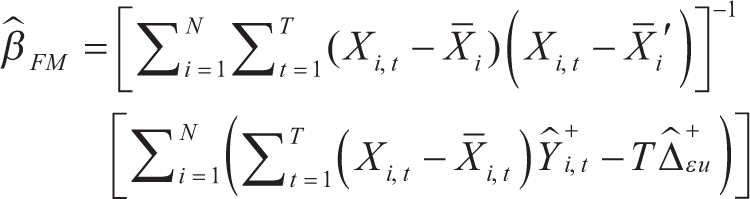
On the other hand, the fully modified OLS employs a non-parametric approach to correct for endogeneity and serial correlation (Phillips & Hansen, 1990; Latif, 2015), as outlined as follows:
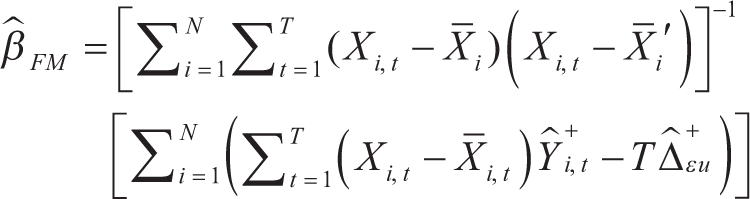
where
The model’s variables must all be stationary, after the unit root has been tested at the first difference, and the variables must be cointegrated for both estimation procedures to be efficient. The panel dynamic OLS is fully parametric and offers a computationally adequate alternative to the panel fully modified OLS estimator, according to Mark and Sul’s (2003) study. According to Herzer et al. (2012), panel cointegration estimators are robust under cointegration to many estimation problems, such as omitted variables and endogeneity.
The study extends the empirics by estimating the short-run effect of CFDI on labour productivity. The error correction modelling versions of the panel dynamic OLS and the FMOLS are utilised. The ECM will measure the correction from the disequilibrium of the previous period. In the presence of cointegration, ECM will be formulated in the first difference, which removes trends from the variables in the models and thus resolves the issue of spurious regression. The traditional ECM model is given as

where Δ is the first difference operator and ect is the error correction term. The term must be negative and statistically significant in the presence of cointegration. The coefficient of the ect measures the speed of adjustment to long-run equilibrium. Before estimating the models, the study test for cross-sectional dependence (CD) employing the Pesaran (2004) CD test, mostly appropriate for panel data where N > T. The general null hypothesis is such that:

CD can result in estimation bias, falsified test statistics and inefficient estimators, as Iheonu et al. (2020) reveal. First-generation unit root tests are used in the study in the absence of CD. A crucial test for determining if the model’s variables are stationary is the test for unit root. In this study, four of these tests are used. They include the tests developed by Maddala and Wu (1999) and Choi (2001), known as the ADF-Fisher panel unit root test and the PP-Fisher unit root test, as well as those developed by Levin et al. (2002) and Im et al. (2003). The Im, Pesaran and Shin test assumes a variation for the autoregressive parameters for all cross-sections, in contrast to the Levin, Lin and Chu (LLC) test, which is based on the premise that there is a common autoregressive parameter for all cross-sections. The Fisher test mimics the Im, Pesaran and Shin tests, according to Maddala and Wu (1999). However, the Im, Pesaran and Shin tests are parametric, in contrast to the Fisher test’s non-parametric nature. Additionally, two-panel cointegration tests—the cointegration test of Kao (1999) and the Johansen-Fisher test provided by Maddala and Wu (1999)—are used in this study. These tests are the first generational panel cointegration tests that are appropriate for our study because they presume cross-sectional independence. Finally, the study investigated whether causality existed between the explanatory variables and the dependent variable. The test for causality, according to Nathaniel and Iheonu (2019), helps determine whether or not the regressors can be used to predict future values of the dependent variable. The Granger non-causality test developed by Dumitrescu and Hurlin (2012) is used in the study since it has excellent small sample properties.
Data
Most of the data used in this research originates from the WDI. However, the China-Africa Research Initiative provides CFDI data. The measure of labour productivity is output per labour. Zoaka and Gungor (2023) also used a similar proxy for their study. The data spans 22 SSA countries from 2003 to 2020.
Countries involved in this study include Benin, Botswana, Burkina Faso, Burundi, Cameroon, Comoros, Congo Republic, Congo Democratic Republic, Gabon, Gambia, Kenya, Madagascar, Mali, Mauritius, Mozambique, Niger, Nigeria, Rwanda, Togo, Tanzania, South Africa and Sierra Leone.
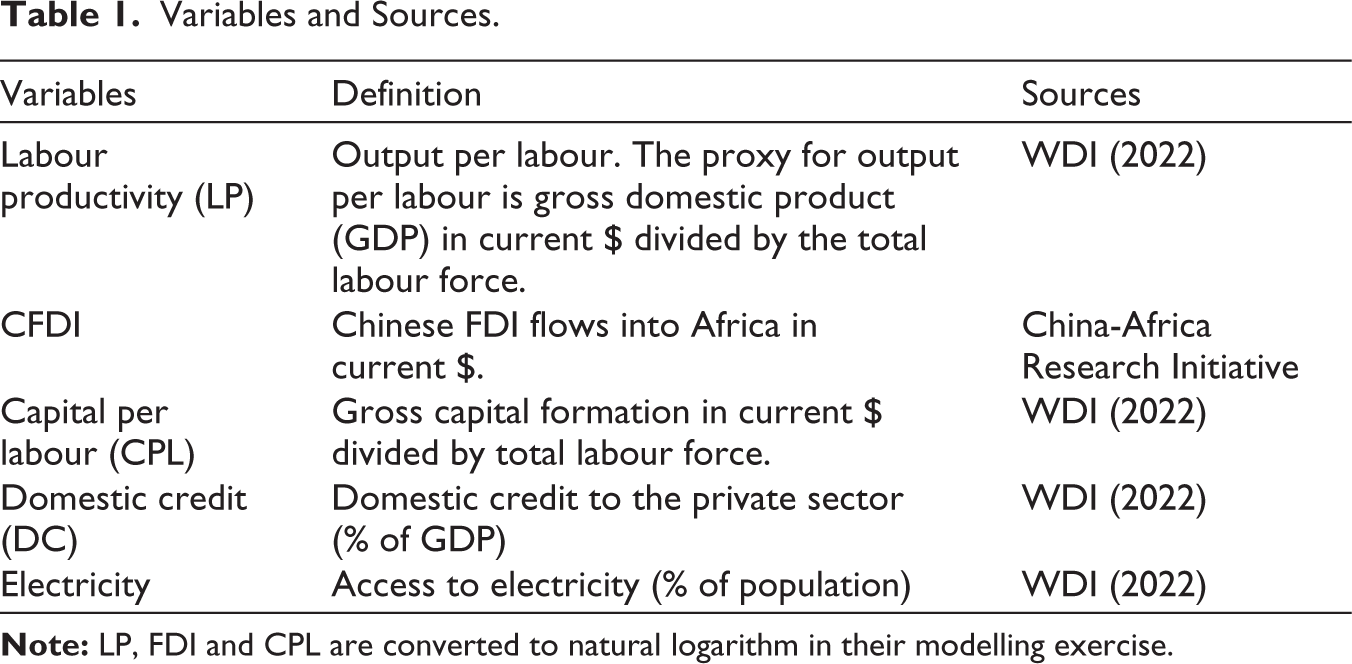
Presentation and Discussion of Results
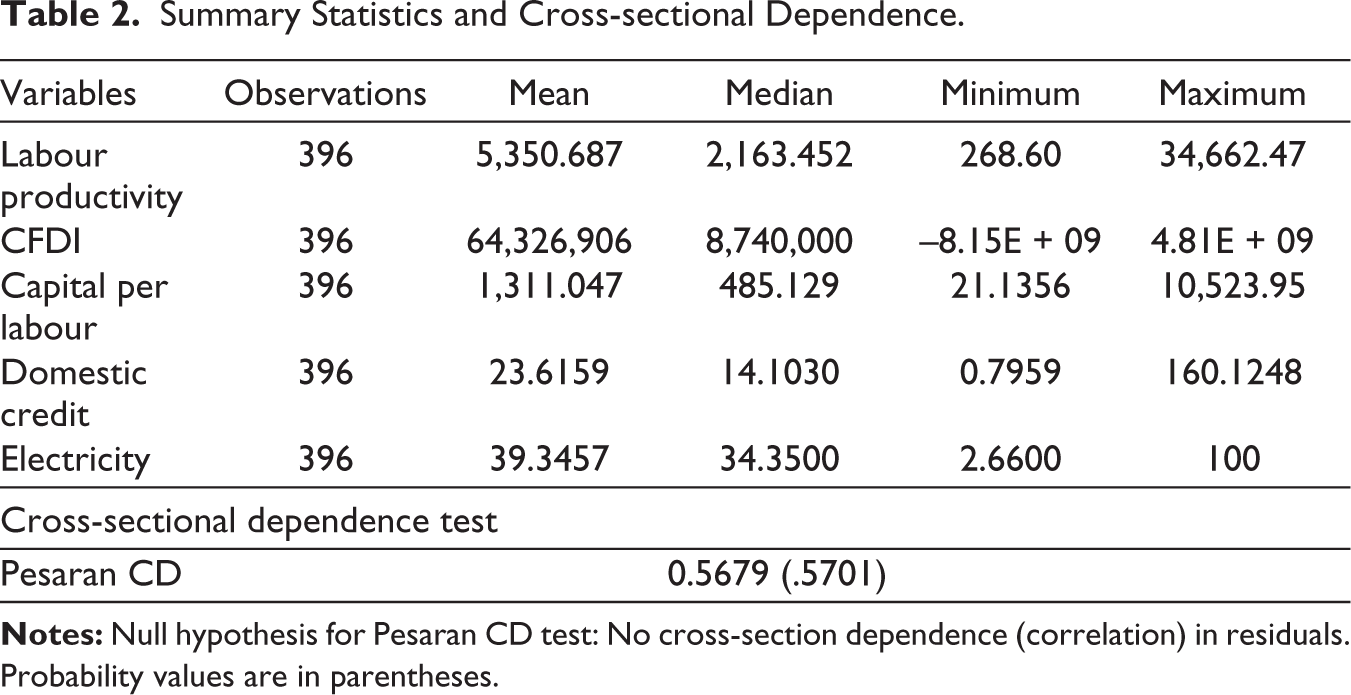
Table 1 presents the functional definition of the variables in the model and their sources. The study’s summary statistics for each of the model’s variables are presented at the start of this section. In Table 2, the variables’ means, medians, minimum and maximum values are presented. First, all of the variables in the model have a similar number of observations. This shows that the panel data is balanced. Labour productivity has an average value of $5,350.7. It has a minimum value of $269 and a maximum value of $34,663. The average value of CFDI flow is discovered to be greater than $64 million. While domestic credit to the private sector as a proportion of GDP has a mean value of 23.62%, capital per labour has a mean value of $1,311.047. The mean percentage of people who have access to electricity in the selected SSA countries is 39.3%, with a minimum percentage of 2.6% and a maximum percentage of 100%.
Variables and Sources.
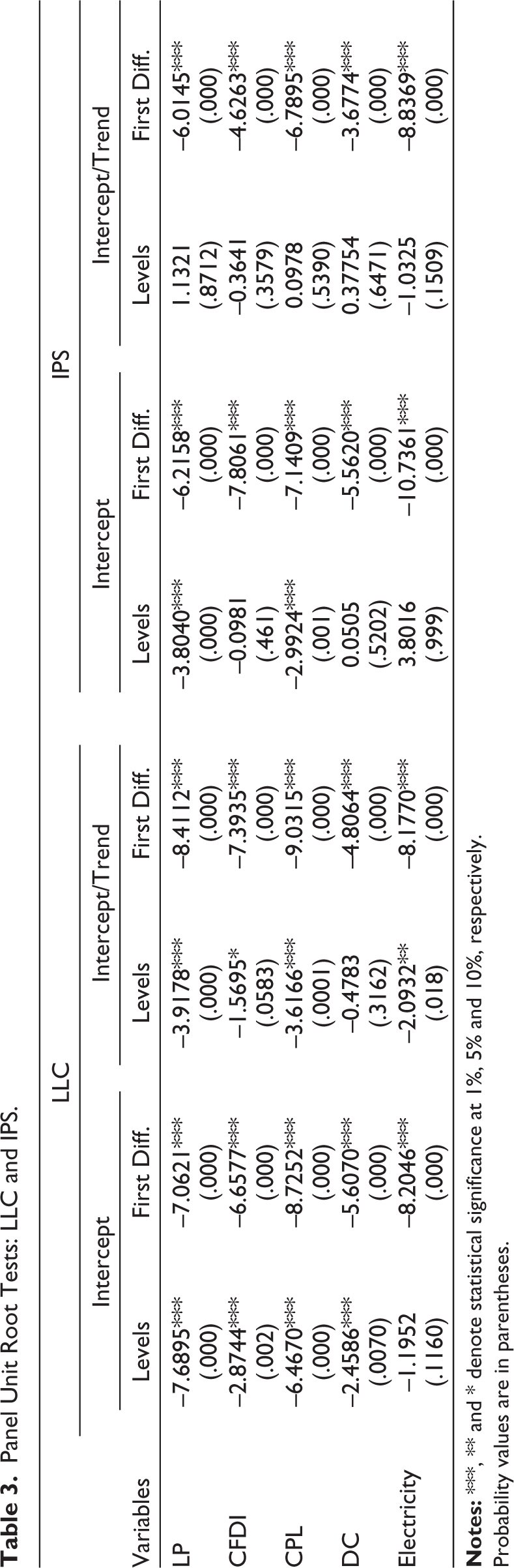
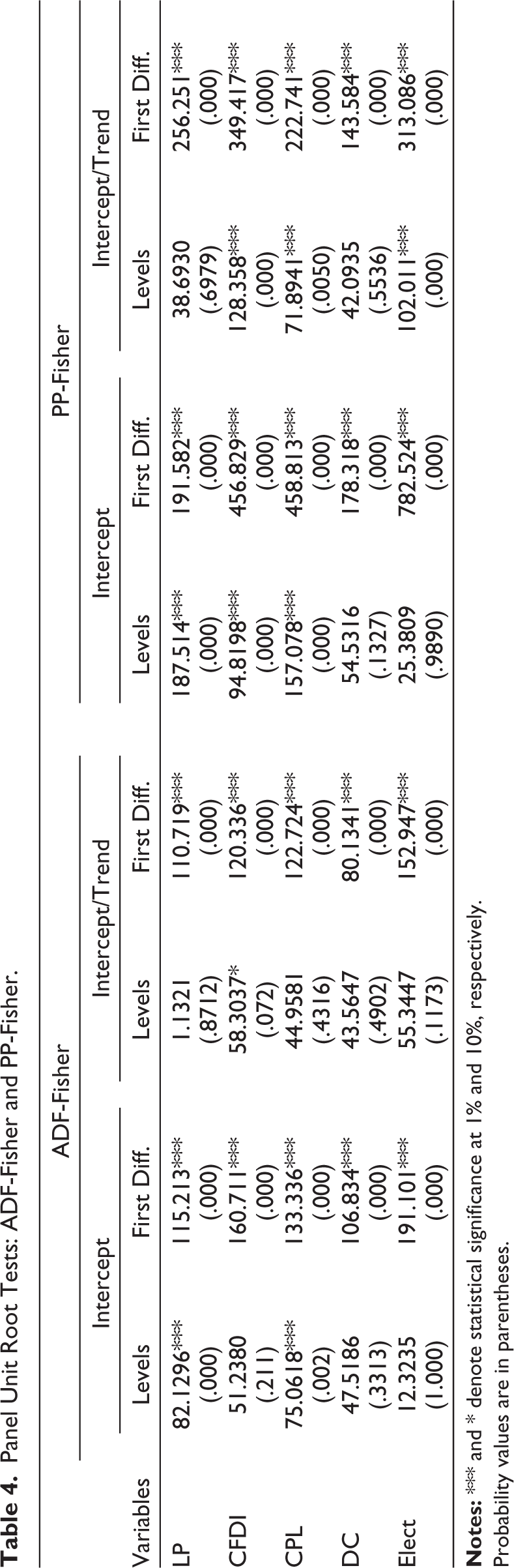
The Pesaran CD test is also included in Table 2. At standard levels of statistical significance, the test’s findings show that the model is devoid of CD. This suggests that the econometric method for first-generation panel data is most suited for our investigation. The Im et al. (2003) (IPS) and Levin et al. (2002) LLC unit root tests are shown in Table 3, while the ADF Fisher and PP Fisher unit root tests are presented in Table 4. Labour productivity is stationary in levels and after first differencing under the intercept and intercept and trend unit root specification, according to the results of the LLC unit root test. The IPS unit root test conducted in accordance with the intercept unit root specification confirms this. The results, however, demonstrate that labour productivity is stationary under the intercept and trend specification only after the first differencing. This supports the results of the ADF-Fisher and PP-Fisher panel unit root tests, which found stationarity only after first differencing under the intercept and trend specifications.
Summary Statistics and Cross-sectional Dependence.
Probability values are in parentheses.
Panel Unit Root Tests: LLC and IPS.
Probability values are in parentheses.
Panel Unit Root Tests: ADF-Fisher and PP-Fisher.
Probability values are in parentheses.
The findings of the IPS unit root test show that CFDI is only stationary after first differencing, but the results of the LLC unit root test show that CFDI is stationary at levels and first difference across the intercept and intercept and trend specifications. Under the intercept specification, where the CFDI is stationary after the first difference, the ADF-Fisher unit root test collaborates with the IPS unit root test. Despite the fact that other specifications produce different results, unit root tests show that capital per labour, domestic credit and access to electricity are all stationary at first difference. All of the model’s variables are typically I(1) stationary. The results of the panel unit root test point to the necessity of determining whether a long-run relationship exists among the model’s variables. Due to this, the two-panel cointegration test—which has been described in the study’s method section—is used in this investigation.
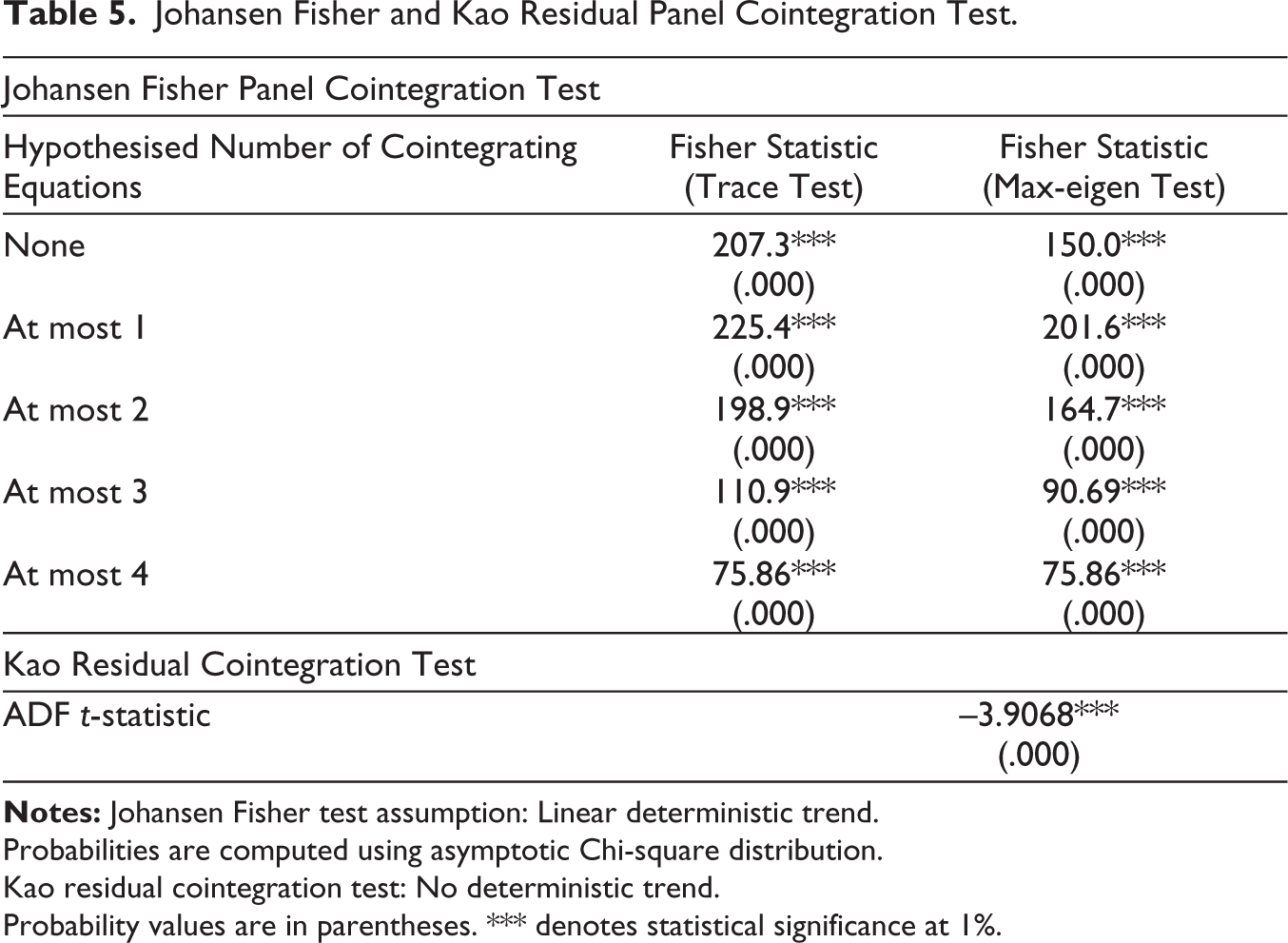
The Johansen Fisher and Kao residual panel cointegration test is used and presented in Table 5 to determine whether a long-run relationship exists among the variables in the model. The results are consistent with a long-run link between the model’s variables. According to Johansen Fisher’s trace test and maximum eigenvalue test, there are more than four cointegrating equations. This is a convincing finding demonstrating the persistence of the long-run relationship even when the equation is expressed as a vector. The Kao residual-based test, which demonstrates a long-run relationship between the variables in the model, supports this. The results demonstrate that there is a long-run relationship because the probability value of the ADF t-statistic is smaller than conventional standards of statistical significance that are generally accepted.
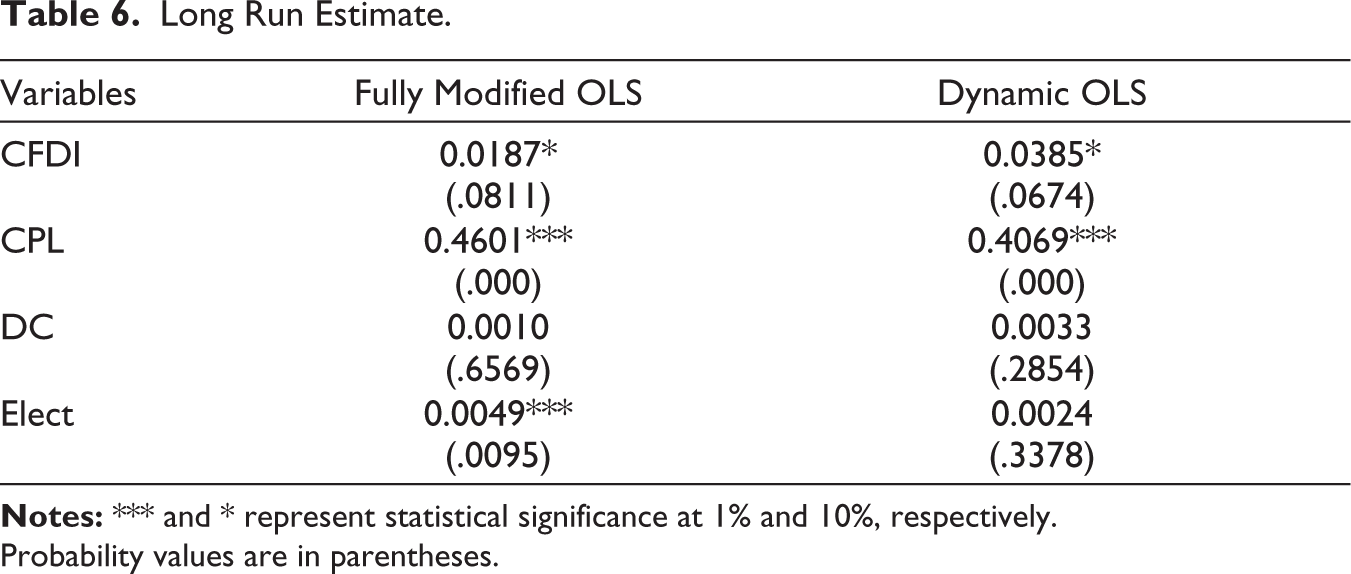
The long-run estimate of CFDI’s impact on labour productivity in SSA is shown in Table 6. The results demonstrate that CFDI raises labour productivity in the long run. This is true regardless of the long-run estimator used and supports the findings of Emako et al. (2022) on the FDI and labour productivity nexus. The results have revealed the growing importance of China to the SSA economy. Some key reasons why a positive and significant nexus between CDFI and labour productivity exists are attributable to technology transfer, the development of infrastructure, the creation of jobs, capacity building and efficiency improvement (Atitianti & Dai, 2022; Cochrane, 2022; Sylvaire et al., 2022). This highlights the need for governments in SSA to establish effective policy frameworks that can help SSA fully realise the benefits of CFDI. The influence of capital per labour on the productivity of labour is also demonstrated to be positive and considerable. This outcome is in line with a study by Olarewaju et al. (2020), which revealed that capital is crucial for labour productivity in South Africa and Nigeria. Zoaka and Gungor (2023) have also revealed the underlying importance of capital per labour for labour productivity in SSA. Intuitively, capital per labour improves labour productivity because the increase in capital per labour provides labour with better tools, equipment and technology to perform their tasks more efficiently. Access to electricity is shown to be positive and statistically significant in supporting labour productivity in the FMOLS model but insignificant in the DOLS model, whereas domestic credit to the private sector is shown to be positive but not statistically significant in increasing labour productivity. Studies by Alam et al. (2018) and Fakih et al. (2020) both demonstrate the beneficial effects of access to electricity on labour productivity. Access to electricity enhances the productivity of labour by enabling more efficient and effective work processes through the extension of work hours, automation and technology use and operational efficiency. Nonetheless, domestic credit to the private sector may not raise labour productivity in the long run due to issues pertaining to the misallocation of resources, where credits are utilised for non-productive activities that do not contribute to productivity gains. Policy uncertainty can also result in domestic credit to the private sector not significantly influencing the productivity of labour. This is because policy uncertainty discourages businesses from making long-term investments that dampen labour productivity. The notion is corroborated by the findings of Wang et al. (2014), as well as the research conducted by Almustafa et al. (2023).
Johansen Fisher and Kao Residual Panel Cointegration Test.
Probabilities are computed using asymptotic Chi-square distribution.
Kao residual cointegration test: No deterministic trend.
Probability values are in parentheses. *** denotes statistical significance at 1%.
Long Run Estimate.
Probability values are in parentheses.
In Table 7, the ECMs of the fully modified OLS and the dynamic OLS are presented. The findings reveal that contemporaneous CFDI, though positive, has no significant influence on labour productivity in the short run. The insignificance of CFDI could be attributed to time lag implementation. This is because the effects of foreign investment on labour productivity often take time to materialise. There are also absorption and adaptation issues pertaining to new technologies and practices introduced by CFDI. These learning curves and adjustment periods could play a key role in CFDI not having an immediate and significant effect on the productivity of labour. However, the first lag in labour productivity is revealed to influence the present values of labour productivity in the short run. This indicates persistence, which can be attributed to learning effects and the improvement in efficiency. Based on the fully modified OLS model, contemporaneous capital per labour has a significant influence on labour productivity, while the first lag of capital per labour is revealed to have a negative and significant influence on labour productivity in the short run. This finding is revealing of the fact that, in the short run, boosting capital per labour has an immediate positive impact on labour productivity. However, diminishing marginal returns can set in, which creates a negative influence after one year. Additionally, a close look at the coefficients suggests that the immediate effect of boosting capital per labour greatly supersedes the negative effect after one year. This result is, however, not robust, as revealed by the findings of the dynamic OLS, which show that the first lag of capital per labour is insignificant. Further findings revealed a negative and significant influence of domestic credit on labour productivity in the dynamic OLS model. This result is, however, not robust to the alternative modelling procedure of the fully modified OLS. The short-run, fully modified OLS model also reveals the importance of access to electricity on labour productivity in SSA.
Short-run Estimate.
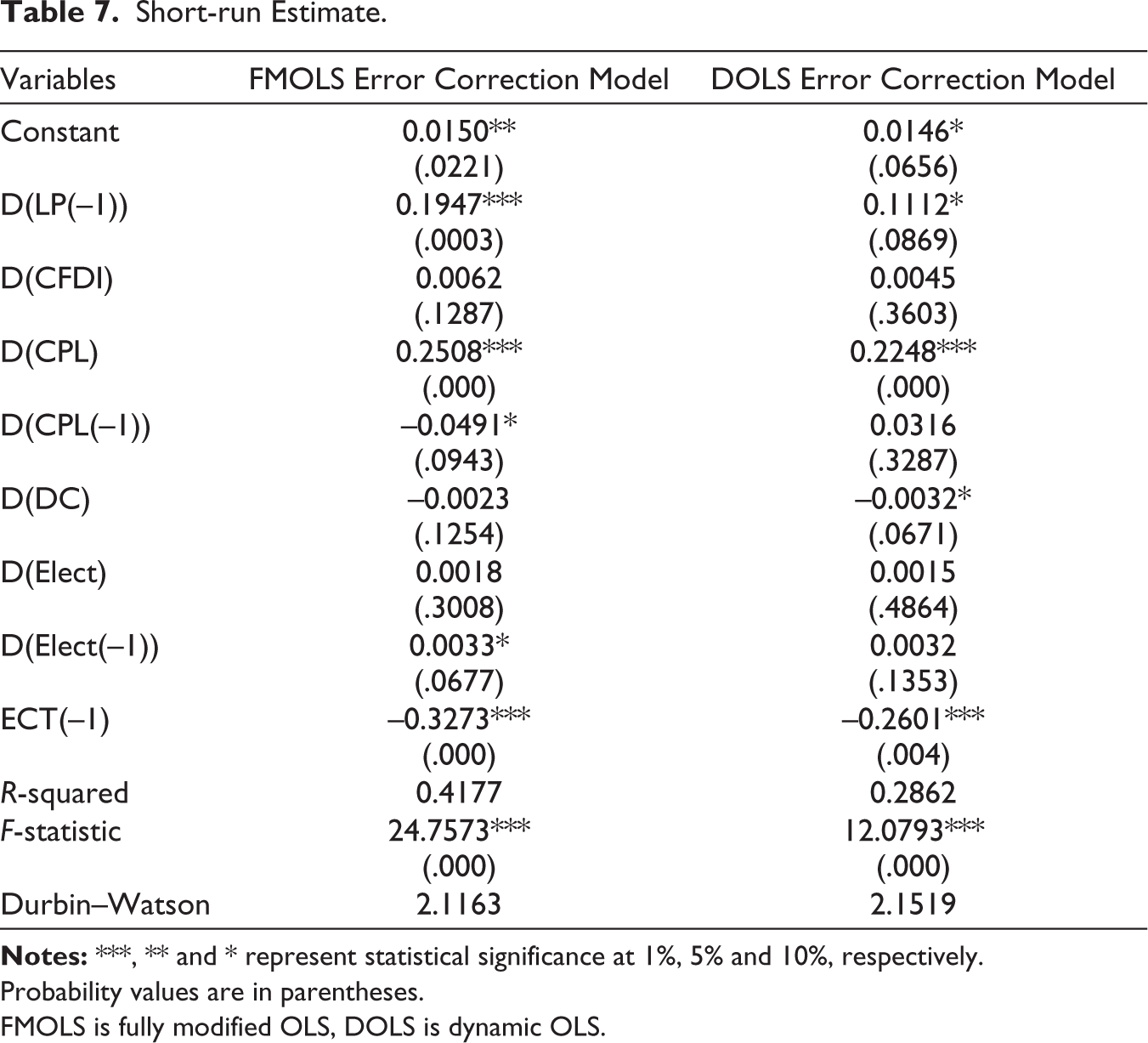
Probability values are in parentheses.
FMOLS is fully modified OLS, DOLS is dynamic OLS.
Furthermore, it is revealed that the error correction terms are negative, less than one and significant. This is a revelation of the presence of a long-run relationship among the variables in the model. For the fully modified ECM, the coefficient value of the error correction term is –0.3273. This indicates the speed of adjustment towards long-run equilibrium and that a long-run equilibrium will be achieved at a rate of 32.73% annually. For the dynamic OLS model, long-run equilibrium will be achieved at a speed of 26.01% annually. The short-run models are also seen to be free from autocorrelation, as revealed by the Durbin–Watson values.
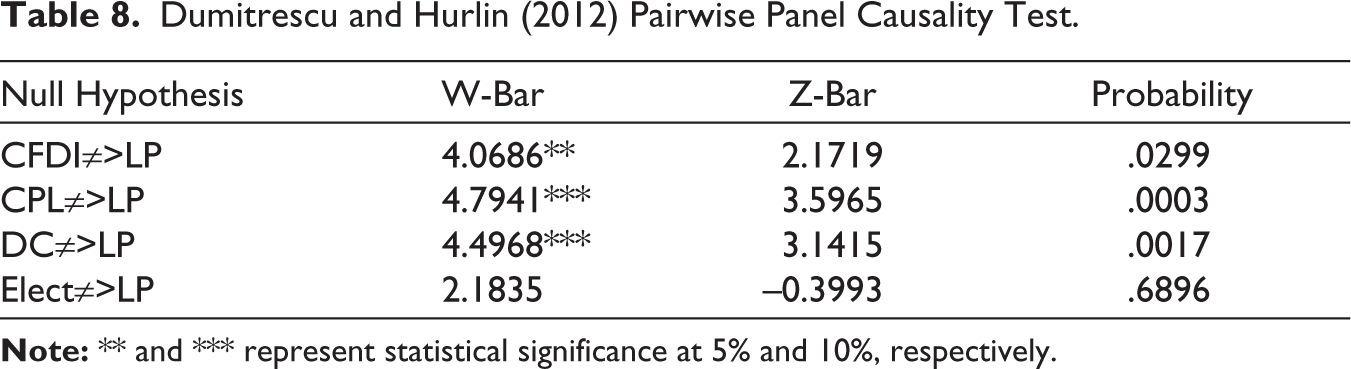
In Table 8, the Dumitrescu and Hurlin (2012) Granger non-causality test reveals that CFDI, capital per labour, and domestic credit Granger cause labour productivity in SSA, while access to electricity does not Granger cause labour productivity. These findings reveal that CFDI, capital per labour, and domestic credit to the private sector can be employed to forecast future values of labour productivity in SSA. This further reveals the importance of CFDI, capital per labour and domestic credit in boosting productivity and economic outcomes in SSA.
Dumitrescu and Hurlin (2012) Pairwise Panel Causality Test.
Conclusion and Policy Direction
This study has investigated the impact of CFDI on labour productivity in the SSA. The study utilised data from 22 countries in the region from 2003 to 2020 and estimated the models utilising panel cointegration techniques of the dynamic OLS and the fully modified OLS. The results showed that CFDI has a positive and significant impact on labour productivity in SSA in the long run. This finding is consistent across both models. Additionally, the short-run parsimonious model revealed that contemporaneous CFDI has a positive but insignificant influence on labour productivity in SSA. These findings highlight the importance of CFDI on long-run labour productivity and further highlight the importance of CFDI to economic activities in Africa. Further results also show that CFDI is also key to forecasting the productivity of labour in SSA. The study recommends a need for governments in SSA to develop and strengthen investment promotion agencies to attract more Chinese investment and also to negotiate trade and investment agreements with China that promote technological transfer and skill development. SSA governments must promote the unique investment opportunities that the region offers to Chinese investors across various sectors of the economy. It is equally important that the government in SSA, through their investment promotion agencies, develop targeted marketing strategies and initiatives to reach out to potential investors in China. Furthermore, adequate research must be done by these agencies to understand what sectors and industries Chinese investors are interested in. This would help tailor promotional efforts to align with their interests.
The limitation of this study stems from the inability to incorporate more countries into the study. This is because of yearly gaps in the CFDI data that constrain the adoption of cointegration techniques. Nonetheless, future research can examine the crowding out or crowding in effect of CFDI on domestic investment, as understanding the interplay between these economic fundamentals could provide deeper insights into the dynamics of foreign investment’s impact on domestic economic activities.
Footnotes
Declaration of Conflicting Interests
The authors declared no potential conflicts of interest with respect to the research, authorship and/or publication of this article.
Funding
The authors received no financial support for the research, authorship and/or publication of this article.