







Abstract
Contemporary giftedness theory requires systemic frameworks to explain the longitudinal actualization of talent and the maintenance of eminence. This study applies Albert Ziegler’s Actiotope Model of Giftedness (AMG) to a critical analysis of Nikola Tesla’s autobiographical narrative. The research aims to deconstruct the complex interaction between unique potential, strategic self-regulation, and a turbulent environment, tracking the genesis of key competencies. The analysis confirms the applicability of all five AMG components to Tesla’s trajectory, demonstrating that his supreme inventive skill (mental simulation) emerged as an adaptive, constructed action in response to childhood adversity. Crucially, the findings reveal that Tesla’s extreme cognitive autonomy and systemic dissonance suggest the need for a theoretical extension of the AMG to incorporate the psychological cost of eminence in radical innovators. This study confirms the heuristic value of the actiotope model and offers significant implications for pedagogical practice aimed at fostering autonomous self-regulation and resilience in exceptional individuals.
Plain Language Summary
This article explores the life of inventor Nikola Tesla to better understand what makes someone gifted. Instead of using standardized tests, the author looks at Tesla’s own words in his autobiography. The study uses the Actiotope Model of Giftedness (AMG), developed by Albert Ziegler, which focuses on how a person’s abilities, motivation, actions, and environment all work together to shape their long-term potential. By reading Tesla’s story through this lens, we see how his deep thinking and self-control helped him become a genius. Crucially, the study found that Tesla’s most important invention skill (mental visualization) was first developed as a coping mechanism for a childhood problem, demonstrating that giftedness is a constructed, adaptive process. His life shows that giftedness is not just about “being smart,” it also involves how someone uses their mind, how they deal with challenges, and how they navigate their surroundings. This research shows that personal stories, like autobiographies, can help us understand gifted people in a fuller and more human way, and suggests that we should pay more attention to the unique, sometimes painful, paths that exceptional individuals take. The study may help teachers and researchers better identify and nurture giftedness in different settings.
Keywords
Autobiography as Self-Interpretation and Identity Research
Autobiography is a narrative where individuals systematically present and interpret life events to construct their identity (Bruner, 1991). More than merely a factual record, it serves as a cultural and subjective shaping of memories, revealing an author’s core values and societal perception (Smith & Watson, 2010). Its psychological and social dimensions are deeply tied to narrative identity (Bruner, 2004), through which individuals form coherent life stories. Autobiography acts as a dialogue with time (Pineau, 2024), effectively building identity through reflection. Historically, its research significance grew in the 20th century following Freud (1910) and the rise of psychoanalysis, leading to a systematic study of subjective creative expression (Goodson, 2001).
Within the social sciences, it constitutes a valuable data source for gaining both individual and social insights (Lejeune, 1991). Lejeune (1989) coined the term “autobiographical pact” to describe an implicit agreement regarding the “truthfulness” of the depicted life. However, autobiography inherently remains a selective, interpretive, and creative process, making it simultaneously a research method and a tool for self-reflection. In essence, autobiography is a multifaceted instrument for personal interpretation and identity construction, and a crucial source of qualitative data in social sciences, facilitating the study of complex individual–society relationships.
Autobiographical Narratives in Giftedness Research
In educational sciences, narrative inquiry reconstructs life experiences into meaningful stories, reflecting how individuals organize their understanding of the world (Clandinin & Connelly, 2000). This term emerged in pedagogical sciences in the late 20th century, addressing the critical need to study “lived experience” (Connelly & Clandinin, 1990). Autobiography, as a method, uncovers deeper psychological and social dimensions of human experience often inaccessible via quantitative methods (Bruner, 1991). Autobiographical records thus become crucial for understanding the motivations, emotions, and contexts shaping individuals and their life trajectories (Goodson, 2001).
Researchers like Atkinson (1995) stress that narratives give “voice” to individuals marginalized by traditional research, offering crucial “inside” perspectives. Furthermore, autobiography fosters critical reflection on social structures and inequalities, aiding theoretical development and practical interventions (Connelly & Clandinin, 2006). While giftedness research traditionally relies heavily on quantitative methods and psychological tests (Gagné, 2004; Renzulli, 2012), contemporary theorists increasingly advocate expanding methodology to include autobiographical narratives. These narratives provide rich, qualitative data on giftedness development and manifestation (Ericsson & Charness, 1994), offering invaluable insight into personal experiences, motivations, and sociocultural influences on exceptional potential (Flint, 2009).
This approach aligns perfectly with Ziegler’s AMG, which conceptualizes giftedness as a dynamic interaction between internal potentials and a complex environment (Atkinson, 1995). Autobiographical analysis identifies specific developmental factors, including family, education, and broader social structures (Stewart, 1994), providing a deeper psychological view that standardized tests often miss. Despite inherent limitations such as narrative selectivity and subjectivity, integrating autobiographical methods significantly contributes to a holistic understanding of giftedness and offers vital implications for pedagogical practice.
Research Gap and Rationale for a Systemic Approach
Giftedness research traditionally focuses on static, intraindividual constructs, relying primarily on psychometric methods (Renzulli, 2012). However, this approach often fails to explain the dynamic actualization and maintenance of eminence—a process that is inherently non-static and context-dependent (Subotnik et al., 2021).
Despite statistical assumptions about a large population of potentially gifted individuals, the absolute number of adults who achieve sustained eminence is noticeably smaller (Zuckerman, 1977). This drastic disproportion underscores the existence of a rigorous selection process and the transformation of potential into genius, making the mechanisms of talent development to eminence a critical area for deeper investigation (Simonton, 2018).
To address this need, this study adopts the contemporary understanding of eminence as a hard-earned designation given by peers for transformative contributions within a domain, whether in the betterment of practice, human well-being, or the promulgation of new ideas (Subotnik et al., 2021). Given that talent development is a lifelong journey (Worrell et al., 2021) which reaches and sustains its final expression only in adulthood, research focused exclusively on potential during school age offers insufficient explanation for eminence and sustained excellence. Contextual and dynamic processes that lead from early potential to transformational achievement, therefore, require a systemic framework capable of encompassing the continuous interaction between unique potential and the complex, often ambivalent environment (Preckel et al., 2024; Ziegler & Baker, 2013). Although most studies on eminence rely on historical analyses or biographical sources (Paik et al., 2021), few investigations have focused on in-depth analyses of individuals’ autobiographical narratives (“Biographical Methods in Gifted Education”, 2009). This approach allows for insight into the developmental process from early potential to the attainment of exceptional achievement, providing an additional dimension for testing systemic models such as the AMG.
Theoretical Framework: Albert Ziegler’s Actiotope Model of Giftedness
In this light, Albert Ziegler’s AMG, which treats giftedness as a functional adaptation within a dynamic system, offers the necessary heuristic value. As demonstrated elsewhere, systemic models such as the actiotope are suitable for analyzing support for talent development across diverse domains (Balestrini & Stoeger, 2021).
Developed by Albert Ziegler, the AMG offers a holistic, dynamic, and systemic understanding of exceptional potential and its development into sustained excellence (Ziegler, 2005; Ziegler & Stoeger, 2017). The model fundamentally rejects reductionist views of giftedness as a set of fixed, intraindividual traits (e.g., solely cognitive abilities). Instead, it emphasizes the complex, continuous interaction between the individual and their environment, which is particularly relevant for analyzing the lifelong development and maintenance of talent (eminence) in adulthood (Subotnik et al., 2019). The model has thus become a suitable framework for analyzing educational environments for the gifted across different cultural and geographical contexts, including Australia, the Middle East, and Europe (Ayoub et al., 2022; Hemdan et al., 2022; Phillipson & Ziegler, 2021; Skorobogatova & Melikhova, 2021).
The core conceptual unit is the actiotope, defined as a functional, dynamic system encompassing all relevant internal and external learning resources. While individual endowment contributes to potential, it serves merely as a starting point. Talent is understood as a product shaped by the quality of the actiotope and the individual’s effective utilization of environmental resources, meaning excellence is fundamentally shaped by learning, experience, and systematic support within a specific domain (Ziegler et al., 2013). The excellence model operates as a complex system of five interconnected components that dynamically explain the development of expertise.
At its core are actions, the basic functional units defined as qualitative, organized, and phased activities often involving parallel sub-actions. The structure of these actions is critical for assessing cognitive efficiency, particularly in high-level performance where advanced metacognitive regulation is necessary (Ziegler, 2005). These actions draw upon the action repertoire, which refers to an individual’s objectively available capabilities, encompassing traditional elements such as cognitive abilities, technical skills, and motor skills. This repertoire is highly fluid and subject to continuous expansion through deliberate practice and self-regulation (Ziegler et al., 2010).
The psychological engine of the system is the subjective action space (SAS), a key construct reflecting an individual’s perceived action possibilities and self-efficacy. SAS functions as an internal framework for planning and self-regulation, critically evaluating capacities and behavioral options (Ziegler et al., 2021). The stability and positive self-perception within the SAS are highly predictive of the perseverance and resilience necessary for sustaining high-level performance (Sternberg, 2020). Directly guiding these processes are goals, which serve as fundamental regulatory mechanisms, stimulating energy and directing choices. In the pursuit of excellence, effective goals typically prioritize developmental or mastery orientations—focus on improvement and quality—over mere performance outcomes (Ziegler, 2005), profoundly impacting long-term motivation and engagement sustainability (Deci & Ryan, 1985).
Finally, the entire system is embedded within the environment, comprising all social actors, resources, and settings that shape action possibilities. These Talent domains are specific environmental areas defined by the individual–system interaction, characterized by their own excellence standards and success conditions (Ziegler & Baker, 2013). All five AMG components interact via complex feedback loops, enabling continuous adaptation and growth. Excellence development is thus viewed as a dynamic, non-linear process of progressive adjustments, where individuals must constantly balance system flexibility and stability in response to ever-changing domain demands and resources (Ziegler & Baker, 2013). This systemic perspective provides a robust functional framework for analyzing how eminent individuals actively construct, negotiate, and maintain their complex skill sets throughout their professional careers.
Why Nikola Tesla?
The selection of Nikola Tesla as a case study for the application of Albert Ziegler’s AMG is both scientifically justified and methodologically necessary. Tesla’s life trajectory and his autobiographical narrative, My Inventions, provide exceptionally rich phenomenological and empirical material crucial for analyzing a systemic talent theory within the context of adult eminence actualization and maintenance.
Tesla’s case presents an ideal environment for testing the model because his exceptionalism is not the result of linear accumulation, but stems instead from the dynamic interaction between extraordinary potential and a complex, often ambivalent, socio-economic environment. Such a context allows giftedness research to move beyond narrow, static biological or psychometric frameworks, which is entirely consistent with Ziegler’s systemic approach.
Tesla’s narrative serves as the primary analytical source because it offers unique insight into his self-regulatory mechanisms and his SAS. The records reveal details about internal conflicts, personal values, and the process of shaping his giftedness, all of which are key to understanding the actiotope model’s components. This phenomenological depth allows for the analytical decomposition of his actions (through mental simulation and phased work structure), goals (through the selection of developmental objectives), and the complex interaction with the environment (through navigating economic and scientific challenges).
The relevance of the narrative is further emphasized by Tesla himself, who consciously reflected on the impact of personal circumstances on his mental development:
I shall dwell briefly on these extraordinary experiences, on account of their possible interest to students of psychology and physiology and also because this period of agony was of the greatest consequence on my mental development and subsequent labors. But it is indispensable to first relate the circumstances and conditions which preceded them and in which might be found their partial explanation. (p. 10)
This insight confirms that Tesla’s case is not a mere “genius example,” but a data source concerning an individual whose development was conditioned by an awareness of context and systemic adaptation. The analysis, therefore, utilizes the AMG as a diagnostic tool for objectively deconstructing and explaining how exceptional potential in the scientific domain was successfully actualized and maintained through continuous, self-regulated systemic evolution.
Aim and Research Question
The aim of this study is to provide a longitudinal and critical insight into talent actualization and the mechanisms for maintaining eminence through an analysis of Nikola Tesla’s autobiographical narrative (My Inventions). Utilizing Albert Ziegler’s AMG, the research focuses on deconstructing the strategic interaction of personal characteristics, the self-constructed SAS, goals, and the environment, tracking the genesis and development of key competencies necessary for eminence.
The study illustrates the applicability of the AMG for understanding the dynamics of long-term excellence, while also underscoring the necessity for theoretical models that account for contextual influence, the strategic role of retrospective narrative, and the extremes of cognitive autonomy in radical innovators. In this regard, the primary purpose of this analysis is to determine the degree of applicability, heuristic value, and theoretical extensions of the stated systemic framework to a concrete and extreme case of eminence. Hence, the following research question is posed:
Method and Materials
Biographical Source
The primary source of data is Nikola Tesla’s autobiography, Moji izumi (My Inventions). Tesla originally wrote it in the English language, and it was first published in 1919 in Electrical Experimenter magazine.
For this qualitative analysis, a specific edition of the book was used (Tesla, 1995). The title of the edition is My Inventions: The Autobiography of Nikola Tesla. This edition was edited by Ben Johnston and published by Barnes & Noble Books. It is a reprint of Johnston’s earlier compilation from 1982.
The selection of this edition was methodologically significant, particularly because the editor explicitly retained Tesla’s idiosyncratic phonetic spelling and the original English text without alteration, omitting only the promotional material from the 1919 serialization. This reliance on the authentic and unaltered original formulation was crucial for ensuring the highest possible textual fidelity. Such an approach allowed for the precise mapping of Tesla’s exact conceptual descriptions onto the analytical categories of the AMG, thereby minimizing potential translation ambiguity.
Research Method
This research employs biographical inquiry, a qualitative method analyzing life stories (autobiographies, interviews, life histories) to study individual development within broader social and cultural contexts (Denzin, 1989; Goodson & Sikes, 2001). This approach offers an in-depth understanding of how individuals interpret and shape their lived experience, which is crucial for analyzing educational processes, talent development, and identity.
The biographical approach posits that personal experiences both reflect and result from broader social structures, educational systems, cultural values, and societal expectations (West, 1996). Here, biography merges individual and collective aspects. In pedagogy, biographical methods explore subjective learning, ability development, and professional identity (Delory-Momberger, 2003). They track motivation, giftedness recognition, obstacle overcoming, and reflective strategy development. These methods are particularly useful for analyzing exceptional individuals (scientists, artists, etc.) to understand the complex dynamics of their giftedness development.
Data Analysis
This study employed a deductive textual analysis of Nikola Tesla’s autobiography, utilizing predefined analytical categories derived from established theoretical models (Braun & Clarke, 2006; Giorgi, 1997). The analysis rigorously adhered to Ziegler’s AMG (Ziegler, 2005).
Key analytical categories—actions, action repertoire, SAS, goals, and environment—were predetermined from actiotope theory. This ensured a direct link between theoretical assumptions and empirical insights, elucidating the complex, dynamic, and contextual nature of giftedness development.
The analysis process was conducted in three phases. First, a thorough reading of Tesla’s narrative was conducted to gain a comprehensive understanding. This was followed by the segmentation of the text into relevant passages. In the third phase, deductive coding was applied, where each relevant segment of the text was directly categorized under one of the five predefined components of the AMG: actions, action repertoire, SAS, goals, and environment. This ensured a direct link between theoretical assumptions and empirical insights, thereby explaining the complex, dynamic, and contextual nature of giftedness development.
To ensure methodological soundness and transparency, data from the autobiographical narrative were subjected to thematic analysis and coded in accordance with the key elements of the AMG. Examples of codes used for categorizing the actiotope components are provided in Table 1.
Coding Scheme for the Actions Component.
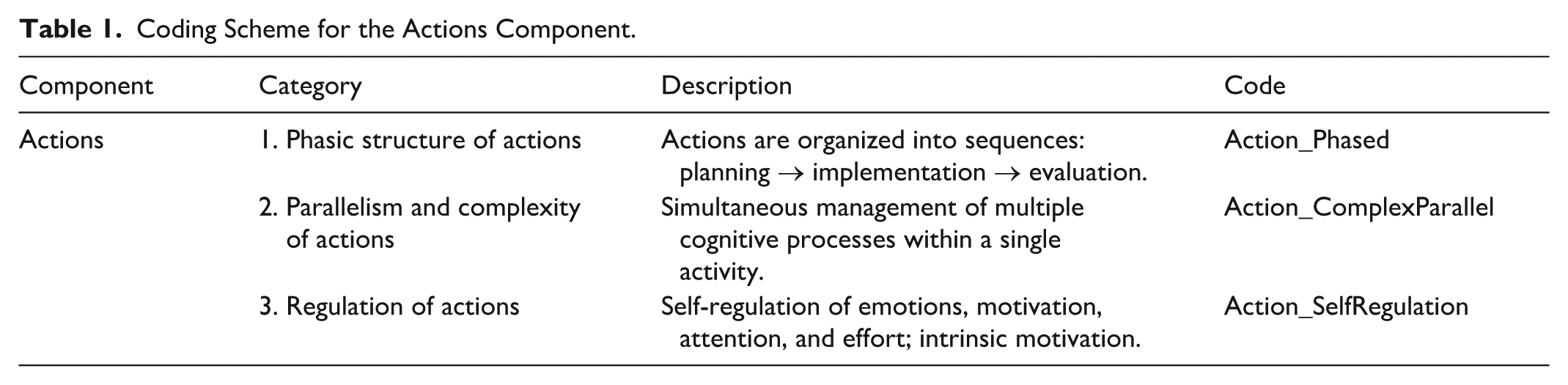
Following coding, an interpretative synthesis of each actiotope component was conducted, both individually and in relation to one another. The goal of this synthesis was to determine the extent and manner in which the interaction of all five components of the actiotope model explains the development and maintenance of Tesla’s eminence. Emphasis was placed on the dynamic and longitudinal connections between components (e.g., the influence of the environment in childhood on the development of the action repertoire in adulthood).
Critical Analysis
The application of theory to autobiographical narrative requires critical interpretation to ensure scientific objectivity. We employ critical autobiographical analysis, a methodology that contrasts systemic thinking (social norms and structures) with personal knowledge. Its aim is to deconstruct normalized identities and the status quo, emphasizing critical reflection as a paradigm for both research and practice (Walker, 2017).
Elements of the narrative that attest to extreme self-confidence and unwavering conviction (which might be interpreted as self-serving bias) are not necessarily accepted as objective historical truth. Instead, these elements, such as statements about the absolute correctness of inventions and the adoption of a “sacred vow,” were analyzed in the context of their functional, strategic role in strengthening the constructed SAS. These statements are interpreted as mechanisms of self-affirmation, providing the necessary psychological capital for achieving exceptional goals.
The analysis therefore focuses on the functional contribution of the narrative to the maintenance of eminence, rather than the mere verification of historical accuracy. This critical approach to interpreting autobiographical sources is crucial for providing a nuanced insight into the psychology of genius.
Findings
The results are presented through the five basic actiotope categories: actions, action repertoire, SAS, goals, and environment. Each category combines theoretical insights with concrete examples from Nikola Tesla’s life and work.
In each results segment, a theoretical description of the category precedes concrete examples from Tesla’s practice, illustrating his actiotope. Authentic Tesla quotes then serve as empirical evidence, followed by parallels drawn with relevant psychological concepts to broaden understanding of these phenomena in giftedness. This case study format verifies and illustrates the theoretical framework, emphasizing consistent connection between empirical insights and theoretical concepts for a valid and comprehensive presentation.
Actions
Actions represent the foundational element in the actiotope, reflecting what an individual is capable of doing and how effectively intentions are executed. The analysis of Tesla’s autobiographical narrative through the lens of the AMG focuses on three key dimensions of Tesla’s actions: phasic structure (sequential problem-solving), parallelism and complexity (simultaneous management of cognitive and practical processes), and regulation of actions (the ability to manage attention, motivation, and effort). The investigation of these aspects provides insight into the efficiency and control of Tesla’s inventive process.
Phasic Structure of Actions
The analysis of Tesla’s autobiographical narrative indicates the existence of a developed phasic structure of inventive actions, whereby the problem-solving process unfolds through clearly differentiated, internal phases, encompassing planning, simulation, evaluation, and adjustment. Tesla describes this internal method in detail:
I started by first picturing in my mind a direct-current machine, running it and following the changing flow of the currents in the armature. Then I would imagine an alternator and investigate the processes taking place in a similar manner. Next I would visualize systems comprising motors and generators and operate them in various ways. The images I saw were to me perfectly real and tangible. (p. 59)
This descriptive account of the ability to structure complex mental activity into sequential steps (planning, implementation, evaluation) can be interpreted as a key indicator of high metacognitive control and action efficiency. The narrative strongly suggests that this phasic structure enabled Tesla’s actions to align with Zimmerman’s model of self-regulated learning in highly functional individuals.
Parallelism and Complexity of Actions
Tesla’s actions are also characterized by parallelism, manifested through the ability to manage multiple cognitive and practical processes simultaneously. The process of transitioning from an ideal mental image to physical construction triggers a complex network of simultaneous actions and reflections: “The moment one constructs a device to carry into practice a crude idea he finds himself unavoidably engrossed with the details and defects of the apparatus” (p. 33).
This statement illustrates Ziegler’s thesis that actions do not occur linearly, but as a network of simultaneous parts. Deep engagement with the process of physical realization (details and defects) simultaneously suggests the ability to combine and refine abstract, creative thinking.
Regulation of Actions
The third dimension, regulation of actions, is reflected in an exceptional ability to manage attention, motivation, and effort, indicating deep intrinsic motivation and energetic autonomy. The intensity of his mental engagement was extraordinary:
No subject to which I have ever devoted myself has called for such concentration of mind and strained to so dangerous a degree the finest fibers of my brain as the system of which the Magnifying Transmitter is the foundation. (p. 93)
The narrative strongly supports the conclusion of strong, intrinsic commitment and the ability to sustain high effort. This is a crucial prerequisite for long-term excellence, as it provides the necessary energetic autonomy. This motivational regulation allowed for the maintenance of high performance levels even after periods of interruption, as the passion for invention would return: “After weeks or months my passion for the temporarily abandoned invention returns and I invariably find answers to all the vexing questions with scarcely any effort” (p. 94).
The ability to renew focus and find solutions with minimal perceived effort after temporary abandonment can be interpreted as confirmation of deeply internalized goals and self-regulatory strategies that function autonomously (Deci & Ryan, 1985).
Action Repertoires
Action repertoires represent a dynamic network of competencies, skills, and strategies that an individual utilizes for navigation and adaptation within their actiotope. Tesla’s action repertoire is analyzed through the prism of mental simulation (as a specific cognitive resource), his goal structure and value orientation, and his exceptional adaptability to the environment. Together, these elements demonstrate how Tesla developed a robust and effective system for realizing inventive concepts.
Mental Simulation and Visualization as a Specific Cognitive Resource
Tesla’s action repertoire is characterized by an exceptional capacity for mental simulation and visualization as a specific cognitive resource. He emphasizes developing solutions entirely in his mind before practical realization: “My method is different. I do not rush into actual work. When I get an idea I start at once building it up in my imagination. I change the construction, make improvements and operate the device in my mind” (p. 33).
This approach allows for the planning of actions and the simulation of outcomes, enabling efficient experimentation without material costs or risk. Tesla therefore believed he had developed a new method of materializing inventive concepts and ideas, one radically opposed to the purely experimental approach, and which was, in his opinion, far quicker and more efficient. His repertoire consists of a complex combination of skills encompassing the formulation of hypotheses, the construction, and testing of devices, which confirms the broad applicability of the action repertoire in the actiotope model.
Goal Structure and Value Orientation
The structure of goals in the narrative is highly significant, as it strongly indicates that Tesla’s activities were connected to broader, ethically and socially based objectives:
Ever since I was told by some of the greatest men of the time, leaders in science whose names are immortal, that I am possesst of an unusual mind, I bent all my thinking faculties on the solution of great problems regardless of sacrifice. (p. 104)
Goals defined in this manner serve as an essential element for maintaining engagement and directing the action repertoire toward meaningful development. Tesla’s belief that “the true rewards are ever in proportion to the labor and sacrifices made” (p. 95) reflects the existence of a clear hierarchy of values and a vision of the common good that structured his activities, preventing chaotic or impulsive action.
Adaptability to the Environment
Despite his emphasized cognitive independence, Tesla acknowledges the significance of the environment as an external factor. He describes overcoming obstacles, such as financial difficulties or a lack of institutional support, while highlighting the benefit of the experience gained: “The knowledge and practical experience I gained in the course of this work was most valuable and the employment gave me ample opportunities for the exercise of my inventive faculties” (pp. 65–66).
This behavior demonstrates high flexibility, where Tesla showed the ability to access alternative action channels when primary ones were unavailable. This adaptability attests to a developed and varied action repertoire that enables a proactive response to an environment that can either facilitate or impede action, which is consistent with the actiotope model’s thesis.
Subjective Action Space
The SAS represents an internal network of individual resources, self-perception, expectations, and motivational orientations. The analysis of the SAS focuses on three key aspects: mental simulation (as an expansion of action space), autonomous motivation (as an action driver), and the alignment of self-perception and competence. These dimensions shape Tesla’s unique system for achieving excellence.
Mental Simulation as a Means of Expanding Subjective Action Space
A prominent characteristic of Tesla’s SAS is his highly developed capacity for mental simulation and internal experimentation. The narrative describes how this mental activity leads to predictive control over the outcome of his actions:
When I have gone so far as to embody in the invention every possible improvement I can think of and see no fault anywhere, I put into concrete form this final product of my brain. Invariably my device works as I conceived that it should, and the experiment comes out exactly as I planned it. (p. 33)
This ability demonstrates the capacity to predict the consequences of actions, thereby potentially eliminating risks and expanding the perceived action space, allowing for the consideration of practically untested but internally real actions. Tesla’s “laboratory of the mind” was the foundation for innovations that surpassed the technical capabilities of his era.
Autonomous Motivation and Internal Impulse as Action Driver
Tesla’s SAS is also defined by strong autonomous motivation stemming from an internal need to solve intellectual problems:
When natural inclination develops into a passionate desire, one advances towards his goal in seven-league boots. In less than two months I evolved virtually all the types of motors and modifications of the system which are now identified with my name. (p. 65)
This attests to exceptionally autonomous motivation, where the SAS is shaped predominantly by an internal sense of purpose and scientific curiosity, rather than external rewards. This component can be critical for talent activation and enables perseverance even without adequate external support.
Alignment of Self-Perception and Competence
A key feature of Tesla’s SAS is the consistent alignment of self-perception and competence. He neither underestimated nor idealized his abilities; instead, he invested in work that built self-confidence, reflected in the connection between expectations for success and the perceived value of the task: “When I undertook the task it was not with a resolve such as men often make. With me it was a sacred vow, a question of life and death. I knew that I would perish if I failed” (pp. 60–61).
This reflects a highly internalized control over actions and a readiness to view challenges as existential obligations. Tesla measured his abilities against personal purpose and capacity, independent of the potential influence of others’ opinions.
This process of self-definition within the SAS confirms its dynamic and emergent nature. Tesla’s reflection on his own career shows that self-awareness of a core identity and action repertoire is not static, but is the result of cumulative self-reflection and a long period of confirmed actions within the system:
Our first endeavors are purely instinctive, prompting of an imagination vivid and undisciplined. As we grow older reason asserts itself and we become more and more set and designing. But those early impulses, tho not immediate y productive, are of the greatest moment and may shape our so a destinies. Indeed, I feel now that had I understood and cultivated instead of suppressing them, I would have added substantial value to my bequest to the world. But not until I had attained manhood did I realize that I was an inventor. (p. 28)
Tesla’s narrative provides evidence of the dynamic, constructive nature of the SAS, demonstrating a transformation from weak character to volitional control, which is crucial for self-regulation in supreme achievement:
Up to the age of eight years, my character was weak and vacillating, I had neither courage or strength to form a firm resolve. My feelings came in waves and surges and vibrated unceasingly between extremes. My wishes were of consuming force and like the heads of the hydra, they multiplied. I was opprest by thoughts of pain in life and death and religious fear. I was swayed by superstitious belief and lived in constant dread of the spirit of evil, of ghosts and ogres and other unholy monsters of the dark. Then, all at once, there came a tremendous change which altered the course of my whole existence. (p. 36)
This finding can be interpreted as proof that the psychological capital (SAS) of a gifted individual is not acquired at birth, but is actively constructed through a process of conscious, metacognitive control over desires and fear.
Goals
Goals represent the regulative backbone of the actiotope, providing the basis for direction, energy activation, and motivation maintenance. The analysis of Tesla’s narrative shows how goals function through three key dimensions: their comprehensive role in action regulation (including the development of mental simulation), a dominant intrinsic motivational orientation, and the effective resolution of goal conflict (authority vs. internal truth). This goal system ensured long-term perseverance and focus on excellence.
Functions of Goals
Tesla’s narrative clearly depicts how goals function as a fundamental regulatory mechanism through the selection, energy, direction, and regulation of actions. This is visible in his mental development, the refinement of ideas, strong motivation, and sustained quality of work.
Faced with the uncontrollable imposition of images of real events in childhood, Tesla instinctively developed a concentration technique that gradually evolved into “travel in imagination.” This affliction compelled Tesla to expand the boundaries of the world he knew, thereby creating a mental environment (“new places, cities and countries,” p. 32) in which he could function. This strategy, which began as therapy (“the best comfort,” p. 32), culminated in the conscious discovery at the age of 17 that he had mastered the ability of mental construction and testing:
This I did constantly until I was about seventeen when my thoughts turned seriously to invention. Then I observed to my delight that I could visualize with the greatest facility. I needed no models, drawings or experiments. I could picture them all as real in my mind. Thus I have been led unconsciously to evolve what I consider a new method of materializing inventive concepts and ideas, which is radically opposite to the purely experimental and which is in my opinion ever so much more expeditious and efficient. (p. 33)
His ability to fully simulate work in his imagination, without physical realization, strongly indicates deep cognitive internalization and the existence of an orientation toward the quality of work, rather than a dominant orientation toward speed or external effect. “A thousand secrets of nature which I might have stumbled upon accidentally I would have given for that one which I had wrested from her against all odds and at the peril of my existence” (p. 61).
This statement suggests the presence of a strong metacognitive capacity and complex internal goal regulation. Tesla did not strive for rapid production or immediate success, but for the optimization of the idea through an iterative mental process. His deep motivation and enjoyment of the work process itself ensured strong energy and perseverance. Another example of this internal orientation toward quality states:
It is absolutely immaterial to me whether I run my turbine in thought or test it in my shop. I even note if it is out of balance. There is no difference whatever, the results are the same. In this way I am able to rapidly develop and perfect a conception without touching anything. (p. 33)
This demonstrates stability and reliability in mental simulations, implying precision and a clear orientation toward internal, developmental goals. While performance-oriented individuals strive for public validation, the narrative indicates that Tesla prioritized internal accuracy as the primary criterion for quality.
Motivational Orientations
Tesla’s attitude toward work and learning can be interpreted as a reflection of the highest level of motivation, where work is an end in itself, rather than merely a means: “An inventor’s endeavor is essentially lifesaving. Whether he harnesses forces, improves devices, or provides new comforts and conveniences, he is adding to the safety of our existence” (p. 42).
This attests to a dominant intrinsic motivation—a deep enjoyment of the process of learning, research, and discovery. Such motivation enables sustainable development and refinement, given that the ultimate goal is internal realization and perfection, and not exclusively external confirmation.
Goal Conflict
Tesla’s narrative also illustrates the resolution of goal conflict which, despite potential opposition, results in a harmonized system. He possesses a self-regulatory system of behavior that is adaptive and functional in context. Faced with external pressure and authority, Tesla maintained his goal structure:
But instinct is something which transcends knowledge. We have, undoubtedly, certain finer fibers that enable us to perceive truths when logical deduction, or any other willful effort of the brain, is futile. For a time I wavered, imprest by the professor’s authority, but soon became convinced I was right and undertook the task with all the fire and boundless confidence of youth. (p. 57)
This quote strongly suggests Tesla’s rejection of “authority” (external pressure) in favor of internal “truth,” whereby the goal conflict was resolved in favor of developmental goals. His consistent preference for scientific accuracy and long-term progress, even when it entailed sacrificing immediate social recognition (Ericsson, 1998), indicates a high degree of control over his own development.
Environment
The environment in the actiotope encompasses all external factors—from early social influences to the broader talent domain—that provide resources, set demands, or create barriers to action. The analysis of Tesla’s environment follows a longitudinal path, from the formative influence of his parents, through challenging interactions with the domain (resulting in a perception of misalignment), to the systemic impact of his innovations on existing technical paradigms. Understanding this dynamic is key to comprehending Tesla’s development and achievements.
Early Social Environment
Tesla’s narrative indicates a complex longitudinal trajectory: from early formative influence to later systemic dissonance within the domain of achievement. Tesla’s narrative highlights the role of the primary social environment (parents) as a source of structural demands and resources crucial for the early shaping of the action repertoire:
Altho I must trace to my mother’s influence whatever inventiveness I possess, the training he [father] gave me must have been helpful. It comprised all sorts of exercises—as, guessing one another’s thoughts, discovering the defects of some form or expression, repeating long sentences of performing mental calculations. These daily lessons were intended to strengthen memory and reason and especially to develop the critical sense, and were undoubtedly very beneficial. (p. 30)
Here, it can be identified how the social environment, through systematic tasks, established early demands for the development of metacognitive and cognitive skills essential for later autonomy, thereby establishing the initial resource base in the actiotope.
Talent Domain as a System of Interactions
In contrast to that early, supportive environment, the analysis of Tesla’s later domain suggests that it functions as a complex system of interactions, where standards of excellence and the social value of activities were often psychologically problematic. Tesla’s experience expresses this dissonance through the concept of “cosmic pain.” He describes individuals, like himself, as exceptionally sensitive: “with his highly developed mechanism all intact, and acting with precision in obedience to the changing conditions of the environment” (p. 105).
In contrast, when such a being comes into contact with others “whose controlling organs are radically faulty, that sense asserts itself and he feels the ‘cosmic pain’” (p. 105). Such a strong psychological reaction to the misalignment between individual vision and the social environment’s inability to recognize value can be interpreted as an indication that the domain represents a source of support but also of deep disappointment and cost.
Tesla’s actiotope also encompassed external resources such as access to laboratories, financial support, and mentorship. His narrative registers an awareness of the environment’s influence on individual action: “We are automata entirely controlled by the forces of the medium being tossed about like corks on the surface of the water, but mistaking the resultant of the impulses from the outside for free will” (p. 106).
This quote reflects a deep awareness of the determinism of action and the environment’s influence on individual functioning. Tesla’s objective working environment was defined by rapid scientific and industrial development, and he notes how external influences shaped his thoughts even from childhood: “Soon I became aware, to my surprise, that every thought I conceived was suggested by an external impression” (p. 34).
These findings strongly indicate the interdependence between creativity and context, whereby talent develops in a stimulating environment that offers opportunities for creative interaction.
Systemic Influence and Dynamic Changes of Paradigm
Finally, Tesla’s work brought about significant dynamic changes that disrupted existing technical paradigms. He was aware that his project was “too far ahead of its time,” yet he believed in its ultimate success:
My project was retarded by laws of nature. The world was not prepared for it. It was too far ahead of time . . . The world was not prepared for it. It was too far ahead of time. But the same laws will prevail in the end and make it a triumphal success (p. 91).
The awareness of the “world’s unpreparedness” and the resistance highlights the necessity for patience and perseverance in the development of excellence. Tesla reminds: “A new idea must not be judged by its immediate results” (p. 79).
This underscores flexibility and developmental openness within the talent actiotope. These quotes show that talent is not static, but a living, developmental process that adapts to temporal and social circumstances. Tesla’s awareness of the “world’s unpreparedness” and resistance indicates patience, perseverance, and vision in the development of excellence. Furthermore, they may indicate that the success of talent depends on overcoming systemic barriers and its value being recognized at a critical moment. This dynamic development, where individual and systemic factors mutually influence one another, constitutes the core focus of the actiotope model of talent.
Discussion
The analysis of autobiographical narratives, in contrast to cross-sectional and quantitative studies, has proven to be an indispensable methodological tool for studying giftedness because it allows for a deeper understanding of subjective dynamics, self-regulation, and the genesis of competencies. This study applied the AMG (Ziegler, 2005) to a critical analysis of Nikola Tesla’s autobiographical narrative. The research focuses on the processes of talent actualization and the mechanisms for the long-term maintenance of eminence, a concept positioned at the pinnacle of human capabilities in a specialized field (J. R. Cross, 2025). The findings demonstrate that Tesla’s narrative provides rich phenomenological insight into all five key components of the model (actions, action repertoire, SAS, goals, and environment), confirming the theoretical applicability and heuristic value of the systemic framework for analyzing the life trajectory of excellence in an adult, eminent individual.
The analysis of Tesla’s actions confirms the thesis of self-regulation as a key prerequisite for long-term production and creativity (Ridgley et al., 2021). Recent findings in the field of creative metacognition (Lebuda & Benedek, 2024; Puente-Díaz, 2023) emphasize that the transformation of ideas into concrete products is enabled precisely by the creator’s metacognitive control over their own thoughts and behavior. Tesla’s inventive process is characterized by a clear phasic structure (planning, implementation, evaluation) and the complexity of parallel actions, which directly reflects this high degree of metacognitive control (Zimmerman, 2000).
The most important finding in this domain is the use of mental simulation and visualization as a specific cognitive resource within the action repertoire. Tesla used this ability as the primary method for testing ideas, believing that the results in his mind were identical to the results in his workshop. This practice, which involves effective risk evaluation and decision-making (Valadez Sierra et al., 2024), demonstrates predictive control (Hoffmann & Sebald, 2000) that effectively expands his SAS. It enabled him to manage risk and optimize solutions in the “laboratory of the mind” before practical realization, which is a key mechanism for talent sustainability despite financial or material limitations. Research shows that such processes are characteristic of highly creative and intellectually capable individuals (Gagné, 2004; Sternberg, 2003), allowing for experimentation without material costs or risk.
A key contribution of our analysis lies in establishing the genesis of this central skill—mental simulation. Detailed analysis of his early childhood shows that Tesla’s exceptional action repertoire emerged as an alternative (substitute) action—an instinctive psychological mechanism for overcoming distressing visual phenomena. This childhood affliction compelled Tesla to take “travel in imagination,” which transformed from therapy (“the best comfort”) by the age of 17 into a consciously developed, powerful inventive method. This proves that a key component of Tesla’s action repertoire was not genetically given, but was a constructed action that arose in response to a psychological problem (Saß et al., 2025). This mechanism of transforming adversity into a key competence underscores the adaptive and emergent nature of talent development.
The findings also confirm the constructive and dynamic nature of the SAS. Tesla’s narrative demonstrates a transformation from “weak and vacillating character” to achieving complete volitional control. This process of self-definition and the strengthening of will is crucial evidence that psychological capital is not acquired at birth, but is actively constructed through a process of conscious, metacognitive control over desires and fear. The findings attest that statements of unwavering conviction and the absolute correctness of inventions (which a reader might interpret as self-serving bias) functionally serve to strengthen the SAS and provide the psychological capital needed to achieve exceptional goals (T. L. Cross, 2024).
The maintenance of eminence is inseparable from high action regulation and goal coherence (Kronborg, 2021; Worrell et al., 2021). Tesla’s testimony reveals strong, intrinsic motivation and energetic autonomy (Deci & Ryan, 1985), where work was an end in itself. This motivational orientation manifested through the consistent selection of developmental goals (quality, accuracy, and idea optimization) instead of performance goals. His ability to resolve goal conflict, demonstrated by rejecting external authority and insisting on internal “truth,” represents the core of functional giftedness in adulthood (Ziegler et al., 2013). Such a radical internalization of standards provided psychological resilience, enabling Tesla to persevere despite disappointments and the environment’s unpreparedness for his innovations. This process was also supported by the early social environment, where the exercises assigned by his father were aimed at “strengthening memory and reason, and especially to develop the critical sense” (p. 30), thereby laying the basic cognitive and metacognitive foundation for later autonomy and self-regulation.
While the AMG is highly applicable, Tesla’s narrative provides a critical insight into the extremes of systemic interaction, thereby expanding the theoretical implications of the model. His case highlights an exceptionally high level of cognitive autonomy, where the reliability of mental simulation allowed for effectively circumventing the need for constant physical verification, challenging the model’s emphasis on perpetual interaction with the material environment. Furthermore, Tesla’s description of “cosmic pain” introduces an element of extreme psychological sensitivity to the misalignment between internal standards and the external domain. This high emotional and sensory reactivity in gifted individuals, which requires a strong adaptive strategy, represents a key factor increasingly recognized by contemporary research. This phenomenon emphasizes a potential limitation of the model to fully explain the psychological cost of maintaining eminence in individuals whose vision radically exceeds the readiness of their professional context. Tesla’s strategy of adaptability in the environment, manifested through the ability to maximize resources and find alternative action channels despite systemic resistance (Sternberg et al., 2021), attests to exceptional resilience derived precisely from the aforementioned cognitive and motivational autonomy.
Implications for Gifted Education
The AMG serves as a robust analytical framework for explaining how Tesla’s potential transformed into eminence. The results illustrate that the development of excellence is a dynamic process of constant interaction, but simultaneously indicate that Tesla’s narrative serves as a critical case study calling for a greater emphasis on extreme cognitive autonomy and the radical internalization of developmental goals in exceptional innovators.
Our analysis of Tesla’s actiotope, though focused on exceptional adult achievement, has direct longitudinal implications for understanding and supporting early gifted development. By identifying the key mechanisms that allowed Tesla to maintain eminence—such as extreme cognitive autonomy (manifested through mental simulation and the phasic structure of actions) and the dominance of developmental goals—we retrospectively determine critical predictors of success that need to be systematically cultivated from the earliest age. The finding that Tesla’s most important inventive skill was developed as an alternative (substitute) action to overcome a childhood affliction suggests that early pedagogical efforts should include supporting children in proactively finding functional strategies for coping with internal and external challenges. Tesla’s capacity for supreme metacognitive self-regulation serves as proof of how early pedagogical efforts should be directed toward strengthening precisely these autonomous learning skills in gifted children and youth.
Furthermore, the analysis of Tesla’s SAS as a strategic mechanism for energetic resilience underscores the need for gifted programs to actively build psychological capital, alongside cognitive stimulation—specifically, positive self-perception in relation to the task—to enable individuals to overcome barriers in the environment. Therefore, by deconstructing exceptional adult achievement, our study creates a more targeted and empirically supported plan for interventions to maximize potential.
Limitations and Future Research Directions
As a qualitative narrative analysis, this study faces the limitation inherent in relying on a retrospective, subjective narrative (My Inventions). Although the narrative was interpreted critically, it does not provide the opportunity for direct empirical verification or longitudinal tracking of Tesla’s development, and thus the findings demonstrate the heuristic value of the Model, rather than direct causal validation. In addition, the focus on an extreme case of eminence (Tesla’s radical autonomy) limits the direct generalization of pedagogical implications to the typical gifted population.
These limitations open the path for future research. First, a comparative narrative analysis is proposed, where Tesla’s narrative would be compared with biographies of other eminent individuals in various domains using the actiotope model, allowing for the theoretical comparison of functional mechanisms. Furthermore, Tesla’s case mandates that future theoretical research should incorporate factors such as extreme cognitive autonomy and the psychological cost of eminence into the actiotope model, developing specific components to quantify the interaction between exceptional potential and an obstructive environment. It is recommended that the identified metacognitive strategies (such as control of mental simulation and the dominance of developmental goals) be empirically tested in longitudinal studies of giftedness, thereby providing direct confirmation of the efficacy of these mechanisms in contemporary pedagogical practices.
Conclusion
This article demonstrates the critical methodological value of autobiographical and narrative records in the psychology of giftedness. Unlike cross-sectional and quantitative data, the narratives of eminent individuals provide unique phenomenological and longitudinal insight into the genesis, strategies, and subjective experiences of talent. Narrative analysis allows for the deconstruction of processes down to the level of metacognitive decisions and alternative actions that cannot be captured by standard psychometric measures. Utilizing this methodological advantage, our study applied the AMG (Ziegler, 2005) to a critical analysis of Nikola Tesla’s autobiographical narrative, offering a multidimensional insight into the mechanisms that enabled his long-term maintenance of scientific eminence.
Our findings strongly confirm that the development of excellence is a dynamic and constructive process. Tesla’s path to eminence is characterized by exceptional metacognitive autonomy, with this supreme competence (mental simulation) being established as an alternative (substitute) action—a functional adaptation to an early psychological challenge. This transformation of adversity into a strategic resource underscores the adaptive and constructive nature of talent development, supported by the early stimulation of metacognitive capacity within the primary environment. The sustainability of achievement is inseparable from strong volitional control and the radical internalization of developmental goals. Tesla consciously transformed his SAS, strengthening the psychological capital that enabled him to persevere despite disappointments and the systemic resistance of the environment.
The analysis of Tesla also points to a potential theoretical expansion of the AMG concerning the explanation of extreme cognitive autonomy and the psychological cost paid by innovators whose vision radically exceeds the readiness of their professional context.
As a final implication for practice, the study’s results suggest that contemporary gifted programs should focus not only on cognitive stimulation but also on strengthening metacognitive self-regulation, cultivating the ability to transform challenges into key competencies, and supporting the development of autonomous motivation. This ensures the building of psychological capital necessary for maximizing potential in complex professional domains.
Our analysis confirms that narrative records are indispensable for understanding the dynamics of excellence, and calls for further research focused on the longitudinal interaction of internal resources and the environment in the process of achieving supreme creativity.
Footnotes

Ethical Considerations
This research did not require IRB approval because it did not involve human subjects.
Funding
The authors received no financial support for the research, authorship, and/or publication of this article.
Declaration of Conflicting Interests
The authors declared no potential conflicts of interest with respect to the research, authorship, and/or publication of this article.
Open Practices
The data analyzed in this study are not available for purposes of reproducing the results. The code or protocol used to generate the findings reported in the article are not available for purposes of reproducing the results or replicating the study. There are no other newly created, unique materials used to conduct the research.
Artificial Intelligence Use
The authors confirm that no generative AI tools were used in the development of this article.