







Abstract
Objective:
Prior research has noted Olympic and Paralympic athletes are often unaware and unprepared for upcoming career transitions, resulting in experiences of psychological distress. The purpose of this study was to explore the use of digital video as a delivery method for psychoeducation about an upcoming career transition.
Design:
Post-survey design.
Method:
Video development was guided by entertainment-education theory. Participants were shown the video at a centralised training location and asked to fill in questionnaires following viewing and again within 72 hours of viewing. Specifically, subjective and objective recall of the intended learning points was assessed. In addition, participants’ appreciation of the content and design was measured. Analysis was descriptive in nature.
Results:
Participants included 168 Olympic/Paralympic athletes (N = 116), coaches (N = 10) and athlete support providers (N = 42). Immediately following viewing, participants could accurately recall between one and three learning points, but at 72 hours post-viewing, this range had fallen to one to two learning points. Participants indicated they enjoyed the video, identified with the narrators and found it informative and personally relevant.
Conclusion:
The results of this study suggest a digital video 2 minutes 35 seconds in length is a useful psychoeducation tool for up to three learning points. The results support the development of video psychoeducation resources using education-entertainment theory and the social validity of video as a psychoeducation tool in Olympic and Paralympic sport.
Background
The Olympic and Paralympic Games (the Games) are considered a pinnacle experience in an athlete’s life and career (Blumenstein and Lidor, 2008; Schinke et al., 2015). An athlete’s participation in the Olympic or Paralympic Games has been conceptualised as a series of quasi-predictable career meta-transitions (i.e. transitions within a transition) which the athlete must adapt to in order to continue on their chosen career path (Schinke et al., 2015). These include (1) entering the programme, (2) entering major international tournaments, (3) games qualification, (4) focused preparation for the Olympic Games, (5) participation in the Games and (6) transition to the post-Games (Schinke et al., 2015).
While efforts have been made to understand how athletes can best prepare themselves for these meta-transitions (Schinke et al., 2015), the post-Games period has received little attention. Athletes have reported feeling unmotivated and unable to make decisions during this time, as well as various signs and symptoms of psychological distress (McArdle et al., 2014; McCann, 2008). In previous research, athletes have commented on their lack of preparedness for this meta-transition reflected by experiences of psychological distress (e.g. anxiety, irritability, lack of motivation) lasting between 2 weeks and several months. (Arnold and Sarkar, 2015; Howells and Lucassen, 2018). Athletes also report perceived loss of support from the general public and their friends and family during this meta-transition (Howells and Lucassen, 2018). The demands of the post-Games meta-transition often include the comedown from the build-up of the Games, post-performance debriefing/rumination and consideration of future career goals. In many cases, the demands of this particular meta-transition outweigh the athlete’s resources, resulting in crisis-transition (Howells and Lucassen, 2018; McArdle et al., 2014). The Athletic Career Transition model (Stambulova, 2003) suggests specific psychological intervention is required at this point to prevent worsening of psychological distress which can impact an athlete’s performance and career. However, the model also proposes the exploration of crisis prevention interventions, which to date has received limited attention in literature.
A successful adaptation to a career transition is affected by an athlete’s personal and external resources for meeting the demands presented by the phase, and also by the predictability of the phase (Stambulova, 2003). Personal resources for managing the demands of a career transition are described in the general population literature as career adaptability (Savickas and Porfeli, 2012). Comprising four cognitive and behavioural skills (concern, control, curiosity and confidence), career adaptability is positively associated with life satisfaction, positive affect, self-rated health and quality of life (Johnston, 2018). There is evidence to support the use of psychoeducation to improve career adaptability (Johnston, 2018). However, within the Olympic and Paralympic community, athletes are often unaware of the career transitions associated with competing at the Games and, thus, feel unprepared to manage the experience (Arnold and Sarkar, 2015; McArdle et al., 2014). The career transition in sport literature suggests the predictability of a career transition can impact the adaptation of an athlete (Stambulova, 2003). While the existing literature endorses the value of preparation in advance of career transitions to improve adaptation outcomes, interventions designed to provide such preparation are scarce. Therefore, there is a priority need for psychoeducation interventions to provide information about upcoming career transitions, including strategies and supports athletes can use to adapt to their experience. As stated by Savickas and colleagues (2009), it is necessary to look to the future and proactively develop the individual’s ability to adapt to career transitions. Therefore, the aim of the intervention described here was to provide information to athletes, coaches and athlete support providers in advance on the meta-transitions associated with participation in the Games, in an attempt to reduce the likelihood of a crisis-transition.
Within this context, the sports organisation responsible for athletes’ preparation for the Rio 2016 Games sought to develop a psychoeducation intervention to inform athletes about the career transitions associated with competing at the Games and strategies they could use to adapt successfully ahead of the competition. Typically, a health-based psychoeducation intervention delivers health-specific information, in addition to tools and strategies, for managing issues related to the area of concern (Lukens and McFarlane, 2004). Prior psychoeducation interventions to improve individuals’ career adaptability have been delivered in a group format over a number of weeks (Johnston, 2018). However, this delivery method has previously been described by Olympic athletes as suboptimal (McArdle et al., 2014). Culturally, Olympic and Paralympic sport places a great value on strength, and athletes have described a reluctance to participate in psychoeducation for fear of being perceived as weak (Schinke et al., 2018). Therefore, brief alternative delivery methods are necessary for implementation success with this population. This study focuses on the efficacy of video as a delivery method for this information.
Online video-based psychoeducation can potentially address some of the intervention delivery challenges that present when working with Olympic athletes. Benefits of online psychoeducation include cost-effectiveness, anonymity in access and greater ease of access than face-to-face methods (Andersson and Titov, 2014). Improvements in technology have made online video watching so readily available that 72% of people in the United Kingdom claim to watch short-clip videos online, 32% of which claim they watch either daily or at least weekly for information and entertainment (Ofcom, 2015). However, despite the growing evidence for the effectiveness of online psychoeducation for health initiatives (Naslund et al., 2015), and the relative ease of access for mobile phone users, the effectiveness of video as a delivery method for psychoeducation is less understood. Specifically, our knowledge of the effectiveness of video-based delivery to educate sports people about upcoming career transitions is limited to youth athletes completing the junior-to-senior career transition (Pummell and Lavallee, 2018). Best practice in intervention development is to collect sufficient evidence of effectiveness of an intervention prior to committing to a large-scale evaluation (Wight et al., 2016). Therefore, this study aimed to pilot test a video-based psychoeducation intervention to educate Olympic and Paralympic athletes, coaches and athlete support providers about an upcoming career transition and the strategies athletes can use to adapt to the experience.
Theoretical basis of intervention materials
The development of the video content was guided by entertainment-education theory. Entertainment-education theory proposes that a viewer’s enjoyment of an online video positively facilitates learning (Schneider et al., 2016). Learning from online videos can be measured by examining the ability of a viewer to recall the intended learning points of the video (Watson and McKinstry, 2009). Recall is predictive of both attitudes and intentions to change behaviours (Schneider et al., 2016). It can be assessed both subjectively (the viewer’s belief they can recall the learning points) and objectively (the accuracy of content they recall) (Schneider et al., 2016). Despite learning being the objective of a psychoeducation resource, prior research has indicated participants in health education programmes accurately may recall as little as 30% of the communicated information (Lewkovich and Haneline, 2005).
Entertainment-education theory offers a communication strategy which addresses this issue through the purposeful design of a digital video to increase a viewer’s knowledge about a topic of interest (Singhal et al., 2004). Several styles of health education online videos exist (e.g. talking head, cartoon, lecture, live audience), each with its own way of capturing the interest of the audience and communicating their key learning points. The tenets of entertainment-education theory suggest that recall of targeted learning points (i.e. the central messages of the medium) is influenced by several factors, including the nature of the video content, appreciation of the video and design features, specific to the target audience (Schneider et al., 2016; Singhal et al., 2004).
In terms of content, research suggests that online psychoeducation videos that are 5 minutes in duration can be an effective learning tool for up to 7 learning points (Denny et al., 2017). Appreciation is linked to recall in that greater perceived appreciation is associated with higher content recall (Schneider et al., 2016). Within the literature, appreciation is conceptualised as a subset of enjoyment and is associated with eudemonic experiences (Oliver and Bartsch, 2010). Appreciation is thought to be linked to the fulfilment of autonomy, competence and relatedness goals as described by Ryan and Deci (2001). Videos which result in higher levels of appreciation are typically described as more serious, moving or thought provoking (Oliver and Bartsch, 2010). Typically, such videos explore meaningful life questions and are created so that the viewer can identify with the visual and/or narrative content in a personally relevant way (Bartsch and Schneider, 2014; Moyer-Gusé, 2008).
Regarding design features, the length of the video and the communication modalities employed also influence recall. Short video narratives (approximately 3 minutes or less) which use multimodal communication methods (voice, images and sometimes music) are thought to enhance recall (Alonso et al., 2013; Schneider et al., 2016). For example, background music, personal images from the narrator’s life and the use of the narrator’s own voice can provide information such as gender, age and socio-cultural background, facilitating viewers’ identification with key messages (Alonso et al., 2013). Other design features that influence recall include the length, omission of extraneous information (e.g. keep learning points minimal and brief) and the integrated presentation of related text and graphics (Brame, 2016; Singhal et al., 2004; Woo et al., 2018). Recall can further be enhanced by labelling key information which may involve visual (e.g. arrows, highlighting) or audio (e.g. change in music) cues, which tell the viewer where to direct their attention (Brame, 2016).
In sum, this study aimed to assess video-based psychoeducation as a means to prepare athletes, coaches and athlete support providers for an upcoming career transition. Based on the entertainment-education literature, the assessment of the video-based psychoeducation intervention was completed through the measurement of both subjective and objective recall and the viewers’ appreciation of the video. In addition, the social validity of the video was explored through the viewer’s opinions of the features of the video (e.g. length, volume of information communicated) and their suggestions for improvement.
Methods
Participants
Prior to recruitment, ethical approval was obtained from the Dublin City University Research Ethics Committee (DCUREC/2014/194), and potential participants were presented with an information sheet that explained the aims of the project and their right to confidentiality.
To be eligible to participate in this study, participants had to be older than 18 years, a current competitor in the Irish Olympic or Paralympic systems (on the qualification pathway for the Rio 2016 Games), or involved in the preparation (e.g. coach, physiotherapist, sport psychologist, high performance director and physiologist) of an athlete for the Rio 2016 Games. Participants included 168 athletes with a mean age of 26.46 years (N = 116). In addition, 10 coaches with a mean age of 40.20 years and 42 athlete support providers with a mean age of 39.77 years participated.
The participants’ gender, education level, competitive level and experience are presented in Table 1. The highest level the athlete participants had previously competed at were National (N = 4), European (N = 10), World (N = 68), Olympic (N = 12) and Paralympic (N = 14), and 44 had already qualified to compete at the Rio 2016 Games. Nine participants did not indicate their highest competitive level. Sports organisations represented included cerebral palsy football (N = 11), rowing (N = 11), hockey (N = 17), boxing (N = 8), rugby 7s (N = 22), sailing (N = 6), triathlon (N = 16), modern pentathlon (N = 8), athletics (N = 11), mixed-event Paralympics (N = 28) and a range of others (N = 30), including an elite coaching group, and those who were employed as support providers across a range of sports.
Participant demographics.
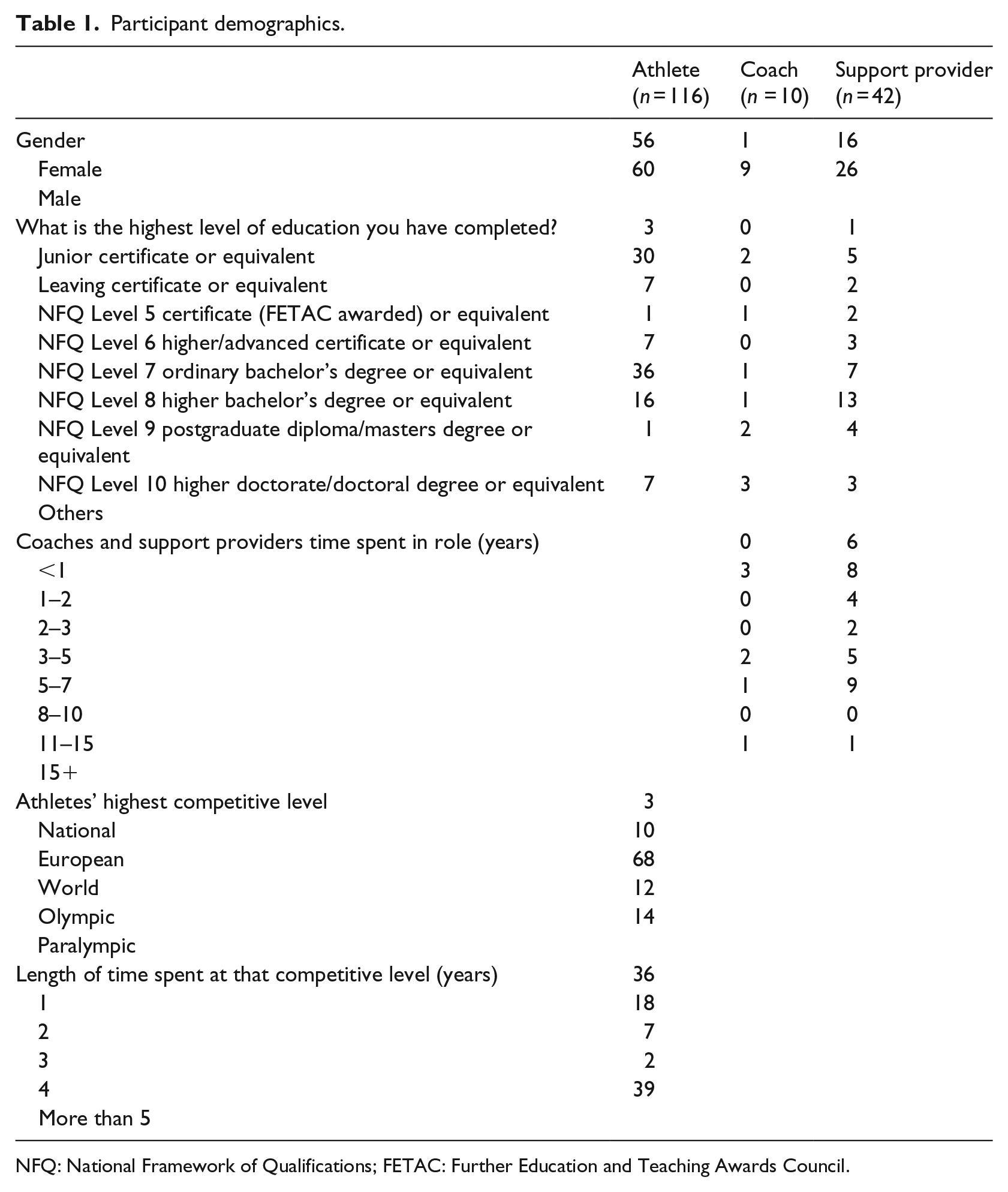
NFQ: National Framework of Qualifications; FETAC: Further Education and Teaching Awards Council.
The video
Based on the research on entertainment-education videos, the psychoeducation video developed for the intervention lasted 2 minutes 35 seconds and used a technique called ‘hand-drawn’ animation. The video primarily targeted eudemonic enjoyment (appreciation) to enhance recall. The video content was developed through interviews with three past Olympic and Paralympic athletes. Interview questions were based on eight intended learning points which were devised through literature review and consultation with prior competitors. Broadly, these learning points pertained to the Games experience and to strategies that could be applied to ease the transition through this experience. The learning points and their associated career adaptability resources are shown in Table 2 following. Each learning point aimed to address at least one of the career adaptability resources. Concern and curiosity were addressed in the video content by raising awareness of the Games meta-transitions and encouraging the viewer to consider their future career options, while control and confidence were targeted by informing them of behaviours/strategies they could use to adapt to the demands of the meta-transitions. Confidence was additionally targeted using peer modelling.
Learning points recall frequency.
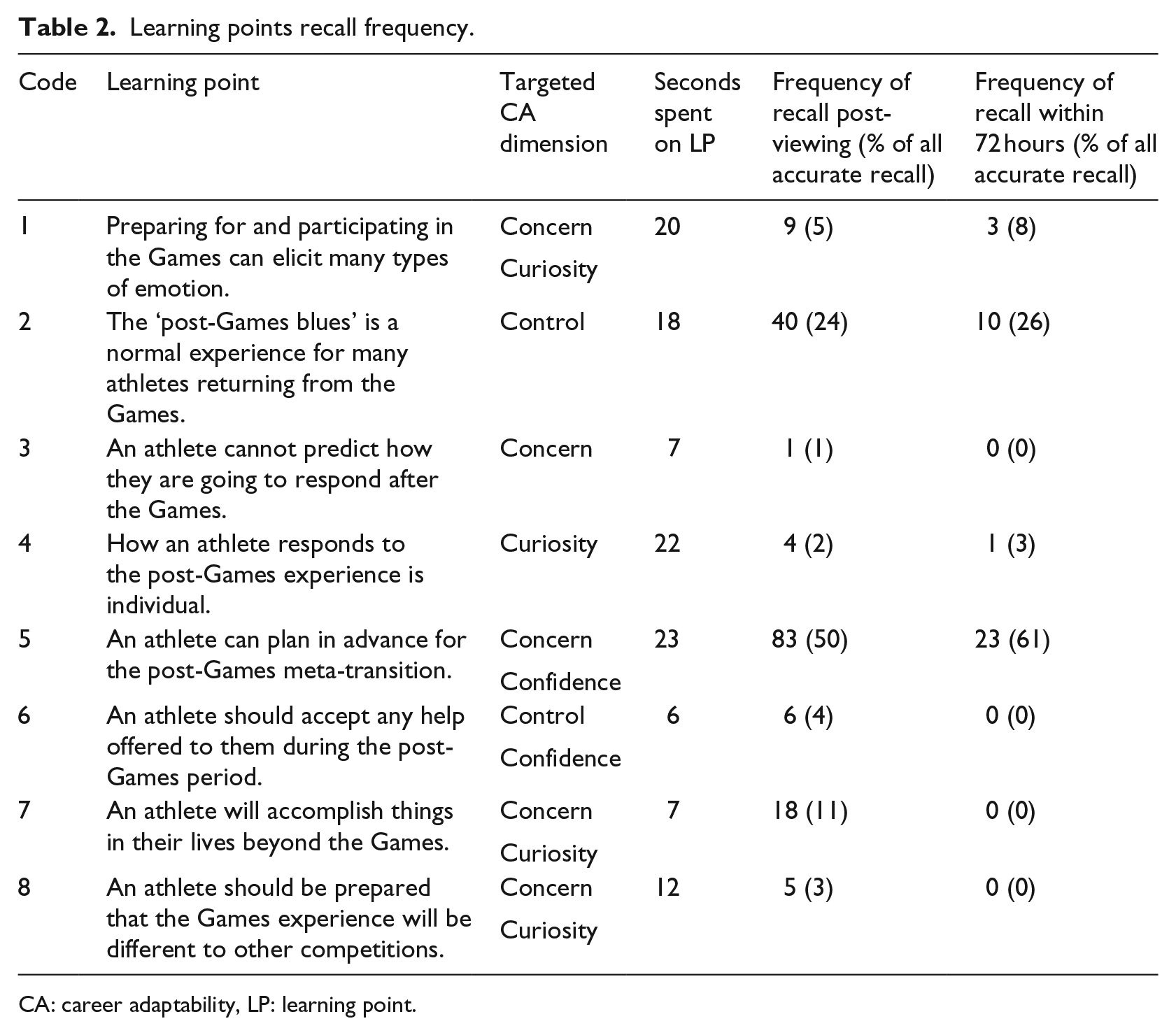
CA: career adaptability, LP: learning point.
Three athlete peers were introduced at the beginning of the video, and the viewer was presented with details of their event and competitive record. The content then progressed to comparing the emotional experiences of the Games in the pre-build-up phase, the competitive phase and the post-Games phase. Included in the post-Games segment were athletes’ narratives on management strategies to facilitate the adaptation to these meta-transitions. The audio from the athlete interviews was used as a voice-over in the video to encourage viewers to see the personal relevance of the content. Images of the three athletes included animations of their journey through their Olympic experience. Music and background sounds such as crowds cheering were also used to evoke the typical feelings of excitement associated with the Games. Within the video, labelling was used to separate information about the competitive phase and the transition out of competition and to draw the viewers’ attention to strategies that could be used to adapt to the post-Games transition. Music, background sounds and written messages within the video were used as labels. The video is freely available online at vimeo.com
Assessment measures
With their consent to participate in the study, recruited participants were shown the video in a group setting at their training grounds between September 2015 and April 2016. Participants were asked to fill in a pen-and-paper multi-section questionnaire immediately after viewing the video. Follow-up questions were asked and responded to by text messages 72 hours later.
Recall
Similar to the measures employed by Gumport et al. (2015) and Perez et al. (2015), recall was measured both subjectively and objectively. Subjective recall was measured by asking participants to indicate yes or no to the question ‘Did you learn anything from watching this video?’ To measure objective recall, participants were asked to describe what they believed they had learned from watching the video in an open text box style question immediately following viewing and again within 72 hours of viewing.
Appreciation
Seven questionnaire items related to appreciation were measured on a 5-point Likert-type scale from strongly disagree (1) to strongly agree (5). Items included the following: ‘I found this video enjoyable’, ‘I identified with the people in the video’, ‘This video was relevant to me’, ‘I found this video informative’, ‘I would watch this video again’, ‘I would recommend this video to a friend’ ‘I thought the video’s message was authentic’. Descriptive statistics related to the appreciation of the digital video by participants can be seen in Table 3.
Descriptive statistics appreciation items.
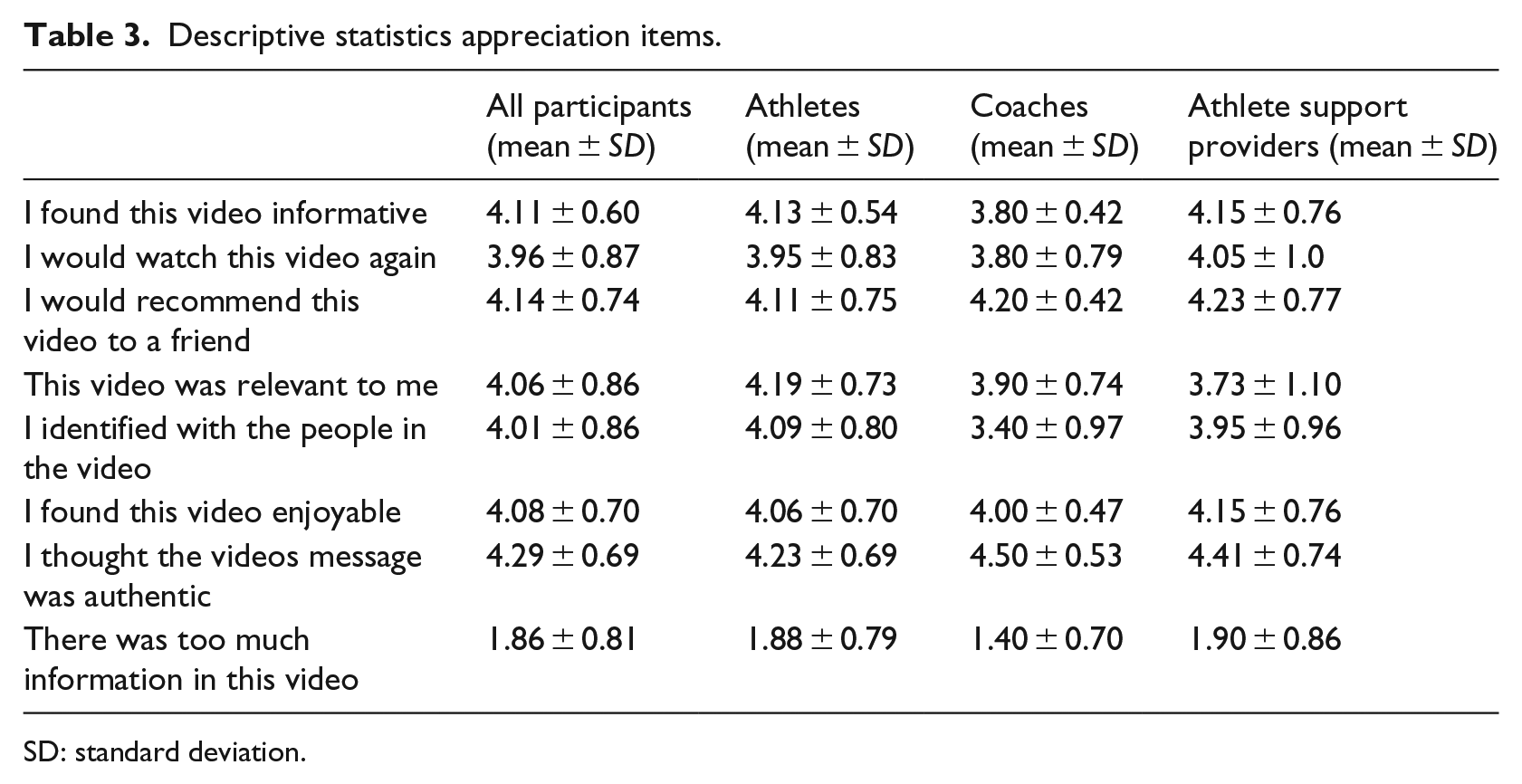
SD: standard deviation.
Social validity
Participants were asked to answer two open text box questions relating to what they liked about the video and what suggestions they had to improve the video. Participants’ opinions concerning the length of the video were assessed by asking whether they thought the video was too short, too long or the right length. Participants’ opinion of the distribution of the information was captured on a 5-point Likert-type scale in response to the statement ‘There was too much information in this video’.
Analysis
Descriptive statistics were used to analyse questionnaire data collected from close-ended questions (Likert-type scales, yes/no and so on), and are presented as frequencies, or where appropriate with a mean score and the standard deviation. Where the full sample failed to answer a question, the final count is presented alongside descriptive statistics. The open text box questions related to the appreciation of the digital video were grouped based on the entertainment-education theory. To analyse objective recall, a coding scheme was developed, and each learning point was represented by a unique code that was ascribed to the participants’ responses by two independent reviewers using Microsoft Word (Gumport et al., 2015; Merkt et al., 2011; Perez et al., 2015). Each code was considered once per answer.
Results
Where quotes are used to reflect the opinion of a participant, they are followed by a pseudonym to protect the confidentiality afforded to participants. A pseudonym consists of the letter P and is followed by a number (e.g. P002).
Recall
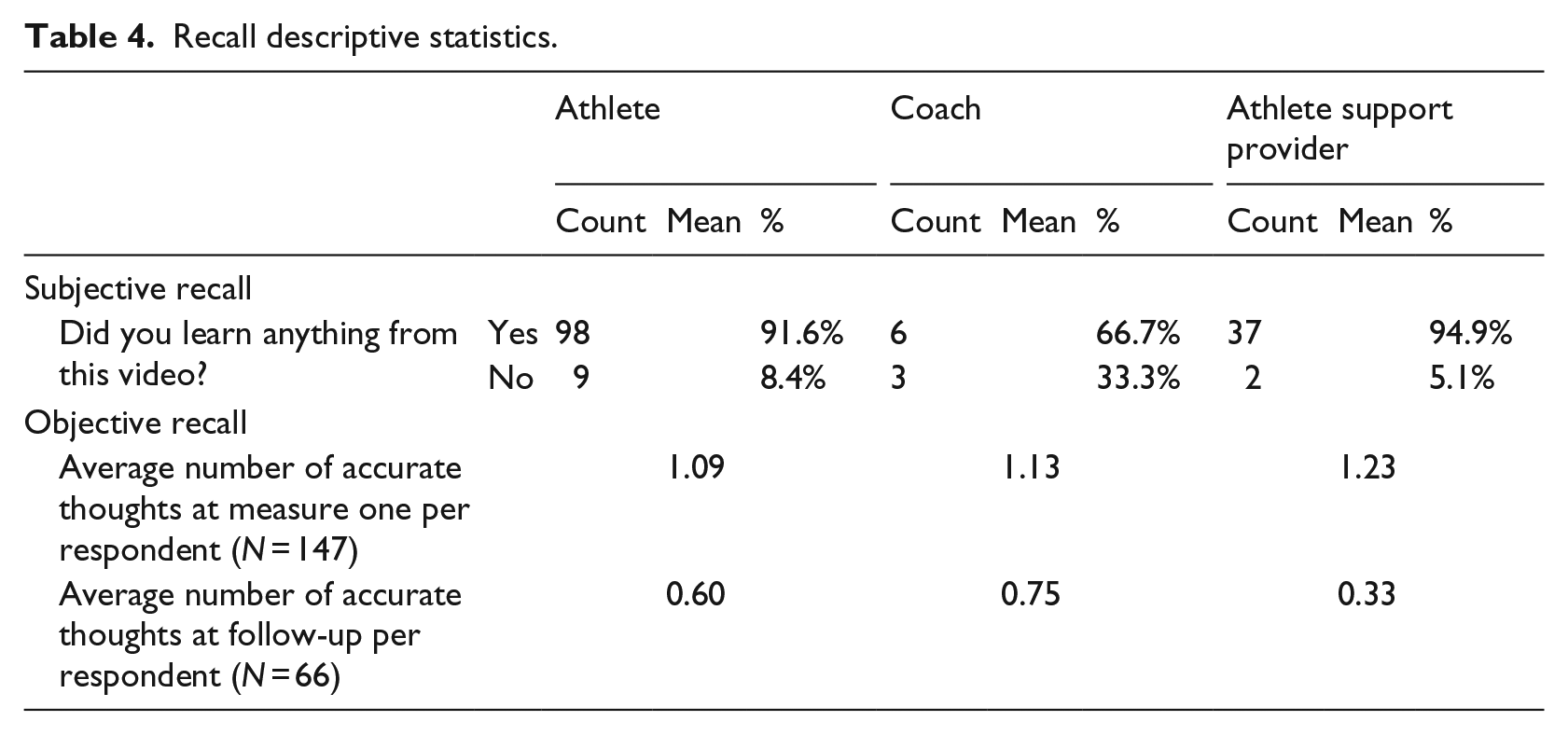
In response to the question on subjective recall, 141 participants indicated that ‘yes’ they learned something from the video and 14 indicated ‘no’ they did not learn something from the video. Table 4 presents the results of the measure of objective recall. Overall, participants accurately recalled between 1 and 3 learning points (mean = 1.13 ± 0.65) immediately following viewing. Sixty-six participants answered the follow-up questions at 72 hours post-viewing. At this point, participants accurately recalled between 1 and 2 learning points 72 hours later (mean = 0.58 ± 0.70). Immediately following viewing, in total, 166 comments received were accurate (89%) and 20 (11%) were inaccurate. At follow-up, 37 (51%) of the comments were accurate and 36 (49%) were inaccurate. Learning point 5 ‘An athlete can plan in advance for the post-Games meta-transition’ was the most frequently recalled immediately post-viewing (N = 83) and 72 hours later (N = 23). Learning point 3 ‘An athlete cannot predict how they are going to respond after the Games’ was the least frequently recalled immediately post-viewing (N = 1) and 72 hours later (N = 0). In addition, participants failed to recall learning point 6, ‘An athlete should accept any help offered to them during the post-Games period’; 7, ‘An athlete will accomplish things in their lives beyond the Games’; and 8, ‘An athlete should be prepared that the Games experience will be different to other competitions’ at 72 hours of follow-up.
Recall descriptive statistics.
Appreciation
Overall, participants agreed (score > 4) that they found the video enjoyable (4.08 ± 0.70), relevant (4.06 ± 0.86) and informative (4.11 ± 0.60); that they identified with the people in the video (4.01 ± 0.86); that they found the video message to be authentic (4.29 ± 0.69); and that they would recommend the video to a friend (4.14 ± 0.74). In response to the question ‘I would watch this video again’, participants gave an overall score of 3.96 ± 0.87.
Social validity
Responses to the open text box questions fell under the following themes: content, relatability and design features.
Content
Participants said they enjoyed the content of the video: ‘I liked how they showed you that you should be prepared for the Olympic and post Olympics. Also, how they said it’s ok not to feel ok post Olympics. And, how you should prepare for other things post-Olympics’ (P080). Participants mentioned the use of ‘Past athletes sharing their experience’ (P117) to deliver the message as a likeable feature. Participants also suggested they enjoyed the fact that multiple athletes shared their experiences, ‘included a range of athletes’ (P117). One suggestion for improvement was to include more detail about why the Games are different from other competitions and why an athlete may experience the post-Games blues, including the link between post-Games blues and performance at the Games ‘Dislike – lack of linkage with performance’ (P007).
Relatability
Participants also mentioned that they enjoyed that Irish athletes who were familiar to them were in the video: ‘I liked how I knew the person’ (P162). Suggestions for improvement included presenting the athletes’ ‘real’ faces during the video and the inclusion of an athlete with experience of a team sport ‘It was not really team orientated’ (P127).
Participants also mentioned that they enjoyed the honest and authentic tone of the messages delivered in the video: ‘Honest evaluation of post-games experience’ (P152) and ‘Mentioned real problems coming home from the Games’ (P098). They also said they enjoyed the practicality and relevance of the advice given: ‘I liked how relatable the video is, even though I’ve played in nothing as near as big as a World Cup it’s nice to see how common it is that readjusting is hard’ (P189).
Design features
Participants said they enjoyed the animated visuals: ‘drawings were very good. Captivated the imagination’ (P262), and they found structure and length to be ‘brief but really informative’ (P195). Several participants said they liked the audio, specifically mentioning the impact of the music stopping at the transition from the Games to the post-Games. One participant mentioned how the voice-over nature of the video could ‘allow you to put yourself into that character’ (P325). In contrast to what most participants found enjoyable about the video, some found the animations distracting and suggested they missed some of the underlying message as a result. With regard to the length of the video, participants indicated the video was too short (N = 35), right length (N = 115) or too long (N = 0). On average, participants disagreed (1.85 ± 0.81) that there was too much information in the video.
Discussion
An athlete who is aware of and prepared for an upcoming career transition is more likely to adapt successfully, experience positive health outcomes and gain satisfaction in their sport role and their personal life (Johnston, 2018; Stambulova et al., 2009). Based on the concept of career adaptability (Savickas and Porfeli, 2012), the video designed for this intervention aimed to educate viewers about upcoming career transitions including strategies they could use to adapt to the experience. Interventions to improve career adaptability have shown a single, face-to-face, group-based, psychoeducation workshop is effective for increasing three of the four career adaptability subitems immediately following intervention (concern, control and curiosity) (Koen et al., 2012).
The results of this study suggest a video was an effective psychoeducation tool for this topic. Objectively, 89% of what all participants recalled was accurate, with individuals accurately recalling between 1 and 3 of the intended learning points immediately following viewing. A lower percentage of coaches (66.7%) believed they learned something from the video than athletes (91.6%) and athlete support providers (94.9%), but objectively, they accurately recalled a similar number of learning points per respondent. As was expected, the accuracy of the participants’ recall fell to 51% accuracy within 72 hours. A limitation of this study is the absence of an assessment of residual effects. We, therefore, cannot comment on how viewing the video might have affected adaptive behaviours or how an additional exposure to the video may impact recall. Further study of the long-term effect of video-delivered psychoeducation resources which are available online after initial exposure is required. Specifically, the impact of repeated exposure to a digital psychoeducation video on recall is of interest. With regard to the ratio of inaccurate comments, it is possible that the ratio of learning points to time allocated in the video was not optimised or that content which was not related to the learning points was more memorable to some viewers. It is also possible that the order in which the learning points were presented influenced participants’ responses.
The learning points delivered by the psychoeducation video in this study targeted each of the four subitems of career adaptability (Savickas and Porfeli, 2012). Learning point 5 ‘An athlete can plan in advance for the post-Games meta-transition’ was the most frequently recalled immediately following viewing and targeted both concern and confidence subitems. The second most frequently recalled learning point (2) ‘The “post-Games blues” is a normal experience for many athletes returning from the Game’ targeted control. Less frequently recalled was learning point 4, ‘How an athlete responds to the post-Games experience is individual’, which targeted curiosity. In this study, 91% of participants believed they learned something from viewing the video. It is difficult to ascertain the reasons for the lack of recall of some of the learning points. It could be that some of the learning points may have been diluted (Watson and McKinstry, 2009). Alternatively, it may be that 8 learning points in a 2-minute 35-second video is too many and that 3 learning points may be optimal.
The entertainment-education literature suggests that when a participant appreciates the video resource, objective recall is enhanced (Schneider et al., 2016). For a viewer to appreciate an online psychoeducation video, they must see the personal relevance of the content of the video to their life. To do this, the digital video must give them an opportunity to share the feelings and perspective of the character (Moyer-Gusé, 2008; Schneider et al., 2016). For this study, the digital video was developed to offer multiple perspectives of the post-Games experiences and included current and retired, male and female, Olympic and Paralympic athletes as narrators. Therefore, it is not surprising that coaches and athlete support providers scored lower than athletes on appreciation items related to relevance of the video and their identification with the people in the video. Comments from participants in this study highlighted the use of ‘real’ athletes and their ‘honest experiences’ as an enjoyable feature of the video. In addition to the authenticity that this offered, participants said they also enjoyed that the narrators were Irish, suggesting that similarities between the personal characteristics of the narrator and viewer are also related to an enjoyable experience. (Alonso et al., 2013). Previous research on learning from online videos has suggested there is a significant predictive relationship between appreciation and objective learning (Schneider et al., 2016). While exploring that relationship was beyond the scope of this study, it is encouraging to note that, in line with the entertainment-education literature, Olympic/Paralympic athletes, coaches and athlete support providers found the resource enjoyable, informative and personally relevant (Moyer-Gusé, 2008; Oliver and Bartsch, 2010). Future research should endeavour to examine if prior experience of the Games influences their appreciation of such videos.
In addition to content, design features such as the length of the video and communication modalities are thought to impact participant’s ability to recall intended learning points (Brame, 2016; Singhal et al., 2004). The length of the video was determined by the number of learning points and the number of seconds the narrators took to communicate them. During the editing process, audio segments were shortened to keep the total time below 3 minutes. Overall, participants believed that, given the topic, the video was the right length and disagreed that there was too much information communicated. To highlight learning points, labelling such as a sudden change in the style and volume of the music was used. When asked what they enjoyed about the video, several participants specifically mentioned the sudden change in music, suggesting the use of this particular label was noticeable. Music, background sounds and written messages within the video were used as labels to draw the viewer’s attention to some of the learning points. While the research design did not facilitate an analysis of the relationship between labels and recall, it is notable that the two most frequently recalled learning points at both initial and follow-up measure were preceded by a label. Future research should examine the effect of the use of such labels on recall rates over longer periods.
Conclusion
This study is the first exploration of video-delivered psychoeducation to educate a population about the post-Games career meta-transition, including strategies they could use to adapt to the experience. The study is also the first to employ video as a psychoeducation tool with Olympic and Paralympic athletes, coaches and athlete support providers. The results of the study provide support for the use of a psychoeducation video 2 minutes 35 seconds in length to educate viewers about an upcoming career transition. The results also support the development of video psychoeducation resources using education-entertainment theory and the social validity of video as a psychoeducation tool in Olympic and Paralympic sport. Viewers enjoyed features related to the content and design of the video. Of note was the utilisation of past competitors to narrate the video and the use of Olympic/Paralympic athletes’ personal experiences as a framework on which to base the intended learning points. In addition, viewers were satisfied with the length and volume of information communicated. Based on the findings of this study, future video productions should examine the relationship between recall and labelling and include multimodal communication methods, such as voice, image and music, and multiple narratives which are relatable to the target audience.
Footnotes
Funding
The author(s) disclosed receipt of the following financial support for the research, authorship, and/or publication of this article: This research is funded by the Irish Research Council’s Enterprise Partnership Scheme in conjunction with the Sport Ireland Institute EPSPG/2014/26.
