







Abstract
Background:
School bullying is a social problem that is receiving increasing scientific attention, with physical education (PE) emerging as a domain in which to address perpetration and victimisation.
Objective:
This study aimed to assess the efficacy of the Prevention of Bullying in Physical Education (PREBULLPE) programme, and cooperative learning, in reducing bullying perpetration and victimisation over the course of six PE classes.
Design and setting:
A total of 293 students aged 11–16 participated in the study, assigned to two experimental groups: the first with a focus on cooperative learning (n = 92), and the second which participated in the PREBULLPE programme (n = 115). The study also included a control group (n = 86).
Method:
The Spanish language version of the European Bullying Intervention Project Questionnaire (EBIPQ) was used to measure school bullying. Potential differences between the groups were assessed using paired-samples t-test. In addition, an analysis of covariance (ANCOVA) with adjusted marginal means using Bonferroni correction was conducted, with baseline, gender, school attended and age as covariates.
Results:
Findings revealed a decrease in perpetration in the PREBULLPE group compared to the control group at post-test (F = 4.086; p = .044; ηp2 = .022), although no differences were observed in victimisation. Regarding gender, girls in the PREBULLPE group exhibited a significant reduction in perpetration (F = 5.616; p = .005; ηp2 = .076) compared to the control and the cooperative learning groups. However, all group differences dissipated after the 13-week intervention.
Conclusion:
PREBULLPE proved efficacious in reducing perpetration, especially in girls, although these effects diminished in the medium term. Cooperative learning did not produce significant reductions compared to the control group in any of the assessed variables.
Introduction
Bullying is a major problem in educational settings and is associated with negative consequences for individuals (Glover et al., 2000; World Health Organization, 2012). Olweus (1993) has defined bullying as an intentional aggressive and repetitive act over time based on power differentials between the perpetrator and the victim.
Bullying behaviour exists in all schools, with a prevalence rate of around 30% worldwide (Hosozawa et al., 2021). The highest incidence occurs between ages 11 and 14, with boys being more aggressive than girls (Zych et al., 2015). At this critical stage, victims may experience poor academic performance (Lyu et al., 2022), anxiety (Acquah et al., 2016), low self-esteem (Tobalino-López et al., 2017) and suicidal ideation (Ceballos-Ospino et al., 2019). Perpetration, on the other hand, has been shown to be associated with drug and alcohol use (Gaete et al., 2017) and school dropout (Esselmont, 2014).
Considering the high prevalence of bullying and its impact on adolescent health, it is important to develop programmes to reduce its incidence. A recent meta-analysis showed that educational interventions could be effective in reducing perpetration and victimisation, although the effect sizes were small (Ng et al., 2022). Another meta-analysis reached the same conclusions, noting that through anti-bullying programmes perpetration may be reduced by 19%–20% and victimisation by approximately 15%–16%, with effect sizes being very disparate across intervention programmes (Gaffney et al., 2019). Regarding gender, some studies indicate that there is greater programme efficacy in boys (Nocentini et al., 2018), but others have found no difference between the sexes (Kärnä et al., 2011).
Physical education for the reduction of bullying
Physical education (PE) is a subject highly valued by students (Fernández-Villarino et al., 2017); however, some studies indicate that it is a setting in which bullying events can occur (Jiménez-Barbero et al., 2020). A study by Borowiec et al. (2021) showed that 22% of students had been perpetrators and 17% had been victimised in PE classes, with boys being more victimised, and also more likely to be perpetrators than girls.
Bullying in PE classes is related to factors such as being overweight (Greenleaf et al., 2014) or of low athletic competence (Castañeda-Vázquez et al., 2020). In addition, the behaviour of a PE teacher can influence the development of bullying situations, as, although often without bad intentions, jokes or negative comments towards students with lower athletic abilities can create a hostile environment, which then fosters the development of negative attitudes and perpetrating behaviours from other students towards those who are weaker (Hein et al., 2015). In addition, PE is a subject in which students may be encouraged to physically confront their peers in highly competitive situations, this being an additional factor associated with bullying (Haegele and Kirk, 2018).
However, PE also has the potential to promote attitudes and behaviour to reduce bullying (Jiménez-Barbero et al., 2020). In addition, the subject has a role to play in the detection of bullying since social interactions are more frequent and direct, due to the practical and dynamic nature of the activities (Castañeda-Vázquez et al., 2020). Compared to other classes, PE makes it easier to observe interpersonal relationships between students, as social interaction is much higher (Jiménez-Barbero et al., 2020).
Anti-bullying programmes and interventions in PE classes are scarce (Benítez-Sillero et al., 2020a) and most are not specifically aimed at reducing bullying but violent behaviour in general (Aguilar-Herrero et al., 2021). One example is the Rock and Water programme (Reitz et al., 2019), which utilised a psychophysical approach combining physical work with emotional and mental work for students aged 7–14 years. Through exercises and games, children improved their respect for others and their ability to stay alert in stressful situations. This contributed to increased self-esteem and self-regulation, reducing both perpetration and victimisation, with no gender differences.
Another programme, the Sport for Development and P.E.A.C.E. programme (Pill and Slee, 2023), developed within the context of the Australian physical education curriculum, used sport and social and emotional learning (SEL) in PE classes to teach respect, empathy and conflict resolution to students aged 12–17 years, with the aim of preventing bullying. However, no empirical results exist to shed light on its efficacy or effectiveness. In Spain, Montero-Carretero et al. (2021) showed that the application of judo in the PE class for students around 11 years old reduced levels of bullying perpetration, but not victimisation. In addition, they found an increase in respect for peers, moral identity and autonomous motivation in the experimental group.
To address the problem of competitiveness and promote students’ self-esteem, PE teachers can utilise pedagogic strategies such as cooperative learning in their classes (Schulze, 2022). These promote non-competition and the pursuit of common goals for an entire group (Fernández-Río, 2016). According to Fernández-Río (2016), cooperative learning must comply with the three phases of the cooperative cycle in order to be carried out successfully. These three phases are: Phase 1 – Group creation and cohesion; Phase 2 – Cooperative learning as content; and Phase 3 – Cooperative learning as a resource. A study by Oliveira et al. (2017) conducted in Brazil implemented an intervention based on cooperative learning in PE classes over a 3-month period. The intervention, which took place with 9-year olds, successfully reduced levels of verbal and physical aggression in the students; however, there was no control group in the study.
More recently, Benítez-Sillero et al. (2020b) succeeded in reducing levels of perpetration and victimisation, with no gender differences, through the implementation of the PREBULLPE (Prevention of Bullying in Physical Education) programme in six sessions of PE with students aged between 12 and 16 years. This programme generated motivation in the majority of students and had a particularly positive impact on girls (Benítez-Sillero et al., 2019). As part of the programme, awareness of bullying was enhanced through sessions on body expression, motor development storytelling and symbolic motor play involving bullying actors, among other strategies which had proved effective in reducing victimisation in other interventions (Joronen et al., 2012). In addition, cooperative games were included in one of the sessions, an aspect which was highly appreciated by the students who participated in the programme (Benítez-Sillero et al., 2019).
Despite this promising work, there is a serious need to evaluate the efficacy both of the PREBULLPE programme and the pedagogical practice of cooperative learning as strategies for reducing school bullying. While both approaches have been shown to decrease bullying, it is not yet clear which is the more efficacious in doing so. Furthermore, existing studies have primarily measured short-term effects, limiting a long-term understanding of their impact. Against this background, this study aimed at evaluating the efficacy of the PREBULLPE programme and cooperative learning in PE as interventions for the reduction of perpetration and victimisation both in the short term and medium term, taking participants’ sex into account.
This led us to formulate the following hypotheses:
Hypothesis 1 (H1). The pedagogical practice of cooperative learning in physical education (Hypothesis 1a) and the application of the PREBULLPE programme (Hypothesis 1b) will lead to lower values of victimisation and perpetration than the control group.
Hypothesis 2 (H2). The application of a specific bullying prevention programme (PREBULLPE) as part of physical education will be more effective in reducing victimisation and perpetration than the application of cooperative learning in that subject.
Hypothesis 3 (H3). Boys will show a greater reduction in victimisation and perpetration than girls in the experimental groups.
Method
Study design
The study was conducted using a longitudinal, ex post facto, quasi-experimental, pre/post-/follow-up design with three groups: two experimental groups and one control group.
Participants
A total of 293 students aged 11–16 years from two public schools in Córdoba participated in the study. The participating students came from both compulsory primary education (11–12 years) fifth and sixth grades, and from compulsory secondary education (13–16 years) first to fourth years, in both schools. Descriptive data for the students in each group can be found in Table 1, and the organisation of the groups by schools is shown in Figure 1.
Descriptive data for each group (mean ± standard deviation).
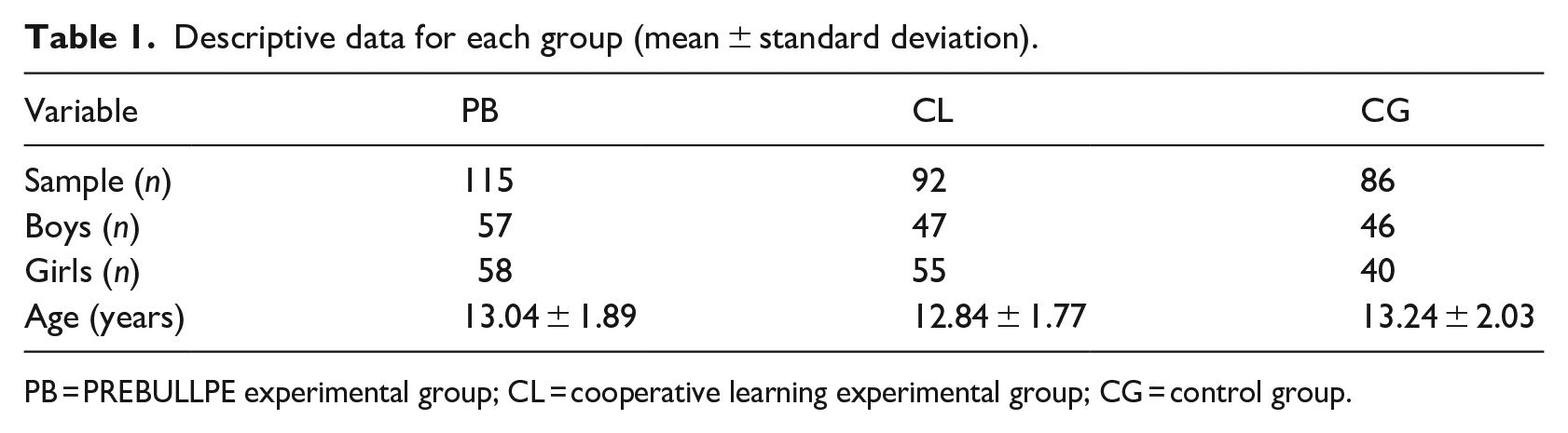
PB = PREBULLPE experimental group; CL = cooperative learning experimental group; CG = control group.
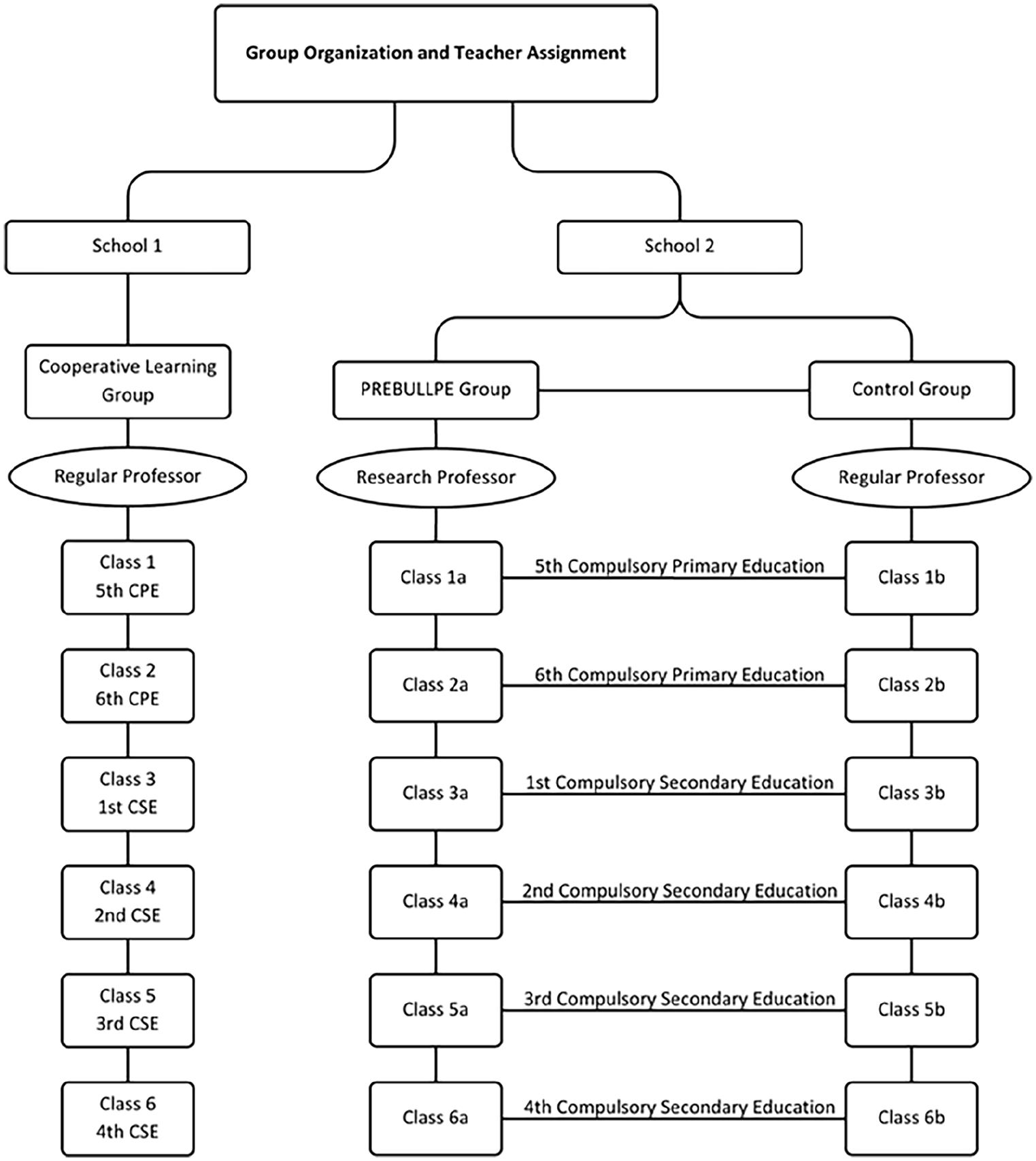
Flowchart showing group organisation and teacher assignment.
Procedure
The study started after permission had been granted by the governing bodies of the participating schools and the written informed consent of parents had been obtained. After this, students were informed of the procedures and the fact that their participation was voluntary, anonymous and confidential, and they could leave the study at any time.
The study took place from February to June 2022, with three data collection periods: the first, 2 weeks before the intervention (pre-test); the second, 6 weeks after the intervention (post-test); and the third, 13 weeks after the intervention (follow-up) (See Figure 2 for additional details). The Ethics Committee of the Universidad de Córdoba approved the study on 24 January 2022.
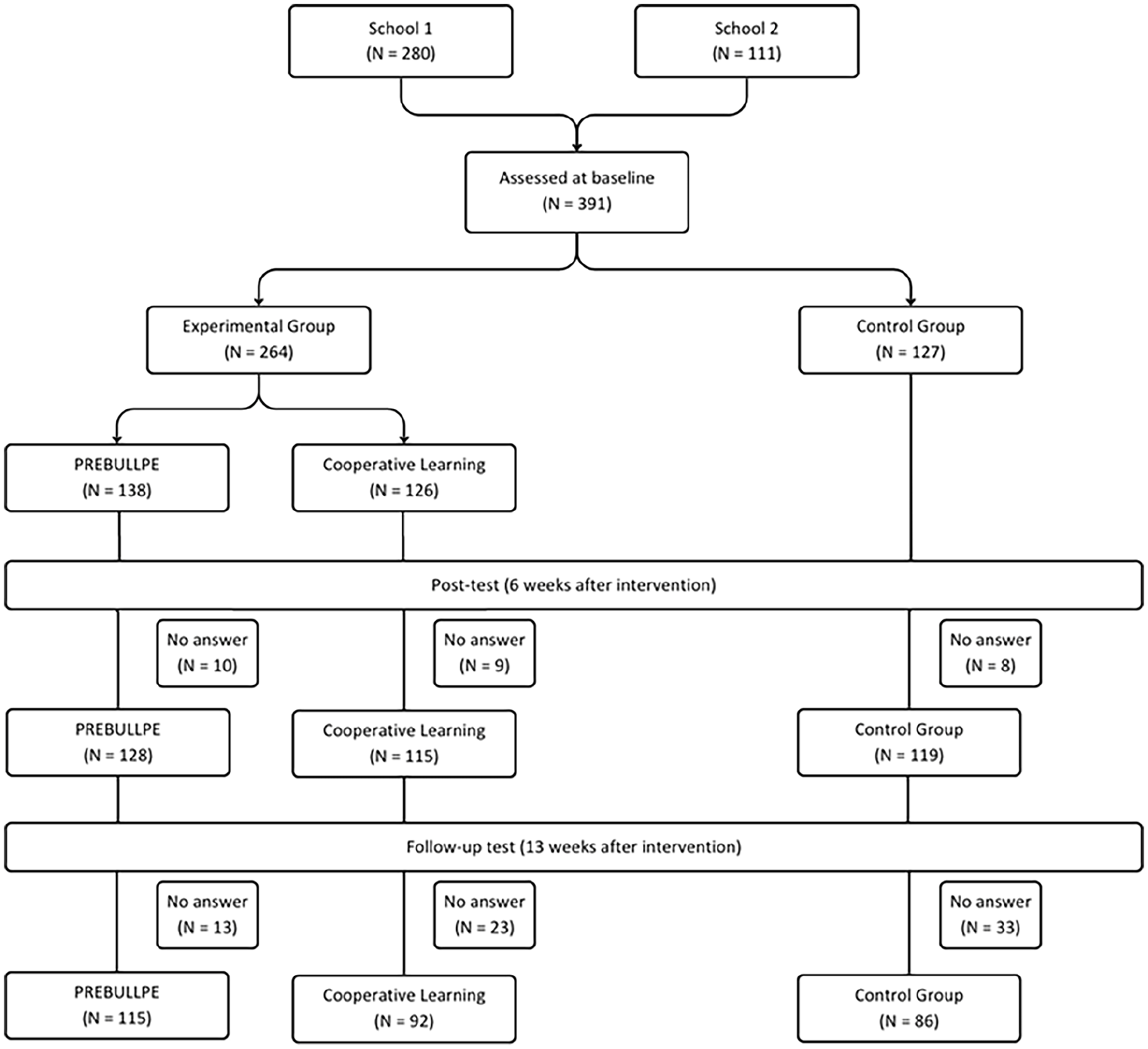
Flowchart for the quasi-experimental study.
The two participating through schools differed in terms of the number of classes per grade level: one of them (School 1) had a single class, and the other one (School 2) had a double class. With respect to the assignment of groups, a cooperative learning group (CL, n = 92), a PREBULLPE group (PB, n = 115) and a control group (CG, n = 86) were created for each course, given the time availability of the researcher in charge of implementing the PREBULLPE programme. Cooperative learning took place in all courses at School 1, while at through School 2, which had two classes per grade level, the PREBULLPE programme was implemented in one class, leaving the other as the control group.
The interventions in each of the experimental groups were carried out over six consecutive 1-hour PE classes in March 2022. The Cooperative Learning (CL) group was taught by their regular PE teacher, who received 2 hours training to develop an in-depth understanding of the concepts and fundamental principles of cooperative learning, as well as the activities to be carried out in the classroom. The principal investigator had direct contact with the teacher to confirm that the intervention was being implemented properly. Observations of each session were recorded, as well as any difficulties that arose during implementation.
The PB group completed the entire PREBULLPE programme (Benítez-Sillero et al., 2020b). Due to the complexity of this programme, a specialist researcher, who had been a teacher at both schools the previous year, was responsible for implementation. This programme developed psychosocial contents, specifically adapted to the methodological strategies of PE, such as bodily expression, motor development storytelling, cooperative games and challenges, awareness activities about bullying, role-play and competitive games adapted through role reversal.
Students in the control group (CG) attended their regular PE classes, without any modifications. The researchers confirmed that cooperative strategies were not present in the control group’s teaching plans for the year. For an overview of the entire procedure, please refer to Figures 1 and 2. Table 2 following outlines the main differences between the interventions applied.
Description of the PREBULLPE programme and the cooperative learning methodology.
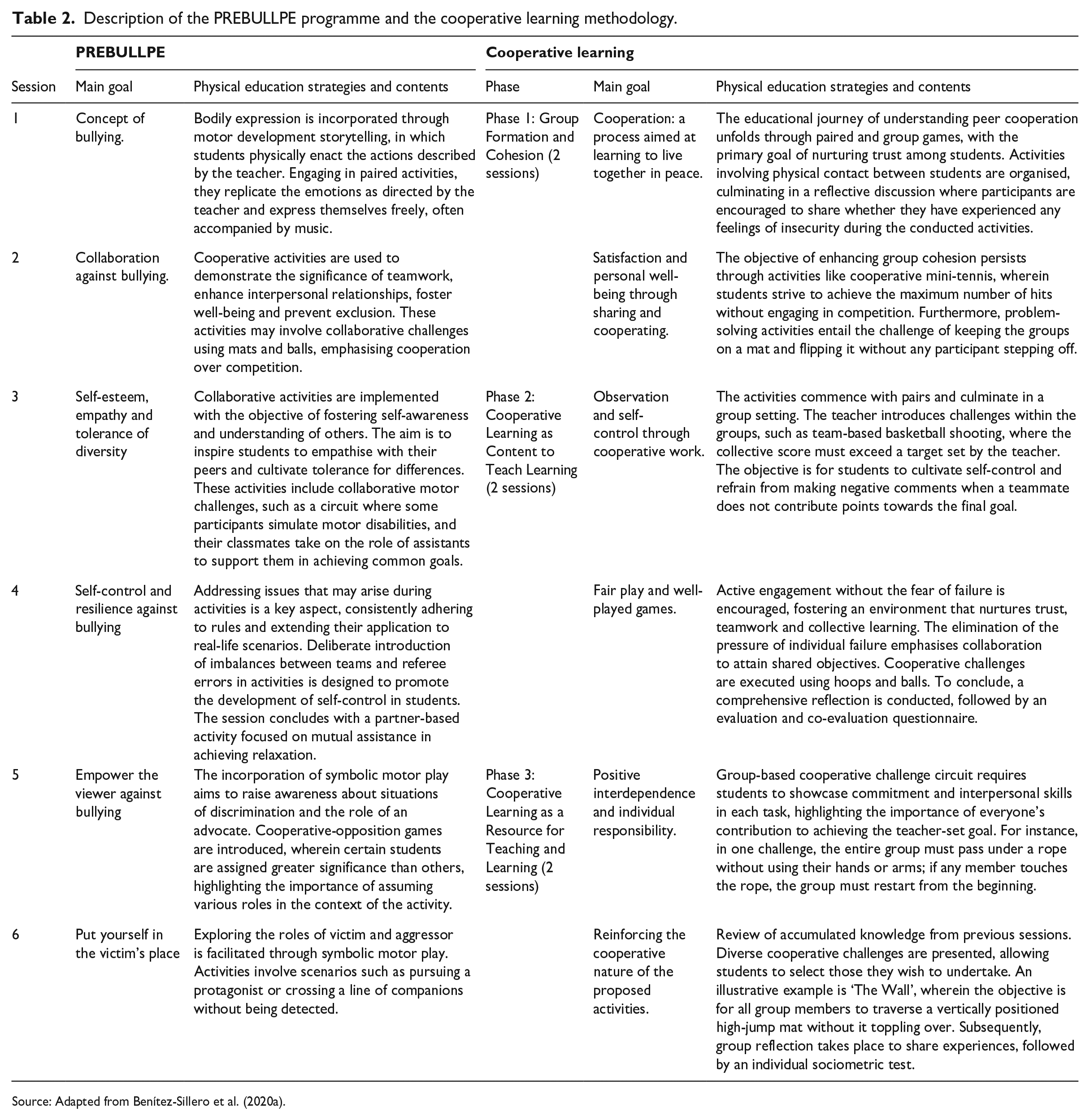
Source: Adapted from Benítez-Sillero et al. (2020a).
Data were collected by means of questionnaires administered in the classroom via computers and mobile devices. The average time to complete each questionnaire ranged from 20 to 30 minutes.
Instruments
The Spanish language version of the European Bullying Intervention Project Questionnaire (EBIPQ) (Ortega-Ruiz et al., 2016) was used to collect data. The instrument collects information on two dimensions of bullying: victimisation and perpetration. The first seven questions are related to victimisation and the other seven to perpetration. The questionnaire requires Likert-type response options, from 0 to 4, with 0 = never, 1 = once or twice, 2 = once or twice a month, 3 = about once a week and 4 = more than once a week. The internal consistency values for the Spanish language version of the questionnaire were as follows: ωT1 victimisation = .813, ωT2 victimisation = .843, ωT3 victimisation = .749; ωT1 perpetration = .644, ωT2 perpetration = .662 and ωT3 perpetration = .679. The internal consistency values, based on McDonald’s omega, were close to or above 0.65, thus being optimal (Katz, 2006).
Statistical analysis
Before statistical analysis, the normality of the data was checked by means of the Kolmogorov–Smirnov test and the Box-Cox power transformation (Box and Cox, 1964) was performed. Descriptive statistics were expressed as mean ± standard deviation (SD). Paired-samples t-test was conducted to evaluate within-group differences. To determine efficacy, effect sizes (ES) were interpreted as follows: <0.2, trivial; 0.20–0.49, small; 0.50–0.80, moderate; and >0.80, large. To analyse possible differences between the groups, an analysis of covariance (ANCOVA) was undertaken, including baseline, sex, age and school as covariates. Finally, the data file was segmented by gender and an ANCOVA was performed, with baseline, school and age as covariates. In all of the ANCOVA analyses, a Bonferroni-adjusted marginal measures comparison was necessary due to the existence of three groups. Effect sizes (partial eta-square ηp2) with respect to the practical significance of ANCOVA were interpreted as follows: <0.02, small; 0.02–0.26, medium; >0.26, large (Pierce et al., 2004). Data coding and analysis were aided by the use of the Statistical Package for Social Sciences (SPSS), version 28.
Results
The changes in the perpetration and victimisation variables after the experimental period are shown in Table 3 and Figure 3. A significant decrease was found in all groups for each of the variables at post-test, except for the control group, and at follow-up test. Regarding the differences between the post-test and the follow-up test, a significant decrease was observed for perpetration in the CG group and for victimisation in the CL group. Between groups, a reduction in perpetration was only found between the PB group and the CL group (F = 3.167; p = .044; ηp2 = .022) in favour of the PB group at post-test.
Changes in perpetration and victimisation, before and after intervention.
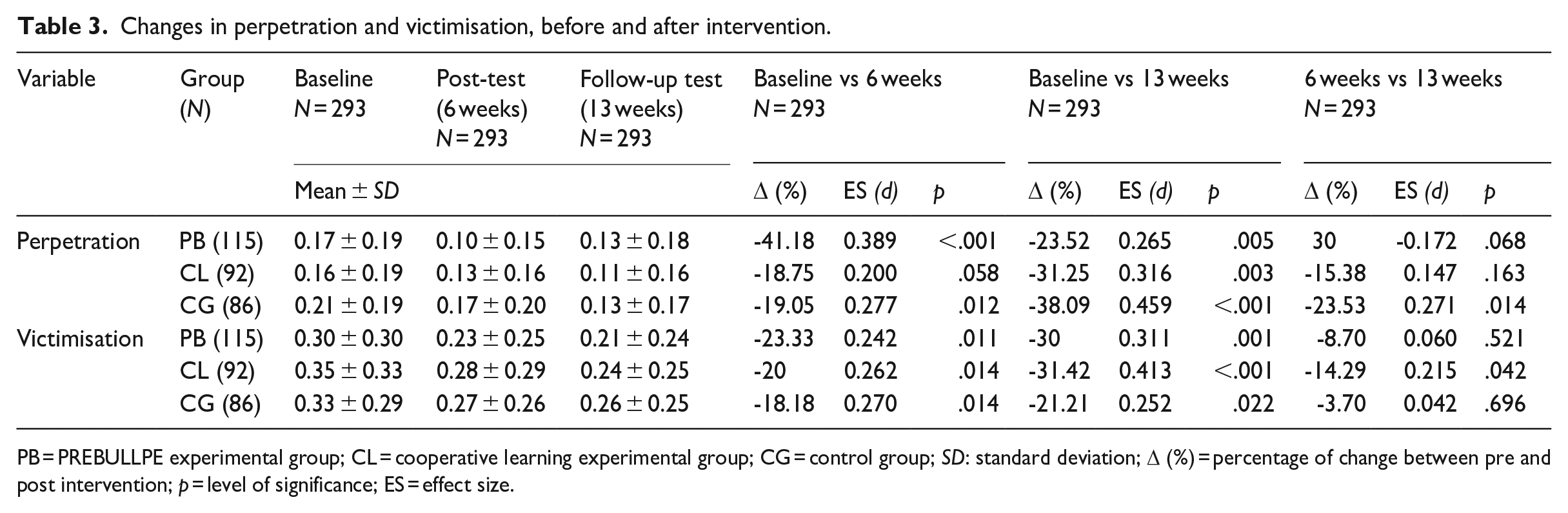
PB = PREBULLPE experimental group; CL = cooperative learning experimental group; CG = control group; SD: standard deviation; Δ (%) = percentage of change between pre and post intervention; p = level of significance; ES = effect size.
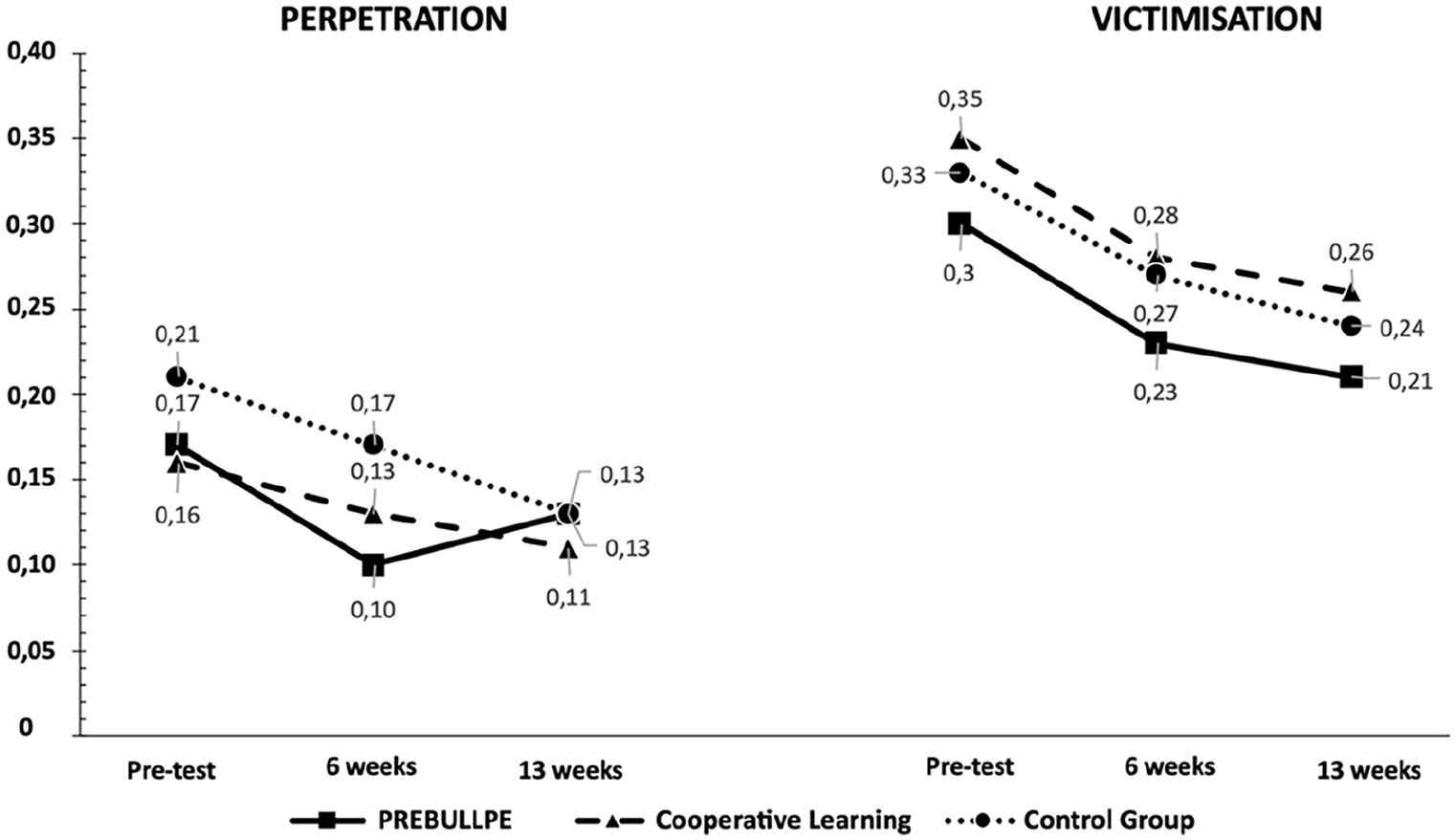
Differences between pre-test, post-test (6 weeks) and follow-up test (13 weeks) in the quasi-experimental and control groups for bullying variables.
Changes in the victimisation and perpetration variables as a function of sex can be seen in Table 4. Regarding perpetration, boys belonging to the PB group and the CL group showed a significant reduction at post-test. Only the CL group showed a significant reduction at the follow-up test. No between-group differences were observed for perpetration among boys at either time. Among girls, a significant reduction was observed at post-test in the PB group. Similarly, a significant reduction was observed in the follow-up test in the CL group, the PB group and the control group. The between-group differences among the girls were significant in reducing perpetration in the PB group (F = 5.616; p = .005; ηp2 = .076) compared to the CG and CL groups, with a medium effect size at post-test.
Changes in bully perpetration and victimisation following the intervention period, by sex.
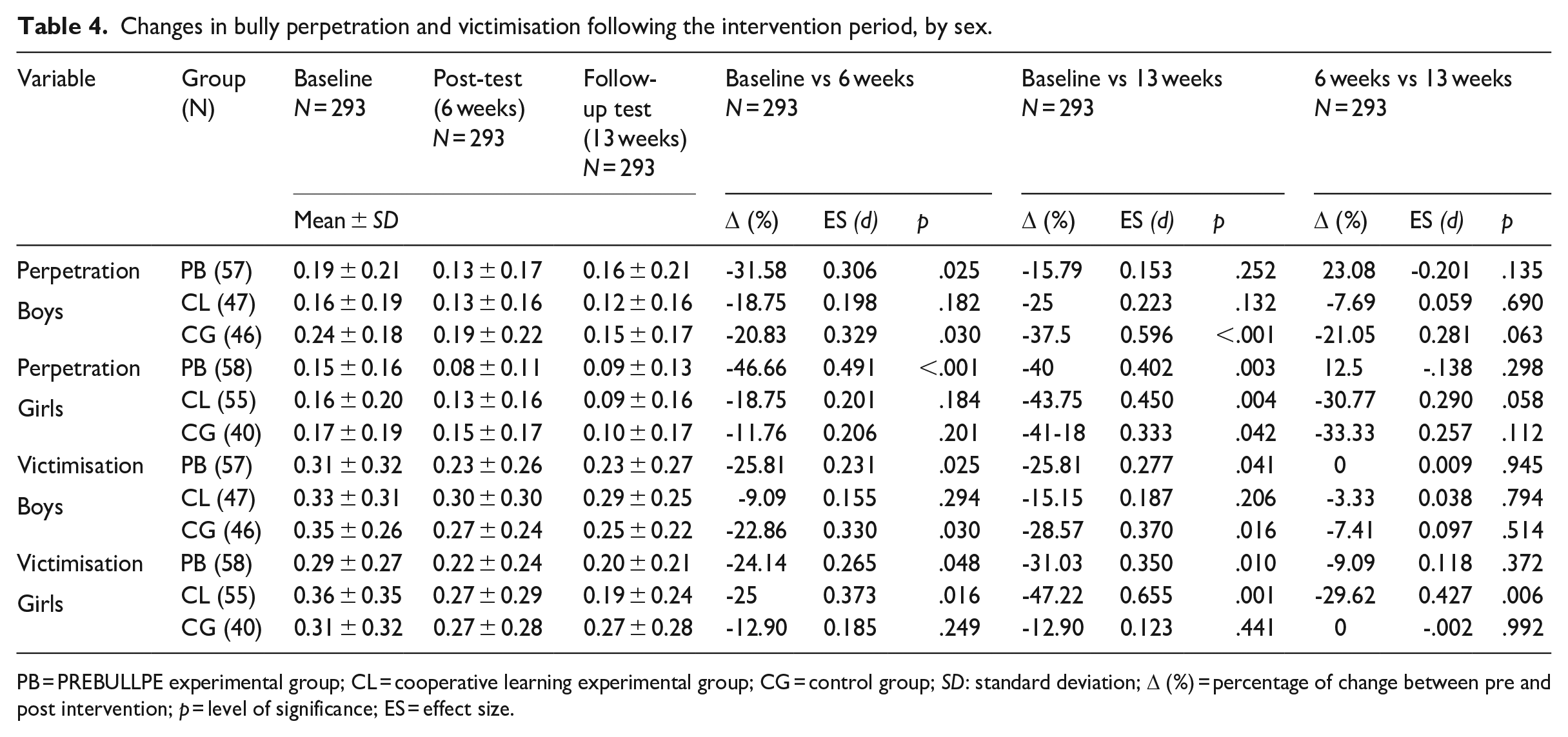
PB = PREBULLPE experimental group; CL = cooperative learning experimental group; CG = control group; SD: standard deviation; Δ (%) = percentage of change between pre and post intervention; p = level of significance; ES = effect size.
Regarding the victimisation variable, boys showed a significant reduction at post-test for the PB group and the CG Group. At the follow-up test, both the PB group and the control group showed a significant decrease. No between-group differences were found for perpetration among boys at either time. Among girls, a significant decrease in victimisation was found at post-test for CL and PB. Similarly, a significant decrease was found in the follow-up test for the CL group and the PB group. In addition, a significant decrease in the CL group was observed between post-test and follow-up test. There were differences between the CL and the CG in the follow-up test for victimisation in girls (F = 3.289; p = .040; ηp2 = .046), but no significant values were found in the Bonferroni analysis.
Discussion
The primary objective of this study was to assess the efficacy of the pedagogical practice of cooperative learning and the PREBULLPE programme in reducing levels of victimisation and perpetration.
According to the results obtained, CL was not more efficacious than the CG in reducing the levels of victimisation and perpetration, thus we failed to confirm Hypothesis 1a in this study. Although the CL achieved a significant reduction in the levels of victimisation and perpetration of the students, after 6 and 13 weeks post-intervention, no significant differences were found in comparison with the control group. These results align with those of Oliveira et al. (2017) who found that cooperative learning reduced levels of physical aggression by 100% and verbal aggression by 85.7% in a 3-month intervention lasting 48 hours in total compared to the 6-hour intervention in this study. However, this particular study lacked a CG.
Other studies, although not focused on PE, have found a reduction in victimisation and perpetration through cooperative learning (Van Ryzin and Roseth, 2018), which may be related to increased levels of empathy among students (Van Ryzin and Roseth, 2019). The duration of interventions, as well as their subsequent evaluation, can determine the effectiveness of anti-bullying programmes (Zych et al., 2015). Furthermore, although the structure implemented in the CL aligns with the phases of the cooperative cycle (Fernández-Río, 2016), only six sessions were conducted. Therefore, in future interventions, it is deemed necessary to increase the number of sessions for this methodology.
Regarding the PREBULLPE programme, the findings indicate a decrease in the levels of victimisation and perpetration, although statistically significant differences were only observed in the case of perpetration compared to the control group at post-test, suggesting only a partial fulfilment of Hypothesis 1b in this study. This result is consistent with the findings of other programmes designed to decrease bullying, which appear to be more effective in reducing perpetration than decreasing victimisation, as demonstrated in a meta-analysis by Gaffney et al. (2019). Specific findings from other studies include those from the A-Judo programme as applied to PE, where a reduction in perpetration was observed, but not in victimisation (Montero-Carretero et al., 2021). In contrast, a study by Benítez-Sillero et al. (2020b), in which the PREBULLPE programme was implemented as part of PE, produced a reduction in both variables, perpetration and victimisation, although the study was carried out exclusively with adolescents.
After the comparison between CL and the PB, the results indicate that there are no differences in the reduction of victimisation and perpetration either in the short or medium term, thus it fails to comply with Hypothesis 2. The PB covers a large amount of contents and methodologies, being the challenges or cooperative games the activities that proved to be more interesting and motivating for students in a previous application of the programme (Benítez-Sillero et al., 2019). Therefore, interest in applying CL exclusively has increased since there have been interventions that have been successful in reducing bullying through this methodology (Oliveira et al., 2017; Van Ryzin and Roseth, 2018, 2019). Nevertheless, it was expected that with the PB containing specific elements for bullying awareness, victimisation and perpetration would be reduced to a greater extent.
In relation to Hypothesis 3, sex differences were observed in the efficacy of the PB programme with respect to the CL and CG in favour of girls in the reduction of perpetration. These results contrast with those obtained in a previous study using the same programme, in which no significant differences were found between the sexes in relation to the efficacy of the programme (Benítez-Sillero et al., 2020b). In the follow-up test, no sex differences were detected in any of the variables between the experimental and control groups.
Limitations
This study has some limitations, such as its small scale nature, the implementation of a limited number of teaching sessions, and the inclusion of only two educational centres. In addition, although the efficacy of the programmes was evaluated, its effectiveness was not examined. It is also important to note that the results may have been influenced by uncontrolled factors, such as interactions between students from different groups during recess and/or classroom dynamics. Furthermore, the teacher responsible for implementing the PB programme was a former teacher at both schools, but was not the same as the one who was currently teaching the participants, which may have influenced the outcomes. Future research should consider ensuring that all interventions are carried out by a regular teacher adequately trained in the programme. It would also be useful to investigate at which age the interventions have the greatest impact and explore which socio-emotional competencies might mediate the interventions’ effects on victimisation and perpetration.
Conclusion
The PREBULLPE programme showed efficacy in reducing perpetration with respect to the control group, although the effects were weaker at follow-up, but no differences were found in its efficacy in reducing victimisation. Furthermore, no overall differences were found in the reduction of bullying victimisation and perpetration between the cooperative learning and the PREBULLPE groups. Girls showed a reduction in bullying perpetration in the PREBULLPE programme over the control group and the cooperative learning group at post-test.
Footnotes
Acknowledgements
We extend our gratitude to the students and school administrators involved in this study.
Declaration of conflicting interests
The author(s) declared no potential conflicts of interest with respect to the research, authorship and/or publication of this article.
Funding
The author(s) received no financial support for the research, authorship and/or publication of this article.
