







Abstract
Background:
The HealthWorks: Fitness for Life project was a multi-year initiative implemented across six Southwestern USA school districts aimed at increasing physical activity, improving physical education quality, and promoting healthy behaviours among students.
Objectives:
This study examined long-term trends in teacher-led movement integration, evaluated the impact of professional development, and identified factors influencing the sustainability of activity-promoting practices in schools.
Methods:
Data were collected over 7 years using multiple sources, including teacher self-reports, school records, policy reviews, and classroom observations. Analyses focused on longitudinal trends in movement integration, the implementation of Wellness Weeks, levels of administrative support, and policy enforcement.
Results:
Teacher-led activity breaks increased from approximately one to seven per week on average. Higher implementation rates were observed in schools that emphasised professional development and leadership support. Structured Wellness Weeks showed strong engagement and sustained participation. However, inconsistencies in policy enforcement and curriculum constraints limited broader adoption. Teachers who received ongoing mentorship and training were more likely to sustain movement-integration practices.
Conclusions:
Sustaining active school environments over time depends on consistent professional development, strong leadership support, and integrated, school-wide strategies. Addressing policy inconsistencies and structural barriers is critical to enhancing long-term implementation and delivery.
Introduction
Physical activity (PA) is crucial to students’ overall well-being, contributing to their physical health, cognitive development, and emotion regulation (Guo et al., 2024; Rodríguez-Romo et al., 2022; Snedden et al., 2019). Studies have shown that students who engage in regular PA in schools perform better academically, demonstrate improved classroom behaviour, and exhibit higher levels of engagement than their less-active peers (Alvarez‑Bueno et al., 2017; Owen et al., 2018; Rasberry et al., 2011). Despite these well-known benefits, many students in US schools fail to meet the recommended 60 minutes of moderate-to-vigorous PA (MVPA) per day (Carlson et al., 2013; U.S. Department of Health and Human Services [USDHHS], 2018). This discrepancy highlights a growing concern in schools, where sedentary learning environments limit opportunities for students’ movement throughout the day.
Beyond immediate health benefits, PA in schools has been linked to cognitive improvements and academic success. Studies indicate that movement-based learning enhances student concentration, memory retention, and problem-solving skills (Mahar et al., 2006; Petrigna et al., 2022). Active learning strategies, such as integrating physical movement into academic instruction, have been found to improve literacy and numeracy skills (Beaudoin and Johnston, 2011; Kibbe et al., 2011). Given these advantages, many schools have sought to embed movement into their curriculum. However, there remain significant challenges for variations in implementation and sustainability. While some schools successfully maintain movement-based initiatives, others experience declining participation due to a lack of administrative support, curriculum constraints, and inconsistent policy enforcement (Webster et al., 2015).
In response to these challenges and the potential benefits of PA in schools, the HealthWorks: Fitness for Life project was developed. This project was a multi-year initiative implemented across several school districts in the Southwestern region of the USA. The aim of the project was to integrate structured PA opportunities within the school day. Recognising that traditional physical education classes alone have been shown to be insufficient in providing adequate amounts of PA to children during the school day (Carlson et al., 2013), the project promoted teacher-led movement integration, which incorporated structured activity breaks, active recess modifications, and school-wide initiatives such as Wellness Weeks. These strategies aimed to make movement an essential and accessible part of daily routine, ensuring that students received sufficient PA opportunities in ways that complemented their learning experiences. A detailed description of the development of the project and its components can be found in Kulinna et al. (2012).
Teacher-led movement programmes
A growing body of research addresses the importance of teacher-led movement initiatives in promoting PA beyond designated physical education classes. Classroom-based activity breaks, ranging from 3 to 10 minutes of structured movement, have been shown to increase student engagement and reduce disruptive behaviours (Donnelly and Lambourne, 2011; Reyes-Amigo et al., 2025). These findings align with the goals of the HealthWorks project, which encouraged teachers to regularly implement movement breaks and observe any changes in student attentiveness and classroom behaviour. A study by Kibbe and et al. (2011) further supported these claims, demonstrating that brief, structured movement activities led to greater student classroom participation and improved classroom climate.
Despite the effectiveness of teacher-led movement strategies, implementation remains inconsistent across schools. Research indicates that teacher confidence, professional training, and administrative support play critical roles in sustaining movement-based programmes (McMullen et al., 2014). Teachers who receive ongoing professional development are significantly more likely to integrate movement into their classrooms, whereas those with limited training often struggle to implement activity breaks consistently (Goh et al., 2019; Sobolewski et al., 2024; Webster et al., 2020). This suggests that professional development is a key determinant of the long-term success of movement-based initiatives (beyond classroom-level strategies).
School-wide movement initiatives also contribute to long-term engagement in PA. Programmes that include elements such as Wellness Weeks, structured recess, and after-school movement programming have been shown to promote a culture of PA within schools (Bassett et al., 2013). Schools that encourage student-led movement activities and peer-driven wellness initiatives demonstrate higher levels of student participation and sustained engagement (Carson et al., 2014). Students have also voiced their support of movement integration and called for more of it across the school day (Egan et al., 2024). However, research also found barriers to sustaining school-wide movement programmes, including curriculum constraints, lack of leadership buy-in, and policy inconsistencies (Webster et al., 2015). Without institutional support, movement-based programmes often become short-term interventions rather than lasting components of school culture.
While prior research has established the benefits of classroom movement and identified factors associated with implementation, little is known about how such practices are sustained over extended periods of time. Much of the existing literature focuses on short-term intervention implementation and outcomes, initial adoption, or programme efficacy, with limited attention to the processes through which movement integration is maintained, adapted, or institutionalised in real-world school contexts. The present study sought to address this gap by examining teacher-led movement integration across a 7-year period, offering longitudinal, mixed-method evidence of how sustainability unfolds beyond the initial implementation phase. In doing so, this study extends the literature by shifting the focus from whether movement integration works to how and why it endures.
Movement integration refers to instructional strategies that intentionally incorporate physical movement into classroom learning activities. These approaches may include brief PA breaks, movement-based learning tasks, or kinaesthetic instructional strategies embedded within academic lessons. In this paper, movement integration is used as an umbrella construct to describe broader efforts to embed PA within classroom instruction. Within this broader construct, PA breaks represent a specific and commonly implemented strategy in which short bouts of PA are interspersed between academic tasks or instructional segments. The survey measures used in the study focus specifically on teachers’ reported use of PA breaks, whereas the qualitative and observational data capture a broader range of movement-integration practices and contextual factors influencing their implementation.
The sustainability framework for PA programmes
To better understand the factors influencing the long-term sustainability of school-based movement initiatives, this study modified the factors affecting the sustainability of the sustainability framework in Scheirer and Dearing’s (2011) study. This conceptual framework identifies three core components essential for sustaining movement-based programmes over time: (1) programme adaptability, (2) institutional support, and (3) integration into school culture (Figure 1). In this study, Scheirer and Dearing’s (2011) sustainability framework served not only as a conceptual lens but also as an analytic guide. The three core components informed the development and refinement of survey constructs, the design of interview and workshop exit-slip prompts, and the focus of classroom observations. These domains also functioned as sensitising concepts during the qualitative analysis, guiding initial coding and the organisation of emergent themes related to long-term implementation and sustainability.
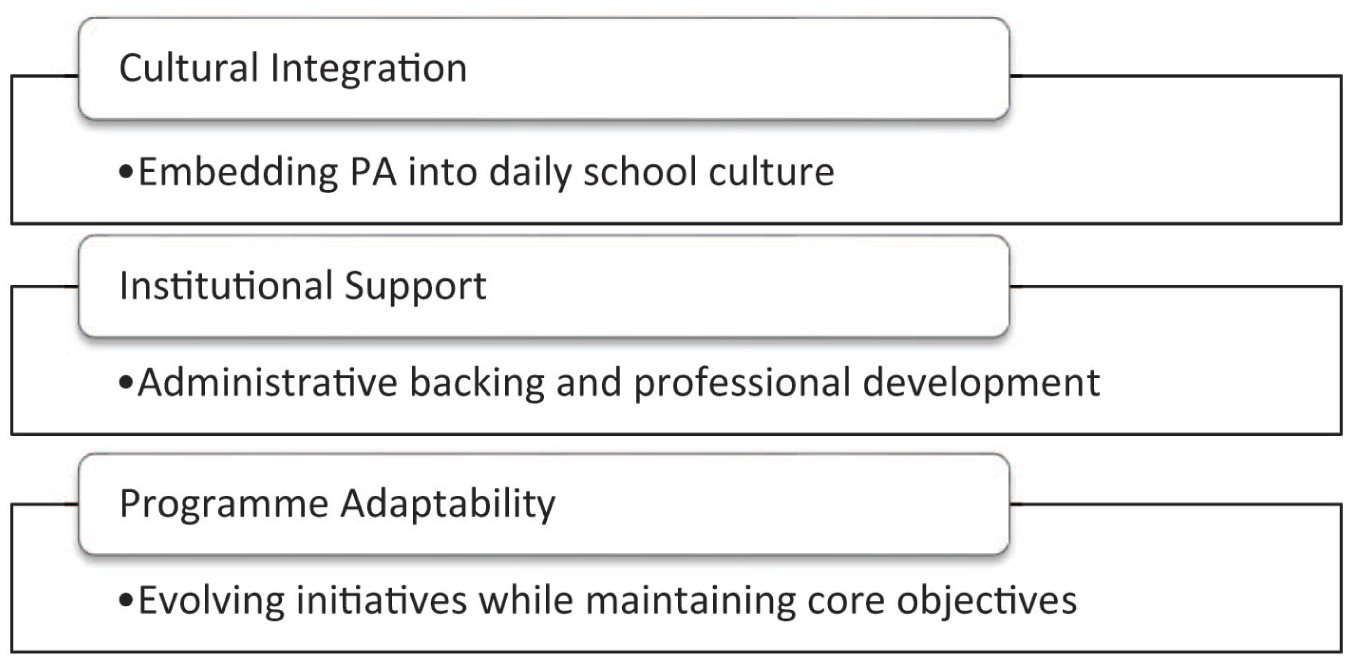
Sustainability framework for PA programmes (Scheirer and Dearing, 2011).
While other implementation frameworks, such as RE-AIM (Reach, Effectiveness, Adoption, Implementation, Maintenance) and the Consolidated Framework for Implementation Research (CFIR), offer comprehensive approaches to understanding adoption, reach, and contextual determinants of implementation, Scheirer and Dearing’s framework was chosen because of its explicit emphasis on programme continuation, adaptation, and institutionalisation over time. This focus aligns directly with the longitudinal aims of the present study and the examination of sustainability beyond initial implementation.
In the context of this study, sustainability is defined as the continued use, adaptation, and integration of movement-based practices within routine classroom instruction and school culture over time (Scheirer and Dearing, 2011). Accordingly, sustainability in this study is not treated as simple programme continuation, but as a dynamic process involving the maintenance of practices, their adaptation to local classroom and curricular demands, and their integration into everyday school routines. As structured programme support from HealthWorks was gradually reduced, teachers increasingly assumed responsibility for movement integration. This evolution demonstrates true sustainability, driven by the teachers’ own internalisation of the practice rather than external mandates.
Programme adaptability
The ability of movement-based initiatives to evolve over time while maintaining their core objectives is crucial for long-term success. Schools that allow teachers to modify movement strategies based on instructional needs, student preferences, and time constraints are more likely to sustain PA integration (McMullen et al., 2014; Webster et al., 2015). Conversely, rigidly structured programmes that lack teacher autonomy and curriculum flexibility often struggle to maintain engagement.
Institutional support
Administrative and policy backing play a significant role in ensuring the sustainability of movement-based learning. Schools with leadership buy-in, structured professional development opportunities, and dedicated funding for PA programmes demonstrate higher levels of sustained participation (Carson et al., 2014; Webster et al., 2015). Research indicates that teachers who receive ongoing mentorship and resources are more confident and consistent in implementing movement breaks (McMullen et al., 2016). In contrast, schools with unstable leadership or inconsistent policy enforcement experience declining participation in movement initiatives over time.
Integration into school culture
To achieve long-term sustainability, PA must become an integral part of the daily instructional routine rather than an isolated or short-term intervention. Schools that successfully embed movement into their culture do so by normalising movement-based learning, establishing structured recess policies, and engaging students in wellness activities (Kulinna, 2016; Kulinna et al., 2020). Schools that lack these structural reinforcements often struggle to maintain long-term engagement, as movement initiatives are frequently viewed as secondary to academic priorities rather than complementary to them (Hasson et al., 2023; Turner et al., 2019).
By applying the sustainability framework, this study explored how schools can maintain teacher-led movement initiatives and examined key factors influencing programme sustainability over time. The purpose of the study was to examine the long-term trends in teacher-led PA integration by investigating the role of professional development, school-wide initiatives, and policy variations in sustaining movement-based learning. Specifically, the study addressed the following research questions:
How did teacher engagement and implementation of PA breaks evolve over time?
What influenced the sustainability of the programme elements?
What can we learn from a long-term programme to help us improve the design of future programmes and interventions?
By analysing data from multiple years of the HealthWorks project, the results of the study provide insights into how movement-based learning can be successfully integrated and maintained in schools. The findings have significant implications for educators, administrators, and policymakers, offering strategies to create sustainable, movement-friendly learning environments that support both student health and academic achievement.
Methods
This study adopted a longitudinal mixed-methods approach to examine the sustainability of teacher-led PA integration in elementary and middle schools across six school districts in the Southwestern USA participating in the HealthWorks: Fitness for Life project. The primary quantitative outcome was teachers’ self-reported frequency of PA breaks per week. Observational data and qualitative interviews were used to contextualise and triangulate these outcomes. Trends in teacher engagement, professional development, participation, and school-level policy changes were analysed over a 7-year period to examine the longer-term implementation of movement-based initiatives within the school day.
Participants
Teacher demographics were collected, including years of teaching experience, gender, ethnicity, grade levels taught, and subject areas (Table 1). The study employed a hybrid longitudinal design. While the same schools participated across years, individual teacher participation varied due to staffing changes, role transitions, and their engagement over time. As a result, some teachers contributed data at multiple time points, whereas others participated for only one year.
Participants and participation format.
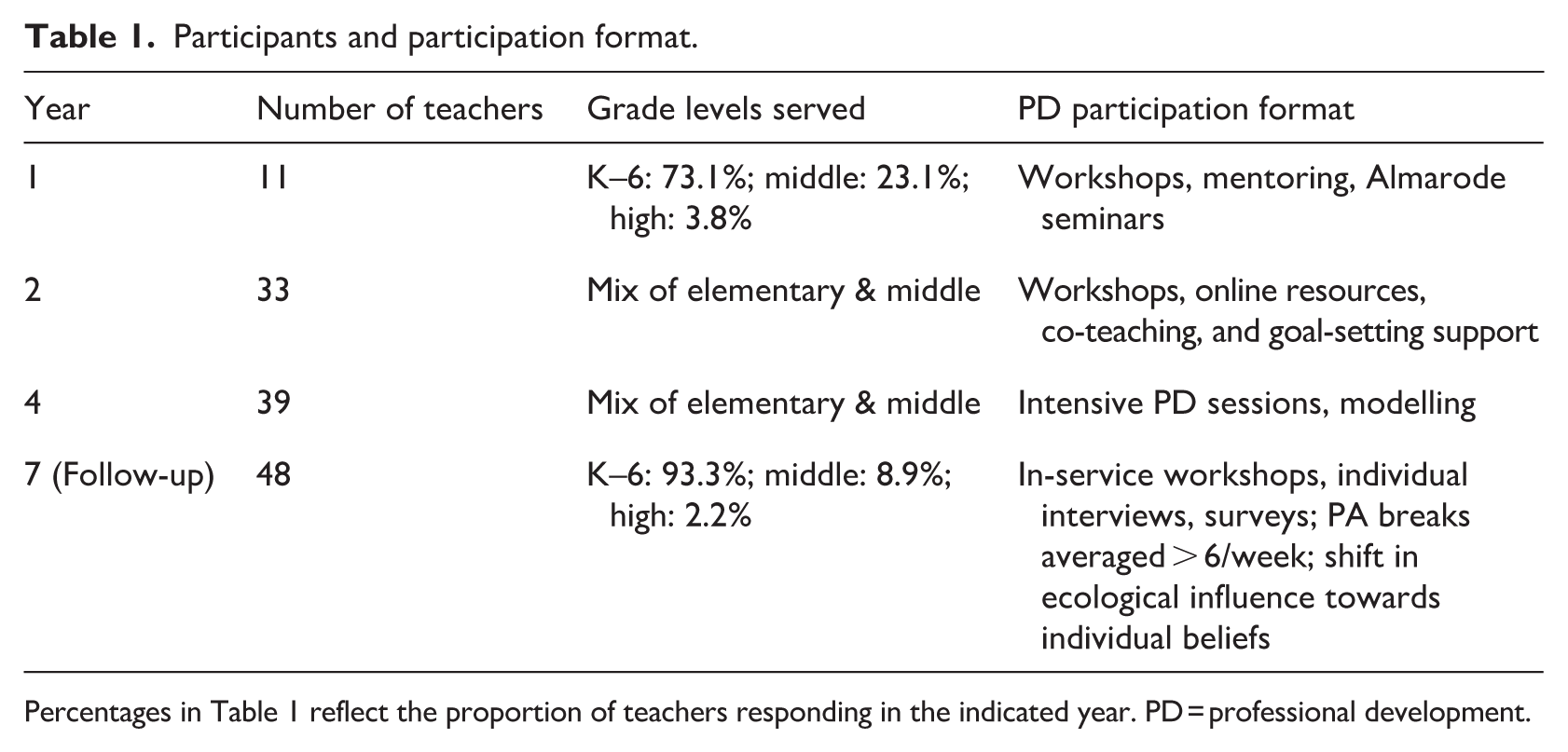
Percentages in Table 1 reflect the proportion of teachers responding in the indicated year. PD = professional development.
In year 1, the majority of teachers (M = 14.4 years of teaching, SD = 11.11) were female (80.8%) and Caucasian (96.2%), with most teaching in elementary grades (73.1%), and a smaller proportion in middle (23.1%) and high school (3.8%). The initial year-1 teachers (n = 11) represented a pilot implementation phase of the project and served as an exploratory baseline for subsequent programme expansion. By the follow-up year, participants (M = 15.98 years of teaching, SD = 10.35) remained predominantly female (91.5%) but showed more diversity in ethnicity (82.6% Caucasian, 13% Hispanic, 2.2% Native American/Alaskan, 2.2% multiple ethnicities) and continued to be concentrated in K–6 teaching (93.3%). Teachers represented a wide range of subject areas beyond physical education, including English, mathematics, science, art, and special education.
Data collection
Multiple data sources were used to assess the effectiveness of teacher-led PA integration and the sustainability of school-wide movement initiatives. Primary outcomes were derived from teacher self-report surveys (e.g. weekly PA break frequency, perceived supports and barriers, and use of movement resources). Classroom observations and field notes served as complementary data sources to document observed movement practices (e.g. activity type, duration, student engagement) and to triangulate self-reported implementation. School records and policy reviews provided school-level evidence of institutional programming and supports (e.g. Wellness Weeks, recess structures).
Teacher self-report survey
Structured surveys (approximately 50–60 items) were administered in each year to participating teachers. The survey assessed the frequency of PA breaks, types of movement resources used (e.g. GoNoodle, Fitness for Life materials, Energizers, YouTube), and health topics incorporated into classroom instruction (e.g. social/emotional health, chronic disease prevention, sustainability). Survey domains were aligned with sustainability constructs such as institutional support, professional development, and integration into school culture. The survey instrument also included items on barriers and teacher social capital (e.g. collaboration, communication, collegial trust). Example items included: “Over the past year, how many times during a typical week did you include PA breaks in your classroom?” and “Teachers in this school are committed to the goals of the school.” Communication items asked teachers to indicate how often they discussed PA breaks with colleagues, school administrators, or parents.
Internal consistency reliability was assessed for survey subscales using Cronbach’s α, calculated in SPSS. Subscales included domains such as teacher collaboration and the usefulness of professional development. Coefficients demonstrated acceptable to strong reliability across administrations (e.g. collaboration = .81, PD usefulness = .89), indicating that the instrument was suitable for capturing consistent teacher perceptions across years. Surveys were refined throughout the study period primarily through the addition of new items to capture emerging sustainability-related constructs (e.g. teacher autonomy, ecological influences, personal wellness practices). Importantly, core constructs including frequency of PA breaks, professional development usefulness, collaboration, and administrative support remained consistent across survey administrations to support longitudinal comparability. To ensure comparability across survey waves, key longitudinal constructs were measured using consistent item wording and response formats. For PA break frequency, the item wording and response format were held constant across administrations. Likewise, the core subscales (e.g. collaboration, professional development usefulness, administrative support) retained the same items, with internal consistency evaluated at each wave (Cronbach’s α). Items introduced in later waves were analysed descriptively and were not used to infer change when comparable earlier measures were not available.
School-wide PA data
Archival school data were collected to document institutional engagement with PA initiatives. Records from structured events such as Wellness Weeks, active recess programmes, and after-school activity offerings provided evidence of how schools integrated PA into their broader culture. For instance, Wellness Week participation records included teacher and student involvement in activities such as Eat Well Wednesdays or Get Fit Fridays (professional development materials from Corbin et al., 2010). Recess observations were documented using tools such as SOPLAY (McKenzie et al., 2000), which allowed researchers to compare activity levels when recess equipment was available versus when it was not. These school-level records offered insight into administrative support, the consistency of wellness programming, and the role of policy in sustaining movement.
Observations and field notes
Direct observations of classroom teaching were conducted to capture the ways teachers embedded PA into instructional time. Observers recorded the type of activities (e.g. stretching, dance, fitness routines), the duration of each break, the level of student engagement, and the consistency of implementation. Field notes captured contextual details, such as how transitions into activity were managed and/or whether movement was integrated into academic lessons. For example, one teacher was observed creating a “human number line” where students physically jumped to represent numerical values, demonstrating how movement supported content learning. These observations provided an important complement to survey data by offering behavioural evidence of PA practices in classrooms.
Qualitative interviews and exit slips
Qualitative data were gathered through semi-structured interviews, focus groups, and workshop exit slips. Teachers, administrators, and staff were interviewed about their experiences with PA integration, perceptions of barriers, and the strategies that supported sustainability. Exit slips collected during professional development workshops asked teachers to identify strategies they were most likely to use in the future (e.g. “What activities did you find most engaging, enjoyable, and efficient?”). These qualitative data were analysed thematically to identify recurring patterns and contextual factors that shaped long-term implementation.
Data analysis
Quantitative and qualitative data were analysed to identify longitudinal trends and factors that influenced the sustainability of teacher-led PA integration (Table 2).
Overview of data sources and analyses.
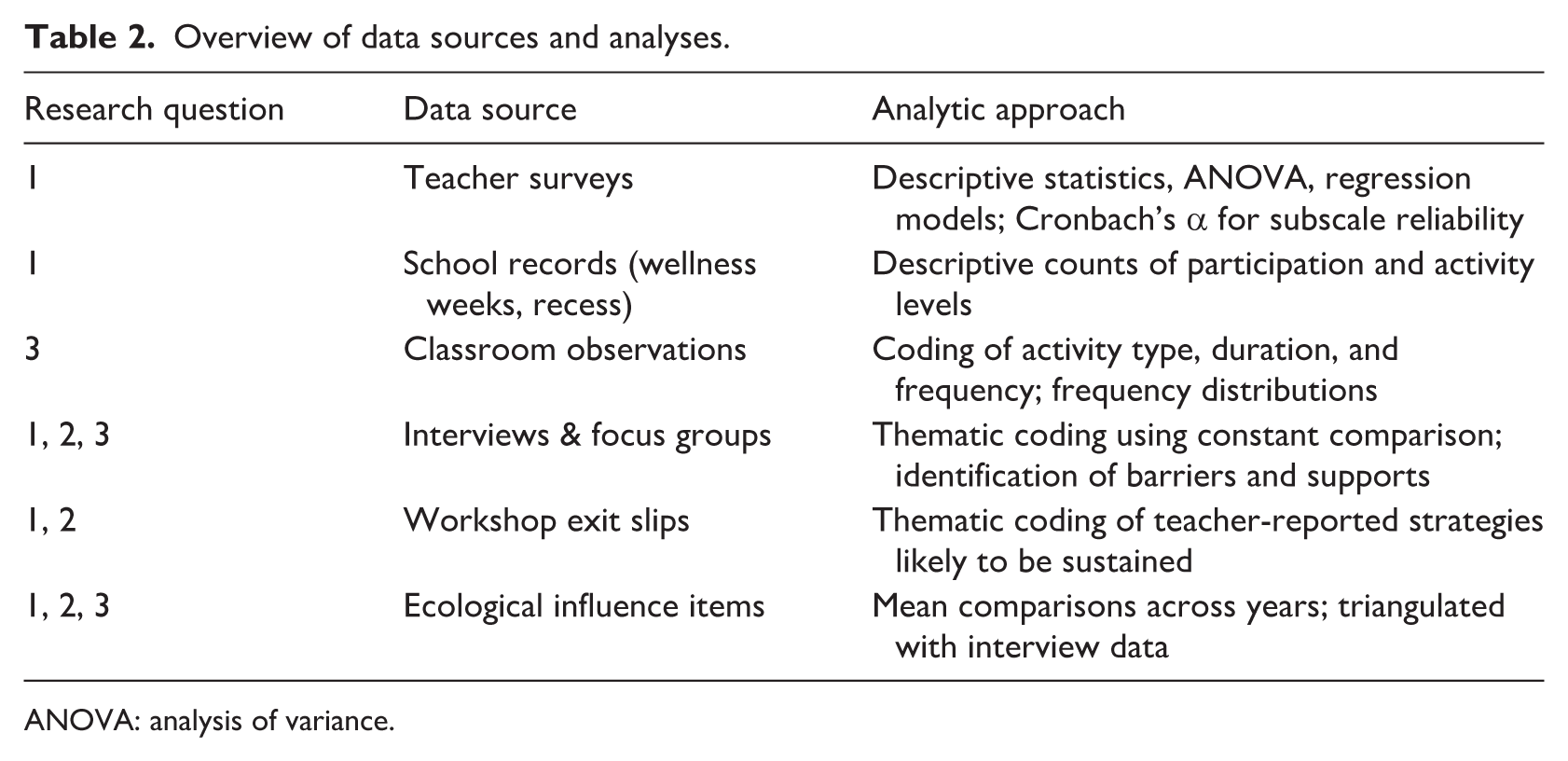
ANOVA: analysis of variance.
Survey data were summarised using descriptive statistics (means, standard deviations, and percentages) to capture teacher-reported PA break frequency, resource use, and health topic integration. To examine patterns of change over time, descriptive statistics and one-way analysis of variance (ANOVA) tests were conducted across the four main data-collection points. Given the small sample size in year 1, early quantitative analyses were interpreted cautiously and used primarily to identify exploratory trends rather than to support strong inferential claims. Regression models were conducted to examine associations between professional development participation and PA implementation, with findings triangulated against qualitative and observational data. Repeated-measures ANOVA was also used to examine longitudinal trends, and regression models were conducted to test associations between professional development participation and sustained PA integration.
Reliability of survey scales was examined through internal consistency testing. Cronbach’s α coefficients indicated acceptable to strong reliability across administrations (e.g. collaboration = .81, professional development usefulness = .89), ensuring that teacher responses were consistent across subscales.
School-level records, such as Wellness Week participation and recess activity counts, were analysed descriptively to examine institutional engagement. Observation data were coded to identify the type and duration of activity breaks, with frequency distributions used to compare practices across schools and years.
Qualitative data from interviews, focus groups, and workshop exit slips were analysed thematically using a constant comparative approach (Saldaña and Omasta, 2016). Coding was conducted by members of the research team with expertise in school-based PA and qualitative methodology. Initial codes were developed deductively based on the sustainability framework domains (programme adaptability, institutional support, and integration into school culture), focusing on identifying recurring patterns related to barriers (e.g. time constraints, testing pressures), supports (e.g. leadership, mentoring), and sustainability strategies (e.g. student leadership, integration with academics), and then expanded inductively as new patterns and themes were identified in the data. Coding was iterative, with regular research team discussions being used to refine code definitions, resolve discrepancies, and ensure consistency across data sources. Peer debriefing and ongoing comparison across interviews, observations, and exit slips were used to enhance analytic rigour and trustworthiness.
Finally, teacher survey responses on ecological influences on PA practices were compared across year 4 and the follow-up year using mean scores and interview triangulation. This analysis revealed a shift from organisational factors (e.g. leadership, professional development) as the strongest influence in year 4 to individual beliefs and values as the primary driver of implementation at follow-up. This ecological analysis highlighted the evolving sources of influence that sustained PA practices beyond the formal intervention period.
Ethical considerations
Ethical approval for the study was received from the Arizona State University Institutional Review Board prior to data collection (approval no. STUDY00017822). Informed consent was secured from all participating teachers and administrators, with assurances of confidentiality for survey responses and interview transcripts. Data were anonymised to protect participant identities, and all research materials were securely stored.
Results
The findings are organised into three sections: (1) quantitative survey results documenting changes in PA break implementation and related practices across years, (2) qualitative themes capturing teacher and administrator perspectives on barriers and supports, and (3) changes in perceptions of levels of influence over time.
Survey results
Analyses of teacher self-report surveys revealed a steady increase in the use of classroom PA breaks over the study period, which served as the primary measurable indicator of teachers’ implementation of movement-integration practices. In year 1, teachers reported implementing an average of 1.27 breaks per week (SD = 2.28), compared to 6.63 per week (SD = 4.51) in the year-7 follow-up. Results showed significant increases in PA breaks per week across years [F(3, 138) = 7.178, p < .001]. This upwards trend was supported by the qualitative data. Teachers consistently described movement breaks as increasingly essential for student focus and classroom climate. Workshop exit slips also revealed that teachers tended towards short, efficient activities that were easy to embed into daily routines, supporting the observed increase in frequency. These findings indicate that teacher implementation of PA breaks grew substantially across the study period.
Teachers also reported expanding the range of movement resources. In the follow-up survey, the most commonly used resources included PA breaks online resources (60.7% of responding teachers), GoNoodle (52.3%), and YouTube videos (36.7%), followed by Fitness for Life materials (25.0%) and Energiser activities (15.0%). In addition, the proportion of teachers incorporating health topics broadened, with strong increases in areas such as social/emotional health (87.5%) and chronic disease prevention (10%), along with notable inclusion of topics like sun exposure (35.7%), substance cessation (21.4%), and suicide prevention (15%). 1
To further examine predictors of sustained implementation, regression models were developed with teacher-reported PA breaks per week as the dependent variable. Independent variables included professional development participation, years of teaching experience, and reported levels of administrative support. Results indicated that professional development participation was the strongest predictor of PA break implementation (β = .42, p < .01), explaining 18% of the variance in weekly PA breaks. Neither years of teaching experience nor demographic factors (gender, grade level taught) were significant predictors. At follow-up, individual beliefs about the importance of student movement were also significantly associated with higher PA break frequency (β = .31, p < .05), supporting the ecological framework finding that individual-level influences became more noticeable over time. To provide contextual understanding of these quantitative patterns, qualitative data from interviews, focus groups, and workshop exit slips were examined to identify the experiences, perceptions, and contextual factors underlying teachers’ implementation decisions.
Qualitative findings
Interviews, focus groups, and workshop exit slips revealed several recurring themes regarding the sustainability of classroom PA integration. Teachers consistently described time constraints and testing demands as barriers to frequent implementation, while personal perceptions, professional development, and peer sharing of activity ideas were highlighted as critical supports.
Time and testing
Teachers consistently pointed to time and testing pressures as major barriers to sustaining PA breaks. One teacher noted, “. . . but then we have to come back and do these other things,” highlighting how academic demands quickly reclaimed priority after movement. Another explained that “when [teachers] do these kinds of activities, it takes them forever to come back down and refocus,” suggesting that transitions back to academic work often undermined instructional flow. For others, the primary challenge was simply scheduling within a crowded day. One teacher shared, “Trying to fit it in is I think is the hardest part, at least for me.” Collectively, these perspectives emphasise that even when teachers valued PA breaks, the realities of limited time and testing priorities made consistent implementation difficult.
Personal perceptions
One teacher explained, “It’s a nice break for me too. If I’m not modeling the activity with my students, it feels like I’m telling them it isn’t really important.” Teachers also emphasised the importance of leadership and administrative encouragement in maintaining momentum. Workshop exit slips indicated that teachers were most likely to continue short, simple activities that were easy to embed into their regular teaching, with several noting that these strategies could be both “engaging” and “efficient” for classroom management. Collectively, the qualitative data showed that sustainability was most likely when movement strategies were perceived as compatible with academic instruction and feasible within the classroom routine.
Professional development and peer sharing
The ongoing nature of the professional development provided was often noted as a positive aspect of sustainability, as these sessions provided frequent and relevant ideas for teachers. “I have really liked all your activities . . . yeah, it was exciting to me.” Similarly, another participant shared, “So it’s nice to just have those little presentations, or a little newsletter, that you might look at and say, ‘I could be doing this’ or ‘this is something I could try’.” One participant contrasted the professional development during the HealthWorks project with a previous, virtual, system their school utilised and noted, “I tried to use that, but then later on I had trouble logging in”; thus, they stopped using the resources in their classroom.
Changes in perceptions of levels of influence over time
The project was designed within an ecological framework (see Nam et al., 2022 for a description of the methodology), and thus, terminology such as levels of influence was used with participants. Survey responses and interview data were compared across year 4 and the follow-up year to examine shifts in the ecological influences on PA integration. In year 4, organisational factors such as administrative leadership, professional development opportunities, and school-level wellness policies were rated as the most influential forms of supports. As one participant shared, “Organizational factors are foremost important . . . just because . . . we kind of work in teams. If the whole team is doing it, we can try doing it and come back and say what worked and what didn’t.” By contrast, follow-up data suggest that individual-level beliefs and values were increasingly pertinent in teachers’ decisions to continue with PA breaks. Teachers frequently cited their own commitment to student engagement and health as the reason they continued PA breaks, even in the absence of strong organisational structures. Participant comments such as, “If the [other] teachers won’t do something in their room, then I’m going to do it in my space because it’s my space . . . it’s my time with them and I get to do what I want to do.” Another participant described how “my students need the breaks, so I make sure they happen, even if no one else is doing it.” These findings suggest a tendency for individual beliefs and values to become more salient in sustaining PA practices as formal programme support diminished. However, organisational factors such as leadership and professional development remained relevant even though the data do not directly support causal claims regarding the direction of influence.
Discussion
This study examined elements of sustainability within teacher-led PA integration in schools involved in the HealthWorks: Fitness for Life project. The findings largely confirm and extend existing literature demonstrating the importance of professional development and teacher beliefs in sustaining classroom movement practices. Teachers not only increased the frequency of PA breaks, the primary measurable indicator of movement integration in this study, but also broadened the ways in which movement was incorporated into classroom routines. These patterns suggest that movement integration was no longer viewed solely as a classroom-management tool, but increasingly as part of a wider approach to supporting student health and engagement. At a deeper level, however, the findings of the study help us better understand what influences sustainability within movement programming at schools over a long period of time. Teachers still reported challenges and barriers, but the changes over time tell an important story.
In addition to overall growth in implementation, the follow-up data highlighted how resource use and teacher beliefs shaped sustainability. Teachers most frequently turned to accessible online resources, suggesting that ease of access and adaptability facilitated regular classroom use. Regression analyses indicated that professional development participation was statistically associated with higher levels of reported PA break implementation, while individual teacher beliefs about the value of movement also emerged as an important predictor at follow-up. These findings show the dual importance of systemic supports (ongoing professional development, administrative leadership) and individual-level agency in sustaining classroom movement initiatives.
In addressing the first research question, survey responses and research team observations affirmed that teachers’ buy-in changed in that they offered more opportunities to their students to move throughout the day. Teachers recognised the benefits and kept those practices that were easily retained and benefitted students. An aspect that did not change was the barriers of time. Even with ongoing support and examples, teachers continued to describe time as a main challenge when determining whether they would integrate movement on a given day or within a lesson block of time. Although the programme provided teachers with new ideas for incorporating movement into their classrooms, time constraints remained a persistent barrier that limited their sense of control over implementation.
In answering the second research question, an ecological lens provided perhaps the most important insight into how the drivers of sustainability shifted over time. Early in the project, organisational support such as leadership encouragement and professional development were the strongest influences on teacher practices. By later years, however, individual teacher beliefs and values emerged as the primary sustaining force. Teachers continued PA breaks because they viewed movement integration as essential for student engagement and learning, even when formal support, such as administrator encouragement, decreased. This shift suggests that teacher agency may play an increasingly important role in sustaining movement-integration practices over time, consistent with ecological models of school-based health promotion (Lewallen et al., 2015).
The third research question focuses on how these findings can inform actionable recommendations for future practice. After the initial push and planning to change the culture and expectations of PA across the school campus, the focus should move to the individual teachers. Ongoing professional development gives teachers the chance to see a variety of ways to integrate movement by adopting practices that were relevant to their individual classrooms. Teachers who had opportunities for ongoing workshops and mentorship expressed greater confidence and reported more consistent use of PA strategies within their classrooms. These findings align with prior research suggesting that sustained, context-specific professional development is necessary to support change over time (Goh et al., 2019; McMullen et al., 2016).
Despite the benefits of PA breaks, teachers in this study cited barriers that limited consistent implementation. Time pressures, competing academic demands, and testing priorities were the most commonly reported obstacles. These barriers parallel earlier findings that systemic constraints within school structures often hinder sustained wellness efforts (Webster et al., 2015). Even when teachers valued movement, such constraints reduced opportunities for integration during instructional time.
Best practices from schools that maintained integration included embedding PA into academic lessons, establishing school-wide structures such as Wellness Weeks, and creating opportunities for shared leadership between teachers and students. When these practices were in place, PA became part of the school culture rather than an isolated activity.
Limitations
Several limitations should be noted. Much of the data collected in this study took the form of teacher self-reports, which may be influenced by recall bias or social desirability. Although observations and interviews were used to triangulate findings, classroom-level implementation may still have been underestimated or overestimated. In addition, the longitudinal nature of the study introduces the possibility of survivorship bias. Teachers who continued participating in later years may represent those who were more motivated, more confident, or more positively disposed towards movement integration. As a result, sustainability estimates may be inflated, and the perspectives of teachers who discontinued participation may be underrepresented.
The 7-year duration of the project also coincided with broader contextual changes in school environments, including shifts in leadership, staffing, accountability pressures, curricular priorities, district- or state-level policy, and budget. Such changes may have influenced teachers’ capacity, autonomy, and willingness to integrate movement, independent of the programme itself. Because these contextual factors were not systematically measured, their impact on sustainability cannot be disentangled from programme effects and should be considered when interpreting long-term trends.
Teacher participation also varied across schools and years, and attrition limited direct longitudinal comparisons for some groups. In particular, the year-1 sample size was small (n = 11), which limited the statistical power and stability of early inferential analyses. As a result, year-1 findings should be interpreted as exploratory, and greater weight should be placed on the patterns observed across later data and on the convergence of quantitative, qualitative, and observational data. In addition, not all health topics were consistently included across survey administrations, which may have impacted the comparability of topic-related findings over time. No survey data were collected in year 7, which left a gap in documenting late-stage sustainability.
Finally, the study was conducted in one regional context, which limits generalisability. Future research should address these limitations by expanding to diverse contexts, ensuring consistent longitudinal measures, and including student-level outcomes.
Conclusion
This study showed that teacher-led PA integration can be sustained over multiple years when supported by professional development, leadership commitment, and teacher agency. Teachers not only increased the frequency of PA breaks but also diversified the resources and health topics they incorporated into instruction, suggesting a shift towards embedding movement as part of broader health education. Importantly, regression findings confirmed that professional development participation was the strongest predictor of sustained PA integration, while teacher beliefs about the value of movement emerged as a critical driver in the later stages of the project. These results highlight that sustainability evolves over time: organisational supports are essential during the early years, but individual teacher commitment becomes central as external structures diminish.
Overall, sustaining movement-based initiatives in schools requires more than initial training. Long-term success depends on a combination of continuous professional learning, leadership alignment, and a school culture that views PA as integral to both student health and academic engagement. By attending to both systemic and individual factors, schools can better ensure that movement becomes a lasting feature of the classroom environment. Future research should build on these findings by having larger and more stable longitudinal samples to improve statistical power and allow for stronger inferences about change over time. Consistent measurement across years would strengthen comparability and enable more precise modelling of sustainability trajectories. Systematic assessment of contextual factors, including leadership changes, policy shifts, and accountability pressures, would further clarify how external conditions shape sustainability. Finally, mixed-method designs that integrate implementation fidelity, sustainability metrics, and qualitative inquiry are recommended to capture both the processes and outcomes of long-term movement integration in schools.
Footnotes

Funding
The authors disclosed receipt of the following financial support for the research, authorship, and/or publication of this article: this study was supported by the HealthWorks Foundation of Arizona (grant number GR27919, 2018-2020) HealthWorks: Fitness for Life.
Declaration of conflicting interests
The authors declared no potential conflicts of interest with respect to the research, authorship, and/or publication of this article.
AI use
The authors state that no generative artificial intelligence tools were used in the preparation of this manuscript. All the content was written and reviewed for accuracy and integrity by the authors.