







Abstract
Objective:
Youth people’s mental health is of major concern especially after the COVID-19 pandemic. Social-emotional learning (SEL) programmes can help students improve their social-emotional skills, reducing the risk of mental health problems. SEL interventions delivered using digital gamification have proved particularly effective by building on children’s and young people’s interest in new technology. This study aimed to assess the benefits of RENEW, a digital game-based SEL programme.
Setting:
The study was conducted in 2021–2022 with 50 students attending an international primary school in Taipei (Taiwan).
Design:
Participants aged 11–14 years from grades 5 to 8 participated in a cluster randomised crossover trial involving an intervention delivered by means of the gamified learning platform Kahoot! (RNG) and a non-gamified version (RN).
Method:
Participants’ social-emotional competence was scored before and after the interventions using the Social Emotional Assets and Resiliency Scales child self-report version. Post-intervention differences were assessed by means of an analysis of variance (ANOVA) adjusted for gender, grade, and pre-intervention score. Pre- and post-intervention frequencies of “average to high functioning,” “at risk,” and “high risk” scores were calculated.
Results:
Following the RNG, increases in participants’ mean score and in the frequency of “average to high functioning” individual scores were noted. No significant differences were detected following the RN.
Conclusion:
Findings confirm that SEL interventions delivered with digital gamification technologies can help strengthen social-emotional skills.
Keywords
Introduction
The mental health status of young people worldwide has been of growing concern in recent decades (Polanczyk et al., 2015). According to the latest estimates from the Global Burden of Disease (GBD) study, between 2011 and 2021, the prevalence of mental health disorders increased from 7.8% to 8.0% among children aged 5–9 years, from 13.6% to 14.4% among teenagers aged 10–14 years, and from 14.7% to 16.0% among teenagers aged 15–19 years (Institute for Health Metrics and Evaluation (IHME), 2024). In addition, several studies have shown that the significant disruptions caused by the COVID-19 pandemic have further exacerbated the situation (Deng et al., 2023; Kauhanen et al., 2023; Wolf and Schmitz, 2024).
Social-emotional learning (SEL) refers to the processes through which individuals, particularly students, acquire and apply the knowledge, attitudes, and skills necessary to recognise and manage their emotions, set positive goals, feel and express empathy, establish and maintain positive relationships, and make responsible decisions (Dyson et al., 2019; Shalev and Gidalevich, 2024). SEL is grounded in multiple theoretical frameworks that span developmental psychology, educational psychology, positive psychology, and related disciplines (Kruse, 2019; Lechner et al., 2023). This definition aligns with the broader frameworks established by organisations such as the Collaborative for Academic, Social, and Emotional Learning (CASEL), which emphasises the importance of SEL for promoting students’ holistic development (Mahoney et al., 2021).
In recent years, SEL has received growing attention (Basyuk, 2024; Cipra and Dermer, 2022; Malathy, 2025; Wanless and Domitrovich, 2015), and a substantial number of programmes and interventions has been implemented to enhance the social-emotional skills of students in preschool (Blewitt et al., 2018; Oades-Sese et al., 2021), elementary (Kaspar and Massey, 2023), middle (Green et al., 2021), and high school (Caldarella et al., 2019) settings.
SEL programmes and interventions have been demonstrated to significantly enhance social-emotional competence. Van de Sande and colleagues conducted a systematic review to examine whether universal SEL programmes for secondary school students enhance the competencies they seek to address, finding that all five CASEL competencies—self-awareness, self-management, social awareness, relationship skills, and responsible decision-making—were effectively enhanced by SEL programmes (van de Sande et al., 2019). Conte and colleagues evaluated the PROMEHS programme for preschoolers, demonstrating that this intervention improved children’s SEL competencies and prosocial behaviour, with school-based SEL programmes showing particularly positive effects with preschool-aged children (Conte et al., 2023). SEL interventions have also been shown to reduce mental health problems in school children (Blewitt et al., 2021; Domitrovich et al., 2017) and improve academic performance (Durlak et al., 2011; Schonfeld et al., 2015) and civic behaviours (Cipriano et al., 2023).
A common way to implement SEL is through universal school-based (USB) programmes, that is, programmes that are delivered to a whole classroom or to a whole school, therefore potentially benefitting all students instead of targeting a specific population (Cipriano et al., 2024). Evidence also suggests that USB SEL programmes may be particularly effective for marginalised populations, including low-income students, students of colour, and students at risk for emotional and behavioural disorders (Cipriano et al., 2023). However, programme effectiveness is moderated by multiple factors, including implementation quality, cultural adaptation, teacher well-being, and the degree to which programmes address classroom climate and teacher–student interactions (Sandilos et al., 2022).
Over the course of the past decade, there has been growing interest on the use of emerging technologies to enhance social-emotional skills (Jones et al., 2023; Shum et al., 2019; Slovák and Fitzpatrick, 2015). Researchers have recognised the advantages of incorporating artificial intelligence, robotics, and gamification into treatments and therapies for their ability to provide children with interactive and engaging experiences, which can target and address their social needs (Guilbaud et al., 2022). In particular, digital gamification—defined as the application of game design elements to non-game activities, designed to enhance user engagement and motivation (Khaldi et al., 2023)—has become an increasingly popular approach to social skills development (Da Rocha Seixas et al., 2016; De la Barrera et al., 2021; Hassan et al., 2021; Nicolaidou et al., 2022; Saleme et al., 2020), due to the fact that such interventions utilise game elements and mechanics to create a structured and immersive platform for children to practise and reinforce social skills (Riar et al., 2022). As digital natives, today’s children and adolescents are more likely to use such technology for learning (Craig et al., 2016; De la Barrera et al., 2021), which creates promising opportunities to increase the effectiveness and reach of mental health interventions (d’Halluin et al., 2023; Sanchez et al., 2017).
A fundamental way in which gamification supports SEL is through enhanced engagement and motivation, which are prerequisites for meaningful skill development. Li and colleagues found that gamification was effective in increasing extrinsic and intrinsic motivation by engaging learners in tasks through ludic activities, with this effect being particularly evident in educational contexts (Li et al., 2023). Furthermore, gamification supports SEL through its capacity to modify disruptive behaviours and promote emotional regulation. Chao-Fernández and colleagues examined emotional training and the modification of disruptive behaviours through computer-game-based music therapy in secondary education, finding that the inclusion of an educational game modified behaviours from more inappropriate to more adaptive ones (Chao-Fernández et al., 2020). Such evidence suggests that gamified approaches can effectively support behavioural change aligned with SEL objectives.
Bearing this context in mind, this article aimed to examine the efficacy of RENEW (REsilience iN Emotional and behavioural Well-being), an SEL programme designed for delivery to primary school students utilising digital gamification technologies. In addition, the distinctive role played by such delivery method was investigated.
Methods
RENEW was developed to strengthen the social-emotional skills of children and adolescents in schools. Its curriculum is an adaptation of the earlier Pathway 2-Success SEL curriculum (Faith et al., 2022; Strandberg, 2021) and its two main distinctive features are being a universal classroom-based programme and its use of a digital, gamified approach. In particular, RENEW was designed to be delivered through the gamified learning platform Kahoot! (Zhang and Yu, 2021). In this study, three gamification strategies were used:
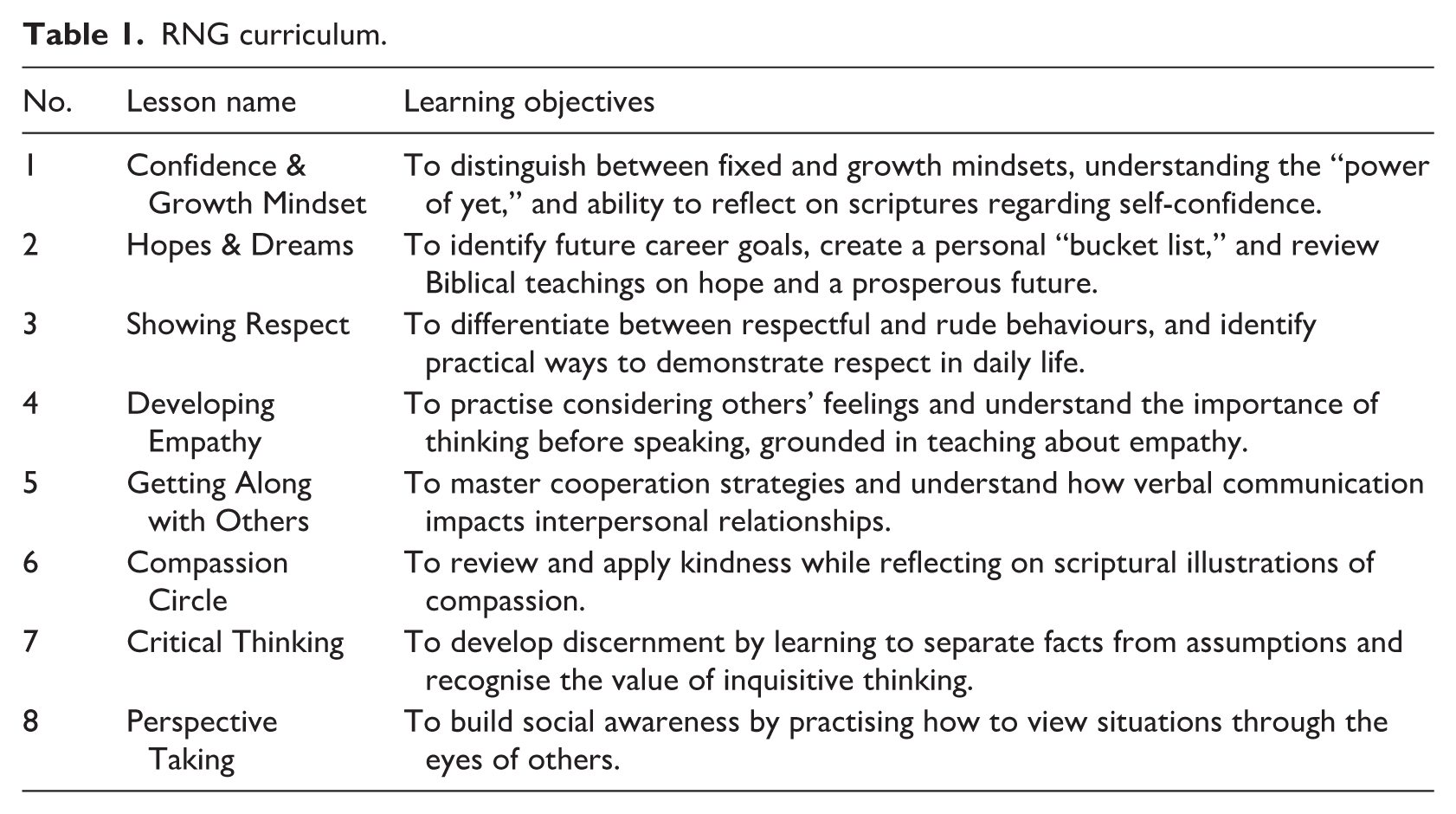
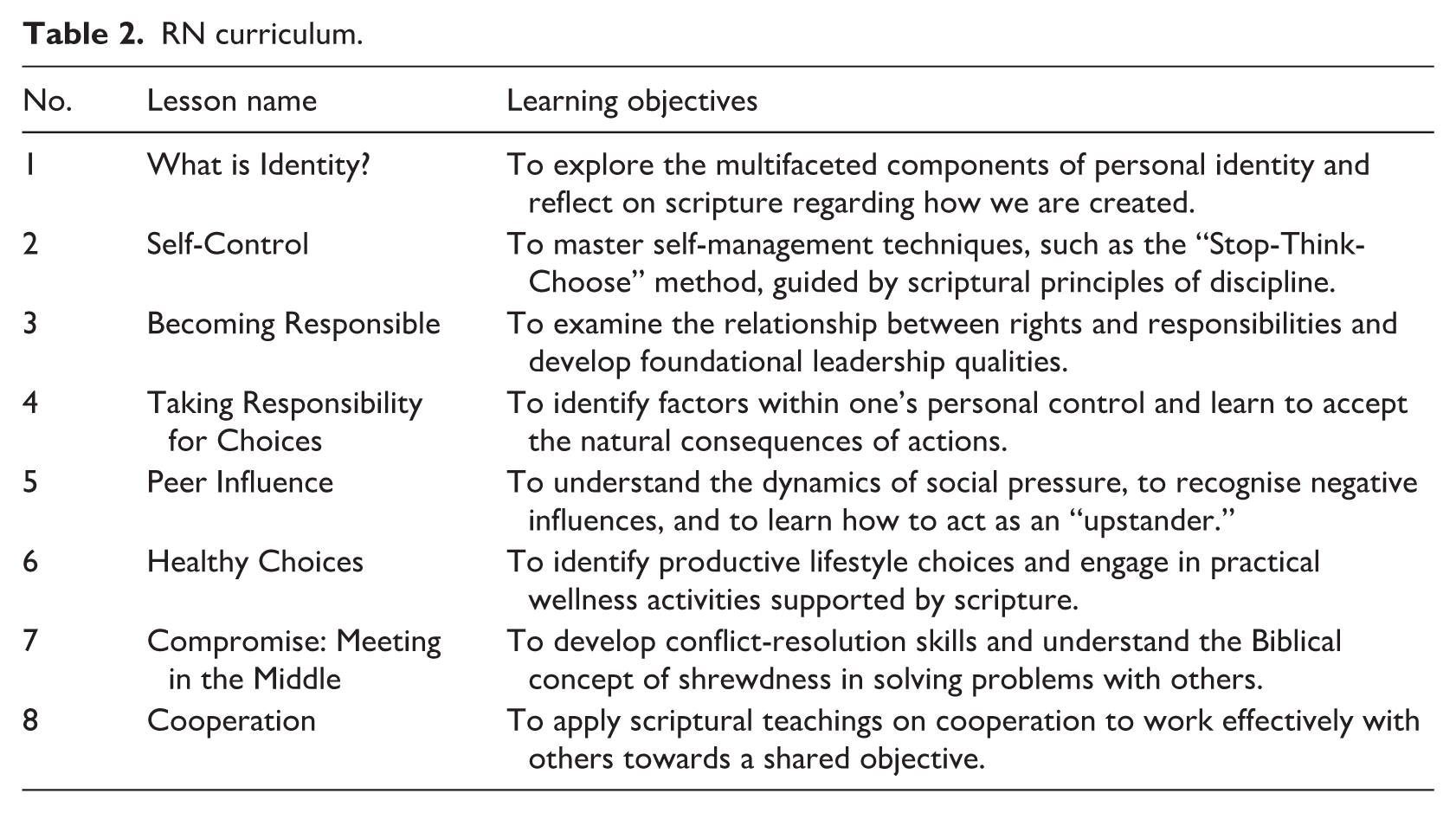
The intervention was implemented over eight 40-minute sessions conducted weekly during scheduled Bible classes 1 at the chosen school. To investigate the impact of gamification, the study used a two-arm design targeting five core competencies: self-awareness, self-management, social awareness, relationship skills, and responsible decision-making. The primary game-based arm or RENEW with gamification (RNG) emphasised game-based learning through face-to-face sessions and interactive Kahoot! activities. In contrast, the secondary non-game-based arm or RENEW without gamification (RN) focused on the same competencies but used a passive direct-instruction format consisting of slide presentations and teamwork exercises. More detailed descriptions of the curricula used in the RNG and RN groups are provided in Tables 1 and 2.
RNG curriculum.
RN curriculum.
Study setting and participants
Prior to recruitment, the study protocol received ethical review and approval from the Taipei Medical University Joint Institutional Review Board (TMU-JIRB No. N202101019) on 30 March 2021. Data were collected at a religiously affiliated (Adventist Christian) international primary school in Taipei, Taiwan, during the 2021–2022 school year, and the trial was formally registered at ClinicalTrials.gov (NCT04935593).
Before commencing the research activities, formal approval for the study was secured from the school principal. Prior to the 8-week intervention, written informed parental consent and student assent were obtained. Participants were fully informed of the study’s nature, risks, and benefits, and retained the option to withdraw at any time without consequence. To protect participant confidentiality, all data were de-identified using unique alphanumeric codes and stored on secure, AES-256 encrypted cloud storage accessible only to the research team.
Fifty students aged between 8 and 14 years participated in the study, distributed as follows: 11 fifth graders (6 boys + 5 girls), 14 sixth graders (7 boys + 7 girls), 17 seventh graders (13 boys + 4 girls), and 8 eighth graders (5 boys + 3 girls). The sample was predominantly male (64.4%) and of Asian descent (91.1%), while the remaining ethnic composition included White (4.4%), Black (2.2%), and Mixed-race (2.2%); students’ mean age was 12.1 years (standard deviation = 1.5).
The sample size was limited by the school’s single-track structure (only one class per grade) and the number of returned parental consents. Recruitment was further constrained by teacher schedule availability.
Design
A cluster randomised crossover trial (CRCT) was conducted with two interventions, namely the RNG and the RN. Such an approach was necessary due to the classroom-wide nature of the interventions. The four participating classes were randomly assigned to two sequence groups using a computer-based random number generator, with two classes included in each group. The first group was exposed first to the RNG and then to the RN, and the other group was exposed first to the RN and then to the RNG.
The interventions consisted of eight weekly sessions, and the two treatment phases were separated by an 8-week washout period. Throughout the study, the allocation sequence remained concealed from both students and teachers (Figure 1). A crossover design was utilised specifically to ensure that all students received the perceived benefits of the intervention, thus addressing the ethical concerns of a traditional waitlist control.
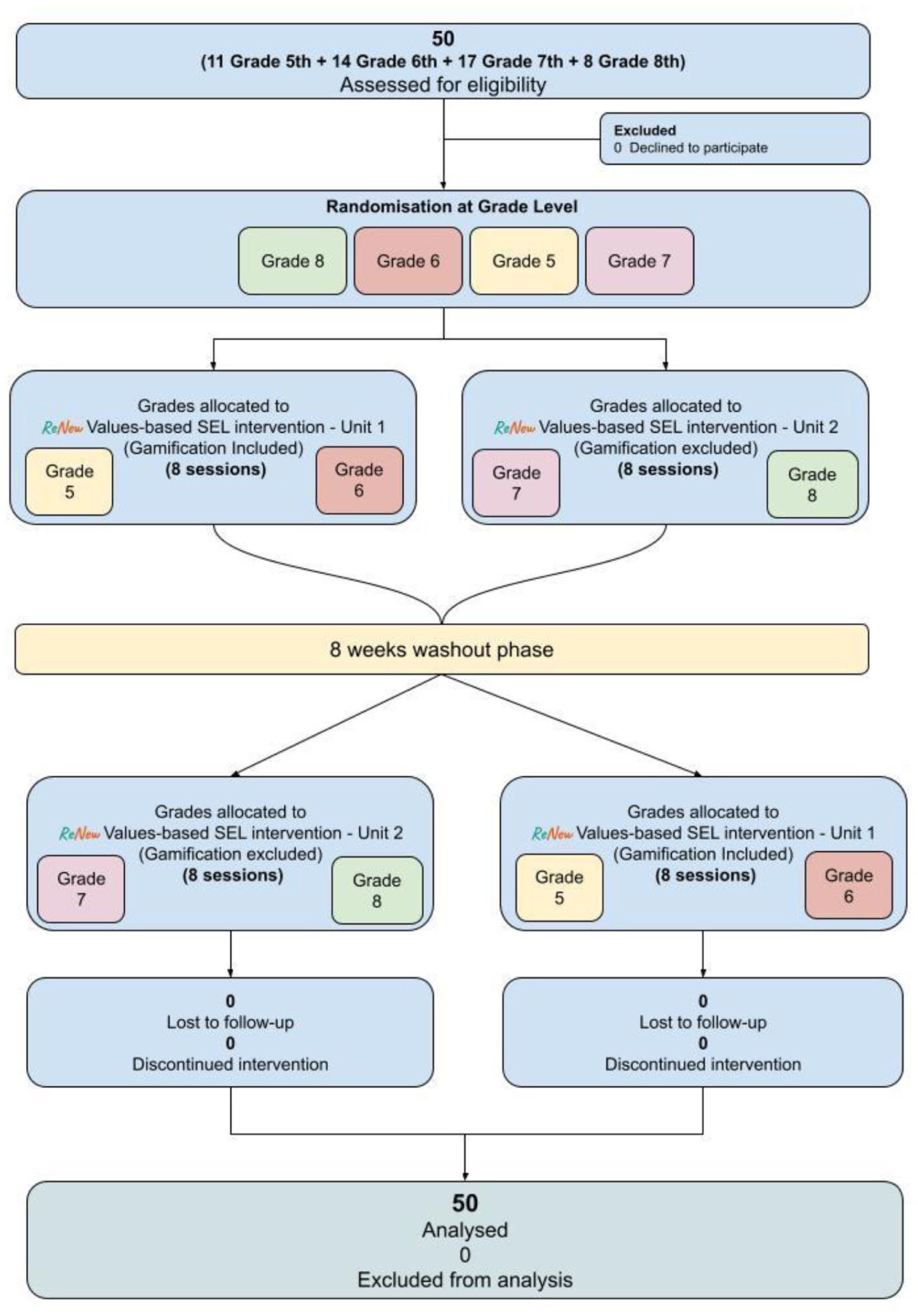
Study schema.
Kuyken et al. (2017) have described a cluster randomised trial evaluating the effectiveness and cost-effectiveness of a mindfulness training programme in schools, demonstrating how this design could be used to assess interventions targeting mental health, well-being, and social-emotional behavioural outcomes. Similarly, Quach et al. (2020) employed a cluster randomised controlled trial design to evaluate whether a teacher-led mindfulness intervention for new school entrants could improve child outcomes, recruiting 826 students across 22 primary schools in disadvantaged areas.
Social-emotional skills assessment
In this study, the Social Emotional Assets and Resiliency Scale developed by Merrell (2011) was used to measure participants’ social-emotional skills (Nese et al., 2012). The construct validity of the child self-report short form version of this scale (SEARS-C SF) is well established and shows a high correlation with the full-length scale (r = .93) and a strong average item-total correlation (r = .57). Furthermore, the instrument has demonstrated excellent internal consistency, with a Cronbach’s alpha of .85, indicating high reliability for our sample population (Psychological Assessment Resources, Inc., n.d.).
The SEARS-C SF assesses how children perceive their social resiliency by asking them to rate the frequency with which they engage in various social and emotional activities, such as understanding others’ feelings, managing anger, and considering consequences before actions among others. The questionnaire includes 12 items and uses a 4-point Likert-type scale, whose values range from never = 0, sometimes = 1, often = 2, to always = 3. The scores for each item are added up and the sum is converted into a T-score, as indicated in Merrell (2011). High T-scores indicate a sense of adequacy in social resiliency perception, whereas low scores suggest potential risks and inadequacy in self-concept perception. The reliability and validity of the SEARS-C SF have been confirmed by previous studies (Nese et al., 2012; Strømgren and Couto, 2022; Whitcomb, 2017).
To adapt the instrument for digital use, the SEARS-C SF was incorporated into Kahoot! enabling an interactive and engaging assessment environment. Participants were required to complete the form before and after each intervention.
Data analysis
The T-scores recorded before the intervention (preInt) were compared to those recorded after the intervention (postInt) to assess statistically significant differences using the paired-sample t-test. The test was repeated by intervention, by intervention and gender, and by intervention and grade.
Effect sizes were estimated with Cohen’s d. Subsequently, the T-Score Relative Change (
Finally, following Merrell (2011), the T-scores of each participant were tiered as follows: “average to high functioning,” if
The data were analysed using IBM SPSS Statistics 19.
Results
Statistical analysis of baseline data confirmed that the clusters were well-balanced prior to randomisation. The mean baseline T-scores for the RNG and RN groups were 39.060 and 39.020, respectively, indicating no significant disparity in initial social-emotional assets between the two study arms (Table 3).
Paired-samples t-test output.
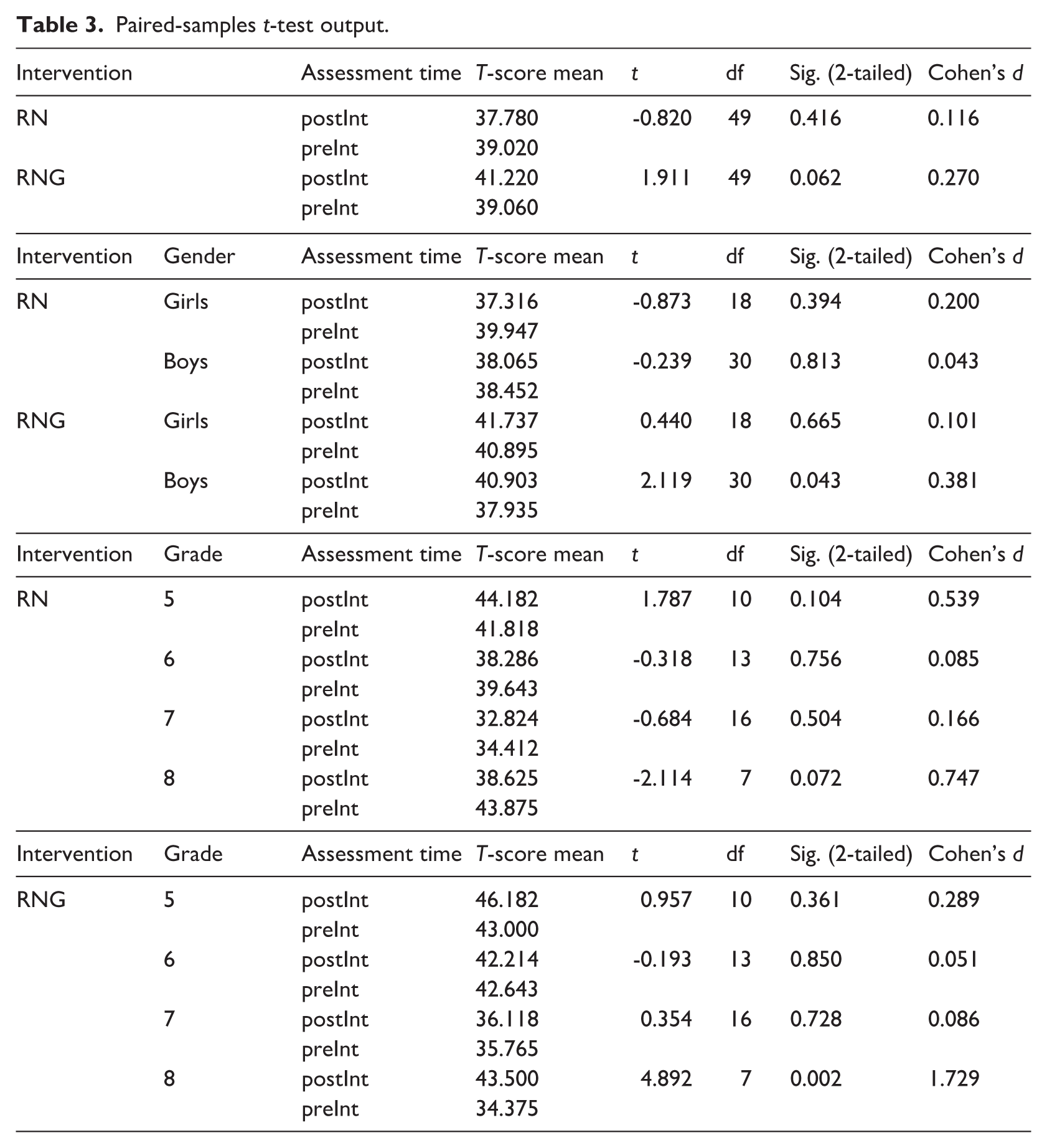
As shown in Table 3, the paired-sample t-test revealed no statistically significant difference between the T-scores measured before and after the RN (p value = .416). In the case of the RNG, the average post-intervention T-score increased from 39.060 to 41.220 (p value = .062). A significant improvement from 37.935 to 40.903 was observed among boys exposed to the RNG (p value = .043). In contrast, the improvement among girls was not statistically significant, with the mean T-score changing from 40.895 to 41.737 (p value = .665). With respect to grade subgroup, following the RNG intervention the eighth graders’ T-score significantly increased by over 26% (p value = .002), while after the RN intervention it decreased by 12% (p value = .072). In the paired t-test analyses, the effect sizes measured by Cohen’s d were predominantly small to medium.
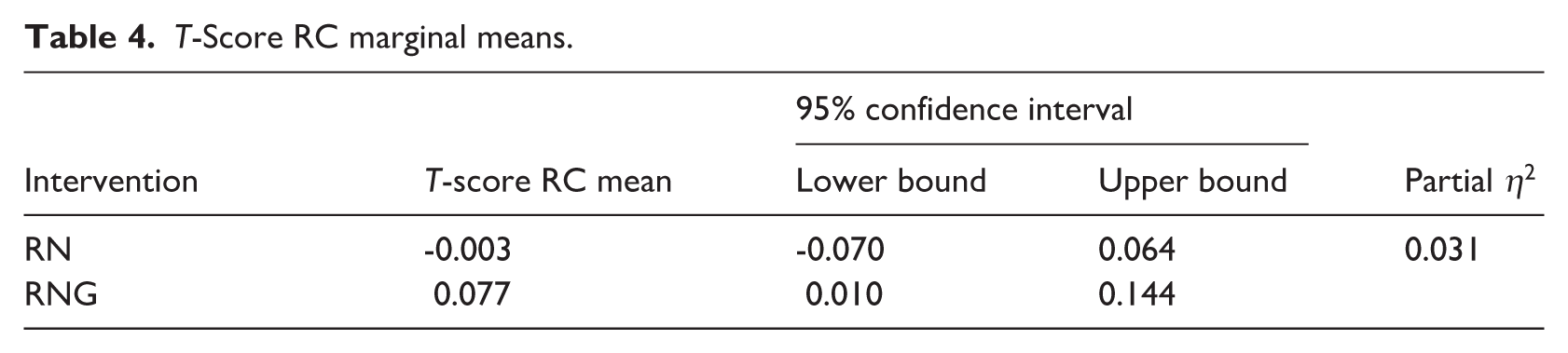
The marginal means of T-Score RC reported in Table 4 show that, after adjusting for grade, gender, and initial conditions, the participants’ social-emotional skills increased by approximately 8% after the RNG intervention, while no change was detected following the RN intervention. The partial
T-Score RC marginal means.
Finally, the frequencies reported in Figure 2 indicate that the distribution of the participants across the three tiers did not basically change after the RN intervention. In contrast, following the RNG intervention, the percentage of participants classified as “average to high functioning” increased from 32% to 48%, and the percentage of participants classified as “at risk” and “high risk” decreased from 44% to 36% and from 24% to 16%, respectively.
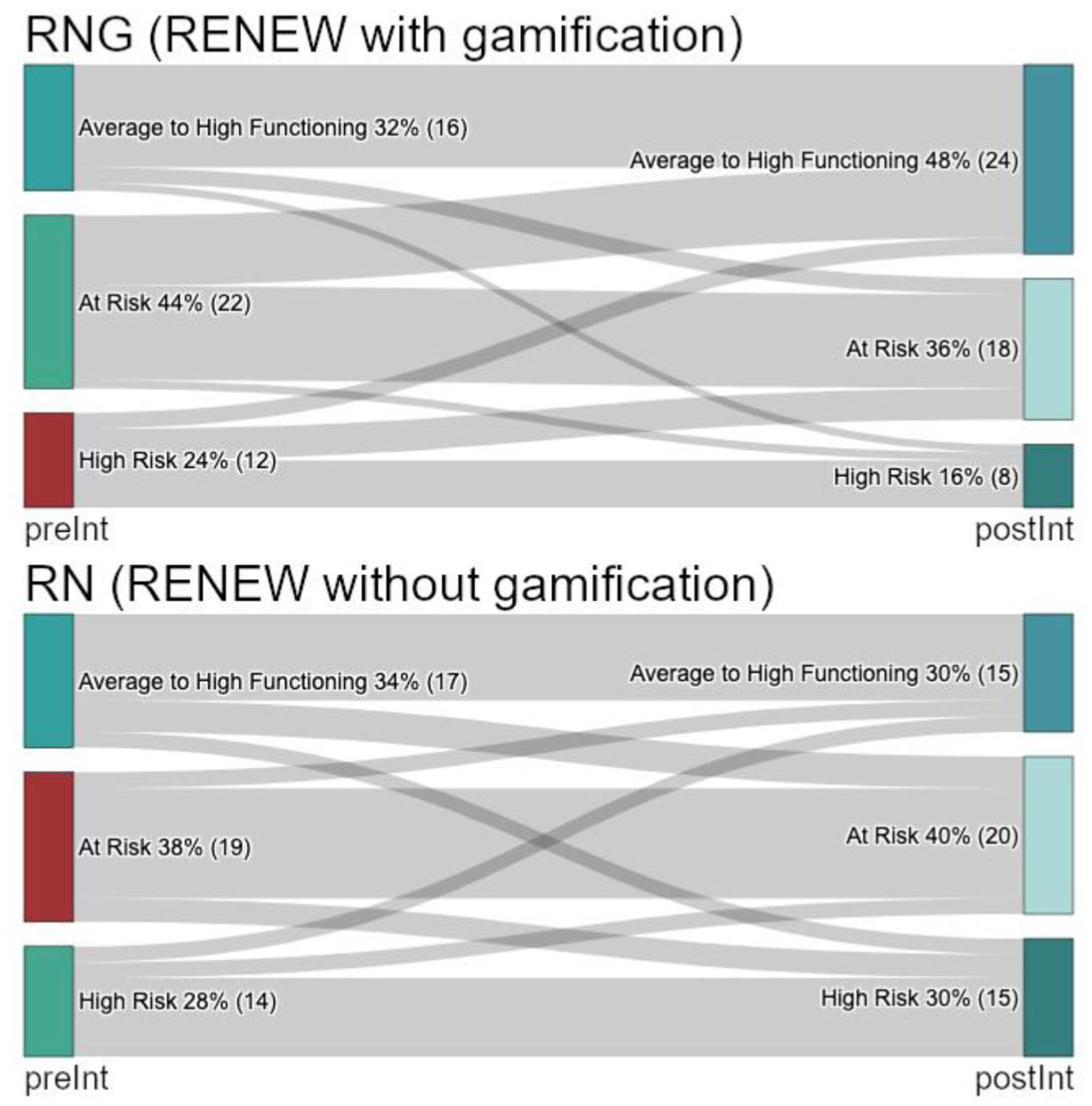
Students’ distribution by tier score level.
Discussion
The primary aim of this research was to assess the impact of the RENEW programme on the social-emotional skills of children from their own perspective. This small-scale study, conducted with 50 students attending an international primary school in Taipei, revealed that the intervention implemented without gamification (RN) did not substantially change participants’ reported social-emotional skills (Tables 1 and 2; Figure 2). This finding indicates that the non-gamified delivery method did not yield significant benefits within this setting, in contrast to the outcomes of other “traditional” SEL programmes (Blewitt et al., 2018; Durlak et al., 2011), including one using a student self-report assessment (Fu et al., 2024). This suggests that the gamified elements were the primary driver of the improvements observed in this study.
Better results were obtained with RNG, which was delivered using the gamified learning platform Kahoot! In this case, an 8% (95% confidence interval [CI] = 1%–14%) increase in the average post-intervention SEARS-C score was observed (Table 2). More importantly, out of 34 students with a score either in the “at risk” range or in the “high risk” range before the intervention, 8 (or 24%) moved up to the “average to high functioning” level after the intervention.
Similar findings were reported in two studies conducted with comparable sample sizes of elementary school students in Western Greece and USA: the first concluding that gamification has the potential to increase children’s cognitive performance (Antonopoulou et al., 2022), the latter suggesting that a gamified social skills training programme can improve impulse control, emotional regulation, social initiation skills and cooperation (Craig et al., 2016). Furthermore, a case-control study involving Spanish adolescents found that participants exposed to a SEL intervention delivered with a video game experienced positive effects in terms of affective and cognitive components of well-being (Cejudo et al., 2020). The results of the those present paper are also consistent with those from a digital intervention pilot study conducted by Johnson et al. (2022), whose low-immersion virtual reality training led to improvements in social skills such as emotion recognition, social inferencing, social attribution, and social self-schemata in children and adolescents.
Sub-group analysis provided additional insights, revealing a significant increase in the SEARS-C score among boys and eighth graders exposed to RNG. The higher improvement in eighth graders likely stems from two factors: first, this group had the lowest baseline scores, and evidence suggests that SEL programmes are most effective for those with less developed skills (Bierman et al., 2025). Second, adolescents in this age bracket often show a strong inclination towards technology-driven, competitive environments such as Kahoot!, which fosters the extrinsic and intrinsic motivation (Lynn et al., 2024), necessary for meaningful skills development. In both cases, the pre-intervention scores were comparatively lower than those of the other groups, confirming that SEL programmes may be more effective in individuals with less developed social-emotional skills (Carroll et al., 2020; DiPerna et al., 2023).
The overall findings of this study indicate that adopting engaging and technology-driven approaches can enhance the efficacy of SEL programmes, thus fostering students’ socio-emotional development. Students struggling with traditional SEL activities may be more receptive to learning when presented with a gamified delivery method and consequently more likely to acquire critical social-emotional skills.
Limitations
The limitations of this study relate primarily to its preliminary nature. First, regarding threats to reliability, the data relied on children’s responses in self-report questionnaires, which may be subject to measurement error and social desirability bias (McKown, 2017). Second, concerning threats to internal validity, the small sample size may have resulted in reduced statistical power to detect small effects, potentially limiting the robustness of causal inferences regarding the interventions. Third, regarding threats to external validity, the generalisability of the results is restricted because all participants attended the same religious international school in Taipei. Furthermore, the cultural resonance of gamification is likely influenced by broader gender and socioeconomic factors unique to this sample, thus the findings may not readily apply to more diverse educational settings.
Next steps
To address these concerns, future research should engage with the identified limitations through focused methodological improvements. First, to address threats to reliability, future studies might employ data triangulation by incorporating perspectives from parents and teachers, providing a multi-informant view of student progress that reduces the reliance on self-report measures alone. Second, to strengthen internal validity, future iterations should incorporate qualitative data alongside quantitative metrics and assess long-term sustainability to better understand the lasting impacts and mechanisms of the intervention. Finally, to mitigate threats to external validity, future research should include larger, more diverse cohorts across multiple schools. Adopting a co-design approach with students from varied backgrounds is essential to ensure that the gamified elements are developmentally appropriate and culturally resonant across different student populations.
Conclusion
The importance of social-emotional competence to children and adolescents cannot be overstated. SEL plays a crucial role in achieving this goal, and the findings of this study highlight the benefits of using digital gamified interventions as part of future socio-emotional learning environments. Insights from this study lay the groundwork not only for future scientific research but also for SEL policy and practice implementation to assist children and adolescents in strengthening their social-emotional skills in the COVID-19 post-pandemic era.
Footnotes
Acknowledgements
We express our gratitude to the administration, teachers, and students of the Taipei Adventist American School for their cooperation and participation throughout this study. We are especially grateful to the school principal for facilitating the research process and providing the necessary institutional support. We also extend our thanks to parents and guardians for their time, consent, and support in allowing their children to take part in the research. Finally, we thank members of the research team who contributed to the implementation, data collection, and analysis phases of this project.

Funding
The authors received no financial support for the research, authorship, and/or publication of this article.
Declaration of conflicting interests
The authors declared no potential conflicts of interest with respect to the research, authorship, and/or publication of this article.
Data availability statement
Materials and analysis code for this study may be available from the corresponding author upon reasonable request.
AI declaration
During the preparation of this work, Scopus AI was used to assist with literature review, reference verification, and compiling relevant sources. After the use of this tool, the authors reviewed and verified the content as needed and take full responsibility for the accuracy, quality, and content of the publication.