






Abstract
Objective:
Teaching internships represent a critical phase in teacher education but are frequently associated with high and overlapping demands. Coping and stress-management skills are essential for pre-service teachers to prevent long-term consequences such as emotional exhaustion. However, many university curricula lack needs-based interventions addressing the specific stressors of teaching internships. This study aimed to develop a theory of change (ToC) to guide the development of context-sensitive stress-management interventions for pre-service teachers.
Design:
Mixed-methods design.
Setting:
German pre-service teachers completing their internship semester in teacher education.
Method:
A problem analysis based on findings from surveys (n = 698) and interviews (n = 4) with pre-service teachers was used to identify core stressors and intervention needs. In addition, two dialogues with professionals in teacher education and psychology informed and refined the intervention design. A review of existing stress-management interventions for teachers and other relevant occupations complemented these findings.
Results:
The analysis revealed key stressors including workload from simultaneous academic and teaching demands, organisational challenges, performance pressure, and financial strain. Based on these findings, the ToC outlines how awareness of personal stressors, improved time management, and structured problem-solving can strengthen coping and reduce emotional exhaustion. The resulting group-based intervention consisted of two 2-hour sessions combining cognitive-behavioural strategies with relaxation exercises while fostering social support.
Conclusion:
The identified ToC offers a conceptual foundation for a targeted health-promotion intervention in teacher education. By addressing stressors specific to the internship semester, it offers a basis for future evaluation and sustainable integration into initial teacher education and training curricula.
Keywords
Introduction
Teaching in schools is characterised by a wide range of demands, with many teachers facing an elevated risk of stress and mental health problems (Agyapong et al., 2022; Schonfeld et al., 2017). Typical demands include time pressure and excessive workload, the need to manage multiple diverse tasks simultaneously, classroom disruption and behavioural problems, as well as high noise levels. In addition, emotional demands arising from challenging student behaviour and organisational issues such as unclear responsibilities and/or lack of support can further increase teachers’ stress (Bauer et al., 2006; Kyriacou, 2001). Prolonged exposure to job-related demands, especially when resources are limited, has been linked to poorer teacher well-being, higher emotional exhaustion, and higher turnover intentions (Collie, 2023; Maslach and Leiter, 1999; Skaalvik and Skaalvik, 2011). However, the extent to which these demands are experienced as stressful, as well as teachers’ responses to such stress, varies across individuals and contexts, as teachers are a diverse group and individuals are not affected in the same way.
Pre-service teachers may also experience elevated stress levels and behavioural risk patterns associated with psychological strain, a phenomenon that has been reported across different national contexts (Klassen et al., 2013; Schaarschmidt and Kieschke, 2013; Zito et al., 2024). They often perceive their initial teaching experiences, such as teaching internships (also referred to as practicums, teaching practice, or school-based placements in different teacher education systems), as both highly motivating (Hascher, 2011) and particularly challenging (Beuchel and Cramer, 2023; Zimmermann et al., 2012). The latter may be due to the new professional role, the need to balance multiple responsibilities across school and university, and perceived discrepancies between expectations and reality. Within the teaching internship context, studies have reported unclear role expectations, organisational inconsistencies, and the pressures of formal assessment (Homann et al., 2024; Kokkinos et al., 2016; Krawiec et al., 2020). Furthermore, in such settings, personal limitations may become more visible, and discrepancies between idealised expectations and the realities of school life can lead to frustration or self-doubt (Goldstein, 2005; Veenman, 1984). Organisational factors related to the structure of the internship and overlapping university-related requirements are also frequently perceived as burdensome during teaching internships (Homann et al., 2024).
Given these findings, implementing stress-management strategies early in teacher education may prevent stress-related consequences and support both teacher well-being and effective teaching.
Stress and coping
According to Lazarus’ transactional model, stress results from the interaction between individuals and their environment through appraisal processes that assess threat and coping resources (Lazarus and Folkman, 1984). Successful coping can modify future appraisals, reducing the perceived threat of stressors. Lazarus and Folkman (1984) distinguish between problem-focused coping targeting the stressor itself and emotion-focused coping addressing the emotions triggered by a stressor. The usefulness of each strategy depends on the degree to which the situation is changeable: problem-focused strategies are generally more effective in controllable situations, whereas emotion-focused strategies are more helpful when the stressor cannot be changed. Tobin et al. (1989) further differentiates between active (approach) coping, where individuals actively manage problem- or emotion-related aspects of a situation (e.g. problem-solving, seeking social support), and passive (avoidance) coping, where individuals disengage from the stressor through avoidance or distraction. Research shows that active coping is associated with better well-being and lower burnout, whereas passive coping correlates with higher burnout and reduced perceived control (Dijkstra and Homan, 2016; Leiter, 1991).
Stress-management interventions
Stress-management interventions (SMIs) in the workplace have been shown to reduce stress responses and improve psychological health outcomes (Kröll et al., 2017). A meta-analysis by Richardson and Rothstein (2008) reported a medium overall effect (d = 0.53). SMIs are commonly classified into individual and organisational interventions (Holman et al., 2018), with the strongest evidence supporting cognitive-behavioural interventions (CBIs). These aim to modify stress-related thoughts and behaviours and typically include components such as problem-solving training, time and self-management, and the strengthening of coping skills. Meta-analyses indicate that CBIs can lead to moderate to large reductions in stress responses (d = 0.68–1.16; Richardson and Rothstein, 2008; Van der Klink et al., 2001).
Among teachers, CBIs have led to significant improvements in perceived stress and in three burnout dimensions, namely, emotional exhaustion, depersonalisation, and personal accomplishment (Agyapong et al., 2023). Further meta-analytic findings show that, for teachers, mindfulness-based and (cognitive) behavioural programmes show the largest effects, whereas purely informational approaches yield smaller effects (von der Embse et al., 2019). Furthermore, relaxation techniques and multimodal programmes combining several components have demonstrated positive health effects, although their effect sizes vary substantially (Holman et al., 2018; Kröll et al., 2017).
One prominent example of a mindfulness-based professional development programme for teachers is the Cultivating Awareness and Resilience in Education (CARE) programme (Jennings et al., 2013), which lasts 6–8 weeks and is designed to reduce stress and improve teachers’ performance. It includes mindful awareness practice, emotion skill instruction, and compassion training. In a randomised controlled trial, participation in the CARE programme produced significant improvements in teacher well-being, efficacy, burnout, and mindfulness compared with a control group (Jennings et al., 2013). A further qualitative explanatory study conducted with US teachers participating in the CARE programme explored the mechanisms underlying the intervention effects using focus groups. It showed that participants developed greater self-awareness and an improved ability to be less emotionally reactive, while improvements in teaching efficacy were less pronounced (Schussler et al., 2016).
In the context of teacher education, psychological interventions have been shown to improve stress patterns in pre-service teachers (Abujatum et al., 2007; Weigelt et al., 2016). Despite this potential, resilience-focused curricula remain rare (Mansfield et al., 2016). One example of an approach that does address this gap is the BRiTE (Building Resilience in Teacher Education) programme developed by Mansfield et al. (2020), which aimed to support the development of resilience among pre-service teachers. An earlier scoping review by Mansfield et al. (2016) had identified 15 resilience strategies among pre-service teachers, with problem-solving, including help-seeking and collaboration, being the most prominent one especially for early-career teachers. Subsequently, researchers and stakeholders have recommended integrating training on coping, time management, and stress management into teacher education (Zito et al., 2024).
Aims of this study
Since stress and behavioural risk patterns can be observed among teachers early in their careers, it is important to raise awareness of stress and promote the use of effective, evidence-based coping strategies at an early stage in teacher education. The practical phases of teacher education and training are well suited to this purpose, as within them, student teachers are exposed to a wide range of competing demands. Although SMIs for pre-service teachers already exist, few are explicitly grounded in a theory of change (ToC).
Against this background, this research project aimed to develop a ToC for a needs-based stress-management training tailored to pre-service teachers during their first practical experience. This ToC, which depicts the intervention logic and its intended mechanisms to bring about change, offers the foundation for a future theory-based evaluation. The overall goal of the training is to enhance pre-service teachers’ coping strategies, enabling them to better manage the demands of the internship phase, as well as the challenges of their future professional careers.
Methodology
Research context
Our study targeted German pre-service teachers enrolled in primary and secondary teacher education programmes who were still at university and completing their internship semester. While the arrangement of this internship varies across institutions internationally, in our case, pre-service teachers were assigned to schools while simultaneously continuing their university coursework. Work within this phase was supported by both a school-based mentor and a university lecturer. The 16-week-internship takes place in the fifth Bachelor’s semester for primary education and in the second Master’s semester for secondary education.
Development and evaluation of complex interventions
The development and evaluation of complex interventions should go beyond measuring effects alone (Skivington et al., 2021). It is equally important to understand how and under what conditions an intervention leads to change and affects various outcomes. This involves identifying the underlying mechanisms of change, considering relevant contextual factors, and clarifying the prerequisites necessary for the intervention to be effective in real-world conditions. Complex intervention research typically involves several interconnected phases, which do not necessarily follow a strict linear sequence: development or identification of an intervention; assessing feasibility; evaluation; and implementation. A theory-driven approach examines how and under which conditions intervention components produce change, recognising the dynamic relationship between mechanisms and context (Skivington et al., 2021).
Problem analysis
A series of steps were undertaken in the development of the SMI. First, a systematic problem analysis identified key stressors among pre-service teachers, as well as feasible and evidence-based strategies to improve their stress experiences during teaching internships. The analysis drew on two main sources: (1) findings from current research on teacher stress, focusing on studies examining stressors, coping strategies, and existing SMIs in teacher education; and (2) direct input from members of the target group – pre-service teachers completing their internship semester across five cohorts – collected through an online survey conducted at the Freiburg University of Education, exploring the stressors experienced during their teaching internship.
In a later evaluation of the internship in the summer semester of 2023, an open-ended question was asked to the participants: “What did you find particularly stressful during your internship?” Responses (n = 133) were analysed inductively and grouped into categories, which were subsequently used to develop Likert-type-scale items (7-point scale), to quantify the prevalence and intensity of perceived stressors (“I felt stressed by the following factors . . .”). The items were then administered to different cohorts of pre-service teachers across four subsequent semesters (winter semester 2023–24 to summer semester 2025; n = 698).
To deepen understanding of students’ stress experiences, four qualitative in-depth interviews were conducted with pre-service teachers during their teaching internship in the winter semester 2023–24. These interviews not only explored stress factors in more detail to validate the categories, but also identified student teachers’ individual coping mechanisms and available personal resources.
Identification of intervention components
The next step was to identify and select intervention components that addressed the identified problems, reduced implementation barriers, and were feasible for the target group and setting (Skivington et al., 2021). To this end, a targeted literature review was conducted focusing on meta-analyses, scoping reviews, and (quasi-)experimental studies examining SMIs in occupational contexts, particularly within the teaching profession and among pre-service teachers. The aim was to identify intervention approaches and components that demonstrated effects in reducing stress or enhancing coping resources. Based on this evidence and the findings from the prior problem analysis, components considered efficacious and feasible were selected for inclusion in the ToC, specifying how they were expected to bring about change.
Theory of change
The ToC clarifies the logic of the intervention and illustrates its intended mechanisms of change and the sequential steps of transformation (Weiss, 1997). Following the distinction made by Chen (2015), the ToC comprises two interrelated components: a change model and an action model. The change model describes the processes that are assumed to determine the interventions’ efficacy. It defines the intended outcomes and explains how the selected components of the intervention are assumed to influence these outcomes through specific mechanisms of change. The action model specifies how the intervention is to be implemented in practice. It includes a description of the intervention components, the target group, the organisational structures involved, the contextual conditions, and the key actors responsible for delivery.
Stakeholder participation and pilot testing
Stakeholder participation is essential for the development and implementation of complex interventions to ensure their feasibility and acceptance (Brütt, 2022; Skivington et al., 2021). For this reason, stakeholder input was incorporated at different stages throughout the development process involving both representatives of the target group and professionals: As outlined earlier, pre-service teachers in their internship semester were initially involved through a quantitative survey (n = 698) and interviews (n = 4). During the development of the ToC, two structured expert dialogues were conducted with researchers experienced in both stress research and the practical training of pre-service teachers. These dialogues served to critically review and refine the ToC, ensuring its theoretical robustness and relevance to teacher education. After finalising the change and action model and developing the training materials, the SMI was pilot-tested with four pre-service teachers during their internship semester. Feedback on the feasibility and suitability of the content was collected through verbal comments and a brief post-training survey. Based on participants’ suggestions, the intervention design was revised to better meet needs and expectations.
Ethical considerations
The Ethics Committee of the Albert Ludwig University of Freiburg raised no ethical or legal concerns regarding the use of the evaluation data (24-1505-Anfrage). The implementation and evaluation of the stress-management study was approved by the same ethics committee (24-1542-S2). The students and experts who participated in the interviews were fully informed about the aims and goals of the study and gave written consent to do so.
Results
Key findings of the problem analysis
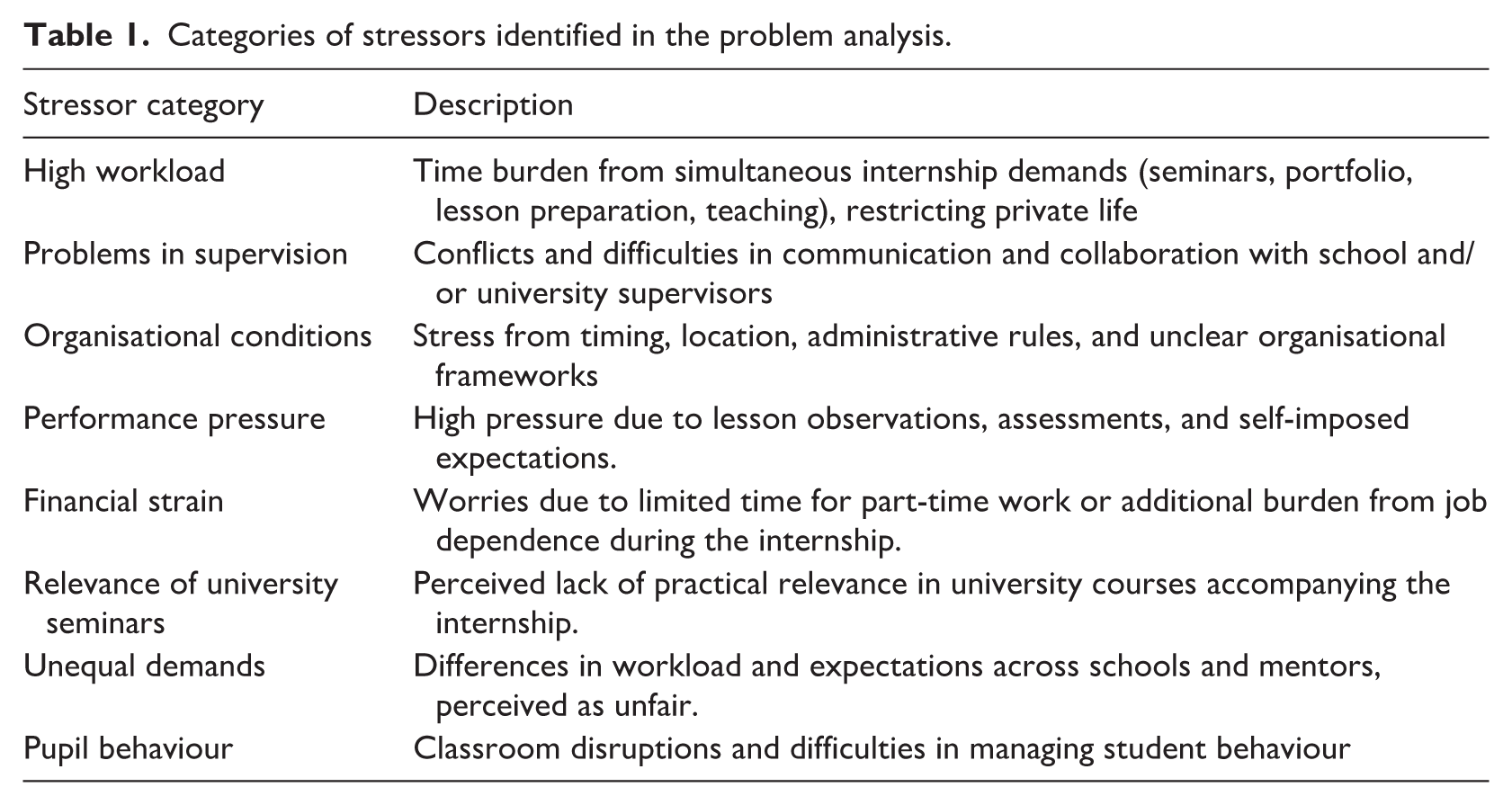
As part of the systematic problem analysis, a total of eight categories of perceived internship-related stressors were identified based on 133 open-ended survey responses from pre-service teachers at the end of their internship semester (summer semester 2023). The analysis of inter-coder reliability yielded a value of k = 0.65. The identified main categories are shown in Table 1.
Categories of stressors identified in the problem analysis.
The quantitative analysis revealed that, across all semesters, high workload was the most frequently reported stressor (see Table 2). This finding was also strongly reflected in the qualitative interviews, where participants described feeling overwhelmed by the workload and the lack of time for recovery and private life. These challenges were especially pronounced among pre-service teachers with additional responsibilities, such as part-time jobs or childcare, where time becomes an even more limited resource. The interviews also revealed that university-related tasks, such as preparing written portfolios and attending seminars, were perceived as particularly stressful. Pre-service teachers reported that this was partly because their purpose or relevance was not always clear. In contrast, lesson planning and teaching, while also demanding, were regarded as meaningful and even enjoyable aspects of the professional role. Difficulties with pupils did not emerge as a major stressor in either the survey or the interviews. As helpful strategies for coping with stress, students mentioned effective time management, setting personal boundaries and scheduling time for leisure activities, adopting a mistake-tolerant, non-perfectionist attitude, and exchanging experiences with peers for both practical and emotional support.
Descriptive statistics of perceived stressors across four cohorts.
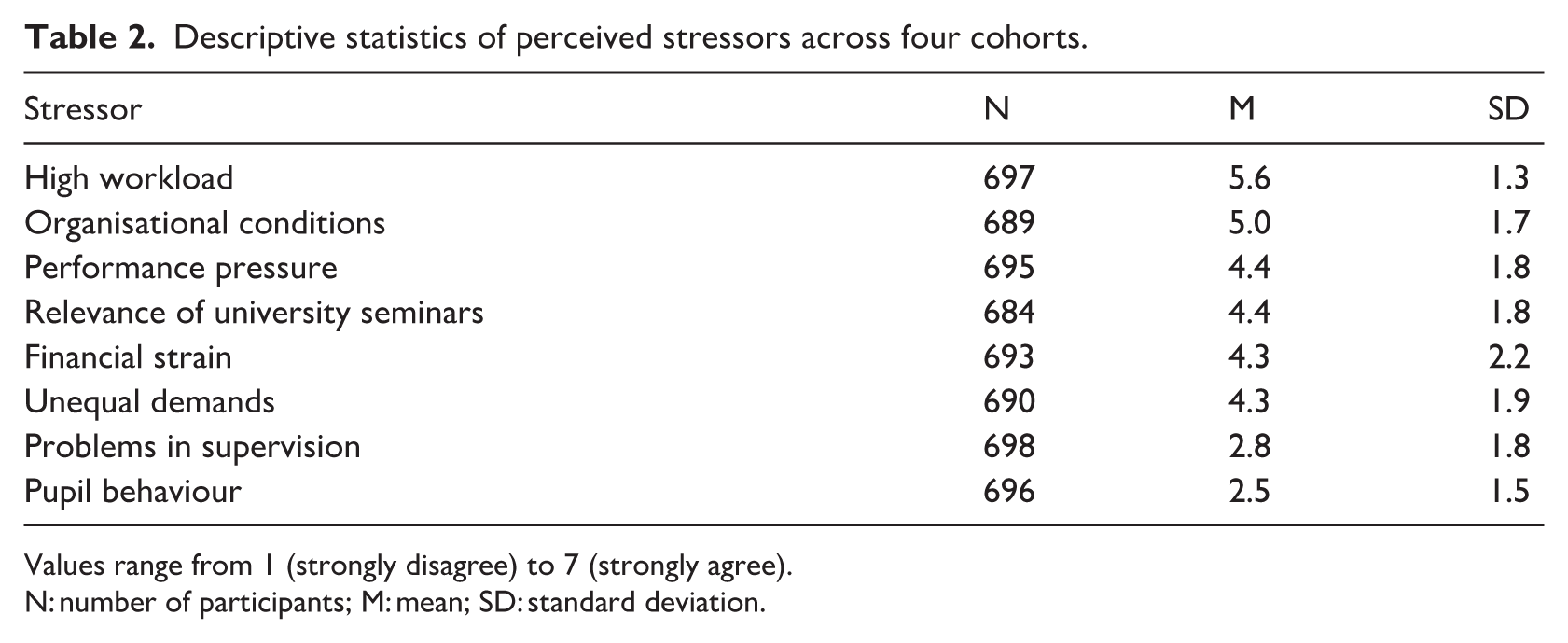
Values range from 1 (strongly disagree) to 7 (strongly agree).
N: number of participants; M: mean; SD: standard deviation.
ToC change model
The change model was developed to illustrate how the intervention was expected to enhance problem-focused coping and reduce emotional exhaustion in pre-service teachers (see Figure 1). The five components of the intervention – (1) stress competence training; (2) time-management training; (3) problem-solving training; (4) social support; and (5) relaxation – were intended to strengthen individual and social resources such as awareness of stress-related thoughts and behaviours, practical planning and problem-solving skills, as well as the perception and use of support systems. These improvements were assumed to increase self-efficacy, promote problem-focused coping, and improve the appraisal of stressors. Together, these mechanisms were expected to reduce emotional exhaustion – a key indicator of chronic stress in the teaching context. Although teaching practice was not assessed in the evaluation study, it was included in the ToC as a distal outcome since it could be assumed that reduced stress and improved self-management and planning skills contribute to more effective and reflective teaching practice in the long term. In addition to the intervention components and underlying mechanisms, contextual factors were considered in the ToC. These represent the life circumstances of student teachers that may moderate the intervention’s efficacy. Such factors included students’ financial situation, part-time employment jobs, family responsibilities, childcare obligations, and overall work–life balance. These conditions were assumed to shape the extent to which participants could engage with the training and apply coping strategies in daily practice.
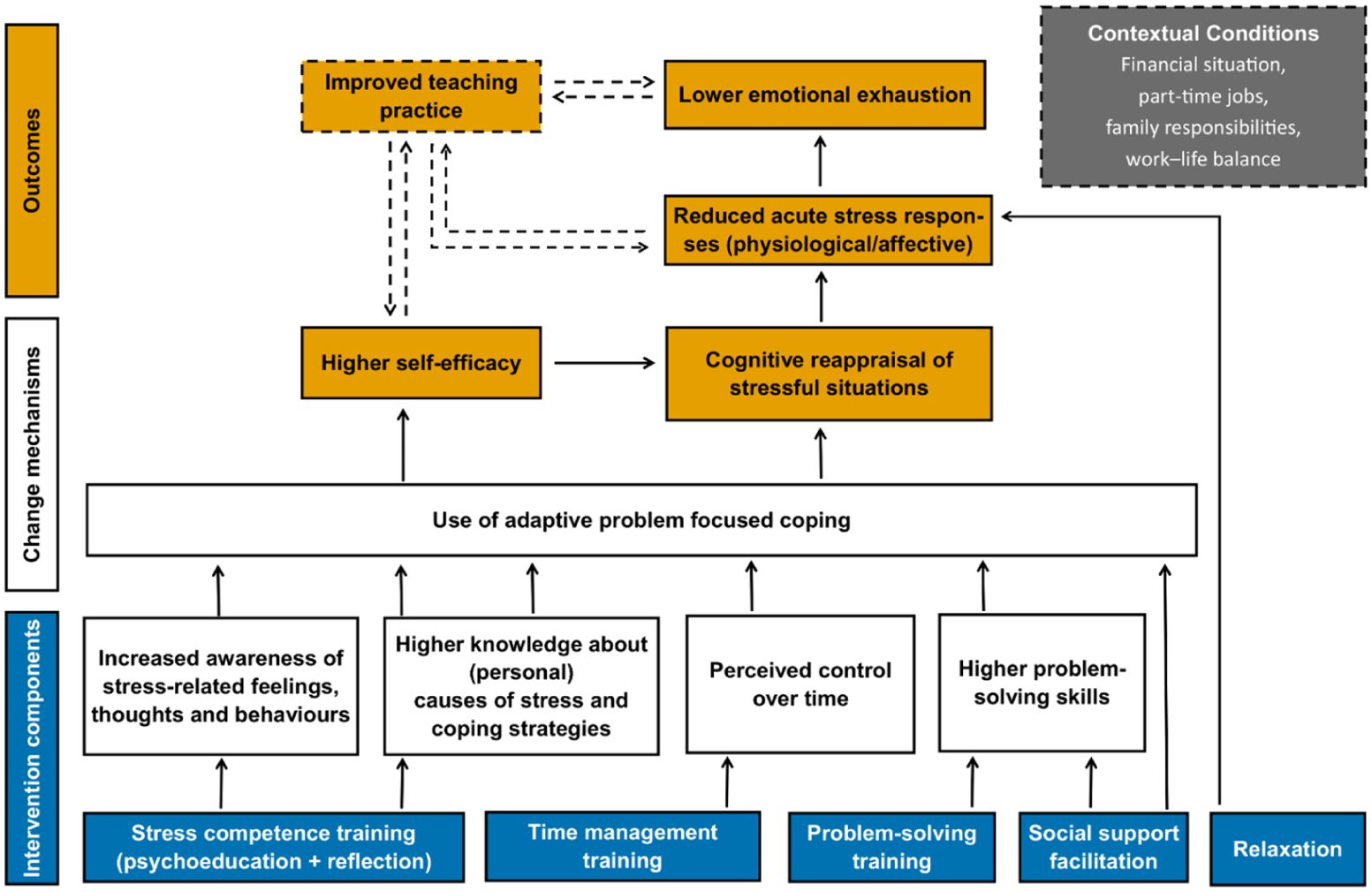
Change model underpinning the stress-management training.
ToC action model
The SMI was designed for use with groups of 20–25 pre-service teachers and took place in a university seminar room. It was intended to be integrated into the educational science seminar that accompanied the internship semester. Participation was mandatory, as the training was embedded within the regular structure of the seminar. The training was delivered by a university lecturer across two sessions, each lasting 2 hours, with an interval of approximately 6–8 weeks between them.
The intervention was supported by a range of materials to facilitate structured delivery and student engagement:
A digital presentation used by the lecturer to guide the sessions.
A printed handout containing theoretical input, self-reflection questions, and exercises for use during and between sessions.
An online course room that provides supplementary resources and digital access to all materials.
Delivery of the intervention was supported by a manual developed for university lecturers leading the training. The manual provided detailed instructions on the content and structure of both sessions, background information on the theoretical framework, and guidance on how to conduct the exercises and discussions.
Although the sessions were guided by a lecturer, the training was designed to be highly interactive. A substantial part of the sessions consisted of individual and small-group exercises, structured reflection tasks, and plenary discussions. Pre-service teachers were encouraged to reflect on their own stress experiences during the internship, formulate personal goals, identify typical time demands, and discuss challenging situations encountered in school practice. In addition, participants practised brief stress-regulation techniques, such as guided breathing exercises, which can be applied in particularly demanding situations during the internship. These activities aimed to promote peer exchange, shared reflection, and the practical application of stress-management strategies.
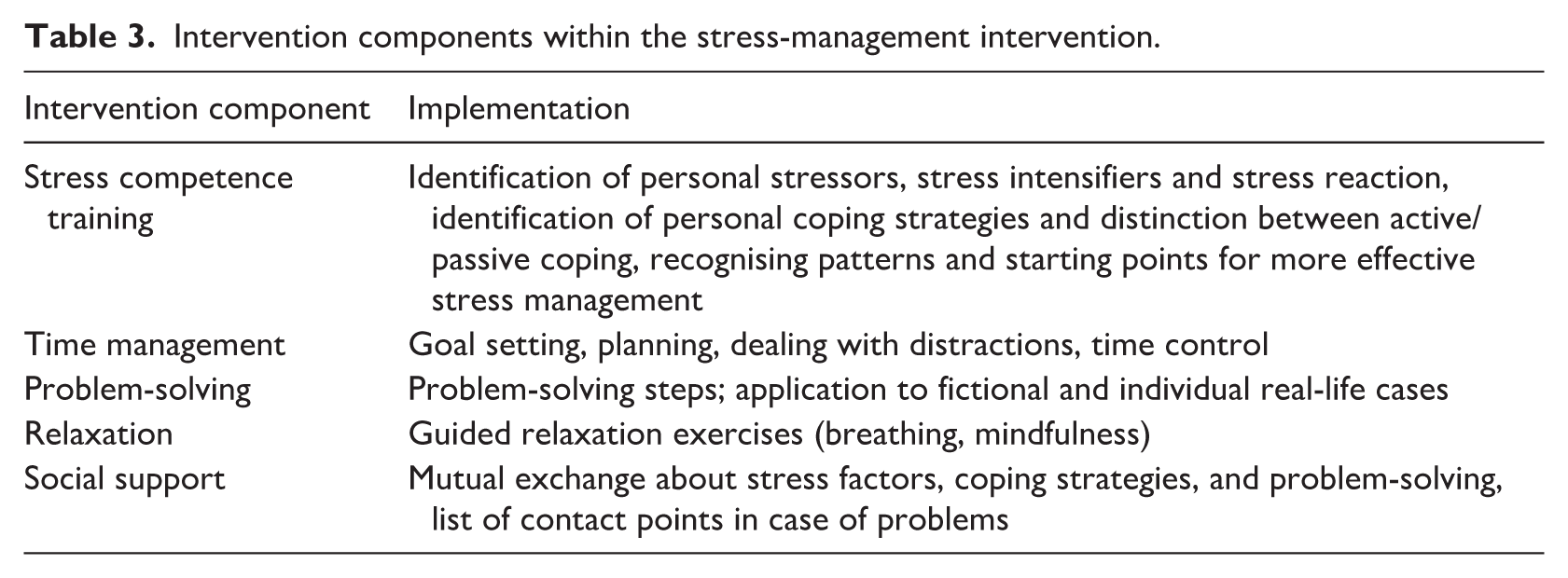
Table 3 shows how the five key components of the intervention were implemented in the training.
Intervention components within the stress-management intervention.
Stakeholder feedback and adaptations
Structured dialogue with professionals and pilot testing provided insights that led to adjustments in the change and action models. In the change model, professionals recommended strengthening the theoretical foundation, explicitly integrating social support and collegial collaboration, and giving self-efficacy a more central role. In the action model, practical recommendations included avoiding content overload, focusing on the application of strategies rather than theory, clarifying the purpose of each task, and promoting a mistake-tolerant mind-set. Additional suggestions concerned clarifying which stressors could realistically be addressed during the seminar and which could not, making reference to available counselling services, and encouraging mutual support among participants. Furthermore, goal setting should prioritise student well-being and include scheduled breaks and recovery time from the outset.
Pilot testing of the intervention in the winter semester 2024/25 with four pre-service teachers during their internship semester confirmed the relevance of the planning and prioritising exercises and problem-solving training based on realistic case studies and highlighted the value of sharing personal experiences within the group. Suggestions for improvement included incorporating examples of the coping strategies used by former pre-service teachers as part of their internship, enabling materials exchange via an online platform, adding techniques for acute relaxation, increasing interactive elements, scheduling breaks between blocks, and using digital tools to promote collaborative input.
Discussion
Based on a systematic problem analysis and identification of theory-driven and evidence-based intervention components, a ToC was developed for a needs-based SMI for pre-service teachers during their internship semester. The development process of the ToC integrated the perspectives of both pre-service teachers and professionals in teacher education.
Among the eight identified stressors, a high workload with overlapping demands – such as lesson planning, university assignments, and portfolio documentation – emerged as the most prominent and consistently reported source of stress. The programme therefore adopted a multimodal, predominantly cognitive-behavioural approach given strong evidence for its efficacy in reducing stress and improving well-being (Richardson and Rothstein, 2008). Core elements include stress competence training (Kaluza, 2023), time management (Aeon and Aguinis, 2017), problem-solving (Abujatum et al., 2007; Mansfield et al., 2016), relaxation (Kröll et al., 2017), and social support (Väisänen et al., 2017). These components target both the cognitive and behavioural aspects of coping and aim to foster adaptive, problem-focused coping and reduce emotional exhaustion among pre-service teachers.
The resulting action model described a two-session (each 2 hours) group training programme to be embedded within the mandatory accompanying seminar offered during the internship semester. The ToC forms the basis for a future theory-based evaluation of the intervention’s efficacy. Within this context, the relevance and plausibility of the ToC assumptions regarding impact processes, including the possible moderating influences of contextual factors, their implications for the design of implementation elements, and their validity with regard to short- and medium-term outcomes, should be empirically investigated (Wirtz et al., 2019).
Comparison with previous research
Compared to existing research, the stressors identified in this study show both parallels and clear differences. Several studies (Kokkinos et al., 2016; Krawiec et al., 2020) highlight classroom disruptions and pupil behaviour as major stressors for student teachers; in our context, however, these were perceived as playing only a minor role. A stronger overlap existed in relation to workload: previous studies (Holtz, 2014; Homann et al., 2024) report that academic requirements, such as portfolios, research tasks, and accompanying seminars, are perceived as highly burdensome by many pre-service teachers, often more so than school-based tasks. Organisational factors, such as timing, location, and administrative regulations, were also reported as notable stressors in our context, aligning with findings from previous research (Chaplain, 2008; Homann et al., 2024). In contrast, inconsistencies in mentoring, while highlighted as a major issue by Krawiec et al. (2020), were mentioned by participants in our study only in certain cases and appeared to depend largely on the specific school placement and mentor. Notably, some of the factors identified in our study were rarely found in the existing literature, such as financial strain, the perceived lack of practical relevance of university seminars, and unequal demands. The latter refer to variations in internship demands depending on the school, the mentor, and the subject area. Pre-service teachers often compare their own demands with those of their peers and may experience dissatisfaction when they perceive their workload as being higher than that of others. These findings suggest that the stressors experienced by pre-service teachers likely vary with the internship’s design and structure, underscoring the importance of identifying the context-specific stress factors to address in an appropriate intervention design.
Novel aspects of the intervention
The present intervention includes several features that differentiate it from previously evaluated SMIs for (pre-service) teachers. Although existing programmes have shown benefits for coping and well-being, they rarely provide an explicit ToC or a theory-based evaluation framework. In contrast, the current intervention’s design was based on stress theory, empirical evidence, and the specific stressor profile identified in the internship context, ensuring that it was both theoretically grounded and tailored to participants’ needs.
Few interventions have beene designed to accompany the teaching internship or to address its specific stressor profile. In contrast, the present intervention was delivered in parallel to the internship, enabling participants to directly apply learned strategies to ongoing, internship challenges. In particulary, the inclusion of authentic case examples from the internship context enhanced the relevance and perceived applicability of the content. Embedding the intervention within mandatory coursework ensured high participation without adding to student’s workload, a key consideration given the prominent role of workload as a stressor.
Limitations
Several limitations of the present study should be considered. First, the intervention proposed is relatively brief, consisting of two 2-hour sessions along with exercises for use between the sessions, and therefore offers only limited potential for fostering substantial and lasting behavioural change. This brevity was intentional, however, as the intervention was designed so as not to impose additional workload on pre-service teachers. While a longer intervention would likely prove more efficacious, extending it was not feasible in our case without further reducing seminar content or increasing student workload. Accordingly, the intervention should be understood as an effort to promote the integration of a focus on coping into pre-service teacher education and training programmes.
Second, the intervention primarily addresses individual coping strategies, without targeting the broader contextual factors that contribute to stress. Work conditions, school culture, professional relationships, and structural factors within schools and education systems may also substantially influence teachers’ well-being. Actions and interventions at these contextual and organisational levels offer an important complement to individual-focused approaches.
Third, the context in which the intervention takes place is also likely to limit its impact. Accompanying seminars are often perceived as additional, sometimes unnecessary, obligations, taking place after a morning in school, when students are already fatigued. Consequently, the intervention we propose may be viewed as an extra burden rather than a supportive measure. Pre-service teacher’s motivation constitutes a critical factor influencing the efficacy of the intervention. Its impact depends on how seriously pre-service teachers engage with the training, implement the exercises during the sessions, and complete the assigned tasks between sessions.
Finally, some stressors that are highly relevant in the future teaching profession, such as classroom behavioural problems, were not addressed in the training, as they were not identified as significant stressors in the initial problem analysis.
Implications for practice and future research
There is widespread support for the need to engage with stress management more systematically as part of teacher education and training (Zito et al., 2024). However, the efficacy of the ToC we propose and its associated components needs to be tested to assess its potential benefits. In the next phase of our research, the SMI will be evaluated using a theory-based design to examine its impact on pre-service teachers’ coping behaviours and emotional exhaustion. The selection of assessment instruments will be guided by the ToC and will target constructs such as emotional exhaustion, coping strategies, self-efficacy, and perceived internship stressors.
Comparisons between intervention and control groups at three measurement points will indicate the effects of the intervention. Accompanying formative evaluation will identify potential weaknesses and improve the feasibility of the intervention. If evidence supports its benefits, the intervention programme could be implemented as a regular, long-term component of our teacher education programmes. The developed ToC also provides a foundation for universities and policy makers elsewhere to integrate the SMI into teacher training curricula, thereby supporting the development of resilient future teachers and contributing to sustainable teacher well-being and health.
Conclusion
This study addressed a critical gap in teacher education by developing an SMI explicitly tailored to the demands of teaching internships or similar early teaching experiences. Informed by a systematic problem analysis and grounded in a ToC, the intervention is designed for theory-based evaluation and sustainable curricular integration. Focusing on workload and overlapping demands – stressors that persist throughout the teaching career – the intervention uses evidence-based components such as time-management and problem-solving training to strengthen problem-focused coping in ways that are directly applicable in professional practice. If shown to have positive effects, the approach adopted may not only reduce emotional exhaustion during a teaching internship but may also make a contribution to fostering resilience and occupational well-being among practising teachers.
Footnotes
Acknowledgements
We thank the pre-service teachers who participated in the surveys, interviews, and pilot tests of the intervention, as well as the professionals who participated in the interviews.

Funding
The authors received no financial support for the research, authorship, and/or publication of this article.
Declaration of conflicting interests
The authors have declared no conflicts of interest with respect to the research, authorship, and/or publication of this article.
Data availability statement
The data sets and excerpts of the interview transcripts analysed during the study may be made available by the corresponding author upon reasonable request.
Generative AI statement
No generative AI was used for intellectual content, analysis, and conclusions of this work. The authors used the ChatGPT language model (GPT-5) developed by OpenAI (2025) to assist with language improvement. After using this tool, the authors reviewed and edited the content as needed and take full responsibility for the content of this publication.