






Abstract
Objective:
To examine the receipt and perceived relevance of relationships and sexuality education (RSE) over time among secondary school students in Australia.
Design:
Data from four waves of the Australian Survey of Secondary Students and Sexual Health were included (2013, 2018, 2021, and 2024).
Setting:
Anonymous, periodic, cross-sectional surveys of secondary students aged 14–18 years and living in Australia.
Method:
Data from 13,860 students were analysed using logistic regression to assess changes in RSE receipt and perceived relevance across survey waves. Analyses explored receipt during primary school over the years and perceived relevance by sexual identity.
Results:
RSE receipt was significantly higher in 2024 (93%) than that in 2013 (86%), most noticeably during primary school, with around one quarter of students receiving RSE in years 11 and 12. Perceived relevance remained below 50% across all years, with older students and sexually diverse students less likely to find RSE relevant and more likely to opt out of RSE classes than heterosexual young people. Predicted relevance was, on average, more than 18% higher when content about condoms, sexual and gender diversity, and contraception was included. The number of topics discussed was positively associated with perceived relevance.
Conclusion:
RSE in Australia is changing, with delivery higher in recent years, particularly during primary school. Despite improvements in delivery, perceived relevance has remained low, particularly among sexually diverse young people who were less likely to find RSE relevant than their heterosexual peers and more likely to opt out of RSE classes, suggesting persistent inequities in RSE content and provision. These disparities highlight the need for inclusive, responsive, and comprehensive RSE that reflects the identities and experiences of gender and sexually diverse young people.
Keywords
Relationships and sexuality education (RSE) is increasingly recognised as a core component of comprehensive health and wellbeing curricula and is a key area of the Australian curriculum (Australian Curriculum, Assessment and Reporting Authority, 2022).
Sexuality education is strongly associated with a reduction in risky sexual behaviours (Rodríguez-García et al., 2025), increased condom use (Finigan-Carr et al., 2021; McCarthy et al., 2022), stronger intentions to use condoms (Barriuso-Ortega et al., 2024; Kauer et al., 2023), and sexually transmitted infection (STI) knowledge (Kauer et al., 2023; Yeung et al., 2017). International reviews have found little impact on STI/HIV diagnosis or unwanted pregnancy (Lohan and López-Gomez, 2023; Lopez et al., 2016; Mason-Jones et al., 2016), partly reflecting challenges in conducting long-term evaluations. Nevertheless, RSE is widely recognised for supporting young people to develop respectful relationships and understand sexual health and is considered important for child protection and for teaching boundaries (Burns et al., 2019; UNESCO, 2018). International frameworks stress the need for RSE that is age-appropriate, inclusive, and embedded across school years, with a particular focus on early intervention and continuity (Aguilar Alonso et al., 2024; Goldfarb and Lieberman, 2021; Mohammed Tohit and Haque, 2024).
In Australia, RSE has evolved over time. The Australian Curriculum, Assessment and Reporting Authority incorporated health and physical education into the national curriculum in 2015 with RSE listed as a core subject, but as a guideline-based framework it allowed for substantial variation across states and territories (Australian Curriculum, Assessment and Reporting Authority, 2016; Ezer et al., 2019a). Schools are expected to adhere to the guidelines set by their respective state- or territory-based curriculum authority, leading to variations in how RSE is adapted and implemented. In addition, the #MeToo movement (Mendes et al., 2018) and the youth-led ‘Teach Us Consent’ campaign (Mackinlay et al., 2024; Teach Us Consent and The Foundation for Young Australians, 2021) focused public attention on sexual consent, prompting national reforms in 2022 that embedded consent education across the curriculum (ABC News, 2022).
These developments sit within broader technological and social shifts affecting young people’s sexual wellbeing, alongside national efforts to address gender-based violence, including the National Plan to End Violence against Women and Children (Department of Social Services, 2022) and reforms following major inquiries into family violence (Neave et al., 2016) and sexual harassment in the workplace (Australian Human Rights Commission, 2020). The introduction of marriage equality in 2017 (Parliament of Australia, 2017) further marked a cultural shift towards recognising gender and sexuality diversity, contributing to evolving expectations of inclusivity within RSE. Together, these initiatives reflect a shift from HIV/STI-focused education towards a broader focus on sexual health, respectful relationships, and sexual safety (Gilbert, 2018; Iyer and Aggleton, 2015), shaping young people’s expectations of RSE quality (Waling et al., 2021; Woodley et al., 2024).
Despite these reforms, the implementation of RSE, respectful relationships, and consent education remains uneven. Young people consistently report gaps in topic coverage, particularly in relation to sexuality and gender diversity, digital relationships, and consent (Ezer et al., 2019b; Hendriks et al., 2024b). These inconsistencies result from poorly defined curriculum guides, limited teacher and educator training, school concerns about community resistance to RSE, and competing academic demands (Ezer et al., 2022; Goldfarb and Lieberman, 2021; Hendriks et al., 2024a). COVID-19 further disrupted delivery, with many young people missing RSE in 2020 and 2021 (Garg et al., 2020; Power et al., 2022).
Despite some progress, RSE often overlooks aspects of sexuality (Ezer et al., 2019b; Goldfarb and Lieberman, 2021), is shaped by heteronormative and culturally narrowed assumptions, and marginalises sexual and gender-diverse young people (Charley et al., 2023; Mukoro et al., 2025). This heteronormative framing often means that topics such as reproduction and puberty are prioritised in the curriculum, while topics specific to diverse bodies or sexual experiences are limited or excluded (Ezer et al., 2019a; Goldfarb and Lieberman, 2021). These limitations highlight the need for inclusive, culturally responsive approaches that address power, diversity, and harmful masculinities (Hendriks et al., 2024b; Lohan et al., 2018; Wescott et al., 2024). Evidence suggests that inclusive RSE, with content about gender and sexual diversity, improves the relevance and usefulness of RSE for all young people (Hendriks et al., 2024b; Power et al., 2022).
To better understand how these barriers manifest in practice, it is critical to examine how young people themselves experience RSE delivery. While policy frameworks and educator preparedness shape classroom delivery (Ezer et al., 2022), students’ perspectives provide important insights into whether RSE meets its intended purpose (Waling et al., 2020). The Australian Survey of Secondary Students and Sexual Health (SSASH), a repeated cross-sectional survey of school-aged young people, has asked young people about their receipt and perceived relevance of RSE since 2013. In this paper, we examine changes in these outcomes across four survey waves from 2013 to 2025 and explore how specific topics taught relate to perceived relevance. Drawing on data from multiple waves of SSASH (Fisher et al., 2019; Mitchell et al., 2014; Power et al., 2022, 2026), we situate young people’s perspectives within broader social and policy contexts, including curriculum reforms, the #MeToo movement, evolving understandings of gender and sexuality, and the impact of COVID-19 on schools.
Methods
SSASH is a national periodic cross-sectional survey exploring the sexual health and wellbeing of young people in Australia. The survey asks young people about their sexual experiences, sexual health knowledge, and education related to sexuality and sexual health. Data about RSE were collected in the 2013, 2018, 2021, and 2024 waves and are included in this analysis. Informed consent was obtained from all participants. Each survey was approved by the La Trobe Human Ethics Committee (2013 – HEC130204; 2018 – HEC18030; 2021 – HEC20401; 2024 – HEC24064).
Recruitment and sample
Participation in each survey wave was anonymous and included young people between 14 and 18 years of age and living in Australia. Participants included in the analysis were attending years 10–12 at government, independent, and Catholic secondary schools at the time of the survey and provided complete responses to all items required for the complete case analysis.
Recruitment strategies for SSASH have changed in response to changing research and social environments. School-based, pen-and-paper surveys used in the 1990s became less feasible as school participation declined in the 2000s (Arfken and Balon, 2011; Czajka and Beyler, 2016; Jabkowski and Cichocki, 2025; Morton et al., 2012; Smith et al., 2009). From 2013 onward, recruitment increasingly relied on social media advertising, although participation has steadily fallen: over 8000 respondents were recruited in 2018, around 6000 in 2021, and approximately 4000 in 2024. The 2024 wave supplemented social media recruitment with a youth survey panel and community-based advertising. Despite having large samples, SSASH remains a nonprobability, convenience sample. Details on the recruitment process can be found in online Supplemental Appendix A and respective reports (Fisher et al., 2019; Mitchell et al., 2014; Power et al., 2022, 2026).
Measures
Demographic characteristics included gender identity, age, sexual orientation, and cultural and linguistic diversity. Questions about gender identity and sexuality have been adapted over time to reflect evolving understanding and terminology (see online Supplemental Appendix B). Gender was assessed using the standards for gender set by the Australian Bureau of Statistics (2016, 2020). The term ‘trans’ was used as an umbrella term to include for young people who identified as non-binary, transgender, or other terms to denote a non-binary gender. There may be young people with transgender experience who identified as a man or woman and were included in these categories. For regression analyses exploring sexual identity, heterosexual young people were the reference group and compared to young people who identified as gay/lesbian, bisexual, pansexual or questioning, and other non-heterosexual identities (LGBQ+).
Cultural and linguistical diversity (CaLD) was defined in accordance with the Fifth National Sexually Transmissible Infections Strategy (Australian Centre for Disease Control, 2025); young people born in a non-English-speaking country and/or who spoke a language other than English at home were coded as CaLD and compared with non-CaLD individuals as the reference group.
School characteristics included school type (government, independent, or Catholic school) and year level at school: year 10 (ages 15–16), year 11 (ages 16–17), and year 12 (ages 17–18). In Australia, school is mandatory until the end of year 10, with 80.5% of students continuing through to year 12 (Australian Bureau of Statistics, 2023).
RSE characteristics included receipt of RSE (‘have you ever received RSE at school?’ yes/no), the year levels in which RSE was received, the subject area in which it was delivered, the type of teacher who taught it, and perceived relevance ratings. In 2024, young people were also asked which topics were taught in RSE, with a list of options provided (see Table 7). Perceived relevance was assessed by asking: ‘How relevant was the sexuality education you’ve receive been to your life?’ Responses of ‘very relevant’ and ‘relevant’ were coded 1 (high relevance), and ‘not at all’, ‘somewhat’, and ‘not very relevant’ were coded as 0 (low/not relevant).
Data analysis
Logistic regression models using maximum likelihood estimation were used to assess changes in RSE receipt and perceived relevance across survey years. Covariates were selected using a staged forward stepwise approach (Zhang, 2016), with survey year, year level, and gender included a priori. School type, CaLD identity, mode of survey completion (online/pen and paper), and recruitment type (school, social media, youth survey panel, community-based advertising) were retained only where they improved model fit based on likelihood-ratio texts and Akaike Information Criterion (AIC). To assess age imbalances between waves, we fitted these models stratified by year level (see online Supplemental Appendix C), which showed the same overall pattern as the full models, although some associations were less precise. These analyses support the conclusions of the primary adjusted models. Missing data were handled using listwise deletion. All analyses were conducted in R (version 4.5.2), using the glm() function with a binomial family specification (R Core Team, 2025).
Results
Sample characteristics
There were 13,860 students included in this analysis. More than half were young women (between 54% and 66%) while the proportion of young men completing the survey declined from around 40% in 2013 and 2018 to around 30% in 2018 and 2024. The proportion of students identifying as trans (inclusive of non-binary) was 1.1% (n = 23) in 2013 and over 6% in 2021 and 2024. Reporting of all LGBQ+ identities increased from 26% in 2018 to 42% in 2021 and 43% in 2024. Consistent with the data collected by the Australian Bureau of Statistics (2023), from state and territory education departments, 58% of students attended government schools across the years. See Table 1 for details.
Demographic and school characteristics of the sample by survey year.
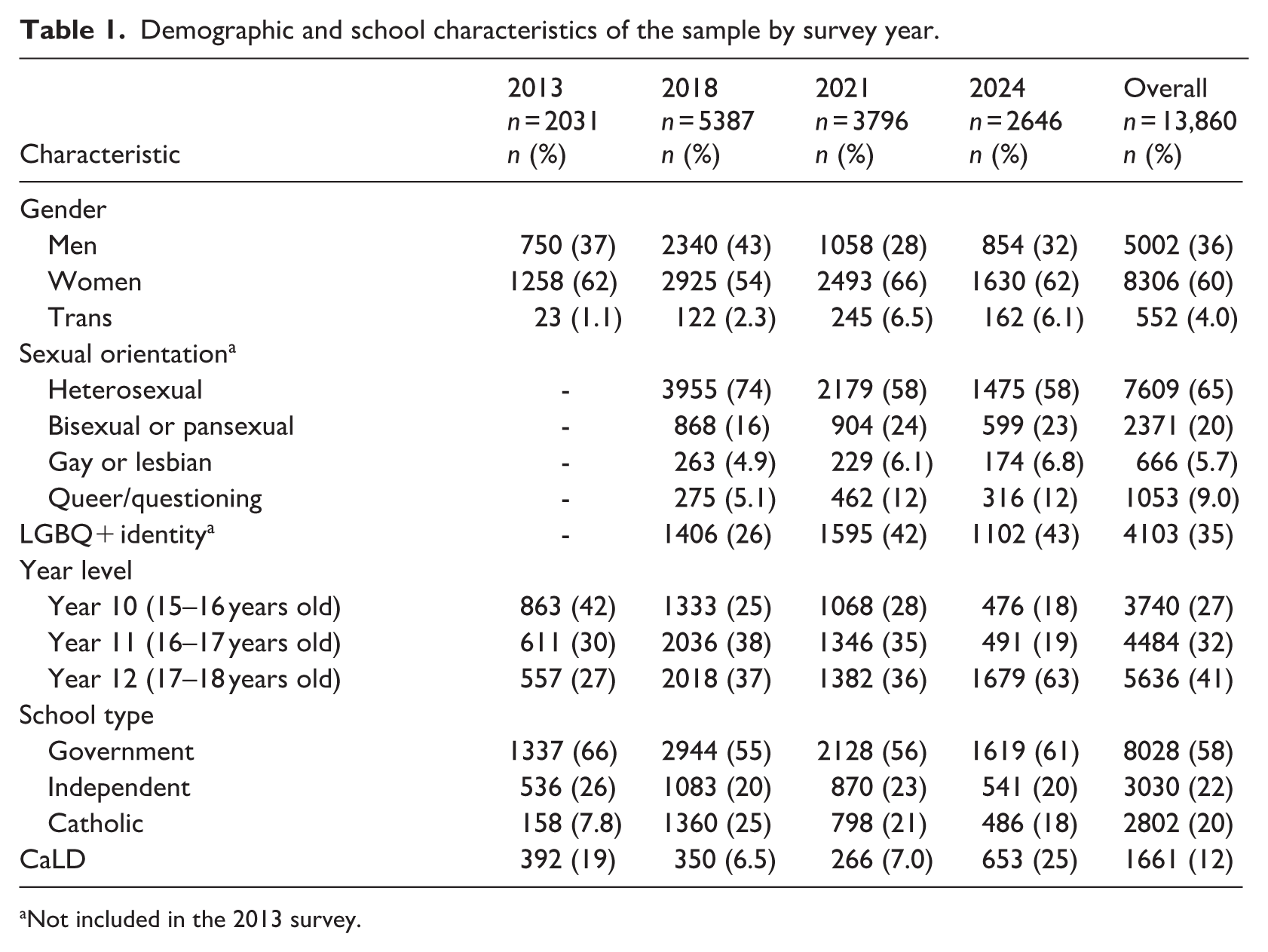
Not included in the 2013 survey.
Experiences of RSE
Table 2 shows participants’ reported receipt of RSE by survey year. The proportion of students who received RSE remained consistently high throughout survey years, ranging from 84% to 94%.
Participants reported experience of RSE by survey year.
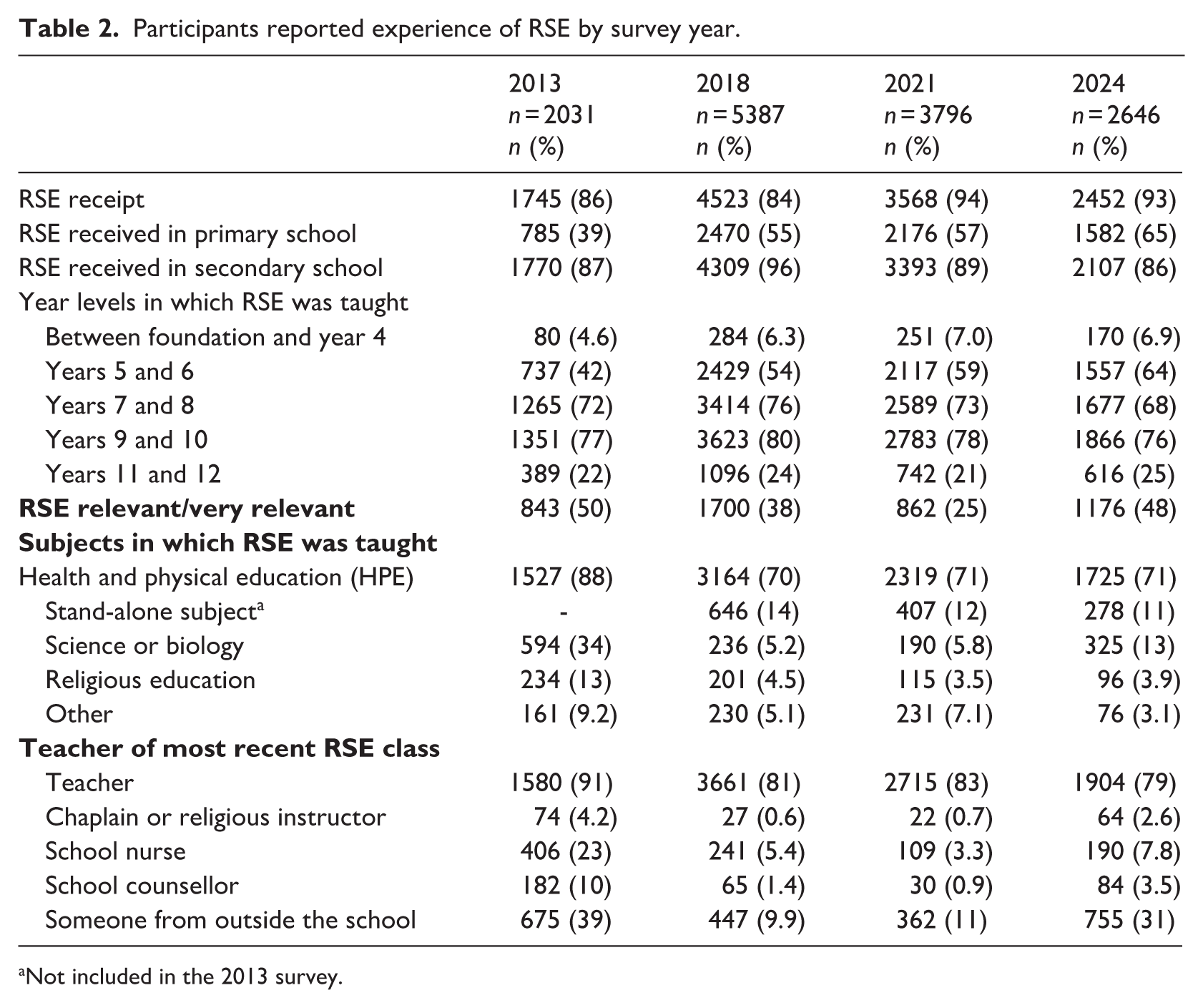
Not included in the 2013 survey.
During the COVID-19 pandemic, many schools adopted online schooling with a streamlined curriculum (Garg et al., 2020), which likely affected receipt of RSE during these years. Students who participated in the 2021 survey were asked if they received RSE during the pandemic, with 46% (n = 1297) reporting that they did not. This was higher among senior students: 25% (n = 189) of year 10 students did not receive RSE in 2021 compared to 47% (n = 464) of year 11 students and 62% (n = 644) of year 12 students. Perceived relevance of RSE was also lower in the 2021 wave. In 2013, 50% (n = 843) reported high perceived relevance, and 38% (n = 1700) in 2018. In 2021, 25% (n = 862) reported high perceived relevance, compared to 48% (n = 1176) in 2024.
Participants most frequently reported receiving RSE in years 9 and 10 (76%–80%) and years 7 and 8 (68%–76%), with increasing coverage in years 5 and 6 over time (42% in 2013 to 63% in 2024). Delivery in primary school (foundation to year 6) changed over time (from 43% in 2013 to 64% in 2024), while secondary school remained more consistent over time. Coverage was consistently low across survey years at both ends of schooling, with fewer than 8% receiving RSE in early primary school (foundation to year 4) and under 25% in senior secondary school (years 11 and 12) in all survey waves.
Health and physical education was the dominant subject context for RSE delivery across all years (70%–88%). Receipt of RSE within science/biology declined over the years from 34% in 2013 to 13% in 2024. Teaching RSE in religious classes also decreased from 13% in 2013 to 3.9% in 2024.
Classroom teachers were the primary educators of RSE (79%–91%), although their role declined slightly over time. The proportion of external facilitators were similar in 2013 (39%) and 2024 (31%), although fewer students reported external facilitators in 2018 (9%) and 2021 (11%). School counsellors as RSE educators declined from 2013 to 2024 (10%–3.5%).
Comparison of young people receiving RSE over time
Table 3 presents the results of a multiple logistic regression analysis examining the receipt of RSE. Reported receipt of RSE remained high across all survey waves (84%–94%). Compared to 2013, students surveyed in 2021 and 2024 had significantly higher odds of reporting RSE receipt (adjusted odds ratio [OR adj ] = 1.97; 95% CI = 1.49–2.59; p < .001 and OR adj = 1.56; 95% CI = 1.14–2.12; p = .005), while receipt was significantly lower in 2018 (OR adj = 0.60; 95% CI = 0.46–0.76; p < .001). These findings indicate a marked increase in RSE coverage in the most recent survey years (2021 and 2024) compared to 2013.
Multiple logistic regression of demographic characteristics on RSE receipt.
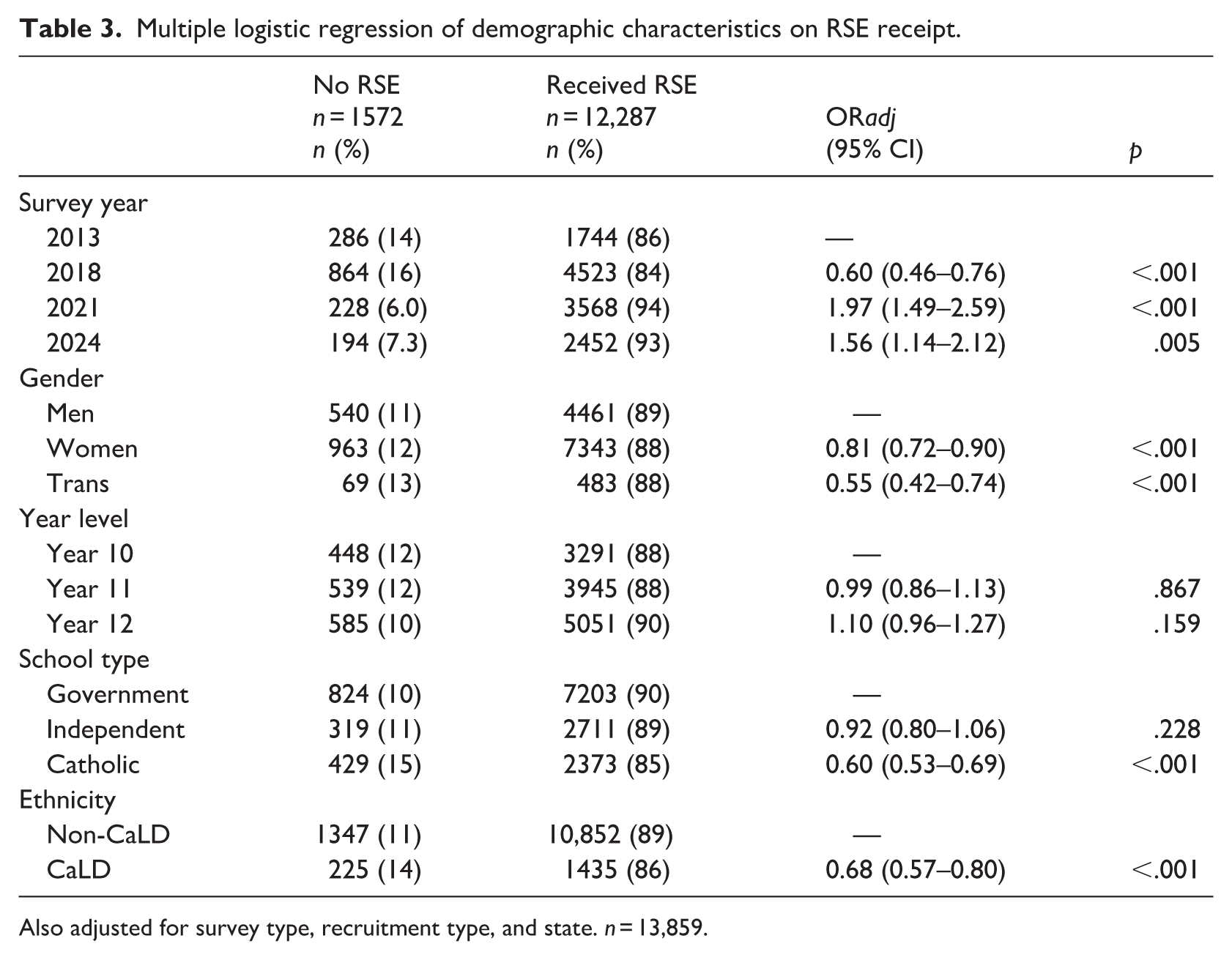
Also adjusted for survey type, recruitment type, and state. n = 13,859.
Although the difference represented only 1 percentage point (88%–89%), compared to young men, young women (OR adj = 0.81; 95% CI = 0.72–0.90; p < .001) and trans young people (OR adj = 0.55; 95% CI = 0.42–0.74; p < .001) had lower odds of receiving RSE.
Students who attended Catholic schools had lower odds of receiving RSE than students attending government schools (OR adj = 0.60; 95% CI = 0.53–0.69; p < .001). CaLD young people were significantly less likely to receive RSE than non-CaLD young people (OR adj = 0.68; 95% CI = 0.57–0.80, p < .001). Online Supplemental Appendix C presents these analyses stratified by year level.
In 2024, 64% of students (n = 1582) reported receiving RSE in primary school, compared to 39% (n = 782) in 2013 (Table 4). The odds of reporting RSE in primary school was significantly higher for all survey waves compared to 2013. These findings reflect a sustained increase in students reporting receipt of RSE in primary schools over the past decade.
Multiple logistic regression of demographic characteristics on RSE attendance during primary school.
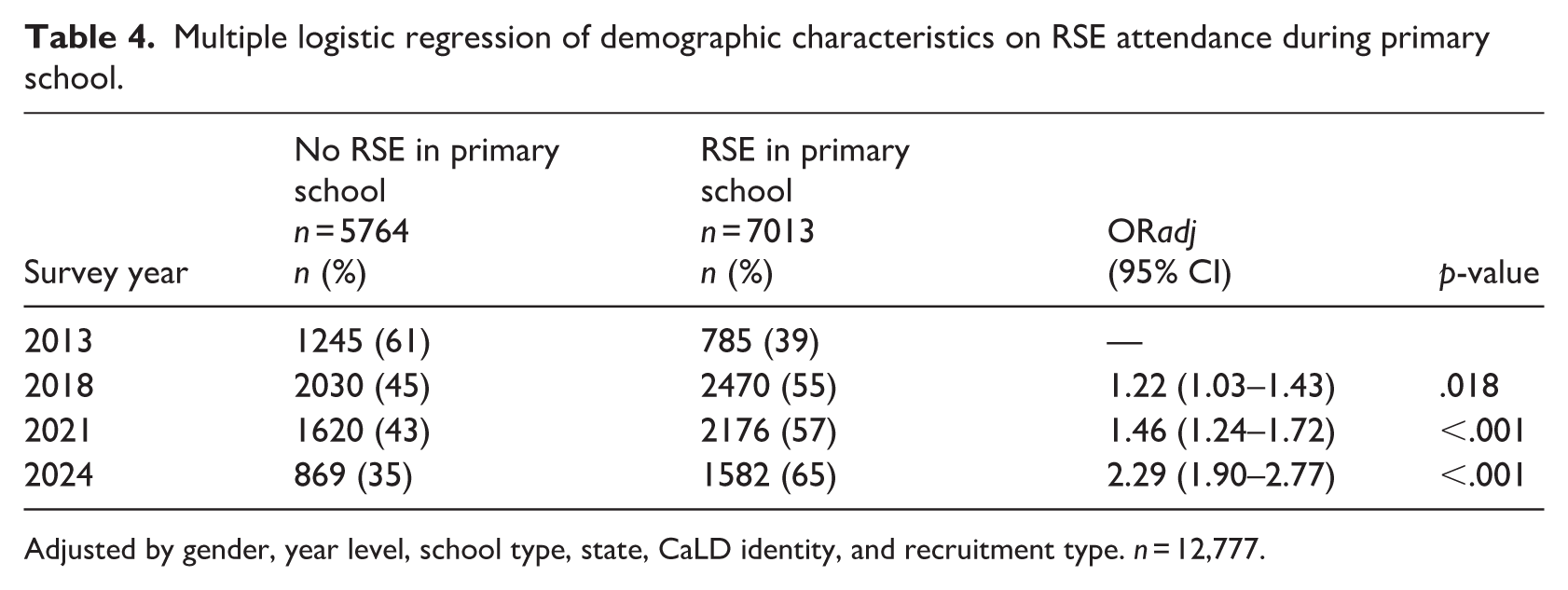
Adjusted by gender, year level, school type, state, CaLD identity, and recruitment type. n = 12,777.
In 2024, students were additionally asked whether they had opted out of RSE (i.e. chosen not to attend). Multiple logistic regression analysis (with LGBQ+ identity, year level, gender, and state as covariates determined by stepwise deletion) found that LGBQ+ students had higher odds of opting out than heterosexual students (OR adj = 1.52; 95% CI = 1.06–2.20; p = .023). There were 7.7% (n = 83) of LGBQ+ students who reported opting out compared to 4.7% (n = 66) of heterosexual young people. Young men (n = 53, 6.6%) also had higher odds of opting out than young women (n = 79, 5.2%; OR adj = 1.52; 95% CI = 1.04–2.20; p = .027). There were no other demographic differences.
Comparison of young people’s perceived relevance of RSE over time
Students were asked about the extent to which they perceived RSE to be relevant to their needs. Around half the students indicated that they perceived RSE to be highly relevant in 2013 (48%) and 2024 (49%). This was lower in 2018 (38%) and 2021 (25%).
A multiple logistic regression examining students’ perceived relevance of RSE (Table 5) shows that compared to 2013, students had significantly lower odds of reporting high relevance in 2018 (OR adj = 0.74; 95% CI = 0.65–0.84; p < .001) and 2021 (OR adj = 0.39; 95% CI = 0.34–0.45; p < .001). In contrast, there was no difference in perceived relevance between 2013 and 2024 (n = 1176, 48%; OR adj = 1.14; 95% CI = 0.99–1.32; p = .066).
Multiple logistic regression of demographic characteristics on RSE relevance.
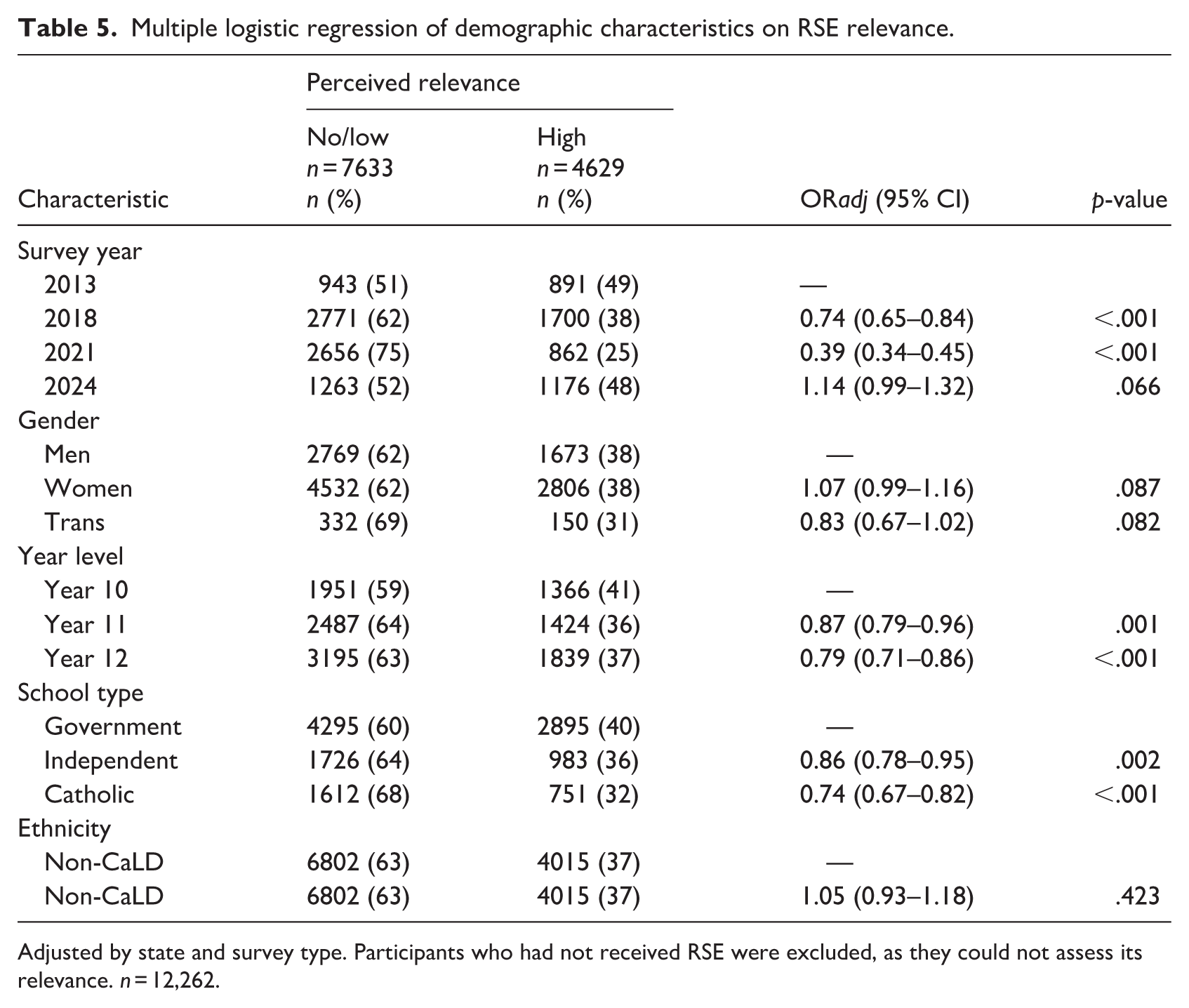
Adjusted by state and survey type. Participants who had not received RSE were excluded, as they could not assess its relevance. n = 12,262.
Compared to year 10 students, year 11 (OR adj = 0.87; 95% CI = 0.79–0.96; p = .004) and year-12 (OR adj = 0.79; 95% CI = 0.71–0.86; p < .001) students had lower odds of perceiving RSE as relevant.
Compared to government schools, perceived relevance was significantly lower for students at independent schools (OR adj = 0.86; 95% CI = 0.78–0.95; p = .002) and Catholic schools (OR adj = 0.74; 95% CI = 0.67–0.82, p < .001). Online Supplemental Appendix C presents these analyses stratified by year level.
Table 6 shows students’ perceived relevance of RSE across 2018, 2021, and 2024 for both LGBQ+ and heterosexual young people. Sexual orientation was not asked in 2013. LGBQ+ students reported significantly lower odds of perceived relevance of RSE (OR adj = 0.83; 95% CI = 0.76–0.92; p < .001; adjusted by gender, school type, year level, survey wave, and state) compared to heterosexual students. An interaction term between sexual orientation and survey year was not included as it did not improve model fit in nested likelihood-ratio tests (p = .11), indicating no evidence that differences between LGBQ+ and heterosexual students varied across survey waves. Perceived relevance was lowest in 2021 for both LGBQ+ students (n = 312, 21%) and heterosexual students (n = 547, 27%), and highest in 2024 (LGBQ+ students: n = 464, 45%; heterosexual students: n = 678, 50%).
A comparison perceived high relevance of RSE between heterosexual and LGBQ+ young people.
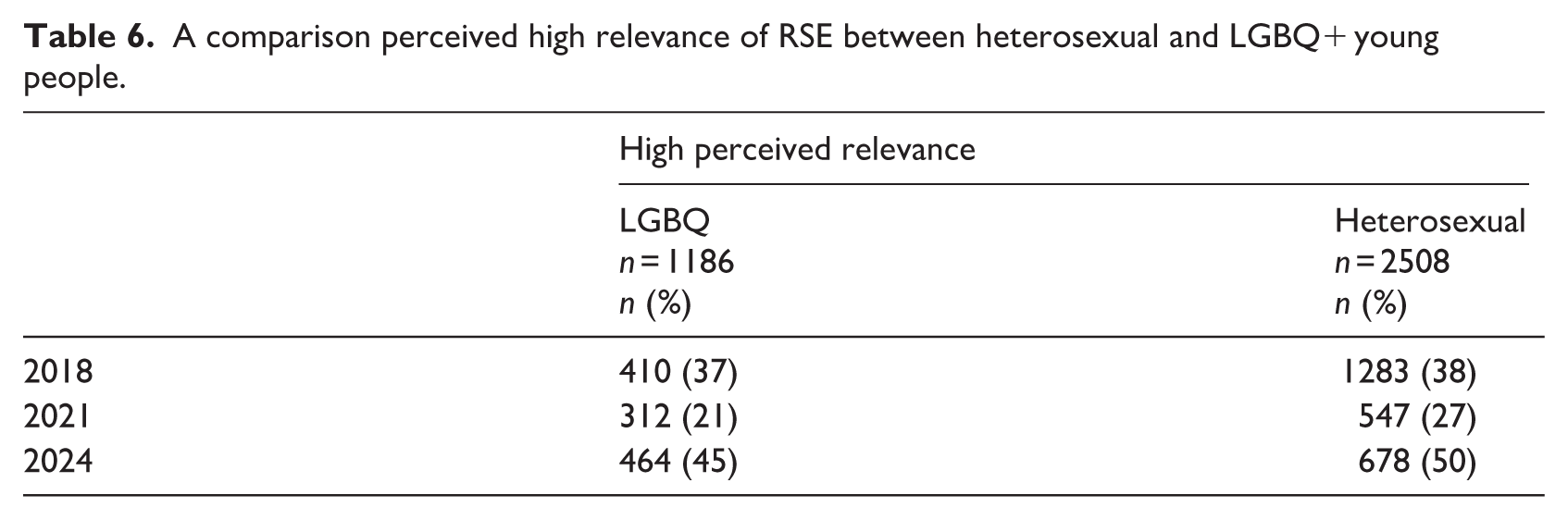
Perceived relevance for both groups was lowest in 2021 (LGBQ+ students: n = 312, 21%; heterosexual students: n = 547, 27%), and highest in 2024 (LGBQ+ students: n = 464, 45%; heterosexual students: n = 678, 50%).
Topics discussed in 2024
In 2024, students were asked which topics they had learnt about in RSE classes. The most reported topics were puberty and reproduction (n = 2191, 91%), sexual consent (n = 2011, 84%), condoms (n = 1868, 78%), and respectful relationships (n = 1804, 75%).
Multiple logistic regression models were used to examine whether coverage of each topic was associated with perceived relevance of RSE. Table 7 shows the proportion of young people who reported learning each topic during RSE, the OR and predicted relevance of RSE for young people who received RSE and those who did not, as well as the percentage of difference between the two.
Coverage of RSE topics in 2024 and predicted perceived relevance by topic.
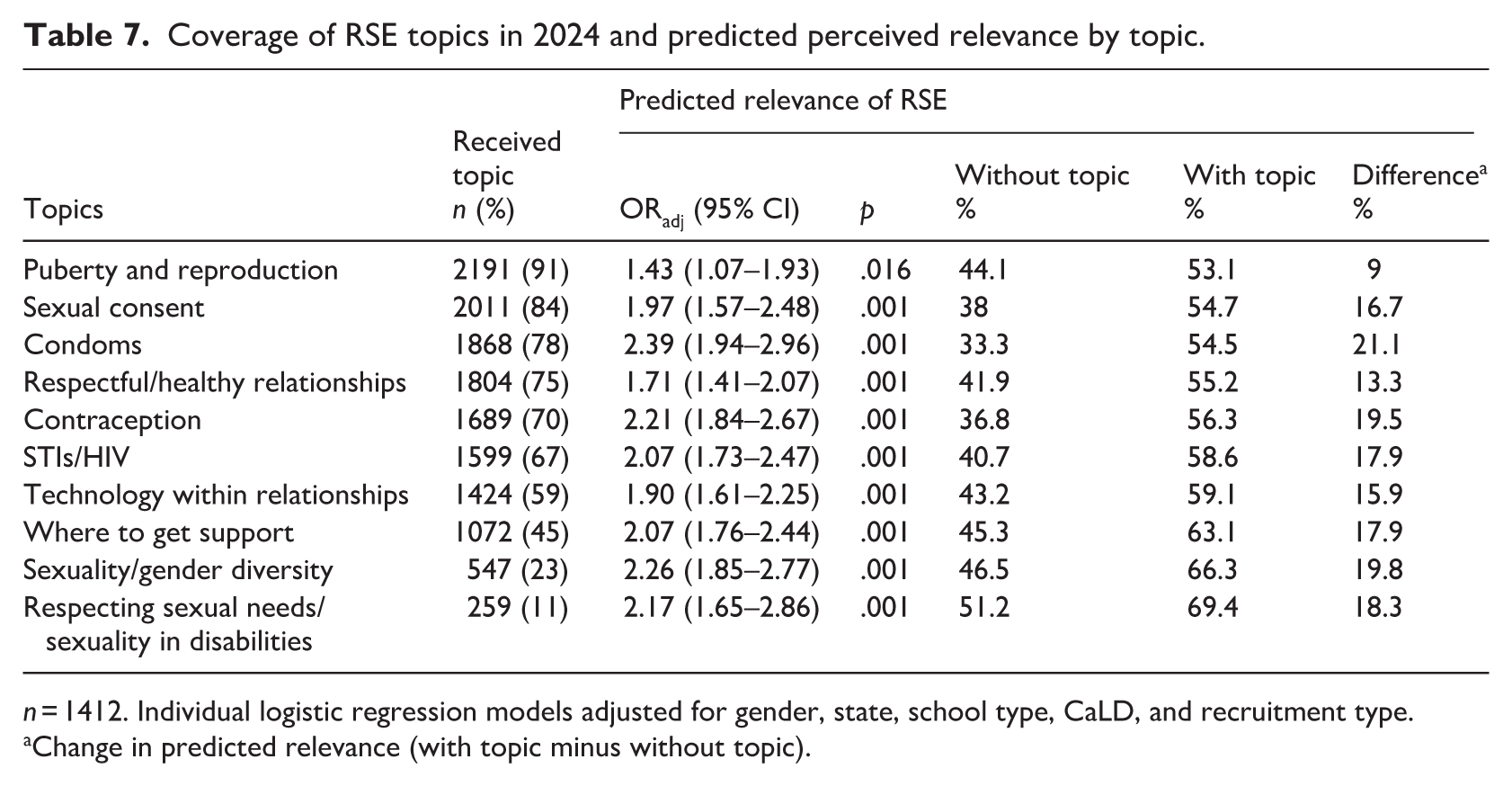
n = 1412. Individual logistic regression models adjusted for gender, state, school type, CaLD, and recruitment type.
Change in predicted relevance (with topic minus without topic).
Across all subject areas, predicted relevance was higher among students who received the topic, even after adjusting for demographic and school factors. The largest differences were for discussions about condoms (21.1%), content about sexuality and gender diversity (19.8%), contraception (19.5%), and discussing the sexual needs and sexuality in regard to disabilities (18.3%).
Overall, young people reported that they were taught an average of six topics during RSE (SD = 2.51). A greater number of topics were associated with higher perceived relevance of RSE (OR adj = 1.26; 95% CI = 1.21–1.30; p < .001).
Discussion
This study highlights important shifts in young people’s reports of receiving RSE, and perceptions of the relevance of RSE, across four waves of a large national Australian survey (2013, 2018, 2021, and 2024). First, these findings show higher receipt, between 2013 and 2024, among young people reporting that they received RSE during their primary school years. In 2024, nearly two-thirds of students reported receiving RSE in primary school compared with less than 40% in 2013, with analysis indicating higher receipt despite being adjusted for school type and demographic characteristics. Provision of RSE in primary school aligns with international recommendations (UNESCO, 2018). Developmentally appropriate RSE in the younger school years has demonstrable positive effects, including normalising conversations about consent, relationships, and diversity in ways that help to protect children from sexual abuse and harm (Robinson, 2013; UNESCO, 2018). The increase in numbers of young people receiving RSE in primary school between 2013 and 2024 possibly reflects the impact of several key initiatives delivered in Australia over this period, including the addition of RSE to the Australian curriculum in 2015 (Australian Curriculum, Assessment and Reporting Authority, 2016). State and territory governments have worked to embed respectful relationships education into the primary school curriculum, such as the Victorian Government’s compulsory Respectful Relationships Program, introduced in 2016 (Pfitzner et al., 2024; Premier of Victoria, 2015). The Royal Commission into Institutional Responses to Child Sexual Abuse Final Report (2017) also endorsed broader rollout of RSE and respectful relationships in primary schools, identifying the existing respectful relationships and RSE curricula as being a key framework to ‘increase children’s knowledge of child sexual abuse and build practical skills to assist in strengthening self-protective skills and strategies’ (Royal Commission into Institutional Responses to Child Sexual Abuse, 2017, Recommendation 6.2).
Although participation in RSE during primary school has increased since 2013, years 9 and 10 (approximately 15–16 years of age) remain the main period of delivery, with approximately 75% of participants receiving RSE in these school years. By comparison, only one in four young people (around 25% in all survey years) participated in RSE in years 11 and 12 (ages 17 and 18). This drop-off reflects both the end of compulsory schooling, with around 20% of young people dropping out of school by year 12 (Australian Bureau of Statistics, 2023), and the competing academic priorities in the final years of schooling. The Australian Curriculum, Assessment and Reporting Authority (2025) specifies that health and physical education is a designated learning area from foundation to year 10, but it is not compulsory for the senior years of schooling. Consequently, in most Australian schools, health and physical education remains non-compulsory or is not offered after year 10, limiting curriculum-based opportunities for delivery of RSE in years 11 and 12, which is most commonly delivered within health and physical education. While students are understandably focused on academic outcomes towards the end of secondary school, these are also the years in which they are more likely to be (or are becoming) sexually active and may be experiencing more complex sexual or romantic relationships compared to their younger years (Fisher et al., 2020; Lindberg et al., 2021). RSE is most effective when delivered at developmentally salient times, and delivery to older students would enable more nuanced and open conversations than what may be possible with younger students (Goldfarb and Lieberman, 2021; Kirby, 2007).
A significant finding in this study is the persistent gap between young people reporting they have received RSE and those who perceive it to be relevant to their lives. In all waves of this study, RSE delivery was high (between 84% and 94%), demonstrating that RSE has an established place within the Australian curriculum. However, at best, around half the students reported that their RSE classes were relevant to them (in 2013 and 2024), with this proportion lower in 2018 and 2021 (potentially, in part, due to the impact of online teaching of RSE during COVID-19 lockdown periods). These findings show that, even where RSE delivery has increased, its effectiveness may be limited if young people do not perceive it to be meaningful or useful. Consistent with this, other research indicates that young people find RSE to be inadequate, poorly timed, or disconnected from their lived realities (Goldfarb and Lieberman, 2021; Salam et al., 2016; Walker et al., 2023).
The increase in perceived relevance of RSE between 2018/2021 and 2024 in this study is notable and may provide some insight into factors that could enhance the relevance of RSE going forward. The #MeToo movement, gaining prominence in 2017, was a catalyst for widespread conversations about sexual harassment, gendered experiences, and consent (Keddie and Wilkinson, 2025; Mendes et al., 2018). This influenced young people’s expectations for RSE, which was evident in Australia by the rise of the ‘Teach us Consent’ campaign, which began as an online petition led by young women (Teach Us Consent, and The Foundation for Young Australians, 2021). It is possible that, in 2018 and 2021, the curriculum had not yet adapted to meet young people’s expectations for consent education (Kantor and Lindberg, 2020), resulting in lower perceived relevance compared to 2013. By 2024, there was a greater focus on sexual consent in Australian schools with the 2022 federal government ‘mandate’ to increase the consistency of consent education from foundation to year 10 (Australian Curriculum, Assessment and Reporting Authority, 2025). While the impact of mandatory consent education is yet to be evaluated, it is possible that a greater focus on sexual consent has helped to align the topics taught in RSE with issues young people perceive as useful and relevant in their lives.
In this study, LGBQ+ young people were less likely than their heterosexual peers to perceive RSE as relevant to their lives or needs. In addition, LGBQ+ young people were more likely than heterosexual young people to opt out of RSE. While we did not ask about young people’s reasons for opting out, it is possible that sexuality or gender-diverse young people choose not to attend RSE because of previous negative experiences, finding past content not relevant to them, the worry that they will experience exclusion or discrimination, or feeling exposed, within these lessons (Hobaica and Kwon, 2017). Fewer than one in four students (23%) reported learning about sexuality or gender diversity in RSE, indicating limited coverage of these topics within the curriculum. This finding is consistent with international research showing that RSE is often heteronormative, with limited inclusion of diverse sexualities, gender identities, and bodies (Charley et al., 2023; Rabbitte, 2020; Waling et al., 2021).
In 2024, young people were asked to report the topics they recalled having been taught. The most common topics were biological development, reproduction, consent, and respectful relationships, suggesting that consent is now well embedded within the RSE curriculum. However, only 11% reported that they had learned about sexual practices or what sex is like. This is a commonly cited gap in RSE. Studies have consistently shown that young people perceive RSE to be overly focused on biology, reproduction, and risk prevention, with limited content about how to navigate sexual relationships (Ezer et al., 2019b; Waling et al., 2021; Woodley et al., 2024). Our predictive models confirm that topics extending beyond basic education about puberty and reproduction, particularly content about condoms, contraception, sexual and gender diversity, and sexuality in relation to disability, are associated with substantially higher predicted relevance by 18%–20%. This is consistent with many young people’s expressed desire for more detailed education with an emphasis on practical aspects including the mechanics of sex and relationships (Waling et al., 2021; Woodley et al., 2024). While these topics may be more sensitive or challenging to approach in a classroom environment, a nuanced focus on the complexities of navigating sexual relationships, intimacy, and safety is an important element of consent education (Gilbert, 2018), and a greater focus on this may enhance the usefulness and relevance of RSE for young people.
The mode of RSE delivery also warrants attention as the ways in which information is taught may impact the content that can be discussed. There was a decline in the number of students reporting the involvement of external educators in delivery of RSE in 2018 and 2021, the years when perceived relevance was also lower. Evidence suggests that involving specialist external providers can enhance the quality of teaching and reduce discomfort among classroom teachers (Goldman, 2011; Vrankovich et al., 2025), and some students may prefer external facilitators (Pound et al., 2016). While a whole-school approach is the ideal model for delivery of comprehensive RSE (Bragg et al., 2022), the use of external educators as part of a multifaceted approach to RSE may help enhance the value of RSE for students.
Attendance at Catholic schools was associated with significantly lower receipt and perceived relevance of RSE compared to government schools. This pattern may reflect a more conservative approach typical within Catholic education (Flanagan, 2024). To ensure all young people receive a minimum standard of RSE, curriculum guidelines may require further reflection on how these subjects can be delivered in ways that are sensitive to faith. This need is particularly important for more contentious topics such as sexuality and gender diversity (Phillips et al., 2025). A faith-sensitive approach, which acknowledges religious values and beliefs, while not being determined by the views of a particular faith, could improve accessibility of RSE to young people within faith-based schools. It could also help to ensure that young people of faith feel included and represented within the RSE curriculum (Wareham, 2024). It is worth noting that a recent Australian survey of parent/carer attitudes towards RSE (Hendriks et al., 2024a) showed that, while opposition to certain topics was higher among parents who identified as strongly religious, compared to those who were not religious, overall opposition was modest. The vast majority of parents expressed support for their children receiving RSE, including content related to gender diversity, sexual orientation, and pleasure.
Limitations
The interpretation of changes over time must be tempered by methodological differences between survey years. Recruitment strategies varied across survey years, from early paper-and-pen school surveys to online recruitment, which has become increasingly difficult due to restrictions on youth-targeted advertising, reflecting broader trends in falling response rates in survey research (Arfken and Balon, 2011; Czajka and Beyler, 2016; Jabkowski and Cichocki, 2025; Morton et al., 2012). Survey formats also varied, with differences in question wording and inconsistent inclusion of items (such as sexual orientation and RSE topics). Apparent trends may therefore reflect design changes as much as substantive shifts in teaching practice. Measures were necessarily of high level, including single-item indicators of perceived relevance, which cannot capture nuance or recall bias; however, within a large repeated cross-sectional design, it remains a useful indicator of how RSE resonates across socio-demographic groups. As nonprobability sampling was used, the findings are not nationally representative, but demographic adjustments, sensitivity checks, and age-stratified analyses support cautious interpretation.
Participant demographics also changed over time, with increasing numbers identifying as sexuality or gender diverse. This may reflect greater engagement with online recruitment but also aligns with broader shifts in identity patterns among secondary students in Australia (Campbell et al., 2021; Jones, 2024; Twenge et al., 2024) and Australian Bureau of Statistics (2022) estimates showing higher LGBTI+ identification among young people than among older cohorts. This change likely increased visibility, recognition, and openness among young people about diverse sexuality and changes in terminology used in surveys, allowing young people to identify sexuality and gender using a broader range of terminology. While further research is needed for under-represented groups, such as the GOANNA study which focuses on Aboriginal and Torres Strait Islander young people (Ward et al., 2020), SSASH remains one of the few national time-series sources on RSE and will continue to evolve to address gaps and emerging issues.
Findings from this study suggest the RSE delivery in Australia is undergoing a period of change. While more young people received RSE across the years, especially during primary school years, its perceived relevance among young people remained low. Increased relevance from 2018/2021 to 2024 may indicate growing responsiveness to young people’s interests and to broader cultural and policy shifts including the strengthened incorporation of sexual consent into curriculums. Importantly, the content taught is directly associated with how relevant they find RSE, supporting the need for a balanced approach that provides essential, up-to-date, RSE content while remaining responsive to developmental needs and evolving social contexts. Ensuring that RSE is delivered during salient senior school years and that it is inclusive and representative of diverse identities and experiences will likely broaden the relevance and importance of RSE for young people.
Supplemental Material
sj-docx-1-hej-10.1177_00178969261458095 – Supplemental material for Students’ perceptions of relationships and sexuality education in Australian schools from 2013 to 2024
Supplemental material, sj-docx-1-hej-10.1177_00178969261458095 for Students’ perceptions of relationships and sexuality education in Australian schools from 2013 to 2024 by Sylvia Kauer and and Jennifer Power in Health Education Journal
Footnotes
Acknowledgements
We are grateful for the contribution of over 13,000 young people who have completed the survey over the years and the support of schools, educators, youth, and sexual health services. We also thank the director of the Australia Research Centre in Sex, Health and Society, Adam Bourne, for his ongoing leadership and support of this work. We acknowledge the many colleagues who have contributed to the development and delivery of the project over the previous survey waves included in this paper, including Pamela Blackman, Graham Brown, Marina Carman, Roz Chapman-Bellamy, Paulina Ezer, Christopher Fisher, Wendy Heywood, Lucille Kerr, Jayne Lucke, Gosia Mikolajczak, Anne Mitchell, Marian Pitts, Kent Patrick, and Andrea Waling.

Funding
The authors disclosed receipt of the following financial support for the research, authorship, and/or publication of this article: This study was funded by the Australian Department of Health, Disability and Ageing.
Declaration of conflicting interests
The authors declared no potential conflicts of interest with respect to the research, authorship, and/or publication of this article.
Data availability statement
Data supporting the analysis presented here may be available upon reasonable request from the corresponding author.
AI use
Microsoft Copilot was used to assist with text editing, including improving clarity, coherence, and conciseness in the manuscript and to support troubleshooting and code editing in R. The tool was not used to generate ideas, conduct analyses, or interpret findings. All analyses, data process decisions, intellectual contributions, and final decisions about the manuscript’s content were made by the authors.
Supplemental material
Supplemental material for this article is available online.
References
Supplementary Material
Please find the following supplemental material available below.
For Open Access articles published under a Creative Commons License, all supplemental material carries the same license as the article it is associated with.
For non-Open Access articles published, all supplemental material carries a non-exclusive license, and permission requests for re-use of supplemental material or any part of supplemental material shall be sent directly to the copyright owner as specified in the copyright notice associated with the article.
