






Abstract
Keywords
Introduction
The pediatric population is affected by a diverse range of medical conditions, many of which necessitate drug therapy. In recent years, the utilization of multiple drugs in pediatrics has become increasingly common. 1 Pediatric patients are prescribed an average of 2 to 12 drugs per prescription, depending on disease severity and the level of healthcare facility.2 -4 For this reason, ensuring safe and appropriate utilization of drugs in this population is crucial and requires robust continuous assessment and evidence generation.
Drug utilization review involves the systematic evaluation of prescribing, dispensing, and drug use which are essential for promoting rational prescribing practices. 5 The World Health Organization (WHO) Prescribing Indicators consists of 5 indicators related to the utilization of drugs, designed to evaluate prescribing trends in healthcare facilities. 6 Notably in pediatric populations, the average number of drugs prescribed per encounter, the percentage of drugs prescribed by generic name, and the percentage of encounters where an antibiotic was prescribed often deviates from recommended standards. 7 However, the term “potentially inappropriate prescriptions (PIP)” is frequently used in the evaluation of clinical aspects of drug use. Potentially inappropriate prescriptions refer to the prescription of drugs where the associated risks outweigh the benefits, especially when safer and more effective alternatives are available. 8 Continuous assessment of drug utilization and appropriateness is required to improve the rational use of drugs, as irrational drug use may result in ineffective treatment, exacerbation of illness, and increased healthcare costs. 9
The assessment of PIP can be done by using explicit and implicit tools. Explicit tools evaluate PIP based on defined criteria, which identifies the drug use practice in a manner that poses more risk than benefit, particularly where safer alternatives exist. 8 On the other hand, implicit tools assess broader aspects of PIP related to prescribing practices, including drug selection, dosing, frequency, and duration. 10 Several tools have been developed to specifically evaluate PIP among pediatric patients. One of the earliest tools, the Pediatrics Omission of Prescriptions and Inappropriate Prescriptions (POPI), was developed in France to identify potentially inappropriate medicine use in pediatric patients.9,11 Since then, other tools have been adapted to meet the specific needs of various countries and international contexts. 12 In the United States, the Key Potentially Inappropriate Drugs in Pediatrics (KIDs) List was developed based on the concept of potentially inappropriate medicine use in the elderly. 13 This tool is suitable for use without patient clinical information in children aged below 18 years at tertiary care settings. 13 Studies have shown that while most drugs listed in the KIDs List are included in hospital formularies for both inpatient and outpatient use, their inappropriate use, defined by the occurrence of adverse events, remains low.14,15 However, concerns on low levels of safety measure implementation leave pediatric patients vulnerable.14,15
Previous studies have reported PIP prevalence rates ranging from 0.04% to 69% using explicit tools and up to 20% with the implicit tools. 16 Despite numerous studies on drug utilization and prescribing appropriateness in healthcare facilities, research focusing on pediatric populations remains limited. Evaluations of prescribing patterns in pediatrics often overlook the critical aspect of appropriateness. Additionally, data on discharged pediatric patients which represent the transition stage between inpatient and outpatient care has been inadequately reported. 7 Thus, the study aimed to analyze drug utilization and prevalence of PIP and determine the risk factors for PIP among discharged pediatric patients in a tertiary care hospital. The findings of the study contribute to the growing body of evidence that may ultimately enhance prescribing practices and improve patient outcomes in pediatric care.
Materials and Methods
Operational Definitions
The following operational definitions were used in the study:
Study Design & Setting
The cross-sectional study was conducted from March to May 2023 at the discharge pharmacy units of a tertiary care government hospital in Malaysia. The hospital offers services across 20 clinical areas, including inpatient and outpatient pediatric care. It has 1261 official beds, with 263 allocated for inpatient pediatric services. 18 The total number of admissions to all pediatric wards amounts to approximately 20 000 per year with an average bed occupancy rate (BOR) of 108%. Pediatric discharge prescriptions are managed by inpatient pharmacy services through 2 discharge pharmacy units, operating during and outside office hours. For drugs prescribed for durations exceeding 1 month, prescriptions are filled for a 1-month supply, with patients collecting refills on stipulated dates.
Eligibility Criteria
Prescriptions received at the discharge pharmacy units from the pediatric patients who were discharged from the wards were included in this study. In keeping with the European Medicines Agency (EMA) and the International Council for Harmonization (ICH) classification, pediatric patients include neonates, infants, children, and adolescents up to 18 years old. 12 The exclusion criteria included prescriptions containing non-formulary drugs and refill prescriptions.
Sample Size and Sampling
The sample size was calculated using the formula proposed in a previous study. 19 The formula used is as stated below.
n = Desired sample size
Z1−α/2 = Critical value and a standard value for the corresponding level of confidence. At 95% CI or 5% level of significance (type-I error) it is 1.96.
P = Expected prevalence or based on previous research
q = 1−p
d = Margin of error or precision
Based on the monthly workload data at the study site, the estimated prevalence of pediatric discharge prescriptions was 13%. Using 0.13 prevalence rate for pediatric discharge prescriptions, precision value of 0.05, and a Z-value of 1.96, the formula yielded a minimum sample size of 210 patients. A minimum sample of 600 was recommended by WHO for drug utilization review. 5 However, the BOR, annual admission estimates, and the prevalence of acute cases at the study site suggest the possibility of obtaining more than 600 samples during the study period. Convenience sampling was used to include all eligible pediatric discharge prescriptions during the study period.
Data Source and Collection
The data from discharge pediatric prescriptions were carefully reviewed and transferred to a structured, validated, and pilot-tested data collection form hosted on Google Drive, with access restricted to researchers only. For each prescription, relevant information was systematically documented, including the patient’s age, gender, and diagnosis, as well as details of the prescribed drugs, such as drug name, dose, frequency, route of administration, and duration of therapy. Interventions made by pharmacists based on prescription requirements and drug use were extracted.
Drug utilization was assessed using the World Health Organization (WHO) Prescribing Indicators. 5 For calculation, each prescription was considered as a single encounter. The calculation for each prescribing indicator is outlined below:
Average number of drugs per encounter
The total number of drugs prescribed was divided by the total number of prescriptions.
Example: If a total of 5000 drugs were prescribed across 1000 prescriptions, the average number of drugs per encounter would be calculated as the total number of drugs prescribed divided by the total number of prescriptions. Thus, the average number of drugs per encounter is 5.
Percentage of encounters with an antibiotic prescribed
The number of prescriptions where at least 1 antibiotic was prescribed, divided by the total number of prescriptions included in the study, multiplied by 100.
Example: If 100 prescriptions included at least 1 antibiotic out of a total of 1000 prescriptions, the percentage of prescriptions with an antibiotic would be calculated as the number of prescriptions with at least 1 antibiotic was prescribed divided by the total number of prescriptions, multiplied by 100. Thus, the percentage of encounters with an antibiotic prescribed is 10%.
Percentage of encounters with an injection prescribed
The number of prescriptions where at least 1 injection was prescribed, divided by the total number of prescriptions included in the study, multiplied by 100.
Example: If 100 prescriptions included at least 1 injection out of a total of 1000 prescriptions, the percentage of prescriptions with an injection would be calculated as the number of prescriptions with at least 1 injection was prescribed divided by the total number of prescriptions, multiplied by 100. Thus, the percentage of encounters with an injection prescribed is 10%.
Percentage of drugs prescribed by generic name
The number of drugs prescribed by the generic name, divided by the total number of drugs prescribed, multiplied by 100. If a drug was written using a brand name, it was not counted as a prescribed by generic name, even if a generic equivalent existed. Likewise, drugs that had no generic equivalent and were only available as a brand-name product were also counted as not prescribed by generic name. This aligns with WHO recommendations for evaluating generic prescribing practices. 5
Example: If 200 drugs were prescribed using generic name of a total of 2000 drugs prescribed, the percentage of drugs prescribed by generic name would be calculated as the number of drugs prescribed using generic name divided by the total number of drugs prescribed, multiplied by 100. Thus, the percentage of drugs prescribed by generic name is 10%.
Percentage of drugs prescribed from the Essential Medicines List (EML)
The number of drugs prescribed from EML, divided by the total number of drugs prescribed, multiplied by 100. The Malaysian National Essential Medicines List (NEML) 20 was referred to determine the essentiality of prescribed drugs.
Example: If 200 drugs were prescribed from EML of a total of 2000 drugs prescribed, the percentage of drugs prescribed from EML would be calculated as the number of drugs prescribed from EML divided by the total number of drugs prescribed, multiplied by 100. Thus, the percentage of drugs prescribed by from the EML is 10%.
All drugs were classified according to the WHO Anatomical Therapeutic Chemical (ATC) classification system. The antibiotics were classified according to the WHO AWaRe (Access, Watch, Reserve) classification. 21 The “Access” antibiotics are recommended as first-line treatments for common infections due to their narrow spectrum, lower resistance risk, and cost-effectiveness. 21 “Watch” antibiotics have a higher potential to drive antimicrobial resistance (AMR) and are primarily used for severe infections under strict monitoring. 21 “Reserve” antibiotics serve as last-resort options for multidrug-resistant infections and are restricted to critical cases. 21
Potentially inappropriate prescription was assessed using implicit and explicit tools. The implicit tool is a prescription intervention categorization based on a pharmacy management tool widely used across MOH pharmacy facilities in Malaysia (Supplemental Table 1). 22 This tool focused on issues such as incomplete prescriptions, inappropriate regimens, and other forms of drug-related inappropriateness.
For explicit assessment, the Key Potentially Inappropriate Drugs in Pediatrics (KIDs) List was used. 13 This evidence-based tool includes 67 potentially inappropriate pediatric drugs and 10 excipients, offering a robust resource for clinicians and institutions to enhance drug safety in pediatric care. 13 The KIDs List does not require patient-specific clinical information, making it practical to evaluate the discharge pediatric prescriptions. The KIDs List provides recommendations for drug use in pediatric patients, categorizing drugs as either “avoid” or “use with caution.” 13 Any prescription that included a drug used outside the KIDs List recommendations was classified as a PIP. For example, in the KIDs List, azithromycin is not recommended for neonates unless used for treating Bordetella pertussis or Chlamydia trachomatis pneumonia. If a neonate was prescribed azithromycin for an indication other than these conditions, it was classified as a PIP.
Statistical Analysis
The data collected was analyzed using SPSS version 29 (SPSS Inc., Chicago, IL, USA, 2022). Descriptive analysis was conducted using mean/standard deviation (SD) for continuous variables or median/interquartile range (IQR) based on normality. On the other hand, frequency and percentages were used to express categorical variables.
In keeping with PIP risk factors identified in previous study, 16 independent variables such as number of drugs prescribed, age categories, gender, and ethnicity were considered for risk factor determination. Univariate logistics regression was performed to determine the significant independent variables. The independent variables with a P-value of less than .25 and clinical significance were considered into the multivariate logistic regression. A multivariate logistic regression model was created to determine significant risk factors associated with PIP. Forward, backward, forward stepwise and backward stepwise methods were applied. Multicollinearity and interaction tests were conducted to ensure no correlation and interaction between independent variables in the final model. The preliminary main effects model was selected based on the criteria of best fit, clinical plausibility, and statistical significance, evaluated using the Hosmer-Lemeshow test, classification table, and area under the receiver operating characteristic (ROC) curve. Adjusted odds ratios, regression coefficients, 95% confidence intervals, and Wald statistics were reported, with a P-value of<.05 considered statistically significant.
Ethical Considerations
As the study used only prescription data, individual patient consent was not required. The study was registered with the National Medical Research Register (https://nmrr.gov.my/; NMRR ID-24-00155-2ST4), and ethical approval was granted by the Medical Research and Ethics Committee (MREC) of the MOH, ensuring that all research was conducted in compliance with national ethical standards. The study was reported using the Strengthening the Reporting of Observational studies in Epidemiology (STROBE) guidelines. 23
Results
There were 1955 prescriptions collected during the study period. Three prescriptions for non-formulary drugs were excluded. A total of 1952 pediatric discharge prescriptions were analyzed (Table 1), with a majority being prescriptions for male patients (1119 prescriptions, 57.32%). The most common age category was children aged 2 to 11 years (956 prescriptions, 48.98%). The mean age of the patients was 4.61 years (SD = 4.72).
Demographic Characteristics of Pediatric Patients and Drug Utilization Based on Discharge Prescriptions (n = 1952).

Polypharmacy: The use of 5 or more drugs per prescription.
Total number of drugs = 3304.
Drug Utilization Assessment
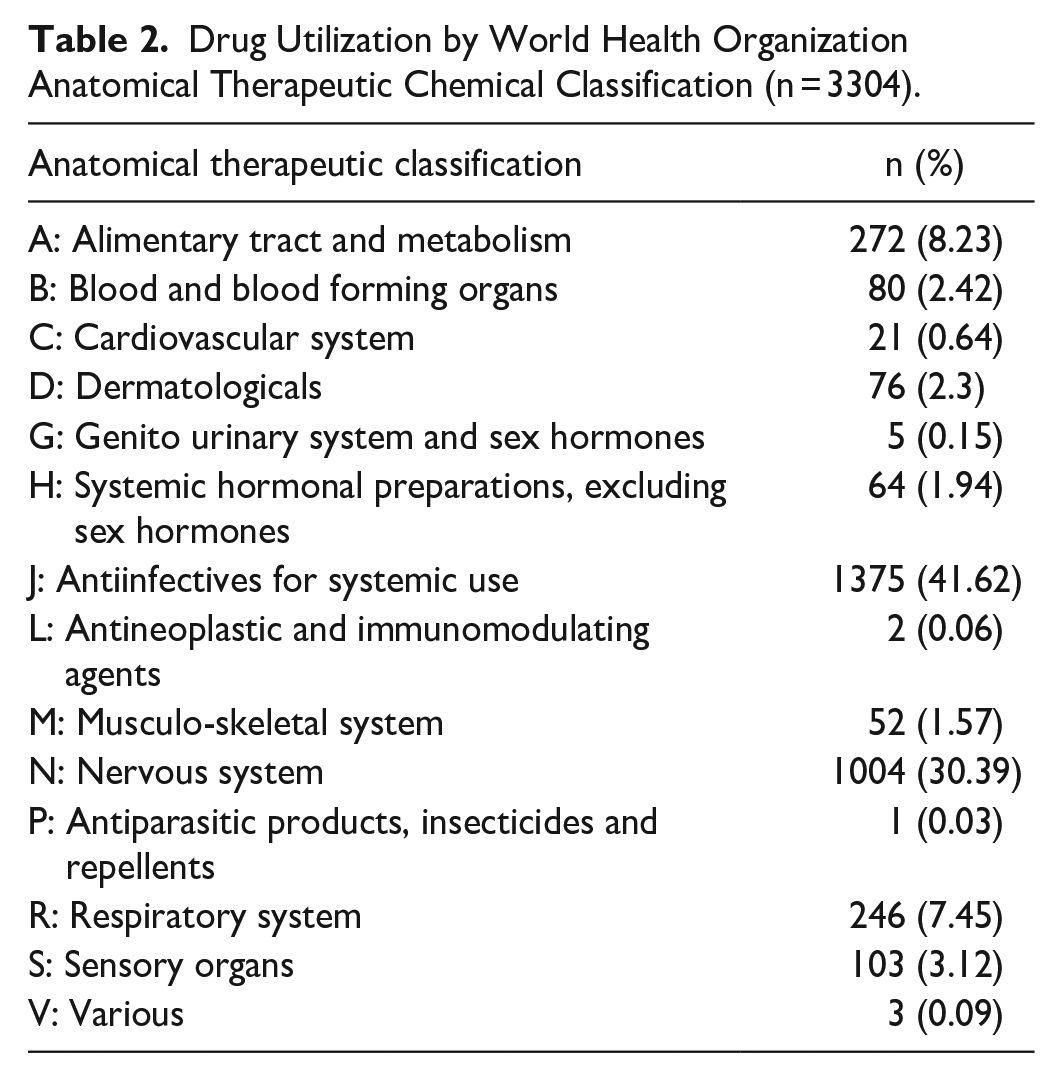
A total of 3304 drugs were prescribed, covering 149 drug types. The number of drugs per prescription varied from 1 to 10. Most pediatric discharge prescriptions (1008 prescriptions, 51.64%) contained a single drug, while 34.12% (666 prescriptions) contained 2 drugs. Prescriptions containing 3 or more drugs accounted for 14.24% (278 prescriptions), while 1.13% (22 prescriptions) contained 5 or more drugs. Oral liquid dosage forms were the most prescribed, accounting for 2297 drugs (69.52%). The top 3 drug classes based on the ATC classification system were anti-infectives for systemic use (1375 drugs, 41.62%), nervous system drugs (1004 drugs, 30.39%), and alimentary tract and metabolism drugs (272 drugs, 8.23%; Table 2). The proportion of anti-infectives based on the AWaRe classifications were Access (1037 drugs, 31.39%), Watch (324 drugs, 9.81%), and no antibiotics from the Reserve category were prescribed.
Drug Utilization by World Health Organization Anatomical Therapeutic Chemical Classification (n = 3304).
Drug utilization assessment based on the WHO Prescribing Indicators are reported in Table 3. A total of 3304 drugs were prescribed across 1952 prescriptions, with the average number of drugs per encounter was found to be 1.69. The proportion of antibiotic prescriptions was 68.55% (1338 prescriptions) and the percentage of encounters with injections was 0.05% (1 prescription). The percentage of drugs prescribed by generic name was 62.38% (2061 drugs) and drugs from the NEML accounted for 90.35% (2985 drugs). Three out of 5 indicators, that is, the use of antibiotics, generic name and NEML drugs were reported to be outside the WHO recommended standard values.
Drug Utilization Based on the World Health Organization Prescribing Indicators (n = 1952).
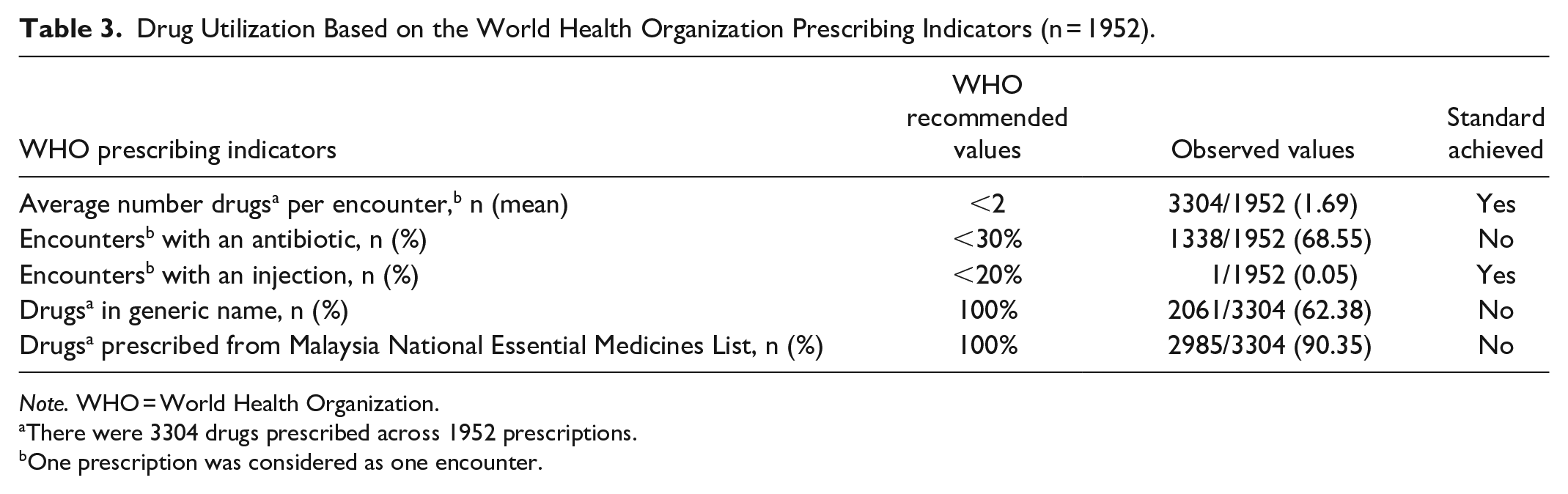
Note. WHO = World Health Organization.
There were 3304 drugs prescribed across 1952 prescriptions.
One prescription was considered as one encounter.
Potentially Inappropriate Prescription Assessment
In total, there were 159 prescriptions (8.15%) classified as PIP (Table 4). Potentially inappropriate prescriptions were more frequent among male patients (95 prescriptions, 4.87%), children aged 2 to 11 years (66 prescriptions, 3.38%), and Malay ethnicity (126 prescriptions, 6.45%). Potentially inappropriate prescriptions were identified using pharmacist intervention categories (implicit tool) in 82 prescriptions (4.2%) and the KIDs List (explicit tool) in 80 prescriptions (4.09%). Three prescriptions were classified as PIP by both implicit and explicit tools.
Distribution of Potentially Inappropriate Prescriptions by Demographic Characteristics of Pediatric Patients Based on Discharge Prescriptions (n = 1952).
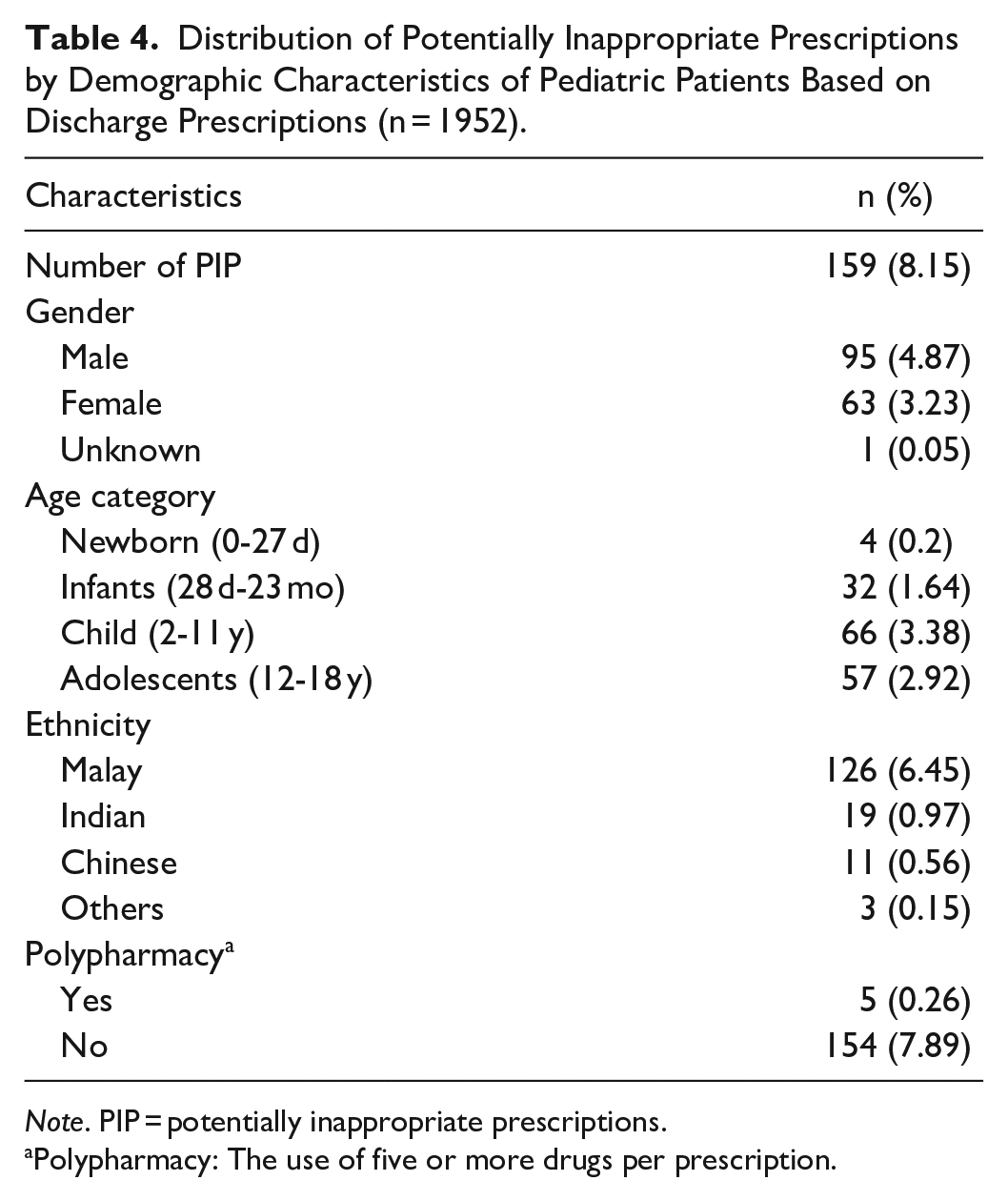
Note. PIP = potentially inappropriate prescriptions.
Polypharmacy: The use of five or more drugs per prescription.
A total of 93 interventions for PIP based on the implicit tool were recorded across 82 prescriptions (4.2%; Table 5). There was 1 intervention in 79 prescriptions and 2 interventions in 11 prescriptions. The proportion of PIP category based on the implicit tool was inappropriate regimen (66 interventions across 61 prescriptions, 3.13%), incomplete prescriptions (23 interventions across 20 prescriptions, 1.02%), and others (4 interventions across 4 prescriptions, 0.2%). Most PIP interventions were recorded for inappropriate dose (48 interventions across 47 prescriptions, 2.41%) and inappropriate frequency (15 interventions across 15 prescriptions, 0.77%).
Potentially Inappropriate Prescriptions by Prescription Intervention Categories (n = 1952).
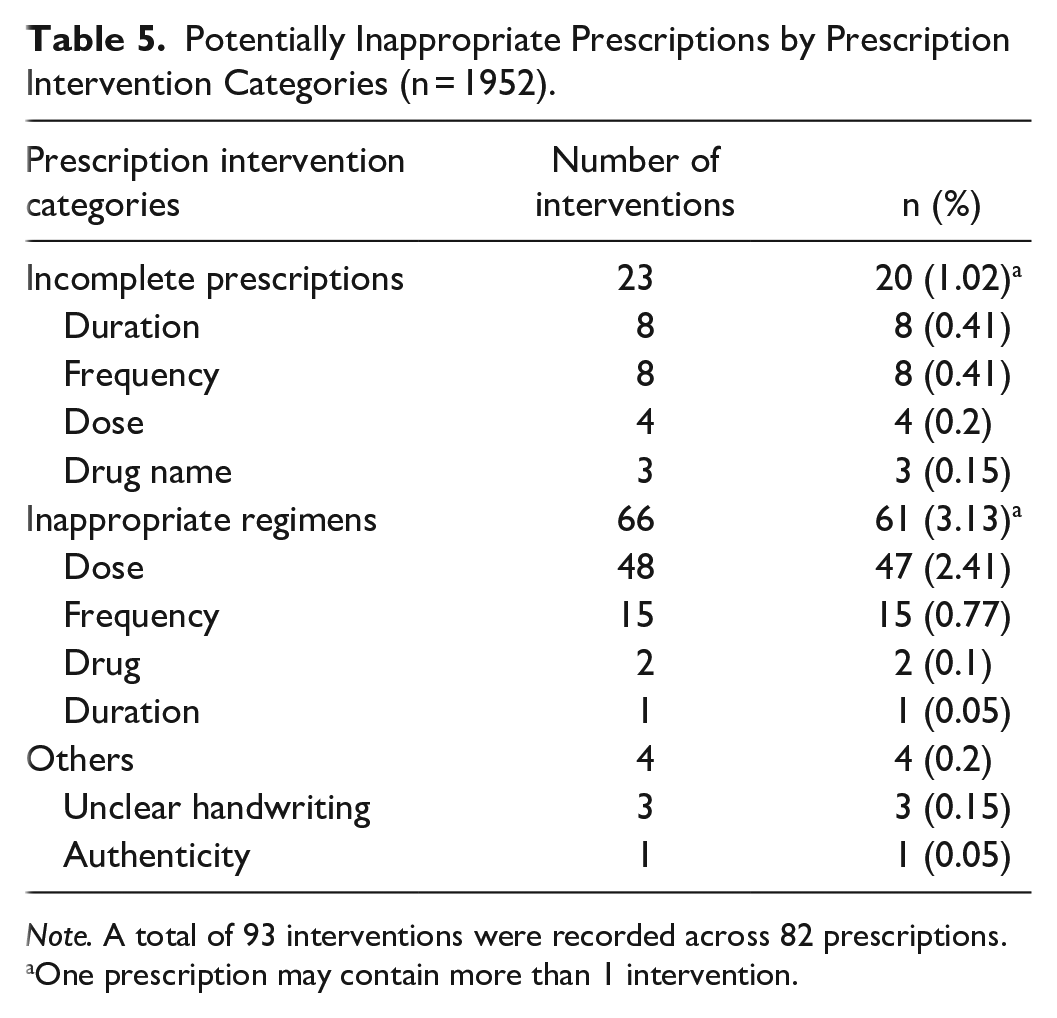
Note. A total of 93 interventions were recorded across 82 prescriptions.
One prescription may contain more than 1 intervention.
Out of 67 drugs listed in the KIDs List, 16 (23.88%) were prescribed to patients (Supplemental Table 2), of which 10 (14.93%) were categorized as PIP (Table 6). Tramadol had the highest prevalence of PIP, with all 40 prescriptions (2.05%) classified as inappropriate. Similarly, all prescriptions for chlorhexidine 0.2% (18 prescriptions) and choline salicylate 8.7% with cetylkonium chloride (6 prescriptions) were deemed inappropriate. In comparison to the total number of prescriptions for each drug, the proportion of PIP was lower for sodium valproate (8 out of 20 prescriptions, 0.41%) and azithromycin (2 out of 110 prescriptions, 0.1%).
Prevalence of Potentially Inappropriate Prescriptions According to the KIDs List (n = 1952).

Note. The KIDs List provides recommendations for pediatric drug use, categorizing drugs as “avoid” or “use with caution”. KIDs List = key potentially inappropriate drugs list; PIP = potentially inappropriate prescriptions
Risk Factors for Potentially Inappropriate Prescriptions
A multivariate logistic regression analysis was conducted to assess the significant risk factors associated with PIP (Table 7). The analysis revealed that the number of drugs prescribed was significantly associated with PIP (adjusted odds ratio (aOR) = 1.63, 95% CI (1.40, 1.89), P < .001), indicating that the higher the number of discharge drugs, the more likely the prescriptions to be associated with PIP. Additionally, the patients’ age category was found to be a significant risk factor. Multiple logistic regression analysis showed that PIP was likely in pediatric patients of ages 28 days to 23 months (aOR = 0.15, 95% CI (0.05, 0.49), P = .001), and those aged 2 to 11 years (aOR = 0.22, 95% CI (0.07, 0.71), P = .011).
Logistic Regressions Assessing Significant Risk Factors for Potentially Inappropriate Prescriptions.
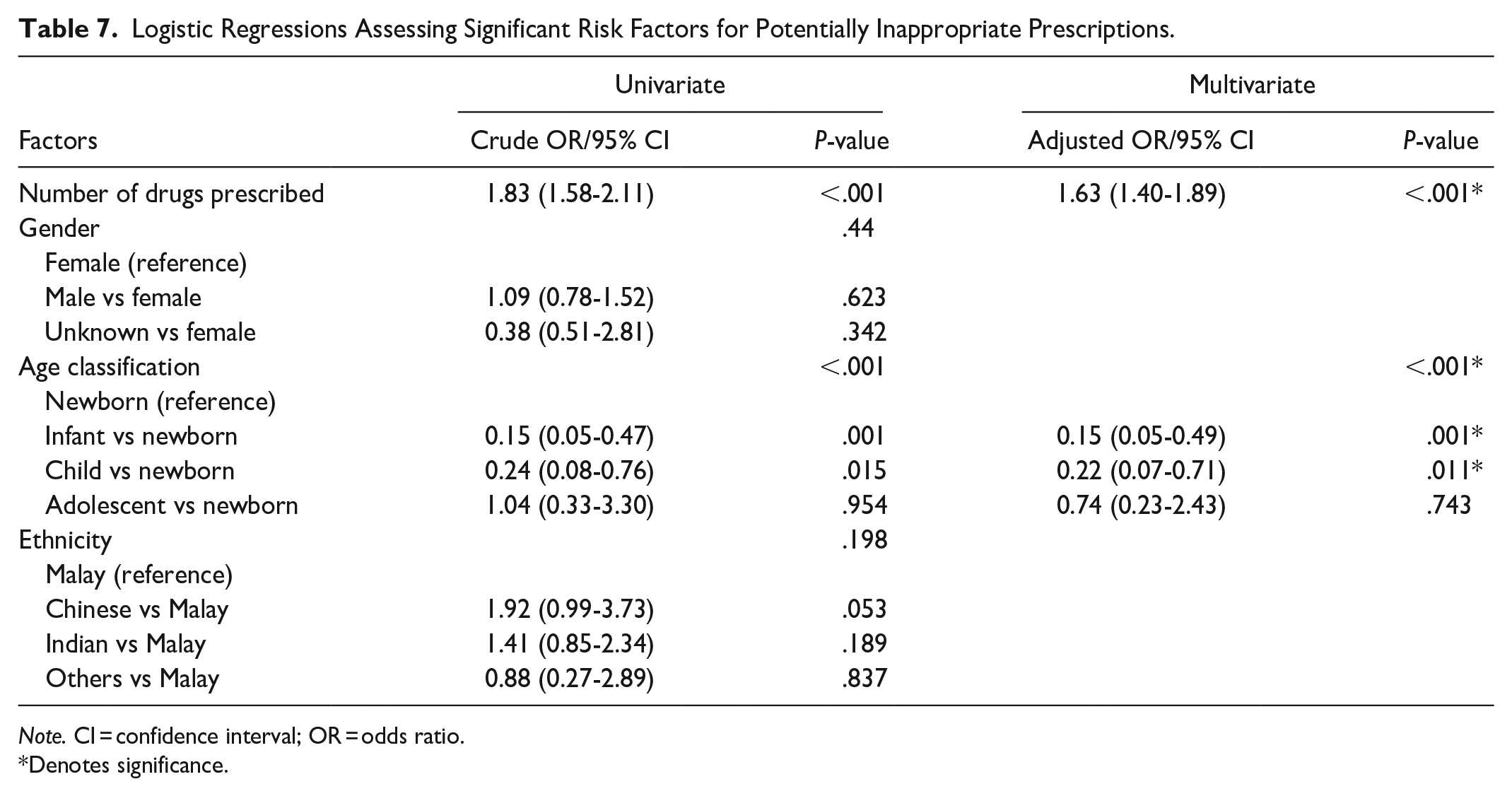
Note. CI = confidence interval; OR = odds ratio.
Denotes significance.
The regression model goodness of fit suggested that the model is a good fit to the data as P = .575 (>.05), with an overall classification accuracy of 91.9% (>70%) and an area under the ROC curve of 0.744 (>0.7).
Discussion
To the best of our knowledge, this is the first study to evaluate drug utilization and PIP among pediatric patients discharged from hospital wards using both implicit and explicit tools. The study reported deviation from standard values for 3 WHO Prescribing Indicators, namely the percentage of encounters with antibiotics, generic names, and essential drugs. Approximately 70% of prescriptions contained antibiotics, consistent with reported rates (41.5%-83%) in studies from developing countries.24 -26 Although pediatric antimicrobial stewardship programs have promoted judicious use of antibiotic among pediatric patients, 27 they have been reported as unable to review nearly 50% of antibiotic orders among hospitalized pediatric patients. 28 This calls for an institution-specific and evidence-based pediatric antibiotic prescribing tool that could enhance the assessment of appropriateness antibiotics use in hospitalized patients and support reconciliation as part of discharge drug management in pediatric practice.
In contrast to a study in Jordan, 29 generic name prescribing was observed in about 63% of the drugs in this study. The use of abbreviations and brand names in prescription writing may be influenced by informal peer practices or pharmaceutical marketing, which could compromise drug safety in pediatric patients.30,31 Given the vulnerability of this population, generic name prescribing is strongly advocated to enhance medication safety and support accurate drug reconciliation at transitions of care. Additionally, the percentage of drugs prescribed from the essential drug list in our study deviated from WHO standards, similar to findings in studies from India 32 and Nigeria. 33 While deviations from the essential drug list may be necessary in tertiary care settings to manage complex cases, future considerations to develop country-specific safe prescribing tool could integrate drugs from the national essential drug list to standardize prescribing practices and ensure access to appropriate therapeutic alternatives for pediatric patients.
The overall prevalence of PIP among discharged pediatric patients was 8.15%. The prevalence identified using the implicit tool was notably lower than the rates reported in previous studies.34,35 Inappropriate regimens were the most common issue identified, consistent with findings from a study conducted in an outpatient pediatric setting in China. 10 The underreporting of pharmacist interventions and prior interventions by pediatric ward pharmacists may account for the observed disparities in reported rates. 36 Pediatric prescribing often requires individualized calculations based on body weight or surface area, which inherently increases the risk of errors. 37 Therefore, this finding highlights the importance of incorporating evidence-based drug regimen recommendations in country-specific safe prescribing tools as a valuable resource for practitioners to make safer prescribing decisions.
Approximately 15% of the drugs listed in the KIDs List were identified in this study, with oral agents such as tramadol and sodium valproate being the most used potentially inappropriate drugs. Despite their association with severe adverse drug reactions (ADRs) and fatal outcomes, these drugs continue to be used as preferred therapeutic agents in pediatric patients.38,39 This may be due to weak evidence resulting in non-absolute contraindications, their inclusion as first-line agents in treatment guidelines or prescriber preference.40,41 These findings highlight the need to consider local prescribing practices and emphasizes the development of country-specific tools to identify PIP, as tools developed in other regions may have limited applicability due to variations in healthcare priorities and guidelines.
Patients’ age categories were identified as significant risk factors where PIP was more likely in pediatric patients of ages 28 days to 23 months and those aged 2 to 11 years. The influence of age on PIP has been observed in previous studies,42,43 with evidence suggesting that as pediatric patients grow older, the likelihood of PIP increases. One possible explanation is the use of explicit and implicit tools to assess PIP in this study. These tools evaluate both the potentially inappropriate regimens and the incomplete prescriptions which are a form of prescribing omissions. A systematic review by Balan and Ibrahim highlighted that pediatric patient aged 2 to 6 years were more likely to receive potentially inappropriate drug regimens, whereas prescribing omissions were more common among those aged 6 to 12 years. 16 This suggests that different prescribing challenges arise at various pediatric age groups, necessitating age-specific prescribing guidance to mitigate PIP risks effectively.
The number of drugs prescribed to pediatric patients at discharge was also found to be a significant risk factor for PIP, indicating that a higher number of discharge drugs increases the likelihood of PIP. Similar findings were reported in a study conducted among pediatric patients discharged from an academic tertiary care hospital in Oman. 43 Many drugs used in pediatric patients are prescribed outside their licensed recommendations, that is, off-label prescribing 44 and this could contribute to PIP. Therefore, maintaining an accurate and evidence-based drug list is crucial, especially during transitions of care. 45 A recent study showed evidence on the implementation of pharmacist-led discharge drug reconciliation and counseling program capable of promoting drug reconciliation and fostering appropriate use of drugs in pediatric patients. 46 In aggregate, structured interventions could optimize drug use and reduce the risk of PIP in pediatric patients, particularly during transitions of care.
The strength of this study lies in its comprehensive analysis of pediatric prescriptions, focusing on both drug utilization and appropriateness, assessed using implicit, and explicit tools. Nevertheless, there are some limitations of the study. First, as the study was conducted in a single tertiary care hospital, the findings may not be fully generalizable to other healthcare settings, including primary care facilities or hospitals with different prescribing practices. Second, the full utilization of the KIDs List was limited, as only one-fifth of the listed drugs were prescribed to the patients in the study. This may have affected the overall detection rate of PIP. Lastly, the study did not evaluate inappropriate use of excipients due to lack of complete data and the difficulty in identification of excipients on each drug in the formulary. Based on the study findings and discussion points, the following areas are proposed for future research:
Assessment of ingredients of formulary and extemporaneous drugs to evaluate the appropriateness of excipients in pediatric patients.
To develop a country-specific tool to assess PIP, as similar effort has been reported in the elderly population. 47
As a strategy to improve prescribing practice and to reduce the number of PIP, implementing drug reconciliation at the point of discharge could be an important step. 48 Hence, assessment of drug discrepancies during transition of care among pediatric patients using validated drug reconciliation tools could identify additional strategies to improve prescribing practices and ensure continuity of care.
Conclusion
The study observed that essential drugs, antibiotics, and generic names were inconsistent with the WHO recommended values. The prevalence of PIP was low, with infants, child, and the number of drugs prescribed identified as significant risk factors. These findings highlight the importance of structured drug reconciliation during transitions of care and emphasize the need for a country-specific safe prescribing tool. Integrating evidence-based drug regimen recommendations and essential drugs into such a tool could further enhance prescribing practices and minimize PIP in pediatric patients.
Supplemental Material
sj-docx-1-hpx-10.1177_00185787251337624 – Supplemental material for Drug Utilization and Potentially Inappropriate Prescriptions Assessment Among Discharged Pediatric Patients in a Tertiary Care Hospital
Supplemental material, sj-docx-1-hpx-10.1177_00185787251337624 for Drug Utilization and Potentially Inappropriate Prescriptions Assessment Among Discharged Pediatric Patients in a Tertiary Care Hospital by Meeradevi Maratha Muthu, Shamala Balan, Sofea Syahira Salim, Ellya Maisarah Mohamad Idris and Anis Suzanna Nor Azmi in Hospital Pharmacy
Supplemental Material
sj-docx-2-hpx-10.1177_00185787251337624 – Supplemental material for Drug Utilization and Potentially Inappropriate Prescriptions Assessment Among Discharged Pediatric Patients in a Tertiary Care Hospital
Supplemental material, sj-docx-2-hpx-10.1177_00185787251337624 for Drug Utilization and Potentially Inappropriate Prescriptions Assessment Among Discharged Pediatric Patients in a Tertiary Care Hospital by Meeradevi Maratha Muthu, Shamala Balan, Sofea Syahira Salim, Ellya Maisarah Mohamad Idris and Anis Suzanna Nor Azmi in Hospital Pharmacy
Footnotes
Acknowledgements
We would like to thank the Director of General Health Malaysia for his permission to publish this article.
Author Contributions
SB: Conceptualization, Methodology, Data curation, Writing—Reviewing and Editing, Supervision, MD: Investigation, Data curation, Writing—Original draft preparation, AS: Data curation, Investigation, Writing—Original draft preparation, SS: Data curation, Investigation, Writing—Original draft preparation, EM: Data curation, Investigation, Writing—Original draft preparation.
Data Availability
The authors confirm that the data supporting the findings of this study are available within the article.
Declaration of Conflicting Interests
The author(s) declared no potential conflicts of interest with respect to the research, authorship, and/or publication of this article.
Funding
The author(s) received no financial support for the research, authorship, and/or publication of this article.
Ethical Considerations
The study was conducted in accordance with the Declaration of Helsinki and was approved by the Medical Research & Ethics Committee, Ministry of Health Malaysia [23-00155-ST4(1)] on March 12, 2024, with the need for written informed consent waived.
Consent to Participate
Not applicable.
Consent for Publication
Not applicable.

Supplemental Material
Supplemental material for this article is available online.
References
Supplementary Material
Please find the following supplemental material available below.
For Open Access articles published under a Creative Commons License, all supplemental material carries the same license as the article it is associated with.
For non-Open Access articles published, all supplemental material carries a non-exclusive license, and permission requests for re-use of supplemental material or any part of supplemental material shall be sent directly to the copyright owner as specified in the copyright notice associated with the article.
