







Abstract
Objective
We examine how artificial intelligence (AI) roles (teammate, support, tool) shape acceptance via the mind perception subdimensions of agency and conscious experience.
Background
Adoption of the term AI “teammate” has outpaced evidence of the term’s impact. Such reframing does not guarantee that the benefits of human teamwork will extend to human-AI teams. Understanding the potential benefits and risks of reframing AI as a teammate is essential for guiding effective integration.
Methods
Across three studies—one survey of employees who use AI at least weekly (Study 1) and two experimental vignette designs (Studies 2-3)—we examined the relationship between AI roles and acceptance using both technology-centered (technology acceptance model, cognitive trust) and human-centered (affective trust) perspectives. This design distinguished role perception from presentation (Study 1 versus Studies 2-3).
Results
As hypothesized, “teammate” was associated with higher AI mind perception relative to less collaborative roles. While perceiving AI as a teammate showed only positive relationships with acceptance, presenting AI as a teammate was negatively related to some acceptance outcomes after controlling for mind perception. Further, agency and conscious experience were differentially related to technology- and human-centered outcomes, supporting the importance of integrating both perspectives.
Conclusion
Shifting AI roles from tool to teammate may enhance acceptance via mind perception, but forcing labels may have hidden costs.
Applications
Collaborative AI roles such as “teammate” should be strategically implemented and aligned with intended mind perception and outcomes. Intermediate labels such as “support” may be more appropriate for describing the roles of today’s AI systems.
Key Points
• More collaborative AI roles (e.g., teammate) can enhance mind perception and acceptance of AI relative to less collaborative roles (e.g., tool), but “teammate” might also negatively affect acceptance after accounting for mind perception • Perception and presentation are not equivalent; whereas presenting AI as a teammate may backfire without proper calibration, perceiving AI as a teammate showed uniformly positive associations with acceptance • Intermediate labels, such as “support” may offer benefits for AI integration without the risks of calling AI a “teammate” • Both technology-centered and human-centered frameworks of acceptance should be considered when evaluating AI collaborators
Introduction
Decades of research have considered the factors that facilitate the successful adoption of new technological tools in groups and teams (Sarker et al., 2005; Sarker & Valacich, 2010). However, as artificial intelligence (AI) becomes more agentic and autonomous, researchers and practitioners have begun to position AI as more than a tool. Increasingly, scholars argue that AI can serve as a collaborative co-worker, strategic partner, or even teammate (Brynjolfsson & McAfee, 2017). Enthusiasm for collaborative AI roles is not confined to purely academic spaces; technology companies like Google and Asana have recently introduced AI teammates (Binder, 2024; Hood, 2024).
Despite widespread adoption of the term AI “teammate” in industry and research, surprisingly little work has examined the impact of this framing shift on acceptance of AI systems. While this label may be deployed under the assumption that it helps encourage stronger coordination with AI (i.e., similar to human teammates), this assumption remains largely untested, and such labels may even backfire (Flathmann et al., 2023). As a result, we lack two critical pieces of insight for shaping effective AI integration in organizations: the consequences of AI role labels, whether positive or negative, and a theoretical understanding of why and how such role shifts influence perceptions of AI. Without such understanding, researchers and practitioners risk inadvertently misapplying a powerful social cue that could fundamentally shape AI acceptance, for better or worse.
Thus, the current study aims to provide clarity regarding both the implications of role labels and the psychological pathway through which they might matter. We examine how the more collaborative “teammate” role affects AI acceptance relative to less collaborative roles like “tool” and “support.” Further, we propose mind perception, or the extent to which humans attribute mental states to an entity (Epley & Waytz, 2010), as a key underlying mechanism by which roles affect AI acceptance. Across three studies—including one survey of employees who use AI at least once a week and two experimental vignette designs—we show that the AI role of teammate is associated with greater mind perception compared to support or tool roles.
This paper is one of the first to experimentally demonstrate the consequences of labeling AI as a teammate relative to less collaborative roles (e.g., tool) and to identify a core theoretical mechanism for the influence of these roles. In doing so, we also highlight an often overlooked distinction between role perception, or the actual belief that AI embodies particular roles, and role presentation, the formal framing of AI’s role in a team (e.g., by an organizational leader). Finally, paralleling the importance of both technology-centered and human-centered perspectives on human-AI collaboration, we operationalize AI acceptance using both the technology acceptance model (Davis, 1989; Venkatesh et al., 2003), as well as human-centered interpersonal trust (McAllister, 1995). Our results highlight that the subdimensions of mind perception are differentially related to these conceptualizations of acceptance, emphasizing the need to integrate both perspectives to ensure effective, intentional AI integration.
The Influence of Role Shifts
Human team research suggests that shared team membership benefits both performance and interpersonal connection (Cohen & Bailey, 1997; Tajfel, 1982). Further, simple framing shifts can affect how we think about and respond to others (Ashforth & Mael, 1989; Belmi & Schroeder, 2021; Tajfel & Turner, 1979). When people share superordinate group identities with new team members—even when signaled through superficial cues such as a shared group name or matching colored pens and nametags—they are more likely to listen to and accept their ideas or contributions (Kane et al., 2005). The potential for productivity and interpersonal gains simply by reimagining AI as a teammate is, understandably, “seductive” (Groom & Nass, 2007).
However, simply referring to AI as a teammate does not guarantee that the benefits associated with human teamwork will be conferred to human-AI teamwork. Some scholars have cautioned against over-anthropomorphizing AI (Carter-Browne et al., 2021; Groom & Nass, 2007; Shneiderman, 2020), and one recent study found that referring to AI as a teammate may evoke discomfort or negative reactions from respondents (Flathmann et al., 2023). Thus, while prior work does suggest that framing shifts can be powerful social cues, we do not yet know how reframing AI roles impacts human-AI interaction and AI acceptance.
Defining Mind Perception
We propose that these role shifts signal mind perception of an AI, which in turn shapes AI acceptance. Mind perception refers to the attribution of humanlike mental states, including two subdimensions: (1) agency, which encompasses abilities such as strategic thinking, reasoned action, and goal-setting and (2) conscious experience, which involves capacities for emotionality, feelings, and sensory experiences (H. M. Gray et al., 2007; K. Gray & Wegner, 2012; Waytz et al., 2014). People readily reason about the minds of others, including nonhuman agents, to achieve three benefits: understanding others’ actions, comprehending communication, and coordinating self-behavior with others’ behaviors (Epley & Waytz, 2010).
Notably, mind perception is conceptually distinct from—albeit informed by—other constructs commonly examined in the human-computer interaction (HCI) literature. First, mind perception is closely related to the broader construct of anthropomorphism. Whereas anthropomorphism involves attributing uniquely human characteristics, both physical and mental, to nonhuman entities (Waytz et al., 2010), mind perception specifically captures attributions of mental capacities or states. Further, mind perception refers to perception of an AI’s internal mental capacities (e.g., intention and emotion), not its actual technical capabilities. Thus, mind perception is also distinct from an AI’s theory of mind, which concerns a technology’s actual capacity to understand human mental states (Cucciniello et al., 2023). Likewise, mind perception is distinct from the features of an AI system, such as reliability and transparency (i.e., whether the behavior of a system is consistent and whether the rules guiding that behavior are apparent to users; Hoff & Bashir, 2015). For example, technology may be highly reliable yet not perceived as having internal goals and motivations, such as in the case of an AI-powered grammar tool. A technology may also demonstrate high transparency but not be perceived as having genuine thought or emotion, such as a rule-based clinical diagnostic tool that explains factors informing its recommendations.
Moreover, role shifts are unlikely to influence these other constructs. Role labels do not change a system’s physical features or technical capabilities. Describing AI as a teammate rather than a tool does not change its underlying theory of mind, nor does it affect the reliability of a system. Both AI teammates and tools may demonstrate exceptional or subpar reliability and transparency. Instead, we propose that role labels specifically cue the ascription of internal mental states as it captures the perceived mental states of social agents in interdependent relationships, irrespective of these agent’s actual abilities or features.
Influences of Role Shifts on Mind Perception
Shifts toward more collaborative labels may elicit higher mind perception of AI for two key reasons. First, similar shifts in personification and affiliative labels can influence mind perception among people (Cooley et al., 2017; Hackel et al., 2014; Hodson & Doucher, 2020; Tang & Gray, 2021). Second, the label “teammate” may elicit particularly high levels of mind perception because assumptions of mindedness are implicit in prevailing conceptualizations of AI teammates, even when not explicitly articulated. In other words, we argue that much of the human-AI team literature treats mind perception as a prerequisite for teammate status and that this logic also operates in reverse: applying the label “teammate” may cue greater mind perception relative to less collaborative labels like “tool.”
First, the agency dimension of mind perception is closely related to a commonly invoked component of AI teammate conceptualizations: autonomy. Defined as a state of independence and self-determination, autonomy is a frequently cited criterion for AI to move beyond tool to teammate status (McNeese et al., 2018; O’Neill et al., 2022; Wynne & Lyons, 2018). In their definition, O’Neill et al. (2022) specifically suggest that to be considered a teammate, AI must reach at least a five on Parasuraman’s autonomy levels (Parasuraman et al., 2000), indicating a minimum level of freedom in decision making with little to no human oversight.
Many scholars seem to have also implicitly converged on conscious experience as a core criterion of AI teammate status. Larson and DeChurch (2020) suggest that AI teammate status requires perceptions of mental or emotional states (e.g., motivation), and perceptions of human-like traits such as warmth are important for the psychological acceptance of AI as a teammate (Harris-Watson et al., 2023). Wynne and Lyons (2018) further argue that teammate likeness depends in part on the perception of AI altruism. Conversely, other scholars suggest AI cannot be a teammate because it lacks the capacity for internal states; Groom and Nass (2007) emphasize that AI lacks “personal needs,” and Carter-Browne et al. (2021) emphasize the lack of critical humanlike qualities like trust and vulnerability. While these scholars vary in their stances on whether AI may one day be a teammate, they implicitly converge on conscious experience as a critical criterion for AI teammates.
Thus, building on prior work that suggests language shifts can cue mind perception and our argument that mind perception is implicit in conceptualizations of AI teammates, we suggest that role shifts influence mind perception. Specifically, we expect that more collaborative roles like teammate are likely to elicit higher mind perception relative to less collaborative roles. That is, AI teammates will be perceived as having higher agency and conscious experience relative to AI in less collaborative roles such as tool.
Perceptions of agency will be greater for AI teammates relative to AI in less collaborative roles.
Perceptions of conscious experience will be greater for AI teammates relative to AI in less collaborative roles.
Influences on AI Acceptance
Building on our argument for the relationship between roles and mind perception, we next examine the practical, downstream implications of roles for AI acceptance via mind perception. To do so, we draw on both the technology-centered and human team-centered perspectives of acceptance: the technology acceptance model (TAM; Davis, 1989) as well as cognitive and affective trust. This dual operationalization of acceptance is critical because collaborative role labels such as “teammate” invite affective responses that extend beyond instrumental evaluations. Framing AI as a teammate may prompt assessments of AI that mirror the types of interpersonal judgments central to human collaboration and teamwork. By combining these perspectives, we test whether role shifts influence mind perception and acceptance through both instrumental and interpersonal pathways, reflecting the collaborative context of human-AI teams.
Technology Acceptance Model
One of the most common frameworks for understanding how new technologies are integrated into organizations is TAM, which models perceived usefulness and perceived ease of use as key drivers of intent to use a technology (Davis, 1989; Venkatesh et al., 2003). Perceived usefulness concerns the belief that a system will support job performance gains, whereas perceived ease of use refers to the effort needed to use a system (Venkatesh et al., 2003).
We expect perceptions of agency to positively influence both perceived usefulness and ease of use. As described above, agency reflects attributions of goal-directed autonomy, strategic thinking, and independent decision making. When individuals perceive AI as capable of setting and pursuing its own goals, independently managing tasks, or initiating action without extensive oversight, they may infer that it can reduce their own effort, thereby increasing perceived usefulness and ease of use. Indeed, AI autonomy may signal perceptions of greater competence and in turn influence usage intention (Hu et al., 2021). Thus, we expect perceptions of agency to be positively related to TAM dimensions.
Perceptions of AI agency are positively related to TAM dimensions (i.e., perceived usefulness, perceived ease of use, and intent to use the AI).
We also expect an indirect effect of AI role on TAM dimensions via agency. That is, we expect that AI in more collaborative roles will elicit higher perceived agency and, in turn, increase TAM dimensions relative to AI in less collaborative roles.
AI role has an indirect effect on TAM dimensions via its effect on perceived AI agency, such that acceptance is higher for AI teammates relative to AI in less collaborative roles.
Trust
Trust is also a central construct in HCI and related literatures (Glikson & Woolley, 2020; Hancock et al., 2011; Hoff & Bashir, 2015; Kaplan et al., 2023; Lee & See, 2004; Madhavan & Wiegmann, 2007). Although trust definitions vary across disciplines and target types (Madhavan & Wiegmann, 2007), a seminal definition characterizes trust in automation as “the attitude that an agent will help achieve an individual’s goals in a situation characterized by uncertainty and vulnerability” (Lee & See, 2004, p. 54). This definition has since been adopted by many others in the HCI space to describe trust in technology (Hoff & Bashir, 2015; Wildman et al., 2024).
However, as AI becomes more advanced and socially interactive, scholars have increasingly called for explicit consideration of trust as it is conceptualized among humans (Glikson & Woolley, 2020; Larson & DeChurch, 2020). In their seminal work, Lee and See (2004) emphasized that because automation lacks intentionality, applications of human-human trust to automation were limited. However, they also anticipated that “people may attribute intentionality and impute motivation to automation as it becomes increasingly sophisticated and takes on human characteristics, such as speech communication” (2004, p. 66). Over 20 years later, this forecasted moment for integrating human-human and automation trust has arrived.
A common framework for conceptualizing human-human trust is McAllister’s (1995) definition of interpersonal trust, which distinguishes between cognitive trust and affective trust. According to this distinction, cognitive trust describes a rational evaluation of reliability or competence, whereas affective trust reflects an evaluation of interpersonal care and concern. Glikson and Woolley (2020) state that cognitive trust echoes the vulnerability central to Lee and See’s (2004) definition and thus most HCI research to date maps onto cognitive trust. However, they also explicitly call for integrating affect into models of AI trust because it captures the relational dimension fundamental to human collaboration relationships. Indeed, both cognitive and affective trust are critical predictors of team performance (Costa et al., 2018; Feitosa et al., 2020). Thus, consistent with Glikson and Woolley’s (2020) integrative perspective, we adopt McAllister’s cognitive-affective trust distinction to bridge human teams and HCI literatures. Affective trust provides a traditional human-human indicator of acceptance that is complementary to common indicators in the HCI literature like cognitive trust and TAM.
Although prior work has extensively examined antecedents of trust in AI and automation, such as usefulness, competency, reliability, and transparency (Hoff & Bashir, 2015; Kaplan et al., 2023), relatively little work has explored the relationship between mind perception and trust specifically. Some prior research has linked mind perception to the propensity to trust robot collaborators (Esterwood & Robert, 2023). However, the propensity to trust technology is defined as “stable characteristics regarding attitudes towards technology, and the potential for collaboration with technology,” (Jessup et al., 2019, p. 482) rather than trust in a specific agentic collaborator.
Broader research on anthropomorphism also suggests that perceptions of a technology as more humanlike increase trust in its ability to make important decisions, function competently, take on greater responsibilities (Burgoon et al., 2000; Epley et al., 2006; Hinds et al., 2004; Nowak & Rauh, 2005; Pierce et al., 2013). In a study on trust in autonomous vehicles, presenting vehicles as more autonomous and anthropomorphized influenced trust (Waytz et al., 2014). Thus, prior work broadly suggests that perceptions of humanlike features in technology positively predict trust. However, no work to our knowledge has specifically examined the relationship between mind perception and both cognitive and affective trust.
We expect differential relationships of agency and conscious experience with cognitive and affective trust. Cognitive trust, which emphasizes reliability and dependability, is closely related to perceived usefulness in the TAM framework. Thus, individuals who perceive AI as more capable of independent, goal-directed action may view it as more reliable and dependable. In contrast, affective trust encompasses perceptions of interpersonal care and concern. Therefore, we expect that individuals who perceive AI as more capable of empathetic and emotional responses may view it as more affectively trustworthy.
Perceptions of agency are positively related to cognitive trust.
Perceptions of conscious experience are positively related to affective trust.
Finally, we expect that mind perception is a core mechanism by which AI roles will influence cognitive and affective trust. AI that occupies a more collaborative role will be perceived as having higher agency and conscious experience, which will positively predict cognitive and affective trust respectively. Thus, we expect an indirect effect of AI roles on trust, such that a collaborative AI role will be associated with higher cognitive and affective trust.
AI role has an indirect effect on cognitive trust via its effect on perceived agency such that cognitive trust is higher for AI teammates relative to AI in less collaborative roles.
AI role has an indirect effect on affective trust via its effect on perceived conscious experience such that affective trust is higher for AI teammates relative to AI in less collaborative roles.
The Current Studies
Across three studies, we examine how AI roles relate to mind perception and AI acceptance, operationalized as TAM dimensions as well as cognitive and affective trust. Further, we highlight an often-overlooked distinction between role perception, or the actual belief that AI embodies particular roles, and role presentation, the formal framing of AI’s role in a team (e.g., by an organizational leader). Study 1 addresses AI roles perception by using a cross-sectional survey of employees who use AI at least once a week to examine whether mind perception varies with employee self-reported perception of AI roles. Thus, Study 1 aims to establish ecological validity for the relationship between AI roles and mind perception. Then, to examine whether AI role presentation can shape mind perception and acceptance, studies 2 and 3 experimentally manipulate AI roles in a vignette design. In Study 2, we examine whether role effects are unique to AI by testing roles across both AI and human conditions. Therefore, Study 2 compares the role labels “teammate” and “support” to ensure roles are conceptually appropriate across both the human and AI conditions. Then, in Study 3, we compare the roles labels “teammate” and “tool” for AI specifically.
Study 1
Study 1 examines the relationship between AI role perceptions, mind perception, and AI acceptance in a real-world setting. Employees using AI at work reported the extent to which they perceived the AI as a teammate, support, and tool, reflecting the same labels we manipulate in studies 2 and 3. Because Study 1 did not experimentally manipulate roles, we do not test indirect effects or make causal inferences in Study 1.
Method
Participants and Procedure
Data were collected from employees who use AI at least once a week via a survey hosted on Prolific. To be eligible, participants were required to reside in the United States, speak English, and work at least part time. Prior to analysis, we removed participants who did not meet eligibility criteria or failed at least one of four attention checks (e.g., embedded instructions to “select Somewhat disagree”). Of an original 1,105 participants, the final sample included 751 participants (Mage = 39.42; 51% female; 64% white). Although participants were only required to use AI once a week to be eligible, the majority of participants reported using AI more frequently: 20.90% reported once a week; 40.35% reported multiple times a week; 21.97% reported every day; and 16.78% reported multiple times every day. Participants worked across a range of industry sectors and organizational levels. Industries with the greatest representation were information technology (14.51%), education and training (10.37%), and retail (8.39%). The most frequently reported organizational roles were middle management (29.29%), trained professionals (15.58%), and upper management (9.45%).
Measures
Role Perception
Participants were prompted to think about a single, specific AI before completing any questions about their AI use. Instructions read: “The following questions ask you to reflect on the role of AI in your job and experiences at work. If you work with multiple AIs, for the purpose of this study, please focus on just one (e.g., the one that you use the most or are most familiar with).” Participants then rated the extent to which they viewed the AI they worked with as a tool, support, and teammate by indicating their agreement with a corresponding statement (e.g., “I consider the AI to be a tool”) on a scale of 1 (strongly disagree) to 5 (strongly agree).
Mind Perception
Due to inconsistencies in the existing measures of mind perception, participants completed items adapted from multiple measures of mind perception (Esterwood & Robert, 2023; K. Gray et al., 2011; K. Gray & Wegner, 2012; Shank et al., 2021). Participants indicated the extent to which they agreed with statements regarding the AI on a scale of 1 = “strongly disagree” to 5 = “strongly agree.” We then conducted factor analysis to identify a final set of items that appropriately represented the 2-factor structure of agency and conscious experience. Model-data fit supported the use of a 2-factor relative to a 1-factor model of mind perception. See Appendix A for a more detailed discussion of the psychometric analysis of the mind perception measure. The final agency scale included 5 items (α = .82), and the final conscious experience scale included 8 items (α = .91).
TAM Dimensions
The perceived usefulness and perceived ease of use dimensions of the TAM were measured (Venkatesh & Davis, 2000). Participants indicated the extent to which they agreed or disagreed with each item on a scale of 1 = “strongly disagree” to 5 = “strongly agree,” and items were adapted to refer to “the AI” rather than technology broadly. Measures of both dimensions showed excellent internal reliability (perceived usefulness: α = .93; ease of use: α = .87). Because all participants were already using the AI on which they were reporting, the intent to use AI scale was not included in Study 1.
Trust
Consistent with calls to integrate affect in conceptualizations of AI trust as discussed above, we measured trust using 11 items assessing both cognitive and affective dimensions (Dunn et al., 2012; McAllister, 1995). Participants were asked to indicate the extent to which they agreed or disagreed with each of the statements (e.g., I would reveal information to the AI that I don’t want others to know about) on a 7-point scale from 1 = “strongly disagree” to 7 = “strongly agree.” Cronbach’s coefficient alpha indicated excellent internal reliability for both cognitive trust (α = .74) and affective trust (α = .89).
Results
Study 1 Means, Standard Deviations, and Correlations for All Variables
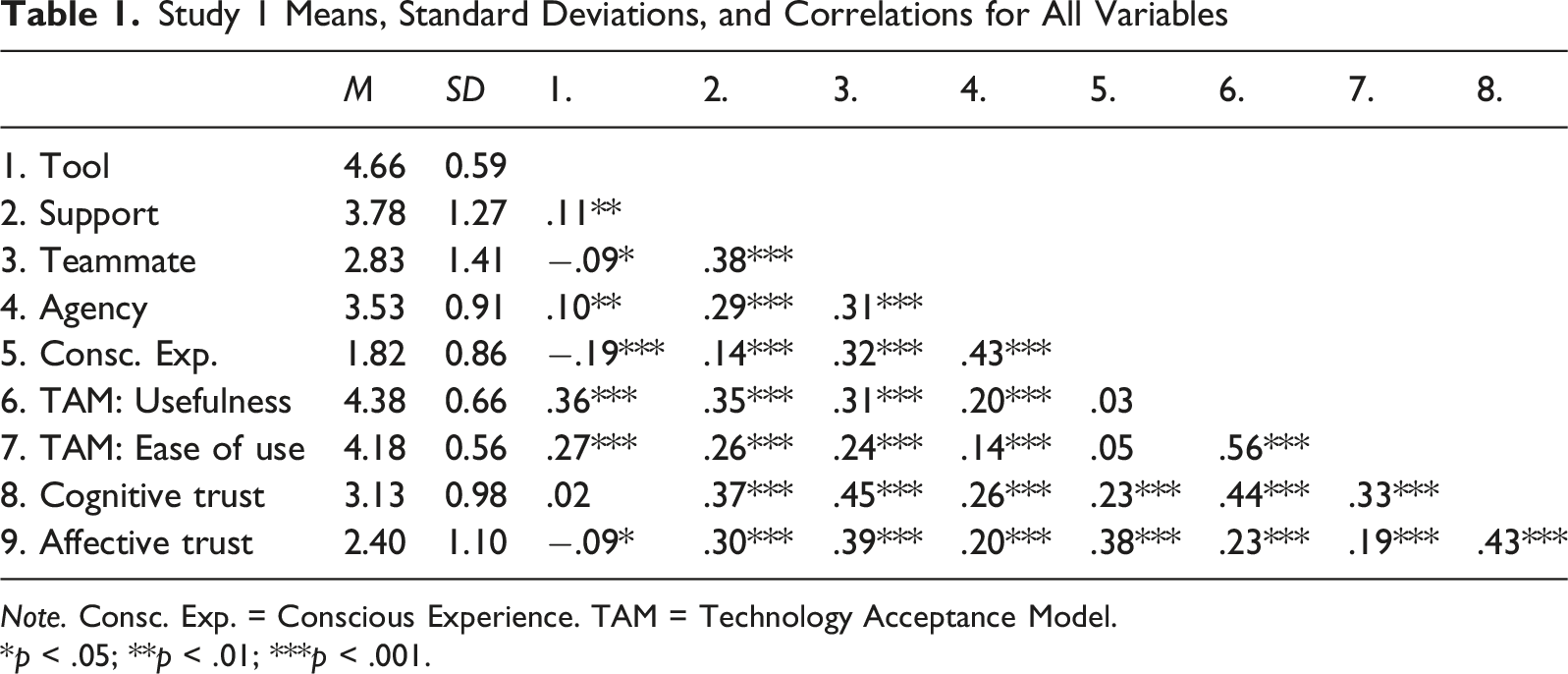
Note. Consc. Exp. = Conscious Experience. TAM = Technology Acceptance Model.
*p < .05; **p < .01; ***p < .001.
Study 1 Comparison of Correlations Between Role Perceptions and Mind Perception
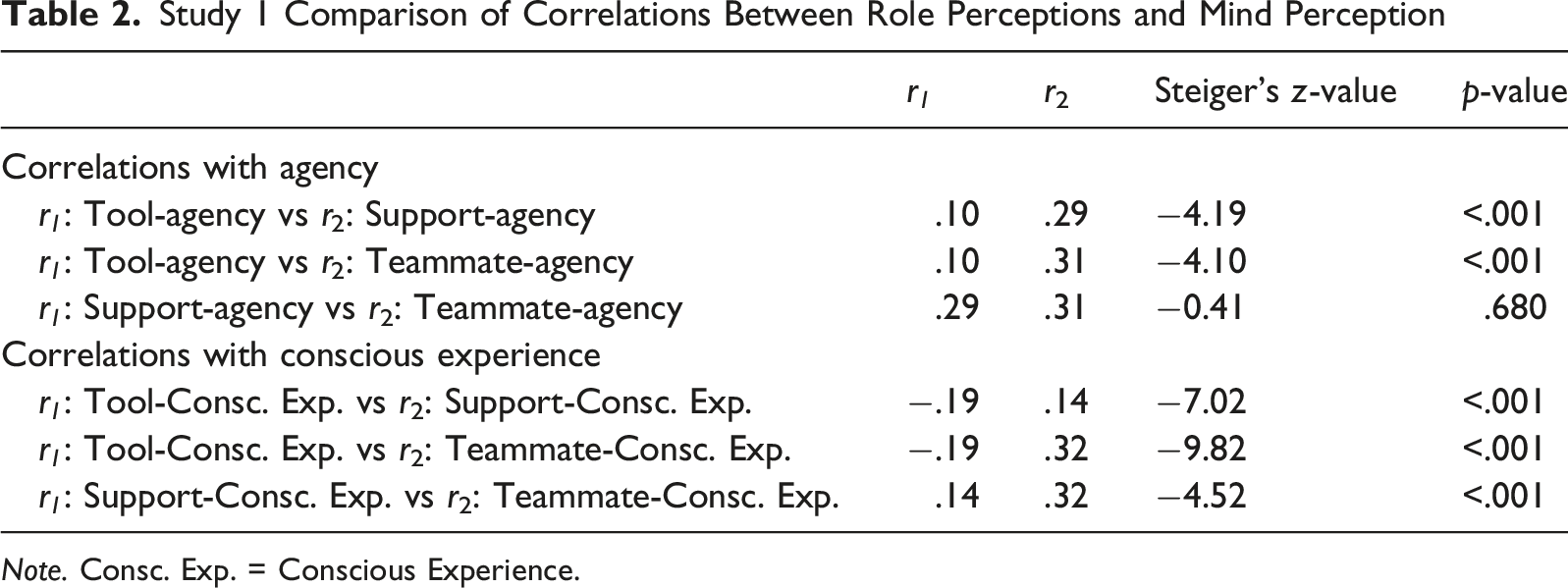
Note. Consc. Exp. = Conscious Experience.
TAM Dimensions Regressed on Mind Perception in Study 1
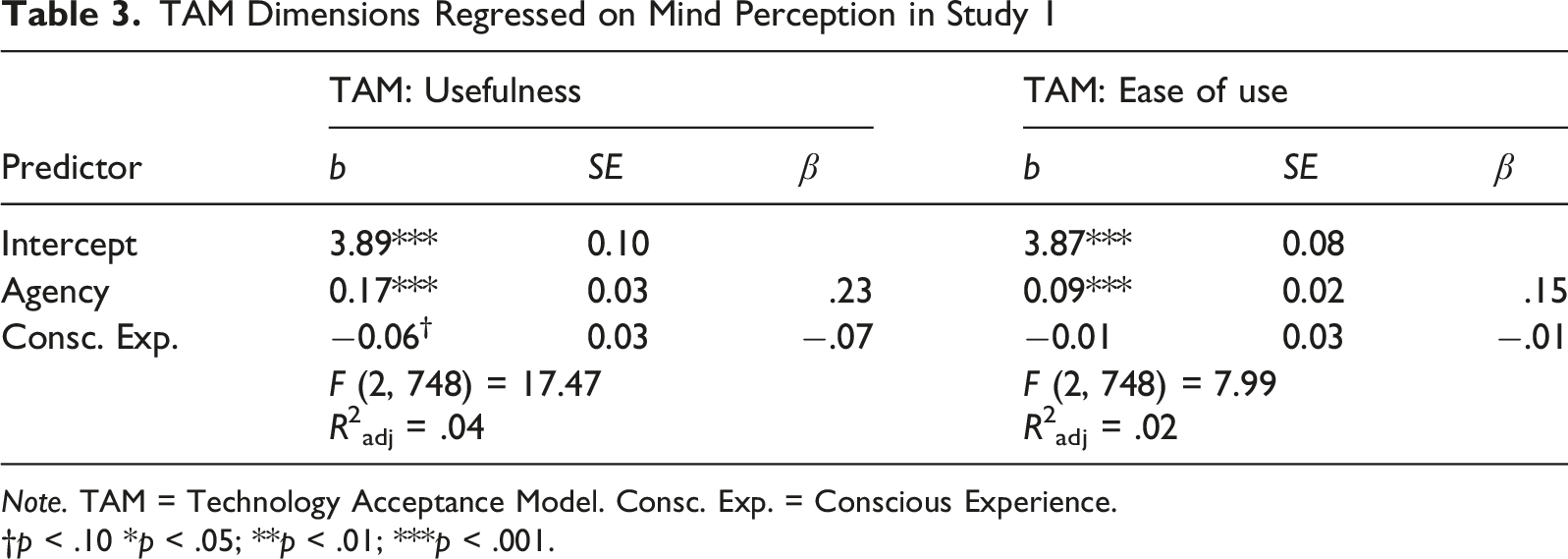
Note. TAM = Technology Acceptance Model. Consc. Exp. = Conscious Experience.
†p < .10 *p < .05; **p < .01; ***p < .001.
Cognitive and Affective Trust Regressed on Mind Perception in Study 1
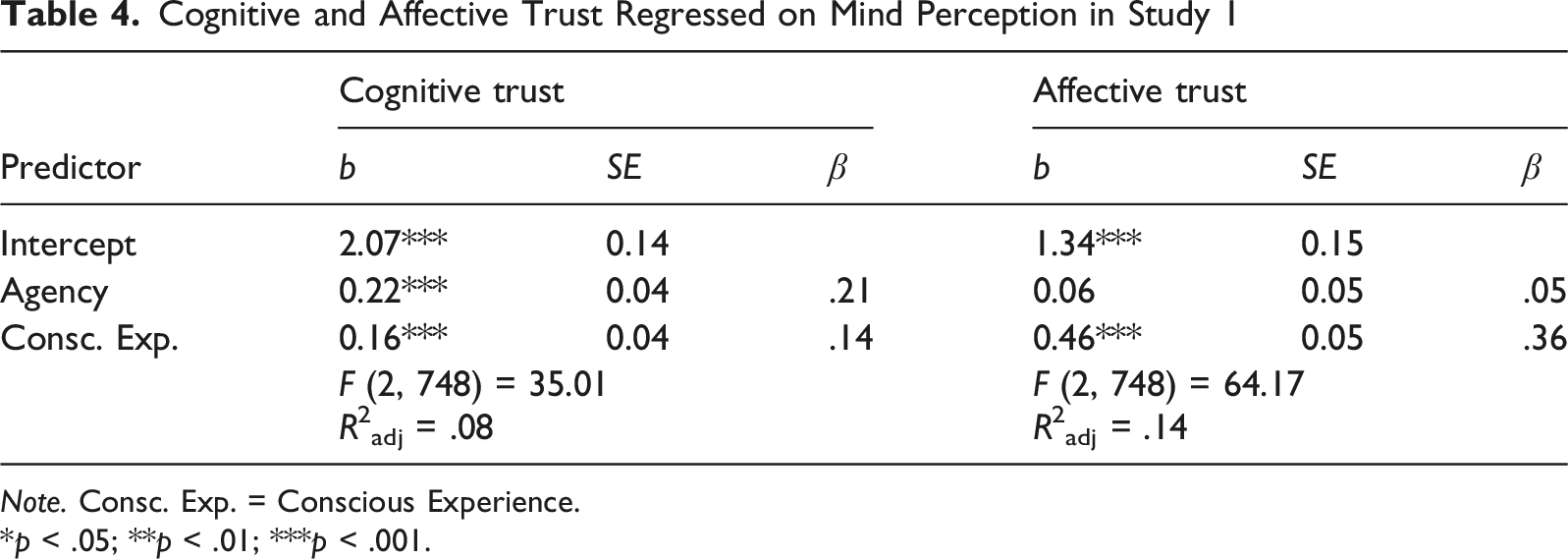
Note. Consc. Exp. = Conscious Experience.
*p < .05; **p < .01; ***p < .001.
Discussion
Study 1 results showed that perceiving AI as a teammate was related to higher levels of mind perception (agency and conscious experience) than perceiving AI as occupying less collaborative roles (H1 and H2, respectively). Thus, Study 1 supports the ecological validity of the association between role perceptions and mind perception—specifically, in real workplace settings, more collaborative roles such as teammate and support show stronger associations with mind perception than less collaborative roles like tool. Although the correlational design of Study 1 does not establish causality, these findings are consistent with prior work showing that the conceptualization and framing of others (e.g., more person-centric language) are associated with higher mind perception (Cooley et al., 2017; Hackel et al., 2014; Hodson & Doucher, 2020; Tang & Gray, 2021). Further, results are consistent with our argument that mind perception is central to conceptualizations of AI teammates. Practitioners should be wary of these associations when designing and implementing AI.
Further, mind perception dimensions showed relationships with all outcomes as hypothesized. Specifically, agency showed a significant, positive relationship with all TAM dimensions (H3) and cognitive trust (H5), while conscious experience showed a significant, positive relationship with affective trust (H6). Thus, Study 1 also provides ecological validity for the relationship between employees’ evaluations of AI and inferred mindedness.
These results suggest distinct pathways for technology- versus human-centered outcomes. TAM dimensions showed positive relationships with agency, and cognitive trust showed a positive relationship with both agency and conscious experience. In contrast, affective trust showed a positive relationship with conscious experience but not agency. Thus, results support the hypothesized distinction in technology- and human-centered pathways. Prior research suggests that as organizations target fully collaborative relationships with AI, affectively laden evaluations become more relevant (Lee & See, 2004). Our results are the first to suggest that designing AI to enhance perceptions of conscious experience may become increasingly important for effective integration of AI collaborators.
Overall, Study 1 results provide evidence that, in real-world contexts, individuals see AI in a range of roles other than simply just “tool,” that these variations in role are related to mind perception of their AI collaborators, and that mind perception is related to AI acceptance. However, in Study 1, role presentation (i.e., role label) was not manipulated; rather, role perceptions and mind perception were both self-reported in a cross-sectional survey. Thus, Study 1 cannot establish whether individuals bring pre-existing views of AI roles, or if organizations influence these perceptions through the formal presentation of AI roles. Due to these endogeneity concerns, we did not test indirect effects of role on AI acceptance (H4, H7−H8) in Study 1. Study 2 aims to investigate a potential causal relationship between role labels and mind perception.
Study 2
Building on Study 1, Study 2 aimed to explicitly test the causal impact of AI role presentation in an experimental vignette design. Further, to examine whether the effects of role presentation were unique to AI or reflect general social processes applicable to both humans and AI, we examined the effects of role presentation for both AI and human newcomers.
Method
Participants and Procedure
Participants were recruited through research subject pools to complete an online survey via Qualtrics for course credit. All participants were undergraduate students at two universities in the southern United States. Prior to analysis, participants demonstrating inattentive responses were removed based on two manipulation comprehension checks (e.g., “Who was added to your team in the scenario?” and “Which of the following kinds of teams was described in the scenario you read”) and two attention check items (e.g., select “Agree”). Of an original 876 participants, the final sample included 485 participants (Mage = 20.33; 61% female; 72% white).
Study 2 utilized an experimental vignette design. Participants were presented with a realistic scenario within a team context in which they and other human teammates were joined by a newcomer. Participants then completed a variety of measures about their perceptions of this newcomer. Additionally, we tested differences in effects across both AI and human newcomers. All factors were manipulated through language used in the vignette presented to each participant. All vignettes are provided in Appendix B. To compare the influence of roles across conditions, we chose roles that were conceptually appropriate for both humans and AI. Thus, newcomers were introduced using the role labels “teammate” and “support” to represent more and less collaborative roles, respectively.
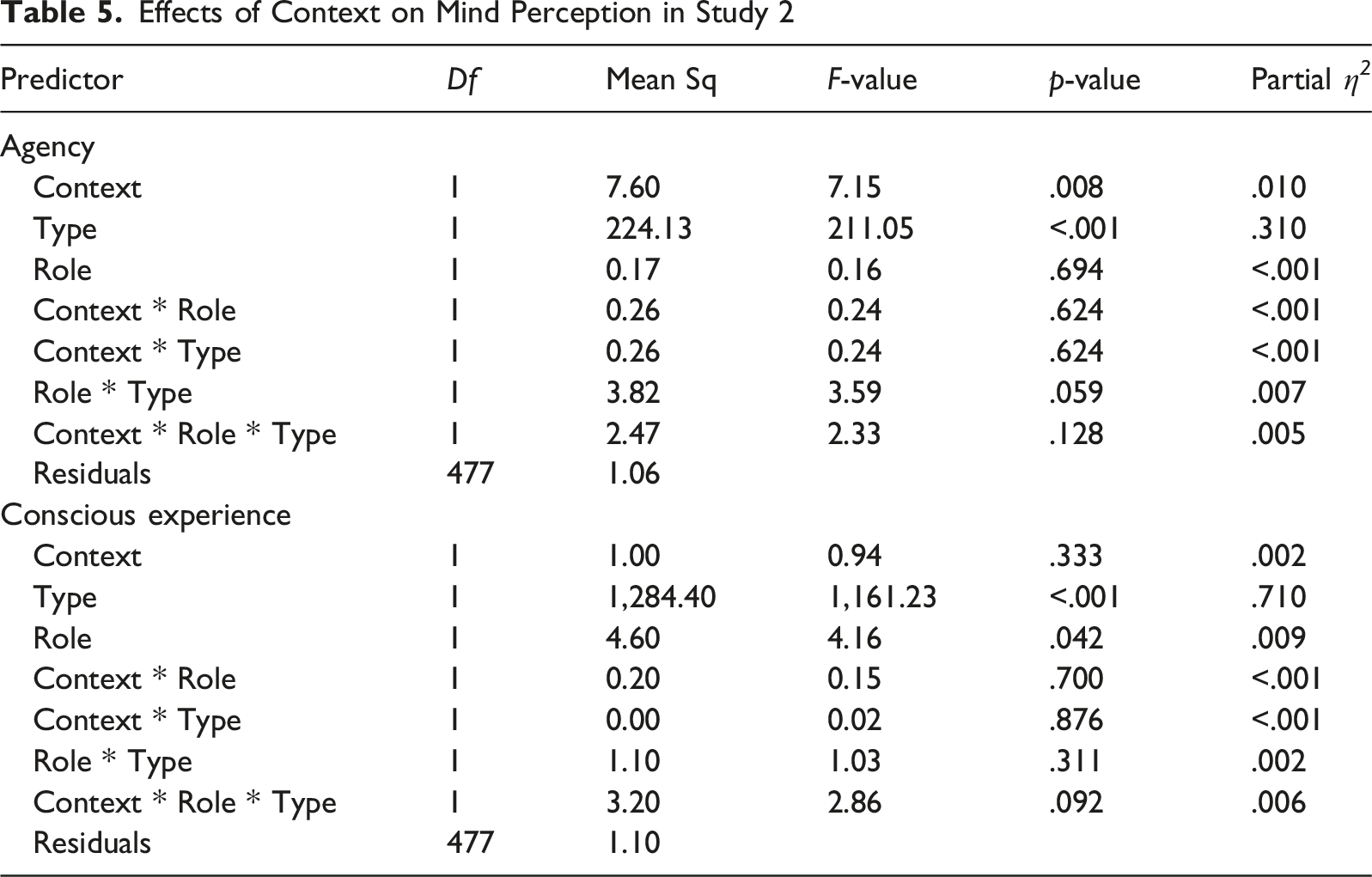
Effects of Context on Mind Perception in Study 2
Measures
Mind Perception
Participants completed the same measure of mind perception reported in Study 1 and Appendix A on a 7-point scale from 1 = “strongly disagree” to 7 = “strongly agree.” Cronbach’s coefficient alpha indicated excellent internal consistency for both scales (agency: α = .85; conscious experience: α = .97).
TAM Dimensions
Participants also completed the same scale for TAM dimensions of perceived ease of use and perceived usefulness, but additionally completed a 2-item measure of intent to use the AI (Davis, 1989; Venkatesh & Davis, 2000). To ensure consistency across the human and AI conditions, TAM items were adapted to be appropriate for both humans and AI such that any mention of “use” was modified to “interact with” (e.g., “I would find the [support/teammate] flexible to use” was changed to “I would find the [support/teammate] flexible to interact with”). Therefore, we refer to “perceived ease of use” as “ease of interaction” and “intent to use” as “intent to interact” for the remainder of the paper; all perceived usefulness items remained the same. All dimensions demonstrated excellent internal consistency (perceived usefulness: α = .93; ease of interaction: α = .93; intent to interact: α = .93).
Trust
Cognitive and affective trust were measured using the same scales used in Study 1 (Dunn et al., 2012; McAllister, 1995) and showed excellent internal consistency (cognitive trust: α = .73; affective trust: α = .84).
Results
Study 2 Correlations for All Variables
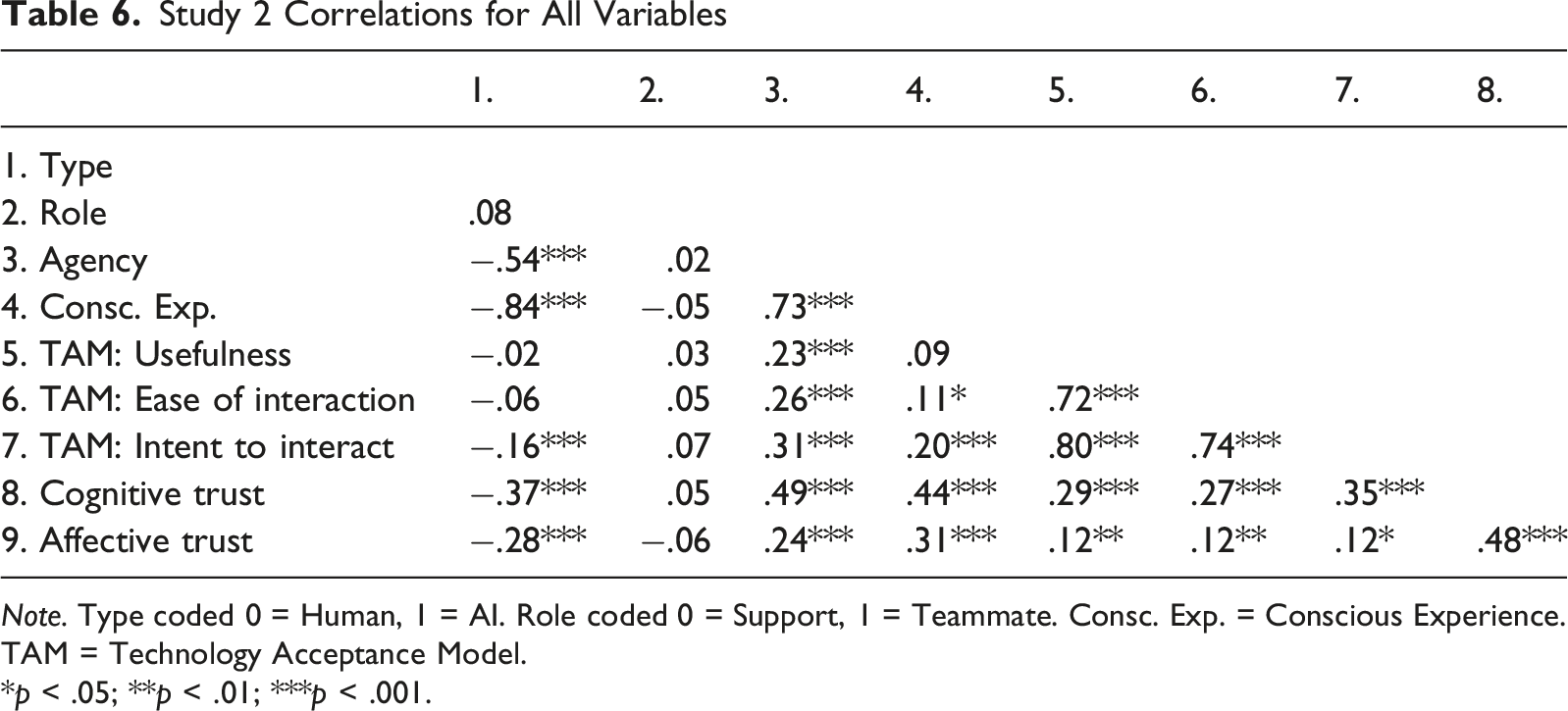
Note. Type coded 0 = Human, 1 = AI. Role coded 0 = Support, 1 = Teammate. Consc. Exp. = Conscious Experience. TAM = Technology Acceptance Model.
*p < .05; **p < .01; ***p < .001.
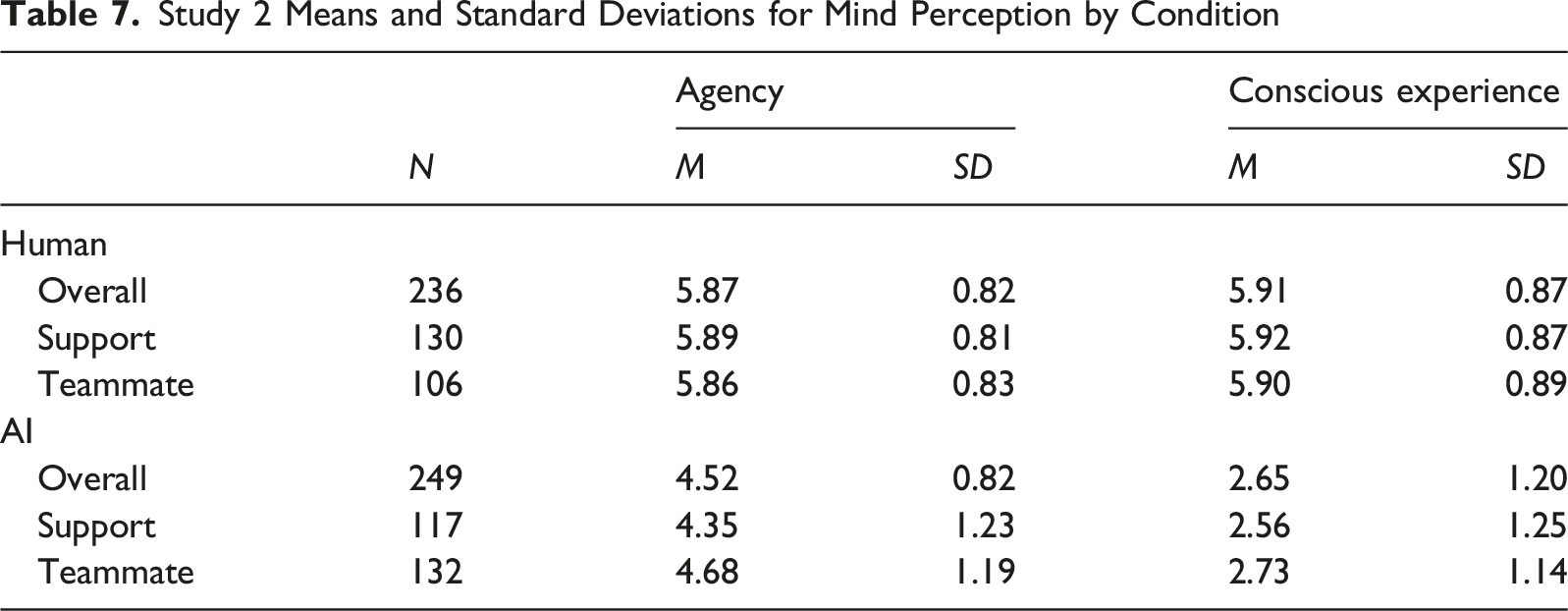
Study 2 Means and Standard Deviations for Mind Perception by Condition
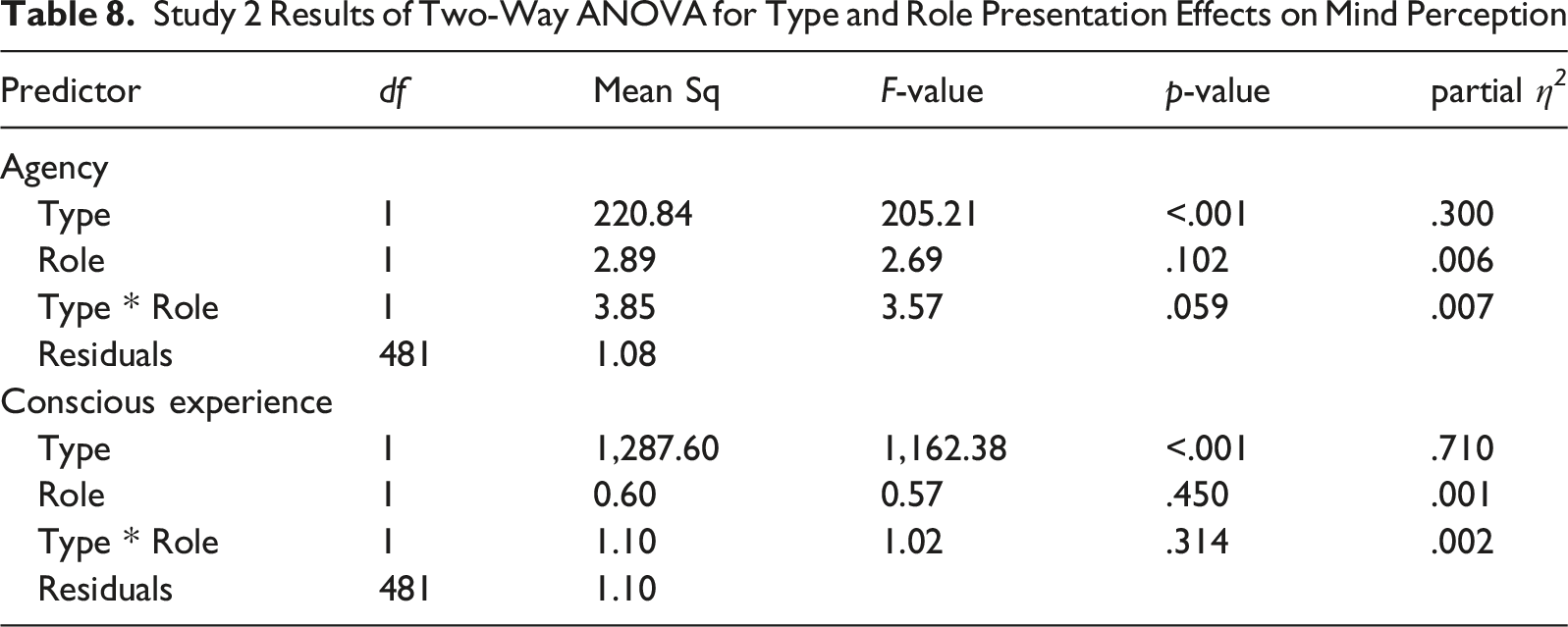
Study 2 Results of Two-Way ANOVA for Type and Role Presentation Effects on Mind Perception
Study 2 Post-Hoc Tukey HSD Comparisons of Type and Role Effects on Mind Perception
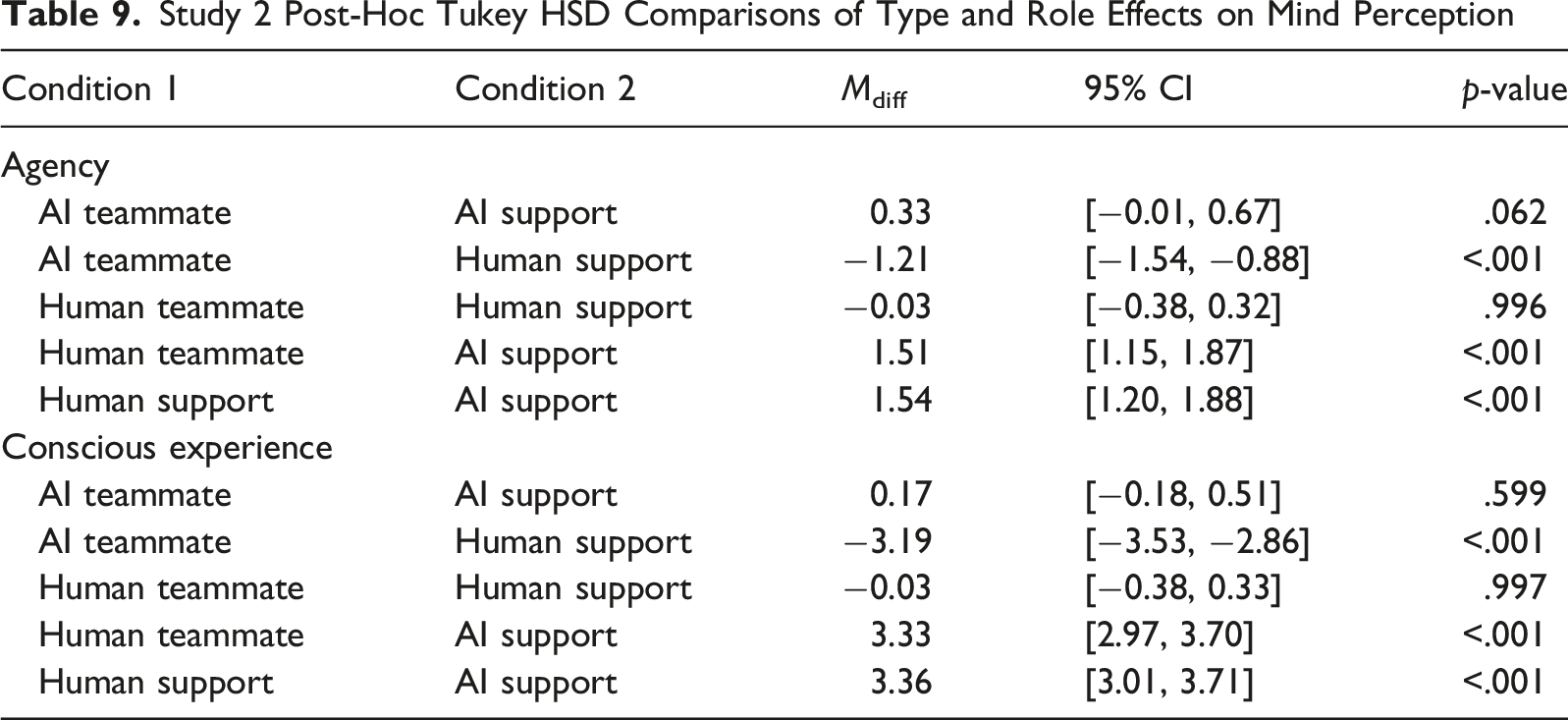
First, we examined whether there were differences in mind perception across type (human versus AI). Type showed a significant main effect on agency, F (1, 481) = 205.21, p < .001, as well as a main effect on conscious experience, F (1, 481) = 1,162.38, p < .001, such that perceptions of both agency and conscious experience were higher for humans than for AI (agency: M Human = 5.87; M AI = 4.52; conscious experience: M Human = 5.91; M AI = 2.65).
Next, we evaluated the influence of role presentation on mind perception, including whether there were differential effects of role presentation across the human and AI conditions. Results showed no significant main effect of role presentation on agency, F (1, 481) = 2.69, p = .102, but did show a marginally significant interactive effect of role and type on agency, F (1, 481) = 3.57, p = .059. Tukey HSD analyses revealed that role presentation influenced agency only within the AI condition. Specifically, within the AI condition, the teammate role elicited marginally significant higher agency perceptions (M = 4.68, SD = 1.19) than did the support role (M = 4.35, SD = 1.23), Mdiff = 0.33, 95% CI [−0.01, 0.67], p = .062. Thus, results showed tentative support for H1 such that there were higher perceptions of agency for AI presented as a teammate than AI presented as a support, and effects were unique to the AI condition.
In contrast, there was no significant main effect of role presentation on conscious experience, nor was there a significant interactive effect of role presentation and type on conscious experience. Thus, Study 2 results did not support H2.
TAM Dimensions
TAM Dimensions Regressed on Mind Perception in Study 2 in the AI Condition
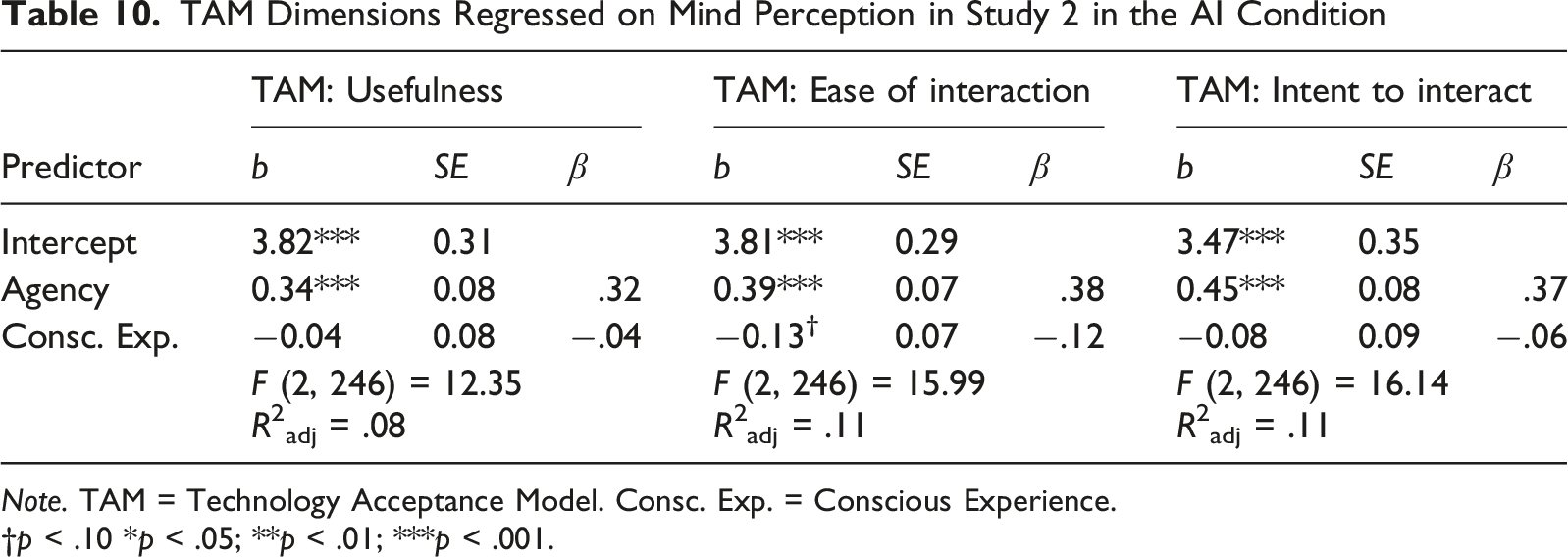
Note. TAM = Technology Acceptance Model. Consc. Exp. = Conscious Experience.
†p < .10 *p < .05; **p < .01; ***p < .001.
Next, to test H4 regarding the indirect effect of role presentation on TAM dimensions via mind perception, we conducted path analyses using the R package lavaan (Rosseel, 2012). All paths for each of the TAM dimensions are illustrated in Figure 1 (see Appendix C for complete path estimates for all mediation models). There was a significant positive indirect effect of role on all three TAM dimensions via agency (usefulness: b = 0.12, SE = 0.06, p = .046; ease of interaction: b = 0.13, SE = 0.06, p = .038; intent to interact: b = 0.15, SE = 0.07, p = .040). Thus, results supported H4. Study 2 results of path analysis for indirect effect of role on TAM dimensions in AI condition. †p < .10 *p < .05; **p < .01; ***p < .001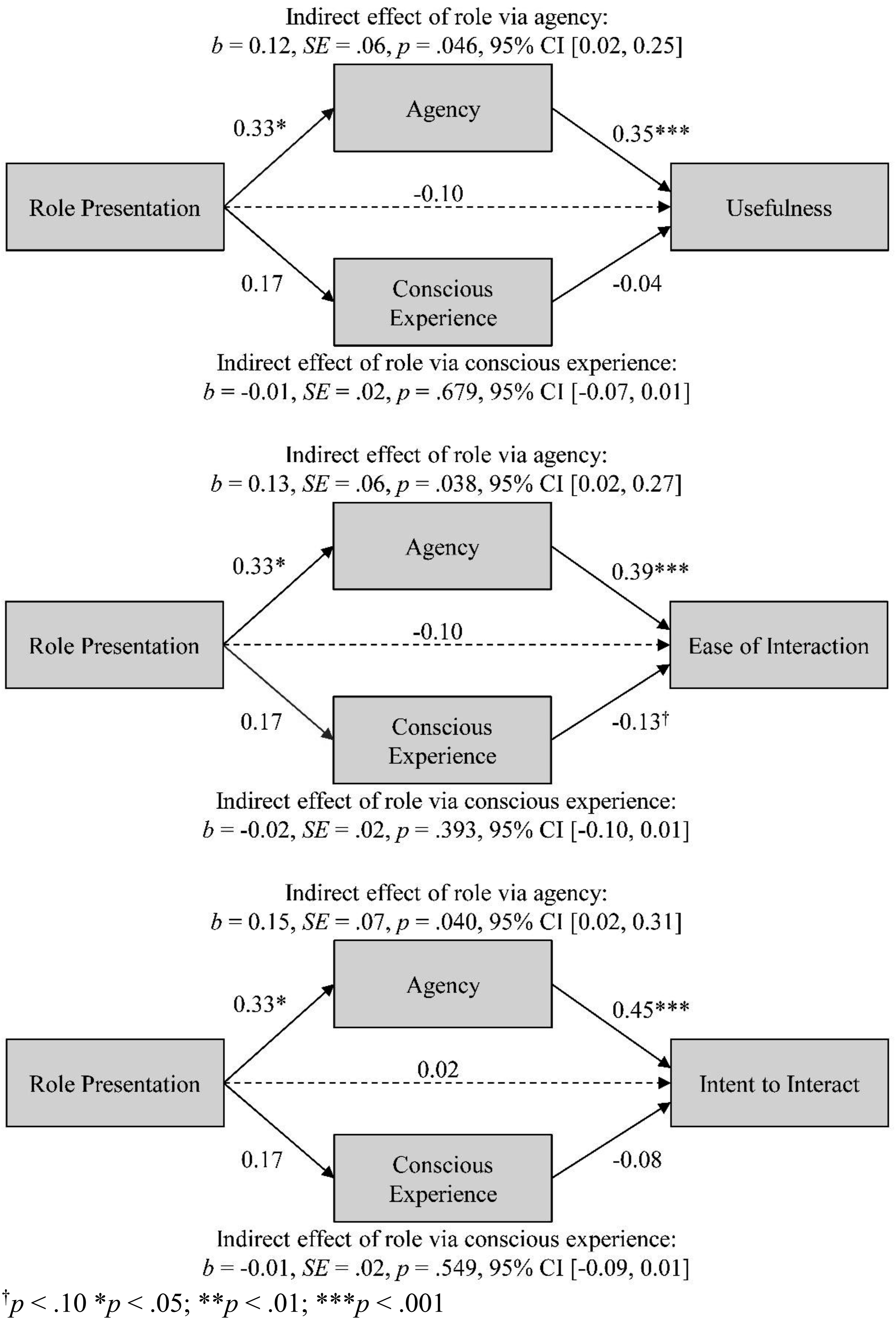
Trust
Cognitive and Affective Trust Regressed on Mind Perception in Study 2 in the AI Condition
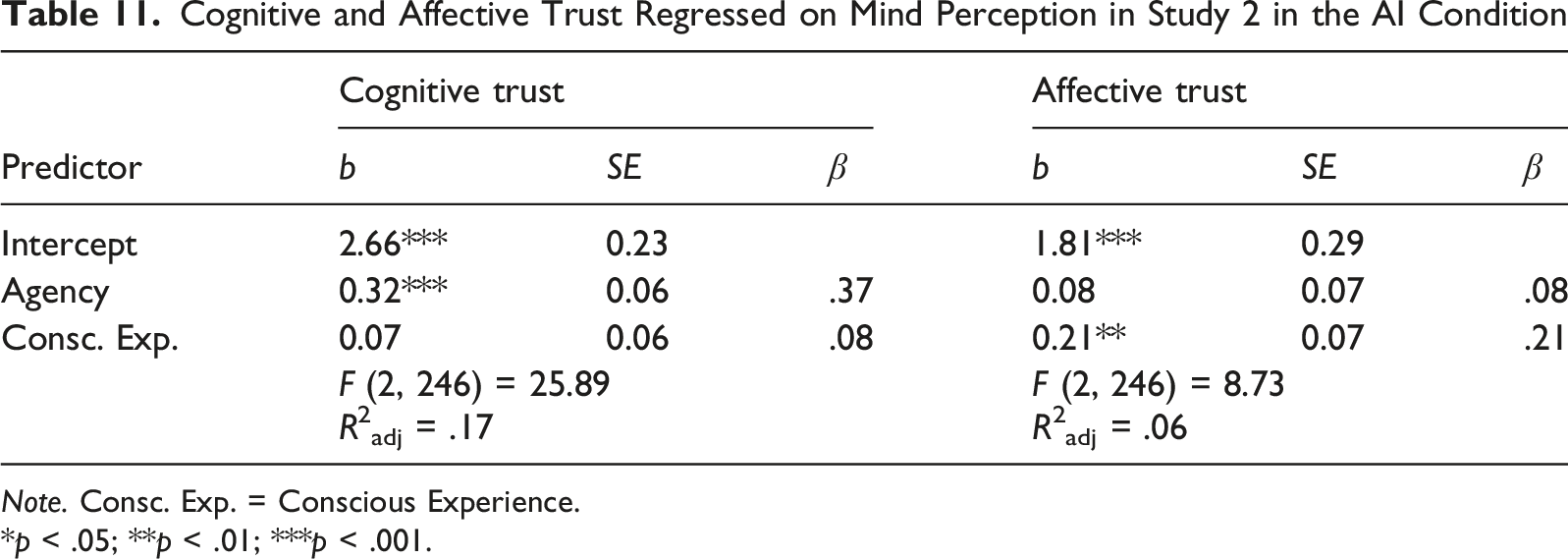
Note. Consc. Exp. = Conscious Experience.
*p < .05; **p < .01; ***p < .001.
To test H7 and H8 regarding the indirect effects of role presentation on cognitive and affective trust via mind perception, we conducted path analyses using the R package lavaan (Rosseel, 2012). Paths for both the cognitive and affective trust models are illustrated in Figure 2. Results revealed a marginally significant indirect effect of role presentation on cognitive trust via agency (b = 0.10, SE = 0.06, p = .065), providing tentative support for H7. However, consistent with lack of support for H2 regarding the effect of role presentation on conscious experience, results showed no significant indirect effect of role presentation on affective trust via conscious experience (b = 0.04, SE = 0.04, p = .343). Thus, H8 was not supported. Study 2 results of path analysis for indirect effect of role on trust dimensions in AI condition. *p < .05; **p < .01; ***p < .001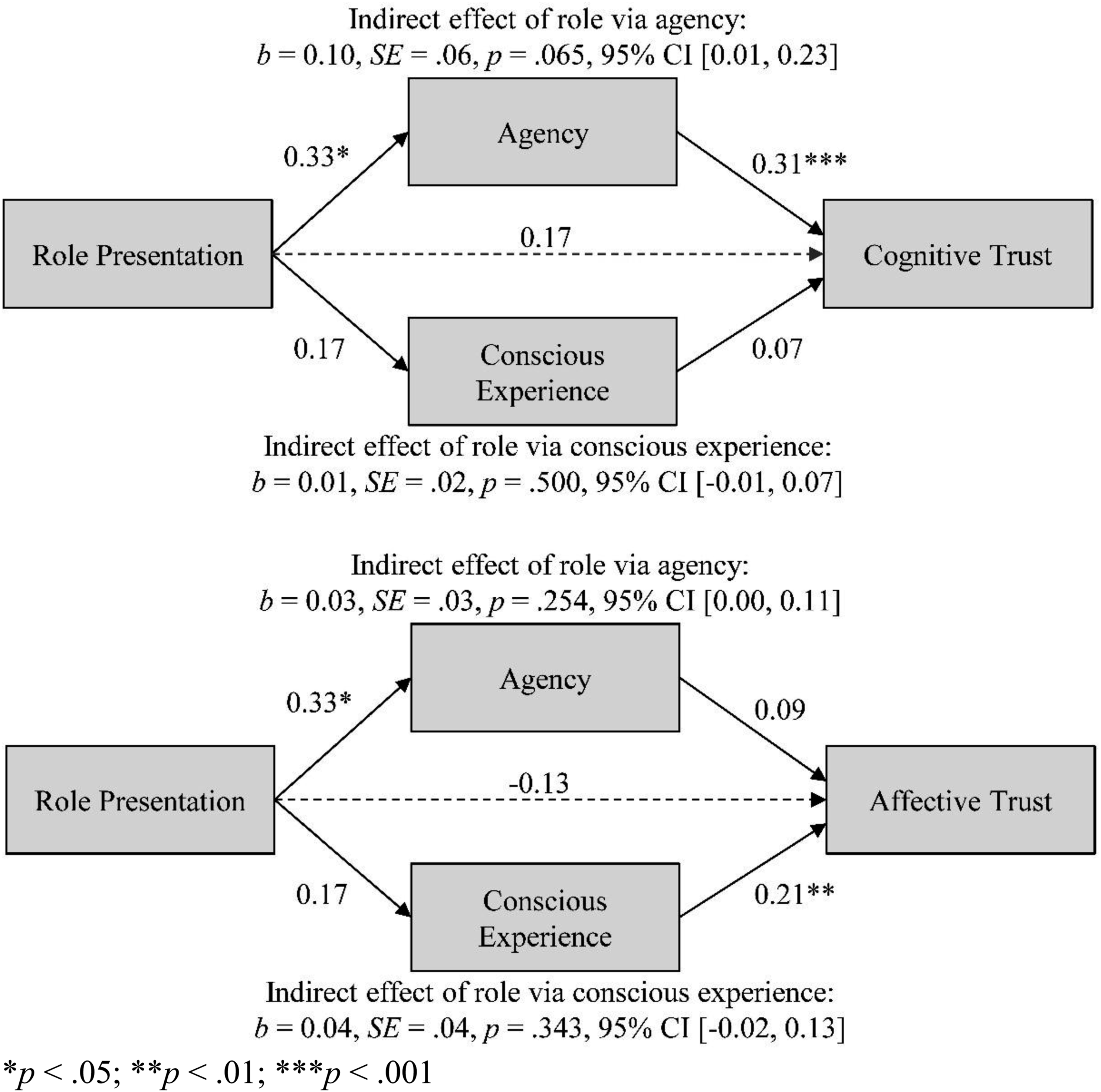
Discussion
Whereas Study 1 established that real-world AI role perceptions correspond to differences in mind perception and AI acceptance, Study 2 tested whether role labels may causally influence mind perception. Results showed that presenting AI as occupying the more collaborative role of teammate rather than support increased perceptions of AI agency, which in turn improved AI acceptance. These findings suggest that intentional role framing can indeed shape mindedness, consistent with prior work showing that language can influence mind perception (Cooley et al., 2017; Hodson & Doucher, 2020) as well as our argument that mind perception is central to what makes AI a teammate. Agency was also positively related to TAM dimensions and cognitive trust. Practically, these findings imply that how organizations describe an AI system may shape employees’ acceptance of AI.
Importantly, role presentation did not influence mind perception in the human condition. Mind perception of humans was much higher and showed less variance than did mind perception of AI, indicating that manipulation of newcomer type (human vs. AI) functioned as intended. Results also suggest that role labels operate differently across human and AI newcomers. Because there is greater variability in the assumed capabilities of AI relative to human newcomers, initial impressions of AI may be comparatively more sensitive to framing cues. These findings suggest that assumptions about the influence of framing in human teams may not generalize to human-AI interaction and emphasize the need for more research on how insights from human team science can be extended to human-AI teams, and vice versa.
Study 2 results did not support an effect of role presentation on conscious experience, nor an indirect effect of role presentation via conscious experience on any outcomes. Still, mean differences in perceptions of conscious experience were in the expected direction such that the AI teammate was perceived as having higher conscious experience (M = 2.73) than was the AI support (M = 2.56). One reason for the mixed support for agency-related hypotheses and the lack of support regarding conscious experience may be the use of the term “support” in Study 2. The term “support” was chosen as the less collaborative role label in Study 2 to facilitate comparison between humans and AI because the term “tool” is not generally used when describing human workers. However, “support” may not have differed enough in its social implications from the term “teammate.” Indeed, results from Study 1 suggest that terms “support” and “teammate” are somewhat similar in their relationships with agency and conscious experience, whereas “tool” and “teammate” show larger differences in their relationships with mind perception. Critically, “tool” versus “teammate” is the primary contrast made in current conversations regarding roles for AI in teams. It is possible that a stronger contrast between “tool” and “teammate” would show different effects.
Study 3
Study 3 repeated the experimental design of Study 2 using only an AI condition to compare the role labels “tool” and “teammate.” Because there was no evidence for an interactive effect of job context and Type or Role factors in Study 2, we did not manipulate job context in Study 3. Only the performance management vignette was used in Study 3.
Method
Participants were undergraduate students at southern and midwestern universities in the United States and completed an online survey via Qualtrics for course credit. As in Study 2, participants demonstrating inattentive responses were removed based on two manipulation comprehension checks and two attention check items. Of an original 950 participants, the final sample included 505 participants (Mage = 20.68; 54% female; 73% white). Using a similar design to Study 2, participants were presented with a hypothetical team scenario in which they and other human teammates were joined by a new AI technology. Participants were randomly assigned to one of two conditions in which the AI role was described as either a “tool” or a “teammate.”
Measures
Participants completed the same measures of mind perception used in Studies 1 and 2 (detailed in Appendix A). Additionally, participants completed the same adapted measures of the TAM dimensions, as well as cognitive and affective trust as Study 2. Cronbach’s coefficient alpha indicated excellent internal consistency for all scales (agency: α = .80; conscious experience: α = .87; usefulness: α = .93; ease of interaction: α = .93; intent to interact: α = .93; cognitive trust: α = .76; affective trust: α = .87).
Results
Study 3 Correlations for All Variables
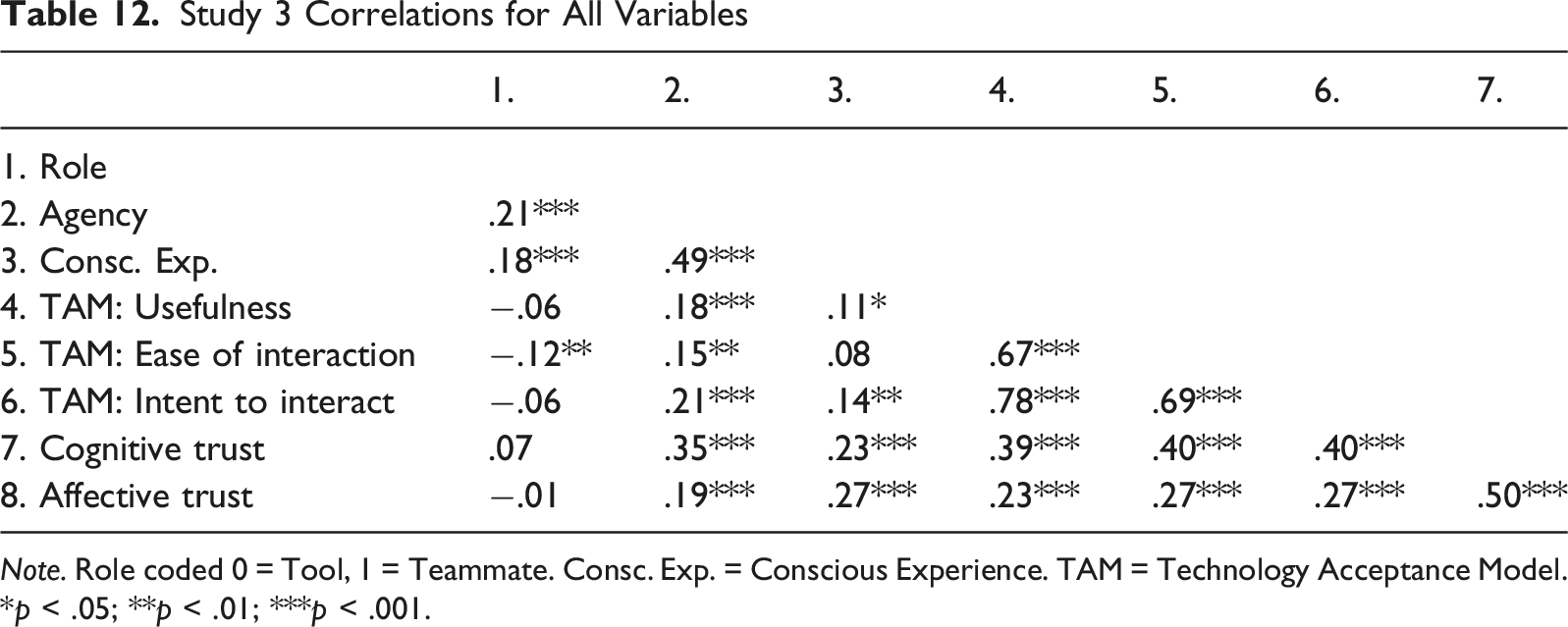
Note. Role coded 0 = Tool, 1 = Teammate. Consc. Exp. = Conscious Experience. TAM = Technology Acceptance Model.
*p < .05; **p < .01; ***p < .001.
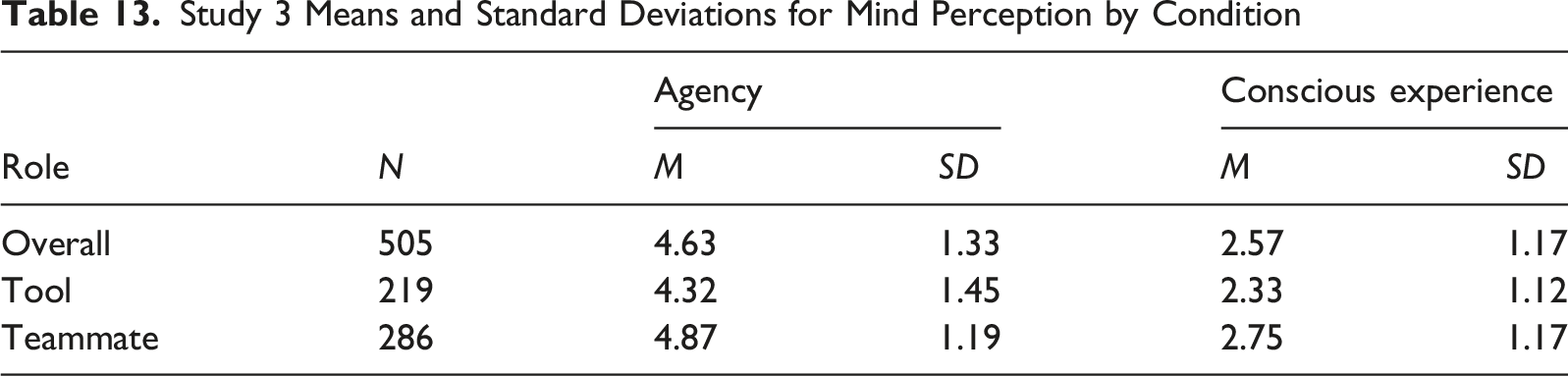
Study 3 Means and Standard Deviations for Mind Perception by Condition
TAM Dimensions
TAM Dimensions Regressed on Mind Perception in Study 3
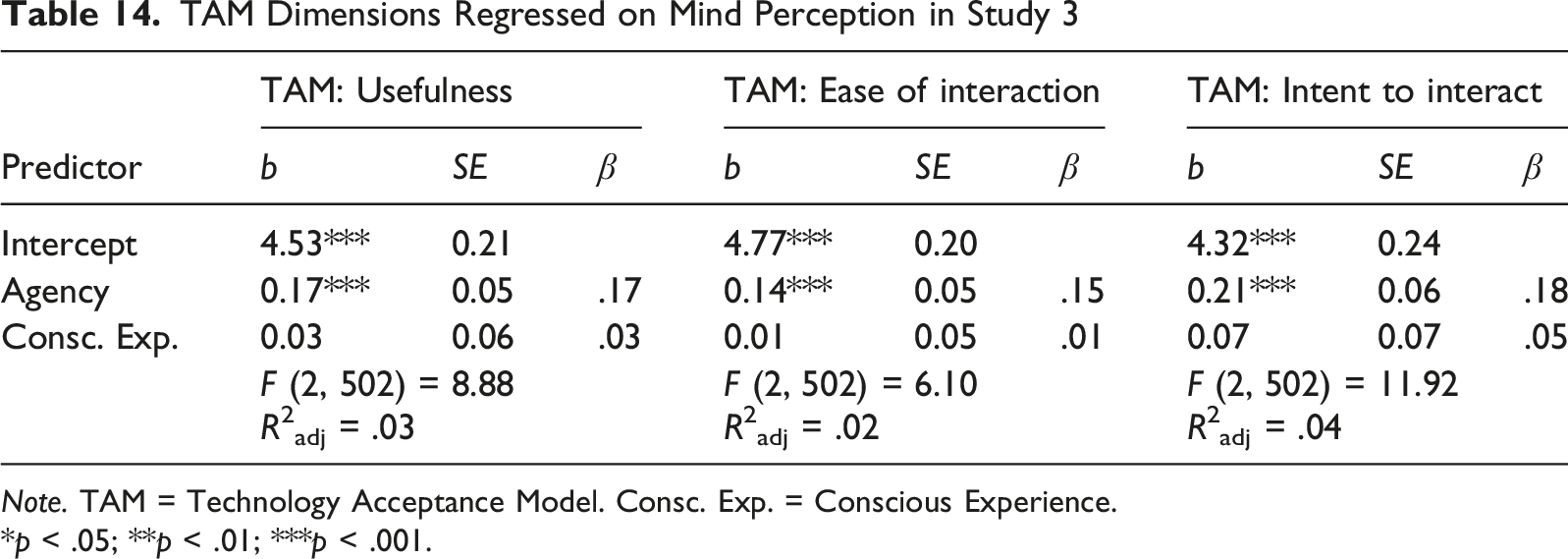
Note. TAM = Technology Acceptance Model. Consc. Exp. = Conscious Experience.
*p < .05; **p < .01; ***p < .001.
Additionally, we tested the indirect effect of role on all three TAM dimensions via agency and conscious experience using the lavaan package in R. Paths for all TAM dimensions are illustrated in Figure 3. Results supported H4 such that there was a significant indirect effect of role via agency on perceived usefulness (b = 0.10, SE = 0.04, p = .011), ease of interaction (b = 0.09, SE = 0.04, p = .012), and intent to interact with the AI (b = 0.13, SE = 0.05, p = .005). Notably, results also showed a significant direct effect for role on all three TAM dimensions (usefulness: b = −0.27, SE = 0.11, p = .017; ease of interaction: b = −0.42, SE = 0.11, p < .001; intent to interact: b = −0.35, SE = 0.13, p = .010). Study 3 results of path analysis for indirect effect of role on TAM dimensions. *p < .05; **p < .01; ***p < .001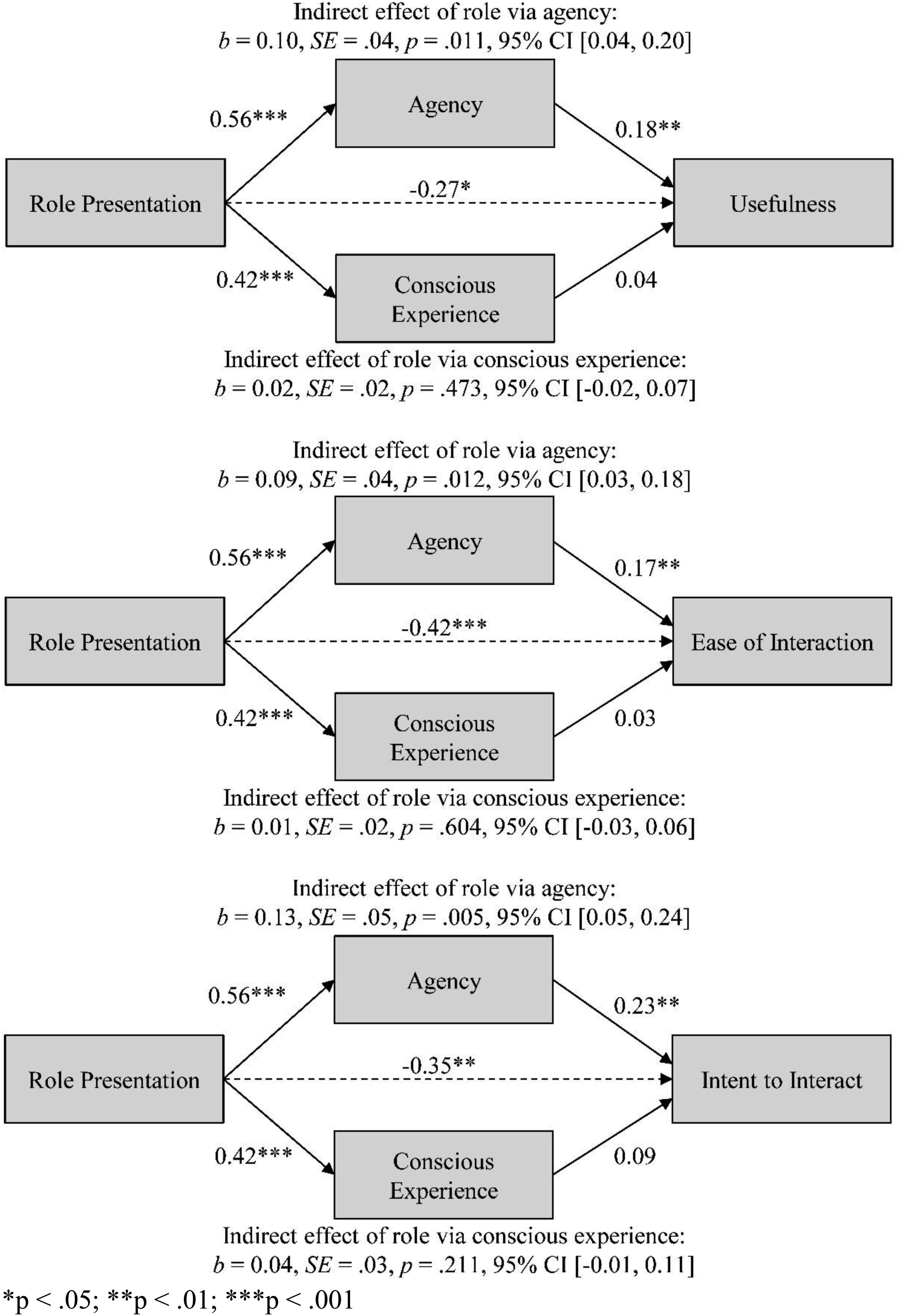
Trust
Cognitive and Affective Trust Regressed on Mind Perception in Study 3
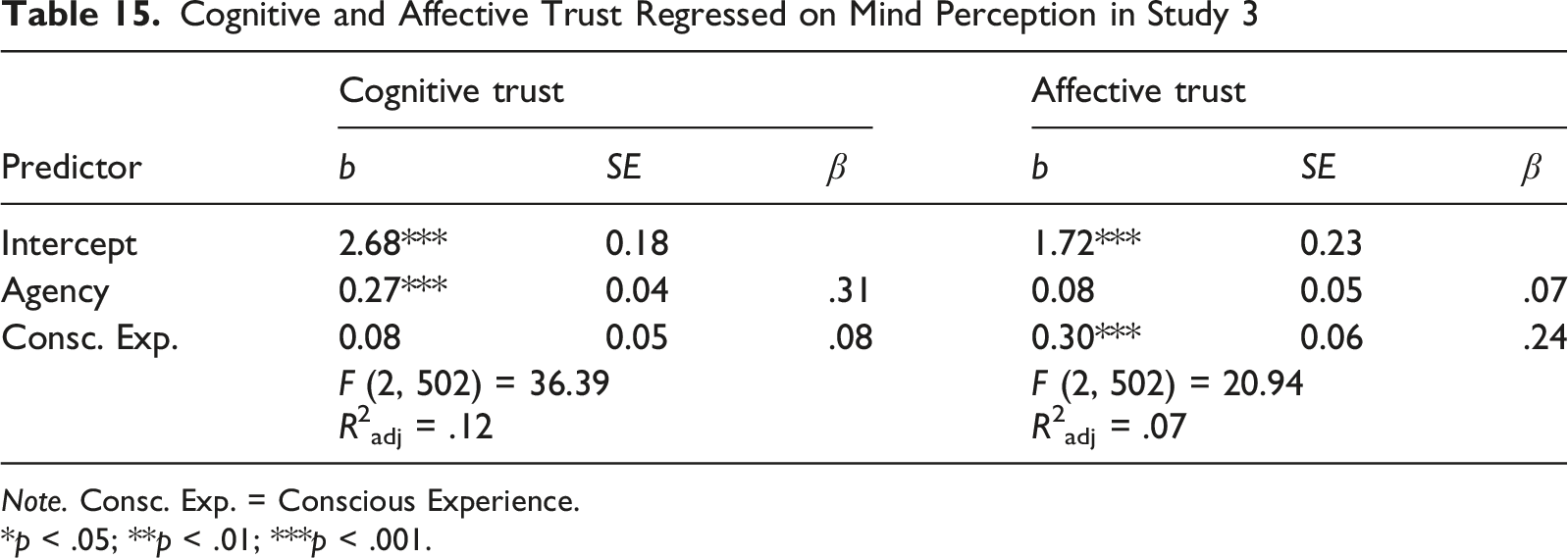
Note. Consc. Exp. = Conscious Experience.
*p < .05; **p < .01; ***p < .001.
We also tested the indirect effect of role on cognitive and affective trust via agency and conscious experience using the lavaan package in R. All paths for both the cognitive and affective trust models are illustrated in Figure 4. Results supported H7 such that there was a significant indirect effect of role on cognitive trust via agency (b = 0.15, SE = 0.04, p < .001), as well as H8 such that there was a significant indirect effect of role on affective trust via conscious experience (b = 0.13, SE = 0.04, p = .002). Study 3 results of path analysis for indirect effect of role on trust dimensions. *p < .05; **p < .01; ***p < .001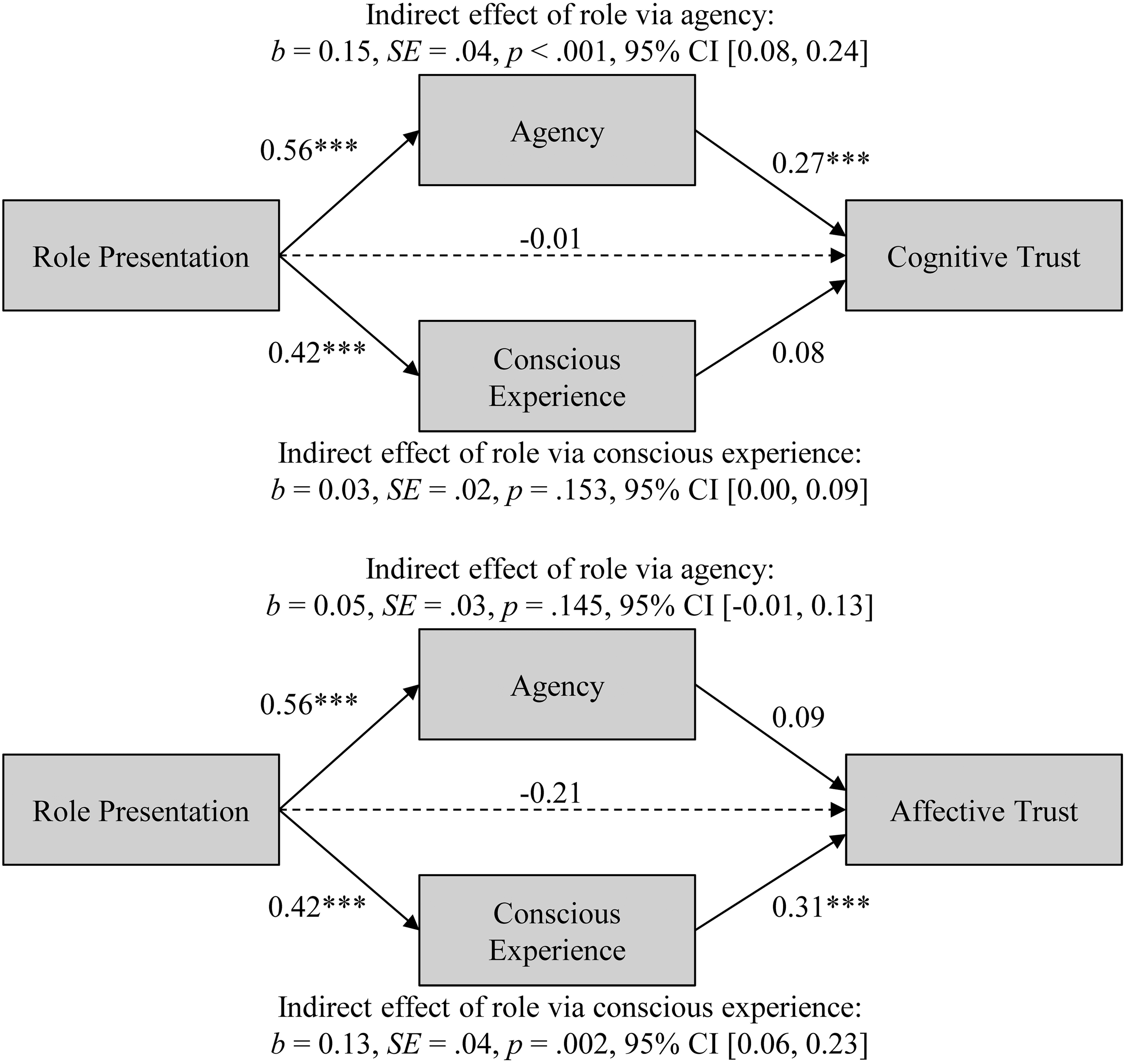
Discussion
Overall, Study 3 provided a stronger manipulation of role presentation relative to Study 2 as intended, and results support all hypotheses. First, presenting the AI as occupying the more collaborative role of “teammate” rather than “tool” led to greater perceptions of both agency and conscious experience. Further, there was an indirect effect of role presentation on TAM dimensions and cognitive trust via agency, as well as an indirect effect of role presentation on affective trust via conscious experience. These findings show that the label used to describe AI can shape how people perceive and respond to AI. Thus, results are consistent with prior research on the influence of simple language shifts (Cooley et al., 2017; Hodson & Doucher, 2020; Tang & Gray, 2021), as well as our argument that the label AI “teammate” implies mindedness.
Moreover, Study 3 results provide some insight into the findings from Study 2. Whereas Study 3 contrasted the labels “tool” and “teammate,” Study 2 contrasted “support” and “teammate.” By using more clearly differentiated labels in Study 3, the hypotheses were more robustly supported. This nuanced differentiation between role labels provides broader support to our claim that more collaborative labels elicit greater mindedness. Practically, these patterns suggest further evidence for the importance of organizations being intentional in their use of role labels when introducing new technologies.
Unexpectedly, results also showed a significant, negative direct effect of role presentation on all TAM dimensions. That is, when controlling for the influence of role presentation via mind perception, calling AI a “teammate” as opposed to a “tool” resulted in decreased perceived usefulness, ease of interaction, and intent to interact with the AI. This pattern of opposing direct and indirect effects (i.e., positive and negative, respectively) reflects inconsistent mediation (MacKinnon et al., 2000), which suggests two key insights.
First, mind perception is critical to understanding the effect of AI roles on acceptance outcomes. Inconsistent mediation can create a “suppression effect” such that the relationship between an independent variable and a dependent variable appears equal to zero if the mediator is not included. Indeed, in Study 3, correlations between role and two of the TAM outcomes appeared nonsignificant until mind perception was accounted for in the complete path model. Thus, these results highlight the importance of accounting for mind perception when examining the effects of AI role in teams. Without accounting for mind perception, results between AI role and relevant outcomes may appear nonsignificant or negative, which could explain differences between the generally positive effect of AI role found here and the negative effects found by Flathmann et al. (2023).
Second, inconsistent mediation suggests that mind perception alone is insufficient for understanding the effects of role on TAM. Our results suggest that role labels also activate other psychological processes or states detrimental to AI acceptance. In other words, results suggest no additional benefit of calling AI a teammate beyond its effect on mind perception; however, there may be other unintended consequences. For example, presenting AI as a teammate may trigger feelings of job insecurity or threat (Flathmann et al., 2023).
Taken together, these findings suggest that while, consistent with our hypotheses, a key mechanism by which role presentation can benefit AI acceptance is via its influence on mind perception. There may also be other mechanisms by which presenting AI as a teammate could have detrimental effects. We elaborate on these implications in our general discussion below.
General Discussion
As AI becomes increasingly capable, enthusiasm for its potential has collided with the “seductive” appeal of teams (Groom & Nass, 2007). Many now call for the integration of AI teammates and a new era of human-AI teamwork. Despite the enthusiasm for this new role, few studies have explicitly investigated the implications of the term “AI teammate” relative to more traditional labels for technology, nor have they proposed a mechanism by which these new AI roles may influence critical outcomes. In the current series of studies, we propose and investigate mind perception as a key theoretical mechanism for the influence of AI roles on acceptance in teams. Next, we discuss both the theoretical and practical implications of our findings.
Theoretical Implications
Across all three studies, results support our hypotheses that AI role meaningfully relates to mind perception, which has downstream implications for AI acceptance in teams. While prior work on the personification or anthropomorphism of organizations and groups suggests that framing of an entity can shape mind perception (Cooley et al., 2017; Hodson & Doucher, 2020; Tang & Gray, 2021), we extend this work to the role framing of AI. We argue that existing conceptualizations of AI teammates imply a central role of agency and conscious experiences and, therefore, more collaborative role labels such as “teammate” cue higher levels of mind perception. In Study 1, we established the ecological validity of associations between AI roles, mind perception, and AI acceptance among people who use AI in their jobs at least once per week. Then, in studies 2 and 3, we specifically showed that manipulating role presentation of the AI (i.e., using the label “teammate” versus the less collaborative labels “support” and “tool”) shaped mind perception and AI acceptance. Overall, results establish mind perception as a key theoretical mechanism in the relationship between AI roles and AI acceptance.
Importantly, calling AI a teammate may also come with potential risks. In Study 3, although “teammate” still increased mind perception, it also showed a significant, negative direct influence on all TAM dimensions such that AI acceptance decreased when controlling for mind perception relative to the “tool” label. This reflects inconsistent mediation, which suggests that effects of role labels may not be apparent without accounting for mind perception. Additionally, there may be other factors, such as feelings of threat or job insecurity (Flathmann et al., 2023), that affect AI acceptance. Still, the negative direct effects of the label “teammate” identified in Study 3 were not consistently replicated across studies. (See Appendix D for discussion of direct effects of roles across studies 1 and 2.) More research is needed to identify possible mechanisms for the effect of roles on acceptance.
Additionally, differing effects of mind perception on outcomes highlight the need to broaden conceptualizations of AI acceptance beyond technology-centered, instrumental evaluations to include more human-centered, affective evaluations when integrating AI collaborators as each outcome suggests different antecedents. Whereas agency showed stronger relationships with TAM dimensions and cognitive trust, conscious experience showed stronger relationships with affective trust. Although agency and conscious experience were correlated in all studies, which has the potential to inflate standard errors, variance inflation factors suggested multicollinearity was not a substantive concern. Additionally, this pattern of results was broadly consistent with zero-order correlation results across the three studies (Tables 1, 6, and 12).
Because traditional frameworks of technology acceptance tend to focus on instrumental evaluations (e.g., perceived usefulness and ease of use), they may overlook key aspects of human-AI collaboration such as affective trust and perceptions of conscious experience. At the same time, Study 2 results suggest that roles function differently for humans and AI. Thus, we should not assume that human-centered models of teamwork will always be appropriate for AI. Comprehensive models of human-AI collaboration will require integrating both technology- and human-centered frameworks.
Practical Implications
A key implication of the current work is the distinction between role perception and presentation, which is often overlooked in both scholarship and practice. Although results suggest that perceiving AI as a teammate may be consistently associated with higher mind perception (Study 1), forcing this label (via role presentation in studies 2 and 3) may have unanticipated risks. That is, presentation and perception are not interchangeable; simply labeling AI as a teammate does not ensure it will be perceived as one. Tensions between presentation and perception may be in part responsible for the negative effects of calling AI a teammate in Study 3. Practitioners must be wary of this distinction and ensure alignment between the roles they use to formally present AI and the true perceptions of employees or customers interacting with the product. Our results suggest two levers that may help ensure this broader alignment.
Lever 1: Design AI to Foster Intended Mind Perception
Mind perception offers a guiding framework to facilitate AI design that aligns intended roles and actual perceptions, ultimately enhancing human-AI collaboration. Results suggest that manipulating labels affects mind perception and, further, that, in the real-world, teammate perceptions are associated with mind perception. In turn, although we did not test the causal effect of mind perception on AI role perception, AI designed to elicit higher mind perception might elicit more collaborative role perceptions.
Thus, if practitioners hope to implement full-fledged AI teammates in the future, they should ensure that AI meets team expectations of what it means to be a teammate, including corresponding levels of mindedness. HCI research provides valuable insights into possible ways of leveraging AI design to enhance mind perception and support presentation-perception alignment. First, prior research suggests that physical and anthropomorphic features are related to mind perception and perceived intelligent capabilities more broadly (King & Ohya, 1996; Saltik et al., 2021; Waytz et al., 2010). For example, technologists might induce mind perception via designing robots with eyes or antennas (sensors) or the ability to physically move around spaces (effectors) to elicit social cues that increase the likelihood of perceiving mindedness (Wegner & Gray, 2016). Beyond physical form, prior HCI research suggests that behavioral styles of AI can also cue mind perception (Breazeal, 2003; Cucciniello et al., 2023). Additionally, other commonly studied features of the system—such as reliability, predictability, accuracy, and transparency—may signal intelligence or intentionality, and thus also positively relate to mind perception.
Still, practitioners should also be wary of designing AI to elicit extremely high levels of mind perception. Prior research shows that anthropomorphism and attempts to elicit “humanness” can backfire, leading to the “uncanny valley” effect (Mori et al., 2012), possibly reducing trust and positive attitudes toward AI (Glikson & Woolley, 2020; Zlotowski et al., 2015). Too much conscious experience in robots can trigger feelings of uncanniness (K. Gray & Wegner, 2012). Because mind perception concerns perceived—not actual—capabilities, intentionally enhancing mind perception without increasing corresponding abilities also presents ethical concerns. Indeed, because transparency is an important predictor of trust (Glikson & Woolley, 2020; Hoff & Bashir, 2015), if end users feel that they are being intentionally deceived regarding the AI’s actual capabilities, trust in and acceptance of the AI may be undermined.
Thus, while designing AI to enhance mind perception may facilitate perception and integration of AI as a teammate, practitioners should be careful to ensure perceptions are accurately calibrated to a system’s true capabilities and humans’ comfort with AI mindedness. Successfully integrating AI teammates may depend on identifying ideal thresholds of mind perception that correspond to expectations of mindedness for AI teammates without exceeding thresholds of uncanniness or posing ethical issues.
Lever 2: Assign Roles That Reflect Intended Mind Perception and Outcomes
A second strategy for mitigating the potential downsides of the label “AI teammate” is not to enhance mind perception through AI design, but rather, to choose labels that evoke realistic levels of mind perception. Practitioners may facilitate AI acceptance by identifying labels that more accurately reflect levels of AI personification and collaboration than “tool” or “teammate.” In our results, the stronger contrast in Study 3 (“teammate” vs. “tool”) relative to Study 2 (“teammate” vs. “support”) highlights the nuanced implications of role labels and emphasizes that even seemingly small shifts in framing can have meaningful consequences. While labeling AI as a “teammate” elicited the strongest effects on mind perception, results suggest the label “support” may still elevate perceptions of agency relative to “tool” without introducing the possible risks associated with the word “teammate.” Thus, intermediate labels like “support” or similar terms (e.g., assistant) may offer the benefits of more collaborative framing without the pitfalls of implying mindedness typically only associated with humans.
Moreover, when choosing role labels, our results suggest that AI designers and practitioners should carefully consider the behavioral, affective, and cognitive responses they aim to elicit from human team members. If the primary function of the AI is intended to be instrumental and transactional, labeling AI as a “teammate” may be counterproductive. However, if the goal is to foster positive affective reactions and collaborative dynamics, then framing the AI as a “teammate” may be beneficial. Clarity about the intended impact of AI in teams is essential to determining the most appropriate AI roles. As AI becomes more capable and organizations are increasingly interested in fully collaborative human-AI partnerships, the “teammate” role may indeed become increasingly appropriate.
Finally, extending our discussion of ethical considerations above, some practitioners may prefer to avoid labels that encourage inaccurate mind perception due to concerns about misrepresenting a system’s actual capabilities. Labels such as “support” or “assistant” may be more appropriate and better reflect employees’ actual perceptions of AI and its current capabilities. Much like prior work emphasizes the importance of AI trust calibration (Lee & See, 2004), calibrated framing can help organizations introduce AI for effective human-AI collaboration.
Limitations and Future Research
Although the current studies provide useful insights into differences between role perception and presentation, as well as nuances regarding tool, support, and teammate roles, several limitations suggest opportunities for future research. First, none of these studies utilized intact teams working with a real AI collaborator. Most notably, studies 2 and 3 utilized a vignette design, which is useful for isolating evidence of causal effects but necessarily simplifies the behavioral richness involved in ongoing, real-world human-AI interaction. Participants in these vignette experiments were randomly assigned to one role label condition and were not exposed to alternative labels, reducing the likelihood of artificially inflating labeling effects. Still, evaluating AI based on a brief description may capture the upper bound of framing effects. Prior work suggests that participant responses to hypothetical AI can differ from actual interactions and reactions can shift with repeated exposure, often becoming less negative or more calibrated as human-AI interaction increases (Glikson & Woolley, 2020; Hoff & Bashir, 2015; Zlotowski et al., 2015). Study 1 provides some ecological support for the patterns observed in studies 2 and 3, but its correlational design means that directionality cannot be established. Moreover, studies 2 and 3 measured intended behavior rather than actual use. Although intent is an antecedent of actual use behavior, there are many other factors that also impact actual use of a technology (Venkatesh, 2022; Venkatesh & Davis, 2000). Therefore, future research should use longitudinal and interactive team-based research designs to investigate how role presentation of real AI collaborators impacts actual use and to evaluate the generalizability of the present findings to practice.
Further, the current studies focused only on human attitudes toward and perceptions of AI. However, AI roles may also shape interactions with other human teammates. For example, research shows that objectification of co-workers may negatively affect one’s sense of belongingness and civility behaviors (Belmi & Schroeder, 2021). If teammates differ in their perceptions of AI’s mindedness, they may disagree on appropriate role labels (e.g., “teammate” versus “tool”), which could lead to interpersonal conflict. Labeling AI as a teammate might also make human team members feel devalued. Future research in organizational teams could help clarify the potentially reciprocal effects of AI and human teammate perceptions.
Considering different team contexts is also important for clarifying the effects of AI roles on mind perception and acceptance. Prior research suggests that expectations for the attributes of AI and trust in AI can vary by context (Dou et al., 2020; Hancock et al., 2011; Pak et al., 2017; Schaefer et al., 2016). Although we included multiple contexts in our vignette designs in Study 2, effects did not vary by context. Still, our results do differ from prior eldercare research in which retirement home residents were more likely to use a robot when it was perceived as having less agency (Stafford et al., 2014). This difference in findings suggests that although agency is positively related to use intentions for AI at work, as in our studies, it may be less desirable in personal contexts. Similarly, in work settings where AI serves as a companion or has higher social interaction responsibilities, conscious experience may become more important than agency. Thus, future research should examine the influence of AI roles and mind perception on AI acceptance in different team and task contexts.
Relatedly, results may also differ across AI types. In the current study, we did not provide a formal definition of AI nor did we collect information about the specific types of AI used in Study 1. While this decision was intentional to capture a wide range of potential AI systems and maintain our focus on subjective perception rather than technical capabilities, we cannot speak to whether results may have varied across different features. Thus, future research should also explore the role of AI types and more specific functionalities.
Finally, our research reflects the capabilities and limitations of today’s AI systems. In Study 1, participants reported on real AI that they use at work. In studies 2 and 3, only brief descriptions of the AI were provided; thus, participant responses were likely shaped by their knowledge of existing AI. As AI becomes even more humanlike in its appearance and capabilities, differences in the mind perception of humans versus AI may diminish. Variance and average level of mind perception of AI may change over time, changing the appropriateness of AI roles and the relationship between mind perception and AI acceptance. Still, research on mind perception of humans—despite being higher overall and lower in variance relative to mind perception of AI—is salient for understanding group dynamics (Cooley et al., 2017; Hackel et al., 2014). As such, ongoing research will be needed to monitor changes in mind perception of AI over time and to compare these effects across humans and AI.
Conclusion
Decades of research demonstrate the performance and psychological benefits of working in teams. As AI becomes increasingly sophisticated in its technical and social capabilities, there is a seductive appeal to realizing these same benefits simply by reimagining human-AI interaction as human-AI teamwork. Across three studies, we find that the role of teammate is positively related to mind perception and AI acceptance relative to less collaborative roles (e.g., tool). At the same time, results suggest AI role presentation and perception are not equivalent. Whereas perceiving AI as a teammate showed uniformly positive associations with AI acceptance, imposing the term “teammate” may negatively influence AI acceptance after accounting for mind perception. Intermediate labels such as “support” may confer some of the advantages of collaborative labels without the risks associated with the label “teammate.” Finally, by demonstrating that agency and conscious experience differentially relate to technology-centered and human-centered acceptance outcomes, our findings underscore the need to integrate both perspectives when evaluating the integration of AI collaborators.
Supplemental Material
Supplemental Material - What’s in a Name? Implications of AI Roles and Mind Perception for Human-AI Teams
Supplemental Material for What’s in a Name? Implications of AI Roles and Mind Perception for Human-AI Teams by Alexandra M. Harris-Watson, Changyoon Byun, and Lindsay E. Larson in Human Factors
Footnotes

Funding
The authors disclosed receipt of the following financial support for the research, authorship, and/or publication of this article: This work was supported by the University of Oklahoma Institute for Community and Society Transformation Seed Grant Award.
Declaration of Conflicting Interests
The authors declared no potential conflicts of interest with respect to the research, authorship, and/or publication of this article.
Supplemental Material
Supplemental material for this article is available online.
Author Biographies
References
Supplementary Material
Please find the following supplemental material available below.
For Open Access articles published under a Creative Commons License, all supplemental material carries the same license as the article it is associated with.
For non-Open Access articles published, all supplemental material carries a non-exclusive license, and permission requests for re-use of supplemental material or any part of supplemental material shall be sent directly to the copyright owner as specified in the copyright notice associated with the article.
