






Abstract
Does making work more playful encourage employees to speak up or to seek feedback instead? We argue that playful work design (PWD) can lead to both outcomes, depending on how it shapes employees’ sense of ownership over their work. Drawing on extended self-theory and goal orientation theory, we propose that PWD enhances employees’ job-based psychological ownership. This heightened sense of ownership, in turn, discourages voice behavior while encouraging feedback seeking. We further show that these effects are contingent on employees’ goal orientations: performance-prove and performance-avoid orientations shape when and for whom these dynamics emerge. Using one experiment and two multi-wave survey studies, we find consistent support for our model. By uncovering the divergent interpersonal consequences of PWD, our study suggests that making work more playful is not uniformly beneficial and highlights the importance of understanding how employees interpret and enact play at work.
The proactive role of employees in designing their jobs has been emphasized in management studies for decades (Parker et al., 2010; Tims et al., 2012; Wrzesniewski and Dutton, 2001). In line with this research, playful work design (PWD) is an emerging construct, defined as a “proactive cognitive-behavioral orientation aimed at fostering fun and challenge during work activities through creating, seeking, and resolving surprises and complexities” (Scharp et al., 2023: 515). Emphasizing a proactive blend of work and play, PWD represents a self-initiated strategy to reorganize work through play (Scharp et al., 2022). Existing literature has highlighted several benefits of PWD. For instance, PWD has been positively associated with employees’ work engagement, relational energy, and job effort, while being negatively related to exhaustion and boredom (Scharp et al., 2022, 2023). Furthermore, PWD can enhance employees’ behavioral outcomes, such as learning, job performance, and creative performance (Bakker et al., 2020; Scharp et al., 2023).
Previous studies have provided valuable insights into the intrapersonal outcomes of PWD. However, playful work designers do not operate in a social vacuum—their behaviors are observed, and their performance is evaluated by managers. Moreover, they often need to collaborate with colleagues on various tasks (Tims et al., 2015). Thus, although PWD primarily focuses on employees’ personal orientations and experience at work, playful work designers are inevitably expected to interact with others, including expressing their opinions and gaining insights from peers. Despite this, it remains unclear whether employees are more or less likely to initiate communication after engaging in PWD. On one hand, PWD may increase relational energy, improve moods, enhance meaningfulness, and strengthen intrinsic motivation (Liu et al., 2023; Scharp et al., 2022, 2023). These could encourage employees to share their ideas and seek information from others. By blending play with work, they may also find it easier to initiate communications with others in a relaxed manner (Petelczyc et al., 2018). In particular, they might perceive expressing ideas and soliciting feedback as less risky, thereby feeling greater psychological safety in doing so. On the other hand, PWD can heighten job engagement (Dishon-Berkovits et al., 2024; Scharp et al., 2019, 2022) and has been proposed to lead to overcommitment in some cases (Scharp et al., 2023), although this relationship has not yet been empirically substantiated. Both job engagement and overcommitment can foster a sense of territoriality (Wang et al., 2019), prompting employees to protect and defend their work and potentially reducing their willingness to exchange information (Chen et al., 2023). PWD may also induce a state of flow (Liu et al., 2023), during which employees become highly absorbed in their tasks and neglect communication with others. Furthermore, PWD might be perceived as a deviation from traditional workplace norms, which could discourage employees from expressing ideas or seeking feedback.
Given these potentially conflicting explanations and the importance of communication in social interactions (Jablin, 1979; Roberts and O’Reilly, 1974), we focus on the relationship between PWD and employees’ communication with others, addressing an important gap and opening a promising avenue for further research. This study aims to address the following questions: (1) How and when does PWD influence employees’ voluntary communication at work? (2) Through what mechanism do these influences manifest? Specifically, we focus on employees’ voice (i.e., the upward communication of ideas and suggestions intended to benefit one’s work unit) (Lam et al., 2019; Morrison, 2011) and feedback-seeking behaviors (i.e., explicit verbal requests for evaluative information on one’s behavior and performance) (Guo et al., 2020; Lam et al., 2007)—two pivotal types of self-initiated communication where employees act as information senders and receivers, respectively (Detert and Burris, 2007; Guo et al., 2020). We propose that PWD may have different effects on employees when they act as either information senders or receivers. Building upon extended self-theory (Belk, 2000; Dittmar, 1992; Pierce et al., 2001, 2003) and goal orientation theory (Elliot, 1999; Lee et al., 2003; VandeWalle, 1997), we suggest that the effects of PWD on voice and feedback-seeking behaviors are mediated by employees’ job-based psychological ownership (job-based PO) and moderated by their goal orientations. Figure 1 illustrates our proposed model.
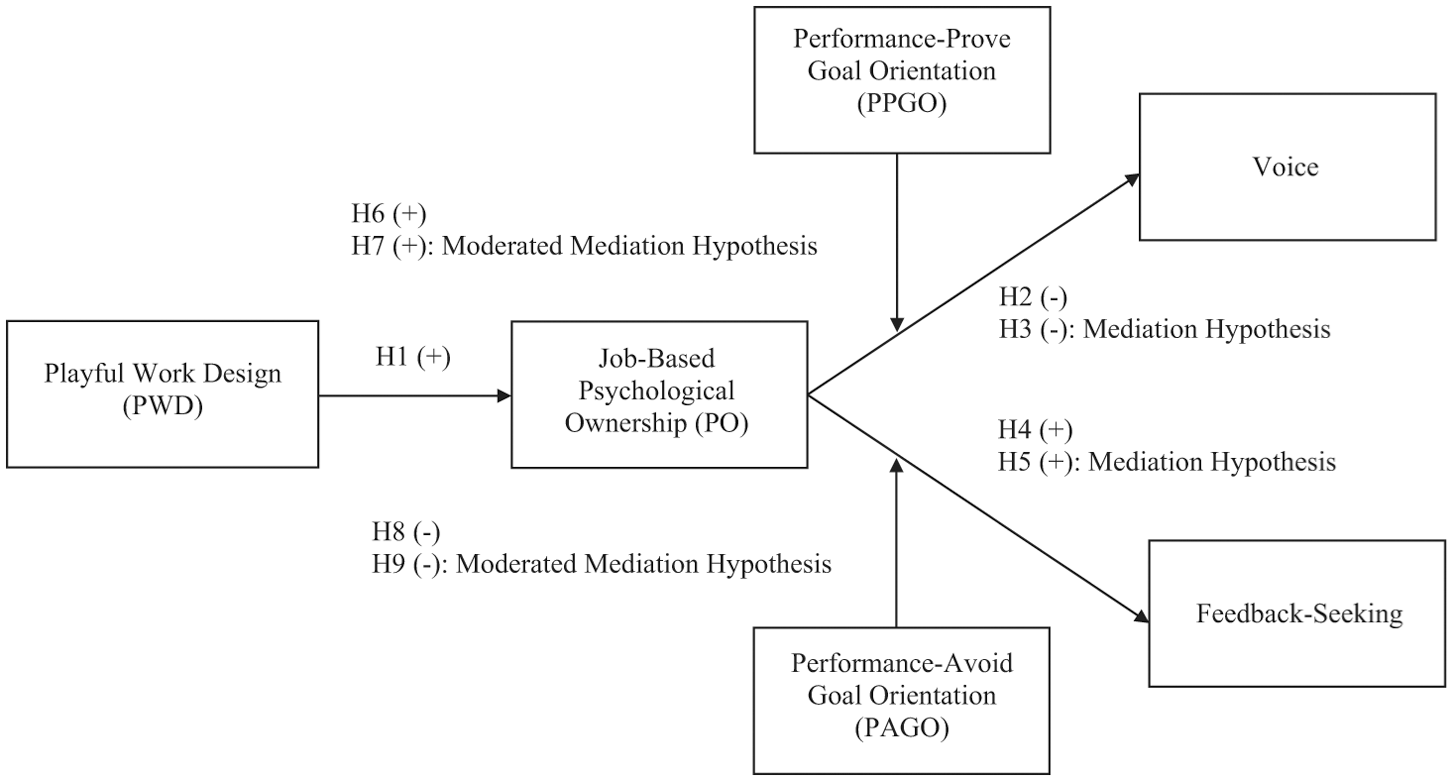
Hypothesized model.
This study offers several theoretical contributions. First, we enhance the research on PWD by extending its outcomes to include the interpersonal behaviors of playful work designers. Previous research has primarily focused on how PWD influences employees’ intrapersonal outcomes (e.g., well-being, job attitudes, and job performance) (e.g., Scharp et al., 2023), largely overlooking its impact on employees’ social interactions. However, PWD is often enacted through social interactions (Scharp et al., 2023). For example, behaviors such as expressing humor or segmenting tasks are not solely determined by individuals but are co-constructed within relational contexts. More importantly, the effects of PWD can extend more broadly through these interactions. When communicating with others, employees can transmit the benefits of PWD and encourage others to engage in it; likewise, they can receive feedback on how their PWD is interpreted and either amplified or suppressed. Voice and feedback-seeking are inherently social and provide valuable information for employees and organizations to evaluate their effectiveness (Ashford and Tsui, 1991; Morrison, 2011). They are therefore essential organizational communication behaviors that contribute to both individual and organizational performance (Guo et al., 2020; Lam et al., 2019). By focusing on voice and feedback-seeking as outcome variables, we broaden the understanding of PWD’s consequences. Our findings suggest that PWD indirectly promotes feedback-seeking while reducing voice behavior, revealing the complex effects of PWD and highlighting potential negative outcomes.
Second, by employing extended self-theory as a primary theoretical framework, we offer a novel and meaningful lens through which to examine the impacts of PWD. Extended self-theory highlights that, driven by self-identity motives, individuals are motivated to establish a “place” in which to dwell (Brown et al., 2014). It thus provides a relational and self-based perspective on how individuals connect with their work and environment (Belk, 1988; Brown et al., 2014; Pierce et al., 2001). According to extended self-theory, as PWD helps employees create their jobs, enhances their control over their roles, and deepens their understanding of their work, it increases job-based PO (Pierce et al., 2001; Scharp et al., 2023). Job-based PO acts as a critical mediator, transmitting the effects of PWD in both positive and negative ways (Chen et al., 2023; Wang et al., 2019). Thus, extended self-theory enables us to break new ground by framing PWD as an extension and expression of the self and by revealing a self-driven mechanism (i.e., job-based PO) that may explain how and why PWD translates into proactive communications such as voice and feedback-seeking. In doing so, we highlight the self-focused nature of PWD (i.e., PWD is for fun and challenge and may not always yield favorable outcomes) and provide a valuable perspective to deepen our understanding of PWD’s impacts.
Third, we enrich the line of research investigating the boundary conditions of PWD’s effects. As little research has investigated employee personalities as key moderators of the effects of PWD (Dishon-Berkovits et al., 2024; Liu et al., 2023; Scharp et al. 2019), our understanding of whether PWD is suitable for all employees remains limited. Our study reveals that goal orientations are significant motivational dispositions that influence how PWD affects individuals. Moreover, we show that achievement-related motivations may conflict with ownership-related motivations, highlighting the importance of examining multiple motivational bundles simultaneously. In doing so, we contribute to the dialogue among the literature on PWD, extended self-theory, and performance goal orientation theory.
Theory and hypotheses
PWD captures employees’ orientation toward their work, enabling them to proactively make their work experience more enjoyable and competitive without altering the job design itself (Bakker and van Woerkom, 2017; Bakker et al., 2020; Scharp et al., 2023). Driven by employees’ intrinsic desire for hedonism and interests in play (Childers et al., 2001; Huizinga, 1949), PWD combines playfulness with work, helping to optimize employees’ personal work experiences (Bakker and van Wingerden, 2021). Since play at work has a dual nature—ludic play and agonistic play—PWD can be implemented in two distinct ways: designing fun and designing competition (Bakker et al., 2020; Scharp et al., 2023). In designing fun, employees’ approach and perform their work with a playful mindset, utilizing humor and imagination to foster entertainment, enjoyment, and amusement. Conversely, in designing competition, employees adopt a competitive mindset, promoting diligence, challenge, and a drive to excel (Scharp et al., 2021, 2023). Designing fun creates lighthearted pleasure, while designing competition creates satisfaction derived from stretching one’s skills (Scharp et al., 2021, 2023). Examples of designing fun include using amusing narratives and sharing jokes with colleagues. In contrast, examples of designing competition include setting deadlines and striving to beat the clock.
The effect of PWD on job-based psychological ownership
Relying on the extended self-theory (Belk, 1988, 2000; Dittmar, 1992; Pierce et al., 2001, 2003), we posit that PWD is positively related to employees’ job-based PO (Scharp et al., 2022). The extended self-theory emphasizes the role of personal possessions in individuals’ self-definition (Belk, 1988, 2000; Pierce et al., 2003). When individuals develop possessive feelings toward an object, they may extend their sense of self to that object, incorporating it into their identity (Brown et al., 2005, 2014). This self-extension process occurs through three routes—it emerges when individuals “(a) invest themselves in the objects to create them, (b) control them, and/or (c) know them well” (Belk, 2000; Pierce et al., 2001; Wang et al., 2019: 230). Once individuals consider their possessions as parts of themselves, they tend to maintain, preserve, and consolidate these possessive feelings. Psychological ownership stems from the extended self-literature, capturing the state in which individuals feel they own something, making the object an extension of their self (Brown et al., 2005; Pierce et al., 2001, 2003). Job-based psychological ownership describes a state where individuals feel ownership over their job and consider it part of their extended self (Wang et al., 2019).
In light of the extended self-theory, PWD may foster job-based PO through three routes described above. First, psychological ownership arises from investing the self into the objects (Pierce et al., 2001; Wang et al., 2019). In PWD, employees invest themselves in their work, make it self-absorbing and self-revealing, thereby linking their sense of self to their work (Brown et al., 2014). Specifically, to make their work playful, employees may first identify which tasks can be approached playfully (e.g., certain tasks like preparing a financial report may require careful attention and are less suitable for playful integration). They then deliberate on how to infuse fun and challenge into their work and assess the feasibility of engaging in PWD without incurring risks (Parker et al., 2010). Such thoughtful consideration reflects personal discretion in determining workstyles, fosters the fusion of self and work, and encourages employees to see their job as their own (Brown et al., 2005; Pierce et al., 2009). Moreover, imbuing their work with humor and excitement, employees introduce surprises and complexities to their job, personalize their tasks, and “get into” their work (Brown et al., 2014; Pierce et al., 2009). These emotional resources invested in the job further strengthen employees’ sense of job-based PO.
Second, extended self-theory suggests that exploration and the ability to exercise control foster the sense of psychological ownership (Brown et al., 2005; Chen et al., 2023; Pierce et al., 2009). Because work typically lacks inherent playfulness, designing work to be playful is volitional and self-oriented, involving a process of exploration, change, and demonstration of one’s competence and autonomy (Bakker et al., 2020; Scharp et al., 2022). By incorporating joy and personal goals—aligned with their inner nature—into their job, employees gain greater control over the direction and focus of their tasks, fostering a sense of self-determination (Deci et al., 2001; Scharp et al., 2022). This leads employees to see themselves as responsible for their work outcomes (Brown et al., 2014); that is, whether performance is successful or unsuccessful, they attribute it to themselves. Therefore, they may develop a strong sense of ownership over their job.
Third, extended self-theory also posits that intimately knowing the target is a pathway to psychological ownership (Pierce et al., 2001; Wang et al., 2019). In PWD, employees infuse fun and challenge into their work (Scharp et al., 2023). These endeavors, driven by an intrinsic desire for play and aligned with one’s inner nature (Dishon-Berkovits et al., 2024; Huizinga, 1949), generate joy, create meaningfulness, and foster deep psychological attachment to the job (Brown et al., 2005; Scharp et al., 2022). In this way, job metaphorically becomes a place in which employees dwell (Brown et al., 2014; Pierce et al., 2009). A sense of connection between self and job emerges—employees and their work become intertwined, such that employees can communicate their self through job, and their job, in turn, constructs their self interactively (Brown et al., 2005, 2014). As self and job become interwoven, employees develop a deep understanding of their job, inhabit it fully, and see it as a reflection or extension of themselves.
This view aligns with self-perception theory (Bem, 1967, 1972) 1 , which suggests that individuals sometimes infer their internal states and come to know themselves by observing their own behaviors much like an external observer would. When employees design their work playfully, they may interpret these behaviors as a manifestation of a strong connection between themselves and their job, thereby cultivating job-based PO. Therefore, we predict that:
The mediating effect of job-based psychological ownership
Extended self-theory suggests that individuals’ possessive relationships with objects inherently involve multiple parties, rather than being simply dyadic (Belk, 1988, 2000). Such relationships constitute not only a bond between self and object but also a bond between others and object, as external claims or interference can undermine ownership (Chen et al., 2023; Wang et al., 2019). According to extended self-theory, psychological ownership can activate a protective motive, prompting employees to safeguard what they own in order to protect their sense of self (Brown et al., 2014; Pierce et al., 2001, 2003). They can do this in two primary ways: maintaining or enhancing their ownership, and preventing others from encroaching upon it (Chen et al., 2023; Wang et al., 2019). Drawing upon extended self-theory and research on psychological ownership, we propose that job-based PO influences employees’ voice and feedback-seeking behaviors, mediating the relationship between PWD and these behaviors.
Specifically, employees with high job-based PO are motivated to control what they possess at work and restrict others’ access (Chen et al., 2023). In doing so, they preserve a sense of security and maintain the continuity of self (Pierce et al., 2003; Wang et al., 2019). Employees’ unique ideas, opinions, and job-related information are valuable and personalized resources that help distinguish them from others; as such, these resources become ownership targets and a part of employees’ extended self (Pierce et al., 2009; Wang et al., 2019). High job-based PO prompts employees to defend their territory (Brown et al., 2005; Chen et al., 2023) and, consequently, to withhold these ideas and opinions over which they feel ownership (Pierce et al., 2009). Because voice involves the discretionary expression of constructive work-related ideas, suggestions, opinions, and concerns (Detert and Burris, 2007; Liu et al., 2017), it requires employees to share these personalized thoughts. Doing so may make employees high in job-based PO feel that their possessive relationship with these thoughts is being encroached upon (Wang et al., 2019). Moreover, voice is an other-oriented proactive behavior—it aims to change how the team or organization functions (Griffin et al., 2007), which is contradictory to the self-oriented nature of job-based ownership—viewing one’s work as a personal possession. When voiced suggestions are implemented, others can access and use the ideas employees created and valued, increasing the possibility that their originality may be dampened or even overlooked. This may further reinforce the sense that their territory is being infringed upon and that their “personal possessions” are no longer entirely their own. Therefore, employees with higher job-based PO are less inclined to voice their ideas. By withholding them, they can prevent others from establishing a bond with their owned possession (Brown et al., 2005) and protect their sense of ownership over their work-related insights.
Accordingly, we predict that job-based PO is negatively related to employee voice. Building on the argument that PWD fosters job-based PO and job-based PO reduces voice, we further suggest that job-based PO mediates the negative indirect relationship between PWD and voice. For example, in designing fun and competition, employees invest heavily in creatively redesigning their work, viewing their work experience as their own possession. If they discover a way to improve work procedures and boost productivity through PWD, they may be inclined to keep this shortcut to themselves. This is because proposing the idea to managers would make it public, reducing the extent to which the idea remains a personal and valued possession. Therefore, to protect the sense of ownership and maintain distinctiveness, they would be less likely to voice their suggestions after engaging in PWD and developing job-based PO. Hence, we propose the following hypotheses:
Also drawing on extended self-theory, employees with high job-based PO are more likely to seek feedback from others. As we have explained, when employees see their job as their own and internalize it as part of their self-definition, they strive to protect and enhance their possessive relationship with their job, thereby maintaining the continuity of their self (Brown et al., 2014; Chen et al., 2023; Pierce et al., 2001, 2003). To achieve this, employees not only need to keep their job on the right track but also endeavor to excel in their performance (Pierce et al., 2009; Wang et al., 2019). Otherwise, they may face the risk of being replaced or the threats that others could interfere with their possessive relationship with their job. Because work represents the self, employees are also motivated to perform well in order to express a positive image and gain social recognition (Pierce et al., 2009; Wang et al., 2019).
Seeking feedback from others (i.e., supervisors and coworkers), though may involve the risk of losing face (Anseel et al., 2015), brings important resource that helps employees function effectively and perform well (Ashford, 1986; Lam et al., 2007), serving to strengthen the bond between self and job. In particular, feedback provides employees with vital information and knowledge to complete their work, such as evaluations of their work progress, advice on finishing specific tasks, and expectations regarding their work role (De Stobbeleir et al., 2011). By helping employees regulate their work pace and directing them toward the right path to achieving their valued end state (Ashford, 1986; Lam et al., 2007), feedback-seeking supports the maintenance of their possessive relationship with their job. Although employees may fear receiving negative feedback when they feel ownership over their work, this avoidant emotion does not necessarily prevent them from seeking feedback, because they cognitively understand that feedback is ultimately beneficial for improving their functioning and reinforcing their bond with their job.
Besides protecting one’s feelings of possession, feedback-seeking can even help expand one’s feelings of possession. Unlike other-oriented voice behavior, which can be regarded as an output of one’s views and a potential loss of personal possessions, feedback-seeking represents an input of others’ perspectives, and thus contributes to one’s own work role (Griffin et al., 2007), and is thus conducive to expanding ones’ personal possessions (Chen et al., 2023). By incorporating others’ feedback, employees enrich their work-related knowledge and feel that what they know, control, and own is growing. Therefore, they can recognize the benefits of feedback and engage more in feedback-seeking. Self-perception theory also helps explain the positive relationship between job-based PO and feedback-seeking behaviors. According to self-perception theory, individuals come to know themselves by observing their own behaviors, and this self-understanding, in turn, guides behaviors that are consistent with their self-perceptions (Bem, 1967, 1972). After developing a sense of ownership of their job through PWD, employees are driven to seek feedback to improve their work and reinforce their possessive relationship with their job.
We therefore propose that job-based PO is positively related to employees’ feedback-seeking behaviors. Building on our previous reasoning that PWD increases job-based PO, we suggest that PWD has a positive indirect relationship with feedback-seeking behavior through heightened job-based PO. For example, a playful work designer reconstructs their job in a fun and competitive manner, aligning closely with their need for hedonism. By generating a strong sense of job-based PO, they hope to perform well and take pride in their job and themselves. To ensure they are performing well and to seek suggestions that can improve their work, they are motivated to communicate with their supervisor and coworkers and solicit feedback. Therefore, we hypothesize that:
The moderating effect of performance goal orientations
After establishing the rationale behind the relationships between PWD, job-based PO, and voice/feedback-seeking, we aim to investigate when these relationships become more or less significant. Extended self-theory suggests that the effect of psychological ownership depends on individual differences (Pierce et al., 2003), such as individuals’ trait motivations (Chen et al., 2023; Wang et al., 2019). Since voice and feedback-seeking behaviors not only involve possession-protecting and -gaining but are also achievement-related interpersonal behaviors—voice can be a way for employees to demonstrate their ability and gain prestige and status among peers (Morrison, 2011), while feedback-seeking involves performance evaluation and the risks of being perceived as incompetent or losing face (Anseel et al., 2015; Ashford and Cummings, 1983)—we focus on employees’ goal orientations as important moderators in this process.
Goal orientations, which are motivational dispositions reflecting individual differences in goal preferences in achievement situations (VandeWalle and Cummings, 1997; VandeWalle et al., 1999), are particularly relevant. Specifically, we focus on two of the three types of goal orientations: performance-prove goal orientation (PPGO) and performance-avoid goal orientation (PAGO). Unlike learning goal orientation (LGO), which represents a mastery goal orientation, both PPGO and PAGO fall under achievement (or performance) goal orientations. They capture an other-referenced focus, that is, the extent to which employees care about self-presentation in front of others and strive for superiority over others (Marijn Poortvliet et al., 2007). As they reflect an attempt to avoid failure, gain others’ respect, and ultimately achieve esteem and affiliation (Watson et al., 2013), they are highly relevant in evaluative situations, particularly in the presence of others (Zeidner, 1998). This aligns with our research focus on interpersonal behaviors as outcome variables (Marijn Poortvliet et al., 2007). In contrast, LGO captures the extent to which employees emphasize self-improvement—that is, they attach importance to developing competence, acquiring skills, and doing their best (Dweck, 1986; Marijn Poortvliet et al., 2007). Being self-referenced in nature, LGO is more relevant in situations where employees compare themselves with their past performance rather than with others. Because LGO is less directly concerned with interpersonal behaviors (e.g., speaking up, exchanging information with others), we do not include it in this study.
We first propose that employees’ PPGO mitigates the negative effect of job-based PO on voice. PPGO describes individuals’ desire to demonstrate their competence and ability and to outperform others. Employees with high PPGO view others as evaluative referents and tend to compare themselves with others (Downes et al., 2021). As previously discussed, employees with high job-based PO are inclined to withhold their ideas and opinions to maintain their sense of distinctiveness, making them less likely to voice their thoughts. However, voice is also a valuable way for employees to display their capabilities, enhance their status, and improve their impressions on managers (Morrison, 2011). In other words, voice serves as a means to prove one’s performance, aligning with the inclinations of employees with high PPGO. Therefore, the desire to compare with others and display competitiveness associated with PPGO may, to some extent, counteract the effect of withholding ideas and perspectives inherent in job-based PO. Additionally, because employees high in PPGO are more approach-oriented (Elliot and Church, 1997), they are less likely to view speaking up (i.e., voice) as a threat to their job-based PO. For example, they may perceive more benefits in voicing and believe that, even when their suggestions are shared and implemented by others, their ownership will still be recognized. Thus, higher PPGO may weaken negative relationship between job-based PO and voice.
In contrast, employees with low PPGO have little motivation to prove their competence in front of others, making them more likely to keep their ideas and suggestions to themselves to maintain their sense of ownership, thus voicing less. Combining the mediating effect of job-based PO and the moderating effect of PPGO, we further propose a moderated mediating effect, such that PPGO lessens the negative indirect effect of PWD on voice via job-based PO. Specifically, as employees playfully design their work and develop a sense of ownership over their job, those with a higher orientation to prove their performance are less likely to withhold their voice. Therefore, we hypothesize:
Furthermore, we propose that employees’ PAGO mitigates the positive effect of job-based PO on feedback-seeking. PAGO reflects individuals’ desire to avoid demonstrating incompetence and receiving negative performance evaluations (Elliot and Church, 1997; VandeWalle and Cummings, 1997; VandeWalle et al., 1999). While PAGO is an other-focused disposition and is sometimes moderately and positively correlated with PPGO (Fisher et al., 2013; Payne et al., 2007), it is distinct from PPGO—employees with high PAGO seek to avoid appearing incompetent to others. As previously discussed, job-based PO encourages employees to seek feedback from others. However, feedback-seeking can involve negative performance evaluations and the risk of losing face (Anseel et al., 2015; Ashford and Cummings, 1983), precisely the situations employees with high PAGO tend to avoid. Therefore, the motive to avoid negative appraisals of their abilities associated with PAGO may, to some degree, counteract the intention to solicit feedback from others prompted by job-based PO. For example, although employees with high job-based PO may seek to obtain job resources and enrich their possessions, they are less likely to ask others for feedback if they have high PAGO. Instead, they may opt for alternative methods, such as participating in training or engaging in self-reflection, to enhance their work and ownership. Conversely, employees with low PAGO are less concerned about receiving negative performance appraisals. For these employees, job-based PO is more likely to drive feedback-seeking, which is a useful way for them to improve their work and expand their ownership.
We also propose a moderated mediating effect by combining the mediating effect of job-based PO and the moderating effect of PAGO. Specifically, PAGO reduces the positive indirect effect of PWD on feedback-seeking through job-based PO. In other words, as employees develop a sense of ownership over their job after playfully designing their work, those with a higher orientation to avoid negative performance evaluations are less likely to engage in feedback-seeking. Thus, we hypothesize:
Overview of studies
We conducted three complementary studies to examine our hypotheses. First, we designed an experiment and collected a sample of working adults to test our core Hypothesis (i.e., the positive relationship between PWD and job-based PO). The experimental design helps establish a causal relationship between the predictor and mediator, enhancing the internal validity of our proposed model. We then complemented the experiment with two survey studies (Studies 2 and 3) to replicate the findings and further explore additional hypotheses. Study 2 was a two-wave, multi-source study conducted in South Korea, aimed at examining Hypotheses 1–5. To extend our investigation, we designed a three-wave, multi-source study (Study 3) in China to examine all our hypotheses comprehensively.
A multi-wave, time-lagged design is well-suited for examining psychological processes and relationships that unfold over time, which aligns with our theoretical model. Specifically, employees require time to develop job-based psychological ownership through engaging in PWD, and subsequently to decide whether to voice or seek feedback based on that ownership. Thus, a time-lagged approach appropriately reflects our theorized causal sequence. We employed a 1-month interval to provide a reasonable approximation of the causal period: long enough for the effects of interest to emerge, but not so long that they dissipate or become confounded by other influences (Mitchell and James, 2001). This design also reduces concerns related to response fatigue and participant reactivity, while allowing temporal separation among independent, mediating, and dependent variable measurements. Such separation helps mitigate common method bias and supports stronger causal inferences (Podsakoff et al., 2012) and is commonly used in organizational research (e.g., Babalola et al., 2022; Wang et al., 2023).
Study 1
Participants and procedures
We recruited 110 employees from various industries and occupations through Credamo, a Chinese online data collection platform widely used by scholars (e.g., Lei, 2024; Qin et al., 2024). Previous research has shown that data collected via Credamo is as reliable as data collected through traditional methods (e.g., Pan et al., 2024; Taneva and Peng, 2024). We specifically recruited participants with approval rates over 80% in China and provided a payment of 3.0 yuan (0.4 USD) per participant. We included an attention check item (e.g., “Please select ‘slightly disagree’ for this item”), and one participant failed this check and was removed from the sample, resulting in a final sample of 109 participants. The average age of participants was 40.9 years (SD = 9.85), and they had worked an average of 12.5 years in their current jobs (SD = 10.13). Among them, 67 (62.5%) were male. Regarding educational levels, all participants had at least a high school education, 68 (62.4%) had at least a bachelor’s degree, and 10 (9.2%) had at least a master’s degree.
We used a one-factorial (PWD: low and high) between-subjects design to examine Hypothesis 1. Participants were randomly assigned to one of two conditions: high PWD or low PWD. We created a manipulation for each condition, and participants were asked to read the manipulation, recall a related experience, and write information relevant to the manipulation. After completing their written response, participants finished a manipulation check and a measure of job-based PO. Finally, they were compensated, thanked, and debriefed.
Manipulations and measures
PWD manipulation
For participants in the high PWD condition, we provided the definition and examples of PWD (Scharp et al., 2021, 2023). And the participants read:
Work design captures the nature of employees’ tasks, activities, relationships, and responsibilities at work, and how they are structured and organized. Playful work design refers to the process of proactively creating conditions during work activities that cultivate competition and fun. Specifically, designing fun occurs when employees use personal capacities such as humor and imagination to offer themselves (and possibly others) lighthearted positive affect. For example, employees talk jokes at work or imagine that their work is funny. Designing competition occurs when employees approach and perform work with an agonistic mindset with an aim of formulating objectives and rules to promote diligence, challenge, and competition. For example, employees stretch their personal skills and push beyond personal limits at work.
We then informed participants to recall an experience in which they playfully designed their work and write down this experience in at least 50 words. For participants in the low PWD condition, we informed participants to recall their experience of having their last dinner and then write down this experience in at least 50 words.
Manipulation check
To assess the effectiveness of our manipulation of PWD, we adopted the 12-item scale in Scharp et al. (2023). Sample items included “I approach my work in a playful way” and “I try to keep score in all kinds of work activities” (α = 0.95).
Measure of job-based PO
To measure job-based PO, Wang et al.’s (2019) six-item scale was used. A sample item was: “I feel a very high degree of personal ownership for this job” (α = 0.96).
Results
A one-way ANOVA on participants’ reported PWD indicated that our manipulation was successful: participants in the high PWD condition reported significantly higher level of PWD (M = 5.85) than participants in the low PWD condition (M = 5.20), F(1, 107) = 14.14, p < 0.001. We then conducted another one-way ANOVA on participants’ job-based PO to examine whether the participants in the high PWD condition reported significantly higher job-based PO than the participants in the low PWD condition (Hypothesis 1). The results showed that the participants in the high PWD condition had a higher job-based PO (M = 5.37) than participants in the low PWD condition (M = 4.77), F(1, 107) = 5.74, p < 0.05. These results supported our Hypothesis 1.
Study 1 provided initial support for our Hypothesis that an employee’s PWD can increase job-based PO. We then designed two survey studies to examine other hypotheses and attempted to provide more external validity.
Study 2
Sample and procedure
We conducted a two-wave, multi-source survey study in one small and medium-sized enterprise (SME) and one large enterprise in South Korea. The SME was a human resource management consulting firm focused on staffing, and the large enterprise was an information and telecommunication firm. We targeted a total of 354 employees and their 32 direct supervisors. At Time 1, we measured employees’ PWD and job-based PO. A total of 271 employees completed the first survey. One month later (Time 2), we measured employee voice and feedback-seeking from supervisors. Our final sample consisted of 221 employee–supervisor dyads (with 28 supervisors), resulting in a response rate of 62.4% for employees. Among these employees, 186 (84.2%) were male, and most were between 30 and 50 years old (144 employees, 65.2%). In terms of educational level and organizational tenure, the majority had at least a bachelor’s degree (168, 76.0%) and more than 6 years of tenure (131, 59.3%). Table 1 presents the means, standard deviations, and correlations of the variables.
Means, standard deviations, and correlations among variables (Study 2).
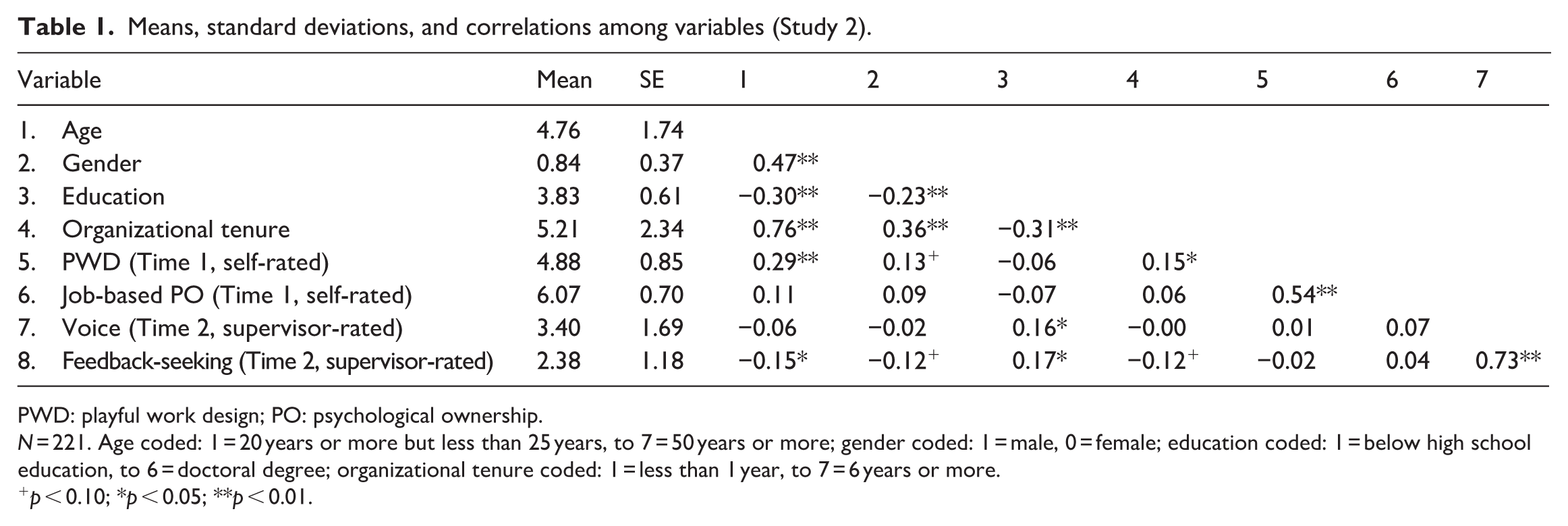
PWD: playful work design; PO: psychological ownership.
N = 221. Age coded: 1 = 20 years or more but less than 25 years, to 7 = 50 years or more; gender coded: 1 = male, 0 = female; education coded: 1 = below high school education, to 6 = doctoral degree; organizational tenure coded: 1 = less than 1 year, to 7 = 6 years or more.
p < 0.10; *p < 0.05; **p < 0.01.
Measures
To ensure our measures translated well into Korean, we followed the translation-back-translation procedure (Brislin, 1980). Unless otherwise indicated, all measures were rated on a 7-point Likert scale ranging from “1 = strongly disagree” to “7 = strongly agree.”
PWD
PWD was reported by employees. We adopted the 12-item scale from Scharp et al. (2023) to measure PWD. There were six items for designing fun and designing competition respectively. Sample items included “I look for humor in the things I need to do” and “I try to set time records in my work tasks” (α = 0.87).
Job-based psychological ownership
Job-based PO was reported by employees. We used Wang et al.’s (2019) six-item scale to measure job-based PO. A sample item was: “I sense that this job is mine.” The Cronbach’s alpha coefficient was 0.89.
Voice
Voice was reported by supervisors using a four-item scale from Tangirala and Ramanujam (2012). Sample item included “This employee made recommendations to you for improving work procedures in your unit” and “This employee spoke up to you with ideas for change in work procedures in your unit.” The supervisors were instructed to rate on these items based on the focal employee’s behaviors in the past 1 month. The internal consistency coefficient was satisfactory (α = 0.94).
Feedback-seeking
Supervisors were asked to rate employees’ feedback-seeking behavior. We used a three-item scale adapted from Ashford and Tsui (1991). Following Ashford and Tsui (1991), we used a similar instruction: “During the past one month, to obtain feedback, how frequently did this employee. . .?” Items were: “Ask for information concerning his or her performance,” “Ask you, ‘how am I doing,” and “Ask for an informal appraisal” (from “1 = never” to “7 = very frequently”). The Cronbach’s alpha coefficient was 0.80.
Control variables
We followed the previous work (e.g., De Stobbeleir et al., 2011; Kakkar et al., 2016; Scharp et al., 2021) and controlled for key demographic variables and employment characteristic: age, gender, education, and organizational tenure, which may potentially affect our independent variable (PWD) and outcome variables (voice and feedback-seeking) 2 .
Analytical approach
Because our data may have some nestedness issues, we conducted a one-way analysis of variance on all study variables. The results for PWD (F = 1.66, p < 0.05), voice (F = 14.46, p < 0.001), and feedback-seeking (F = 17.93, p < 0.001) were statistically significant. The intraclass correlation coefficient (ICC (1)) for PWD was 0.08; for voice was 0.63; and for feedback-seeking was .68. Based on these results, we controlled for between-supervisor variance of PWD, voice, and feedback-seeking by allowing them to have a random intercept at Level-2 (Hofmann and Gavin, 1998). We implemented Mplus 8.3 (Muthén and Muthén, 2017) to examine Hypotheses 1–5, with a path model. The exogenous variable, PWD, was grand-mean-centered (Hofmann et al., 2000). And, we relied on 20,000 Monte Carlo resampling approach to examine our hypothesized mediation effects (Hypotheses 3 and 5).
Results
We conducted confirmatory factor analyses (CFAs) to evaluate the distinctiveness of our studied variables. The hypothesized four-factor model showed a good fit with the data (χ2(269) = 558.23, p < 0.001; CFI = 0.92; TLI = 0.91; RMSEA = 0.070; SRMR = 0.062), and all the items were significantly loaded on their intended factors (p < 0.001). The four-factor model was significantly superior to other possible three-factor models (combining PWD and job-based PO: χ2(272) = 1015.02, p < 0.001; CFI = 0.79; TLI = 0.77; RMSEA = 0.111; SRMR = 0.085; combining voice and feedback-seeking: χ2(272) = 621.01, p < 0.001; CFI = 0.90; TLI = 0.89; RMSEA = 0.076; SRMR = 0.064), two-factor model (combining PWD and job-based PO, and voice and feedback-seeking respectively: χ2(274) = 1077.74, p < 0.001; CFI = 0.77; TLI = 0.75; RMSEA = 0.115; SRMR = 0.086), and one-factor model (combining all variables: χ2(275) = 2237.55, p < 0.001; CFI = 0.44; TLI = 0.39; RMSEA = 0.180; SRMR = 0.177).
Table 2 shows the unstandardized path coefficients and standard errors in our analysis. Hypothesis 1 suggests that a positive relationship between PWD and job-based PO. The results showed that PWD had a positive and significant effect on job-based PO (B = 0.47, p < 0.001). Therefore, Hypothesis 1 was supported. Hypothesis 2 articulates that a negative relationship between job-based PO and voice. The results were inconsistent with our prediction: job-based PO had a positive and significant relationship with voice (B = 0.34, p < 0.01). Therefore, Hypothesis 2 was not supported. Hypothesis 3 predicts that job-based PO mediates the relationship between PWD and voice. The results also did not lend support for Hypothesis 3: the indirect effect was positive (indirect effect = 0.16, 95% Monte Carlo confidence interval CI (0.0123, 0.4196)). Hypothesis 4 describes the positive relationship between job-based PO and feedback-seeking. The results demonstrated that the effect of job-based PO on feedback-seeking was positively and marginally significantly related to feedback-seeking (B = 0.17, p = 0.06). Hypothesis 4 was therefore supported. Hypothesis 5 states that job-based PO mediated the positive and indirect relationship between PWD and feedback-seeking. The results were aligned with our prediction: the indirect effect was positive and significant (indirect effect = 0.08, 95% Monte Carlo CI (0.0047, 0.1892)), supporting Hypothesis 5 3 .
Unstandardized path coefficients and standard errors at individual level (Study 2).
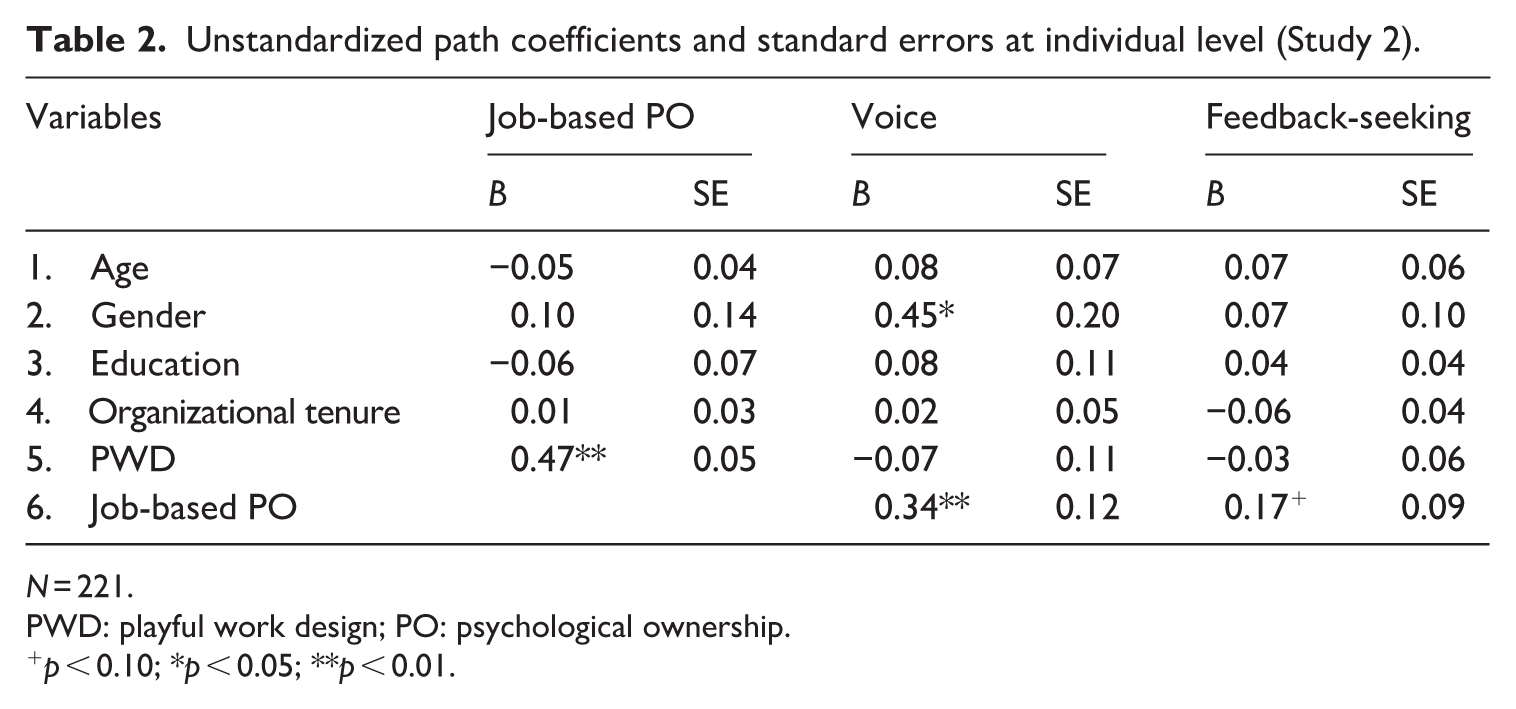
N = 221.
PWD: playful work design; PO: psychological ownership.
p < 0.10; *p < 0.05; **p < 0.01.
Supplementary analysis
As we do not focus on the specific effect of each dimension of PWD (i.e., designing fun and designing competition), and we contend that these two dimensions do not differ theoretically in our proposed relationships, we did not separate them when testing our hypotheses. Nevertheless, we also conducted supplemental analyses by separating the two dimensions and testing the hypothesized relationships. The results showed that the relationship between designing fun and job-based PO was positive and marginally significant (B = 0.14, p < 0.10), whereas the relationship between designing competition and job-based PO was positive and significant (B = 0.32, p < 0.001). These findings were generally consistent with Hypothesis 1. We then examined the indirect effects of designing fun and designing competition on voice via job-based PO (for designing fun: indirect effect = 0.05, 95% Monte Carlo CI (0.0054, 0.0982); for designing competition: indirect effect = 0.11, 95% Monte Carlo CI (−0.0219, 0.3625)). The pattern of results was consistent with those obtained when combining the two dimensions to test Hypothesis 3. Similarly, we tested the indirect effects of designing fun and designing competition on feedback-seeking via job-based PO (for designing fun: indirect effect = 0.02, 95% Monte Carlo CI (0.0006, 0.0623); for designing competition: indirect effect = 0.05, 95% Monte Carlo CI (−0.0152, 0.1553)). Again, the pattern of results was generally consistent with those obtained when combining the two dimensions to test Hypothesis 5.
Study 2 mainly focused on examining Hypotheses 1–5. The results showed that two of the hypotheses (Hypotheses 2 and 3) were not supported. To further examine these unsupported hypotheses and investigate the moderating effects of PPGO and PAGO, we designed Study 3.
Study 3
Sample and procedure
This study was conducted in a state-owned engineering company located in Southern China. The company’s main business involves building roads, houses, and infrastructure for the city. Since blue-collar workers may have limited autonomy to integrate play and work, we invited all white-collar employees (202 employees) and their direct supervisors to participate in our survey. Three waves of surveys were created through a website designed specifically for the creation and distribution of academic surveys in China. Each time we sent our survey links to participants, they received a message on their mobile phones. They could then click on the link and complete our questionnaires. The first-wave questionnaire included measures of PWD and control variables, the second-wave questionnaire (administered 1 month after the first wave) included measures of job-based PO, PPGO, and PAGO, and the third-wave survey (administered 1 month after the second wave) had two questionnaires: one for supervisors (measuring employee voice) and one for employees (measuring feedback-seeking). All participants received 6 CNY (about 1 USD) as a token of appreciation.
The final sample comprised 194 employee–supervisor dyads, resulting in a 96.0% response rate. The employees were from various departments, such as project management, quality inspection, safety supervision, finance, and administration. Among them, 136 (70.1%) were male, and 58 (29.9%) were female. On average, they were 36.4 years old and had 7.6 years of organizational tenure. In terms of educational level, almost all had at least a high school education (189 employees, 97.4%), and most had at least a bachelor’s degree (142 employees, 73.2%). Table 3 presents the means, standard deviations, and correlations of the variables.
Means, standard deviations, and correlations among variables (Study 3).
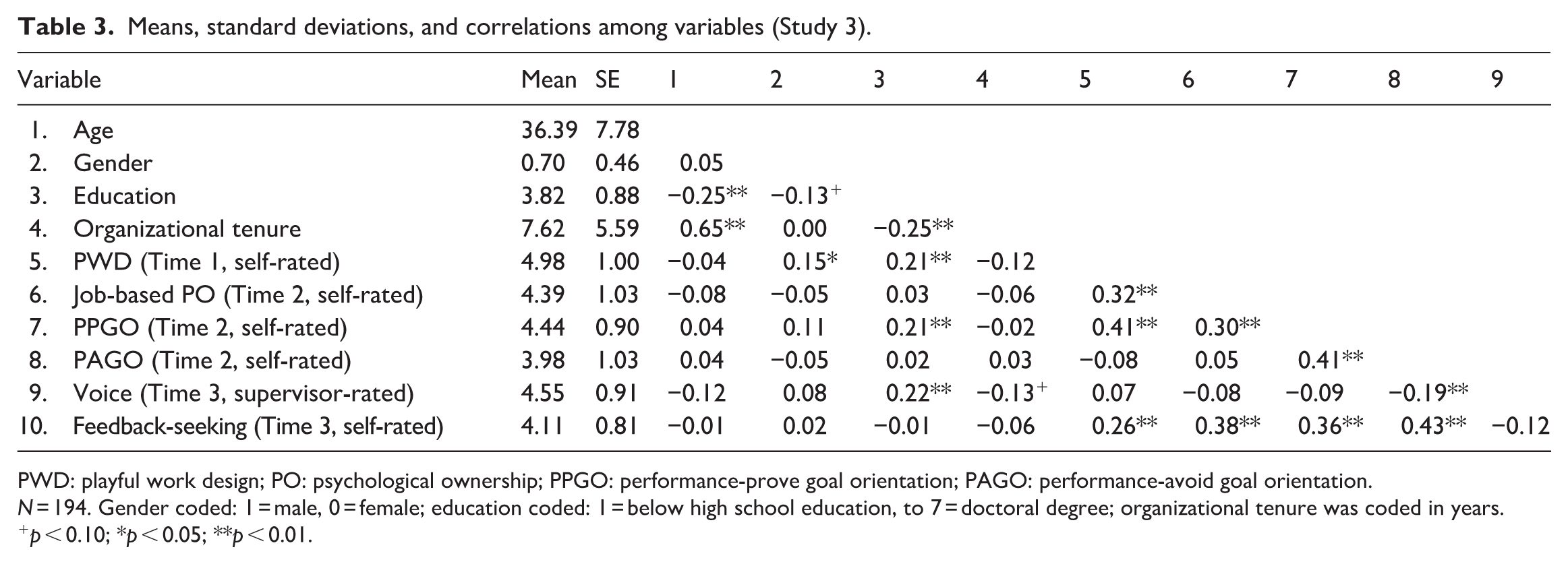
PWD: playful work design; PO: psychological ownership; PPGO: performance-prove goal orientation; PAGO: performance-avoid goal orientation.
N = 194. Gender coded: 1 = male, 0 = female; education coded: 1 = below high school education, to 7 = doctoral degree; organizational tenure was coded in years.
p < 0.10; *p < 0.05; **p < 0.01.
Measures
To ensure our participants clearly understand our measures, we followed the translation-back-translation procedure (Brislin, 1980). Unless otherwise indicated, all measures were anchored on a 7-point Likert scale (from “1 = strong disagree” to “7 = strongly agree”).
PWD
Employees reported their PWD on the same 12-item scale as in Study 2. The Cronbach’s alpha coefficient was 0.98.
Job-based psychological ownership
Employees reported their job-based PO on the same six-item scale as in Study 2 (α = 0.97).
PPGO
Employees were asked to report their PPGO. A four-item scale adopted from VandeWalle (1997) was used to measure PPGO. For example, “I try to figure out what it takes to prove my ability to others at work” (α = 0.92).
PAGO
Also, employees reported their PAGO. We adopted a four-item scale from VandeWalle (1997) to measure PAGO. For example, “I would avoid taking on a new task if there was a chance that I would appear rather incompetent to others” (α = 0.93).
Voice
Supervisors were asked to rate employees’ voice behavior. We used the same items as in Study 2 to measure voice (i.e., the four-item scale from Tangirala and Ramanujam (2012)). The reliability was satisfactory (α = 0.89).
Feedback-seeking
Employees reported their feedback-seeking behavior using a four-item scale adopted from Ashford and Black (1996). Following Ashford and Black (1996), we used the instruction: “To what extent have you. . .?” Sample items were: “sought feedback on your performance after assignments” and “solicited critiques from your boss” (from “1 = to no extent” to “7 = to a great extent”). The employees were instructed to rate on these items based on their behaviors in the past 1 month. The Cronbach’s alpha coefficient was 0.85.
Control variables
We controlled for the same variables as in Study 2.
Analytical approach
To test our hypothesized relationships, we used path analysis. Specifically, we conducted a one-way analysis of variance on all study variables because our employee data were nested within supervisors, and our observations were not independent. The results for PWD (F = 1.61, p < 0.05) and voice (F = 4.56, p < 0.001) were statistically significant. The intraclass correlation coefficient (ICC (1)) for PWD was 0.10; and for voice was 0.38. These results suggested the necessity of controlling for between-supervisor variance (Hofmann and Gavin, 1998). Therefore, we integrated the “Type = Complex” syntax in Mplus 8.3 (Muthén and Muthén, 2017) with the path analysis to address the non-independence issue and simultaneously examine all our hypothesized relationships in one model. We grand-mean-centered the exogenous variables (Hofmann et al., 2000) and allowed PAGO to predict voice and PPGO to predict feedback-seeking. A 20,000 Monte Carlo resampling approach was used to examine our hypothesized mediation effects and moderated mediation effect.
Results
CFAs were conducted to evaluate the distinctiveness of our studied variables. We created parcels for some variables to obtain an optimal sample size ratio for the number of parameters that we needed to estimate (Landis et al., 2000). Specifically, we parceled the items of PWD according to its dimensions (two parcels), and parceled the items of job-based PO, PPGO, and PAGO following a random assignment approach (three parcels for job-based PO, and two parcels for PPGO and PAGO, respectively). Two outcome variables (voice and feedback-seeking) were not parceled. The hypothesized six-factor model showed a good fit with the data (χ2(104) = 201.60, p < 0.001; CFI = 0.97; TLI = 0.96; RMSEA = 0.070; SRMR = 0.046), and all the items were significantly loaded on their intended factors (p < 0.001). The six-factor model was significantly superior to other possible models (see Table 4).
Results from confirmatory factor analyses comparison of alternative measurement models (Study 3).
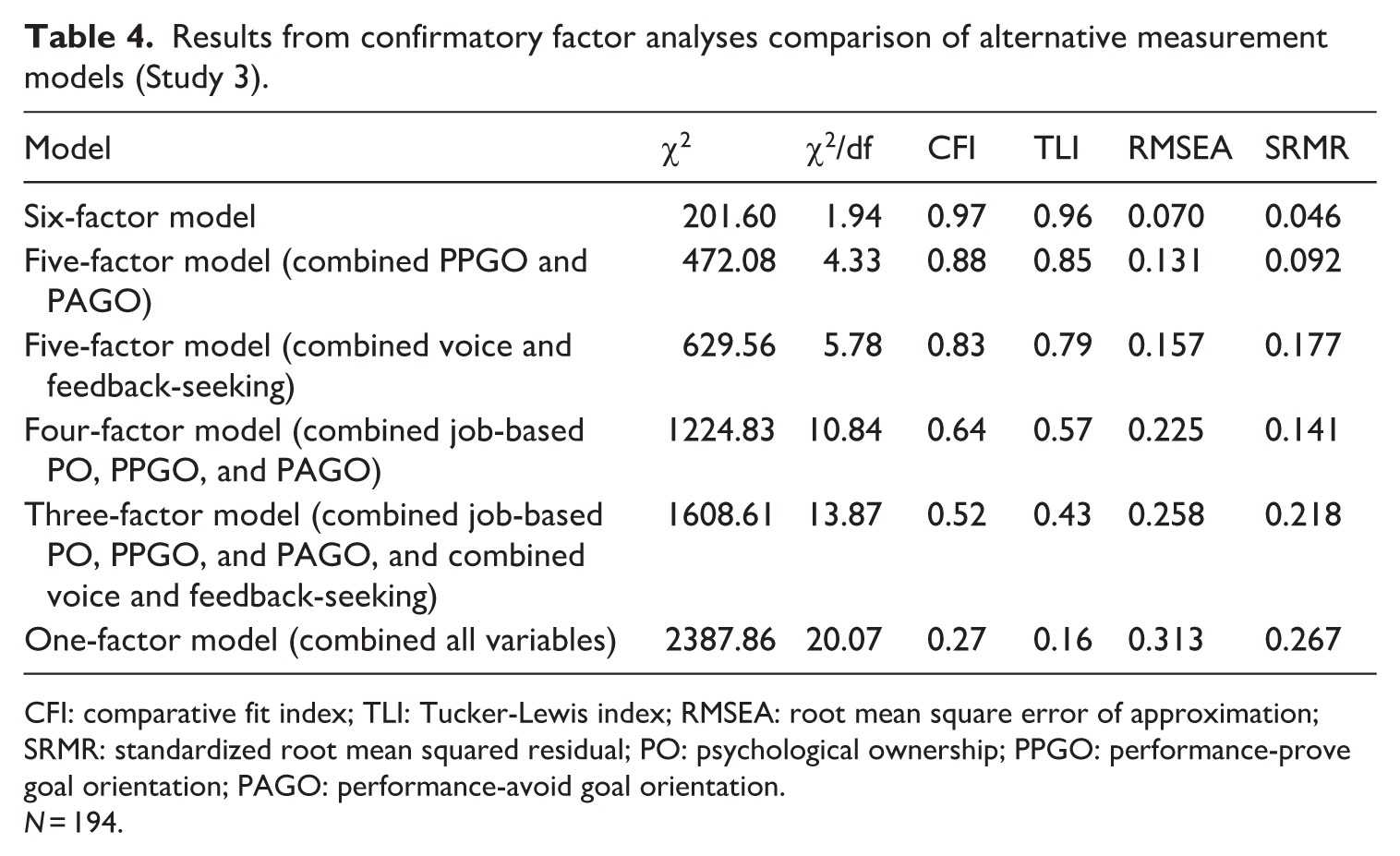
CFI: comparative fit index; TLI: Tucker-Lewis index; RMSEA: root mean square error of approximation; SRMR: standardized root mean squared residual; PO: psychological ownership; PPGO: performance-prove goal orientation; PAGO: performance-avoid goal orientation.
N = 194.
Figure 2 and Table 5 show the unstandardized path coefficients and standard errors in our analysis. Hypothesis 1 predicts that PWD is positively related to job-based PO. The results showed that the path from PWD to job-based PO was positive and significant (B = 0.36, p < 0.001). Therefore, Hypothesis 1 was supported. Hypothesis 2 suggests that job-based PO is negatively related to voice. The results showed that job-based PO negatively and significantly predicted voice (B = −0.08, p < 0.05), supporting Hypothesis 2. Hypothesis 3 stated that job-based PO mediates the relationship between PWD and voice. The results showed the indirect effect was negative but not significant (indirect effect = −0.03, 95% Monte Carlo CI (−0.0867, 0.0249)). Therefore, Hypothesis 3 was not supported. Hypothesis 4 suggests the positive effect of job-based PO on feedback-seeking. The results supported Hypothesis 4: the path from job-based PO was positively and significantly related to feedback-seeking (B = 0.20, p < 0.05). Hypothesis 5 describes that job-based PO mediates the relationship between PWD and feedback-seeking. The results showed that the indirect effect was positive and significant (indirect effect = 0.07, 95% Monte Carlo CI (0.0488, 0.1316)). Thus, Hypothesis 5 was supported.
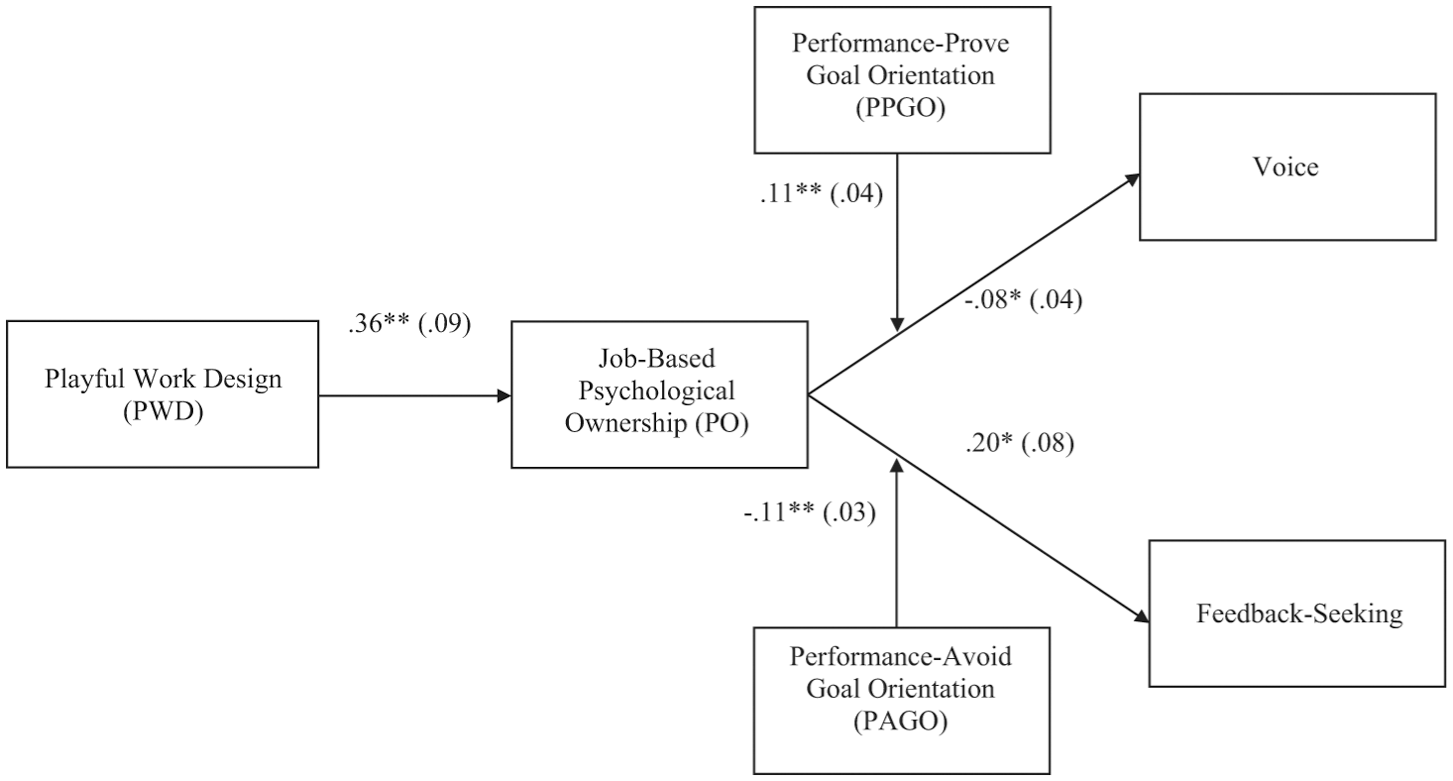
Results of path analysis (Study 3).
Unstandardized path coefficients and standard errors (Study 3).
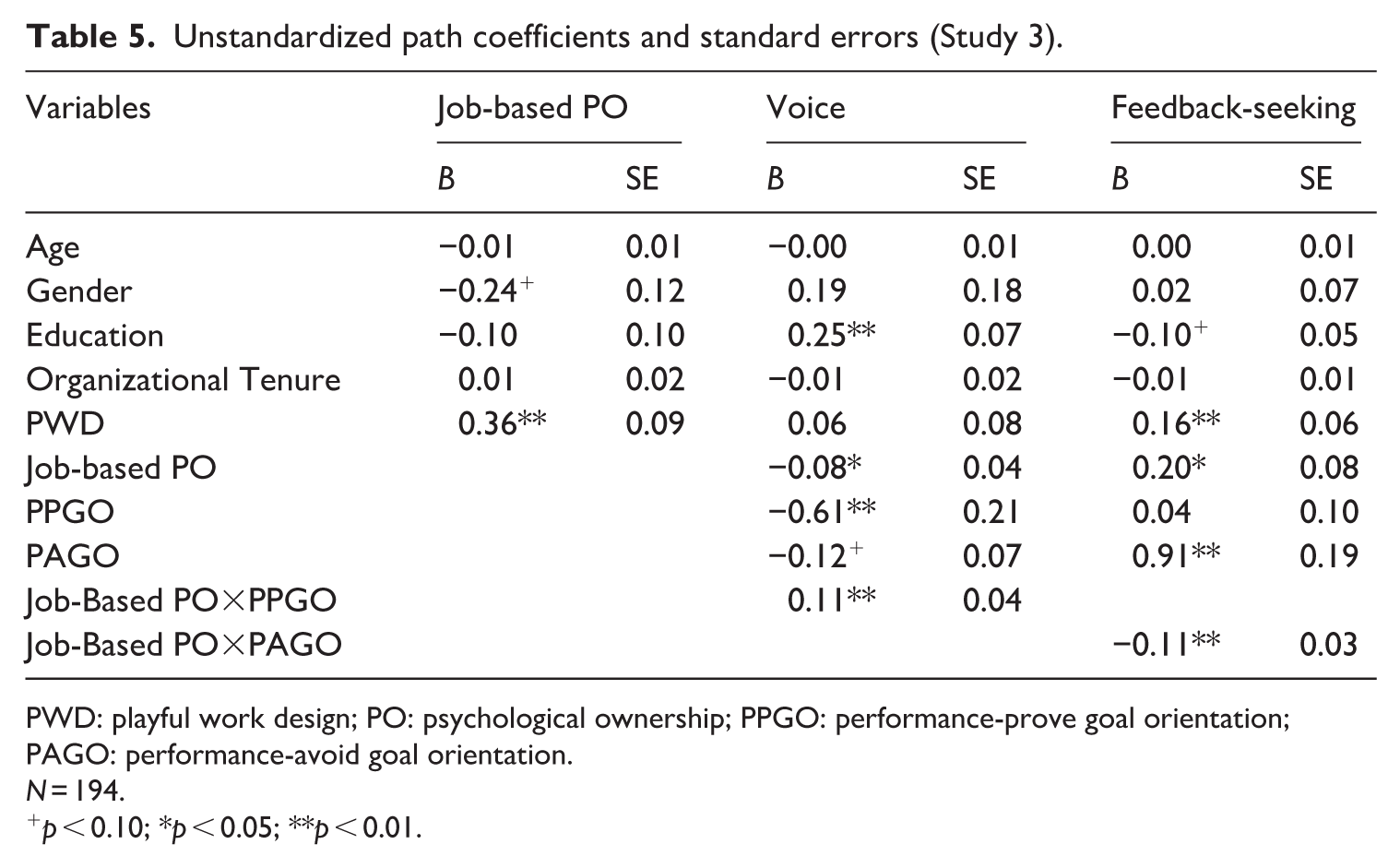
PWD: playful work design; PO: psychological ownership; PPGO: performance-prove goal orientation; PAGO: performance-avoid goal orientation.
N = 194.
p < 0.10; *p < 0.05; **p < 0.01.
Hypothesis 6 predicts that the negative relationship between job-based PO and voice was mitigated by an employee’s PPGO. The results showed that the interaction term between job-based PO and PPGO was positive and significant (B = 0.11, p < 0.01), which meant that the negative effect of job-based PO on voice was buffered by PPGO. Hypothesis 6 was supported. Figure 3 illustrates that job-based PO was less negatively related to voice when PPGO was high (at +1 SD: simple slope = 0.01, n.s.) than when it was low (at −1 SD: simple slope = −0.18, p < 0.01). Hypothesis 7 articulates that the negative indirect effect of PWD on voice via job-based PO was mitigated by an employee’s PPGO. The results showed that the indirect effect was less negative when PPGO was high (indirect effect = 0.00, n.s.) than when it was low (indirect effect = −0.06, p < 0.05). And, the difference in the indirect effects was significant (diff = 0.07, p < 0.05, 95% Monte Carlo CI (0.0179, 0.1174)). Thus, Hypothesis 7 was supported. Hypothesis 8 suggested that the positive relationship between job-based PO and feedback-seeking was lessened by an employee’s PAGO. The results showed that the interaction term between job-based PO and PAGO was negative and significant (B = −0.11, p < 0.001). This meant that the positive effect of job-based PO on feedback-seeking was mitigated by PAGO, supporting Hypothesis 8. Figure 4 presents that job-based PO was less positively related to feedback-seeking when PAGO was high (at +1 SD: simple slope = 0.08, n.s.) than when it was low (at −1 SD: simple slope = 0.31, p < 0.001). Hypothesis 9 states that the positive indirect effect of PWD on feedback-seeking via job-based PO was buffered by an employee’s PAGO. The results showed that the indirect effect was significantly less positive when PAGO was high (indirect effect = 0.03, n.s.) than when it was low (indirect effect = 0.11, p < 0.05) (difference in indirect effects = −0.09, p < 0.01, 95% Monte Carlo CI (−0.1283, −0.0406)). Hence, Hypothesis 9 was supported.
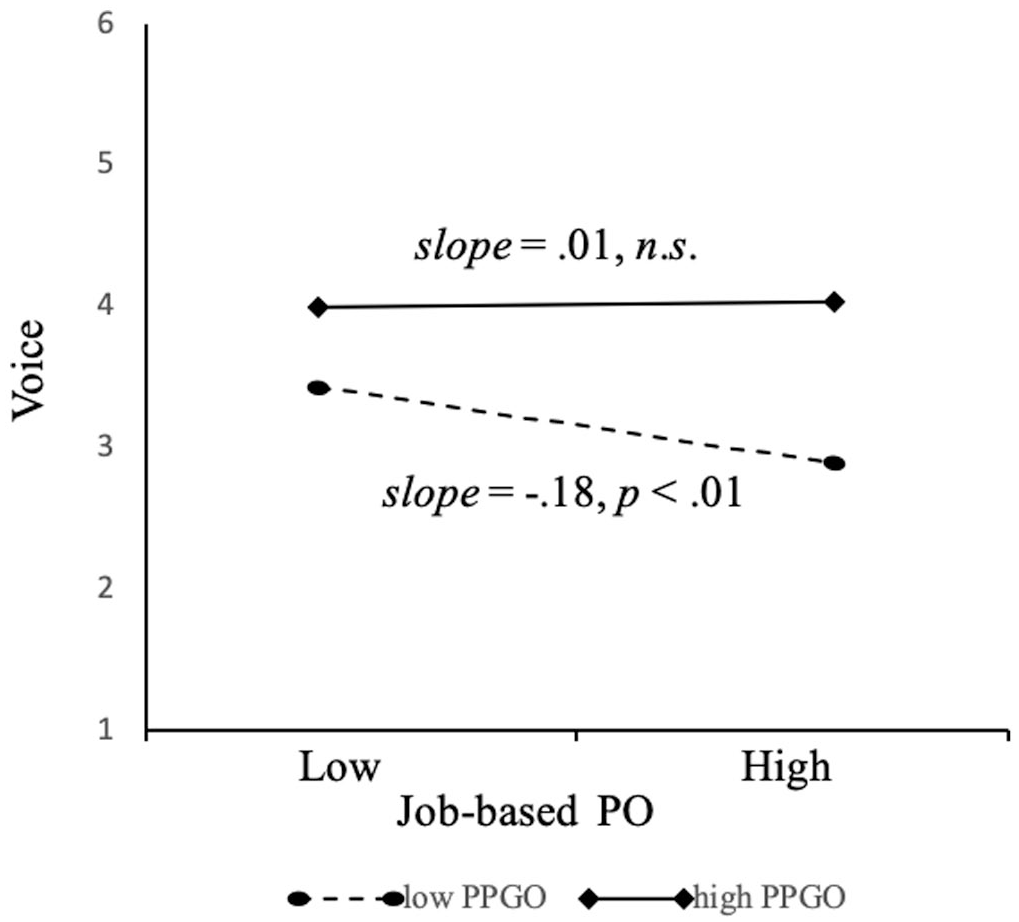
The moderating effect of PPGO on the relationship between job-based PO and voice (Study 3).
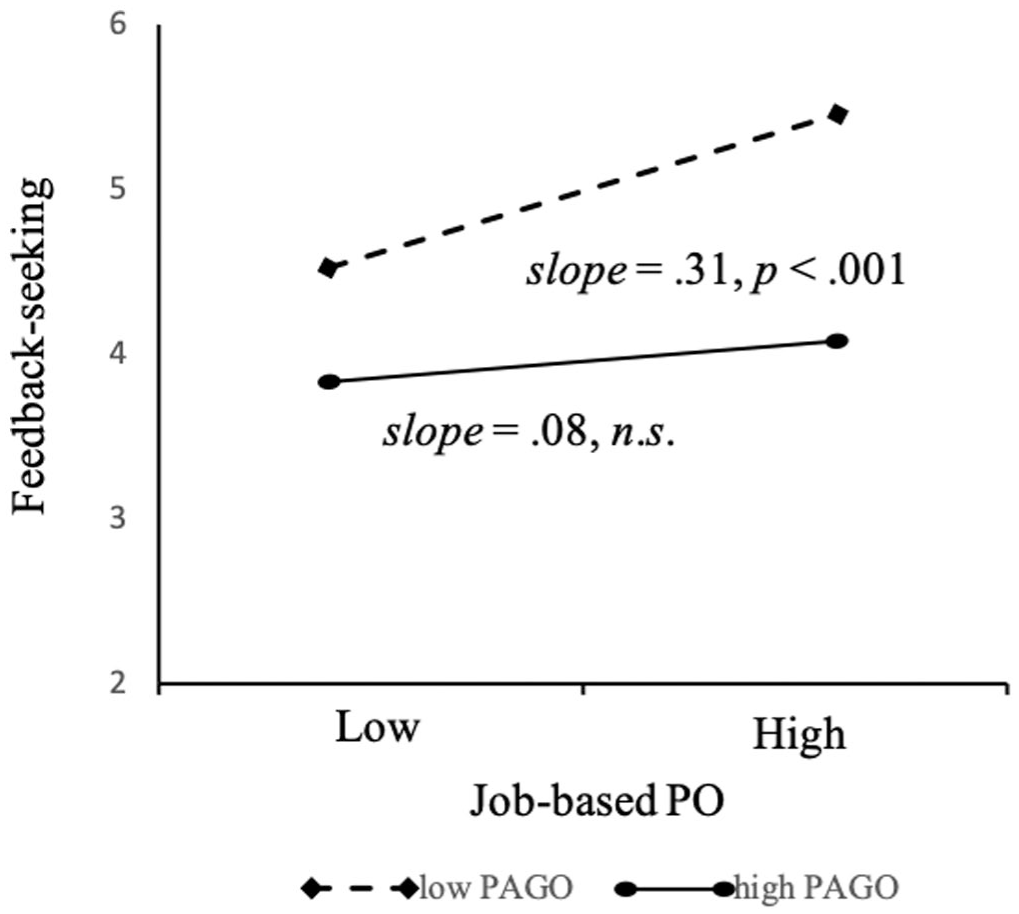
The moderating effect of PAGO on the relationship between job-based PO and feedback-seeking (Study 3).
Supplementary analysis
Similar to Study 2, we also separated the two dimensions of PWD and tested our hypothesized relationships. The results showed that the relationship between designing fun and job-based PO was positive and marginally significant (B = 0.35, p < 0.10), whereas the relationship between designing competition and job-based PO was not significant (B = 0.02, n.s.). We further examined the indirect effects of designing fun and designing competition on voice via job-based PO (for designing fun: indirect effect = −0.01, 95% Monte Carlo CI (−0.0489, 0.0160); for designing competition: indirect effect = −0.00, 95% Monte Carlo CI (−0.0240, 0.0120)), and their indirect effects on feedback-seeking via job-based PO (for designing fun: indirect effect = 0.02, 95% Monte Carlo CI (0.0033, 0.1320); for designing competition: indirect effect = 0.00, 95% Monte Carlo CI (−0.0510, 0.0637)). These results showed some divergence from those of our earlier analysis in which the two dimensions of PWD were combined into a composite measure. Finally, we examined the moderated mediating effects using the separate dimensions of PWD. The results indicated that PPGO did not significantly moderate the indirect effect of designing fun on voice via job-based PO (diff = 0.03, 95% Monte Carlo CI (−0.0051, 0.1055)) and the indirect effect of designing competition on voice via job-based PO (diff = 0.00, 95% Monte Carlo CI (−0.0373, 0.0277)). In contrast, PAGO significantly moderated the indirect effect of designing fun on feedback-seeking via job-based PO (diff = −0.08, 95% Monte Carlo CI (−0.1893, 0.0033)), but did not significantly moderate the indirect effect of designing competition on feedback-seeking via job-based PO (diff = −0.01, 95% Monte Carlo CI (−0.0734, 0.0700)). These findings suggest potential differences in the results when examining designing fun and designing competition separately versus combining them into a single composite in the analyses.
General discussion
This research examines how PWD influences employees’ communicative behaviors through job-based PO, and when these effects are strengthened or weakened by goal orientations. Across one experiment and two field studies, our findings consistently show that PWD enhances job-based PO, which in turn promotes feedback-seeking while reducing voice behavior. These results illustrate the dual nature of PWD as both an empowering and constraining force in interpersonal contexts—encouraging employees to seek input from others, yet discouraging them from speaking up in order to protect their psychological territories. Interestingly, Study 2 revealed a positive association between job-based PO and voice behavior, suggesting that ownership may sometimes motivate individuals to express their self-identity and competence at work rather than solely safeguard their domain. This implies that when employees perceive their jobs as extensions of the self, they may use voice to demonstrate who they are and what they can contribute, particularly in psychologically safe environments. This nuanced finding highlights the need for future research to investigate the contextual and personal contingencies that determine when psychological ownership facilitates versus inhibits voice. Together, these insights contribute to a more comprehensive understanding of the complex social mechanisms through which PWD operates, paving the way for our theoretical contributions.
Theoretical implications
This research offers several theoretical contributions. First, we extend the research on PWD by exploring its impact on interpersonal behaviors. Existing research on PWD has predominantly focused on intrapersonal outcomes. However, in the process of task completion and performance evaluation, playful work designers inevitably interact with coworkers and supervisors. Although PWD is self-focused, supervisors and coworkers significantly influence the work environment of playful work designers—they provide reactions to PWD, shape how PWD is evaluated, and affect the extent to which PWD behaviors need to be adjusted (Fong et al., 2022). The benefits and costs of PWD are also transmitted through social interactions. To better capture the externality of PWD, it is necessary to embed it within a social-interactional context at work. This underscores the importance of investigating the communication between playful work designers and others. By focusing on voice and feedback-seeking—two communication-centric behaviors—we examine how PWD may influence employees’ engagement in sharing and soliciting ideas and suggestions. This investigation advances our understanding of how PWD affects interpersonal interactions, allowing for a more complete view of its emergence, transmission, and outcomes.
Second, we propose an important theoretical lens to provide a fuller understanding of PWD. Drawing on the extended self-theory (Belk, 2000; Dittmar, 1992; Pierce et al., 2001, 2003), we argue that job-based PO serves as a critical mediator between PWD and distal outcomes. The extended self-theory is particularly suitable for examining PWD due to the link between PWD and job-based PO—PWD provides employees with joy, discretion, understanding, and control over their work, all essential factors of job-based PO (Belk, 2000; Brown et al., 2005; Pierce et al., 2003, 2009). Through this lens, PWD can be understood as an extension and expression of self, which relates to employees’ proactive communication. This perspective moves beyond previous views that consider PWD merely as a work tactic. Moreover, as existing research has primarily explored the positive outcomes of PWD (e.g., Liu et al., 2023; Scharp et al., 2022, 2023), we offer a preliminary glimpse into its complexity by introducing job-based PO as a key mediator, which has been shown to have multifaceted effects (Baer and Brown, 2012; Chen et al., 2023; Dawkins et al., 2017; Pierce et al., 2009). Specifically, Study 3 finds a negative effect of PWD on voice via job-based PO, whereas our Study 2 shows a positive relationship between the two. This highlights the need for future studies to explore the potential negative effects of PWD. Furthermore, by integrating PWD into the formation process of job-based PO, we introduce an important antecedent that has been overlooked. Extended self-theory emphasizes the role of self-investment in developing psychological ownership (Belk, 2000; Pierce et al., 2009), and our findings indicate that PWD can act as a form of self-investment that fosters job-based PO. This expands the nomological network of psychological ownership and bridges the literature on extended self-theory and proactivity research.
Finally, by examining when the effects of PWD on voice and feedback-seeking (via job-based PO) are stronger or weaker, we provide more insights into for whom PWD may bring more benefits or costs. The extant research on PWD has primarily focused on dispositional traits that amplify PWD’s benefits, such as openness, playfulness, and flow proneness (Dishon-Berkovits et al., 2024; Liu et al., 2023; Scharp et al., 2019). Our study demonstrates that goal orientations determine whether PWD is translated into self-protective reticence or developmental communication. Specifically, the results in Study 3 show that when PPGO is high, the relationship between job-based PO and voice is non-significant, whereas it is negative when PPGO is low; similarly, when PAGO is high, the relationship between job-based PO and feedback-seeking is non-significant, whereas it is positive when PAGO is low. These findings suggest that PWD—which integrates play with work and appears to have minimal instrumental implications—may critically depend on employees’ goal preferences in achievement situations to realize its beneficial effects. We therefore reveal a previously overlooked motivational tension between ownership motives and evaluation concerns in shaping communicative behaviors at work. When achievement evaluation concerns are strong, they may neutralize ownership-driven motives. Accordingly, we bridge the literature on PWD, extended self-theory, and performance goal orientation theory.
Practical implications
This research provides several valuable insights for organizations seeking to maximize the benefits of PWD while managing its potential downsides. First, previous research has predominantly emphasized the positive effects of PWD and recommended that organizations offer PWD training for employees (Proyer et al., 2021; Scharp et al., 2021). Our findings indicate that while PWD may stimulate employees’ feedback-seeking behavior, it may also inadvertently reduce their willingness to voice in certain contexts (though it may not always be the case, as shown in Study 2), possibly because heightened job-based PO leads employees to be more protective of their unique insights. Therefore, organizations should not only provide PWD training, but also implement systems that encourage open idea sharing while protecting individual ownership. For example, organizations can establish formal mechanisms to track and attribute the origins of ideas, such as innovation logs or digital records, ensuring that employees are recognized and rewarded for their creative contributions even when their ideas are adopted by others. Regular cross-team innovation sessions can also create safe spaces for employees to present and discuss ideas generated through PWD, reinforcing a culture of psychological safety and knowledge sharing.
Second, given that job-based PO has been found to have complicated effects (e.g., enhanced engagement, increased knowledge hiding and territoriality) (Baer and Brown, 2012; Chen et al., 2023; Dawkins et al., 2017), managers should actively monitor for signs of excessive ownership, such as reluctance to share information or collaborate, and intervene through coaching or mediation as needed. It is also important to set clear expectations that both initiative and collaboration are valued, and to align incentives and performance evaluations accordingly. We recommend that organizations regularly gather feedback through surveys or open forums to monitor the dynamics of PWD, PO, voice, and feedback-seeking, allowing for timely adjustment of practices and policies. By taking these concrete steps, organizations can foster a balanced environment in which PWD and psychological ownership drive not only individual creativity, but also collective learning, open communication, and sustained. organizational growth.
Finally, our study shows that employees’ goal orientations (PPGO and PAGO) moderate the effects of job-based PO. Specifically, PWD is most functional for employees with high PPGO and low PAGO. Organizations can assess these orientations when designing team interventions or development programs, providing targeted support and training where needed. For example, training program or workshop that cultivate employees’ approach motivation while reducing avoidance motivation may be helpful. Managers can reframe feedback to emphasize skill development and provide encouragement, reinforcing employees’ PPGO through mastery-focused language. They can also design micro-tasks that are more likely to be completed on time. Employees, in turn, are encouraged to record their successful experiences to strengthen PPGO through self-persuasion and to motivate themselves in adverse situations, thereby reducing PAGO.
Strengths and limitations
This research has several strengths. We conduct multi-studies and employed different methods, which enhances the robustness and credibility of our findings and reduces the possibility of common method bias (e.g., method-specific variance) (Podsakoff et al., 2012; Rousseau and Fried, 2001). Moreover, our effort to collect samples in multiple Asian countries adds to the PWD literature, which has primarily focused on European countries (e.g., Scharp et al., 2022). In doing so, we examine the adaptability of theoretical tenets of PWD research across different cultural contexts, expanding their generalizability 4 .
Despite these strengths, several limitations suggest directions for future research. First, we do not consider alternative mechanisms linking PWD with voice and feedback-seeking. As noted earlier, other potential pathways may exist, such as relational energy or positive emotions (Scharp et al., 2022, 2023). Because our focus is on voice and feedback-seeking—achievement-related communicative behaviors that are instrumental for both employees and organizations—we do not include these affective mechanisms. Future studies should incorporate these alternative mediators to better capture the broader interpersonal effects of PWD.
Second, because we measured voice and feedback-seeking behaviors solely from supervisors’ perspectives, we did not incorporate coworkers’ viewpoints in examining the social and communicative impacts of PWD. This represents another limitation of our study. Future research should theorize and assess relevant outcomes from the perspectives of coworkers and other stakeholders.
Third, since the effect of job-based PO is contingent on various factors, we focus on second-stage moderators to identify conditions under which the distal outcomes of PWD are stronger or weaker. It is also valuable to examine first-stage moderator that may influence the relationship between PWD and job-based PO. For example, work centrality (Hirschfeld and Field, 2000) may strengthen the effect of PWD on job-based PO: employees who attach great importance to their work may experience stronger ownership feelings after playfully designing their job. We therefore encourage future research to investigate additional boundary conditions, particularly regarding the relationship between PWD and job-based PO, to provide a fuller picture of the PWD influence.
Fourth, research design of all three studies could be improved. Study 1 is designed only to examine the relationship between PWD and job-based PO. This could be enhanced by using a more complex scenario that allows participants to voice opinions and seek feedback in a simulated context. A field experiment is another option, in which researchers provide PWD training to a treatment group and compare behavioral and perceptual differences with a control group. Due to practical constraints, Study 2 does not include data on PPGO and PAGO, preventing us from testing the moderating and indirect effects. Study 2 is also limited to only two waves of data collection, measuring our predictor and mediator in the same wave, which restricts causal inference. To address this, we design a three-wave survey in Study 3. While Study 3 improves temporal separation, it is limited by its relatively small sample size, and we encourage future studies to replicate the model with larger samples.
Furthermore, in our supplementary analyses where we separated the two dimensions of PWD (i.e., designing fun and designing competition), we found both consistent and divergent results compared to the analyses using the aggregated PWD construct. These supplementary findings strengthen the integrity of our research and highlight the unique value of examining PWD as a holistic construct. That is, an overarching approach to PWD captures properties that are not inherent in its individual components. This reflects the well-known notion in Gestalt psychology that “the whole is other than the sum of its parts” (Koffka, 2013; Wagemans et al., 2012). Therefore, we call for future studies to examine our hypotheses and explore PWD using both separated and aggregated approaches, in order to better theorize and understand the complexity of this construct.
Future research directions
Based on our findings, we suggest several directions for future research. First, as our study indicates that PWD may be associated with both positive and negative interpersonal outcomes, future research should present a more balanced view of PWD by identifying its nuanced impacts not only on playful work designers but also on important others who observe or interact with them. For example, how others evaluate playful work designers and whether they intervene in response to PWD are important questions. It can be preliminarily inferred that PWD may elicit double-edged judgments from others, depending on observers’ work values or playfulness-related personality traits (Miller et al., 2002; Petelczyc et al., 2018). Second, we suggest that PWD may be related to employees’ longer-term career outcomes, which warrants further research attention. Addressing this issue would require a longer time horizon, including examinations of the relationship between PWD and career adaptability and success over time. Finally, better embedding PWD within organizational contexts represents another promising direction. On the one hand, PWD may help employees enhance person–environment or person–job fit (Tims et al., 2016). On the other hand, contextual factors may shape the effects of PWD. For instance, in organizational contexts where play is encouraged, playful work designers may flourish, whereas in contexts where play is discouraged, PWD may yield limited positive outcomes or even negative consequences.
Conclusion
Building on the extended self-theory and goal orientation theory, we propose a negative relationship between PWD and voice, and a positive relationship between PWD and feedback-seeking behavior, mediated by heightened job-based PO. We also examine the moderating effects of PPGO and PAGO. The results from an experimental study and two survey studies generally support our hypotheses. We encourage future research to further explore the complex outcomes of PWD.
Footnotes
Funding
The authors disclosed receipt of the following financial support for the research, authorship, and/or publication of this article: This research was supported by the National Natural Science Foundation of China (numbers 72302235, 72091313).
AI usage declaration
The authors acknowledge that they have followed Human Relations’ AI policy. Accordingly, AI was used only for copy editing or proofing the manuscript.
