Abstract
Energy has an innate anthropogenic (human) dimension. Human beings are central to the theme of energy generation and its final consumption. Energy generation and its distribution as a resource governs every aspect of human life on a daily basis. This element necessitates critical understanding of demand aggregation and profiling across socio-cultural systems. The requirement of energy in terms of quantity and quality is emphatically embedded in the socio-cultural ethos of an end-user, the socio-cultural setting of which one is a part. Understanding this aspect is critical for scheduling the supply of energy. Policy issues related to demand side management arise from lack of understanding of behavioural issues of consumers. It stems from community alienation, in planning for generation, transmission and distribution of power. Any techno-economic mega system for power generation is embedded in local socio-cultural systems that comprise all beneficiaries, close or remote. The rural energy landscape needs to be located in different geo-climatic zones and physiographic (physical attributes of landforms such as plateaus, plains, hills, valleys, deserts, islands, etc.) divisions. The study provides an empirical approach for rural energy demand aggregation, drawn from specific socio-cultural system in India.
Keywords
Theoretical Framework
This article tries to respond in part to a central question in an ongoing doctoral research. The arguments raised in this article are related to the central argument of understanding the concrete and complete context of a given policy design. Commissioning of alternate energy systems to sustain human life should be supported by strong deterministic anthropomorphic considerations along with the locale-specific social elements. In the recent times, economic growth and power consumption have evolved their own non-linear trajectories which may never converge, as the thrust is not always guided by the imperative need for actual demand study and its local assessment. This linear-cum-unilateral trajectory may produce generation surplus along with creation of visible infrastructure, but that may not create nascent demand. Altering the manner in which energy is generated and consumed without a comprehensive assessment of the actual need shall eventually lead to the creation of an energy system design without any form of social extension. A situation that impels unending and insatiable human quest for nature’s most fundamental resource may not be a desirable outcome in the long run. Often, the designs of the dominant techno-economic ideology may unleash dystopia in these socio-technical and micro-cultural landscapes. These systems could be referred to as asymmetric autochothonous techno-artefacts that are largely undesirable for want of greater and closer synchronisation with the local attributes. Over the centuries, mega energy system designs have assumed many forms, but for most of those times, the alterations and even damage that they produced were seldom linked directly to the growth of energy demand. We are extremely self-deprecating at making the linkages between understanding need for energy and the landscape consequences that could eventually result. These costs are usually given the innocuous label of unavoidable ‘collateral damage’. They are normally and conveniently seen as avoidable environmental costs in this otherwise ecologically extremely fragile virgin territory, given the presence of rich endemic flora and fauna as compared to scattered human presence. The current rural energy landscape and its virgin rural ecosystem is benign in terms of its simple, non-energy intensive life style. It has marked individual existence in terms of its remoteness, far from population centres, and is characterised by low load densities. These micro rural energy ecosystems comprising aboriginals and settlers are evolutionary co-constructions of space and society that came into existence through a series of cultural, material and social relations. They are primordial and still evolving. They were out of sight and out of mind, as one did not recognise or made any conscious effort to take into account the common thread of their origin or take such possible measures that could help mitigate the consequences of their presence. Nevertheless, with an increasing ubiquity of disruptive technological choices, there is a rising interest in terms of guided attention on them as a unified topic by interests that are self-aggrandising and self-absorbed. The plural, heterogeneous appearance and contextual location of rural, remote, energy landscapes should ideally incite wide swings of change of perceptions, evoke responses and reactions, even when created by a single technology or any combination of technologies meant for geographically remote, socially alienated, alternative generation of power (Dunn, 1978). The classical modus operandi of electric energy systems is unidirectional and top-down oriented. It is generally observed that a limited number of large power plants feed into the grid and try to keep demand and supply balanced at all times (Dietrich & Palensky, 2011). This balance is a very crucial aspect in operating an electric supply system. Technological innovation and energy systems design is a non-linear process and its relationship with policy and practice is not straightforward (Claire, Clastres, & Khalfallah, 2014). This energy system approach, however, is oblivious of the needs of a remote customer cluster or from end-user perspectives in terms of real needs. Energy management means optimisation of one of the most complex and important technical creations that is being dealt within this article: the rural energy system. While there is plenty of experience in optimising energy generation and distribution, it is the demand side that does not get its due either by public utilities or private energy service providers. This problem gets exacerbated when the end-users are largely rural, domestic, scattered, non-energy-intensive communities. Policies in the past and even the contemporary ones have not been able to acknowledge the critical anthropomorphic element that is central to electrical load management in rural energy systems. Demand side management (DSM) is a portfolio of measures to improve an energy system at the side of consumption. It ranges from energising communities through deployment of small-scale alternative technologies, improving energy efficiency, increasing reliability of service, rationalising tariffs to make energy service affordable, bridging the gap between revenue realisation and actual cost of supply and incentivising customers with different consumption patterns at different and difficult locations. DSM at some stage may aim at state of the art sophisticated, real-time control of distributed energy resources (Atzeni, Fonollosa, Ordonez, Palomer, & Scutari, 2013). It further includes everything that is done on the demand side of an energy system, ranging from exchanging old incandescent light bulbs to compact fluorescent lamps (CFLs) up to installation of a sophisticated load management centre (Dietrich & Palensky, 2011). While DSM still is utility driven (centralised), it ought to be more ‘customer centric’ especially when needs are so very basic, fundamental and primary in nature. Traditionally, evidence base is acknowledged to be the foundation for evidence-based policy (EBP) approach. Evidence per se is a constructed body of knowledge generated by applied research, whether undertaken inside or outside of government agencies. This includes the general evidence on broad trends and explanations of social and organisational phenomena, as well as specific evidence generated through indicators and programme evaluations (Davies, Nutley, & Walter, 2002; Gough, Oakley, Oliver, & Thomas, 2005). In the context of rural India, provision for rural energy supply has been since long, regarded as synonymous with rural electrification. Low load factors, long distribution lines with low load densities and the associated high transmission and distribution losses in most rural areas render such programmes economically unattractive. Decentralised energy technologies based on local resource availability can be a viable alternative to rural electrification that is being currently promoted through the extension of the grid (Kandpal & Sinha, 1991). Rural energy systems need to be viewed through the lens of availability, accessibility, affordability, incomes and alternatives along with prevalent socio-cultural traditions and practices in different geographical realms. An ecologically sensitive and fragile rural ecosystem belonging to a distinctive geo-climatic zone and physiographic division has its characteristic complexities in terms of demand and consumption patterns of energy services. The contemporary policy thought process is understood to be the exclusive domain of scientific and engineering expertise which is oblivious to the locale-specific resource endowment, consumer base, demand for energy services and consumption pattern. This fact renders such expertise to intense debate and uncertainty. This study highlights the central argument that policy actors need to take into account such consequential ground truths rife with concrete, cogent evidence while setting agenda for a policy design in respect of an alternate power generation, transmission and distribution system for a rural socio-cultural realm. A policy solution cannot be in the hunt for a negotiated solution, when it comes to tinkering with and eventual recasting of a rural, remote and dispersed rural energy system. In the present case and the given context of energy demand and contemporary supply scenario, the evidence strongly favours adoption of ‘relational’ approaches, taking into account nature of demand, load dispersal pattern, settlement pattern, terrain characteristics, locally available resource base, technology constraints, alternative choices available, value addition and most importantly local belief systems and practices.
Scope of the Present Study
EBP has been defined as an approach which ‘helps people make well informed decisions about policies, programmes and projects by putting the best available evidence at the heart of policy development and implementation’ (Davies et al., 2002). This approach stands in contrast to ‘opinion-based policy’, which relies heavily on either the selective use of evidence, or on the untested views of individuals or groups, often inspired by ideological standpoints, prejudices or speculative conjecture. Many governments and organisations are currently moving from ‘opinion-based policy’ towards ‘evidence-based policy’, especially in the Western world (Sanderson, 2002). Further, they are gradually moving towards the stage set for ‘evidence-influenced policy’. This is mainly due to the fact that the policymaking process is inherently political and, that the process through which ‘evidence’ translates into policy option often fails to meet the required quality standards (Hammersley, 2005; Head, 2008; Pawson, 2002). This could be so very true for any of the nations, and India is no exception to this general rule. A policy can produce long-lasting impact in terms of alternative options, designs, models and approaches to solve a symptomatic problem. Therefore, this study has an exclusive focus on evidence collection, documentation and analysis for an informed policy formulation approach for the rural energy sector based on natural renewable sources.
Area of Study
Andaman and Nicobar Islands occupy a special place in the Indian union. These islands are home to rare species of flora and fauna apart from being strategically sensitive. These islands fall under a specific geo-climatic zone and physiographic division, apart from being a distinct politico-administrative unit. Moreover, being too far and remote from the mainland, these islands generally do not lie in the focus of policy lens. The fact of remoteness and low on priority vis-à-vis other similarly placed union territories makes these islands a less sought after subject of research. However, this fact adds to their uniqueness. Therefore, the need was felt to understand the dynamics of socio-cultural spaces of energy consumption in these islands through an assessment of their lifestyle, in terms of access and usage of modern energy services. The study was undertaken in the following revenue villages—Lataw, Profullyanagar and Swadeshnagar. Each of these villages is situated along the Andaman trunk road that runs across these islands. The villages are located at 7 km, 26 km and 35 km from the district and tehsil headquarters of Mayabunder, respectively. The village Lataw comprises primarily of the Karens and the Ranchis (a mix of pre- and post-1942 group of settlers). These communities are engaged in such economic activities as fishing and casual labour. A large number of them are self-employed, local entrepreneurs running small business (retail). About 1–2 per cent serve the local administration (engaged with the government). The nature of settlement is linear and dispersed. Profullyanagar is an interior remote village. The community mix mostly comprises Bengalis and Ranchis, majority of them are post-1942 settlers. The village is scattered in the form of dense clusters radially on either side of the Andaman trunk road. Each cluster has a collection of five to six number of dwelling units. Major economic activity in this village is agriculture, the dominant food crop is Burmese rice, followed by cash crop of arecanut (betelnut). Banana plantation is common. Vegetables are grown in small, scattered patches as well. Swadeshnagar is a large settlement comprising six wards. It has linear but scattered settlement pattern. Individual dwelling units are located in isolation. Dense foliage is the hallmark of this revenue village; this is true for Profullyanagar as well. The community mix comprises predominantly of Bengalis, Ranchis and some Malyalis. Unlike Lataw, the nature of dwelling units is mostly mixed (Kutcha and pucca; hollow brick and mortar) structure. Agriculture remains the main vocation of the residents. Paddy is the dominant food crop. Coconut, arecanut (betelnut) and banana are the major plantations. Some proportion of the population is also engaged in fishing. The details in respect of these three villages is shown in Annexure 1.
Sampling Unit, Method and Sampling Frame
The present study is exclusively based on extensive fieldwork undertaken by the author during December 2016 and January 2017 in the islands. The sampling units for the study is a politico-administrative structure, a union territory, existent as a geographically distinct physiographic division and a distinct geo-climatic zone as well. For the administrative-cum-policy intent of this study, the vertical, administrative drill down trajectory moves through a civil revenue district at the top, through a tehsil/community development block to a revenue village. The sampling method consists of three stages. The first stage corresponds to non-probabilistic purposive sampling, through which this geographic terrain was selected. The micro-sampling unit is a revenue village (the fundamental micro-unit of administration). The second stage of sampling corresponds to choice of the district and the tehsil, that is, North and Middle Andaman and the district head- quarter of Mayabunder. These districts and tehsils were chosen through probabilistic random sampling. The third stage of probabilistic random sampling resulted in the choice of the revenue villages of Lataw (121 number of dwelling units), Swadeshnagar (228 number of dwelling units) and Profullyanagar (105 number of dwelling units). The sampling units (civil structures) were chosen at random from these three villages. Ten percent of the total number of dwelling units were randomly sampled and studied (20 for Swadeshnagar and 15 each for Lataw and Profullyanagar). A total of 50 numbers of dwelling units were physically studied for the purpose of this study. There was a mix of different kinds of socio-cultural entities along with socio-economic groups as well (settlers and non-settlers) as occupants of the sampled dwelling units. The sampling units were provided with single phase, two-wire, 220–230V (voltage) power supply connections. The mix of respondents was fairly comprehensive comprising different age groups, occupational profiles, gender and class/caste/tribe structures. All these responses were captured from the population mix of all the three villages. This exercise was primarily directed towards understanding the general levels of awareness and curiosity amongst the rural customers about a technical input into their daily lives. The study and its findings unequivocally qualify for a realistic understanding and assessment of demand for electricity through method of triangulation framework comprising transect walks, focussed group discussions, individual interactions and expert interviews across different social, cultural, economic and political groupings, including administrative functionaries. This study adopts an empirical approach for data collection in respect of consumption patterns of energy, aggregation of demand for energy, understanding passive consumer behaviour and assessment of renewable energy resource potential in respect of dual resources (solar and biogas) as discussed in the following section.
Methodology
Qualitative data capture through structured (closed questionnaire survey) and evoking participant response for collection of nominal and ordinal data in respect of (a) diurnal supply of power, (b) supply of power from sunrise to sunset, (c) scheduling of power supply (peak demand on a daily basis), (d) scheduling of power supply (least demand on a daily basis), (e) quality of power supply (voltage fluctuations) and also in terms of harmonious working of appliances, (f) assessment of formal and informal connections of power (whether metered or otherwise) and (g) satisfaction levels with regard to the quality and quantity of power including reliability of supply.
Quantitative data capture involved transect walk through the villages and into randomly chosen civil structures for physical inspection of every sampled civil structure in respect of (a) assessment of physical ownership of appliances, (b) recording of power rating of an appliance as indicated upon it, (c) actual declared (as participant response) usage pattern of an electrical appliance during a day, (d) assessment of contribution to the total declared load by each electrical appliance, (e) creation of load profiles for a village on a daily basis, (f) assessment of lighting load as a fraction of the total load of a civil structure along with usage capture of the different kinds of lighting devices within a dwelling unit, namely. filament bulb (FB), tube light (TL), CFL and light emitting diode (LED).The purpose of this exercise was to ascertain appliance-based usage and consumption of power for a real-time load estimation in respect of an electrified dwelling unit and also for those units drawing power from other formal and informal sources of power supply (ibid.).
Data capture for solar insolation potential (irradiation captured on a daily basis by means of a CMP 3 pyranometer (a class of pyranometer and name of the instrument model based on precision grading; Kipp and Zonen), radiometer-cum-data logger (meteon software) on a real-time basis), period: December–January (2016–2017): assessment of quality and quantity of solar insolation during the day from sunrise till sunset for a real-time estimation of solar resource potential (ibid.).
Waste quantification for biogas resource from three different sources of waste: (1) human waste (census 2011 data and physical interaction), (2) animal waste (self, animal husbandry and veterinary department, and revenue administration) and (3) kitchen waste plus other biodegradable waste from the dwelling unit (physical assessment through inspection and participant response). This exercise aided in the evaluation of quantity and quality of fuel assessment for biogas generation on a real-time basis (Banks, 2009).
Significance of the Data Set (What Does It Say?)
The data set that follows in this section essentially underlines the importance of anthropogenic dimension of any given energy system. The anthropogenic (human) dimension refers to the rich mixture of cultural practices, social interactions and human feelings that influence the behaviour of individuals, social groups, formal and informal institutions. There are three broad data sets in this section. Subsection A captures the business as usual scenario (BAU) in these villages vis-à-vis the supply of power. It also reflects the expectations of the consumers with regard to scheduling of energy supply during any given time of day (TOD) and is broadly indicative of the time of usage of the energy supply as well. It reflects the general expectation of the consumers and strongly reflects the power situation. Subsection B is reflective of the overall lifestyle of the communities. It indicates the general levels of socio-economic affluence in terms of ownership of electrical gadgets and their usage. The data thus reflect the actual power consumption on an average, on a daily basis by the communities (load profiles have been created based on actual usage of appliances during the day as declared by the respondents from the community mix). The pattern of ownership of lighting appliances and their respective use during the day is indicative of the general levels of awareness of the community towards measures of energy conservation and efficiency. Subsections C and D highlight the ‘latent potential’ for power generation of these rural energy ecosystems through tapping of the local natural resource base, primarily from biogas and solar. The actual qualitative and quantitative mapping of local demand for energy has been mapped through creation of baseline data in subsections A and B, respectively. This subsection essentially tries to assess whether the current demand for energy can be met through tapping of the local natural resource (biogas and solar), going even further to service futuristic demands in case the natural lifestyle undergoes a change indicating increased demand for energy. Moreover, sources for renewable energy generation cannot be simplistically understood as a single, uniform entity. Each ‘source’ of energy should be specifically treated as ‘reserve’ at the best with minimum associated techno-economic risk, unless the reserve is optimally harnessed to specifically qualify as resource, and for this purpose, this exercise becomes imperative as it has a significance on any given energy policy.
Discussion, Analysis and Interpretation
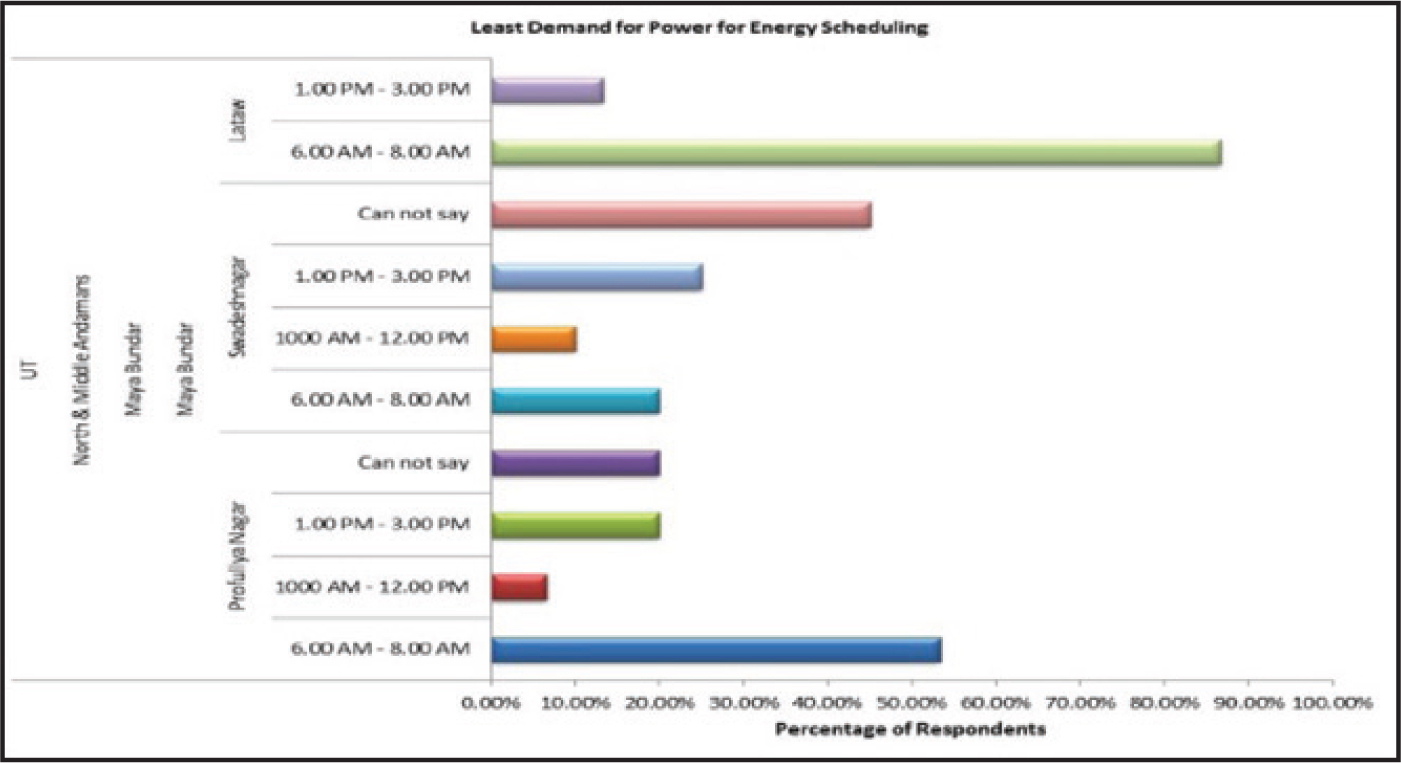
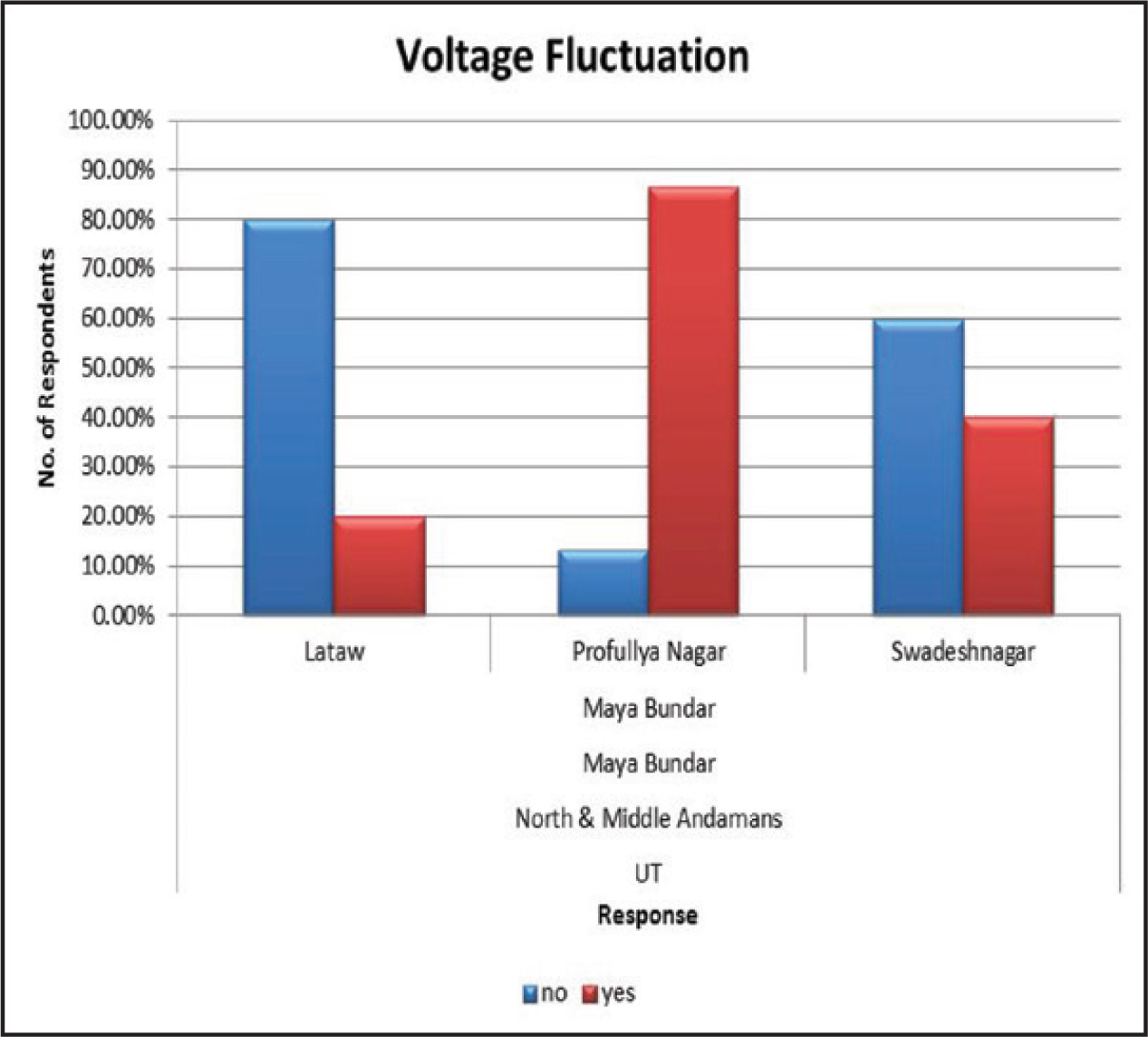
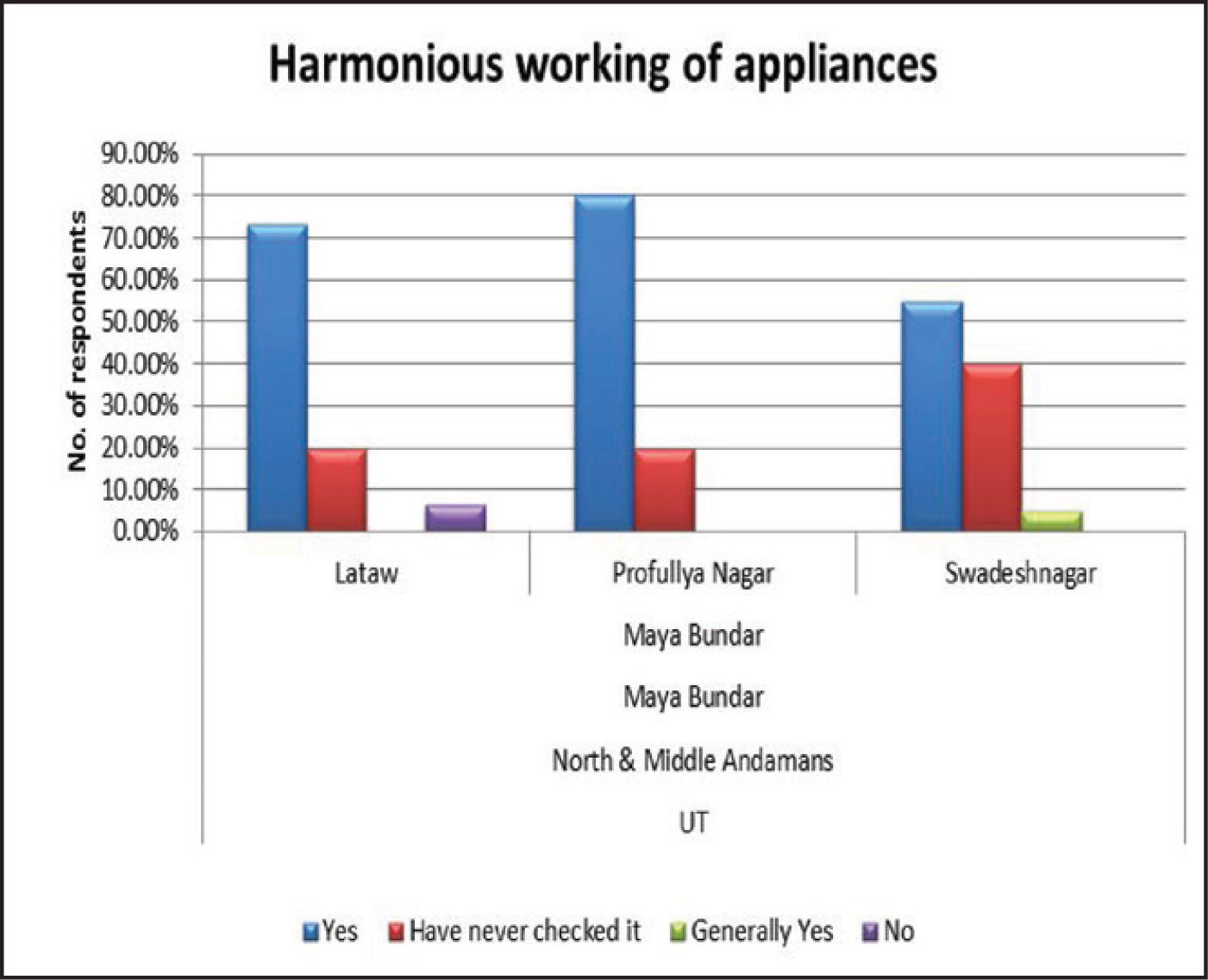
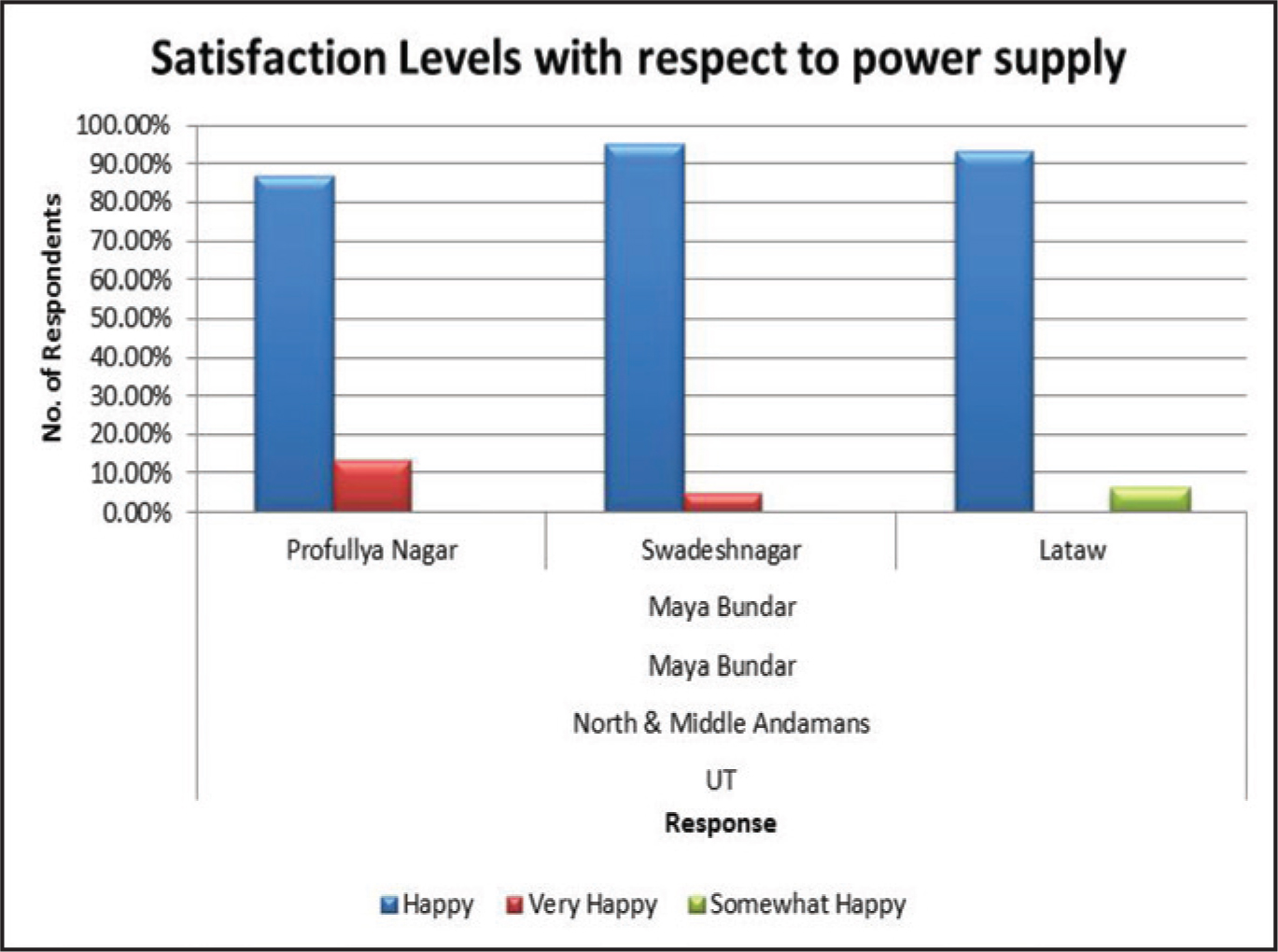
Evidence, as this study construes it, is an objective understanding of facts (tangible and intangible) that can be empirically tested and verified, prior to valuation. The evidence collected during the course of this study is categorised in terms of qualitative (restricted to nominal and ordinal levels of measurement) and quantitative (spanning across all the four levels of measurement). This article initially tables various aspects of qualitative data in respect of the current HSD (high sulphur diesel)-based power generation system. For a remote, rural setup where the utility is far and distant, understanding customer behaviour as to what they want, how much they want and when do they want in terms of supply of electricity is uneasy to comprehend and practically not feasible in the current energy deployment scenario. However, this issue assumes a noteworthy proportion for the islands as about 85 per cent of the energy sales comprises domestic connections. This sales volume further accounts for more than 50 per cent of the energy consumption (as a proportion) across the total number of inhabited islands. Moreover, even with the BAU, the duration of power supply to these villages is more than 18 hours a day for a 24-hour cycle (Figure 1). The quantity of power supplied during the time frame extending from sunrise (6.00
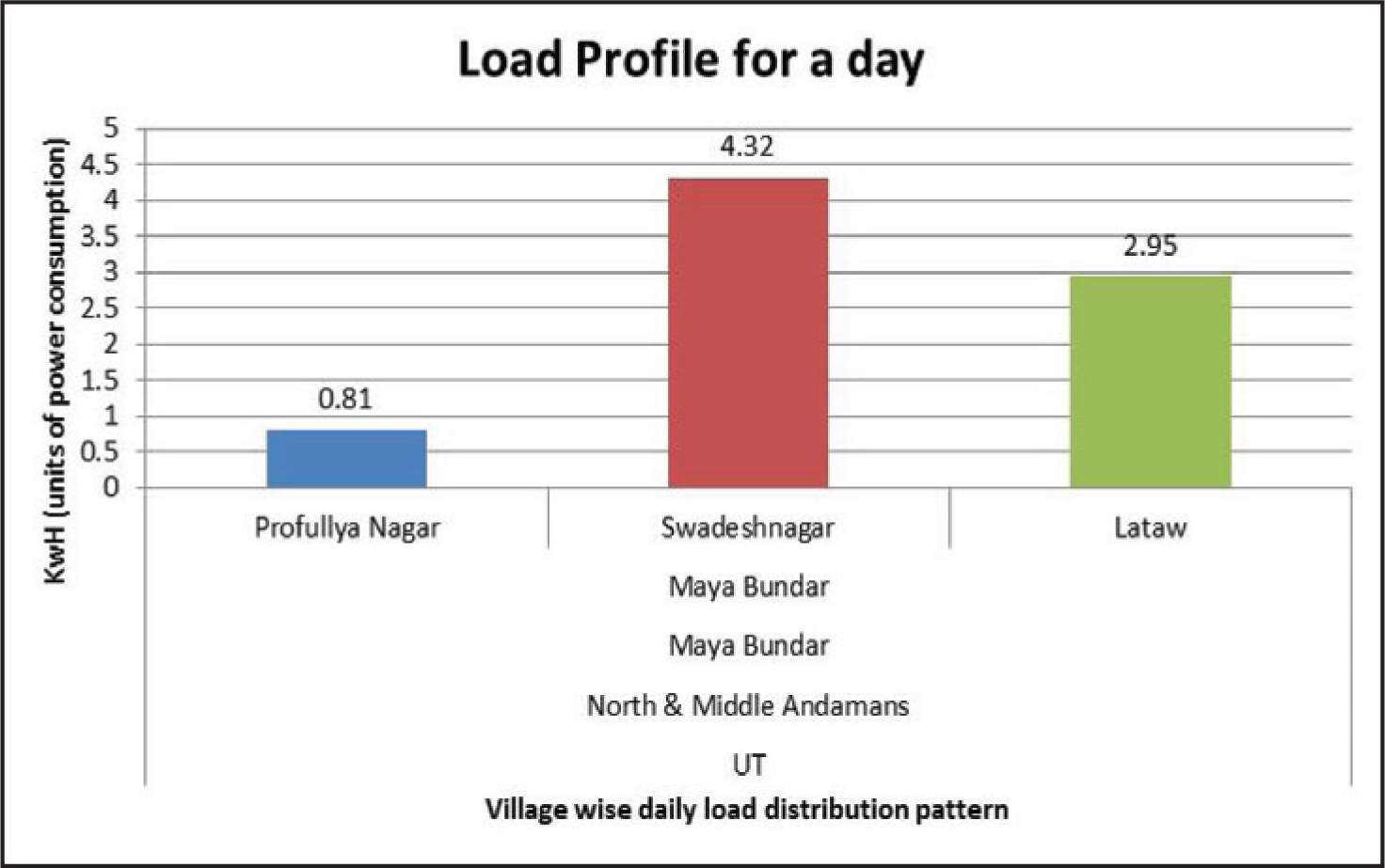
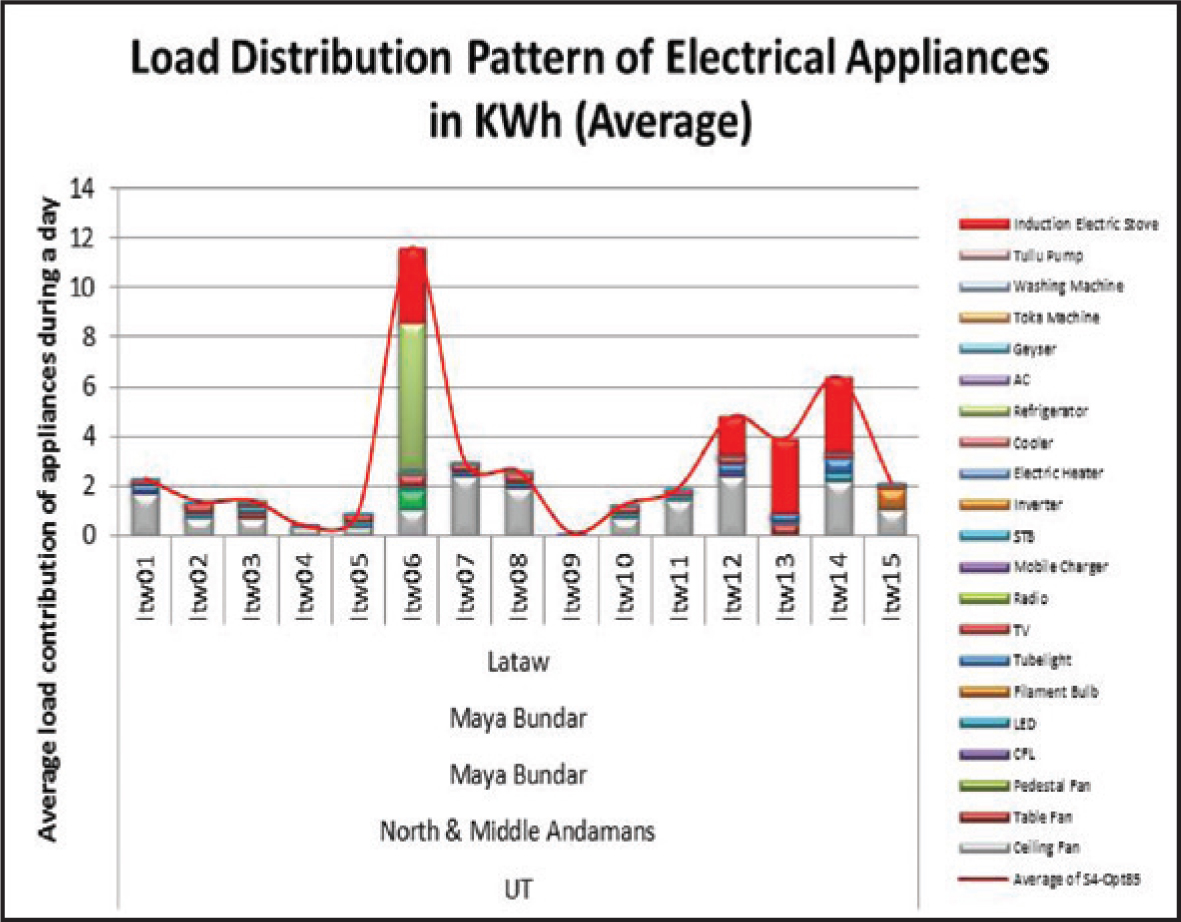
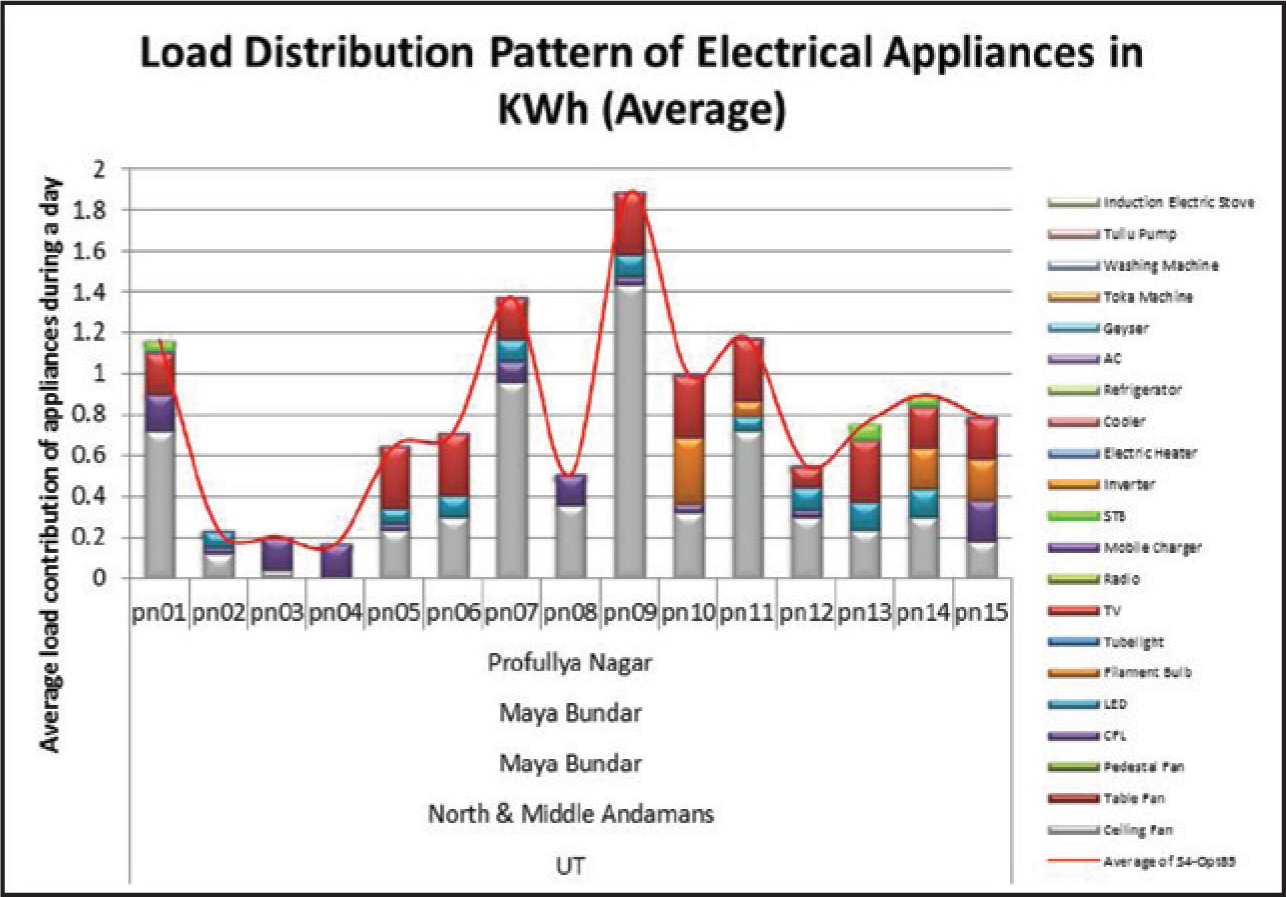
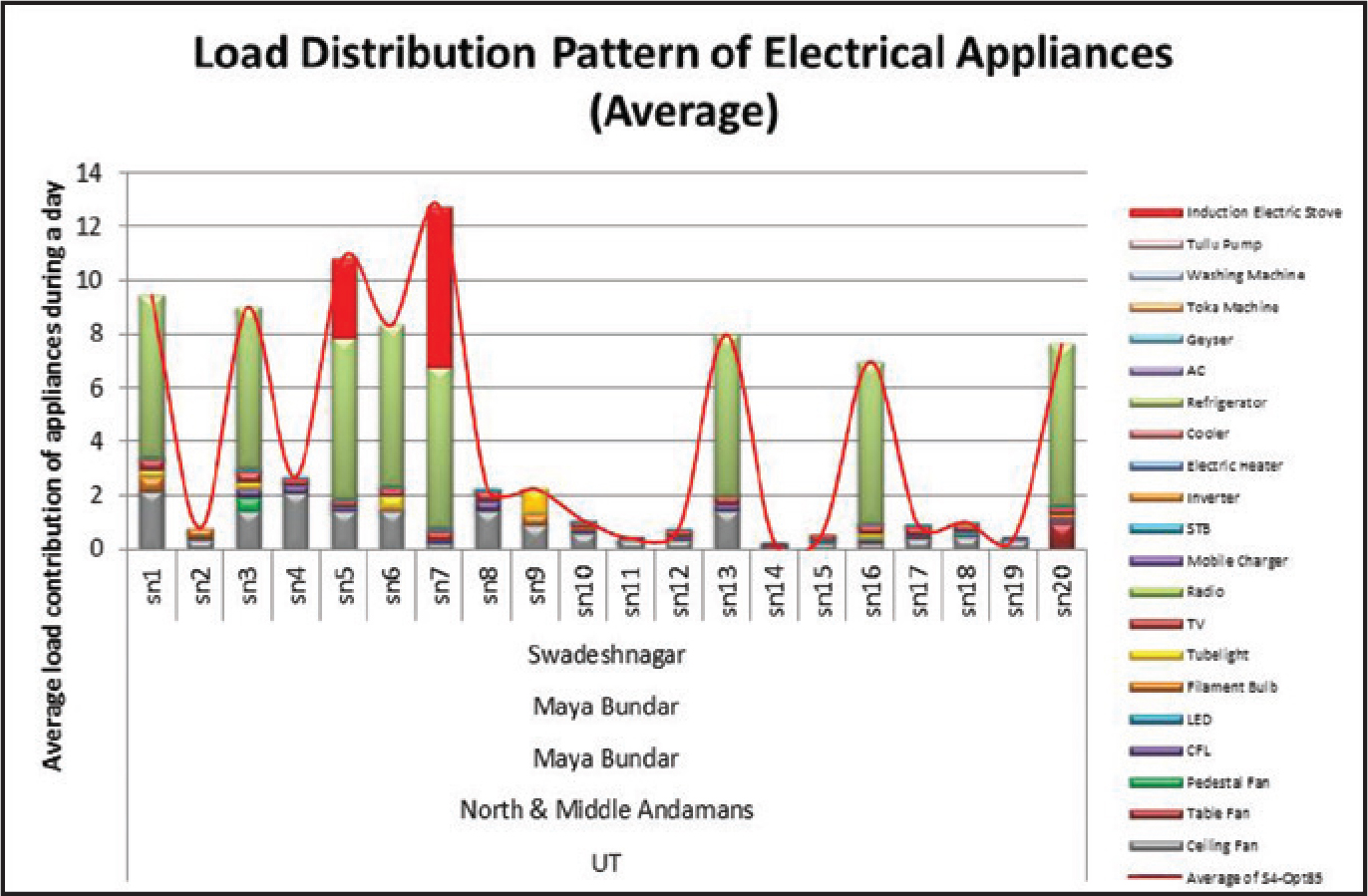
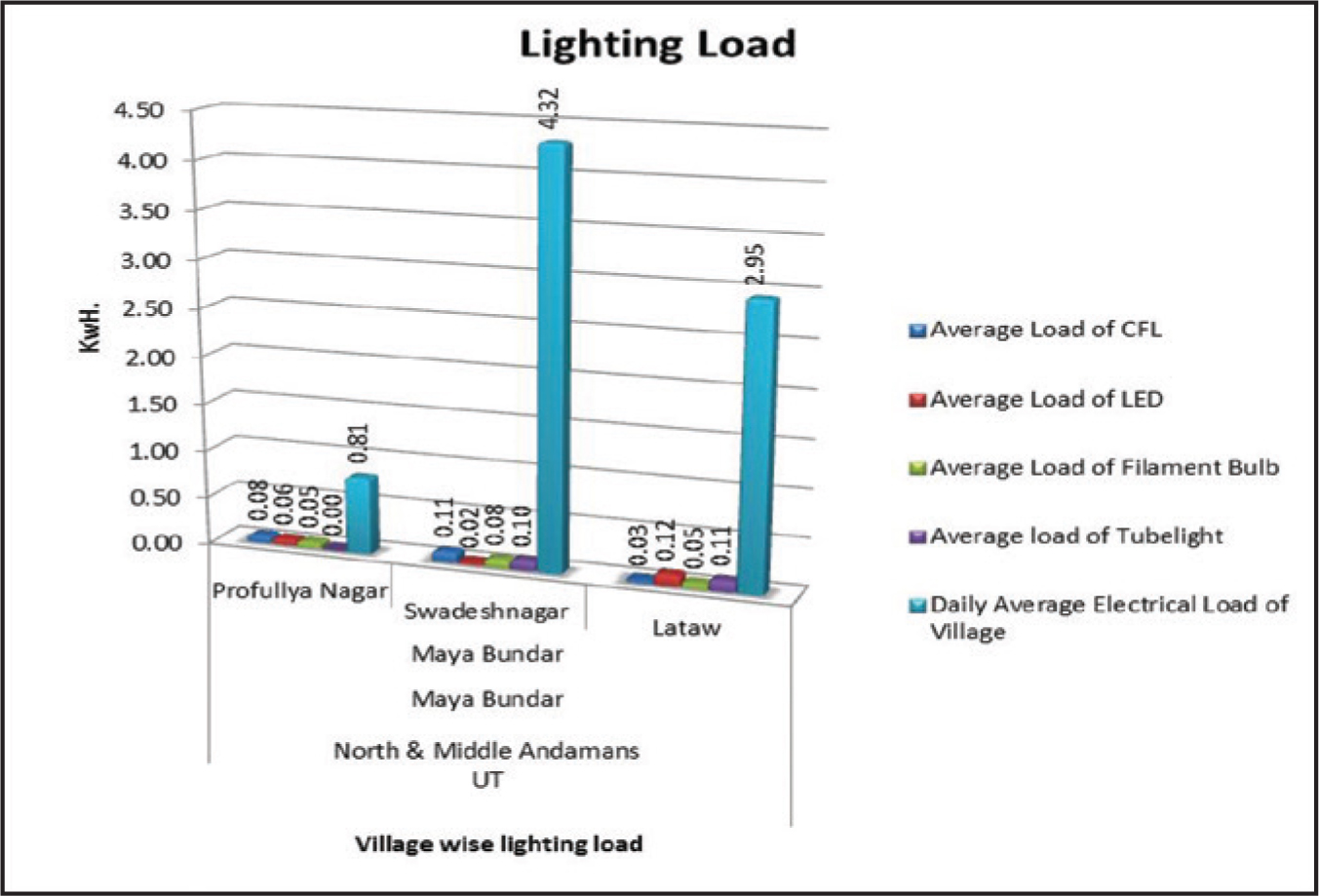
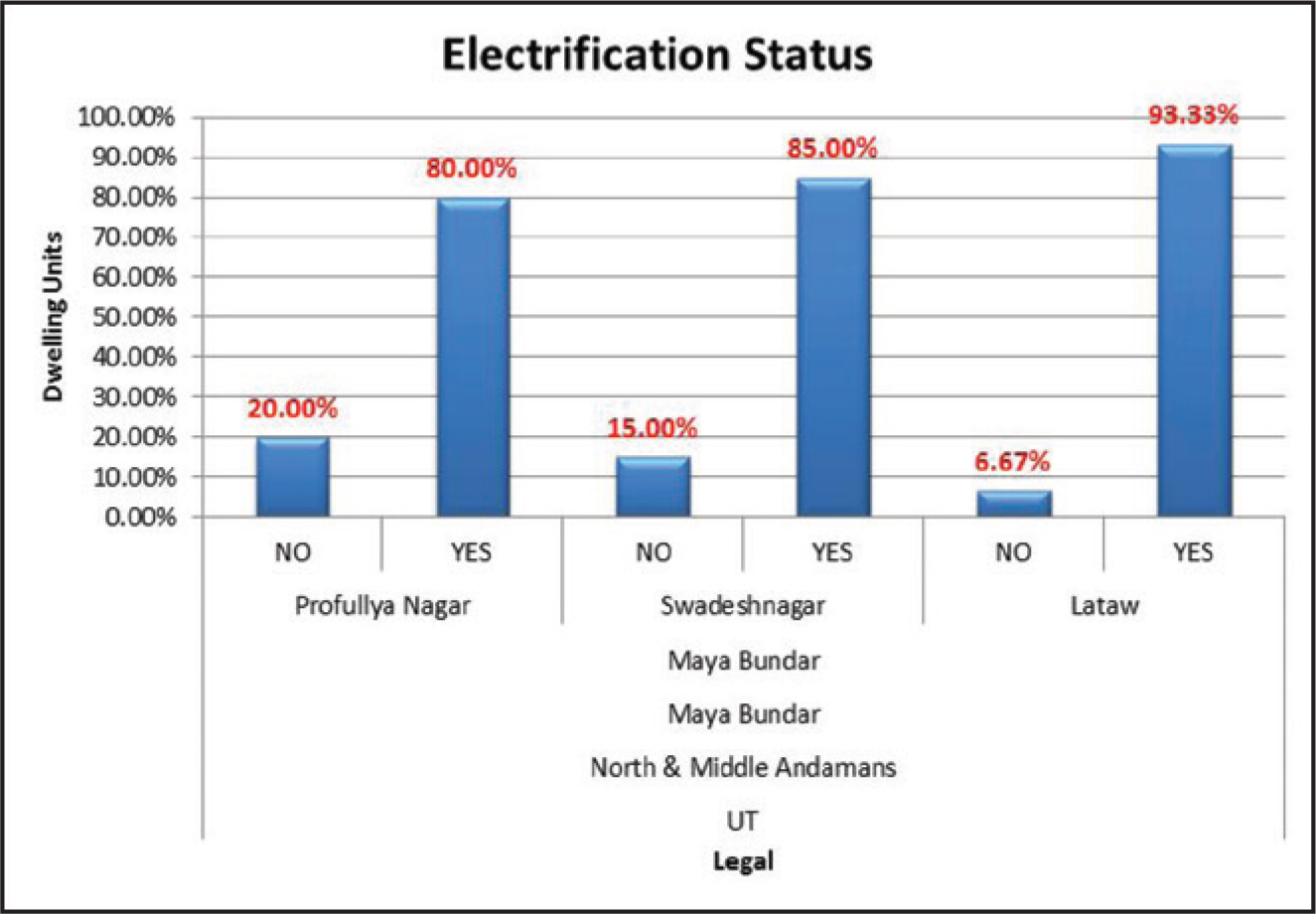
The second part of the analysis is purely quantitative for an accurate assessment of daily consumption of electricity in a civil structure (dwelling unit). The diurnal average load across the three villages of Profullyanagar, Swadeshnagar and Lataw are 0.81 kWH, 4.32 kWH and 2.95 kWH, respectively (Figure 8). The load profiles within each of the villages and across individual dwelling units has been depicted in Figures 9, 10 and 11. The curve running across the individual stack diagram (also known as sub-divided bar diagram) represents the average load consumption of an individual dwelling unit on a given day. The vertical stack diagram reflects the actual load contribution by an individual electrical appliance to the total load of the dwelling unit, based on its actual usage by the owner. In Swadeshnagar, the major contributors to the aggregate load are such appliances as ceiling fans, induction stoves and refrigerators (Figure 11). On the other hand, in case of Profullyanagar, the lighting load is maximum from such sources of light as FB, LED, CFL and TL (Figure 10).The other major contributors being ceiling fans and television sets. In the case of Lataw, the observations are slightly different (Figure 9). Induction stoves are a regular feature in every dwelling unit. Ceiling fans are the next prominent contributor. Almost every dwelling unit has a television set. LEDs, TLs and FBs are the common source for lighting. Pedestal fan is also an occasional contributor to the aggregate load though used sparingly. The presence of refrigerators is limited. An exclusive attempt was made to analyse the lighting load and its contribution to the aggregate load in all the three villages. The respective total electrical loads contributed by individual lighting appliances have been depicted in Figure 12. The lighting load for Profullyanagar is the highest (23.4%, CFL>LED>FB>TL), followed by Lataw (10.5%, LED>TL>FB>CFL) and, lastly, Swadeshnagar (7.2%, CFL>TL>FB>LED). CFLs and LEDs dominate the lighting load; however, usage of TLs and FBs are equally common. This phenomenon has deep grounding in relation to the traditional usage and faith on a product. In spite of the fact the CFLs and LEDs are more energy efficient and are highly subsidised in terms of actual prices and in some cases actually provided free of cost, one may not find many takers in these remote terrains, as the local market is still flooded by extremely cheap, locally available, traditional sources of electric lighting. Submersibles are normally not visible (ibid.). What is even more conspicuous is the complete absence of water-based coolers. Almost all electricity connections are secured in terms of revenue being metred. Of the three villages studied, Profullyanagar has 80 per cent formal connections, Swadeshnagar has 85 per cent formal connections and Lataw bears 93 per cent formal connections (Figure 13). The average monthly bill of a rural domestic customer in the studied villages ranges from ₹200 to ₹500, being heavily subsidised. The actual cost of generation of one unit of power is around ₹26–27 against which, on an average, a consumer is billed ₹4.50–6.00 (Andaman and Nicobar Administration, 2016). The gap is the subsidy component (interaction with Sh. U.C. Paul, Superintending Engineer, Electricity Department, Andaman and Nicobar Administration).
1. Qualitative Analysis
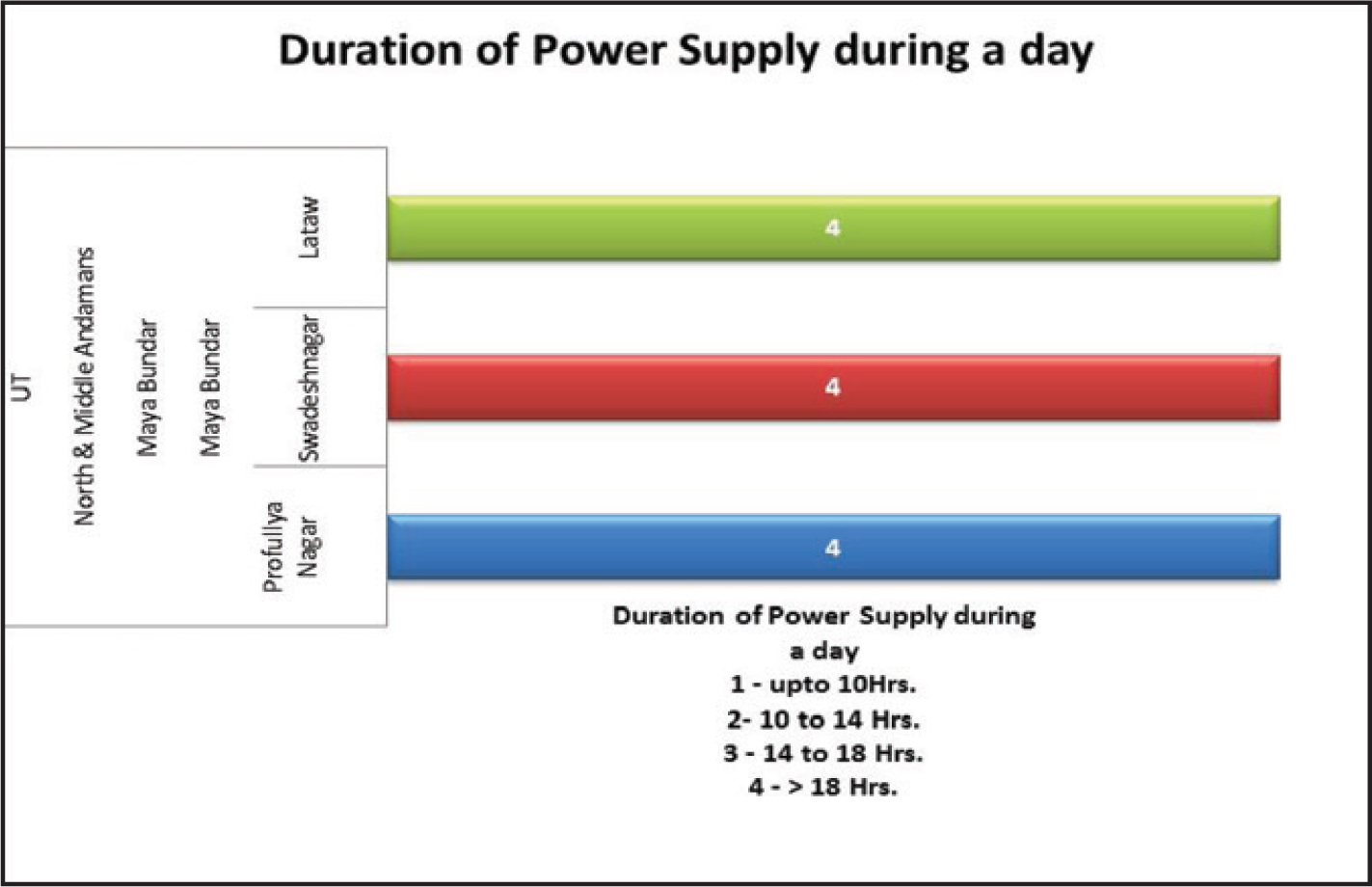
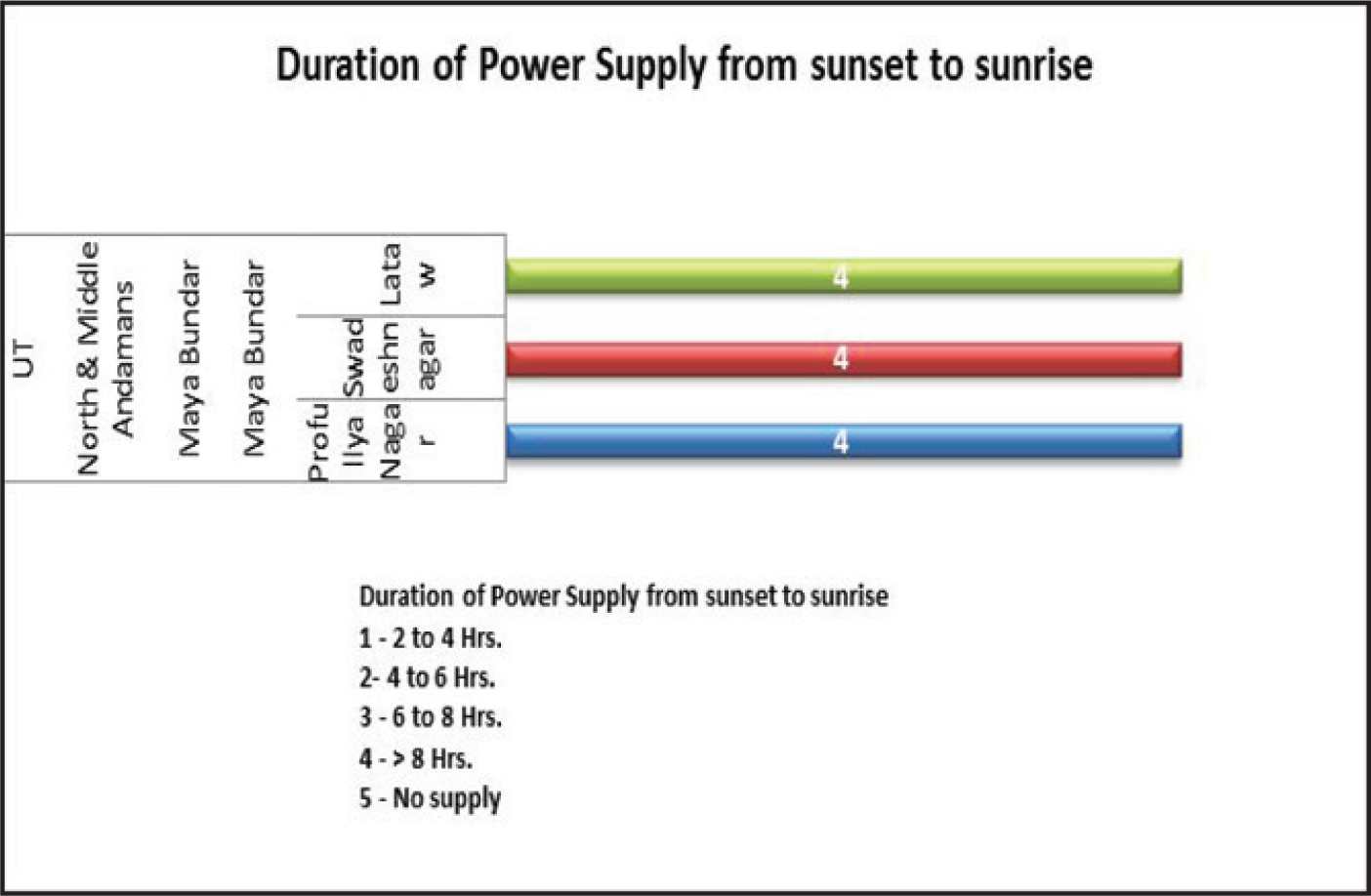
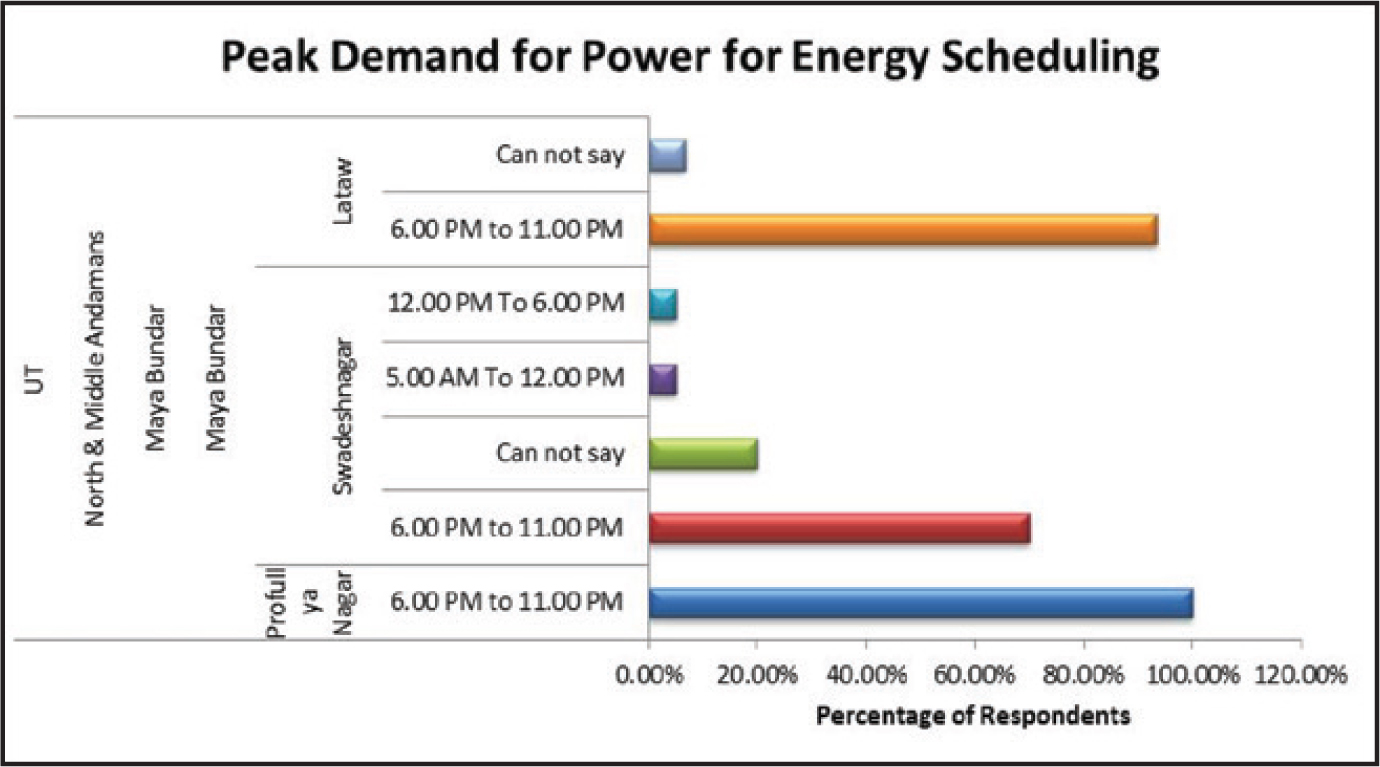
2. Quantitative Analysis
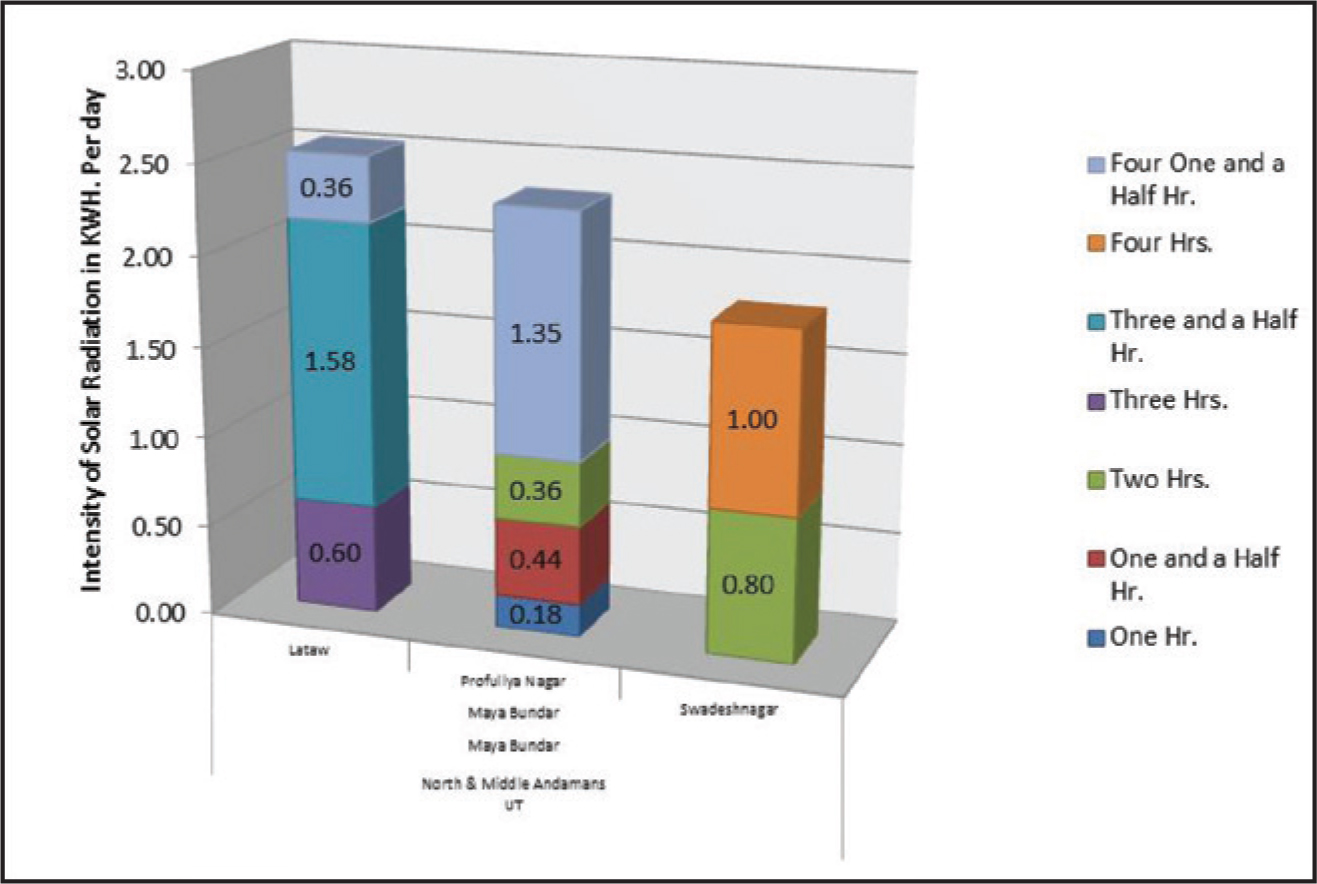
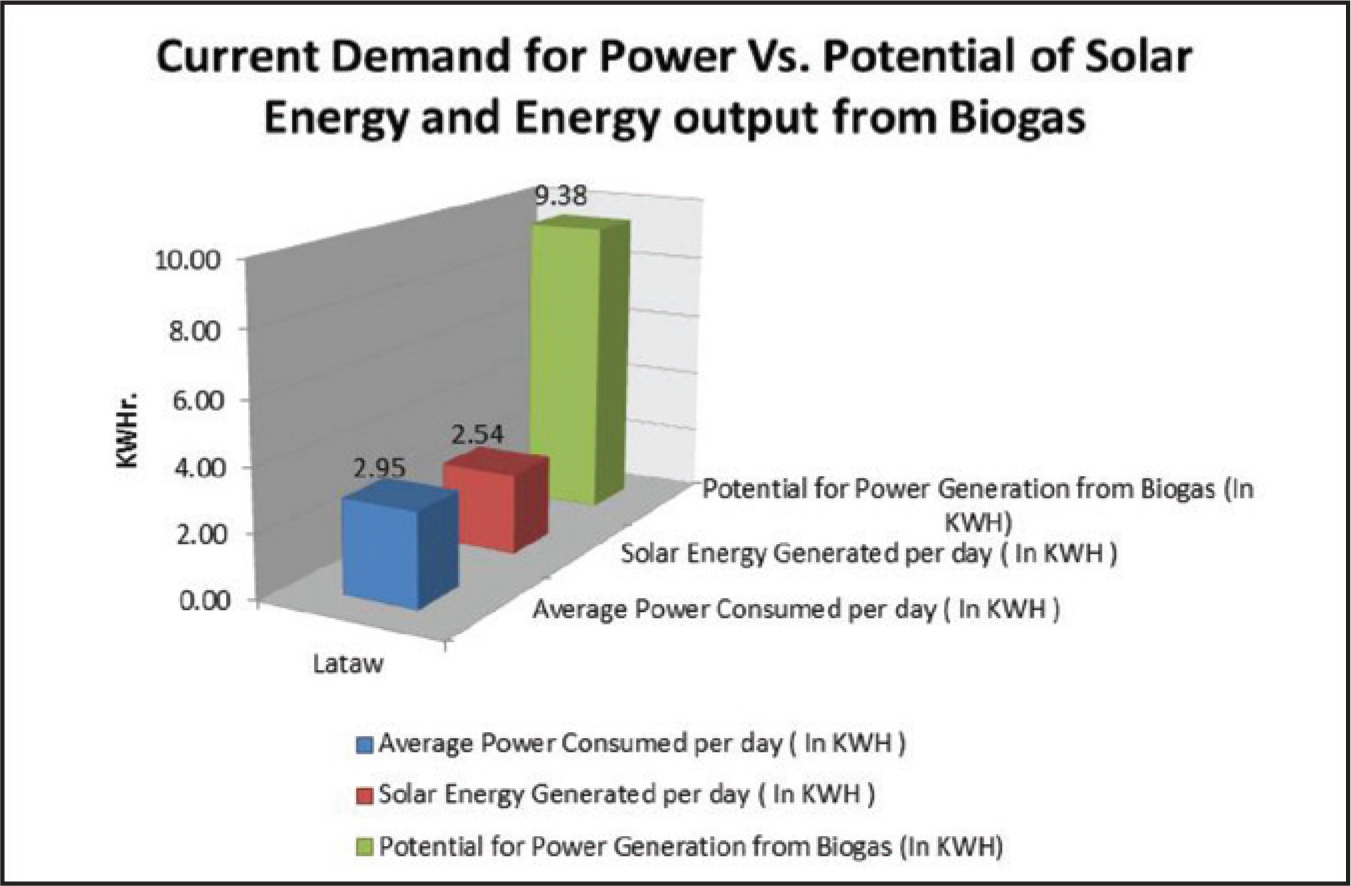
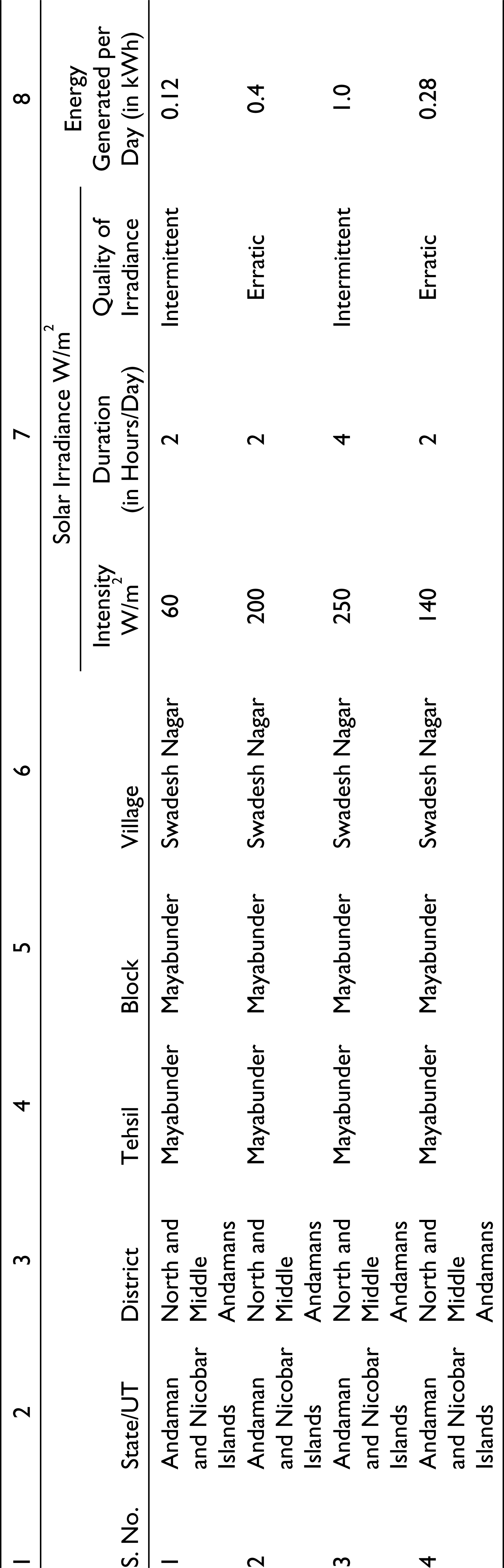
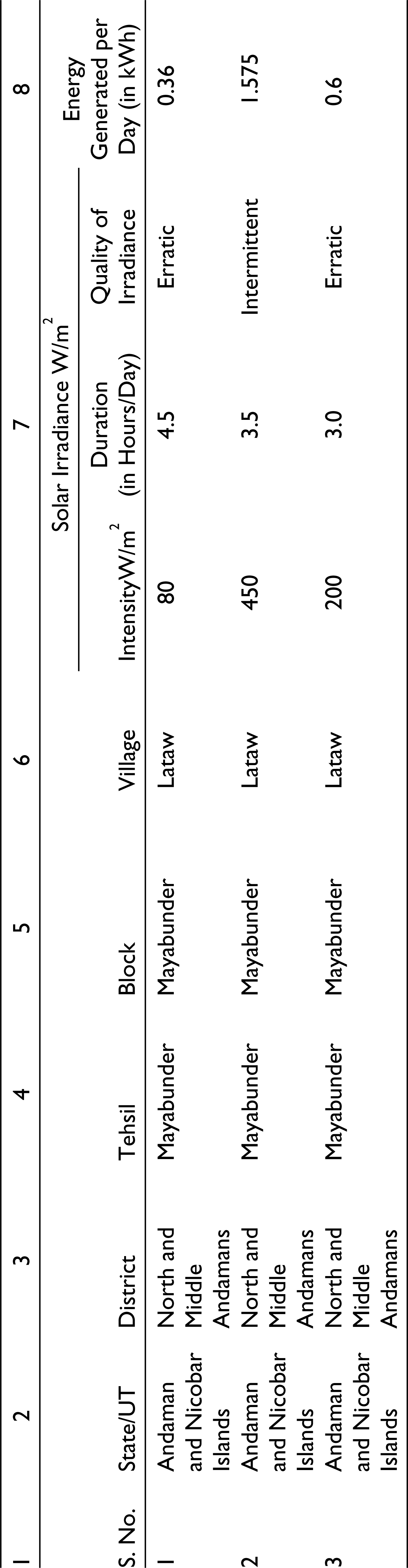
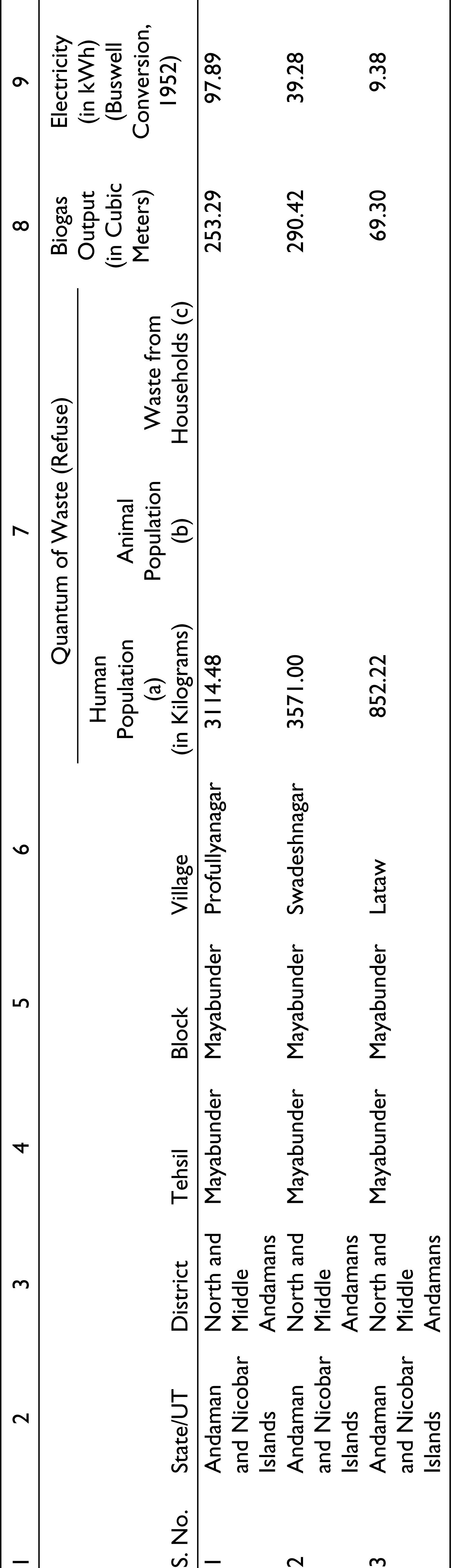
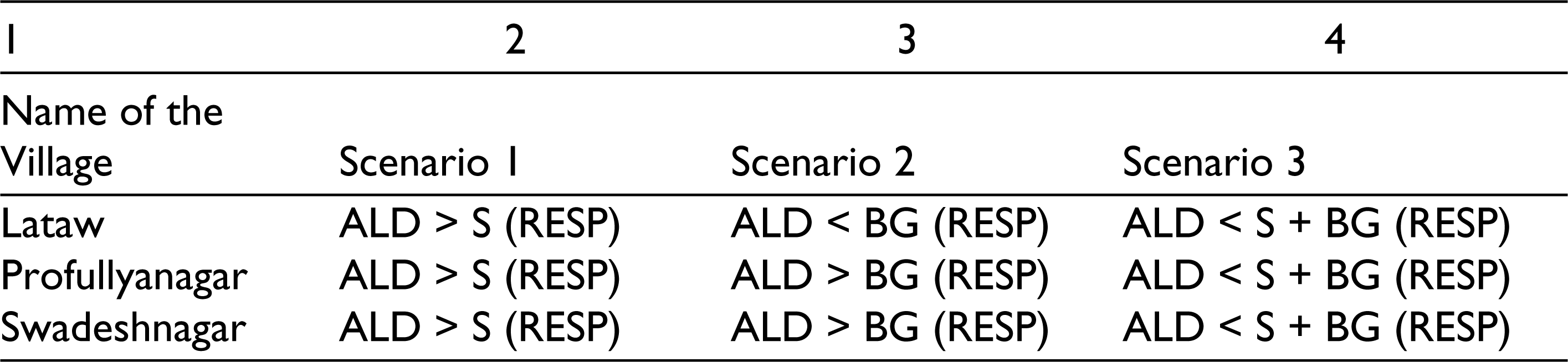
The third phase of quantitative analysis pertains to the resource endowment potential for twin renewable sources of energy, namely solar radiation and power generation potential from biogas generated principally from three forms of biodegradable waste: (a) human, (b) animal and (c) waste from the kitchen. The solar insolation potential was measured consistently for the 12–14 hour solar cycle for all the three villages (Figure 14). The three dimensional stack diagram shows the intensity of solar radiation in terms of units of electricity generated on the left side (Figure 14). On the extreme right side of the plot, the colour codes shown reflect the duration for which a given value of the solar radiation lasts (Figure 14). On the base, of the 3D stack diagram, the villages have been shown. The respective solar insolation potential aggregated and averaged out for the entire duration of the field study comes to about 2.54 kWh, 2.33 kWh and 1.80 kWh for Lataw, Profullyanagar and Swadeshnagar, respectively (Figure 14). The assessment of power generation from bio-methane-based generator sets has been calculated by making a detailed quantitative analysis of the waste typology from the different sources discussed in the preceding paragraph. The potential for power generation has been calculated on the basis of Buswell equation (1952, cited in Banks, 2009). Accordingly, the twin potential for generation of power has been assessed in respect of solar and biogas in respect of the three villages and placed against their actual aggregate loads. In the case of Lataw, on an average, the actual daily aggregate load in terms of power consumption generated from HSD (conventional source) is 2.95 kWh (Figure 15). This load cannot be serviced by solar-based grid alone (insolation capacity for power generation is 2.54 kWh). However, the current load can be serviced by a biogas-based power generation system (potential assessed to be 9.38 kWh). Similarly, for Profullyanagar, on an average, the daily aggregate load in terms of power consumption works out to be 0.81 kWh (Figure 16). This load can be serviced by a solar-based grid (insolation capacity for power generation is 2.33 kWh). However, the largest potential is held captive by a biogas-based power generation system (potential assessed to be 97.89 kWh). Coming to the case of Swadeshnagar, the aggregate demand on an average for power based on actual consumption is 4.32 kWh. The current power demand cannot be met by tapping solar insolation potential alone that has been assessed to be around 1.80 kWh. However, the power requirements of Swadeshnagar can be met through harnessing its biogas-based power generation potential which has been assessed to be around 39.28 kWh (Figure 17). Further, a critical fact that must be borne in mind at all times with regard to solar in this geographic terrain is that the quality of insolation is strongly intermittent in terms of intensity. The quality is erratic and sporadic as well. Therefore, without an effective, state-of-the-art battery-based energy storage system, solar energy-based power generation systems may not be a viable proposition at all for these islands. Though, biogas-based generation appears to hold great promise.
3 and 4. Assessment of Renewable Resource Potential (Solar and Biogas)
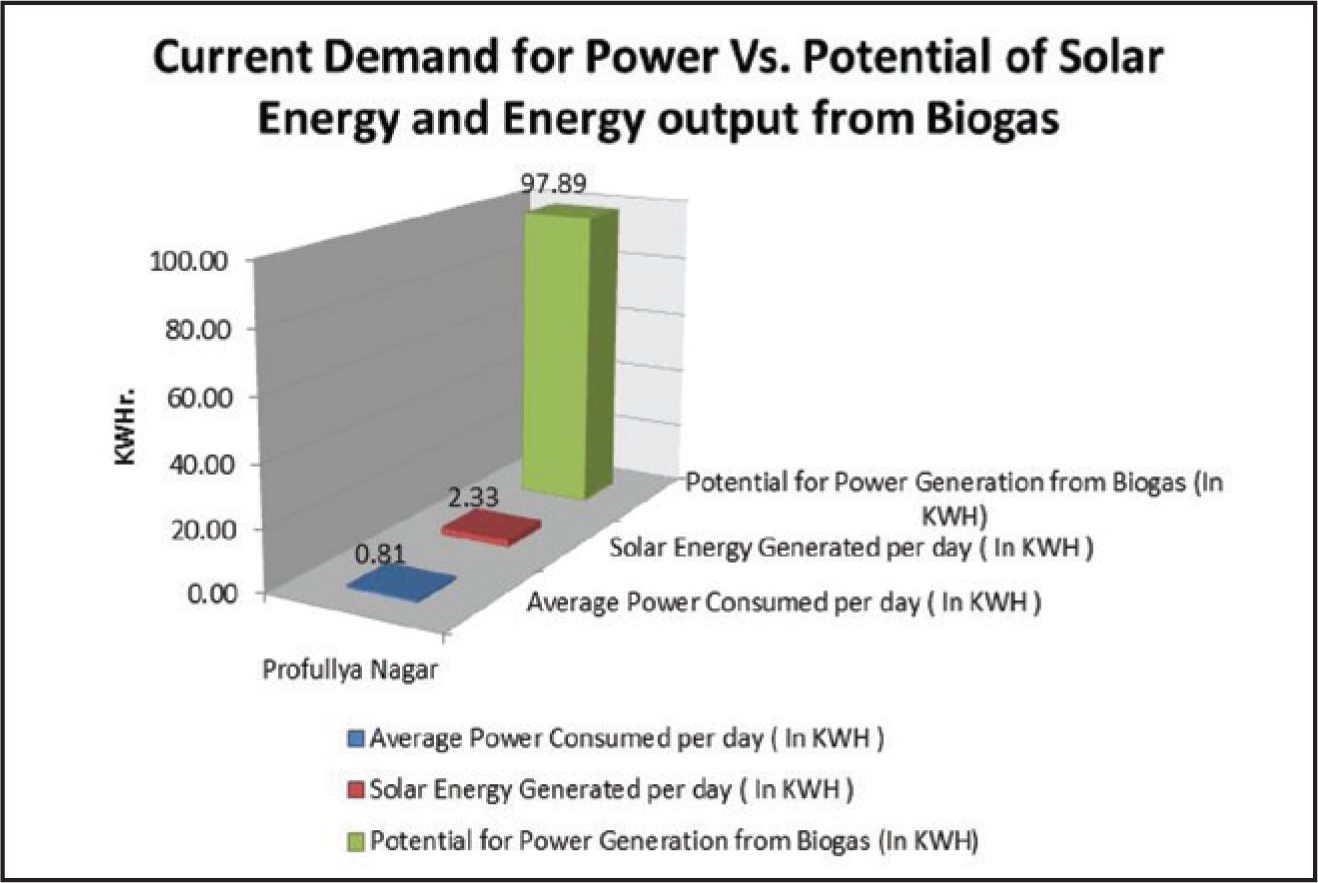
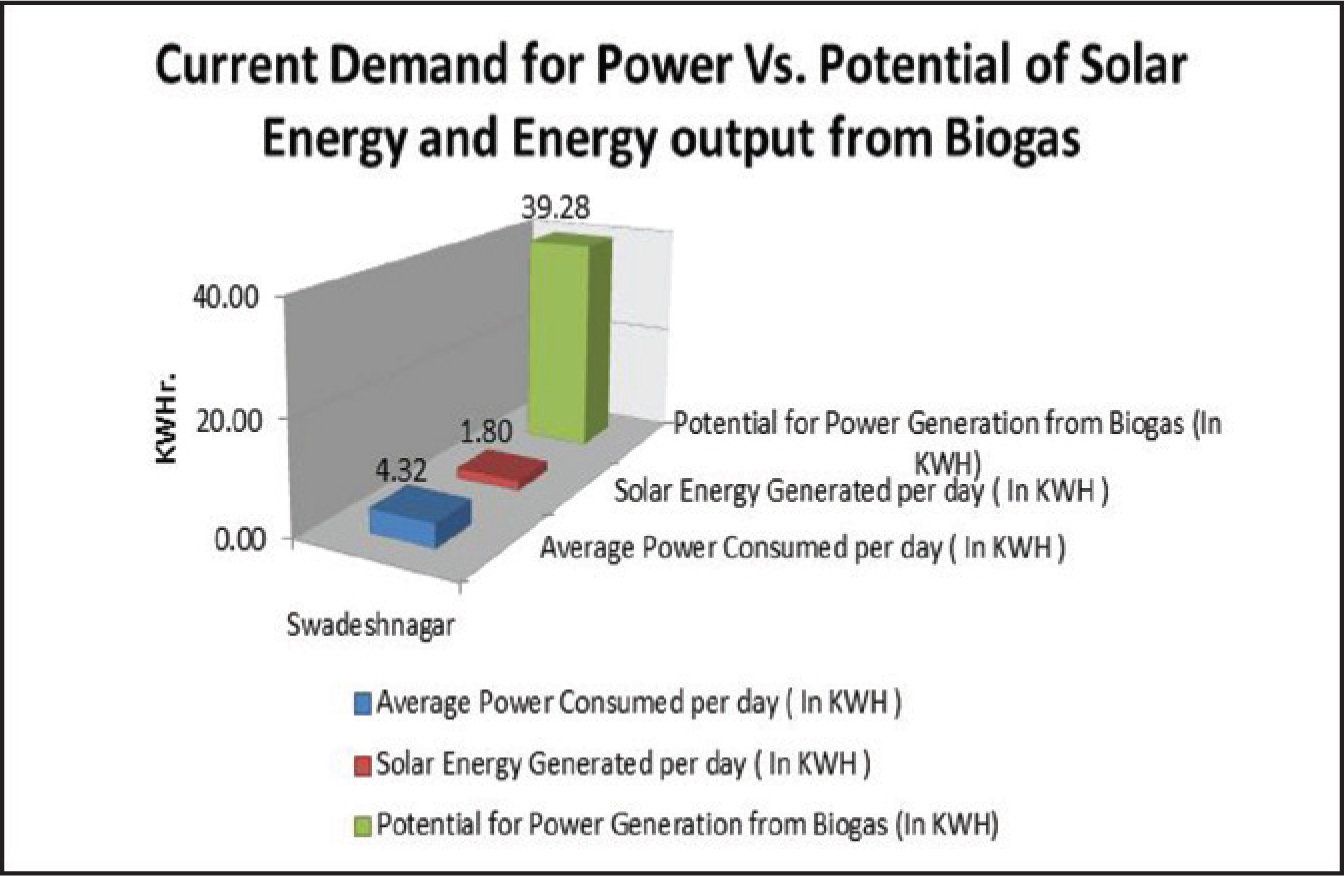
Discussion on the Empirical Evidence
A careful examination, evaluation and analysis of the data aids in understanding the real nature of demand that is strongly localised, hazily segregated and extremely variable in terms of consumer behaviour, empirical in its true sense. The data help in evaluation of the local resource base and consequently assess the potential of any renewable ‘reserve’ to unequivocally qualify as a ‘potential resource’ holding a promise to match current demand and also can cater to futuristic requirements. This evidence sheds light on the consumer tastes, preferences and habits which must be studied at regular intervals in order to ascertain demand fluctuation in terms of usage of electrical appliances. However, one needs to carefully match the qualitative preferences against quantitative usage (in terms of load burden) for effectively scheduling an energy service as per exact TOD requirements of any given consumer base. It may be extremely difficult to predict the duration of usage of an appliance, or a combination of types of appliances being run. Therefore, it becomes even more important to physically investigate the actual load and assess behavioural patterns of power consumption of an otherwise passive consumer. This shall help in better DSM and could also address some of the issues on the supply side as well. Unless, DSM is completely taken care of at the micro-level, a localised, on-site, decentralised, distributed power generation systems shall remain an elusive dream. For any utility, irrespective of the generation system (based on any fuel type), this evidence could be of prime importance in order to take care of the power supply system (PSS) in terms of effective energy management. Since the evidence strongly advocates the promotion of pico-scale, distributed, singular- and/or cluster-based renewable energy applications, it becomes imperative to take into account the ground truth in terms of the physical terrain characteristics and the local weather conditions which are as important as understanding the customer base.
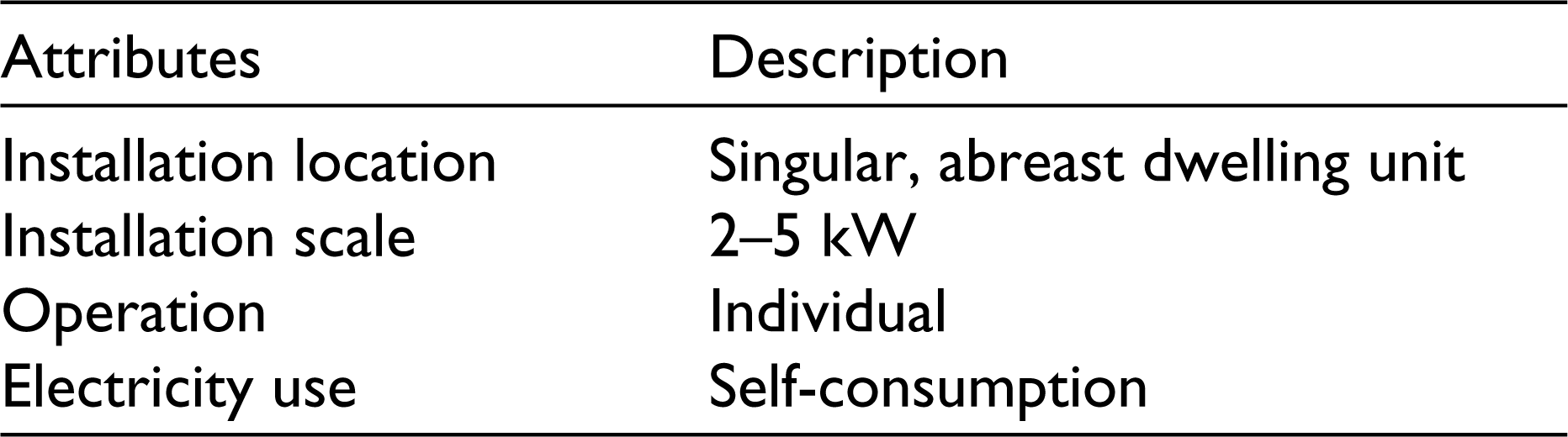
Broaching DSM through load characterisation and resource assessment potential: a techno-economic perspective: Hybrid renewable energy systems have great potential to provide higher quality and more reliable power to customers than a system based on a single source (Kolhe, Kolhe, & Joshi, 2002). The renewable energy sources can complement each other. Hybrid renewable energy sources are recognised mainly for remote area power applications and are nowadays cost-effective, where extension of grid supply is expensive (Chakrabarti & Chakrabarti, 2002). The feasibility of an alternative hybrid power system configuration that combines photo voltaic (PV) modules and biogas-based power supply fuelled by animal/household/human refuse was studied. In this section, a techno-economic study of a stand-alone hybrid energy system consisting of biogas-based power generation and SPV is presented for the study area. The details of passive consumer and system characteristics are shown in Table 1.
Characteristic Requirements of Passive Consumerism in the Three Villages under Study
Evidence-based practice for a transcendental shift towards alternatives; the undisputed ground realities subject to abject policy oversights: Moving beyond sizing and cost optimisation…. There are thirty-six inhabited islands in the long chain of islands in this archipelago: Twenty-four in the Andaman group and twelve in the Nicobars. More than 90 per cent of the land in the islands is under forest management (92 per cent under forest cover). The decadal growth rate of population for the islands is 6.86 per cent (Dhingra, 2005). The density of population is 46 persons per sq. km as compared to the all India density of 382. The different groups inhabiting the islands of Andamans can be classified into two distinct groups, namely the aboriginals and the later settlers. The Aboriginals belong to the negrito racial stock with pigmy stature, dark complexion, wooly hair and flat nose. They can be classified into three groups: (a) The Great Andamanese (or Coastal Andamanaese), (b) the Jarawas and (c) the Ongese. These aboriginals permeated the entire group of islands when the British had just arrived. They could maintain their self-sufficient economy with the utterly ineffective productive technique only because they utilised to the utmost all the available materials in the forest and in the coastal sea. This intimate knowledge of their environment required a very prolonged period of stay in the islands. The different communities that classify as later settlers are the Burmans, Karens, Bhantus, Mapillas and the Madrasi refugees from Rangoon and East Pakistan (Sinha, 1952, pp. 1–33). These communities earlier had a wide range of occupational possibilities, such as working as agricultural labourer in rich main fields, cultivating others, land on half share of yield basis, working as a paid labourer for miscellaneous jobs, making boats, trading with paddy and rice on boats in off-seasons, sawing logs cultivating betel trees and basketry works. The settler community is currently engaged in such activities as agriculture, vegetable growing, maintenance of orchards, fishing, livestock rearing and poultry keeping. Apart from such engagements, the different categories are engaged at various levels with the government functioning as well. Slowly, almost all settlement farmers are turning to secondary or subsidiary occupations. Household surveys reveal only 4 per cent of the cultivating household as relying solely on agriculture; the rest supplement their income by various means, chiefly plantations or kitchen gardens, casual labour, household trade, employment in other enterprises, generally government, household industry and rearing of livestock. A sizable number also derive part of their income from the forest, as forest labour, or from forest fuel, raw materials for household crafts or sundry produce for household consumption (Ghosh, 1994).
Further, the gathered evidence suggests deployment of a different energy system model for every village depending upon the nature of spatial disposition first, thereafter taking into consideration the socio-economic profile of the residents within a dwelling unit. The people in the interiors do not have an energy intensive life style and, therefore, any plans of a switch over to mega-modern, alternate energy systems change would be counter-productive for this special geographic and cultural realm on account of the observations and arguments cited above. The overall current scenario (evidence) presents a very strong case in favour of decentralised, biogas-based power generation systems coupled with pico-scale solar home lighting systems for catering to DC (direct current) loads in order to have a first-hand demonstration of technology that is primarily alien to the context. The otherwise established HSD-based conventional power system shall stay as a permanent back-up plan. It cannot be permanently done away with; however, as the new energy system gets established, there can be an ideal thought of gradual rollback of the conventional HSD based PSS. Therefore, the author presents a strong case in favour of a hybrid energy alloy model running on multiple fuels for re-energising the rural, inhabited energy landscape of the Andaman archipelago on the basis of the gathered evidence.
Designing of alternative systems of power generation based on the most conservative harnessing of the renewable energy resource potential is as follows:
Solar PV system design: A solar PV system design can be done in four steps: (a) load estimation, (b) estimation of number of PV panels, (c) estimation of battery bank and (d) cost estimation of the system (Gupta, Saini, & Sharma, 2008). The base condition that has been taken into consideration is that all appliances documented as per declared usage are connected to the PV system on any given single day. The total energy requirement of the system (total load), that is, total connected load to PV panel system equals the number of units of individual appliance multiplied by power rating of an appliance. The assumptions taken for the design and cost estimation are as follows: (a) inverter converts DC into AC power with efficiency of about 90 per cent (b) battery voltage used for operation = 12 volts, (c) the combined efficiency of inverter and battery will be calculated as combined efficiency = inverter efficiency × batter efficiency = 0.9 × 0.9 = 0.81 = 81%, 4) real-time irradiance = 4–5 hours/day (as documented in Tables 2, 3, 4 and 5) PV panel power rating = 40 Wp (watt peak), gives peak power output of a PV panel. A factor called operating factor is used to estimate the actual output from a PV module. The operating factor is between 0.60 and 0.90 (implying the output power is 60–80 per cent lower than rated output power) in normal operating conditions, depending on temperature, dust and moisture on module, shade, etc. (Energy Unit, Transport and Water Department, the International finance corporation (IFC), the World Bank Group, 2006). The systems specifications along with parameters that could be feasible for some individual- or cluster-based decentralised energy systems (DES) are depicted in Tables 8, 9 and 10, respectively.
Solar Irradiance Measurement on a Real-time Basis for Profullyanagar
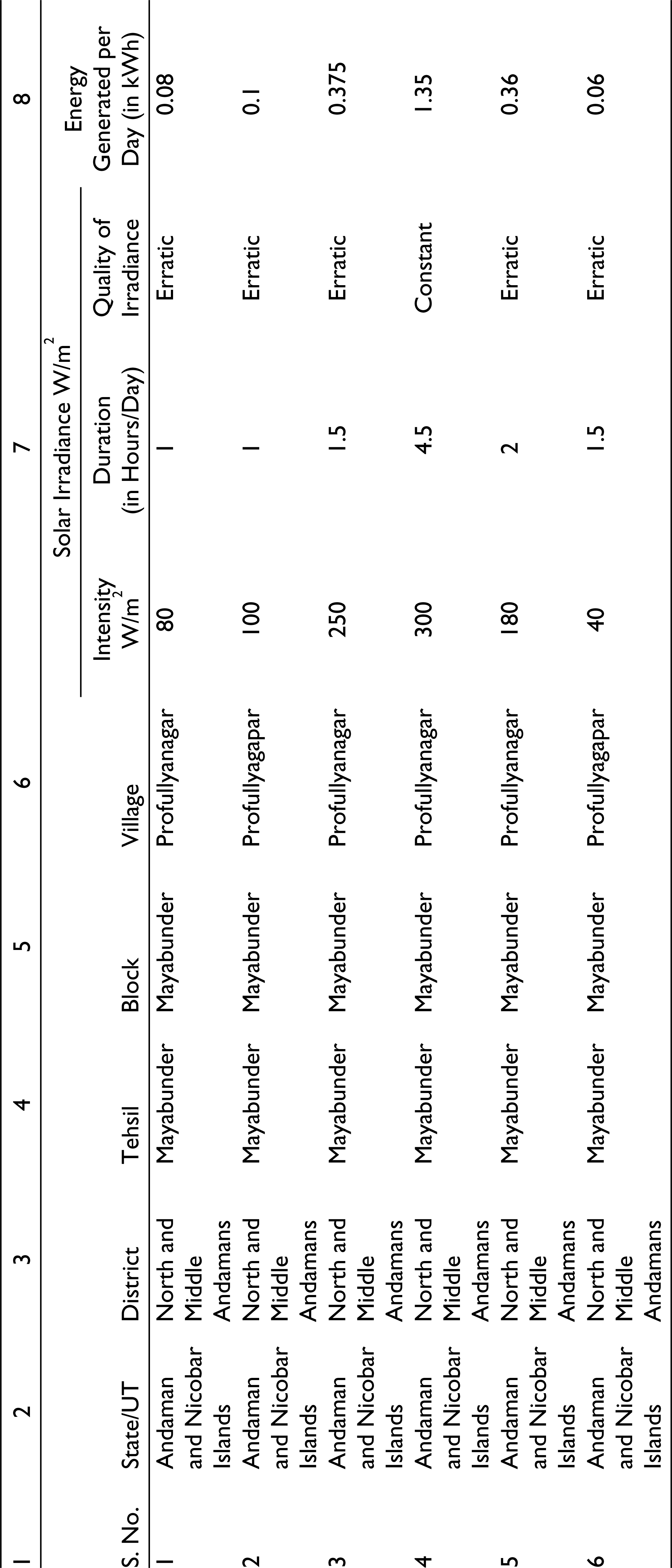
Solar Irradiance Measurement on a Real-time Basis for Swadesh Nagar
Solar Irradiance Measurement on a Real-time Basis for Lataw
Village-wise Litter/Waste Quantification and Assessment of Biogas and Power Production
Case Scenarios Post Study of Declared Load (Demand) Versus Assessment of Renewable Energy Source Potential (RESP) for Solar and Biogas
Probabilistic/Proposed Model of Singular and/or Mixed RES-based Power Supply System (PSS)
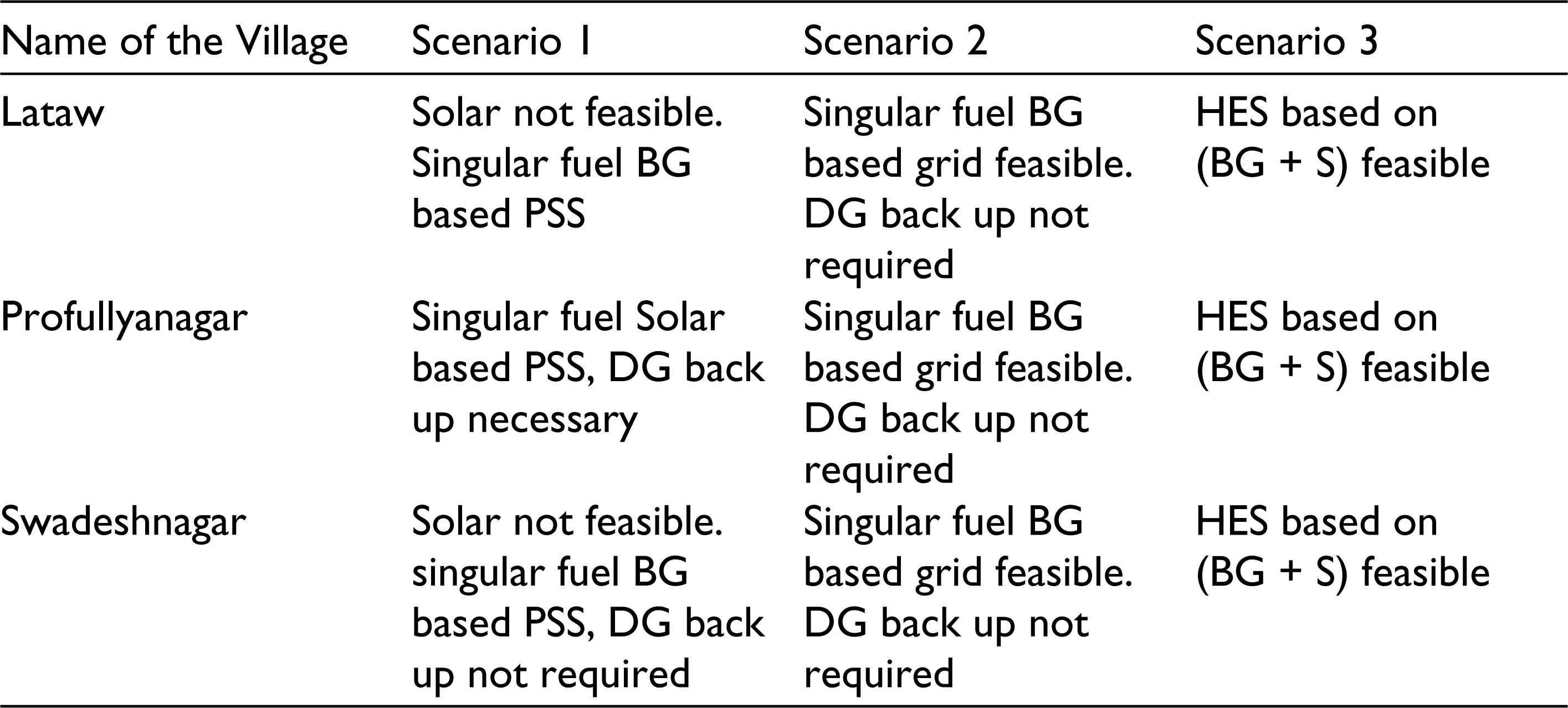
1kW System Specifications
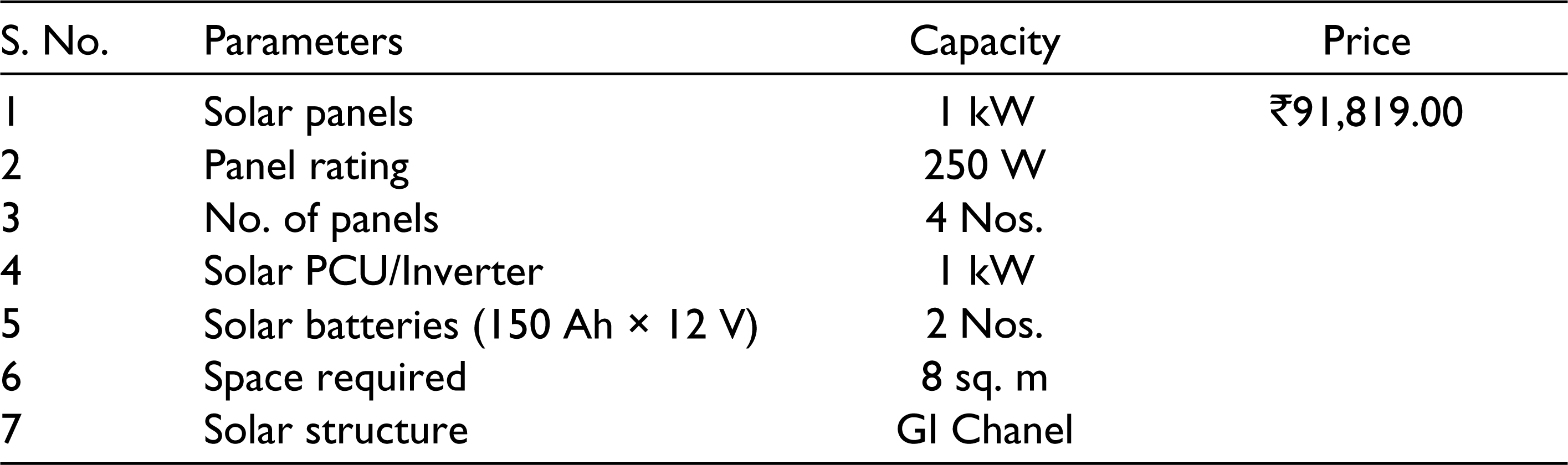
2kW System Specifications
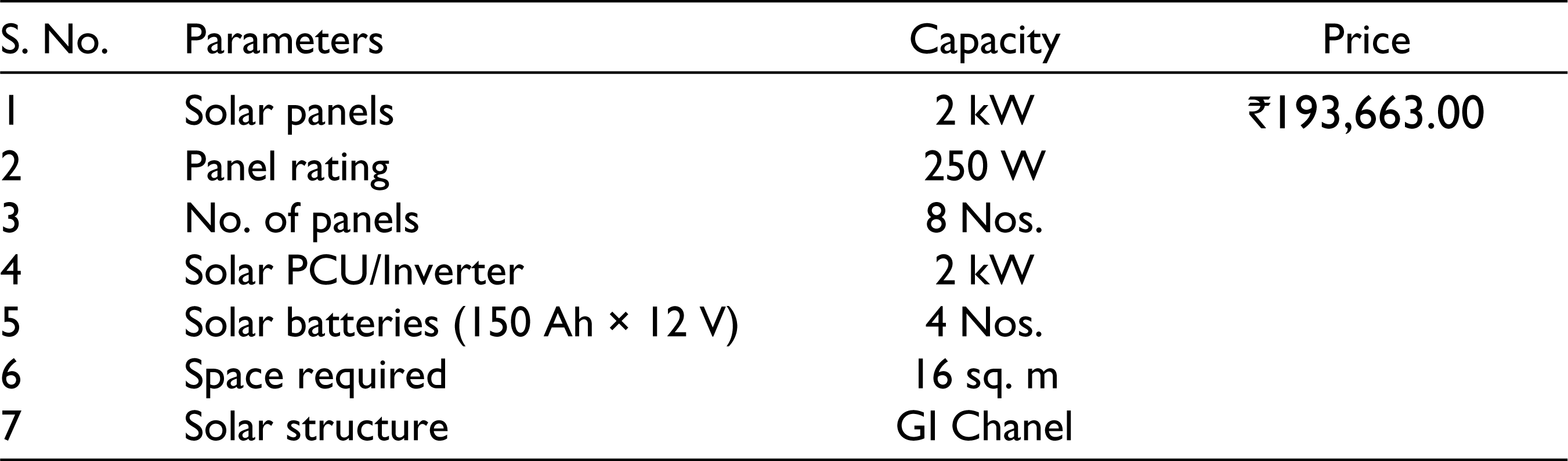
5kW System Specifications
Design of a fixed dome biogas (family size) plant: The utilisation of microbial activity to treat agricultural, industrial and domestic wastes has been common practice for a half century. Treatment includes the aerobic, activated sludge process and the anaerobic or methane fermentation method; the latter is simple, does not require imported know-how or components, is suited to small family or village-scale digestion and is the only process utilising waste as a valuable resource. Of great importance to the developing countries, the use of methane has, until recently, been restricted because of public antipathy or because other cheaper energy sources were available (Dasilva, Olembo, & Burgers, 1978). Biogas system design for cooking for a family of four six members is considered here. The system design took into account the estimation of amount of refuse (human/animal/kitchen), the quantum of biogas and the amount of electricity that can be generated from biogas. Various possible costs incurred in manufacturing of a biogas plant (family size; fixed dome model) are given in Table 11:
Costing of a Family-size Biogas (BG) Plant

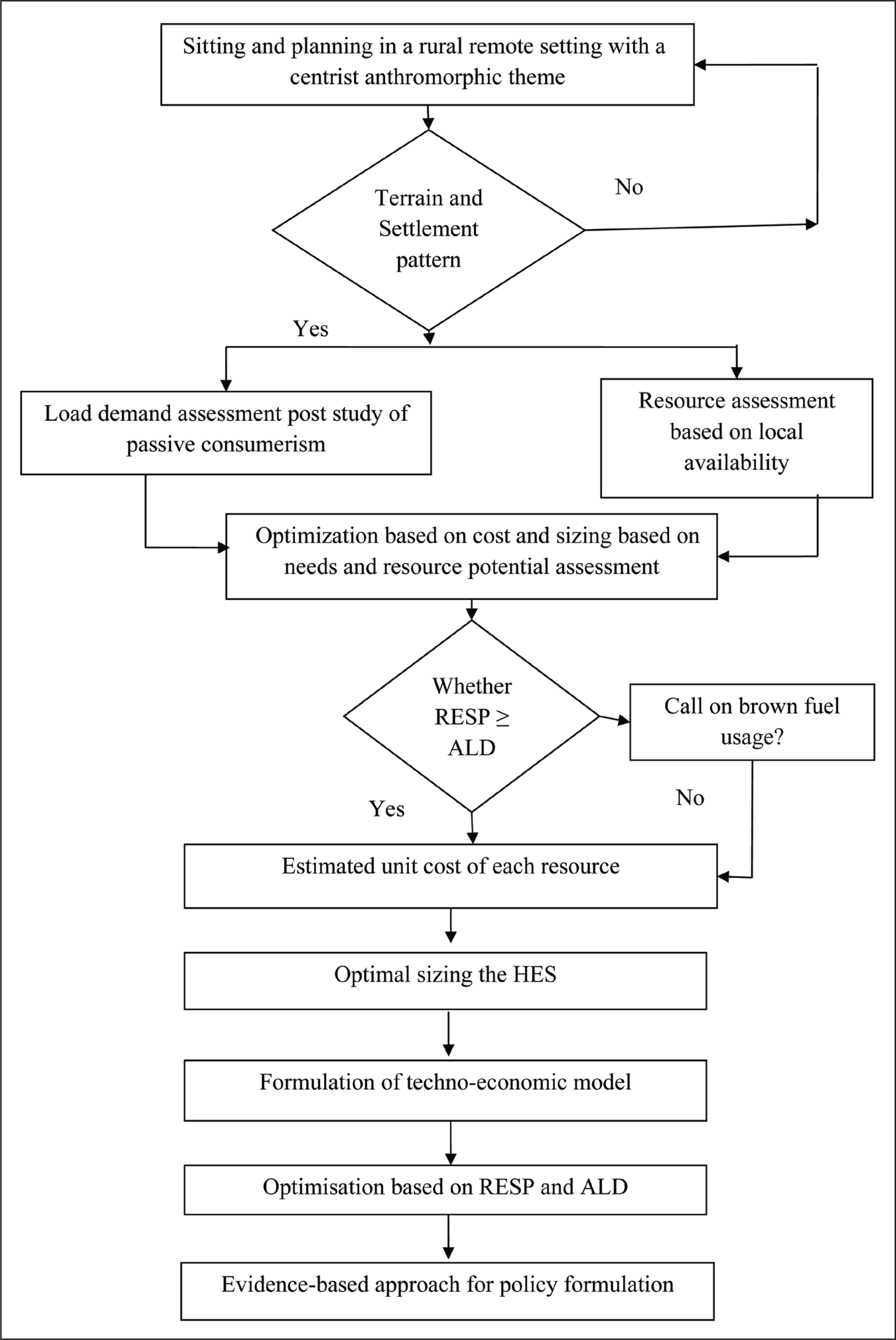
The most conservative estimates of pico-scale systems based on biogas and solar have been discussed above in the light of fragile, remote and dispersed nature of energy needs assessment of the villages in the area of study. However, there are other critical factors that are normally ignored while banking on totality in terms of a techno-economic assessment. These are central to an understanding of socio-cultural dynamics of energy consumption: (a) network of civic engagements (Putnam, 1993) whether active or passive and diffused or dense representative of social cohesiveness, (b) local institutional awareness with respect to awareness about alternative sources of energy, (c) accessibility in terms of spatial disposition of dwelling units and terrain conditions, (d) there must be a very strong sense of need for an alternative energy system design and lastly (e) an idea of earlier initiatives. This social aspect of cultural needs is the central guiding theme of this study. A cryptic techno-economic approach tends to run over such longer-term social benefits as improved health, consumer choice and related behaviour leading to self-reliance and gradual drift towards acceptance of alternatives to conventional forms of energy. Though, there are many simulation tools that can determine sizes and optimise the design of hybrid energy systems (Gupta et al., 2008), still there is a need to approach local, rural and remote settings through an alternative approach based on real-time actual demands assessment through consumer interaction (Glaser & Strauss, 1967) and assessment of supply (resources). Unit costing and size optimisation can follow as the contextual grounding is the need of the present times. The focus on the ‘human dimension’ is missing. However, this should not be the case here in the North and Middle Andaman Islands where about 85 per cent of the consumers are domestic (Andaman and Nicobar Administration, 2012). Figure 18 outlines a possible approach wherein the ‘human’ consumer is at the heart of DES.
Flow Diagram of an Approach Where the Human Consumer is at the Heart