







Abstract
Regulatory impact assessment is necessary for determining the need for policies and a scientific, logical guide to designing them, when necessary. It involves a step-by-step approach comprising problem definition, baseline regulatory assessment, comparison of alternatives and selection of regulations that have the potential to result in the highest net benefits to society. To address inconsistencies and systematise regulatory uniformity in India, regulatory impact assessment of the Indian legislative framework has emerged as a much-needed impetus. Innovative governance system may be employed as a mechanism by regulatory bodies that shall ensure effective steering of regulatory impact assessment process. Aligning with the laid regulatory goals and objectives, this process backed by innovative technologies may further assist in managing the complex and cross-functional regulatory activities. We try to shift the narrative from ‘governance and technology’ where a friction between the two could be a presupposition to the concept of ‘governance with technology’ which is all encompassing and enabling.
In this article, we will analyse the need and scope of regulatory impact assessment within the existing Indian legal regime. To weigh potential risks and trade-offs in the regulatory sector, we will further explore the impact of regulatory assessment on competitiveness in the market. Thereafter, we will examine the use and adaptation of regulatory impact assessment tools. Lastly, we will explore the scope for the use of technological innovations in conducting regulatory impact assessment in India.
Introduction
‘Every political party believes in the idea of better regulation. And yet every political party, once in government, fails to achieve better regulation’. (Boyfield, 2007)
In the fast-paced growing world, the Indian regulatory regime intending to strike a balance between fostering innovation and addressing the consumers’ affairs is posed with a mandated reform to align with the sweeping changes undertaken by the global regulatory environment. Regulations refer to the laid minimum standards, policy frameworks and rules that are put forth for institutions to operate in their given sectors. They are the cardinal means of government to influence and underpin the Indian market economy. A swift flow in the well-functioning capitalist and market-based society can be ensured by properly structured regulations. However, the multiplicity of the regulations mounts to impact the social and economic goals (Committee for Economic Development, 2017). Highlighting these concerns, Organisation for Economic Co-operation and Development (OECD) states that the ‘regulations often are imposed on individuals and organizations with too little thought or analysis of what is gained in comparison with the losses incurred in time, money, indecision, and productivity’ (Sanyal, 2020).
For the Indian policymakers, bringing in regulations has emerged as a default practice since regulations devise a top-down approach and are mechanical in nature. This default conduct leads to a proliferation of regulations which ironically impacts the flexibility and transparency necessary to deal with the unpredictable scenarios (Sanyal, 2020). Thus, it must be the duty of the government to assure the quality regulations without reactively responding to the failed regulations by introducing new ones. The need is to evaluate the performance of the existing regulations enforced, in terms of their objectives and further identifying provisions that could be causing the regulatory failure, if any. Regulating in times of crisis requires major adjustments to processes, in some settings proper address to the related shortcomings, in evidence, in impact and risk analysis, in stakeholder consultation, or co-operation with other governments carrying a heavy price for societies.
Since 1980, as an internationally recognised framework, Regulatory Impact Assessment (RIA) stemmed as more empirical-based regulatory necessity for determining the need for policies and a scientific, logical guide to designing them, when necessary. The RIA process is conducted to analyse the impacts of new and/or evaluate the performance of already existing regulations. It involves a step-by-step approach comprising problem definition, baseline scenario assessment, development and comparison of alternatives based on their estimated costs and benefits to society, and selection of such alternatives that have the potential to result in the highest net benefits to society.
The guiding principles for regulatory quality and performance developed by the OECD in 2005 lays down the following objectives RIA aims to contribute:
At the political level, broad programmes adopt those regulatory reforms that establish clear objectives and framework for implementation. In a complex economic and social environment, the impacts of regulations should be properly assessed ensuring that they meet their intended objectives efficiently and effectively. There is non-discrimination and transparency in the regulations, regulatory institutions charged with implementation, and the regulatory processes. Ensure regular checks and nourish the competition law policies on lines of its scope, effectiveness and enforcement. Frame economic regulations which accelerate competition and efficiency and eliminate regulations that are not of much use (except where clear evidence demonstrates that they are the best way to serve broad public interests). To enable economic efficiency and competitiveness excluding unnecessary regulatory barriers to trade and investment. Develop policies to achieve fair-market objectives and identify important linkages with other existing policy objectives that support reforms (OECD, 2005).
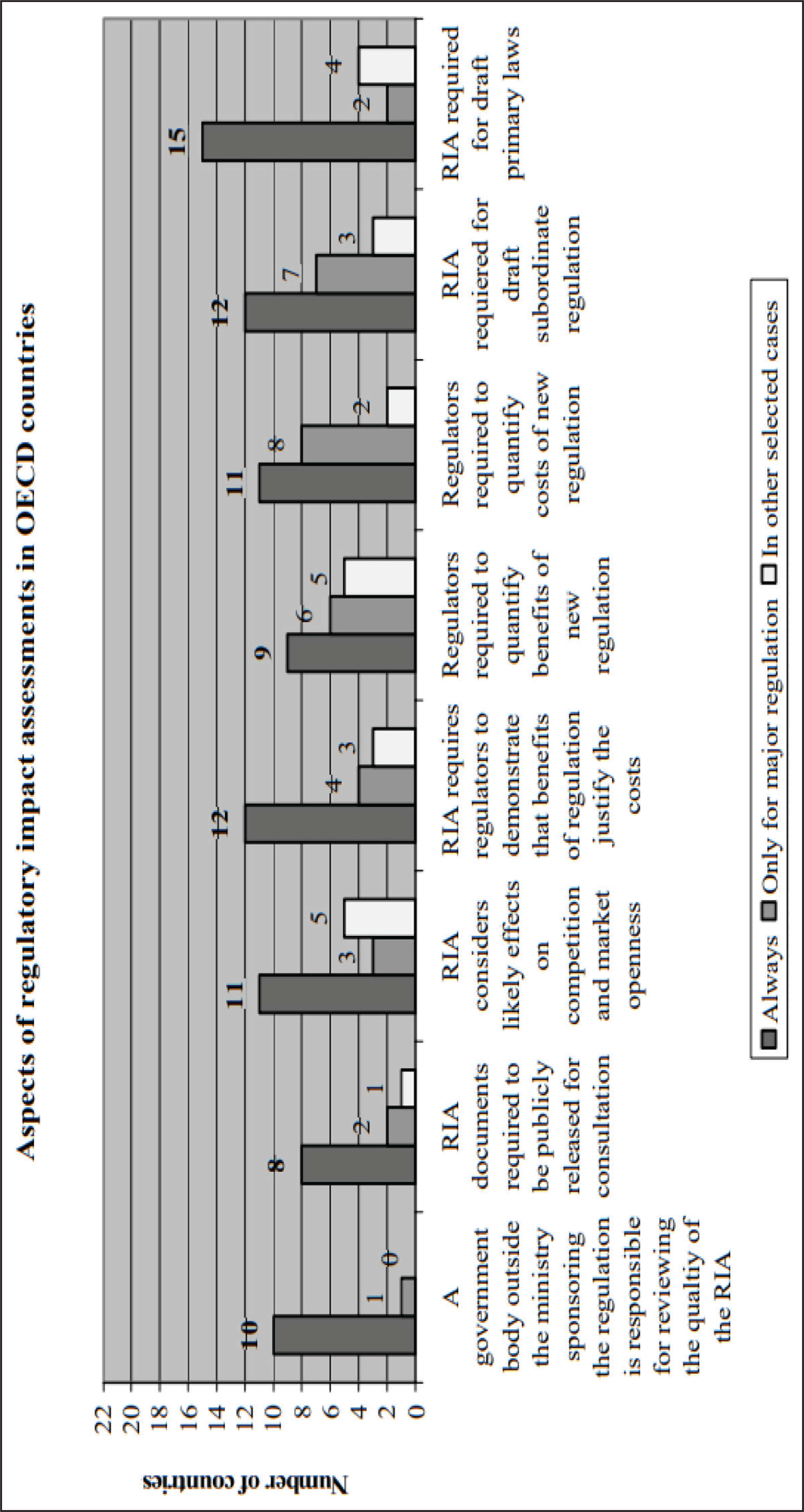
Many OCED countries (Denmark, United Kingdom, Japan, etc.) have adopted RIA within their regulatory regime. Among the OECD countries, Australia employs RIA at federal level and also among all its states. In the United States, about 18 states use RIA. European Commission uses RIA for all its major policy decisions.
In the current times, where the COVID-19 pandemic causing frequent market change is underscoring the role of regulation in a market sheds light on the urgent need for the transformation of the regulatory mechanisms and implementations. In the wake of these new developments, the Indian regulatory regime is positioned to note key concerns as to how and which regulation to enforce that best protects the interests of the citizens and ensure fair market play. Thus, to address inconsistencies and systematise regulatory uniformity in India, RIA of the Indian legislative framework has emerged as a much-needed impetus.
Research Questions
Dealing with the issue at hand, this article would, therefore, like to delve into the following questions:
Is there a need and scope of RIA within the existing Indian legal regime? Can regulatory assessment impact the competitiveness within the market? What is the use and adaptation of RIA tools? How can the use of technological innovations assist in conducting an RIA in India? Whether RIA conducted under the innovative governance system attain optimal outcomes in the Indian market regime?
Hypothesis
The research shall try to scrutinise the following hypothesis that the RIA can improve the regulatory governance in different sectors, create innovation, further enhance private sector participation and also improve the consumer and producer welfare.
Need and Scope of the RIA
The RIA is considered to be a pivotal tool for delivering improved regulations that support the objectives of the government to regulate only when necessary. And to do it in such a manner that is proportionate to the risk the government intends to address and to further simplify and deregulate, wherever possible. RIA rests upon an objective to make the regulations more effective and efficient where the regulatory makers need to justify the need for introducing new regulations in light of the costs and benefits incurred in availing alternate options while also considering a community-wide perspective of their effects (Harrison, 2009).
The process of RIA is multifaceted; it does not only address the problems a regulation holds but also addresses its objectives, looks into the available options in achieving them further, conducts consultation followed by each option’s impact assessment and, thereafter, recommends a suitable one. The impact assessment of each option comprises estimation of the costs and benefits, measurements cost of business compliance, risk analyses and considering impact on fair market competition. Globally, conducting regular RIA has surfaced as the best medium employed by the government to improve the regulation’s efficiency.
By 2005, use of RIA in domestic policymaking regime has been mandated as a formal policy by twenty six of thirty OECD member countries and many non-OECD members. However, by contrast, little analysis is conducted either in the proper usage of RIA or its potential in reforming the development-based regulatory policies. Such conduct is noticed even after different countries have shown their keen interest in measuring the impact of the laid regulations and their implementations.
A regulation is crafted in a manner that leads to impact multiple stakeholder groups in variant forms. Additionally, a poorly drafted regulation may further impact the multiple stakeholder groups thus the onus of ensuring efficient and effective regulations falls upon the government. It is imperative that right at the stage of regulation drafting, impact of regulation must be vigilantly assessed in order to attain optimal outcomes. As the non-reviewed regulation accelerates complexities, the costs of compliances enable uncertainties about its obligations and may even abridge the process of achieving intended goals. Introducing regular RIAs in the Indian regulatory framework would have an umbrella impact, securing incentives for all participants while improving the analysis of regulations enforced (CUTS International, n.d.).
The Process Involved in RIA
Employing consistent analytical methods, in the process of RIA, expected effects of regulatory proposals are systematically assessed and identified such as benefit/cost analysis. RIA employs comprehensive and comparative methodologies for analysis. It determines the cardinal regulatory objectives that are desired and identifies the policy interventions necessary to attain them. According to the OECD,
Regulatory impact assessment’s most important contribution to the quality of decisions is not the precision of the calculations used, but the action of analyzing – questioning, understanding real-world impacts and exploring assumptions. (OECD, 2002)
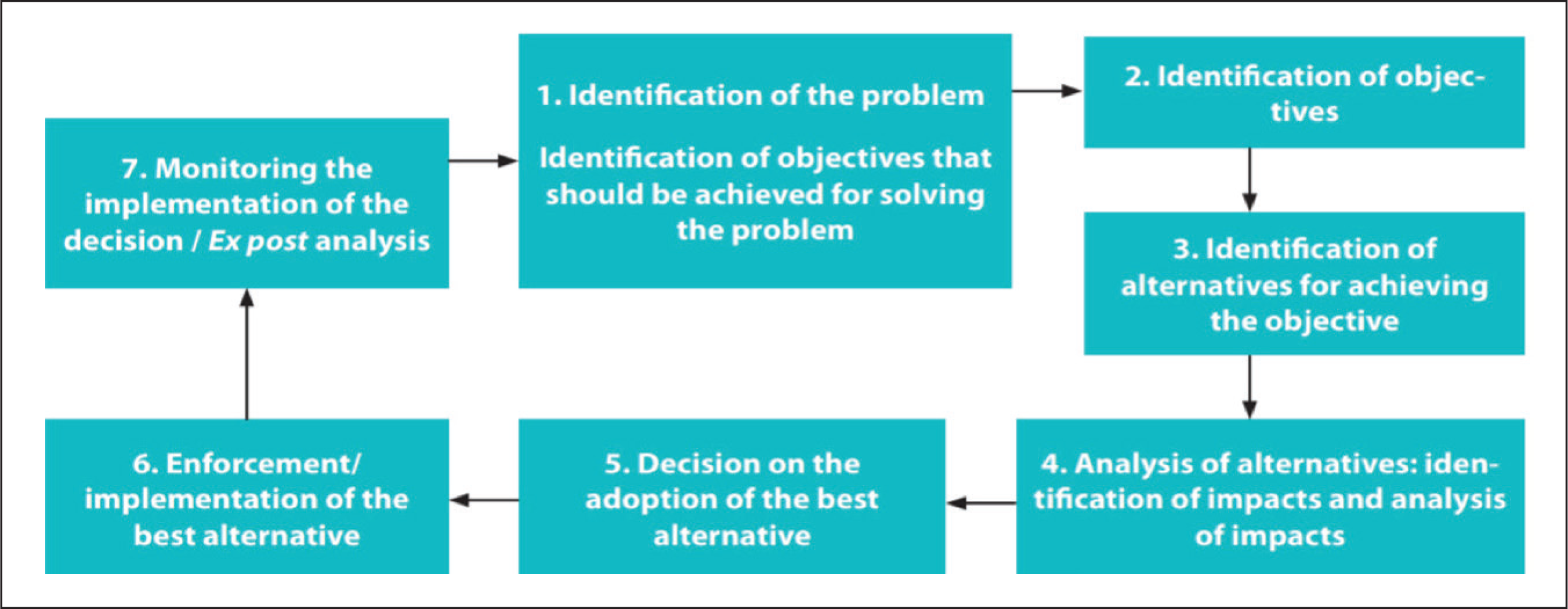
The process of RIA should, therefore, be integrated in a manner that all-inclusive scrutiny is conducted including the identification of problems and objectives aimed to be achieved, looking into alternatives available aligned with a public consultation process. It is only then a decision of the adoption of a new regulatory policy should be made; this additionally encourages enforcement of the best feasible alternative and also monitors the overall regulatory implementation process. These steps in conducting RIA have soon widespread virtually among all the OECD countries and many developing nations.
The process of RIA undermines different principles for regulatory best practices, which may include the following:
Proportionality: An intervention by a regulator should only be done when it is required. As per the risk imposed, remedies should be secured, and all the related costs must be minimised and identified. Accountability: Proper justification must be administered for the decisions undertaken and should be subjected to public scrutiny. Consistency: The laid rules and standards by the government must be coherent and implemented fairly. Transparency: Regulations prepared should be fair, transparent and consumer-friendly. Targeting: The focus of regulation should be on the problem that a regulation may encounter and minimise side effects (CUTS International, n.d.).
The Indian regulatory regime, in order to enhance transparency, disentangle complex bureaucratic procedures and further modify regulations, has to develop a decisive and integrated RIA structure. Thus, appropriate state regulatory structures should be introduced to counter the multifaceted market failures, which in a developing country like India emerges due to the abuse of dominance, loss of competitiveness, pervasive externalities (positive production, positive consumption, negative production, and negative consumption) in market transactions and information asymmetries, and so on (OECD, 2008).
Figure 2 highlights the flow of conducting the RIA process (Legislationline, n.d.).
Impact of RIA on Competitiveness in India
Over the past century, India has surfaced as a key market player in the global economic affairs. Where, the regulatory mechanism promotes both social and economic welfare and simultaneously triggers related costs. RIA is a process which assesses regulations on a case-by-case basis while protecting market interests and also contributing to the strategic regulatory policy goals (Kirkpatrick et al., 2004). It would not, therefore, be wrong to state that RIA is the pre-eminent tool used by OECD member countries to regulate standards in the fair market flow (OECD, 2013).
The process of rivalries between the market players occurring in or out of the market is termed as competition. In order to attract more consumers, the market players devise different strategies ranging from offering lower costs and added benefits to ensuring availability of higher quality products and related services or advanced products and services in the market. It is when competition fares well in a market, it can be ascertained which good or service is more desired by the consumers. However, the flow of competition in a market to a great extent is also dependent upon the consumer’s active interest and engagements with the options available. If no or less interest is readily reflected by a consumer on the benefits provided by the market players, it may lead to affect the market economy and limit the competitive incentives on firms. In order to maintain a fair-market state, statutory regulations are issued that set out rules directing the market players how to function in competitive markets.
In developing economies like India, having pro-competitive regulations may help boost the market standards, encourage the market players to introduce innovative and efficient goods and services and also increase investment and employment. From 1998, OECD has been introducing different set of indicators for product market regulation in order to measure the regulatory structure of nations. These sets of indicators measuring regulations exist at all sector levels and are economically wide. As per the OECD laid rules, for a market to well function, it requires the following (Competition & Market Authority, 2020):
A legal and judicial infrastructure that has sound conduct. A competition regime that is market effective. The market regulation should have competition friendly product in the market. An insolvency regime that is efficient and consumer-friendly.
Both the competitive policies and market regulations are necessary to underpin competition in a market. In India, aligning with the OECD guidelines, if further RIA is conducted of regulation in the market, it will lead to administering the workability of the existing legislation and also assist in introducing new regulations that promote competition and economic growth. An RIA will also aid the government to address public welfare, for example, address the market failures pertaining to different market externalities (both positive and negative externalities—positive production, positive consumption, negative production and negative consumption); the availability of innovative public goods and services; ensuring sustainability and protecting consumers’ interest, and so on, which directly and indirectly will maintain a competitively fair market.
The Indian competition law regime visualises that no incumbent should have market domination or an unfair advantage, cutting out market competition. Thus, with regulations and competition policies having similar applicability and objectives in same market, RIA by market regulators would also vastly reduce the chances of legal conflicts (Competition Commission of India, 2006).
RIA Tools
The mechanism of RIA should be developed in a manner that it estimates the impacts of regulation, comprehensively. Both process- and method-based RIA should be conducted. The prospects of success in achieving the underlying objectives and effectiveness related to cost and benefits should be assessed well. The RIA process must ensure that the process of assessment should be transparent, open and the provided information holds wider significance and is not unreliable. The RIA process must have all social, environmental and economic impacts considerations.
Standard Cost Model
The standard cost model is the most commonly used and simplest RIA tool for evaluating the costs incurred. It is a quantitative methodology that is employed in most of the OECD countries and at different levels (SCM Network, 2018). In the regular course of market flow, the market players have to comply with all the regulations enforced in the market that collect information to regulate the regulator’s actions and for consumers’ information. Due to multiplicity in regulatory compliances, the costs borne out of such regulations could be too weighty and irksome. Under the standard cost tool for RIA, businesses administrative burden is administered by activity-based measurements.
This model shows administrative cost borne at a market player’s pertaining to administrative burdens are structurally break down. During the process, accounting of the cost of each activity conducted in a period of 1 year is done. Using the tool, the administrative costs are divided into activities for analysis. This tool may assist in evaluating the cost incurred in information reporting and collection process. The standard cost model for RIA has gained significance, globally. Countries such as Denmark, the United Kingdom, the Netherlands and Sweden have integrated the standard cost model for ensuring policy developments and law-making (SCM Network, 2018).
The primary focus of this tool is to simplify the administrative actions necessary to comply with regulations. Moreover, the standard cost tool in its process does not question the administrative requirements. The common method is to multiply the time required for undertaking action with a tariff based on hourly labour cost. Other costs such as the resources costs, allocation costs and so on may also be applicable, wherever needed (CUTS International, n.d.).
The basic equation for calculation is ΣP × Q, where,
P (Price) = Tariff × Time (in hours per business) Q (Quantity) = Number of businesses affected × Frequency (per year)
Technological Innovations and RIA in India
With globalisation, technological advancements have emerged as a major driver of economic and social activities. Innovation and technology foster sustainable growth, address social and global challenges and ensure resilience. In current times, amidst the COVID-19 pandemic, the market is facing numerous halts; it has become imperative for regulators to properly monitor and regulate the market flow. As highlighted, due to the multiplicity of regulations it gets burdensome for the businesses to function in a fairly competitive market thus, RIA assists in swift movements of the market. Using technologies within the Indian regulatory regime would make the RIA process more transparent, open and fair.
Globally, in the field of scientific research and innovation investment, one of the significant domains that have emerged is artificial intelligence. Amidst the Covid-19 pandemic, use of artificial intelligence technologies and tools ensured swift flow of regulatory mechanism in the day-to-day functioning (e-office, circulation of circulars and recording of attendance), case hearings, investigation processes, and so on. OECD in ‘Recommendation of the Council on Artificial Intelligence’ recommends for internationally agreed principles and processes that may assist in the promotion of AI-powered governance system.
A paradigm shift to technological applications in conducting RIA by regulators would harbour regular checks and balances of regulatory compliances undertaken by the businesses. RIA backed by technological innovations would assist in undertaking the most relevant regulatory approach that promotes investment and growth. Additionally, the information about the RIA tools utilised by market players operating in the fiercely competitive global marketplace can also be attained using the artificial intelligence mechanism. Thereafter, after a comparative analysis, only the most befitting regulation shall be adopted without multi-layering the market with numerous regulations (competition and public policies).
Adoption of an actionable taxonomy in the propagation of information and public consultations under the RIA process can be made simplified and far-reaching via digital technological systems. The use of blockchain technologies in conducting RIA will encourage greater public–private partnership, ensuring a visibly fair and competitive market. Adopting data-driven responsive approaches for RIA would assist in identifying costs and benefits of a regulation, revising the existing regulation and managing future risks mitigated (OECD, 2021). The scope of more research and development in the tools used for conducting RIA can be enhanced.
Conclusion and Way Forward
RIA has the inherent objective to make the regulatory process more effective and efficient with reasonable costs and benefits and result in the long-term goal of consumer welfare. In India, no uniform model institutionalises the process of RIA as it needs to be conducted on a case-to-case basis, suiting specific requirements of the relevant market. However, the process of RIA is all-inclusive regulatory scrutiny, which identifies the problems and objectives aimed to be achieved by regulation, while simultaneously looking into alternatives available along with public consultations.
The most significant advantage of RIA is to the regulators. The regulators can not only learn the specific estimates of benefits and costs that a regulation yields but also evaluate its overall impacts on the market. The RIA process analyses the regulatory proposals before it actually comes into force as a regulation. The fundamental incentive in implementing RIA is that it identifies overall regulatory impacts (both existing and new) while comparing the various costs and benefits. This discourages the ‘one size fits all’ analogy, commonly employed in regulation drafting.
Innovation governance system may further be employed as a system of mechanisms by the regulatory bodies that may ensure effective steering of RIA process. A paradigm shift to the use of technological applications (e.g., Big Data, artificial intelligence, blockchain technologies, etc.) in conducting RIA by regulators would harbour regular checks and balances of regulatory compliances undertaken by the businesses. RIA backed by technological innovations would assist in undertaking the most relevant regulatory approach that promotes investment and growth. The use of technological advances may enhance the effectiveness of the practices introduced by the Indian regulators as a response to regulatory assessment and may further assist in managing the complex and cross-functional regulatory activities.
In this growing world complexities, OECD also suggests that appropriately inculcating RIA in the regulatory regime may ensure efficient and effective functioning of regulation in a fair market. The use of RIA in the domestic policymaking regime has already been mandated as a formal policy by twenty-six of thirty OECD member countries and many non-OECD member countries. In light of their experience, India should also facilitate institutions to integrate RIA within its regulatory regime. Statutory legislation should be promulgated which mandates the RIA adoption and its governance.
RIA-based compliances must be ensured by regulatory bodies, and dedicated regulatory bodies must be established to undertake the checks and balances on these compliances. At the national level, the government must encourage the integration of technological advancements and innovative technologies to conduct the RIA process. The state governments should also actively supplement similar initiatives at the state level. This will add momentum to the process of strengthening of regulatory oversight in the country also.
Footnotes
Declaration of Conflicting Interests
The authors declared no potential conflicts of interest with respect to the research, authorship, and/or publication of this article.
Funding
The authors received no financial support for the research, authorship, and/or publication of this article.