







Abstract
In recent years, the nature of citizen–administration relationship has undergone considerable transformation within the current global context. This article presents the citizen–administration relationship through a case study of the Department of Registering and Licensing Authority (RLA), Chandigarh—the city beautiful. The article is an empirical study based on primary data, with an objective to gauge the general awareness among citizens of Chandigarh regarding the introduction of the online system of getting a driving license, the extent of satisfaction with the system and the procedural difficulties faced by them. For the purpose of collecting the primary data, a structured questionnaire was prepared for the citizens and an interview schedule for the officials of RLA, Chandigarh. A sample of 100 citizens who were issued driving license during the year 2019–2020 was taken using purposive sampling method. The findings of the study revealed that citizens were well aware about the online system and there was high level of satisfaction among them for this system. However, they were not satisfied with the procedure, as they had to face a number of difficulties due to the introduction of a new system. Therefore, the article suggests measures to revamp the system and make it more citizen-friendly.
Introduction
In a democratic country like India, the relationship between citizen and administration postulates special significance. Citizen and administration are closely related to each other, such that the existence of one without the other is beyond imagination in a civilised society.
The relationship between the citizen and administration underlines a fact related to one of the basic principles of citizenship: that citizens have certain obligations towards the state and the state too has responsibilities to protect citizens and to address their needs and demands. As suggested, ‘the state owes certain services to the citizen as a right in return for the loyalty and services rendered by the citizen. It is a part of the reciprocal relationship between the individual and the state which is central to the concept of citizenship’ (Oliver & Heater, 1994, p. 20). This principle of citizenship embodies the basic framework of governance as articulated by the United Nations Development Programme (UNDP) in terms of the following eight fundamental characteristics (UNDP, 1997): participatory, consensus-oriented, accountable, transparent, responsive, effective and efficient, equitable and inclusive, and following the rules.
The achievement of good relations between the government and the public is a matter which does not by any means depend on the conduct of civil servants and politicians. It depends equally on the attitude of citizens, groups, corporations, associations of all kinds and, indeed, of all unofficial bodies to public authorities. If we want public servants to behave well towards us, we must behave well towards them. (Robson, 1956, p. 191)
The relationship between citizen and administration is found to be good and healthy if it brings out the following:
Encourage people’s participation in the administrative process as sine-qua-non for development and modernisation; Kindle the potential energy of the citizens into kinetic energy to accelerate development; Supplement the efforts of the government in the conduct of its affairs; Strengthen the values of democracy in the minds and spirit of the people; Enlist respect in the Constitution that is rooted in popular sovereignty; Develop bonds of friendship and goodwill between citizens and administration; and Avoid social unrest, tensions, violence and other social upheavals that have become the order of the day. (Goel, 1994, p. 110)
Scope of the Study
The present study focuses on an important service being provided by the Registering and Licensing Authority (RLA), that is, issuance of driving license, which includes two functions: issuance of learner’s license and issuance of regular license.
The scope of study has been circumscribed to only one service, as this would help to have a focused, in-depth and thorough analysis of the selected service, rather than studying all the services and making the research unwieldy. Thus, issuance of driving license would be the focus of the present study.
Objectives of the study
The objectives of the study are as follows:
To study the general awareness among citizens regarding the online procedure of getting the driving license. To study the extent of satisfaction with the system. To study the difficulties being faced by them in getting the driving license. To study the administrative responsiveness towards solving the problems of citizens. To analyse the responses of citizens and administration and to give suggestions for improvement.
Research Question
What improvements can be made in the design-led approach, that is, online delivery of licensing services adopted by Chandigarh Administration for the innovation of public policy and wider institutional change?
Methodology
This article is an empirical study based on primary data. For the purpose of collecting the primary data, a structured questionnaire was prepared for citizens and an interview schedule for officials of RLA, Chandigarh. A sample of 100 citizens was taken using purposive sampling, who were issued driving license during the year 2019–2020.
The secondary data includes relevant research books and journals. Information was also extracted from government/other websites. Field observation, wherever possible, was used for supplementing the other sources of data collection.
Some Theoretical Aspects of the Citizen–Administration Relationship
Citizen–Administration Relationship and Public Service Delivery
Many countries have undertaken public sector reforms to improve the quality of their public service delivery. However, while the demand for better services is a common factor, the spectrum of expectations varies from country to country. Hoped-for improvements in customer experience and outcomes span seven key areas:
Many reforms aimed at improving service delivery in the public sector have received considerable focus during the last decade. Rising citizens’ expectations, budgetary constraints, global competition for investment and changing demographics have transformed the environment in which the public sector operates. Resultantly, it has broken down old constraints and created new opportunities (Pricewaterhouse Coopers, 2012).
Driven by ever-changing citizen’s’ expectations, the public sector is increasingly required to redefine its role, strengthen its customer focus and build integrated service delivery models. Moreover, these models need to be based on meeting customers’ needs more efficiently and more effectively. Therefore, there is a need to keep the customers’ needs at the core of every decision, from strategy formulation and design to execution. For this, government process re-engineering is often required to put in place improved, value-for-money processes that will reduce waste and duplication and will produce an effective ‘customer journey’. There are many initiatives already underway which demonstrate how, in the right circumstances, effective public service delivery models can be developed by combining the complementary capabilities and cultures of the public and private sectors. Technology can also be a key enabler. The development of customer-centric models calls for customer insights, looking at customers’ wants and needs (both demographic and attitudinal), in a holistic manner, distinguishing means and ends, focusing on improved customer journeys and measurable benefits, and understanding the strategic risks associated with various service delivery models (Public Sector Research Centre, 2007b).
Transparency and Accountability in Public Service Delivery
The first and the foremost function of the administrative agencies is to deliver services to citizens in an effective manner. The citizens come closer to the administration when they have to get the benefits of the services provided by the administration such as applying for driving licenses, water/electricity connections and applying for socio-economic benefits under various schemes/programmes. Services, therefore play a very crucial role in moulding the trust and perceptions of the citizens towards the administration (Roy, 2017).
Transparency and accountability in public service delivery have always been important ingredients of democracy in the literature on service delivery. The importance of accountability as a central theme of the debates on service delivery, however, only took roots after the World Development Report (WDR) of 2004, which identified failures in service delivery squarely as failures in accountability relationships (World Bank, 2004). By showing how the ‘long route’ of accountability (via elected politicians and public officials to providers) was failing the poor, the WDR argued in favour of strengthening the ‘short route’—direct accountability between users and providers. The WDR sparked off a spate of works that examined ways of strengthening the short route: from amplifying voice to increasing transparency and enhancing accountability (McNeil & Mumvuma, 2006; Sirker & Cosic, 2007).
By now, accountability is widely accepted as being a key to service delivery improvements. What is interesting is that the importance of accountability (and related transparency) comes from two quite different ideological streams. On the one hand, New Public Management (NPM), which emerged in the 1990s, emphasised the use of market mechanisms within the public sector to make managers and providers more responsive and accountable (Batley, 1999). While many of the NPM reforms for accountability were focussed on vertical accountability within organisations, such as performance-based pay, a sub-set related to downward accountability to citizens, for example, Citizen Charters and Complaint Hotlines. In keeping with the intellectual traditions from which the NPM approach emerged, most of these downward accountability mechanisms were oriented to users as individual consumers who could choose to use these mechanisms or, alternatively, exit in favour of other providers (Institute of Development Studies, 2010).
Efficiency and Effectiveness in Public Service Delivery
The Public sector is liable to face certain challenges as it has to meet the increased expectations of their ‘customers’—both citizens and businesses. Ironically, challenges may be consistent, but the ways in which they are being confronted, and the results that are being achieved, vary considerably (Public Sector Research Centre, 2007c).
One common challenge faced by the public sector is how to service its customers better in a better way. To address this, the public sector must find ways of improving the efficiency and effectiveness of its public service delivery, which truly means providing value for money by enhancing the quality of service (accessibility for all, and satisfactory customer experiences and outcomes) and reducing the costs involved in providing those services (Currisitine et al., 2007).
The need for a customer-oriented focus along with shrinking government budgets, providing value for money are core concerns today. Resultantly, the public sector is bound to explore new sustainable models for service delivery—models that can enhance service levels at the same or reduced cost. This promptly suggests the need of developing customer-centric models in collaboration with the private sector (Dudley et al., 2015).
Transforming Citizen–Administration Relationship
The nature of citizen–administration relationship has undergone considerable transformation since the last few years within the current global context characterised by the dominance of market ideology, demonisation of the welfare state, emergence of neoliberal regimes, proliferation of pro-market policies and the erosion of public service in terms of its scope, role, capacity and commitment. Based on the growing alliance between the state and the market, there has emerged a more collaborative relationship between public bureaucracy and private firms while the administration’s relationship with the ordinary citizen has weakened. In almost all countries, this changing relationship between citizens and public administration is quite evident in the expanding Public–Private Partnership (PPP), on the one hand, and the diminishing welfare-based services for the ordinary citizen, on the other. It is also apparent in the fact that in both developed and developing nations, the market-driven neoliberal regimes have adopted a variety of administrative reforms in the name of creating an ‘entrepreneurial government’, establishing NPM and reinforcing a ‘businessman’s outlook’, which has changed the mission of public bureaucracy, affected the nature and composition of its services to citizens, and thus transformed its relationship with them (Haque, 1999, pp. 309–25).
Second, there has also been a significant reduction in the capacity of public service to play an active or leading role to deal with the citizens’ concerns, especially due to the diminishing availability of financial and human resources for the public sector caused by the current policies of privatisation, retrenchment and budget cuts. In almost all countries and socio-economic sectors, various forms of privatisation—including divestiture, management contract, one of doing to one of arranging’ production contract, sale of shares, employee buy-out, deregulation and outright liquidation—have become a common policy option. Following the examples of advanced capitalist countries and under the pressure of international financial agencies, many lower-middle-income countries have aggressively pursued this policy alternative since the early 1980s. There is also a growing emphasis to streamline or downsize the public sector in terms of the number of its employees in leading industrial nations such as Australia, Belgium, Canada, Denmark, Finland, France, Germany, Greece, Italy, Japan, Sweden, the United Kingdom and the United States (Gore, 1993, pp. 49–65).
A New Model of Governance Through Public-Private Partnerships
Today, public governance is increasingly executed via collaborative models, characterised by public and private sector cooperation (Andrews & Entwistle, 2010, pp. 679–701). The increased blending of these public and private domains makes crafting hybrid governance systems no simple matter (Ansell & Gash, 2008, pp. 543–71).
While the definition of PPP is inherently broad, PPPs used in infrastructure project delivery generally refer to long-term contractual arrangements between public agencies and private partners that increase private participation and risk-sharing in various stages of the project lifecycle, including facility design, construction, financing, operations and maintenance (Casady & Geddes, 2016, pp. 1–17).
While many current conceptions of public sector governance remain rooted in the traditional approaches to public administration, organisational design and institutional theory (Ostrom, 2008, pp. 15–19), the role of public sector institutions has evolved over time from ‘one of doing to one of arranging’. Public sector agencies have ‘reinvented, downsized, privatised, devolved, decentralised, deregulated, de-layered, subjected to performance tests, and contracted out” to assuage growing public concerns about government competency, programme costs, and institutional effectiveness’. These changes in the scale and scope of public sector agencies created a new indirect form of governance known as ‘third-party government’ or ‘government by proxy’ (Salamon, 2002a, pp. 4–5).
In the light of growing public sector dependence on private entities to implement and manage public services, Salamon (2002b) articulates a ‘new governance’ paradigm for public agencies—one that redefines the traditional conceptions of public sector governance to account for the rise of third-party governments. At its core, this paradigm primarily focuses on analysing the tools or instruments through which public interests are pursued rather than the structure of public agencies themselves. Represented in the form of loans, tax expenditures, social regulation, economic regulations, loan guarantee programmes, vouchers, insurance, grants, contracts and service concessions, these India (Figure 1). It covers an area of tools are the means by which governments facilitate the provision of public goods and services. Overall, tools of public action essentially define the procedures, skills requirements and delivery mechanisms associated with a limited set of government problem-solving approaches (Casady et al., 2019).
The ‘new governance’ model defines the government’s role in organising and maintaining third-party networks, enabling private partners to solve public issues and upholding collectively held objectives in complex policy environments. Infrastructure PPPs are a prime example of this paradigm. In PPP arrangements, public sector agencies activate third parties to deliver infrastructure services, orchestrate and maintain relevant stakeholder networks across the project lifecycle, and modulate appropriate rewards and penalties through contracts in order to elicit cooperative behaviour (Salamon, 2002c).
Profile of Chandigarh
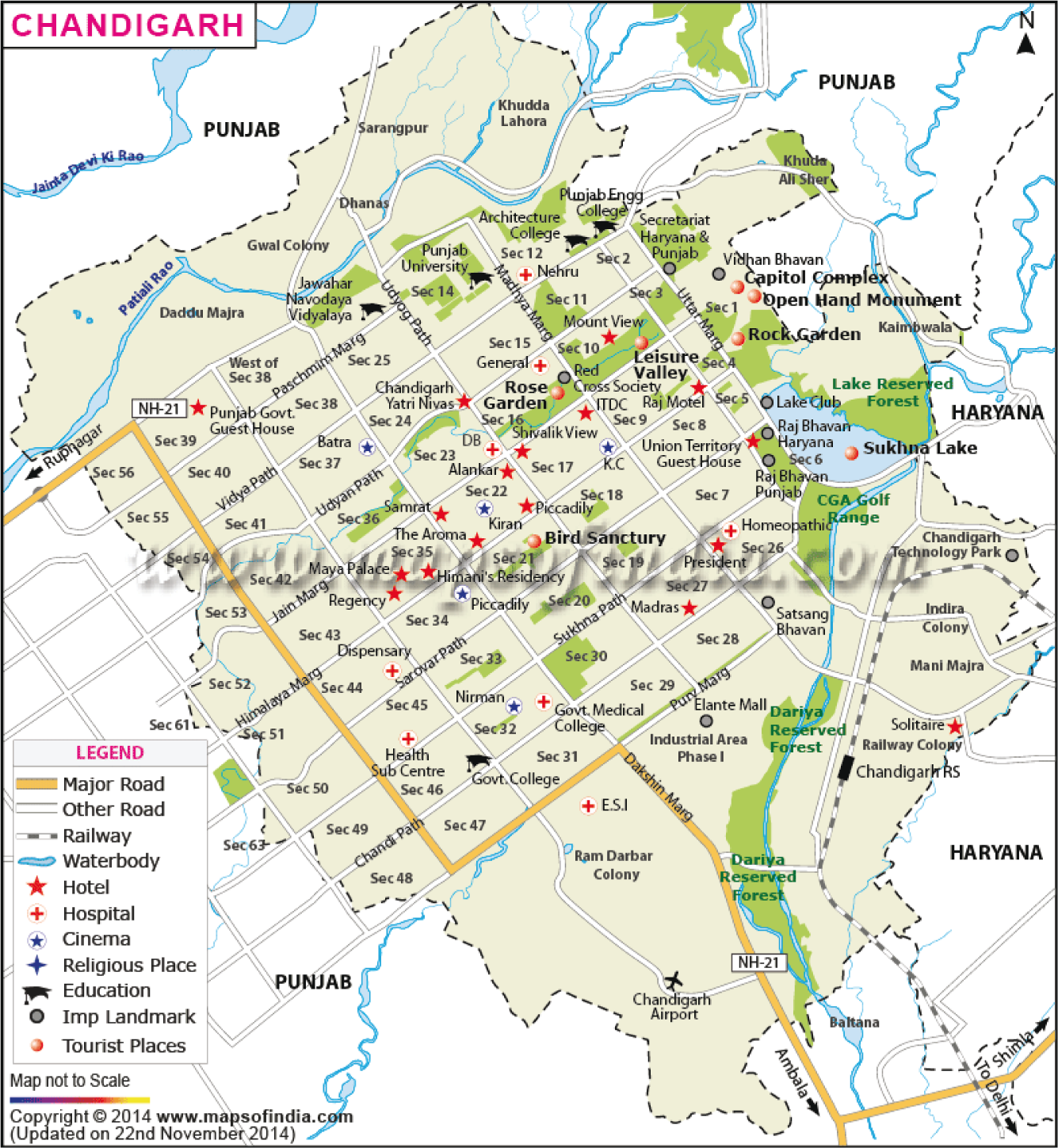
Chandigarh is situated in the northern part of India covering a population of around 1,0 55,450, (Census of India, 2011). It serves as the capital of the states of Punjab and Haryana. Chandigarh is located near the foothills of the Shivalik range of the Himalayas in northwest India (Figure 1). It covers an area of approximately 114 km2. Being the capital, Chandigarh shares its borders with the states of Haryana and Punjab (City India, 2020).
Chandigarh is the best-planned city, with architecture that is world-renowned and a quality of life that is unparalleled in India. As the capital of the states of Punjab and Haryana and the Union Territory (UT) of Chandigarh, it is a prestigious city. The face of modern India, Chandigarh is the manifestation of a dream that former Prime Minister Pt Jawaharlal Nehru envisaged and Le Corbusier executed. (Chandigarh Tourism, 2020b).
Serenity and a city are two diametrically opposite concepts, which, however, get belied in the ‘city beautiful’. Chandigarh is a rare epitome of modernisation co-existing with nature’s preservation. It is here that the trees and plants are as much a part of the construction plans as the buildings and the roads. India’s first planned city, it is a rich, prosperous, spic and span, a green city rightly called ’the city beautiful’ (Chandigarh Tourism, 2020a).
Historical Background
The master plan of Chandigarh was prepared by French architect Le Corbusier (Chandigarh Beautiful City, 2020).
The foundation stone of the city was laid in 1952. Subsequently, at the time of reorganisation of the state into Punjab, Haryana and Himachal Pradesh, the city assumed the unique distinction of being the capital city of both Punjab and Haryana (under Section 4 of the Punjab Re-Organisation Act, 1966, with effect from 1 November 1966) and it was declared a UT (Chandigarh District, 2020a).
From 1952 to 1966, Chandigarh was the capital of Punjab. Citizens of the city were represented in the State’s Legislative Assembly and a chief commissioner headed the local administration. While Punjab had remained undivided, Chandigarh, like other large cities of India, fitted into the larger framework of the state administration. When Punjab was divided, both Punjab and Haryana claimed the new city for their respective capital. Pending resolution of the issue, the Central government made Chandigarh a UT, with its administration functioning directly under the Central government. Under the provisions of this Act, the laws in force in the erstwhile State of Punjab prior to 1 November 1966, continued to be applicable to the UT of Chandigarh (Chandigarh District, 2020b).
Administration of Chandigarh
The administrative control of Chandigarh lies directly under the overall control of the Union Ministry of Home Affairs. Under the Act, there is a provision of appointing an Administrator for the overall control and supervision of the city. The practice of appointing the administrator of the UT designated as Chief Commissioner continued up to 31 May 1984. Thereafter, on 1 June 1984, the governor of Punjab took over the direct administration of the UT as the administrator. The chief commissioner was redesignated as the adviser to the administrator. Since then, the Governor of Punjab has been functioning as the administrator of the UT of Chandigarh (Chandigarh Administration, 2020a).
The Adviser to the Administrator is an officer belonging to the Indian Administrative Services and is appointed by the Ministry of Home Affairs. He advises the Administrator on policy matters and oversees the day-to-day administration of the UT. All financial powers of the Administrator stand delegated to him. The Adviser acts as revisional authority under the capital of Punjab (Development & Regulations) Act 1952 and an appellate authority under various rules framed under the Act (Chandigarh Administration, 2020b).
A deputy commissioner, an officer belonging to the Indian Administrative Services, is responsible for the general administration of Chandigarh. A senior Superintendent of Police, an officer from the Indian Police Service, assists the Deputy Commissioner in maintaining law and order in the city (Chandigarh Administration, 2020c).
Registering and Licensing Authority, Chandigarh
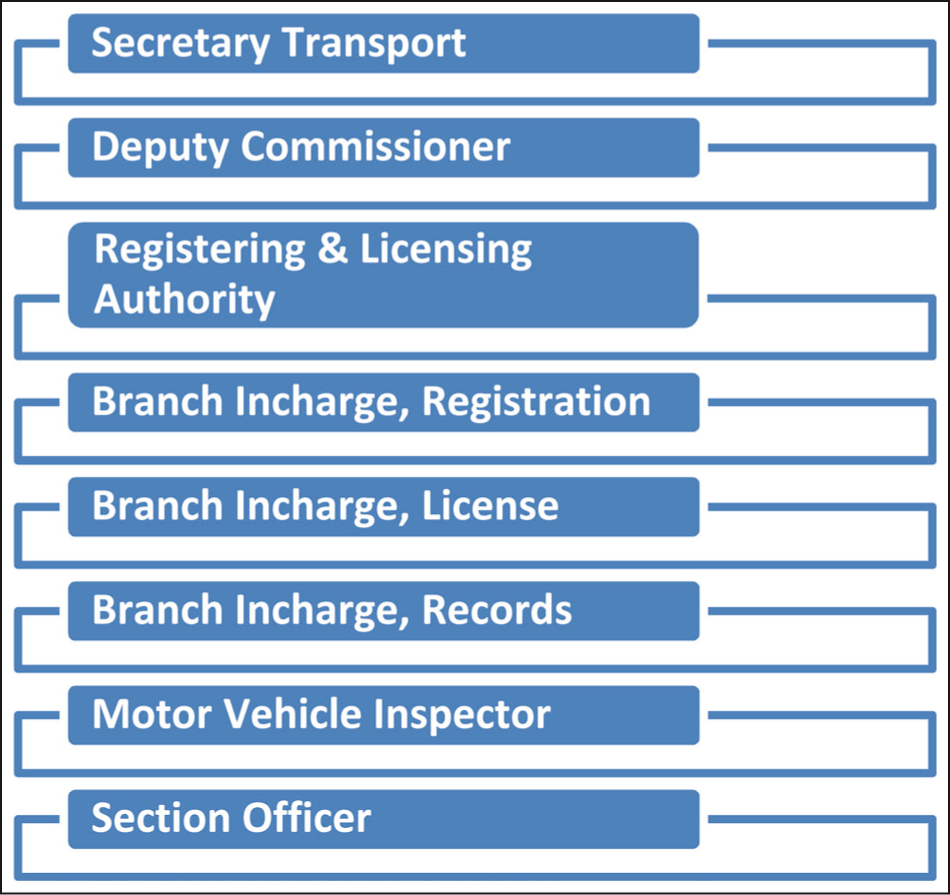
Chandigarh is a well-known city and a UT of India. There are a number of departments working under Chandigarh administration such as education, health, home, industries, transport, election, environment and estate office. The city has its own transport department that ensures the efficient and effective working of the public transportation system and other transport-related activities. The transport department of Chandigarh, is one of the most important departments of Chandigarh Administration and is entrusted with the responsibility of providing an efficient public transportation system through the control of vehicular pollution, registration of vehicles, issuance of driving licenses, issuance of various permits and collection of road taxes (Chandigarh Transport, 2020).
The transport department Registration of vehicles digitalised the process of obtaining driving licenses online in 2014 with the collaboration of private software development agencies, which designed the website of RLA. Along with this, these agencies are given the contract every year through a competitive bidding process. Their functions include providing online operations for application of learner’s license, regular license and international licence; renewal of licence; new vehicles registration; online mock test for learner’s license; and automated driving test.
There are two offices working under the Transport Department of Chandigarh: the RLA and the State Transport Authority (STA).
Registering and Licensing Authority (RLA)
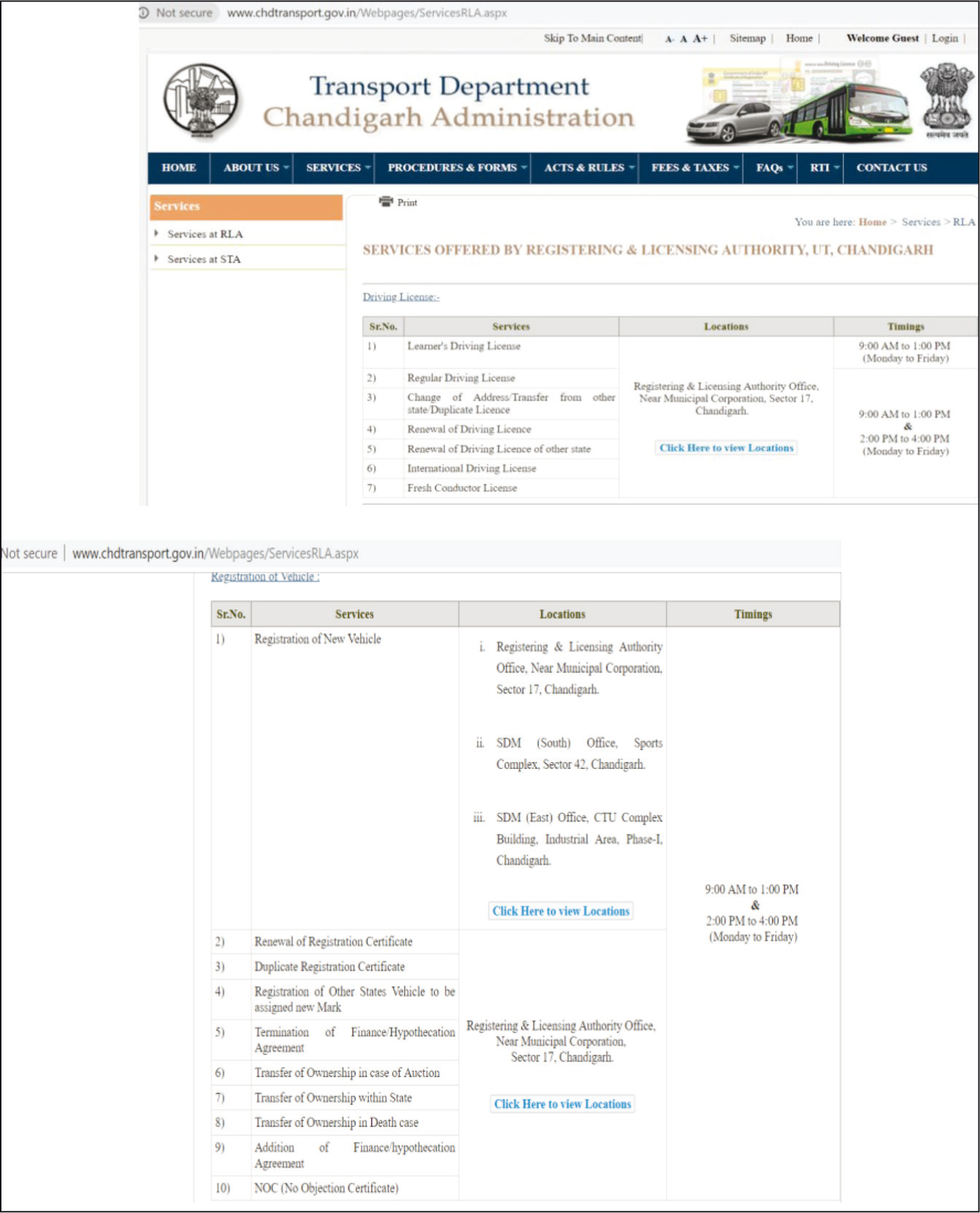
There are three offices working under the RLA in different parts of the city: Registering and Licensing Authority, Sector–17, Chandigarh; Registering and Licensing Authority, SDM (South) Sector–42, Chandigarh; and Registering and Licensing Authority, SDM (East) Industrial Area Phase–1, Chandigarh.
Registering and Licensing Authority, Sector–17, Chandigarh. The services provided by this department are as follows:
Driving license: Issuance of learner’s license, issuance of regular license, issuance of international license, issuance of conductor’s license, issuance of duplicate license, change of address, renewal of driving license and renewal of driving license of other states. Registration of vehicles.
Registering and Licensing Authority, SDM (South) Sector–42, Chandigarh. The services provided by this department are as follows:
Registration of new vehicles
Registering and Licensing Authority, SDM (East) Industrial Area Phase–1, Chandigarh. The services provided by this department are as follows:
Registration of new vehicles
Administrative Procedure of getting Driving Licence
The administration is responsible to ameliorate the living conditions of the residents of the city by serving them with better quality of services. No doubt, every administration wants to satisfy its citizens. But the efficiency of administration is ultimately judged by those to whom these services are provided. Though the citizens do not have any set standards of measuring their efficiency, they do have the experiences whenever they find themselves in the hands of the Administration. They expect that whenever they approach the Administration, their grievances should be redressed as soon as possible with maximum efficiency and effectiveness. Now, the question arises, what do they actually experience when they approach the Administration? Do they really get what they want? What are their views about the administrative procedures and the work of the personnel who follow these procedures? These issues were explored under three heads: The time taken to get the driving license, difficulties faced by citizens and extent of satisfaction with the procedure of getting the driving licence.
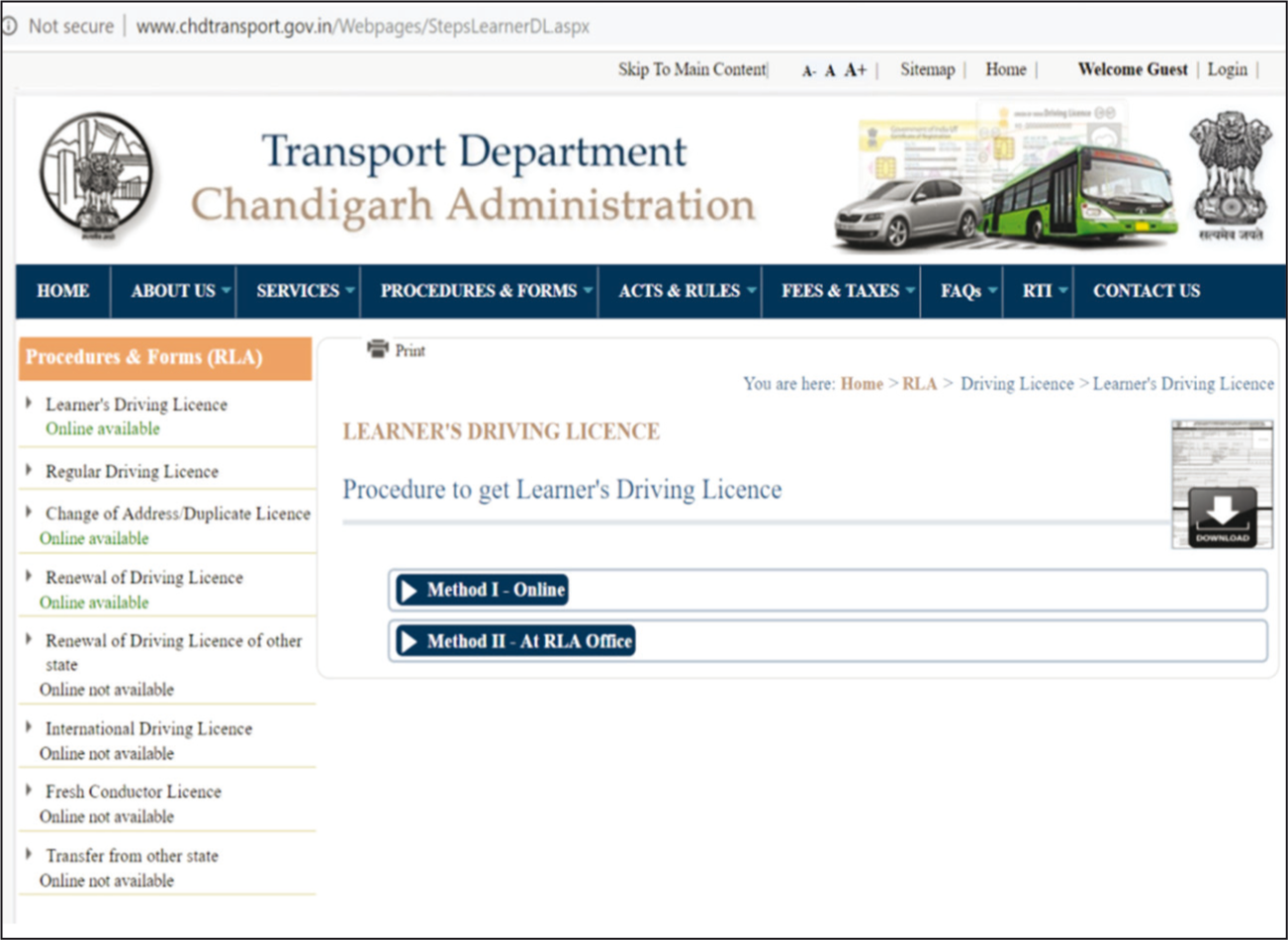
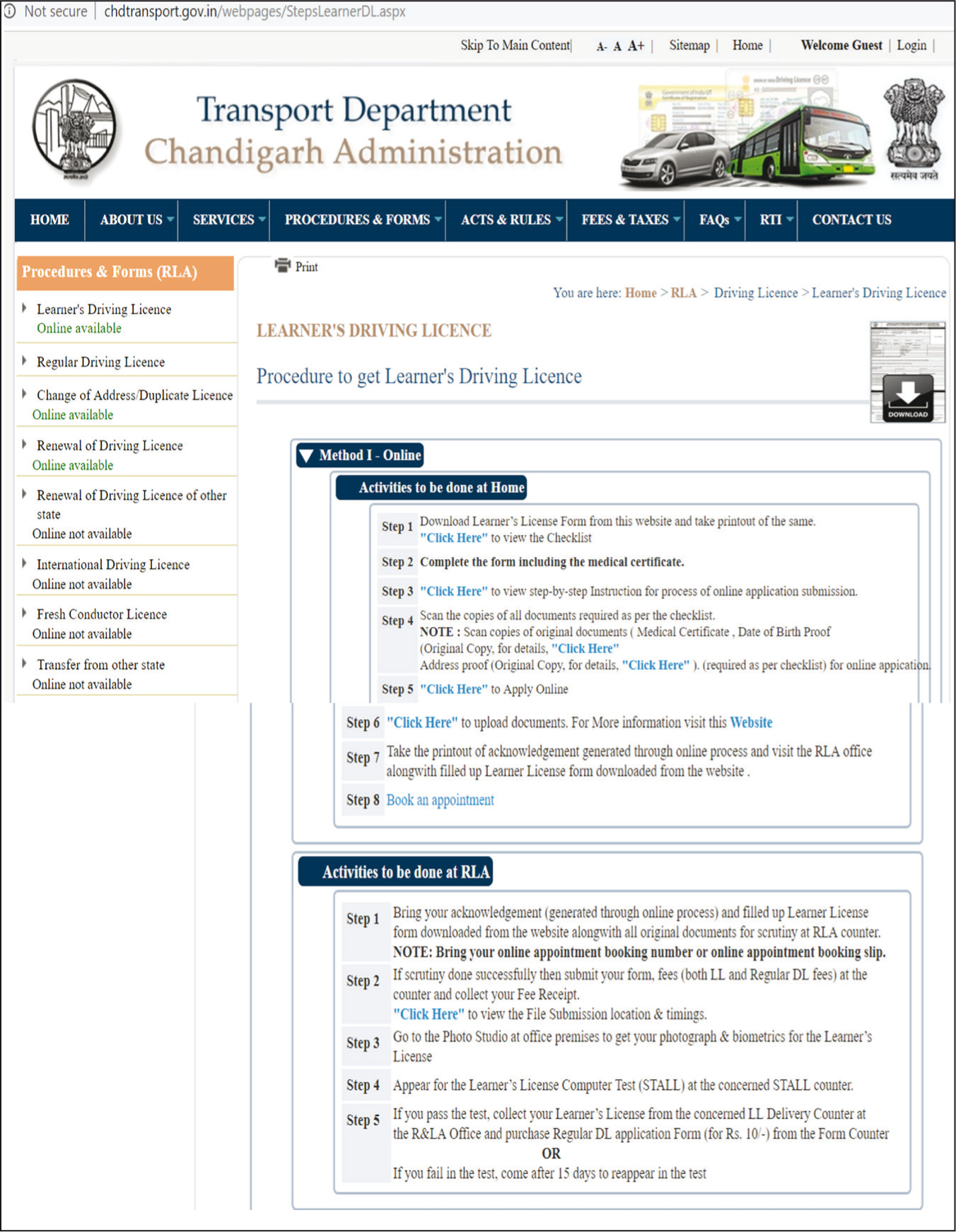
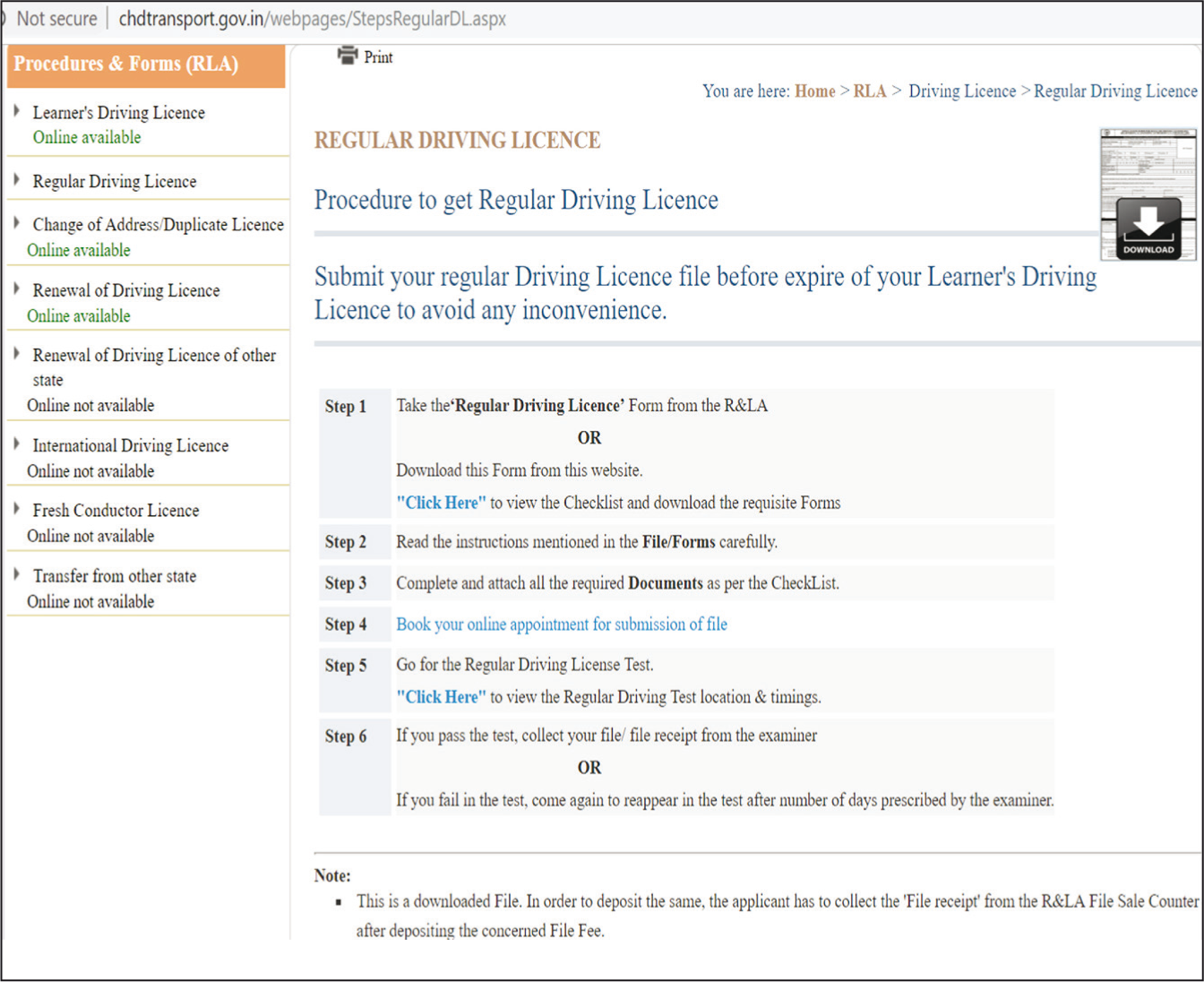
There are two methods available for getting a driving licence in Chandigarh: online method and offline method (Figure 4). Both these methods have been used for first issuing learner’s driving licence valid for six months (Figure 5) and then regular driving licence (Figure 6).
Results of the Study
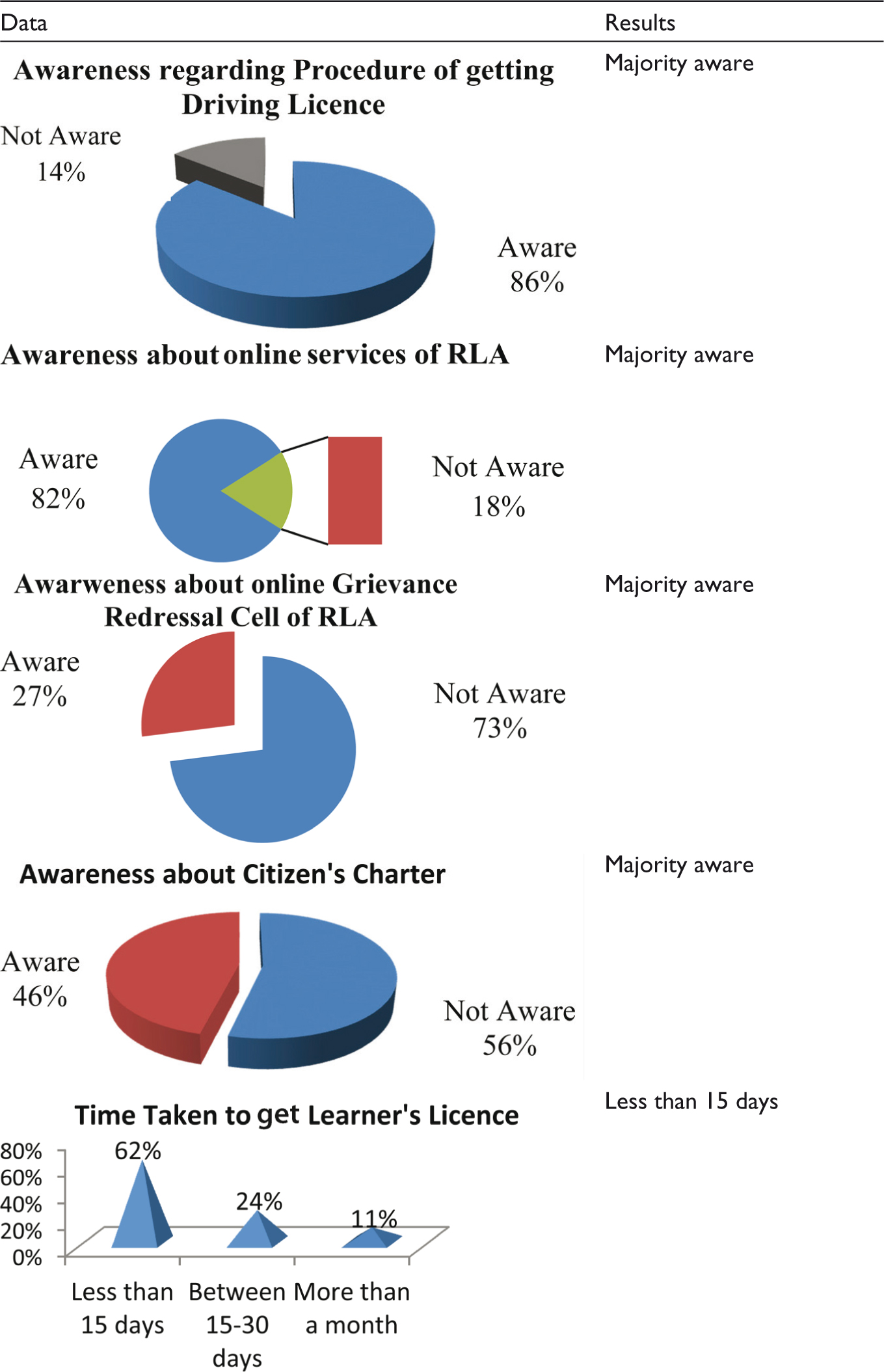
The results of the study have been presented in Tables 1 and 2.
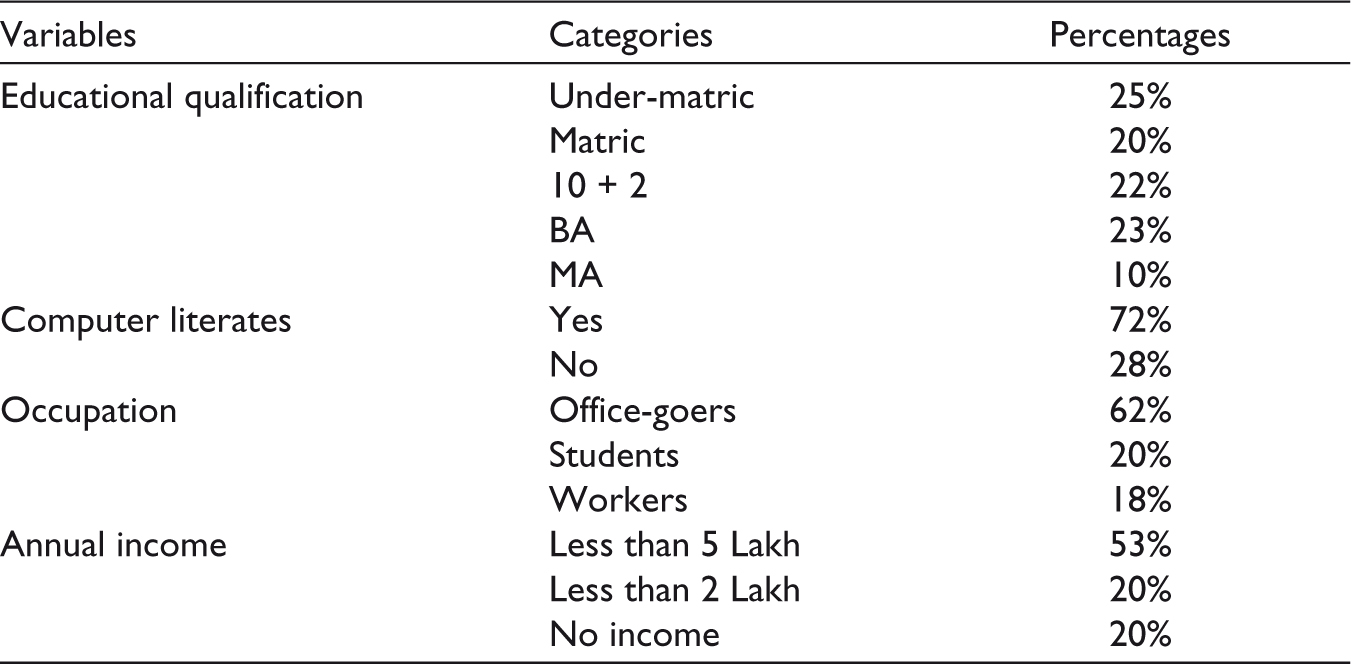
Profile of the Respondents (n = 100)
Matrix Showing the Results of the Study
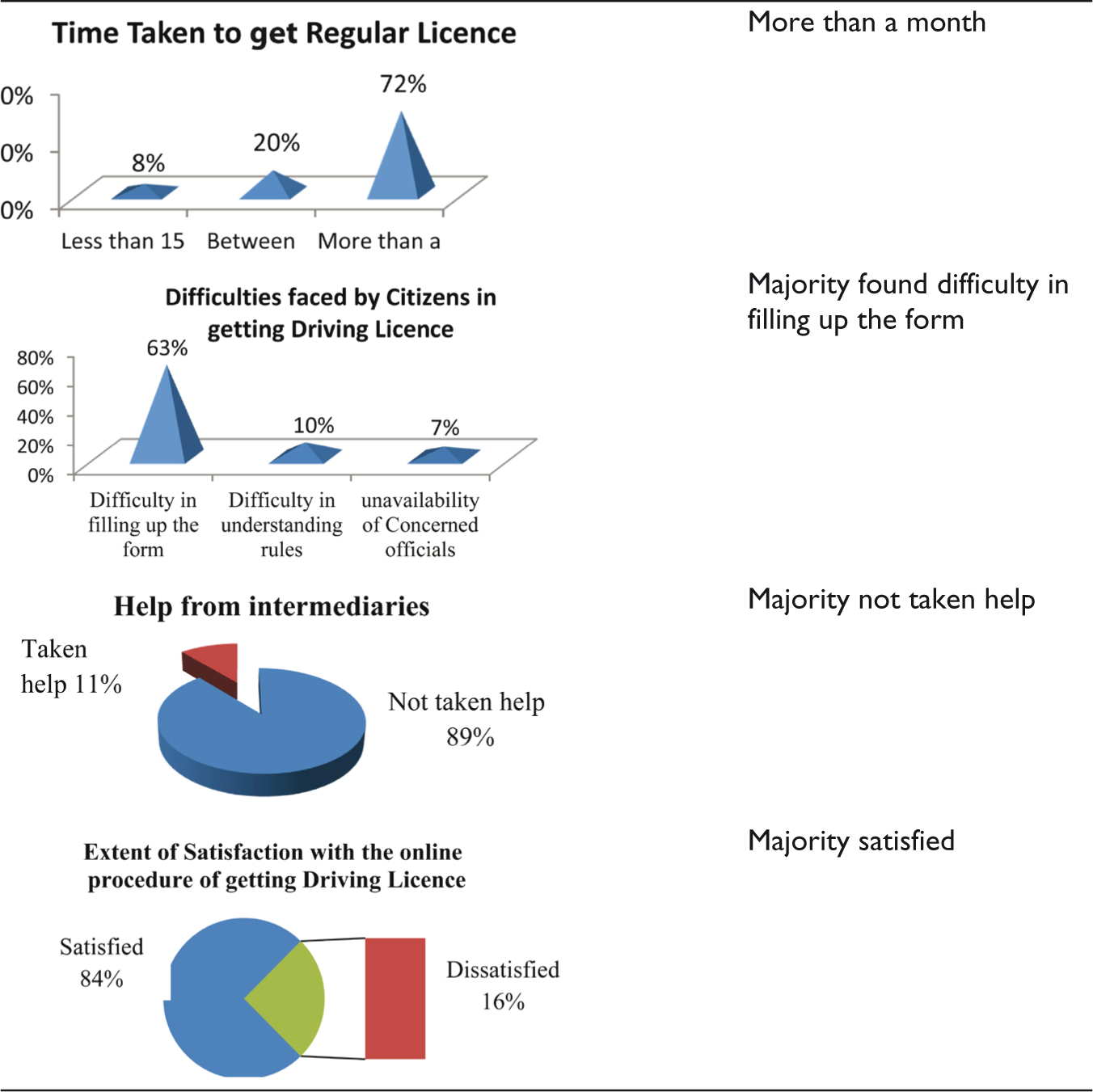
It can be interpreted from Table 1 that the majority of the respondents (55% )were 10 + 2, BA and MA, while the rest (45%) were under-Matric and Matric. As far as computer literates are concerned, the majority (72% )were computer literate. Most of the respondents (62%) were office-goers or students and workers (38%). The annual incomes of the majority of respondents (53%) were less than 5 lakh.
Findings
Majority of the respondents (86%) knew about the procedure of getting a driving licence. Most of them revealed that they came to know about it from their friends or neighbours, who recently got their licenses prepared from the office of RLA, while a few (14%) respondents did not know about it.
A huge majority of the respondents (82%) were very much aware about the website of RLA, which provides ample information regarding all the functions being performed by it. They were such citizens who were computer literate and very well aware about accessing the government websites and extracting information from them easily. However, a few of the total respondents (18%) were not aware about the system; they were neither much educated nor computer literate, such as professional drivers, peons, gardeners and domestic helps.
The vast majority of the respondents (73%) were aware of the online Grievance Redressal Cell of the RLA, while a few (27%) did not know about this cell or its functions. The reason for this was their dependency on conventional methods of grievance redressal such as written complaints or just ignorance or reservation to ask about any such online system.
Most of the respondents (56%) did not know about the citizen’s charter—which is a government document showing services provided by the departments and the procedure and documents attached by the applicants on big visible boards—while some (46%) knew about this concept. Those who were not able to answer about the concept of citizen’s charter were mostly the respondents who were less educated such as workers in a grocery store or factory, having own departmental store watchmen and domestic helps. However, they were aware of the boards put up by the department showing the procedure and documents to be attached for getting a driving licence and they were satisfied with the information supplied through the citizen’s charter.
The majority of the respondents (62%) asserted that it took less than 15 days and 24% said it took from 15–30 days, while a very few of them (11%) responded that it took more than a month to get a learner’s driving license.
A large majority (72%) asserted that it took more than a month and 20% said it took from 15–30 days, while a very few of them (8%) responded that it took less than 15 days to get a regular driving license.
The vast majority of the respondents (80%) faced difficulty, while a very few (20%) did not face any difficulty in getting their driving license. Out of those who faced difficulty, the majority (63%) had difficulty in filling up the form due to language barriers and 10% did not understand the rules, while a few (7%) of them said that the concerned officials were not available during duty hours.
Most of the respondents (89%) had never taken any help from intermediaries(agents or touts) in getting the driving licence as they found the online system self-explanatory and easy to understand. Those who found this system difficult to understand, who were not computer savvy, instead of taking help from intermediaries, preferred to take help from their friends, colleagues, relatives or cyber cafes. While a very few of the respondents (11%) had taken help from intermediaries for getting their driving license. They were of the opinion that intermediaries helped them in filling up the form, getting appointment, and guiding them about written test and driving test. They were more helpful for the illiterate persons coming from nearby villages for getting a commercial licence. But they charge a hefty amount for this—up to ₹10,000. They were complaining about overcharging and duping in some cases. Overall, with the introduction of the online system of getting driving licence, the role of intermediaries has largely reduced.
The majority of the residents (84%) were satisfied with the online procedure of getting a driving licence as they found this system easy and convenient as compared to the conventional system of manually collecting and submitting the form. Thus, it saved their time and money. A few of them (16%) were dissatisfied with it due to certain problems in this system such as computer illiteracy, technical glitches and low internet speed. It was also found that the elderly people felt harassed due to this system as they were not very tech-savvy.
Suggestions
There is a need to incorporate a system of online registration of objections by the officials on each file as it will help citizens to rectify the objections immediately instead of enquiring about their file every other day. This will also help to decongest the heavily crowded counters of the RLA.
To avoid the crowd at the loan fee counter, the requisite fee may be deposited at e-Sampark (e-governance) centres situated in different parts of the city.
The date and time slot for the driving test may be displayed on the RLA’s website on first come, first serve basis as it would help in accelerating the procedure of getting the driving license as online booking of individual appointment for date and time slot takes a lot of time due to heavy rush of applicants, which causes delay and harassment.
For the convenience of citizens, the application form should be in all the three languages—English, Hindi and Punjabi.
To overcome the problem of paying visits to the offices of RLA, Sec–17 and Traffic Park Sec–23 (venue for written test and driving test) by the citizens and enquiring about the arrival of their file, the system should be centralised by merging both the offices, that is, RLA and Traffic Park.
To overcome the problem faced by citizens in clearing the mock test for learner’s license, proper training should be given to them in the form of organising lecture by experts who can help them in clearing their doubts and distributing some ICT material on road signals and safety.
Conclusion
NPM modals based on the concept of reinventing or revitalising the government have recently been adopted by advanced capitalist nations, low-income countries and transitional economies. This has redefined the role of public sector as a of facilitator of market forces. Such a business-like transformation of the public service has a considerable impact on its relationship with citizens in each society. In this changed scenario, it becomes essential to know whether citizens are satisfied with the public services provided through PPPs as this is the major thing that actually defines the citizen–administration relationship.
The case study presented in this article studied the level of awareness, the extent of satisfaction and the procedural difficulties faced by the citizens in getting a driving licence through an online system. The findings clearly indicated a trend that the majority of citizens was well aware of the system and highly satisfied with it. However, widespread dissatisfaction was found among citizens due to procedural difficulties. Therefore, there is a need to work on the limitations of the system and revamp it to make it more citizen-friendly
This article is an effort to find out the research question as to what limitations and routes for improvement of design-led approaches can be determined for the innovation of public policy and wider institutional change. The present study analysed the procedure of design-led approach, that is, online delivery of licensing services adopted by Chandigarh Administration, and suggested improvements in public policy and wider institutional change.
Footnotes
Declaration of Conflicting Interests
The author declared no potential conflicts of interest with respect to the research, authorship and/or publication of this article.
Funding
The author received no financial support for the research, authorship and/or publication of this article.