







Abstract
Digitalisation has emerged as a double-edged reality, offering opportunities while simultaneously generating new forms of risk, as reflected in rising trends of cybercrime against women in Odisha, India. This article examines the vulnerability of women to cybercrime and their awareness of cyber law in the tier-II cities of the state, namely Bhubaneswar and Cuttack. A mixed-methods design is used, based on 100 surveys and twenty in-depth interviews with respondents to capture patterns and lived experiences. Based on network governance theory and symbolic interactionism, this article examines how socio-cultural norms and institutional structures influence women’s experiences in digital spaces. The research uncovers poor institutional coordination, enforcement and digital unawareness that results in underreporting. The article recommends more robust digital governance, swift institutional reaction and growing awareness, so that women can safely engage in digital spaces.
Introduction
Technological developments have encompassed almost all aspects of people’s lives, but the experience has not been uniform for all citizens in India (Harriss-White & Prakash, 2010). Indian cities such as Jaipur, Indore, Coimbatore and Bhubaneswar are new tier-II digital development centres where empowerment is accompanied by exposure to a range of vulnerabilities (Katkuri, 2025; Narayani, 2024; Treuthart, 2019). As the world becomes increasingly digital, women have gained new opportunities while facing numerous cyber threats online.
The gender–digital relationship in India appears quite complex. In semi-urban regions, women lag in terms of owning digital devices and access to the internet (Chakrabarti et al., 2025). The range and variety of online activities, and their increased engagement, are still restricted by social norms (Vijayalakshmi & Bhavani, 2006). With a shift from offline to online violence, cybercrimes involve digital abuse and invasion of women’s privacy, affecting their online engagement (Citron, 2014). These are not only personal problems but part of larger governance systems that shape access to justice and online safety. To address these, legal awareness is often seen as a preventive measure, helping women recognise their rights and seek justice. Globally, UN Women and the International Telecommunication Union highlight legal awareness as a way to reduce the digital gender gap (Livingstone & Helsper, 2007). However, India combats cybercrime through multiple legal and non-legal means. In India, legal awareness is symbolic, since there is low enforcement and implementation of laws (Atrey, 2023). Reports indicate that the digital vulnerability of women is exacerbated by the underutilised mechanisms of reporting, low awareness and unfamiliarity with digital safety tools and portals (Althibyani & Al-Zahrani, 2023). Fragmented responses can be caused by a lack of accountability and communication gaps. Despite efforts to improve the technological capacity of the agencies and the scarcity of resources, the insufficiency of appropriate training of officials is a hindrance to enforcement and multiagency coordination. Moreover, cultural practices and societal perceptions of online safety prevent reporting and add more stigma, putting women at risk (Manoj et al., 2025). Researchers believe that vulnerability is fluid and depends on the gender, age, socio-economic status and technological reliance (Brown et al., 2017). Digitally unaware women are digitally vulnerable regardless of their access to technology (Gupta & Kiran, 2024; Rashid, 2016). States like Bihar, Uttar Pradesh, Odisha, with high technological access, low education and future growth potential, offer opportunities and threats. Particularly, Odisha reported the highest number of cybercrimes against women in India in 2022, with 542 cases (PTI, 2023). In 2023, the state again ranked first with 761 cases in which women were targeted (NCRB, 2024). Cities like Bhubaneswar are becoming smart cities with technological parks, yet also centres of cybercrime. Paradoxically, women in these cities aspire to advance, yet they are often unable to escape the vulnerability in digital spaces. Beyond individual risk and user behaviour, digital safety is also shaped by governance structures, including legal institutions, reporting systems, platform regulation and the responsiveness of redressal mechanisms. Existing research rarely examines cybercrime against women from governance and social perspectives, connecting women’s lived experiences with institutional accountability and legal access. Thus, this study explores women’s experiences with state and non-state institutions, including their vulnerability to cybercrimes and their impact on their daily lives in Bhubaneswar and Cuttack. Recognising the issue both quantitatively and qualitatively will help develop a framework that empowers women in urban areas and improves their safety in the digital space.
The Trend of Digitalisation
Digital technology has become an integral component of human existence. It has engulfed all domains of human activity: communication, networking, governance, healthcare, banking, and commerce. This expansion has enhanced the efficiency and accessibility of services. That is why e-governance, e-filing, e-commerce, e-banking, etc., keep gaining broader currency in scholarly literature (Banday, 2016; Gupta, 2023; Sparrow, 2000). Sometimes, transformation is accompanied by some form of tension. Building on this, Narayani (2024) highlights ongoing contradictions between privacy rights and legal frameworks; while the government attempts to address cyber issues via helplines and apps, the socio-cultural realities of India pose unique barriers to true digital inclusion. Nevertheless, Narayani (2024) gives minimal attention to structural governance factors and pre-existing institutional fragmentation that influence digital inclusion. Digital technology, if misused, can have hazardous ramifications on human lives. As Valenduc and Vendramin (2017) aptly argue, the prevalence of cybercrime reveals the extent to which users have been rendered vulnerable. Women, including young women, may be the worst victims of misuse (Livingstone & Helsper, 2007; Treuthart, 2019). Women often have little choice but to reconcile their personal values by self-governing their online presence, staying within hyper-visible ‘Laxman Rekhas’ of performative modesty (Gurumurthy & Jha, 2020).
Women and Digital Vulnerability: Associated Risks
Kaur (2022) confirmed that cyberspace is broad and that cybercrimes are multifaceted. Numerous studies explore various aspects, but no core research simultaneously addresses specific areas from diverse perspectives. However, studies suggest that the vulnerability risk is higher among women than men (Carcelén-García et al., 2023). Their degree of vulnerability is contingent upon the extent of their exposure to cyberspace. With technological simplification, it is easy to capture women’s personal data for malicious purposes and misuse it to target them, amounting to an invasion of privacy (Celuch et al., 2024; Henry et al., 2020). Women are targeted in many ways: online harassment, abusive messages, threats, sexual commentary, trolling, cyber-stalking and intimidation on social media. Misuse of data renders women insecure and vulnerable to blackmail, libel and sexual abuse, causing further intensification of trauma and social stigma.
Dealing with Cybercrime: The Legal Way
Although cyber victimisation of women is a reality, victims hesitate to come forward for legal shelter owing to a series of factors, such as social stigma, victim-blaming and low confidence in legal institutions (Atrey, 2023; Bansal et al., 2024; Gurinskaya & Nalla, 2025). Bansal et al. (2024) point out that it is one of the causes of underreporting, which leaves cases unsolved in many instances. Women from all backgrounds are susceptible to cybercrime due to a limited understanding of safety tools and cybersecurity systems. Cybercrime against women, therefore, should be conceptualised as a structural problem shaped by technological growth and gender disparity (Atrey, 2023; Gupta & Kiran, 2024; Rashid, 2016). The digital wrong-doers and legal knowledge gap allow cybercrimes against women to go undetected and remain unpunished.
The cybersecurity administration in India consists of various institutions under various ministries. This system of governance operates through the Information Technology (IT) Act, 2000, which establishes a framework for institutions such as the Computer Emergency Response Team and the National Critical Information Infrastructure Protection Centre. Bharatiya Nyaya Sanhita (BNS), 2023, criminalises cybercrime through the Indian Cybercrime Coordination Centre (I4C). Multiple actors and unclear roles complicate India’s cybersecurity landscape (Bharadwaj, 2025). India faces the highest cyberattack rate in Asia and second globally, with many attacks originating abroad, emphasising the importance of cyber diplomacy.
Provisions like Sections 67A and 67B of the IT Act, 2000, along with the Protection of Children from Sexual Offences Act (POCSO), 2012, play a crucial role in safeguarding minors from cybercrimes. Data protection norms under the Digital Personal Data Protection (DPDP) Act, 2023, strengthen this framework. Research shows that cybercrimes against minors can be combated with the help of awareness, self-regulation and parental supervision (Kaur, 2022). Although there are elaborate legal frameworks, it is limited by loopholes in enforcement and digital awareness. Inadequate parental oversight, especially among first-generation online users, still exposes minors, mainly teenage girls, to considerable online dangers (Narayani, 2024; Sarwatay et al., 2021). Though cybercrime against women has been researched, little has been done on the lived experiences of women in tier-II cities like Cuttack and Bhubaneswar. The majority of studies criticise cyber laws but do not consider the socio-cultural influences and gender norms which lead to underreporting and digital vulnerability. The article further expands the scope by offering both a theoretical and empirical understanding of governance and the experience of women, and defines that fear, self-regulation and withdrawal patterns can be applied to a variety of similar situations.
Theoretical Framework
Vulnerability due to cybercrime and its repercussions for women is also an issue that impinges on governance. Network governance theory by Rhodes (1996) and Goffman’s symbolic interactionism (1959) aid in understanding these vulnerabilities in their terms of governance and society. Women’s use of digital platforms is shaped by daily interactions, symbols, personal identity and platform language, which, in turn, affect their perceptions of safety. These micro-experiences are influenced by structural actors and viewed through the lens of network governance theory’s interconnectedness of state, non-state actors and society. Symbolic interactionism and dramaturgy explain that women create meaning through symbols and social interactions, shaping identity and behaviour. From a dramaturgical view, women craft a desirable image on online platforms (front-stage) to influence perceptions and hide vulnerabilities in real life (back-stage) (Goffman, 1959). Indicatively, their interaction with cyber laws, cybercrime reporting, or the utilisation of safety applications relies on societal discourses (Farries & Sturm, 2019). When women perceive reporting mechanisms as weak or frightening, they accept abuse, reinforcing the ‘culture of silence’ and increasing digital vulnerability (Sobieraj, 2018). Both theories together show how social and governmental institutions shape women’s perceptions of safety, trust and digital protection.
Material and Methods
Methodology
The research adopts an interpretative perspective and employs a mixed-methods design, combining quantitative and qualitative methods, and aims to study the digital vulnerability and legal awareness of women. The research captures not only the trends of cybercrime exposure but also the subjective meaning that women attach to their experiences.
Sampling Strategy
Purposive sampling was used to select 100 female respondents from the twin cities of Bhubaneswar and Cuttack who had exposure to digital technologies and platforms. Non-probability sampling was used to target women who were actively engaged in the digital space and could provide relevant, information-rich data. Nonetheless, purposive sampling and online recruitment can reduce the generalisability of the results and decrease the representation of women with low digital literacy. Moreover, twenty women were interviewed to gain a qualitative understanding of their online experiences. The interviews were continued until data saturation was achieved, that is, there were no new themes, patterns and insights to be collected in the consecutive interviews.
Data Collection
The questionnaire was designed in Google Forms and shared with participants via WhatsApp to reach digitally active women. Prior to participation, all respondents were provided with clear information about the purpose of the study, the voluntary nature of participation, confidentiality, anonymity and their right to withdraw at any time. Informed consent from the respondents was obtained via a mandatory consent section at the beginning of the Google Form; only those who provided their consent proceeded to complete the questionnaire. For the qualitative interviews, consent was obtained and documented prior to the interview, which was audio-recorded.
Data Analysis
Quantitative data were recorded and analysed in Microsoft Excel using descriptive and inferential statistics. Qualitative data collected through in-depth interviews were transcribed verbatim to ensure accuracy. The qualitative data were analysed using Braun and Clarke’s reflexive thematic analysis (Braun & Clarke, 2019; Clarke & Braun, 2017). Clarke and Braun (2017) served as a practical guide for the six-phase analysis process: familiarisation with the data, generating initial codes, searching for themes, reviewing themes, defining and naming themes, and producing the report. Braun and Clarke (2019) offered the conceptual framework of understanding thematic analysis as a reflexive and interpretative process. Consequently, both works were used in a complementary manner. This process facilitated the identification and interpretation of meaningful patterns across participants’ narratives, acknowledging personal interpretation and subjectivity during theme development.
Limitations
The study was conducted in Bhubaneswar and Cuttack; thus, the findings can only be considered relevant to a specific context where recent trends in cybercrimes are observed. Results cannot be statistically generalised to all women in Bhubaneswar and Cuttack or the entire study area. Non-probability purposive sampling and WhatsApp recruitment exclude women with limited internet and no smartphone, making findings suggestive, not generalisable. Issues during interviews may be underreported due to recall bias, reluctance and social desirability bias. The survey sample of 100, including twenty in-depth interviews, cannot represent all women’s diverse digital experiences. Researcher bias may also influence qualitative results.
Findings
The study addresses key issues in cyberspace, ranging from women’s vulnerabilities to underreporting of cybercrime and digital awareness levels. These issues are studied in depth, combining statistical outputs and emerging themes. Each table relates to a specific theme or component.
Demographic Profile of the Respondents
The sample respondents are distributed by education level, marital status, internet use and digital awareness, which affect online engagement and exposure to online threats. This demographic will provide an overview of women’s exposure to cyberspaces and further cybercrime.
Table 1 shows respondents’ daily internet use by educational qualification. Postgraduate-qualified users are the top users, with 30 per cent using the internet for more than four hours, and graduate students are second (22%). Women with a graduation or postgraduation degrees are the most frequent users and the most exposed group on online platforms (Carcelén-García et al., 2023). Additionally, 14 per cent of the respondents with higher secondary education are the third-largest user group.
Daily Use of the Internet According to Educational Qualification.
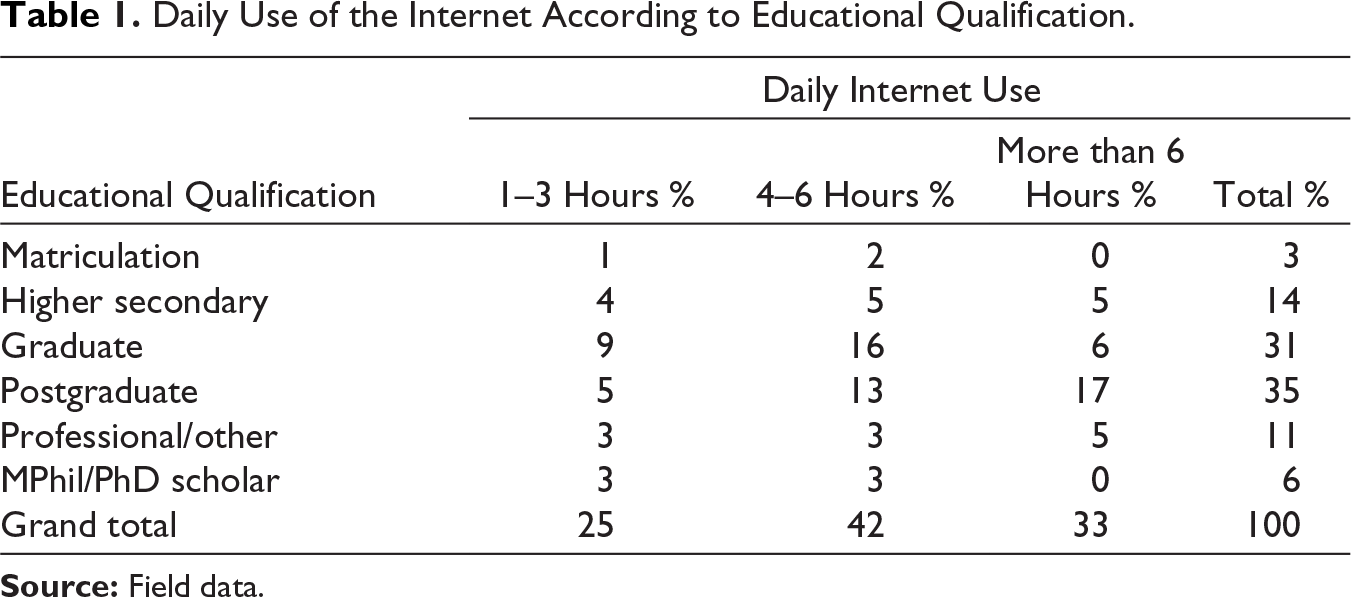
Table 2 shows women’s digital awareness by educational level. 77 per cent of women consider themselves moderately aware, with 27 per cent of graduates and 28 per cent of postgraduates being the highest users of digital platforms. It is alarming that the highest users of the internet (Table 1), lack confidence in their own awareness of cyber platforms. This can be one of the causes of women’s digital vulnerability. Only about 18 per cent consider themselves highly digitally aware.
Educational Qualification and Self-assessed Digital Awareness Levels.
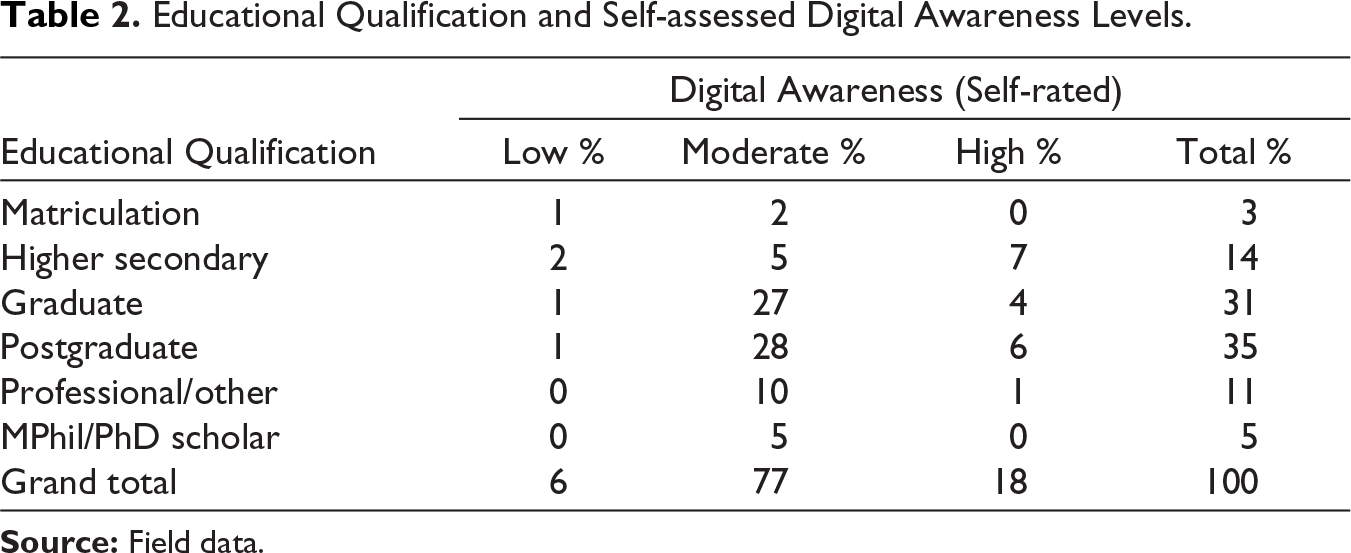
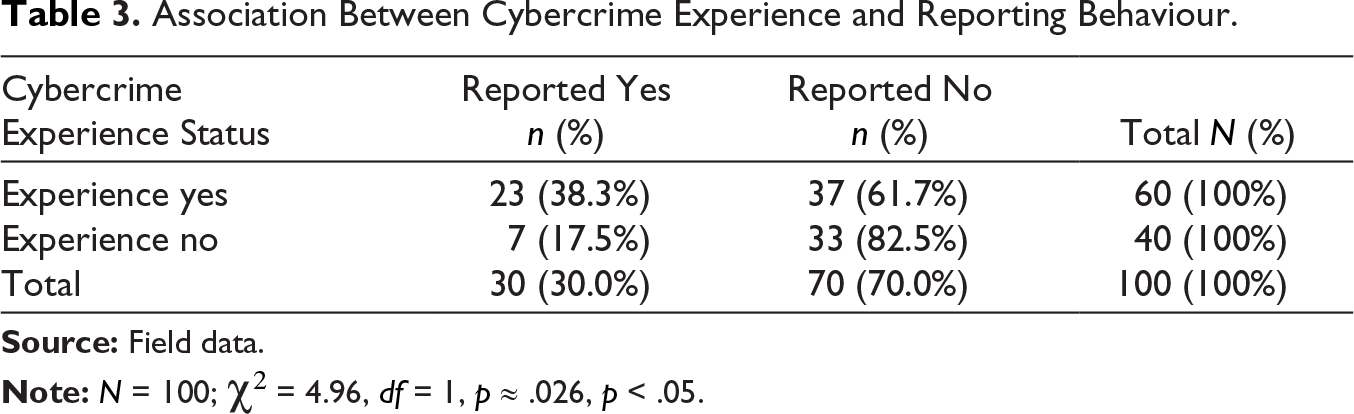
Table 3 shows a χ2 test of independence was conducted to examine the relationship between cybercrime experience and reporting behaviour. The results indicated a statistically significant association between the two variables (χ2 = 4.96, df = 1, p < .05). Women who have experienced cybercrime are significantly more likely to report incidents than those who have not, although a majority of victims still refrain from reporting, reflecting persistent underreporting. This encourages further exploration of the cause.
Association Between Cybercrime Experience and Reporting Behaviour.
Thematic Analysis
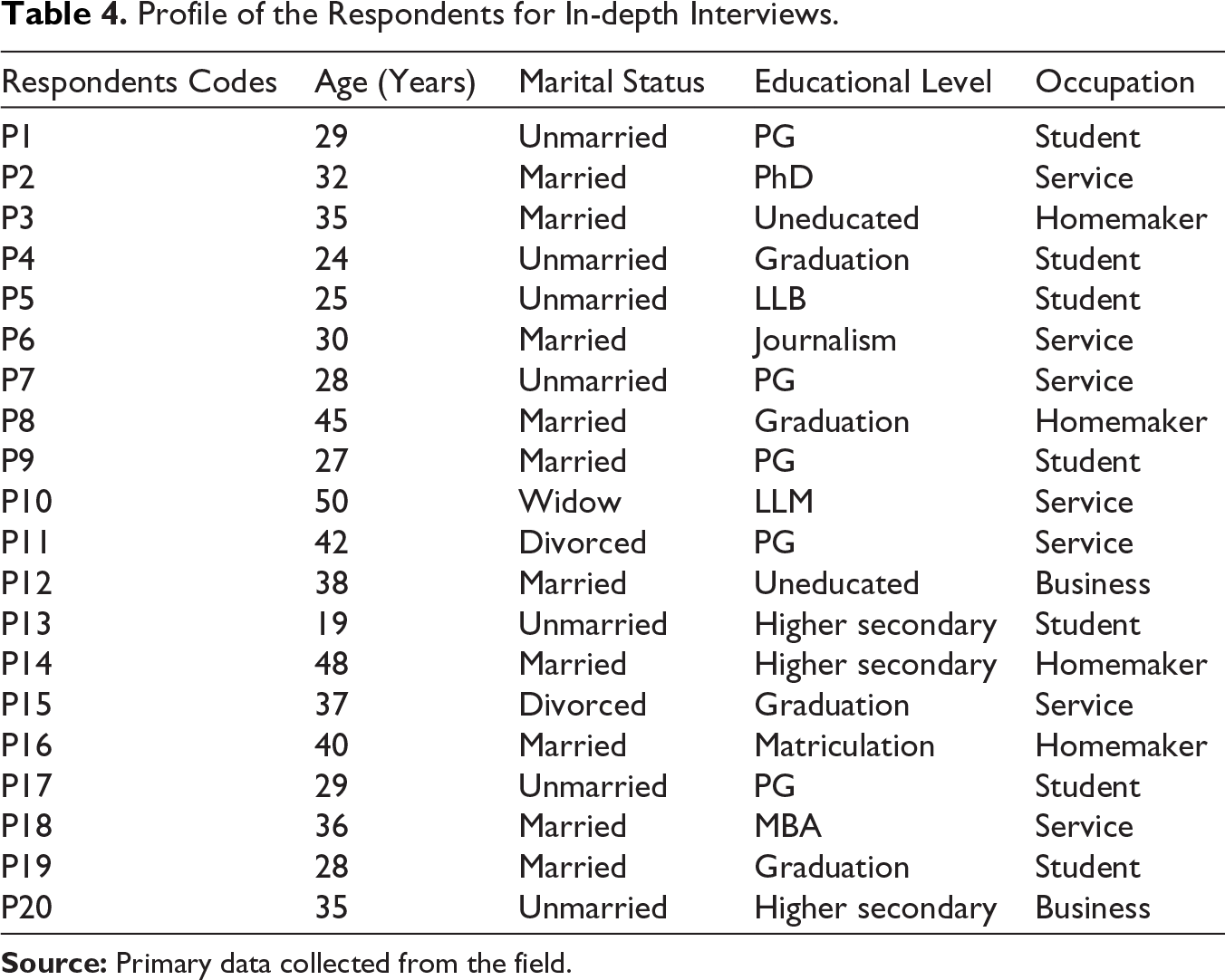
Each theme is supported by participants’ (Table 4) insights and descriptive evidence, highlighting the women’s lived experiences in the digital realm. Similar issues concerning cybercrime have been clubbed under their respective themes.
Profile of the Respondents for In-depth Interviews.
Theme 1: Women’s Experience of Cybercrime: Threats and Challenges
Due to direct and indirect victimisation in cyberspace, women receive fraudulent calls, spam emails, cyber grooming, identity theft and online abuse on the internet (Pandian & Maraimalai, 2024). Phishing is among other cyber threats that has been a painful experience of cybercrime among women. As respondents stated, ‘receiving suspicious calls and downloading malicious software, or after following the caller’s instructions, all credit card funds or money from accounts were withdrawn, leaving them unsure of what to do next’ (pp. 2, 6). This reflects shock from financial loss, feelings of helplessness and self-recrimination for following the scammer’s instructions.
Regarding financial fraud, one respondent stated, ‘Clicking a fake document message from an unknown recruiter exposed her bank details, allowing scammers to access her account and steal ₹70,000’ (p. 19). Another woman stated, ‘I was trapped and targeted by a frightening scam call in which the fraudster falsely claimed that a package sent by me, seized at the airport, could lead to penalties and jail’ (p. 18). Scamming is a source of financial vulnerability and puts psychological pressure. Viewed from a symbolic interactionist perspective, cybercrime is a cue that shapes women’s perceptions of risk. These feelings of fear, confusion and helplessness show how the meaning of vulnerability is socially constructed through interactions, further influencing women’s behaviour and often resulting in withdrawal or self-regulation in digital spaces.
Gendered violence is revealed when women face abuse and are threatened in the digital sphere. One woman recalled, ‘My ex-boyfriend threatened to upload private photos, ruining my confidence and safety online’ (p. 13). Cyber threats, such as the circulation of private images, cause emotional distress, shame, insecurity and self-blame (Carcelén-García et al., 2023) instead of blaming the perpetrator. Victims hesitate to report cybercrime (Table 3) owing to fears of reputation loss, stigma and victim-blaming. Such silence obstructs justice and enables crimes to persist (Brown, 2015). One woman recounted experiencing impersonation: ‘Someone hacked my parlour’s Instagram account and tried to use my parlour’s name to gain followers, even uploaded makeup videos under it’ (p. 20). She lost control of her business account, felt confused and lost the trust of her customers. This shows how vulnerability in online spaces can hinder women’s financial empowerment.
Theme 2: Theft of Identity and Violation of Privacy
Identity theft and privacy breaches have become terrifying experiences in the Twin Cities. One woman regretted, ‘Someone called, pretending to be from the bank, stating freezing of my account due to a pending e-KYC, to keep my account active; providing the OTPs resulted in a ₹15,000 fraud. I feel ashamed and blame myself for trusting them’ (p. 11). She internalised the incident as personal failure, foolishness and guilt. Another respondent reported her colleague’s experience, ‘During routine credit card statement checks, she saw a recurrent unauthorised payment she had never made. Initially ignoring it as an error, she later realised it was fraud’ (p. 15). Cybercrime leads to not only loss of money but also loss of self-confidence and mistrust in digital systems. The case demonstrates how sensitive information, including credit card details, can be used, in most cases, without the knowledge of the victim, endangering their financial security and personal freedom.
One of the respondents emphasised, ‘Trolling, threats and abusive comments invade privacy and create a hostile digital environment’ (p. 4). Women feel vulnerable while being watched and judged online, leading to fear, self-censorship and the limiting of their digital expression and agency. Privacy violations and harassment in cyberspaces like gaming platforms cause women to disengage and limit their participation as a coping response to victimisation (Fox & Tang, 2017). Rhodes (1996) explains this as the ‘problem of many hands’, where banks, digital platforms, telecom providers and law enforcement agencies exist in loosely linked systems.
Theme 3: The Other Side of Digitalisation: Fear, Anxiety and Distrust
Toxic online spaces create mental health issues and anxiety in women, influencing their use of platforms (Carcelén-García et al., 2023). Cybercrime impacts go beyond victimisation. The parlour owner whose account was hacked (p. 20) and another woman, when she was asked about dealing with these harassments, used an Odia proverb, ‘Mulu marile jiba sari, Devanka sange kimpa kali’ (‘The best way to deal with it is to block the person as soon as possible’) (p. 3). The findings of this study resonate with recent research suggesting that cybercrime increases fear and anxiety of future victimisation, especially shortly after the incident (Sarkki et al., 2025). The tendency to block users reflects dramaturgy, where women actively manage their front-stage visibility by blocking the interaction, while having back-stage fear and anxiety.
One respondent said, ‘My family supports me. I feel safe because they never judge me and solve my problems’ (p. 5). Gender socialisation within the family influences women’s emotions by teaching caution, obedience and risk aversion in digital spaces. Respondents said, ‘We must be cautious with digital devices as they can’t fully protect personal information’ (pp. 3, 4, 7, 10, 16). Many prefer to ‘limit digital engagement by restricting online interactions, avoiding sharing personal details’ (pp. 2, 4, 7, 20). While these actions build a sense of trust and safety for women, they can also increase dependence on prevention methods and legal mechanisms, further forming the underlying meaning of control, humiliation, and silence. This is in line with Rhodes’s argument that networks require trust and mutual adjustment, but when distrust prevails, governance is eroded.
Theme 4: The Legal Framework: Inadequacies and Weaknesses
BNS aims to modernise the legal processes and improve criminal justice, but it shows that there is an imbalance between the legal safeguards and the situation of women, especially in cybercrime. One respondent said, ‘protection and justice on cyber spaces are always delayed’ (p. 10), while others said, ‘we fear getting judged, police don’t take our concerns seriously’ (pp. 4, 15, 19). Another noted, ‘Why would I go to the police? I would have to go repeatedly to courts and police. I am a girl; I will face many problems’ (p. 17). In a dramaturgical view, women avoid reporting incidents to protect their front-stage social and family image, while keeping feelings of shame, fear and vulnerability hidden back-stage from public exposure.
Although cyber cells under the IT Act 2000 claim to be robust against cybercrimes, the practical impact on cyber vulnerabilities remains questionable. From a network governance view, these cyber cells fail to coordinate with judicial bodies and digital platforms. Digital governance operates via interconnected yet fragmented networks. Respondents noted that even after reporting abusive accounts, ‘they also don’t remove such harassing accounts after review sometimes’ (pp. 18 and 11), showing a governance gap. This causes a ‘trust deficit’ among women. As P2 stated, ‘complaints take too long to resolve. By then, the damage is done’. The gap between real-time digital risks and responses makes legal protections ineffective and women normalise cybercrime. Drawing on Goffman’s view, repeated neglect shapes women’s perceptions of legal and digital spaces as unsafe and hostile. The belief that ‘reporting does not work’ leads to underreporting and women feeling powerless to challenge abuse.
One respondent mentioned, ‘AI-edited digital images are very harmful; the government should create a system and law to detect and label all AI content’ (p. 6). Katkuri (2025) suggests that artificial intelligence can help with real-time threat detection and mitigation. However, these AI tools are compounding such risks that persist despite the monitoring abilities of digital platforms.
Negligence in cyber cells, lack of accountability and gender-insensitive cultures are causing vulnerabilities. Such failures discourage the trust of women and cause fear of legal and cyber-redressal services. In the digital experiences of women, the level of citizen engagement in governance seems to be low. Women are unaware of the cybercrime helpline 1930 or other portals; ‘Cybercrime helpline? We don’t have much idea’ (pp. 1, 8, 13). Another woman stated, ‘I have never heard about the cybercrime complaint helpline, and honestly, does it work?’ (laughed) (p. 15). This shows a structural failure: even though legal and support systems are present on paper, they are not as far-reaching or visible amongst women. Lack of awareness among women is one cause of underreporting that the authors identified in their quantitative analysis (Table 2; Table 3).
Discussion
Women have been victims of several cybercrimes, the most frequent being phishing, which leads to identity theft and financial loss. Fear and victimisation become a socially constructed meaning of vulnerability, influencing women’s behaviour. Similar to our study, Näsi et al. (2015) state that gender stereotypes, emotional vulnerability and a lack of digital awareness increase young girls’ cybercrime vulnerability. Indirect victimisation and privacy breaches threaten personal liberty, leaving women helpless and self-blaming for trusting scammers. Despite the IT Act, 2000, and the DPDP Act, 2023, cybercrimes continue to rise. Similarly, Hutchings and Chua (2016) emphasise that women in India increasingly perceive themselves as ‘soft targets’ for cybercriminals. The psychological effects of digital abuse infringe on the privacy and limit the digital involvement and autonomy of women. Pant and Chaubey (2024) show that the digital vulnerability of women affects their mental health.
From the present study, it is clear that women lack awareness of reporting portals (Table 2), and Goyal and Boora (2021) find that despite having laws such as the IT Act (2000), many women fail to report cybercrimes (Table 3). Women perceive technological platforms as unsafe, which reveals asymmetrical power relations and experience powerlessness to defend their digital rights and autonomy. Sharma (2010) discussed police roles that extend beyond traditional crime to include training and administrative changes. This is in contrast to Narayani (2024) and Morahan-Martin (2000), who state that these power relationships undermine trust and decrease involvement in smart city digital programmes. From a symbolic interactionist perspective, cybercrime is socially constructed through women’s experiences in the cyber realm. Fragmented governance, ineffective institutional responses and poor trust in the redressal mechanism increase the vulnerability of women. Social inequalities compound this; women’s digital vulnerability is not merely a product of unsafe online behaviour but is reinforced by fragmented social structure and governance.
Conclusion
Young women who are highly active online are at high risk of digital vulnerabilities due to cybercrime, influencing their psychological well-being and limiting their digital participation. Despite taking the necessary precautions, awareness of cyber laws and confidence in the government institutional mechanisms are weak among women. The technical challenges in the experiences with digital platforms point to the socio-cultural constraints, wherein social concerns and fear of stigma tend to deter women from reporting cybercrime. These problems are exacerbated by institutional negligence and laxity, which negatively affect the trust of women in enforcing the law and online spaces. Women’s online vulnerability arises from poor social and cybernetic structures. Increasing women’s confidence regarding cyber laws and preventive measures by civil society and policymakers is essential to ensure that digitalisation becomes a pathway to women’s empowerment. The results are context-specific and indicative, not generalisable, which is why extensive comparative research across different socio-cultural contexts is necessary.
Suggestions
After examining how cybercrime affects women in India, especially through the perspective of gender, it is observed that there is a strong connection between cybercrime, the legal framework and deeply rooted gender inequality.
Acknowledging women’s cyber threats, cyber cells and the government should dedicate agencies and online platforms to act rapidly against complaints to build trust.
To address identity theft and privacy violations, two-factor authentication and biometrics must be encouraged, apart from training the authorities. The DPDP Act should be fully utilised to protect data and ensure transparency and accountability (Katkuri, 2025). A mandatory AI labelling system on social media can mark AI-generated content, helping users identify altered material to prevent cybercrime.
The cyber cell staff should be trained to handle cybercrime cases, incorporate gender sensitisation and create gender social awareness within the government and the judicial system. The portals of the helpline must be publicised extensively to ensure that women are aware of where they can access help, which will reduce the phenomenon of digital withdrawal, boost reporting and promote freedom of expression (Carcelén-García et al., 2023; Katkuri, 2025).
Coordination among interconnected networks is more crucial. Many agencies work on cybercrime, but they fall under different ministries, such as the Ministry of Home Affairs and the Ministry of Electronics and IT. Thus, better coordination between these ministries is needed to respond more effectively (Katkuri, 2025). Intra-organisational and international cooperation are also required to share best practices, intelligence and resources across borders and within organisations, facilitating a more unified and stronger international response to such digital threats (Bharadwaj, 2025; Gupta, 2023).
Footnotes
Declaration of Conflicting Interests
The authors declared no potential conflicts of interest with respect to the research, authorship and/or publication of this article.
Funding
The authors received no financial support for the research, authorship and/or publication of this article.