







Abstract
Mass immigration is transforming the politics of income redistribution in European welfare states. Some scholars argue that immigration erodes public support for redistribution, while others argue it could have the opposite effect. Until now, the literature has attempted to isolate a generic role of immigration without distinguishing between different immigration categories. This article analyzes the relationship between internal European migration and public support for income redistribution in 17 Western European countries using the European Social Survey’s seven rounds (2002–2014). It finds that some forms of internal migration, namely, migration from new Central and Eastern European countries, are positively related to Western European support for income redistribution. The study also sheds light on the crucial role of the welfare state, finding that the compensation effect is stronger in countries with higher social protection. The results support group-specific understandings of the relationship between immigration and income redistribution. In sum, the relationship varies by immigrant group and depends on the generosity of social protection.
Introduction
Some claim that immigration threatens political support for an expansive welfare state (Kymlicka, 2015) and could push European welfare states into a “race to the bottom” (Dahlberg and Edmark, 2008; Kvist, 2004). Others argue instead that Europe’s social model is resilient (Taylor-Gooby, 2005) and call for a more qualified understanding of the relationship between immigration and public demand for social policies (Brady and Finnigan, 2014; Steele, 2016).
Until now, the literature has mostly investigated a generic effect of immigration. 1 In Europe, scholars have focused on ethnic diversity and have mostly examined the phenomenon of non-European migration. Yet doing so overlooks a critical binary development in European migration over the past two decades: securitized and tightened migration from outside the European Union (EU; Hollifield, 2004) but increasingly liberalized movements within the EU. On average, about half of the foreigners living in a Western European country are from another European country. This number is even higher in countries such as Ireland, Belgium, Switzerland, and Luxembourg, as shown in Figure 1.
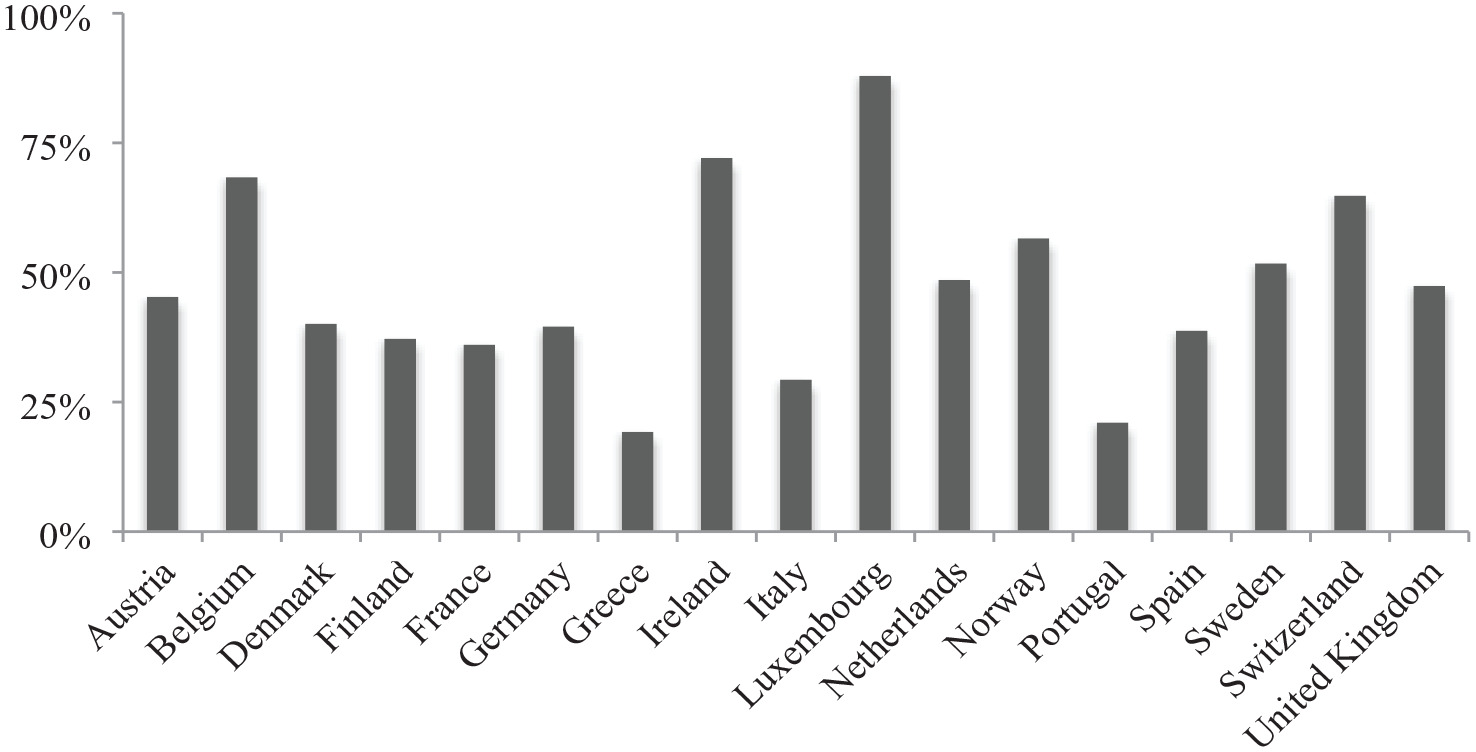
EU-28 nationals as a proportion of total foreigners, 2009.
As European citizens, internal migrants have protected social rights, unlike non-Europeans. Some argue that these privileged social rights could generate a different public reaction compared with other foreign groups. A recent study by Cappelen and Peters (2018) find that in 2008, intra-EU migration was associated with more welfare chauvinism, the desire to restrict migrants’ access to social rights. Their study also highlights the differences between internal migration from “older” Western European states and “newer” Central and Eastern member states. The latter was more politicized after the recent enlargement of the EU.
Europe offers a natural “laboratory” for understanding the relationship between geographic mobility and support for redistribution. European countries differ in both the composition of internal migration and their welfare institutions. Both of these separately influence welfare attitudes, but we still need to learn more about how they reinforce each other. Initial evidence seems to indicate that welfare state configurations moderate the relationship between immigration and support for redistribution. For instance, a recent study by Muñoz and Pardos-Prado (2019) finds that the negative relationship between immigration and welfare state support depends on whether social policies are means-tested or universal.
This article makes several contributions. First, it contributes to an open empirical question about the relationship between Europe’s internal migration and public attitudes toward redistribution. Second, it advances a more qualified theoretical understanding of the possible means by which immigration is related to native preferences for redistribution. It does so by revealing how the relationship differs depending on immigration category and nationality. Third, it demonstrates the mitigating role of welfare states, particularly the provision of social protection. I focus on public support for income redistribution, since it reflects broader welfare state patterns (Svallfors, 1997) and forms the political foundation of the state’s social policy outcomes (Brooks and Manza, 2006, 2007). The conclusions of this study advance the general understanding of how and if migration might be a threat to welfare state legitimacy in Europe.
This article posits that how immigration affects public preferences for redistribution depends on the characteristics of immigrant groups and depends on the generosity of social protection. To support this claim, this article examines the within-country change in 17 Western European countries. It divides internal European migration into two groups: immigration from poorer (and newer) European member countries who joined after July 2004 and immigration from richer (and older) European member countries. 2
Europe’s internal migration
Internal migration within the EU is a mobility paradigm that blurs the national borders necessary for welfare states to operate as closed systems. The freedom of movement includes the right for EU nationals to move to another Member State, take up employment, and establish themselves in the host country with their family members. European citizens have the right to access the welfare state, unlike third-country nationals from non-European countries (Sainsbury, 2006). While European foreigners have more social rights than non-Europeans, they are nonetheless perceived as “outsiders” in their host society due to their different origins (Gorodzeisky and Semyonov, 2009: 402) and have stoked public hostility to immigration (Jeannet, 2020a).
Over the past decade, Europe’s internal migration has intensified due to east–west movements from new member countries. The number of countries and people introduced in the 2004 expansion was unprecedented, adding 70 million Central and Eastern Europeans from eight former communist countries: Estonia, Latvia, Lithuania, Poland, the Czech Republic, Slovakia, Hungary, and Slovenia. In 2007, Bulgaria and Romania joined, adding a further 30 million people to the EU. The two eastern enlargements of the EU in 2004 and 2007 represent a geopolitical shift that “in terms of migration and mobility of populations—poses the biggest demographic change” in Europe since World War II (Favell, 2008: 201). Meanwhile, internal migration from within the core Western European member states has only risen slightly since the 1970s (Favell, 2008; Recchi, 2005). In Figure 2, we see that most Western European countries experienced an increase in the proportion of new EU citizens. This trend tended to grow faster than the proportion of Western European foreigners, albeit to varying degrees.
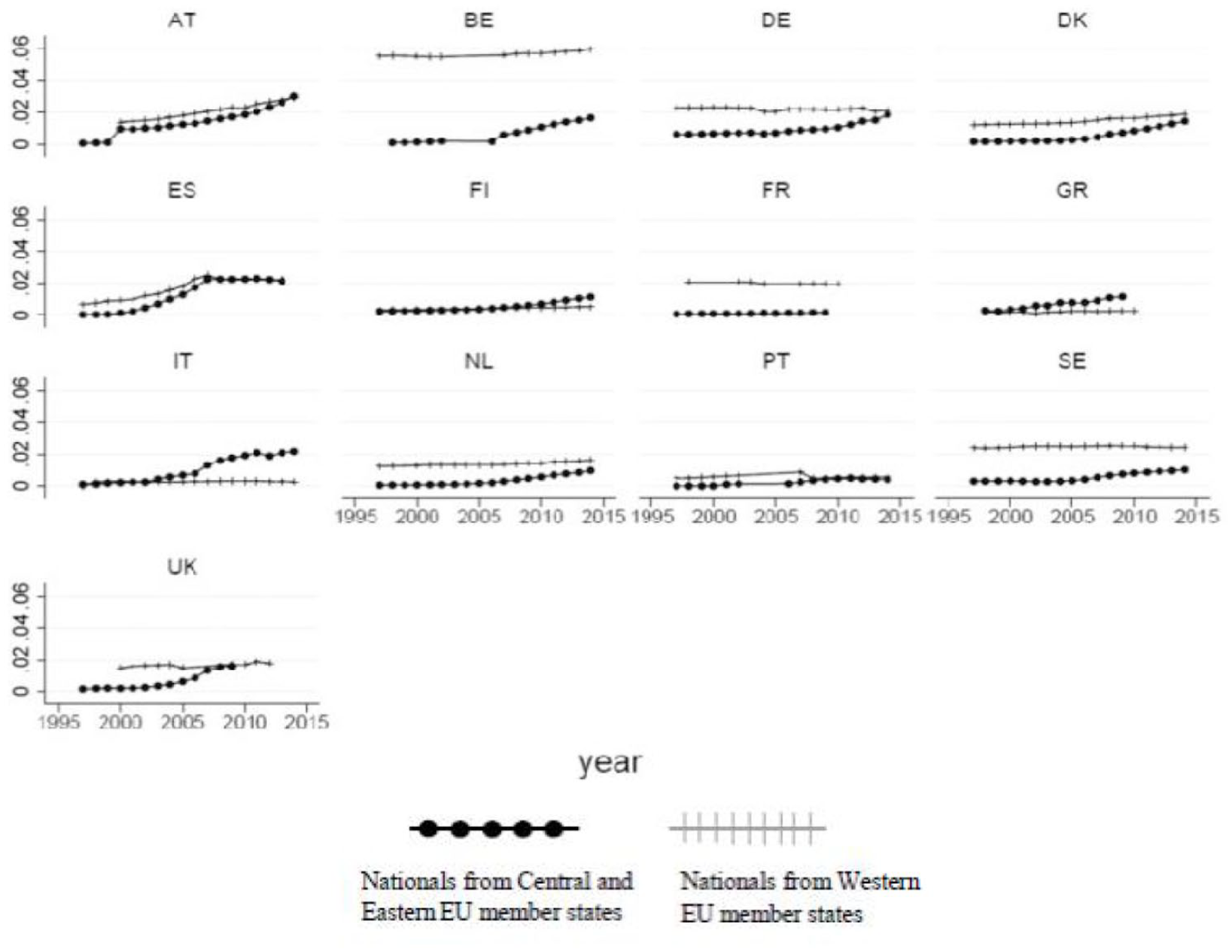
European foreigners as a percentage of total population, 2002–2013.
European citizens who move from between Western European countries, tend to be of fairly high socioeconomic status (Braun and Recchi, 2009). Their motivations are related to travel, tourism, circulation, and commuting (Santacreu et al., 2009: 55). More than half migrate for personal reasons (King, 2002) or retirement (King, 2001; King and Patterson, 1998). Students also comprise an important part of the movement within Western European countries (Murphy-Lejeune, 2003). Employment reasons, on the contrary, constitute only about 15% of movements (Santacreu et al., 2009). These individuals tend to be “Eurostars,” a term coined to describe affluent mobility workers seeking professional advancement (Favell, 2011).
In contrast, migration from Europe’s central and eastern member countries to Western Europe is more consistent with classical push–pull theories. Generally speaking, movements tend to be unidirectional (King, 2002), motivated by the search for higher earnings (Krieger and Maître, 2006). Compared with non-European foreigners, migrants from new EU member states tend to be younger and well-educated (Galgóczi and Watt, 2009; Steinhardt, 2009) and are employed at higher rates (Drinkwater et al., 2009). However, in exchange for higher earnings, many accept down-skilling (Holland et al., 2011) and so are likely to fall into elementary occupations or medium-skilled work in their host country compared with Western European foreigners (Kahanec et al., 2009).
Theoretical background
Immigration and preferences for income redistribution
According to conventional wisdom, there is a negative relationship between immigration and support for income redistribution. Global immigration introduces ethnolinguistic heterogeneity, provoking natives to reject a redistribution of resources that they perceive to disproportionately benefit immigrants. This argument is commonly referred to as the competition hypothesis. The underlying mechanism is that individuals are motivated to support redistribution if they believe it will benefit their social group. Citizens tend to have a favorable bias for their fellow nationals, even if they will not benefit personally from redistribution (Crepaz and Demeron, 2008; Eger, 2010). According to this line of reasoning, individuals living in ethnically heterogeneous societies are less likely to support income redistribution because it is more likely that the beneficiaries are from a different social group.
Mounting immigration in Europe has increased ethnic heterogeneity, causing many scholars to wonder whether this might erode Europeans’ support for their expansive welfare state model (see Taylor-Gooby, 2005). In their landmark study, Alesina et al. (2001) argue that the ethnic and racial heterogeneity of the United States was the reason it never developed an expansive welfare state. This caused scholars to speculate about the consequences of rising global immigration for European welfare states. A series of empirical studies found support for the competition hypothesis in Europe (Eger and Breznau, 2017; Finseraas, 2008; Mau and Burkhardt, 2009) albeit in some cases only weak support (Senik et al., 2009). For instance, a recent study of Swedish municipalities finds that immigration from non-OECD countries has caused Swedes to be less supportive of income redistribution (Dahlberg and Edmark, 2008). Another study finds that Germans become more reluctant to support redistribution if they live in regions with higher immigration (Schmidt-Catran and Spies, 2016).
Another strand of research argues the contrary of the competition hypothesis: that immigration increases support for redistribution. This line of reasoning presents a rival hypothesis to the competition hypothesis, referred to as the compensation hypothesis. According to this argument, European citizens may opt for “defensive engagement” against the erosion of their social rights during political, economic, or social turmoil such as rising immigration (Ellison, 2000). Immigration makes the public more perceptive of labor market competition and unemployment risks (Kunovich, 2004), causing them to demand for more welfare state support. Welfare support is a way to cope with the employment uncertainty and income risks associated with labor market competition (Brady and Finnigan, 2014; Reeskens and van Oorschot, 2012).
Empirical attempts to resolve the debate between the competition and compensation hypotheses have been inconclusive. For example, recent experimental evidence from Norway, Germany, and the Netherlands found no overall effect of increased immigration on redistribution preferences (Naumann and Stoetzer, 2018). Moreover, in an observational study of 91 countries, Steele (2016) does not find evidence of a negative effect. Given the lack of clear evidence, scholars are calling for an end to the search for a generic hypothesis and moving toward an understanding that “it depends” (e.g. Brady and Finnigan, 2014; Burgoon et al., 2012).
So, what exactly does it depend on? This is still largely unknown and scholars are investigating the contextual factors that induce a public response. Some suggest that the effect depends on the economic integration of the immigrant group, on the resources of the receiving society, and on the insecurity faced by natives (Burgoon, 2014). These aspects can alter the real or perceived competition between immigrants and natives and thus the extent to which natives demand for compensation to offset this competition. This research implies that certain immigrant groups or forms of immigration increase support for redistribution while others may not. For instance, a recent study by Alesina et al. (2021) finds that distinct foreign groups alter Europeans’ support for income redistribution to a different extent. Yet, very little is known about which immigrant features or conditions trigger natives to demand for welfare compensation.
Aiming to fill this gap in extant research, I contend that it depends on the nature of immigrant groups. Regarding this, I propose two important characteristics: (1) the immigrant category of entry, namely, the extent to which this group can access the labor market and social rights, and (2) the difference in economic conditions between the host country and the country of origin. As mentioned previously, I aim to use intra-European migration as a case to test these claims empirically. I will now proceed by outlining the expectations regarding the relationship between intra-European migration and native preferences for income redistribution.
Almost all research focuses on the consequences of migration from outside of Europe and very little is known about the role of internal EU migration. One notable exception is a study by Cappelen and Midtbø (2016), which investigates the consequences of intra-European migration on welfare preferences in Norway. The study conducts an experiment and finds that when participants are primed to think about migrant workers from the European Economic Area, they are more likely to express restrictive preferences. While Cappelen and Midtbø (2016) demonstrate that intra-European labor mobility is consequential to the politics of the welfare state, it only considers the case of Norway. In a subsequent study, Cappelen and Peters (2018) find that intra-European migration is differently related to public preferences for income redistribution than non-European migration, but do not consider the particular circumstances of post-enlargement migration.
This study considers the duality of intra-EU migration since the eastern enlargements of the EU. Over the past two decades, intra-EU migration has been bifurcated into two groups: lower socio-economic migrants from new member countries and higher socio-economic migrants from core Western European member countries. Research on diverse societies has demonstrated that immigrants reside in subordinate ethnic groups which are organized along “ethnic hierarchies” (Hagendoorn, 1995). The position of a certain group in this hierarchy is most often determined by their degree of ethnic similarity to the native population, their social status, and their educational or labor market qualifications (Green et al., 2010), In Western Europe, Eastern Europeans were considered to be of a similar status to non-Europeans such as North Africans or Turks around the time of the enlargement (Verkuyten and Kinket, 2000).
To derive testable hypotheses, I first make predictions based on the competition hypothesis. I split Western European foreigners and Central Eastern Europeans into two groups and test these as two separate hypotheses.
Hypothesis 1a: As the share of foreigners from West European member countries increases, public support for income redistribution in Western European member countries decreases.
Hypothesis 1b: As the share of foreigners from Central and Eastern European member countries increases, public support for income redistribution in Western European member countries decreases.
However, it might be possible that the opposite is true. Instead, we might find that immigrant groups with unrestricted access to labor and social rights in the host country could increase native support for income redistribution (the compensation hypothesis). The unrestricted access of European citizens to the labor markets of other European member countries through free movement could increase natives’ actual or perceived labor market risk. When faced with a volatile influx of this immigrant group, Western Europeans may turn to the welfare state as a way to compensate for labor market uncertainty and perceived risks.
Based on the predictions of compensation theory, I put forward the following two hypotheses which rival Hypothesis 1a and 1b:
Hypothesis 2a: As the share of foreigners from West European member countries increases, public support for income redistribution in Western European member countries increases.
Hypothesis 2b: As the share of foreigners from Central and Eastern European member countries increases, public support for income redistribution in Western European member countries increases.
Both Hypotheses 1 and 2 are separated into two hypotheses: one for Western European foreigners and one for Central and Eastern foreigners. As the analysis is exploratory, we have no reason to expect that compensation or competition hypotheses are more applicable to one group rather than the other. I keep these separate due to the socioeconomic disparities between Western Europeans and Central and Eastern European groups and their different length of time as European citizens.
The moderating role of welfare states
The relationship between immigration and public support for redistribution likely depends on features of the welfare state and its institutions. Welfare state institutions generate feedback mechanisms about the role of the state by shaping citizen norms and attitudes. This causes citizens to absorb normative ideologies about fairness and justice that are embedded in the welfare state (Larsen, 2006; Mettler and Soss, 2004), marking the “deserving” from the “undeserving” (Van Oorschot, 2000). Through feedback effects, generous welfare states 3 have self-preserving features in an era of immigration. First, generous welfare states insulate citizens from market forces such as illness or old age (Esping-Andersen, 1990). Labor market competition (real or perceived) with foreigners has now become an important market-driven force of employment insecurity from which citizens can demand further protection.
We can expect that generous welfare states can insulate citizens from these market-driven forces. More generous welfare states may also have feedback effects that protect them from the political effects of immigration. First, welfare generosity influences citizen expectations about the state’s role as a source of protection (Larsen, 2006). In generous welfare states, accepting welfare state support lacks the stigma of accepting state support compared with more residual welfare states (Esping-Andersen, 1990). In these contexts, welfare state generosity could induce the demand for compensation when facing real or perceived labor market competition with immigrants. Yet, welfare generosity varies considerably across European countries and not all welfare states protect their citizens from economic risks to the same extent.
Moreover, comprehensive welfare institutions breed tolerance toward immigrants through underlying beliefs and egalitarian ideologies (Boräng, 2015; Crepaz and Damron, 2008; Kirchner et al., 2011; Nagayoshi and Hjerm, 2015; Rapp, 2017). For example, Kulin et al. (2016) find that in Sweden, a country with a high degree of welfare generosity, there is no systematic erosion relationship between immigration and pro-redistribution attitudes.
The conditional role of welfare state generosity is particularly relevant to the case of intra-EU migration, given its unregulated nature and the skill profile of intra-EU migrants. Owing to these features, economic uncertainty and the need for labor market protection would be especially important. In sum, I postulate that social protection has a fundamental role in mitigating the labor market risks associated with immigration, either real or perceived. If the findings confirm the predictions of the compensation hypothesis, I would also expect the public’s tendency to compensate for intra-EU migration to depend on the country’s social protection.
Data and methods
Data and measures
Data
I analyze the micro-attitudinal data from the seven biannual rounds (2002–2014) of the European Social Survey (ESS) pooled with national data from Eurostat and the OECD for 17 Western European countries. 4 The ESS is an international cross-sectional survey that is repeated every 2 years since 2002. The sample is selected by strict random probability methods and respondents are interviewed face-to-face.
Measuring support for income redistribution
The dependent variable is measured as a person’s response to the following question: “The government should take measures to reduce differences in income levels.” Respondents choose between disagree strongly, disagree, neither agree nor disagree, agree, or agree strongly. I assigned responses with values of 5 through 1, whereby higher scores are indicative of greater support. This survey item is a standard way of measuring preferences for income redistribution in Europe (Burgoon, 2014; Finseraas, 2008; Jaeger, 2006; Schmidt-Catran, 2016; Stegmueller et al., 2012).
Measuring internal migration
I rely on two measures of internal migration using the stock of foreign nationals: (1) the stock of nationals from EU15 member countries plus Norway and Switzerland (EU15 + 2) and (2) the stock of nationals from the 10 Central and Eastern European member countries who joined in 2004 and 2008 (E10). Both measures are taken from Eurostat and are measured as a proportion of the total population in that country-year. Immigration stock measures are a more convenient and reliable measure across countries rather than inflows. This is because the term “immigrant” is not uniformly defined. Records of migration represent the legal or immigration policy framework of the country and do not adhere to international standardizations. European countries seldom have adequate instruments to track the inflows and outflows of the foreign population, particularly individuals moving freely within the EU. Instead, national estimates are gathered differently in each country, usually obtained from population registers, residence permit data, or special surveys.
There are two ways to measure the stock of the foreign population: the size of the foreign national population or the size of the foreign-born population. For convenience purposes, I use the stock of foreign nationals pooling data from Eurostat, OECD, and the European Labour Force Survey as this allows the data to be more complete and minimizes gaps in the data. 5 The foreign national population includes individuals who were born abroad and retained the nationality of their country of origin. The measure also includes second- and third-generation immigrants who are born in the host country and possibly exclude foreign-born individuals who have acquired citizenship in the host country. Despite these limitations, the stock of foreign nationals is nevertheless a commonly used measure for immigration in the broader literature on immigration and public attitudes (for instance, Jeannet, 2020a, 2020b; Semyonov et al., 2006, 2008).
I have attempted to mitigate the drawbacks of this measure through data verification. First, I examine the reliability of these measures by comparing three different sources of data: Eurostat, OECD, and the European Labour Force Survey (EULFS). Each of these data sources provides estimates that are gathered differently in each country, obtained from population registers, residence permit data, censuses, or special surveys. 6 The size of the foreign national population can change for reasons other than migration flows, such as natural increases in the foreign population and legislation on naturalization. 7 Finally, as with all official migration data, it underestimates foreigners who are less likely to be registered for census purposes such as those who are undocumented or migrate seasonally.
Measuring social protection spending
Central to this analysis is the notion that social protection spending moderates the relationship between immigration and public support for income redistribution. For this, I use social protection spending per inhabitant (thousands of Euros) to ease cross-country comparability. This measure includes “all interventions from public or private bodies intended to relieve households and individuals of the burden of a defined set of risks or needs, provided that there is neither a simultaneous reciprocal nor an individual arrangement involved.” The list of the risks or needs is sickness or health care, disability, old age, survivors, family or children, unemployment, housing, and other social exclusion.
Using a measure of social protection spending as a measure of welfare generosity is not without its limitations. 8 The drawback is that changes in social protection spending could be attributed to the size and compositional changes in the dependent population rather than the generosity of the welfare state itself. Social protection also does not take into account the tax treatment of transfers. Nevertheless, social spending remains an important indicator of welfare state generosity and is commonly used in comparative welfare state analysis (see Amenta et al., 2001).
Control variables
The model includes a series of individual control variables to account for socio-demographic characteristics that also affect support for redistribution. I control for a person’s age, age squared, and time spent in education which are coded in years. I introduce dummy variables for females, being married, having a child at home, being unemployed, and being an immigrant (first or second generation). Orientation on the left–right political scale is included as well. I also control for household income decile. Missing values for household income in the ESS are concerning (23% missing) since it is unlikely that these are missing at random. As a strategy for missing data, I use multiple imputation and combine estimates from five imputations after applying listwise deletion for the dependent and other control variables. 9
I introduce a series of control variables to account for contextual mitigating factors that influence public support for income redistribution across countries over time. First, I control for non-EU foreigners as a proportion of the total population. I also include a control for the country’s level of inequality (Barth et al., 2015; Finseraas, 2008) and its employment rate. 10 Gross domestic product (GDP) per capita is not included since it is highly correlated with social protection spending (0.8) and thus would violate the assumptions of the model. 11
Empirical strategy
Concerning the statistical methods, I estimate ordered logistic regression models with two-way fixed effects for 17 countries and 7 years using multiple imputation. Because of the ordered categorical response variable, where the categories have a rank order but the intervals between them cannot be presumed to be equal, I use ordered logistic regression models. 12 The independent variables are lagged by 1 year.
A fixed effects approach has the advantage of addressing a sizable portion of the unobserved heterogeneity between countries, identifying the relationship of interest by using only changes within countries over time and avoiding the common pitfalls of between-country studies (te Grotenhuis et al., 2015). 13 Country dummies control for any constant characteristics such as the country’s historical experience of immigration laws, immigration “regimes,” as well as other time-invariant unobservable differences. The model also includes time dummies to control for a generic time trend in attitudes and individual-level controls throughout. To address the non-independence at the country level and the country-by-country sampling design, I use robust clustered standard errors.
Results
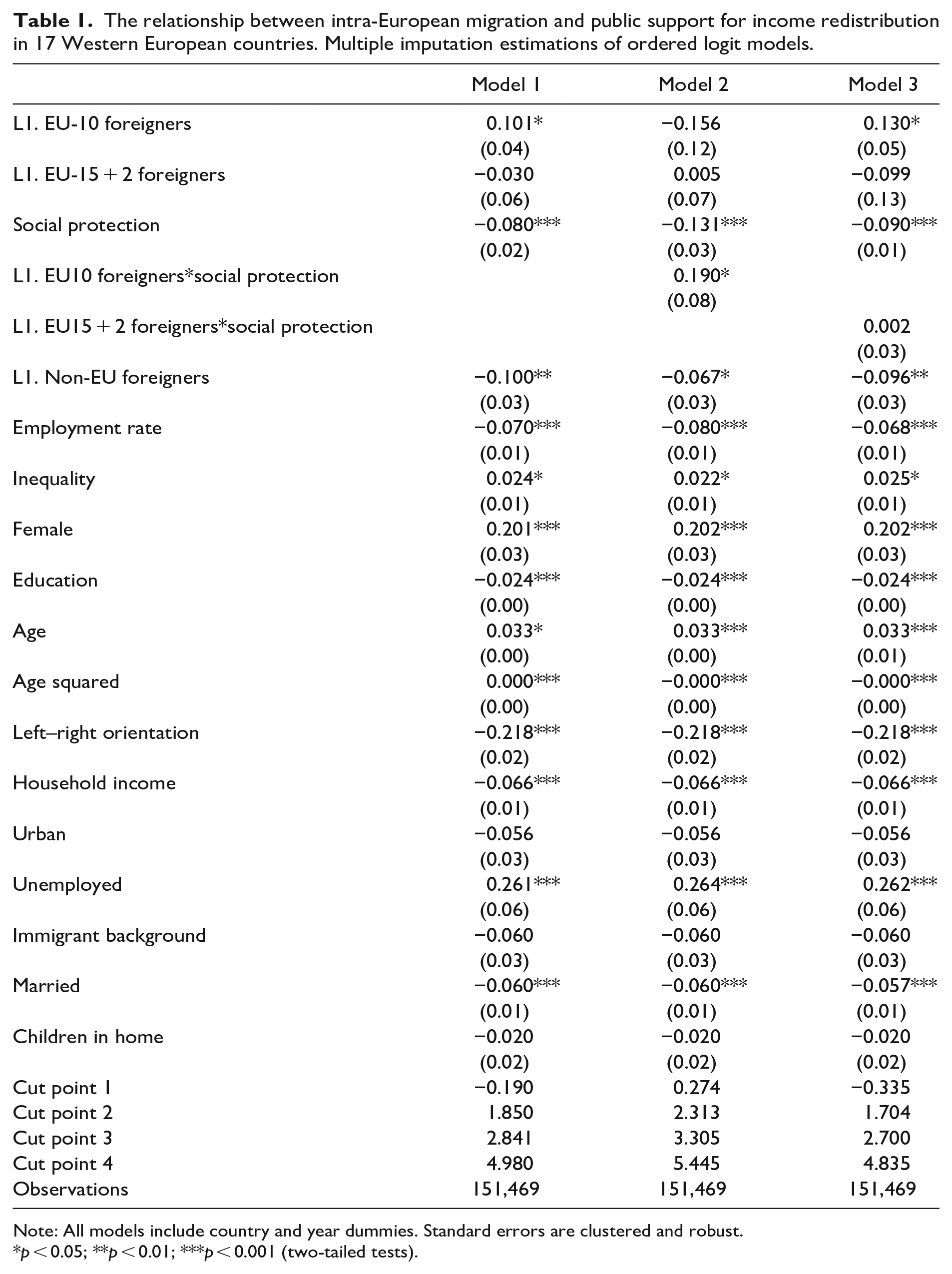
Table 1 presents the two-way fixed effects models. It differentiates between two different forms of internal migration: migration from core Western European member states, Switzerland, and Norway (EU15 + 2 foreigners) and migration from new Central and Eastern member states (E10 foreigners) as the independent variables. The models include individual controls, country employment rate, non-EU foreigners, and inequality (GINI coefficient). Table 1 presents coefficients as ordered log-odds. Model fit statistics of ordered logistic models, such as log pseudo-likelihood or pseudo R-squared, are not included since they are not compatible with multiple imputation. 14
The relationship between intra-European migration and public support for income redistribution in 17 Western European countries. Multiple imputation estimations of ordered logit models.
Note: All models include country and year dummies. Standard errors are clustered and robust.
p < 0.05; **p < 0.01; ***p < 0.001 (two-tailed tests).
The findings support some expectations of the compensation hypothesis (Hypothesis 2b) and refute the expectations of the competition hypothesis (Hypothesis 1a and 1b). Neither of the coefficients for EU15 + 2 foreigners achieves statistical significance. As shown in Model 1, the coefficient for E10 foreigners is positive and significant. The coefficient for E10 foreigners means that if the proportion of new Europeans living in a country increases by 1 point (i.e. goes from 9 per 100 persons to 10 per 100 persons), the log-odds of increasing the category of support for income redistribution increase by 0.101. In other words, living in a country with increasing internal migration from new member countries predicts that a person is significantly more likely to support income redistribution, all else being equal. From a substantive point of view, the magnitude of the coefficient is small to moderate considering that support for income redistribution has a standard deviation of about 1. Yet, the coefficient is meaningful since immigration is sustained over many years and so its cumulative effect amounts to a greater overall impact.
While extra-European immigration is not the focus of this article per se, it is a useful basis for comparison with Europe’s internal migration. In Table 1, the coefficient for non-EU 27 foreigners is negative and significant. In other words, internal migration from new European countries is consistent with the compensation hypothesis and migration from outside the EU is consistent with the competition hypothesis. By comparing the sizes of the coefficients, the model shows that the positive coefficient of E10 foreigners (0.101) is approximately the same size as the negative coefficient of non-EU27 foreigners (–0.100).
The results show that this relationship is conditional on the level of social protection in the host country, but only for some groups. I find that greater social protection spending amplifies the compensation effect of internal migration from Central and Eastern European countries. Model 2 shows the results when introducing a term that interacts with the stock of E10 foreigners with social protection spending. As expected, the coefficient of the interaction term is positive and significant. This means that the compensation effect of internal migration from new member countries is stronger in countries with higher social protection spending. When introducing the interaction term, I observe that this erodes the significance of the main effect for E10 foreigners in Model 2. This indicates that the compensation effect, namely, occurs in countries with higher social protection spending. In contrast, there is no similar moderating effect of social protection spending on internal migration from Western European countries as shown in Model 3.
Figure 3 visualizes the interaction effect of social protection spending. The figure displays the average marginal effects of E10 foreigners on the ordinal categories of support for income redistribution across different values of social protection spending. Across all categories of responses, below 14,000 Euros per inhabitant, the level of social protection does not affect the relationship, as the 95% confidence interval crosses the zero line. Yet, when social protection is higher than 14,000 per capita, we see that it has a significantly positive effect on the relationship. For instance, we can observe that in the plot under “disagree” a point increase in the proportion of foreigners from Central and Eastern European countries predicts that citizens in countries with over 14,000 Euros of social protection per capita have a lower probability of disagreeing with redistribution compared to countries with lower social protection.
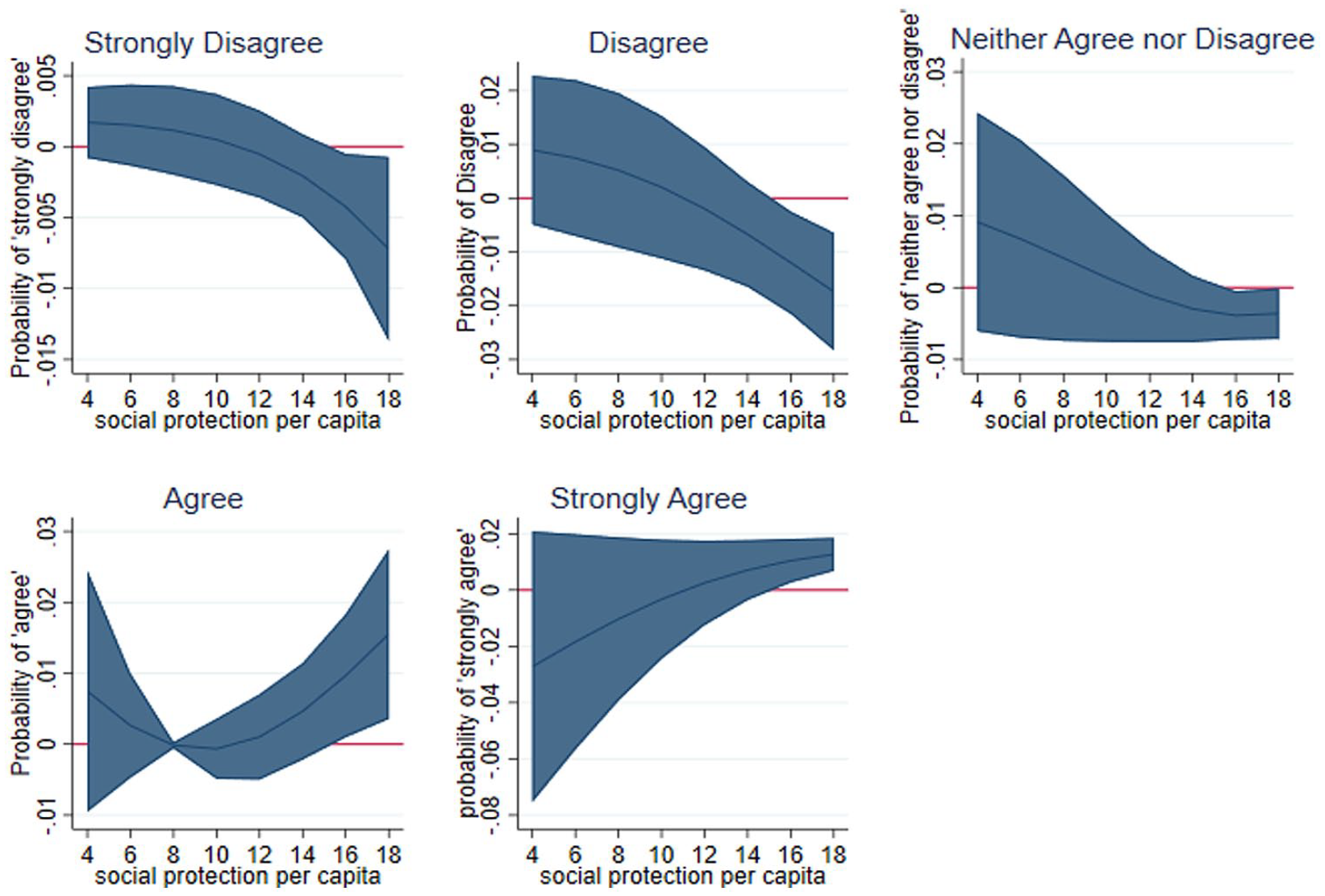
Average marginal effects of E10 foreigners on support for income redistribution with 95% confidence interval.
Likewise, under the plot for “strongly agree,” we can see that for countries with over 14,000 Euros of social protection per capita, with a point increase in the proportion of Central and Eastern European foreigners, natives have a higher probability of strongly agreeing with redistribution than in countries with lower social protection.
The data are repeat cross-sectional and thus the relationships demonstrated in this study fall short of the requirements for causal inference. Yet, the research design does attempt to minimize possible sources of endogeneity. Recall that any time-invariant differences in redistributive policies are absorbed by country dummies. Yet, it might be possible that a selection effect occurred in countries that were becoming increasingly redistributive. By using lagged variables of immigration, the results are evidence of Granger causality whereby if variable (X) causes variable (Y), then a previous value of X should predict a subsequent value of Y (Granger, 1969). While Granger-causality tests are not proof of causality it does suggest “a temporal ordering that is consistent with a causal narrative” (Hall, 2017: 8).
A limitation of this study is that there is no empirical way to rule out reverse causality. Put simply, it might be that new European citizens migrated to countries where income redistribution is more generous and where public opinion is more supportive of income redistribution. While this cannot be determined empirically, it seems theoretically unlikely that the causal relationship operates in the reverse direction. There is no evidence that generous welfare states act as “magnets” for internal migration (Skupnik, 2014). As a stylized fact, the number of citizens from 2004 accession countries that moved to Ireland from 2004 to 2008 was seven times greater than the number that moved to Sweden. Even if new European citizens did move to Western European countries with more generous welfare states, this does not mean that these countries also have publics that are more supportive of redistribution. Some research shows that there is a paradoxically negative relationship between the provisions of generous welfare policies and the public demand for them (Brady and Bostic, 2015).
Another limitation of this study is its assumption that post-enlargement migration is perceptible by citizens. It is well known that Europeans do not have accurate knowledge of the size of the immigrant population. Europeans have inflated views of the size of the immigrant population which is consequential to attitudes (Gorodzeisky and Semynov, 2009; Herda, 2010, 2015). But as Herda (2015) points out innumeracy is multifaceted and not simply overestimation. Recent work by Gorodzeisky and Semyonov (2009) demonstrates that the perceived size of the immigrant population is not entirely detached from its actual size. They find that a higher actual foreign predicts reporting a higher perceived foreign population. Therefore, it does seem plausible to assume that the perceived size of an immigrant group would rise if the actual group size rises as the two are positively correlated.
Discussion and conclusion
This study answers Brady and Finnigan’s (2014) call for a more qualified and conditional investigation of the relationship between immigration and support for redistribution. The findings provide new insights by demonstrating that the relationship is group-specific. Insofar as internal migration within the EU is concerned, we find that compensation is triggered by certain immigrant groups. This study supports the notion that some forms of internal migration, namely, migration from new Central and Eastern European countries, are positively associated with Western European support for income redistribution. The effect is rather small but meaningful because it speaks to the theoretical understanding of how immigration relates to native demand for the state to redistribute income.
While the results point to the compensation hypothesis, these should not be considered resoundingly supportive in a generic sense. I show that internal migration from new member countries is positively related to public support for income redistribution, but I also find that internal migration from Western European countries does not have an association and non-European migration has the opposite relationship. This might be due to economic or cultural reasons, or both. As aforementioned, new Europeans who moved to Western Europe tend to be more skilled and better educated than non-European foreigners. As such this group may present a greater risk of labor market competition, making natives more likely to seek compensation through government redistribution. However, the difference may also be culturally motivated. More salient boundaries between non-European foreigners and Western European natives (Bail, 2008; Wallman, 1988) could put group identification into sharper relief, increasing competition over resources and eroding support for policies that are perceived to disproportionately benefit this out-group. Either way, these results support group-specific understandings of the relationship between immigration and income redistribution.
The findings of this study take issue with the claim by Cappelen and Peters (2018) that intra-EU migration may threaten the political basis for welfare legitimacy by undermining support for welfare policies. The findings of this study found no evidence of a negative relationship when distinguishing between EU migration from new and old member states. The scholarship still has much to learn about how immigration composition such as legal status, country of origin, or occupation, differently influences public support for redistribution. Future research might explore how subjective public perceptions of immigrant groups, not only their objective characteristics, cause different reactions using experimental techniques.
Important generalizable findings emerge from how studying Europe’s free mobility paradigm has affected the politics of the welfare state. These results imply that European welfare states may have inherently self-preserving features. One such feature is the popular commitment to the role of the state in redistributing income to face employment risks, such as economic immigration. Another feature is the generosity of the welfare state. I find that the positive relationship between intra-EU migration from new member states and public support for redistribution is stronger in countries with more generous welfare states.
However, this does not mean that unrestricted migration and portable social rights bring about tolerance toward immigrants or that immigrants will benefit from redistributive policies. Social rights for immigrants, including EU migrants, continue to be a politically sensitive issue. The literature has documented a rise of welfare chauvinism, whereby natives wish to restrict benefits to foreigners or ethnic minorities (Freeman, 2009; Hjorth, 2016; Mau, 2012; Van der Waal et al., 2010). Political sentiment may direct resources and benefits to natives and introduce rules to benefit eligibility that deliberately excludes foreigners, including European citizens (Cappelen and Midtbø, 2016). A promising area for further research would be to better understand how political parties exploit revisions of redistributive policies to satisfy their electorate.
Supplemental Material
sj-docx-1-cos-10.1177_00207152231188406 – Supplemental material for Europe’s internal migration and public support for income redistribution: The role of social protection
Supplemental material, sj-docx-1-cos-10.1177_00207152231188406 for Europe’s internal migration and public support for income redistribution: The role of social protection by Anne-Marie Jeannet in International Journal of Comparative Sociology
Footnotes
Acknowledgements
My sincere thanks go to Peter Kemp for his advice and support throughout this research. I am also grateful to Erzbet Bukodi, Isabel Shutes, Bridget Anderson, members of the Politics of Social Policy Research Group at the University of Oxford, and participants of the ESPAnet Doctoral Workshop in Manheim (2013) for their useful comments. I would also like to thank Dawn Holland and her team at the NBER for granting me permission to use their data.
Funding
The author(s) received no financial support for the research, authorship, and/or publication of this article.

Supplemental material
Supplemental material for this article is available online.
Notes
References
Supplementary Material
Please find the following supplemental material available below.
For Open Access articles published under a Creative Commons License, all supplemental material carries the same license as the article it is associated with.
For non-Open Access articles published, all supplemental material carries a non-exclusive license, and permission requests for re-use of supplemental material or any part of supplemental material shall be sent directly to the copyright owner as specified in the copyright notice associated with the article.
