







Abstract
The rapid advancement of information and communication technology enhances the global outsourcing semiconductor assembly and testing industry to transform into intelligent factories, in which outstanding technicians can take adaptive behaviours in the manufacturing process. However, the vocational education nowadays encounters several challenges including “learning-application gap” and “impact of low fertility rate,” and thus fails to provide sufficient manpower for intelligent manufacturing. To tackle the issue of manpower shortage, this research presented and adopted segmentation and targeting methods, especially in combination with the subsequent peer experiences model with the learning process of “intelligent simulation training system.” Parametric studies have been conducted on the “Industrial-Academic Cooperation Plan” featuring work-integrated learning to solve the predicaments mentioned above. The research demonstrated that the model of taking the learning process of intelligent simulation training system as variable for subsequent peer experiences could be used to conquer the problem of “learning-application gap.” Moreover, the research results showed the electronics department using this model in case study enjoyed an enrolment rate 24% higher than that of other electronics departments of private university in the same period. Obviously, this “Industrial-Academic Cooperation Plan” which adopts the marketing management methods “segmentation” and “targeting” is different from “offering education for everyone”; instead, it is the research results that implement “the enrolment mode with adaptive guidance” that provides the outsourcing semiconductor assembly and testing industry with quality and steady workforce required to introduce intelligent manufacturing into factories.
Keywords
Introduction
Manufacturing in outsourcing semiconductor assembly and testing (OSAT) has implemented intelligent manufacturing involving information technology application, wireless sensor network, and computerized control, including adaptive manufacturing systems (AMSs), in which technicians must take corresponding adaptive behaviours according to the events occurring in the operation process. 1 Vocational high school students should have chosen their future path based on their own interests. However, under the influence of diplomaism, they decide not to enter workplaces and pursue advanced education. Yet the current vocational education faces the challenges such as “learning-application gap” and “impact of low fertility rate” so that it cannot offer steady manpower for the OSAT industry and thus inspires the inception of this research.
The research case investigated “Industrial-Academic Cooperation Plan” to identify the “impact factors” that influence potential students' intention to choose special class and further included the segmentation variable into the learning process of intelligent simulation training system and planned a leaning model of peer experiences for potential students with different targeting attributes. Consequently, in addition to the fact that sufficient candidates were successfully invited to participate in “Industrial-Academic Cooperation Plan,” the enrolment rate of this model was compared with those of other electronics engineering departments in the same period and same area. Moreover, the after-training performances of the talents recruited from this channel and from other channels were evaluated by the managers of the case study company to verify the effectiveness of this model.
Literature review
Professional OSAT industry requires technicians with machine operations and skills, and the issue of labor shortage has impacted the OSAT industry and lead to the instability of workforce supply for intelligent manufacturing implementation. In signal theory, workforce market relies on information exchange, i.e. the “signals” delivered from employees to employers. 2 Besides, the career decisions of young people are influenced by objective factors (including social-economic background and labor market situations) and personal opinions. These factors and opinions can be helpful for young people’s career decisions if they can be transformed into career insights. 3 Thus, the research examined relevant literature on the application of “segmentation” and “targeting” methods to supply the talents required in the OSAT industry.
The OSAT industry
The competitive advantage of Taiwan’s OSAT industry relies on the efficient integration of resources in manufacturing process. In order to guarantee this effectiveness, it is required to enhance production capacity via a cross process of inter-competencies learning. 4 Nevertheless, the predicaments such as “learning-application gap” and “impact of low fertility rate” may hinder the development of OSAT industry due to unstable workforce supply, as illustrated below:
Learning-application gap
Taiwanese youth aging 15–29 have encountered problems such as “confusion about career” and “inadequate skills” when they first search jobs. 5 To deal with this predicament, the Ministry of Education 6 has initiated the “Industrial-Academic Cooperation Plan” since 2006 and provided “Workplace Practical Experiences Plan” (abbreviated as “Workplace Experiences”) for students since 2015.
Impact of low fertility rate
The typical source of manpower supply in OSAT industry is from colleges, but it is expected to dramatically reduce to 30.5% from 2016 to 2032 academic year because of the impact of low fertility rate. 7 As reflected by the end of February, 2017, the job vacancies in Taiwan's industries are 232,938 and the job vacancy rate is 3.01%. 5 Therefore, MOE (R.O.C.) proposed a plan encouraging and providing vocational high school students with work-integrated learning, an alternative channel to obtain a bachelor degree.5,6
Work-integrated learning
The integration of academic learning with its application in the workplace is called work-integrated learning and has become an increasingly important discipline worldwide. 8 Begu and Vasilescu 3 considered youths’ school-to-work transition is a complex process involving several factors: economic background, personal and environmental features are also significant impacts. Lent et al. 9 proposed youths' limited viewpoints toward job opportunities may obstruct their decision-making for choosing career.
Segmentation approach and targeting
Shank et al. 10 performed segmentation with “searching for services” as variable on the atypical female learners aging over 25. Ghosh et al. 11 conducted segmentation with the “student’s enrolment data” of public universities in large cities as variable and offered proper services strategies for different targeting groups. Schatzel et al. 12 employed demographic statistics and psychology as variables for segmentation and proposed to provide different strategies for students of different targeting groups to return to higher education system. Yen et al. 13 adopted the learning process of intelligent simulation training system as variable for segmentation and provided subsequent leaning plan for different targeting learners.
Research method
The company in this case study is one of the popular OSAT industry in southern Taiwan. To cultivate technicians with the competencies in memory packaging, testing and modules, it is required to provide stable workforce supply. Confronted with challenges such as “learning-application gap” and “impact of low fertility rate,” the case study company introduced segmentation and targeting approaches and successfully attracted sufficient candidates to join “Industrial-academic Cooperation Plan.” The research procedure is as follows: firstly, identify “Impact Factors” affecting vocational high school students' willingness to participate in “Industrial-academic Cooperation Plan”; in the second phase, “Variable of Segmentation: learning process”, segmentation was conducted upon the learning process of intelligent simulation training system; thirdly, “Targeting: Peer experience learning,” groups of different learners experience career values; the final phase is “Effects Evaluation,” in which the enrolment rate of this model was compared with those of other electronics engineering departments in the same period and same area. In addition, the after-training performances of the talents recruited from this channel and from other channels were evaluated by the managers of the case study company to verify the effectiveness of this model.
The research flow is shown in Figure 1.
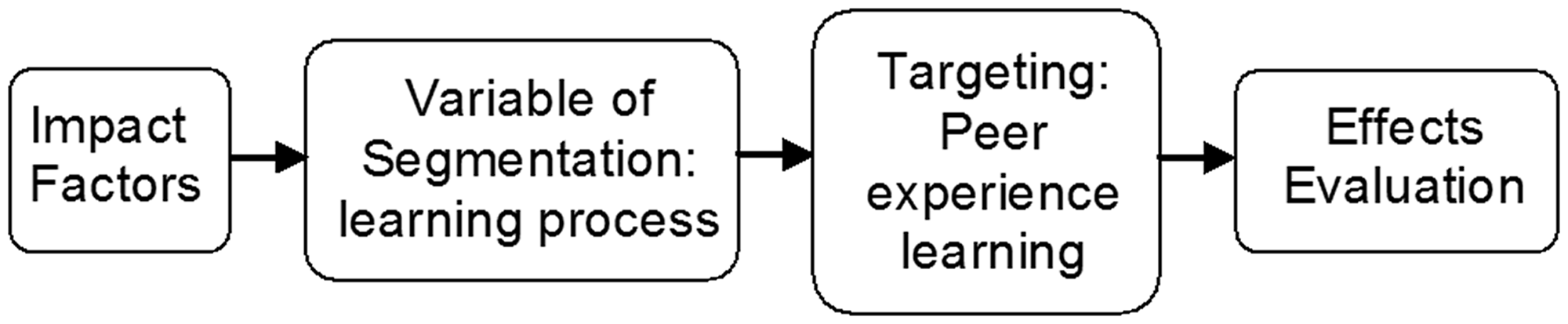
The research flow of segmentation approach and targeting.
Investigation of impact factor
Lots of literature had explicated the importance of the cooperation between higher education institutes and industries. 14 Jang 15 discovered “learning motives” exercised the greatest influence on students' participation willingness. Huang 16 uncovered the following results that may affect students' career intention: Among the cognitive impact factors of pursuing advanced study and career, “self-expectations” and “learning motives” were of the greatest influence, followed by “influences of teachers and peer students,” “consulting measures offered by schools,” “parents' expectations,” and “social values.” The research takes “gender, part-time working experiences, and number of obtained technical certificates” as background variables, and “peer opinions for group reference, workplace conditions, employment cognitions, learning motives, self-expectations, and parents' thoughts” as impact factors that may affect students’ willingness to attend “Memory Packaging & Testing and Module Special Class.” Afterwards, the research investigated whether the above background variables and impact factors can predict vocational high school students' wiliness to attend the industrial-academic cooperation plan after their graduation.
The research structure of “impact factor survey” is demonstrated in Figure 2.
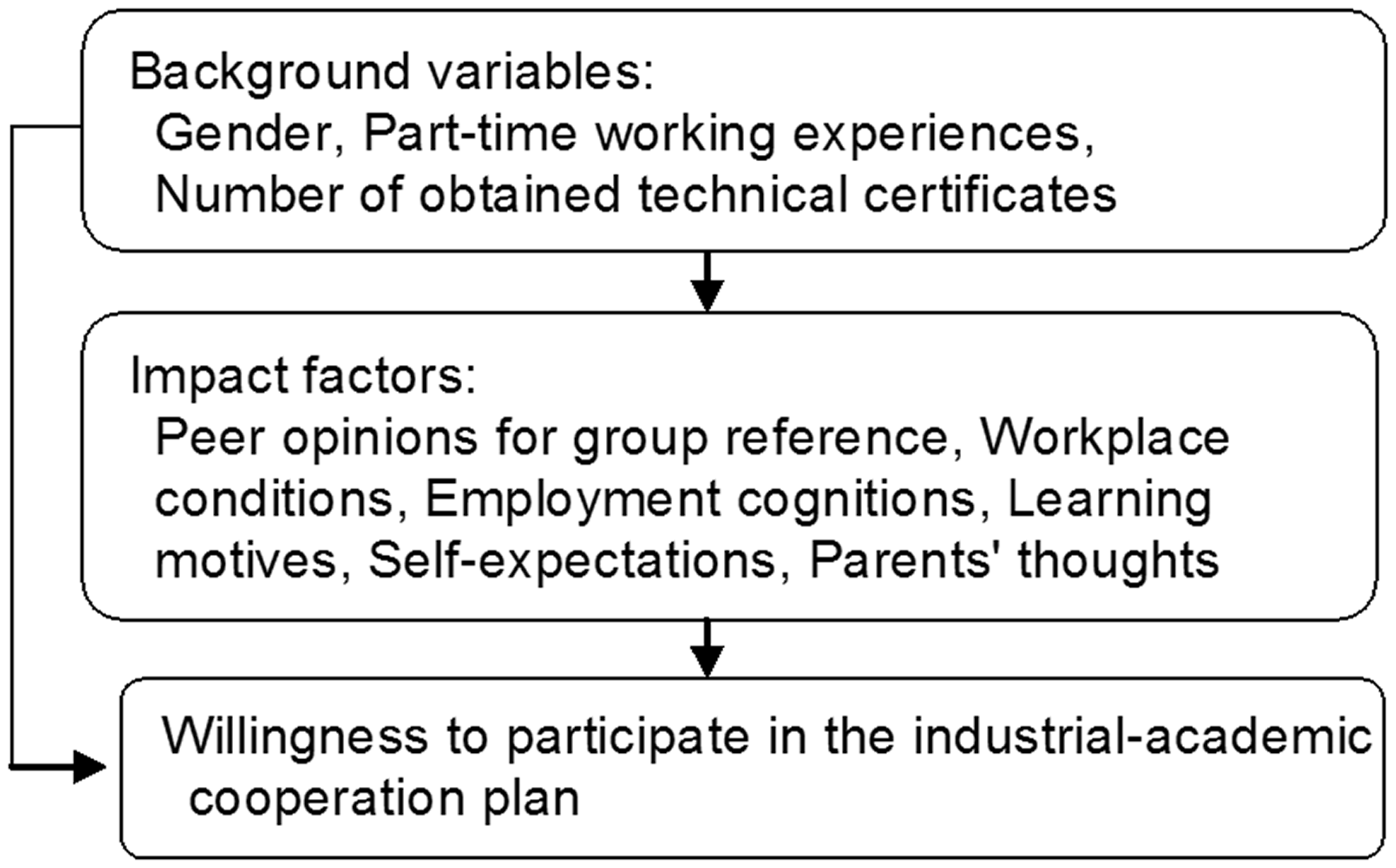
Research flow for factors affecting vocational high school students' willingness to participate in industrial-academic cooperation plan.
Research hypotheses
The research hypotheses of this research are as follows: H1: The impact factors of attending “Memory Packaging & Testing and Module Special Class” can provide predictability for vocational high school students’ willingness to join the industrial-academic cooperation plan after their graduation. H2: Background variables and the impact factors of attending “Memory Packaging & Testing and Module Special Class” can provide predictability for vocational high school students’ willingness to join the industrial-academic cooperation plan after their graduation.
Research method
To explore the factors that influence vocational high school students’ willingness to attend the special class after their graduation under different background variables, the research conducted a questionnaire survey as a primary research method. In addition, multiple regression in SPSS 22 was used to explore “the factors of attending the special class and the predictability for vocational high school students’ willingness to join the industrial-academic cooperation plan after their graduation.”
Research samples
The research samples were the students of vocational high schools cooperating with the case study company. Afterwards, the reliability and validity analysis was performed for pre-test to formulate a formal questionnaire. A total of 433 participants (vocational high school students) were the sample population involved in the formal questionnaire survey. After deleting the invalid questionnaires (including those being answered incompletely, with the same answers, or with regular answering patterns) and deleting questions with its Cronbach’s α under 0.4, 360 questionnaires were gathered, and the effective response rate was 83.72%.
Structure of scale
After the questionnaire was drafted, it was reviewed by two project leaders to ensure the questionnaire is of proper validity. The scale is composed of three parts. In Part 1, there are three variables for background information, including gender, part-time working experiences, and number of obtained technical certificates. Part 2 deals with the factors that affect students’ willingness to attend “Memory Packaging & Testing and Module Special Class,” and six factors are concluded from relevant literature: peer opinions for group reference, workplace conditions, employment cognitions, learning motives, self-expectations, parents' thoughts. Part 3 investigates students’ willingness to participate in the industrial-academic cooperation plan, and the questions are “After joining this event (workplace experiences or “the special class” promotion), I am more willing to enroll in ‘the special class.’, “I think it is a smart idea to attend ‘the special class.’,” “I am very willing to recommend other students to attend ‘the special class’.,” ‘Regardless of my performance in ‘General Test of Technological and Vocational Education’ after my graduation, I will choose ‘the special class’ as my first priority.”
In 2015, a purposive sampling method was conducted, and the samples in pre-test were100 students of the vocational high school participated in the special class plan; 90 valid questionnaires were collected after invalid questionnaires with incomplete answers were deleted. Afterwards, the reliability and validity analysis was performed for pre-test. The questionnaire questions with Cronbach’s α under 0.4 were deleted. Moreover, a t-test showed that all the question items have discrimination. SPSS 22 was adopted for calculation and the KMO value was 0.887. Thus, the appropriateness of the factor analysis in the research is meritorious. Besides, Bartlett’s test of sphericity value was 1809.899, and its significance was 0.000, showing the research was perfectly fit for factor analysis. Then, the factors with eigenvalue lower than 1 were discarded. Afterwards, question items were divided into seven categories. Varimax was utilized for orthogonal rotations, and factor loading ±0.3 was used as the judgment standard for discriminant validity. In the research, the total variation was 79.838% for the pre-test questionnaire.
According to the pre-test results, the authors modified the pre-test questionnaire and constituted a formal one and named the factors as “the willingness to participate in industrial-academic cooperation plan,” “self-expectations,” “employment cognition,” “workplace conditions,” “peer opinions for group reference,” “learning motives,” and “parents' thoughts.”
Data processing
SPSS 22 was used for calculation and the KMO value was 0.944, so the appropriateness of the factor analysis in this research is meritorious. In addition, Bartlett’s test of sphericity value was 5636.96 and its significance was 0.000, showing the research was extremely suitable for factor analysis. Moreover, the total variance 74.857% of the research questions can be explained by the above seven factors and the correlation coefficients were lower than 0.8, showing a good discriminant validity among different facets.
Segmentation variable
Typically, segmentation variables are the demographic statistic variables or psychological traits of research samples. It is difficult to identify working-based learning, which means all the learning content should be applied to workplace. 14 Lo 17 considered there was significantly positive correlation between the satisfactory level of workplace experiences and learning effectiveness, and the satisfactory level of workplace experiences can provide significant prediction for learning effectiveness. Thus, the research employed the learning process of intelligent simulation training system as segmentation variable. Such categorization enables learners to understand the required skills for their future workplaces.
Targeting
Regarding typical peer learning, there have been few researches on the subsequent learning design based on the results of segmentation variables. The learning process of intelligent simulation training system was taken as the segmentation variable and included into the experiencing process of “workplace experiences” in order to arrange candidates and their peers to proceed to subsequent experience-oriented learning and serve as references for their career plan.
Effects evaluation
This research invited company’s senior executives to convey their viewpoints toward the training effectiveness of the aforementioned aspects for different recruiting channels so as to assess the effectiveness of industrial-academic cooperation. The training effectiveness can thus be inferred.
“Memory Packaging & Testing and Module Special Class” is just one of the diverse recruiting channels used by the case study company. The research adopts multiple standards to assess employee’s after-training performances, including “overall satisfaction, new knowledge absorption, new skills absorption, apply new knowledge to work, apply new skills to work, apply new knowledge to work to upgrade productivity, and apply new skills to work to upgrade productivity.” Thus, managers in the case study company were asked to assess whether the after-training performances of engineers recruited via different channels show differences.
A conceptual structure was accordingly established, as shown in Figure 3.
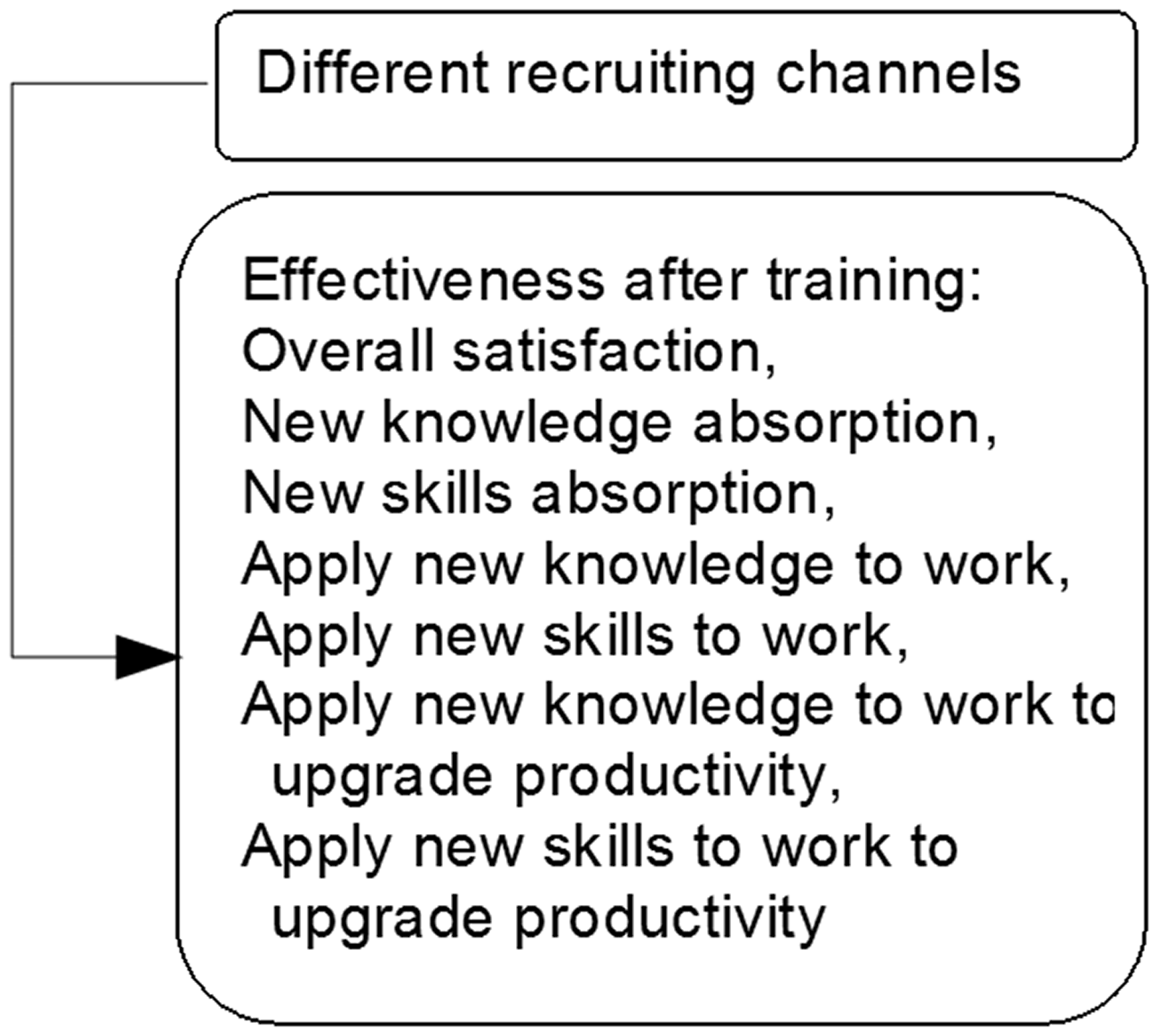
Senior executives' evaluation for training effectiveness.
Results and discussion
Impact factors investigation
In this research, regression analysis was employed to explore the impact factors that affect students' willingness to attend the special class. The collected samples were used to calculate a regression equation, from which we can tell to which extent the different impact factors (independent variables) of attending the special class influences students' willingness to participate in “industrial-academic cooperation plan.” This can serve as interpretations for managerial implications.
The background impact factors of attending the special class can provide predictability for vocational high school students’ willingness to participate in this plan
The research adopted the model summary table based on the calculation of SPSS 22, and it explained 59.4% of variance, and the significance of F-value = 0.000. Additionally, an ANOVA analysis was conducted and demonstrated F-value = 85.275, p value = .000 < .05, and reached a significant level. According to the regression analysis results, the standard regression model is as follows: “the willingness to participate in industrial-academic cooperation plan” Ŷ=−.204 + 0.255 (employment cognition) + 0.161 (learning motives) + 0.123 (parents' thoughts) + 0.297 (workplace conditions) + 0.203 (peer opinions for group reference). Thus, the results can support the argument in the first hypothesis (H1): “The factors of attending the special class can provide predictability for vocational high school students' willingness to join the industrial-academic cooperation plan after their graduation.”
Background variables and the impact factors of attending the special class can provide predictability for vocational high school students’ willingness to participate in this plan
A multiple regression model was utilized for analysis. All the variables in the structure were considered as independent variables, and students' participation willingness was dependent variable. As denoted by each R 2 , the six aspects can explain 55.9% of variance. The research explored the predictability of all variables for participation willingness, and the results are shown in Table 1.
Multiple regression analysis – The predictability of all variables for participation willingness.
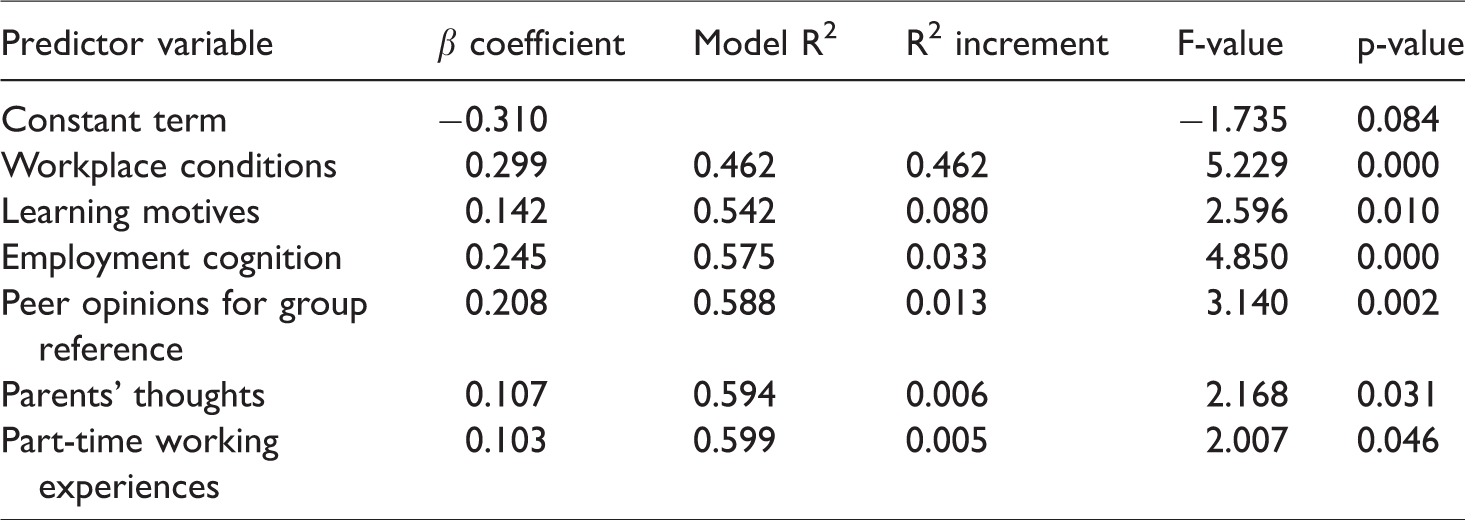
As shown in Table 1, all the six predictor variables enable the regression model to achieve a significant level. Besides, the regression equation resulted from the multiple regression analysis is: participation willingness =−.310 + .299 × (workplace conditions) + .142 × (learning motives) + .245 × (employment cognition) + .208 × (peer opinions for group reference) + .107 × (parents' thoughts) + .103 ×(part-time working experiences). Therefore, the results can support the argument in the second hypothesis (H2): “Background variables and the impact factors of attending in 'Memory Packaging & Testing and Module Special Class' can provide predictability for vocational high school students' willingness to join the industrial-academic cooperation plan after their graduation.”
Segmentation variable and targeting
As for the design of “workplace experiences,” the exemplary cases of applying intelligent simulation training system in the experiencing process are illustrated as follows:
Course design of “workplace experiences”
The practical results of research hypotheses H1 and H2 indicated that “workplace conditions” and “employment cognition” exhibit predictability. Lent et al. 9 also discovered youngsters consider the school-to-work transition is full of obstacles when they think of job opportunities. Granovetter 18 found young people are worried about several potential problems when they get their first jobs, including unstable jobs, the need to find jobs, salary level or the learning-application gaps between what they have learned and enterprises' requirements.
In Sun's 19 opinion, the “labor-market cognition” scale includes “working ability,” “job values” and “employment opportunities” – all of them fall in the scope of “employment cognition” and “workplace conditions.” Thus, the course design of workplace experiences help students to understand the related employment information and required competencies in OSAT industry from the perspectives of “cultivate working abilities,” “the meaning of job values” and “grasp working opportunities” so as to attract potential candidates to join this plan. The curriculum of “workplace experiences” is designed as Table 2, in which “Clinical Internship” means offering students the opportunities to observe the real operational process in OSAT workplaces, and in “Apprenticeship System,” the alumni graduating from the same schools were invited to serve as instructors and guide the learners to explore career values while playing games.
Goals of curriculum planning for workplace experiences.
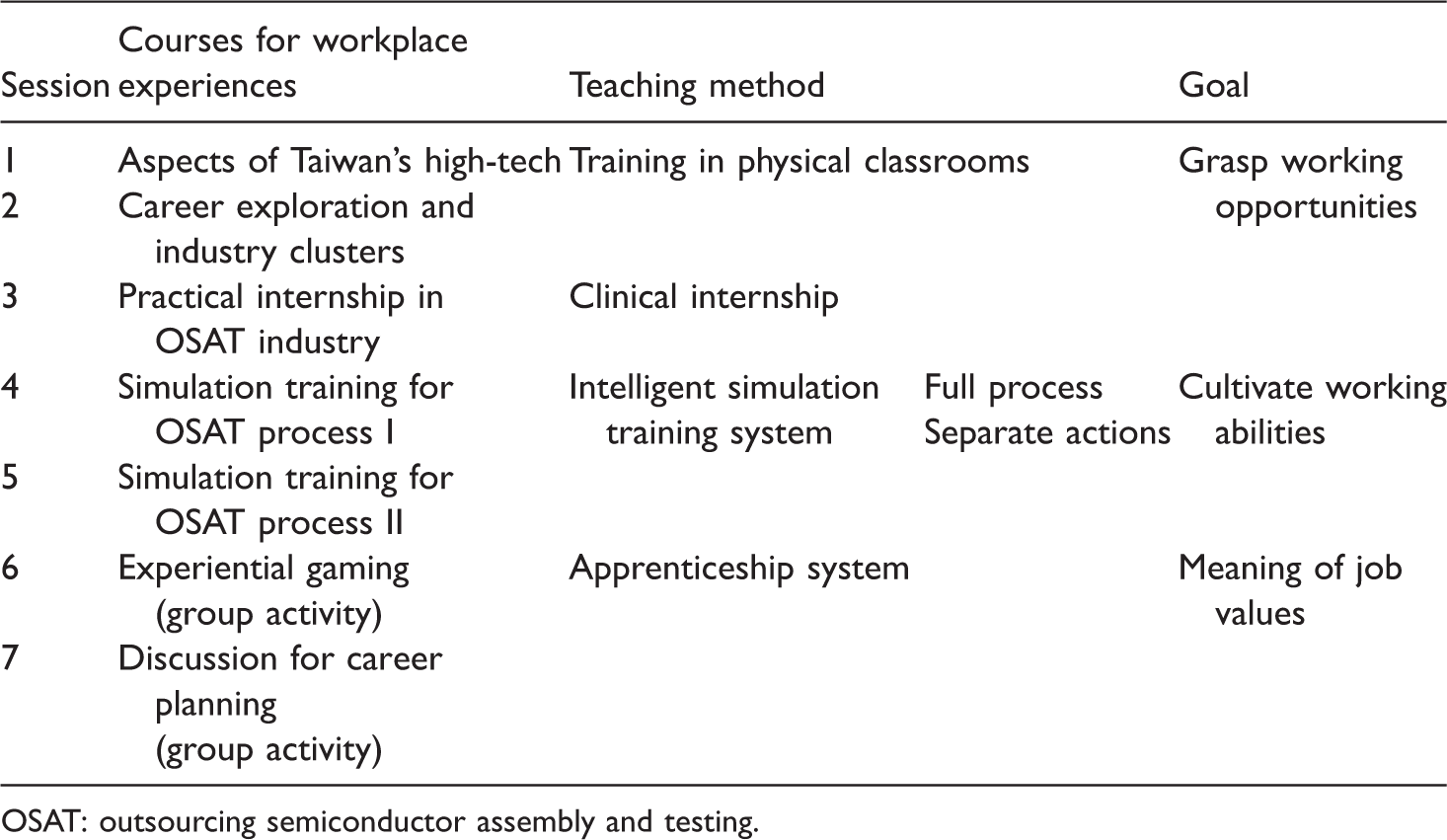
OSAT: outsourcing semiconductor assembly and testing.
Take the learning process of intelligent simulation training system as segmentation variable and develop a different experiential gaming
Learn-memorize matrix models can be formed based on users' learning process in the intelligent simulation training system and used for segmentation. Individuals' subsequent learning schemes can be formulated according to the segmentation results to obtain the effects of intelligent learning. For example, learners in the third quadrant can be arranged to operate automated equipment independently earlier, or learners in the first quadrant are suggested to change their learning mode or to learn different operation procedures. 13 Experiential gaming is also a type of game-based learning. Chang et al. 20 investigated the learning system of water resources and disaster prevention, and they found self-learning willingness can be generated from game-based learning and is helpful for learning corresponding strategies against risks. Consequently, the students were classified into four groups and were provided with “experiential gaming” based on the learning records in the intelligent simulation training system, as shown in Figure 4.
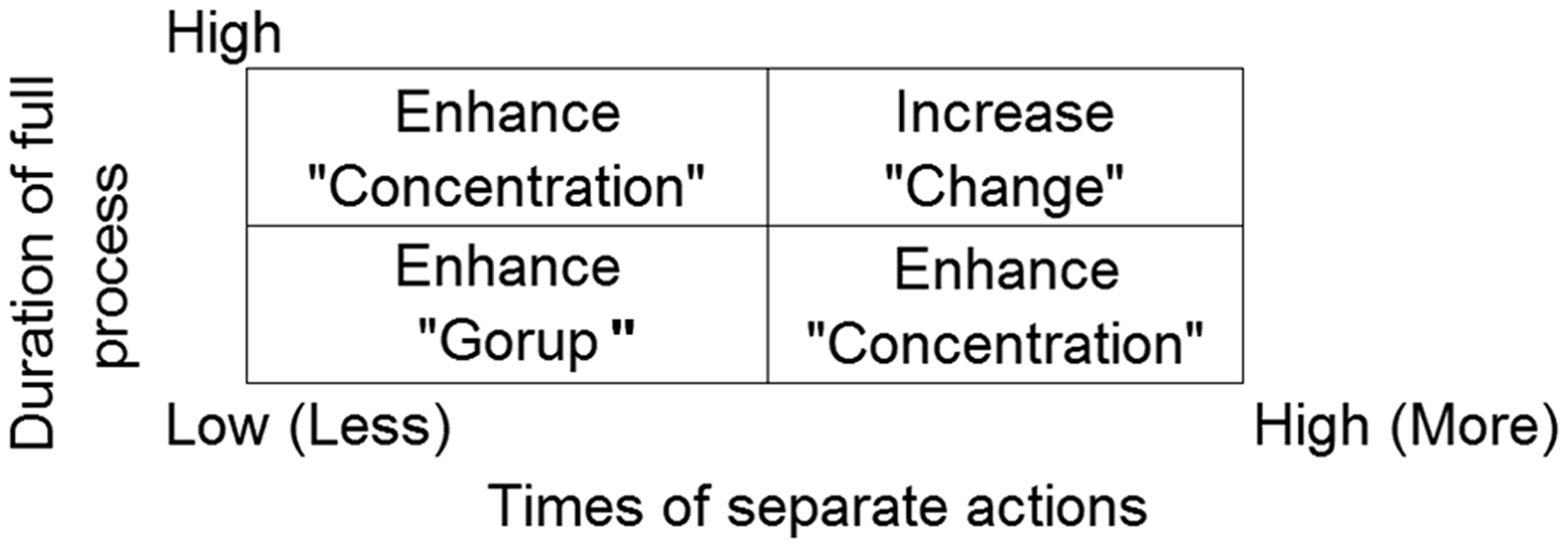
Experiential gaming and learn-memorize matrix model.
Based on Yen et al., 13 vocational high school students' learning process in the intelligent simulation training system during their participation in “workplace experiences activities” was taken as variable, and the students were divided into four groups (or, four quadrants) by segmentation method. Among them, the students in Quadrant III have reached the skill level of “adaptive behavior” required in the OSAT industry. But, to avoid students in this quadrant from forming the sense of superiority, they were still given workplace experience activities to enhance “team spirit.” For example, the students were asked to close their eyes to play “blinded number off” to establish team members' mutual trust. Besides, compared with students in Quadrant III, those fell in Quadrant I had much to progress until they reach the required “adaptive behavior” skills. Thus, workplace experience activities related to “change learning habits” were arranged to enhance students’ confidence in attending “industrial-academic cooperation plan.” Moreover, for students in Quadrant II or Quadrant IV, their learning or responding abilities were not good as the students in Quadrant III, but emphasizing the coherent learning of pre- and post-process in the OSAT industry (Quadrant II students), or repetitively practicing certain operations (Quadrant IV students) might help students attain the skill level of “adaptive behavior” necessary for the OSAT industry. So, the workplace experience activity “enhance concentration” was needed. For example, the activity “Number Off” has been acquainted by everyone, so another activity “Poster” can cultivate students’ observation and concentration by writing a random number from 1 to 50 on posters and asks students to identify and speak out the number in turns.
Peer discussion based on segmentation results
“Peer opinions for group reference” as well would affect vocational high school students' willingness to join the industrial-academic cooperation plan after their graduation. Therefore, the alumni graduating from the same schools were invited to guide the workplace experiences. The research especially found the learn-memorize matrix model of alumni and the students attending workplace experiences program had fallen into the same quadrant in Figure 4 when they used the learning process of the intelligent simulation training system at their first time. In the discussion of career planning, the guides shared their experiences about the progress of moving into the third quadrant or retaining in the third quadrant, and encouraged the students to form self-confidence by sharing their own experiences.
Effectiveness evaluation
Impact of low fertility rate
The research investigated the factors influencing the case study company successfully attracted sufficient candidates to join “industrial-academic cooperation plan” and its cooperation model. The MOE only permitted 50 persons per year for this plan, and the enrolment rate after adopting this developed model reached over 70% both in 2016 and 2017. In contrast, the enrolment rate of the electronics department of the private college in the same area was 46%. 6 With this cooperation model, it was clearly that the company in the case study had successfully overcome the predicament of “impact of low fertility rate.” 6
Learning-application gap
Furthermore, the developed model was just one of the recruiting channels in this case study company. The research aimed at understanding the viewpoints of the company’s senior executives as to whether the performances of the engineers employed via this “recruiting channel” improved after they received training in this case. To this end, the training effectiveness of this model was concluded based on directors' feedbacks, and it was assumed that “the recruiting channel of engineers” would impact the effectiveness of receiving new employee orientation; 45 questionnaires were sent in July, 2017. From the above results, the company’s senior executives thought different recruiting channels have little influences on the training effectiveness on the aforementioned facets. Clearly, the company had successfully conquered the predicament of learning-application gap with this cooperation model.
Summary
Mitigate the status quo of workforce shortage
The research proposed and employed segmentation and targeting methods to work with the “industrial-academic cooperation” model, and the enrolment rate of the electronics department in the study case was 24% higher than that of other electronics departments of private university in the same period. It is evidenced that this model can mitigate workforce shortage.
Build an industrial-academic connection platform to collaboratively cultivate new talents with interdisciplinary competencies required by company
This research indicated that directors considered the performances of candidate students receiving “industrial-academic cooperation” training were no worse than the employees recruited from other channels. Besides, their retention rate after training achieved higher than 90%. It can be expected that the offering and planning of basic theories and practical application knowledge in the semiconductor industry can broaden trainees' knowledge base for professional skills as well as cultivate their analysis competencies and form a deeper understanding for their future career. This industrial-academic connection platform has already cultivated new and interdisciplinary talents essential for enterprises.
Future works
The research results demonstrate that “employment cognition” has significantly influenced on the students' willingness to join “industrial-academic cooperation plan” when other variables are under control. With the changes of OSAT industry, students’ job attributes may vary. Yet, “the enrolment mode with adaptive guidance” can provide students with correct understanding towards “working ability cultivation,” “career values” and “employment opportunities” through the in-class interactions or workplace experiences. The research findings are similar to the opinions that different scholars hold for work-integrated learning: youngsters' career decision-making are determined by personal viewpoints and the objective factors of social-economic background and workforce situations. Consequently, it is suggested that schools and cooperation enterprises should put emphasis on providing course interactions or workplace experiences so that students can understand “the cultivation of working competencies,” “meaning of career values” and “grasping job opportunities” in correct ways.
Footnotes
Declaration of conflicting interests
The author(s) declared no potential conflicts of interest with respect to the research, authorship, and/or publication of this article.
Funding
The author(s) received no financial support for the research, authorship, and/or publication of this article.