







Abstract
At present, some classroom teaching evaluation methods are actually difficult to reasonably and fairly evaluate teachers’ true teaching level and classroom teaching quality. There are many shortcomings and drawbacks. In order to overcome the shortcomings of traditional teaching evaluation and enhance the evaluation effect, this paper combines the current advanced management methods with the merits of traditional evaluation methods, and applies the fuzzy evaluation method to combine qualitative assessment and quantitative assessment. First of all, establish a scientific and reasonable classroom teaching quality assessment index system, determine the standard assessment criteria, and then select and use the fuzzy comprehensive evaluation model to evaluate the classroom teaching quality, thus establishing a complete and effective teaching quality evaluation system.
Introduction
As the main teaching form of the school, teacher classroom teaching has the advantages that other forms are irreplaceable and occupies the basic position of school teaching.1–3 Classroom teaching is not only an important way to teach knowledge, but also the key to achieving the purpose of classroom teaching and mastering the quality of teaching. Classroom teaching is directly related to the school-running level and the quality of talent training. However, the existing evaluation methods can’t effectively avoid the result errors caused by the unilateral evaluation, so that the evaluation results can’t be scientific, objective and fair.4–7 Therefore, we should do a good job in supervising and evaluating teachers’ classroom teaching, establish a reasonable teacher classroom teaching quality evaluation system and adopt a reasonable evaluation method for evaluation.8–10 It is the basis for stabilizing and improving the quality of education. Establishing a scientific and reasonable teacher quality evaluation index system and standardized operation process is an effective way for schools to improve the quality of education and teaching and cultivate high-quality talents.11–13
This paper first reviews the existing related literature, discusses and improves the current research deficiencies, constructs the evaluation index system of this paper, uses the fuzzy comprehensive evaluation model, and uses the DelPhi consulting method to determine the factor weights. Finally, the data is used to analyze the model, and the relevant conclusions of this article are finally reached.
Literature review
Currently used evaluation methods
There is a fundamental feature of the evaluation of teaching quality that is ambiguity. For example, the evaluation scales of excellent, good, medium and poor are typical fuzzy concepts, and there is no clear extension. At present, the evaluation method of teacher classroom teaching used by many schools is the student scoring method. However, due to this method, the non-quantitative and ambiguous things are forcibly quantified, so there are many problems: 1. the evaluation method is not scientific; 2. the object operation is difficult. The evaluation indicators are not scientific and comprehensive, and the concept refers to the vagueness. Therefore, it is difficult for students to score the teachers quantitatively, so the efficiency of the questionnaire is low; 3. the operational results are low. The evaluation of teachers by students is a person-to-person evaluation. The relationship between teachers and students, the rigor of teachers, and the attitude of students to evaluation activities will have an impact on the evaluation results. Therefore, the evaluation method based on the general traditional quantification does not really promote the high teaching level of teachers and the quality of classroom teaching .
In recent years, the field of teaching evaluation has attracted the attention of many scholars. Some studies have explored fuzzy evaluation and teaching assessment. Fan Yan and Ma Liping 4 used the analytic hierarchy process to determine the index weights, and established a fuzzy dynamic comprehensive evaluation model based on Markov chain. Qi Hui and Shi Zhangqing 14 analyzed the problems existing in the experimental teaching quality evaluation system in the construction of liberal arts laboratories, and constructed the quality evaluation system of liberal arts comprehensive experimental teaching by using fuzzy theory, and realized the visualization of experimental teaching quality evaluation. Li Sanbo 7 established a comprehensive evaluation model of teacher performance based on AHP, and used the weighted average method to calculate the evaluation results. Cheng Haigen 1 proposes a three-level fuzzy comprehensive evaluation index system, which divides the overall teaching effect into four objectives: teaching objectives and teaching input, teaching mode and teaching philosophy, teaching methods and assessment methods, and sustainability of teaching process. For the evaluation of the teaching effect of civil engineering. These research results have certain reference significance for the improvement of the teaching evaluation system.15,16
Evaluation of classroom teaching quality
Literature comprehensive report
There are a large number of research literatures on the quality evaluation methods of teachers’ classroom teaching in colleges and universities. There are 1120 related Chinese and foreign literatures in HowNet. The content of literature research mainly includes the analysis of the effects of existing evaluation methods and the proposed new evaluation methods.
Analysis of the existing problems, mainly in the evaluation indicators are not standardized, the evaluation method is too single, the evaluation subject lacks participation, the evaluation results are not timely, and the evaluation purpose is too utilitarian. Yang Shuigen 11 considered the existing evaluation methods based on the actual situation in Hunan Province. In short, the authenticity of the evaluation is not strong, and it is contrary to the original intention of evaluation. In addition, some literatures propose a new evaluation system for existing problems. Peng Yanfeng 8 proposed a comprehensive evaluation method for college teachers’ teaching quality based on the variable prediction model classification method, and compared it with BP neural network. Zeybekoglu 9 analyzed the use of open-ended questions and the ability to collect reports for comprehensive analysis at the university level, and the value of mid-term course evaluations can go beyond the curriculum level. Among them, there are about 100 papers that use fuzzy comprehensive analysis to evaluate the quality of classroom teaching.
The lack of existing literature includes that after pointing out the problems of teaching quality evaluation methods that are commonly used nowadays, some of the suggestions put forward in the literature are only based on the original evaluation methods, which failed to solve the problem fundamentally. In the proposed new system, some operations are too difficult or the steps are too complicated.
Therefore, based on the problems existing in the existing evaluation methods, this paper proposes the establishment of a fuzzy comprehensive evaluation system for the quality of classroom teaching in colleges and universities, and combines qualitative and quantitative assessments to establish standardized assessment standards.
At the same time, compared with the existing literatures using fuzzy comprehensive evaluation methods, this paper uses Delphi consultation method to scientifically and effectively establish the relative weight of each index. And applying the sub-evaluation method on actual examples can help readers understand the fuzzy comprehensive evaluation system more clearly.
Fuzzy evaluation of classroom teaching quality
In order to overcome the above problems, improve the evaluation results, pursue the scientific nature of the evaluation method, the comprehensiveness of the evaluation content, the accuracy of the evaluation results and the efficiency of the evaluation organization, combined with the traditional evaluation methods and the current advanced management methods, this paper applies the fuzzy evaluation. The law combines qualitative assessment with quantitative assessment. First, establishing scientific and reasonable assessment indicators and determining standardized assessment standards. Then select and use the evaluation model to evaluate the quality of college teachers’ classroom teaching.
Principles for the establishment of evaluation indicators
The establishment of evaluation indicators is not arbitrary, and certain principles must be followed. This indicator system should be a combination of operability and theory, feasibility and reliability, and quantitative and qualitative factors to make the established indicator system more reasonable and more explanatory forces (Ning and Qian3). Generally speaking, the principles followed are as follows:
Scientific principle: It can objectively reflect the nature, characteristics, internal relations and changing process of the analysis object itself. For classroom teaching evaluation, the indicator system should reflect the connotation requirements of classroom teaching quality. The principle of comprehensiveness: we should reflect the whole picture of the object from all angles as much as possible to prevent partiality. At the same time, we must also strive to grasp the key points and prevent the small loss, and we must proceed from the overall situation and establish a complete evaluation index system. To achieve the impartiality and authority of the evaluation results; therefore, the established indicator system should be able to comprehensively reflect the characteristics and characteristics of all aspects of the object. The principle of independence: Each indicator at the same level can indicate one aspect of the object being evaluated. The indicators should not overlap each other or have a causal relationship. Feasibility principle: Make full use of the statistical data published by the existing statistical system to ensure the operability and openness of the evaluation, and improve the feasibility of the implementation and application of the indicator system in actual work. People-oriented principle: People are the most valuable asset of a social organization. To improve the quality of teaching is to make full use of human resources so that it can play its greatest role in teaching. Therefore, the evaluation of classroom teaching quality should reflect the idea of attaching importance to people, respecting people, caring for people and motivating people; this idea should also be reflected in the design of the indicator system.(The people here include faculty and students.)
Construction of evaluation index system
The quality evaluation of classroom teaching is a value judgment process based on specific goals. It is also a comprehensive concept, which involves teaching methods, teaching level, teaching effects and many other aspects. Combined with the actual situation of the school, this paper chooses four levels of indicators that are closely related to classroom teaching, such as teaching attitude, teaching level, teaching effect and teaching methods. The specific evaluation index system is shown in the following figure (Figure 1).
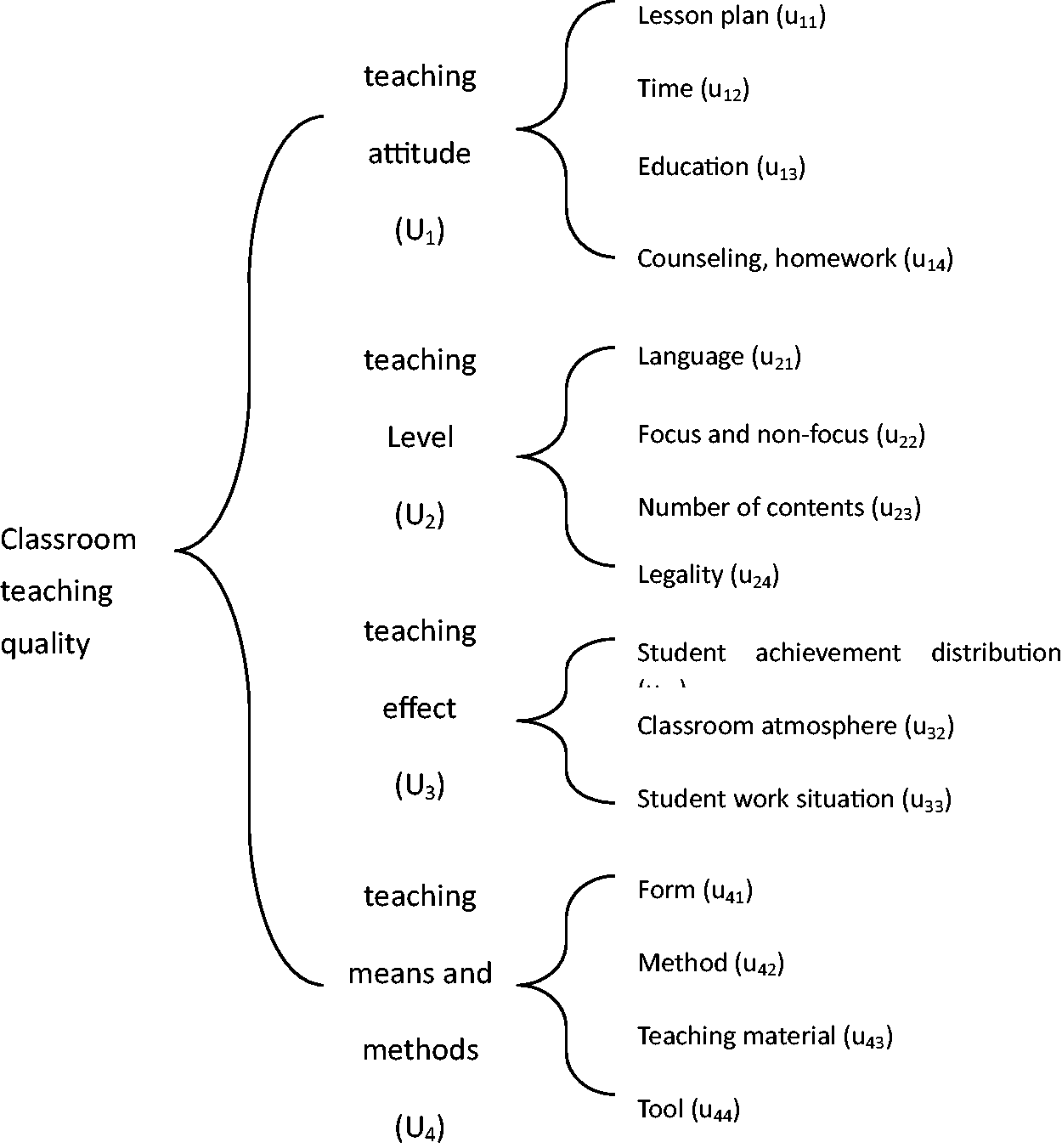
Classroom teaching quality evaluation index system.
Whether the indicator system is reasonable or not directly affects the accuracy of the evaluation results. Teaching quality evaluation can be carried out through first-level indicators such as teaching attitude, teaching level, teaching effect and teaching methods. In order to make the evaluation indicators more operable, these level indicators can be refined into more secondary indicators. At the same time, due to the different evaluation angles of different evaluation subjects, according to different evaluation subjects, these first-level indicators and their secondary indicators can also be adjusted accordingly.
Teaching attitude
Teaching attitude is the teacher’s perception of teaching and the behavior taken.The teacher’s teaching attitude is mainly reflected by the following secondary indicators:
Teaching plan: refers to whether the teacher prepares the lesson, is familiar with the content of the class, and whether the content meets the outline requirements of the course. Time: refers to whether the teacher is observing the time in class, whether to arrange and guarantee all teaching time according to the teaching plan. Educating people: refers to whether teachers are able to cultivate students’ moral education, intellectual education, sports, and aesthetic education. Coaching and homework: refers to whether the teacher patiently tutors the students, whether to arrange and promptly correct the student’s homework.
Teaching level
The teaching level is the embodiment of teachers’ teaching ability. The teaching level of teachers is mainly reflected by the following secondary indicators:
Language: refers to whether the teacher’s lecture expression is clear and logical, and whether the language is smooth and concise. Key and non-focused: refers to whether teachers are focused on teaching, whether difficulty and depth are appropriate; whether to absorb and fully reflect the new development results. Content, quantity: refers to whether the teaching content is wrong, etc., and the amount of content taught in the classroom is appropriate. Legality: refers to whether the teacher’s words and deeds, whether the content taught in the classroom respects the students, whether it conforms to the laws and regulations of the country, and whether it conforms to the rules and regulations of the school.
Teaching effect
Teaching effect is the corresponding teaching effect achieved by teachers. The teacher’s teaching effect is mainly reflected by the following secondary indicators:
Student score distribution: refers to the distribution of student grades in the mid-term and end-of-term courses. Classroom atmosphere: refers to the students’ interest in the classroom content (including expressions, language, etc.) and the teacher’s mental outlook in the classroom. Student work status: refers to the completion rate and correct rate of student work.
Teaching means and methods
The teaching means and methods are the behaviors that teachers take in order to achieve the teaching objectives and tasks in the teaching process. Teachers’ teaching methods and methods are mainly reflected from the following secondary indicators:
Form: refers to whether teachers use the organizational form of classroom teaching flexibly, such as grouping or not grouping, changing classrooms such as indoors and outdoors, combining theory with practice. Method: refers to whether the teacher flexibly uses various teaching methods according to the characteristics of the students, such as teaching methods, question and answer methods, discussion methods, demonstration methods, experimental methods, and so on. Textbook: Refers to whether the designated textbooks of this course are suitable for the characteristics of students, whether they are representative and advanced. Tools: Refers to the appropriate use of multimedia tools suitable for the course of audiovisual and other multimedia tools as shown in Figure 1.
Evaluation model selection
Fuzzy comprehensive evaluation method is a comprehensive evaluation method based on fuzzy mathematics. This comprehensive evaluation method converts qualitative evaluation to quantitative evaluation according to the membership theory of fuzzy mathematics, that is, uses fuzzy mathematics to make an overall evaluation of things or objects subject to multiple factors. It has the characteristics of clear results and strong systematic. It can solve fuzzy and difficult to quantify problems, and is suitable for solving various non-deterministic problems.
To give an accurate comprehensive evaluation of the quality of classroom teaching, the evaluation tool - the choice of mathematical model is also a key step. Although some of the classroom teaching quality indicators are in a clear state of “one or the other”, there are many transitional states (or fuzzy states) that are “this is also the same”, with a gradual change, and the relationship between the index attributes is mostly For non-linear relationships; the interrelationships between the various indicators of the program are usually not accurately described by quantitative relationships. There are also subjective arbitrariness and ambiguity in understanding due to human participation. For these reasons, it is not accurate to use absolute (or explicit) comments to evaluate the general method model of the object being evaluated that is not absolute (or somewhat vague).However, the fuzzy evaluation model can give a clear quantitative evaluation of these indicators.
Fuzzy comprehensive evaluation model
It can be seen from the classroom teaching quality index system that this system has the characteristics of large amount of elements and ambiguity. Therefore, this paper uses a multilevel fuzzy comprehensive evaluation method. Its mathematical model is as follows:
The evaluation factors are grouped into factor sets
then

Reorder
Set
Fuzzy evaluation matrix based on membership degree of each factor
That is, the comprehensive evaluation result can be obtained.

Normalizing
Considering the two-layer factor set

2 layer evaluation matrix
Take
Then you can find another layer of comprehensive evaluation results.

The evaluation of more layers can also be deduced by analogy to obtain the overall comprehensive evaluation results. The overall comprehensive evaluation results are normalized, and in the normalized evaluation, the final evaluation of teaching quality is obtained according to the principle of maximum membership.
The idea of this model is that the comprehensive evaluation is carried out according to the factors of the lowest level, and the layers are successively evaluated upwards until the highest level, and the final evaluation result is obtained, that is, the method of fuzzy comprehensive evaluation is started from the end. Way of evaluation.
Description: The choice of the fuzzy operator.In the above formulas (1) and (2) “ Determination of factor weight
This paper uses the Delphi consulting method when assigning the weights of the factors. The principle of the method is as follows:
Let the evaluation target of the evaluation object be
Existing m experts make weight judgment on
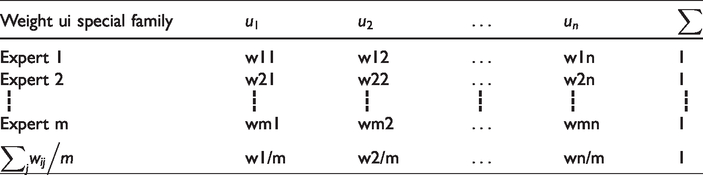
It first asks the relevant experts separately, then summarizes their opinions, and anonymously gives feedback to the relevant experts to seek comments again, and then repeats the above process again, so that it is repeated several times until the experts agree.
2. Calculation of membership degree of evaluation index
The determination of the appropriate membership function is the key to fuzzy comprehensive evaluation, which can obtain the degree of membership of the accurate first-level evaluation index. Since the first-level indicators of the evaluation index system are qualitative indicators, the membership function cannot be used to describe its change law. Therefore, in order to obtain more accurate and objective results, the calculation of the membership degree of the first-level evaluation indicators in this paper is obtained through the comprehensive score of the expert group.
According to the classification of the previous indicators, the selected experts have old experts who are rigorous, highly respected and still active in the front line of teaching; young and middle-aged experts with rich experience and sharp thinking; management experts engaged in teaching management; experts in higher education theory and familiar with teaching Consultation experts in all management aspects of the work. Various experts form an expert group and score the corresponding indicators for each group. In order to ensure the objectivity of the score, the expert group must fully exchange opinions before scoring. According to the evaluation set V = {v1, v2, v3, v4, v5}, that is, the comprehensive evaluation below this article establishes five grades for each evaluation factor, and the expert group gives Each factor was scored on each of the five levels of the evaluation set, with the sum of the five grades for each factor being one. Then, the geometric mean of the scores of the expert groups of each evaluation level is determined, so that the geometric mean of each evaluation level of each factor constitutes the membership degree of the factor. For example, the expert scoring range is (0.8,1) ∈ v1; (0.65,0.8] ∈ v2; (0.5,0.65] ∈ v3; (0.4,0.5] ∈ v4; 0,0.4] ∈ v5.
Model data simulation analysis
Taking a certain course of a teacher as an example, a comprehensive evaluation of the quality of classroom teaching is carried out. The relevant data are shown in Table 2.
Initial data of a professor’s comprehensive evaluation of classroom teaching quality.
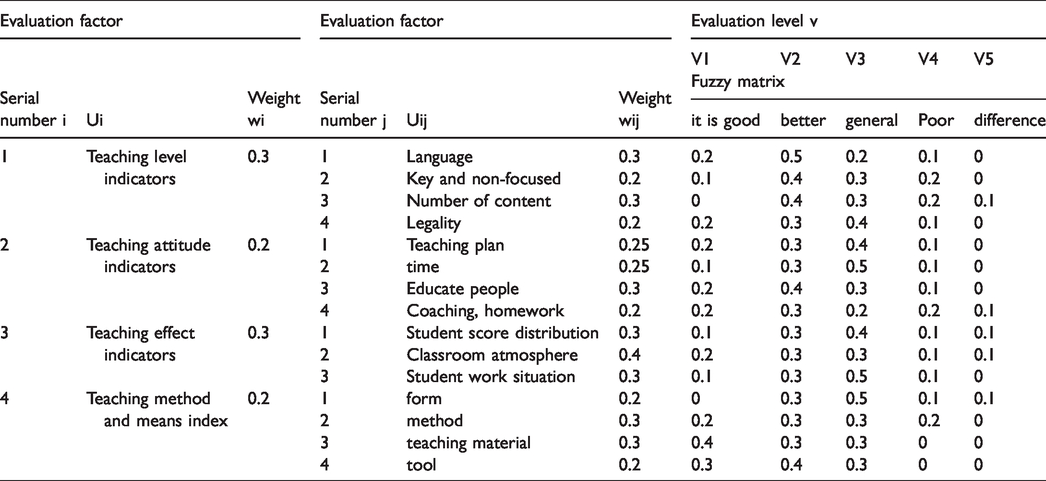
First, calculate the comprehensive evaluation result of the evaluation level “teaching level”
The weighting of each evaluation factor of the teaching level is:
W11 = (0.3 0.2 0.3 0.2)
The primary evaluation matrix composed of the evaluation levels of each evaluation factor of the teaching level is:
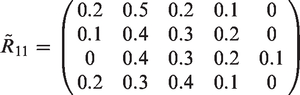
then:
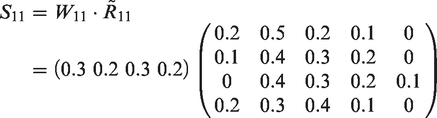
Normalizing 
Then, calculate the comprehensive evaluation result of the evaluation element “teaching attitude”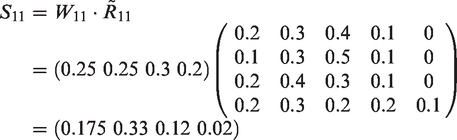
Normalizing 
In the same way, the comprehensive evaluation of “teaching effect” and “teaching method means”

Finally, the evaluation matrix of the above four elements of the ①②③④ formula 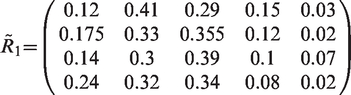
The weighting of each evaluation element of teaching quality is:


Normalizing 
That is to say, the comprehensive evaluation result of the classroom teaching quality of a certain teacher is: the rating of “good” is 16.1%, the rating of “good” is 35%, and the rating of “normal” is 34%. The rating of “poor” was 11.5%, and the rating of “poor” was 3.4%.
According to the principle of maximum membership of fuzzy evaluation, 35% is the maximum evaluation result, so the final evaluation result is that the quality of classroom teaching of a certain teacher is “better”.
The result and discussion
This paper uses fuzzy comprehensive analysis method, combined with quantitative assessment and qualitative assessment method, establishes the evaluation index of college teachers’ classroom teaching quality, constructs the evaluation system, and gives the method of quantitative evaluation. This evaluation method can overcome the shortcomings of the original teacher’s classroom quality evaluation method and obtain the evaluation result more scientifically and effectively. However, due to the complexity of the algorithm, it is very difficult to manually operate by the manager alone. As a result, the power of the computer and the network can be assisted, so that all calculations are done by the computer, so that the evaluation results can be quickly obtained and the cost can be saved. It is beneficial to the evaluation of the assessed person in a reasonable and fair manner, and is also conducive to the ranking of the evaluation results.
In addition, in the actual application, due to the different nature of various evaluation indicators, the classification method is used to deal with the factors, which not only eliminates the ambiguity to a certain extent, but also converts some parameters that cannot be directly compared into dimensionless relative values. In the same mathematical model, the prevailing conditions of versatility and comparability are met. However, it should be noted that in the classification of some indicators, if the focus is different, there will be different classification methods, so that the comprehensive evaluation results of the changed sub-indicators will change. The quantification problem runs through every corner of the system, and the statistical data is the basis for the improvement of the system operation. We must determine the corresponding management tools and technologies, and establish a digital management system, so that we can truly achieve continuous improvement of the management system, not fall into the trap of formalism, and do specific analysis of specific issues.
Footnotes
Declaration of conflicting interests
The author(s) declared no potential conflicts of interest with respect to the research, author- ship, and/or publication of this article.
Funding
The author(s) disclosed receipt of the following financial support for the research, authorship, and/or publication of this article: This article was funded by the Key Scientific Research Projects of Universities in Guangdong Province (2018WTSCX034).
