







Abstract
Background:
The investigations of the risk factors for suicidal ideation among middle-aged adults may be especially important for predicting suicidal actions, given the steep increase in suicide among Koreans aged 45–54. Few studies have sought to investigate the effect of socio-demographic status on suicidal ideation among middle-aged adults.
Objective:
This study investigated the influence of socio-demographic status on suicidal ideation among middle-aged adults in South Korea.
Methods:
The sample consisted of middle-aged men (n = 3,214) and middle-aged women (n = 4,087) aged 40–64 years who had participated in the 2005 cross-sectional Seoul Citizens Health and Social Indicators Survey. Using multiple logistic regression analysis, we examined the effect of socio-demographic status, health behaviours and health status on suicidal ideation in middle-aged adults.
Results:
The outstanding finding was that suicidal ideation was most prevalent among middle-aged women who engaged in manual labour (i.e. blue-collar workers) (OR = 2.77, 95% CI = 1.20–6.42). The absence of a spouse was significantly associated with suicidal ideation among middle-aged men (OR = 2.10, 95% CI = 1.30–3.40).
Conclusions:
The effect of enhanced security related to stable employment was strongest among middle-aged women in blue-collar jobs, and the effect of intensive counselling services was strongest among divorced or widowed middle-aged men.
Introduction
Suicide is a significant cause of death in many member countries of the Organisation for Economic Co-operation and Development (OECD) and is now a crucial issue in South Korea (hereafter, Korea). In 2006, the suicide rate was 21.5 deaths per 100,000 individuals, which was the highest among OECD countries (OECD, 2009). Since 1990, suicide rates have decreased in many OECD countries, with marked declines of 40% or more in Denmark, Luxembourg and Hungary. Suicide rates in Korea, however, have dramatically increased, by 172%, from 1990 to 2006. Indeed, suicide rates have steeply increased among those aged 45–54; this increase has been especially pronounced among middle-aged women, whose suicide rates in 2006 were the highest among OECD nations (15 per 100,000), whereas middle-aged men ranked third, at 32.5 per 100,000 (OECD, 2009).
Since the 1970s, Korea has experienced substantial economic growth. However, the economic crisis of 1997 had a negative impact on Korean society, including increased rates of unemployment (Korea National Statistical Office, 1999) and suicide (Chang, Gunnell, Sterne, Lu, & Cheng, 2009; Kwon, Chun, & Cho, 2009). The per capita gross national product (GNP) plummeted from US$11,200 in 1997 to US$7,400 in 1998 (Bank of Korea, 2007). As a result of the high rates of unemployment among middle-aged men attributable to the economic crisis, middle-aged women were forced to find jobs to cover living expenses. However, more than half of the employed middle-aged women were engaged in manual (i.e. blue-collar) labour, such as housekeeping, manufacturing and restaurant work (Korea National Statistical Office, 2005).
Demographic and socio-economic factors, including marital status, income and occupational category, have been reported to be major causes of suicidal actions among middle-aged adults. Among middle-aged individuals aged 40–59 years, ‘financial difficulties’ ranked as the most common cause of suicide attempts, accounting for a reported 49.7%. Other causes of suicidal attempts among those in this age group were ‘loneliness due to absence of spouse’ (12.9%) and ‘occupation-related problems’ including job stress and unemployment (4.8%) (Korea National Statistical Office, 2008).
Thus far, most research on suicide has focused primarily on suicidal attempts (Slap, Vorters, Chaudhuri, & Centor, 1989; Smith & Crawford, 1986) or completed suicides (Durkheim, 1951; Henry & Short, 1977; Lester, 1974; Pritchard, 1996). Relatively few studies have focused on suicidal ideation, although ideation precedes planning, which may result in an attempt leading to death (Gunnell, Harbord, Singleton, Jenkins, & Lewis, 2004; Park, Cho, & Moon, 2010; Vilhjalmsson, Kristjansdottir, & Sveinbjarnardottir, 1998). Thus, suicidal ideation is a key step in the pathway leading to suicidal actions (Hintikka et al., 1998). Previous studies have demonstrated that a number of health-related behaviours, psychological factors and socio-demographic characteristics were associated with suicidal ideation in general populations. These reported risk factors include alcohol use, depression, life stress, being unmarried and being younger (Casey et al., 2006; Gunnell et al., 2004; Vilhjalmsson et al., 1998; Zimmerman et al., 1995). In terms of socio-demographic variables, previous studies have reported that being younger and being divorced were significantly associated with suicidal ideation (Zimmerman et al., 1995), whereas gender and educational attainment were unrelated to suicidal ideation (Craig & Senter, 1972; Paykel, Myers, Lindenthal, & Tanner, 1974). Although the association between occupation and suicidal ideation has not been investigated thus far, investigations of the risk factors for suicidal ideation among middle-aged adults may be especially important for predicting suicidal actions, given the steep increase in suicide among Koreans aged 45–54. The aim of this study was to investigate the influence of socio-demographic status on suicidal ideation among middle-aged adults. We tested two major hypotheses in this study. First, we hypothesized that a strong relationship would exist between suicidal ideation and socio-demographic status among middle-aged adults. Second, we hypothesized that gender differences would be found in the association between suicidal ideation and socio-demographic status among middle-aged adults.
Methods
Research design and participants
The data were acquired from the Seoul Citizens Health and Social Indicators Survey conducted in 2005. This survey was the third to be conducted since the inception of this project in 1997. The survey has been repeated using similar cross-sectional designs at four-year intervals and has been the most representative population-based survey on the social and health-related behaviours of Koreans. Seoul, the capital of Korea, is composed of 25 administrative districts (ku). Nearly 10 million people, approximately 20% of South Korea’s population, reside in Seoul. To obtain a representative sample for the 2005 survey, a stratified multi-stage sampling method, based on geographic location, age and gender according to the 2000 Korean National Census Registry, was used. An average of 600 households was selected in each district. The total sample of the 2005 Seoul Citizens Health and Social Indicators included 15,121 persons aged 18 and older. These 15,121 persons included 936 young adults (under 25 years of age), 5,460 adults (25–39 years of age), 7,301 middle-aged adults (40–64 years of age) and 1,424 older adults (65 years of age and older). Participants in this study were the 7,301 middle-aged adults (40–64 years). The mean age of participants was 49.1 years (SD = 6.9); the average age of men was 49.2 years (SD = 6.9) and that of women was 49.0 years (SD = 7.0).
Procedure
The survey was conducted by 125 experienced and skilled interviewers who interviewed one person in each household. The 2005 Seoul Citizens Health and Social Indicators Survey consisted of five sections of questions addressing: (1) health-related behaviours and cognitions; (2) experiences with diseases; (3) functional limitations; (4) utilization of medical services; and (5) health care for mothers and children. The structure of the questionnaire was based on the Healthy City Indicators issued by the World Health Organization. Before conducting interviews, the 125 interviewers completed a two-day training programme consisting of approximately 20 classes addressing both theoretical and practical issues. Interviewers reviewed an outline of the 2005 Seoul Citizens Health and Social Indicators Survey, the design of the field survey and each questionnaire form during the first day of training.
Measures
Outcome measure
Suicidal ideation was assessed with the following question: ‘Have you thought seriously about suicide during the past 12 months?’ This question was answered using three response categories: ‘once or twice’, ‘three times or more’ and ‘never’. Prior to the statistical analyses, respondents were grouped into those who had never experienced suicidal ideation (0) and those who had experienced it on at least one occasion (1).
Socio-demographic measures
Participants were classified according to marital status as married or unmarried. The ‘married’ group included people who were legally married and the ‘unmarried’ group included single, divorced, separated and widowed individuals. Only those who were legally married were included in the ‘married’ group because cohabiting unmarried couples do not have legal status in South Korea. Educational attainment was analysed in terms of two levels: ‘high school or less’ and ‘college or more’. Occupational category was classified into ‘manual’, ‘non-manual’ and ‘not employed’. Manual (i.e. blue-collar) workers included those working in agriculture, forestry, fishing, service industries and sales; non-manual (i.e. white-collar) workers included professionals, managers and administrative employees. The not-employed category encompassed those not working for monetary compensation, including housewives. Household income was classified into ‘low’ (≤ US$2,000 per year), ‘medium’ (US$2,001–3000), ‘high’ (≥ US$3,001) and ‘missing’ (no response).
Measures of health behaviour and status
Health behaviour and status included alcohol use, self-rated health, level of perceived stress, experience of depressed feelings for at least two weeks and physical disability. Alcohol use was evaluated by asking respondents how frequently they had consumed alcoholic beverages during the last year. Levels of alcohol use were classified into ‘low’ (fewer than once per week), ‘moderate’ (two or three times per week) and ‘high’ (nearly every day). Self-rated health was evaluated by asking about how participants perceived their current health status compared with that of other people of the same age. Self-rated health was divided into ‘excellent or good’ and ‘fair or poor’. Perceived stress level was evaluated by asking whether respondents felt ‘light or no’ stress (0) or ‘some or heavy’ stress (1) related to everyday events and circumstances. Depressed feelings were identified by asking: ‘Have you experienced persistent feelings of sadness or depression that have affected your daily life for at least two weeks during the past year?’
Functional limitations were defined as difficulty in one or more of the following areas: eyesight, hearing, speaking and instrumental activities of daily living. In this study, the following questions and response options were used to assess functional limitations: (1) ‘Do you have difficulty reading the newspaper?’ (Possible responses included ‘no difficulty’, ‘I can see when I wear my glasses or soft lenses’ and ‘I cannot see at all’.); (2) ‘Do you have difficulty hearing when you are talking with someone in a quiet place?’ (Reponses included ‘no difficulty’, ‘I can hear when I wear a hearing aid’ and ‘I cannot hear at all’.); (3) ‘Do you have difficulty speaking during everyday conversations?’ (Response options were ‘no difficulty’, ‘I have a little difficulty’ and ‘I cannot speak at all’.); (4) ‘Do you have difficulty performing any of the instrumental activities of daily living such as buying supplies or medicine, getting on a bus or subway, using a telephone, or doing housework such as cleaning?’ (Response options included ‘no difficulty’, ‘I have a little difficulty’ and ‘I cannot perform these tasks at all’. Data were further divided into two categories: ‘a little difficulty/cannot do at all’ and ‘no difficulty’.).
Data analysis
Descriptive statistics were calculated on data related to suicidal ideation among middle-aged men and middle-aged women. Bivariate analysis was conducted to examine suicidal ideation according to socio-demographic variables, health behaviours and health status. χ2 tests were used to assess the association of socio-demographic variables and health behaviours with suicidal ideation. Multivariate logistic regression analyses were used to evaluate the effect of independent variables on suicidal ideation among middle-aged men and women. The independent variables were selected on the basis of their significance according to the bivariate stepwise analyses. The analyses demonstrated sufficient goodness of fit (Hosmer–Lemeshow test, p > .10). All analyses were performed using SPSS (V. 12.0) statistical software.
Results
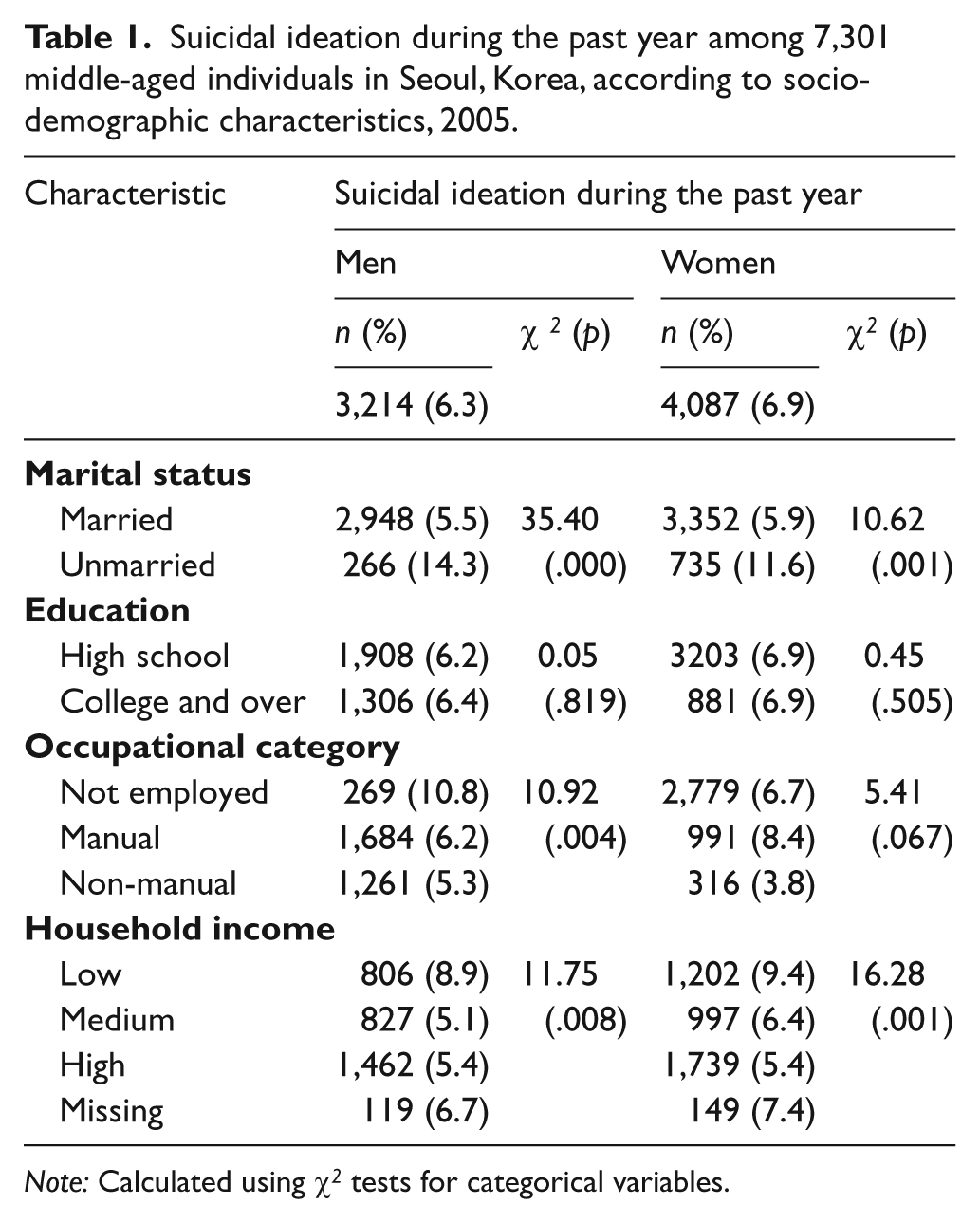
Table 1 presents the data on the prevalence of suicidal ideation during the last year according to socio-demographic variables. Marital status and household income were significantly associated with suicidal ideation in both middle-aged men and women. Occupational category was significantly related to suicidal ideation among middle-aged men only. Suicidal ideation within the last year was significantly associated with health behaviours and health status. Alcohol use, poor self-rated health, stress and depressed feelings were significantly associated with suicidal thoughts in both men and women. Difficulties related to physical functioning were significantly related to suicidal ideation only in middle-aged women (Table 2).
Suicidal ideation during the past year among 7,301 middle-aged individuals in Seoul, Korea, according to socio-demographic characteristics, 2005.
Note: Calculated using χ2 tests for categorical variables.
Factors associated with the prevalence of suicidal ideation during the past year among 7,301 middle-aged individuals in Seoul, Korea, 2005.
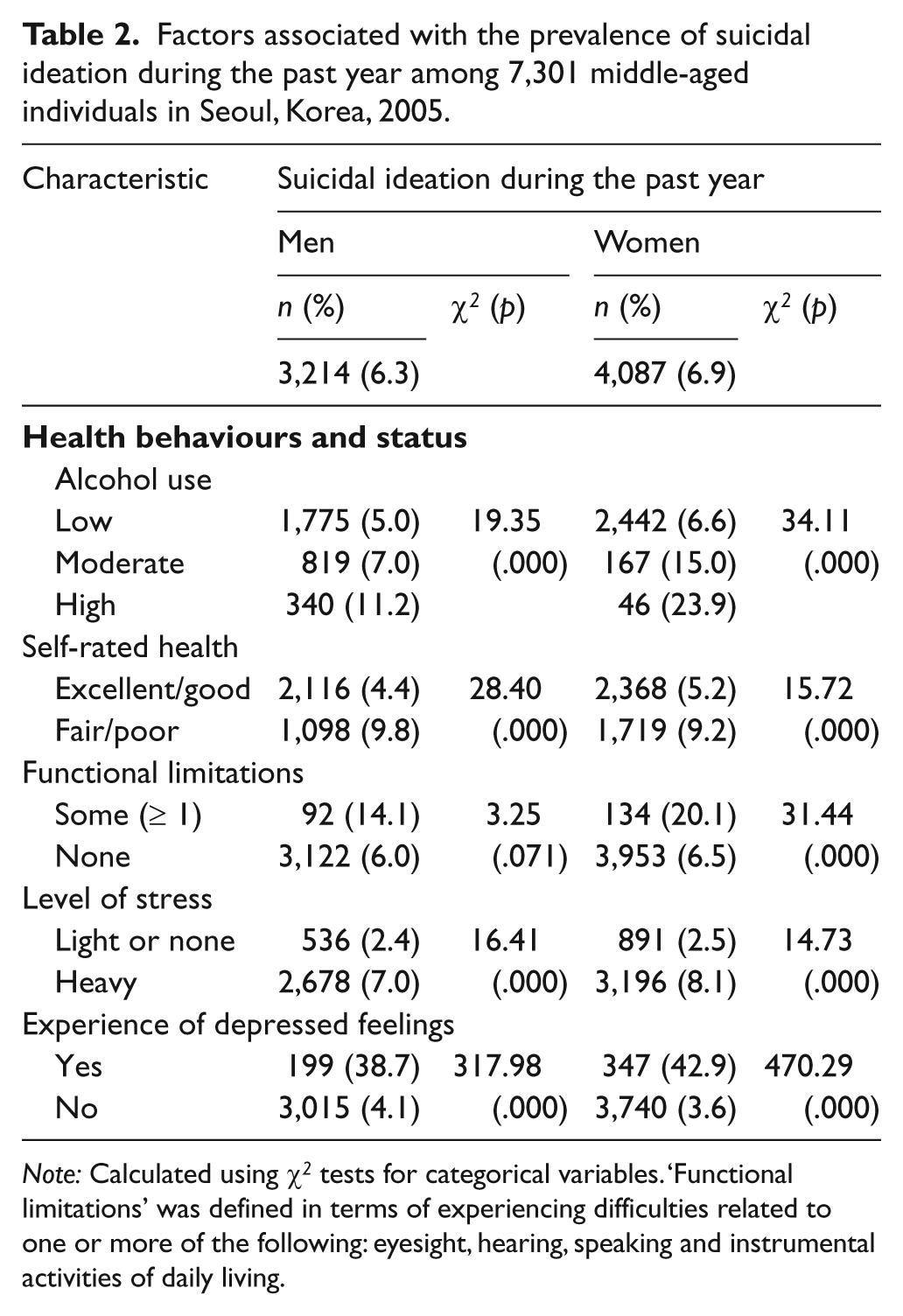
Note: Calculated using χ2 tests for categorical variables. ‘Functional limitations’ was defined in terms of experiencing difficulties related to one or more of the following: eyesight, hearing, speaking and instrumental activities of daily living.
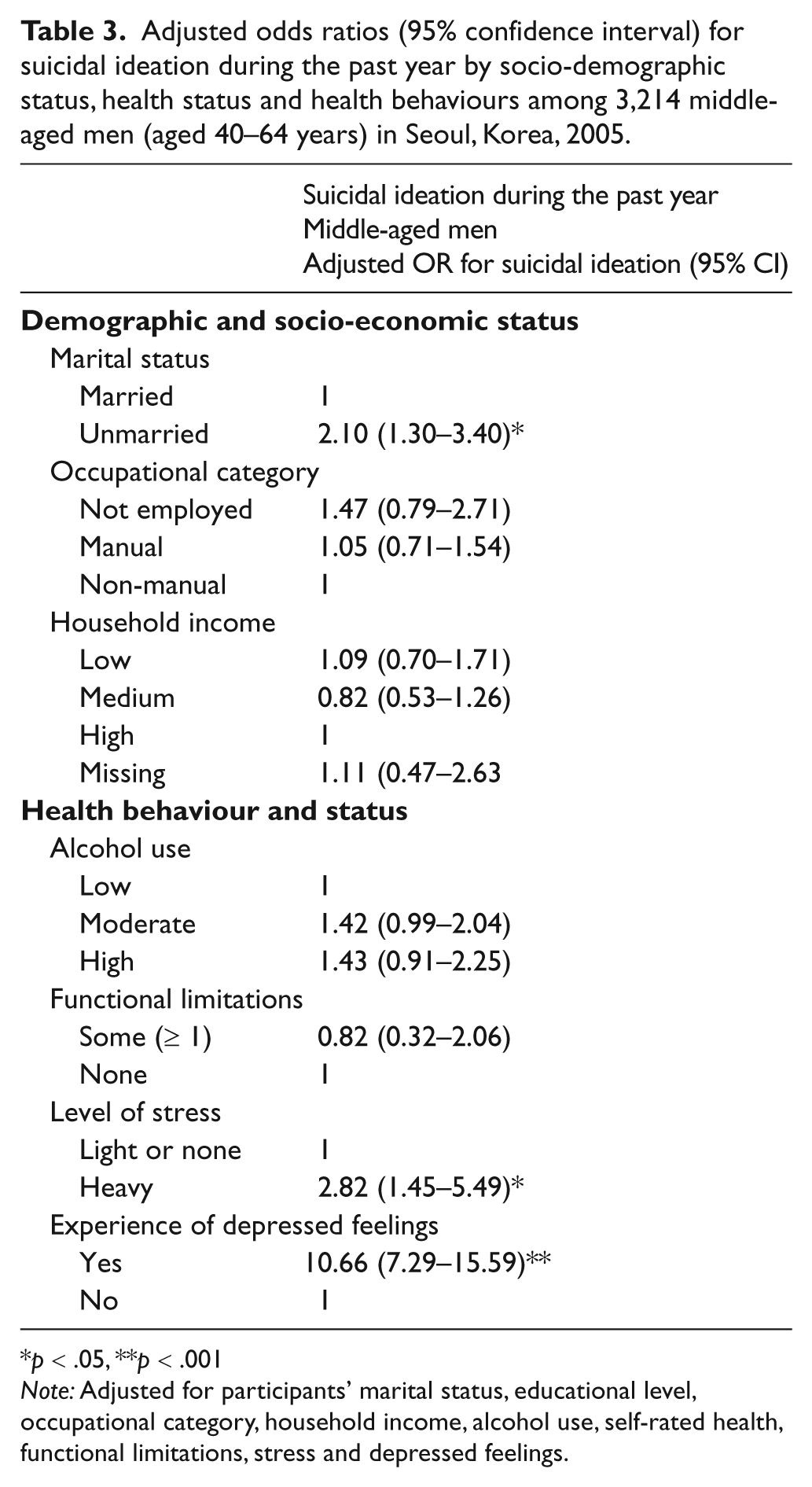
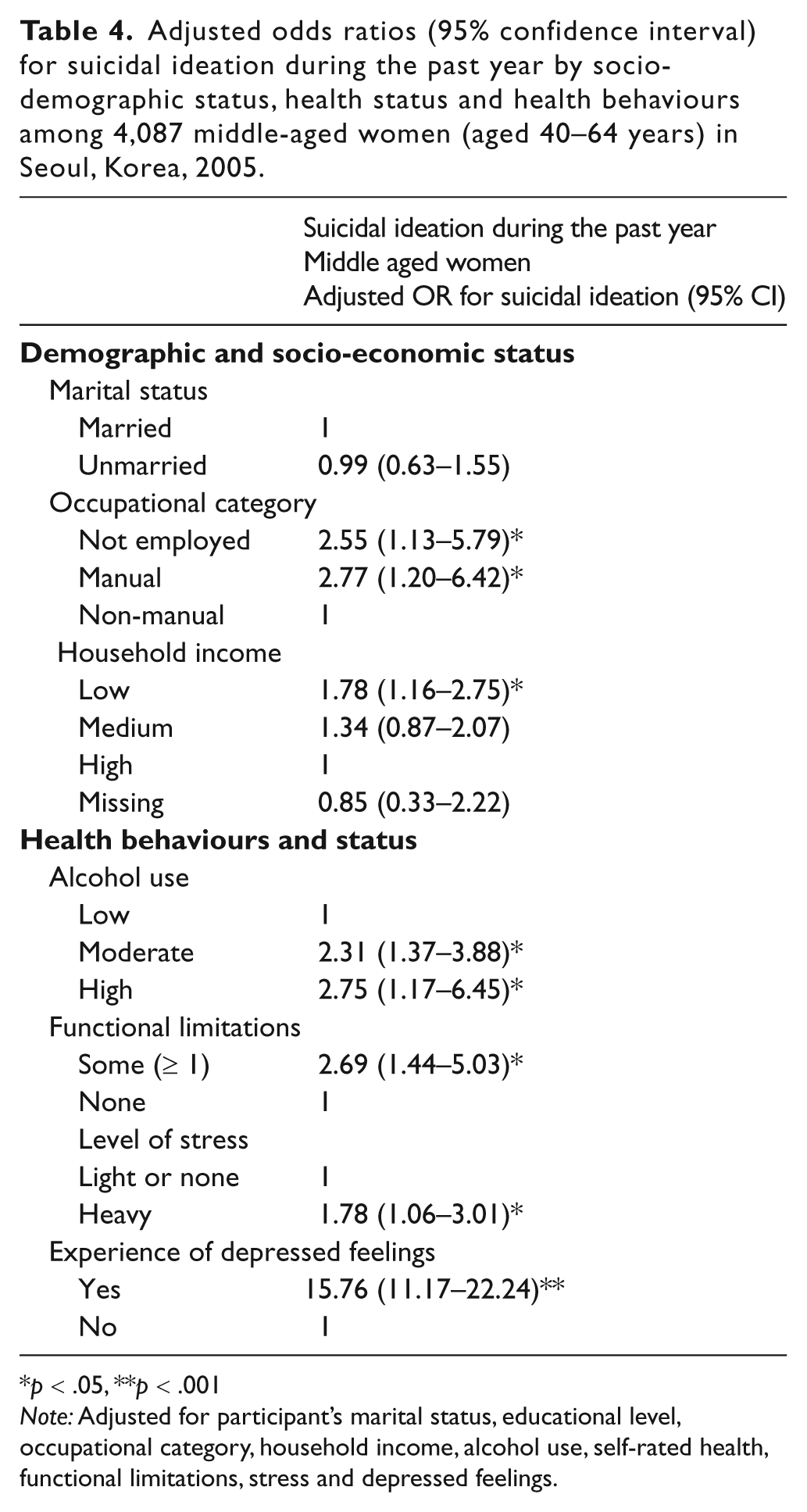
Multiple logistic regression analyses were performed to explore the relationships of specific socio-demographic factors and health behaviours with suicidal ideation (Tables 3 and 4). The analyses were performed after controlling for marital status, educational level, occupational category, household income, alcohol use, self-rated health, functional limitations, stress and depression. Interestingly, manual labour (OR = 2.77, 95% CI = 1.20–6.42) and low household income (OR = 1.78, 95% CI = 1.16–2.75) were independently significantly associated with suicidal ideation among middle-aged women. The analyses showed that when non-manual workers were used as the reference group, not being employed outside of the home (i.e. housewives) was independently associated with suicidal ideation among middle-aged women (OR = 2.55, 95% CI = 1.13–5.79). The absence of a spouse was significantly associated with suicidal thoughts among middle-aged men (OR = 2.10, 95% CI = 1.30–3.40).
Adjusted odds ratios (95% confidence interval) for suicidal ideation during the past year by socio-demographic status, health status and health behaviours among 3,214 middle-aged men (aged 40–64 years) in Seoul, Korea, 2005.
p < .05, **p < .001
Note: Adjusted for participants’ marital status, educational level, occupational category, household income, alcohol use, self-rated health, functional limitations, stress and depressed feelings.
Adjusted odds ratios (95% confidence interval) for suicidal ideation during the past year by socio-demographic status, health status and health behaviours among 4,087 middle-aged women (aged 40–64 years) in Seoul, Korea, 2005.
p < .05, **p < .001
Note: Adjusted for participant’s marital status, educational level, occupational category, household income, alcohol use, self-rated health, functional limitations, stress and depressed feelings.
The experience of depressed feelings for at least two weeks was associated with suicidal ideation among both middle-aged men and women, but this correlation was especially strong among middle-aged women (men, OR = 10.66, 95% CI = 7.29–15.59; women, OR = 15.76, 95% CI = 11.17–22.24). High levels of stress related to life circumstances or events were significantly associated with suicidal thoughts among both genders, but this correlation was especially pronounced in middle-aged men (men, OR = 2.82, 95% CI = 1.45–5.49; women, OR = 1.78, 95% CI = 1.06–3.01). Additionally, heavy alcohol use (OR = 2.75, 95% CI = 1.17–6.45) and difficulties in physical functioning (OR = 2.69, 95% CI = 1.44–5.03) were significantly associated with suicidal thoughts only in middle-aged women.
Discussion
The aim of this study was to investigate the association between socio-demographic status and suicidal ideation among middle-aged adults. The results supported both hypotheses in that they showed significant associations between suicidal ideation and socio-demographic variables as well as significant gender differences in these associations. The outstanding finding of this study was that the highest rate of suicidal ideation was observed among middle-aged women engaged in manual labour (i.e. blue-collar workers). The absence of a spouse was significantly associated with suicidal ideation among middle-aged men. The other major finding was that the experience of depressed feelings for at least two weeks was most strongly associated with suicidal ideation among middle-aged women, whereas high levels of stress were most strongly associated with suicidal ideation among middle-aged men. Additionally, alcohol use and difficulties in physical functioning were significantly associated with suicidal thoughts in middle-aged women.
The association between occupational category and suicidal ideation among middle-aged women
The results of this study showed that the highest rate of suicidal ideation was experienced by female workers engaged in blue-collar labour. This finding has at least two potential explanations.
First, job insecurity and financial load may increase the suicidal ideation of middle-aged women working in blue-collar jobs. Due to the economic recession, many Korean middle-aged men became unemployed, and women were compelled to find jobs outside the home. However, the job security of middle-aged working women is unstable. Indeed, 55.1% of employed women in their 40s or older were employed in temporary or part-time blue-collar jobs related to sales, the service industry or manufacturing (Korea National Statistical Office, 2005). Furthermore, women may experience heavy financial burdens during middle age; these include their husbands’ retirement or unemployment, increasing educational costs for children and the possibility of widowhood. ‘Economic difficulties’ accounted for the suicidal ideation of 41.1% of women 40 years and older compared with 31.3% of women aged 20–40 years (Korea National Statistical Office, 2008). Therefore, efforts to prevent suicidal ideation in middle-aged women should provide support for overcoming financial difficulties and reinforcing stable employment.
Second, manual labour generally involves excessive work in the context of scarce rewards, which may negatively affect the psychological well-being of middle-aged women in blue-collar jobs. Previous studies have reported that female workers in blue-collar jobs who worked under certain stressful working conditions (i.e. high-intensity jobs with long hours) experienced various mental health problems, including depression, loneliness and suicidal thoughts (OECD, 2008; Samarasinghe & Ismail, 2000). The identification of a direct pathway between factors relating to manual labour and suicidal ideation is difficult, given that a mental disorder can lead to suicidal ideation. However, the results of the present study showed high rates of suicidal ideation in women engaged in blue-collar jobs after controlling for psychological conditions such as stress and depression.
The association between marital status and suicidal ideation among middle-aged men
The multivariate analysis showed that being unmarried was significantly associated with suicidal ideation among middle-aged men. The results of the present study are consistent with those of earlier studies that reported that unmarried status was a risk factor contributing to suicidal ideation, particularly in men. Previous studies have demonstrated that unmarried men (i.e. single, divorced or widowed) were more likely than married men to experience suicidal thoughts (Casey et al., 2006; Park et al., 2010; Smith, Mercy, & Conn, 1988). Several possible explanations can be offered for these results. The absence of instrumental or emotional support from a spouse may increase suicidal ideation in unmarried middle-aged men. In general, men have fewer sources of social support than do women, and spouses are sometimes the only source of such support for men (Möller-Leimkühler, 2003). Indeed, life changes such as declining health and loss of work may be difficult to endure for middle-aged men without spouses. A previous study demonstrated that lack of emotional support increased the likelihood that middle-aged men would experience suicidal thoughts (Park et al., 2010). Additionally, the absence of or reduction in familial responsibilities and interactions may lead to increased suicidal ideation in unmarried middle-aged men. Indeed, divorced and single middle-aged men have fewer of the familial responsibilities associated with parenthood and a patriarchal culture than do married men. An earlier study demonstrated that higher suicide rates among divorced men were attributable to a relative lack of familial interaction (Stafford & Gibbs, 1988).
Other factors independently associated with suicidal ideation
In the present study, the middle-aged women who had experienced depressed feelings for at least two weeks had the highest rate of suicidal ideation. Thus, depression was the major risk factor for suicidal ideation in women (Schaffer et al., 2000; Vilhjalmsson et al., 1998; Wetzel, 1976). However, the cause of depression in middle-aged women may include various physical disabilities, menopause and chronic diseases (Brown & Vinokur, 2003; Casey et al., 2006; Nicol-Smith, 1996). However, the present study does not permit interpretation of the direction of the association between depression and suicidal ideation among middle-age women. It is clear that longitudinal studies are required to address these issues.
Frequent alcohol use was also associated with suicidal ideation in middle-aged women, whereas perceived stress was significantly associated with suicidal thoughts in middle-aged men. The results of this study are consistent with those of an earlier study that reported alcohol abuse and high levels of heavy stress as risk factors for suicidal ideation among middle-aged women and men, respectively (Vilhjalmsson et al., 1998; Wilsnack, Wilsnack, Kristjanson, Vogeltanz-Holm, & Windle, 2004). The present study indicates that physical limitations were significantly associated with suicidal ideation among middle-aged women after controlling for other potential risk factors. Although determination of a distinct pathway between physical limitations and suicidal ideation is difficult, problems related to activities of daily living or sensory deprivation (e.g. impaired hearing or eyesight) can induce psychological distress that can lead to suicidal ideation (De Leo, Hickey, Meneghel, Cantor, & Franzp, 1999; Dennis et al., 2009). Middle-aged women, who have a variety of family roles, may be affected more seriously than middle-aged men by physical limitations.
Limitations
Several empirical issues need further consideration in future research on suicidal ideation. As a cross-sectional study, this research measured suicidal ideation during the past year; however, several factors may contribute to the formation and dissipation of suicidal ideation. For instance, high levels of stress due to negative life events may prompt people to think about suicide, but ongoing life strains may sustain such thinking. Further multivariate longitudinal research is needed to identify the causal pathways involved in the formation and maintenance of suicidal ideation. Second, the possibility of measurement error is also of concern. Several variables, including depressed feelings, were not measured with structured tools. On the other hand, the large sample size lends credence to the findings. Third, the definition of unmarried could not be subdivided due to the small sample size. The total number of unmarried middle-aged men was 266 (9.7%); this included single (n = 75, 2.3%), divorced (n = 49, 1.5%), separated (n = 138, 4.3%) and widowed (n = 53, 1.6%) individuals. Despite the possible constraints on interpreting our data, the higher rate of suicidal ideation among unmarried middle-aged men is likely to be of empirical significance. Additionally, because cohabiting and common-law couples were not included in the ‘married’ category, the possibility of selection bias must be considered. ‘Married’ in the present study included only those who were legally married. In South Korea, cohabiting individuals, both homosexual and heterosexual, do not have legal status; therefore, most representative surveys define ‘married’ as legally married.
Conclusions
We must recognize that suicide is not an individual problem but is rather a collective social issue. Suicide in South Korea has been treated as a dishonour to both individual and family and as a social failure. However, the rapid increase in suicide rates has motivated the implementation of prevention strategies by central and local governments. In 2008, the Korean government announced its Five-Year Suicide Prevention Plan, which aimed to reduce the suicide rate to fewer than 20 persons per 100,000 by 2013 (Korean Ministry of Health, Welfare and Family Affairs, 2008). However, the government’s plan has focused on reducing the rates among all groups but lacks special strategies for different age groups and for men and women.
The findings of the present study highlight the need for suicide-intervention services based on gender-specific considerations, especially when targeting middle-aged individuals. These should include helping middle-aged women employed in blue-collar jobs overcome financial difficulties and maintain secure employment, as well as intensive counselling services for divorced or widowed middle-aged men. Additionally, various mental health services, including services directed at stress management, alcohol consultation and treatment, and the early detection of depression should be available to middle-aged individuals at high risk for suicidal ideation.
Footnotes
Acknowledgements
We acknowledge the support provided by the Hanyang Women’s University. The authors would like to give special thanks to Professor Dinesh Bhugra (Institute of Psychiatry, King’s College London) and an anonymous reviewer for valuable comments.