







Abstract
Background:
The content and nature of media reports could influence suicide prevention measures.
Aim:
To evaluate contemporary online media reports’ compliance with guidelines for responsible reporting of suicidal acts from Indian resources.
Methods:
We included English and Hindi articles for reports concerning suicide, published by local and national media sources for 30 consecutive days from the day of death of a celebrity by alleged suicide. The search was performed in Google News with predefined search queries and selection criteria. Two independent investigators did data extraction. Subsequently, each news report was assessed against guidelines for the responsible reporting of suicide by the WHO and the Press Council of India.
Results:
We identified 295 articles (Hindi n = 172, English n = 123). Results showed more than 80% of the media reports deviated from at least one criterion of the recommendations. A maximum breach was seen in the news article’s headlines, sensational reportage and detailed suicide methods description. Significant differences were seen in the quality of English and Hindi reporting and reporting celebrity and noncelebrity suicide. Additional items revealed were reporting suicide pacts, linking multiple suicides in a single news report, allowing user-generated threads and linking Religion and suicide.
Conclusion:
Measures are required to implement reporting recommendations in the framework of a national suicide prevention strategy.
Keywords
Introduction
The sustainable development goal aimed for a one-third reduction in the death by suicide by the year 2030. In line with this objective, the World Health Organization published, ‘Preventing suicide: a global imperative’ to understand the magnitude of the problem and to lay down actionable steps based upon the country’s resources and context (WHO, 2014). According to this report, nearly 40% of annual global suicide was accounted for by India and China (WHO, 2014). The official suicide rate in India is published by the National Crime Records Bureau (NCRB). The latest report, published in 2018, showed a 3.6% increase in the absolute numbers of deaths by suicide compared to 2017, and the rate was 10.2 per 100,000 populations (National Crime Records Bureau [NCRB], 2018). The rate was similar to the global age-standardised suicide rate (WHO, 2014). The absolute number of death by suicide was more than AIDS-related and maternal mortality combined (Armstrong & Vijayakumar, 2018).
In India, a public health approach to suicide prevention has been gradually gaining momentum to deal with the magnitude of the problem and galvanise the sustainable development goal’s objectives. Regulating the media reporting is one of those public health strategies (WHO, 2014). Media regulation could be more relevant for India as it is the second-largest newspaper market in the world. The WHO published a guideline, updated 2017, based on the premise that media reports’ content and nature could enhance or weaken the suicide prevention measures. Based on this, the Press Council of India (PCI) released a guideline in September 2019 (Vijayakumar, 2019). The recommendations were mostly similar to the WHO guidelines except for adding a new item: ‘Use photographs, video footage, or social media links.’ It might be interesting to examine how diligently the contemporary media is adhering to these recommendations following its publication.
On June 14th 2020 a young and promising Bollywood actor allegedly died by suicide, and not surprisingly, this event was followed by a barrage of media reporting, primarily but not limited to the index event. Evidence suggests that ‘celebrity suicide’ increases the odds of subsequent suicide by six times (Niederkrotenthaler et al., 2012). This effect is known as the ‘Werther effect’ or copycat suicide. Therefore, the event on June 14th and consequent higher media reporting presented scope for examining the compliance to the suicide reporting guidelines. Previously published studies on the compliance to guidelines were either limited to printed newspapers and the English language or restricted to particular regions of the country (Armstrong et al., 2018; Harshe et al., 2016; Jain & Kumar, 2016). Moreover, these researches were done before the publication of the Indian guideline. Barring one, none of these were anchored to any actual event of celebrity suicide. Although there were a couple of recently published papers in this area, these were restricted to articles published quickly on a particular celebrity suicide (Ganesh et al., 2020; Menon, Arafat, et al., 2020). We studied online media reports for a month after the event as the impact was likely to be levelled off in 4 weeks (Jeong et al., 2012). A large majority of the best selling newspapers in India have a digital version (e-paper). Hence, an online search on Google news, in addition to the exclusive online media reports, is likely to uncover the reports of the online editions of the print media as well. Besides, there were two other reasons for screening the media reports through Google News: (a) the COVID-19 pandemic has resulted in nearly 75% decline in the newspaper sales in India (The Times of India, 2020), (b) India has a growing number of internet users, and it is second largest in the world. More than 98% of internet users use Google as their search engine (Mishra & Chanchani, 2020).
The present study’s primary objectives were (a) to assess the level of adherence of the online media to the recommendations on the responsible reporting of suicidal acts in India. The secondary objectives were to (a) compare the degree of compliance to the guidelines between (i) English and Hindi media reports, (ii) reports describing the death of a celebrity by suicide and noncelebrity suicides, (iii) national and local news reports (b) to inspect for additional items on potentially harmful or protective characteristics, which have not been covered in the guidelines of WHO or PCI.
Methods
For English News- The keyword ‘Suicide’ was added on the Google search Engine. To make it more inclusive and to reduce any chance of leaving suicide news, other related key terms like ‘Self–harm,’ ‘self-harm,’ ‘Hanging,’ ‘Poisoning,’ ‘Overdose,’ ‘Depression,’ ‘Suicide help’ ‘Suicide Hotline’ and ‘Suicide Helpline’ were also used.
For Hindi News- The related keywords in the Hindi language like ‘Atamhatyaa,’ ‘Khudkushi,’ ‘Fanda,’ ‘Jehar,’ and ‘suicide’ were used.
We restricted our searches to the first ten pages (100 hits) for the main keyword ‘suicide’ because beyond that, the news articles are unlikely to be of relevance and impact public perception. We had to restrict the first three pages per search term for the rest of the keywords as beyond that; we could only find duplicate or irrelevant reports (Figure 1).
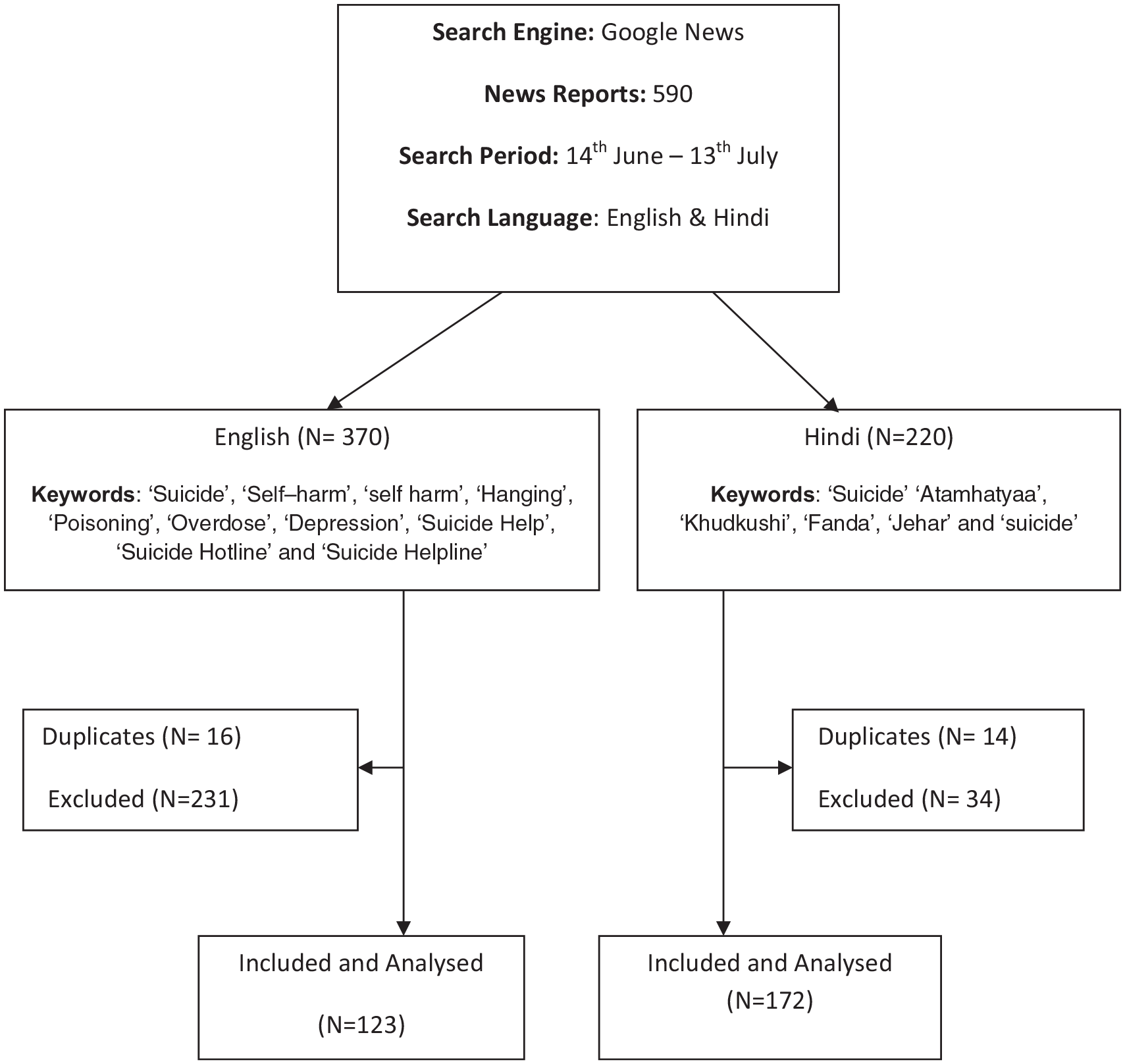
Search strategy and screening process.
Each report was then evaluated against the guidelines for responsible suicide reporting by India’s WHO and Press council (Vijayakumar, 2019). Assessment of each news report was done on two domains – harmful item characteristics and protective item characteristics (Niederkrotenthaler et al., 2020).
We searched for the Harmful item characteristics in the content of the headline and body of the report. The headline’s content included mention of the word ‘suicide,’ suicide method and life events. We also looked for the use of emotionally laden words. We examined the main report for the identity of the person (name, age, gender and occupation, Photographs/images/video/social media links), method (step-by-step details of the act), suicide location/site, use of sensational language, suicide note, citations from the suicide note, effects on bereaved and interview with bereaved.
Protective item characteristics included: focus on suicidal ideation, focus on prevention program, focus on suicide research, expert opinion reported; myths debunked, contact information for support service given, stories of how to cope with life stressors or suicidal thoughts, suicide-related statistical data reported from reliable sources and suffering of a suicidal person resulting from the suicidal act.
Each variable was coded as 1 (Present), 2 (Absent), or Not Applicable (9). The description of steps involved in committing suicide was coded as yes if a minimum of two consecutive stages of the suicide were described. Investigators involved in data extraction were given uniform instructions on coding. The investigators used to have WhatsApp calls to resolve any ambiguity in coding. The news links of individual reports were added to the separate word document. Each included information given the same number as on the SPSS sheet to facilitate discussions on coding, cross checking and maintain data quality.
Results
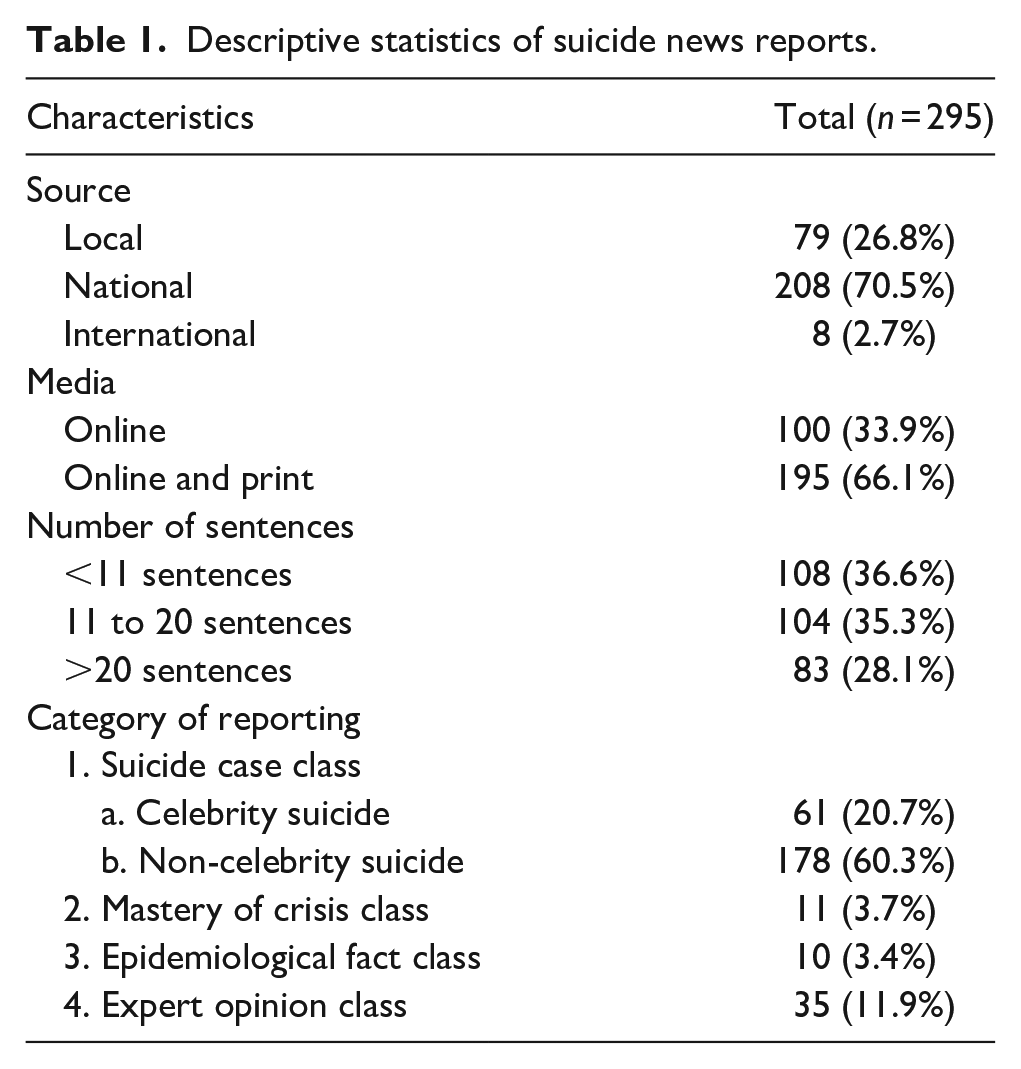
Two hundred ninety-five news reports met inclusion criteria; 123 reports in English and 172 in the Hindi language. Among those, the majority of them were from national sources (70.5%), related to noncelebrity suicide (60.3%) less than 20 sentences in length (72%), and were from news agencies which offer both online and print platform (66.1%) (Table 1).
Descriptive statistics of suicide news reports.
Compliance with suicide reporting guidelines
Potentially harmful characteristics
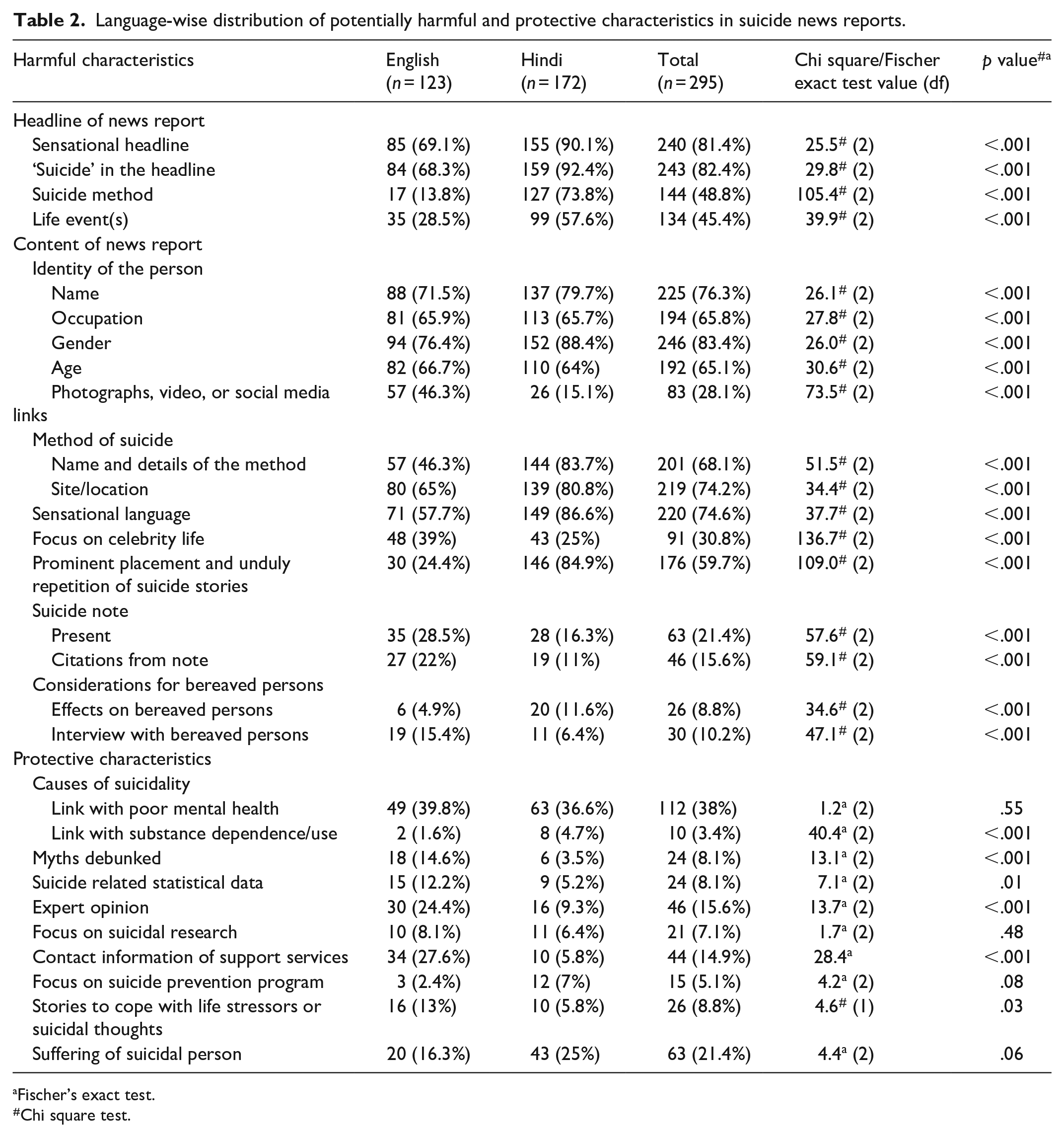
The majority of news reports had sensational headlines (81.4%), with almost half of them had a mention of suicide method (48.8%) and life events (45.4%). Following life events or triggers were mentioned: failure in love (n = 1), domestic violence (n = 3), financial constraints (n = 3), COVID-19 (n = 8), Celebrity suicide (n = 20). The identity of the involved person with mention of name (76.3%), gender (88.4%), age (65.1%) and occupation (65.8%) was disclosed in the majority of the reports. The photographs/videos/social media links of the deceased were also present (28.1%). 46 out of 63 (73%) news reports had citations from the suicide note. Sensational language with a description of the method and location of the event was seen in three-fourth of the stories (Table 2).
Language-wise distribution of potentially harmful and protective characteristics in suicide news reports.
Fischer’s exact test.
Chi square test.
Potentially protective characteristics
More than a third (38%) of the reports had linked suicide with mental health issues. However, only 10 (3.4%) reports mentioned evidence of substance abuse. Focus on suicidal research (7.1%), suicide prevention program (5.1%), the contact information of support services (15%), myths debunked (8%), suicide-related statistical data (8%), expert opinion (15.6%) was found in only very few reports (Table 2).
Comparing the adherence to reporting guidelines
Compliance in English versus Hindi media
When a Language-wise comparison of reports was made, Hindi news reports headlines were found to be more sensational with mention of suicide method and life events. The identity of the person (79.7%), details (83.7%) and location (80.8%) of the suicide method, use of sensational language (86.6%), prominent placement and undue repetition of suicide stories (84.9%) was more in the body of Hindi news report as compared to English ones. However, the placement of photographs/videos/social media links was significantly higher (46.3%) in English reports. Similarly, almost all of the protective characteristics were found to be less in Hindi reports. The contact information of support services was given in only ten Hindi stories compared to 34 English news reports. All the differences were found to be statistically significant (Table 2).
Adherence to reporting guidelines in celebrity versus noncelebrity suicide
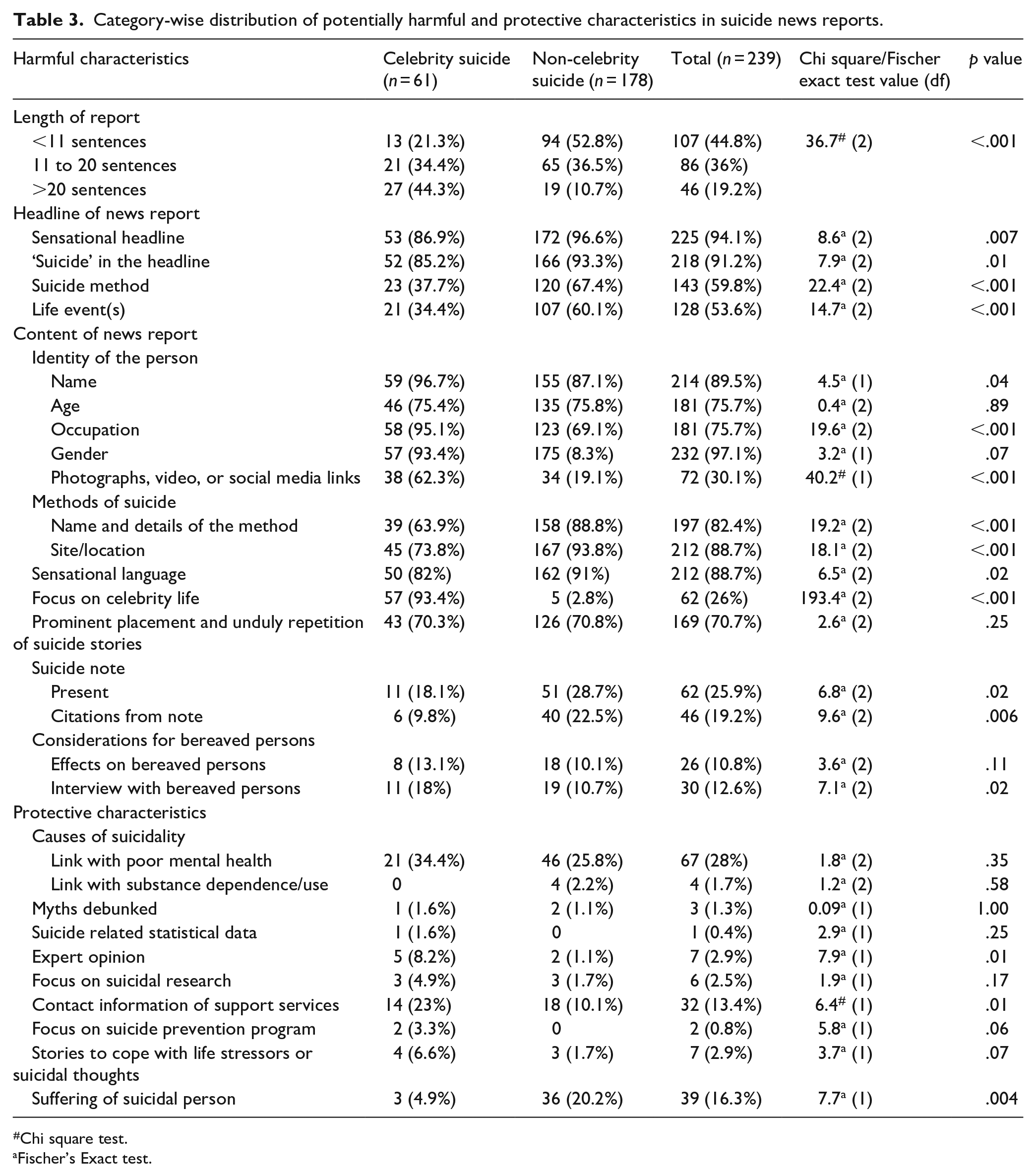
The noncelebrity suicide news reports had more breaches in guidelines with respect to headlines of news reports, with almost all had sensational headlines (96.6%) with ‘suicide’ in the headline (91.2%). The identity of the celebrity with mention of age (96.7%), occupation (95.1%) and photographs/videos (62.3%) were found to be statistically higher in celebrity suicides. However, the details about the method (88.8%) and location (93.8%) of suicide were significantly greater in noncelebrity suicide. The mention of protective characteristics like contact information of support services (23%) and expert opinion (8.2%) was considerably higher in celebrity suicides (Table 3).
Category-wise distribution of potentially harmful and protective characteristics in suicide news reports.
Chi square test.
Fischer’s Exact test.
Adherence to guidelines in national versus local media
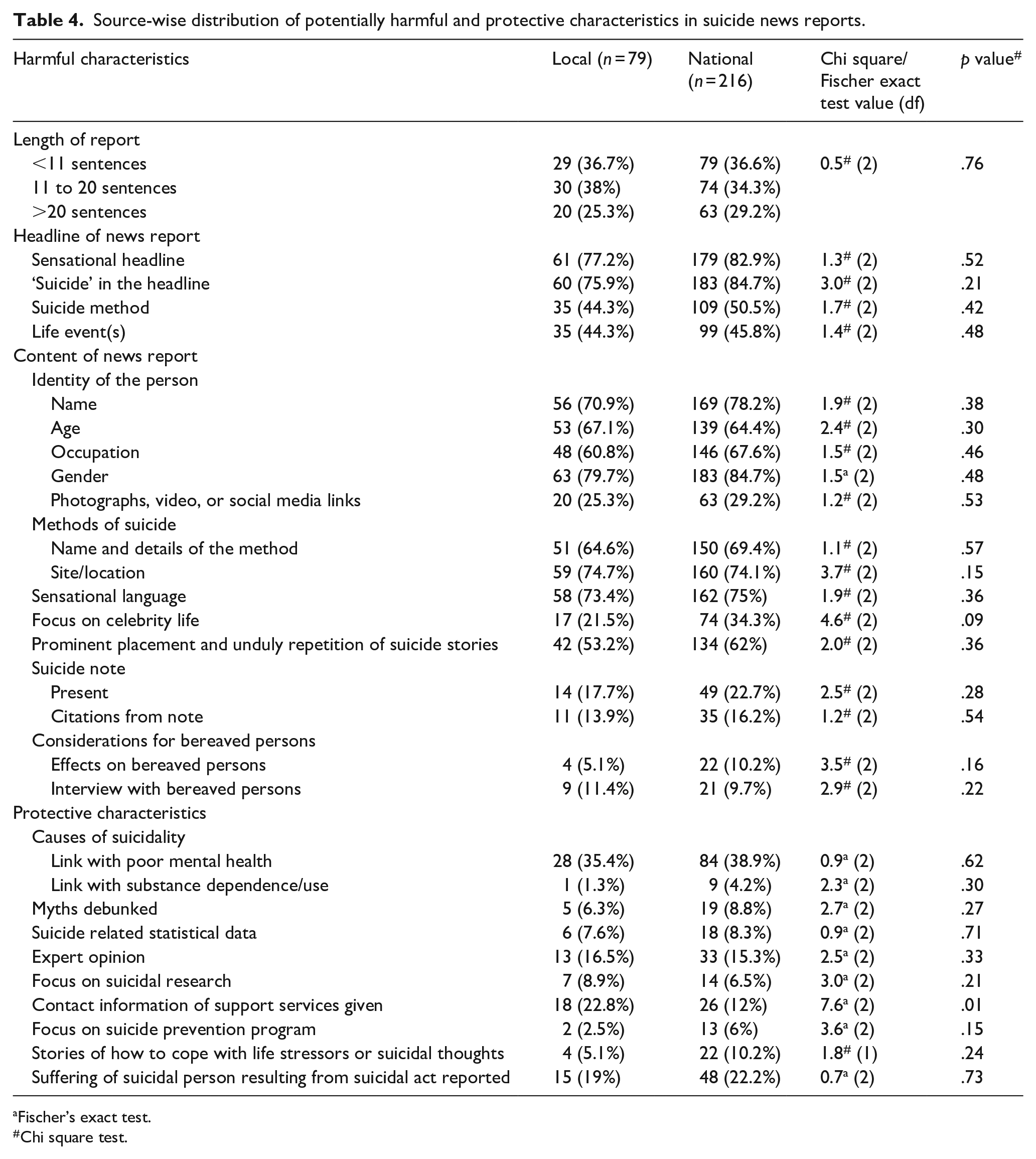
As shown in Table 4, the headlines of National news reports had more breaches from recommended guidelines. Similarly, almost all of the news report’s harmful characteristics were reported more in National sources compared to local news reports. However, none of the differences were found to be statistically significant. Among the helpful variables, support services’ contact information was significantly higher (22.8%) in local news reports.
Source-wise distribution of potentially harmful and protective characteristics in suicide news reports.
Fischer’s exact test.
Chi square test.
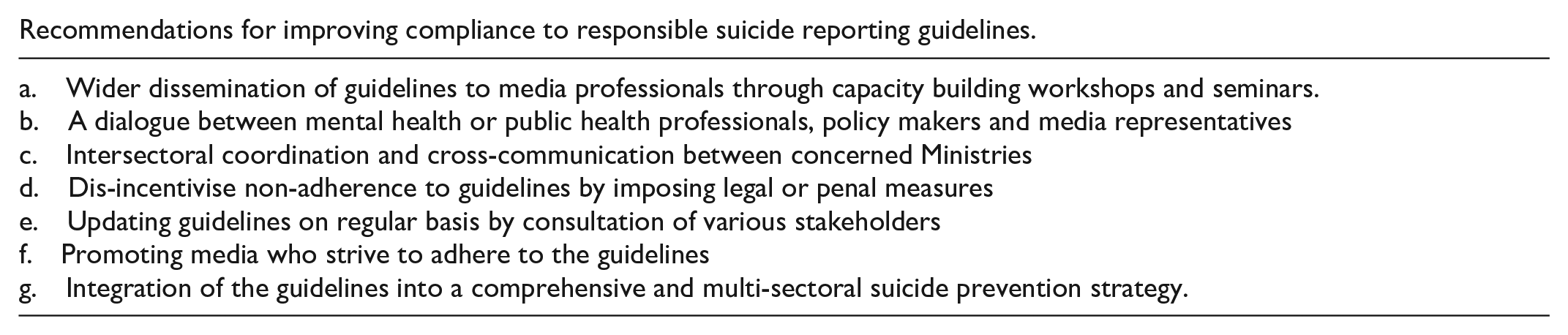
Recommendations for improving compliance to responsible suicide reporting guidelines.
Tweets from celebrities (n = 11)
User-generated comments (n = 2)
News reports discussing Religion in suicide (n = 2)
Suicide Pact (n = 2)
Multiple suicides reported in one article (n = 6)
Discussion
The present study evaluated the adherence to the guideline for suicide reporting in 295 online, and print media (online edition) reports from India, published during 1 month following an alleged celebrity suicide. Although there were a number of published media analyses posing similar research question (Armstrong et al., 2018; Chandra et al., 2014; Ganesh et al., 2020; Kar et al., 2020; Menon, Arafat, et al., 2020; Menon, Kar, et al., 2020), the scope of our report was relatively broad because of the following reasons: (a) we have included both the national and regional news media, (b) unlike the two other recently published studies, we included reports published during 1 month, (c) used a broader, systemic, and reproducible search strategy to incorporate both celebrity and noncelebrity suicide, and articles reporting on ‘categories’, (d) assessed articles in both English and Hindi, (e) combined the WHO and Press Council of India’s guideline for responsible media reporting to contextualise our study results, (f) classified the reports in four categories for its potential public health impact (Niederkrotenthaler et al., 2010), and (g) descriptive analysis was also done to explore potentially harmful and protective characteristics of media reporting.
The overall results showed more than 80% of the media reports deviated from at least one guideline criterion. The findings revealed highly skewed media reporting with potentially harmful characteristics (undermining the protective features). For example, ‘use of sensational language’ was discovered in nearly 75% of the reports, whereas contact information of support services was provided only in 15% of articles. The maximum breach of the guideline was seen in the headlines of the news article, sensational reportage, and a detailed description of the suicide method. Another significant breach was the ‘citation of suicide notes.’ Sometimes the citations were as vivid as a video message or snapshot is taken from a Whatsapp message of the deceased. This would sensationalise the news article and might have a more pronounced negative impact. The low adherence to the guideline has been observed in other Indian studies, across national and regional media reports, and irrespective of the language of reporting (Armstrong et al., 2018; Chandra et al., 2014; Ganesh et al., 2020; Menon, Kar, et al., 2020). Media analyses from other south-east Asian countries, China, the U.S., U.K. and Australia, also showed poor compliance with the recommendations (Fu et al., 2011; Fu & Yip, 2008; Menon, Kar, et al., 2020; Pirkis et al., 2002; Tatum et al., 2010; Utterson et al., 2017). Therefore, media reporting with harmful characteristics is not limited to culture and geography. It is perhaps driven by a misconceived perception that more sensational content and more engaging to the readers, enhancing publishers’ visibility and profit (Sumner et al., 2020).
Comparison of English and Hindi news reports showed a significantly higher frequency of reports with potentially harmful characteristics and lower frequency of helpful features in Hindi media reports. This finding was in line with the previously published reports, where the English news articles were observed to be more compliant with the reporting guidelines with a better reportage of preventive information (Chandra et al., 2014; Menon, Arafat, et al., 2020; Menon, Kar, et al., 2020). However, the existing literature compared English media reports with either a regional language or clubbed multiple local languages and Hindi. Although India has 22 national languages, nearly 45% of people in India were native Hindi speakers (Census, 2011). In light of this vast Hindi-speaking population, our results of lower adherence to guidelines in Hindi media reports assumed broader public health significance. The reasons for a difference in the language of reporting remain speculative: (a) less awareness of guidelines or impact of non-adherence on public health and (b) a greater perceived need to attract readers’ attention because of greater competition has given a higher number of Hindi news media.
Additionally, we compared the news reports on celebrity and noncelebrity suicide. To the best of our knowledge, few studies have done it. However, the comparison was necessary for a couple of reasons: (a) evidence suggests a disproportionately higher impact of reporting celebrity suicide (than general reporting of suicide) in the general population (Niederkrotenthaler et al., 2020). Therefore, we expect a greater degree of adherence to guidelines in reporting deaths of celebrities by suicide, (b) using the celebrity suicide to spread crucial public health message might be protective, (c) attract the media attention to exercise greater caution while reporting celebrity suicide and using it positively and (d) reporting noncelebrity suicide outnumbers the celebrity suicide. Our study results showed reports on celebrity suicides were more likely to report potential protective characteristics and less likely to reports harmful characteristics than noncelebrity suicide. The difference might indicate greater attention and caution while reporting the death of a celebrity by suicide. Nevertheless, the breach in the guideline was seen in more than 85% of celebrity suicide reports.
Comparison of the adherence to guidelines between local and national media sources did not show significant differences except for ‘information provided for the support services,’ which occurred more frequently in the local news articles. The possible reason could be greater knowledge of local support services and the perceived utility of the information. Previous research from the U.K. showed local news articles were more compliant to the recommendations than the national media sources. They speculated that due to their proximity to the deceased subjects, local media might have a greater sensitivity towards the bereaved family and local community (Utterson et al., 2017).
When we classified the news articles into the categories proposed by Niederkrotenthaler and colleagues, we discovered more than 80% of the articles fell into the ‘suicide class’ category. Only 4% of media reports conformed to the ‘mastery of crisis’ class, which could negatively influence the suicide rates (Niederkrotenthaler et al., 2010).
Further analysis of the media reports revealed some additional items with potentially harmful or protective effects: reporting suicide pacts, linking multiple suicides in one report, allowing user-generated threads on suicide reports, presenting overtly simplified causality linking Religion and suicide. Reporting of suicide pacts and multiple suicides in one report might have a negative impact. A suicide pact is the decision of two or more people to die together. Although it is rare, the dramatic and usual presentation could potentially result in a greater impact on public perception (Prat et al., 2013). Linking of multiple suicide reports reported from elsewhere (Utterson et al., 2017). Neither the WHO nor the Indian guideline has discussed these characteristics. The user-generated comments in around 3% of the reports were also observed in another media analysis in the U.K. (Utterson et al., 2017). Previous media reports suggested that user-generated discussion fora might increase suicidal ideations among adolescent users (Dunlop et al., 2011). Presenting a simplified and linear version of suicide causality ignores the complex, multifactorial, bio-psycho-social aspects of suicidal behaviour and justifies or rationalises suicidal acts under stressful life circumstances (De Berardis et al., 2018). Finally, we identified reports linking Religion and suicidality. In general, Religion has a protective effect against suicide, but the effect is more pronounced in Western culture, countries with religious homogeneity and older populations (Wu et al., 2015).
Our results should also be discussed in the context of the ongoing COVID-19 pandemic. The ‘digital infodemic’ resulting from an increased tendency for information seeking and increased consumption of information has created a ripe ground for the spread of mis-information and its subsequent impact (Banerjee & Rao, 2020). In this backdrop, the findings of non-adherence with suicide reporting guidelines assumes more importance as the potentially harmful characteristics are likely to have greater impact at the population level.
Based on our results, we would like to convey the following message to the researchers and policymakers: (a) having a national guideline might not always be enough. However, there were reports from Switzerland that implementing new policies improved the quality of reporting and might also have reduced suicide rates; reports from the U.S. suggested otherwise (Etzersdorfer et al., 2004; Michel et al., 2000). The level of digital and media literacy vary across countries. Therefore, strategies effective in some countries may require adaptations in other countries. (b) Implementation of the guideline would require cross-communication between various ministries or departments; for example, in India, the Ministry Of Information And Broadcasting and the Ministry Of Health require liaison with each other for the systemic implementation of the media reporting guidelines. Dissemination of guidelines and conducting capacity building workshops of media professionals led by the mental health professionals could raise awareness and the degree of adherence. A dialogue between mental health or public health professionals, policy makers and media representatives must continue on an ongoing basis. A simple strategy could be to ensure a mental health professional’s opinion in all reports alluding to a suicidal act, who could also check the fidelity of the newspaper report to the responsible reporting guidelines. Previous research showed improved media reporting of suicide following research-driven feedback and awareness generation among the Editor-in-chief (Michel et al., 2000) (c) Compliance to guidelines could further be enhanced by introducing legal measures. The Mental Health Care Act, 2017 of India, might be amended to dis-incentivise non-adherence to guidelines. (d) The existing guidelines might require to be updated from time to time based on the published research. For example, the additional items identified in our study and by others could be discussed for including in the current list of recommendations. (e) There has been a disproportionately higher number of reporting of the ‘suicide class’ category. The print media should strive to increase the proportions of other categories of articles, such as ‘mastery of crisis,’ ‘epidemiological facts,’ and ‘expert opinion’ to raise public awareness and help-seeking. (f) Finally, the reporting guidelines should be integrated into a comprehensive and multi-sectoral suicide prevention strategy. India urgently needs to develop such a plan to reduce the rising suicidality and suicide deaths in the country (Amudhan et al., 2020). We have included a panel summarising our recommendations.
Our study had some limitations. (a) We evaluated reports published over 1 month. The period might not be representative and could not account for potential seasonal changes in data. (b) Although we examined news articles in English and Hindi language, there are several other regional languages in India. Our study results might not be generalised to non-Hindi regional news. (c) Although a predefined set of criteria was used to examine the level of adherence to media guidelines, impressions about breaches were not cross-checked between researchers. (d) Some criteria, such as the newspaper’s prominent placement, could not be checked because we tested online media reports.
The future research could be aimed at: (a) examining the association between adherence to suicide guidelines and suicide rates in the general population in India, (b) seeing the effect of an awareness and capacity building program of media professionals and change in the quality of suicide reporting, (c) research on suicide reporting on social and visual media.
