







Abstract
BACKGROUND:
Previous research suggests that the mental health impacts of the COVID-19 pandemic were stronger during the first months of it. It has also been proposed that those impacts depended on gender and other social determinants.
AIMS:
We aim to describe the change in prevalence of mental health problems (symptoms of common mental disorders [CMD], alcohol, and drug use) between two time periods during the pandemic, and the association of mental health problems with social determinants, in adolescents and young adults in Mexico.
METHODS:
We conducted a repeated cross-section analysis of data from VoCes-19, an online survey in November 2020 to February 2021 and November 2021 to March 2022 (combined n = ×224,099). We assessed the change in the prevalence of mental health problems, the differences in prevalence and change in the prevalence by gender, and the association of social determinants and pandemic-related variables with mental health problems, by means of multivariate regression models.
RESULTS:
The prevalence of CMD decreased (46.0% vs. 42.4%), while the prevalence of alcohol (frequent use 8.4% vs. 10.3%) and drug use (4.6% vs. 7.7%) increased. The three conditions increased more among girls/young women and trans/queer/non-binary participants than among boys/young men.
CONCLUSIONS:
The results point to the importance of considering the gendered social context of young people. A better understanding of the social circumstances that relate with mental health is required to inform interventions for these age groups.
Introduction
The COVID-19 pandemic has been a stressful event (Bridgland et al., 2021), impacting the life of people all over the globe. Recent reviews conclude that mental distress rates were high during the pandemic, and probably became increased in comparison with the time before it (Manchia et al., 2022; Pierce et al., 2020; Zhao et al., 2022). However, some studies report that while mental health problems became more prevalent during the first months of the pandemic, they decreased subsequently (Manchia et al., 2022).
Socially disadvantaged populations were especially impacted by the pandemic (McGrail et al., 2022; Vasquez-Vera et al., 2022), and some of the social determinants that were associated with poorer COVID-19 outcomes also increased the likelihood of mental health problems during this time. These social determinants include gender, socioeconomic position (SEP), and occupation. Thus, women were more likely to experience poor mental health during the pandemic as compared to men, as were non-binary and transgender persons (Gibson et al., 2021) and those of lower income and education level (Gibson et al., 2021; Pierce et al., 2020). The association between employment and mental health during the pandemic is less clear, and probably depends on the type of job and the family and social context (Gibson et al., 2021).
Being more directly exposed to the pandemic was also associated with mental health problems. Having COVID-19 increased the likelihood of mental health issues, as did living in an area under lockdown and pandemic-related economic hardship (Pierce et al., 2021). Closer contact with the pandemic and its consequences may also explain why urban residence was associated with poorer mental health during this time (Gibson et al., 2021; Pierce et al., 2020; Sanabria-Mazo et al., 2021). Identifying which social groups were disproportionately affected by the pandemic in terms of mental health is important to document social disparities, and to propose targeted interventions that protect these groups in future health emergencies.
During the pandemic, young people all over the world experienced major changes in their life styles, having to study online, losing in person contact with friends, being unable to go out, and increasing screen time (Magson et al., 2021). Added to this, lockdown and other stressors may have increased domestic violence, which could in turn cause mental health problems among young people (Marques et al., 2020). This could have exacerbated the effect of known social determinants of mental health problems among young persons, such as age (Jaisoorya et al., 2016; Patrick & Schulenberg, 2013), gender (Barbosa Filho et al., 2012; Magson et al., 2021), SEP (Aschengrau et al., 2021; Jorge et al., 2018), occupation (Gariepy et al., 2022), and experiences of violence (Dunn et al., 2012). As some of these social determinants may have changed during the pandemic, they may also explain the differences in the prevalence of mental health problems between pandemic periods.
On the other hand, while most studies show that mental health problems increased more among the youth in comparison to other age groups during the pandemic (Pierce et al., 2020), that young people were more likely to experience poor mental health than other age groups (Gibson et al., 2021; Manchia et al., 2022; Sanabria-Mazo et al., 2021; Zhao et al., 2022), and that young adults had worse mental health than adolescents (Gibson et al., 2021), some report that mental health problems in adolescents were lower during the pandemic than before, maybe because having more time to be with the family and for extracurricular activities were positive consequences of the pandemic (Zhao et al., 2022).
All of the above shows that the consequences of the COVID-19 pandemic on the mental health of young people were complex, and probably depended on the cultural and social context, as well as on the specific configurations of family and lifestyles of diverse groups of youth around the world. The association of occupation, family configuration, and other factors with mental health problems could be different in young people in high-income countries as compared to those in mid- and low-income ones. The effect of the pandemic on young people’s mental health is still an area where research is needed in order to clarify which contextual aspects are protective or risk factors.
Aiming to contribute to the evidence on the association between the COVID-19 pandemic and the mental health of youth, as well as to the understanding of the role of social determinants in this regard, the objective of this article is to describe the change in prevalence of mental health problems (symptoms of common mental disorders [CMD], alcohol, and drug use) between two time periods during the pandemic, and the association of those problems with social determinants, in adolescents and young adults in Mexico. Our hypotheses for this work were that (1) the prevalence of mental health problems would decrease from 2020 to 2021; (2) social determinants would be associated with mental health problems, so that the prevalence would be higher among girls/women and gender nonconforming youth, those in lower SEP, those not studying nor working, and those living alone; and (3) pandemic-related factors would be associated with mental health problems, so that prevalence would be higher among those without in-person contact with friends, those with COVID-19 cases in the household, those who experienced loss of employment or economic hardship in the household due to the pandemic, those who experienced changes in the household composition due to the pandemic, and those living in an urban municipality.
Methods
Design and sampling
We conducted a repeated cross-section analysis of data from the baseline assessment of rounds 1 and 2 of VoCes-19. The design of VoCes-19 has been described in Larrea-Schiavon et al. (2021). Briefly, it is an online open cohort of people 15 to 24 years in Mexico. Round 1 of recruitment went from November 2020 to February 2021. There were 123,893 clicks on the survey link, of which 104,778 (85%) were individuals in the eligible age group and consented to participate. Of those, 55,692 (53%) completed the questionnaire. Recruitment for round 2 went from November 2021 to March 2022, with 405,516 clicks on the link, of which 349,489 (86%) were eligible and consented to participate. Of these, 168,407 (48%) were individuals who had not participate in the first round. For this article, we employed data from each round baseline questionnaires (combined n = 224,099).
Inclusion criteria were being 15 to 24 years old and living in Mexico. For recruitment, potential participants were invited by governmental agencies that provide services to young people, and a webpage (https://vocescontralaviolencia.org), social media accounts, radio spots, and a press release where used to increase response (Larrea-Schiavon et al., 2021). The survey was described as a project to make visible the problems and challenges of young people in Mexico during the pandemic. Participants were required to provide informed consent before filling out the survey, and a second consent was requested to provide their contact email or cellphone to recontact them for future rounds of the study, and to participate in a raffle for a Spotify subscription and for a tablet.
Measurements and variables
The three mental health outcomes for this analysis were CMD, alcohol use, and drug use.
CMD were defined as the presence of symptoms of either depression or anxiety over the established cutoff of two screening instruments: the PHQ-9 (Kroenke et al., 2001), and the GAD-7 (Spitzer et al., 2006). The PHQ-9 asks the frequency of symptoms of depression in the past 2 weeks, with responses ranging from 0 = “never” to 3 = “almost every day.” The recommended cutoff to detect the presence of major depressive disorders is ⩾10 (Kroenke et al., 2001). It has been employed in the Mexican population, showing good internal consistency and predictive validity (Arrieta et al., 2017; Familiar et al., 2015). The GAD-7 consists of seven items asking for the frequency of symptoms of anxiety in the past 2 weeks, with responses ranging from 0 = “not at all” to 3 = “nearly every day.” The cutoff recommended by its authors is ⩾10 (Spitzer et al., 2006). It has previously been employed in the Mexican population (Gaitan-Rossi et al., 2021). For this article, we computed a binary variable of CMD, with value = 1 if the participant scored over the cutoff in either measure, and value = 0 if they scored below the cutoff in both.
Alcohol use was explored with the question “How often do you use alcohol?” There were seven response options ranging from “never” to “more than once a day.” Given the low prevalence of the higher levels, we collapsed responses into three categories: 0 if the participants responded that they never used alcohol, 1 if they used it occasionally, and 2 for the remaining options (from “a few times a month” to “more than daily”). Likewise, responses to the questions “How often do you use marihuana?” and “How often do you use opioids, heroin, cocaine, crack, amphetamines, or methamphetamines?,” with the same seven options as for alcohol use, were collapsed in a dichotomous variable with value = 0 when the participant responded “never” to both questions, and value = 1 for any frequency of use of either type of drugs.
Gender was assessed through the question “Which gender do you identify with?,” with response options “man,” “woman,” “trans man,” “trans woman,” “queer or non-binary,” and “other.” For reasons of sample size, we collapsed them into a variable with three categories: male, female, and trans/queer/non-binary. Responses pertaining to household and dwelling characteristics were used to impute a proxy measure of per capita household income. The measure is the same as the one employed in Mexico’s National Survey on Income and Expenditures, which allowed us to use the national distribution of this measure as a reference to create a variable of SEP quintile for our analysis. We defined a variable of occupation with four categories: studying, working, studying and working, and not studying and not working, for which we classified as working those who reported being employed, self-employed, having their own business, or helping in a business or farm activities. We created a variable of household composition with four categories: living without parent(s) or partner/spouse, living with partner/spouse only, living with parent(s) only, and living with both parent(s) and partner/spouse. To assess experiences of violence, we added the report of lifetime experience of psychological, physical, or sexual violence to compute a variable with values of 0 to 3.
As for pandemic-related factors, we included the response to a question asking if the participants had been in touch with their friends in-person since the beginning to the pandemic. We also employed dichotomous variables of having had COVID-19 cases in the household, someone in the household having lost their employment in the past month due to the pandemic, and the participant or someone in the household having had to resort to an extreme measure (sell or pawn some possession, or borrowed money) in order to face the economic impacts of the pandemic (economic hardship). We employed living in a municipality in which less than 40% of the population lived in rural localities as an indicator of urban residence.
Analysis
For hypothesis 1, we compared the prevalence of each mental health problem between the first and second VoCes-19 rounds.
To evaluate the associations between independent variables (round, social determinants, pandemic-related factors) and mental health problems, we employed bivariate and multivariate logistic (CMD and drug use) and ordered logistic regressions (alcohol use). We explored the associations in the whole sample, stratified by round, and stratified by gender. Having found that the effect of round varied by gender, we tested the addition of gender*round interaction terms to the models. For the final models, following a theory-based approach, we introduced all independent variables, and took out variables only when doing so improved the fit as indicated by likelihood ratio tests and the Akaike and Bayesian information criteria. All analyses were conducted with Stata 17.
Informed consent
The VoCes-19 study was reviewed and approved by the Population Council’s Internal Review Board (no. 949). Participants gave assent (for those 15–17 years old) and consent (for those 18–24 years old) online before starting the online questionnaire.
Results
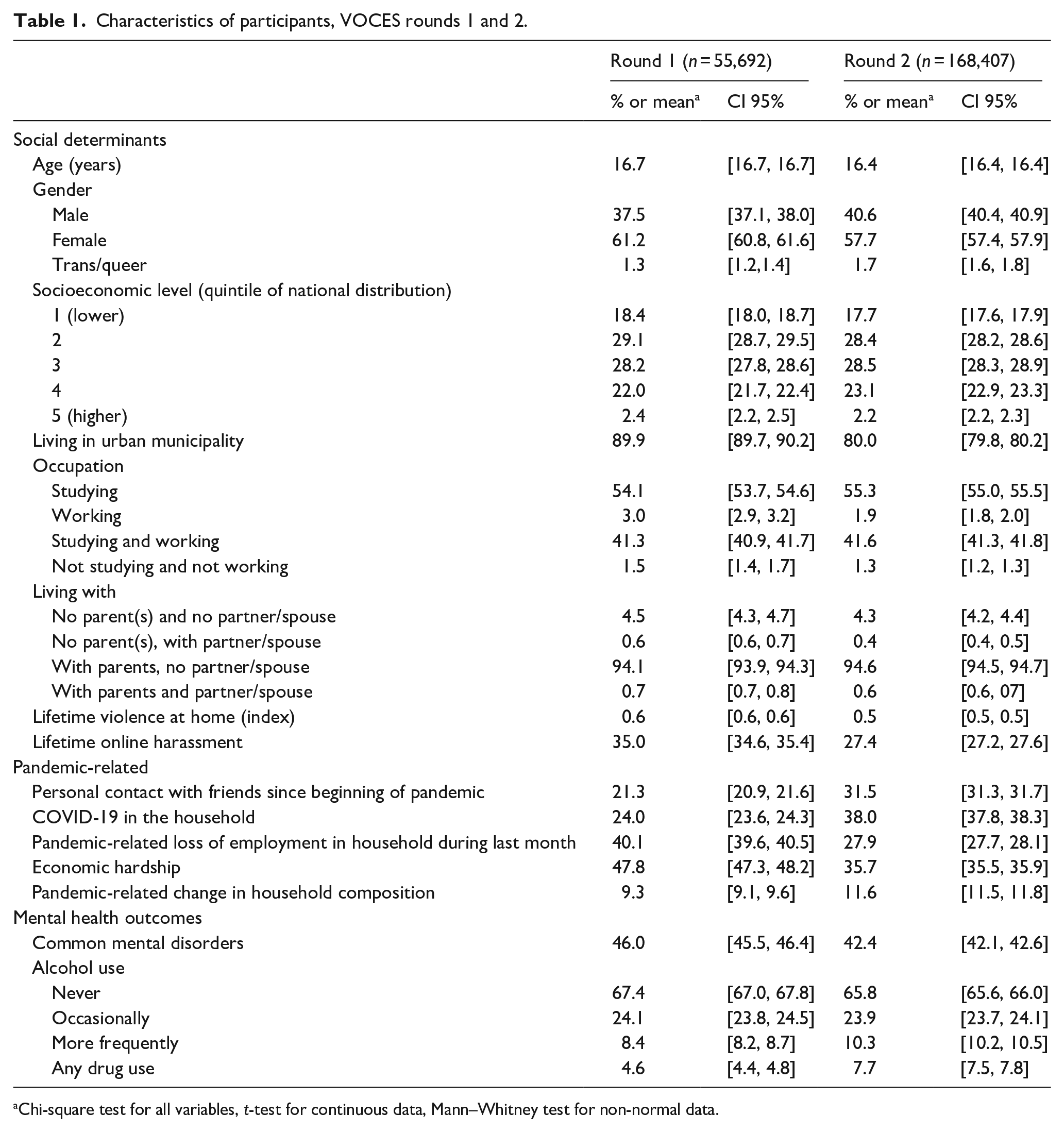
The main characteristics of participants appear in Table 1. Most were female, and 1.3% and 1.7% self-identified as trans/queer/non-binary in rounds 1 and 2, respectively. As compared to the Mexican population, the proportion of participants in the higher SEP quintile was lower. Most participants were either studying, or studying and working, and lived with their parents. The majority of the sample lived in urban municipalities.
Characteristics of participants, VOCES rounds 1 and 2.
Chi-square test for all variables, t-test for continuous data, Mann–Whitney test for non-normal data.
Pandemic-related variables showed major changes between the two periods: the report of in person contact with friends increased from 21.3% to 31.5%, the percentage reporting cases of COVID-19 in the household increased from 24.0% to 38.0%, and the percentage reporting loss of employment in the last month and economic hardship in the household decreased (40.1% vs. 27.9, and 47.8% vs. 35.7%, respectively).
As hypothesized, the prevalence of CMD decreased from round 1 (46.0%) to round 2 (42.4%). In contrast, alcohol and drug use increased. For alcohol, the main increase was observed in the higher use category (8.4% in round 1 vs. 10.3% in round 2). The report of drug use increased from 4.6% to 7.7%.
Stratified analyses (Appendix Table A1) showed a decrease in CMD in participants regardless of gender, but the decrease was not statistically significant for trans/queer/non-binary ones. Among this group, the prevalence only went down from 81.2% to 80.8%, as compared to 35.4% to 30.3% for males and 51.4% to 49.0% for females. Likewise, the increase in alcohol use was apparent among all three groups, but it was not statistically significant for trans/queer/non-binary participants. On the other hand, the increase in drug use was mainly driven by females and trans/queer/non-binary participants, so that while for males the prevalence in both rounds was 6.1%, in females the prevalence increased from 3.5% to 8.3%, and in trans/queer/non-binary increased from 10.0% to 19.1% (Figure 1).
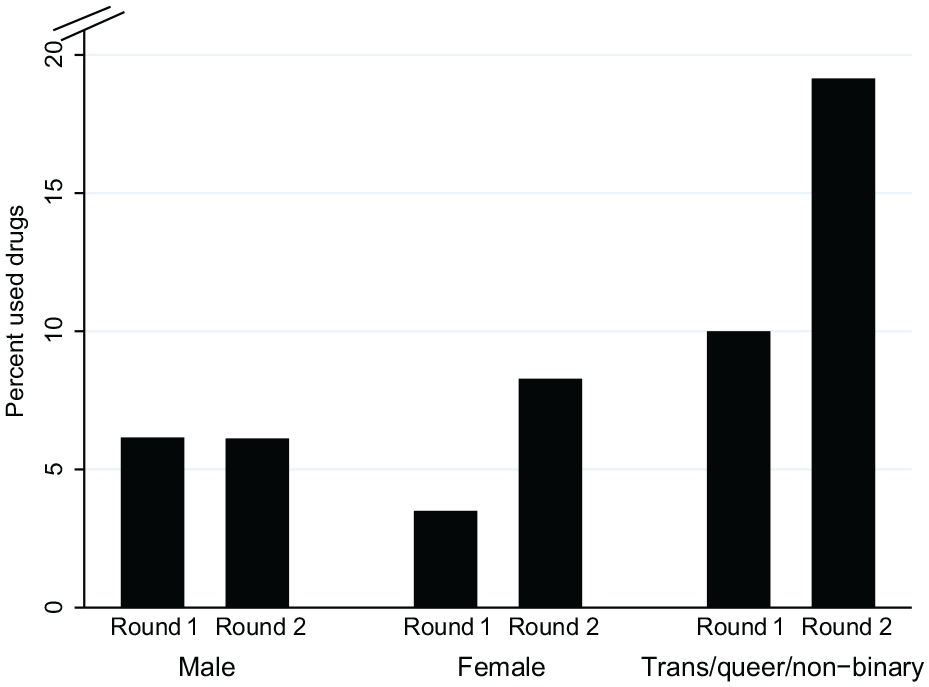
Prevalence of drug use, by round and gender.
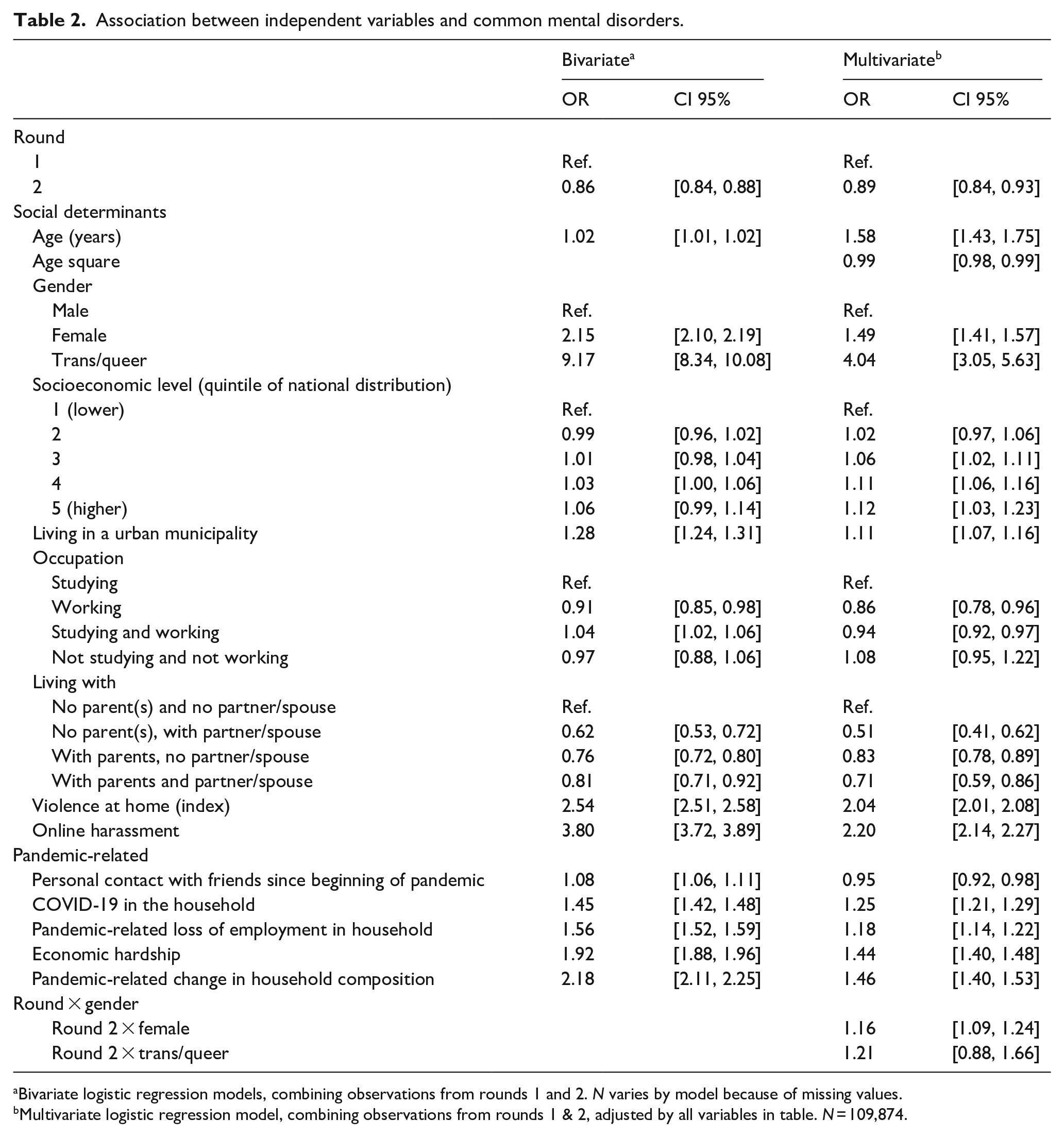
The multivariate models also gave evidence of gender-associated differences in both the prevalence and the change in prevalence of mental health problems, after adjusting for other social determinants. Thus, the model for CMD (Table 2) showed a statistically significant interaction between gender and round, so that the model-estimated prevalence of CMD decreased significantly from round 1 to round 2 only among males (Figure 2).
Association between independent variables and common mental disorders.
Bivariate logistic regression models, combining observations from rounds 1 and 2. N varies by model because of missing values.
Multivariate logistic regression model, combining observations from rounds 1 & 2, adjusted by all variables in table. N = 109,874.
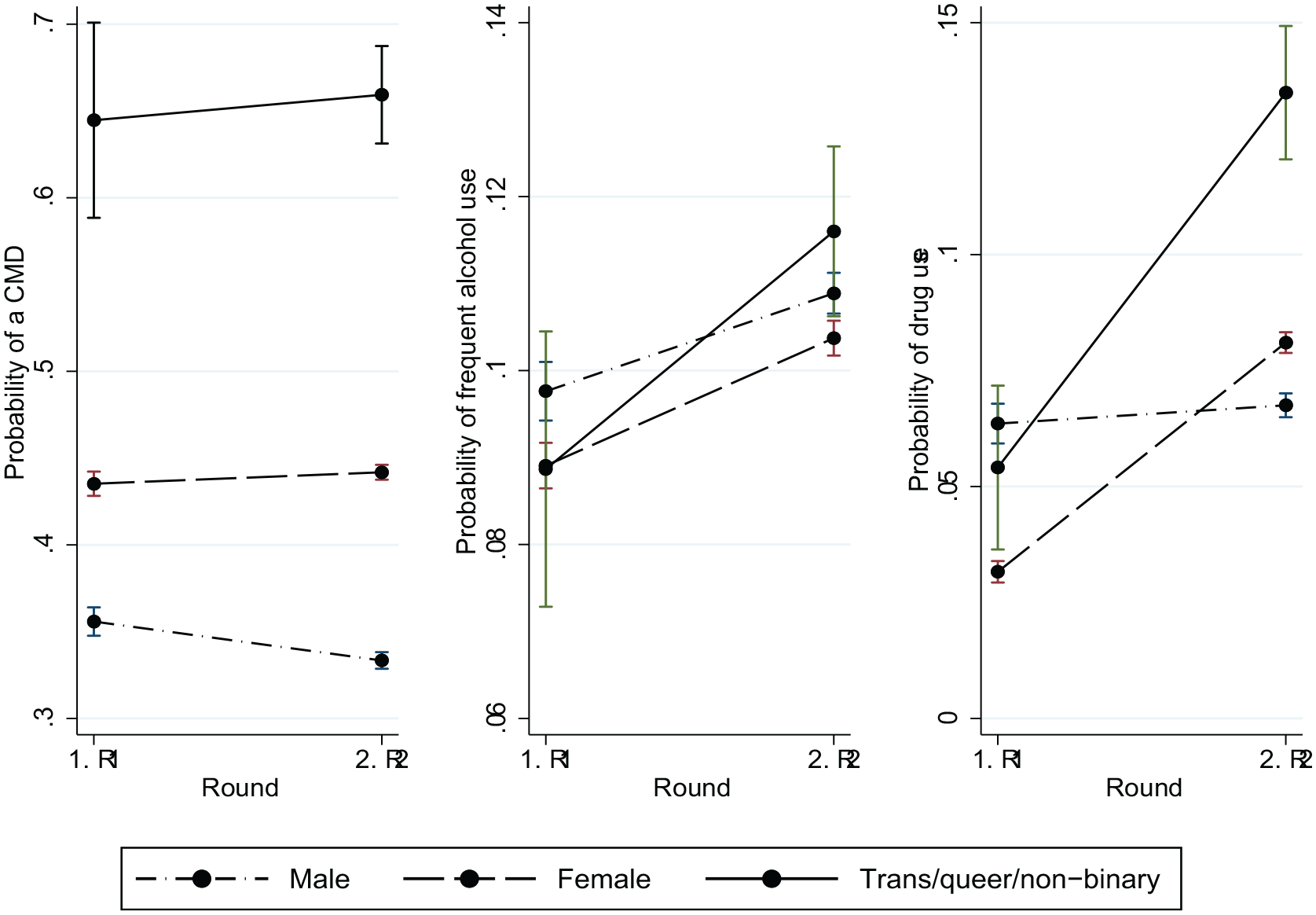
Change in estimated probability of mental health problems, by round and gender.
For alcohol, the gender*round interaction was not statistically significant (Table 3A), but the predicted values (Figure 2) show that the increase was less steep among males and more evident among trans/queer participants, after adjusting for other variables.
Association between independent variables and substance use.
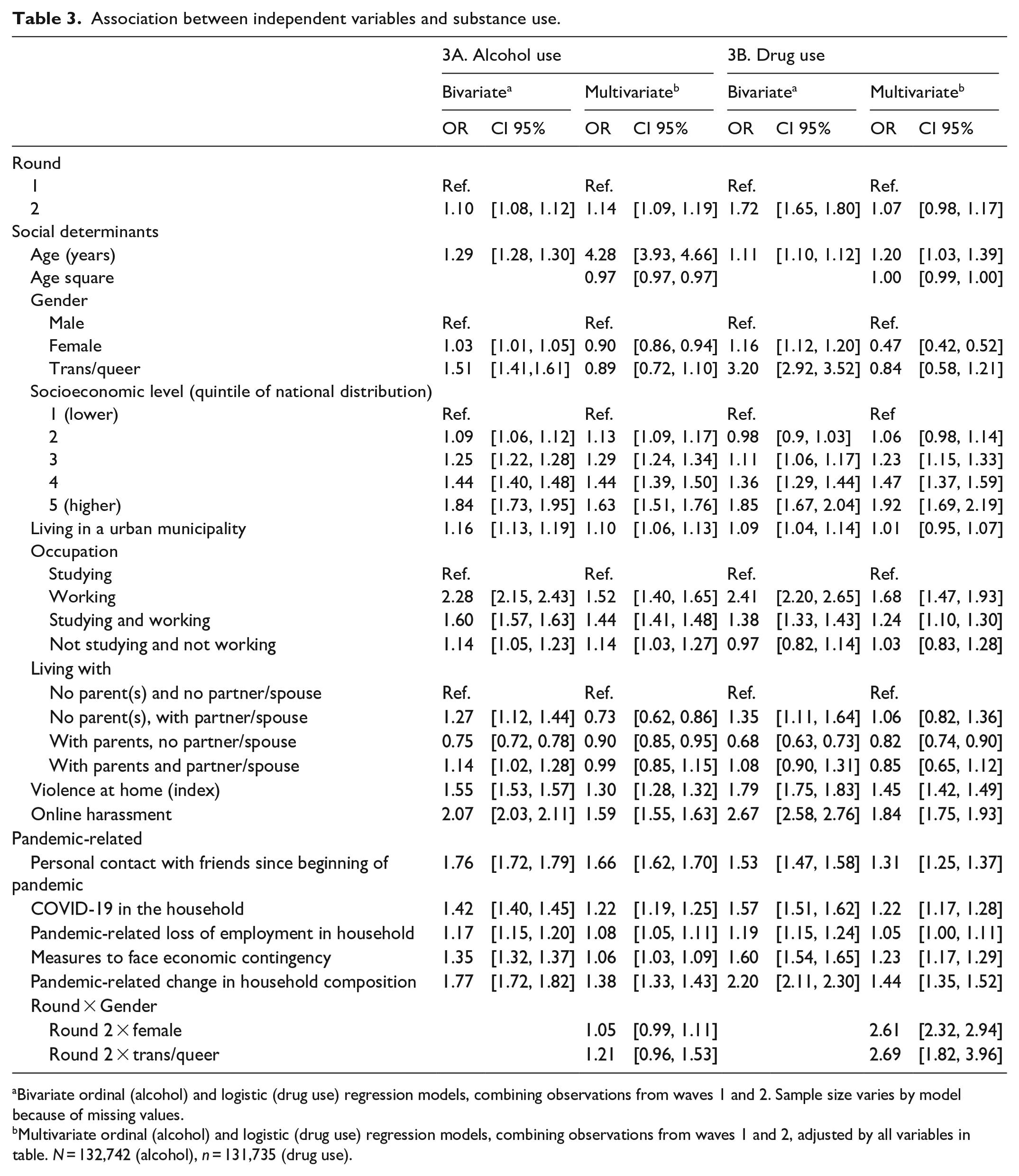
Bivariate ordinal (alcohol) and logistic (drug use) regression models, combining observations from waves 1 and 2. Sample size varies by model because of missing values.
Multivariate ordinal (alcohol) and logistic (drug use) regression models, combining observations from waves 1 and 2, adjusted by all variables in table. N = 132,742 (alcohol), n = 131,735 (drug use).
Finally, the multivariate model for drug use (Table 3B) showed a significant increase for both females and trans/queer/non-binary participants from round 1 to round 2, which was not observed for males (Figure 2).
As for other variables, as shown in Tables 2 and 3 age had an inverted-U association with the three indicators of mental health problems, so participants in the late-adolescence to younger adult range were predicted to be the most likely to present each of them. SEP increased the odds of all three indicators, as did living in an urban municipality and living without parents or partner/spouse, and experiences of violence and online harassment. Studying was associated with a lower predicted probability of substance use, but higher probability of CMD. All pandemic-related factors increased the probability of CMD, alcohol, and substance use, with the exception of in-person contact with friends. This last variable was associated with a lower predicted probability of CMD, but higher predicted probabilities of both alcohol and drug use.
Discussion
According to the results of the VoCes-19 survey, the prevalence of CMD among Mexican youth decreased from the first year of the pandemic to the second. As described in the introduction, other studies have similarly reported decreases in the prevalence of mental health problems from the beginning of the pandemic onwards. However, an interesting finding was that the prevalence of alcohol and drug use increased between the two periods. Other researchers have found that alcohol consumption decreased during the pandemic confinement, especially among younger people (Villanueva-Blasco et al., 2021), but there is a dearth of data regarding subsequent changes in this population. Since parental supervision is negatively associated with substance consumption among adolescents, while peer use is positively associated with it (Patrick & Schulenberg, 2013), spending less time at home and more time in school or interacting with peers outside the house might explain why consumption increased in the second wave.
Furthermore, the increase in drug use was driven mainly by girls/women and trans/queer/non-binary participants, and the increase in alcohol by the latter. Our data do not allow us to reach definite conclusions regarding this, but we want to advance the hypothesis that it may be due to the fact that substance use in adolescents and young adults is in many cases part of socialization practices and a way to enact identity (Dumbili, 2022; Patrick & Schulenberg, 2013). Given differential gender norms, it is possible that substance use is more difficult for girls/young women at home, and going back to socializing in person drove consumption up in this group. On the other hand, CMD decreased less among females and trans/queer/non-binary participants than among males between waves. Assuming that this was also related to the increased in-person interaction with peers outside the home, the difference also highlights the need to study the practices and circumstances of peer socialization in girls/young women and trans/queer/non-binary youth, in order to understand the role of socialization-associated stressors on their mental health. An alternative explanation for the observed differences by gender may be that the sample of round 2, as compared to the one of round 1, came from a population with different unmeasured risk factors for mental health problems. However, it is not likely that this type of selection bias would have happened among females and trans/queer young people, and not among males, so we believe gender differences in socialization are a more likely cause of the observed differences.
As for other social determinants, we observed that higher SEP was associated with increased odds of all three mental health problems. Previous research has similarly shown that depressive symptoms are more frequent among adolescents of higher SEP (Zhou et al., 2018), while for adults the opposite is usually the case (Jimenez-Molina et al., 2021; Zhang et al., 2022). On the other hand, while many studies report that substance use is inversely associated with SEP (Aschengrau et al., 2021; Lemstra et al., 2008; Torikka et al., 2017), there are some that, like ours, report a direct association (Martins-Oliveira et al., 2016). This could be due to the alcohol purchasing capacity of those with of higher SEP (Obradors-Rial et al., 2018), to different substance use-related social conventions, or to socialization practices (Foxcroft et al., 2022). Furthermore, the association between SEP and substance use could depend on contextual factors, such as a country’s wealth and income inequality (Gomes de Matos et al., 2017; Liu et al., 2013).
In our analysis, being a student was associated with a higher probability of CMD, in comparison to those who worked. Since other research has found that studying is protective of mental health among adolescents (Prencipe et al., 2021), it is possible that the higher odds of CMD among students had to do with the pandemic situation, when schools were suspended or classes moved online. Similar to other studies (Patrick & Schulenberg, 2013), we found working to be associated with higher odds of substance use. On the other hand, in contrast to research showing that youth not working and not studying has the highest risk of mental health problems (Benjet et al., 2012), in our analysis this group was not significantly different from students.
As hypothesized, all pandemic-related variables increased the probability of CMD, alcohol, and substance use. This reinforces the notion of the pandemic as a traumatic event, especially for those who experienced its economic or health-related consequences more closely. The only pandemic-related factor that had a different association with mental health problems was in-person contact with friends, which was associated with a lower predicted probability of CMD, but higher predicted probabilities of both alcohol and drug use. Once again, this shows that substance use in adolescents and young adults is closely related to peer interactions.
The main limitation of this study is the use of a non-probability sampling method. Online surveys have become more frequent as the response rate for other types of surveys drops, and given their lower cost. During the pandemic, face-to-face surveys were not feasible. Still, employing this method resulted in a sample of unknown representativeness in relation to the population of young people in Mexico. Therefore, all conclusions need to be made in relation to respondents, and care should be exerted when extrapolating to other groups.
To conclude, the mental health of adolescents and young adults in Mexico changed during the pandemic, and one interesting aspect was the gendered nature of those changes. How boys/young men, girls/young women, and trans/queer/non-binary young persons experienced the pandemic and its related social and health-related consequences is a topic worth of further study.
Supplemental Material
sj-docx-1-isp-10.1177_00207640231194826 – Supplemental material for Changes in mental health problems during the COVID-19 pandemic in Mexican youth: Insights from the Voces-19 study
Supplemental material, sj-docx-1-isp-10.1177_00207640231194826 for Changes in mental health problems during the COVID-19 pandemic in Mexican youth: Insights from the Voces-19 study by Ietza Bojórquez-Chapela, Lina López-Lalinde, Ricardo Regules-García and Isabel Vieitez-Martínez in International Journal of Social Psychiatry
Footnotes
Acknowledgements
We would like to acknowledge the youth that made this study possible, National Institute of Youth in Mexico (IMJUVE) and the National Center for Gender Equity and Reproductive Health (CNEGSR), Fundación de Apoyo a la Juventud, Red Viral, Construye-T, Jóvenes Construyendo el Futuro, the Ministry of Education, and the Colegio de Bachilleres. Additionally, we would like to acknowledge the VoCes-19 coordination, communication and design teams: Silvana Larrea, René Nevárez, Ludivine Cicolella, Valeria García Trejo, Daniela Martínez, Juan Carlos Figueroa, Jordi Valencia, Catalina Hernández, Andrea Garay, Sandra Govill, and the Atreyu team.
Author’s note
Correspondent author, Isabel Vieitez-Martínez, currently works as an Independent Consultant Researcher in Mexico, city.
Conflict of interest
The author(s) declared the following potential conflicts of interest with respect to the research, authorship, and/or publication of this article: None declared. IB received consulting fees from the Population Council Mexico for work including the writing of this article.
Funding
The author(s) disclosed receipt of the following financial support for the research, authorship, and/or publication of this article: VoCes-19 was supported by an anonymous donor. The funder had no role in study conceptualization, study design, data collection and analysis, the decision to publish, or the preparation of the manuscript. All authors are independent of the funder.
Ethical approval
The survey received institutional review board (IRB) approval from the Population Council (IRB Research Protocol No. 949).

Supplemental material
Supplemental material for this article is available online.
References
Supplementary Material
Please find the following supplemental material available below.
For Open Access articles published under a Creative Commons License, all supplemental material carries the same license as the article it is associated with.
For non-Open Access articles published, all supplemental material carries a non-exclusive license, and permission requests for re-use of supplemental material or any part of supplemental material shall be sent directly to the copyright owner as specified in the copyright notice associated with the article.
