







Abstract
Background:
Climate anxiety, one of the negative emotions created by climate change, is particularly prevalent among climate activists and young individuals who hold a more serious concern for environmental issues.
Aim:
This study aims to determine the effects of climate change awareness on the mental health of young people in Turkey.
Methods:
Designed as a descriptive and two-group comparative study, the target population of this study comprises young individuals aged 15 to 24 who are climate activists and those who are not. The study data was collected through e-questionnaires administered between March 15 and May 10, 2023, using a demographic characteristics form, a climate change anxiety scale and the Beck Hopelessness Scale. The study was completed with a total of 306 participants, including 103 young individuals who are climate activists and 203 young individuals who are not climate activists.
Results:
We determined that young individuals who are climate activists have a high level of climate change anxiety, while those who are not climate activists have a moderate level of climate change anxiety. We found that the levels of hopelessness in both groups are at a mild level. Additionally, within the group of climate activists, we observed that individuals with a higher level of knowledge about climate change tend to exhibit greater levels of hopelessness.
Conclusions:
We identified that as awareness and knowledge about climate change increase, climate change anxiety, and hopelessness also increase. There is a need for studies to determine youth-specific mental health interventions to address mental health issues related to climate change awareness.
Introduction
Climate change is a global crisis that continues to grow and poses a threat to humanity with its negative consequences if precautionary measures are not taken (Hayes et al., 2018). The outcomes of climate change result in both acute disasters such as hurricanes, floods, and forest fires as well as slower-onset psychosocial issues like ecosystem changes, food and water insecurity, migration, violence, and cultural loss (Ballew et al., 2019; Ediz & Yanık, 2021). Psychosocial problems stemming from changing climatic conditions also adversely impact mental health (Palinkas et al., 2020).
Within the expanding body of research literature on climate change and mental health, psychological disorders associated with climate change have been identified as post-traumatic stress disorder (PTSD), anxiety, substance addiction, helplessness, fatalism, difficulties in social relationships, identity loss, hopelessness about the future, and suicide (Fritze et al., 2008). Hrabok et al. (2020) also emphasized in their study that climate change triggers natural disasters and extreme weather events, and highlighted the relationship between climate change and depression and post-traumatic stress disorder.
One of the negative emotions caused by climate change is increasing anxiety. Climate change anxiety refers to negative emotions and behaviors related to concerns about climate change (Clayton & Karazsia, 2020). It is acknowledged that climate anxiety evokes feelings such as hopelessness, powerlessness, anxiety, and helplessness (Budziszewska & Jonsson, 2021). While the consequences of climate change on mental health appear to be a common experience, some individuals are likely more concerned than others. For example, young people tend to experience more anxiety; according to an American Psychological Association (2018) survey, Generation Y expresses more concern about climate change compared to older adults. Some young individuals reported emotional distress characterized by feelings of anger, guilt, helplessness, and despair regarding climate change (Reyes et al., 2023). Hickman et al. (2021) stated in their study that climate change and inadequate government intervention could pose chronic stressors threatening the mental health and well-being of young people worldwide. Reyes et al. (2023) also found a significant relationship between climate change anxiety and mental health in their research on young individuals. Similarly, a survey conducted with young people in the UK in 2013 revealed that 74% of young people were concerned about the impacts of climate change on their future, and 63% expressed worry about the effects of climate change (UNICEF, 2013).
Climate anxiety is more prevalent among individuals who take environmental issues more seriously and have experienced the effects of climate change (Clayton & Karazsia, 2020). Sensitivity to climate anxiety varies from person to person, but it can also be considered a motivating factor for encouraging behavioral engagement with climate change (Clayton, 2020). However, some researchers have indicated that environmental stress and climate anxiety lead to pro-environmental behaviors in individuals (Clayton & Karazsia, 2020; Higginbotham et al., 2014; Homburg & Stolberg, 2006). This has contributed to the emergence of climate activism (Chen & Gorski, 2015). Engaging in climate activism typically involves dedicating significant time to thinking about climate change, paying psychological costs, and allocating financial resources (Albright & Hurd, 2023). This situation can lead activists to feel drained and overwhelmed, potentially contributing to depression and anxiety. Moreover, when activism fails to achieve expected goals, it can exacerbate distress, anxiety, or hopelessness (Albright & Hurd, 2023; Kovan & Dirkx, 2003).
In the literature review, very few studies aim to understand the experiences and emotions of young individuals regarding climate change. Little is known about the experiences of young individuals, especially in low- and middle-income countries. Despite the key role of young individuals in the climate justice movement, no research has been identified in Turkey that investigates the issues young individuals face concerning climate change. Therefore, this study aims to better understand the mental health issues experienced by climate activists and young individuals in Turkey, a country where social and economic inequalities have been increasing in recent years. The purpose of this study is to determine the impact of climate change awareness on the mental health of Turkish youth. The study has the following three objectives:
To determine the impact of climate change awareness among Turkish youth (both climate activists and non-activists) on their mental health (climate anxiety and hopelessness) and provide an overall perspective.
To explain and clarify the terminology related to the relationship between youth, climate change, activism and mental health.
To define the scope for future research areas and provide recommendations.
Methods
Procedure
This study, designed as a descriptive study with a comparative approach between two groups, targeted young individuals who are climate activists and those who are not, operating nationwide in Turkey. Ethical approval was obtained from the scientific research and publication ethics committee of a state university (dated 03.03.2023, numbered 2023/31-01) for the execution of the study. Subsequently, an e-questionnaire was prepared by the researchers for data collection. Inclusion criteria for the study were defined as young individuals aged 15 to 24 who are climate activists and those who are not and who agreed to participate in the study. The questionnaire was pre-tested by both young individuals and academicians. From March 15 to May 10, 2023, appropriate and criterion sampling strategies were employed to gather online survey participants (N = 306). The participant recruitment process consisted of two steps. Firstly, young individuals who identified themselves as climate activists and were reached through their social media accounts, where they used terms related to climate change, climate action, or climate activities, were invited to participate in the study. Secondly, participants from the general youth population were reached and invited to participate through youth and high school/university administrator networks (e.g. social media posting and/or corporate networks). Invited participants viewed a message containing information about the study’s objectives, an estimate that the survey would take about 15 minutes to complete, the optional nature of answering the questions, the ability to leave the e-questionnaire at any time, and the assurance of keeping all personal information confidential for researchers before starting the e-questionnaire. Informed consent for participation was obtained by continuing with the e-questionnaire after the initial information. The final sample included a total of 306 participants, comprising 103 young climate activists and 203 young individuals from the general youth population. The final sample represented climate activist youth involved in climate change actions/activities and the general youth population not involved in climate change actions/activities. Survey results were collected directly from participants to the researcher’s account for privacy ethics, and all data will be stored on the responsible researcher’s laptop for 5 years.
Data Collection Forms
As data collection tools in the study, the Demographic Characteristics Form, Climate Change Anxiety Scale, and Beck Hopelessness Scale were used.
Ethical considerations of the study
Prior to commencing the study, ethical approval was obtained from the scientific research and publication ethics committee of a state university (dated 03.03.2023, numbered 2023/31-01) for the execution of the study. Informed consent was obtained from the participants. The principles of the Declaration of Helsinki were followed during the study.
Analysis of study data
The study data were analyzed using the SPSS 24.0 software package, and a significance level of p < .05 was accepted for statistical significance. The normal distribution of study data was determined by examining Shapiro-Wilk and Kolmogorov-Smirnov tests as well as Skewness and Kurtosis values. Descriptive statistics (frequency, percentage, mean, and standard deviation) were calculated for data analysis. Independent Sample t-tests and ANOVA tests were used for group comparisons.
Results
Upon analyzing the demographic characteristics of the participating youth;
It was determined that among the youth identified as climate activists, 71.8% were female, 52.4% were in the 20 to 24 age range, 66.0% were university students, 84.5% resided in urban areas, 84.5% had knowledge about climate change, 59.2% took part in climate change actions, 55.3% did not receive education on climate change, and 55.3% had not previously sought psychological support (Table 1).
Distribution of youth by demographic characteristics (N = 306).
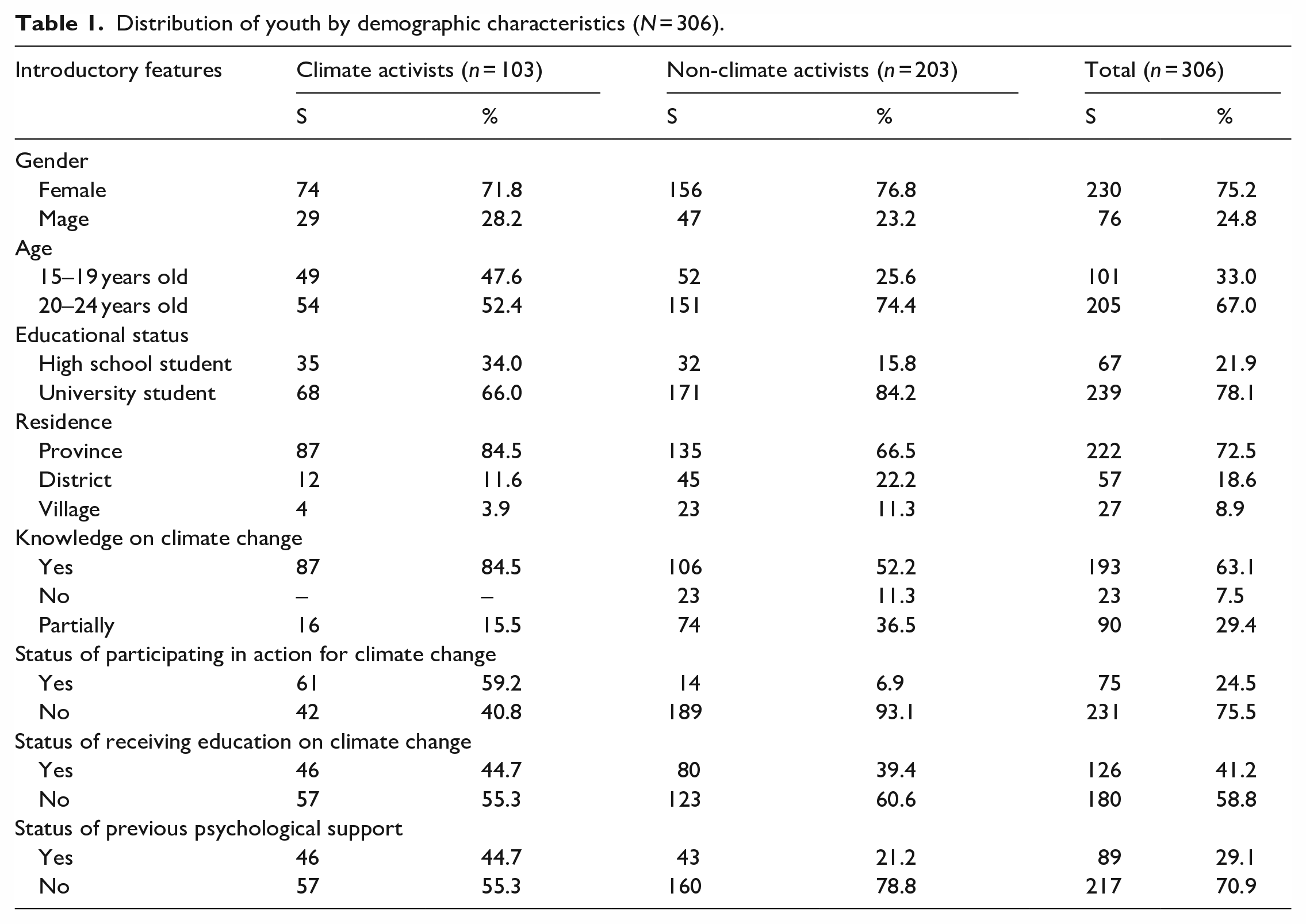
It was found that among the non-climate activist youth: 76.8% were female, 74.4% fell within the 20 to 24 age range, 84.2% were university students, 66.5% resided in urban areas, 52.2% had knowledge about climate change, 93.1% did not engage in climate change actions, 60.6% did not receive education on climate change, and 78.8% had not previously sought psychological support (Table 1).
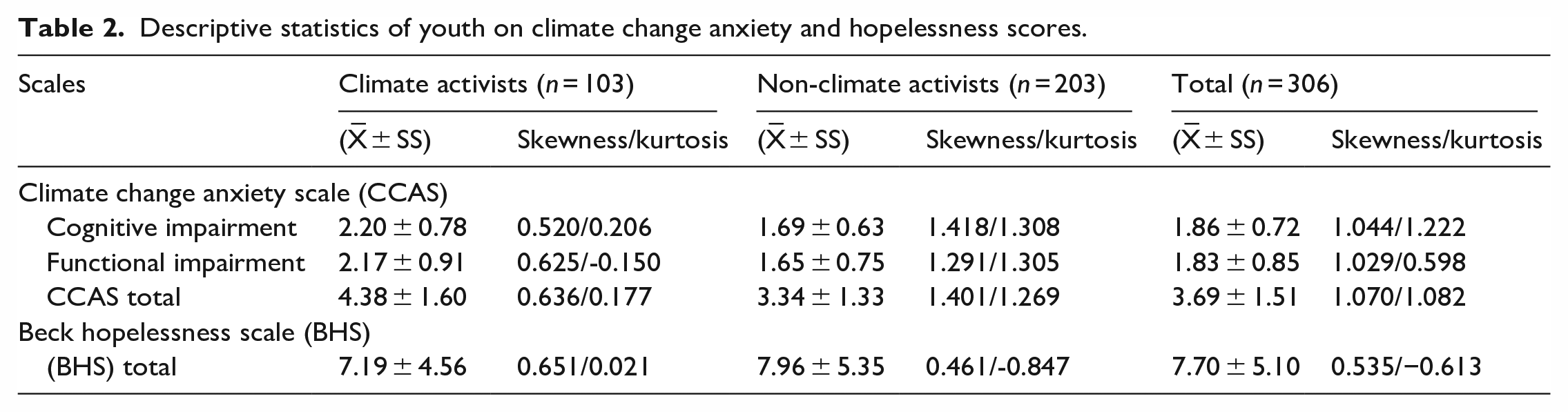
It was determined that the Climate Change Anxiety Scale average score for climate activists was 4.38 ± 1.60, and the Beck Hopelessness Scale average score was 7.19 ± 4.56. For non-climate activists, the Climate Change Anxiety Scale average score was 3.34 ± 1.33, and the Beck Hopelessness Scale average score was 7.96 ± 5.35 (Table 2). Skewness and kurtosis values for both total scale scores and subscale scores ranged from −1.5 to+1.5, indicating a normal distribution of the data (Table 2). Descriptive statistics for subscale scores and total scores of the scales are presented in Table 2.
Descriptive statistics of youth on climate change anxiety and hopelessness scores.
When the demographic characteristics of climate activist youth were compared with their Climate Change Anxiety Scale average scores, no significant relationship was found between gender, age, place of residence, and receiving education about climate change and climate anxiety (p > .05, Table 3). However, a significant relationship was identified between educational status, knowledge about climate change, participation in climate change-related actions, previous psychological support, and the average score of the Climate Change Anxiety Scale (p < .05, Table 3). Accordingly, it was determined that the average climate change anxiety scores of high school students were higher than those who had knowledge about climate change, those who had partial knowledge, those who participated in the action for climate change, and those who had previously received psychological support compared to those who did not receive psychological support.
The relationship between the demographic characteristics of youth and the climate change anxiety scale.
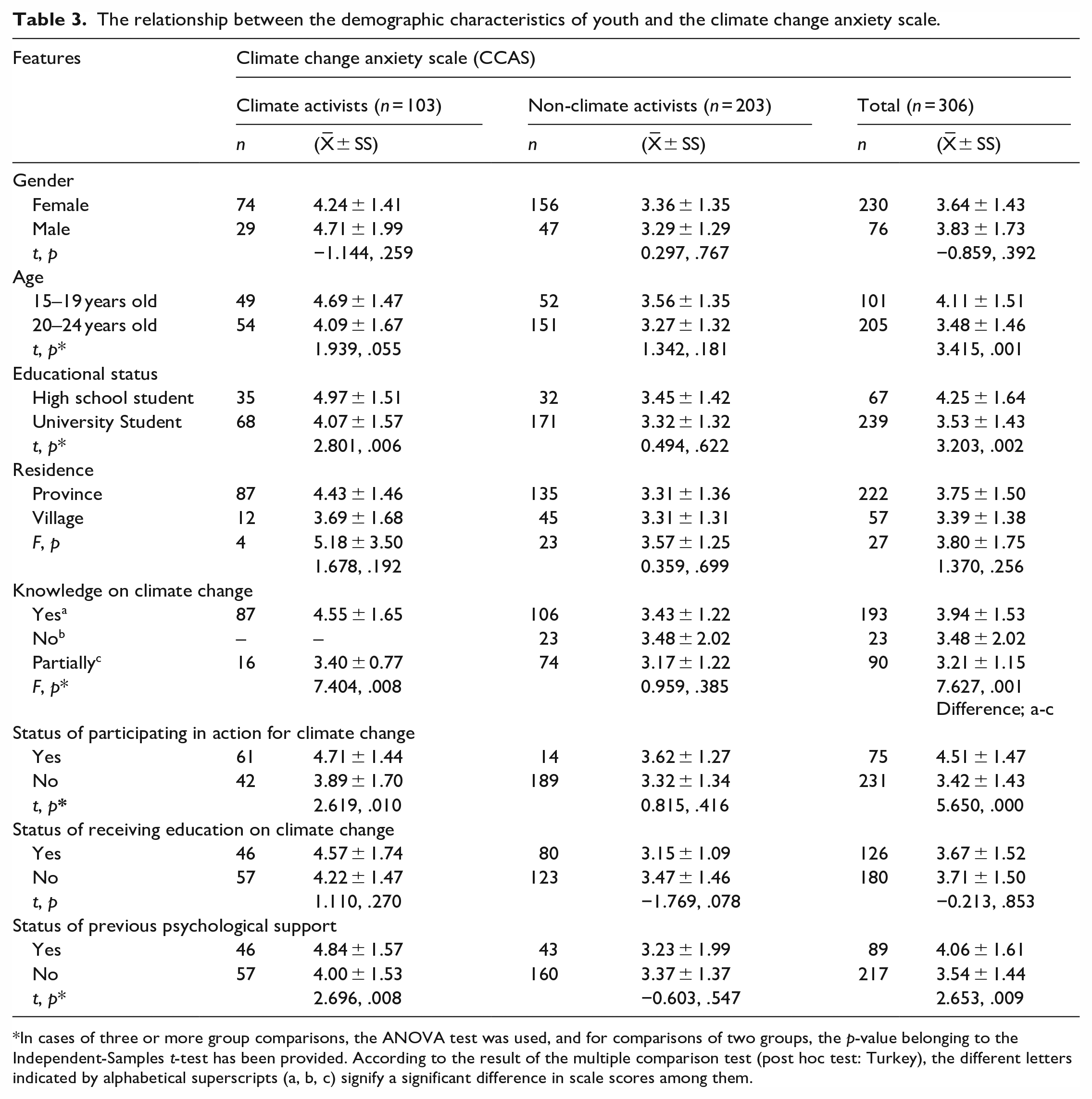
In cases of three or more group comparisons, the ANOVA test was used, and for comparisons of two groups, the p-value belonging to the Independent-Samples t-test has been provided. According to the result of the multiple comparison test (post hoc test: Turkey), the different letters indicated by alphabetical superscripts (a, b, c) signify a significant difference in scale scores among them.
When the demographic characteristics of non-climate activist individuals were compared with their average scores on the Climate Change Anxiety Scale, no significant relationship was found between demographic features and climate anxiety (p > .05, Table 3).
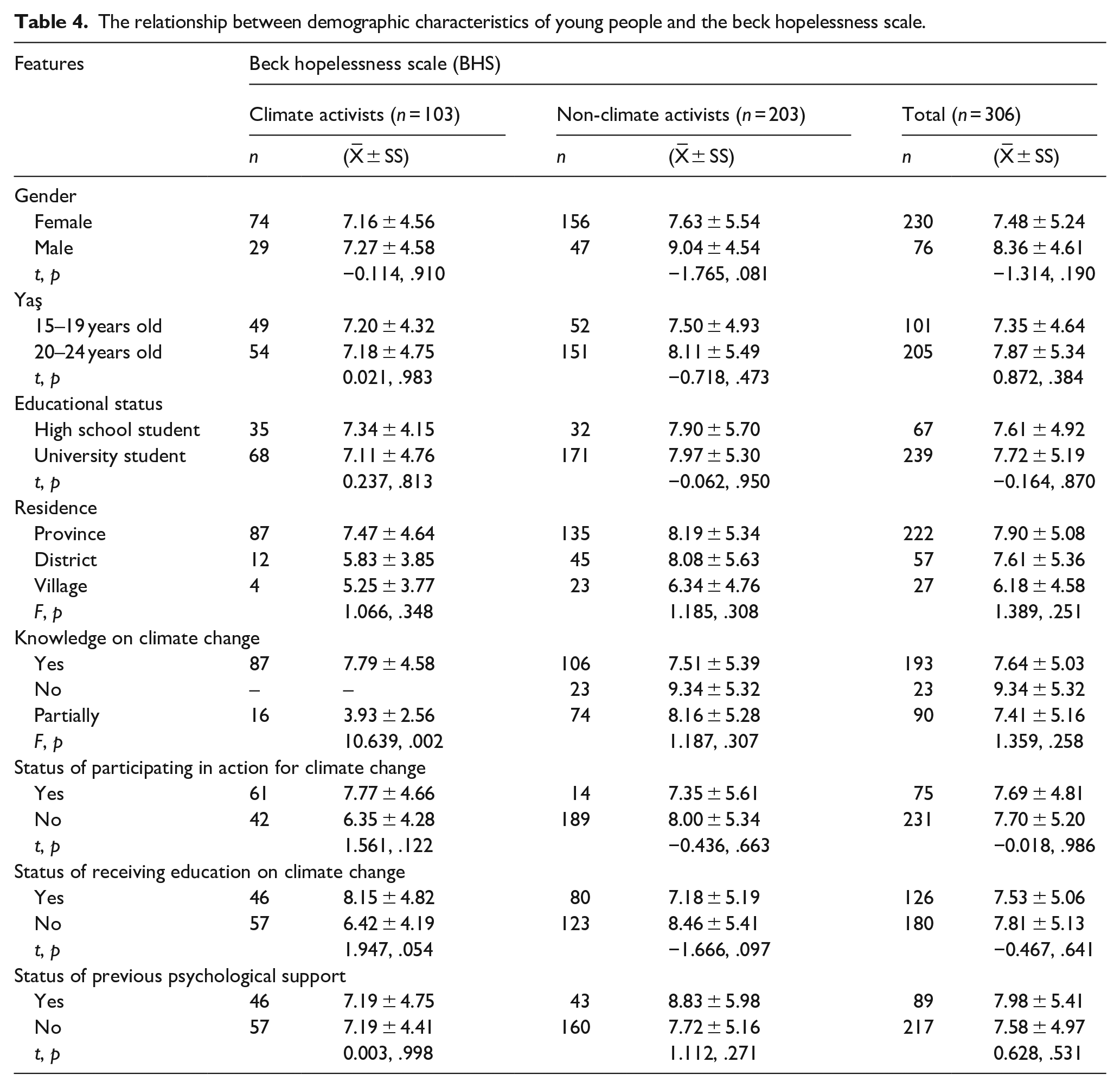
When the demographic characteristics of the participants were compared with the average scores on the Beck Hopelessness Scale, it was determined that among the climate activists who knew about climate change, the level of hopelessness was higher compared to those who had partial knowledge about climate change (p < .05, Table 4), and there was no statistically significant relationship between the young individuals’ other demographic characteristics and their scores on the Beck Hopelessness Scale (p > .05, Table 4).
The relationship between demographic characteristics of young people and the beck hopelessness scale.
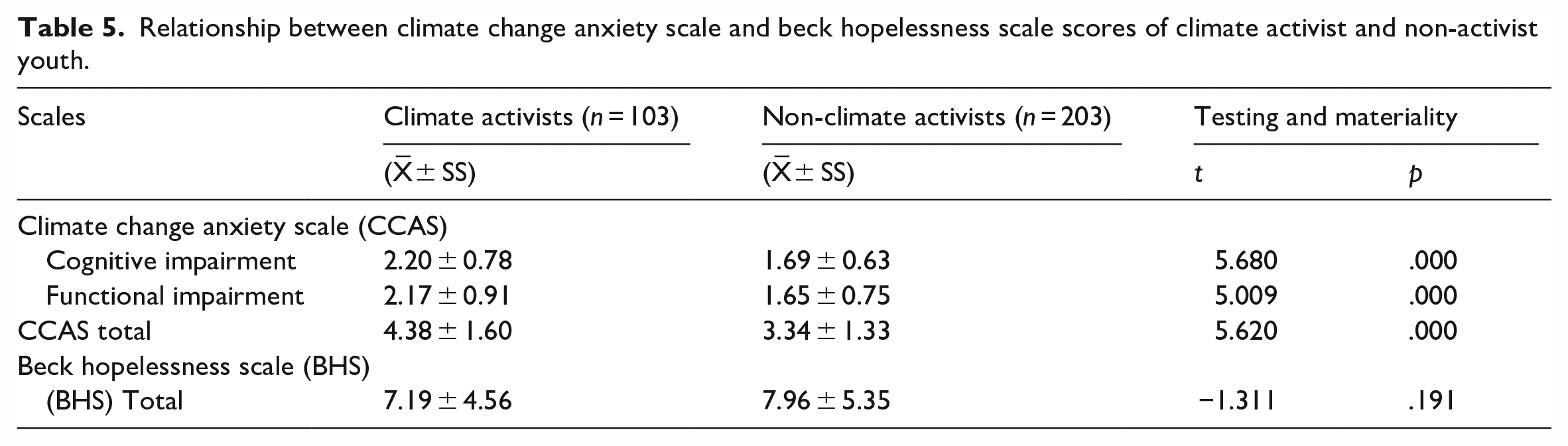
When the scale score averages of the participants were compared, it was found that climate activist youth had higher total scores and subscale averages of climate change anxiety compared to non-activist youth (p < .001, Table 5); however, there was no significant difference in the average scores of the Beck Hopelessness Scale (p > .05, Table 5).
Relationship between climate change anxiety scale and beck hopelessness scale scores of climate activist and non-activist youth.
Discussion
This study aims to investigate the effects of climate change awareness on mental health among Turkish youth and compare levels of climate anxiety and hopelessness. It is challenging to compare our findings with previous studies since this research is the first to examine the relationship between climate anxiety and hopelessness factors. This study will contribute to understanding this psychological construct, filling the information gap in the local literature by examining the relationship between climate change awareness and mental health. Therefore, our study can add initial findings to such relationships, providing a basis for future research. The main outcomes of this study are as follows:
We found that young climate activists had higher levels of climate anxiety compared to non-activists, while the levels of non-activists were at a moderate level. Both youth groups exhibited mild levels of hopelessness.
In a survey examining the responses of individuals in the United States to climate change in 2021, it was found that 70% of respondents were slightly worried about global warming, and 35% were very worried (Climate Change in the American Mind, 2021). More than half of the participants expressed feelings of disgust (54%), anger (47%), and outrage (45%). A survey conducted in the United Kingdom in 2020 found significantly higher levels of distress related to climate crisis among those aged 16 to 24 compared to the COVID-19 pandemic (Lawrance et al., 2022a, 2022b). According to a survey of 10,000 English speaking young adults from 10 countries; There is a high level of global climate anxiety among young people, and about 59% of respondents reported being ‘very’ or ‘extremely’ concerned about the climate crisis. More than 60% of the participants reported feeling fearful, anxious, and sad, while at least 50% reported feeling guilty, helpless, angry, and powerless (Hickman et al., 2021). Due to their rapid cognitive development rates, adolescents are more vulnerable to mental health and stress factors, making them more sensitive to the impacts of climate crisis (Ebi et al., 2007; Solmi et al., 2022). In this regard, the results of our study are similar to those of previous studies.
In a study, individuals living in Greenland were found to experience ‘moderate’ or ‘very strong’ fear related to the climate crisis at a rate of 38%, while 19% reported strong sadness, and 18% reported strong hopelessness (Minor et al., 2019). The indifference and inaction toward climate change by those in power, such as adults and governments, reinforce negative emotional and thought patterns of hopelessness (Hickman et al., 2021). However, two studies found a positive association between concern and hope, as well as a link between hope and action (Burke et al., 2018; Li & Monroe, 2019). Collective action may also foster greater hope and community connection, which are predictors of good mental health (Fritze et al., 2008). In this respect, the reason why the hopelessness levels of the youth in both groups were mild in our study can be interpreted as the fact that they cannot get enough support from sources such as adults and governments.
When examining the comparison between the two groups, we found that young people who are climate activists experience higher levels of climate change anxiety compared to those who are not climate activists. Thus, as awareness of climate change increases, so does climate change anxiety. On the other hand, we found no significant difference between the groups in terms of the level of hopelessness.
As awareness of the seriousness of the climate crisis increases, terms such as ‘climate anxiety’ are being more frequently used in academic circles, indicating a corresponding rise in distress related to climate awareness. Individuals who are more aware of the consequences of climate change tend to experience higher levels of climate concern (Lee et al., 2020). Being aware of or witnessing current and future climate-related threats and inadequate climate action has been associated with many psychological and emotional responses such as anxiety, stress distress, hopelessness, fear, anger, grief, helplessness, frustration and guilt (Ingle & Mikulewicz, 2020; Mushavi et al., 2020; Ojala et al., 2021). Recent studies have also indicated that individuals who are highly aware of and concerned about the climate crisis experience fear, distress, grief, anxiety and anger (Mercado, 2016). Awareness of the climate crisis and inadequate actions by leaders have been suggested to create negative childhood experiences and a collective cultural trauma for young people (Brulle & Norgaard, 2019; Sanson et al., 2019; Wu et al., 2020). The way we feel and our values influence the way we act; climate anxiety may be higher in people who are more concerned with broader society, and believe that life has meaning, and have a higher personal responsibility for taking climate action (Bouman et al., 2020; Stanley et al., 2021). Specific emotional responses to climate change, including hope and anger can trigger environmentally friendly behaviors, including climate action or activism (Stanley et al., 2021). In this regard, the results of our study that as awareness about climate change increases, climate change anxiety also increases is supported by the results of previous studies.
When examining the relationship between demographic characteristics of young people who are climate activists and climate change anxiety, we found that high school students, those who are knowledgeable about climate change, those who are engaged in climate action, and those who have previously received psychological support tend to experience higher levels of climate change anxiety.
On the other hand, we observed no significant relationship between demographic characteristics and climate change anxiety among young people who are not climate activists.
Although there is limited data on the demographic effects on psychological and emotional responses to climate crisis, individuals who are currently experiencing climate-related events and are often at the greatest risk due to complex disadvantages are children, young individuals, and activists (Bragg, 2014; Furberg et al., 2011; Verplanken et al., 2020). For example, a global survey on climate anxiety among young individuals revealed higher levels of anxiety, negative emotions and future concerns than the countries already experiencing the effects of climate crisis (Hickman et al., 2021). In a study by Thomas et al. (2022), participants who considered themselves activists seemed to be more prone to describing symptoms of anxiety, often after a turning point when they suddenly became aware of the climate crisis. Younger participants reported that they first encountered climate change information through online content, which sometimes increased their fears and sometimes soothed them (Thomas et al., 2022). Additionally Kelly (2017) concluded that those enrolled in environmental courses reported higher levels of anxiety and stress than those who did not attend, implying that awareness and knowledge of the environment contributed to their negative emotional state and distress. In this respect, the results of our study are similar to those of previous studies.
When examining the relationship between demographic characteristics of young people who are climate activists and their feelings of hopelessness, we found that young individuals who have knowledge about climate change tend to have higher levels of hopelessness compared to those with partial knowledge about climate change. This suggests that even among climate activists, those who have higher knowledge about climate change are more prone to feelings of hopelessness.
In a study on young people, Gunasiri et al. (2022) stated that although young people are aware of climate crisis and its impacts, they feel that their voices are unheard. Participants also reported feelings of hopelessness and powerlessness as they were not in a position to mitigate the effects of climate crisis. The emotional impact of knowing about the climate causes children and young people to experience anxiety, depression anger, sadness, frustration, grief, and powerlessness (UNICEF, 2013; Ojala, 2015). Furthermore, increasing awareness of climate crisis and future negative consequences, fuelled by media information, underlies a potentially widespread psychological phenomenon referred to as ‘eco-anxiety’ (Hayes et al., 2018; Pihkala, 2018). In a study examining depression, anxiety, and stress symptoms related to climate crisis among medical students, 85% of the sample reported feeling more concerned about climate crisis today compared to 5 years ago, 75% felt more concerned today compared to 3 years ago, and 33% felt more concerned today compared to last year (Schwaab et al., 2022). This could be attributed, among other factors, to the increasing coverage of climate crisis-related news in the media and an overall rise in knowledge about climate crisis (Romanello et al., 2021). As knowledge about climate crisis increases, it becomes apparent that the more young people feel helpless in their ability to take action, the more they experience a sense of hopelessness. In this regard, our finding regarding hopelessness aligns with the findings of previous studies.
Limitations
This research provides a basis for determining the effects of climate change awareness on mental health among Turkish youth. As participation in this study is voluntary, the results reflect only the experiences of young people who participated voluntarily. For this reason, the results of the research cannot be generalized to the whole population.
Conclusions and recommendations
This study emphasized the mental health outcomes of climate change awareness among young individuals. According to the findings of our study, as awareness and knowledge about climate change increase, climate change anxiety significantly rises, while hopelessness shows a mild increase. Future research should aim to identify interventions, policies, and decision-making mechanisms that can be implemented to mitigate the impact of climate crisis on mental health as well as generate stronger and more methodological evidence about the link between mental health and climate crisis. For young activists, there is a need for a practical framework for their mental well-being, including self-care and burnout prevention. If not adequately supported, activist roles could negatively impact not only the mental health of young individuals but also their family and social relationships. Climate education and specific programs that support the mental health of young people should be implemented in schools. On the other hand, it is recommended that policy makers and politicians should engage and work with young people in a collaborative way to seek solutions to address the mental health needs of young people. Taking on the task of mitigating the responsibility for climate change placed on the shoulders of young people and showing them that more action is being taken by governments can lessen the distress young people feel.
Footnotes
Acknowledgements
I am grateful to all the youth who participated in my research for sharing their emotions and experiences.
Author contributions
Study design: ÇE
Data collection: DY
Data analysis: ÇE, DY
Study supervision: ÇE
Manuscript writing: ÇE, DY
Critical revisions for important intellectual content: ÇE, DY
Funding
The author(s) received no financial support for the research, authorship, and/or publication of this article.
