







Abstract
Background:
Substance Use Disorders are often associated with significant levels of domestic and external violence registered among abusers. This investigation aimed to evaluate the Domestic Violence Involvement (DVI) and related gender differences among Crack Cocaine Users in Brazil.
Methods:
For this purpose, a secondary data analysis of a multicenter cross-sectional study involving 780 Crack Cocaine Users from 6 Brazilian capitals was performed.
Results:
The prevalence of DVI among abusers was not different between males and females. Crack-cocaine users with DVI versus without DVI experienced significantly more aggressions and beatings as victims throughout their life (54.7% vs. 40.5%), showed greater difficulty in controlling the impulse to assault or hurt someone throughout their life (65% vs. 36.4%), higher number of physical aggressions (25.9% vs. 11.6%), car theft (27.3% vs. 16.9%), violent crimes (12.9% vs. 6.2%). Men also reported a higher prevalence of detentions/arrests (61%) than women, while women were more frequently charged over their parental powers than men.
Conclusions:
Our findings suggested that DVI in Crack-Cocaine users may be a potential predictor of social violence in general with no significant differences between males and females. Legal punishments remain related to the cultural role assigned to each gender with men being more likely to be detained in their lives and women being reported more for parental neglect.
Introduction
The co-occurrence of Domestic Violence and Substance Abuse has been largely described in international literature. In fact, the association between violent expression and drug use is well known; research evidence indicated that 92% of the notified cases of Domestic Violence Involvement (DVI) in industrialized countries were related to the abuse of alcohol or illicit drugs (Brookoff et al., 1997; Choenni et al., 2017). Also, approximately 48% of victims of Intimate Partner Violence (IPV) in California (US) reported that their partners were under the influence of alcohol or other drugs during the violent incident (Zahnd et al., 2011). Although the prevalence of violent incidents among abusers may greatly vary depending on the different samples and different practices of violence considered, Domestic Violence has been recognized as the most common practice of violence related to the abuse of illicit substances (Brookoff et al., 1997; Choenni et al., 2017). Furthermore, it is relevant that the association between the use of substances and Intimate Partner Violence (IPV) can be moderated by several factors such as gender, type of drug abused, and different forms of violence in terms of perpetration and victimization (Cafferky et al., 2018; Choenni et al., 2017).
Alcohol and other drugs use are associated with both perpetrating and being a victim of IPV, especially for women. It is significantly more likely for women to report the use of alcohol or other drugs, by their partners during the last aggression than men (Zahnd et al., 2011). In addition, women’s alcohol or drug consumption also would amplify their risk of being involved in IPV (M. Testa et al., 2003). In this regard, it is assumed that both genders perceive an intoxicated victim as more responsible for the violence than the assaulter (Zilberman & Blume, 2005). El-Bassel et al. (2005) in their longitudinal study indicated that the relationship between frequent drug abuse and IPV may be bidirectional and may be relevant among crack-cocaine abusers (El-Bassel et al., 2005). Women who consumed crack-cocaine at least once a week reported four times higher occurrences of physical or sexual IPV compared to those who did not report any drug use or binge drinking (El-Bassel et al., 2005). Crack-cocaine use in women may lead to judgment impairment, psychiatric symptoms, and personality disorders commonly impacting their ability to perceive the escalating violence of their partner and making it difficult for women to act for self-preservation, thus increasing their vulnerability to IPV.
Gender issues are expressed as well in some aspects such as exchanging sexual intercourse for drugs or money and sexual violence. Other studies have documented the relationship between crack-cocaine use in women and the higher risk of physical aggression, prostitution, and sexual violence (Guimarães et al., 2017; Romo-Avilés et al., 2015; Vernaglia et al., 2015). Furthermore, it has been demonstrated that crack-cocaine users, in comparison to powder cocaine users, reported a higher risk of fighting behavior between intimate partners easily turning into physical aggression (Vaughn et al., 2010). Therefore, all studies on DVI and crack cocaine users usually report on IPV from a gender perspective.
Obviously, the gender patterns in substance abuse, DVI, and IPV should be all analyzed within a broader framework considering economic, social, cultural, ethnic, and territorial factors. The geropsychiatric model proposes a comprehensive understanding of these components and how they may impact mental health, moving beyond purely biological explanations (Castaldelli-Maia & Bhugra, 2022). For instance, in Brazil, crack-cocaine use is often associated with lower income and marginalization, psychiatric comorbidities, and difficulty in accessing mental health programs (Camargo et al., 2022; Halpern et al., 2017). Crack-cocaine users were significantly more exposed to violence in its different forms, especially women being more susceptible not only to IPV but violence beyond the domestic spheres (Camargo et al., 2022; Halpern et al., 2017).
In a Brazilian sample of crack-cocaine users, 55.3% of women reported an increase in their sexual activity related to drug abuse in comparison to 14.6% of men (Bastos & Bertoni, 2014). In terms of criminality, half of the Brazilian crack-cocaine users had already been arrested at least once in their lifetime due to drug possession (30,97%), robbery/theft (20,4%), fraud/ home invasion (19,43%), and production/ drug trafficking (11,36%; Bastos & Bertoni, 2014). Also, Carvalho & Seibel in their Brazilian report found that crack-cocaine use was highly associated with theft, death threats, and drug trafficking, with crack-cocaine users experiencing higher levels of interpersonal violence (Carvalho & Seibel, 2009).
According to this evidence, we aimed to explore the association between Domestic Violence and External Violence in a broader framework, among a large sample of crack-cocaine users in Brazil, considering social cofactors, legal expressions, and gender differences. Thus, the specific purpose of this investigation was to assess the domestic and extended violence and potential gender differences, considering legal issues and transgenerational outcomes among crack cocaine users.
Methods
Study Design and Sampling
This study was based on the secondary data analysis of a sample recruited in a multicenter cross-sectional design including 780 crack-cocaine users on their outpatient treatment in six Brazilian urban areas (Brasília-DF, Porto Alegre-RS, Rio de Janeiro-RJ, Salvador-BA, São Paulo-SP, and Vitória-ES; Faller, 2015). Data was collected between April 2011 and December 2012 through interviews conducted during the first week after patients entered treatment. The inclusion criteria were: (1) self-reported crack-cocaine abuse, (2) patients older than 18 years of age, (3) to be in treatment for chemical dependence, (4) meeting criteria for crack-cocaine dependency according to the DSM-IV-TR (Diagnostic and Statistical Manual of Mental Disorders- IV edition, Text Revised; American Psychiatric Association, 2000). Subjects who did not complete the initial assessment and those with any emotional or physical impairment limiting the evaluation were excluded from the study.
The research teams were specifically trained under the responsibility of the regional coordinators of the six centers, with the technical assistance and face-to-face supervision of the professionals of the Alcohol and Drug Research Center (CPAD) of the Hospital de Clínicas de Porto Alegre (HCPA), Universidade Federal do Rio Grande do Sul (UFRGS). Six regional coordinators and 24 data collectors, based in different states, reviewed and controlled the quality of subjects’ evaluations and the data entry.
Instruments and Variables
The Addiction Severity Index - 6th version (ASI-6) was employed in its version adapted and validated in Brazil (Kessler et al., 2012; McLellan et al., 2006). It consists of a multidimensional semi-structured interview that assesses the impact of substance use on a patient’s life in seven areas: medical, work, legal aspects, socio-family aspects, psychiatric, and alcohol and other drug use.
The three main descriptive variables considered for this study were gender, Domestic Violence Involvement (DVI), Reported Parental Neglect (RPN), and having been imprisoned. Other 18 variables have been considered according to the literature reviewed. For the DVI variable, we used ASI6′s F11 question: “In the past 30 days, were there any situations with your partner, adult relatives, or close friends that resulted in pushing/hitting or throwing things?.” The RPN variable was derived from having answered “yes” to at least one of the following four ASI6 questions: F51: “Have you been investigated or supervised by the Guardian Council or another child protection program?”; F52: “Has your child ever been taken out of the home by the Guardianship Council or another child protection program?; F53: "“Has your parenting power ever been suspended?”; and F54: “Are you currently responding to the custody process, or being investigated/supervised by the Guardian Council or another child protection program?.” For detecting the previous status of imprisoned or in detention, we used the ASI6′s L1 question: “In your entire life, have you ever been in prison or detained in a police station, even for a few hours?.”
Ethics
This project was approved by the Research Ethics Commission of HCPA/UFRGS number 07/2014: # 14-0395, CAAE 31140014200005327. The main project and the Informed Consent Form (ICF) were replicated and submitted to the local committees of the participating centers and approved under number 100176. The evaluated individuals who agreed to participate in the study filled out the ICF.
Statistical Analysis
The categorical variables were summarized using the absolute and relative frequencies and presented in contingency tables. Associations between gender, DVI, RPN, imprisonment or detention, and all other categorical variables were investigated using a bivariate Chi-square association test. To test the moderation effect of gender in the relationship between DVI and the other two outcomes, these variables were used as predictors in a Poisson regression model with robust variance and their interaction term and other significant control variables in the bivariate analysis. The regression coefficients were exponentialized to be interpreted as controlled prevalence ratios and plotted with their 95% confidence intervals. Significant interactions were illustrated in stratified bar graphs. All analyses were performed with the IBM SPSS v.18 software under a 5% significance level.
Results
The sociodemographic characteristics of the sample are presented in Table 1. The sample of the crack-cocaine users was predominantly composed of men (85.2%), with an average age of 31.5 years. Most were white (40.3%) and had completed their elementary education (43.8%).
Sociodemographic Characteristics of Study Participants.
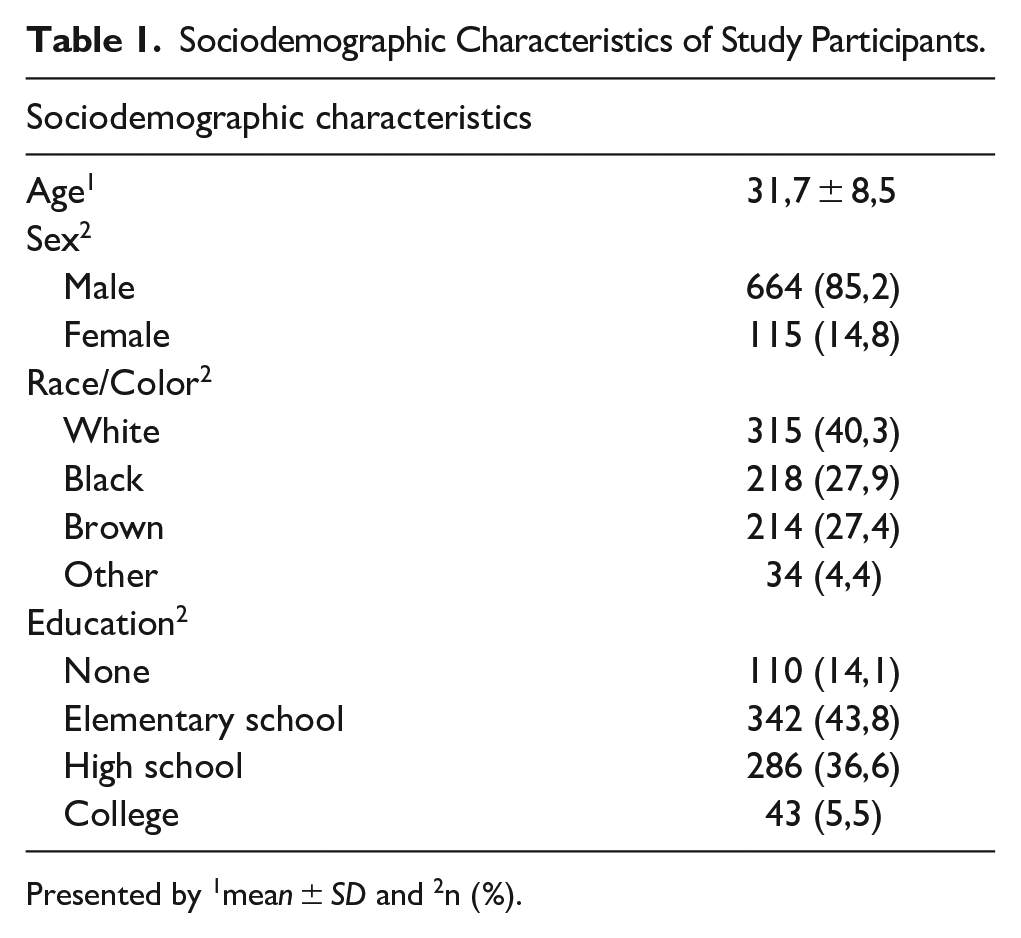
Presented by 1mean ± SD and 2n (%).
Table 2 shows the bivariate associations between the main outcomes and other violence-related variables. Crack-cocaine users who have recently experienced Domestic Violence by intimate partners or family members showed more relational problems than those who did not report DVI (84.3% vs. 57.8%, p < .001), as expected. Nonetheless, the proportion of reported feeling to be supported by partners and family for the two groups was very similar (96.4% vs. 90.8%, p = .042), although the difference was statistically significant.
Bivariate associations between the main outcomes and other violence-related variables.
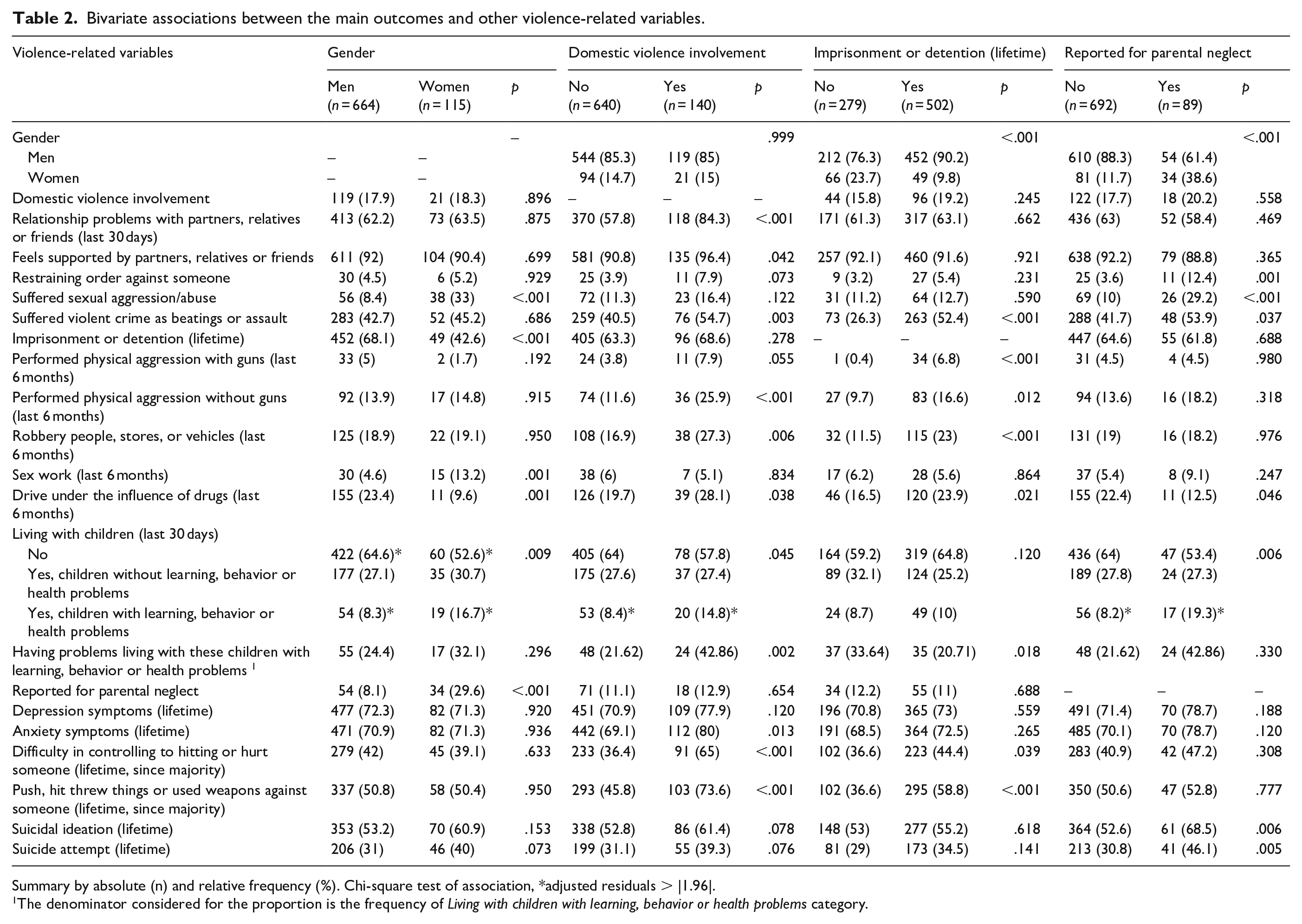
Summary by absolute (n) and relative frequency (%). Chi-square test of association, *adjusted residuals > |1.96|.
The denominator considered for the proportion is the frequency of Living with children with learning, behavior or health problems category.
Female crack-cocaine users showed a higher frequency of received sexual assaults and abuses (33% vs. 8.4%, p < .001) than men, and also reported more involvement in sex work (13.2% vs. 4.6%, p < .001), all factors registered in the 6 months previous to the interview.
Crack-cocaine users with DVI, in comparison to crack-cocaine users without DVI, experienced more aggressions and beatings as victims throughout their life (54.7% vs. 40.5%, p = .003), showed greater difficulty in controlling the impulse to assault or hurt someone throughout their life (65% vs. 36.4%, p < .001), reported a higher number of physical aggressions (25.9% vs. 11.6%, p < .001), car theft (27.3% vs. 16.9%, p = .006), violent crimes (12.9% vs. 6.2%, p = .009), and showed more anxiety symptoms (80% vs. 69.1%, p = .013)
The prevalence of DVI was not different between males and females. However, men reported a higher proportion of charges and arrests in general throughout their life (68.1% vs. 42.6%, p < .001) and more episodes of driving under the influence of alcohol (23.4% vs. 9.6%, p < .001). Furthermore, crack-cocaine users with DVI reported to live more frequently with children affected by learning, behavioral, and general health problems (14.8% vs. 8.4%, p = .031). In this sense, female crack-cocaine users who have had DVI lived with children perceived by them as having more problems, compared with the perception of male crack-cocaine users who experienced DVI. Another key finding was that women with DVI reported more charges over parental powers as determined by the Guardianship Council Charter (29.6% vs. 8.1%, p < .001).
Figure 1 shows the results of the multiple Poisson model estimating the prevalence ratios of being RPN. The general prevalence of RPN was 184% higher for individuals who reported a restraining order against someone (PR = 2.84, p < .001) than those who did not; 77% higher in the group with history of sexual abuse (PR = 1.77, p = .011) compared to those without; and 76% higher among those who perceived to live with children with health, behavioral or learning problems (PR = 1.76, p = .009) compared to those who did not. The prevalence of RPN was also higher among women than men (PR = 3.6, p < .001). However, since the interaction term between gender and DVI was statistically significant, its interpretation should be prioritized over the main effects. The prevalence ratio of RPN in women compared to men was 74% lower in the group with DVI than the prevalence ratio of RPN in women compared to men in the group without DVI (PR = 0.26, p = .026).
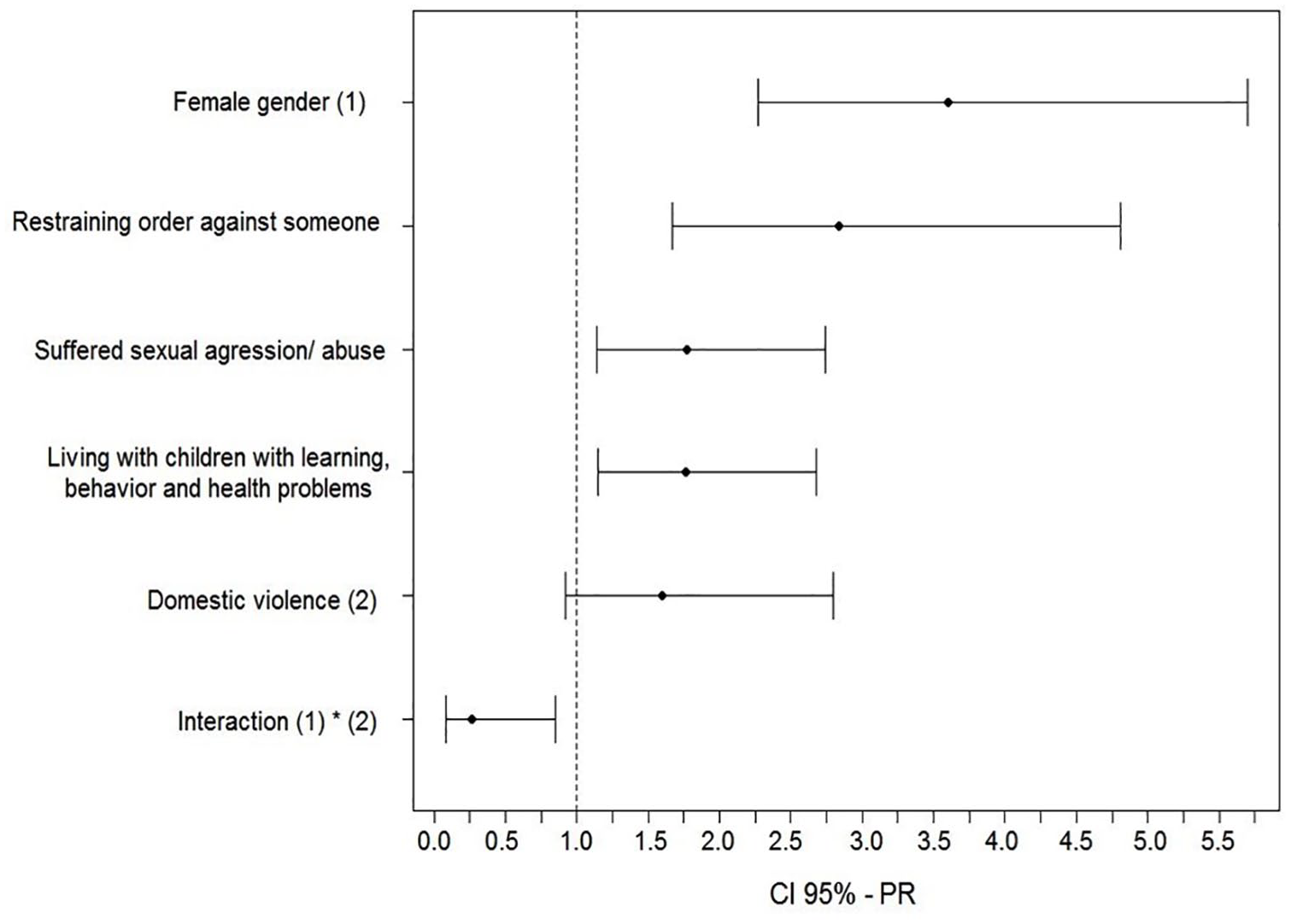
Prevalence ratio estimate of being reported for parental neglect in crack-cocaine users by Poisson regression.
For the group with DVI, the prevalence of RPN within men and women was homogeneous (12.6% and 14.3%, respectively). In addition, in the group without DVI, the prevalence of RPN within women was significantly higher than in men (33% and 7.2%; shown in Figure 2). This could suggest that being a woman aggravated the chances for parental responsibility complaints more than the DVI itself, and women were RPN mostly when they were not involved in domestic violence.
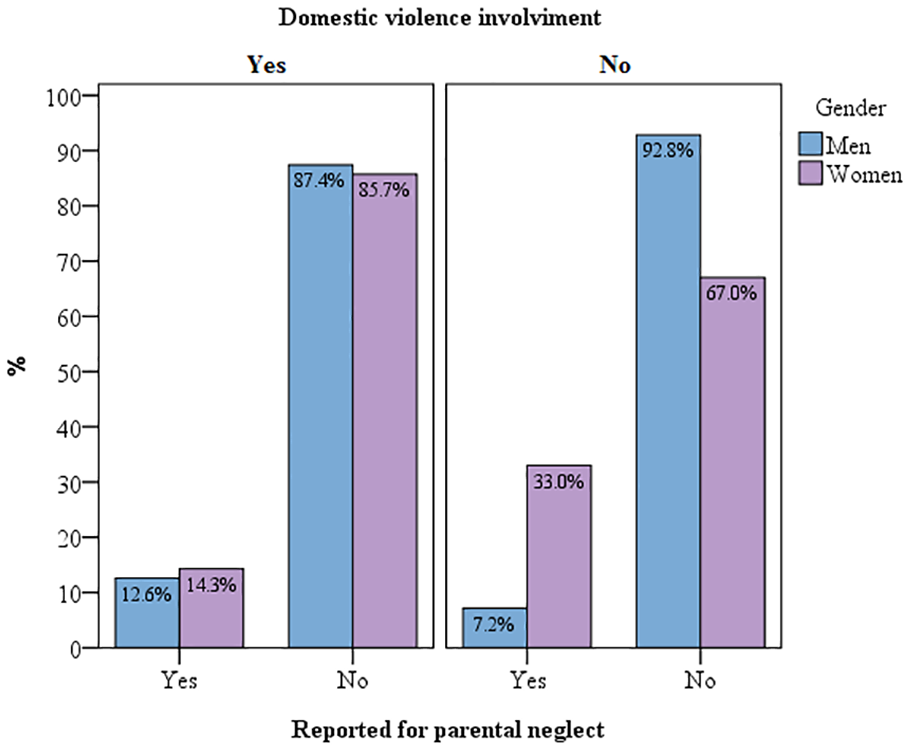
Prevalence of being reported for parental neglect within men and women stratified by domestic violence involvement in crack-cocaine users.
Figure 3 shows the results of the multiple Poisson model estimating the prevalence ratios of imprisonment or detention. Men reported a + 57% of prevalence of being arrested or detained than women (RP = 1.57, p < .001). DVI was not significantly associated with being arrested or detained, as well as the interaction factor between gender and DVI was not significant. This may suggest that, regardless of DVI, men were more arrested or detained when compared to women.
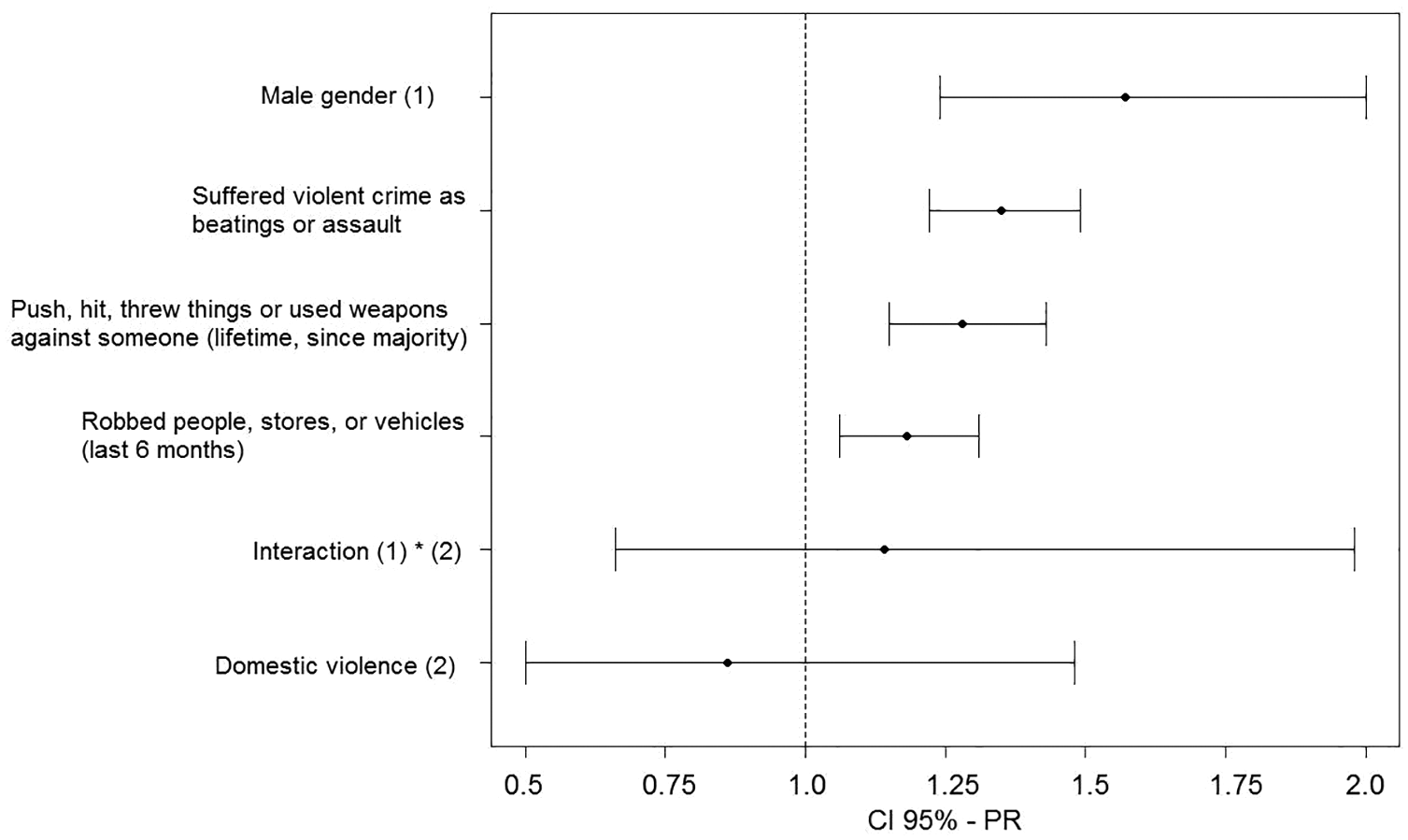
Prevalence ratio estimate of imprisonment or detention in crack-cocaine users, analyzed with Poisson regression.
Discussion
Our findings reported that DVI among crack-cocaine users was associated with other violent expressions lived, as passively as actively, out of familiar circles and throughout patients’ lives. These violent behaviors might be exemplified as more received aggressions and beatings, more impulsivity to assault or hurt someone else, more physical aggressions, car theft, and higher probability of being charged with violent crimes. Also, crack-cocaine users with DVI showed higher impulsivity and risk-taking in comparison with crack-cocaine users without DVI.
Although crack-cocaine users with a history of DVI showed more relational problems than those who have not been engaged in episodes of domestic aggression, they did not report differences in the perception of satisfaction with their relationships or even in the support by partners and family (in comparison to the ones without DVI episodes). These findings might be interpreted as a trend of compensation oriented to tolerate aggression in the intimist environment (Nardodkar et al., 2016). This may also be based on a dissociation mechanism between aggression and affection. Despite this evidence, crack users with Domestic Violence presented higher levels of anxiety symptoms. It is also possible that this finding was one of the gears in the circuit of abusive relationships, in which, despite the violence, there is some significant degree of denial and tolerance toward the relationship. This fact occurs due to an interpersonal relationship model learning in which violent events are naturalized throughout the subjects’ transgenerational path, through the exposure of several family generations to the history of abuse and violence (Powers et al., 2020).
Previous studies supported the mechanism of dissociative experiences in the context of violent episodes. For instance, Simoneti et al. (2000) explored the association between dissociative symptoms and experiences of sexual, physical, or interparental violence during their childhood. Their findings indicated that traumatic experiences were associated with the development of dissociative coping mechanisms by the abusers during the perpetration of violence. The authors also found that dissociative symptoms and violent specific dissociation were combined with the occurrence of more severe domestic violence episodes (Simoneti et al., 2000). Other evidence reported that child abuse and parental neglect predicted dissociative symptoms in men who perpetrated intimate partner violence (Webermann & Murphy, 2019). A research study conducted with women who have a history of substance abuse and childhood abuse found that those women reported higher levels of dissociation and were more likely to perpetrate IPV than those with low levels of dissociative symptoms (Daisy & Hien, 2014).
In our sample, crack-cocaine users who suffered from Domestic Violence reported more problems in dealing with their children. They also reported perceiving children with more learning, behavioral, and health problems. These data supported the idea that DVI may impact on children’s development and functionality. In addition, it is recognized that children living with caregivers with substance abuse may report more internalizing and externalizing symptoms (Vilela et al., 2020) and may also develop symptoms consistent with post-traumatic stress disorder, depression, and drug abuse during their adolescence (Staton-Tindall et al., 2013). In our sample, female crack-cocaine users with DVI perceived their children to show more problems compared with male crack-cocaine users who experienced DVI. This gender difference could be related to the greater attention from women to their children compared to men, as they are socially expected to care for children (Powers et al., 2020).
The causal chain connecting the psychosocial factors of domestic violence, substance use, and perpetration of violence by parental neglect is complex, due to the intricate psychosocial factors connecting these issues. In fact, several studies reported the link between parents substance use and their child abuse/neglect (Ghertner et al., 2018; Lee et al., 2023). They emphasized that establishing a causal relationship between the child maltreatment /neglect and drug use may be difficult since research evidences are based on small samples of abusers (M. F. Testa & Smith, 2009). A cross-sectional study on the co-occurrence of child abuse - distinguishing physical abuse and parental neglect - and DVI identified that 39% of female keepers in households with both DVI and RPN reported a history of substance use. In families presenting both DVI and child physical abuse, 34% of the male keepers exhibited a history of alcohol or drug problems (Hartley, 2002).
Even though both genders of users showed DVI, female crack-cocaine users with DVI reported higher prevalence of charges over parental powers than men (33% and 7.2%). This might suggest that being a woman aggravated the chances for parental responsibility complaints more than the involvement with domestic violence itself. This result illustrates, in a social sphere, how child neglect is related to gender issues and both negligence and violence are perceived in different ways according to gender. In light of this matter, when the ideal of motherhood is not performed by women or even when mothers present behaviors that deviate in a way considered different by the ideal standard, they may be easily judged and pointed out as negligent (Xavier & Zanello, 2018). Therefore, child neglect is not a gender-free matter since mothers are often accused of neglecting children throughout history (Swift, 1995). This reveals how much the social role related to parenthood is still given chiefly to women reinforcing the stereotypes of motherhood, even more in cultures and countries like Brazil which are marked by maternal single-parent families and paternal abandonment (Feijó, 2023).
Aside from the social implications of gender equality improvement, including the insertion of women in the work market and a supposedly more balanced division of domestic tasks, women are still commonly assigned, demanded, and sanctioned in domestic and private spheres while men are more involved in public activities and work market. The socio-cultural intersection between gender, drug abuse, and parenting is based has a social matrix with origins in sexist structures, which may lead to misogynist expressions. This means that a more severe and perverse control is established over women, their minds, and bodies as a product and public property. In addition to more regulation over the social roles and functions assigned to women.
This study has limitations since the cross-sectional design of the data collection implies a limitation of interpretability regarding the evidence, where through the analysis used, it is only possible to investigate and conclude about associations, not causality. However, using a secondary database to answer our research questions, beyond the one proposed by the original study, it is relevant to mention that Domestic Violence related to Substance Abuse is still socially naturalized and underreported, blaming the victims, especially when it comes to women, and this can occur also in the healthcare or legal settings and institutions that should be protective and welcoming, damaging the reporting of this data and legal referrals. In fact, it is necessary to implement effective strategies for coping with this phenomenon, and its emotional, financial, family, legal and health needs consequences. Thus, professionals should be specifically trained to provide support to women. Future studies also must develop prevention interventions or specific treatments for this vulnerable population suffering from DVI.
The development of science and knowledge based on research evidence needs to be involved in more responsible public policy practices. It is noteworthy that, at the time of the pandemic, despite the increase in cases of domestic violence in Brazil due to the isolation restrictions and the reduction of extra-family networks- the Brazilian government went in the opposite way when it came to the World Health Organization (WHO) guidelines to decrease gender-based violence, including suppressing financial resources for this issue (de Oliveira & Alloatti, 2022; Dlamini, 2021; Uzobo & Ayinmoro, 2023). In addition to the fatal outcomes, it must be considered that the overload attributed to women in household management tasks, the position of vulnerability in relation to the scarce and permissive sanctions attributed to their partners for IPV, as well as the inequality in the accountability of parental functions, all play a role in the symptomatic manifestations, psychopathological conditions of women, which may, for example, report more symptoms of internalization and discomfort. Finally, our study highlighted that, despite the high rates of domestic violence, the legal consequences and sanctions given to men were mostly due to violence in extra-family contexts. This lack of legal consistency in the punishment might lead to the legitimization of these violent behaviors with consequences in terms of women’s health and negative ethical stereotypes.
Conclusion
Our findings suggested that DVI in Crack-Cocaine users may be a potential predictor of social violence in general with no significant differences between males and females. In fact, DVI was associated with other expressions of violence that go beyond the domestic realm and express itself in other social contexts with following parental neglect, and transgenerational impact on families. In this context, early life neglect and the lack of a structured sense of self-preservation may naturalize violence as a possible model of relationship.
The punishments for violence, whether expressed in the public or private sphere, are still very much linked to the role assigned to each gender. Men are more likely to be detained for episodes of domestic and non-domestic aggression, while women are more exposed to punishment for parental neglect. Despite advances in terms of gender equality and its social implications, it seems that women are still assigned, charged, and sanctioned by the functions linked to the domestic and private sphere of the family. While, men are more socially responsible for the public domain.
Thus, in this context, there is a need for specific training among health professionals to improve support for women with DVI, especially to empower them to break away from violent patterns. Therefore, we highlighted the relevance of investments in training to sensitize professionals and healthcare managers to this problematic issue. Our study also highlighted the need for proper consistent legislation, supporting health and legal protection for women reporting domestic violence, as well as, holding accountable the paternal abandonment or neglect, the same way our study shows that women are already being held responsible for parental neglect. Longitudinal studies in different countries may help in understanding gender-based violence across cultures and societies and the role of public policies.
Footnotes
Funding
The author(s) received no financial support for the research, authorship, and/or publication of this article.
Ethical approval and informed consent
The project was approved by the Research Ethics Commission of Hospital de Clínicas de Porto Alegre / Universidade Federal do Rio Grande do Sul, number 07/2014: # 14-0395, CAAE 31140014200005327. The main project and the Informed Consent Form (ICF) were replicated and submitted to the local committees of the participating centers and approved under number 100176. The evaluated individuals who agreed to participate in the study filled out the ICF.
