






Abstract
Aim:
Anxiety has psychological, behavioural, and emotional effects on individuals’ lives. These effects play a role in both internal distress of individuals and deterioration of their interpersonal relationships. The present study examined the serial mediating role of loneliness and life satisfaction in the relationship between anxiety experienced by participants and suicidal risk.
Methods:
The study was conducted as a descriptive and correlational research. The study was conducted with 608 married adolescent girls aged between the ages of 16 and 20 (M age = 17.50, SD = 1.31). “Adolescent Descriptive Form,” “State-Trait Anxiety Inventory for Children (STAIC-Trait Form),” “Short-Form of the UCLA Loneliness Scale (ULS-8),” “Suicide Probability Scale (SPS),” and “The Satisfaction with Life Scale (SWLS)” were used as data collection measures. The data used in the study were analysed by using structural equation modelling.
Results:
It was found that participants’ trait anxiety positively predicted feelings of loneliness (β1 = .852; p < .001) and negatively predicted life satisfaction (β1 = −.510; p < .001). Loneliness (β1 = .424; p < .001) positively predicted suicide risk. Life satisfaction (β1 = −.276; p < .001) was found to negatively predict suicide risk. Loneliness, life satisfaction, and trait anxiety scale scores were found to explain 91.2% of the variance in participants’ suicide risk scale scores. The results of the study show that loneliness and life satisfaction play a serial mediating role in the relationship between anxiety and suicidal risk.
Conclusions:
The findings indicate that efforts should be made to reduce feelings of loneliness and increase life satisfaction in order to reduce the impact of anxiety experienced in the home on suicidal risk. Therapies aimed at reducing feelings of loneliness should also focus on increasing perceived social support and coping skills. Increasing individuals’ participation in daily life activities and reducing their workload will increase their life satisfaction.
Introduction
Adolescent or child marriages have become a significant global issue in recent years, affecting different countries, cultural structures, and religious belief systems. It is estimated that 12 million girls worldwide are forced into marriage before reaching the age of 18 each year, meaning that one in five girls is married at an early age. It is stated that today, more than 650 million women have been married before reaching the age of 18 (Girls Not Brides, 2024). According to the World Health Organization (WHO), child marriages are still widespread in South Asia, Latin America, the Caribbean, Sub-Saharan Africa, and the Middle East, despite declining rates since the 2000s (WHO, 2025).
The most important goals of the 21st century worldwide are to protect human rights, eliminate discrimination, and create a sustainable environment. In line with the United Nations Sustainable Development Goals fifth item, a call has been made to eliminate child marriage by 2030 (UN, 2025). In line with these goals, preventing early marriages and adolescent pregnancies places significant responsibilities on both nurses and other healthcare professionals.
Background
Turkey is one of the countries where early and forced marriages are still common. The Turkish Civil Code permits marriages of children aged 16 to 17 with parental consent, but a court order is required for a child aged 15 to marry (Yilmaz et al., 2022). According to the United Nations Population Fund (UNFPA) Turkey report, one in five women aged 20 to 49 was married before the age of 18. It is stated that one in three women who married before the age of 18 became mothers when they were still children (UNFPA, 2025).
Child and adolescent marriages affect the health and well-being of mothers and children negatively, becoming a significant public health issue worldwide (Marphatia et al., 2023). The presence of psychological symptoms in adolescent girls who marry at an early age is noteworthy. Studies in the literature emphasize that depression, anxiety, and post-traumatic stress disorder are particularly prevalent among adolescent girls who marry early (Eray et al., 2019; Taplak & Yılmaz, 2022). The prevalence of the relationship between psychological symptoms (depression, anxiety) and suicide among girls who marry early is also remarkable (Eray et al., 2019; Gage, 2013; John, Edmeades, Murithi & Barre, 2019; Wahi et al., 2019). In a study conducted by Sezgin and Punamaki with adolescent married girls, it was stated that women who gave birth between the ages of 13 and 19 reported more anxiety and somatization symptoms than those who gave birth later, and that depressive symptoms were higher in those who married before the age of 25 than in those who married later (Sezgin & Punamäki, 2020). A study examining the relationship between marriage and suicidal thoughts and attempts among girls who married during adolescence in Ethiopia reported that girls who married at an early age were significantly more likely to have had suicidal thoughts in the past 3 months than girls who had never been married. It has been observed that the likelihood of suicide attempts among girls who wanted to get married was twice as high as among those who did not (Gage, 2013). It is thought that the fact that the care, feeding, growth, and development of a baby is added to girls’ own development processes during marriage causes them to experience long-term anxiety and, when they cannot cope with the process, this leads to suicidal tendencies (John, Edmeades & Murithi, 2019; Yadegarfard et al., 2014).
Joiner’s Theory of Togetherness is an effective theoretical framework for understanding suicidal behaviour, with a particular focus on disruptions to adolescents’ social contexts. The theory posits that suicidal behaviour arises from the convergence of two fundamental interpersonal conditions. The first is the individual’s perception of being a burden to others, and the second is increased feelings of loneliness. These conditions heighten suicidal thoughts and attempts (Joiner et al., 2006; Van Orden et al., 2010). A study found that the anxiety and loneliness experienced by adolescents are directly related to the fundamental structures of the theory of togetherness. Getting married at an early age can cause adolescents to feel socially inadequate. These feelings cause girls to withdraw from social relationships, weakening their social bonds and deepening their loneliness the second fundamental component of the theory. This plays a critical role in the development of suicidal thoughts (Gage, 2013; Joiner et al., 2009; Joiner & Silva, 2012; Van Orden et al., 2010). The internalization of loneliness by girls, coupled with their isolation from society and inability to form bonds, increases the likelihood of suicide risks.
It is reported that early marriage and teenage pregnancy in adolescent girls can pose serious risks to their mental health, reproductive health, education, and social status (Marphatia et al., 2023; Sezgin & Punamäki, 2020; Taplak & Yılmaz, 2022). However, very little is known about the factors that regulate or mediate these relationships.
According to Joiner’s theory, suicidal thoughts arise when an individual’s need to “belong” and not be a “burden” are not met. The life satisfaction examined in this study reflects an individual’s cognitive and emotional assessment of whether these two needs are being met. Therefore, life satisfaction can theoretically be considered a consequence of loneliness and suicidal thoughts a precursor to it. The new roles and expectations imposed on girls by society can create high levels of anxiety, leading to feelings of loneliness and increased social isolation. This, in turn, reduces the pleasure or satisfaction that individuals derive from their lives (Haberland et al., 2018; Joiner & Silva, 2012; Van Orden et al., 2010). Research in the literature indicates that married adolescent girls are isolated by society due to their early marriages, prevented from going shopping or travelling alone, and constantly pressured by their husband’s relatives. It is stated that this situation increases the feelings of loneliness among married adolescent girls and causes them to feel isolated in society (Al-Kloub et al., 2019; Gage, 2013; Taplak & Yılmaz, 2022). The social isolation and feelings of loneliness experienced also negatively affect feelings of enjoyment and happiness in life among girls. The concept of life satisfaction is one of the fundamental elements that married adolescent girls need to have in order to be happy in their lives and for their lives to have meaning. Life satisfaction is a cognitive component of subjective well-being and involves cognitive judgements about one’s life (Dağlı & Baysal, 2016). The intensity of the roles and responsibilities that society places on girls in adolescent marriages affects their life satisfaction negatively (Dağlı & Baysal, 2016). Similarly, within extended family structures, their active role in household chores and spending a large part of the day caring for babies deteriorates their quality of life and life satisfaction (Huebner, 2004; Rahiem, 2021). In this case, loneliness and life satisfaction may act as sequential mediating variables on the path from anxiety to suicidal thoughts.
The Present Study
This study’s key innovation lies in its examination of the relationship between psychological distress (loneliness), protective factors (life satisfaction), and suicidal behaviour within the context of “child or adolescent brides”—an extremely vulnerable and unique socio-demographic group that has been overlooked in global literature. To date, these psychological variables have been tested in different populations. However, this study’s significance lies in revealing how these relationships are shaped by the context of early or forced marriage. Adolescent brides are forced into adult roles at a young age and experience social isolation, loss of educational and developmental opportunities, potentially traumatic family dynamics, and social stigma. The combined effect of these stressors can trigger psychological mechanisms in unique and intense ways, increasing the likelihood of deeper loneliness, chronic anxiety, and lower life satisfaction. Therefore, this study is necessary to validate a general model and understand how it operates in adolescents undergoing this traumatic transition. The findings contribute to theory and provide vital evidence for the development of targeted, culturally sensitive psychosocial intervention and support programmes for this invisible group. Thus, in addition to shedding light on universal psychological processes, the study documents the tangible impact of systematic social victimization on mental health, making a significant contribution to clinical psychology, gender studies, and human rights. Studies in the literature aimed at determining adolescent married girls and the effects on adolescence marriage are relatively limited. Based on the literature and the rationale mentioned above, a series of mediation models were designed to examine the relationships between anxiety, suicidal thoughts, loneliness, and life satisfaction experienced by adolescent married girls over a long period of time.
Material-Method
Study Design and Setting
The study was conducted as a descriptive and correlational research between March 31, 2025, and August 31, 2025. The study was conducted at an education and research hospital in the province with the highest crude birth rate (24.8%) and fertility rate (3.27) in Turkey (TÜİK, 2023). The data were collected from married adolescent girls aged 16 to 20 who visited the outpatient clinic for diagnosis at the Department of Obstetrics and Gynaecology of the hospital and who were followed up with treatment at the clinics of the Department of Obstetrics and Gynaecology.
Study Participants and Sampling
Although there are many adolescent marriages in the country where the study was conducted, statistical data is not fully available in official records. The reason for this is thought to be the lack of a regular and systematic database since child marriages are not legal and marriages take place through religious ceremonies and therefore not officially registered, births are entered into the system through the first spouse, and official institutions are not accessed for reasons such as pregnancy and childbirth. Therefore, married girls under the age of 18 constitute a challenging participant group (Çelik et al., 2024).
The study population consists of married adolescent girls living in the city centre of Şanlıurfa and surrounding districts, as well as those coming to hospitals in the province from outside the province for control, follow-up, diagnosis, or treatment purposes. In the sample selection, “random sampling” method, one of the non-probability sampling methods, was used. Patient records from a specific hospital were used to reach married adolescent girls, and adolescents who met the inclusion criteria were encouraged to participate in the study. This method was chosen because it is not possible to randomly select married adolescent girls from the general population, and an accessible sample could be created from individuals who sought care at specific healthcare institutions (Koç, 2017).
In the study examining the serial mediating role of loneliness and life satisfaction in the relationship between anxiety and suicidal thoughts among married adolescent girls, when post-hoc analysis was conducted using 608, the test power was found to be 99.9% (1 − β) with a 95% confidence level (1 − α) and an effect size of d = 0.758.
Inclusion Criteria
Adolescent married girls aged 15 to 20 living in Şanlıurfa province, who married during adolescence, who were literate, and came from outside the centre (districts or provinces) for diagnosis, treatment, or check-ups were included in the study.
Exclusion Criteria
Adolescents who were illiterate, who dropped out of the study, who had preeclampsia, those who did not give legal consent or whose parents did not give legal consent, and those with a psychiatric diagnosis followed up by a child and adolescent psychiatrist were excluded from the study.
The study reached 665 married adolescent girls. Twelve participants dropped out of the study, nine participants had preeclampsia, 11 participants were followed up by child and adolescent psychiatry, 12 patients were under 15 years of age, and 13 patients were excluded from the study because they could not read or write. A total of 57 married adolescents were excluded from the study. The study was conducted with 608 married adolescents.
Data Collection
The data were collected from married adolescent girls who met the inclusion criteria. The researcher explained the study to the married adolescent girls and their spouses, and then collected the data in the rest rooms of the outpatient clinic or in participants’ rooms in the clinical section. Collecting data from each adolescent took an estimated 20 to 35 min. “Adolescent Descriptive Form,” “ State-Trait Anxiety Inventory for Children (STAIC-Trait Form),” “Short-Form of the UCLA Loneliness Scale (ULS-8),” “Suicide Probability Scale (SPS),” and “The Satisfaction with Life Scale (SWLS)” were used as data collection measures. All scales was filled out by married adolescent girls, with the help of researchers when necessary.
Measures
Adolescent Descriptive Form
A form was created to determine the sociodemographic characteristics of married adolescent girls and the problems they experienced, including relevant information. This form asked participants about their age, educational status, number of siblings, and monthly income. The form consists of questions such as exposure to peer pressure, exposure to family pressure, participation in social activities, spending time with friends, number of children, number of miscarriages, number of pregnancies, etc., in order to determine the continuity of anxiety and suicidal thoughts among married adolescent girls (Sezgin & Punamäki, 2020; Taplak & Yılmaz, 2022).
State-Trait Anxiety Inventory for Children-(STAIC-Trait Form)
The scale was developed to measure both trait anxiety (STAIC-Trait Form) and temporal and situational changes in children and adolescents (Spielberger, 1983). In the study, the trait anxiety form was used to determine the long-term anxiety levels of married adolescent girls. The validity and reliability study of the scale in Turkish was conducted by Öner and Lecompte (1983). The scale consists of 20 items, each answered on a four-point Likert scale. The scale is scored between 20 and 80. As the score on the scale increases, the anxiety symptoms experienced increase. The cut-off score for the scale is set at 35 points (Öner & Lecompte, 1983; Spielberger, 1973). Cronbach’s alpha values were found to be .87 based on the total score of the scale.
The Satisfaction with Life Scale (SWLS)
The scale was developed to determine adolescents’ satisfaction with their lives and their happiness levels (Diener et al., 1985). The Turkish validity and reliability study of the Life Satisfaction Scale was conducted by Dağlı and Baysal (2016). The scale consists of five items, and each item is answered on a five-point Likert scale. The scale is scored between 5 and 25 points. As the score on the scale increases, satisfaction with life and happiness levels increase (Dağlı & Baysal, 2016; Diener et al., 1985). Cronbach’s alpha values were found to be .91 based on the total score of the scale.
Short-Form of the UCLA Loneliness Scale (ULS-8)
The scale was developed to determine the feelings of loneliness experienced by adolescents. It is also used to assess the intensity of adolescents’ feelings of loneliness (Hays & DiMatteo, 1987). The Turkish validity and reliability study of the UCLA Loneliness Scale Short Form was conducted by Yildiz and Duy (2014). The scale consists of eight items, and each item is answered on a four-point Likert scale. The scale is scored between 8 and 32. As the score on the scale increases, the intensity of feelings of loneliness experienced increases (Hays & DiMatteo, 1987; Yildiz & Duy, 2014). Cronbach’s alpha values were found to be .84 based on the total score of the scale.
Suicide Probability Scale (SPS)
The scale was developed to assess suicidal thoughts, hopelessness, hostility, negative self-evaluation, and suicide risk in adolescents (Cull & Gill, 1988). The Turkish validity and reliability study of the Suicide Probability Scale was conducted by Atlı et al. (2009). The scale consists of 36 items, each answered on a four-point Likert scale and scored between 36 and 144. As the score on the scale increases, so do suicidal tendencies and thoughts of suicide. The cut-off score on the scale is set at 110 points (Atlı et al., 2009; Cull & Gill, 1988). Cronbach’s alpha values were found to be .89 based on the total score of the scale.
Analysis of Data
The data collected for the study were analysed by using the SPSS (Statistical Program in Social Sciences) 24 program. Normality of the data collected for the study was checked by conducting a Skewness and Kurtosis test (Alpar, 2020). For comparison tests, the significance level was set at p < .05. First, some preliminary analyses were carried out. Descriptive values for the variables were shown as number, percentage, mean, and standard deviation.
Cronbach’s alpha coefficient was used to determine the reliability analysis of the scales. In addition, the Pearson product-moment correlation coefficients were used to assess the relationships between the study’s variables. VIF and tolerance coefficients were calculated to check for any multicollinearity problems among the variables, and the analysis results showed that there was no multicollinearity problem. After completing these analyses, a serial mediation model (PROCESS MACRO) was created. Bootstrapping was used to examine the significance level of indirect effects. Maximum likelihood estimation was used for bootstrapping. In the present study, the analysis was carried out by selecting a 95% confidence interval, and the confidence interval values were calculated by using 5,000 Bootstrap samples. If there is no zero value between the highest and lowest confidence intervals, the mediation is statistically significant (Hayes, 2018; İnceoğlu, 2023).
Study Ethics
This study was conducted with a multi-stage consent and protection protocol due to the high ethical sensitivity involved in fieldwork with married adolescent girls. Approval was obtained from the Ethics Committee of Social and Human Sciences at the university where the study was conducted (No: E-76244175-050.04-421480), and the study was conducted in accordance with the principles of the Declaration of Helsinki, the Child Protection Law of the Republic of Turkey, and the UN Convention on the Rights of the Child. Written and verbal consent containing detailed information about the study was obtained from all participants. No personal identifying information such as the girls’ first name, last name, or address was requested while collecting data. It was emphasized that girls could withdraw from the study at any time during data collection, with no obligation or penalty. Girls who reported any distress after the survey were referred to local psychosocial support mechanisms that could provide counselling services.
Results
It was found that each participant had an average age of 17.5 ± 1.31 years. It was also found that each participant had an average of 1.69 ± 0.96 pregnancies, 0.62 ± 0.49 miscarriages, and 1.08 ± 0.79 living children. Each participant was found to live in a household with an average of 4.91 ± 1.82 people and had an average monthly income of 0.845 ± 0.306 dollars (Refer to Table 1).
Distribution and Mean of Participants’ Demographic Characteristics.
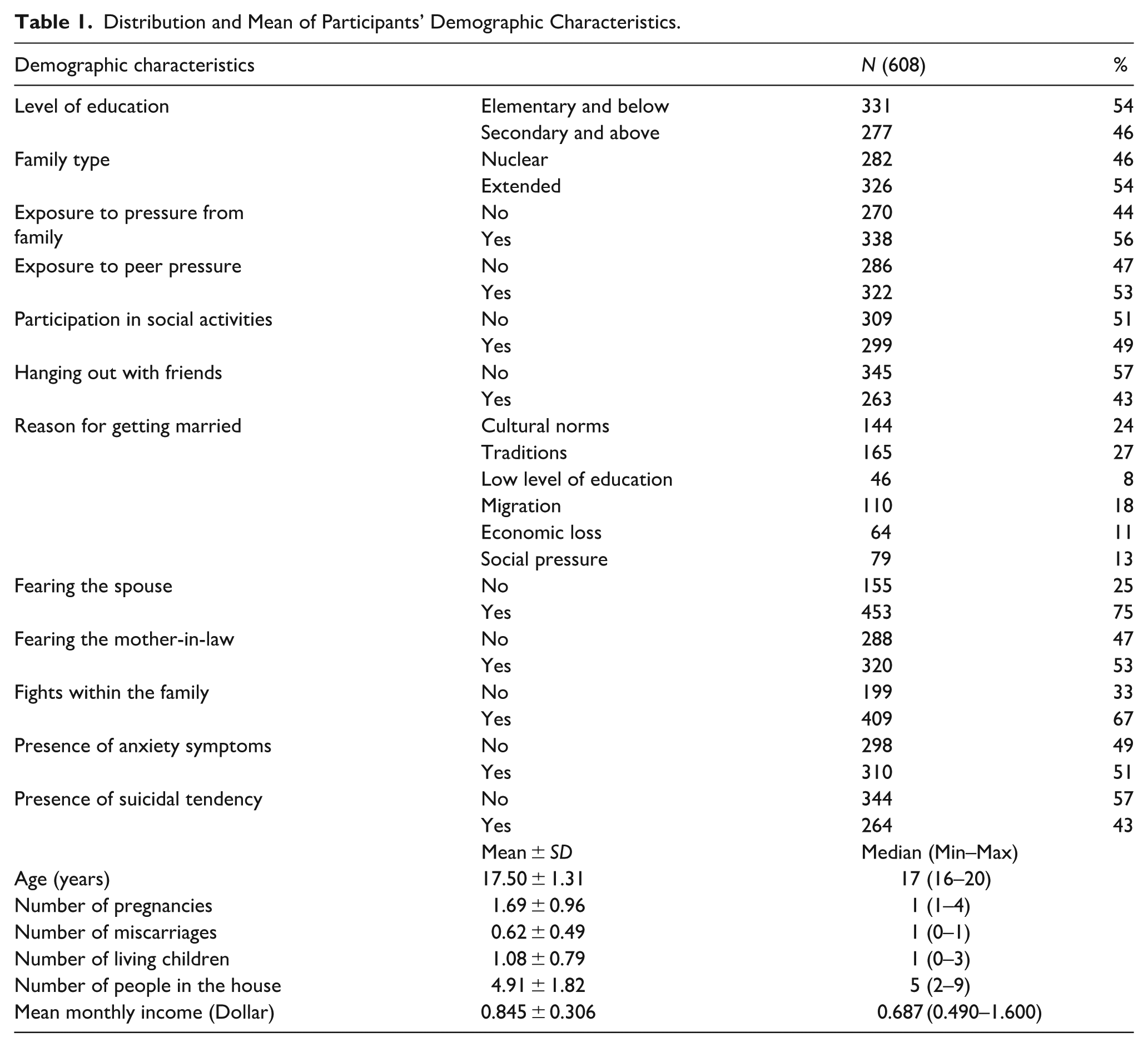
It was found that 54% of participants had an education level below primary school and 54% lived within an extended family structure. It was found that 56% of participants experienced pressure from their families to marry and 53% experienced pressure from their peers. Twenty-seven percent of participants reported marrying at an early age because of traditions, 24% because of cultural norms, and 18% because of migration. Of the participants, 51% stated that they could not participate in social activities and 57% stated that they could not hang out with their friends as they used to. It was also found that 75% stated they were afraid of their spouses and 53% stated they were afraid of their mother-in-laws. Based on the anxiety cut off score, 51% of participants were found to have anxiety symptoms. Based on the suicide scale cut off score, 43% of participants were found to have suicidal tendencies (Refer to Table 1).
In the present study, a statistically significant positive correlation was found between participants’ trait anxiety (STAIC-Trait form) scores and suicide risk (SPS) and loneliness scale (ULS-8) scores, while a statistically significant negative correlation was found with life satisfaction scale (SWLS) scores (r: .902, p < .001; r: .866 p < .001; r: −.885, p < .001). A statistically significant positive correlation was found between participants’ Suicide risk (SPS) scores and their Life Satisfaction Scale (SWLS) scores, while a statistically significant negative correlation was found between participants’ SPS scores and their Loneliness Scale (ULS-8) scores (r: .920, p < .001; r: −.903, p < .001). A statistically significant negative correlation was found between participants’ loneliness scale (ULS-8) scores and life satisfaction scale (SWLS) scores (r: −.865, p < .001; Refer to Table 2).
Mean Scale Scores of Married Adolescent Girls and the Relationship Between Mean Scale Scores.
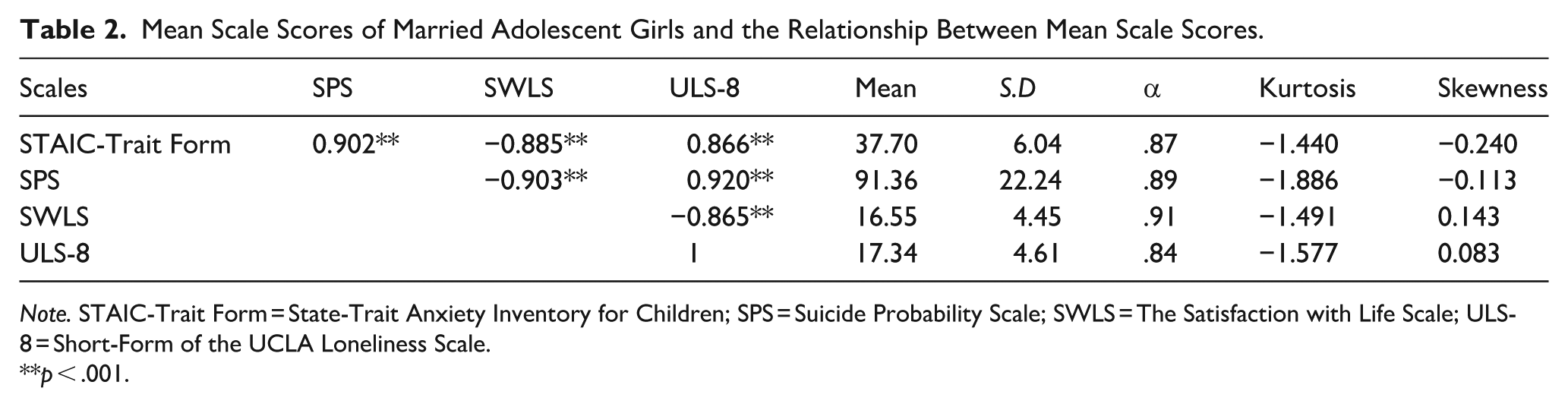
Note. STAIC-Trait Form = State-Trait Anxiety Inventory for Children; SPS = Suicide Probability Scale; SWLS = The Satisfaction with Life Scale; ULS-8 = Short-Form of the UCLA Loneliness Scale.
p < .001.
The mean scores of the participants were 37.70 ± 6.04 on trait anxiety (STAIC-Trait form) scale, 91.36 ± 22.24 on suicide risk scale (SPS), 17.34 ± 4.61 on loneliness scale (ULS-8), and 16.55 ± 4.45 on satisfaction with life scale (SWLS; Refer to Table 2).
The mediating role of life satisfaction (SWLS) and loneliness (ULS-8) in the relationship between participants’ trait anxiety (STAIC Trait-Form) and suicide risk (SPS) was tested through serial multiple mediation analysis. In this analysis, the independent variable has a total of four different effects on the dependent variable, one direct and three indirect. This model allows for the simultaneous testing of three different mediation models. The results of the serial multiple mediation analysis are shown in Figure 1.
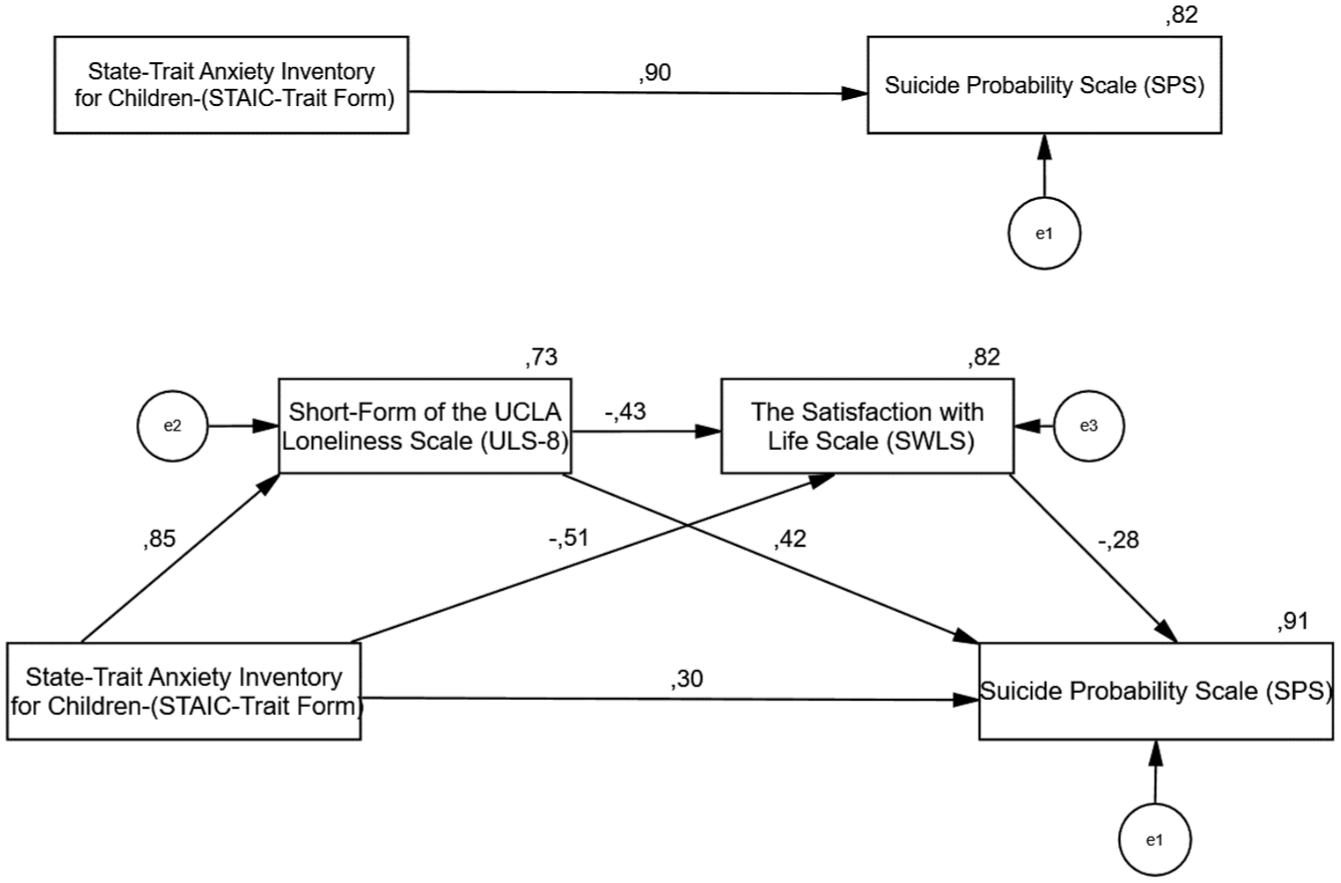
Standard coefficients.
It was found that participants’ trait anxiety positively predicted feelings of loneliness (β1 = .852; p < .001) and negatively predicted life satisfaction (β1 = −.510; p < .001). It was also found that 72.6% of the change in participants’ loneliness scale scores is explained by their trait anxiety scores (R2 = .726) and 81.9% of the change in participants’ life satisfaction scores is explained by their trait anxiety scale and loneliness scale scores (R2 = .819). (Refer to Table 3). Loneliness (β1 = .424; p < .001) positively predicted suicide probability. Life satisfaction (β1 = −.276; p < .001) was found to negatively predict suicide risk. Loneliness, life satisfaction, and trait anxiety scale scores were found to explain 91.2% of the variance in participants’ suicide risk scale scores (R2 = .912; Refer to Table 3).
Series Mediation Modelling Results of Participants.
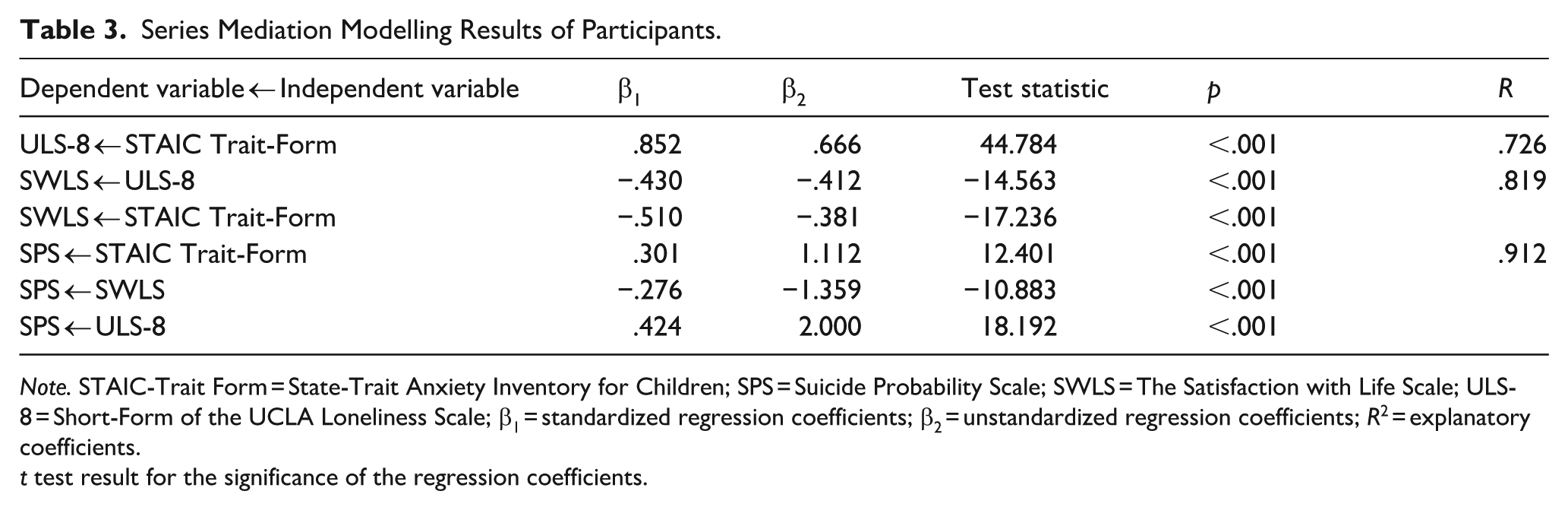
Note. STAIC-Trait Form = State-Trait Anxiety Inventory for Children; SPS = Suicide Probability Scale; SWLS = The Satisfaction with Life Scale; ULS-8 = Short-Form of the UCLA Loneliness Scale; β1 = standardized regression coefficients; β2 = unstandardized regression coefficients; R2 = explanatory coefficients.
t test result for the significance of the regression coefficients.
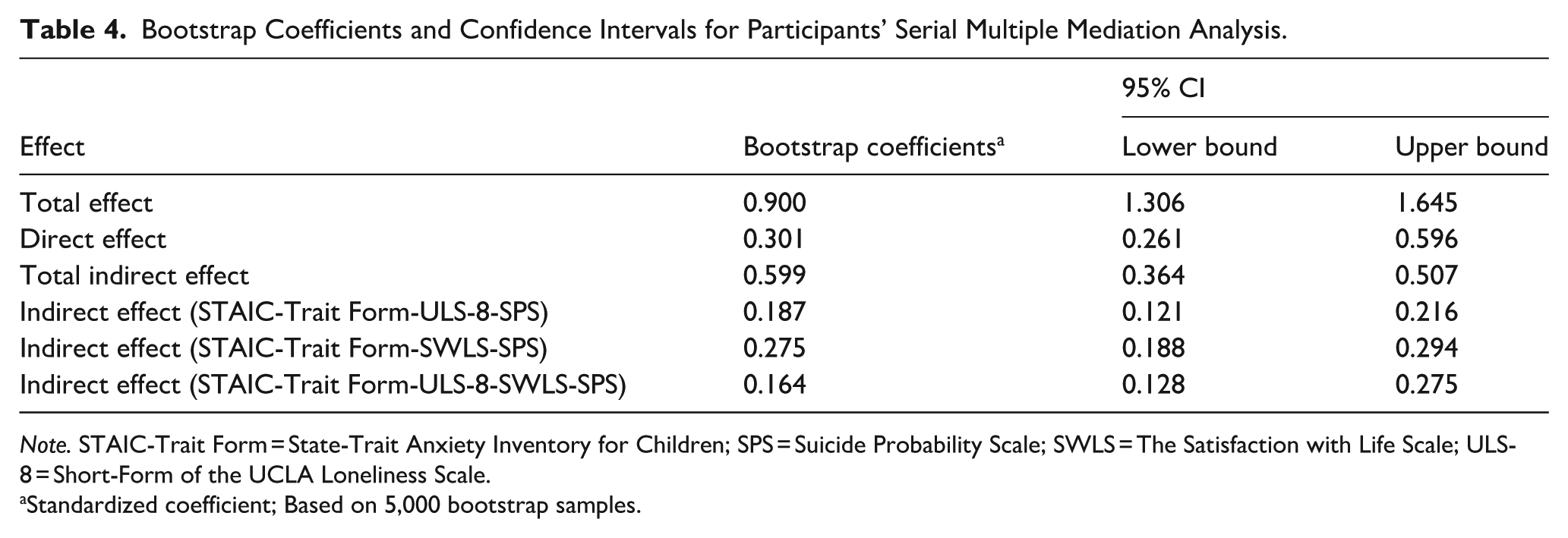
Table 4 shows the results of the serial multiple mediation analysis. A positive and significant correlation was found between anxiety experienced by participants and suicidal risk (Bootstrap value = 0.900, 95% CI [1.306, 1.645]). In this case, H1 hypothesis was found to be confirmed. Even when mediating variables were included in the model, the relationship between participants’ long-term anxiety and suicidal thoughts remained significant, although the level of significance decreased (Bootstrap value = 0.301, 95% CI [0.261, 0.596]). This situation indicates that the mediating variables of loneliness and life satisfaction partially mediate this relationship. These findings support hypotheses H2 and H3. Table 4 shows the statistically significant indirect effect values obtained from the bootstrapping analysis (Refer to Table 4).
Bootstrap Coefficients and Confidence Intervals for Participants’ Serial Multiple Mediation Analysis.
Note. STAIC-Trait Form = State-Trait Anxiety Inventory for Children; SPS = Suicide Probability Scale; SWLS = The Satisfaction with Life Scale; ULS-8 = Short-Form of the UCLA Loneliness Scale.
Standardized coefficient; Based on 5,000 bootstrap samples.
Table 4 shows that the model has three different indirect effects. The first indirect effect determined that participants’ long-term anxiety had a statistically significant effect on suicidal risk through loneliness (Bootstrap value = 0.187, 95% CI [0.121, 0.216]). In the second indirect effect, it was found that the anxiety experienced by participants had a statistically significant effect on suicidal risk through life satisfaction (Bootstrap value = 0.275, 95% CI [0.188, 0.294]). The third indirect effect revealed that loneliness and life satisfaction were statistically significant serial mediators in the relationship between anxiety experienced by participants and suicidal risk (Bootstrap value = 0.164, 95% CI [0.128, 0.275]; Refer to Table 4).
In summary, 5,000 Bootstrap samples were used to examine the significance of the mediating relationship between the variables, and it was found that the lower and upper limits of the 95% confidence interval did not include zero. This result indicates that the relationship between anxiety and suicidal risk among participants is statistically significant, and that loneliness and life satisfaction act as mediators in this relationship. This result supports Hypothesis H4 (Refer to Table 4).
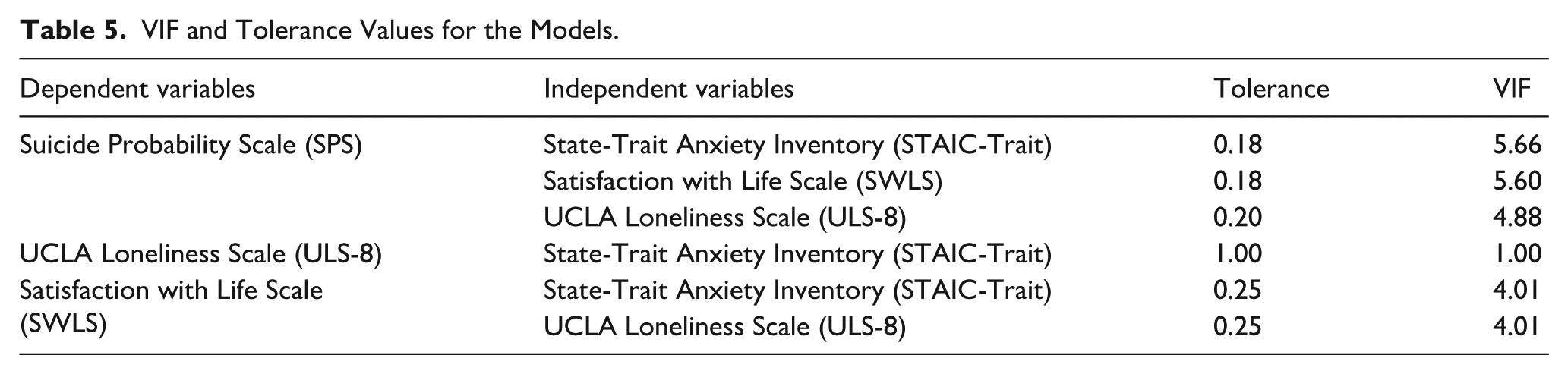
The variance inflation factor (VIF) and tolerance values were examined to assess multicollinearity among the variables used in the analyses. In the model predicting suicide risk (SPS), the VIF values for the independent variables ranged from 4.88 to 5.66 and the tolerance values from 0.18 to 0.20. In the model predicting loneliness (ULS-8), VIF = 1.00 and tolerance = 1.00 were found for the trait anxiety (STAIC-trait form) variable. In the model predicting life satisfaction (SWLS), VIF = 4.01 and tolerance = 0.25 were calculated for continuous anxiety and loneliness. As all VIF values are below 10 and all tolerance values are above 0.1, multicollinearity did not pose a problem in our analyses (Table 5).
VIF and Tolerance Values for the Models.
Discussion
Long-term anxiety can negatively affect individuals cognitively, emotionally, socially, and spiritually. In this context, a hypothetical model was tested to investigate suicidal risk caused by long-term anxiety experienced by married adolescent girls. The present study investigated the relationship between participants’ anxiety and suicidal risk by examining the sequential mediating roles of loneliness and life satisfaction. The findings revealed that loneliness and life satisfaction played sequential mediating roles in the relationship between anxiety and suicidal risk.
Poverty leads many parents to sincerely believe that early marriage will secure their daughters’ future. However, the consequences of early marriage on girls are profound and long-lasting (Girls Not Brides, 2024; Usaid, 2015). Studies have shown that anxiety triggers emotional and mental problems in individuals and consequently leads to an increase in suicidal behaviour (Haberland et al., 2018; Hattar-Pollara, 2019). The study found that long-term anxiety experienced by participants positively predicted suicidal risk (which supports H1). This finding is consistent with the findings of previous studies reported in the literature (Bartels et al., 2018; Hattar-Pollara, 2019; Nour, 2009; Teti et al., 2014). A study conducted by Hattar-Pollara in 2019 showed that long-term anxiety experienced by married adolescent girls leads to deterioration in their daily life satisfaction, emotional exhaustion, and feelings of loneliness (Hattar-Pollara, 2019). The negative effect on the daily life quality of married adolescent girls and their exposure to violence in their homes causes them to experience constant anxiety and stress. It has been found that prolonged stress and anxiety can result in suicidal thoughts (Bartels et al., 2018; Hattar-Pollara, 2019). All these findings strongly indicate that anxiety is one of the predictors of suicidal thoughts or suicide attempts. Furthermore, in a study conducted by Kohno et al. (2020), married adolescent girls having to perform multiple tasks such as housework and childcare, and being subjected to abuse and neglect by other family members, caused an increase in their cognitive load. This high cognitive load results in increased stress and fatigue, illness, and a decline in quality of life (Zhang, 2019). These findings suggest that anxiety may be one of the key factors contributing to suicidal thoughts in our current model. While the findings are consistent with the broader literature, the present study expands on this knowledge by examining the sequential roles of life satisfaction and loneliness.
The second most important finding of the present study is that loneliness plays a mediating role in the relationship between anxiety and suicidal thoughts (which supports H2). After marriage, participants assume the roles of wife, homemaker, and mother in their new homes. A qualitative study conducted in Nigeria revealed that girls’ childhoods are fragmented after marriage, leading to their isolation from family and friends and preventing them from returning home (Callaghan et al., 2015). In addition, married adolescent girls may be subjected to different types of violence by their husbands and their husbands’ families. This situation, combined with the anxiety they experience within their new family structures, increases their social isolation and feelings of loneliness. In summary, it can be seen that girls experience greater feelings of loneliness when they experience anxiety (Burgess et al., 2022). These findings, according to the suicide tension theory, shed light on the suicidal tendencies of individuals who live within society but feel “alone in a crowd.” (Kołodziej-Sarzyńska et al., 2019; Zhang, 2019). It supports the idea that, as in theory, the anxiety experienced by girls over a long period of time causes feelings of loneliness, which in turn leads to suicidal thoughts. The use of mediation has provided a clearer understanding of how and why anxiety leads to suicidal thoughts.
The present study found that loneliness affects suicidal thoughts. Similar findings have been reported in other studies (John, Edmeades, Murithi & Barre, 2019; Kohno et al., 2020; Mangeli et al., 2017). For example, Hattar-Pollara et al. (2019) found that married adolescent girls who experience feelings of loneliness are more likely to have suicidal thoughts (Hattar-Pollara, 2019). They suggested that girls who were socially isolated due to feelings of loneliness and whose daily activities were disrupted were more prone to suicide because they experienced excessive pressure and violence in their family environment. Kohno et al. (2020) stated that married adolescent girls experienced feelings of loneliness due to their experience of separation from their families, friends, school, and other events in their lives. Based on the results of these studies, it can be said that girls experiencing anxiety experience more feelings of loneliness and that this situation increases suicidal thoughts among girls.
Another important finding of the present study was that the relationship between anxiety and suicidal thoughts was mediated by life satisfaction (which supports H3). The present study showed that long-term anxiety negatively affects the life satisfaction of married adolescent girls and that there is a negative relationship between these two variables. This finding is supported by previous studies (Kohno et al., 2020; Proctor et al., 2018; Rahiem, 2021). The constant workload of married adolescent girls, their active participation in household chores, and their place within an extended family structure increase their anxiety levels, which negatively impacts their life satisfaction (Rahiem, 2021). This mediating pathway contributes to explaining the specific role of life satisfaction by increasing the tendency towards suicide among married adolescent girls experiencing anxiety.
It can be seen that increased anxiety in girls negatively affects their life satisfaction and also influences suicidal thoughts. A review of the literature reveals a connexion between low life satisfaction and suicidal behaviour (Fergusson et al., 2015; Sattarzadeh et al., 2018). Research conducted by Valois et al. (2004) revealed negative correlations between life satisfaction and poor mental health, serious suicidal risk, suicide planning, and suicide attempts (Valois et al., 2004). Furthermore, Sattarzadeh et al. (2018) stated that girls who were unhappy in their daily lives and who worked hard (doing laundry, cleaning, cooking, and many other household chores) struggled more with suicidal behaviour (Sattarzadeh et al., 2018). Based on the findings of the present study and information in the literature, it can be said that the anxiety experienced by girls negatively affects their life satisfaction and, as a result, they may engage in more suicidal behaviour.
Another important finding in the present study is that loneliness and life satisfaction play a serial mediating role in the relationship between anxiety and suicidal thoughts (which supports H4). The effect of anxiety experienced by girls on feelings of loneliness also has a negative impact on life satisfaction. Some studies have also shown a relationship between loneliness and life satisfaction (Kohno et al., 2020). Depression, lack of social skills, and exclusion among girls have been found to cause loneliness and low life satisfaction, and significant relationships have been observed among these variables (Altundağ & Bulut, 2014; Krause-Parello, 2008). Similarly, it has been found that exclusion and rejection by peers among girls is closely related to feelings of loneliness, which is also associated with unhappiness in daily life events (Mouratidis & Sideridis, 2009; Pourtaheri et al., 2025). It has also been found that increasing loneliness is an important determinant of life satisfaction among girls. These studies have shown that there are significant relationships between loneliness and life satisfaction among girls. Furthermore, as mentioned earlier, it has been found that life satisfaction also has an effect on suicidal behaviour among girls. This finding provides a more comprehensive resource on the psychological processes that may lead to suicidal thoughts. In summary, it has been concluded that anxiety, loneliness, and life satisfaction are significant factors among the potential indicators that may lead to suicidal behaviour in girls.
Conclusion
The present study found that loneliness and life satisfaction play serial mediating roles in the relationship between anxiety and suicidal thoughts among married adolescent girls. There are no previous studies in the literature that simultaneously examined the four variables analysed in the present study. In addition to confirming previously known relationships, the findings expand on existing research by showing how anxiety contributes to suicidal thoughts through interconnected cognitive and emotional mechanisms. Given the current increase in child marriages, it is important to take measures to minimize anxiety, which has been found to potentially increase suicidal thoughts among girls. Therefore, psychoeducation programs and cognitive therapies should be developed to prevent anxiety. Such programs and therapies are expected to help individuals maintain their mental health. During treatment, follow-up, and monitoring in the healthcare field, it is recommended for follow-up to be conducted by a paediatric nurse, psychiatric nurse, psychologist, and child development specialist.
Limitations and Future Research
The interpretation of this study’s findings is subject to several limitations. The primary limitation is its cross-sectional design. While serial mediation analysis was employed to test theoretical pathways, the data represent statistical associations at a single point in time. Consequently, the directionality of the proposed relationships remains speculative, and causal inference is not possible. This is particularly critical for the examined variables, which likely involve bidirectional influences (e.g. between anxiety and loneliness) or potential inverse causality (e.g. where heightened suicide risk might precipitate lower perceived life satisfaction, rather than the reverse). A second limitation involves the use of self-report measures, which may be susceptible to common-method bias and do not account for potential discrepancies between subjective reporting and objective states. Third, considerations regarding the sample restrict generalizability. The sample was drawn solely from Turkey and was relatively small. Although a random sampling method was used, future research would benefit from larger, more representative samples both within and outside the Turkish context to enhance external validity and allow for cross-cultural comparisons. Fourth, the educational composition of the sample poses a potential constraint. Given that a majority of participants reported an education level of primary school or below, there is a possibility that variations in literacy or comprehension could have influenced responses to the self-report measures. Unless specific protocols (e.g. verbal administration of scales) were implemented to ensure uniform understanding, this factor may limit the interpretation of the data.
To address these limitations, future research should prioritize designs capable of elucidating causality. First, longitudinal studies are essential to establish temporal precedence and observe the developmental trajectories of the variables within the proposed model. Second, experimental or intervention-based studies are needed to test causal links directly. For instance, programs designed to reduce anxiety could incorporate modules targeting loneliness and life satisfaction, allowing researchers to experimentally test whether changes in these mediators lead to downstream reductions in suicidal ideation among adolescent girls. Such approaches would provide a more definitive test of the serial mediation model proposed here.
Footnotes

Ethical Considerations
Approval was obtained from the Ethics Committee of Social and Human Sciences at the university where the study was conducted (No: E-76244175-050.04-421480), and the study was conducted in accordance with the principles of the Declaration of Helsinki, the Child Protection Law of the Republic of Turkey, and the UN Convention on the Rights of the Child.
Consent to Participate
Informed consent was obtained from all participants included in the study.
Author Contributions
R.K.D; Conceptualization, Methodology, Validation, Formal analysis, Investigation, Data curation, Writing-original draft, Writing–review and editing, Project administration. M.E.D; Conceptualization, Methodology, Validation, Formal analysis, Investigation, Data curation, Writing–original draft, Writing–review and editing.
Funding
The authors received no financial support for the research, authorship, and/or publication of this article.
Declaration of Conflicting Interests
The authors declared no potential conflicts of interest with respect to the research, authorship, and/or publication of this article.
Data Availability Statement
The datasets produced and/or examined in this work are not publically accessible as they contain information that may jeopardize the privacy of research participants; however, they can be obtained from the corresponding author upon reasonable request.