







Abstract
E-government projects provide many advantages and offer benefits to governments and their citizens. Hence, the big issue and challenge for governments are how they can increase citizen adoption. This has resulted in the development of many e-government initiatives that aim to enhance the provision of public services to citizens and improve associations with industry and world business. It is shown that there are critical success factors and barriers in e-government adoption, and technology adoption more generally, which identifies the fact that current e-government adoption models do not adequately explain the needs of citizens. Based on the diagrammatic of a detailed structure of review methodology, existing studies show that national culture, trust, the information system success model, and knowledge services are very crucial issues for citizens regarding new system application in the successful uptake of e-government services. Therefore, this article presents a review of the generic end-user adoption of e-government services based on a theoretical perspective and the Unified Theory of Acceptance and Use Technology model. Furthermore, this article presents a conceptual model as a better foundation for the development of e-government. The findings of this article will contribute to the limited e-government adoption literature available by providing insights into end users’ perceptions of e-government services.
Introduction
The revenue level of a nation is a general marker of economic capacity and advancement, and subsequently, has a number of impacts on national e-government improvement. Access to information and communication technology (ICT) resources and the procurement of instruction, including ICT education, are exceedingly identified with the revenue level of a country. The absence of these empowering variables places solid imperatives on executing e-government activities, regardless of the fact that sound approaches and national methods are set up. Therefore, and in spite of endeavors in a few nations to offer online administration, the maximum capacity of e-government is a long way from being completely acknowledged, especially among the lower- to middle-revenue and low-salary nations, as confirmed by their poor e-government development index score. We found many e-government literature reviews that give more attention to the supply side (Reddick, 2004); meanwhile, just a few studies investigate the demand side (Jaeger and Thompson, 2003). Similar results have been shown in Lassnig and Markus’s (2003) study, which investigated the use of e-government in Europe. Their study revealed that there are significant differences in the use of e-government services between different European regions. Thus, it is very important to identify and model the adoption criteria of citizens for e-government services. Venkatesh et al. (2003) proposed Unified Theory of Acceptance and Use of Technology (UTAUT) model, which aims to explain user intentions to use an information system and subsequent usage behavior. Other scholars have also proposed extending UTAUT by expanding new variables. For example, Wang and Yang (2005) added the “big five factors” related to personality traits to UTAUT as moderators. The added personality factors were categorized into five aspects: extraversion, conscientiousness, agreeableness, neuroticism, and openness.
With the respect to the issues stated earlier, the general purpose of this work is to present a review of the generic end-user adoption of e-government services based on a theoretical perspective and UTAUT. In order to provide a clear view of future research needs, we define the following research question to be answered: “What is the state of the art regarding e-government adoption based on the UTAUT model?”
The rest of this study is organized as follows: the second section describes the review methodology. The third section describes e-government adoption, the rudiments of the existing model, and critical success factor and barriers. The fourth section describes the findings and provides a discussion of the review. Finally, we conclude our work in the fifth section and highlight the proposed conceptual model of generic e-government adoption.
Review method
This article examines e-government adoption research conducted from 2004 to 2015. A comprehensive electronic search using Web of Science and Google Scholar resulted in 92 usable research articles. Furthermore, to conduct deep analysis in this study, we use the principle of a systematic review (Brereton et al., 2007). The review consists of three phases: plan, conduct, and document (see Figure 1).
The three-phase of our literature review as proposed by Brereton et al. (2007).
The scheme outlined in Figure 2 highlights the steps of the basic study, including research questions and validation. The second step is “conduct”; the activities in this phase are identify, extract and then synthesize the literature. The final step is “document,” which consists of activities related to the discussion of findings. The detailed systematic processes can be seen in Figure 2.
Systematic literature review processes as adopted from Brereton et al. (2007).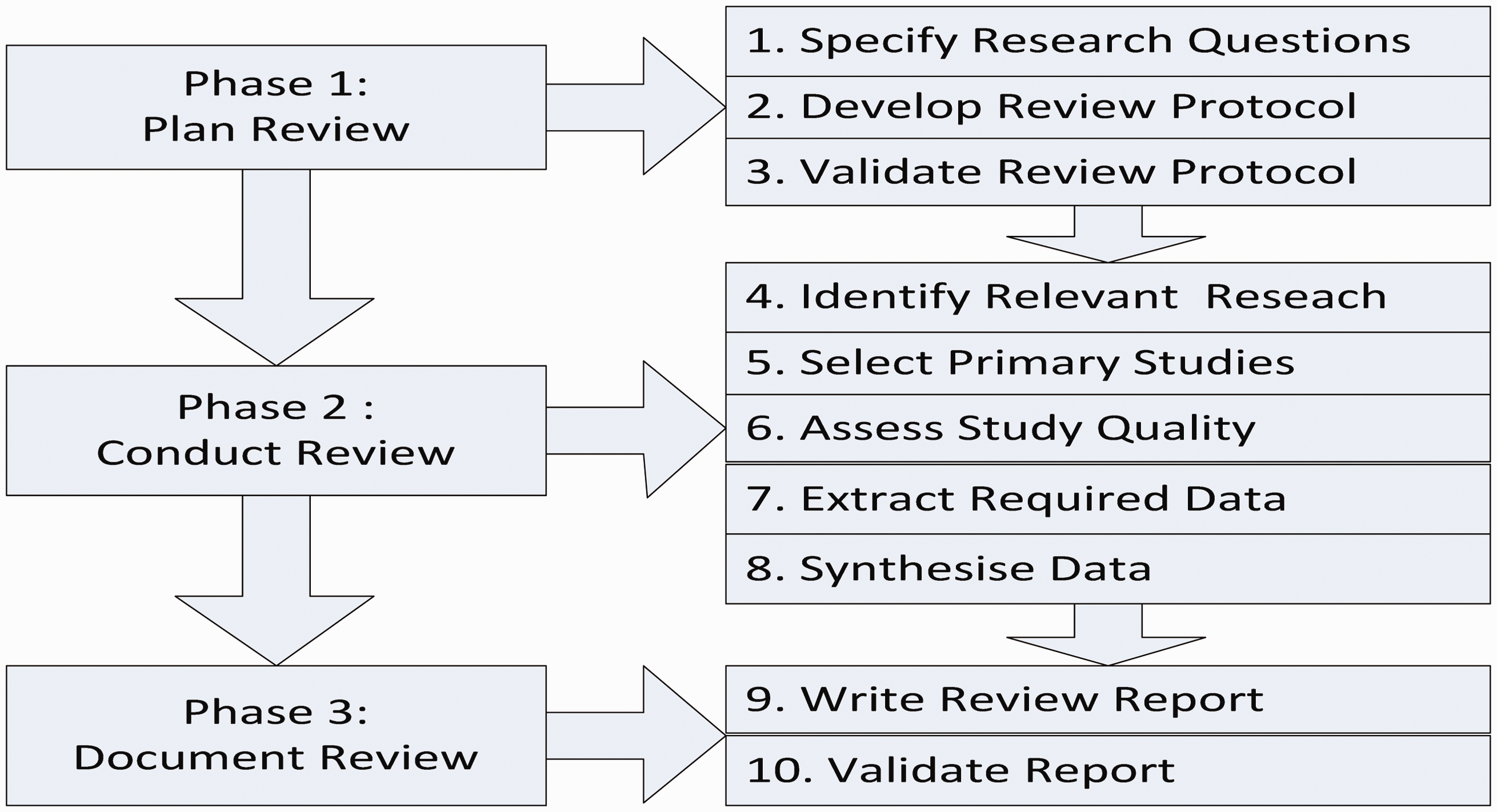
E-government adoption and barriers
E-Government Adoption Barriers Frequency (Savoldelli et al., 2014).
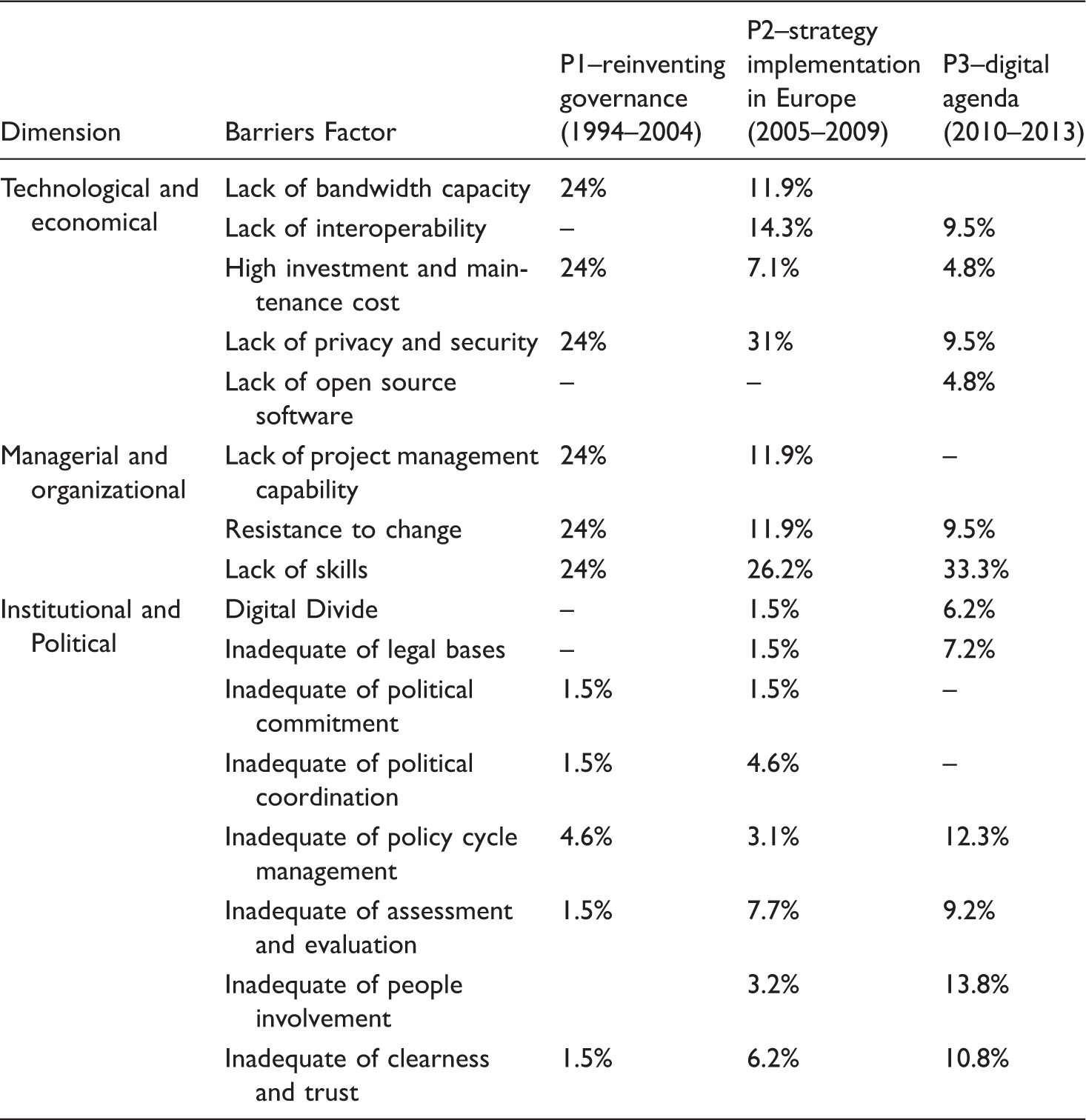
Critical Success Factors
Critical Success Factor Study (Summarized by Author).
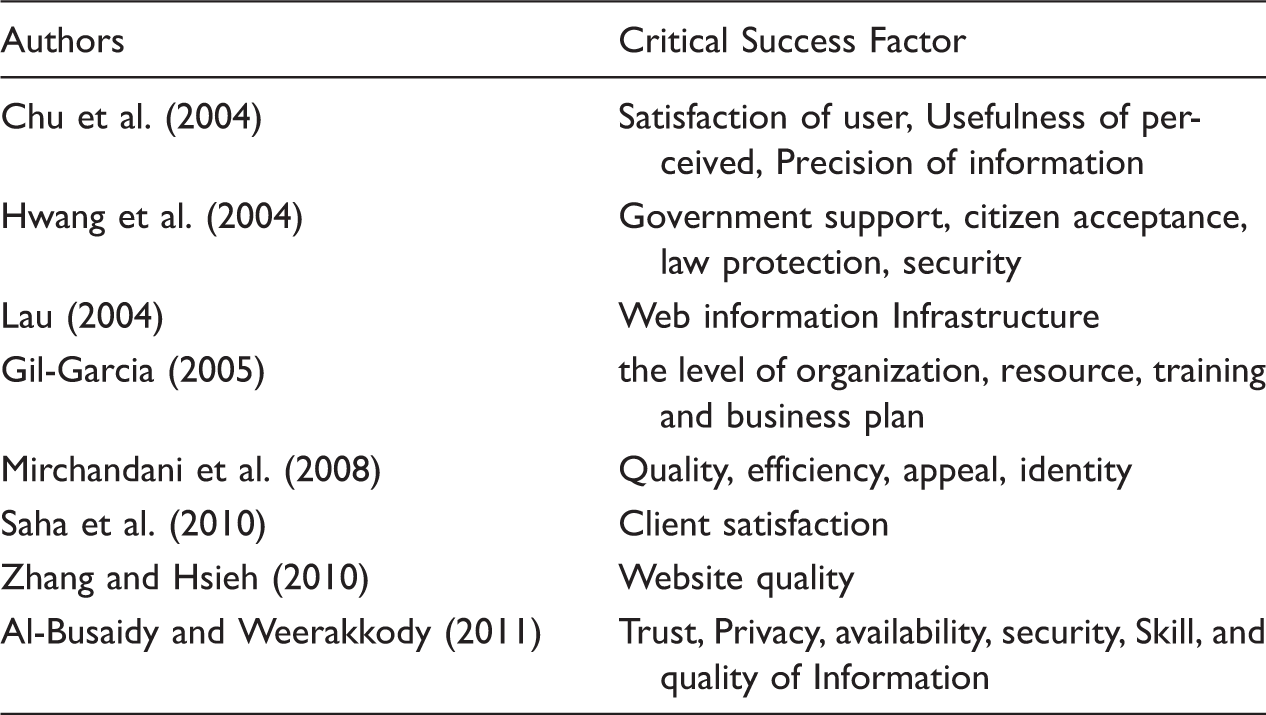
Generic end-user adoption of e-government services
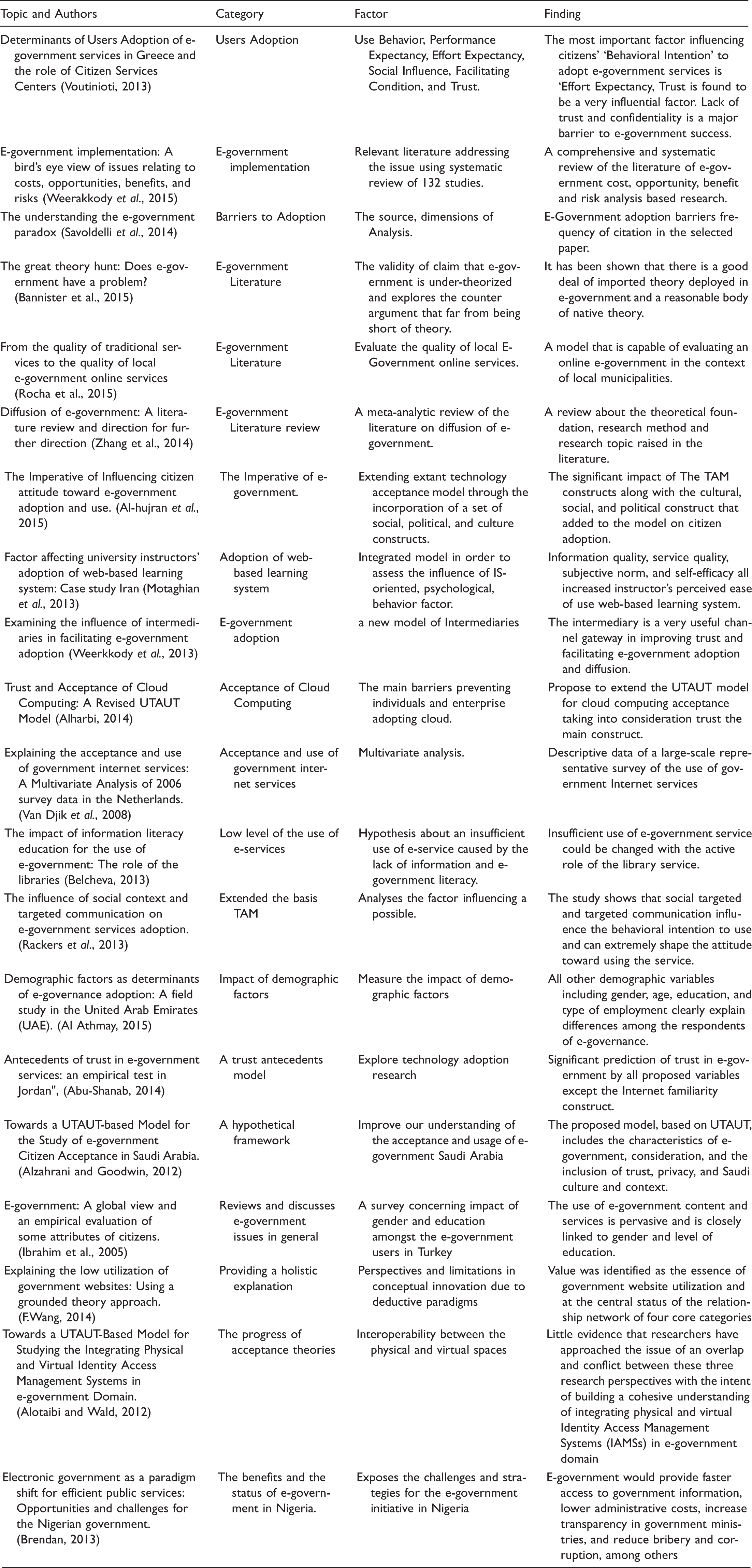
The e-government adoption literature portrays the current issues related to the adoption of e-government systems (see Table 3), and e-government adoption in developing countries will be explored to find the basic gap in the system. Figure 3 illustrates the way of finding the gap in this study.
Identifying the gap of the study. E-Government adoption from literature (Summarized by author).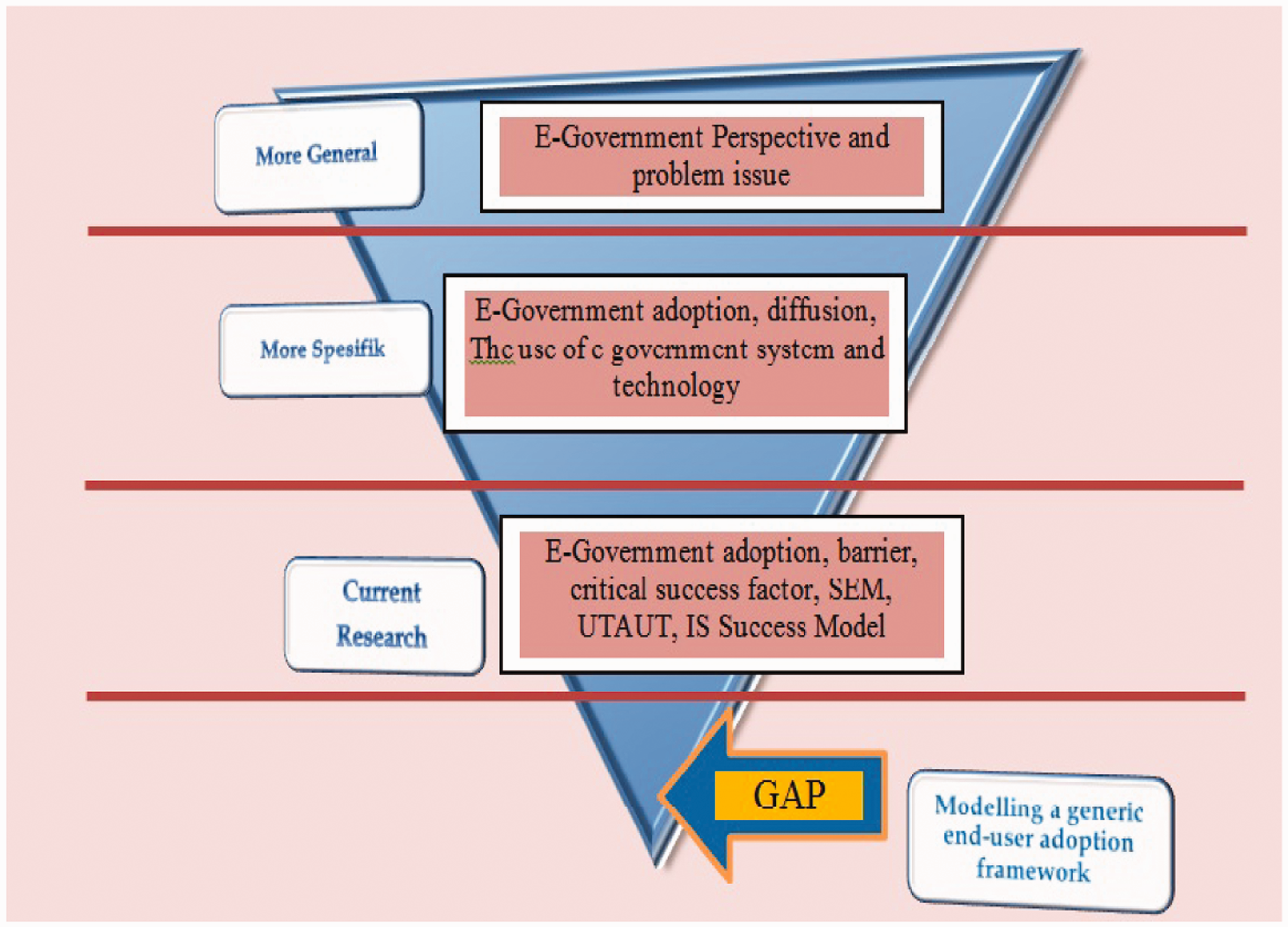
Trust
Trust is rising as a conceivably essential variable prompting ICT acknowledgment. Given the indeterminate and progressively changing environment of the Internet, trust was conjectured as an immediate determinant of behavioral expectations. A few meanings of trust have been defined in several papers. Barney and Hansen (1994) define trust as “the common certainty that no gathering to a trade will adventure another’s vulnerabilities.” Trust is vital in online situations in light of the related danger (Langton and McKnight, 2006). Along these lines, former e-government examination has highlighted the significance of trust as a determinant of subject reception of e-taxpayer-driven organizations (e.g. Alomari et al., 2012; Carter and Bélanger, 2005; Chen et al., 2015; Schaupp et al., 2010; Susanto and Goodwin, 2013; Warkentin et al., 2002). A literature review of writing on e-government acceptance by Titah and Barki (2006) also demonstrated that trust is among the largest variables influencing e-government adoption. This is due to citizens concern on data protection when data is shared over the Internet (Carter and Bélanger, 2005). Citizen adoption of e-government services is of vital importance for the accomplishment of e-government activities (Carter and Bélanger, 2005; Liu and Zhou, 2010). E-government-supported organizations will not provide open administration and services if they are not utilized by citizens (Panagiotopoulos and Al-Debei, 2010).
This brings up the issue of how to build the level of subject reception of such administrations, particularly in Arab nations. Nonetheless, to date, there has been little research investigating components that focus on the appropriation of e-government-supported organizations by citizens in developing nations, including the Middle East (Alomari et al., 2012).
Culture
Olasina and Mutula (2015) explained that introducing technology to a new context requires proper consideration of important cultural differences. In some countries, cultural factors can act as a barrier to ICT adoption and it is therefore important to examine the cultural settings of the countries when formulating strategies for increasing ICT usage (Furuholt and Wahid, 2008; Hu et al., 2014; Khalil, 2011). Rackers et al. (2013) stated that in order to explain the lack of use of e-services in Germany, their study analyzed the factors in and extended the basis of Technology Acceptance Model (TAM) by the variables of perceived risk, social context, experience, communication, and demographics. The study concluded that social context and targeted communication influence the behavioral intention to use and can extremely shape the attitude toward using the service. The connection between Information Technolgy/Information System (IT/IS) appropriation and society has been generally perceived. Numerous studies have been directed to looking at the relationship between the reception of IT/IS and both national and authoritative society (Al-Gahtani, 2004; Baker et al., 2010; Carter and Weerakkody, 2008; Twati, 2006).
Information system success model
A few scholars (DeLone and McLean, 1992; Wang and Wang, 2009) have outlined the most broadly utilized models for assessing the achievement or failure of information system implementation. Furthermore, in 2003, DeLone and McLean proposed a redesigned model (see Figure 4).
D&M IS success model (DeLone and McLean's, 2003).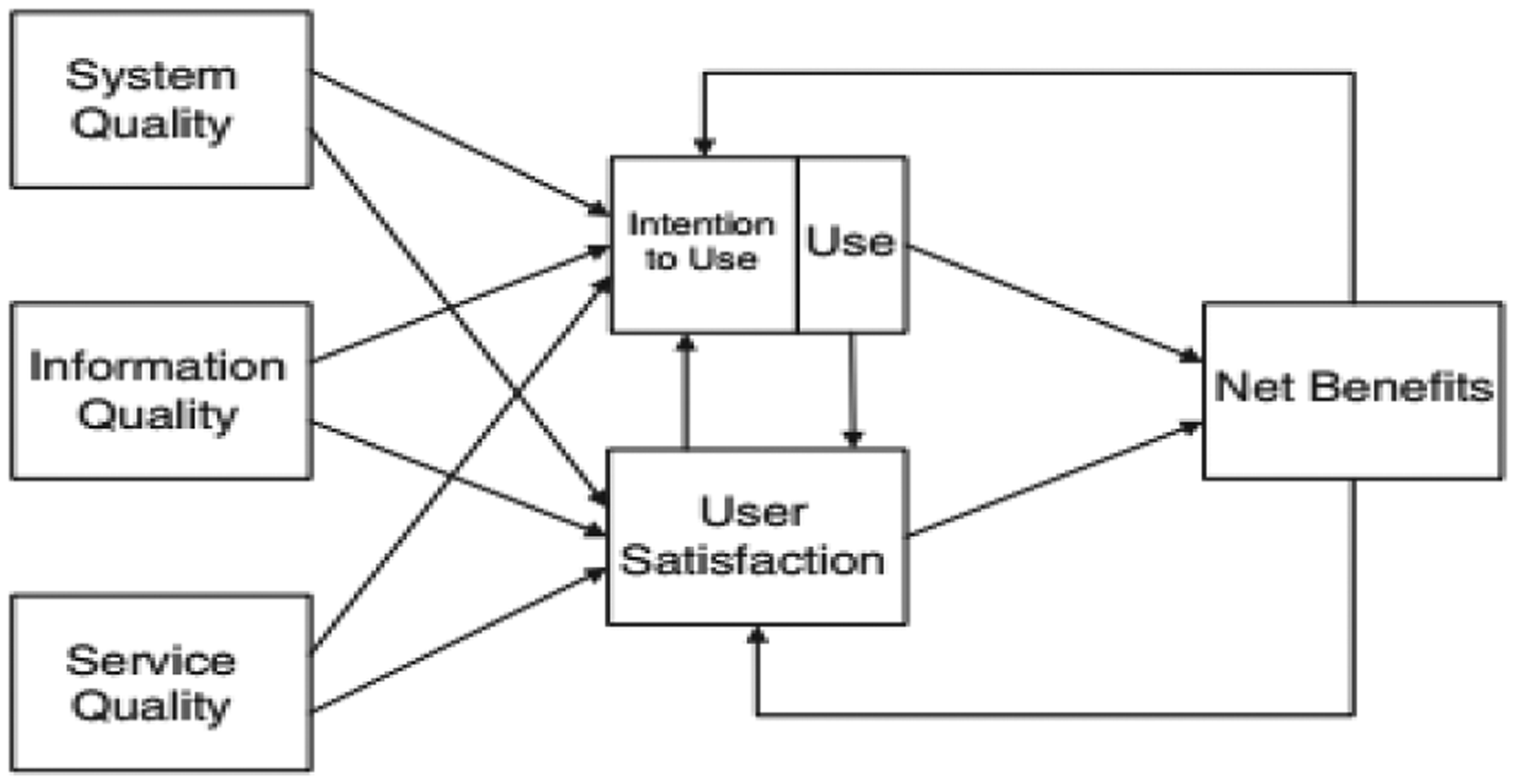
Knowledge of the service
The model is composed of six factors, such as system quality, information quality, and service quality, intention to use/use, user satisfaction, and net benefits. So far, the “Knowledge Base of Innovative E-government Practices” is an assemblage of recent case studies of innovative e-government services, solutions, and applications. The Knowledge Base does not offer one solution over another but rather highlights e-government implementation that places the citizen in the forefront. In several countries, small municipalities still provide services through traditional channels, so it is seldom necessary for many citizens to use government information and transaction services. Finally, the knowledge of the supply of e-government services is important to the intention to use and the actual use of these services by citizens. Belcheva (2013) discussed the low level of the use of e-services by citizens in national and international contexts. She suggests that the insufficient use of e-government services could be improved through an active role for the library service.
Discussion
Major Finding.
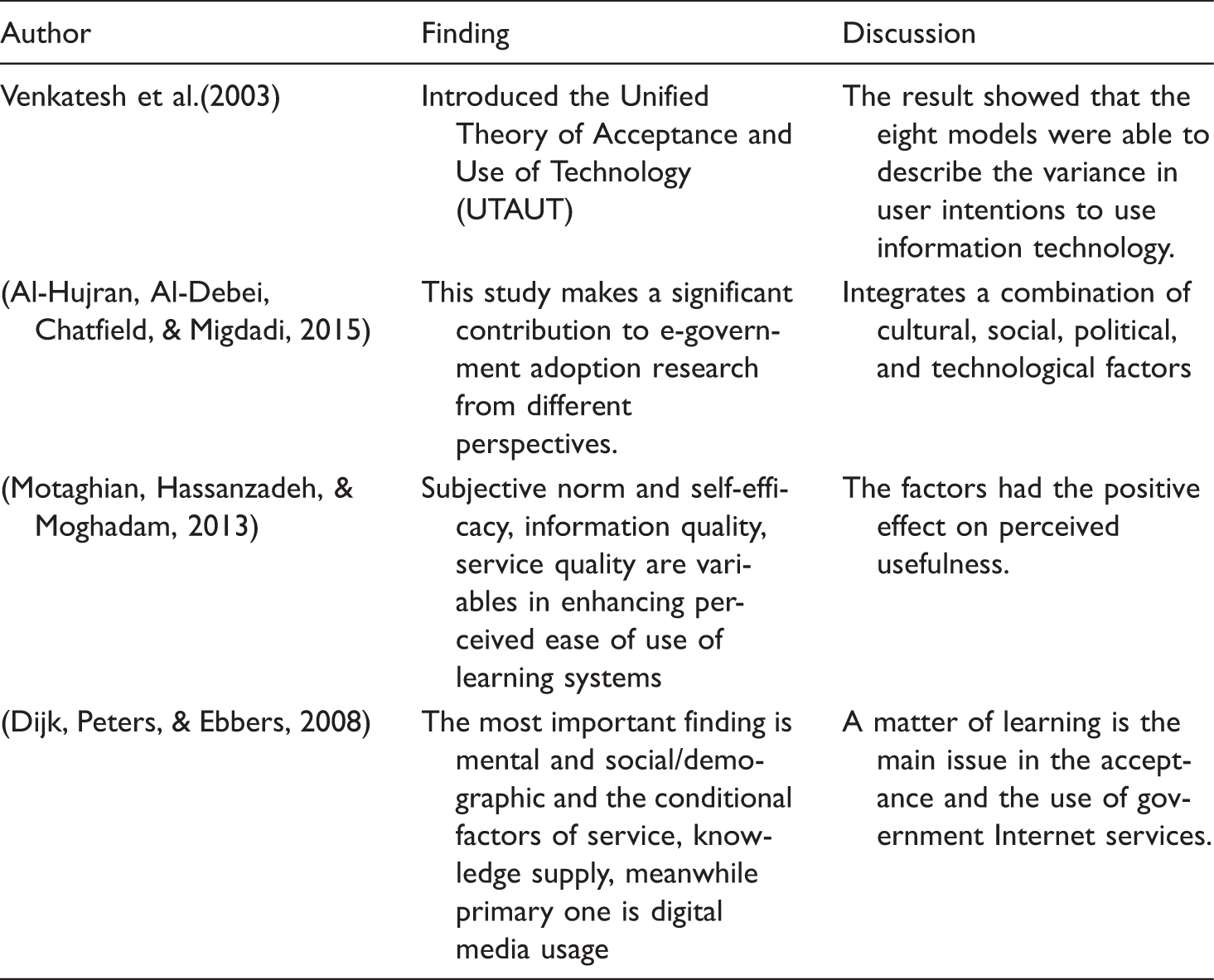
Liébana-Cabanillas et al. (2014) found that trust is the main factor of the citizen in using e-government compares to ease of use. The effect of trust on perceived public value has been also explored by different scholars (Grimsley and Meehan, 2008; Sirdeshmukh et al., 2002). Nevertheless, although trust and public value are important variables in the e-government literature, most researchers agree that they are associated with each other (Mills et al., 2010; Wang, C., 2014). Table 4 summarized the major finding regarding e-government adoption researches.
Conclusion and recommendation
The point of view in this work includes critical success factors, challenges, and barriers. The extended model was adopted since the model integrates both UTAUT and the IS Success model. Psychological factors and knowledge of services are important for several aforementioned reasons. Also, through the encouragement of some government strategic and policy plans, and supported by the advancement of information technology, governments around the world have accepted e-government approaches in improving service to the community. Figure 5 outlined the proposed model with a new or improved way of connecting with stakeholders and citizens.
Modeling of e-government Services based on factors influencing e-government adoption service.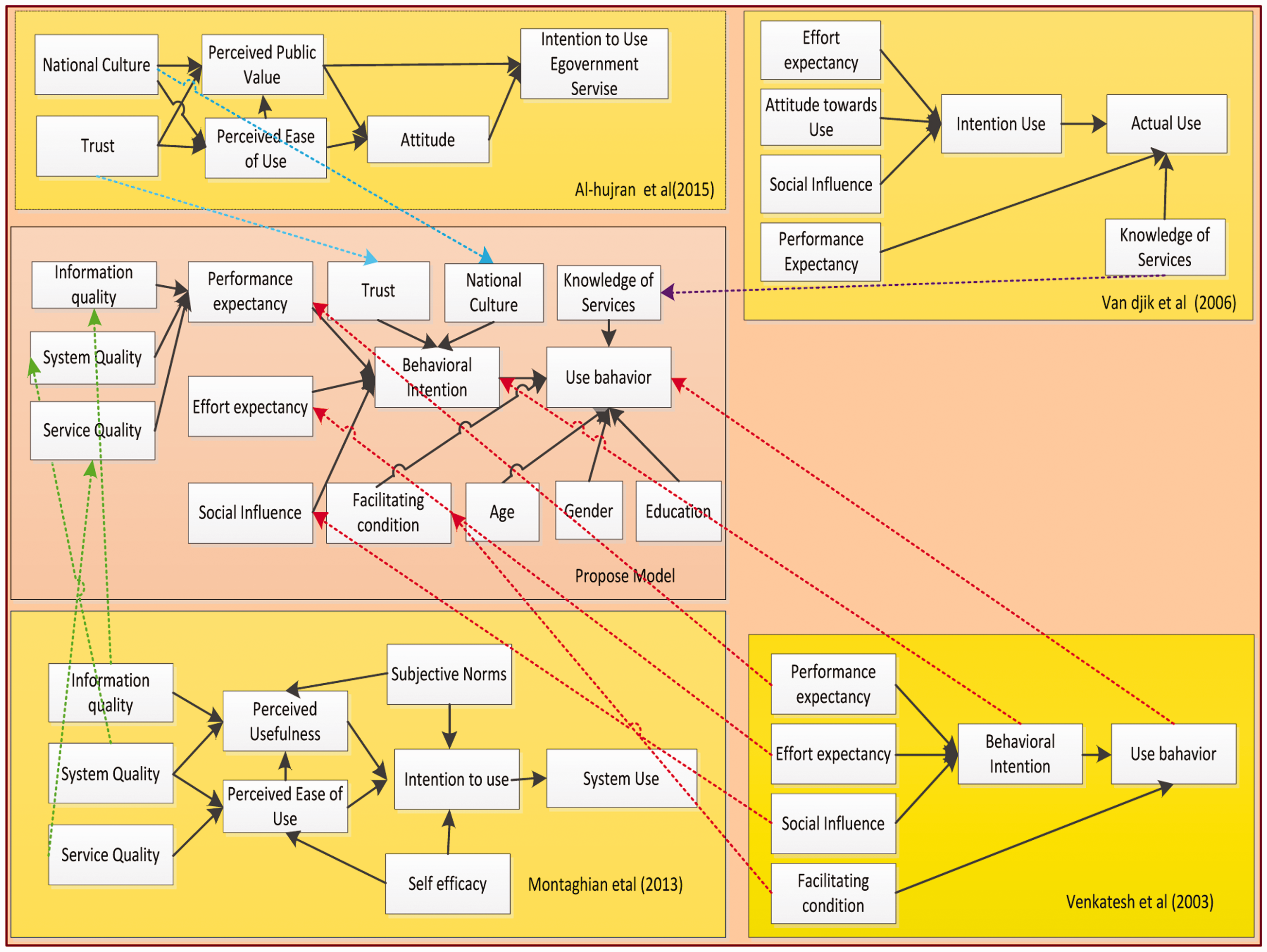
Based on Figure 5, we have classified the model into four main constructs that in line with the results of critical literature review. Finally, a conceptual model of developing e-government services based on the UTAUT model is proposed, as in Figure 6.
A conceptual model for a generic of e-government adoption.
Footnotes
Acknowledgment
This work is supported by Universiti Tun Hussein Onn Malaysia under the contract grant U559 and Telkom University Indonesia.