







Abstract
In light of an increasingly integrated society, in-depth research is needed to explore how particular perceived values may guide leadership behaviour by measuring the everyday actions of employees. As Asian individual values become collective, there is an increased likelihood that they will be perceived as cultural values that translate into expectations of leadership roles. This article considers the impact of changes in leadership roles from a role theory perspective, based on Asian values leading to changes in leadership styles. The sample is taken from an organised industrial zone which consists of a high immigrant workforce that continues to grow. The research was conducted in western Turkey but has appeared in leading survey results on Asian cultural values. This study found significant symbolic interactionism between values and leadership roles. There were also correlations between roles and leadership styles, since leaders also influence the interpersonal roles of their employees. Among managers involved in decision-making and information processing, an autocratic participative leadership style has emerged.
Points for practitioners
In every organisation, leaders should be aware of values in their organisations by measuring the everyday actions of employees. To become proficient leaders, they should learn to act in a manner suitable to the roles expected by their subordinates. Furthermore, to be efficient, leaders should adopt what is considered a ‘proper' style through comparison to the indicated roles. In a nutshell, leadership, values and leadership styles are interference acts that affect all processes, from recruitment to strategic management.
Introduction
A leader’s primary responsibility is to perform their specialised or designated role (Yukl, 2013). The leadership role is more likely to be productive if it relates to the values of group members (Lefkowitz, 2003; Senge, 2010). However, this relation is not clear (Reiche et al., 2017). Values are important because their impact on behaviour is measurable (Karp, 1996; Ertosun and Adiguzel, 2018). Role theory implies that expectations define roles. Here, leadership as a role is strongly affected by particular values, which will thus result in favouring a specific leadership role at work (Chong et al., 2018). This article seeks to relate the findings of an empirical study that addresses current practices and perceptions of leadership, roles and styles to the societal values identified in a predominant organisational values system.
The role theory of leadership considers the extent to which leadership behaviours are fixed or change in response to values (Merton, 2000). Nevertheless, this definition is more theoretical than would be ideal for a working definition of leadership research. The Western-Eastern dichotomy is one of the categorisations of values that has been defined (Nisbett and Wilson, 1977; Oyserman et al., 2009). Additionally, role theory pays little attention to the processes by which individuals select the factors that are most effective in their roles (Isaacson et al., 2012; Franzese, 2013).
Because followers may have values that are distinct from their leaders, organisations encourage followers to be authentic to their values (Algera and Lips-Wiersma, 2012). Since organisations are sets of subsets, we should consider group-level values. Furthermore, as these groups’ values are related to the immigrant workforce in Turkey, a consideration of cultural values would be more appropriate for understanding organisational values (Porto and Ferreira, 2016; Tamayo et al., 2000). During crises at the periphery of Turkey, businesses witness encounters between Asian and Western cultures, in which each culture approaches the conflict based on its own cultural aspects (Demir et al., 2011; Albayrak and Albayrak, 2014). The cultural dimensions of values are a critical element in the comparison of organisations (Porto and Ferreira, 2016); therefore, this work focuses on these two dominant cultural values from the organisational perspective.
Avolio, Sosik and Berson (2012) state that the main blind spot in the leadership field is translating a given context into learned, manageable outcomes. How leaders infer and adapt to a context, even if they are mutually exclusive, is unclear (Klein et al., 2013; Chong et al., 2018). Studying the effect of values will bring new insights into the leadership literature (Barkema et al., 2015; Filatotchev et al., 2020). The foremost aim of this article is to study whether specific values are coded into leadership roles; that is, whether leaders act in ways that take into consideration the value context in regard to roles. Additionally, we also researched the relationships between leadership roles and styles. Our research questions are: how do we predict congruence between leadership roles and perceived values? Which leadership roles are chosen and acted upon more predominantly or frequently by leaders? However, considering the impractical number of values available for analysis (the emergence and mapping of organisational values are outside the scope of this research) (Lefkowitz, 2003), we chose to concentrate broadly on Western and Asian cultural values. Regarding leadership roles and styles, Mintzberg’s definitions of leadership roles and globally accepted leadership styles are thus considered in this research.
Cultural values and leadership roles
Values start at the individual level. Next, the set of member values constitutes the values within a group, while group values constitute the values throughout a broader context (Harrison, 1999). When the shared set of values of the majority of members does not correspond with an overlap between the aspirational values of other members and the espoused values of top-level managers, there is an ‘expectation gap’ (Algera and Lips-Wiersma, 2012; Bourne and Jenkins, 2013). In our research, we propose that values are changing due to an incremental rise in groupings of individual immigrants.
When leadership practices are translated to the East, much of Africa, parts of Asia, the Middle East, (West; such as the United States and Western Europe), it remains unclear how values influence practices in ways that the Western (Eastern) approach did not intend (Avolio et al., 2012; Day et al., 2014). Within organisations, the transformation of leaders' values is conducive to changes in the roles of leadership management (Wu, 2013; Anderson and Sun, 2017). Nevertheless, the causes and dynamics of role changes have not been a focus of existing research (Biddle, 1986). Role theory clearly explains that expectations held by others influence the role of an individual. In this sense, leaders’ awareness and interpretation of organisational values will lead them to frame these issues as being compatible with their roles or changing their roles (Schneider et al., 2014).
Leaders can redefine their roles (Yukl, 2013) by considering perceived values (Kelley, 1992; Lane and Maznevski, 2014; Hayward et al., 2017). Role theory explains this process as an expectation that leaders may reflect cultural values of symbolic importance to the context in their behaviours (Biggart and Hamilton, 1984; Inglehart, 1997; Dess and Picken, 2000; Van de Vliert, 2009). Nevertheless, Hofstede (2001) demonstrated that connecting cultural values to leadership behaviour processes had not yet been clearly explained in the literature.
Geographically, Turkey is situated at the intersection of both Western and Asian cultures, which presents a challenge in distinguishing the cultural values belonging to a dominant population or sector (Miller, 2003). Surveying employees provides a broader picture of values within organisations, considering that people tend to verbally express greater adherence to social, rather than individual values (Miller, 1999). It can be useful to indicate Asian and Western cultural values, as developed by Lewis and shown in Table 1 (Lewis, 2003; Harris et al., 2004).
Western and Asian cultural values (without order).
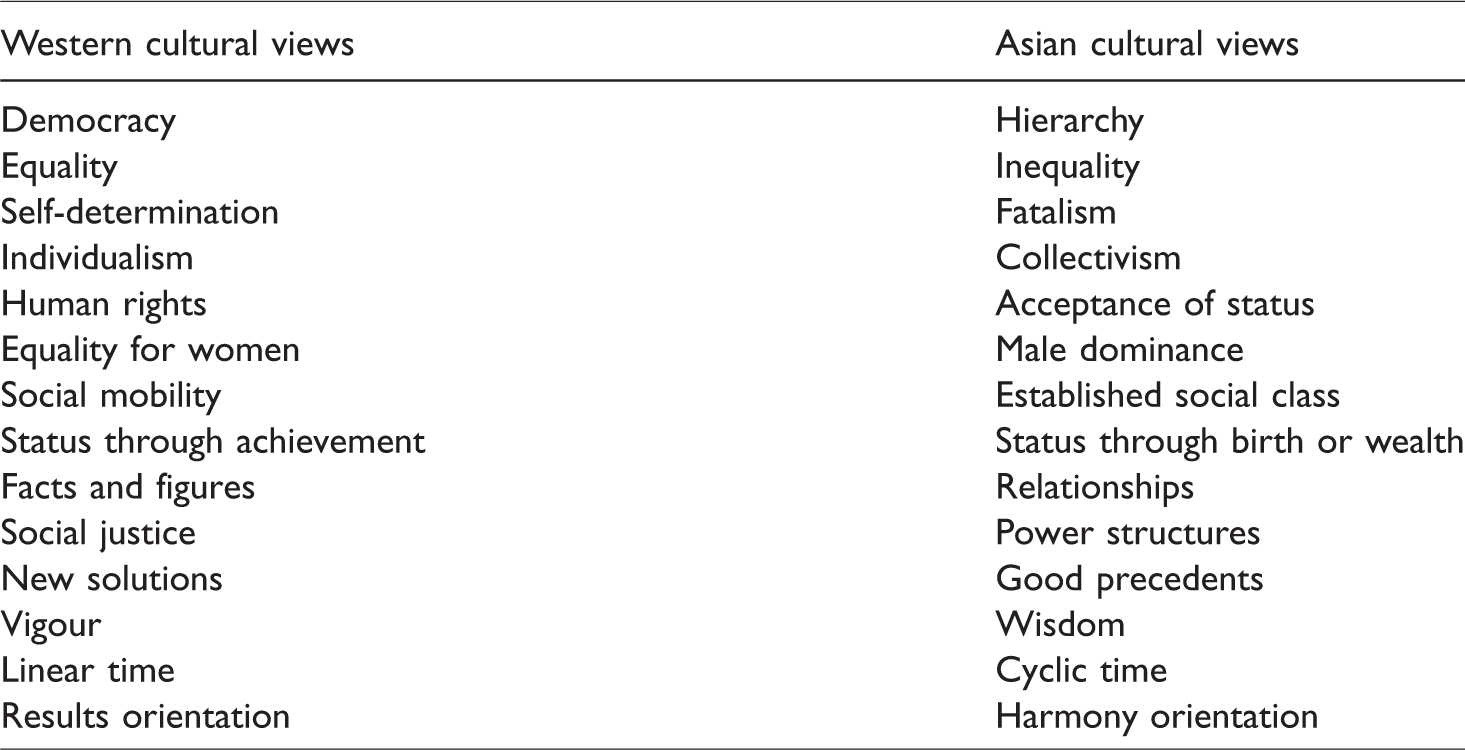
Asian culture is collectivistic, maintaining interpersonal harmony, reciprocation and self-control, with a focus on occupational achievement (Kim et al., 2001). Leadership roles vary by position, function, organisation and business (Patterson, 2015). The categories for global leadership roles developed by Mintzberg (2009) – information processing, decision-making and interpersonal relationships – will be used in this study. In this sense, regarding Asian values, leaders perform some of these roles more frequently and according to preference. Therefore, the following hypotheses are formed: Hypothesis 1: Asian cultural values positively affect leadership roles; namely, Asian values increase the performance of the information processing, decision-making and interpersonal leadership roles. Hypothesis 1a: Asian values increase the performance of the information processing leadership role. Hypothesis 1b: Asian values increase the performance of the decision-making role of leaders. Hypothesis 1c: Asian values increase the performance of the interpersonal relationship role of leaders.
Another dimension of research on organisational values includes demographic values (Rabl and Del Carmen Triana, 2014). For example, education and professional experience are vital in Asian values (Kim et al., 2001). Therefore, if leaders adapt their roles according to an organisational context of Asian cultural values, there may be a difference in the performance of roles according to demographic differences. Therefore, our second hypothesis is as follows: Hypothesis 2: The perception of leadership roles differs between groups according to demographic variables; namely, there is a difference in the perception of roles within distinctive groups.
Leadership roles and leadership styles
Leadership style refers to a leader's emphasis while acting in a leadership role (Andersen, 2008). Leadership styles may vary depending on different contexts (Van Wart et al., 2019). Until the end of the 1990s, testing the applicability of Western leadership styles in different nations and comparing leadership styles in distinctive countries from a Western perspective has formed two dominant threads in the literature on cross-cultural leadership (Wang, 2014).
Leadership styles change across different societies (Cheng and Cooper, 2003; Eisenberg et al., 2015). The Global Culturally Endorsed Implicit Leadership (GCLT) dimensions are value-based, charismatic, participative, autocratic, autonomous and human-oriented (Kohler, 2016). The shared leadership styles among Turkish leaders are autocratic, paternalistic, consultative and democratic (House et al., 2004; Baltaş, 2012). Generalising from the literature, autocratic, democratic, participative and laissez-faire leadership styles were researched (Harris et al., 2004), leading to the following hypothesis: Hypothesis 3: Leadership roles positively affect leadership styles; that is, the leadership roles in Mintzberg’s taxonomy – information processing, decision-making and interpersonal relationships – positively change autocratic, democratic, participative and laissez-faire leadership styles.
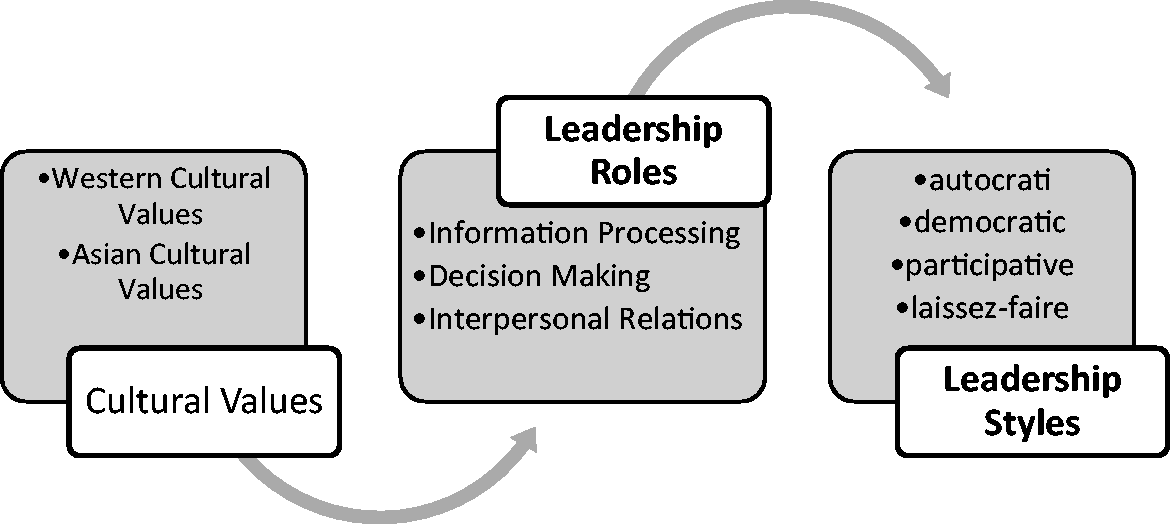
Visual presentation of the study purpose.
It is critical to understand the effect of leadership roles on leadership styles, should these roles become a basis for changes in leadership styles. According to the literature, leadership roles are related to values, while styles are not: Hypothesis 4: Leadership roles have a mediating effect between values and leadership styles in organisations.
Data, measurements and method
Sample
For the sample population, managers working in the Velimese Organised Industrial Zone (OIZ) (Tekirdag, Turkey) from 167 active enterprises registered in the Chamber of Commerce and Industry were selected. The OIZ is a migratory area; employee demand is high, which attracts people from all parts of Turkey, and includes a Syrian migrant workforce. As of 2018, a total of about 21,000 employees currently work in the OIZ. There are approximately 2000 white-collar workers and a total of 450–500 top-level managers. The sample was drawn from this group of managers using random sampling within the chosen stratified sampling method. A sample group of approximately 222 managers was targeted from a total of 500 managers, with a 95% confidence interval and a ±5% precision level (Israel, 1992; Dattalo, 2008). Thanks to the direct support of the managers and the voluntary participation of the assistant managers, 368 questionnaires with a total response rate of 73% were collected and analysed.
A questionnaire with 54 questions was prepared to measure the research assumptions. These questions sought to measure cultural values (28 questions), leadership styles (12 questions) and leadership roles (nine questions), with five questions for demographic variables. A detailed explanation of the questionnaire appears in the following section.
Measurements
The cultural asset value survey was developed from Harris, Moran and Moran (2004) and Lewis (2003). A seven-point Likert scale was used to measure cultural variables (1 = newly appeared, 2 = increased, 3 = increased quickly, 4 = unchanged, 5 = decreased, 6 = diminished and 7 = disappeared). Lower scores indicate new value variables, while higher scores suggest that cultural asset value variables are disappearing.
For the leadership roles, Mintzberg’s (2009) taxonomy was selected to ensure more universal applications. Mintzberg has described three leadership role variables: information processing (disseminator, monitor and spokesperson); decision-making (entrepreneur, disturbance handler, resource allocator and negotiator); and interpersonal relationships (liaison, figurehead and leader) (Yukl, 2013). In the survey, a five-point Likert scale was used to measure these roles (1 = strongly disagree, 3 = undecided and 5 = strongly agree). To account for globalisation, autocratic, democratic, participative and laissez-faire leadership styles were chosen for the survey (Harris et al., 2004).
Cronbach’s alpha determined the reliability of variances for the standardised items referring to Asian culture (0.944), leadership styles (0.871) and leadership roles (0.848). According to reliability analysis, Western culture was excluded. The Kaiser-Meyer-Olkin (KMO) result for leadership styles was 0.690, while it was 0.802 for leadership roles. We used factor analysis to determine which latent variables might explain the observed variables: if the data fit within the three constructs of leadership roles, along with the four constructs of leadership styles that we believe exist, this would support the construct validity of the leadership roles and styles measure in this sample. Factor analysis without rotation showed that no single factor emerged, and that the first factor did not capture most of the variance, which suggests that common method variance (CMV) is not an issue in this study (Tehseen et al., 2017).
Additionally, adjusting for CMV, we collected data from multiple sources, while an online questionnaire ensures the anonymity of the respondents. After factor analysis, six questions from the leadership styles factor and one question from the leadership roles factor were removed. The new factors tested with reliability analysis found that only participative leadership had an appropriate reliability for further tests (the autocratic, democratic and laissez-faire leadership factors did not have sufficient reliability). For leadership roles, two factors were formed: interpersonal relationship roles and decision-making/information processing roles (see Figure 2).
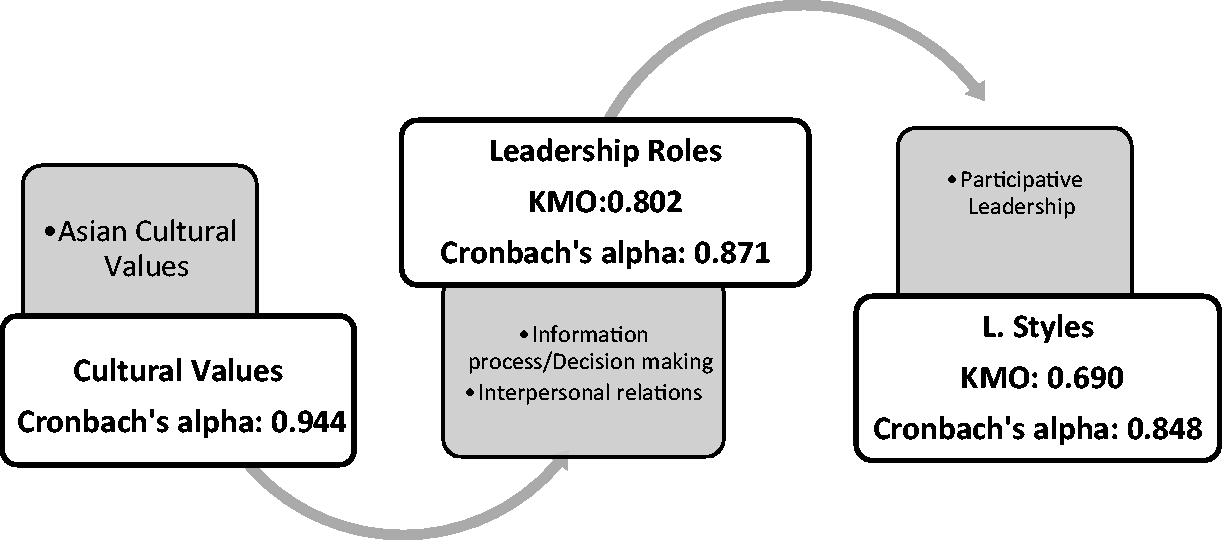
Roles and styles of leaders.
Results
According to the demographic information, the participants were distributed in the following age ranges: 25–30 (17.9%), 31–35 (17.9%), 36–40 (21.7%), 41–45 (16.6%) and 46 and older (25.8%). Given the age ranges, it is not surprising that the tenure of the participants in their positions was distributed as follows: 1–5 years (24.7%), 6–10 years (22.3%), 11–15 years (17.4%), 16–20 years (25.8%) and 21 years and above (9.8%).
The findings in Table 2 suggest that the leaders in the 36–40 age group differ in their interpersonal roles from leaders in the 41–45 and 45 and over age groups. According to the findings shown in Table 3, there is a statistically significant difference between autocratic leaders who have undergraduate or graduate degrees. Democratic and participative leadership styles and interpersonal relationship roles change with education levels. The level of laissez-faire leadership style differs between leaders with post-graduate education and other educated leaders. Meanwhile, Asian culture differs significantly in terms of post-graduate leaders. Autocratic leadership is not profoundly affected by values because autocratic leaders tend to make independent decisions; therefore, Table 3 shows that age is also crucial in determining the influence of cultural values on leadership styles.
Analysis of Variances (ANOVA) for leadership roles with age.
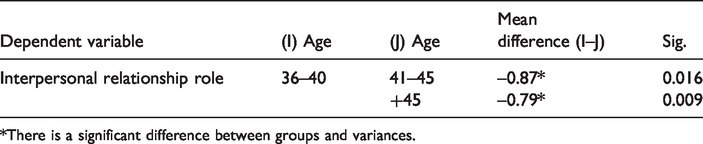
*There is a significant difference between groups and variances.
Analysis of variances (ANOVA analysis) of cultural values, leadership style and leadership role with education.
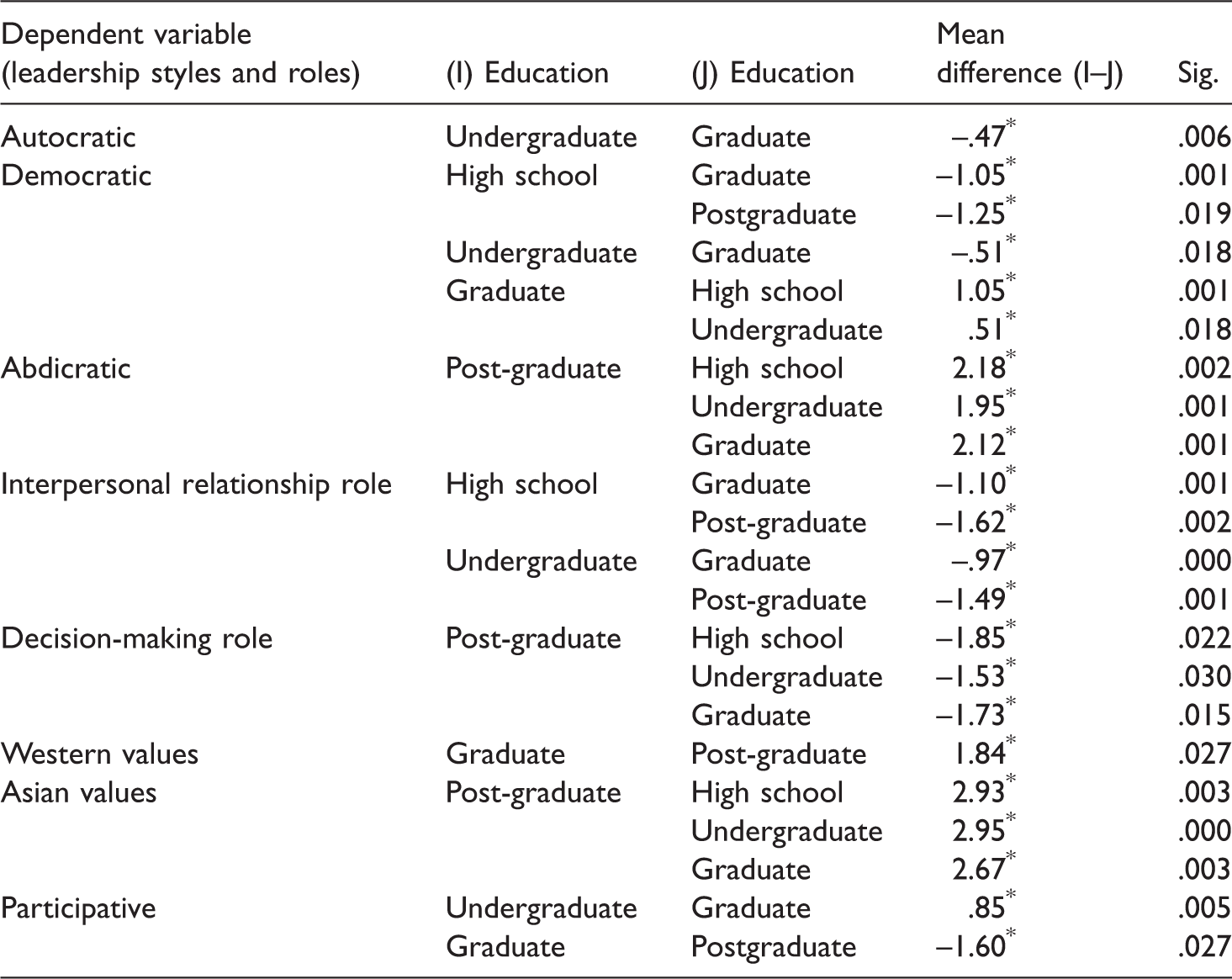
*There is a statistical difference between groups.
According to Table 4, the experience is statistically significant for the autocratic leadership style. The interpersonal relationship role of leaders with 6–10 years of experience shows a significant difference from the interpersonal relationship role of leaders with 16–20 years of experience. The information processing role of leaders with 1–5 years of experience shows a significant difference from the information processing role of leaders with 16–20 years of experience. Leaders with 11–15 years of experience differ from leaders with more experience in terms of the participative leadership style. In terms of Asian culture, leaders with 6–15 years of experience differ in roles and styles from more experienced leaders. It is therefore clear that leadership skills and the interpretation of values (Lefkowitz, 2003) are dependent on years of experience.
Analysis of variances (ANOVA analysis) of cultural values, leadership style and leadership role with individual experience.
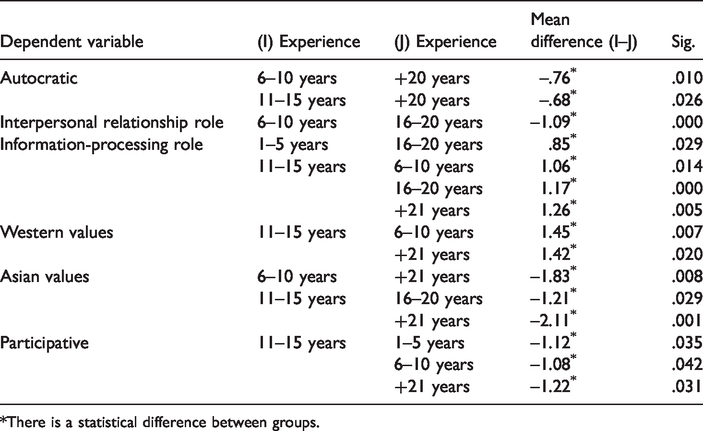
*There is a statistical difference between groups.
In Table 5, it is shown that gender makes a significant difference in terms of the interpersonal relationship role and the information processing role of leaders, as well as whether leaders adhere to Asian cultural values. Analysis of variances (ANOVA) was computed after factor analysis, with all tolerance values close to 1; therefore, there was no multicollinearity among variables (Leech et al., 2011). Gender also influences how cultural values affect leadership; for example, in the Asian community, cultural values tend to have a more significant impact on female individuals when compared to male individuals (Low, 2018).
T-tests between genders for cultural values and leadership roles.
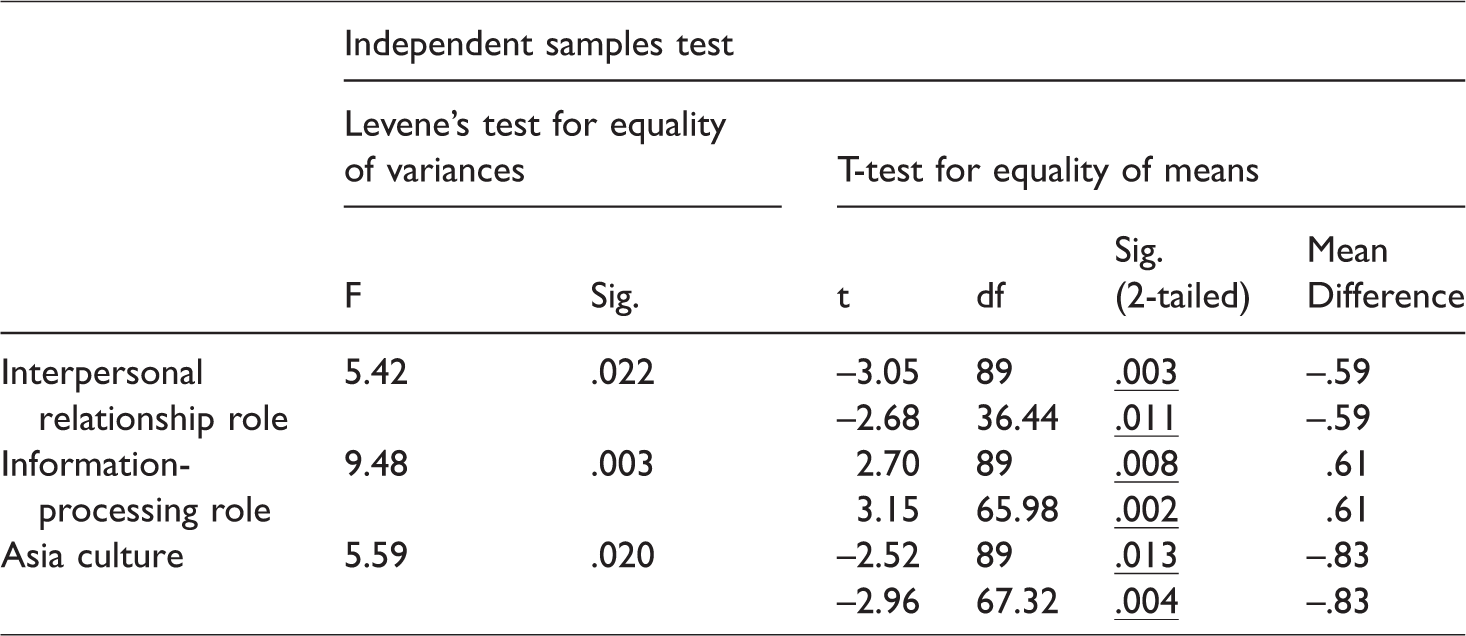
According to regression analysis, there are statistically significant relationships between cultural values and leadership roles (p < 0.001). The factor of Asian cultural values explains 34% (adjusted R2 = 0.34, Durbin–Watson = 1.61) of the decision-making and information-processing leadership role factor (information/decision factor). The same analysis shows that Asian cultural values is a significant predictor of the interpersonal relationship role factor, although this is the case for only 0.5% (adjusted R2 = 0.04). To determine the rate of occurrence of these relationships, we undertook a correlation analysis. Initial regression shows that Asian cultural values explains 32% (adjusted R2 = 0.32) of the participative leadership style. Relationships between variables are found to be statistically significant via regression tests. In the case that the variables have statistically significant relationships, correlation tests can be used to examine the relationship between these variables and their dimensions. According to the correlation tests in Table 6 (Leech et al., 2011), there is a negative correlation between Asian cultural values and participative leadership.
Correlations.
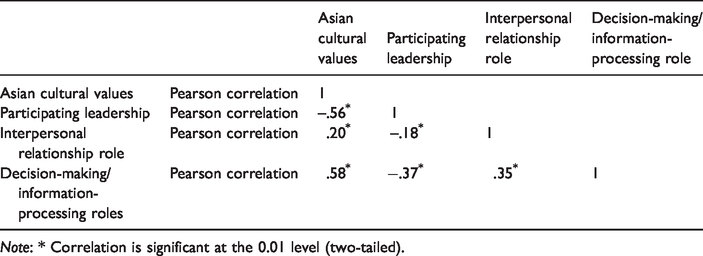
Note: * Correlation is significant at the 0.01 level (two-tailed).
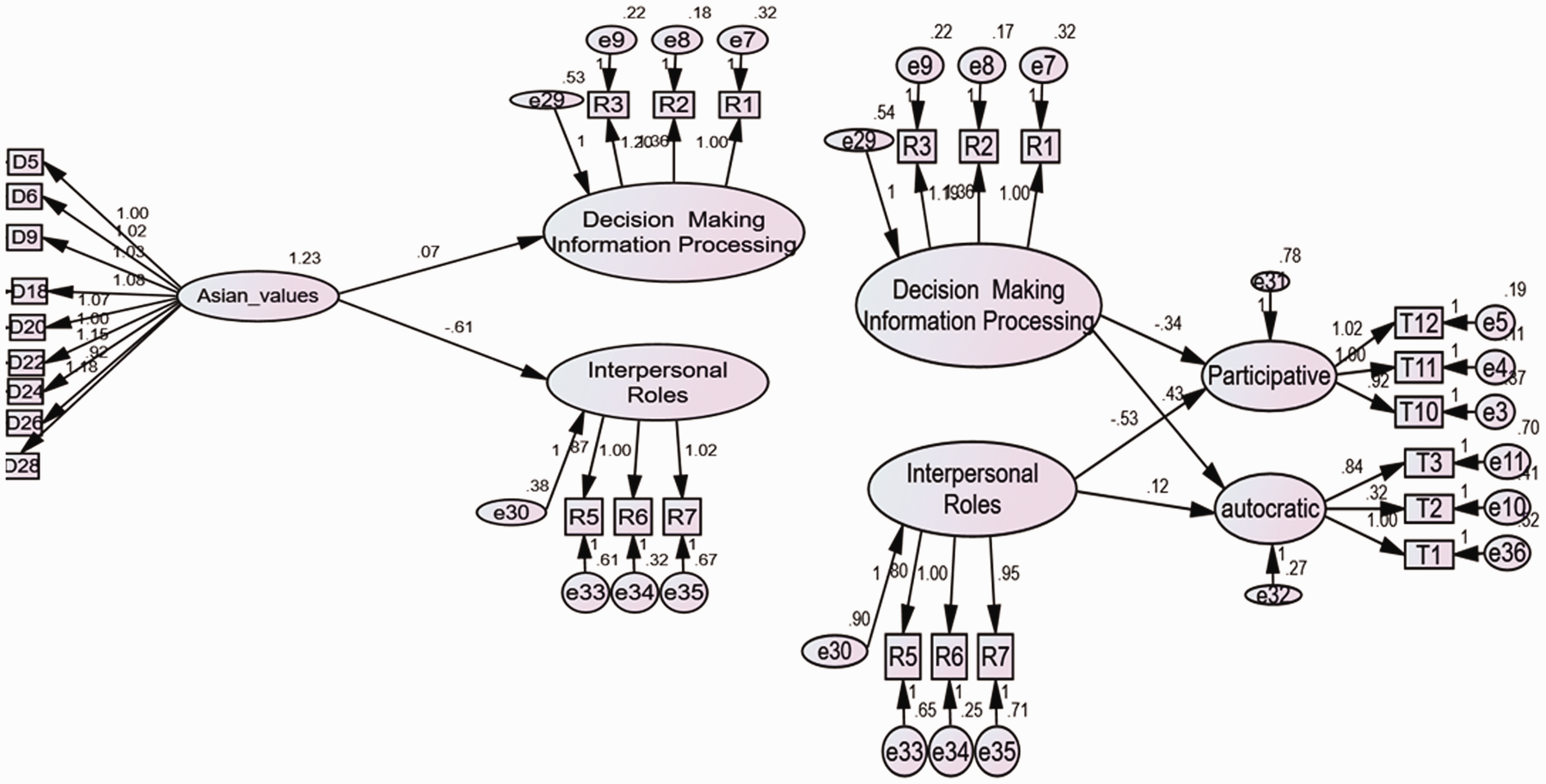
Similarly, a negative correlation exists between participative leadership and other leadership roles (i.e. interpersonal relationship and information/decision roles). If the leader’s participative leadership role increases, information processing and decision-making roles decrease. We used structural equation modelling (SEM) to test the robustness of the results. In Model I (see Figure 3 and Table 8), regression weights support our results that Asian values have an impact on leadership roles. To test the mediating effect of leadership roles, we added the role factors to the model to explore whether the regression weights had changed.
SEM models.
To calculate the mediating effects, we included the ‘information processing/decision-making factor’ in the model, which demonstrates the important effect of the information processing/decision-making factor on participative leadership. Asian cultural values also have a statistically consequential effect on the information processing/decision-making factor. These results thus seem to be coherent with the correlation results. Based on these results, we can state that information processing and decision-making leadership roles have a mediating effect on participative leadership.
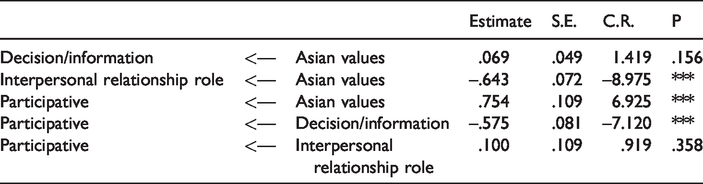
According to the model (shown in Figure 3 and Table 8), Asian values have a significant effect on these factors. However, the interpersonal relationship role factor does not have a significant effect on the participative leadership style. According to Table 8, which shows the regression weights of the primary model, Asian cultural values are not related to information processing and decision-making roles but are related to the interpersonal relationship role. Only the information processing and decision-making roles are effective in participative leadership. We can therefore claim that these leadership roles are not mediators for leadership styles.
There is a positive relationship between the information processing and decision-making roles and the interpersonal relationship role. Although leaders attach importance to the interpersonal relationship role, they adopt information processing and decision-making roles. These results are expected because participative leadership diminishes as Asian cultural values increase. However, as participative leadership decreases, there is an emergence of the interpersonal relationship role.
According to Mintzberg’s taxonomy, three variables influence leadership roles: information processing, decision-making and interpersonal relationships. The results from Table 2 demonstrate the effect of age on leadership skills. From Table 2, older people aged 45 years and above make more independent decisions when compared with younger people, who tend to adopt the interpersonal relationship role. The interpersonal relationship role involves interaction with Asian culture. These interactions lead to the influence of Asian culture on the leadership role. Tables 3, 4, 5 and 6 show how different leadership skills within groups vary according to demographic differences, while Tables 7 and 8 present how Asian cultural values have an impact on the three variables that influence leadership roles (see also Figure 3).
Regression weights.

Regression weights (group number 3 – default model).
Discussion and limitations
The results of the analysis reveal that Asian cultural values have a significant impact on leadership roles; in other words, Hypothesis 1 is partly accepted. After factor analysis, the three dimensions of leadership roles suggested by Mintzberg (2009) can be merged into two: the interpersonal relationship role and the decision-making/information processing role. Employees’ adherence to Asian cultural values leads to a preference for interpersonal harmony and respect for authority (Kim et al., 2001). Our results are coherent with research showing that Asian values significantly affect the interpersonal relationship role (Hypothesis 1c accepted). However, Asian values have no significant impact on information processing/decision-making roles (Hypothesis 1a and 1b rejected) when considering leadership roles as a whole (see Table 8). Correlation analysis shows that the relationship is positive between Asian cultural values and the interpersonal relationship role and information processing/decision-making leadership roles. Along with the values of Asian culture, leaders incorporate more decision-making and information processing roles into their leadership approach.
Leadership style consists of both directive behaviours and supportive behaviours (Northouse, 2015). Turkey is higher in the ‘as-is’ rankings of collectivism (4th) and assertiveness (11th) but is below average in assertiveness (54th) according to the ‘should-be’ rankings (Kabasakal and Bodur, 2013). Therefore, in Turkey, Asian cultural values cause leadership participation to be more focused on the decision-making (assertive) role than the interpersonal relationship (collectivist) role. This finding agrees with the Global Leadership and Organizational Behaviour Effectiveness (GLOBE) research (House et al., 2004). In other words, along with Asian cultural values, there was a moderate increase in information processing/decision-making roles and a modest increase in leaders' interpersonal relationship roles. A lack of leader consultation with followers may result in less available employee information within the organisational structure, perhaps because employees may be immigrants.
Leadership role performance differs between age, experience, education and gender groups. Therefore, Hypothesis 2 is partly accepted. We analysed the effects of demographic variables on values, leadership roles and styles, while significant relationships are documented in the tables. According to Table 2, after post-graduate education, decision-making/information processing roles gain importance. The effect of education differs between undergraduate and high school education: the participative leadership style changes at every education level. However, cultural values have a more considerable influence than education levels on leadership styles. Gender perceptions differ among leaders’ interpersonal relationship and information processing roles. As a result, Asian cultural values were perceived differently by male and female managers (see T-tests in Table 5).
Interpersonal ties are also related to education, and it is notable that university graduate and post-graduate leaders tend to take on more interpersonal relationship roles than leaders with less education (see Table 3). Experience and age variance analysis (see Tables 2 and 4) confirmed the results that leaders aged 41 years or older tend to focus on the interpersonal relationship role and become more autocratic over time (after age 45), much like the image of the household patriarch.
According to Table 8, information processing/decision-making roles and interpersonal relationship roles are significantly crucial in a participative leadership style. However, the correlations (see Table 6) present a negative relationship between them; therefore, Hypothesis 3 is rejected. In short, the interpersonal relationship role and information processing/decision roles decrease the participative leadership style. In other words, when leaders perform their roles, they do not involve members in the decision-making process. According to the SEM results (see Table 7 and 8), leadership roles do not mediate leadership styles and values; therefore, Hypothesis 4 is rejected.
This article has some limitations. First, our framework is a heuristic; heuristics changes when the experiences of researchers also change. Second, we have used two kinds of variables. Third, values are estimated depending on the perceptions of the leaders. Therefore, the measurement restricts the respondents to particular sets of values; Asian and Western. Additionally, the survey imposed a common measurement methodology on all participants. Consequently, this article does not measure the value congruence between members and organisations (Ghosh, 2010).
Conclusion
This article aimed to identify how values are reflected in a management-related understanding of such leadership roles and their relationship to leadership styles. These roles are not separable from the organisational context (Wu, 2013). For example, employees’ values are essential for leaders to fulfil their roles (McLaren, 1997; Stryker, 2006; Ardichvili and Dirani, 2017). Social influence means that individuals alter their behaviour in response to the effects of others; however, it is a bilateral interaction (Bienenstock and Bonacich, 1992). The theory also implies that employees as a group can perform a personal act (Bagozzi and Lee, 2002), although the specific impact on leaders is unclear (Bagozzi and Lee, 2002; Michaelis et al., 2009; Oc and Bashshur, 2013). Additionally, although several studies have examined individual values and behavioural change (Kumar, 2012), measuring leaders’ different levels of emphasis on values is scarce, according to range-of-affect theory. This study has therefore researched the effects of the perceived importance of values on leadership roles and, consequently, changes in leadership styles.
This research differs from previous research in a couple of ways. First, it connects universal values to behavioural leadership change. Second, it focuses specifically on connecting specific leadership roles and styles demanded by changes in values. Third, in this research, cross-national differences in values are interpreted as reflecting national differences at the individual level in leadership roles rather than in psychological terms. Fourth, we considered how the relative importance of roles might vary from one kind of leader to another as values are applied (Winkler, 2010; Northouse, 2019). Fifth, this article supports the idea that the organisational context has varying potential to enforce behavioural demands. This follows the symbolic-interactive approach, which highlights roles and role relationships, and extends beyond behaviouristic, structural and functionalist approaches.
Information processing, decision-making and interpersonal relationships are the three variables of leadership roles, as described by Mintzberg (2009). If the organisation does not determine formal leadership roles, then these decisions must also be made (Yukl, 2013). The findings of this study show that Asian cultural values have a statistically significant positive effect on the information processing/decision-making and interpersonal relationship roles of a leader.
Under social identity theory, it has been overlooked that both leaders and followers of the leadership process are also members of the same cultural group. Furthermore, the existing literature does not clearly explain how cultural values may connect to leadership behaviour processes (Hofstede, 2001). As a proxy for culture, employee values in organisations were analysed. Leaders perceive Asian values as being part of their own values. The findings of this study also indicate that Asian cultural values affect the interpersonal relationship role and participative leadership style directly. Leaders can also incorporate more decision-making and information processing roles into their leadership approach, along with Asian cultural values. Concerning Hypothesis 1, results show that leaders alter their roles to adapt to values. Indeed, this adaptation is a result of the influence of cultural values.
Demographic variables affect the roles of leaders. Hypothesis 2, which addresses differences in roles relating to age, experience, education and gender, is partly accepted. However, intensity, role velocity and time may also be promising topics for future research.
To any degree, decisions regarding how to approach each context seemed to be dependent on the interpersonal relationship role even if this role affect leadership style negatively (Hypothesis 3 is rejected). However, leadership roles do not function as mediators for leadership styles (Hypothesis 4 is rejected). Leaders tend totake decisions alone, without additional advice (Hentschke, 2010; Harrison, 2018). In other words, all strategic decisions come from cultural values that are not visible within the leadership process. Thus leaders would not opt to share information, even if it ensured organisational success (Joshi and Achuthan, 2018).
The most basic cultural dimension that separates Eastern and Western cultures is individualism-collectivism (Triandis and Gelfand, 1998). Undoubtedly, as a group member, leaders change in the context of collectivism to align with the cultural values of the group. The findings indicate that the behaviour of leaders in such a culture simulates the prevailing culture and relationships in the organisation. In Turkey, Asian cultural values result in leadership participation being more focused on the decision-making role rather than interpersonal relationship role. Leadership ‘styles’ can thus be understood as nuances of leadership roles that better characterise the leaders’ behaviours than existing leadership styles. Leaders determine the roles relative to the conclusions they draw from the interpretation of the value context.
From this study, it is clear that leadership styles consist of a combination of three variables: information processing, decision-making and interpersonal relationships. Cultural values directly influence all three of these variables; therefore, in this context, it is correct to claim that leadership styles are affected by Asian values. According to social influence theory, to achieve this, different subcultural groups should indicate their expectations to leaders. In this way, being consistent with differences in job requirements and discretion across levels of leadership, the amount of time devoted to different and effective roles can be reduced. More longitudinal research on whether role changes are dependent or independent of the roles of individual actors is therefore essential. Comparative studies between indigenous and migrant workforces could also be useful.
Footnotes
Declaration of conflicting interests
The author(s) declared no potential conflicts of interest with respect to the research, authorship and/or publication of this article.
Funding
The author(s) received no financial support for the research, authorship and/or publication of this article.
