







Abstract
This paper provides the first independent and reproducible assessment of the redistributive effects of Italy's municipal federalism, a system recognized by the Organisation for Economic Co-operation and Development as a sophisticated gap-filling model for reducing territorial disparities. The actual redistributive outcomes of these mechanisms remain largely unexplored. Therefore, the research question is: What is the impact of municipal federalism across Italian territories with respect to the horizontal and vertical components of equalization? To answer this, the paper reconstructs institutional background and conducts a quantitative analysis of a statistically representative sample of 79 provincial capital municipalities of Italy's Ordinary Statute Regions, covering the period 2015–2024. Findings reveal that the equalization goals established in the enabling federalist laws have not been achieved due to a series of operational details. While limited in scope, this study contributes to understanding of how technical implementation of municipal federalism may affect equity goals in federal systems. It may also open new avenues for future research into the political and administrative dynamics behind equalization mechanisms.
Points for practitioners
Define and implement essential levels of services (LEPs): without clear LEPs, equalization formulas tend to assign larger needs, and therefore resources, to municipalities with higher expenditure or services.
Increase the weight of vertical equalization transfers to reduce territorial disparities.
Expand the quota of equalized fiscal capacity to better reflect true revenue-generating potential and address structural inequalities among municipalities.
Eliminate hidden mechanisms that offset equalization gains: the presence of non-transparent technical adjustments undermines redistributive goals.
Introduction
Considering the increasing complexity and interdependence across levels of government, it is crucial to understand how governance can be improved and more effectively carried out. Particularly in the case of federalism, the distribution of powers, responsibilities and resources across different layers of government requires continuous rethinking and coordination to ensure coherence, accountability and responsiveness to citizens’ needs (Wiltshire, 2020).
Federalism is a crucial issue, since the most developed countries have embraced fiscal federalism as a means to enhance efficiency and better respond to the diverse needs of territories (Brinkerhoff and Johnson, 2009; Ebinger and Richter, 2016; Janský and Palanský, 2020). There are various economic models of fiscal federalism (Post and Johnson 1998). Some are linear and static, while others (Faggini and Parziale, 2016) conceptualize fiscal federalism as a dense network of economic relationships among complex, adaptive and co-evolving jurisdictions with strong interdependencies.
In most cases, the presence of marked differences in the fiscal capacity of the various territories and the low mobility of the productive factors has led to the choice of a solidarity model of federalism. In this model, equalization plays an important role in allowing each territorial authority to access financial resources to meet the needs of its own territory through essential functions. Equalization is a mechanism designed to reduce gaps and inequalities between residents of different local or regional territorial authorities (Barbé, 2010). It is based on two main mechanisms: vertical equalization; and horizontal equalization. Vertical equalization consists of transfers made by the central government to territorial authorities according to their level of poverty (Cyrenne and Pandey, 2015), while horizontal equalization involves reallocating a portion of the resources from the richest authorities to the poorest ones.
Equalization can also be classified according to three different equalizing criteria. First, revenue equalization compensates territorial authorities with lower real or potential per capita revenues. Second, cost equalization compensates jurisdictions with higher costs of providing public services. Third, gap filling combines cost and revenue equalization into a single transfer designed to fill the gap between the revenues a municipality can raise and the costs it is required to spend (Benkada and Belouchi, 2022).
There is a rich body of literature on equalization, but it remains conceptually and empirically diversified (Sharma, 2024). Designing fiscal policies aimed at reducing regional disparities and accommodating diversity presents a significant challenge, as it requires navigating competing interests and managing complex trade-offs. Examples of such trade-offs include those between equity and efficiency, diversity and solidarity, and minority rights and national identity (Bird and Ebel, 2006; Boadway, 2004; Buchanan and Tullock, 1965; Musgrave, 1959; Oates, 1972; Rode et al., 2018; Roe and Addison, 2004).
The first part of this challenge involves designing a policy framework that mitigates the perverse incentives linked to excessive equalization and autonomy. However, such recommendations alone are insufficient, as political incumbents may resist them due to self-interest. The second, more complex part of the challenge lies in ensuring that these recommendations are effectively implemented. Empirical studies on these issues are limited, and most are highly sophisticated and complex. Only a few studies offer a comprehensive view of federalism and explore the equalizing effects of municipal federalism (Sharma, 2024).
Italy has recently undertaken a path of solidaristic federalism in the municipal sector 1 (Di Liddo et al., 2019; Gennari and Messina, 2014; Marattin et al., 2022; Marchionni et al., 2017). This approach is highly recommended for a country characterized by a strong vertical imbalance between spending power and autonomy of income, as well as by strong territorial disparities (Akindele et al., 2002). The president of COPAFF, the joint commission for the implementation of fiscal federalism, has clearly outlined the reasons why municipal federalism was introduced in Italy (Antonini, 2010). Specifically, this decision was made to ensure a high level of equality and solidarity through more demanding measures than the mere fiscal equalization adopted by most developed countries. By doing so, Italy is moving towards a gap-filling model adopted by countries like Ireland, Australia, and Spain. This model ensures the full coverage of standard needs related to essential functions, including needs that are not covered by the standard fiscal capacity.
In its comparative report on the implementation of fiscal federalism, the Organisation for Economic Co-operation and Development (2021) acknowledges that Italy shows a good level of sophistication and maturity in its implementation of the equalization methodology. It also acknowledges Italy's capacity − unique among the countries investigated − to offer convincing answers to the four main requirements underlying the choice to implement municipal federalism. These are: (1) reducing territorial disparities through specially designed equalization mechanisms; (2) increasing the tax autonomy through greater budgetary manoeuvring and untied equalization transfers; (3) reducing uncertainty regarding financial resources through predictable and transparent mechanisms, using a formula-based redistributive algorithm; and (4) removing perverse incentives and other biases through methodologies for calculating needs based on standard costs and assessing fiscal capacity based on ‘representative tax systems.’
In the light of this recognition, Italy presents an interesting case of solidaristic municipal federalism. Nevertheless, while there is a rich juridical literature on the issue (Lofaro, 2021; Mastroiacovo et al., 2023; Uricchio 2011, 2012, 2013), there is a lack of comprehensive and independent research on the characteristics and effects of the federalist reforms. Most of the studies on the Italian municipal federalism have been carried out by experts (Brugnano et al., 2020; Institute for Local Finance and Economy 2016, 2017, 2018a, 2018b, 2021; Porcelli and Scheda, 2022) or by members of organizations/committees that have been institutionally involved in the process of implementing municipal federalism. The Organisation for Economic Co-operation and Development (2021) report, which surveys federalist reforms among Organisation for Economic Co-operation and Development countries, relies on such sources. As is evident from the international literature, these studies mainly focus on specific aspects of high complexity and technical sophistication, which are not easily intelligible or replicable. In doing so, they fail to provide a comprehensive view of Italian municipal federalism. Moreover, none of these sources examine the equalizing impact of municipal federalism across different geographical areas. The only exception is the Institute for Local Finance and Economy (IFEL), which was instituted in 2006 by the National Association of Italian Municipalities to carry out training, research, and innovation proposals for local governments. Through its portal, IFEL (see Website) publishes data on the ‘final equalizing effect’ aggregated at a regional level. These regional data include very heterogeneous municipalities, making it problematic to highlight disparities across geographical areas. In fact, the regional aggregations include different percentages of small/large or urban/rural municipalities; therefore, the investigation of North/South disparities might be invalidated by other kinds of disparities among small/large or urban/rural municipalities. Moreover, the IFEL does not examine the impact of the vertical and horizontal components of the equalization model. This kind of assessment may be made by Solutions for the Economic System S.p.A. (SOSE), the company owned by the Ministry of Economy and Finance as a methodology partner for economic analyses. If so, however, the results are not published.
To fill this knowledge gap, this paper aims at investigating the mechanisms and rules of the Italian municipal federalism, using an understandable, transparent and reproducible method, to assess its equalizing impact throughout the Italian territory. In so doing, the paper also distinguishes between the horizontal and vertical components of equalization. Therefore, this study addresses the following research question: What is the impact of municipal federalism across Italian territories with respect to the horizontal and vertical components of equalization?
To answer this question, the paper reconstructs the institutional background and carries out a quantitative analysis of a statistically representative sample of 79 provincial capital municipalities of Italy's Ordinary Statute Regions (RSO), covering the period 2015–2024.
The remainder of the paper is organized as follows. Following this introduction, the paper presents the institutional background and research methodology and then outlines the findings of the analysis. The discussion section relates these findings to specific peculiarities of the federalist implementation model and its evolution over time. Finally, the paper draws conclusions and highlights the limitations of the analysis, implications for practitioners and avenues for future research.
Institutional background
To reconstruct the institutional background, this paper collected and analysed significant documentation on municipal federalism. This includes: the law provisions on municipal federalism since 2009; documentation published on the official portals of the Ministry of the Interior, IFEL and SOSE (see websites); methodological notes, technical reports and minutes of the meetings of the main organisms involved in the design and implementation of municipal federalism. These are COBAFF (bicameral commission for the implementation of fiscal federalism), COPAFF (joint commission for the implementation of fiscal federalism), CTFS (technical commission for standard needs), IFEL, SOSE, and UPB (Parliamentary Budget Office). To understand the technical details, this research undertook five semi-structured discussions with two experts from IFEL, two from SOSE, and one from the Ministry of Economy and Finance. These discussions included both e-mail exchanges and online meetings. A summary is reported in the online supplementary material A to guarantee the reproducibility of the study.
This section outlines the evolution of the federalist reform over time, with a focus on the details that are relevant to explain the equalizing impact. The 2009 Delegation Act introduced the infrastructural equalization to be carried out following a survey of territorial disparities in infrastructure, as well as two equalization mechanisms for current expenditures. The first of these mechanisms was a state transfer based on the difference between estimated standard needs and standardized tax levy (i.e., fiscal capacity) of municipalities, to fully cover current expenses for essential functions intended to satisfy the primary needs of the administered communities. This represents full vertical equalization. The second mechanism involved a transfer from an inter-municipal fund based on the difference between the fiscal capacity of the individual municipality and the average fiscal capacity of the Italian municipalities, to be used for partial equalization of expenses for non-essential functions. This represents partial horizontal equalization.
In the initial implementation of municipal federalism (legislative decree 23/2011), ‘fiscalization’ of state transfers was achieved through the allocation of a so-called ‘Experimental Rebalancing Fund.’ This was a centrally determined vertical fund filled with governmental resources to maintain, for each municipality, the amounts of transfers historically received. In 2015, the Experimental Rebalancing Fund was replaced by the so-called Municipal Solidarity Fund (FSC). The latter was entirely financed through municipal resources, with each municipality contributing a percentage (38.23%) of its fiscal standard revenues (Institute for Local Finance and Economy, 2017).
The FSC was designed to redistribute local tax revenues to pursue two goals − financing of both essential and non-essential functions − through a single fund using a system of weights. Specifically, 80% of equalization allocation is calculated based on the gap between standard needs and fiscal capacities, and 20% is calculated based on the difference between the fiscal capacities of individual municipalities and the national average (Institute for Local Finance and Economy, 2017).
Law 42/2009 specifies that ‘standard expenditure needs’ should be calculated considering the ‘essential levels of services’ (LEPs) and the ‘standard costs’ related to the provision of local services (Institute for Local Finance and Economy, 2018a).
Because the LEPs have never been defined, the decision has been made to instead use the historical levels of local service provision as the benchmark levels. To understand this, we must note that the implementation of fiscal federalism coincided with a period of financial crisis, during which the government launched the fiscal consolidation programme and, for municipalities, disposed dramatic cutbacks. As clarified by the Institute for Local Finance and Economy (2017), in the absence of adequate resources, defining LEPs could have led to a significant reduction of resources for those municipalities with higher levels of expenditure and services, due to equalization. Therefore, a compromise was found between the claim for solidarity and the necessity of avoiding disadvantages for municipalities with positive experiences in terms of services and expenditure. The methodology adopted recognizes higher needs for municipalities that offer greater output and thus more services. In cases where it is not possible to measure the output, the amount of spending is considered as a proxy for the level of services offered.
Regarding the ‘standard costs’, the methodology adopted is the ‘regression cost base approach’. This approach involves a regression analysis of current spending according to several variables, with the goal of identifying models that better describe spending or cost patterns of local service provision. In such a two-stage regression model, 13 different factors and more than 80 variables are considered to measure the costs of 12 categories of municipal functions, which are further subdivided into numerous services (Institute for Local Finance and Economy, 2016). The values of the coefficients of cost drivers and, consequently, standard needs depend mostly on discretionary decisions regarding the definition of the economic model, the choice of the estimator, and the sample for regression. Such decisions were not discussed in the political debate (Brugnano et al., 2020), given the complexity of the cost assessment methodology, which was the most complex in the Organisation for Economic Co-operation and Development (2021) report and required about 4000 pages of methodological notes.
Ultimately, the equalization programme defined under the fiscal consolidation became, in the initial phase of federalism, completely horizontal. Consequently, the lack of vertical resources compromised the pursuit of one fundamental goal of the federalist reform: namely, the satisfaction of standard expenditure needs. As such, standard needs lost their benchmark role for financing the fundamental functions of municipalities and became mere indicators of distribution.
To contain variability and unpredictability of the FSC allocations, a series of adjustments were introduced over the years that affect the actual amount of FSC allocations. These include, first, the inclusion in the formula of a historical component that decreases each year in favour of the equalizing component. This equalizing component will only reach 100% in 2029 (Institute for Local Finance and Economy, 2018b). The second adjustment is the exclusion from the equalizing formula of compensations for the abolition of TASI 2 on main homes, which represents a considerable percentage (about 59%) of the net endowments (Porcelli and Scheda, 2022). The third adjustment is the exclusion from the equalization of cuts to local resources. The fourth is a system of statistical corrections, or safeguard mechanisms, that limit the impact of the federalist transition, reducing excessively sharp variations. These include the statistical correction by art. 1, par. 450, of the law 232/2016; the additional contribution by art. 1, par. 449, lett.d-bis, of the 232/2016; and the additional resources by art. 1, par. 449, lett.d-quater of the law 232/2016. The fifth adjustment is the injection of additional state resources (i.e., vertical equalization), namely resources earmarked for social services (from 2021) and for nurseries and disabled transport (from 2022). The goal of doing so is to allow municipalities with inadequate service levels to increase their offerings without penalizing those with high levels of such services. Finally, the sixth adjustment is the injection of non-earmarked state resources provided for by the fund established by law 160/2019, par.848. These latter resources are partly equalizing and partly restorative, since they are distributed by the state as a progressive reimbursement − partly proportional and partly equalizing − of the resources cut in the period of 2014–2018 as a contribution to public finance, pursuant to art. 47 of Decree Law 66/2014.
The combination of the above adjustments adds to other factors of complexity. These include, first, the ambiguity stemming from the merging of the different components of FSC (equalizing, restorative and financing quotas) into one single fund. Another factor is the diachronic variability and the interaction of the weights of the different FSC components. A third factor involves the statistical corrections and adjustments introduced by specific norms, which are not always publicly available and whose evolution over time is difficult to predict. Finally, the last factor is the low transparency of the datasets published on the various official portals (Ministry of the Interior [Ministero dell'Interno], IFEL and SOSE), which are not entirely mutually consistent. All these factors make it difficult for both experts and non-experts to trace the aggregate impact of the redistributive formula by examining its individual components. This difficulty has the effect of undermining local governments’ predictive capacity for budgeting purposes. Thus, the transparency which is typical of a formula-based system, compared to a negotiated one, is lost by the complexity of the mechanism. This makes it unsurprising that most studies on this subject have been carried out by members of organizations that have played a role in the process of implementing municipal federalism. Therefore, there is a clear need for an independent, reproducible analysis to investigate the municipal federalist model and its equalizing reach.
Methodology and design
To address the research question, ‘What is the impact of municipal federalism across Italian territories with respect to the horizontal and vertical components of equalization?’ a statistically representative sample of comparable municipalities was identified.
There are 7896 municipalities in Italy, as of 1 January 2025. Of these, 6557 municipalities (83%) are in regions with ordinary statutes. Our sample is limited to the RSO. This is because municipal federalism reforms have been specifically implemented in these regions, whereas in the special statute regions differentiated autonomy regimes prevail. This distinction allows the study to isolate the effects of federalism without contamination from institutional variability.
This study focuses on provincial capital municipalities. This decision can be considered statistically appropriate and methodologically sound for several reasons.
First, provincial capitals constitute a structured and relatively homogeneous subset of Italian municipalities in terms of administrative relevance, demographic size and fiscal operations. This internal homogeneity helps to control for confounding variables that would otherwise introduce noise if very small or atypical municipalities were included. At the same time, they are sufficiently heterogeneous in terms of geographical location (North, Centre and South), economic development and fiscal capacity, ensuring the necessary variability for conducting meaningful inferential analyses.
Secondly, because provincial capitals are typically the focal points of regional economic and administrative dynamics, studying them provides a conservative benchmark for assessing the effects of municipal federalism. If equalization mechanisms produce distortions or inefficiencies even in these relatively well-resourced and institutionally stronger contexts, it is reasonable to infer that such effects could be even more severe among smaller and less endowed municipalities. Thus, this sampling strategy enhances both the internal and external validity of the study's findings.
Thirdly, from a statistical perspective, the decision to include all provincial capitals offers a quasi-exhaustive sample of the most institutionally significant municipalities. Considering that Italy has more than 100 provincial capitals, this approach minimizes sample bias and ensures an adequate number of observations to conduct robust statistical tests. To avoid distortions caused by extreme demographic configurations, it has been decided to focus on medium-sized municipalities, ranging from 20,000–200,000 inhabitants.
In Italy, no provincial capital municipality has fewer than 20,000 inhabitants; thus, the population threshold does not exclude any relevant entity within the target group. On the other hand, 11 provincial capital municipalities have more than 200,000 inhabitants, exhibiting metropolitan dynamics and specific administrative features that make them not fully comparable with the other municipalities included in our analysis. Therefore, they are excluded from the sample.
In conclusion, although the sample does not encompass all the approximately 18.5 million residents living in RSO municipalities with 20,000–200,000 inhabitants, it captures a strategically significant and institutionally central subset of the local administrative system.
Considering the institutional background, it was possible to identify the procedural steps to calculate each component of the equalizing effect. The purpose of doing so was to guarantee the confirmability and reproducibility of our study. The steps are as follows:
This research started by identifying a method to estimate, from the perspective of the individual municipalities, the effect of the horizontal equalization resulting from the complex redistributive formula of the ‘Municipal Solidarity Fund’ (FSC) fed by all municipalities. The FSC is made up of two components evolving over time: a decreasing historical component and an increasing equalizing component, linked to both fiscal capacity and standard needs. The horizontal equalization effect (HOE) is calculated by the IFEL as the difference between the FSC equalized quota and the historic fund, from which governmental cutbacks and feeding quotas are subtracted. It was not possible to apply the methodology followed by the IFEL, since the data regarding the amounts of cutbacks are not publicly available. Thus, the equalizing effect was calculated according to a different methodology from the SOSE. Namely, we calculated the HOE as the difference between (a) the quota available for the distribution ante-equalization and (b) the quota post-equalization actually allocated according to the equalization rules, including fiscal capacity and standard needs, as published in the prospectus ‘Fondo di solidarietà comunale’ of the Interior Ministry. To quantify the vertical equalization, the total amount of the additional resources was calculated for each municipality. These include the resources which, since 2021, have been assigned vertically (as additional state contributions to the FSC) for service objectives related to social services, nurseries and disabled people transport. This amount was added to the HOE to produce the ‘horizontal and vertical equalization effect’ (HOVE), referring to the sum of the horizontal and vertical equalization without the extra resources according to art.1, par. 449, lett. d-quater (hereinafter d-quater resources) of the 232/2016 Act. Finally, to quantify the actual ‘total equalizing effect’ (TOE), which coincides with what the SOSE calls the ‘equalizing effect’ (Porcelli and Scheda, 2022), this research calculated the d-quater resources, which are additional resources assigned as a restoration of sums previously deducted from the Municipal Solidarity Fund as a contribution to public finance (D.Lgs. 66/2014, art. 47). Some of these resources compensate for the cut suffered, while some fulfil an equalizing purpose, although the criteria are not published.
In conclusion, by combining information from different sources and reconciling both IFEL and SOSE methodologies, this paper calculated three components: (1) HOE; (2) HOVE; and (3) TOE, which also includes the equalizing portion of the d-quater resources and aligns with what the SOSE (Porcelli and Scheda, 2022) defines the ‘equalizing effect’. To allow for meaningful comparisons among jurisdictions, this research related the equalizing effect to population size collected yearly from Istat (see Website). To evaluate territorial disparities, municipalities were grouped into four geographical divisions: South; Centre; North-West; and North-East. Two macro-clusters were then created − South and North−Centre − to better highlight the distinct characteristics of a group of jurisdictions with lower fiscal capacity and weaker administrative structures (i.e., the Southern municipalities). The research was able to illustrate the equalizing effect − distinguishing horizontal and vertical dimensions − in a single graph across geographically homogeneous clusters of Italian municipalities.
Other details are explained in the online supplementary material B.
Findings
Quantitative analysis: calculating the equalization effect
The quantitative analysis is based on simple descriptive statistics. However, it is complicated by the complexities of the allocative formula and particularly by the merging of equalizing components and other kind of components into a single fund, as explained above.
Regarding the equalizing impact, the grouping of municipalities in territorial clusters shows that there has been a negative and worsening HOE in Southern municipalities. Conversely, in the other clusters HOE has a relatively constant value until 2020 and tends to increase in the Centre cluster, to vary around a constant value in the North-West, and to slightly decrease in the North-East. This is illustrated in Figure 1 and Table 1. The depiction of the various components of the equalizing effect highlights the limited extent to which the North/South gap has been reduced by the injection of additional resources since 2020.
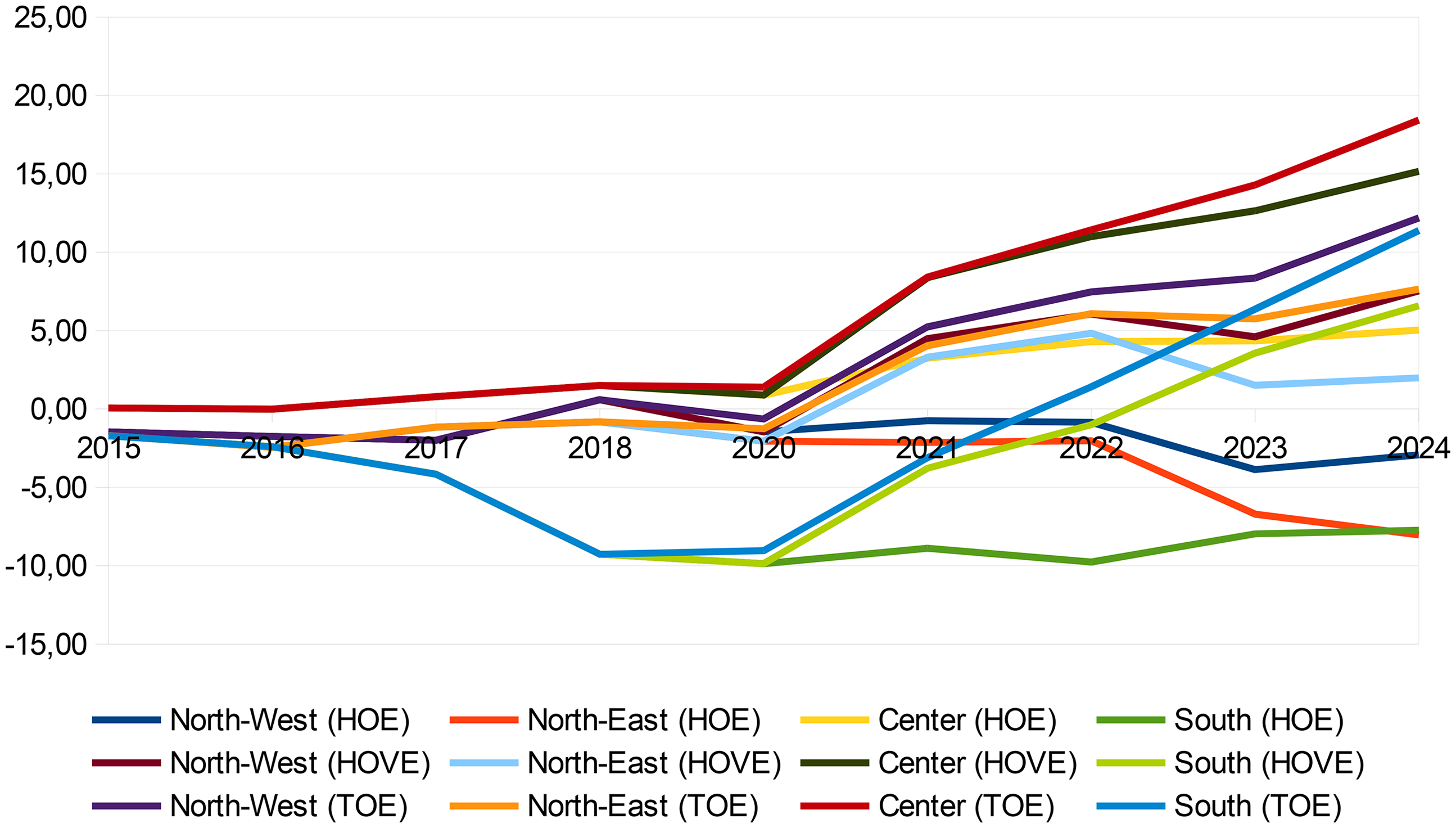
Horizontal, vertical and total per capita equalizing effect in the municipalities of the territorial clusters (2015–2024). Source: Authors' elaboration.
Horizontal, vertical and total per capita equalizing effect in the municipalities of the territorial clusters (2015–2024).
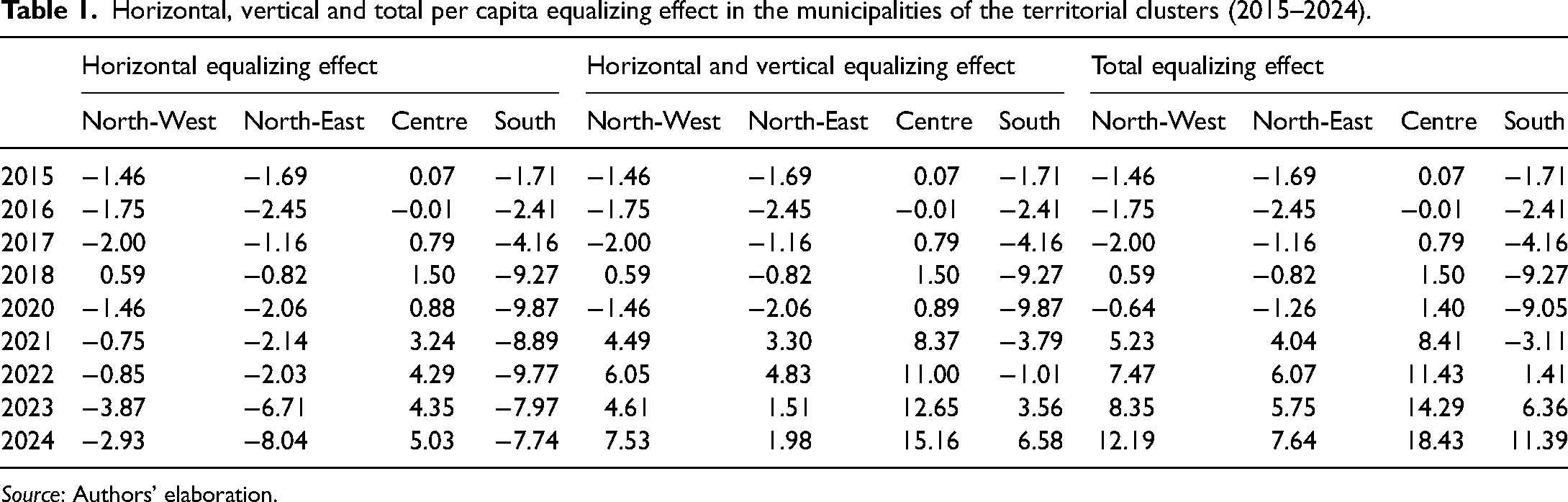
Source: Authors' elaboration.
In all tables and figures, a negative equalization effect indicates a transfer of resources to other municipalities, while a positive equalization effect indicates a transfer of resources from other municipalities. However, the total of the rows for each year can never be zero, because our sample of municipalities represents only a subset of the municipalities in the statutory regions. Therefore, the sum of each row would be zero only if we had included all Italian municipalities within the statutory regions. In other words, if the sum of the equalization effects for each territorial area in each year is negative (e.g., as in 2015), this means that resources have been transferred from the municipalities in our sample to those not included in the sample (i.e., municipalities with fewer than 20,000 or more than 200,000 inhabitants). All table numbers and figures are expressed in euros per capita.
The disadvantage of the Southern local governments is clearer if the remaining three territorial clusters (North-West, North-East and Centre) are aggregated into a unique macro-cluster (North−Centre). Figure 2 clearly shows an increasing North/South gap. While the total equalizing effect is quite constant over time around the value of 0 in North−Centre municipalities, it shows a negative worsening trend for Southern municipalities over the period 2015–2019, as the weight of the equalizing component of the FSC formula increases. From 2021 onward, the trend changes due to the introduction of vertical equalization.
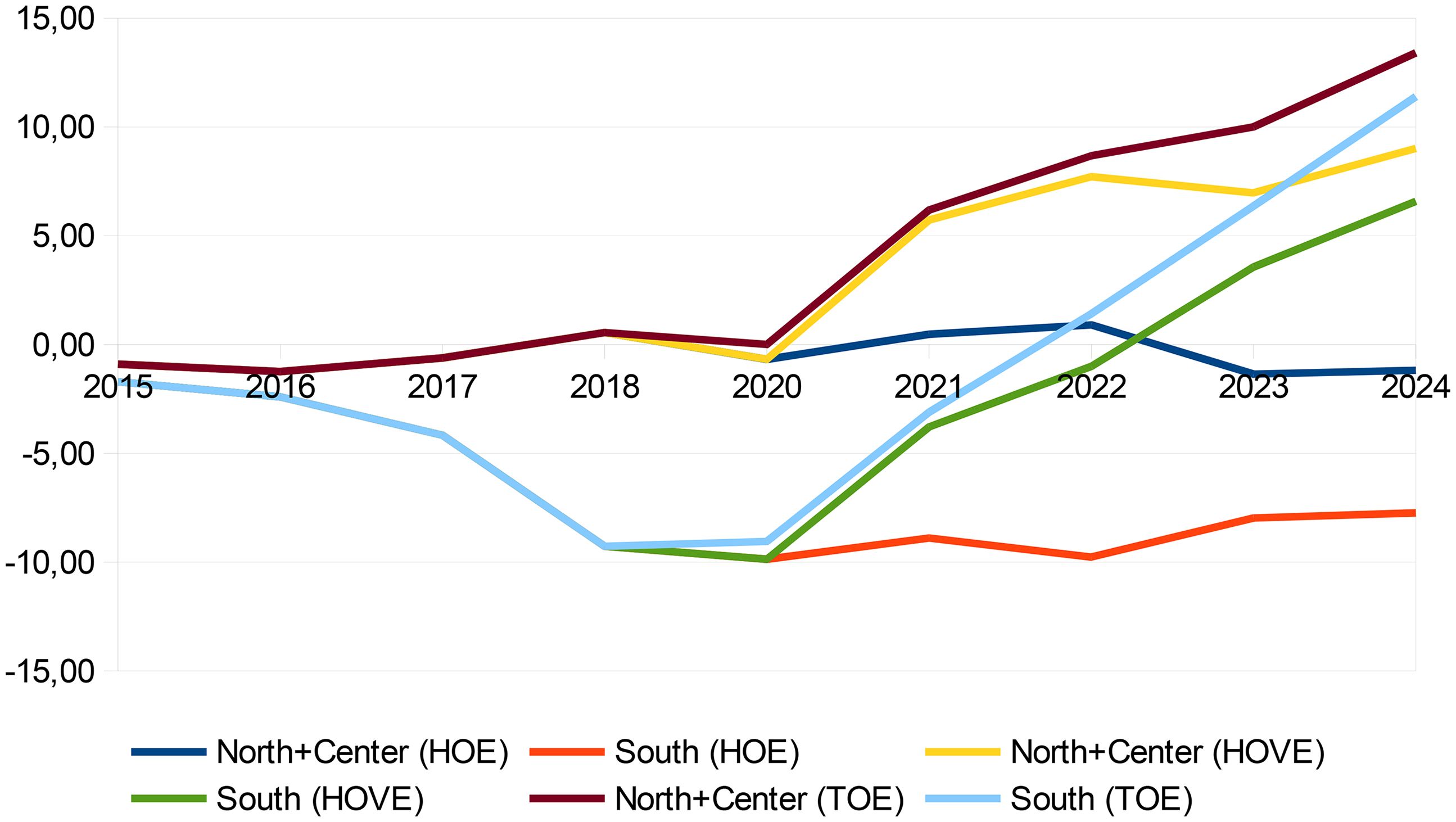
Horizontal, vertical and total equalizing per capita effect in the macro-clusters (2015–2024). Source: Authors' elaboration.
With only two clusters, it is possible to represent the effects of the various components of equalization without sacrificing the readability of the graph.
The gap in the per capita HOE between the North−Centre and Southern clusters (see Figure 2) increases until 2019. From 2020 onward, it slightly decreases. This is due to technical improvements in the methodology for the determination of standard needs initiated in 2019, as well as to the injection of additional resources for services objectives and d-quater resources.
Interestingly, it can be observed that the injection of additional resources for service objectives in 2021 augmented, rather than reduced, the North/South gap. As shown in Table 2, the North/South gap in the horizontal equalization increases from 9.36 to 9.52 with the additional resources and then decreases to 9.29 thanks to the d-quater resources. How is this possible? As discussed above, in 2021 additional vertical resources were assigned by the state for the essential function of ‘social services’, according to the same methodology used in the horizontal equalization concerning social services. Thus, when the function ‘social services’ is isolated from the other functions, as in the 2021 extra-assignments, it becomes clear that the equalizing criteria regarding social services are counter-equalizing. This implies a transfer of resources from Southern municipalities, which are typically afflicted by social problems, to Northern municipalities, which typically have lesser social needs. It is also notable that the so-called d-quater resources, whose formula is not publicly available, have a higher incidence than the vertical equalization.
From 2022 onward, additional resources for nurseries and disabled transport were introduced, leading to a slight reduction in the North/South gap. The incidence of additional resources for service objectives increased in comparison with the incidence of ‘d-quater resources’: the North/South difference in per capita equalization decreased from 10.67 to 8.72 due to additional resources for service objectives, and it was further reduced to 7.26 by the d-quater resources. The gap in the TOE continued to diminish in 2023 (3.64) and in 2024 (2.01). Thus, there still remains a slight penalization of Southern regions.
In sum, Southern municipalities in the sample endured an increasing disadvantage in terms of HOE until 2019. From 2020, due to technical improvements initiated in 2019, the North/South gap showed a slight narrowing. If the horizontal and vertical effects are considered, the introduction of resources for service objectives narrowed the gap over the period of 2020–2024 − except for 2021, as explained above. If TOE is considered, the gap narrowing was even more marked and embraced the year 2021 due to the d-quater resources. In 2024, at the end of the observed period, the North/South gap was reduced but not eliminated, in that the vertical equalization had not been sufficient to offset it. Thus, ultimately, the system still embodies a transfer of resources from Northern to Southern jurisdictions.
Another interesting observation emerging from the data reported in Tables 1 and 2 concerns the small size of equalization. In a country characterized by a marked territorial heterogeneity in the standard fiscal capacity, where equalization should have an important weight in line with the solidaristic constitutional principles, the amount of per capita equalization represents a small percentage of the financial resources available to local governments. As pointed out by the Institute for Local Finance and Economy (2017), the total amount of equalization has been much less than the amounts of total financial cutbacks inflicted on municipalities during the financial crisis.
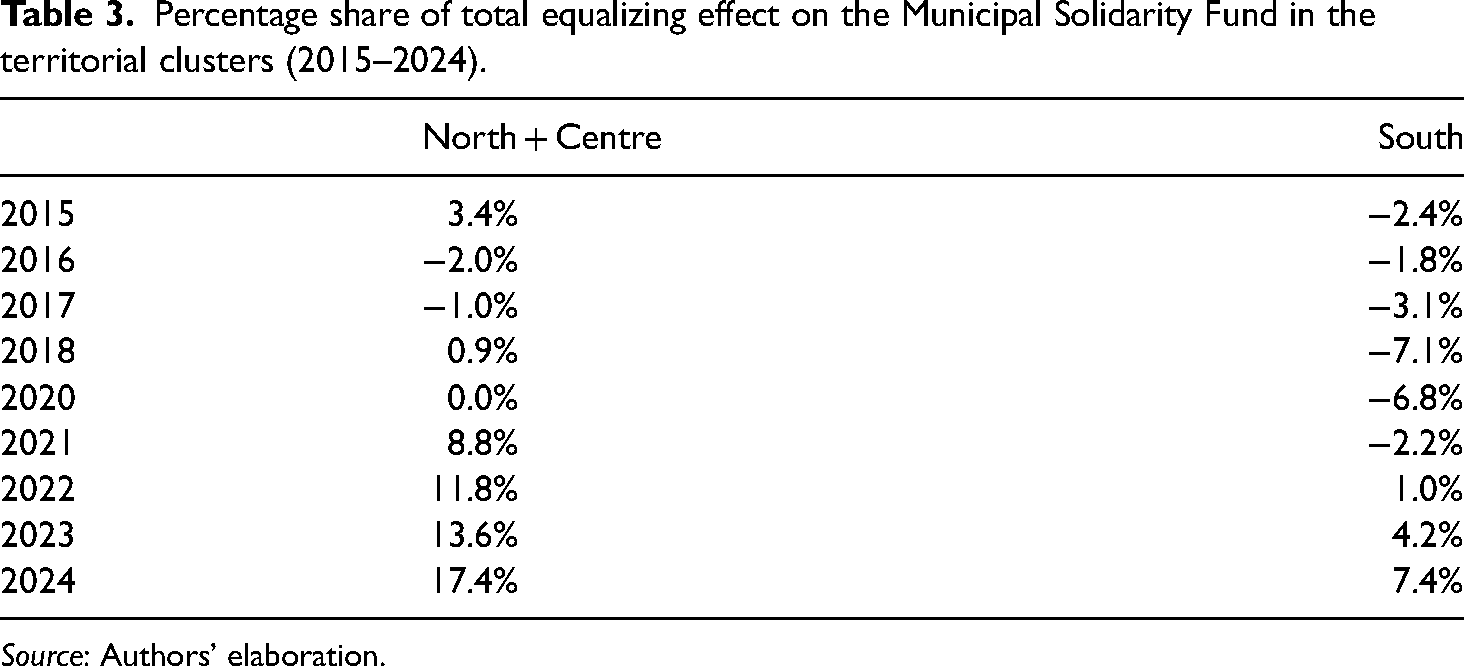
In Figure 3 and Table 3, TOE is represented as a percentage of the Municipal Solidarity Fund in the territorial clusters.
Horizontal, vertical, and total equalizing per capita effect in the macro-clusters (2015–2024).
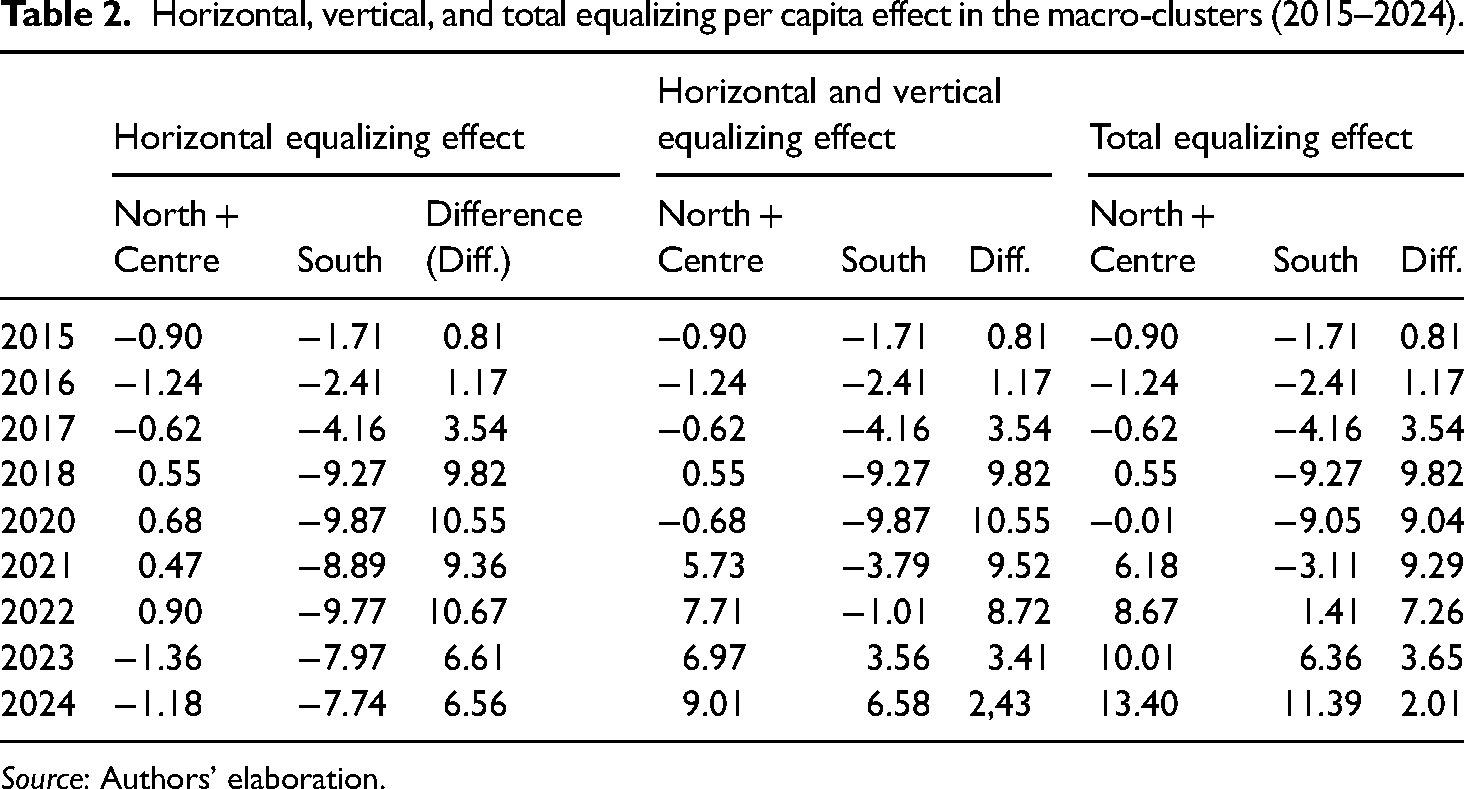
Source: Authors' elaboration.
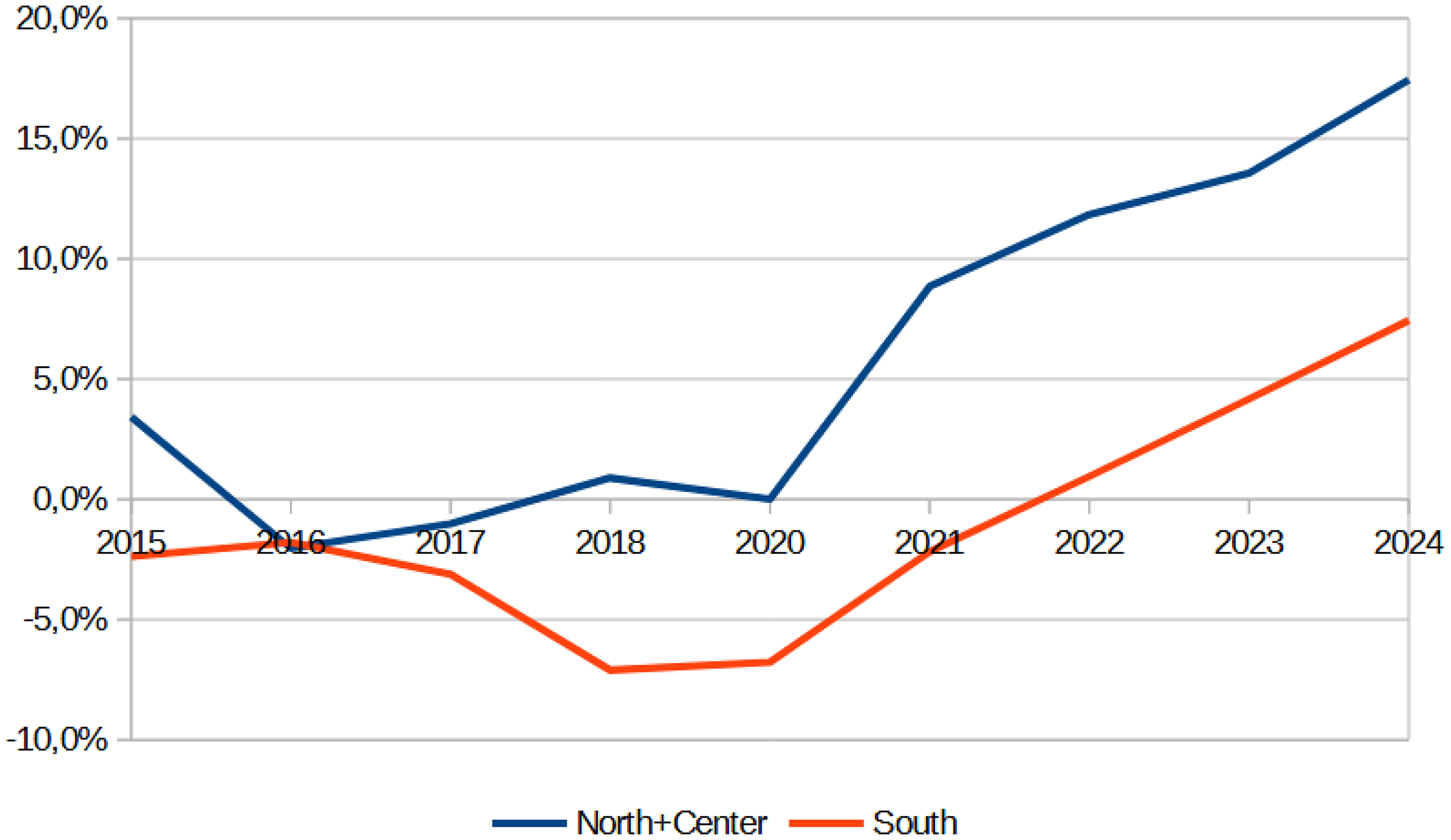
Percentage share of total equalizing effect (TOE) on the Municipal Solidarity Fund in the territorial clusters (2015–2024).
Percentage share of total equalizing effect on the Municipal Solidarity Fund in the territorial clusters (2015–2024).
Source: Authors' elaboration.
Discussion: explaining the counter-equalizing effect
The reconstruction of the institutional background makes it possible to identify the aspects of the federalist model, as it was implemented over the period examined, that mostly favoured the counter-equalizing effect.
The main cause of the counter-equalizing effect is the lack of determination of LEPs; the LEPs, provided by the 42/2009 law, have not been determined (Institute for Local Finance and Economy, 2021). In the absence of LEPs, the methodology tends to assign larger needs, and therefore resources, to municipalities that have higher historical expenditure or services. These characteristics, in turn, are typically correlated with a greater fiscal capacity. Consequently, the penalties that should have affected the municipalities with greater fiscal capacity were attenuated by this correlation.
Such dynamics significantly reduced the impact of the equalizing effect. Where there was more fiscal capacity than average − and thus a negative adjustment of the redistributive component linked to fiscal capacity − higher than average needs were usually also recognized, resulting in a positive adjustment linked to needs. This effect is not easily visible in that it is mitigated in the overall FSC formula which mixes cost equalization with revenue equalization, but there is no doubt that it is significant and reduced what would have been a very powerful correction of fiscal capacities.
The counter-equalization depends not only on the way the standard needs are determined but also on other technical details. Specifically, the fact that the equalization programme did not include the compensatory mechanisms of the abolished taxes on primary residences produced a distortion in the equalization between municipalities that were differently characterized by the presence of primary residences. Moreover, it negatively affected the municipalities that, having on average exercised a lower fiscal lever, were disadvantaged by the exclusion from the equalization system of the refund of the abolished tax revenues. The counter-equalization effect also depends on the exclusion of cutbacks from the equalization mechanism. Given that most of the cuts reflected the distribution of historical resources, the exclusion of these from the equalization mechanism determined a proportional distribution to the historical resources. Conversely, their inclusion would have entailed a distribution closer to the standard needs (Marchionni et al., 2017).
Overall, these elements combined to produce the opposite of the effect that was expected by the enabling law 42/2009 − namely, there was an overall counter-equalization, while a partial equalization was expected concerning the resources related to non-fundamental functions and a full equalization regarding the resources related to the fundamental functions.
Beginning in 2021, the counter-equalization diminished in relation to the introduction of additional resources for service objectives. This intervention was only partly equalizing, as discussed earlier. It was also limited in size, even considering the additional d-quater resources, which have been quantified as about 11% by Porcelli and Scheda (2022). Thus, it was not sufficient to offset the overall counter-equalizing impact of municipal federalism.
Overall, Southern municipalities have been penalized more than others by the equalizing mechanism, in an organizational context affected by to the so-called ‘flypaper effect’ − a cognitive bias also observed in the context of Italian local authorities (Gennari and Messina, 2014). Specifically, if it is hard not to boost expenditures when state transfers increase, it is even harder to reduce expenditures when transfers decrease (Di Liddo et al., 2019; Marattin et al., 2022).
The poorer municipalities, to maintain the level of services, must raise taxes. When all fiscal manoeuvrings are exhausted, they start to cut services. The lack of services, in turn, might result in emigration, especially of young and skilled people, thus further reducing the financial resources available to poorer municipalities due to the loss of tax revenue (Dougherty et al., 2022).
Conclusions
The Italian model of municipal federalism, as presented by law 42/2009 and further modifications, shows many characteristics of good practices in fiscal federalism. It follows the principles of both horizontal and vertical equalization in the substitution of state transfers with tax levy, relying on a formula-based assessment of both standard needs and fiscal capacity that offset differences in revenue-raising capacities and/or in the need for and cost of public service provision. The design approach to equalization should reduce the incentive to inflate or suppress revenues or cost, since it entails the adoption of a representative tax system and a standardized cost system to compute equalization entitlements. This should trigger a virtuous mechanism through which, with equal fiscal capacity, investing in the provision of a deficient service, which is part of one of the fundamental functions, would see a greater need attributed in the subsequent phases of the equalization programme through the annual update of the data.
Our investigation shows that the ambitious expectations laid down in the enabling law have not been fulfilled due to scarcely visible operational details. Moreover, the Organisation for Economic Co-operation and Development (2021) report is disconfirmed regarding the achievement of the main goals of the municipal federalism. It appears that, for the municipalities in the sample, the redistributive mechanism did not accomplish the goals of guaranteeing transparency and predictability, reducing territorial gaps and increasing municipal autonomy. As ours is the first reproducible analysis of the equalization effects of the federalist reform, these are significant findings, which are discussed further below.
First, transparency is typical of a formula-based compared to a negotiated system. However, this transparency was sacrificed by the complexity of the mechanism and the ambiguity stemming from the merging of the component elements − equalizing, restorative and financing quotas − into a single fund. This loss of transparency, in turn, undermines the local government's predictive capacity for budgeting purposes.
Second, the equalizing scope of the system was significantly limited by some operational details. These include the lack of essential levels of services and the consequent method of determining the standard needs. As the latter is linked to output/expenditure rather than needs, it produces a transfer of resources from Southern jurisdictions to Centre−Northern jurisdictions. Moreover, the equalizing scope of the system is attenuated by other operational details that limit the share of fiscal capacity entering the equalization mechanism, thus reducing the revenue-based equalization. Consequently, there has been a counter-equalization over the period, although this has been mitigated since 2021 due to the additional resources of vertical equalization.
Third, the various technical adjustments and resource cutbacks discussed previously strongly compressed the autonomy of the municipalities. However, this compression did not occur homogeneously in the various territorial clusters. Rather, the municipalities with lower fiscal capacity had to increase taxes to preserve the level of essential services in a context of insufficient equalization and dramatic financial cutbacks. The North/South gap has been slightly reducing in recent years by vertical equalization. However, this reduction has come at the cost of further limiting the financial autonomy of local governments, since the vertical resources are partially earmarked.
Naturally, these conclusions are limited to the variables that have been taken into consideration considering the available data. However, appropriately assessing the level of equalization would require considering a wide variety of fiscal instruments, conditional and unconditional transfers, ad hoc adjustments, subventions, subsidies and mutual settlements, as well as the National Recovery and Resilience Plan. The central question should be not whether the formula-based FSC redistribution is equalizing but, rather, whether the total funding system is equalizing.
This study is also limited in terms of the representativeness of the chosen sample. As mentioned in the methodological section, the findings are not valid for metropolitan cities or small towns. An extension of the analysis to these types of municipalities would shed light on other dualisms and disparities that have been neglected in this study due to space constraints, such as large/small or urban/rural municipalities.
Overall, the analysis provides insight into the impact of the implementation of fiscal federalism over the period of 2015–2024 on Italian local governments in municipalities with between 20,000 and 200,000 inhabitants. The Italian case highlights the necessity for all countries pursuing municipal fiscal federalism to carefully assess not only the principles underpinning their equalization models but also the operational mechanisms through which these principles are realized.
The analysis shows the operational details which negatively affected the final equalizing effect. The raison d’être of such operational choices is not clear, and investigating the deep causes could be a promising avenue of research to identify corrective interventions. However, our study does offer some clues to draw useful implications for practitioners in diverse international contexts.
The first implication, which is valid for cost-equalizing and gap-filling equalization systems, is the need to define the methodology for determining the LEPs. Despite the acceleration in recent years, such a definition still appears to be lacking, especially in terms of quantitative references that allow the established service levels to be linked to the calculation of standard needs. How to define the essential levels of services is thus an important question for future research. Recently, the Italian Ministry for Regional Affairs has appointed a committee of experts for the determination of LEPs. To make the pursuit of LEPs possible and to overcome the reluctance of rich municipalities to support less endowed municipalities through horizontal equalization, the vertical component of equalization should be reinforced by further increasing state resources for LEPs. Not only current needs but also infra-structural needs should be considered to pursue full equalization. This is one of the objectives of the Italian National Plan for Recovery and Resilience.
The second implication, which is valid for revenue-equalizing and gap-filling systems, is the necessity to ensure an adequate weight of fiscal capacity for equalizing purposes and eliminate hidden setbacks. The adoption of fiscal capacity rather than tax revenues as a benchmark for equalization makes it possible to compensate for genuine economic disparities − namely, structural differences among municipalities and their respective tax revenue potentials. This approach is in line with Organisation for Economic Co-operation and Development (2021) recommendations, since it is independent of tax policy choices and is neutral to collection efficiency, thus preventing manipulation. Equalization based on fiscal capacity is indeed still insufficient: in Italy only 50% of the fiscal capacity enters the equalization mechanism. In other countries, there are higher percentages of fiscal capacity entering the equalization mechanism, and there are debates in international circles regarding the appropriateness of including the tariffs of services on individual demand when calculating fiscal capacity (Dougherty et al., 2022).
According to the Organisation for Economic Co-operation and Development (2021) report, the use of a system of less than 100% equalization might produce the positive effect of encouraging municipalities to cultivate their own tax base to generate revenues. However, the Organisation for Economic Co-operation and Development (2021) report does not consider that in countries characterized by strong disparities, such as Italy, part of the fiscal effort of the poorer municipalities serves to finance essential functions. The fact that the standard for calculating fiscal capacity is determined at rates generally lower than those adopted means that an additional part of the collection does not contribute to determining the fiscal capacity of the municipalities and therefore remains excluded from equalization. Moreover, there are other, less visible details that can result in under-sizing of the equalization based on tax capacity, which should be addressed. These include the exclusion from equalization of the resources assigned to compensate for the abolition of taxes on primary residences, with a value of about 3.5 billion euros, as well as other inconspicuous corrections, cuts and reservations that also cumulatively have a significant value − around 1.7 billion euros. Another implication for practitioners is the need to eliminate hidden mechanisms that offset equalization gains: the presence of non-transparent technical adjustments undermines the redistributive goals. Removing or making these mechanisms visible is essential to ensure transparency and equity.
Supplemental Material
sj-docx-1-ras-10.1177_00208523251364184 - Supplemental material for The devil in the details: Equalization in Italian municipal federalism
Supplemental material, sj-docx-1-ras-10.1177_00208523251364184 for The devil in the details: Equalization in Italian municipal federalism by Paola Adinolfi and Antonio Felice Uricchio in International Review of Administrative Sciences
Supplemental Material
sj-docx-2-ras-10.1177_00208523251364184 - Supplemental material for The devil in the details: Equalization in Italian municipal federalism
Supplemental material, sj-docx-2-ras-10.1177_00208523251364184 for The devil in the details: Equalization in Italian municipal federalism by Paola Adinolfi and Antonio Felice Uricchio in International Review of Administrative Sciences
Footnotes
Declaration of conflicting interests
The authors declared no potential conflicts of interest with respect to the research, authorship, and/or publication of this article.
Funding
The authors received no financial support for the research, authorship, and/or publication of this article.
Supplemental material
Supplemental material for this article is available online.

Notes
Author biographies
References
Supplementary Material
Please find the following supplemental material available below.
For Open Access articles published under a Creative Commons License, all supplemental material carries the same license as the article it is associated with.
For non-Open Access articles published, all supplemental material carries a non-exclusive license, and permission requests for re-use of supplemental material or any part of supplemental material shall be sent directly to the copyright owner as specified in the copyright notice associated with the article.
