







Abstract
This study examines the factors influencing the adoption of digital government platforms by public officials in Chile, within the context of the State's digital transformation. Based on the unified theory of acceptance and use of technology (UTAUT), the model incorporates job satisfaction as an organizational outcome variable. A quantitative approach was employed using partial least squares structural equation modelling, based on data collected from 298 public employees. The results show that effort expectancy and social influence significantly affect intention to use, whereas performance expectancy does not. Effective use of the platforms is mainly explained by the intention to use and facilitating conditions, and is modestly associated with job satisfaction. These findings suggest that the organizational context and institutional resources are more decisive than perceived usefulness in contexts where the adoption of digital government platforms is strongly influenced by institutional mandates. The application of the UTAUT model in the Latin American public sector context highlights the importance of considering technical, human and cultural factors in digital transformation policies. It is recommended that future research include additional variables and explore longitudinal or comparative designs.
Institutional mandates and regulatory pressures influence the adoption of digital platforms in local governments. The successful implementation of digital government platforms depends on facilitating conditions such as infrastructure, training and technical support. The use of digital government platforms may positively influence job satisfaction, highlighting the importance of employee experience.
Keywords
Introduction
In public administration, the increasing use of digital technologies has fostered the implementation of Internet based policies and the deployment of a wide range of information systems designed to improve the quality, efficiency and transparency of public services (Fernández and Sánchez, 2021). However, although significant progress has been made in the development of e-government services in Latin America and the Caribbean, structural limitations related to infrastructure, human capital and organizational capabilities continue to constrain their expansion and effective use (Dias, 2019)
The adoption of digital technologies in the public sector does not rely solely on voluntary individual decisions. The implementation of digital government platforms is strongly shaped by regulatory frameworks, organizational guidelines and institutional mandates. Thus, research on the adoption of information technologies can be approached from different analytical perspectives. One stream of research focuses on the individual level, examining how users’ perceptions and motivations influence technology use (Wirtz et al., 2019). Another stream adopts an institutional perspective, analysing how organizational environments, institutional pressures and interorganizational dynamics shape technology adoption (King et al., 1994). While this institutional perspective is valuable for explaining why organizations or governments decide to implement digital systems, it does not fully capture the determinants of the intention to use these systems or how they are actually used by the individuals who operate them. Moreover, although the use of digital government platforms in local governments may be mandated by law, mandatory implementation does not necessarily ensure effective, meaningful use in practice. This study focuses on the individual perspective to understand the factors that facilitate or hinder the intention and actual use of digital government tools within public organizations.
The case of Chile
In Chile, efforts have been made to incorporate digital technologies into local government (municipality) processes and activities. A central milestone in this process is Law No. 21.180, known as the ‘State Digital Transformation Law’, which mandates the progressive digitization of administrative procedures across all public institutions. This regulatory framework seeks to enhance transparency, standardize administrative processes and accelerate service delivery to citizens (CEPAL, 2023). In line with this mandate, municipalities have increasingly adopted digital tools provided by the Division of Digital Government, including the Administrative Procedures and Services Catalog Platform, Unique Key, FirmaGob and DocDigital (Ley No. 21.180, 2019).
Particularly concerning is the situation of the 68% of public organizations in Chile that are not yet fully prepared to meet the requirements established by the State Digital Transformation Law (Cancino et al., 2024). According to the report, all municipalities are classified as being in the initial or early stages of digital transformation. Although efforts have been made to modernize government systems and services, significant gaps persist in technological infrastructure, staff training and the adaptation of administrative processes. This lack of preparedness could hinder the effective achievement of the Digital Transformation Law's objectives regarding improving public sector efficiency, transparency and the quality of services offered to citizens.
Beyond their formal availability, the adoption of digital government platforms at the municipal level in Chile has been inconsistent and often driven by specific operational needs. These platforms are mainly used to support administrative processes, such as document management, electronic signatures, user authentication and the standardization of procedures required by the State Digital Transformation Law. In practice, municipalities implement these systems to address organizational challenges such as reducing paperwork, meeting regulatory requirements, improving the tracking of administrative actions and increasing service-delivery efficiency. While existing explanations of adoption tend to focus on institutional factors such as capacity, resources and organizational readiness, the degree to which these platforms are effectively integrated into daily work practices may also depend on how public employees perceive and evaluate these technologies. However, empirical research examining individual perceptions, attitudes, intentions and motivations toward digital government platforms remains limited, underscoring the need for further studies to understand better the human factors that influence their adoption and use.
The need for a theoretical framework
Previous research has examined how users’ perceptions and motivations influence technology use, as reflected in models such as the technology acceptance model (TAM) proposed by Davis (1989) and the unified theory of acceptance and use of technology (UTAUT) (Venkatesh et al., 2003). These frameworks emphasize factors such as perceived usefulness, ease of use, social influence and facilitating conditions, in shaping individuals’ intentions to adopt and use technological systems. The TAM is a subset of the wider UTAUT model.
The UTAUT has been widely extended in the information and communication technology literature to assess technology acceptance in organizational setups (Dwivedi et al., 2016). For instance, Gao et al. (2023) in their bibliometric analysis of the evolution of open government data research, pointed out that the adoption and use of open government data was the third phase’s research trend where the UTAUT model helped to examine the factors influencing the acceptance and use of this technology.
Similarly, in their effort to better explain e-government adoption, Dwivedi et al. (2016) developed the unified model of electronic government adoption, building on the UTAUT framework and incorporating additional constructs such as perceived risk and attitude toward using an online public service. The model was empirically tested using data from citizens in India. These findings reinforce the relevance of the UTAUT model in public sector and e-government studies (Rana et al., 2016; Sabani et al., 2023; Wirtz et al., 2019).
In addition, it has been shown that digital technologies in public organizations can significantly boost job satisfaction by making tasks easier, reducing bureaucratic burdens, improving access to information and increasing autonomy in decision-making (Abdulkareem et al., 2024). When technologies are implemented to enhance task relevance, support collaboration and align with organizational goals, they raise employees’ positive perceptions of the work environment, promote better performance and foster workplace well-being (Ramirez-Madrid et al., 2024).
The goal of this study is to explore the factors that influence the adoption and use of digital government platforms in Chilean municipalities and to analyse their relationship with job satisfaction. By integrating UTAUT with a contextual understanding of the institutional environment where digital technologies are implemented, this study aims to contribute to the literature on digital government adoption in the public sector from the perspective of public employees. The study is organized into six sections. The second section provides a conceptual review of the theoretical background of the UTAUT model and discusses the main factors related to technology acceptance. The third section outlines the methodological design, data collection tools and analytical methods. The fourth and fifth sections present the empirical results and discuss the findings. Lastly, the sixth section offers the conclusions, implications and limitations of the study.
Theoretical framework and hypotheses
The UTAUT model introduced by Venkatesh et al. (2003) has been widely used to explain why some individuals are more or less likely to adopt various types of information technology in their work environments. This theory suggests that the behavioural intention to use a specific technology is influenced by three main predictors: performance expectancy (PE); effort expectancy (EE); and social influence SI. PE refers to how much an individual believes that using the system will help improve their job performance. EE is defined as the ease of use associated with the system. SI refers to the extent to which an individual perceives that important others think they should use the new system.
The model also indicates that individuals will use an information system based on their behavioural intentions, establishing that facilitating conditions (FCs) refer to how much a person believes there is a technical and organizational infrastructure in place to support system use. Therefore, both the intention to perform a behaviour and the FCs that may exist to enable that behaviour influence actual usage behaviour.
This unified model has been widely used in studies across various technologies and settings (Hooda et al., 2022; Motamedi et al., 2021; Yap et al., 2022). Recently, there has been increasing interest among researchers and practitioners in understanding the factors that drive technology adoption in public administration (Zeebaree et al., 2022). As a result, the UTAUT model's robustness makes it a suitable theoretical framework for explaining the adoption of digital government platforms during Chile's digital transformation (Ramírez-Correa et al., 2023).
Factors affecting the intention to use digital government platforms
Effort expectancy (EE)
Effort expectancy has become a key dimension of the UTAUT model in the governmental context, referring to the perceived ease with which users can interact with public digital platforms. Several studies agree that this variable has a significant and positive effect on the intention to use e-government technologies. For instance, in Indonesia, EE, along with system quality and perceived transparency, was found to significantly influence e-government adoption. Similarly, Zeebaree et al. (2022) found that EE is significantly related to sustainable intention to use digital services in Iraq, emphasizing its facilitating role when combined with adequate structural conditions and trust in the system. El Hajj et al. (2023) highlighted that, in crisis contexts such as the COVID-19 pandemic, perceived ease of use is a crucial determinant of continued use of government platforms, especially when these platforms aim to promote citizen engagement and community development.
These findings support the hypothesis that EE is a significant antecedent of behavioural intention, particularly in environments where prior experience with digital technologies is limited or recent. It has been shown that the easier a technology is to use, the more likely users are to adopt it, as individuals generally tend to prefer technologies that require minimal effort over those that are more complex (Ramirez-Madrid et al., 2024). Therefore, if government employees perceive citizen service e-platforms as easy to use and learn, they are expected to show a higher intention to use digital platforms.
Performance expectancy (PE)
Performance expectancy refers to the degree to which an individual believes that using a system will improve their job performance (Chao, 2019). In recent years, studies have consistently demonstrated a positive relationship between PE and the intention to use technology (AlHadid et al., 2022; Hilal and Varela-Neira, 2022), identifying this dimension as one of the most influential factors in e-government adoption (Sabani et al., 2023). Duan and Dong (2025) found that PE has a direct, positive impact on rural women's intention to use government platforms in China, indicating that perceived usefulness is a key determinant even in communities with technological limitations. According to El Hajj et al. (2023), in crisis contexts, citizens positively evaluated the continued use of digital government platforms based on their ability to solve problems, facilitate administrative procedures and improve access to public services.
Social influence (SI)
Social influence is defined as the degree to which individuals perceive that important others believe they should use a given technology, SI is a key factor in the acceptance of digital services in the public sector (Venkatesh et al., 2003). This UTAUT construct has demonstrated significant relevance, particularly in contexts where technological decisions are shaped by social norms, hierarchical structures, or trust networks (Mensah et al., 2020). In the governmental sphere, potential influencers for public officials include coworkers, supervisors, family members and friends (Matheus et al., 2024).
In this regard, Soong et al. (2021) point out that pressure from colleagues, superiors, or strategic partners has been crucial in encouraging the adoption of digital platforms, even in environments where technology is not part of the core operations. Similarly, Zeebaree et al. (2022) highlight that in settings with low institutional trust, social networks and citizens’ immediate environments greatly influence their attitudes toward using digital government platforms. Likewise, Duan and Dong (2025) demonstrate the cross-cultural role of SI, including in contexts with limited access or technological autonomy, such as among rural women in China, where community support and social validation are key factors in adopting e-government services.
Empirical evidence confirms that SI significantly affects the adoption of government technologies, especially in collectivist, hierarchical contexts or in environments with low institutional trust (Abulhaija et al., 2025). Recognizing the role of opinion leaders, peer networks, and social referents is essential for designing more effective technology implementation strategies in the public sector. According to Tamilmani et al. (2021), individuals are generally more likely to adopt a system when they perceive significant others, such as family members, friends, or colleagues, approve of its use.
Factors affecting the use of digital government platforms
Facilitating conditions (FCs)
Within the UTAUT model, facilitating conditions is the degree to which individuals perceive that the necessary organizational, technical and training resources are in place to support technology use (Venkatesh et al., 2003). This construct emphasizes not only the availability of technological infrastructure but also the presence of institutional policies, timely technical support, adequate training and an organizational culture that fosters digital adoption (Rayun et al., 2025).
In the public sector, FCs are particularly relevant, as government institutions often face challenges related to budgetary constraints, bureaucratic rigidity and heterogeneity in public officials’ digital competencies (Al-Emran et al., 2018). The absence of these conditions can create barriers to the adoption of digital platforms, while their presence can catalyse the effective use of technology (Hilal and Varela-Neira, 2022).
Studies have confirmed that the perception of having the necessary resources and support positively influences on the use of digital systems (AlHadid et al., 2022). Authors such as Peñarroja et al. (2019) found that FCs positively affected technology use in the digital era. Thus, FCs represent a key component in understanding the factors that enable or hinder digital transformation in public organizations.
Intention to use digital government platforms
The intention to use has been widely studied through the UTAUT model, which identifies performance expectancy, effort expectancy, and social influence as key determinants of technology adoption behaviour (Venkatesh et al., 2003). Various studies have validated this model in public sector contexts, highlighting additional variables such as perceived usefulness, ease of use, trust, security, information quality and perceived institutional support that significantly influence the intention to use digital platforms (Mensah et al., 2020; Ramirez-Madrid et al., 2024; Zeebaree et al., 2022).
Within the UTAUT framework, behavioural intention is considered the primary antecedent of actual technology use, reflecting users’ willingness to integrate digital systems into their work activities (Venkatesh et al., 2003). Numerous empirical studies have confirmed that intention to use significantly predicts actual usage behaviour in both private organizational settings and public administrations (Al-Emran et al., 2018; Dwivedi et al., 2016). This relationship is particularly relevant in the public sector, where the adoption of digital government platforms depends not only on technological factors but also on public officials’ willingness to incorporate these tools into their work routines.
Job satisfaction (JS)
The job satisfaction is a fundamental component of well-being within the organizational environment. It is understood as a positive emotional state resulting from an individual's assessment of their job, based on the extent to which it meets their needs, personal expectations and the recognition they receive for their work (Alieva and Powell, 2023). From this perspective, JS reflects the degree to which the organization meets employee demands, serving as a direct indicator of staff well-being in their positions and working conditions (Davidescu et al., 2020).
Beyond modernizing administrative processes, technology adoption can also positively influence employees’ perceptions of the work environment and foster a more favourable attitude toward performance and improved workplace well-being (Ramirez-Madrid et al., 2024). Studies indicate that information technologies can also affect the boundaries between work and personal life, offering greater flexibility but also posing new challenges. For example, Wright et al. (2014) note that some employees perceive digital technologies as tools that facilitate work connectivity beyond traditional settings, which can increase JS if managed properly. More recent research highlighted that the design and perceived usefulness of digital tools are critical to improving JS. When employees perceive technologies as intuitive, efficient and well-suited to their roles, their willingness to use them increases, along with their overall experience in the organizational environment (El Hajj et al., 2023). Thus, the use of digital technologies in public organizations can serve as a key tool for increasing levels of JS by facilitating task execution, reducing bureaucratic burdens, improving access to information and promoting greater autonomy in decision-making (Abdulkareem et al., 2024).
Figure 1 shows the research model and hypotheses.
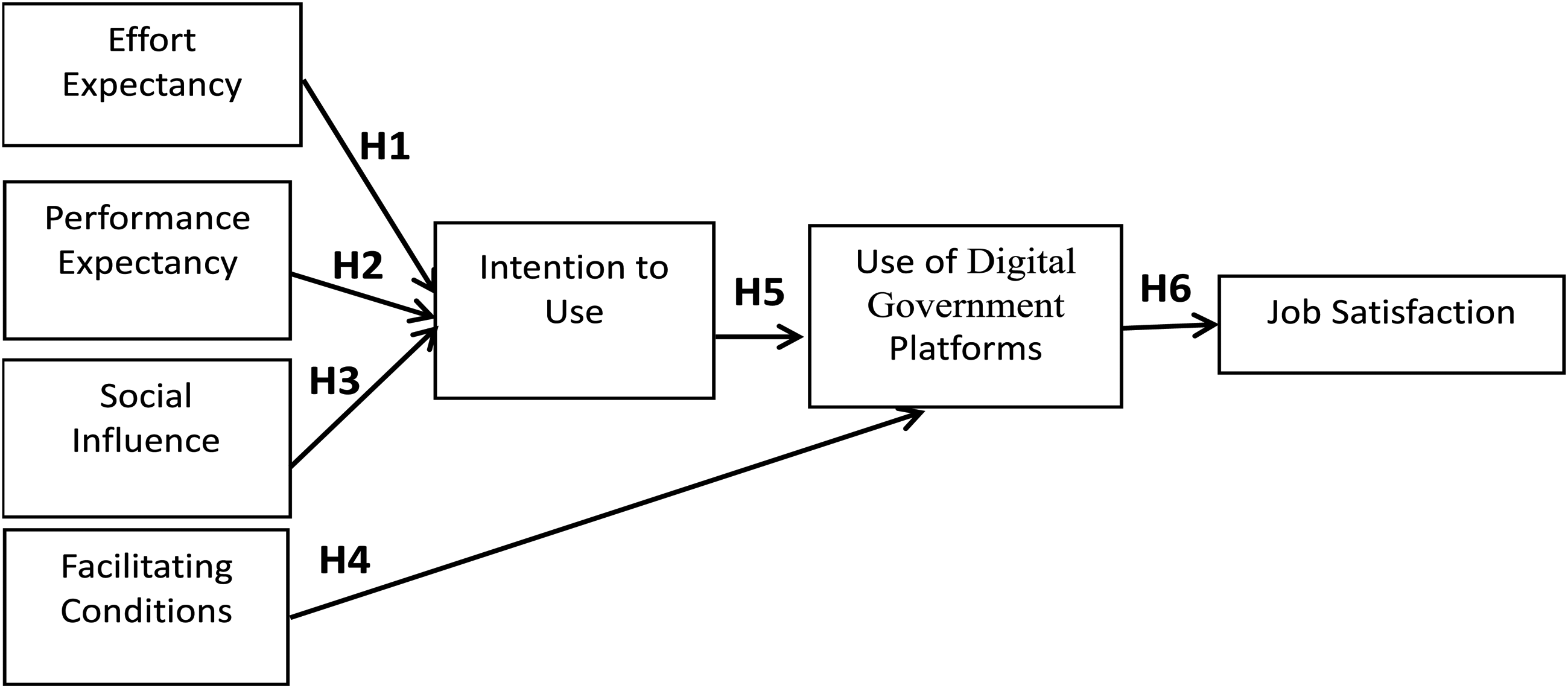
Theoretical model.
Methodology
Data collection and sample design
Data were collected through a survey administered via the Survey Monkey platform. The questionnaire was distributed between September 2024 and January 2025 to public officials from municipalities in the Biobío and Ñuble regions of Chile who use one or more digital platforms provided by the Division of Digital Government. Convenience sampling was employed, targeting local government institutions that have digital tools or platforms enabled by this division. A total of 324 survey responses were initially collected. After data screening, 26 responses were excluded due to incomplete information and because respondents reported not using digital government platforms in their daily work. Consequently, 298 valid responses were retained for statistical analysis.
Measurement and scales
The measurement instrument consisted of 24 questions. Its construction involved adapting the UTAUT model scale (Venkatesh et al., 2003) and supplementing it with items from the job satisfaction scale proposed by Ragu-Nathan et al. (2008). All items were measured using a five-point Likert scale, ranging from 1 (strongly disagree) to 5 (strongly agree). The instrument's validation was conducted through expert judgment, involving academic researchers and local government officials in Chile. As a result, the comments and suggestions provided regarding the questionnaire items were considered, and the necessary revisions and modifications were made to the measurement scale.
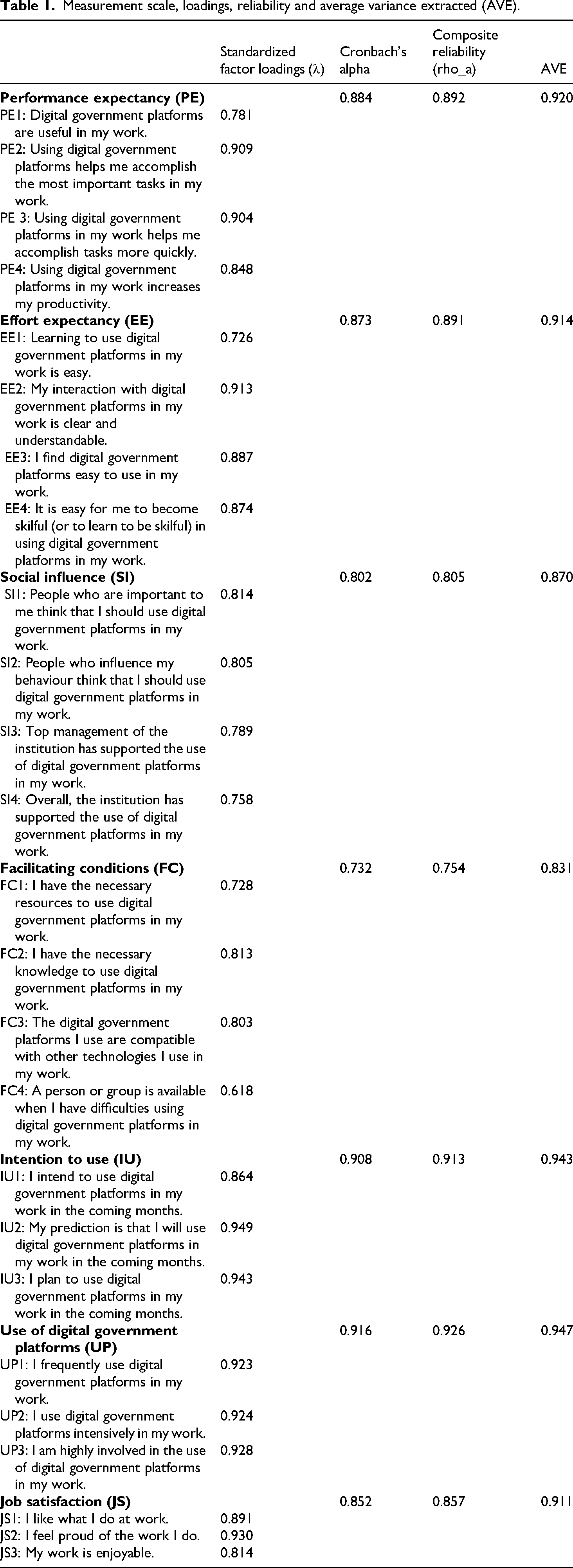
Measurement scale, loadings, reliability and average variance extracted (AVE).
Data analysis method
To analyse the data and test the proposed hypotheses, the partial least squares structural equation modelling (PLS-SEM) method was used to estimate cause and effect relationships involving latent variables (Cepeda-Carrion et al., 2019). This method has been widely applied in empirical research across various disciplines within the social sciences and information management systems (Duan and Dong, 2025). PLS-SEM enables the evaluation of the psychometric properties of the measurement scale and the testing of hypotheses via the structural equation model (Mensah et al., 2021). Given that the study sample exceeded 100 participants (n = 298), the use of PLS-SEM through SmartPLS was appropriate for examining the causal relationships proposed in this study model.
Ethical considerations
Participants were informed about the purpose of the study, and informed consent was obtained at the beginning of the digital questionnaire. Additionally, the instrument was reviewed and approved by the Bioethics and Biosafety Committee of the University of Bío-Bío on 27 June 2024, in compliance with the ethical principles outlined in the Declaration of Helsinki.
Data analysis and findings
The analysed sample consists of 298 public officials from local governments in Chile, with a relatively balanced gender distribution: 53.7% women (n = 160) and 46.3% men (n = 138), suggesting a representative participation of both sexes in technology adoption processes. Regarding age, there is a concentration in middle-aged groups: individuals aged 40–49 represent the largest proportion (35.6%), followed by those aged 30–39 (28.5%) and 50–59 (21.1%). Younger participants aged 18–29 (6.7%) and older adults aged 60+ (8.1%) are underrepresented, consistent with typical career trajectories in public service.
In terms of educational attainment, the majority of participants hold a university degree (63.4%), followed by postgraduate studies (14.4%) and technical education (17.4%), indicating a highly qualified human capital aligned with the demands of the State's digital transformation process. Finally, regarding work experience, the data reveal predominantly early to mid-career trajectories: 66.2% of respondents have between 0 and 19 years of experience, which may reflect a workforce with potential for technological adaptation, while only 1.7% have over 40 years of service, indicating a lower presence of employees in the final stages of their administrative careers.
Evaluation of the measurement model
The first step in structural equation modelling is evaluating the measurement model, which involves assessing the reliability and internal consistency of the indicators, as well as the convergent and discriminant validity of the proposed constructs (Hair et al., 2019).
Indicator reliability was assessed through standardized factor loadings (λ). As shown in Table 1, all factor loadings exceed the recommended threshold of 0.60 for exploratory studies, indicating that the items are strongly associated with their respective latent constructs. Internal consistency reliability was examined using Cronbach's alpha (CA) and composite reliability (rho_a). The results show that all constructs present CA and rho_a values above the recommended threshold of 0.70 (Hair et al., 2020), confirming adequate construct reliability. Convergent validity was assessed using the average variance extracted (> 0.50), indicating that each construct explains a substantial proportion of variance.
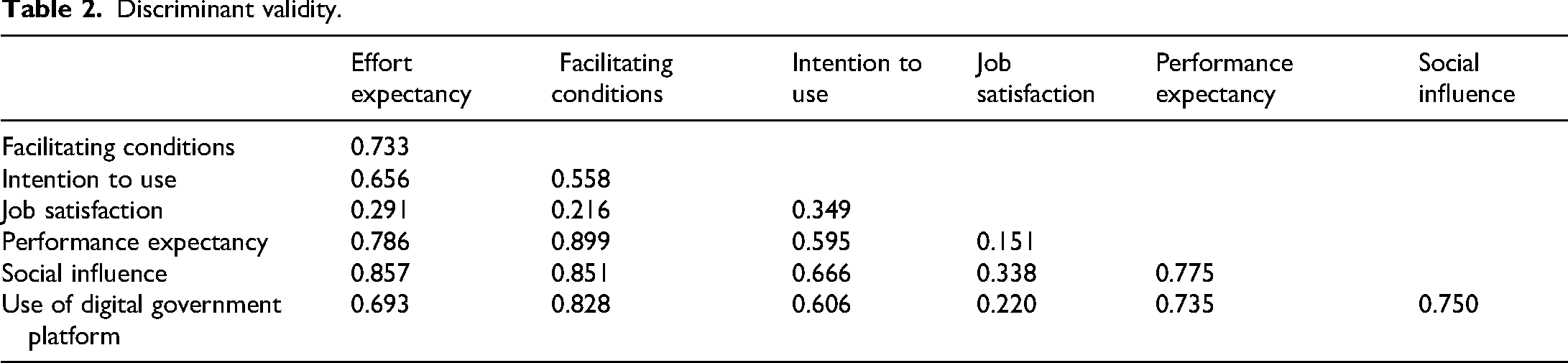
Table 2 presents the discriminant validity of the constructs based on the heterotrait−monotrait ratio. All values are below the 0.90 threshold (Henseler et al., 2015), confirming that the constructs are conceptually distinct and supporting the model's validity for structural analysis.
Discriminant validity.
Evaluation of the structural model
The evaluation of the structural model was conducted according to the main methodological criteria recommended for the PLS-SEM approach: explained variance (R2); effect size ( f 2); statistical significance of path coefficients; and predictive relevance (Q2). To estimate the statistical precision of the structural relationships, the bootstrapping resampling method with 5000 iterations was employed (Hair et al., 2017).
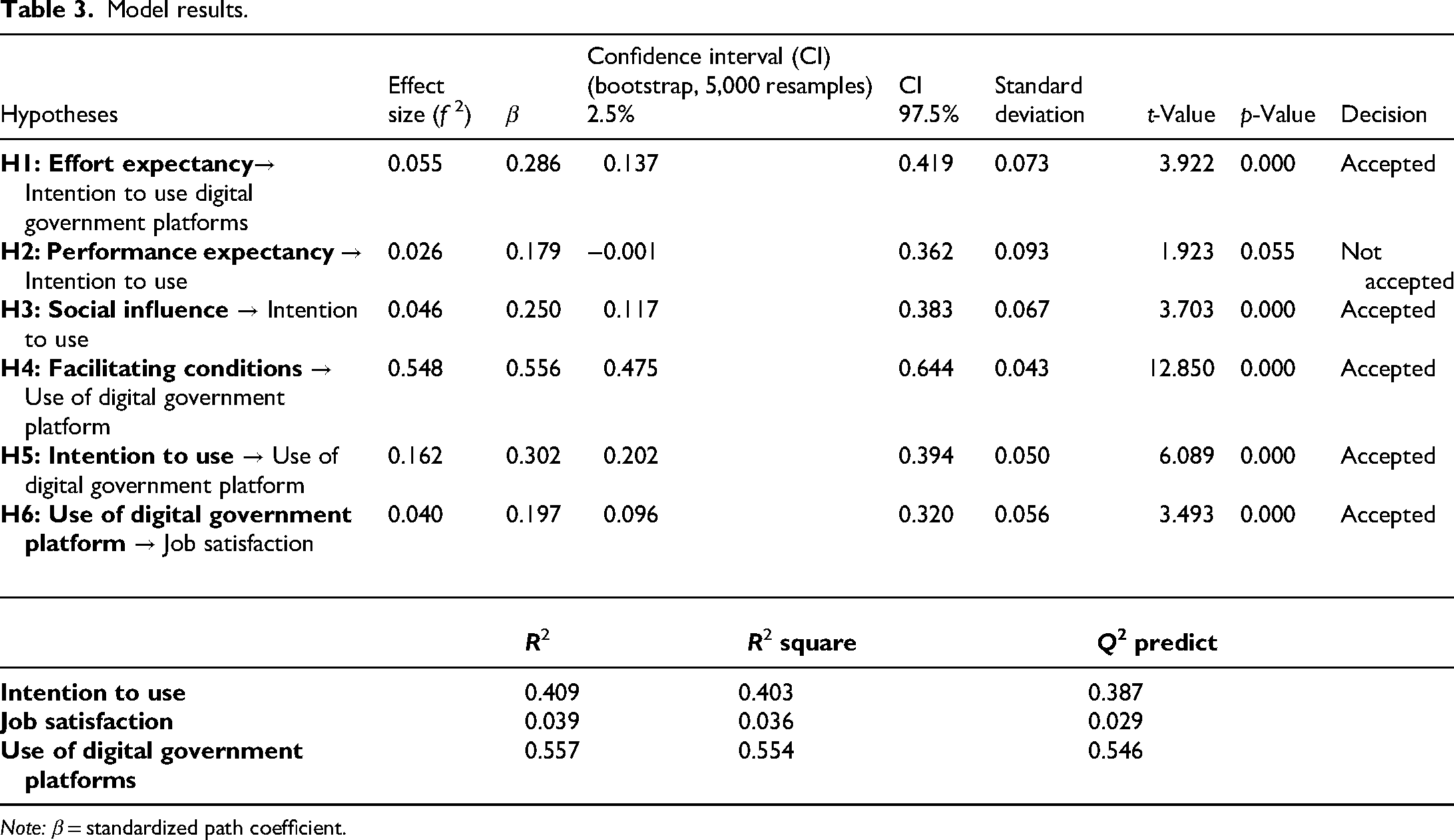
The analysis of effect size ( f 2) in the structural model indicates that facilitating conditions exert the strongest impact on the use of digital government platforms ( f 2 = 0.548), representing a large effect according to Cohen (1988) guidelines. This finding underscores the central role of organizational support, infrastructure and resource availability in promoting the effective use of digital government platforms. The relationship between intention to use and use demonstrates a moderate effect size ( f 2 = 0.162), suggesting that behavioural intention plays a relevant, albeit secondary, role compared to facilitating conditions. The remaining relationships exhibit small but statistically significant effect sizes.
As shown in Table 3, five of the six proposed hypotheses were supported (p < 0.05). The only non-significant relationship was between performance expectancy and intention to use (β = 0.179; p = 0.055). Overall, these results suggest that social and organizational factors might play a more prominent role than performance expectancy in the adoption and use of digital government platforms. This pattern is consistent with previous studies conducted in public sector contexts (Ain et al., 2016; Raza et al., 2021).
Model results.
Note: β = standardized path coefficient.
The explanatory and predictive power of the structural model was evaluated using R2 and Q2predict. The results indicate that the model explains a moderate to high proportion of the variance in intention to use (R2 = 0.409) and in the use of digital government platforms (R2 = 0.557), with positive Q2 values confirming its predictive relevance. In contrast, the variance explained for job satisfaction is relatively low (R2 = 0.039), although the positive Q2 predict value (0.029) suggests that the model retains its predictive relevance. This result indicates that while the use of digital government platforms contributes to job satisfaction, it is likely influenced by broader organizational and contextual factors beyond the scope of the present model. Based on the results, Figure 2 presents the structural model.
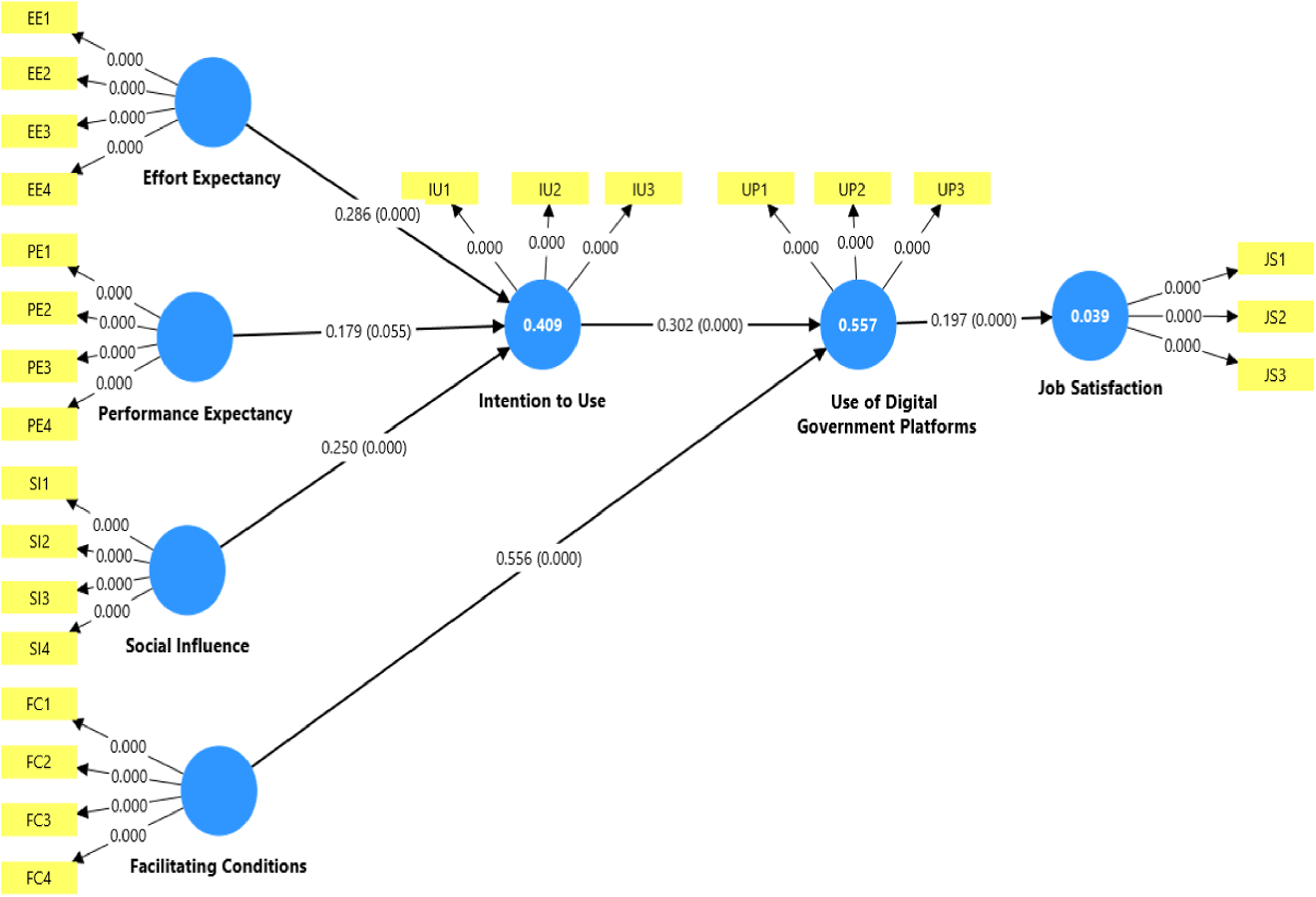
Results of path analysis.
Age, educational level and gender were included as control variables (see Table 4). The results indicate that none of these variables had a statistically significant impact on the use of digital government platforms. These findings imply that the demographic characteristics of the respondents did not substantially influence the adoption of digital government platforms in this study, which supports the robustness of the model's relationships regardless of these control variables. Overall, the results suggest that the effects observed in the main analysis are unlikely to be influenced by demographic differences.
Control variables.

Discussion
The findings of this study offer a significant contribution to understanding the factors that influence public officials in Chile to adopt digital government platforms. From the perspective of the UTAUT model, the theoretical assumptions are partly validated in public-sector settings, while also highlighting patterns that invite further reflection on the institutional features shaping technology adoption behaviour. Of the six hypotheses proposed, five were statistically significant, confirming the model's overall suitability for this context, albeit with important nuances.
One of the strongest findings is the significant impact of effort expectancy on intention to use, suggesting that users particularly value digital platforms perceived as easy to use. This finding is consistent with previous research in educational and administrative environments (Al-Emran et al., 2018; Chao, 2019; Zhang et al., 2021), and underscores that in public-sector contexts where resistance to technological change may be higher the perception of operational simplicity can outweigh other evaluative criteria. Ease of use, therefore, emerges not only as a usability attribute but as a strategic condition for adoption.
Similarly, social influence proved to be a significant predictor, confirming that environmental norms, peer dynamics and institutional expectations play a crucial role in adoption, particularly in hierarchical or normatively regulated settings (Ain et al., 2016; Ballardo-Cárdenas et al., 2020; Raza et al., 2021). This reinforces the view that technology adoption in public organizations is socially embedded and shaped by collective expectations rather than solely by individual decision-making.
In contrast, performance expectancy did not have a significant effect on intention to use, consistent with the findings of Dwivedi et al. (2016). This result can be explained by the institutional nature of digital platform use in Chilean local governments, where adoption is often mandated by regulatory frameworks. Under such conditions, perceived usefulness becomes less decisive, as usage is driven more by compliance than by individual performance considerations. This finding suggests a boundary condition for UTAUT in public sector contexts: when institutional pressures are strong, the explanatory power of performance related beliefs may diminish. It may also reflect a misalignment between platform functionalities and users’ actual workflows, limiting perceived productivity gains.
Interpreting the results within municipalities’ operational context provides further insight. The strong effect of facilitating conditions on platform use reflects the fact that these technologies are primarily adopted to meet regulatory and administrative requirements, such as compliance with digital procedures, document traceability and process standardization. In practice, the use of platforms such as electronic document management systems, digital signatures and authentication services is largely determined by the availability of infrastructure, technical support and organizational resources. This explains the central role of facilitating conditions and the comparatively limited influence of performance expectancy in shaping usage behaviour.
Another noteworthy finding is the substantial effect of facilitating conditions on actual use, confirming that institutional capacity through infrastructure, technical support and digital competencies acts as a key enabler of adoption. This aligns with prior research (Almaiah and Nasereddin, 2020; Sabani et al., 2023) and suggests that organizational resources can compensate for lower levels of individual motivation. At the same time, intention to use remains a significant mediator, reaffirming the core structure of the UTAUT model while highlighting the interplay between individual and structural determinants.
Beyond individual adoption, the findings also show that digital government platforms can influence broader organizational outcomes. The positive, albeit modest, relationship between digital government platform use and job satisfaction suggests that the impact of digital technologies extends beyond behavioural intention and usage (Alieva and Powell, 2023). While multiple psychosocial and organizational factors shape job satisfaction, digital platforms can act as contextual enablers by facilitating task execution, reducing administrative burden and improving procedural clarity. In this sense, digital government platforms contribute not only to operational efficiency but also to the quality of the work environment, particularly when technologies are well integrated into organizational processes.
These results have important implications for policy design and change management in the public sector. The findings indicate that regulatory mandates alone are insufficient to ensure effective adoption. Instead, digital government policies should be conceived as comprehensive transformation strategies that combine technological deployment with organizational change management. This includes sustained investment in infrastructure, continuous training, technical support and leadership capable of guiding organizational adaptation. Moreover, given the importance of social influence, change management strategies should also address cultural and normative dimensions, fostering shared understandings and collective commitment to digital transformation.
In this regard, digital transformation should be approached not merely as a technological upgrade but as an institutional and organizational process that requires alignment among systems, workflows and human capabilities. The relatively weak relationship between platform use and job satisfaction, further underscores the need for policy frameworks that go beyond adoption metrics to consider broader outcomes, including employee experience, organizational performance and public value creation.
Beyond the Chilean context, these findings carry broader implications for digital government adoption in Latin America. Across the region, digital transformation initiatives unfold within institutional environments characterized by strong regulatory frameworks, uneven state capacities and persistent human and technological resource constraints. In such settings, institutional mandates play a pivotal role in driving platform adoption, even where organizational maturity is heterogeneous. Overall, the findings highlight the need for integrated approaches to public-sector digital transformation that combine institutional mandates with change-management strategies to strengthen organizations and improve public employee well-being.
Future research can advance this line of inquiry in four directions. First, the model could be extended by incorporating additional constructs, such as resistance to change, trust in technology, digital leadership and satisfaction with institutional support, to better capture the complexity of the public sector context. Second, longitudinal designs are needed to examine how adoption behaviours and their organizational effects evolve over time. Third, integrating an institutional perspective would provide a richer theoretical lens, including coercive pressures from laws and regulations and normative pressures stemming from organizational and professional expectations. Finally, comparative studies across Latin American countries would enable a broader understanding of regional patterns and contextual variations in public sector digital transformation.
Conclusion
This study enhances our understanding of digital technology adoption in the public sector by providing empirical evidence on how individual and organizational factors interact within a Latin American institutional setting. The findings validate the importance of established technology adoption models and highlight key contextual differences in public-sector environments.
The results highlight that, under situations of mandatory use, facilitating conditions and social influence play a more prominent role than individual performance expectations in shaping adoption behaviour. This pattern reflects the institutional nature of digital government implementation in Chile, where regulatory frameworks and organizational norms strongly influence the use of technology. More broadly, these findings are consistent with the characteristics of digital transformation processes across Latin America, where strong regulatory pressures coexist with uneven institutional capacities and persistent resource constraints. In such contexts, institutional mandates often serve as primary drivers of adoption, even in organizations with heterogeneous levels of digital maturity.
Additionally, the study indicates that digital government adoption extends beyond mere intention and usage, impacting broader organizational outcomes such as job satisfaction. Although the influence is small, it suggests that digital platforms can improve public employees’ work experience when well integrated into organizational workflows and supported by sufficient institutional capacity. This supports the idea that digital transformation is not just a technological change but also an organizational and human-centred process.
Theoretical contributions
This study makes two main theoretical contributions. First, it extends the application of the UTAUT model to a context of mandatory adoption in the public sector in Latin America. Within this framework, it identifies conditions in which traditional factors, such as performance expectancy, may have a reduced influence due to strong institutional pressures associated with digital transformation processes. Second, the study incorporates job satisfaction as an organizational outcome associated with the use of digital platforms, contributing to the understanding of the effects of technology use on work-related dimensions in the governmental context.
Practical implications
From a practical perspective, the findings suggest that digital government strategies should move beyond a narrow focus on regulatory compliance. While institutional mandates are effective in initiating adoption, their success depends on the availability of facilitating conditions, including robust infrastructure, continuous training, technical support and effective organizational leadership. Policymakers should therefore adopt integrated approaches that combine technological implementation with change-management and institutional-strengthening efforts. Additionally, the observed relationship between platform uses and job satisfaction suggests a modest practical impact, highlighting the importance of considering employee experience and organizational well-being in digital transformation processes.
Limitations
Some limitations should be acknowledged. First, the cross-sectional design limits the ability to draw causal inferences or capture the dynamic nature of adoption processes over time. Second, the use of self-reported data from a single country constrains the generalizability of the findings to other institutional and geographical contexts. Third, the model does not incorporate additional variables, such as institutional trust, resistance to change, or perceived public value, that could further enrich the analysis.
Finally, although institutional theory was used to interpret the findings, particularly in relation to mandatory digital transformation processes, it was not operationalized within the structural model. Consequently, its role in this study remains primarily interpretative rather than analytically integrated.
Footnotes

Funding
The authors received no financial support for the research, authorship, and/or publication of this article.
Declaration of conflicting interests
The authors declared no potential conflicts of interest with respect to the research, authorship, and/or publication of this article.