






Abstract
Policy innovation labs vary considerably in how they organize their work, yet the literature lacks a comprehensive, integrated framework to arrange and explain these organizational design choices. This article addresses that gap by conducting a systematic literature review, from which we identified the elements constituting a lab’s organizational design. Our findings reveal that organizational choices for designing innovation labs revolve around five broad dimensions (sense of purpose, organizational culture, structure, instruments, and strategy), each comprising further subdimensions. This mapping provides conceptual categories about the organizational design of innovation labs that help researchers to further investigate whether certain organizational configurations may shape lab legitimacy, performance, or innovation capacity. These findings also provide practical guidance on organizational design for public managers and lab designers aiming to establish or redesign policy innovation labs.
Introduction
Policy innovation labs (PIL), which we define as “an innovation-oriented entity that employs design-based, experimental, and/or other innovative methods to develop creative responses to complex public problems, placing users and stakeholders at the center of the policy process” (Maor, 2026: 234), share some characteristics that provide a general identity and distinction from other policy-making or policy advice entities. For example, PILs are associated with more flexible and adaptive policy-making processes, which allow for iterative testing and refinement during the policy design (Brock, 2021; Whicher, 2021; Villa-Alvarez et al., 2022; Toñurist et al., 2017). They are also noted for their ability to incorporate stakeholders and strengthen the engagement of citizens and public service users during the policy-making process (Asenbaum & Hanusch, 2021; Wellstead et al., 2021).
Despite these general identifying traits, PILs vary considerably in their function, structure, and purpose. For example, their approach to innovation could be different; while some labs understand innovation as a way to improve public services, others understand it as a tool for adapting to changing environments (McGann et al., 2018; Soma et al., 2024; Favoreu et al., 2024). They may also vary in the methodologies they use for policy-making, for example, user-centered design (e.g. Danish MindLab), behavioral economics (e.g. British Behavioural Insights Team), or data science (e.g. Hong Kong’s Health High Density Cities Lab) (Kim et al., 2023). This diversity extends to other features of PILs, like their organizational culture, structure, and financing models.
The study of PILs is of relevance in view of their fast growth worldwide, in both numbers and relevance, which has led to a rise in the number of studies of PILs. As innovative agencies, there is still no recipe for success, leading PILs to take a wide diversity of institutional forms and design tools, which opens the door to conceptual and research fragmentation. For example, Maor (2026) noted that the same lab types could be named differently, or the same terms defined differently. Furthermore, despite this growth, labs fail at a high rate, and practitioners make organizational design decisions (about, for example, funding models, instruments, or staffing) with very little comparative evidence about the consequences of those choices (Brock, 2021). This is partly because the field lacks a shared descriptive vocabulary that would make possible cross-case comparisons for understanding the determinants or configurations for success (or failure). Studying such configurations is relevant for research and practice because they may influence the labs’ legitimacy, performance, or innovation capacity—and, consequently, their ability to survive and consolidate (Fleischer & Pruin, 2024; Hoss-Golan et al., 2026). Many newly created labs are short lived, often owing to financial instability, lack of integration or relevance within government, or other factors (Criado et al., 2021; Favoreu et al., 2024; Brock, 2021).
Some authors have captured the diversity of labs’ configurations by proposing typologies of labs, according to their policy stage, function, or other dimensions (e.g. Criado et al., 2021). Likewise, the literature has identified a large set of dimensions or features naming the purposes, functions and operative means of labs, for example, mission, structure, functions, and processes (e.g. Olejniczak et al., 2020). However, these efforts present a partial view of the organizational and institutional design choices that a PIL must make to define its purpose and route of action. Most extant classifications are based on case studies or theoretical propositions, where a comprehensive literature review could be useful for organizing the field’s advancement into a comprehensive and cohesive framework for describing and classifying a lab’s configuration. This research gap guides our research, formulated in the following research question: what are the organizational and institutional dimensions generating variation in PILs’ organization of their work? To address this question, we conducted a systematic literature review (following the PRISMA protocol) in the research stream of policy innovation labs. Our data analysis aimed at identifying the dimensions and subdimensions relevant for the labs’ organization of their work. Our findings showed five dimensions (sense of purpose, organizational culture, structure, instruments, and strategy), each composed of a set of subdimensions.
This article contributes to the literature in PILs by characterizing the organizational and institutional dimensions (and their respective categories or “values”) describing the organization of work chosen by a lab, which is useful in setting a basis for future studies interested in investigating the features leading labs to improve their legitimacy, performance, or innovation capacity. While the research gap this article seeks to address is descriptive and narrow, by providing this conceptual map of how labs organize themselves, it seeks to partially contribute to a bigger research gap: how should a lab organize its work to attain its desired performance and legitimacy? In practice, this study contributes to providing guidelines for practitioners through the complex process of establishing or revamping a PIL.
Characterizations and classifications of policy innovation labs
In his systematic characterization of what constitutes a PIL, Maor (2026) helps define PILs, as a subject of study, as any public entity oriented toward generating creative solutions for complex or wicked problems. This definition also circumscribes the study of those entities that employ user-centered or experimental approaches (or both) as their tools for planning and policy design. Departing from these shared characteristics, the extant literature has described the organizational and institutional conditions of a PIL by identifying some dimensions that describe a lab’s organization of their work, while other studies have provided a typology of labs. Typologies label labs, and dimensions label constitutive elements of a lab (i.e. their approach to innovation). While the former are relevant for this study, our focus of interest is in revising extant dimensions identified and characterized in the literature. Table 1 summarizes the main dimensions identified in the literature, which we will review next.
Relevant dimensions of labs identified in the literature
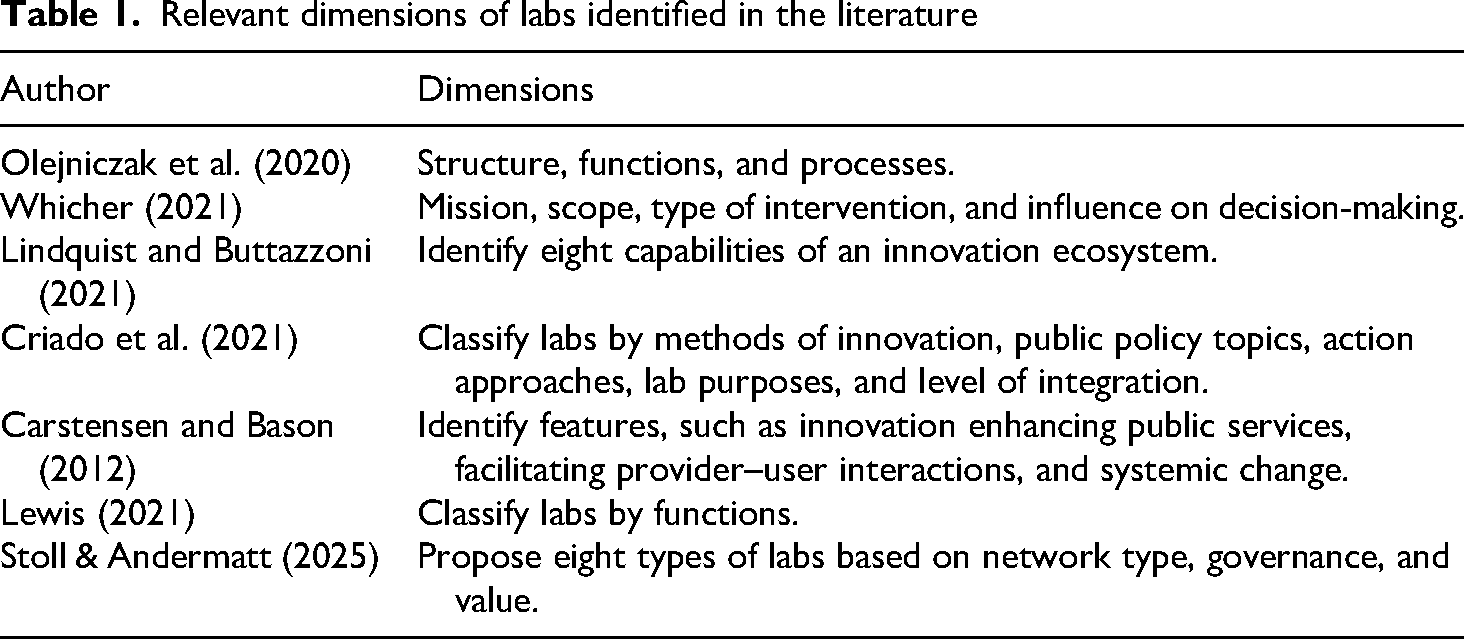
Relevant dimensions of labs identified in the literature
Olejniczak et al. (2020), present the dimensions of structure, functions, and processes. Structure includes aspects such as legal status and governance. Functions refer to the activities labs perform and are organized along two variables: level of abstraction (theory or reality) and nature of activity (research or action). From this two-dimensional matrix, the authors derive five functions: exploring a situation (investigating reality), analyzing a problem (theorizing from that investigation), creating solutions (translating theory into action), testing solutions (bringing action into reality), and redefining the public policy problem.
Whicher (2021) classifies labs by mission, scope, type of intervention, and potential influence on decision-making. The author also proposes a framework for evaluating lab activities through four elements: proposition, product, people, and processes. Proposition refers to the lab’s vision, governance, model, and success metrics, and is similar to structure. Product refers to the lab’s offerings, including prefabricated solutions such as design thinking workshops, prototyping, and co-production. People refers to team skills, expertise, and leadership, requiring both technical capabilities (e.g. user-centered design and data science) and managerial capacities. Processes covers the steps through which products are generated, from project selection criteria to knowledge-transfer mechanisms.
Lindquist and Buttazzoni (2021) identify eight capabilities that compose an innovation ecosystem, each linked to a specific premise: open data to foster innovation; service design to better understand user needs; behavioral science to guide user behavior; big data and data science to leverage available information; visualization techniques to support decision-making; open government initiatives to promote transparency; digital services to improve government functions; and agile and lean methodologies to optimize project management.
Criado et al. (2021), in turn, classify labs according to methods of innovation, public policy topics, action approaches (e.g. problem recognition, idea generation, implementation, scaling), lab purposes (e.g. developing innovation, training officials, financing projects, promoting co-production), and level of integration with public administration. They distinguish four lab types: developers, which create solutions or redefine public problems; enablers, which connect government with citizens and stakeholders; transformers, which improve processes or train officials; and architects, which promote systemic change. Carstensen and Bason (2012) describe labs as creative platforms that generate new solutions, innovation units that enhance public services, change partners that facilitate provider–user interactions, and systemic co-designers that address complex problems and promote systemic change. Lewis (2021) classifies labs by function, including user-centered design, the generation of scientific evidence, and the streamlining of project management. Stoll & Andermatt (2025), finally, propose eight types of innovation labs based on three dimensions: network type, governance, and value.
In sum, these studies make a substantial contribution in mapping the way PILs organize their work. However, the literature does not share a common framework or logics of conceptual organization, making these research advances a little fragmented; that is, collectively, these dimensions lack a comprehensive organization that could provide clarity and coherence. Therefore, building on these contributions, we examined extant literature on PILs to exhaustively and systematically map, organize, and characterize the dimensions and subdimensions constitutive of a lab’s organization of its work.
To identify the key dimensions of lab institutional design, we conducted a systematic literature review, a useful method for mapping and organizing knowledge to clarify emerging concepts. We followed the PRISMA protocol and focused on studies specifically examining PILs in the public sector. Accordingly, our main inclusion criterion was that innovation labs be the object of study. We also included only studies that contributed to the literature on innovation labs, excluding work from other fields such as sustainability, experimental governance, or urban experimentation. Although some of these records relate to innovation labs, they use them as case studies for different research agendas and therefore do not contribute to understanding innovation labs themselves. The studies included were empirical, theoretical, and systematic literature reviews. The records included were articles, books, book chapters, review articles, editorial materials, and book reviews. Only records written in English were included (see Table 2). 1
Inclusion criteria for the systematic literature review
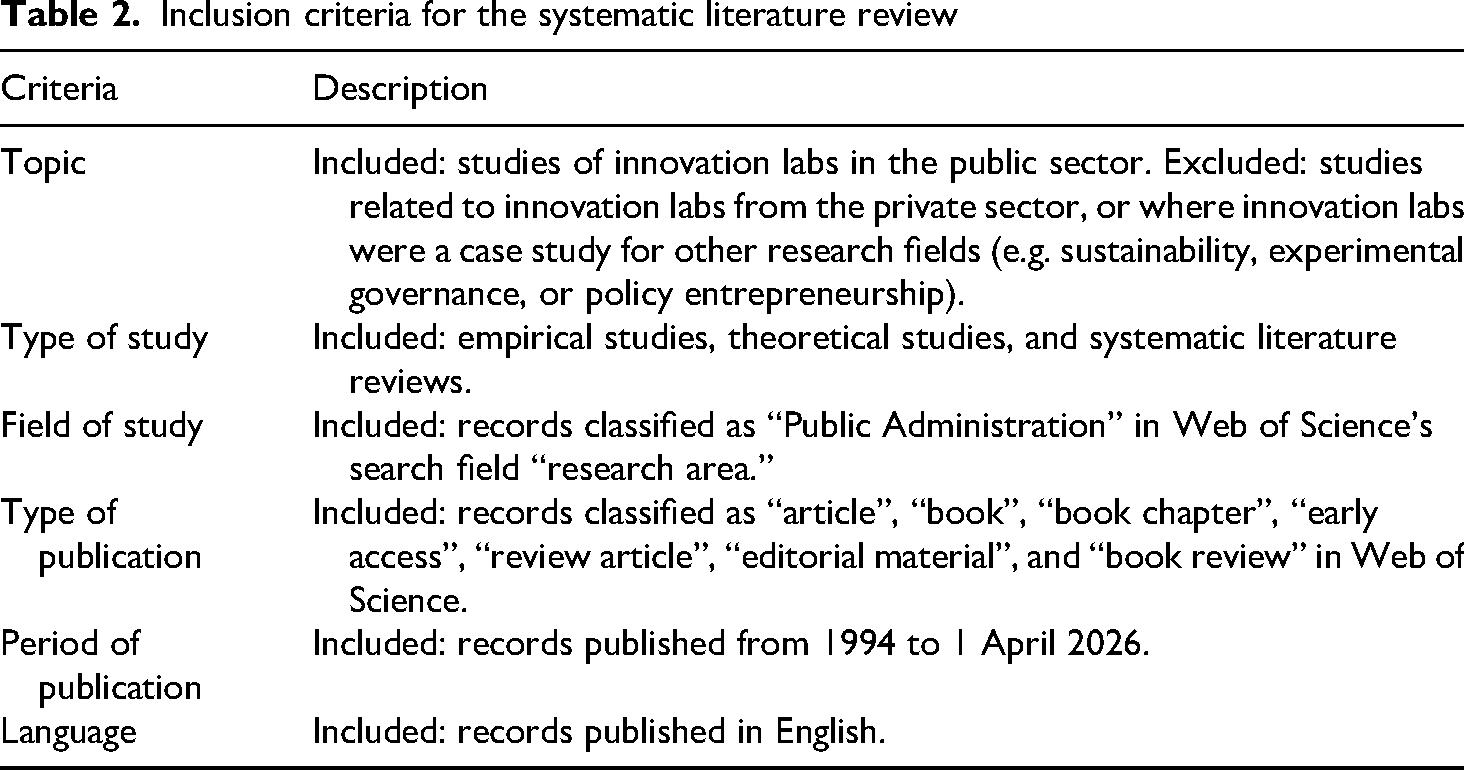
Inclusion criteria for the systematic literature review
We conducted the search in the Web of Science database using a query that combined 14 terms related to innovation labs and five related to the public sector. 2 This first stage yielded 144 records. After removing one duplicate, 143 records remained for title and abstract screening. At this stage, 79 records were excluded for not meeting the inclusion criteria. Full-text retrieval was sought for 64 records, all of which were successfully retrieved. After full-text assessment, 16 records were excluded because they belonged to a different field of research and two because their main text was not written in English (see Figure 1). No further records were added or considered beyond the scope of this systematic search.
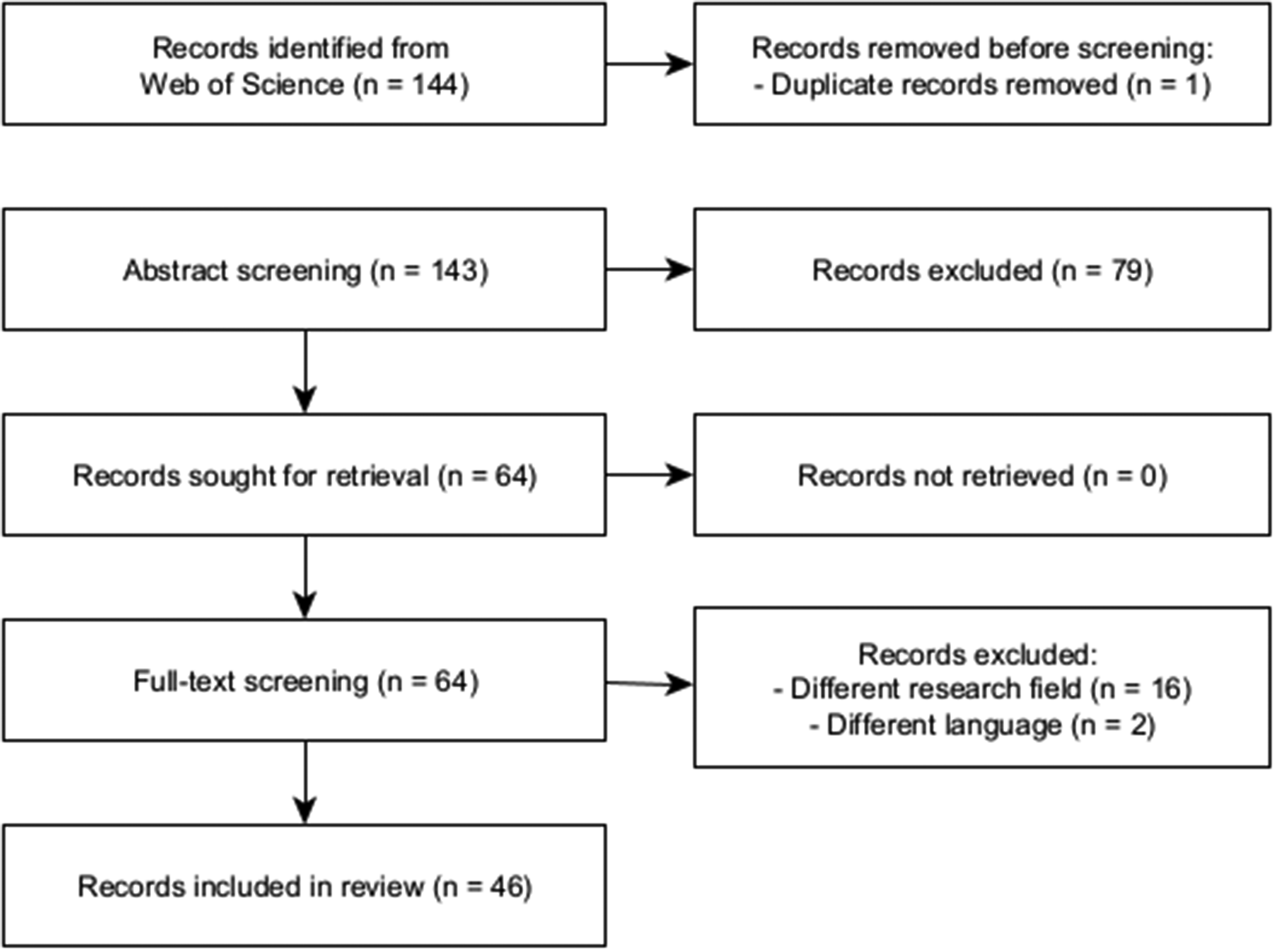
PRISMA flow diagram.
The search process concluded with 46 records selected for analysis. Such records span between 2017 and 2026, registering a publication peak in 2021 (n = 13). Selected records were published most frequently in Policy Design and Practice, Public Management Review, and Policy Sciences. Table 3 shows that the most frequent research designs were case study, qualitative approach, and theoretical or conceptual articles. Finally, the most frequently used terms in the selected records were policy lab, innovation lab, and policy innovation lab. 3
Frequency of records by research design
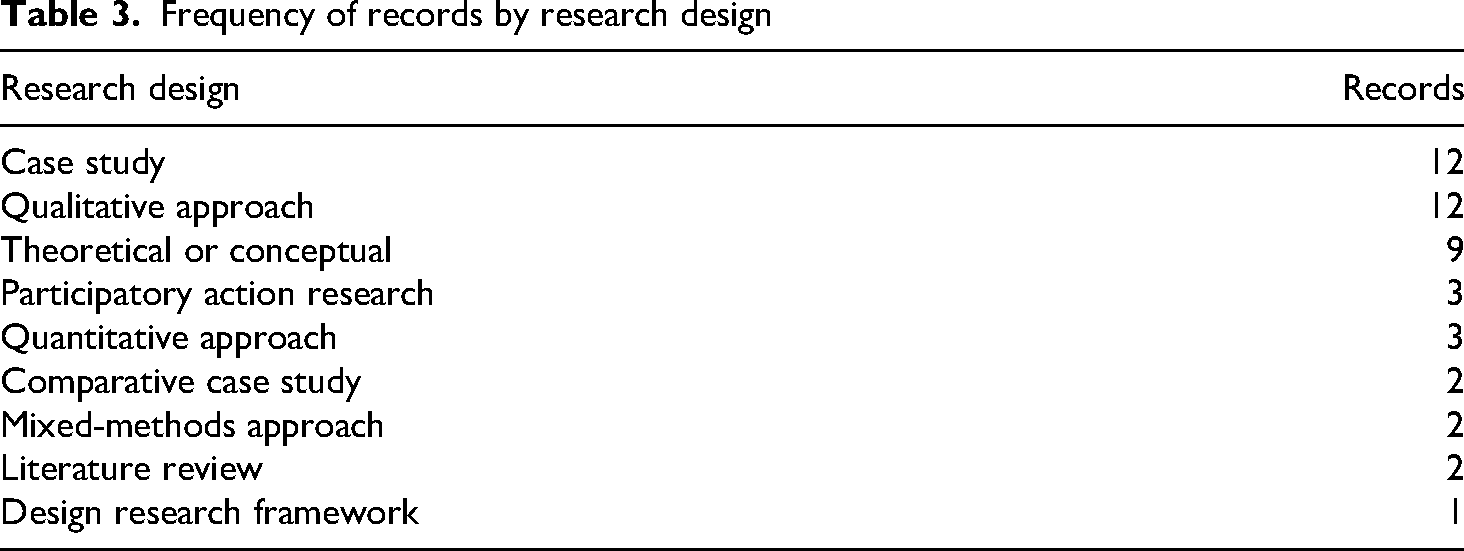
To conduct our analysis, we addressed two questions: what elements or factors do authors use to describe lab design; and do they provide a rationale for each element? We analyzed the data following an abductive approach, which is valuable for linking deductive analysis based on the themes and classifications of PILs developed by previous studies, whereas it incorporates inductive analysis that helps identify emergent themes not yet identified in previous studies (Timmermans & Tavory, 2012). We began by open coding the records using NVivo 11, simultaneously deductively identifying the dimensions shown in previous studies and inductively remaining open for observing dimensions and attributes undiscovered in the literature. This stage provided a broad list of first-order codes that, next, by iterating codes with literature, we proceeded to organize and consolidate into second-order analytical categories. As this study seeks to describe dimensions, we defined saturation as the point where no new analytical categories emerged (Saunders et al., 2018); we concluded the analysis when all first-order codes were sufficiently covered with the analytical categories. This second analytical process produced the dimensions and subdimensions presented in the next section.
Finally, we acknowledge a limitation in our reliance on a single journal database. Some studies show that Web of Science may not provide the most comprehensive indexing of social science journals (Mongeon & Paul-Hus, 2016). In addition, focusing on English-language publications may underrepresent work from some regions, while restricting the search to “Public Administration” publications may have led to the erroneous exclusion of relevant records.
We investigate the dimensions of PILs by reviewing records that identify key features or classify different types of labs. From this review, we identified five dimensions of a lab’s organizational and institutional design, all of them divided into a larger set of subdimensions—which will be explained in the next subsections (see Table 4). The first is sense of purpose, which constitutes an interpretation of what a lab is and how it seeks to contribute to government activities. The second is organizational culture, which encompasses the shared values, beliefs, and practices shaping interactions among members and stakeholders, as well as the lab’s identity and vocation. Structure concerns the structural and functional features that organize lab operations. Instruments refers to the set of methodologies or techniques that the labs use to foster innovation. Finally, strategy refers to the lab’s specialization in specific tasks, policy stages, or participant profiles in its design or implementation efforts.
Summary of dimensions and subdimensions for describing the design of Policy innovation labs
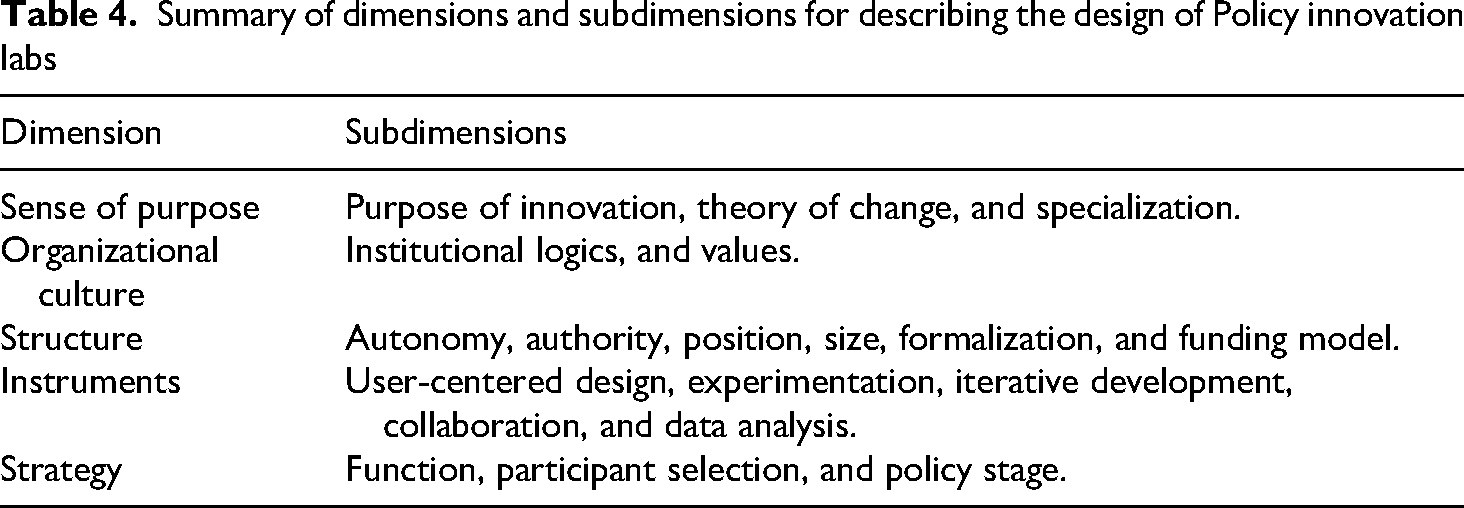
Summary of dimensions and subdimensions for describing the design of Policy innovation labs
In the next subsections, we will detail these dimensions.
We identified three subdimensions describing a lab’s sense of purpose (see Table 5). The first is the interpretation of the purpose of innovation: what is innovation for? We begin by reviewing some existing classifications of the purpose of innovation. McGann et al. (2018) distinguish between incremental innovation, which improves existing practices, and radical innovation, which changes how things are done by reframing public problems, solutions, or processes. Soma et al. (2024) extend this distinction with the concept of transformative incrementalism, arguing that labs are well suited to gradual changes with transformative potential. Lindquist and Buttazzoni (2021), in turn, classify innovation according to goals such as human resource development, the expansion or transformation of government activities, the balancing of operations, and the optimization of results. Other authors draw on the OECD’s (2021) Public Sector Innovation Observatory framework, which identifies four purposes of innovation in public organizations: achieving a specific goal; improving current functions; adapting to the environment; and anticipating challenges or opportunities.
Subdimensions of sense of purpose
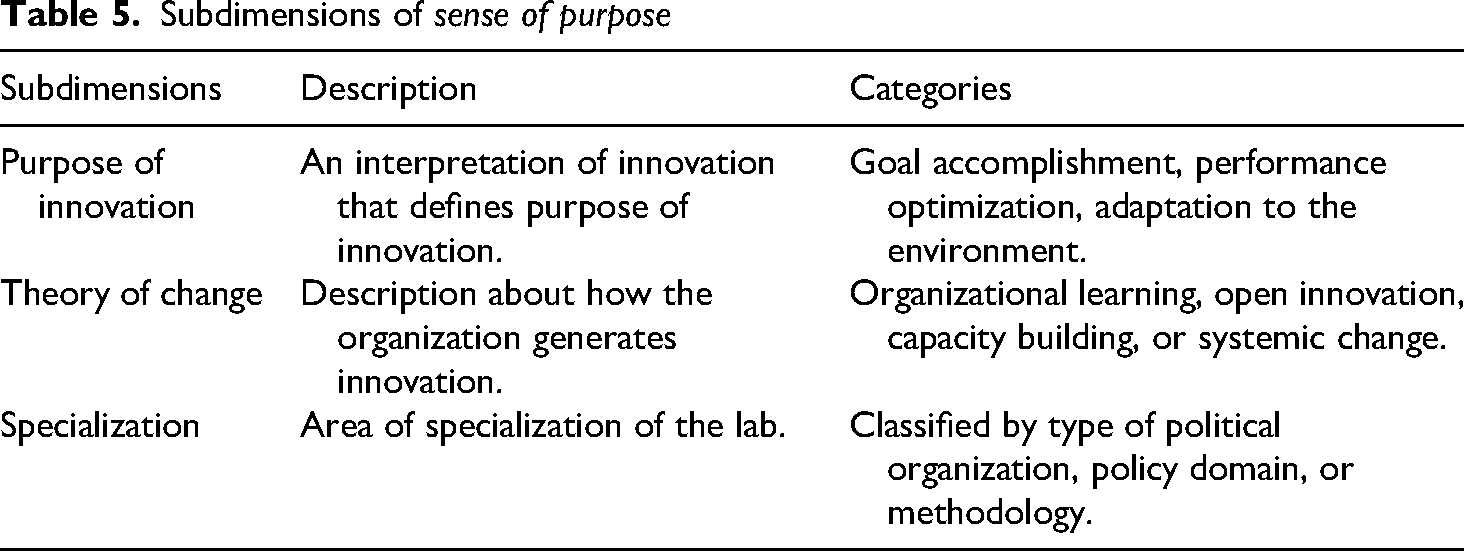
Subdimensions of sense of purpose
Building on these classifications, our analysis identified three types of innovation purpose: goal accomplishment, performance optimization, and adaptation to the environment. Goal accomplishment frames innovation as a process of causal analysis and the identification of effective tools (McGann et al., 2018; Cole & Hagen, 2024). Performance optimization involves reducing bureaucracy, streamlining administrative work, and improving agency operations (Cole, 2022; Lewis, 2021; McGann et al., 2018). Adaptation to the environment emphasizes integrating external ideas to better align the organization with changing environmental conditions (Komatsu et al., 2021; Toñurist et al., 2017).
The second subdimension is the lab’s theory of change, that is, its interpretation of how innovation is generated. It can be observed in four ways: organizational learning; open innovation; capacity building; and systemic change. Organizational learning draws on March’s (1991) distinction between exploration and exploitation as mechanisms through which organizations generate innovation (Toñurist et al., 2017; Favoreu et al., 2024). Open innovation holds that organizations benefit from involving external actors in decision-making; accordingly, some labs foster innovation through collaborative arrangements such as co-creation and co-production (Brock, 2021; Lee & Ma, 2020; Lewis, 2021). Capacity building assumes that training and related efforts create the conditions needed to strengthen innovation capacity in public agencies (Komatsu et al., 2021). Systemic change, finally, treats innovation as the result of broader institutional, regulatory, or political reforms.
The third subdimension is specialization, which refers to the area in which labs choose to concentrate their efforts. Labs may specialize by geography, type of public agency, policy domain, government area, or methodology. For example, Lindquist and Buttazzoni (2021) classify labs by geographic focus (some target urban planning in a city, while others seek to influence a policy domain at the regional or national level). Labs may also specialize in specific policy areas such as education, health, or public safety (Criado et al., 2021; Fleischer & Carstens, 2022), or in particular methodologies such as behavioral science, digital services, data science, or design thinking (Lindquist & Buttazzoni, 2021). This list is illustrative rather than exhaustive, and future research may identify additional forms of specialization.
Organizational culture gives labs their identity and shapes their activities, communication style, and how they interpret events (Waardenburg et al., 2020; Lindquist & Buttazzoni, 2021; Komatsu et al., 2021; Krogh, 2024). We begin by reviewing some existing classifications of organizational culture. First, design culture aims to bridge the gap between policy design and implementation and promote co-creation (Komatsu et al., 2021). Second, innovation islands refer to labs that operate in isolation from the broader public administration, fostering experimentation without fear of failure (Toñurist et al., 2017). This culture seeks to counteract the risk aversion typical of bureaucracies (Waardenburg et al., 2020; McGann et al., 2018; Torvinen & Jansson, 2023), creating a workspace where participants are less constrained by hierarchies, blame, and risk aversion, encouraging tolerance and patience.
Lindquist and Buttazzoni (2021) identify four types of organizational culture relevant to labs: collaborative clans, creative adhocracies, market competition, and hierarchical control. These cultures are differentiated by leadership style, organizational values, and their approach to effectiveness. Other authors describe additional cultures that support public innovation, such as innovation culture, software development culture, and data culture (Waardenburg et al., 2020; Brock, 2021; Hoss-Golan et al., 2024; Komatsu et al., 2021; McGann et al., 2018).
Building on these classifications, our analysis identified two subdimensions of organizational culture: institutional logics and values (see Table 6). A lab’s institutional logics may emerge from and consolidate through the professional identity and backgrounds of its members (Hoss-Golan et al., 2026; Wellstead et al., 2025). Professionals from fields such as design, software development, and data science play a key role in shaping that identity (Komatsu et al., 2021). It is also shaped by the roles members see themselves performing within the public sector, such as designer, enabler, trainer or mentor, policy analyst, data scientist, software developer, advisor or consultant, and game-changer (McGann et al., 2018; Criado et al., 2021). In turn, professional identity influences organizational culture through members’ mental models, methodologies, practices, jargon, and communication style. For instance, a lab whose members identify as consultants may adopt a more proactive approach to generating projects (Lewis, 2021; McGann et al., 2018).
Attributes of the organizational culture dimension
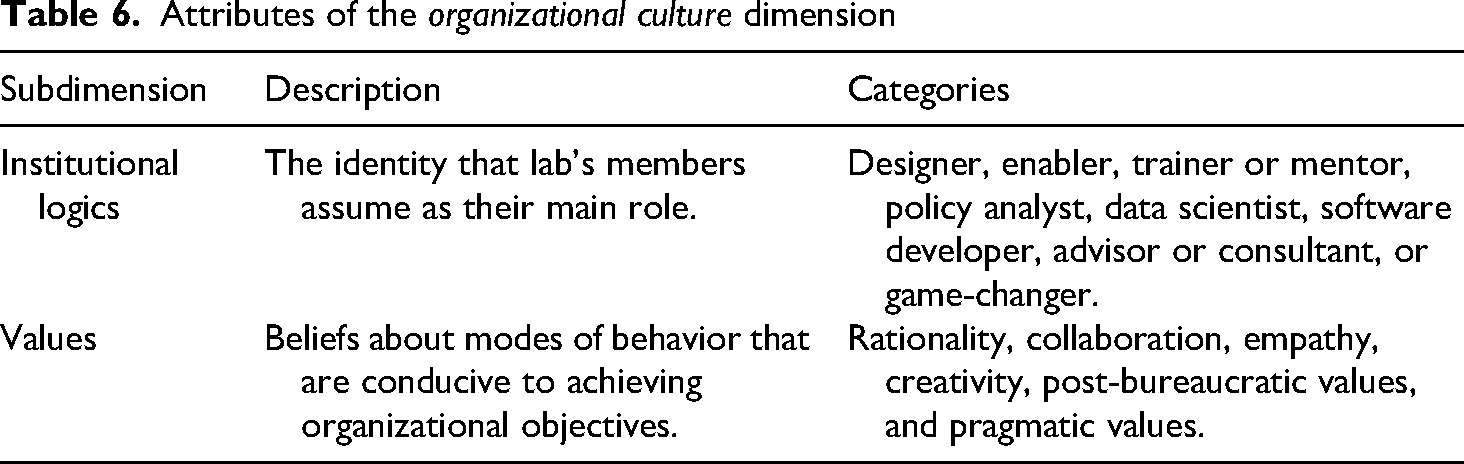
Attributes of the organizational culture dimension
The second subdimension is values, understood as the shared beliefs of members about the behaviors that enable the organization to achieve its goals. Values are important in labs because they define which behaviors are seen as desirable within the organization, thereby shaping both individual motivations and the selection of lab activities. Based on the public sector value inventory developed by Jorgensen and Bozeman (2007), we identified four main values driving innovation labs: rationality, collaboration, empathy, and creativity. Rationality emphasizes evidence-based solutions and the scientific method as guides for rational public action and planning (Peters, 2020). This aligns with the traditional bureaucratic approach, in which decision-making follows a structured and logical process: examining available information, setting clear objectives, and choosing among alternatives according to quantifiable decision rules.
The value of collaboration refers to involving citizens and stakeholders in government decision-making processes. In some labs, it takes precedence over innovation, with greater emphasis on citizen participation in the design of public services. Empathy is a relatively new public service value that guides user-centered design by focusing on users’ needs and experiences in the creation of products or services. It involves understanding and addressing users’ perspectives to improve their experience. User-centered design methodologies emphasize the human dimension of users, and some authors even suggest replacing the term “user” with “person” to better capture the broader human experience (Villa-Alvarez et al., 2022).
The value of creativity encourages lab members to think beyond conventional approaches in search of novel solutions. It is also associated with the idea of embracing failure, an intervention approach that promotes rapid, low-risk learning and is captured in the phrase “fail fast, fail often.” From this perspective, early failure is treated as a natural part of developing new ideas and as a temporary step toward refinement through iteration. We also grouped several related values under post-bureaucratic values. First, horizontality promotes structures that minimize hierarchy and encourage equality among members, fostering non-traditional forms of leadership (Cole & Hagen, 2024; Asenbaum & Hanusch, 2021). Second, flexibility emphasizes reducing norms, routines, and formal structures so organizations can better adapt to changing environments and collaborators’ needs (Brock, 2021; Villa-Alvarez et al., 2022; Waardenburg et al., 2020).
Finally, some labs are guided by pragmatic values. For example, efficiency emphasizes improving public service performance and, in some labs, becomes the central value, driving incremental change, the optimization of existing functions, and an identity centered on improvement or optimization (Krogh, 2024). Other labs prioritize problem-solving, focusing on rigorous diagnosis and the effective implementation of solutions.
Structure refers to the lab’s organizational form, including its size, functions, chain of command, and other formal attributes. Structure is often established by an institutional mandate, although it can also emerge informally (Bason, 2017). We identified six subdimensions of a lab’s organizational structure: autonomy, authority, position, size, formalization, and funding model (see Table 7).
Subdimensions of structure
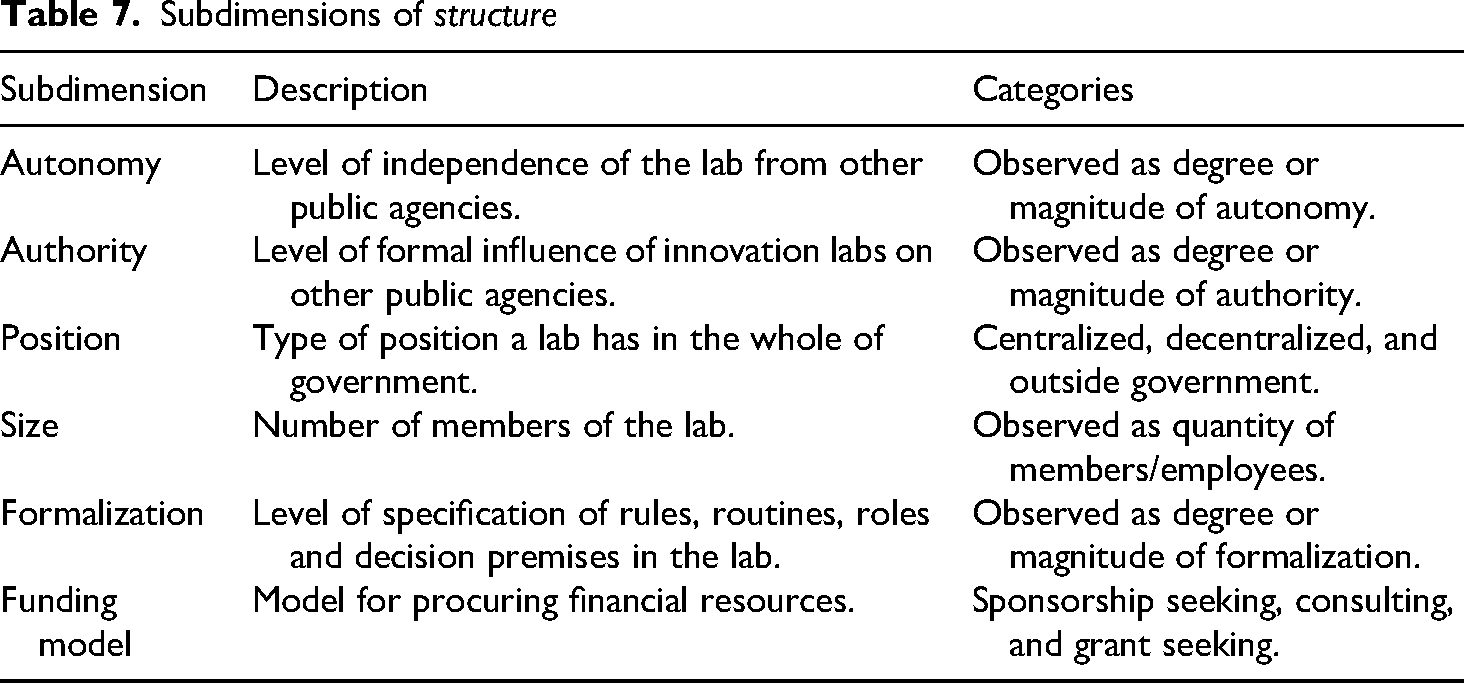
Subdimensions of structure
Autonomy refers to the level of independence a lab has from other public agencies. Labs can be an entirely independent agency or can be subsumed into another agency. Autonomy affects not only a lab’s innovation capacity but also its integration into government functions and long-term survival. For some authors, autonomy is desirable because it allows labs to create a creative, experimental space conducive to incubating innovative solutions (Bason, 2017); greater autonomy often leads to formal or procedural isolation from other public entities, fostering “innovation islands” or safe spaces that enhance innovation capacity (Toñurist et al., 2017; Krogh, 2024). However, this isolation can also lead to detachment from the needs, goals, and culture of other government agencies, potentially reducing a lab’s relevance or effectiveness (Bason, 2017; Cole, 2022).
Authority refers to a lab’s formal ability to influence the operations of other public agencies, providing the most direct means of impact. Without authority, labs must rely on alternative strategies to make themselves relevant in the whole of government, for example, they rely on the persuasive abilities of their leaders to demonstrate the lab’s value to government functions (Toñurist et al., 2017; McGann et al., 2018).
Position refers to the level at which a lab plays a central role or becomes relevant to the whole of government—or rather it plays a peripheral role. We begin by describing how scholars have classified this subdimension. McGann et al. (2018) use two dimensions to classify a lab’s role in the whole of government: formality, indicating whether the lab is formally part of the government; and proximity, indicating its closeness to the executive branch. Then, they classify labs into four types: internal proximate, internal peripheral, external proximate, and external peripheral. Internal proximate labs are closely controlled by the central administration, while internal peripheral labs have greater legal autonomy. External proximate labs are outside the government but maintain formal ties, such as consultants, whereas external peripheral labs engage in informal advocacy or lobbying, like interest groups. Other authors base their classifications on the lab’s legal status (e.g. public, private, public–private partnership, or nonprofit) (Olejniczak et al., 2020; Criado et al., 2021; Lewis, 2021).
Building on these classifications, our analysis identified three types of a lab’s position in the whole of government: centralized, decentralized, and outside government. Centralized labs are formally grounded in the government or maintain close collaborative relationships with public agencies. Decentralized labs, while still aligned with governments, exhibit a lower degree of collaboration or formal association with governments. Labs outside the government may function either as collaborative entities (providing advisory, coaching, or consulting services) or as advocacy groups (created and run by citizens or interest groups), without relationships with governments.
Lab size refers to the number of regular members, including employees and volunteers. Labs typically prefer a lean, horizontal structure with a small core team, prompted by the belief that it enhances a lab’s agility, flexibility, and innovation capacity (Lewis, 2021; Fleischer & Carstens, 2022). Formalization refers to the extent to which rules, routines, roles, and decision-making processes are clearly defined within a lab (Waardenburg et al., 2020). Labs typically have low levels of formalization, operating with minimal rules and structures, as it is expected that they will foster innovation by enabling employees to experiment with new work methods, break away from traditional decision-making processes, and collaborate more easily with external actors (Fleischer & Carstens, 2022).
Finally, labs differ in their funding models, which influence their sustainability, leadership styles, and interactions with other entities (Torvinen & Jansson, 2023). For instance, labs focused on generating revenue through consulting (or project sales) tend to prioritize sales efforts and are primarily accountable to their customers. In contrast, labs that rely on sponsorship are less sales-driven and more inclined to align with their sponsors’ agenda (Whicher, 2021). Following Whicher’s (2021) classification of funding models (sponsorship, contribution, cost recovery, consulting, and a hybrid model), our analysis identified the following categories: sponsorship seeking, consulting, and grant seeking. Sponsorship seeking occurs when the lab receives a budget from a government entity. Consulting involves the lab operating as a consulting firm for other government entities, selling individual projects, making the lab an entity open to multiple types of clients. The grant seeking model refers to the systematic and proactive lab’s effort to receive funding through grants from national or international organizations.
In this dimension, we list and classify the tools innovation labs use to intervene and drive change, beginning by highlighting existing classifications. Lewis (2021) categorizes them into three main approaches: user-centered design, evidence-based decision-making, and process streamlining. Criado et al. (2021) classify the tools into design, data, behavioral economics, and hybrid categories, while Lee & Ma (2020) identify similar groupings, including experimentation, data science, evidence gathering, and evaluation. Other lists echo these categories, mentioning design thinking, ethnography, field research, experimentation, artificial intelligence, hackathons, and big data (Wellstead et al., 2024), as well as behavioral economics, co-production, system dynamics, and randomized controlled trials (Whicher, 2021). It is important to note that a single instrument or group could fulfill other purposes (e.g. enhancing public service experience, fostering citizen participation, or streamlining administrative procedures).
Building on these classifications, our analysis identified five groups of instruments: user-centered design, experimentation, iterative development, collaboration, and data analysis (see Table 8). First, user-centered design is an approach that emphasizes involving the end-user as an active participant in the artifact design process (Bason, 2017; Torvinen & Jansson, 2023; Villa-Alvarez et al., 2022). While design thinking is the primary methodology used to implement this approach, other tools also apply the principle, such as ethnography, customer journey mapping, experience design, and service design.
Instruments for a lab’s intervention
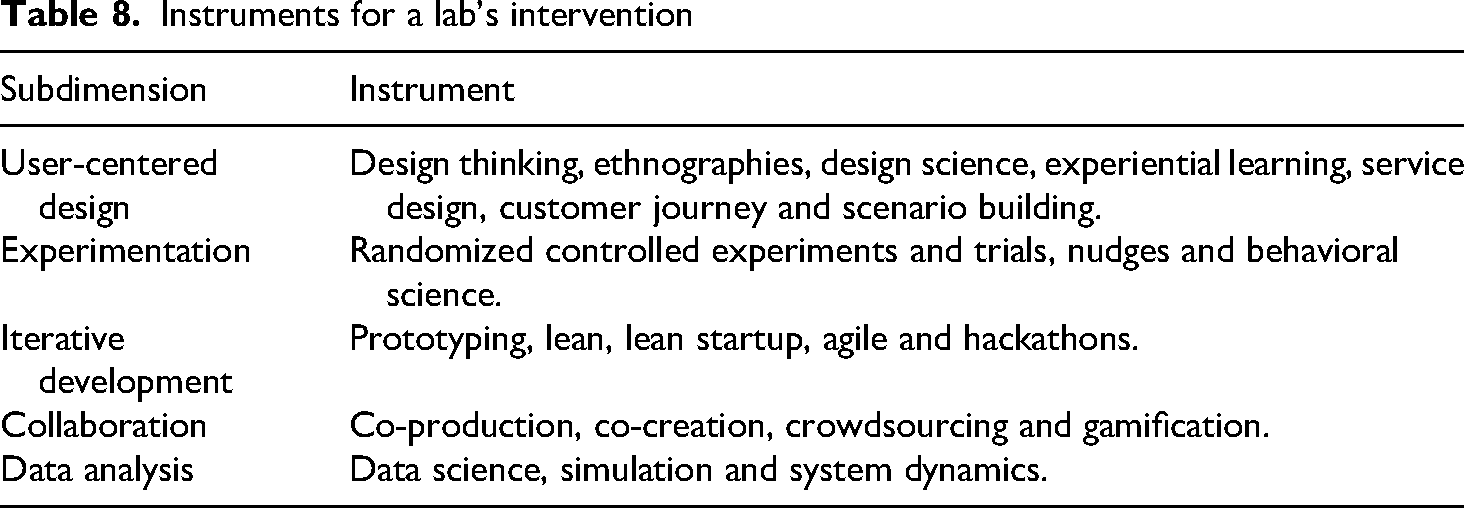
Instruments for a lab’s intervention
Second, experimentation is an approach based on the principle of evidence-based decision-making and rational planning. To produce reliable evidence, labs have adopted innovative tools that lend a scientific quality to the information generated (Soma et al., 2024; Favoreu et al., 2024). Third, iterative development or prototyping is a cyclical design process centered on the design–develop–test triad. It begins with minimal investment in development time and infrastructure (e.g. simple sketches) and prioritizes early user interaction. The process involves refining designs based on frequent feedback from future users. Iterative development is believed to reduce costs, mitigate risks and risk aversion, and accelerate public service design (Torvinen & Jansson, 2023; Cole & Hagen, 2024; Olejniczak et al., 2020). Like experimentation, this approach emphasizes the use of pilot projects, so that performance can be assessed through the scientific method and earlier in the policy cycle. Unlike experimentation, which evaluates predefined problems and policies, iterative development is a design tool used to explore and define public problems and policies, and to detect implementation failures before scaling up (Peters, 2020).
Fourth, instruments for collaboration are related to the use of the frameworks of co-creation, co-production, crowdsourcing, and participatory budgeting, and tend to overlap with complementary government agendas, such as fostering citizen participation or strengthening collaborative governance (Asenbaum & Hanusch, 2021; Torvinen & Jansson, 2023; Favoreu et al., 2024). Finally, data analysis is an approach leveraging technological innovations, particularly the emergence of big data, data science, and artificial intelligence (Kim et al., 2023; Hoss-Golan et al., 2024). These instruments help strengthen public policy analysis through better data and more sophisticated quantitative analysis techniques.
Labs have different strategies for attaining their defined mission and scope. We begin by highlighting existing characterizations of the lab’s strategies. Several authors have observed that labs organize their strategy around different activities, goals, or functions: analyzing public problems, creating solutions, exploring situations, testing solutions, and redefining policy issues (Cole & Hagen, 2024); conducting user research, co-designing with the public, co-prototyping, public consultation, and piloting or scaling solutions (Olejniczak et al., 2020); reframing problems, designing and testing prototypes, reforming public services, and developing public policy (McGann et al., 2018); problem recognition, idea generation, prototyping, and scaling (Criado et al., 2021); consulting, training, intervention, research, and prototyping (Lee & Ma, 2020); user research to redefine policy, stakeholder engagement for co-design, project prototyping, consulting, and monitoring or evaluating public policy (Whicher, 2021).
As many of these categories overlap or lack a clear definition or reference to specific actions, we sought to narrow the listing of functions to those with clear definitions and differentiation. Taking this into consideration, we organized the subdimensions of strategy in the lab’s function, participant selection, and policy stage. Beginning with the lab’s function, our analysis identified three types of a lab’s function: research, creation, and knowledge transfer (see Table 9). We identified three types of function: research, which includes generating information, reports, and conducting user surveys or idea generation; creation, which covers the design, ideation, and prototyping of solutions; and knowledge transfer, which encompasses training, mentoring, advising, coaching, or consulting activities aimed at public officials.
Subdimension of strategy
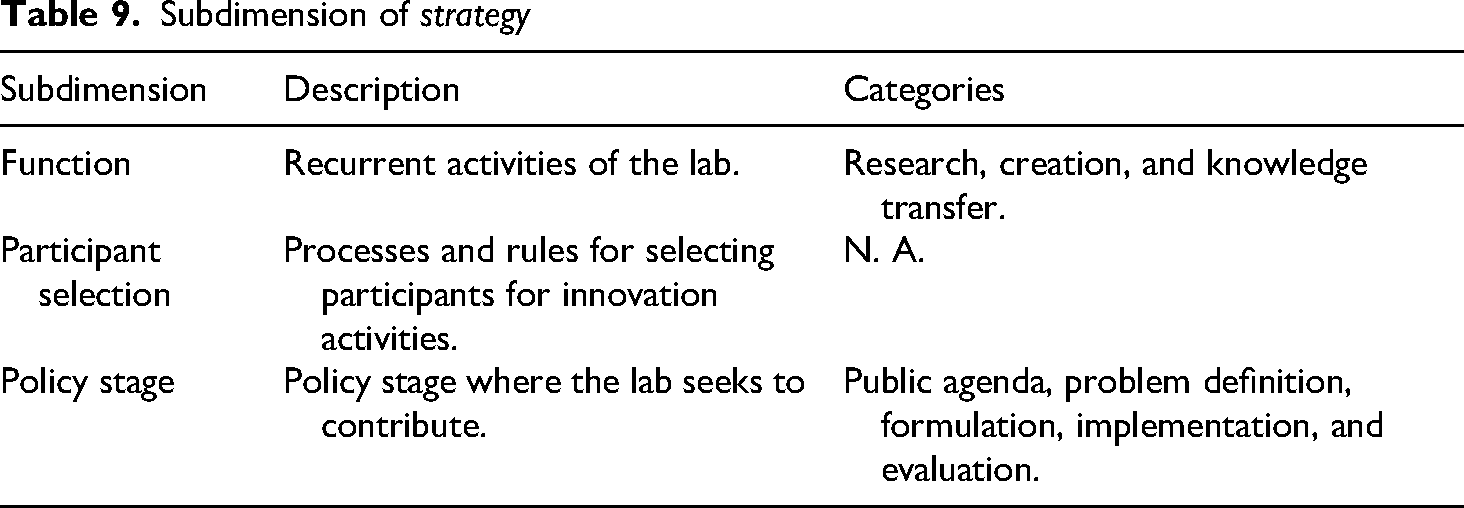
Subdimension of strategy
The second subdimension is the participant selection process, which organizes the form of interaction and contribution among participants in the innovation processes. Participant selection occurs through deliberate strategies, or owing to constraints and limitations. For instance, Krogh (2024) notes that public officials or a broad spectrum of potential users are sometimes excluded. McGann et al. (2021) emphasize that middle and senior managers are often left out, which impedes implementation. Including them can ensure that these managers understand the rationale and evidence behind collaborative proposals and help refine services based on their expertise. Adding to this complexity is the strained relationship between experts and non-experts in deliberations, as well as the tension between innovation and collaboration.
Finally, the third subdimension is the policy stage in which the lab operates. Labs may focus their activities on one or more stages of this process. For instance, they may influence the public agenda by generating research reports and publishing data analytics (Kim et al., 2023); contribute to problem definition through interviews and ethnographic research with users (McGann et al., 2018); assist in policy formulation using design thinking, co-creation, and other methods to develop solutions (Criado et al., 2021; Favoreu et al., 2024); or support implementation through co-production and policy scaling. Some labs also specialize in data analytics to enhance public policy monitoring (Kim et al., 2023).
The literature suggests that labs primarily focus on the public policy definition and formulation stages (Whicher, 2021; Olejniczak et al., 2020), as they enable small-scale experiments that are both cost-effective and agile through iterative development or prototyping. However, Villa-Alvarez et al. (2022) argue that many labs also impact the implementation stage.
Governments across the world face persistent demands to improve the quality, responsiveness, and efficiency of the services they deliver. Policy innovation labs have emerged as one of the most visible institutional responses to these demands, offering governments a space to experiment with new methods, engage citizens more meaningfully, and bring multidisciplinary knowledge into the policy-making process. As these units have proliferated globally, a growing body of scholarship has sought to make sense of their identity and conditions for success. Different studies propose a variety of dimensions, classifications, and typologies to organize the analysis of labs. However, the extant literature still lacks a comprehensive and systematic effort to integrate these contributions into a coherent conceptual mapping. This fragmentation matters because without a shared and comprehensive map of how labs organize their work, it becomes more difficult to respond to a critical question for researchers and policy-makers: what organizational configurations enable labs to sustain themselves over time, build legitimacy, and drive public sector innovation?
To make a step forward toward that research goal, we conducted a systematic literature review in the field of PILs. We identified five dimensions (sense of purpose, organizational culture, structure, instruments, and strategy), each of these with a set of subdimensions. By mapping and organizing these dimensions and subdimensions, our framework provides a conceptual basis needed to investigate, empirically, which configurations lead labs to attain their intended goals. For practitioners, this framework offers a template for navigating the complex design decisions involved in establishing or redesigning a PIL. Furthermore, this study provides a common vocabulary for benchmarking organizational choices and a basis for deliberate reflection on how each design dimension aligns with a lab's goals and institutional context. This is of particular relevance, considering that labs across the world face a low rate of survival owing, in part, to organizational design and a lab’s political and institutional context.
We recognize the limitations of this study. First, the empirical strategy was based on a single journal database (Web of Science), which has a shortage of social science coverage compared with other databases. Therefore, relevant publications may have been omitted. Furthermore, the study is descriptive and nominal, without empirically testing the independence across dimensions and subdimensions, nor whether each of this set of dimensions is sufficiently exhaustive. This study is modest in its contribution; it maps the dimensions serving to describe and classify innovation labs, but it does not contribute to theorizing how and why certain configurations might lead labs to success (or failure), in both effectiveness and sustainability.
Considering these limitations, future research could build on this framework in three suggested directions. The most immediate is data collection and empirical validation of this instrument. Survey studies could use this framework as a template to design and implement a measurement instrument to characterize and compare labs across countries and regions. A second direction involves association (or causality) studies, interested in investigating the association between specific dimensions or organizational configurations and labs’ performance. This implies investigating the determinants of a lab’s legitimacy, survival, and performance in public service delivery, as research has suggested that this triad is likely to constitute the reason for being of labs. A third direction involves the conceptual linkage (or boundary) between innovation and problem-solving in innovation labs. Our mapping reveals that a meaningful subset of labs organizes its work primarily around diagnosing public problems and delivering targeted solutions, rather than around the generation of genuinely novel practices. In these labs, innovation is a potential but not a defining output. Future research should examine whether labs with an operative or problem-solving orientation are conceptually different from innovation labs.
Supplemental Material
sj-docx-1-ras-10.1177_00208523261463697 - Supplemental material for Mapping the organizational design of policy innovation labs: A systematic literature review
Supplemental material, sj-docx-1-ras-10.1177_00208523261463697 for Mapping the organizational design of policy innovation labs: A systematic literature review by Cesar Renteria in International Review of Administrative Sciences
Footnotes

Funding
The authors received no financial support for the research, authorship, and/or publication of this article.
Declaration of conflicting interests
The authors declared no potential conflicts of interest with respect to the research, authorship, and/or publication of this article.
Supplemental Material
Supplemental material for this article is available online.
Notes
References
Supplementary Material
Please find the following supplemental material available below.
For Open Access articles published under a Creative Commons License, all supplemental material carries the same license as the article it is associated with.
For non-Open Access articles published, all supplemental material carries a non-exclusive license, and permission requests for re-use of supplemental material or any part of supplemental material shall be sent directly to the copyright owner as specified in the copyright notice associated with the article.
