







Abstract
Family violence including interparental violence and child maltreatment is a pervasive social problem that affects all societies worldwide, and its detrimental impacts on people’s mental health are well documented. However, studies on family violence in South Korea are still limited. By utilizing an exploratory retrospective research design, this study explored the extent of childhood experience of family violence and the long-term impacts on mental health outcomes. A total of 90 college students in South Korea participated, and findings reveal that more than half of the participants were exposed to family violence as children, resulting in harmful long-term impacts on their mental health in young adulthood.
Keywords
Introduction
Family violence, including interparental violence (IPV) and any type of child abuse, is a pervasive social problem that affects all societies and cultures worldwide (Yick and Oomen-Early, 2008). Globally, it is estimated that 53 million women are victims of IPV, 275 million children are exposed to IPV in their homes (Tonsing, 2010), and close to 25–50 percent of children globally are being reported as victims of child physical abuse (World Health Organization, 2010). While there are various definitions of family violence depending on the cultural context (Hong, 2008), exposure to IPV in this study is narrowly defined as seeing, hearing, or perceiving a pattern of physical abuse perpetrated by one parent or caregiver against the other (Holta et al., 2008). Akin to IPV, child abuse in this study is also defined as overt actions that cause physical harm to a child.
What is alarming and concerning is that children who witness IPV are also experiencing child abuse at a significantly higher rate (Moylan et al., 2010). One study estimates that the extent of dual exposure to IPV and child physical abuse can range from 30 to 50 percent (Herrenkohl et al., 2008), and another study estimates even higher than 70 percent (Jang, 2001). Such dual exposure to traumatic events is known to increase the risk for internalizing and externalizing problems among children, resulting in significantly detrimental impacts on developmental outcomes, such as lower self-esteem, depression, and/or aggressiveness (Herrenkohl et al., 2008; Moylan et al., 2010; Sousa et al., 2011).
Extensive research conducted in various countries around the world indicates that people experiencing family violence as children are at increased risk of suffering from internalizing and externalizing problems (Dong et al., 2004; Herrenkohl et al., 2008; Moylan et al., 2010). However, in many Asian countries, such as South Korea, where patriarchal society supports men occupying authoritarian roles within the family (Doe, 2000), studies on family violence are still very limited (Kim et al., 2010b). Furthermore, the existing studies in these countries mostly focused on adolescents (Kim et al., 2010a; Nam, 2008) or examined only the short-term impacts of such experiences (Doh et al., 2012), indicating a strong need for empirical studies that examine the long-term effects of family violence in South Korea.
The objectives of this study and research questions
This study describes the extent of childhood experience of family violence reported by young adults and explores the long-term impacts of such experiences on internalizing (e.g. depressive symptoms and anxiety) and externalizing (e.g. aggression and antisocial behaviors) mental health outcomes arising in young adulthood after controlling for demographic and contextual factors, such as gender and social support. Given the fact that the research on the dual exposure to IPV and child physical abuse in childhood and its ‘dual exposure effects’ in their later young adulthood in South Korea is limited, this exploratory study utilized a quantitative retrospective design to fill the research gaps. Based on the purpose of this study and the definitions of family violence given, this study sought to answer the following three research questions:
What are the types and extents of child physical abuse and IPV that South Korean college students experienced in their childhood? And to what degree did these two forms of family violence co-occur?
Do the South Korean young adults who reported the dual exposure to family violence in childhood exhibit more severe levels of mental health problems than their counterparts without such experiences?
Are the South Korean young adults who have been exposed to family violence in childhood at a greater risk for internalizing and externalizing mental health problems, even after controlling for demographic (e.g. age and gender) and contextual (e.g. economic well-being and social supports) factors?
Literature review
Prevalence of family violence in South Korea
It is well known that Confucian cultural and social norms remain deeply rooted in South Korea, resulting in inequality in genders in favor of men over women in various fields from home to legal and political segments (Chan, 2009). South Koreans value social harmony and patriarchal social norms, including male dominance and female subordination and obedience which sometimes lead to IPV (Fincher, 2013). Consequently, such cultural beliefs make disclosure of violence occurring at home more difficult (Doe, 2000; Rossman et al., 1999). As a matter of fact, it was not until 1998 that South Korea set laws into place in an attempt to prevent IPV (Kim et al., 2007). In the late 1990s, the rates of IPV among married people ranged from 27.9 to 35.6 percent (Kim et al., 2009). However, this figure increased to 44.6 percent in 2004 (Ministry of the Gender Equality and Family, 2005), 53.8 percent in 2010 (Kim et al., 2010a), and 45.5 percent in 2013 (Lee, 2014). In regard to child physical abuse, corporal punishment has been widely accepted as a normal method of child rearing or discipline in South Korean culture (Doe, 2000) and therefore is considerably prevalent. Although, as Hong et al. (2011) pointed out, it is difficult to accurately estimate the extent of child physical abuse in South Korea before the mid-1990s due to lack of national statistics on the issue, available data at that time indicate high incidence of child physical abuse without any exception.
Recognizing the high incidence of child physical abuse and the potential harmful effects of strict child-rearing practices based on patriarchal culture, the South Korean Government revised the Declaration of South Korean Children’s Rights and added Article 9 that stated ‘Children should not be maltreated or abandoned’ (The Government of South Korea, 1999). Furthermore, in 1997 the Government banned child physical abuse by legislating the ‘Family Violence Special Act’. Despite the law, many South Korean parents still seem to resort to corporal punishment in order to discipline their children. Based on the results of surveys funded by the Government, the rates of child physical abuse were 59.1 percent in 2010 (Kim et al., 2010a) and 46.1 percent in 2013 (Lee, 2014). However, as Hong et al. (2011) pointed out, child abuse data in South Korea are still scant and reliable national statistics are lacking. In addition, it is well known that a family experiencing one form of violence has an increased risk for other forms of violence and dysfunction. Dong et al.’s (2004) study found the high prevalence of the dual exposure of IPV and child physical abuse (i.e. 57.5% of respondents who experienced child abuse were also exposed to IPV in childhood). In South Korea’s case, studies show that the rate of dual exposure varies from 25 percent (Kim et al., 2010b) to 75 percent (Jang, 2001).
Long-term impact of family violence on mental health
IPV has been found to have deleterious physical and psychological effects on its victims (Beeble et al., 2009; National Center for Injury Prevention and Control, 2003). Recent research has indicated that adults who have been exposed to IPV as children are more likely to suffer from internalizing and externalizing behavioral problems, such as depression, anxiety, aggression, poor social adjustment, and ineffective conflict resolution skills (Lichter and McCloskey, 2004; Moylan et al., 2010). These findings are aligned with the results of studies conducted in South Korea including the long-term impact of exposure to IPV on adolescents (Cheong and Seo, 2007; Nam and Kim, 2011; Sohn, 2008).
In the same vein as the impact of IPV in childhood on one’s later mental health, numerous studies have documented that child physical abuse deeply scars the children’s cognitive, physical, and psychological development. For example, a study with 17,000 participants conducted in the United States shows the significant correlation between childhood maltreatment and various illnesses and poor health in adulthood (Child Welfare Information Gateway, 2013). Many studies conducted in South Korea also indicate that the emotional effects of childhood abuse such as fear, isolation, and an inability to trust can translate into lifelong mental health problems including low self-esteem, depression, and relationship difficulties (see Kim et al., 2010b, for a review).
Following Hughes et al.’s (1989) assertion that people who experienced child physical abuse as well as IPV were at a much higher risk for internalizing and externalizing problems than their counterparts, a growing number of studies have examined the additive effect on outcomes of abuse and IPV exposure in the United States (Herrenkohl et al., 2008; Moylan et al., 2010; Sousa et al., 2011) and in South Korea (Kim et al., 2009, 2010b). Indeed, it has been well documented that the long-term effects of dual exposure in childhood have tremendous and increased negative impacts on later life, including behavioral and mental health problems (Shen, 2009).
Other demographic and contextual factors
In order to properly examine the relationship between experience of family violence and developmental outcomes, it is important to take the effects of some demographic and contextual factors into consideration, because these outside factors might confound the primary relationship under investigation. Potential confounding factors in this study are gender, age, and economic well-being of young adults. Not only have most empirical social studies conventionally used these factors as control variables, but also family violence and mental health problems have been found to be associated with age (Cunningham and Baker, 2004), gender (Kim et al., 2010b), and economic well-being (Berger and Waldfogel, 2011). Social support also needs to be controlled. Although the potential for adverse immediate and long-term outcomes associated with childhood exposure to family violence has been indicated, other contextual factors, such as social support, might lessen the possibility of negative mental health outcomes. For instance, studies indicate that having stable peer and parental relationships plays a positive role in mental health outcomes among victims of IPV (Beeble et al., 2009) and those of child physical abuse (Vranceanu et al., 2007).
Theoretical framework
This study is informed by shattered assumptions theory and the social learning theory. The shattered assumptions theory states that one’s negative psychological and behavioral long-term impacts result from the shattering of basic ‘assumptions’ individuals hold about themselves and their world. The three fundamental assumptions commonly held are as follows: the world is benevolent, the world is meaningful, and the self is worthy (Janoff-Bulman, 1992: 6). These basic assumptions enable individuals to understand the behavior of others and cope with the daily stress of life by providing them with a sense of safety, security, and self-worth. When individuals experience a traumatic event like exposure to IPV or child physical abuse, these basic beliefs about one’s safety and the stability of life may be violated (1992). This theory contends that the experience of victimizations, such as family violence, has the potential to adversely alter these basic assumptions, taking psychological toll given that exposure to family violence forces individuals to doubt their previously held positive assumptions about the world and to recognize their own vulnerabilities. This theory assumes that individuals who are exposed to family violence in childhood would potentially experience long-term deleterious consequences to their perceptions of the world as well as their sense of self.
Bandura’s (1971) social learning theory suggests that human behavior is learned as individuals interact with their environments. As stated by Hutchison and Charlesworth (2003), ‘all human problems can be defined in terms of undesirable behaviors, all behaviors can be measured and changed’ (p. 78), and behavior is also learned by imitation, observation, beliefs, and expectations. Children who were exposed to and experienced violence at home would learn the patterns of power and control from their abuser(s) and violent/assaultive/aggressive behavior through intimidating, berating, and practicing of corporal punishment. Negative reinforcement (less rewards, more punishment) can also attribute to their violent and aggressive behaviors later in life.
Methods
Research design and sampling procedures
Based on its exploratory nature, this study utilized a quantitative retrospective research design. By utilizing a convenience sampling, college students who attend three universities in South Korea were recruited for this study. Researchers contacted several professors of social work or social welfare courses in these universities for data collection. At the researchers’ request, the professors introduced the research projects, including its purpose and institutional review board’s (IRB) approval, and distributed the hard copies of the survey questionnaires to their students during class time. After listening to the potential benefits and risks involved, students decided whether or not they wanted to participate in the survey. To assure anonymity and confidentiality, students in the class were asked to return the questionnaires, either completed or not, back to their professors or the designated place in the classroom after the allotted time had passed in class or the following week. All instruments used in this study were translated into Korean, and the accuracy was validated by the three experts in the social work field of South Korea who can speak both Korean and English. Data were collected early March to mid-March in 2013.
Study participants
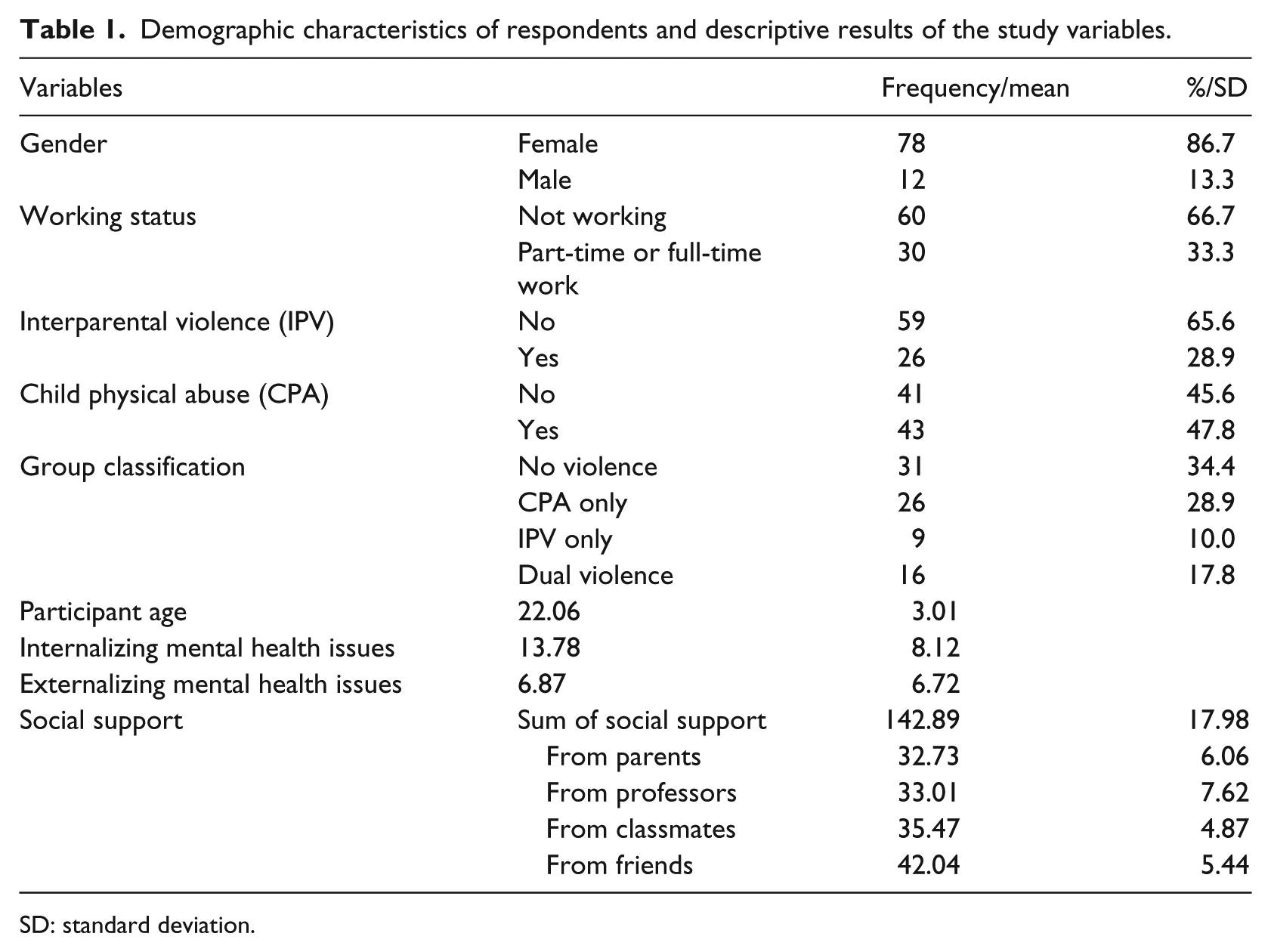
A total of 90 South Korean college students from three private universities participated in this study. Out of these 90 students, 86.7 percent were female (n = 78) and the majority of participants were single, never having been married (96.7%). The students’ age ranged from 19 to 37 years with a mean of 22.06 (standard deviation [SD] = 3.01). In terms of their employment status, the largest group (66.7%) reported ‘not employed’ followed by ‘part-time employment’ (31.1%) and ‘full-time employment’ (2.2%).
Measure and instrumentation
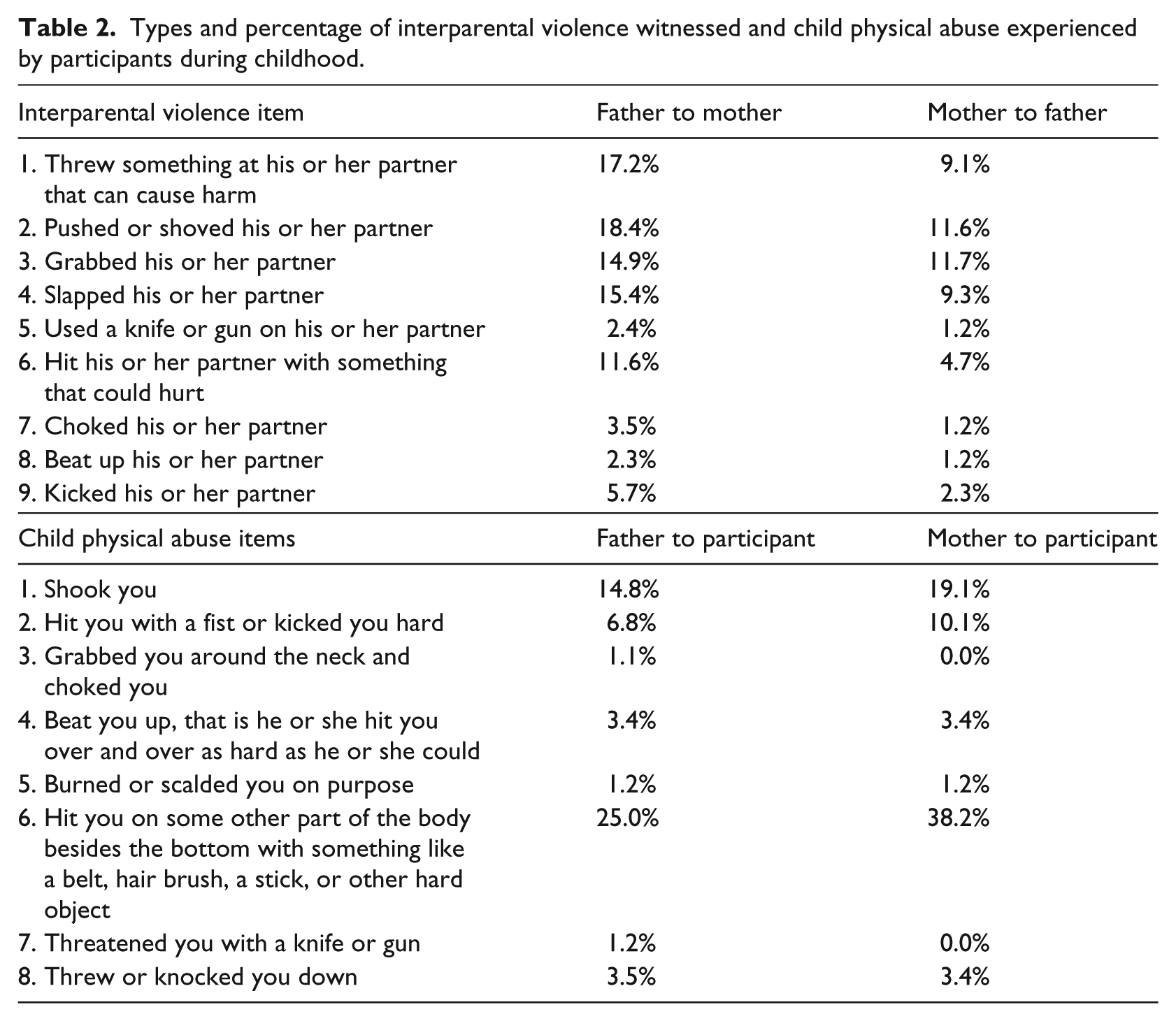
IPV was measured by nine items from the Conflict Tactics Scale (CTS) for parental violence (Straus et al., 1998). These nine items were selected based on the two studies which used the CTS for parental violence with non-English-speaking Asians in Asian countries such as Kim et al.’s (2010b) study with South Korean adolescents and Shen’s (2009) study with Taiwanese college students. These items are presented in Table 2 and examined participants’ exposure to physical assault between their parents before they turned 18 years old. The items were measured on a 7-point Likert scale from 1 (almost daily) to 7 (never). The students completed one of these in regard to their father and also one in regard to their mother. The internal consistency reliability of this scale is excellent with this sample (α = .969 for father to mother and α = .963 for mother to father). Since we selected the nine items from the CTS which describes the physical IPV for this study, there is no empirical study using exactly the same measure. However, when the 12 items from the CTS were used in Shen’s study, it showed great reliability (Cronbach’s α = .98 for father’s violence against mother and α = .95 for mother’s violence against father) (Shen, 2009). For further analysis, a binary variable of ‘witnessing IPV’ was created: no witnessing IPV (coded as ‘0’) when participants reported ‘never’ to all nine items and witnessing IPV (coded as ‘1’) in all other cases.
Child physical abuse was measured by the eight items from the parent–child version of CTS for child physical abuse history (Straus et al., 1998). Similar to the IPV variable, these eight items were selected based on the same two studies: Kim et al.’s (2010b) study with South Korean adolescents and Shen’s (2009) study with Taiwanese college students. Participants reported the frequency of maltreatment, especially physical maltreatment, by their father and mother before they turned 18 years old, and these eight items are also presented in Table 2. Like IPV, participants completed one of these in regard to their father and also one in regard to their mother. While no empirical study used the same eight items from the CTS to measure child physical abuse history, the 12-item scale with Taiwanese college students showed an excellent reliability score (Cronbach’s α = .98 for father and α = .93 for mother) (Shen, 2009), and this scale shows good reliability with this study (α = .823 for father and α = .821 for mother). For further analysis, similar to the marital violence variable, when participants reported ‘never’ to all eight items, it was coded as ‘0’ for no experience of child physical abuse and for all other cases it was coded as ‘1’ for experience of child physical abuse.
Internalizing behavior and externalizing behavior problems were measured with a modified Achenbach’s (1991) Adult Behavior Checklist (ABCL). This modified internalizing problems consisted of 22 items measuring anxiety (e.g. ‘I feel that others are out to get me’) and depressive symptoms (e.g. ‘I am unhappy, sad, or depressed’), and externalizing problems included 28 items measuring aggression (e.g. ‘threatening to hurt someone’) and delinquency (e.g. ‘stealing’). Participants were asked to rate the frequency of each behavior problem that they experienced during the previous year. Responses to the questions were coded on a 3-point Likert-type scale ranging from 0 (never/not true) to 2 (always/very true); the individual items were summed to yield the internalizing mental health problem as well as the externalizing behavior problem, with higher scores indicating a greater mental health problem. Since this scale was modified from the ABCL scale and no previous studies used this, each scale in this study shows very good reliability (α = .890 for internalizing mental health problems and α = .892 for externalizing mental health problems).
Social support was measured with the Social Support Scale (Malecki and Demaray, 2002), a multi-dimensional scale measuring perceived social support from three sources: parents (seven items), teachers (eight items), classmates (seven items), and close friends (eight items). Each item was measured on a 6-point scale from 1 (never) to 6 (always), and the individual items were summed to yield the social support score, with higher scores indicating a greater support. This scale, while it appeared not to be used with South Koreans or non-English speakers, shows good internal reliabilities with this sample (α = .923). Regarding economic well-being as another control variable, employment status was used as a proxy variable for economic well-being of the respondents. While various reasons exist for working while in college, studies point out that college students work to pay the costs of attending college, which indicates their level of economic well-being (DeSimone, 2008). It was measured by one item rated ‘working full-time = 3’, ‘working part-time = 2’, and ‘not working = 1’. Age was measured as a continuous variable, and gender was defined as either (1) male or (2) female.
Other measurement notes. For further analysis, based on the dichotomized variables of ‘witnessing IPV’ and ‘experience of child physical abuse’, participants fell into the following four categories of family violence: no violence group (when both variables were coded as ‘0’), the child physical maltreatment only group, IPV only group, and dual exposure group (when both variables were coded as ‘1’). Also, there were negligible amounts of missing data (about 2.2%) in these surveys. To handle the missing data, we used listwise deletion in statistical analysis.
Results
Types and extents of family violence experienced in childhood
In response to research question 1, frequencies and percentages were computed to describe the types and extents of the two forms of family violence: IPV and child physical maltreatment that the participants were exposed to and experienced during childhood. As shown in Table 1, more than half of the participants (56.7%) reported that they witnessed or experienced some level of family violence and only 34.4 percent reported that they did not witness or experience any form of family violence in childhood.
Demographic characteristics of respondents and descriptive results of the study variables.
SD: standard deviation.
To better understand the types of violence that participants were exposed to, Table 2 displays the percentage of the specific items of child physical maltreatment and IPV witnessed by the respondents. In terms of IPV, the most frequently observed types of violence were parents ‘pushed or shoved the partner’ (18.4% from father to mother and 11.6% from mother to father) and parents ‘grabbed his or her partner’ (14.9% from father to mother and 11.7% from mother to father). In terms of child physical maltreatment, the most frequently experienced maltreatment was that parents hit the participant on some other part of the body besides the bottom with an object (25.0% from father and 38.2% from mother), followed by parents shook the participant (14.8% from father and 19.1% from mother).
Types and percentage of interparental violence witnessed and child physical abuse experienced by participants during childhood.
The dual exposure to family violence and the dual exposure effect
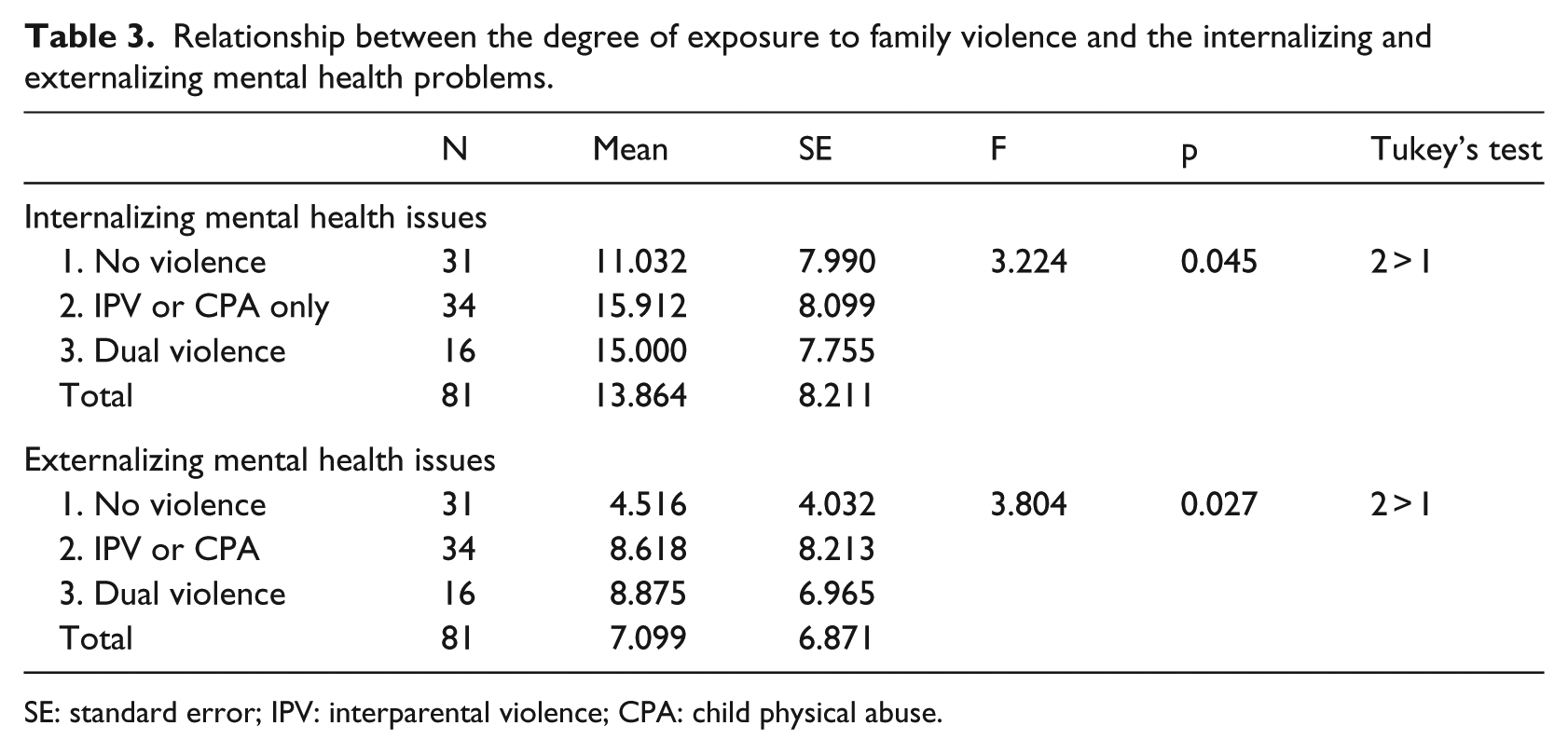
It is important to note here that due to the small sample size of each group, we combined the child physical abuse only group and IPV only group. Thus, for both research questions 2 and 3, we used the following three groups: no violence, one form of violence, and dual violence. In response to research question 2, the results of the analysis of variance (ANOVA) test for the relationship between type of family violence group and mental health problems are shown in Table 3. The results indicate statistically significant differences in both internalizing (F = 3.224, p < .05) and externalizing mental health problems (F = 3.804, p < .05) among the three groups: no violence, one form of violence only (either IPV or child physical maltreatment only), and dual violence group. However, the dual exposure effect was not detected.
Relationship between the degree of exposure to family violence and the internalizing and externalizing mental health problems.
SE: standard error; IPV: interparental violence; CPA: child physical abuse.
More specifically, for the internalizing mental health outcome, participants who reported any form of childhood family violence exhibited higher level of internalizing mental health problems in young adulthood (mean = 15.912, SD = 8.099) than the no violence group (mean = 11.032, SD = 7.990). The level of internalizing mental health problems of the dual exposure group (mean = 15.000, SD = 7.755) was similar to that of one violence only group, but it was not significantly different from the other two groups. For the externalizing mental health outcome, similar results were observed: for example, one violence only group (mean = 8.618, SD = 8.213) presented a higher level of externalizing mental health problems than the no violence group (mean = 4.516, SD = 4.032). It is important to note that the dual violence group, on the other hand, showed the highest externalizing mental health problems (mean = 8.875, SD = 6.965), but no significant differences were found between the one violence only group and the no violence group.
Impact of family violence in childhood on mental health issues in later young adulthood
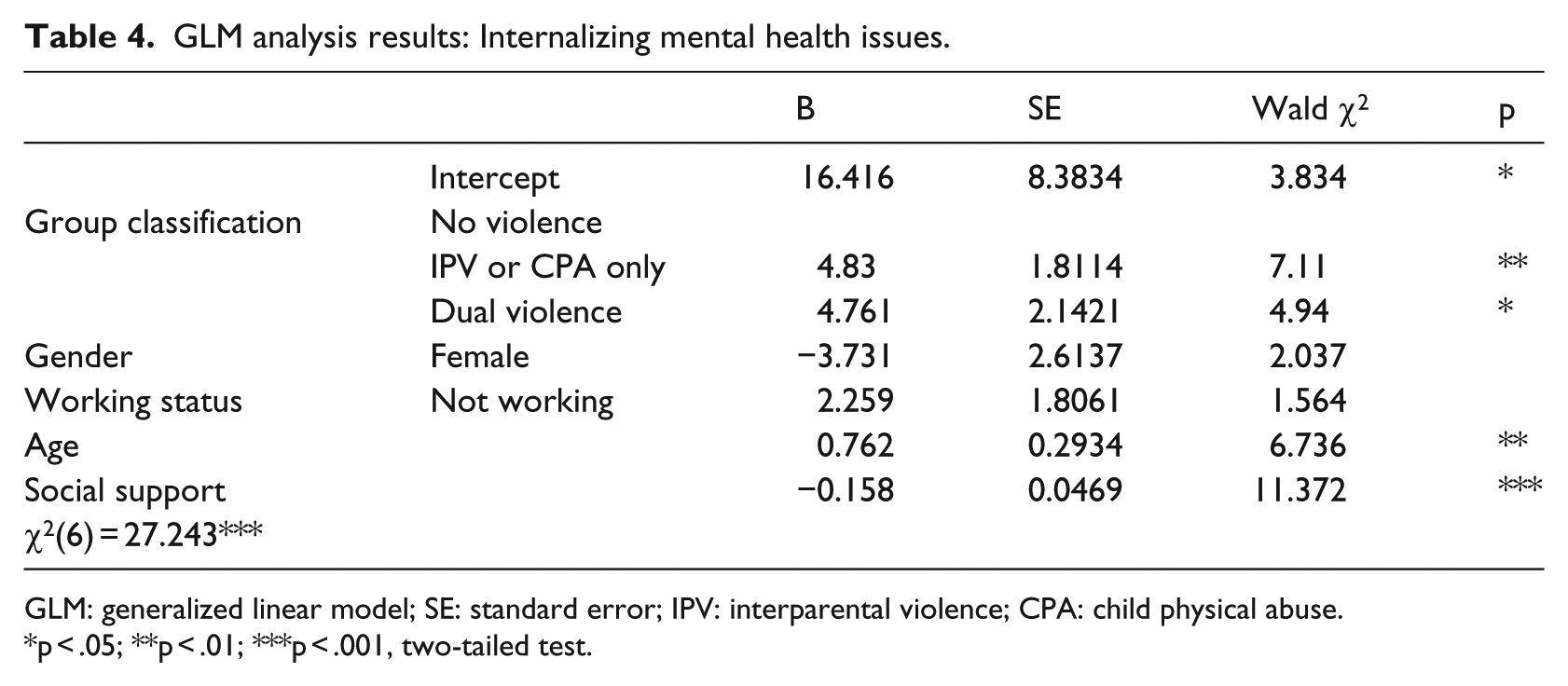
In response to research question 3, the generalized linear model (GLM) was implemented. As shown in Tables 4 and 5, after controlling for gender, working status, age, and social support, there are statistically significant mean differences among the three groups (χ2(6) = 27.243, p < .001 and χ2(6) = 15.159, p < .05). Compared to the no violence group, both the one violence group (b = 4.830, p < .01) and the dual violence group (b = 4.761, p < .05) displayed higher levels of internalizing mental health problems. Among the control variables, age (b = .762, p < .01) and social support (b = −.158, p < .001) were identified as important factors to explain the variance of internalizing mental health problems (i.e. individuals who were younger and had more social support were less vulnerable to internalizing mental health problems than those who were older and had less social support). Concerning externalizing mental health problems, there are also significant differences among the three groups after controlling for other variables. More specifically, both the one violence only group (b = 4.267, p < .01) and the dual violence group (b = 4.813, p < .05) were more likely to experience externalizing mental health problems in comparison with the no violence group after controlling for the demographic and contextual variables. None of the control variables in this model were significant.
GLM analysis results: Internalizing mental health issues.
GLM: generalized linear model; SE: standard error; IPV: interparental violence; CPA: child physical abuse.
p < .05; **p < .01; ***p < .001, two-tailed test.
GLM analysis results: Externalizing mental health issues.
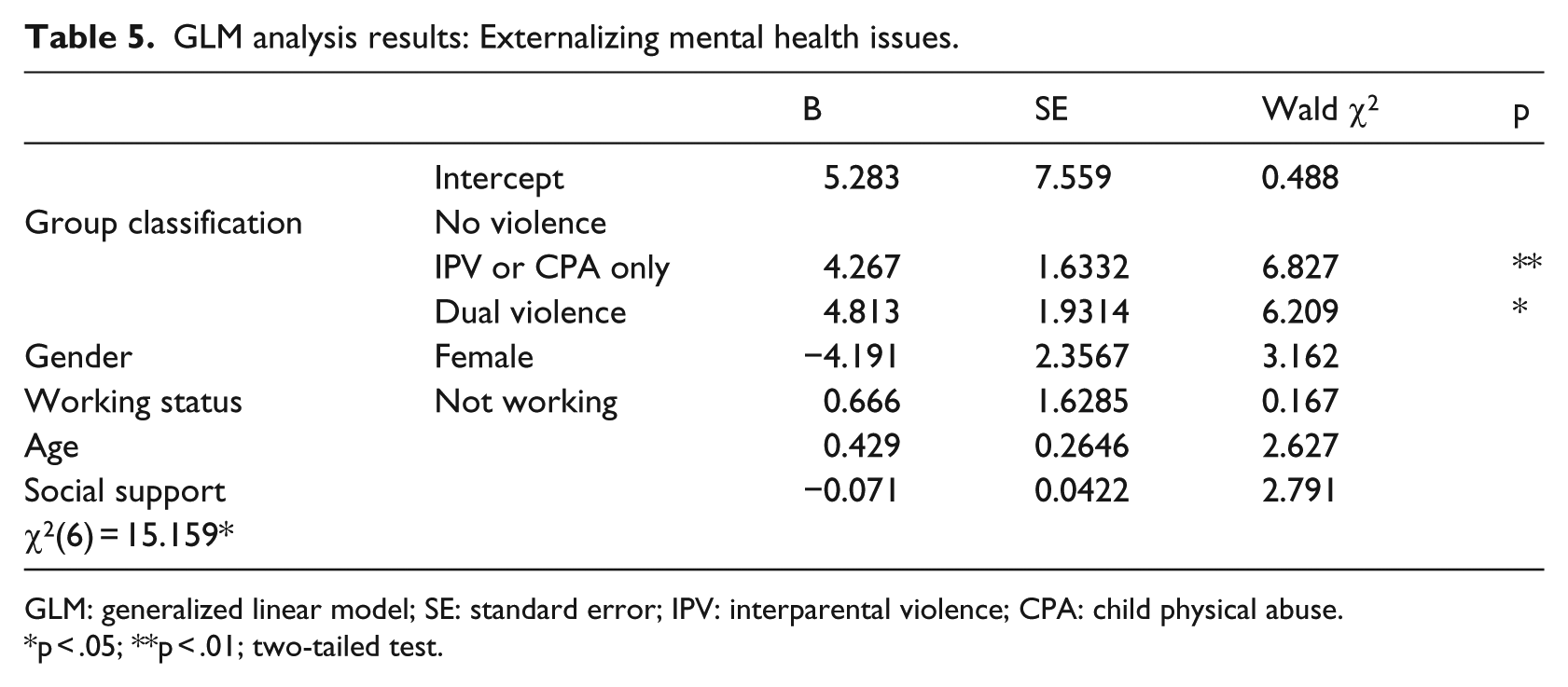
GLM: generalized linear model; SE: standard error; IPV: interparental violence; CPA: child physical abuse.
p < .05; **p < .01; two-tailed test.
Discussion
The intentioned focus of this study was to explore the relationship between exposure/experience to family violence in childhood and internalizing and externalizing mental health problems in later young adulthood by using the extremely understudied population of college students in South Korea. By utilizing an exploratory retrospective research design, this study supports the prevalence of family violence in the current South Korean society as indicated by the percentage of the participants who reported that exposure to any form of childhood family violence is 56.7 percent (28.9% reported child physical abuse only, 10.0% reported family violence only, and 17.8% reported dual exposure). However, it is important to note that the degree of IPV exposure in childhood reported by the current sample is lower than the average physical IPV reported in other national studies conducted in South Korea, such as Byun’s (2007) study (15.7%) or that of Kim et al. (2010b) (22.7%). Similar to our findings on IPV, while still demonstrating a high prevalence, child physical abuse reported by participants in this study (28.9% on average) is lower than the rates reported in previous studies of South Korean adolescents (e.g. 52.4% in Kim et al.). The rate of dual exposure among the participants is also lower than the rate reported in the study with South Korean adolescents (e.g. 24.9% in Kim et al.) as well as those studied in the United States (e.g. 25% in Moylan et al., 2010).
This relatively lower rate of exposure to family violence, regardless of the type (either exposure to one form of violence or dual exposure), can be explained by the nature of the participants studied – college students. Although family violence exists across the various sectors in a society regardless of education level and poverty, studies show that socioeconomic status (SES) strongly correlates with level of family violence (Gewirtz and Edleson, 2007). Regarding the specific type of family violence, our sample reported – as also found in Asian families in the United States (Fung and Lau, 2009) – they experienced physical aggression from parents such as hitting on some part of the body with an object (38.2% by mothers and 25% by fathers) or shaking (19.1% by mothers and 14.8% by fathers) during childhood, especially by mothers. As described previously, parenting practices in South Korea still have a Confucian emphasis (Chao, 1994), and such punitive discipline can be accepted as an effective style of discipline (Zhai and Gao, 2009).
Furthermore, consistent with other studies conducted in Asian countries (Chan, 2011), mothers were found to be the primary perpetrators of child physical abuse. This can be explained based on the roles of mothers in child rearing in South Korean culture. As Kang (1993) posited, it is well known that the primary role of South Korean fathers is to be the breadwinner, and working hard and making ends meet, and the primary role of mothers is educating their children and providing discipline. Regarding the content of IPV, participants reported that they were exposed twice more to male-to-female aggression (10.16%) than female-to-male abuse (5.81%), supporting the patriarchal family structure of South Korean culture.
In connection with the relationships between family violence exposure in childhood and mental health problems in later young adulthood, the current finding supports the previous studies conducted in South Korea (e.g. Kim et al., 2010b), other Asian countries (e.g. Fung and Lau, 2009; Shen, 2009), and the United States (e.g. Moylan et al., 2010). The results of this study show that young adults who were exposed to any form of violence, either one or dual in childhood, have a higher level of both internalizing behavior and externalizing behavior problems in young adulthood than those who were not exposed to any family violence, after controlling for gender, age, working status, and social support. The results did not support dual exposure effects. More specifically, the participants who reported dual exposure to family violence were not significantly different from those who experienced only one form of family violence. There may be several feasible explanations for this result, such as small sample size and the research design, both of which are further discussed in the ‘Study limitations and future research’ section which follows.
Another important point that needs to be highlighted is the potential positive role of social support. As a well-known protective factor, social support is believed to help promote a fundamental aspect of psychological well-being, as it involves people engaging in actions to produce emotional support (Sangalang and Gee, 2012). Indeed, this may be the reason why social support significantly predicted internalizing mental health outcomes and was close to approaching significance with externalizing mental health problems. Participants with a strong social support system might have alleviated stress levels associated with childhood trauma due to family violence, by using this support system to control their emotions and find comfort in others surrounding them, thus resulting in less internalizing mental health problems than their counterparts. Simply put, while exposure to family violence may interrupt a child’s healthy development, a caring supportive network can help to lessen the impact of the negative effects as they become young adults, and help them rebuild their sense of self.
Study limitations and future research
Since the exploratory design was utilized, this study suffers from several limitations and the results of this study should be interpreted with caution. In this section, each study limitation is described followed by directions for future research to remedy the pertinent limitation when being replicated. First, the sample was small and is composed entirely of undergraduates taking social work and/or social welfare classes at three universities in South Korea. This limits the representativeness and the generalizability of the study’s findings. The study’s sampling method also limits the generalizability of the findings to other South Korean college students since individuals who participated in this study were a self-selected group. To produce more generalizable findings, future studies should recruit a more representative sample of South Korean college students across geographical locations. Second, this study’s findings are limited because of the retrospective research design. Thus, there is a possibility that the family violence exposure in childhood reported by the participants may not correctly reflect what they really experienced. Third, other than perceived social support, this study did not include protective factors which might have altered the outcomes, such as receiving mental health services, religion, resiliency, and so on. Finally, this study also suffers from operationalization issues of the two study variables. For instance, both the IPV variable and the child physical abuse variable were measured by items focusing on ‘physical’ violence and abuse. Studies show that different types of abuse (physical vs psychological vs verbal) seem to have different impacts. Future research may strengthen the results by including various types of abuse and by taking cultural norms and sensitivity of the topic of family violence into consideration.
Implications
Despite the limitations presented, findings of this study hold several important implications. First, the prevalence of family violence among South Korean college students is high as more than two-thirds were exposed to family violence. Considering the significant detrimental impact of exposure to family violence in childhood on later young adulthood is shown in this study, there is a strong need to continue efforts to enforce family protection laws such as the Family Violence Prevention and Punishment Act and Declaration of South Korean Children’s Rights in order to prevent any form of family violence, either IPV or child physical abuse. The South Korean Government needs to strengthen protection for victims of family violence, provide intervention programs for perpetrators, and toughen the punishment for repeated perpetrators.
As briefly presented in the ‘Discussion’ section, our findings suggest that social support has a potential positive effect, especially regarding the internalizing of mental health problems. Thus, a college’s counseling center may facilitate an idea of offering a support group on campus as a form of social support as well as traditional individual counseling services. Regardless of the treatment methods in either individual counseling or support groups, social workers working with college students who have a history of exposure to family violence must possess knowledge about the significant influence of family violence exposure in childhood on internalizing and externalizing mental health outcomes in young adulthood from the person-in-environment perspectives. As Hong et al. (2010, 2011) asserted, family violence should be understood within the context of an individual’s micro (e.g. socio-demographic characteristics, the extent and types of abuse in childhood), meso (e.g. police and social support network), macro (e.g. culture), and chrono (e.g. laws) systems, and social workers need to assess the needs of clients who are affected by family violence in childhood and intervene at multiple levels from micro to chrono systems. Furthermore, since sharing one’s personal experience such as family violence seems to be a culturally sensitive issue within the South Korean culture, social workers may also consider developing online self-help methods where college students who have been exposed to family violence can share their feelings. Indeed, online individual counseling services or support groups have been shown to provide individuals with an opportunity to share experiences and to seek, receive, and provide information, advice, and emotional support (Eysenbach et al., 2004).
Furthermore, it is vital for social workers to promote various types of social support on campus through providing campus-wide programs aimed at raising awareness about family violence and challenging social and cultural norms that perpetuate family violence in South Korea. This movement in turn will create a healthy climate for students to seek help. Not only prevention and early interventions are needed to support the victims of violence, but also programs focusing on establishing healthy, mutually respectful, intimate relationships, which are all vital in combating family violence. Similarly, interventions geared toward parents aimed at providing education regarding the adverse effects of domestic violence on children can further help break the cycle of abuse. Additionally, more preventive services such as the educational programs about family violence and its impact on short-term and long-term child development outcomes should be developed and implemented since there are very limited preventive programs provided by either government or community-based agencies. A final implication from this exploratory research is that more outreach, prevention and community education about family violence, and proper parenting and discipline methods for family functioning and spousal dynamics are needed to build and nourish a violence-free and healthy family environment.
Footnotes
Acknowledgements
The authors wish to express their sincere gratitude to Dr Yoko Baba for her leadership, support, and encouragement throughout the project and to Arely Cardenas, Kristy Silva, and Elva Trujilo for their help with data entry.
Funding
This research received no specific grant from any funding agency in the public, commercial, or not-for-profit sectors.