






Abstract
Social work administrators may be receiving inadequate training due to the undervalued importance of formal education and professional development. This study employed a cross-sectional survey on a sample of 150 members of the Kentucky chapter of the National Association of Social Workers. The majority were women (81%). Most held an MSW degree (68.5%). Correlation analysis revealed: (1) perceived capabilities of social work administrators correlated with the perceived importance of formal educational qualifications and (2) perceived qualities, skills, functions, and practices correlated with the perceived importance of professional development/continuous education. Understanding this perceived link and the gaps presented is an important step toward developing better professional development/continuing education programs.
Keywords
Introduction
Professional development and continuous education programs (PD/CE) are essential requirements for employees in many organizations (Hughes et al., 2010). This is particularly so in public service sectors, whereby practitioners acquire and continuously cultivate the requisite knowledge and skills to be effective in rapidly changing workplace environments (Jasper, 2006; Rothwell et al., 2010). Within the social services sector, PD/CE are perceived to be an important, albeit sometimes currently inadequate means of attaining the skills practitioners need (Harmse, 1999: 291–295). Building on this, this study provides statistical evidence from a sample of 150 members of the Kentucky chapter of the National Association of Social Workers (NASW-KY) that correlates (1) the perceived importance of specific administrative skills, functions, practices and qualities with the perceived importance of specific types of PD/CE; and (2) the perceived importance of administrative capabilities with the perceived importance of higher educational qualifications, so as to promote better opportunities for the lifelong learning of social workers.
Social work administrators
Social work administrators are professionals who organize and supervise the delivery of social assistance programs, either directly or through others. Their duties include supervising lower-level social workers, promoting social work programs, evaluating the effectiveness of programs, managing budgets, and advocating for adequate resources to meet their clients’ needs. In addition to local and state agencies (e.g. child welfare and government/military), social work administrators are employed in private practice, health care facilities, rehabilitation centers, and school settings, most of which are non-profit organizations (Whitaker et al., 2008b).
Social work administrators must be critical thinkers who have problem-solving abilities and interpersonal skills necessary for communicating with both the public and their own workforce, which many times include volunteers (Netting et al., 2004). Leadership and management abilities are essential (Hoefer, 2003). Responsibilities of social work administrators include instilling cooperation, promoting team building, assessing employee impact, and encouraging staff – especially those engaged in challenging assignments (Jaskyte, 2003). In addition to controlling, administrating, and directing the social service workforce, social work administrators face incessant workplace challenges (Wuenschel, 2006). Job satisfaction and employee commitment are more demanding than in any other organization (Hardina and Montana, 2011), and social work administrators must regularly manage social workers experiencing prejudice and societal contempt. On top of all this, social work administrators receive much criticism from the public about deficiencies in their profession (Jaskyte, 2003).
There is a growing trend within social work administration that practice-oriented social workers are being promoted into managerial or supervisory positions with insufficient education and experience for their unexpected, professional roles (Bliss et al., 2014). The Principled Leadership Development model attempted to address this gap (Bliss et al., 2014), though the model has yet to receive wide implementation. Another approach is for educational institutions to offer collaboration between social work education and relevant administration programs via dual degree programs in collaborating fields (Jayaratne, 2008), such as a Master of Business Administration (MBA), Master of Public Administration, Juris Doctor (Wang, 2015), or even engineering (Gilbert et al., 2015). Yet while this has been beneficial, the number of graduates produced by these programs as of late – especially those of women and minorities – does not appear to be sufficient to fill the widening gap created by retirees and those leaving the field (Watson and Hoefer, 2016). Others have suggested there is an implicit idea that social work practitioners should not be involved in implementing administrative functions within a practice, given that they do not have the requisite knowledge to do so (Johansson, 2019). Yet studies like Harmse (1999) have demonstrated that social work administrators perceive on-the-job training and PD/CE to be part of a larger support system that will help them attain these lacking skills.
Qualifications and capabilities of social work administrators
Projected demographic changes, new service delivery models, financial constraints, professional accountability, and improved service outcomes deriving from evidence-based practice all require that social work administrators must be highly qualified and capable. Several organizations have highlighted the benefits that educational qualifications and PD/CE may bring to organizational or individual performance of social workers. The NASW (2003) proposed that PD/CE are essential for social workers, and that social work administrators should be leaders of that process. The code Continuing Education and Staff Development (NASW, 2008: 3.08) states, Social work administrators and supervisors should take reasonable steps to provide or arrange for continuing education and staff development for all staff for whom they are responsible. Continuing education and staff development should address current knowledge and emerging developments related to social work practice and ethics. (p. 21)
The rationale for this code is that social workers should be able to maintain the quality of service while increasing their proficiency for delivering their service by continuing their educational opportunities beyond the minimum standard of holding a professional degree. Participants acquire new knowledge, refined skills, and reinforced professional attitudes (Snow, 2012). For these reasons, the International Federation of Social Workers (IFSW, 2012) asserts that social workers must be suitable for the workforce; hold appropriate, recognized qualifications entitling them to practice; and have a demonstrable understanding of their roles and responsibilities. While this is important for individual social workers, it is likewise important for the administrators who are to be leaders of such practice (NASW, 2003).
As it is practically impossible to measure, objective quantitative evidence supporting a positive correlation between the training of social workers and their professional capabilities is limited. While a Master’s in Social Work (MSW) is the most common entry-level degree for licensed social workers (Whitaker et al., 2006), this formal, educational qualification is designed solely for dealing with social welfare and does not specifically train social workers for administrative roles (Whitaker et al., 2008b). Hoefer (2003) reported unpredictable relationships between the administrative skills and educational qualifications of social workers. Nesoff (2007) highlighted a lack of in-service training opportunities and recommended the revitalizing of managerial education for social workers. The IFSW (2005, 2012) published global standards for training and education of social workers, suggesting that what constitutes good social work education in the United States may be based on ill-founded premises. In an exploratory study of the perceptions of social workers in the United States (among 665 members of the Florida NASW chapter), researchers (Zugazaga et al., 2006) concluded that current instructional approaches neglect to teach students the crucial skills needed to promote a healthy and just society.
The limited available objective evidence indicates that the training and capabilities of many social work administrators may be inadequate for meeting the challenges of their jobs and that the importance of PD/CE across the social work profession may be undervalued, underestimated, and underutilized.
Purpose of this study
Using Harmse’s (1999) research in South Africa as an operational basis, this study sought to provide statistical evidence correlating the administrative skills, functions, practices, and qualities that the sample group perceived to be important with (1) the specific PD/CE they thought were important and (2) the formal educational qualifications for social work administrators that the sample group perceived to be important. The research hypothesis was that there would be a statistically significant, positive correlation between the perceived importance of administrative capabilities of social work administrators (i.e. their skills, functions, practices, and qualities) and the perceived importance of both: (1) PD/CE and (2) higher educational qualifications. By comparing the data from the South African sample with the data from the NASW-KY sample, it is hoped that a more robust picture will develop as to how to promote better opportunities for the lifelong learning of social work administrators in different, international environments.
Methods
A cross-sectional survey with a correlational research design was implemented to address the stated research question and test the research hypothesis, assuming that correlation did not imply causation (Pearl, 2009).
Instrument
The online self-report instrument included five sections containing 95 items modified from a questionnaire originally devised to measure social support systems for social workers in South Africa (Harmse, 1999). The instrument operationalized six variables from the item scores as follows:
Qualities of a Successful Administrator (10 items);
Administrative Skills (8 items);
Administrative Functions (5 items);
Expectations of Good Administrator Practice (33 items);
Importance of Educational Qualifications (7 items); and
Importance of PD/CE (32 items).
Variables 1, 2, 3, 4, and 6 were based on Harmse’s (1999) study, while the fifth variable in this list was devised for the present study. Each item was measured using a 5-point response format, ranging from 1 (not important at all or don’t agree at all) to 4 (very important or fully agree). A fifth response of don’t know was also included as a zero-value. There was no reverse scoring. The final section included 10 questions to elicit demographic and contextual information.
Data collection
The target population comprised members of the NASW-KY, a non-profit organization based in Frankfort, Kentucky. The sampling frame consisted of 1368 names in the listserve of NASW-KY. The researcher coordinated with NASW-KY to distribute the online survey by email. The email contained a cover letter and the questionnaire (see Supplemental material). The cover letter notified the participants that participation was voluntary and there were no risks associated with refusing participation. The email request was initially distributed on 16 June 2014, followed by two reminders. The first reminder was sent on 14 July 2014, and the second on 1 August 2014. The responses were collated on 24 August 2014. All social workers who gave their informed consent, by volunteering to respond to the questionnaire, were included in the convenience sample. There were no inclusion or exclusion criteria, because all NASW-KY members are registered social workers whose responses were equally valuable.
Less than half of the emails (556, 40.6%) delivered to the target population were opened. Of those who opened the email, about one-third (194, 34.9%) started the questionnaire. Of those who started the questionnaire, about one-fifth (39, 20.0%) completed Sections 1–6, but did not provide their demographic data in Section 7, while over half (111, 57.2%) completed all of the sections.
Of the 194 respondents who started the questionnaire, about one-quarter (44, 22.7%) did not complete Sections 1–6. These respondents were excluded. The response rate for questionnaires with completed items for Sections 1–6 was 150/194 = 77.3 percent.
Data analysis
The responses were transcribed into IBM SPSS version 22.0 and analyzed using Field’s (2009) protocols. The responses were screened for missing values. To ensure an unbiased operationalization of the variables (by summing the item scores), all respondents who provided incomplete answers were excluded. The missing values were not replaced, as correlation coefficients estimated using replaced, missing values may be attenuated (i.e. misleadingly low) and linked to a reduction in the variance (Little and Rubin, 1986).
The frequency distributions (counts and percentages) of the demographic and contextual characteristics of the participants were tabulated. Descriptive statistics were computed for each item and each variable. Cronbach’s alpha was also computed for each variable, as it is the most commonly used measure of the internal consistency of variables measured with questionnaires (Hogan et al., 2000). The interpretation of Cronbach’s alpha was that if the items correlated with each other, the value of alpha was high (0.7–1). Because the variable was unidimensional, it was justified to add up the item scores (Cronbach and Shavelson, 2004). Because a response of don’t know was scored as zero, the sums of the item scores excluded vague respondents who did not provide a definitive answer. The correlation analysis was based on the responses of N = 150 participants who answered all the items in Sections 1–6. Using Spearman’s rank correlation coefficients (rho), the research hypothesis was supported if p < .05. Spearman’s rho was a better fit for this study than Pearson’s r, as it does not assume normally distributed data.
Results
Participant characteristics
A total of n = 111 participants provided demographic and contextual data in response to the survey. The majority (81%) of these were women. They ranged in age from 18 to over 65 years. Over half of the participants (59.4%) were more than 45 years old. They had a very wide range of experience as social workers. The most frequent group (44.9%) had <5 years’ experience, while 18.0 percent has over 20 years’ experience. Over two-thirds of the participants (68.5%) had been awarded an MSW as their highest level of educational qualification. About one-quarter of the participants (24.5%) were currently undertaking degree courses, of which the majority (17.1%) were expecting to achieve an MSW.
Most of the social workers held positions in private practice (26.1%), higher education (20.7%), hospital/medical centers (18.0%), or social service agencies (12.6%). Nearly half (48.6%) reported that they had no administrative tasks. The most frequent administrative tasks were communicating (45.0%) and planning and organizing (36.9%). In response to the question ‘Have you, in the last year, engaged in any type of professional development training or continuous education?’, n = 102, 68.0 percent replied, ‘Yes’. Of the participants who reported engaging in PD/CE, the most frequent categories were reading books (56.9%), conference programs (49.0%), case studies and counseling (41.2%), and on-the-job training (39.2%).
Qualities of a successful administrator
The qualities of a successful administrator were evaluated using the responses of N = 150 participants to the 10 items in Section 1: To what extent do you perceive the following administration qualities are important for a social worker in the domain of social service administration? The highest mean scores, reflecting the highest perceived levels of importance, were for Consistently demonstrates a high level of integrity and honesty (M = 3.89) followed by Provides clear direction; Encourages open communication; and Coaches and supports people (M = 3.81). The lowest mean score, reflecting the lowest perceived level of importance, was for Established ongoing controls (M = 3.07).
Administrative skills
Administrative skills were evaluated using the responses of N = 150 participants to the eight items in Section 2: To what extent do you perceive that the following administrative skills are important for a social worker in the domain of social service administration? The highest mean score was for human relations skills (M = 3.70) reflecting the perceived high relative level of importance of the ability of an administrator to work with, communicate with, and understand employees and colleagues. This item was followed in order of importance by communication skills (M = 3.69), referring to the abilities to communicate understandably and to solicit usable feedback from employees to ensure understanding. Specialist skills, referring to the ability to use aids, procedures, and techniques in a specialized field, were the least important skills (M = 2.74).
Administrative functions
Administrative functions were evaluated using the responses of N = 150 participants to the five items in Section 3: To what extent do you agree that the following are the administrative functions of a social worker in the domain of social service administration? The highest mean scores were for leading (M = 3.47), organizing (M = 3.43), and planning (M = 3.42), reflecting the relatively high level of perceived importance of these three administrative functions. Controlling (M = 2.35) was perceived to be the least important administrative function for a social work administrator.
Expectations of good administration practice
The expectations of good administration practice were evaluated using the responses of 150 participants to 33 items in Section 4: To what extent do you agree that the following are the expectations of good administration practice of a social worker in the domain of social service administration? The highest mean scores (>3.0) – reflecting the highest levels of perceived importance – were for Comply with the ethics of administration (M = 3.27); Models and instructs employees in appropriate conduct (M = 3.15); Be a good leader of the employees for which he or she is responsible (M = 3.15); Work efficiently under pressure (M = 3.12); Creates a favorable work environment (M = 3.05); Responsible for his own self-development and improvement (M = 3.05); and Models and instructs employees in productive performance (M = 3.01). The lowest mean scores (M < 2.5) were for Employee’s time should be administered by the administrator (M = 2.33); Remind individual employees of their contractual obligations (M = 2.28); and Teach employees the proper use of materials and supplies (M = 2.21), indicating that the participants perceived that these three practices were of lesser importance for a social work administrator.
Importance of educational qualifications
The importance of educational qualifications was evaluated using the responses to the five items in Section 5: To what extent do you believe that the following educational qualifications are important for a social worker in the domain of social service administration? The MSW degree was perceived to be a very important qualification by the majority (83.3%) of the respondents. Over half the respondents (55.3%) perceived that a Bachelor in Social Work degree was important or very important. The Master in Public Administration, MBA, and Doctorate in Social Work degrees were perceived to be important or very important by less than half of the respondents (44.0%, 39.3%, and 38.0%, respectively). The variable Importance of Educational Qualifications was reliably measured, indicated by Cronbach’s alpha = .885 (five items).
Importance of PD/CE
The importance of PD/CE was evaluated using 31 items in Section 6: To what extent do you believe that professional development or continuous education in the following categories is important for a social worker in the domain of social service administration? In terms of perceived order of importance, on-the-job training was endorsed as important or very important by 71.4 percent of the respondents, followed by interpersonal communications training (71.3%), mentoring (70.0%), and strategic administration training (69.3%). The most important categories of PD/CE (M > 2.5) were perceived to be interpersonal communications training (M = 2.62); followed by mentoring (M = 2.55); strategic administration training (M = 2.53); on-the-job training (M = 2.53); and networking (M = 2.5). The least important categories (M < 2.0) were perceived to be administrator learning contracts (M = 1.98); classroom lectures/seminars (M = 1.96); job rotation (M = 1.89); role-playing (M = 1.87); administrator games and simulations (M = 1.76); temporary promotions (M = 1.46); and outdoor training (M = 1.45).
Reliability analysis
The survey had good estimates of internal consistency reliability (.716–.994). Consequently, operationalizing the sum of the constituent item scores of the six unidimensional variables together, and testing the research hypothesis by correlation analysis was justified.
Descriptive statistics
Figure 1 illustrates the frequency distribution histograms of the six variables. The distributions are consistently negatively skewed, with the highest frequencies on the right-hand sides. The higher frequencies of the total scores toward the higher ends of the response scales reflect the consistently high levels of perceived importance or agreement, as endorsed by the respondents on the items that constituted each variable.
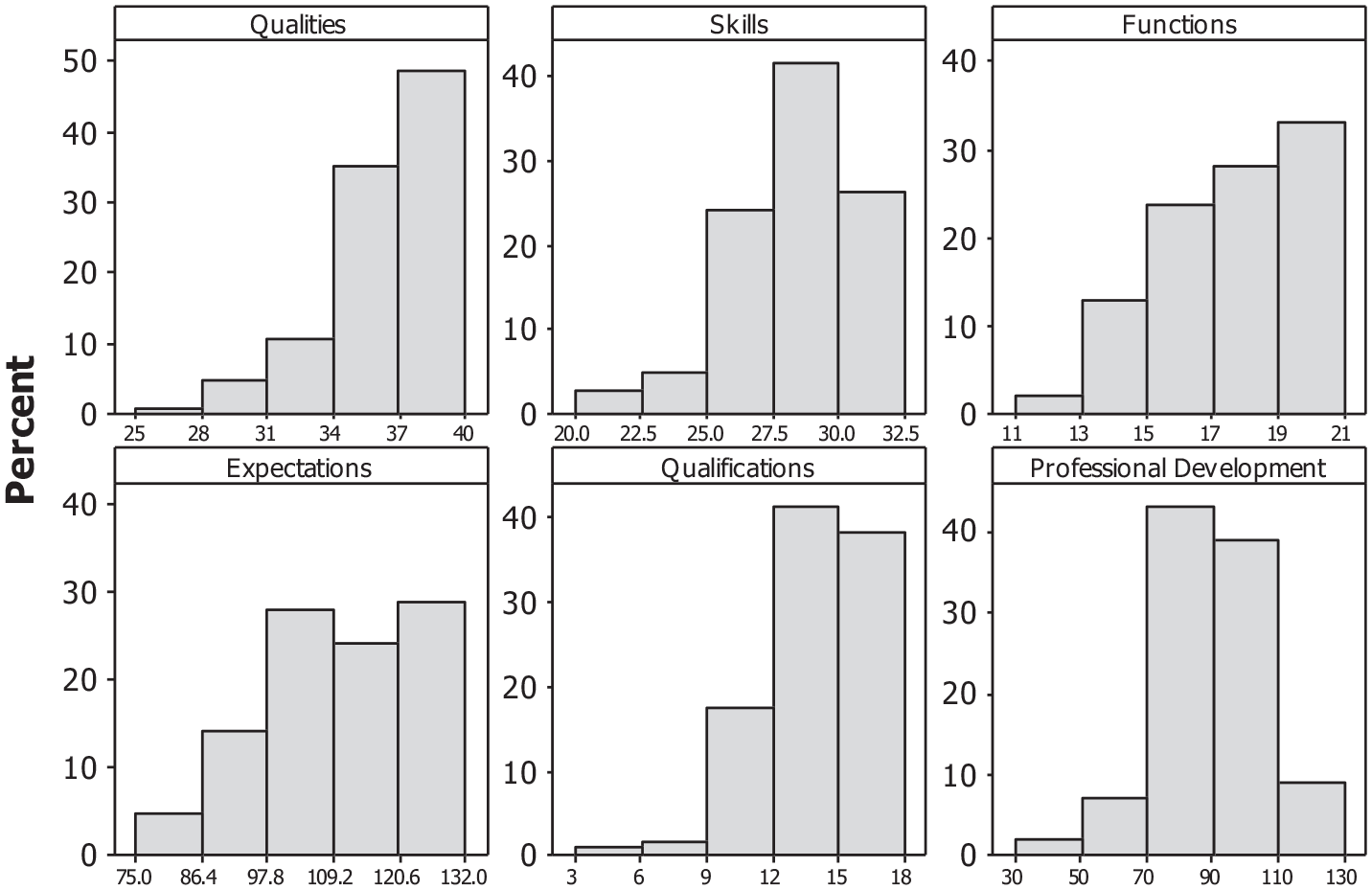
Frequency distribution histograms of the six variables.
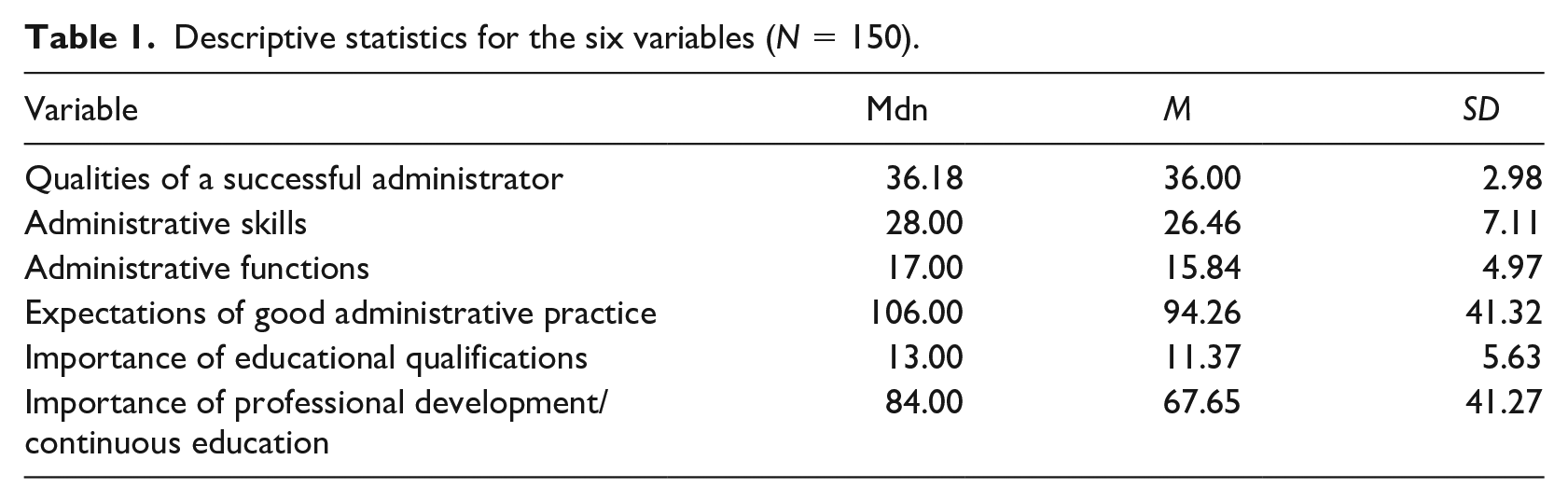
Table 1 presents the descriptive statistics for the six variables. Negative skewness was indicated by median values that were higher than the mean values.
Descriptive statistics for the six variables (N = 150).
Correlation analysis
Assuming the data were not normally distributed, a non-parametric correlation analysis was justified. Figure 2 illustrates the results of the correlation analysis.
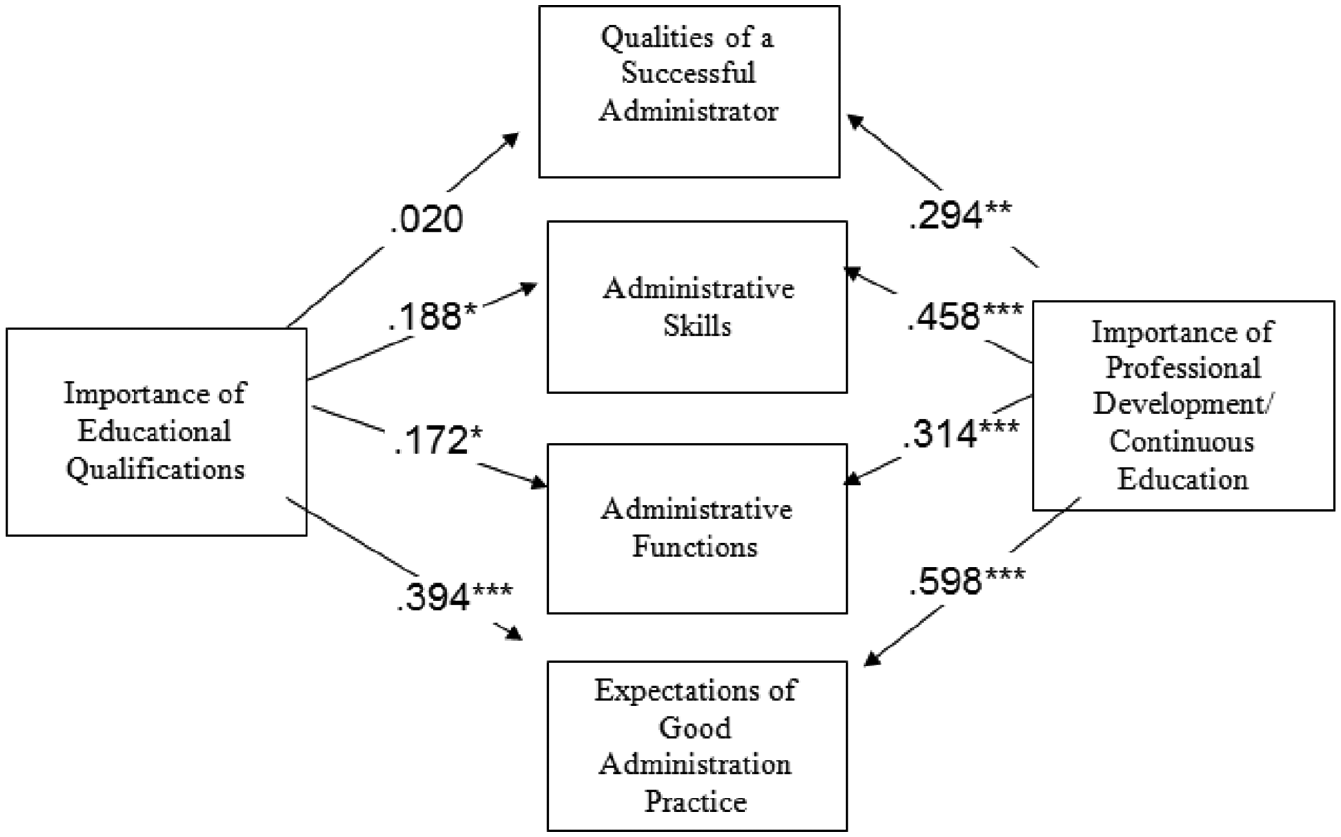
Spearman’s rho correlation coefficients.
Seven of the Spearman’s coefficients were statistically significant at p < .05 (rho = .172–.598) indicating that (1) the Importance of Educational Qualifications correlated with Administrative Skills, Administrative Functions, and Expectations of Good Administration Practice; and that (2) the Importance of PD/CE correlated with Qualities of a Successful Administrator, Administrative Skills, Administrative Functions, and Expectations of Good Administration Practice.
Only one correlation (between Importance of Educational Qualifications and Qualities of a Successful Administrator) was not significant (rho = .020; p = .150). The highest correlation coefficient (rho = .598) was between Expectations of Good Administration Practice and Importance of Professional Development/Continuous Education, reflecting the participants’ perception of these factors to have the strongest relationship.
Discussion
This study revealed that, in general, the perceived professional capabilities (qualities, skills, functions, and expected practices) of a convenience sample of N = 150 social work administrators working for non-profit organizations in Kentucky correlated with the perceived importance of higher educational qualifications and PD/CE. The strongest correlation was between Importance of PD/CE and Expectations of Good Administration Practice, reflecting the perceived importance of training for practices such as complying with the ethics of administration, being a good leader of employees, and working efficiently under pressure. The only exception (non-significant correlation) was the relationship between the Importance of Educational Qualifications and Qualities of a Successful Administrator. A specialized master’s degree (MSW) was perceived to be a very important qualification for social work administrators by the majority (83.3%) of the respondents. Over half of the respondents perceived that a Bachelor in Social Work was important or very important. In response to the question, ‘Have you, in the last year, engaged in any type of professional development training or continuous education?’, the majority (68.0%) replied ‘Yes’. A similar proportion (70%) of participants perceived PD/CE (especially on-the-job training, interpersonal communications, mentoring, and strategic administration training) to be important or very important. Comparison of the mean scores revealed that the most important categories of PD/CE were perceived to be interpersonal communications, mentoring, strategic administration, and on-the-job training.
Despite the claims that educational qualifications and PD/CE are beneficial (IFSW, 2005, 2012; NASW, 2003), few evaluations of social workers’ perceptions toward their training are similar enough for comparison with the results of the current study. Despite this, a comparison of the existing data is warranted.
Other researchers (Whitaker et al., 2008a) questioned a random sample of NASW members about whether PD/CE were important for the continued employment of social workers. Fewer than half (48%) of the respondents reported that PD/CE were important, while 37 percent of them indicated that PD/CE were not a requisite and were not required by their employers. Two-thirds (66%) of the participants claimed that PD/CE were important for their job advancement, while 34 percent believed their engagement in PD/CE activities and other additional social work training was unimportant for advancement in the social work profession.
In the same study, the participants were asked whether they had access to continuing education programs. Over a half (58%) reported that programs were somewhat accessible, and a smaller proportion (37%) indicated that they did not face trouble in accessing training programs. These proportions were less than those in the current study. The researchers (Whitaker et al., 2008a) based their survey (like the current study) on the perceptions of the respondents and expressed the results in terms of the social work profession in general. Consequently, the results did not necessarily apply to the respondents’ own personal involvement in PD/CE, but rather to their perceptions, regardless of their personal involvement (Whitaker et al., 2008a).
In contrast, Hardina and Montana (2011) conducted a nationally representative, cross-sectional survey of upper-level social work administrators within the non-profit service organizations that did apply to the respondents’ own personal situations. Similar to the current study, over 70 percent of respondents in Hardina and Montana’s (2011) study reported that participation in empowerment-based learning and development activities increased their job satisfaction, promoted team building and collaboration, enhanced ethical decision-making processes, and helped them to encourage a challenged and frustrated workforce.
Returning to Harmse (1999), whose respondents also reported on their own situation as social worker supervisors and middle managers, an overwhelming majority (98%) of South African social work administrators believed that PD/CE involving supervisory and managerial training would be beneficial. Of those, 92 percent reported that they personally need managerial training, while a smaller majority of these (69%) reported that they personally need supervisory training.
Recommendations for future practice
There is an expanding need for the social work profession to be organized by effective administrators who have the essential qualifications and capabilities to carry out their duties while following professional codes of practice (Snow, 2012). Because the social services sector continues to experience rapid changes and growth, the training of more social workers with the dexterity to become social work administrators is essential. With prevailing social work education programs not meeting the administrative demands of the social service sector, PD/CE programs must fill in these gaps.
The results of this study help to improve upon the understanding of how PD/CE are perceived as important for enhancing the activities of social work administrators. The significant results of the correlation analysis emphasize to students and practitioners that the specific PD/CE mentioned are perceived to be closely associated with meeting the demands and professional challenges of administrative work. This perceived correlation may encourage social workers and social work administrators to participate in relevant training programs, even though they may not be mandatory.
Despite the observed correlations between the perceived importance of training and social work administration capabilities measured in this study, it has been argued that university graduates may be ill-equipped to meet the demands of administrative positions in social work, even though they have high levels of educational attainment. Although education should ideally enhance the practical abilities of social workers to engage in critical decision-making processes in administrative settings, academic qualifications do not necessarily prepare graduates for such duties (Hoefer, 2003; Jaskyte, 2003; Miller et al., 2008; Nesoff, 2007). Candidates with Bachelor’s and Master’s degrees may not be adequately trained for administration positions. According to Wuenschel (2006), Master’s degrees provide minimal coverage of major issues that are important for administration within social work. An understanding of the perceived links between the capabilities of administrators and their PD/CE is therefore an important step toward developing better programs to meet their needs. In particular, the lack of any significant correlation between Importance of Educational Qualifications and Qualities of a Successful Administrator in this study confirms that formal educational qualifications, such as the MSW, do not necessarily prepare social workers for administrative qualities that are perceived to be very important. Namely, these very important qualities include consistently demonstrating a high level of integrity and honesty, providing clear direction, encouraging open communication, and coaching and supporting employees. It appears that the quality of social work administrators’ PD/CE may be more important than their quantity or degree level, in terms of training for these challenges of the job.
Although social work administrators may be well qualified in terms of academic degrees, the rapidly changing challenges and dynamics of social services require more than this. The results indicate that the MSW is the only graduate degree that a majority of the respondents perceived to be important or very important. While this had a significant, positive correlation to the perceived capabilities of social work administrators, the MSW alone generally does not train students to have the administrative qualities, skills, functions, and practices that the respondents perceived to be important or very important for social work administrators (Whitaker et al., 2008b). As the perceived importance of an MBA, Master’s of Public Administration, and Juris Doctor did not positively correlate with the capabilities of social work administrators among a majority of the respondents, then higher educational qualifications alone are insufficient for social work administrators, and PD/CE should be tailored to fill these gaps between the MSW curriculum and the administrative capabilities that social workers perceive to be important so as to prepare them for the challenges of administrative duties.
Limitations
This study focused on the general perceptions social workers have regarding the importance of social work administrators’ capabilities and their training – not their actual behaviors. While helpful, perceptions of importance do not always correlate with reality. Perceptions may be unrealistic. If perceptions incorporate errors, then much published research concerning theories of organizational leadership and management – most of which is largely perceptual – describes myths and not facts (Starbuck and Mezias, 1996). Although it may be difficult to interpret the respondents’ perceptions of importance in order to translate the findings of this study into practice, the researchers assume that the perceptions of the respondents closely align with actual administrative behavior, as posited by social cognitive theory (Bandura, 2001).
The collection of biased responses in self-report questionnaires has been a persistent problem for many years (Paulhus, 1991), and online surveys are especially susceptible to biased response patterns (Wright, 2005). In this study, skewness was a major feature of the response patterns, manifested by a clustering of the responses toward the higher ends of the 5-point response scales. The skewness reflected consistently high levels of perceived importance or agreement. Social desirability bias was possible in this study, referring to the propensity of some respondents to consciously try to create a favorable impression of themselves and/or their organizations (Holtgraves, 2004), even though asked to report only on their perception of social work administrator qualities in general. Although guaranteed the confidentiality of their personal information, some participants could remain hesitant in providing information that directly implies a potential reality of their organizational affairs. Some respondents may deliberately emphasize desirable issues and purposely neglect adverse issues, possibly in an attempt to maintain job security or to protect organizational interests (Zikmund et al., 2013). There is also the possibility of acquiescent bias, referring to the recalcitrant communication style of some respondents to provide consistently agreeable answer patterns (Smith, 2004).
The convenience sample used in this study consisted of a relatively small proportion of volunteers drawn from the target population (150/1368 = 11.0%) who (1) received and opened emails, (2) started the questionnaire, (3) completed Sections 1–6, and (4) either provided or did not provide their demographic data in Section 7. This data collection process could have resulted in selection bias, implying that the volunteers were not representative of the target population. Comparison of the demographic composition of the sample used in the current study versus a nationally representative sample of 10,000 NASW members in the United States (Whitaker et al., 2006) indicated that (1) the gender composition was identical (81% female in both samples) and (2) the age distribution was similar. However, there were substantial differences with respect to (3) the years of experience of the social workers (44.9% < 5 years in the Kentucky sample vs 17% < 5 years in the nationally representative sample) and in (4) the positions that they held (i.e. 26.1% vs 17.5%, respectively, in private practice; 20.7% vs 2.1%, respectively, in higher education; 18.0% vs 12.2% at a hospital/medical center; and 3.6% vs 1.7% at a criminal justice agency). Comparison of the demographic information in the South African study (Harmse, 1999) showed similar years of experience (44.9% < 5 years in the Kentucky sample vs 51% < 5 years in the South African sample). An effective comparison of the positions held is not possible, given that the target sample population consisted entirely of social work supervisors within the Department of Welfare. Gender and age demographics for Harmse’s sample were not readily available.
It is possible that only the most able, committed, and enthusiastic social workers who had an interest in the topic – and the outcomes of the research – fully completed the questionnaire. Whereas those who were less able, uncommitted, or unenthusiastic may have ignored the invitation to participate or provided incomplete responses to some of the items. Questionnaire fatigue may have been responsible for a high proportion of missing values, as many responses are often skipped in a long survey due to tiredness or boredom. As such, less time and effort may have been put into the end of the survey compared to the start (Lavrakas, 2008).
Conclusion
The most important qualities of a social work administrator as perceived by the participants of this survey included consistently demonstrating a high level of integrity and honesty, providing a clear direction, encouraging open communication, and coaching and supporting employees. Social workers need to maintain a good standard of PD/CE, which the participants in this survey perceived to positively correlate with the qualities of a successful administrator, as well as with administrative skills, administrative functions, and expectations of good administration practice. Interpersonal communications, mentoring, strategic administration, and on-the-job training were perceived to be the most important components of PD/CE for social workers. Existing social workers’ entry-level training, specifically the MSW, however, may be insufficient, particularly with respect to the acquisition and development of the professional qualities that a social work administrator needs to fulfill their very challenging duties. The findings of this study highlight that it is essential to develop relevant training programs that facilitate developing and strengthening the capabilities of social work administrators, to ensure that they are able to adapt to the changing needs of employees and service users in rapidly changing organizational environments.
Supplemental Material
sj-docx-1-isw-10.1177_00208728211022796 – Supplemental material for The perceived importance of educational qualifications and professional development/continuous education for social work administrators: A case of the NASW-KY chapter
Supplemental material, sj-docx-1-isw-10.1177_00208728211022796 for The perceived importance of educational qualifications and professional development/continuous education for social work administrators: A case of the NASW-KY chapter by Hamad A Alaslawi and Jeremiah K Garrett in International Social Work
Footnotes
Acknowledgements
We wish to thank the NASW-KY chapter for their instrumental support to our data collection efforts by allowing us to broadcast the questionnaire link via email to their members.
Funding
The author(s) received no financial support for the research, authorship, and/or publication of this article.

Supplemental material
Supplemental material for this article is available online.
Author biographies
References
Supplementary Material
Please find the following supplemental material available below.
For Open Access articles published under a Creative Commons License, all supplemental material carries the same license as the article it is associated with.
For non-Open Access articles published, all supplemental material carries a non-exclusive license, and permission requests for re-use of supplemental material or any part of supplemental material shall be sent directly to the copyright owner as specified in the copyright notice associated with the article.
