






Abstract
The impact of short-term study abroad programmes on students and understanding of global influences is well documented. However, the specific practices that enhance these outcomes are underreported. This systematic review asked, ‘What practices in social work education enhance intercultural social work education?’ An extensive search of English and Taiwanese Mandarin scholarly databases reveals 21 papers that met the inclusion criteria for the review. Our findings identified a relationship between community work, developmental social work and intercultural learning. These suggest that cultural immersion, experiential learning practices and community work are critical components of intercultural learning.
Introduction
Over recent decades, shifts in organisational and managerial approaches have influenced how social workers operate and practice (Morley and O’Bree, 2021). While social work is grounded in principles of social justice, the structural factors contributing to inequity and disadvantage are increasingly overshadowed by an emphasis on individual responsibility (Morley et al., 2017). By focusing on individualised practice, social work education risks losing its commitment to community practice and social justice (Morley et al., 2017).
Despite this trend, the global dialogue on collective issues such as poverty, food insecurity and climate change is intertwined with the social work profession (Patel and Hochfeld, 2013). A developmental social work approach challenges the global structures and causes of social and economic injustice (such as poverty, violence and unemployment) (Midgley, 2017) as opposed to the therapeutic interventions that favour individual outcomes (Patel and Hochfeld, 2013). A developmental approach emphasises social investment, advocating for investment in human capabilities and its crucial impact on economic development and vice versa (Patel and Hochfeld, 2013).
Understanding how developmental social work connects with community development is important for social work education. Developmental social work is grounded in collective strategies that align with community development’s emphasis on community participation and collaborative action (Twikirize, 2022). Midgley and Conley (2010) stated that developmental social work seeks to enhance social and economic wellbeing through community level initiatives that strengthen collective capacities and support broader social change. Forde et al. (2021) argued that community development holds an increasingly uncertain place in social work education, particularly in the Global North and they argued for a strengthening of collective and community pedagogies. A social work curriculum that acknowledges the global nature of social work through a developmental and collective lens is essential for new practitioners to understand (Moorhead et al., 2014).
Gammonley and Rotabi (2007) suggested that programmes providing students with reciprocal learning opportunities beyond their home environments can challenge them to think about social work beyond the dominant Western paradigm (Gammonley and Rotabi, 2007). Study abroad programmes can provide this opportunity by placing students in unfamiliar environments and asking them to critically reflect on global issues and their local impact (Moorhead et al., 2022).
Meyer et al. (2025) showed that even brief, week-long study abroad programmes can significantly enhance students’ intercultural learning, particularly when the learning is embedded in authentic community engagement. These experiences reflect the collective processes that are central to both developmental social work and community development. They also highlight the need for learning environments that enable students to engage directly with community work and collective practice (Midgley and Conley, 2010). It is important to recognise that achieving this level of engagement required navigating discomfort, disorientation, and emotional challenges Meyer et al. (2025). These findings underscore that intercultural learning develops through struggle rather than comfort.
Short-term study abroad programmes are defined as programmes that run for 8 weeks or less and can include research activities, site visits and cultural exchange (Gaia, 2015). These programmes provide opportunities for students to immerse themselves in the experiential learning that comes with interacting with local organisations, social work practitioners and students in the host country (McPherson et al., 2022).
Students who engage in a study abroad programme are placed in cultures different from their own, away from the ‘safety’ of familiar surroundings (McPherson et al., 2022). These conditions can be challenging (Dorsett et al., 2017) and students may gravitate towards the comfort of what they already know, such as their peers and academic staff, and while this tendency is understandable, it is important to encourage students to fully engage with the programme and the host culture (McPherson et al., 2022).
A practice architecture framework offers a valuable lens for understanding how the conditions of a site shape students’ experiences and the learning outcomes that emerge from them (Kemmis, 2019). Kemmis (2019) defined practices as the interconnected patterns of sayings, doing and relatings among people, other beings and material artefacts which together form the social and material fabric of activity and interact to create the environments in which intercultural learning occurs. For example, a student’s ability to engage in meaningful exchanges with local community members may be influenced by their language proficiency (sayings), the activities they are undertaking (doings) and the power dynamics between students and local communities (relatings) (Kemmis, 2022a). Immersion is not simply an opportunity for acquiring new knowledge; it is a catalyst for ontological transformation, reshaping how students participate in practices (Kemmis, 2025). From this perspective, immersive learning can alter students’ sayings, doings and relatings within intercultural contexts, enabling them to participate differently rather than think differently. These practices are never isolated; they are enabled and constrained by the practice architectures of the site in which they occur; the cultural-discursive, material-economic and social-political arrangements that create the conditions of possibility (or impossibility) for practice and learning to occur (Kemmis, 2022a). Understanding immersion through this framework highlights transformative learning as something that is not only dependant on individual cognition, but on engaging with, and sometimes changing these systemic arrangements (Kemmis, 2022b).
Studies in practice-based education highlight that knowledge is co-created through collective, everyday activities rather than individually (Gherardi, 2008). Building on this insight, Kemmis’s (2019) practice architecture framework offers valuable perspectives into developmental social work by examining how cultural-discursive, material-economic and social-political arrangements shape collective practices such as communication and collaborative decision-making. This perspective deepens understanding of how social practices are formed within and constrained by the social and political conditions in which they occur (Kemmis, 2019). Attention is paid to the doing of learning, the sensing, the knowing and the affective dimensions of learning with an emphasis on the embodiment and the materiality of learning (Ray et al., 2020). Within a university curriculum, practice architectures highlight the arrangements necessary for practice to occur (Hemmings et al., 2013).
This review will identify and describe the practices that support intercultural learning within a community work framework, contributing to the literature on intercultural social work education. This review is situated within a broader collaboration between the Social Work Departments of the University of Wollongong (UOW), National Taiwan University (NTU) and an international NGO based in Taiwan. A key component of this collaboration is a reciprocal short-term study abroad programme for UOW and NTU social work students that focuses on themes of Indigenous cultural recovery, elder care and community development (Ray et al., 2020). This partnership provides a unique opportunity to draw on literature written in both English and Taiwanese Mandarin. While existing literature discusses the outcomes of short-term study abroad programmes, the practices that underpin the learning are underreported (Ray et al., 2020).
By incorporating literature written in both English and Taiwanese Mandarin the review responds to the central research question: ‘What practices in social work education enhance and support intercultural learning?’
Methods
This review followed a structured process that began with defining the research question and search terms, and then systematically locating and screening relevant studies. Data were extracted from the included studies as assessed for relevance as part of the final analysis. Prior to the review being conducted, a series of meetings between the first and second authors and the international partners (authors 3 and 5) were held over 4 weeks to determine the research question and identify the appropriate databases to use for the review. Following this, a search of seven databases: Web of Science, Academic Search Complete, SocIndex, Education Research Complete, Scopus, Proquest and Airiti was conducted between April and May 2023 and repeated in December 2024. The Airiti database was included due to its focus on East Asian literature and its access to Taiwanese and Chinese academic publications for the transnational collaboration between Australia and Taiwan to ensure that East Asian journals were represented. No date filter was applied to the search, and English language or Taiwanese Mandarin language limiters and peer-reviewed limitations were used. This inclusion ensured perspectives on study abroad programmes in the Global South were represented.
The following search string was developed and applied to all seven databases:
(‘social work’ OR ‘community work’) AND international AND (‘study abroad’ OR ‘international programme*’ OR ‘international study’ OR ‘intercultural learning’ OR ‘mobility programme*’ OR ‘short-term programme*’ OR ‘transnational education’).
The review was conducted following the Preferred Reporting Items for Systematic Reviews and Meta-Analysis (PRISMA) (Page et al., 2020) statement. Studies were included if they satisfied the following criteria: (1) they were written in English or Taiwanese Mandarin language, (2) they were involved in short-term study abroad programmes no longer than 6 weeks, and (3) they described the practices within the programmes. Studies were excluded if they were published in a language other than English or Taiwanese Mandarin, were publication types other than peer-reviewed journal articles, did not report on study abroad programmes, did not include (and report separately) on the practices and outcomes for social work students or if the programme was longer than 6 weeks.
All abstracts were uploaded into Covidence (2022) and screened independently by research team members both in Australia and Taiwan. Discrepancies were resolved by another research team member who had not been involved in the initial abstract screening. Articles meeting inclusion criteria were screened by the lead researcher and reviewed by the team. Extracted data included the author and year of publication, number of participants, host country, programme duration, evaluation measures and study limitations.
A reflexive thematic analysis (Braun and Clarke, 2006) was used to conduct the initial coding by the lead researcher using NVivo 12 (Lumivero 2022). The initial coding framework identified key practice situations such as ‘physical environment’, ‘immersive learning’ and ‘collective practice’. Similar codes were grouped into potential themes, which were refined to clearly define practices within short-term study abroad programmes.
The coding framework was shared with authors 3 and 5, who reviewed and coded the Mandarin language literature. As the review included papers that highlighted the practices all team members needed to have a shared understanding of the definition of practice. Discussions with Taiwanese partners revealed that ‘practice’ in Taiwanese Mandarin functions as both a noun and a verb that encompasses both an implementation of an experience and a practical experience. The term practice, as defined by Kemmis (2019), was discussed with the research team to ensure a shared understanding of the term ‘practice’ within the literature.
The coding was reviewed again by author 1 after discussions with authors 3 and 5 revealed a discrepancy with the theme of ‘embodied learning’. The theme of experiential learning was developed, emphasising active participation and reflection, while embodied learning focuses on physical and sensory engagement. Although both terms are applicable, experiential learning was deemed more appropriate. The discussions highlighted the transnational and collaborative nature of the research partnership and intercultural practice within the research.
Quality checks of the included studies were undertaken using the Mixed Method Appraisal tool (MMAT) (Hong et al., 2018).
Results
The database searches identified 964 papers. Following the initial screening, 602 duplicates were removed, leaving 363 papers to be screened. Two-hundred-and-forty-nine studies were excluded by abstract, leaving 114 articles for full-text screening. Ninety-two articles were excluded following the full-text screening, leaving 21 studies for inclusion in the review. See Figure 1.
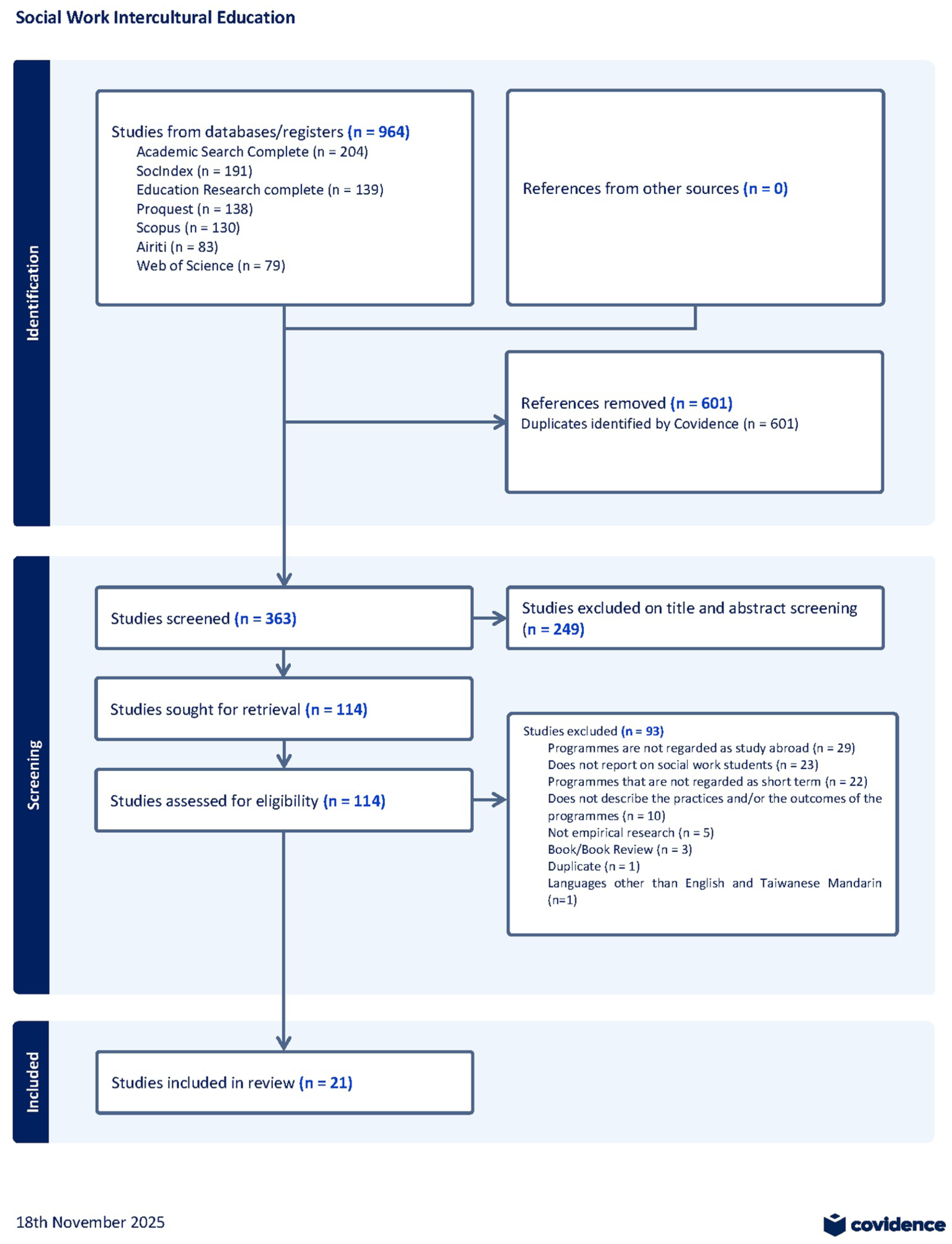
Preferred Reporting Items for Systematic Reviews and Meta-Analysis (PRISMA) flowchart of screening and search results.
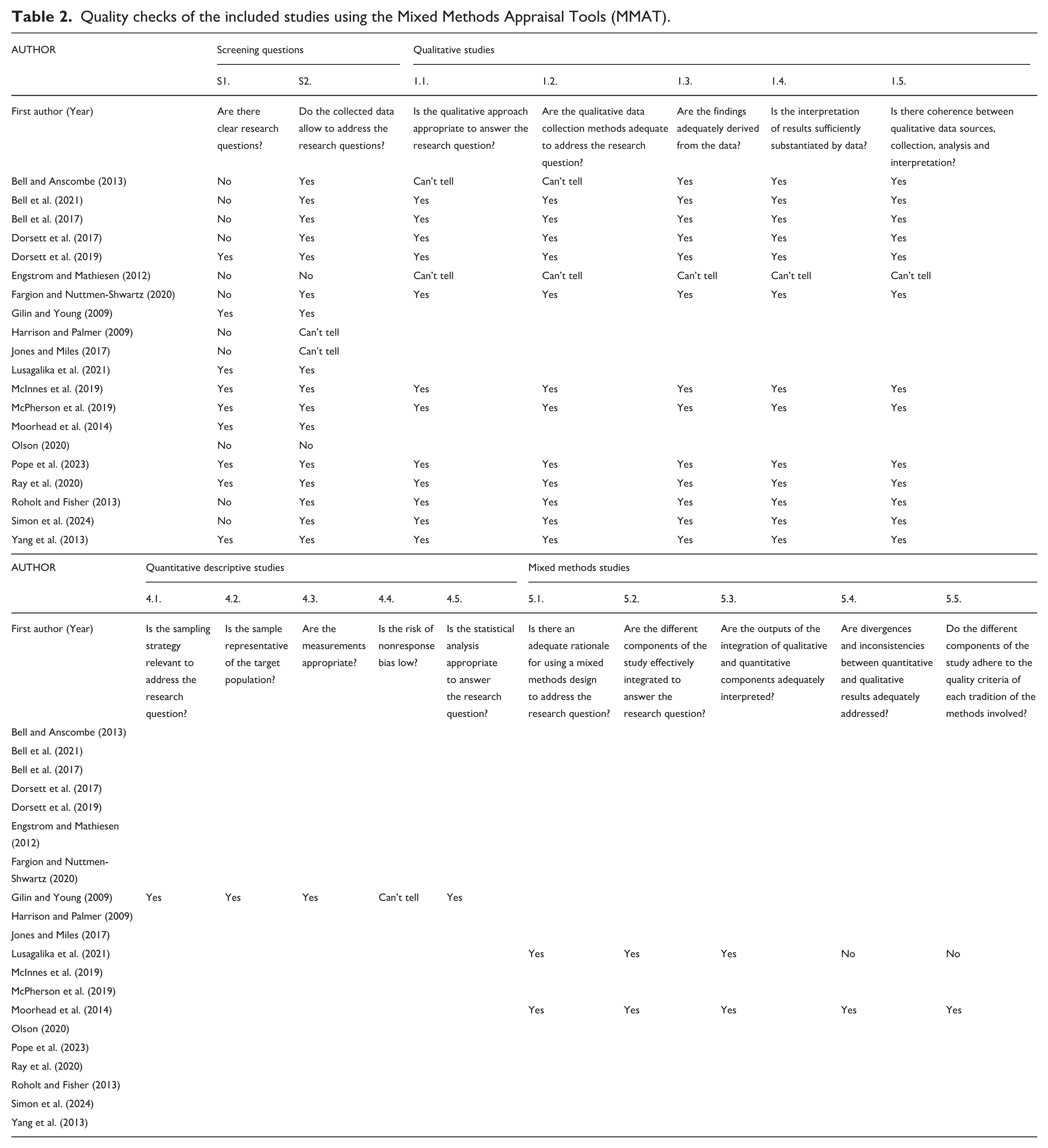
The review included a total of 21 studies with a predominant focus on South and Southeast Asia, India (Bell and Anscombe, 2013; Bell et al., 2017, 2021; Dorsett et al., 2017, 2019; Harrison and Palmer, 2019; Jones and Miles, 2017; Moorhead et al., 2014), Taiwan (Lusagalika et al., 2021; Yang et al., 2013; Yu, 2012), Thailand (Engstrom and Mathiesen, 2012) and Japan (Olson, 2020). The remaining studies were conducted within Northern Europe (McInnes et al., 2019; Simon et al., 2024), Israel (Fargion and Nuttman-Shwartz, 2020), Croatia (McPherson et al., 2022), Northern Ireland (Pope et al., 2023), South Africa (Roholt and Fisher, 2013), the United States (Gilin and Young, 2009) and Australia (Ray et al., 2020). Out of the 22 studies, only two were reciprocal studies (Bell and Anscombe, 2013; Ray et al., 2020). Two of the included studies were written in Taiwanese Mandarin. The study characteristics are provided in Table 1. The results of the quality checking for included studies are provided in Table 2.
Study characteristics including year, country, study method and student population.
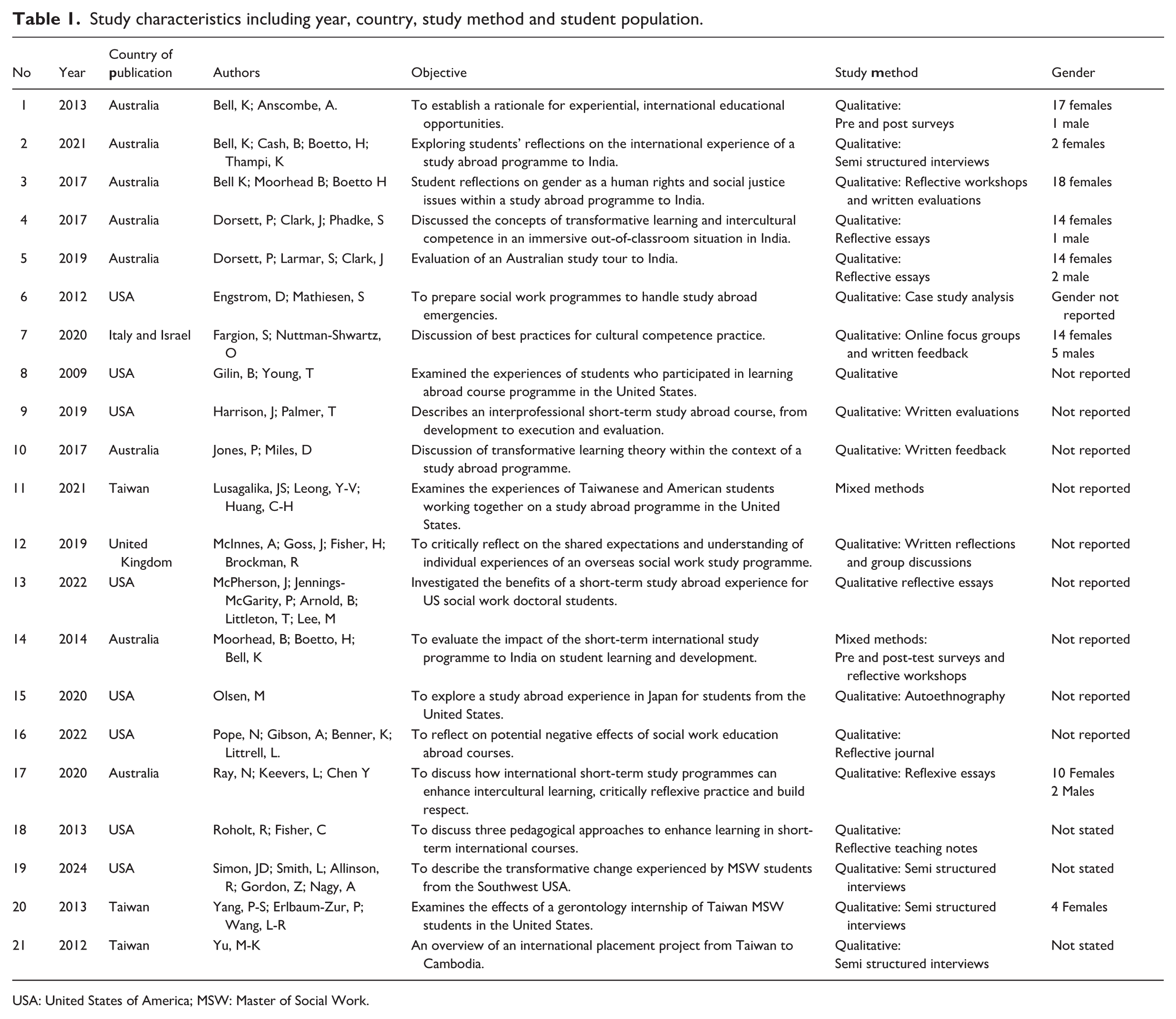
USA: United States of America; MSW: Master of Social Work.
Quality checks of the included studies using the Mixed Methods Appraisal Tools (MMAT).
In the context of short-term study abroad programmes, several practices promote intercultural learning, including pre-departure orientation, cross-cultural awareness, cultural immersion and critical reflection. While each plays an important role, the literature consistently positions cultural immersion as the most influential element that allows students to move beyond a theoretical understanding and engage with local communities and encounter cultural difference in meaningful ways.
The emphasis on immersion aligns with practice theory perspectives, particularly Kemmis’s practice architecture framework (2019) which conceptualises learning as more than the acquisition of knowledge. From this view, immersive experiences do not simply add new information, they transform how students participate in practices. In this view, immersive learning reshapes students’ sayings, doings and relatings within intercultural contexts. These practices are never isolated; they are enabled and constrained by the practice architectures of the sites in which they occur.
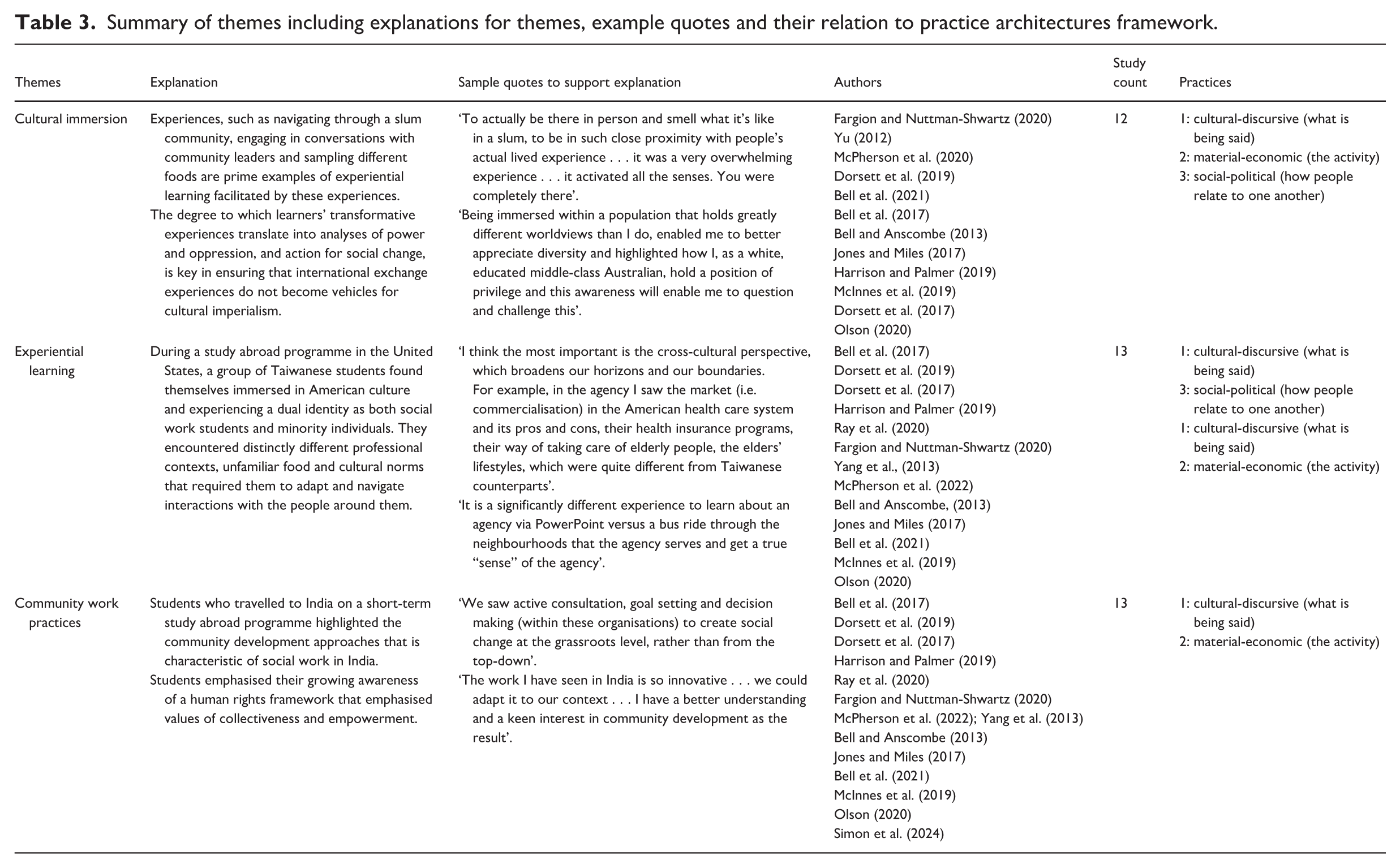
The three key themes that emerged in this review highlight the practices within short-term study abroad programmes: (1) Cultural Immersion, (2) Experiential Learning Practices and (3) Community Work Practices. Table 3 presents a summary of these themes, including explanations for each theme, example quotes from the data that support them and their relation to the practice architecture framework.
Summary of themes including explanations for themes, example quotes and their relation to practice architectures framework.
Cultural immersion
Thirteen studies examined the effects of cultural immersion and its transformative impact, and these were based predominantly on short-term study-abroad programmes based in India and Europe (Bell and Anscombe, 2013; Bell et al., 2017, 2021; Dorsett et al., 2017, 2019; Fargion and Nuttman-Shwartz, 2020; Harrison and Palmer, 2019; Jones and Miles, 2017; McInnes et al., 2019; McPherson et al., 2022; Olson, 2020; Simon et al., 2024; Yang et al., 2013).
Cultural immersion can be challenging; it involves a process of cultural and psychological change (Fargion and Nuttman-Shwartz, 2020) often preceded by a period of critical self-reflection (Dorsett et al., 2019). In multicultural and unfamiliar contexts, social work students may unconsciously devalue Indigenous knowledge and regress to conservative or nationalistic perspectives (Fargion and Nuttman-Shwartz, 2020), however interactions with different cultures can help students recognise their own cultural biases and develop a better understanding of diverse communities (Dorsett et al., 2019).
The terms ‘intercultural competence’, ‘intercultural awareness’ and ‘intercultural education’ are commonly used throughout the literature. Intercultural competence and learning are seen as processes that begin with an awareness of other cultures and recognising the influence of one’s own values on intercultural practice (Dorsett et al., 2019). Less common is the term ‘cultural humility’, which emphasises ongoing learning rather than a definitive acquisition of knowledge (Olson, 2020). Students who believed they were ‘culturally competent’ often reflected on their preconceived ideas, stereotypes and biases, sometimes feeling guilt or shame when they recognised their ethnocentric values and attitudes (Dorsett et al., 2019). Cultural humility encourages students to consider the dynamics of oppression and privilege and to challenge accepted conventions and structures that perpetuate these dynamics (Olson, 2020).
Intercultural competence and cultural humility are closely linked with cultural immersion, providing learning opportunities and encouraging reflection on issues such as colonisation, power dynamics and social disadvantage (Jones and Miles, 2017). Students often encounter vastly different situations that challenge their understanding of poverty and inequality. For example, when visiting a housing precinct in a slum area of rural India, students were overwhelmed by the embodied experience of the living conditions: To actually be there in person and smell what it’s like in a slum, to be in such close proximity with people’s actual lived experience . . . it was a very overwhelming experience . . . it activated all the senses. (student participant) (Dorsett et al., 2019).
Students from Taiwan who participated in a study abroad programme in the United States highlighted the feeling of ‘being part of the whole’ when they were allowed the freedom to participate in agency activities and encouraged to observe and share their ideas (Yang et al., 2013). Interacting with elders from a variety of different cultural backgrounds (Russian, Spanish, African American, Asian) within an aged care facility in New York, the students had the opportunity to immerse themselves in the daily activities and navigate a role that positioned them as both a learner and cultural outsider. One international student who studied in Taiwan and participated in an intercultural programme in the United States noted: I felt less like a foreigner in New York than I do in Taiwan. In America, there are people who speak all kinds of languages. Maybe that is why they made me feel I was part of them . . . my supervisors let me try things. In Taiwan I had always felt a bit inferior professionally. (BSW student) (Yang et al., 2013).
Students from Australia who participated in a short-term programme to India highlighted a profound shift in their perceptions of themselves and the world. They described their experiences as ‘life-changing’, stating that the knowledge and skills gained from interacting with people from different cultures enabled them to conceptualise different ways of seeing the world: I feel that India unlocked a part of my brain that I hadn’t really tapped into before . . . going to India and learning about the culture and religion was like a brain explosion . . . it was quite a big experience for me. (BSW student) (Dorsett et al., 2019).
These examples illustrate how immersive experiences challenge assumptions, broaden cultural understanding and cultivate a deeper sense of connection to diverse communities.
Experiential learning practices
Experiential learning integrates movement, hands-on activities and immersive experiences to help learners internalise concepts and develop skills in a more holistic and meaningful way. Fourteen of the studies highlighted learning that was immersive and experiential (Bell and Anscombe, 2013; Bell et al., 2017, 2021; Dorsett et al., 2017, 2019; Fargion and Nuttman-Shwartz, 2020; Harrison and Palmer, 2019; Jones and Miles, 2017; McInnes et al., 2019; McPherson et al., 2022; Moorhead et al., 2014; Olson, 2020; Ray et al., 2020; Yang et al., 2013).
Dorsett et al. (2019) emphasised the impact of experiential learning, noting that students in a short-term study abroad programme in India were placed in contexts significantly different from their usual experiences. By physically engaging with these experiences, students focused on active learning, exploring the intersectionality between poverty, discrimination and inequity, making the learning more meaningful (Dorsett et al., 2019).
The theme of experiential learning was continued in Moorehead and Boetto’s mixed methods study (2014); students emphasised the powerful learning that came from experiencing another context that promoted their reflexivity, critical thinking and understanding of global social work.
Harrison and Palmer (2019) highlighted the opportunities for immersive and experiential learning for students from the United States participating in short-term study abroad programmes. The immersive 2-week period offered a foundation for critical analysis and reflection, encouraging students to challenge their assumptions about health and human services. Experiencing the complexity of social justice in real-world contexts provided a deeper understanding compared to learning solely from textbooks and media: I observed and engaged with activities that helped me break down cultural barriers . . .. all within 3 or 4 hours. No lecture or formal tour or presentation involved, (MSWQ student) (Harrison and Palmer, 2019).
Experiential learning often requires a ‘disorienting experience’ that unsettles students’ assumptions (Fargion and Nuttman-Shwartz, 2020) and this was evident for a group of Israeli students who had travelled to Italy: As a community social worker, I wondered why social workers (in Italy) do not promote and develop services? Doesn’t the community need such assistance? (MSWQ student).
These responses highlight the process through which students reassess their initial attitudes and worldviews (Fargion and Nuttman-Shwartz, 2020). This self-reflection highlights how experiential learning, where cognitive learning is intertwined with physical and emotional experiences, deepens learning and personal development.
During a study abroad programme in the United States, a group of Taiwanese students experienced a dual identity as both social work students and minority individuals. They encountered different professional contexts, unfamiliar food and cultural norms, requiring them to adapt and navigate interactions with those around them (Yang et al., 2013). This positioned them as both learners and cultural outsiders, requiring them to negotiate unfamiliar expectations in the host environment.
Community work practices
Eleven studies highlighted the nature of community work practice as a framework that supports intercultural learning (Bell and Anscombe, 2013; Bell et al., 2017, 2021; Dorsett et al., 2017, 2019; Jones and Miles, 2017; Lusagalika et al., 2021; McInnes et al., 2019; McPherson et al., 2022; Olson, 2020; Simon et al., 2024).
Bell and Anscombe (2013) evaluated a study abroad programme in India, with a specific focus on the insights gained around the issues of social justice and human rights for a group of Australian students who had taken part in a short-term study abroad programme (Bell and Anscombe, 2013). Bell et al. (2017) expanded this evaluation and highlighted the outcomes for students based on their perceptions of gender oppression. Both studies highlighted the significance of community work and emphasised how this approach expanded the students’ comprehension of social work practice.
Students who travelled to India on a short-term study abroad programme highlighted community development practices such as rural organisations that focused on women’s empowerment, micro-credit farms and child welfare agencies (Bell et al., 2017). These practices emphasised a collective and sustainable approach that encouraged students to compare them to the individual case management style they were accustomed to (Bell and Anscombe, 2013; Bell et al., 2021; Dorsett et al., 2019): We saw active consultation, goal setting and decision making to create social change at the grassroots level, rather than from the top-down. (BSW student) (Bell and Anscombe, 2013).
Students from the United States who participated in a short-term study abroad in Croatia highlighted the feelings of interconnectedness between their fellow participants, emphasising their ability to connect across cultures through shared experiences (McPherson et al., 2022). Students visited local community programmes, participating in activities such as sharing lunch with community members and observing local social workers: I believe I now have a much broader conception of how social issues relevant to the field of social work are identified, defined, experienced and researched and I now apply this global way of processing information at virtually all times. (SW PhD student) (McPherson et al., 2022).
Lusagalika et al.’s (2021) mixed methods study on rural Taiwan highlighted community work as a central component of student learning. Through close collaboration with community workers, students engaged with local assets, histories and cultural practices, which collectively formed an essential part of their overall cultural learning.
Discussion
This systematic review of short-term study abroad programmes in social work education reveals three key themes promoting intercultural learning: (1) cultural immersion, (2) experiential learning practices and (3) community work practices. Together, these themes highlight the transformative potential of short-term study abroad programmes within a social work curriculum.
Most of the studies predominantly focused on white, Western social work students who participated in study abroad programmes in developing countries which reflects an imbalance in mobility, resources and reciprocity. As Fisher and Grettenberger (2015) argued, the often-non-reciprocal nature of study abroad programmes tends to create a one-way system that primarily benefits Western students while students from developing countries often lack the resources and institutional capacity to participate in equivalent exchanges. Although there is some evidence, primarily from Taiwanese Mandarin publications (Lusagalika et al., 2021; Yang et al., 2013; Yu, 2012) that Taiwanese social work students also experienced meaningful reflexive growth when immersed in another cultural setting, these studies remain limited in number and scope. The limited availability of research that documents the experiences of students from non-Western educational systems highlights the often-non-reciprocal nature of international learning. Further exploration of reciprocal models is recommended.
Cultural immersion emerged as a central theme in the literature, promoting critical reflection and awareness of cultural biases. Strengthening the literature through studies that integrate community development approaches or examine partnerships with local organisations would expand current understandings of how community work intersects with cultural immersion.
The concept of cultural humility, as highlighted by Olson (2020), encourages ongoing learning and self-reflection, offering an opportunity to learn from other cultures while examining dominant ethnocentric views. The immersive and experiential nature of these programmes often elicited emotional responses from students, encouraging critical thinking about their social work practices and attitudes towards poverty and inequity (Moorhead et al., 2014).
The findings highlight the benefits of immersive and experiential learning opportunities for both Western and Taiwanese students. These experiences broaden students’ understanding of intercultural practice and global social work issues. A global perspective is increasingly important as issues like climate change, war and forced migration become more prevalent. These benefits underscore the role of global, experiential learning as a catalyst for transformation, shifting how students speak, act and relate in ways that challenge inequity and advance social justice. These findings resonate with practice theory perspectives, particularly with Kemmis’s theory of practice architectures (Kemmis, 2019). Kemmis emphasised that transformation requires changing the practices themselves: shifting how we speak, act and relate while also recognising that these practices are shaped by the conditions in which they occur. These include the cultural-discursive arrangements that influence what can be said, the material-economic arrangements that enable or constrain what can be done and the social-political arrangements that influence how people relate. Intercultural learning and immersive experiences engage all three dimensions, requiring new ways of communicating, negotiating meaning and building relationships. Practices and their conditions are mutually constituted and transformation entails the reshaping of both the practices themselves and the arrangements that sustain them (Kemmis, 2022b).
Incorporating study abroad programmes into a social work curriculum may not always be feasible due to funding and resource constraints. However, educators could integrate immersive and experiential learning opportunities that combine physical, cognitive and emotional components, challenging students’ assumptions and deepening critical self-reflection. To harness the immersive benefits that are typically associated with study abroad programmes, educators may consider how these insights can be translated into the classroom. For instance, with collaborations such as the ones between the authors of this article, distance shrinking and AI technologies can enrich an international social work subject by enabling intercultural teaching teams to co-deliver content across global sites (Keevers et al., 2014). In addition, the use of experiential simulations can strengthen students’ capacity to communicate across cultures, challenging preconceived ideas and biases to engage with practice scenarios involving clients from refugee backgrounds, trauma experiences, racism and other forms of marginalisation (Olcoń et al., 2023). Further research is needed to examine how these activities can be designed to replicate the transformative learning commonly associated with international immersion.
The interpretation of the results could potentially be influenced by author bias; however, this was minimised by the collaborative nature of the research. This study incorporated transnational practices by involving international partners in all stages of the review process, promoting a cross-cultural approach to data analysis. The collaboration with Taiwanese partners provided diverse cultural perspectives, deepening the cultural understanding of the literature. Further research with students from diverse countries and reciprocal learning programmes is needed to determine the ongoing transformative impacts of these experiences.
Conclusion
This review highlights the significant impact of immersive and experiential learning within short-term study abroad programmes for social work students. Across the studies, three interconnected practices, cultural immersion, experiential learning and community work, emerged as key elements that support transformative learning. Immersive and embodied experiences challenged students’ assumptions and cultural awareness and encouraged critical reflection on privilege, power and social justice.
These findings align with Kemmis’s practice architectures by illustrating how study abroad programmes reshape the sayings, doings and relatings of social work practice by placing students in contexts that foster new ways of engaging with cultural difference.
While study abroad programmes are not accessible to all students, the insights from this review suggest that elements of immersion and experiential learning can be meaningfully integrated into local curricula through intercultural teaching partnerships, community engaged learning, simulations and technology enhanced collaboration. When designed thoughtfully, these approaches can cultivate culturally humble, reflexive practitioners who are better equipped to navigate diverse practice settings both locally and globally.
Footnotes
ORCID iDs

Funding
The authors received no financial support for the research, authorship, and/or publication of this article.
Declaration of conflicting interests
The authors declared no potential conflicts of interest with respect to the research, authorship, and/or publication of this article.
Data availability statement
This review is based on previously published studies that are publicly available. No new primary data was generated. All data supporting the findings are contained within the article and its supplementary materials.
Statement on AI
Generative or translational AI created no part of this submission