






Abstract
This study presents a bibliometric analysis of disability and social work research from 2000 to 2025. Using the keywords disab* and “social work,” 211 peer-reviewed English articles were retrieved from the Web of Science Core Collection and analyzed using VOS viewer. Co-authorship, co-citation, bibliographic coupling, and keyword co-occurrence were used to analyze collaboration patterns, intellectual structure, and thematic trends. Findings show steady publication growth, influential authors and institutions in Anglo-Saxon countries, and a shift toward rights-based approaches emphasizing empowerment, inclusion, and accessibility. This study recommends expanding Global South participation, strengthening international collaboration, and promoting more inclusive and intersectional disability research in social work.
Introduction
People with disabilities are referred to as “people who have long-term physical, mental, intellectual, or sensory impairments which in interaction with various barriers may hinder their full and effective participation in society on an equal basis with others” (United Nations Convention on the Rights of Persons with Disabilities [UNCRPD], 2006). As of 2022, approximately 1.3 billion people (about 16% of the global population) live with a disability. According to the 2022 report by the World Health Organization (WHO, 2023), the number of people with disabilities has shown an increasing trend. Demographic shifts, such as population aging, alongside multifaceted crises, including the COVID-19 pandemic, natural disasters, and forced displacement, suggest a significant global rise in disability rates, further escalating the demand for social services (El-Lahib, 2020; Gu et al., 2015; Meltzer et al., 2025; Saleeby, 2008).
The global definition of social work frames it not only as a practice-based profession but also as an academic discipline that promotes social change and development, social cohesion, and the empowerment and liberation of individuals (IFSW and IASSW, 2014). This definition underscores the centrality of empowerment in addressing social inequalities. Empowerment enables marginalized groups to overcome oppressive social structures, unjust policies, physical and institutional barriers, and societal discrimination, allowing them to realize their potential and participate equally in social life (Solomon, 1976). International frameworks such as the United Nations Convention on the Rights of Persons with Disabilities (UNCRPD), adopted in 2006, reinforce this empowerment by embedding disability within a rights-based framework in international law. The convention establishes binding obligations for states and supports social work in promoting dignity, equality, empowerment, and participation of persons with disabilities (Kim, 2010).
The medical model conceptualizes disability as an individual pathology or functional deficit (Hiranandani, 2005), prioritizing impairment while neglecting social and environmental contexts (Mackelprang and Salsgiver, 2015). By framing impairments as conditions to be corrected to restore “normality” (Winter, 2003), it has promoted institutionalized treatment approaches that often reinforce exclusion and restrict participation (Barnes, 2019). In contrast, the social model, which defines disability as the outcome of systemic and environmental barriers (Winter, 2003), was introduced into social work by Oliver (1983) and shifted attention from charity-based approaches to a human rights framework (Shakespeare, 2006), emphasizing accessible environments and inclusive policies (Kattari et al., 2017).
Disability studies, in collaboration with disabled people’s organizations, strengthened this framework (Boxall and Beresford, 2013) and influenced global approaches such as the International Classification of Functioning, Disability and Health (ICF), which highlights the interaction of impairments with social and environmental conditions (Saleeby, 2008). Although social work has sought to apply these principles, it has struggled to overcome persistent barriers, as people with disabilities continue to face discrimination, exclusion, and inaccessibility, often intensified by intersecting inequalities related to gender, class, race, and other social positions (Björnsdóttir and Traustadóttir, 2010). Achieving equal participation requires removing structural barriers and transforming social attitudes and policy frameworks (Carty et al., 2021).
Since the 1980s, disability has gained increasing attention in the social sciences, fostering interdisciplinary networks (Barnes, 2019). While long marginalized in social work (Simcock and Castle, 2016), a growing body of literature has emerged (Muyor-Rodriguez et al., 2019), diversifying across health, care, education, and policy. To translate this knowledge into practice and policy, it is crucial to identify trends, themes, and research gaps (Bigby et al., 2018). Bibliometric analysis enables the systematic mapping of scientific publications through citation, co-citation, bibliographic coupling, and keyword analyses, revealing the intellectual structure of a research field (Holden et al., 2005). Bibliometric analysis serves as a strategic tool to systematically map intellectual structures and power dynamics, making it indispensable for assessing the current state and future directions of dynamically evolving fields like disability research (Azizan et al., 2023; Kandeel et al., 2025).
Persistent global inequalities affecting persons with disabilities also raise concerns about inequalities in knowledge (re)production within social work. Scholarly output is often concentrated in regions and institutions, reinforcing dominant perspectives while limiting the visibility of underrepresented contexts. Systematically mapping the field is therefore essential to identify geographical imbalances and examine how knowledge hierarchies shape disability research in social work.
Previous studies (Demir and Gedik, 2022; Kandeel et al., 2025; Muyor-Rodriguez et al., 2019) have explored disability across various disciplines and practice contexts; however, systematic analyses grounded specifically in a social work perspective remain limited. Moreover, prior reviews have typically relied on single databases or journal-based samples and have not comprehensively mapped the field’s intellectual and collaborative structures. Addressing this gap, this study conducts a Web of Science (WoS)-based bibliometric analysis of publications between 2000 and 2025 to examine publication trends, geographical distribution, key themes, citation patterns, scholarly impact, and author–institution collaboration networks. Accordingly, the study addresses the following research questions:
What is the numerical, geographical, and citation-based distribution of publications in the field of disability and social work between 2000 and 2025?
How do collaboration networks among authors, institutions, and countries shape the production and dissemination of knowledge in disability and social work research?
Methodology
This study analyzes the literature on disability and social work through bibliometric methods. Bibliometric methods assess scientific progress, identify influential sources, and analyze emerging research areas (Holden et al., 2005). In social work research, bibliometric analysis has increasingly been used as a systematic and data-driven approach to examine the development of scholarly knowledge (Kara and Kutlu, 2025; Muyor-Rodriguez et al., 2019; Vîşcu and Rad, 2024). This shift reflects a broader trend in social work research toward more systematic and data-driven quantitative analysis of social issues (Adawiyah et al., 2023).
The analysis followed the bibliometric research framework proposed by Donthu et al. (2021), which includes defining the research aim and scope, identifying bibliometric units of analysis, collecting bibliographic data, and conducting science mapping analyses. Data were collected from the WoS Core Collection, a widely used and reliable database for bibliometric studies due to its standardized indexing structure and compatibility with bibliometric software (Donthu et al., 2021). To enhance the precision of the retrieval process, a search was conducted in the WoS database using Boolean operators across the title (TI) and keyword (KP) fields, with the terms “social work” AND disab*. The search was restricted to TI and KP to prioritize conceptual centrality over breadth, capturing publications explicitly focused on disability and social work. Including abstracts would have expanded the dataset but potentially introduced thematic dispersion and noise, reducing analytical coherence. The query was formulated as TI = (“social work” AND disab*) OR KP = (“social work” AND disab*), resulting in 318 records. The search term disab* was employed to capture variations of the concept, including disability, disabled, disable, and so on. After applying a publication year filter for the period 2000–2025, 285 records were retained for analysis, while 33 were excluded. Reflecting the paradigmatic shift from “handicap” to “disability” initiated by the ICF’s adoption in 2001, this study focuses on the last 25 years of literature to capture the resulting common terminology across disciplines. Only articles were included in the analysis due to their peer-reviewed status, scientific reliability, and comparability in terms of standard bibliometric information; non-article publications such as books, conference proceedings, and editorial notes (n = 61) were excluded, resulting in 224 articles. To prevent comparability issues and considering that English is the dominant language in the literature, only articles published in English were included in the review, while 13 articles in other languages were excluded. Based on the criteria specified in the main search conducted on September 1, a total of 211 articles were included in the analysis.
The full records of the final 211 articles were downloaded in a comprehensive format for analysis, including bibliometric information such as authorship and institutional details, publication titles, journal names, as well as citation data and reference lists. The data collection and filtering process is illustrated in Figure 1.
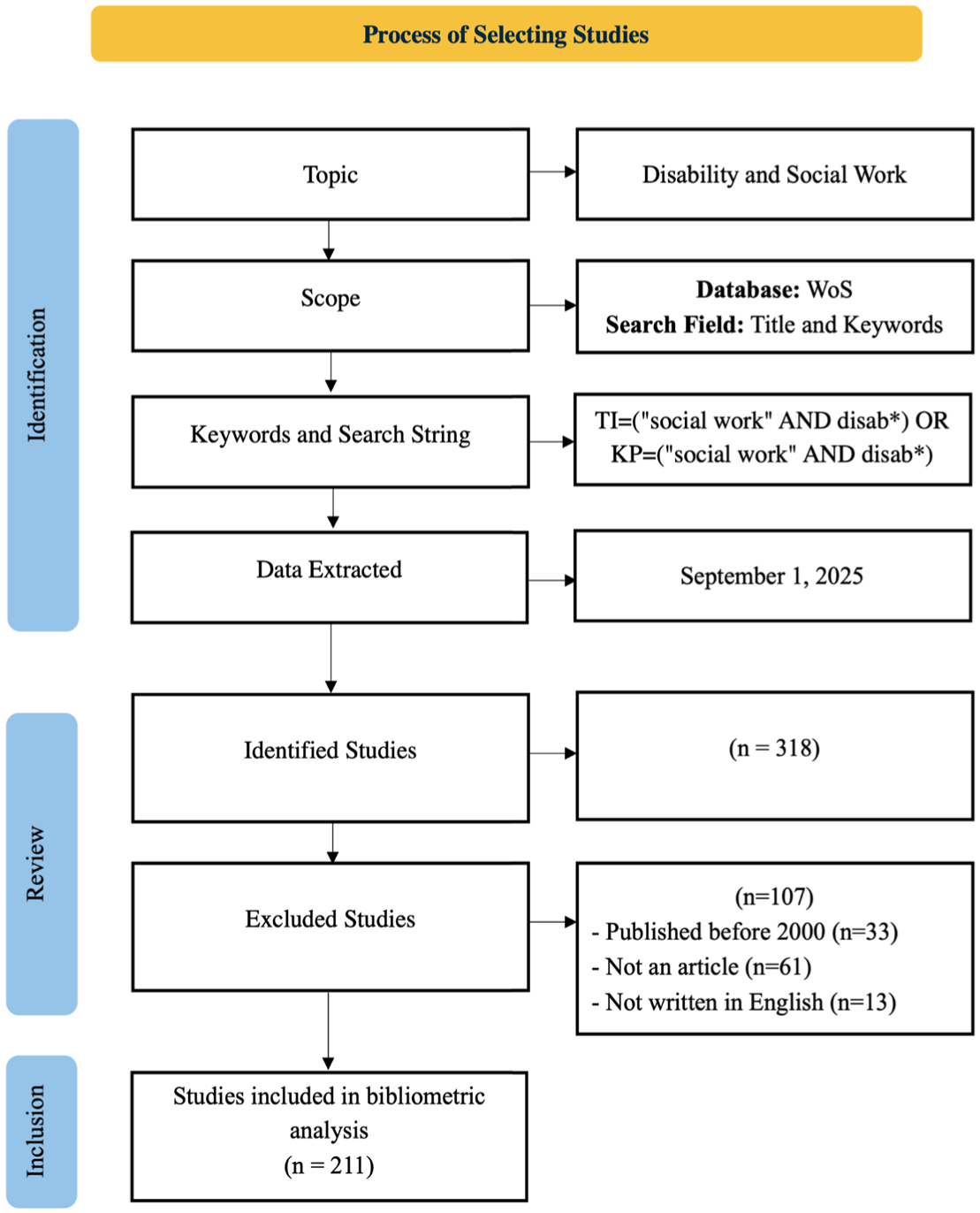
Process of selecting studies.
In the final stage, the dataset was analyzed using VOSviewer (version 1.6.20), a widely used tool for bibliometric network visualization (Van Eck and Waltman, 2023). VOSviewer was chosen for the analysis due to its ability to process large bibliographic datasets and produce informative visualizations that reveal trends and patterns in the literature (Vîşcu and Rad, 2024). For the normalization of the network nodes, the association strength method was employed (Van Eck and Waltman, 2009), as it is considered the most consistent measure for representing the relative strength of links between bibliometric units. Default VOSviewer layout parameters (attraction = 2; repulsion = 1) and the full counting method were applied. Science mapping techniques—including co-authorship, citation analysis, co-citation, bibliographic coupling, and keyword co-occurrence—were applied to identify the intellectual and collaborative structure of the field (Donthu et al., 2021; Tunger and Eulerich, 2018). These analyses examined publication year, authors, institutions, countries, journals, citation patterns, and collaboration networks. In addition, network metrics (centrality and density) were analyzed using Gephi, while visualizations and tables were produced using VOSviewer and Microsoft Word.
Results
This study reports the results of a bibliometric analysis of 211 English-language articles on disability and social work indexed in the WoS between 2000 and 2025. The findings describe publication trends, leading authors and institutions, and the geographical distribution of the literature.
While publication output remained relatively low between 2000 and 2010, it began to rise more steadily after 2012, showing a clear upward trend through 2025 despite occasional annual fluctuations (Figure 2). The annual compound growth rate (CAGR) of publications during this period was approximately 3.2%, indicating a modest but steady increase in research output. Between 2000 and 2025, the mean annual number of publications was 8.85 (SD = 4.47), with a coefficient of variation (CV) = 0.51, suggesting moderate to high variability in annual publication output.
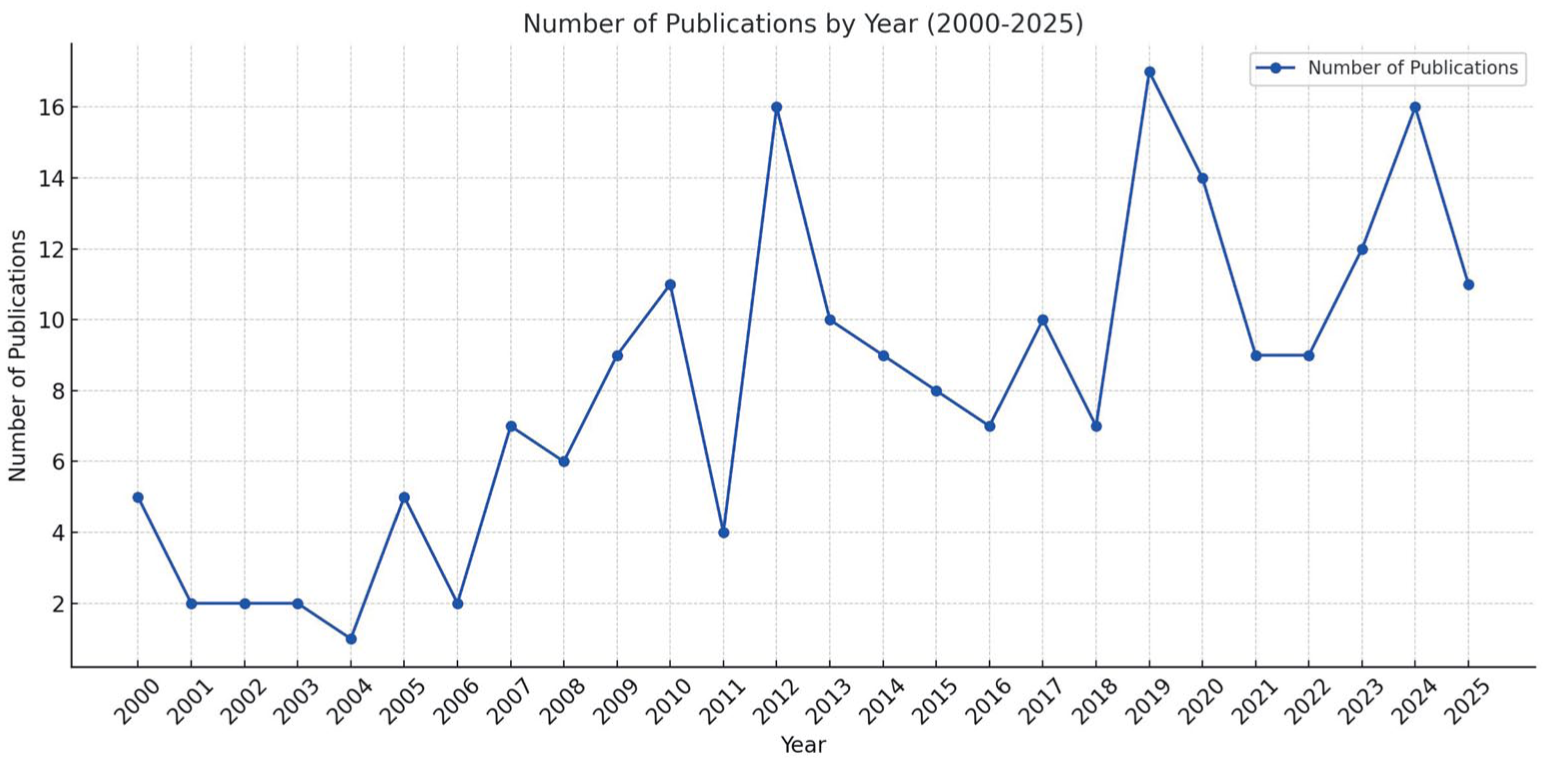
Number of publications by year (2000–2025).
Table 1 ranks the top 10 researchers by publication and citation impact within the WoS database, identifying Bigby and El-Lahib as central figures in the field’s intellectual structure. Their high productivity and citation levels underscore their leading role in advancing the conceptual framework of disability and social work.
Top 10 authors by publications in disability and social work literature.
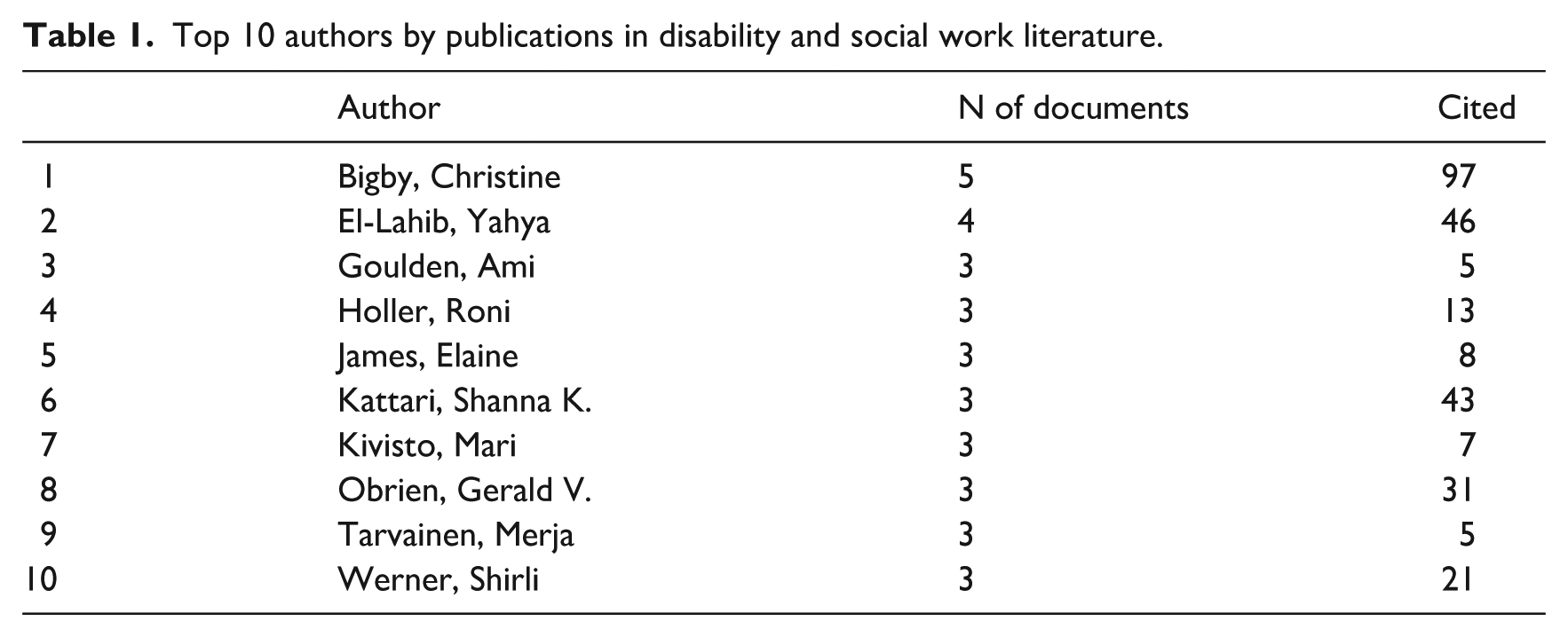
Figure 3 presents the international collaboration network among countries in publications on “social work” and disability. The 211 articles originated from 38 countries (minimum 1 document per country). The United States leads with 70 publications, followed by England (41), Australia (30), and Canada (24). This pattern indicates that the literature is concentrated in Western countries but also enriched by important contributions from the Middle East and East Asia. The co-authorship map places the United States at the center, with strong ties to Canada, England, and Australia. The map also reveals several regional isolates at the network periphery, with countries such as Jordan, Sudan, and Türkiye showing limited or no collaboration links with the core cluster. Consistent with this structure, betweenness centrality (BC) analysis identifies the United States as the main intermediary in the collaboration network (BC = 151.35), followed by Australia (BC = 68.43) and England (BC = 62.68). Canada and Northern Ireland show more moderate intermediary roles (BC = 24.00 each).
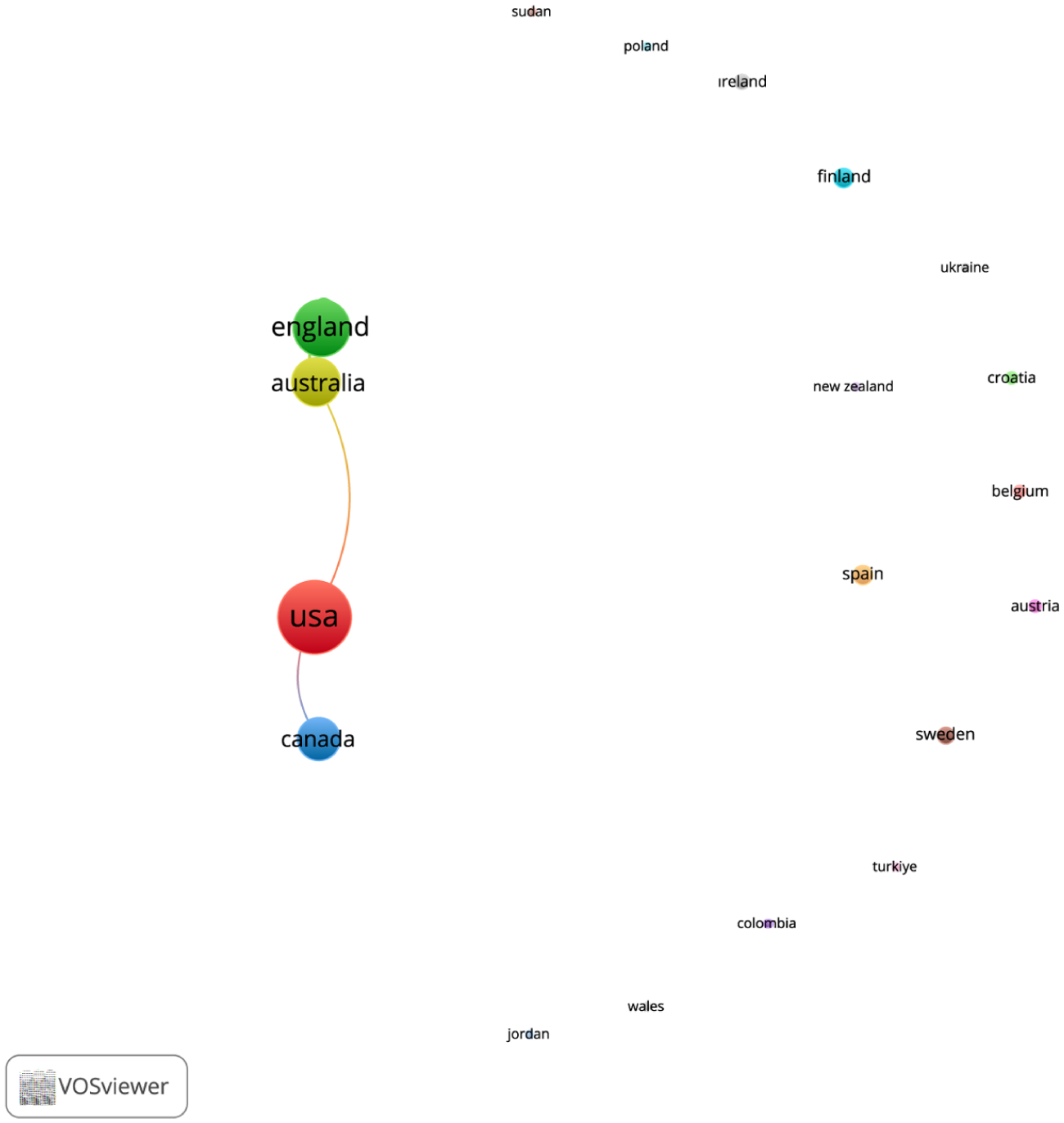
Country co-authorship network in social work and disability literature.
Table 2 lists the top 10 active organizations ranked by publication productivity rather than overall contribution or citation influence. When institutions reported the same number of publications (n = 3), total citation counts were used as a secondary sorting criterion. In total, 247 organizations contributed to the field, reflecting considerable institutional diversity. Although La Trobe University leads in publication volume, the University of Michigan and Boston University demonstrate higher citation impact.
Top 10 active organizations by number of publications.
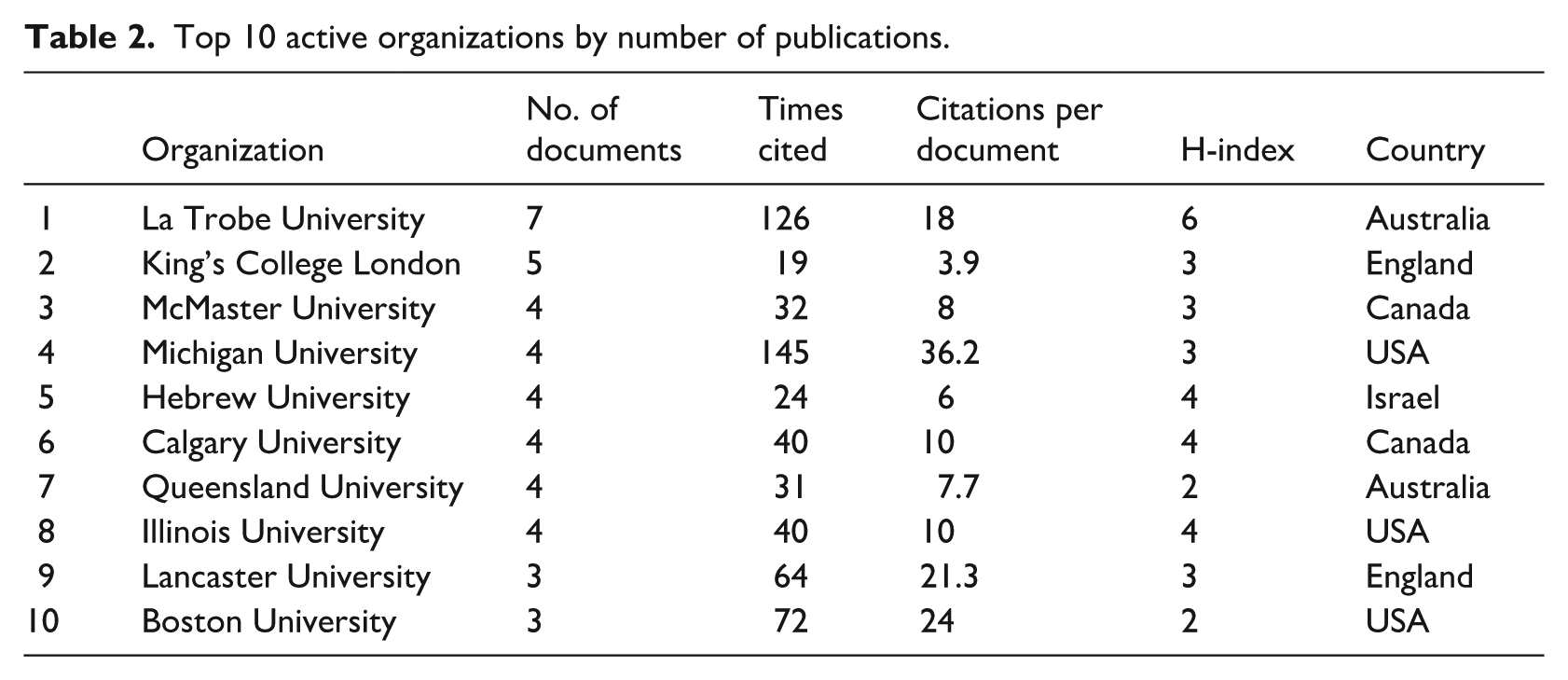
The organizational collaboration network includes 247 institutions, with a network density of 0.007 and an average degree of 0.883, revealing a highly fragmented collaboration structure. These findings suggest that interorganizational collaboration remains limited, with many institutions producing research independently rather than through extensive partnerships. While some universities stand out for their high publication output, others achieve stronger academic impact despite fewer publications. Overall, institutions in the United States, Australia, and Canada appear particularly influential in terms of both productivity and citation impact.
Figure 4 presents the citation network analysis of the 106 most relevant connected items identified by VOSviewer, representing the core structure of the network based on citation link strength. This analysis not only identifies the core literature of the field but also allows for a combined assessment of authors’ productivity and impact.
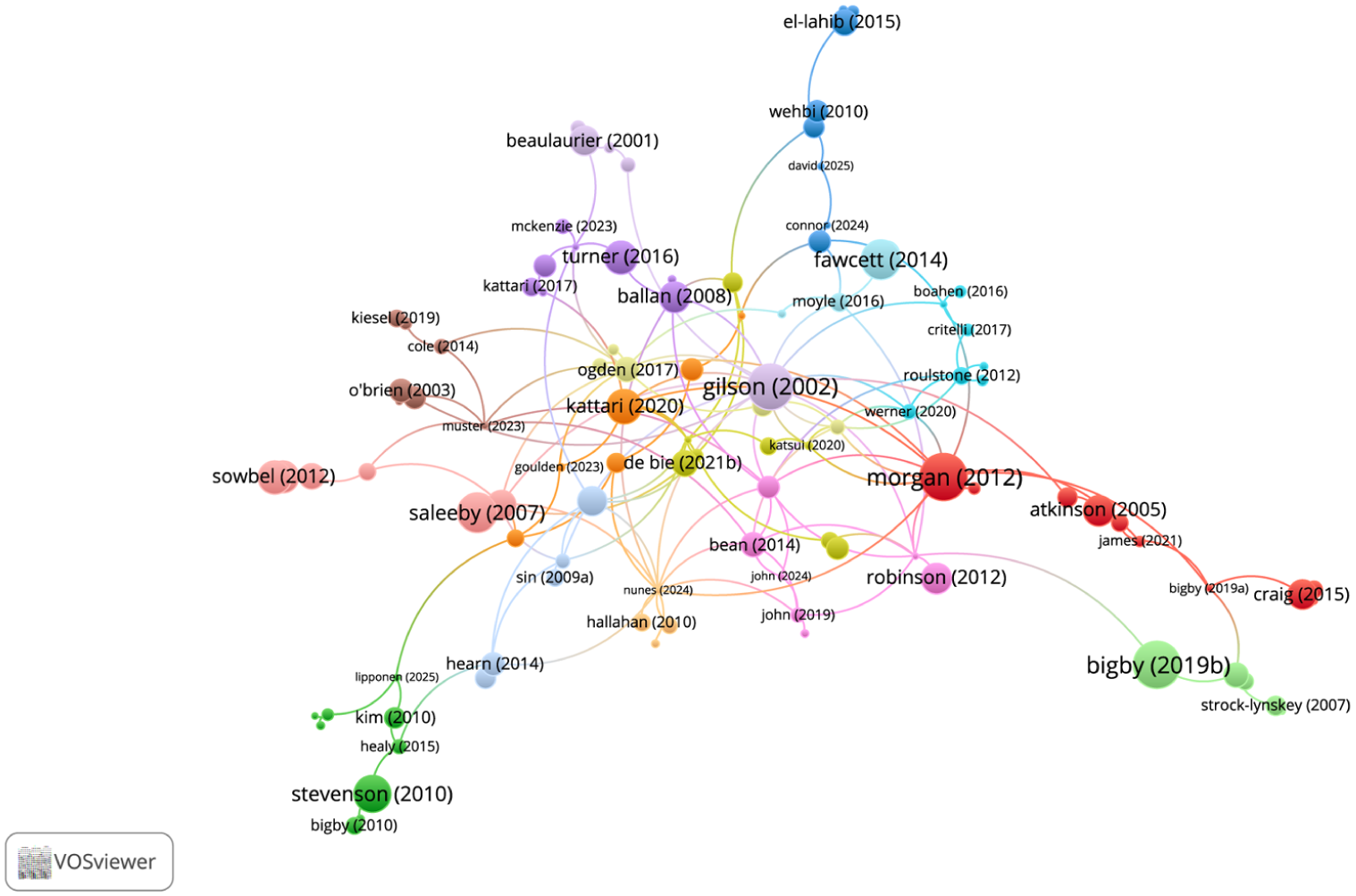
Highly cited studies of main authors in social work and disability literature.
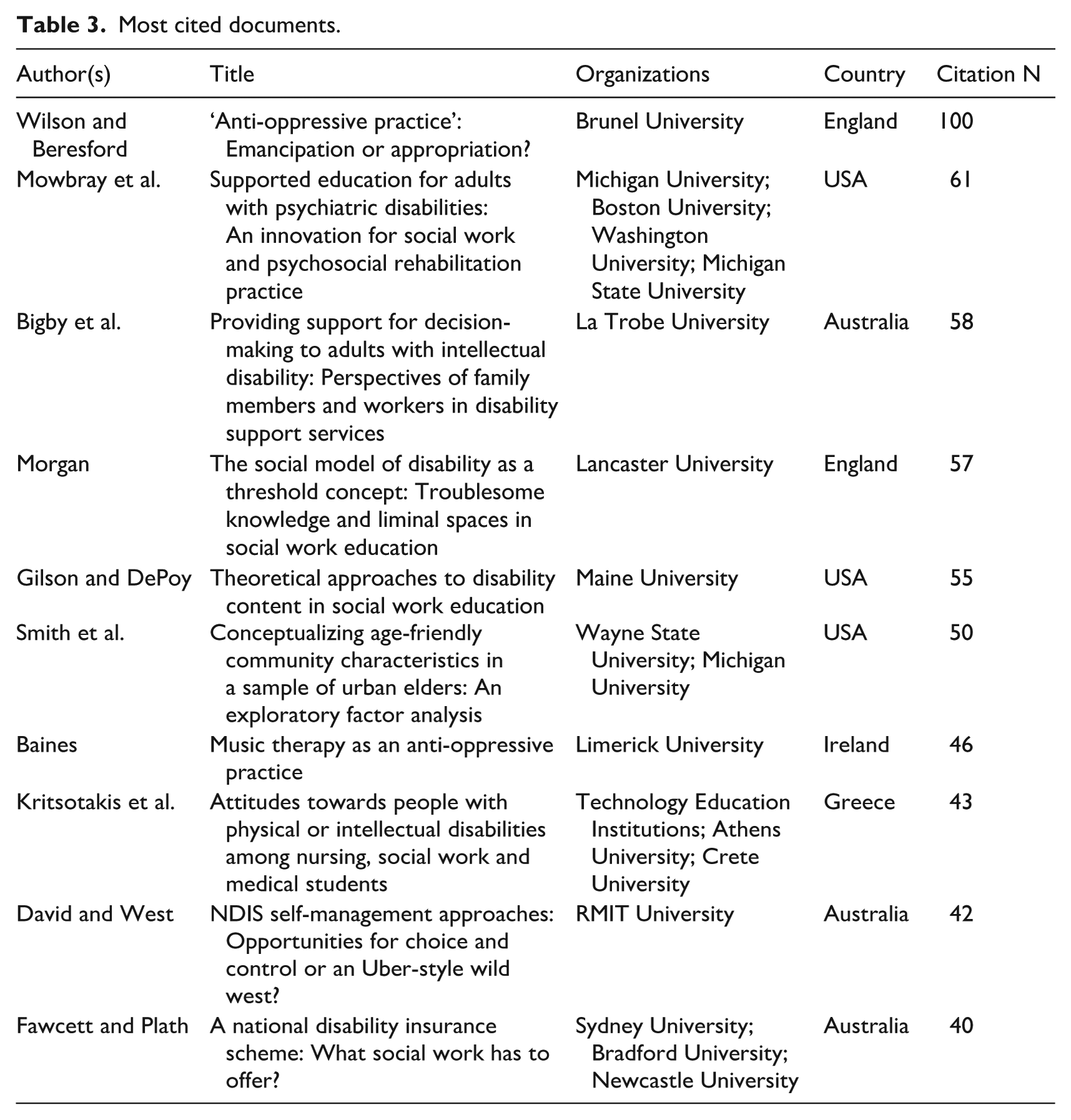
Table 3 lists the most cited documents applying a minimum threshold of 40 citations; the most influential studies include Wilson and Beresford, Mowbray et al., Bigby et al., Morgan, Gilson and DePoy, and Smith et al. The titles of these highly cited works provide insights into the thematic priorities of the literature, revealing a concentration on education, social policy, and theoretical or conceptual discussions. To further explore key concepts and emerging research trends in the field, a keyword analysis was conducted (Figure 5).
Most cited documents.
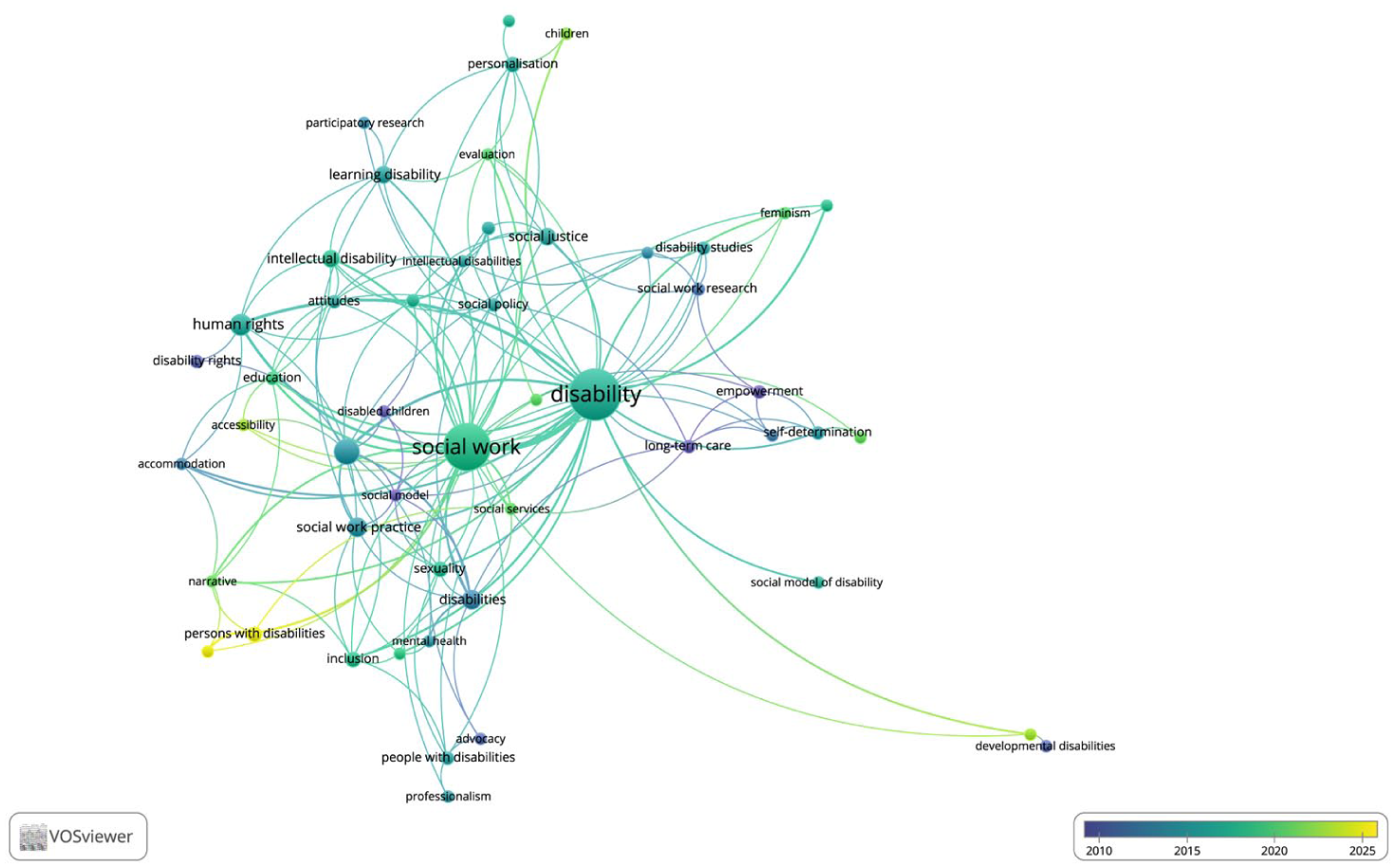
Overlay and network analysis of keywords.
The analysis of 211 articles identified 612 keywords. Figure 5 visualizes the 50 most frequently used terms (appearing at least three times between 2010 and 2025) through an overlay map and clustering analysis, which produced 10 clusters. The top 50 keywords were selected to maintain network clarity. Each node represents a keyword, with size indicating frequency and links reflecting total link strength (TLS; Vîşcu and Rad, 2024) which reaches 230. This high TLS value confirms that the identified keywords are deeply interconnected, providing a robust foundation for the 10 clusters. These clusters represent thematic concentrations in the literature, for instance: cluster 1 focuses on intellectual disability, social justice, and social work practice; cluster 2 centers on child welfare; cluster 3 emphasizes social policy and participatory research; cluster 4 highlights empowerment and self-determination; cluster 5 addresses social work education; cluster 6 explores advocacy for people with disabilities; cluster 7 examines people with disabilities; cluster 8 investigates the social model of disability; cluster 9 is grounded in human rights; and cluster 10 analyzes developmental disabilities and phenomenology.
At the core of the network are “disability” (69) and “social work” (50), followed by “social work education” (15), “human rights” (10), and “social work practice” (8). The map reflects the co-occurrence frequency of terms related to vulnerable groups, such as children and women with disabilities.
The overlay visualization distinguishes temporal trends: warmer colors (yellow) represent more recent average publication year, while cooler tones (blue/green) indicate earlier work (Van Eck and Waltman, 2023). Terms like “social model,” “empowerment,” and “disability rights” appear in cooler colors, whereas “inclusion” and “human rights” remain influential across the period. The position of “accessibility” in the green spectrum indicates its frequent co-occurrence in mid-period publications, and the prominence of “people with disabilities” and “person with disabilities” in bright yellow signifies their higher frequency in the most recent datasets (2020–2025). Furthermore, the map shows a higher co-occurrence of qualitative methodological terms—such as narratives, phenomenology, and participatory research—in recent years. In the final 5-year bracket, “care”-related themes (caregiving, health professionals, parenting) have emerged as prominent nodes, marking a temporal concentration of these terms.
Figure 6 presents the 51 journals with the highest citation impact and centrality among 88 journals. The 51 journals represent the largest connected component identified by VOSviewer, ensuring a coherent and interpretable network. Social Work Education and the Journal of Social Work in Disability and Rehabilitation emerge as core publication outlets in terms of citation frequency. Regionally influential journals such as the British Journal of Social Work and Australian Social Work build strong internal citation networks while maintaining connections with the international literature. The clustering of journals around countries with high publication and citation output (e.g. England and Australia) is also evident. The broad influence of Social Work Education indicates that “education” has become an increasingly central theme in disability and social work scholarship. In addition, generalist journals not limited to a specific topic or region (e.g. European JSW, International SW, Journal of SW) also provide significant space for disability studies. Some interdisciplinary journals with a focus on health and aging are likewise positioned within this core. Overall, the literature has evolved from an Anglo-Saxon-centered core toward a more international and interdisciplinary framework. Figure 6 also offers guidance for researchers in disability and social work on which journals to prioritize.
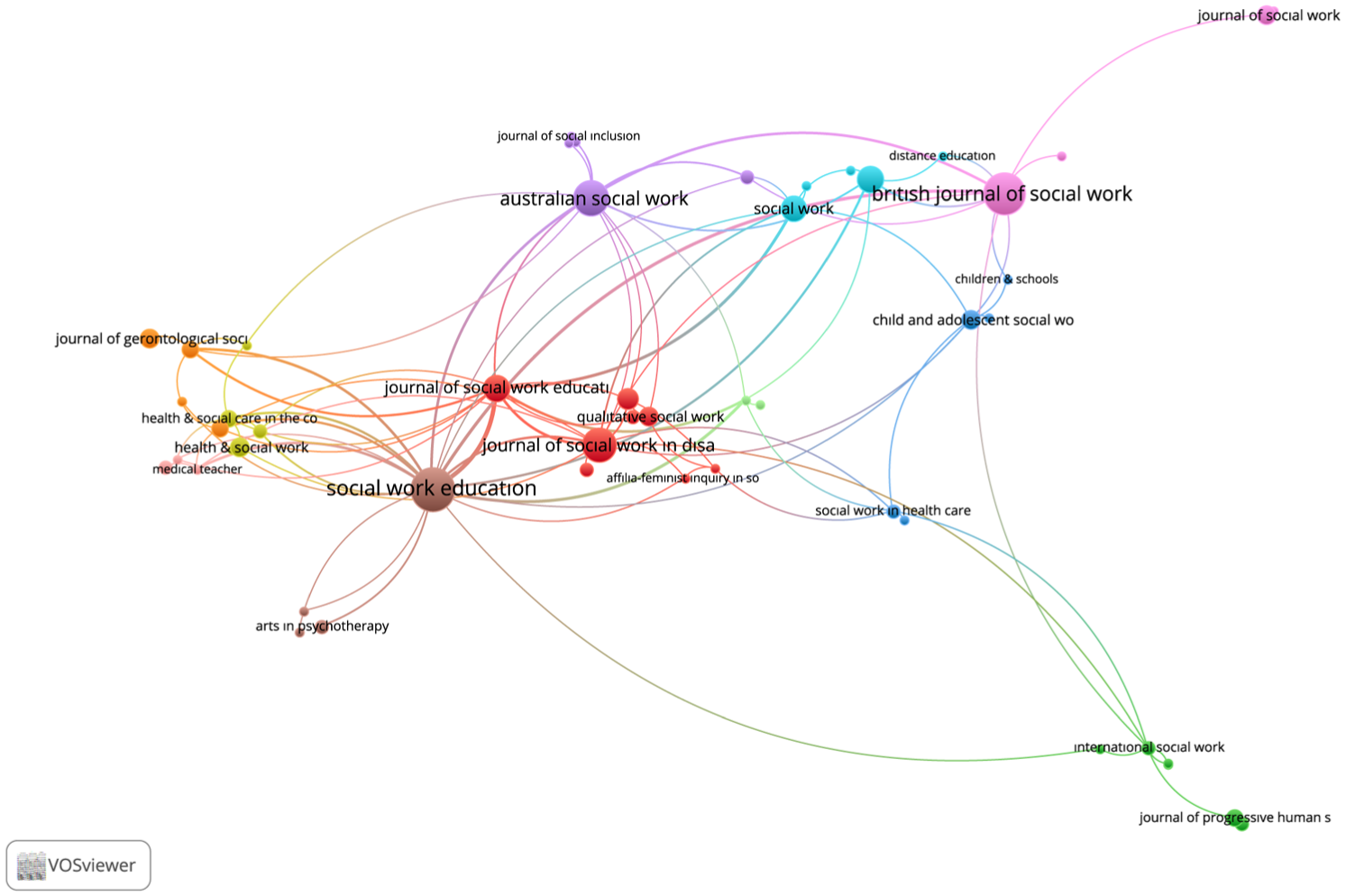
Most cited journals.
Figure 7 maps the co-citation relationships among journals in the field of disability and social work. Based on 5398 sources, the analysis included 39 journals that met a minimum threshold of 20 citations, ensuring the inclusion of influential sources while maintaining network clarity. Co-citation links established when two journals are cited together (Boyack and Klavans, 2010) reveal the intellectual structure of the field, resulting in five distinct clusters. The green cluster comprises health and rehabilitation journals; the yellow cluster focuses on social work education; the blue cluster centers on intellectual disability; the red cluster covers social policy, social work practice, and critical perspectives; and the smaller purple cluster highlights gender. The positioning of clusters reflects intellectual proximities and distances. For example, the separation of the green and red clusters suggests distinct knowledge bases, yet co-citation links indicate shared references and indirect interactions. The closeness of the green and yellow clusters points to overlapping research fronts between health/rehabilitation and social work education, while strong ties between the red and blue clusters highlight connections between intellectual disability and social policy/critical social work. The network exhibits a TLS of 9684, reflecting a dense pattern of shared citations among journals. However, the modularity score of 0.203 suggests that while several thematic clusters are identifiable, the boundaries between them remain relatively porous, indicating substantial intellectual overlap across subfields.
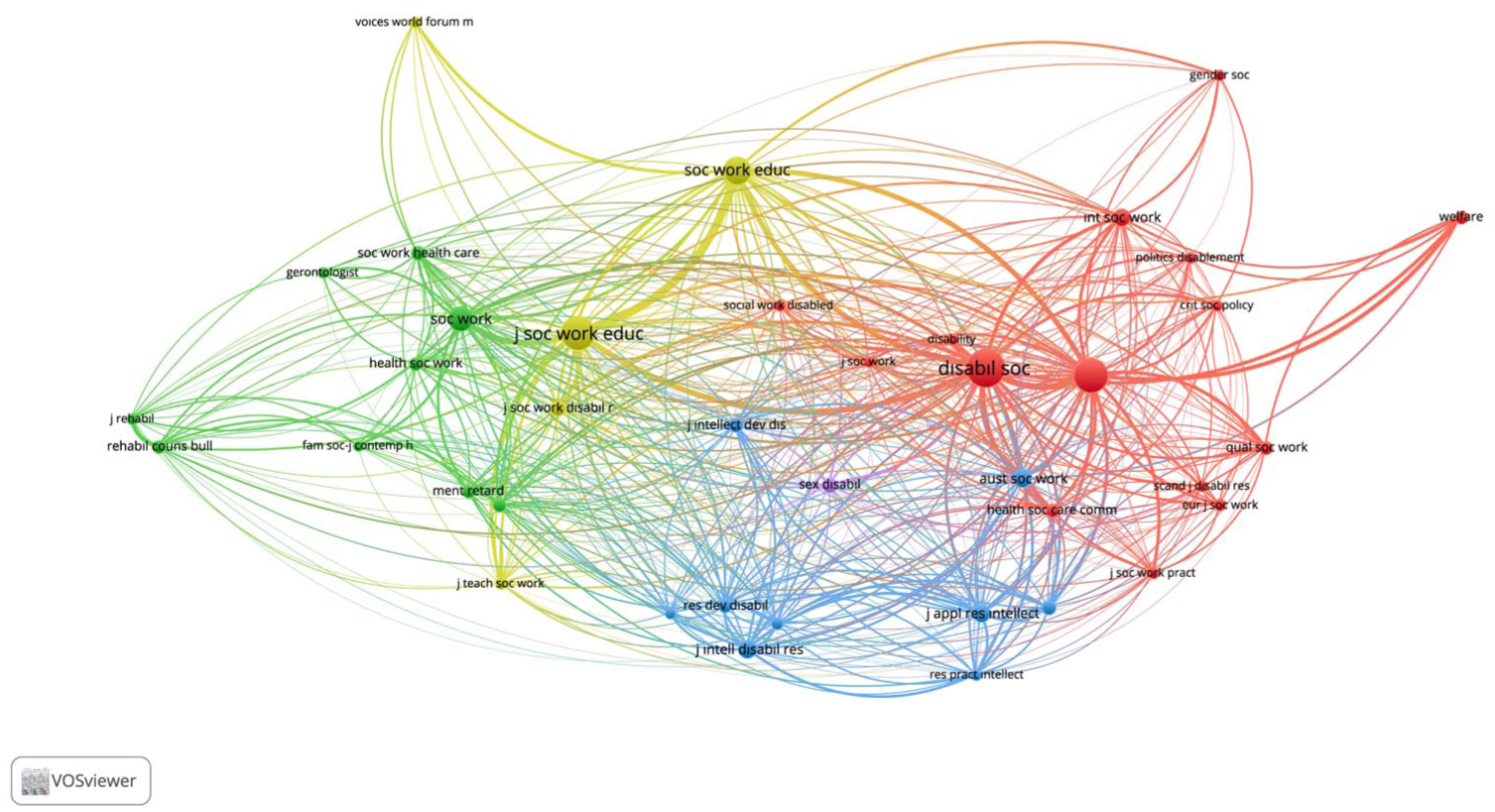
Network visualization of the co-citation network analysis of journals.
Figure 8 illustrates the proximity of articles in the literature based on shared references. Bibliographic coupling allows the identification of articles working on similar topics through shared citations (Boyack and Klavans, 2010). To ensure both relevance and interpretability of the network, a citation threshold of 20 and a minimum link strength of 1 were applied, following common practice in bibliometric mapping (Van Eck and Waltman, 2014). The figure presents 31 of the most relevant articles from a total of 211 documents. The bibliographic coupling network produced a TLS of 113, reflecting a moderate level of shared references among the selected articles. The modularity score of 0.576 indicates a well-defined clustering structure, pointing to distinct thematic groupings within a shared intellectual base.
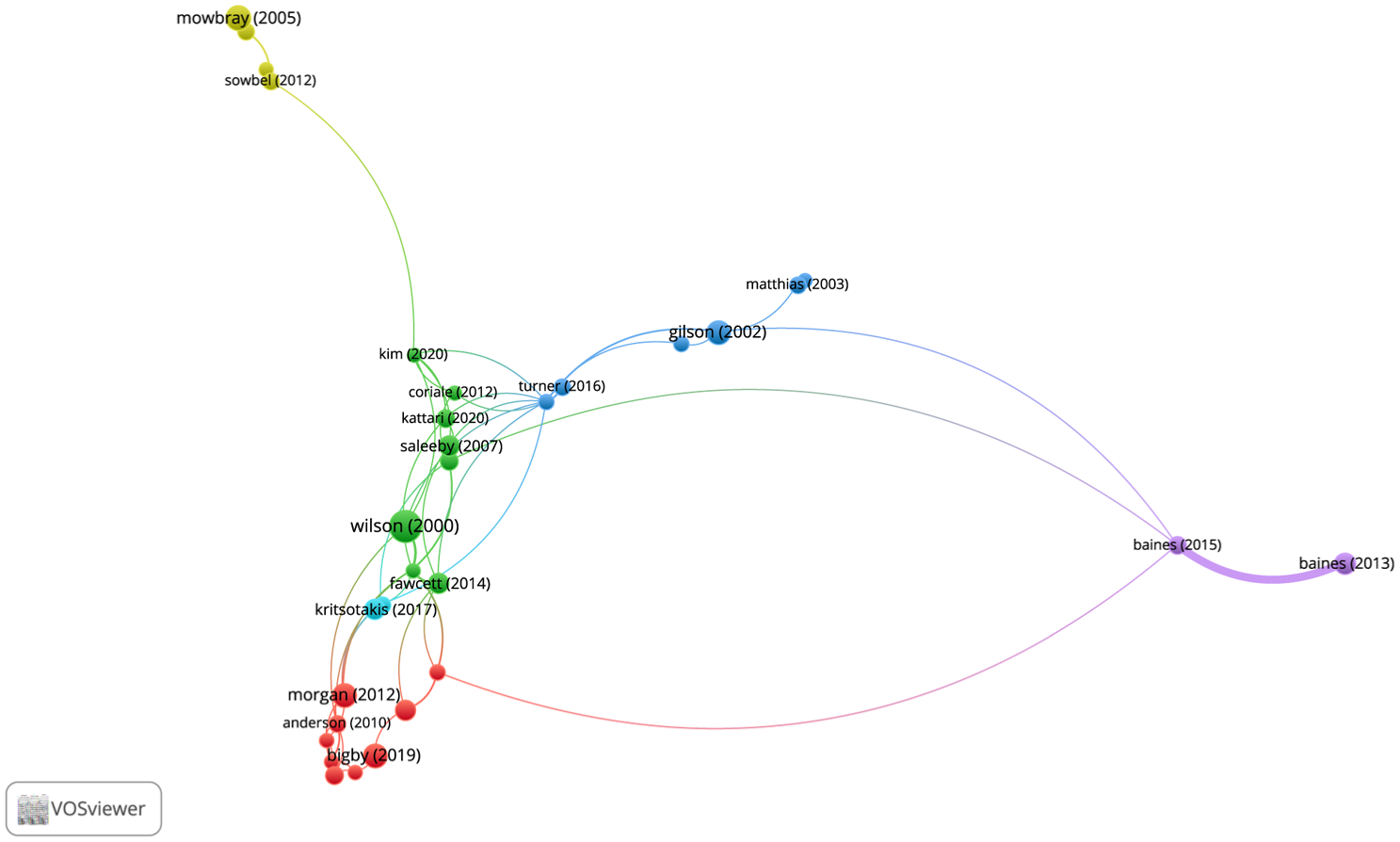
Bibliographic coupling analysis of documents.
The analysis shows that research in disability and social work clusters around themes such as education, health, care and rehabilitation, social work theory, and social policy. The blue, green, and red clusters are positioned in close proximity, suggesting a shared intellectual grounding in foundational social work and disability scholarship. These clusters are anchored by representative publications reflecting their thematic orientations: Gilson in the blue cluster (theoretical approaches to disability in social work education and rights-based frameworks), Wilson in the green cluster (social work education and service user research), and Bigby in the red cluster (intellectual disability and participatory engagement). In contrast, the yellow and purple clusters occupy more peripheral positions, indicating specialized research streams with fewer intercluster connections. The yellow cluster represented by Mowbray focuses on supported education and psychosocial rehabilitation while the purple cluster led by Baines explores critical and alternative practices.
Figure 9 depicts the bibliographic coupling relationships between countries. A link is formed when two countries (A and B) cite the same articles or sources (Boyack and Klavans, 2010). The analysis included 20 countries, each meeting a minimum threshold of two documents, to ensure robust and analytically meaningful network connections. Strong connections among the United States, Australia, Canada, and England indicate that these countries share a common intellectual base in the field. The UK (England, Northern Ireland, Scotland) also exhibits substantial bibliographic coupling. A notable coupling is also observed between the USA and South Korea.
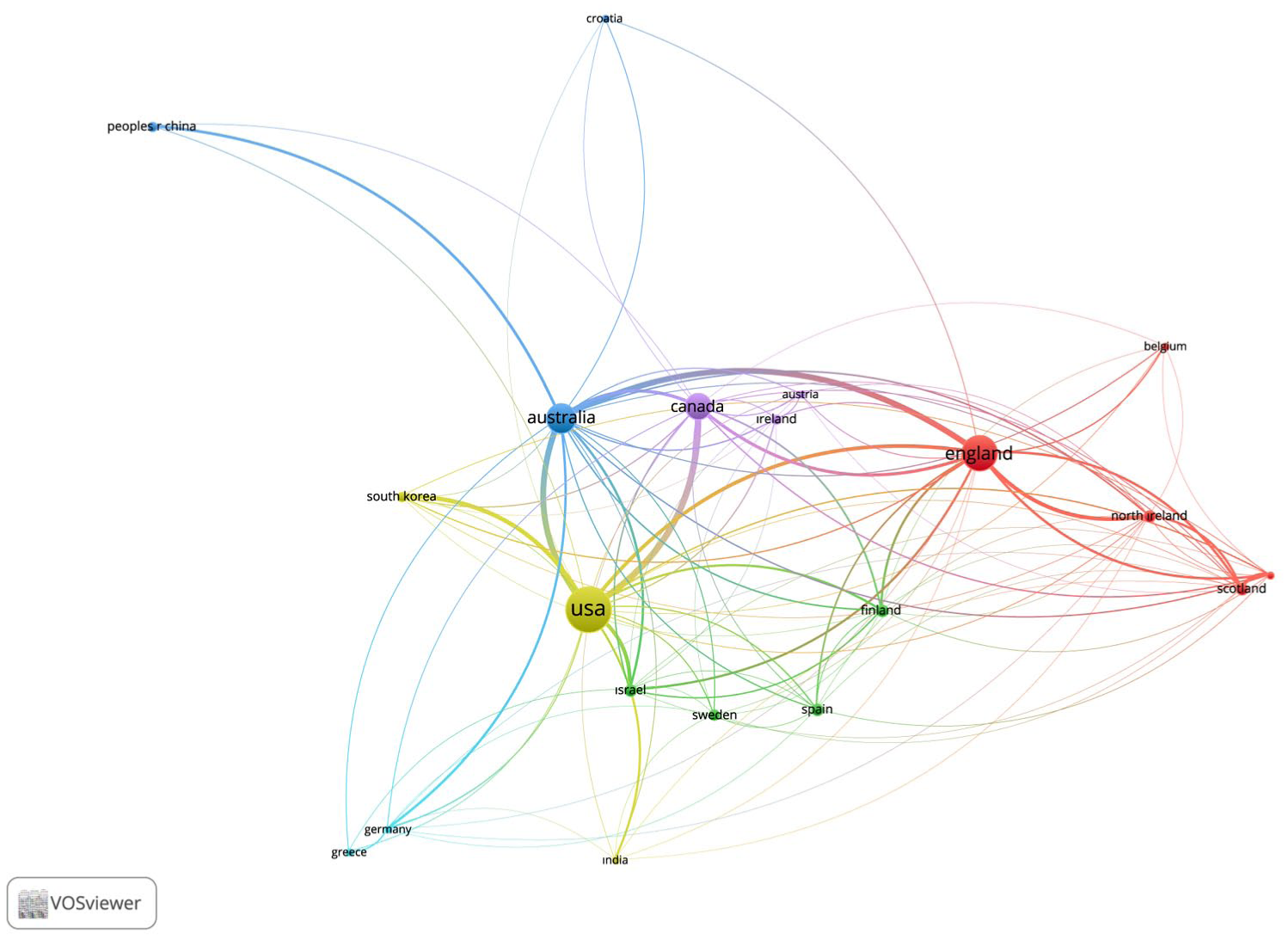
Network visualization of bibliographic coupling among countries.
Countries such as China and Croatia appear as peripheral nodes, positioned farther from the center of the network. Although the overall structure remains moderately integrated (density = 0.284; modularity = 0.156), the stronger coupling ties among Anglo-Saxon countries point to an uneven distribution of epistemic influence. This pattern suggests that contemporary knowledge production is shaped by a consolidated core, while other regions participate less intensively in shared citation practices. Such asymmetry does not imply isolation but indicates differentiated levels of integration within the global knowledge network.
Figure 10 illustrates the relationships among studies that are co-cited by different articles. For instance, when Articles A and B are cited together in Article C, a connection is established between A and B (Boyack and Klavans, 2010). The analysis included 210 articles with at least three cited references, encompassing a total of 8843 citations, to ensure sufficient citation connectivity for reliable network mapping. The co-citation network yielded a modularity value of 0.406, indicating a clearly clustered intellectual structure. The TLS of the network was 3459, reflecting substantial interconnections among frequently co-cited references. The large clusters visible in Figure 10 represent the most frequently referenced sources, as well as the most active thematic foci in the field.
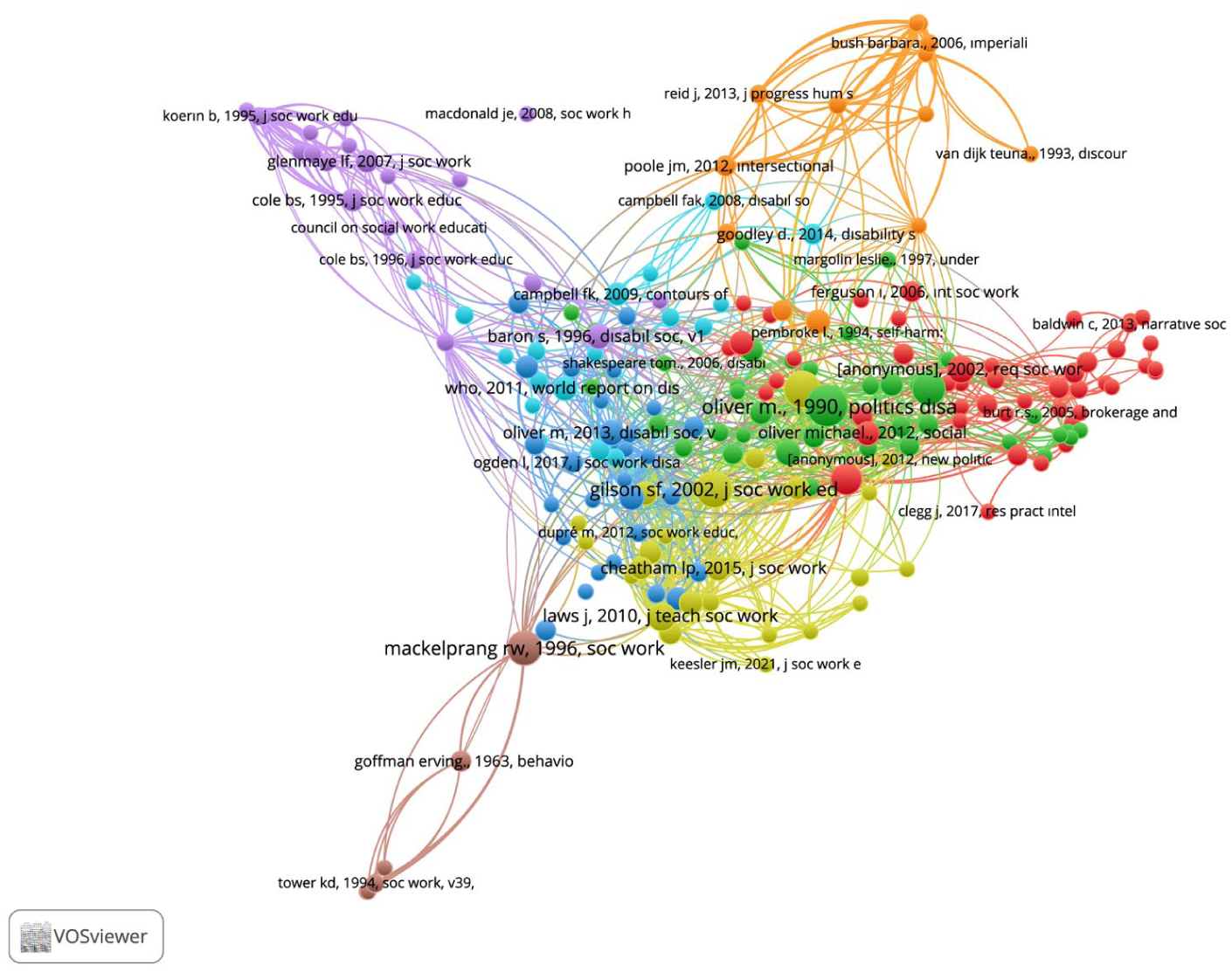
Co-citation analysis of references.
Considering Figures 9 and 10, the bibliographic coupling analysis reveals geographically concentrated contemporary research alignments, particularly among Anglo-Saxon countries. In contrast, the co-citation analysis reflects the intellectual structure of the field as shaped by foundational and highly cited works. This divergence indicates that while current knowledge-production networks are geopolitically clustered, the intellectual base of the field remains comparatively more integrated and historically consolidated.
Discussion
This study provides a bibliometric overview of disability and social work research between 2000 and 2025. By integrating multiple bibliometric indicators—including co-authorship, co-citation, bibliographic coupling, and keyword co-occurrence—the analysis offers a comprehensive perspective on how knowledge production in this field has evolved over the past 25 years.
The results show that disability has gained increasing visibility within social work research. The increase after 2012 suggests growing scholarly attention to disability within social work (Figure 2). Similar trends have been reported in previous bibliometric studies, including WoS-based analyses (Muyor-Rodriguez et al., 2019) and studies using national databases (Kandeel et al., 2025). Overall, these findings suggest that disability has become a more established topic within social work, although it remains a specialized area of scholarship. The author productivity analysis also highlights a concentrated intellectual structure within the field. As shown in Table 1, scholars such as Bigby and El-Lahib emerge as the most prolific authors in the dataset and are also among the most frequently cited within these publications. This pattern suggests that a relatively small group of researchers play a central role in shaping the intellectual structure of disability and social work scholarship.
The geographical distribution of publications reveals another important structural pattern. The dominance of the United States, England, Canada, and Australia demonstrates how an Anglo-Saxon tradition continues to shape much of the discourse. In terms of publication volume (Figure 2), these countries lead numerically. However, citation indicators (Table 2) show that output does not fully correspond to citation influence, as some institutions achieve higher impact relative to their publication counts. Moreover, network visualizations (Figures 3 and 9) indicate that centrality in collaboration and bibliographic coupling networks is concentrated primarily in Anglo-Saxon countries. Publication volume, citation influence, and network centrality represent different dimensions of geographical influence. Consistent with previous research (Muyor-Rodriguez et al., 2019), knowledge production remains concentrated in Anglo-Saxon contexts, reflecting broader structural inequalities in global scholarship. These countries not only generate the largest volume of research but also anchor international collaboration networks, though contributions from other regions indicate a gradual internationalization of the field. While China leads in output volume, Western nations continue to exhibit higher levels of international collaboration, with prolific institutions clustering within Asia and Europe alongside Australian and Canadian centers (Azizan, 2024). Previous research highlights that collaboration networks facilitate knowledge diffusion and evidence-based research production (Wei et al., 2019). However, reliance on theories developed in the Anglo-Saxon countries may reinforce epistemic vulnerabilities in the Global South (Katsui and Swartz, 2021). This geographical concentration reflects broader geopolitical inequalities in knowledge production, where disparities in research infrastructure and funding contribute to a global divide in disability scholarship, although recent studies highlight increasing contributions from the Global South (Muyor-Rodriguez et al., 2019). These collaboration patterns also tend to concentrate among English-speaking and economically advanced regions, suggesting that linguistic and economic factors play an important role in shaping global scientific cooperation (Cantorani and de Oliveira, 2025).
Organizational analysis further supports this interpretation. Although the dataset includes 247 organizations, publication output is concentrated in a relatively small number of organizations, particularly La Trobe University (7), King’s College London (5), and McMaster University (4) (Table 2). At the same time, citation indicators reveal differences between productivity and scholarly influence. For example, institutions such as the University of Michigan and Boston University demonstrate higher citation impact per document despite producing fewer publications. This distinction highlights the importance of considering multiple bibliometric indicators when assessing institutional influence.
Another important structural characteristic of the field emerges from the journal analysis. The 211 articles were published across 88 outlets, indicating considerable diversity in publication sources and highlighting the importance of identifying core journals and authors to guide dissemination and collaboration. Journals ranked in the first and second quartiles (Q1 and Q2) are predominant, with high-impact outlets providing critical visibility and academic legitimacy for disability-related social work research (Falagas et al., 2008). Social Work Education (Q1) and the Journal of Social Work in Disability and Rehabilitation (Q2) occupy central positions within citation networks, while the British Journal of Social Work (Q1) and Australian Social Work (Q1) are equally influential for their regional impact and ability to connect with international debates. Although the number of journals thematically dedicated to disability has increased (Barnes, 2019), the absence of a disability-specific social work journal remains a significant gap, as most research continues to appear in broader outlets. As shown in Figure 7, the co-citation structure highlights intellectual overlap across health, education, policy, and social work journals. Previous studies also indicate that European journals play a prominent role in disseminating disability-related social work research, often surpassing those based in the United States in terms of the number of active outlets (Muyor-Rodriguez et al., 2019). This distribution suggests that the field remains embedded in broader disciplinary outlets rather than forming a fully consolidated publication niche.
As illustrated in Figures 5 and 8, bibliographic coupling and keyword co-occurrence analyses reveal that disability and social work research is structured around several interconnected thematic clusters, including intellectual disability, social work education, social policy, empowerment, and human rights. The central position of terms such as “human rights,” “social work education,” and “empowerment” highlights the growing influence of rights-based frameworks within the literature. Methodologically, the presence of terms associated with qualitative and participatory approaches—such as narratives, phenomenology, and participatory research—indicates a growing emphasis on inclusive knowledge production. This trend reflects an emerging epistemological shift toward participatory and emancipatory research practices in which disabled individuals participate as co-researchers rather than passive subjects (Kulmala et al., 2024; May, 2024).
Despite these advances, the keyword analysis also highlights thematic gaps within the literature. The literature has paid considerable attention to children and women with disabilities (Asamoah et al., 2023; Bigby and Atkinson, 2010). Consistent with this pattern, the keyword analysis in the present study also indicates a relatively strong focus on these groups. However, other vulnerable populations—such as older adults, migrants, and LGBTQ+ persons with disabilities—remain comparatively underrepresented. Previous research has emphasized that disability intersects with multiple axes of inequality, including gender, class, ethnicity, and sexuality (Björnsdóttir and Traustadóttir, 2010). The limited representation of these intersectional perspectives suggests that future research should broaden its analytical scope to capture more diverse disability experiences.
The citation analysis (Table 3) further clarifies the intellectual foundations of the field. Highly cited studies such as Wilson and Beresford and Morgan continue to play a foundational role in shaping contemporary scholarship. At the same time, more recent highly cited publications such as Bigby et al. and Mowbray et al. illustrate a shift toward applied research focusing on decision-making support and service provision. This pattern indicates a dynamic interaction between theoretical frameworks and applied research in disability-related social work scholarship. Theoretical frameworks provide the normative and analytical foundations of the field, while empirical research increasingly addresses practical challenges in policy implementation and service delivery. As shown in Figure 10, the co-citation network reveals clearly defined clusters of frequently co-cited studies, indicating strong intellectual linkages among the key references shaping disability-related social work research. Overall, the field is expanding but remains geographically concentrated and uneven in its intersectional scope.
Conclusion
This bibliometric analysis of 211 WoS-indexed articles (2000–2025) shows that disability and social work research has expanded significantly since 2012, marking the consolidation of the field as a recognized area of inquiry. Foundational frameworks such as the social model of disability remain influential, while the increasing adoption of rights-based and participatory approaches reflects an epistemological shift that positions disabled people as active producers of knowledge. Central themes—including human rights, accessibility, empowerment—illustrate how the field aligns more closely with international rights-based frameworks such as the UNCRPD, affirming social work’s mandate to promote equity and inclusion.
Despite this growth, knowledge production remains concentrated in Anglo-Saxon countries, limiting the visibility of Global South scholarship and narrowing the range of perspectives within the field. Although international collaborations are emerging, structural asymmetries in authorship and citation representation continue to shape the field’s knowledge architecture. Advancing disability-related social work research requires addressing thematic gaps and expanding global participation and inclusive research collaboration, while embedding human rights priorities more systematically to enhance the field’s academic legitimacy and its capacity to inform inclusive social policies and practices. These patterns also reveal thematic gaps concerning migrants, older adults, and LGBTQ+ persons with disabilities, indicating areas where the field remains unevenly developed.
These findings carry important implications for both researchers and journal editors. Researchers should further expand disability and social work scholarship, particularly in Global South contexts and among underrepresented intersectional populations. Journal editors can promote greater inclusivity by diversifying editorial boards, especially by increasing Global South representation, and by initiating special issues or targeted calls that prioritize intersectional and context-sensitive research. Strengthening disability-focused publication outlets is also essential, whether through dedicated journals or permanent sections within leading social work journals. Aligning such initiatives with internationally recognized disability awareness periods may further enhance the visibility and policy relevance of the field, providing a more sustained and inclusive platform for knowledge production.
Limitations and directions for future research
This study has several structural and methodological limitations. First, reliance on the WoS database may introduce systemic bias, as WoS primarily indexes English-language journals and publications from well-resourced institutions in high-income countries. This citation ecology may overrepresent Global North scholarship. Second, the search strategy relied on the keyword disab* (e.g. “disability,” “disabilities,” “disabled”), excluding alternative terms such as handicap, impairment, or crip. This restriction may have narrowed the conceptual scope of the analysis by excluding condition-specific and critical disability terminology, potentially creating retrieval bias. Third, as the analysis was limited to English-language publications, this led to the exclusion of 13 studies and may reinforce existing linguistic asymmetries in disability and social work scholarship.
Future bibliometric research could address these limitations by triangulating WoS data with other databases such as Scopus and Dimensions and by adopting a more inclusive keyword strategy, enabling a more globally representative and conceptually comprehensive mapping of the field.
Footnotes

Ethical considerations
No human participants were involved in the research reported on in this article; therefore, ethics approval was not required.
Consent to participate
No human participants were involved in the research reported on in this article; therefore, informed consent was not required.
Funding
The authors received no financial support for the research, authorship, and/or publication of this article.
Declaration of conflicting interests
The authors declared no potential conflicts of interest with respect to the research, authorship, and/or publication of this article.
Data availability statement
The data derived from the secondary data are available from the corresponding author upon reasonable request.
Statement on artificial intelligence (AI) use
During the preparation of this manuscript, the authors used Gemini (Google) and ChatGPT (OpenAI) for linguistic refinement and academic English editing. In addition, ChatGPT was used as a learning aid to clarify certain functionalities of the VOSviewer software, particularly related to data processing. Prompts focused on improving grammatical accuracy and understanding specific functions of the VOSviewer software. All AI-generated outputs were critically reviewed and verified by the authors, who take full responsibility for the final content.