







Abstract
Regime change and opening of the market brought many opportunities as well as challenges to Romania. In terms of economy, growth stagnated, unemployment increased and a reverse movement of labour took place, from more productive manufacturing and services to agriculture. Need to reskill the workers to attract foreign direct investment was felt. Two multilateral institutions, World Bank and European Union (EU), stepped in. EU, through its Phare programme, played an important role in this reskilling by providing necessary funding and experience for the restructuring of vocational education and training. The article, based on both the primary and secondary sources, examines the role played by the multilateral institutions and argues that although Phare VET programme failed short of what it was intended in many areas because of some planning and operational shortcomings, it was quite a successful programme in terms of initiating curriculum development, introducing modularization, acquainting Romanian VET schools with modern equipment and pedagogy, and planted the seeds of social partnership in the field of VET.
Introduction
Regime change and the opening of the market brought many opportunities and challenges to Romania. In terms of the economy, the initial years were the years of rapid change and restructuring that brought upheavals: unemployment increased and growth stagnated. In the case of Romania, the GDP shrank, manufacturing registered a downfall, and for the unemployed workers, agriculture emerged as a temporary relief. The overall labour force of Romania was educated enough for manufacturing jobs: In 1992, 70.2 percent of those aged 25 years and above had completed at least lower secondary, but these people were not skilled enough. Along with other factors, the lack of skill required by the transnational corporations made these firms refrain from investment. In three years, from 1990 to 1993, the unemployment rate rose from meagre to 10 percent (Earle & Pauna, 1998). More importantly, the share of industrial employment in total employment fell from almost 45 percent in 1989 to about 30 percent in 1995 (Malamud & Pop-Eleches, 2010). Hence, a reverse movement of labour from more productive manufacturing and services to agriculture took place. The transition period has been especially harsh for those with vocational training because the old industries got closed and production techniques changed. Hence, they were not only unemployed but also unemployable.
Romania’s vocational education and training (VET) system needed reform, but policymakers lacked the required expertise and resources. In this situation, multilateral institutions such as the World Bank and the European Union (EU) stepped in. Through different projects, these institutions played an important role in restructuring vocational education; their involvement has been quite successful in reforming the Romanian VET that helped ease the short-term pain associated with the transition. As many lower-middle income countries are undergoing demographic change and the world of work is witnessing churning due to industry 4.0, the role that foreign and multilateral assistance play in reforming the technical, vocational education and training (TVET) system of a country is being debated. In this scenario, Romania offers an interesting case to understand: one, the importance of having a well-functioning TVET in facilitating a country’s global production network participation; second, the role multilateral institutions can play in reforming the VET system of a country.
The article makes a qualitative study based on primary and secondary sources. The primary sources include the loan agreements, staff appraisal reports and the final evaluation reports of the projects prepared by EU and World bank. Barring the introduction and conclusion, the article is divided into three parts. The first part looks at market integration in a general manner, offers a broad understanding of the market reform and highlights how the opening of the market and endeavour of integration into the world market necessitate TVET reform in general. The next part looks at the economic changes and the problem of shrinking GDP and rising unemployment in Romania. Then the third part looks at the educational reform and the role played by the multilateral institutions in general and that of the EU in particular.
The Need for TVET Reforms
The period in which the East European countries embraced the reform was the period of neo-liberal triumph. Many other countries in the other parts of the world were also undergoing a similar process. So, it is pertinent that before coming to Romania, we make a brief understanding of the relation between TVET and the change in the economic policy. TVET system of a country depends upon various factors, that is, change in demography, employment structure, share of different sectors in GDP, production process, technology, market integration and so on. For the countries moving away from the protectionism and central planning to open markets, all of these factors, barring demography, were to change. Under the new system, these countries were to target macro-stabilization, restructure the economy, undertake privatization, find their place in the global value chain, and look for foreign direct investments (FDI).
For these newly opened economies, the FDI was not only to make an addition in the capital but also to fulfil several objectives such as improvement in foreign exchange position, substitute imports, better-manufactured products—both capital and consumer goods—improved services, job-creation and transformation of country’s employment structure, productivity augmentation, introduce better technology and more efficient management techniques (Welge & Holtbrugge, 1993). Like any other country offering lower wages, the transition economies of East Europe were supposed to import the sophisticated goods from the high-income countries and reorient their productive capacity towards the focus on mass production of goods that require less skill and emerge as the export-hub of these products. FDI was to come through the multinational companies (MNCs) shifting the labour-intensive part of manufacturing to the lower-middle income countries. However, this relocation of lesser skilled tasks had its complexities and repercussions. The less skill-intensive tasks from the high-income countries’ perspective were skill-intensive tasks from the lower-middle income countries’ perspective. This is why multinationals relocated their activities to only those countries and regions that provided them access to skilled workers at a lower price. The demand for skilled workers was not limited to MNCs only. They manufactured better products at lower prices by employing new technology, managerial practices and skilled workers. It made local markets of the lower-middle income countries more competitive and created pressure on the local firms to follow the leading MNC and opt for the new technology to survive the competition. In many countries, the differential treatments between domestic and foreign firms found themselves disappearing. Bereft of state protection in the previously protected domestic market, the survival of domestic firms depended on product quality and price. However, liberalization made it easier for the firms to do internal restructuring—hiring and firing, use global capital, import new machinery, collaborate and form joint ventures which many firms did and those who failed closed down their operations. As a result, some of the firms expanded and hired more workers, creating good jobs; however, on the other side, the inefficient firms that were running only due to being protected from the outside competition were closed down, making many people jobless. Other than this, many firms upgraded themselves technologically; in this case, the firm survived but not all the jobs. In these firms, some well-paying opportunities were created, but, at the same time, there were people who lost their jobs because the new production process did not require their services (Abhishek, 2017; Chamarbagwala, 2006; Pavcnik, 2003; Roy, 2014).
The new jobs required new skill sets, and the old skills learnt at the schools or training became obsolete. This created a need for both reskilling and upskilling. In the changed scenario, general education was often found too academic and insufficient to prepare young people adequately for the world of work. It was felt that retraining the workers and making them suitable for the new jobs is necessary to lower the pain and realize the promised fruits of the reform. The actual security of the employment, through the provision of retraining and transfer to productive occupations, has been considered better than artificial security—regulations forcing the declining industries not to terminate the workers (Khan, 1994). But designing the changes has never been an easy one. In the case of rapid transformation, the providers of vocational training face several types of challenges: addressing the redundancy of the worker who needs retraining for redeployment, mapping the industrial restructuring and technological changes to prepare job seekers. If job creation happens in the unorganized sector or people move to informal employment, they may not require domain training, but the soft skills are required by such activities, that is, self-employment and entrepreneurship development (Gill et al., 2000; Islam, 1994).
Reforms for the Social Goals
Like any other country gearing up for the open market, Romania also undertook a series of education reforms. But for Romania, the challenge was much bigger; the education reforms had to address not only the changing skill requirement but also socio-political environment. The general academics has to be free from the unnecessary glorification of the communist system instead of that it was to educate the coming generations about liberal democracy. But, to make people believe in the liberal democracy, it was necessary to keep poverty and inequality under check. In a free-market condition state is not supposed to rely on subsidies and free services but enable the market to create decent employment in large numbers. In Romania, for more than half a century, the right to work had been a basic right guaranteed by the Constitution. During the communist period, whatever the situation, people were employed because state enterprises did not operate under budget constraints; they hoarded human resources without considering profit, and labour productivity was never taken as a serious issue. After the reforms, suddenly, the number of persons registered as unemployed increased not only in Romania but also in all East European countries; it more than doubled in the year and reached 4.1 million in March 1992 (Welge & Holtbrugge, 1993). In this situation, policymakers considered vocational education as an instrument for keeping people temporarily out of the labour market in a very cost-effective manner that lowered the pressure of job creation, helping the new regime settle down at the time of large restructuring (World Bank, 2000).
In a laissez-fare economy, employment and wage both are related to productivity. In the new regime, these countries were to expand their industries and attract foreign investments to create jobs. For transnational firms, these transition economies were a market consisting of almost 400 million people. They had a labour force comparable to their counterparts in the western countries in terms of general education; these fairly educated workers could have been the low-cost labour force (Welge & Holtbrugge, 1993); an existing industrial structure, able to manufacture a vast range of useful products that may be exported to industrialized economies. But there were impediments, the production system was obsolete, workers were neither well-disciplined nor motivated, high turnover, rampant absenteeism, lack of loyalty and commitment (Frausum et al., 1994) along with the lack of skills led to lower labour productivity. To make them employable, it was required that they develop a familiarity with the modern equipment fairly popular at that time such as computerized numerical control machine tools, laser and the production logistics being used. These hard and soft skills that were required to make them employable were to be imparted through VET (McAuley, 1991; Stoica, 2003).
Romanian Economy During the Transition
For Romania, foreign firms were not a new thing. Unlike the other centrally planned economies (CPEs), where it was the fall of central planning, and the opening of the economy that opened the doors for the foreign firms, it had an experience of working with foreign firms. As early as 1971, Romania passed a law allowing domestic enterprises to run joint ventures with foreign partners and became the first CPE country to do so. There were nine joint ventures established during the 1970s, but the reforms died young, and the joint ventures subsequently liquidated. Then it was only after the 1989 revolution, the Provisional Council of National Unity issued a new decree subsequently amended and made more attractive to FDI. In order to attract the FDI, processes got simplified, and the Romanian Development Agency was made responsible for issuing consent to new investment proposals, and a time limit of 30 days was fixed for the processing of the applications (Welge & Holtbrugge, 1993).
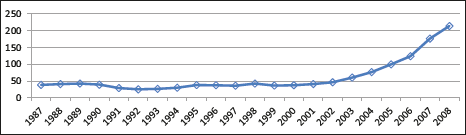
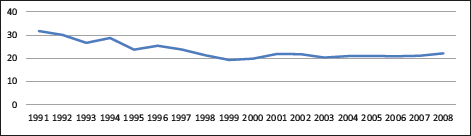
But these prior experiences of working with foreign firms were not of much help, and the transition process brought many economic hardships for Romania. Romania lost around 30% of its GDP during the period 1987 to 1992; many of the state-owned enterprises (SOEs) were closed down, and unemployment rose. Although the GDP growth reversed and been positive post 1992, it was only in 1998 that Romania managed to cross its 1987 figures (Figure 1). Some of the reasons for shrinking GDP were the unfavourable conditions—austerity measures of the previous regime—in which Romania opted for reforms and the over-cautious approach of the new leadership. Romania suffered another macro-economic crisis in late 1996 because the restructuring of the SOEs was not happening at the required pace (Malamud & Pop-Eleches, 2010). The manufacturing sector was a matter of particular concern; its share in overall GDP fell from more than 31% in 1991 to 19.26% in 1999 because Romanian manufacturing sector performed worse than other sectors (Figure 2).
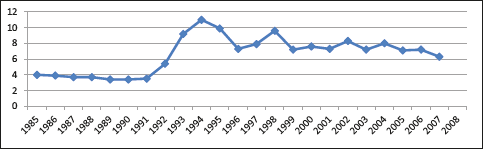
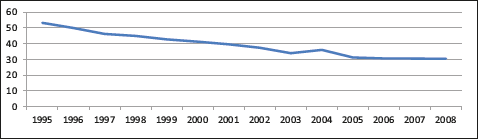
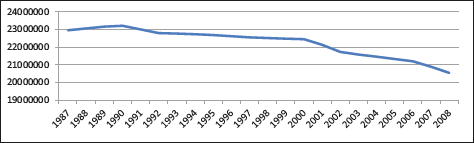
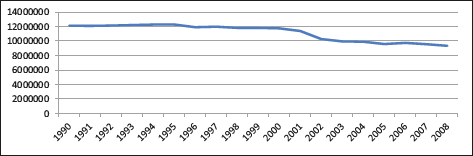
Due to the fall in industrial employment, its share in total employment, 45% in 1989, remained just about 30% in 1995. Unlike the communist period, there was no job guarantee under the new system, so the unemployment rate increased with shrinking GDP and poorly performing manufacturing. In 1991, the unemployment rate was 3.5%. It grew more than three-fold, and, in 1994, it was 11% (Figure 3). It dropped for the next 2 years, but when in 1997, responding to the macro-economic crisis, Romania undertook an International Monetary Fund (IMF) supported macroeconomic stabilization and structural reform programme that consisted of the elimination of all remaining price controls, tightening of fiscal policies and accelerated the rate of privatization, mass lay-offs happened in SOEs, leading to a decrease in real wages and contraction in real GDP. The industrial workers lost jobs and were unemployed, so they found no meaning in living in the cities. They migrated back to the countryside. Here also, there were no jobs, so they engaged themselves in low-productivity subsistence farming. The rising unemployment rate impacted the working-age population’s overall motivation, combined with the other factors, which led to the decrease in labour force participation (Figure 4) (Malamud & Pop-Eleches, 2010). Demographic factors also contributed to this rising unemployment. In 1967, the Ceaușescu Government declared abortion and contraception illegal; as a result, the baby boom happened, causing a temporary increase in the Romanian population. These children born in the late 1960s and early 1970s made a good part of the Romanian population that was around 23 million. Although the labour force participation rate was lower, those making the entry into the labour market made the size of the labour force increase until 1994. In the period after the reforms, the total population of Romania is continuously falling because of the below-replacement fertility rate, which started falling in the mid-1980s, resulting in negative net migration (Figure 5). The labour force of Romania is also shrinking. In 2008, the total labour force of Romania was 9.3 million (Figure 6).
Educational Reforms in Romania
To address the labour market concerns and have a human resource well suited for the changing circumstances, the need for reforming education in general and VET in particular was severely felt. During the Ceausescu regime, vocational training was emphasized to the extreme. The technical and vocational programmes were expected to lead directly to specific jobs in a given enterprise or industry. This worked for a centrally planned economy (CPE) where the job is guaranteed, and state-owned firms were not supposed to be profitable and permitted to hoard the human resources, but it also made the vocational education system inflexible. The Romanian VET was preparing a workforce trained in narrow specializations and was mostly unable to cope with the changing skill demands. Earle and Pauna (1998) investigated the growth of long-term unemployment and nonemployment that included discouraged workers withdrawing from labour market in Romania found that those having general education were more likely to find jobs in the service sector which prevented them to end up in agriculture or go out of the labour force than those with vocational training (Malamud & Pop-Eleches, 2010). There may be two possible reasons: One, they got a preference, and two, the service sector was performing relatively better than the manufacturing.
In Romania, education has been given a very high priority; the obligation to attend school is established by none other than the Constitution (Article 32) itself. The Education Act further adds to it. The general compulsory education stipulated by Article 15 of the Education Act includes primary (Grades 1–4) and lower secondary (Grades 5–8) education. The Romanian education system has been designed in compliance with the five types of laws, rules and regulations that set the basic framework to guide, control and govern. The most important of these five is the Constitution of Romania, passed in 1991, whose Article 32 establishes an obligation to attend the school. Second, is the organic law of education (Education Act 84/1995); the third is the common specialized laws. Two of these are worth mentioning (Act 88/1993), which deals with higher education institutions’ accreditation and the recognition of university diplomas. Because the Romanian national education system, including public and private education units and institutions, and having an open character and assures the transfer from one system to another under the conditions stipulated by law, it becomes an important one. Another law is the Statute of the Teaching Staff (No. 128/1997); fourth is those government decisions happening time to time that have the force of Acts of Parliament over an established period, and the last is the orders of the Minister of Education (Irimiea, 2013).
The educational reforms in Romania that happened in the first half of the 1990s can be divided into three phases. The deconstruction stage was primarily an ideological one: Reforms in general education focused on removing the traces of Communist ideology. The options in the secondary schools were diversified, and private educational institutions were opened at all levels. The following 2 years were a period of reflection and stability. In this phase, the changes and ‘corrections’ penetrated all levels. VET reforms came into focus after this. The period of 1993–1996 saw a complete overhaul of the Romanian education system. Three significant legal developments of the period were the ratification of the Law University Accreditation in 1993, the new Law of Education in 1995 and then the Law of the Teaching Staff in 1997. Because of the need to bring the education system very much in tune with the labour market, the new school regulations were implemented; and the increase and the diversification of higher education options were formally recognized by the Ministry of Education (Stoica, 2003). The period of 1993–1996 was also when the Phare VET reforms started. Some of the necessities for the VET reforms came from the IMF directed economic changes. The necessities further increased when, in 1997, mass lay-offs happened in state-owned enterprises (SOE).
Romania had a glorious past of VET institutions, in 1898, Romania brought laws on education. It also got its first law on VET. The government of that time envisaged the creation of a vocational schools’ structure that would take into account three fundamental aspects: one, the specifics of each setting (rural, urban); two, local financial means and Ministry investment; and third, the realization of levers of employment for school leavers (Roman). Before the coming of Ceausescu, Romania had a well-functioning vocational education system comparable with any European or other high-income countries in the world. The system was destroyed under Ceausescu. During his regime, the VET system was to train the labour for the state-owned enterprises that required a very narrow specialization. In this period, the management of the VET system was a highly centralized one in all aspects, be it decision-making, innovative practices or resource allocation. It has an inappropriate infrastructure, with equipment and materials being highly inadequate. Even the teaching, management and assessment method was not in tandem with the changing time, and there were very few opportunities for continuing education (Nielson, 1999). It was not just the organization of programmes linked to the enterprises, even the physical location of the technical high schools, VET schools and facilities of the alternative programmes and technical in-service training had to be located near the enterprise. The site used to play an important role in determining the curriculum and the students’ practice hours. Those enrolled in the 3-year vocational courses received a small stipend and meals during their enrolment period; in return for this, they were required to work in the enterprise for 5 years after graduation unless released by the enterprise for any particular reasons (World Bank, 1992).
The new Education Law (1995) was formulated at the national level. This new law established a framework within which the VET key issues were to be addressed. Following the New Education Law came two acts: the Ministry of Education Act and the Ministry of Labour Act. These two acts regulated specific components of the reform (Stoica, 2003). A systemic as well as the structural arrangements were to change. The efforts made were focused on six main areas:
[C]urriculum reform; reform of the teaching and learning to make it focused on problem-solving activities; establishment of a strong network educational institutions at one side and labour market and local communities on the other; reforming the school and academic management to de-centralised the decision-making, provide institutional autonomy, and support partnership with the local community; significant investments in infrastructure and communication technology; and to look for the diversified opportunities for international cooperation. (Stoica, 2003)
For bringing these intended changes, World Bank financed three education projects: the Education Reform Project (1994), the Higher Education and Research Project (1996), whose genesis can be found in ‘Strategy Note on Higher Education’ issues in 1995, and the School Rehabilitation Project (1997) (Fretwell & Wheeler, 2000). The Education Reform Project was approved in April 1994, and the approved amount of the project was $73.50 million. It was co-financed by the then government. The Education Reform Project was meant for pre-university education and is comprised of two main components: first, rising quality of basic and secondary education, and second, improving education’s financing and management. The project was focused on curriculum, assessment and teacher training, textbooks, educational management, and standards. Secondary education in Romania started at the age of 14. It was diversified. There were three streams: one, four-year academic high schools; second, technical high schools offering two similar types of programmes but of different duration, that is, a 4-year day and 5-year evening programmes; the third stream consisted of 2- and 3-year vocational schools attached to enterprises and vocational programmes attached to cooperatives. For technical and vocational training, the project was to make sure that they are well-founded on knowledge and skills used in the workplace, promote labour mobility and are comparable to practices in OECD countries, for the standardization and assessment projects were to support the establishment of a Council of Occupation Standard and Assessment (COSA), and this was to adopt standards and skill assessment tools from other countries (Stoica, 2003; World Bank, 1994).
Another project that helped improve the VET in Romania was the ‘Employment and Social Protection Project’, for which the World Bank provided a loan of $55,400,000 in August 1995. It was not related directly to the education; the objectives of this project were to ‘alleviate unemployment and improve the efficiency and affordability of employment and social protection services, and promote economic competitiveness and labour productivity, all in accordance with Borrower’s (Romania’s) social safety net strategy’. VET being a transition between education and work, the project certainly had a component for it. So, as the VET is concerned under the project, programmes were carried out for the improvement of the administration of employment services and adult training programmes. It included up-gradation of the organizational and delivery in labour offices of regular employment services and industrial adjustment services targeted to large-scale lay-offs, strengthening career information and counselling in labour offices and schools, and improving the flexibility and responsiveness of training programmes to the need of the private sector to reorient the skills of employed and unemployed workers to those required in a market economy (Legal ISC Files, 1995). Under the project, a network of altogether 774 vocational information and guidance centres were established. Of these 774 centres, 227 were with the County Employment Agencies (AJOFM), 500 centres were in schools, and 47 centres that were for the Information of the Young were under the Ministry of Education. It was under this project that the structure and draft legal project of the National Council for Vocational Training (CNFP) was designed, which was to be ‘a body designed to coordinate, at country level, the programmes for the training of the adults, and provide through its strategies a workforce structure harmonised with labour market requirements, which, consequently, would allow the effective utilization of the vocational training funds’. Other than this, the project specified resources for the creation of a network of six regional centres for the adults’ training. The idea behind this exercise was ‘to develop the capacities for the adults’ training by means of methods that befit this population category, and with modern means’. An element of localization and de-centralization was always there as while making the selection of the regional centre locations, two things that were taken into account were the (a) the distribution of the existing capacities for vocational training and (b) the regional needs for the same matter (World Bank, 2004).
VET Reforms in Romania and the Role of the EU
Romania was willing to come back to Europe. On 1 February 1993, it signed the EU Association Agreement that came into force on 1 February 1995. In June 1995, Romania presented the official application for EU membership. In the field of VET reforms, there were enough European experiences of how to build a responsive vocational education system. It was because the twentieth century has been a century of many upheavals for Europe, and many a time, they started from scratch. As the first challenge of retraining the people who were facing a risk of mass dismissal was concerned, there were European experiences well-documented by the International Institute of Labour Studies, Geneva, through its study on innovative approaches to industrial restructuring. The study had a valuable lesson: ‘How retraining can help stem part of the threat of mass dismissal, notably among the rank of unskilled and semi-skilled workers with long service in the firm’, who usually become the most likely candidate for redundancy and long-term unemployment. According to this, retraining significantly enhances their chance of reemployment, as has been demonstrated by the employment planning in the Federal Republic of Germany and reconversion plans in France (Chandra, 1994). These two countries were the founder members of the European Coal and Steel Community that later developed into a continent-wide transnational organization, that is, EU. The reason for recounting these experiences is to highlight that there was expertise available for the prospective member, and Romania was one of them.
In March 1995, the financing proposal of the Phare VET programme was signed. It attached 25 million ECU
1
for the 3-year programme, the period being March 1995–31 December 1997. The programme was to support policy reforms of the whole Romanian VET system, particularly of the secondary VET system. The context in which the programme was being thought of and operated was very clear to the policymakers. Through this programme, they were to transform the Romanian TVET system, which at that time was characterized by
early specialisation and fragmentation of qualification structure in a very large and narrow number of specialisations, which created a rigid and inadaptable TVET educational offer; centralised decision-making system of policy development and, as a consequence, low participation of stakeholders; a prescriptive and outdated curriculum, based on the frequent direct relations between TVET schools and a major employer in the area, and; a poor partnership structure with employers and low capacity in schools to diversify the educational offer and to respond to the new challenges of the labour market. (Serban & Ciolan, 2005)
The Phare programme was meant for all the CPEs; however, the EU approach was not to deliver the same product to all of them but to provide a tailor-made solution that suits each country perfectly. So, to understand the actual situation of Romania, before the launch of the Phare VET programme, a labour-market survey (Study II) was conducted, and the basic design of support was in accordance with its result that reform needs close cooperation between the education system and the labour market. A total of 20 occupational families, 134 trades for vocational schools and 66 specializations for the post-high schools were identified. The Phare VET programme was initially implemented in selected schools. There were 75 schools, altogether 4,000 students and all main vocational domains were covered (Serban & Ciolan, 2005; Stoica, 2003). The programme was to fulfil four immediate objectives:
First, an adjustment in the nature of VET to increase initiative, flexibility and broaden the background of graduates to respond to the changes in the profile of labour demand; second, seek the development of the social partnership with employers in defining and implementing VET; third, seek efficiency of provision; and fourth, develop student choice and delay specialisation’. (Nielson, 1999, p. 6)
The five key areas of intervention to meet these objectives were curriculum development, teacher training, equipment updation, EU school partnerships and social partnership.
For the curriculum development, Phare programmes in all the eight countries had the same emphasis:
initial skills provision, a learner/student outcome-based approach to pedagogy, the reduction of specialist areas, an integrated and vocational preparation approach to the first years, the introduction of core or key skills, a shift from an input to an output philosophy of evaluation and, a closer relationship between education and enterprise. (Nielson, 1999, p. 11).
The curriculum development was to bring out the elaboration of occupational standards: It was to serve as the starting point to identify specific competencies of vocational qualifications and vocational training standards that were to be the point of departure for curriculum development. As it was clear that the foreign investment would bring new ways of production that would demand a new set of skills, it was to introduce new subjects or curriculum areas in accordance with the new demands of training. The new curriculum was to develop critical skills—that may be used for a large number of trades coming from more than one occupational field—that will increase the graduates’ mobility, the flexibility for which the school means moving from broader training in the starting years to narrower ones with strict specializations in the final years and create the foundation for continuing vocational training.
The new curriculum brought a new framework for assessment and certification. The idea was to introduce modularization, which was a completely new concept for Romania. In the previous era, the system was heavily centralized and was unfit to for the market economy; so, modernization was to be accompanied by de-centralization.
The evaluation of the Phare programme notes that it not only brought the element of modernization and de-centralization in the ‘formulation and dissemination of curriculum policy, teaching and learning philosophy and methodology but also in terms of sheer volume produced within the programme’ (Nielson, 1999, p. 6). Contrary to the previous Ceausescu era in which a mechanical approach was taken, Phare helped in the development of a common understanding of the new VET philosophy and methodology that seems to be shared between all participants at all different levels, that is, national, regional and local level. Another significant idea that was introduced was the concept of ‘revitalising Romanian VET with a cultural approach’. As per the sustainability of this development in the post-Phare times is concerned, the new Phare curricula were secured by the decision to generalize the model to all VET schools from the school year 1999 to 2000 (Nielson, 1999).
The changed curriculum warranted a change in the management style of the VET schools and teachers trained for the new curriculum. It was also understood that the change would sustain only when there will be curriculum developers who understand the basic principles and tune the curriculum according to changes in the labour market. The Phare VET programme was limited to only 75 schools and was intended to bring change in the Romanian system through multiplication or ‘cascading’. For the teachers of the pilot schools, the idea was to provide them with the basic knowledge of the new methodologies. For this, the training contained the following four components: (a) subject area and curriculum training, (b) classroom management training, (c) evaluation and assessment training and (d) leadership training. Similarly, management was also to be given training. For the management, the focus was on interpersonal communication and team building, planning and evaluation, and motivation and training (Nielson, 1999, pp. 23–24). Some of the issues that were noticed during various phases of the programme highlighted the problems with the design of the programme itself. Two imbalances were noticed, that is, (a) ‘very little involvement of the foremen, the workshop instructors, compared to the technical subject teachers’ training and (b) ‘an unbalanced participation of the pilot schoolteachers and demonstration schoolteachers’ (Nielson, 1999, p. 25). There were some issues with the timing of the training as in some of the cases, it was noticed that training was received only after the completion of the task for that they were intended. Despite these problems, the reading of the evaluation report indicates that the overall performance of the Phare programme in terms of teacher and management training was satisfactory as it successfully created ‘the new attitudes and new approaches’; however, they needed to be disseminated. It should be noted here that the World Bank was already supporting the development of pre-service teacher training, and to further the gains made in 1997, a National Council of Teacher Training was established under the Ministry of National Education (Nielson, 1999).
The new curriculum, teaching and learning method needed new equipment. These Phare schools were getting support from the municipality, but as the evaluation report noted, it was not possible for Romania to bring their VET schools to the level of other European countries because of two reasons: (a) they were very much behind their European peers 2 and (b) they were in large numbers, that is, more than 700 nationwide. So the investment needed was huge, and, as already noted, the financial condition of Romania at the time was not good. However, the Programme had 18 MECU (or 72% of the total budget) attached for taking care of the equipment requirements of the 25 pilot and 50 demonstration schools at the minimum possible cost. The proposals for equipment required for the courses were collected from each of the 75 participating schools about the equipment needed in the first, second and third years to sustain the curriculum. Initially, the standard equipment lists only for the first year were finalized, and because of the very tight economic situation in the country, in many cases, ambitions have had to be substantially reduced. But on the brighter side, the Romanians extensively used the equipment. The evaluation report of the programme noted that ‘in all the 14 schools visited during the evaluation, the Phare equipment was being used very intensively: at some of the schools, the equipment is used in 2 or 3 shifts a day, morning, afternoon and evening’ (Nielson, 1999, p. 34). The programme not only equipped a few VET schools but also provided basic training about procurement, because of which a policy framework was developed based on the experience gained from the Phare (Nielson, 1999).
The programme was to develop ‘partnerships between Romanian professional schools and similar institutions throughout Europe, realising future teacher and pupil exchange and associating foreign know-how to the curricula development process and implementation’ (Nielson, 1999, p. 34). The partnership established was to emphasize future cooperation and contribute to further reform activities through ‘cross-border information exchange and database of cooperation network with relevant partner schools and education institutes in EU countries’ (Nielson, 1999, p. 34). The terms of reference for this component were defined very ambitiously and listed nine objectives, that is,
to learn modern organisational and pedagogical methods practised already at the partner school; to compare and analyse the curricula used for the occupational families in the partner school; to analyse and discuss modern didactical technologies used or needed in the educational process; to learn the didactical materials and the equipment used or needed in the educational process; to plan and elaborate continuous and final evaluation methodologies concerning specific needs of the respective occupational family; to learn how to organise and manage school and partnership activities; to learn methods in organising VET programmes; to develop partnership relation/cooperation between the schools and higher institutions of education/economic operators; and, to establish cooperation with enterprises and companies for qualified VET. (Nielson, 1999, p. 35)
For this purpose, it also earmarked a budget of 1.426 MECU. But the amount proved insufficient, and there has been limited success on this front. The evaluation report noted: ‘It is only to be regretted that the partnership activities financed in the context of the Phare programme ended after the revisit of the EU schools’. It further lamented that it would have been valuable—especially in the curriculum development and teacher training activities—if a number of more tailored follow-up activities could have been at least co-financed. However, for the schools, it provided an excellent opportunity to learn through their own experience about the functioning of VET schools in market economies. They got a closer look at the close collaboration and cohesion between the labour market and the local employment office in the EU member states. Along with it, it was also an opportunity to see what is really to be understood by ‘interdisciplinary’ teaching in its developed form. This partnership influenced the contents of the modules and inspired the teaching practice as it made ‘the relation of didactics and equipment became a lot easier for the teachers who had the opportunity to see how this is done abroad’ (Nielson, 1999, p. 37).
The Romanian VET schools during the communist era were doubly subordinated. Because of being tightly bound to the SOEs, they were functioning as a training department of a factory. So, when they wanted to introduce a new curriculum, this required to get approval not only from the Ministry of National Education but also from the Ministry under which came the enterprise with which it was attached and was authorized to ascertain the relevance of the course. This system continued until the adoption of the new Law of Education (1995), after which the Ministry of National Education took over the full responsibility for the VET institutions. With this, a new structure was established in the second half of 1995. Although the continued closure of the SOEs was making the old system obsolete and irrelevant, a change was pertinent, but the impact of the Phare VET cannot be ruled out as the new structure that emerged was directly linked with the Phare VET programme. The new system consisted of a National Advisory Group at the top and six zonal VET development committees situated in the six different cities of Timisoara, Bucharest, Brasov, Cluj, Iasi and Craiova. These were a tripartite body in which ‘the local key stakeholders in VET were to start developing their joint responsibility for the development of demand-oriented VET’ (Nielson, 1999, p. 38). From the point of sustainability, in which the externally aided programmes largely fail, it was a huge success as these arrangements were embedded in the national legislation as a permanent structure. Two years after the adoption of the new Law of Education came the Emergency Ordinance for the modification of the Law on Education No. 84/199. This ordinance ‘established the consultative structures permanently both at the local and national levels; along with it, a National Council for Initial and Continuing Training was established, integrating as part of its tasks the role of the National Advisory Group’ (Nielson, 1999, p. 40).
The ease provided by the experience gained through the Phare programme made sure that Romania successfully developed a VET system in accordance with the new requirements (Nielson, 1999). The policymakers realized it, and when in the school year 1999–2000 the Ministry of Education decided to generalize the VET reform in all vocational schools in Romania, the need for active support from the EU was felt. The EU also responded positively, and in 2001 a new Phare–TVET Programme (‘Social and Economic Cohesion-Technical and Vocational Education and Training’) was launched to continue the achievements of the first phase (Stoica, 2003).
Conclusion
The initial years after the change in regimes had been crucial and painful for Romania. It had potential, but because of certain problems, it failed to realize that, as far as labour force and its readiness to participate in the global production network were concerned, despite having better general education, its workforce was not ready for the opportunities as it lacked the relevant skills. The rapidly changing skill–demand and skill-based technological changes added pressure to undertake reform in vocational education. The government responded, but because it lacked the capacity to make an overhauling the system, it required the help of the international organization. Both the World Bank and the EU stepped in and played an important role. These interventions not only enabled Romain to address immediate challenge of rising unemployment rate but also helped reorienting the VET system. A detailed study of the final evaluation of the Phare VET programme clarifies that although it failed short of what it was intended in many areas because of some planning and operational shortcomings, it was quite a successful programme in terms of initiating curriculum development, introducing modularization, acquainting Romanian VET schools with modern equipment and pedagogy, and planted the seeds of social partnership in the field of VET.
Footnotes
Declaration of Conflicting Interests
The author declared no potential conflicts of interest with respect to the research, authorship and/or publication of this article.
Funding
The author received no financial support for the research, authorship and/or publication of this article.