






Abstract

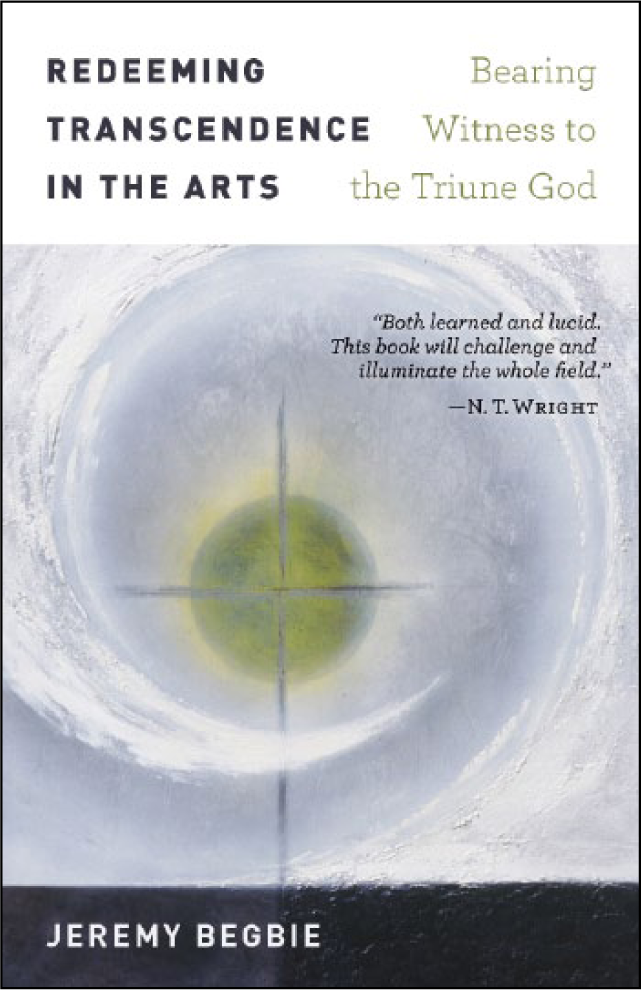
He begins with a brief introduction to the current discussions of “transcendence,” after which he moves to a longer chapter describing the ways in which such “stirrings of transcendence” are currently being evoked. He discusses a sampling of scholars—David Brown, Robert Johnston, Kutter Callaway—who have claimed that aesthetic experiences are (potential) carriers of the divine presence. In the following chapter he puts these contemporary discussions in the context of the longer term debate about the uses and import of the “Sublime.” Though initially this term was grounded metaphysically and thus gestured toward something theological, in recent discussions, Begbie observes, the term has been “hallowed out” (p. 52). While the author is clearly sympathetic with the perennial impulse to see works of art as carriers of transcendence, current discussions make him uncomfortable. He delineates his discomfort in four questions he wants to address: First, given that these discussions often begin with the awareness of limits—of thought or language—is it appropriate to theologize from the perspective of our human limitations? Second, is it really fruitful to work from a generalized, rather than a particularized, sense of God’s presence? Third, can we trust some innate ability of persons to see and respond appropriately to this transcendent God? Finally, can the typically “unitarian” nature of such experiences really “welcome a triune deity into its fold without serious disruption” (p. 73)?
In the following two chapters (on “Disturbing” and “Redeeming” transcendence) Begbie develops the theological perspective behind his concerns. In “Disturbing Transcendence” he makes use of recent New Testament studies—primarily of John’s Gospel—to argue that the pattern of God’s activity displays an otherness, within God, in which the Father opens up space in creation for the Son to participate with God in the creation and restoration of the world. This “pattern,” evident in God’s loving relationship with Christ and given outward momentum in the person of the Holy Spirit, suggests not only an otherness, but a particular productivity and generativity in God that necessarily defines—this is Begbie’s point—the shape and thrust of God’s transcendent relation to the world. This pattern is seen, for example, in the New Testament’s description of language. Human language is not limited in its relation to the ineffable, as we are often told; rather, it finds its center and profile in the particular facts of the Word made flesh, who comes speaking the language of Israel that, as with the woman at the well (John 4), is uniquely capable of opening up people’s experience to the (transcendent) reality of the triune God. In the following chapter (“Redeeming Transcendence”) this Trinitarian and generative character is developed further to show that God’s activity allows the created object to be more fully itself, and in generating new forms of what is already there, shapes little parables of the new creation, on the way to its future. It is easy to see how these theological riches suggest answers to his four questions: Theologizing from human limits suggests that God resides somewhere on the margins of human experience, rather than “at the center of human life, by becoming human within human history” (p. 122, his emphasis). God’s relation to the world is not undefined; it is disclosed in the stubborn particularity of God’s appearance in Jesus of Nazareth. Experiencing God is a gift of the Spirit that allows humans to share in the life of God; it is not due to an innate human ability—compromised as this is by sin. And finally, only a fully Trinitarian account of God’s activity will adequately “reshape the conceptual game” of our experience with the arts (p. 126).
From one point of view, and in terms of Begbie’s intention, this book represents the application of the best of recent Trinitarian theology, and its supporting biblical studies, to reflection on the arts. In doing this the author makes good use of the innovative work of Rowan Williams, Colin Gunton and N. T. Wright, among others, along with original poetry by Malcolm Guite. This is laid out with an admirable clarity and precision. Indeed its theological depth suggests that it is not only must reading in courses on theology and the arts, but would even be useful as assigned reading in systematic theology courses.
But this very strength raises for this reader some questions that are left unaddressed in the book. Begbie’s theological project is quite properly oriented by Scripture and “biblically shaped doctrine” (p. 3); this provides the perspective he uses to evaluate professed experiences of transcendence. Understanding transcendence properly means “we are envisioning an active transcendence in which God’s agency is the primary reality” (p. 130). But without denying the truth of this perspective, what if one chooses to begin the theological exploration of God’s activity from the other end: from the perspective of the person sitting in the movie theater? For that person, let’s call her Lisa, the primary reality is her experience of a film sequence which she interprets in transcendent terms. It is certainly true that this experience is incomplete and inadequate as a salvific encounter with God as revealed in Christ, but phenomenologically, even if Lisa comes later to interpret this experience in Begbie’s terms, she necessarily begins with her particular experience in the theater. In fairness Begbie wants to take such experiences seriously, but he is troubled by placing the focus there. Doing so, he fears, risks giving undue weight to the special materials—harmony in music, metaphor in fiction—which might be thought to mediate the transcendent, as though they were proper stepping stones to knowing God—thus short circuiting the active transcendence that privileges God’s agency. One may respond by noting that it is the Holy Spirit using, say, Handel’s harmonies that properly mediates transcendence. But with respect to the experience of music, how can Lisa focus anywhere else than on Handel’s harmonies? Begbie further worries that an experience of this kind is frequently understood as “Unitarian.” But for an uninformed movie watcher, initially, what other experience of God would be possible? Even if Lisa eventually comes to understand this in Trinitarian terms, the initial experience would have to be unitarian. How could it be otherwise? Indeed Christian theology since Augustine has insisted that all the works of God ad extra are undivided.
Some of the scholars Begbie critiques in his second chapter (full disclosure—my colleagues Robert Johnston and Kutter Callaway whose perspective I share) work with this other phenomenological method. They would have no problem with any theological assertion Begbie makes and in fact will profit from his discussion, but they are doing missional rather than systematic theology. Begbie’s problem with this method is that it works from “the perspective of and interpretation of [human] limits” (p. 58) and from a generalized sense of God (p. 122). But the testimony of Lisa and many like her is quite different: they testify to a positive and concrete awareness, a presence that makes a claim on them. Of course practitioners of this method insist that Lisa needs to explore such experiences and, with the Spirit’s prompting, discover their true source and meaning in terms that Begbie develops. But when he asks why construing God’s general presence is best achieved by shifting “our attention away from the drama played out in the particular figure at the center of the New Testament” (p. 64), one may respond: what if one considers what God is doing in that moment in Lisa’s life, not in opposition to the biblical drama, but as an extension of this?
These comments do not diminish the value of Begbie’s contribution in this book. Understanding experiences with various art forms in the light of God’s Trinitarian agency as Begbie develops this will certainly enrich and deepen our understanding of the arts as a theological site. This is true even if some of us want also to explore ways in which these life changing experiences might also throw fresh light on our received understanding of this scriptural story.