







Abstract
Change leaders who want to invite members’ spirit of inquiry face a challenge; the conditions under which change practitioners successfully blend the strengths of diagnostic and dialogic approaches are not explicitly incorporated within the established theories. This article aims to describe how changing meaning-making systems (in other words, changing mindsets) can be crucial in facilitating successful coapplication of diagnostic and dialogic approaches. A new conditional combination (shared focus on realizing desired performance and change agents’ dialogic anchoring) for the emergence of the practitioners’ integrative mindset is examined, and its implications for research in blending diagnostic and dialogic OD approaches and related fields are discussed.
Keywords
Introduction
There is growing interest in change leaders’ coapplication of diagnostic and dialogic practices in the Organization Development and Change (ODC) field (Bushe & Nagaishi, 2018; Hastings & Schwarz, 2022; Marshak & Bushe, 2018). The research on this issue may be classified into two distinctive views on the coapplication of diagnostic and dialogic change approaches. In one, Hastings and Schwarz (2022) postulate that the oscillations between top-down diagnostic and bottom-up dialogic approaches are possible and generally more successful than either approach alone. On the other hand, Bushe and Marshak (2015; 2016) emphasize the distinction between diagnostic (i.e., planned) and dialogic (i.e., generative) change mindsets, while their bifurcation of change processes does not necessarily mean that they must be applied singly and separately (Marshak & Bushe, 2022).
One of the recent challenges for the ODC community is constructively relating these views to facilitate community-wide understanding for an integrated approach (Gilpin-Jackson, 2013; Livne-Tarandach & Bartunek, 2009). The author uses a Japanese multinational corporation (MNC) as a case in point and finds change practitioners’ critical role in building a collaboration capability by blending diagnostic and dialogic change processes. In the case study, change leaders who want to invite members’ spirit of inquiry face a challenge; the conditions under which change practitioners successfully blend the strengths of diagnostic and dialogic approaches are not explicitly incorporated within the established theories and practical models. In the complicated settings, the author examines the following question in this article: Why and how are change leaders blending diagnostic and dialogic practices, and what happens to them at the mindset level during the whole process? Such an inquiry reveals the members’ narratives and sense-making processes that underpin decisions to blend diagnostic and dialogic change approaches, which the prior research has overlooked.
The purpose of this article is to fill the research gap by describing change practitioners’ critical roles in building a collaboration capability by blending diagnostic and dialogic change processes. The article begins by reviewing the literature on the differences between diagnostic and dialogic change mindsets. The author also specifies two key questions for research in the section. Then, the author explains the methodology, the process of data collection, and the characteristics of the research field. Next, detailed data are analyzed, and the implications for research and practice on blending diagnostic and dialogic approaches are discussed.
Differences Between Diagnostic and Dialogic Mindsets: An Overview
Diagnostic and Dialogic Change Mindsets
In the ODC research, the mindset of the practitioner is defined as the combination of theories, beliefs, assumptions, and values that shape how one frames and interprets the world (Bushe & Marshak, 2015; 2016; Hastings & Schwarz, 2022). Diagnostic organization development (diagnostic OD) is a traditional approach to OD practices originating from a positivist and mechanical mindset. It generally recognizes that change practitioners can plan and manage the processes once valid data are collected and applied with objective problem-solving manners. The diagnostic change mindset is associated with the assumptions that (1) organizational reality is an objective fact; (2) organizations are open and living systems and considered “a collection of structures and processes adapting to or, in more complex formulations, coevolving with their environment” (Bushe & Marshak, 2009, p. 353); and (3) change is so episodic and linear that collecting and applying valid data for objective problem-solving can initiate effective change efforts (Beckhard, 1969; Bennis, 1969).
On the other hand, Bushe and Marshak (2009; 2015) proposed a dialogic OD mindset based on social constructionist assumptions. In line with interpretative social science, the dialogic OD mindset assumes that social interactions construct, sustain, and transform reality (Alvesson & Kärreman, 2000; Gergen, 1985; Phillips & Hardy, 2002). These social interactions initiate inquiry-based processes that rely on shared meaning-making and result in the transformational change of the client system. This change is unplanned but adaptive and emergent because dialogic OD processes are highly idiosyncratic, depending on the contexts.
Diagnostic OD attempts to implement episodic “unfreeze, movement, refreeze (UMR)” change (Lewin, 1947) by applying known expertise to identify and solve organizational problems. In contrast, dialogic OD engages stakeholders in ways that invite disruptions in dominant narratives, leading to a collaborative inquiry into new possibilities. As shown in Table 1, the dialogic mindset leads to a different set of beliefs from the traditional diagnostic one about the basic building blocks of OD.
Diagnostic and Dialogic Mindsets: Different Sets of Beliefs.
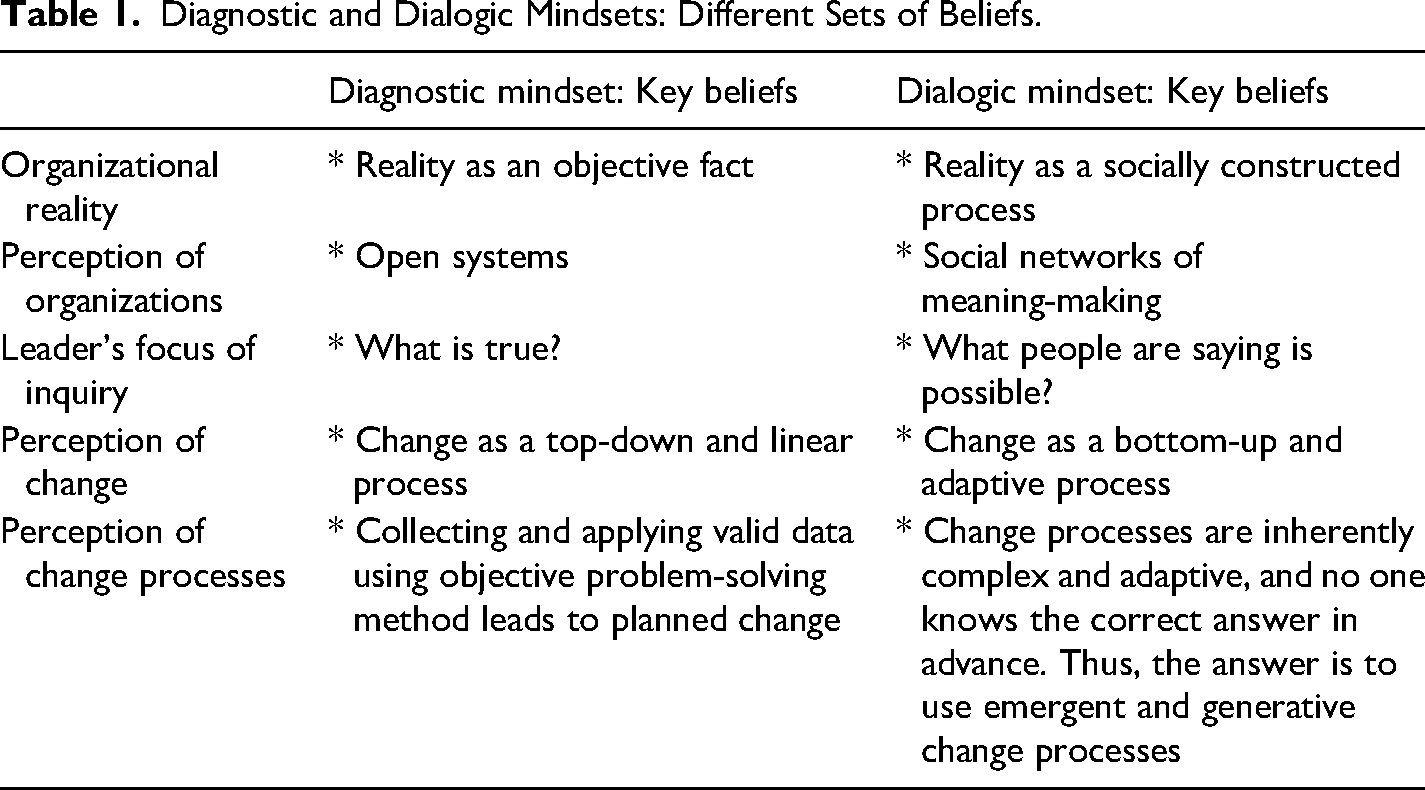
Diagnostic OD methods traditionally emphasize the development of data collection and feedback models (with steps to define objective solutions) with an implicit assumption of planning with predictability (Beckhard, 1969). On the other hand, dialogic OD methods, such as Appreciative Inquiry, Future Search, Open Space Technology, and more recent technologies, based on social constructionist and complexities science perspectives, generally work in more complex, unknown, rapid, and continuous change processes. It is important to note that many of those dialogic OD methods can be used diagnostically (Bushe & Marshak, 2015; 2016): practitioners’ mindsets determine whether the methods are applied diagnostically or dialogically. It is their mindsets that derive different sets of interpretations and action considerations in change initiatives.
In the recent studies on the two patterns of practice, one of the core questions is how the possibility of diagnostic and dialogic applications can be concurrently inquired in a change initiative (Duff & Dishman, 2016; Gilpin-Jackson, 2013; Gilpin-Jackson & Crump, 2018; Hastings & Schwarz, 2022; Oswick & Oswick, 2022). Hastings and Schwarz (2022) have suggested that the oscillations between diagnostic and dialogic approaches are implementable and generally more successful than either approach alone. They regarded oscillation processes as a concurrent change inquiry in which leaders can be a medium for people to participate in the change processes as their own inquiry.
Based on the situational complexity and organizational readiness, Gilpin-Jackson and their colleague suggested a contingency determination of OD methodologies. They introduced some case studies that building a collaboration capability by blending diagnostic and dialogic change processes was practically realistic and led to positive outcomes in a combinational situation of low organizational readiness with highly complex environments (Gilpin-Jackson, 2013; Gilpin-Jackson & Crump, 2018).
Bushe and Marshak (2015; 2016) assert that diagnostic (i.e., planned) and dialogic (i.e., generative) mindsets rest on meaningfully different cognitive and behavioral assumptions (Table 1), and it is critical to differentiate mindset oscillation from methodology oscillation. Commenting on Hastings and Schwarz (2022)'s groundbreaking study, Marshak and Bushe (2022: p. 150) remarked that what is “(m)issing in their discussion is an assessment of a leader's ontology, such as how they think about the nature of organizations, leadership, and change, which is also important in distinguishing between diagnostic and dialogic mindsets.”
Research Questions
This study intends to fill the research gap to make the literature more grounded on data and addresses the questions: (RQ#1) under what conditions is blending diagnostic and dialogic change processes practically realistic for desired outcomes, and then moves to: (RQ#2) how can change practitioners successfully facilitate the leaders’ transition from a diagnostic mindset to a dialogic one?
These are the central research questions to inquire about collaborative change in MNCs by expanding the scope of the ODC practice domain. The current study aims to identify the mechanisms of ODC practices by providing a framework that captures how changing meaning-making systems (in other words, changing discourses; Grant & Marshak, 2011) can be crucial in facilitating successful coapplication of diagnostic and dialogic approaches. With an abductive inquiry, the present study provides plausible explanations grounded on the rigorous data collected from the author's collaborative action research (Shani & Coghlan, 2021; Shani & Pasmore, 2016).
Methodological Foundations
The author implemented action research in a Japanese MNC and acted as an external consultant to guide the change project in reciprocation for being permitted to collect data for academic purposes. The action researcher typically entered new organizational phenomena with little a priori hypothesis and eagerly identified specific issues of the activities (Coghlan, 2011; Shani & Coghlan, 2021; Whittle et al., 2014; 2016). The author employed collaborative and iterative methods, such as generating open-ended questions and facilitating dialogic sessions to clarify the meaning-making mechanisms of the members. The study's methodology is consistent with constructionist-oriented research, wherein the theoretical explanation is grounded on the data (Gioia & Chittipeddi, 1991; Nagaishi, 2022; 2023).
Action Research with the Collaborative Management Research Orientation
This paper analyzes the findings of the author's action research with the collaborative management research orientation (Canterino et al., 2016; Pasmore et al., 2008; Shani & Coghlan, 2021). Modifying Shani and Pasmore (2016) four-factor framework, the author shows the research context in the next section. Then, the data analysis section explains the other three quality factors (relationship, process, and outcomes).
Action research is an approach that integrates researchers’ scientific knowledge with existing practical knowledge to address real organizational issues (Bradbury, 2015; McNiff, 2017). The underlying assumption “is that human systems could only be understood and changed if the members of the systems are engaged and collaborate in the inquiry process itself” (Canterino et al., 2016, p. 159).
Collaborative management research has come to be understood as a family of related approaches to action research and is defined as a joint effort by various members, at least one of whom is an internal practitioner of a system under study and at least one of whom is an external researcher, to collaborate in learning about management practices, management methods, and organizational arrangements in the system, applying scientific methods for the betterment of management (Pasmore et al., 2008). Specifically, members’ meaning-making “is not only unavoidably subjective but is also constrained by the context of goals that the human actors seek to achieve. Understanding and action, including strategic action, thus derive from the framework of meaning ascribed by the organization's members” (Gioia & Chittipeddi, 1991, p. 435). On this premise, understanding such ongoing organizational phenomena requires collaborative efforts between practitioners and researchers in their meaning-making processes.
Research Setting and Data Collection
The author's research took place in a business unit (BUX) of Japanese manufacturing MNC over eight months, from October 2020 to May 2021. Unless stated otherwise, all names are pseudonyms in the examples and interviews. All quotations from the case are translated from the Japanese language.
The Context and the Desired Change Outcome
The BUX, with the Tokyo Head Office and worldwide branches, generated an annual sales turnover of US$700 million in 2019. Approximately 1,200 members worked at the BUX, with the composition of manufacturing (40%), sales (40%), and administration (20%) employees. The unit's strength is the application of its printing technologies to manufacturing ID photo machines and other imaging devices (and their consumable supplies). Its business has globally expanded over the two decades since the 1990s. Still, it gradually failed to catch up with changing market trends (i.e., the global declination of printing demands due to digitalization). The author, an independent external consultant, was approached by the Head of the BUX (i.e., newly appointed in April 2020). At the stage of the preentry negotiation with the author, the Head described that their desired outcome of the change initiative was “to cultivate an organizational learning culture that creates both competitiveness and healthiness of the BUX” (on September 19, 2020, from the field note of the author). The Head also confessed that they had no experience to follow and asked the author to support their learning journey as an experienced external consultant. The author then offered an engagement in an action research initiative, and the Head accepted it. The action researcher (the author) agreed to provide his academic and practical knowledge for the inquiry into the desired outcomes, integrating it “with existing organizational knowledge and applied to address real organizational issues” (Shani & Coghlan, 2021, p. 520).
The Roles of Players
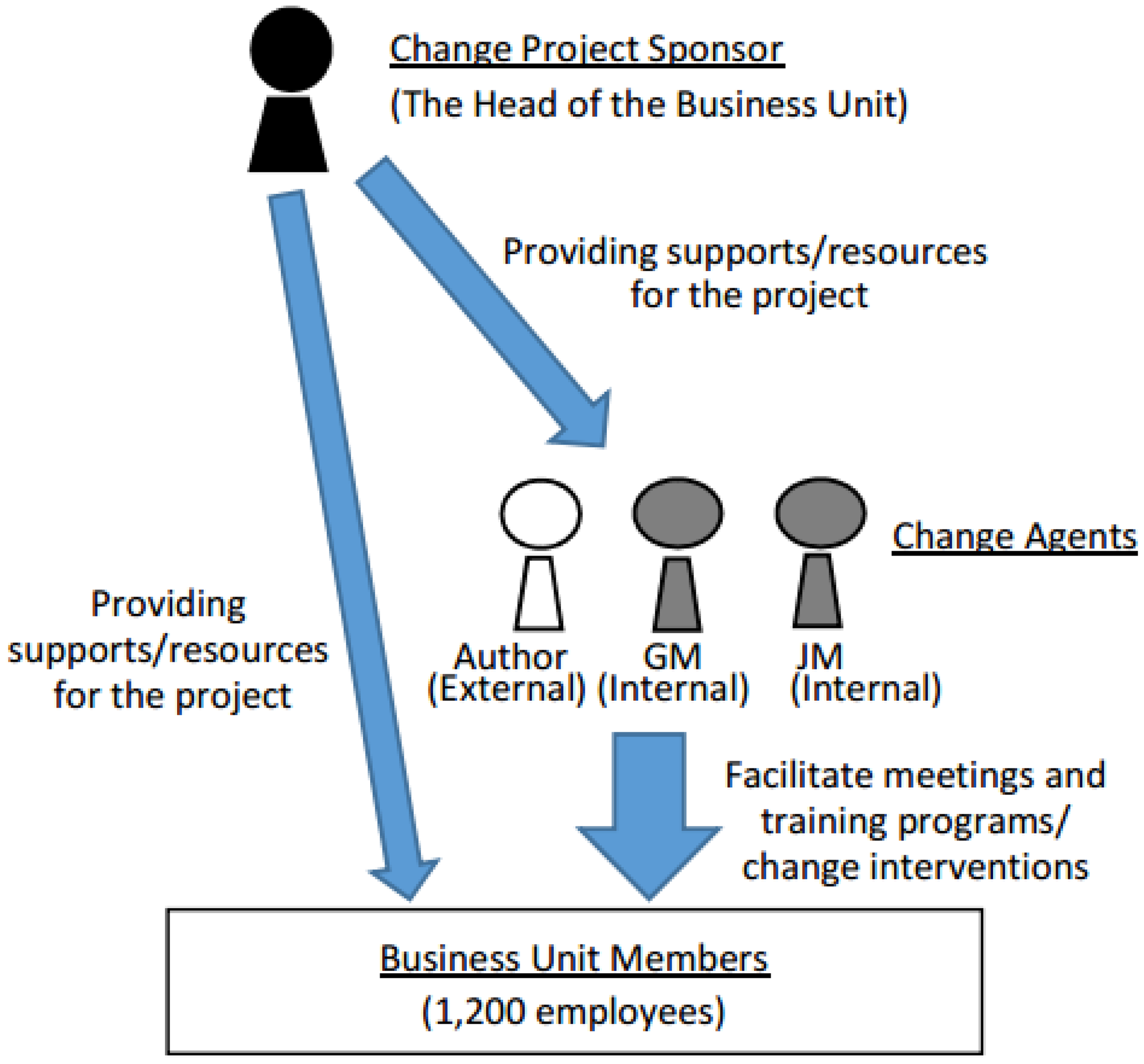
This case involves an external consultant (the author) and three internal change practitioners (“the Head” as a change sponsor, and “the General Manager [GM] and the Junior Manager [JM]” as internal change agents). The Head was directly in charge of the project and appointed the GM and the JM as a pair of internal change agents. The GM was transferred from a business development division where he experienced a learning culture development pilot. The JM had no ODC-related experience, but the Head appreciated the JM's learning mindset. This project was the first experience for the three internal members to lead and manage organizational change processes. Figure 1 summarizes the relationship between the players.
The Settings (Opportunities for Interventions and Data Collection)
The change initiative involved 25 major intervention opportunities, including three large-scale dialogic interventions at the headquarters and 22 small dialogic events at their various local offices. The author (namely, the action researcher) designed the interventions as a modified version of an interlocking chain of conferences, where the employee survey results were discussed to define the opportunities for change collaboration between all the levels throughout the BUX (Bushe & Nagaishi, 2018; Mann, 1957). The interventions’ structure aims to integrate the action researcher's academic and practical knowledge with existing organizational knowledge to inquire into the desired outcome. The process involved 12 semistructured interviews with the Head, the GM, and the JM. They are spread over time (October 2020, January 2021, March 2021, and May 2021) to capture the impact of the change processes on their mindsets. The interviewer was the author (a native Japanese speaker). The primary data sources were the interview and conversation transcripts recorded during the change process. Secondary data sources included all internal documents on the Japanese MNC. The author (the action researcher) was involved in the entire action research process and often cross-checked the incoming data.
Data Analysis
The stages of the change processes developed from a “phase of relationship building” to “large-scale interventions for dialogic processes” to “cultivating dialogic mindset” and eventually to an “evaluation and succession” phase. These four stages covered the author's research for eight months (October 2020–May 2021) and evolved as the project progressed in an emergent manner. The data were primarily collected from semistructured interviews with the three internal change practitioners (the Head, the GM, and the JM).
Stage 1: Diagnosing and Facilitating Relational Processes
This stage lasted approximately two months (October–November 2020). It commenced with the arrival of the external consultant (the author). The stage covered the early phase of diagnostic interventions (including the interlocking chain of conferences using employee survey results) and dialogic team-building activities (Lewis, 2021) for the group of change agents (the GM, the JM, and the external consultant).
The gloomy mood prevailed because of the hike in employee turnover and the conservative decision-making culture in the BUX. The overall mindset of the client members is often conservative at the outset of change processes. The BUX's case was a typical example in which the members’ mindset was generally traditional (in other words, diagnostic) in the sense that people (including internal change practitioners) expected a planned and problem-solving approach to their change project based upon some objective assessment. However, the high complexity of their inquiry revealed the importance of the dialogic mindset and methods as the stages proceeded.
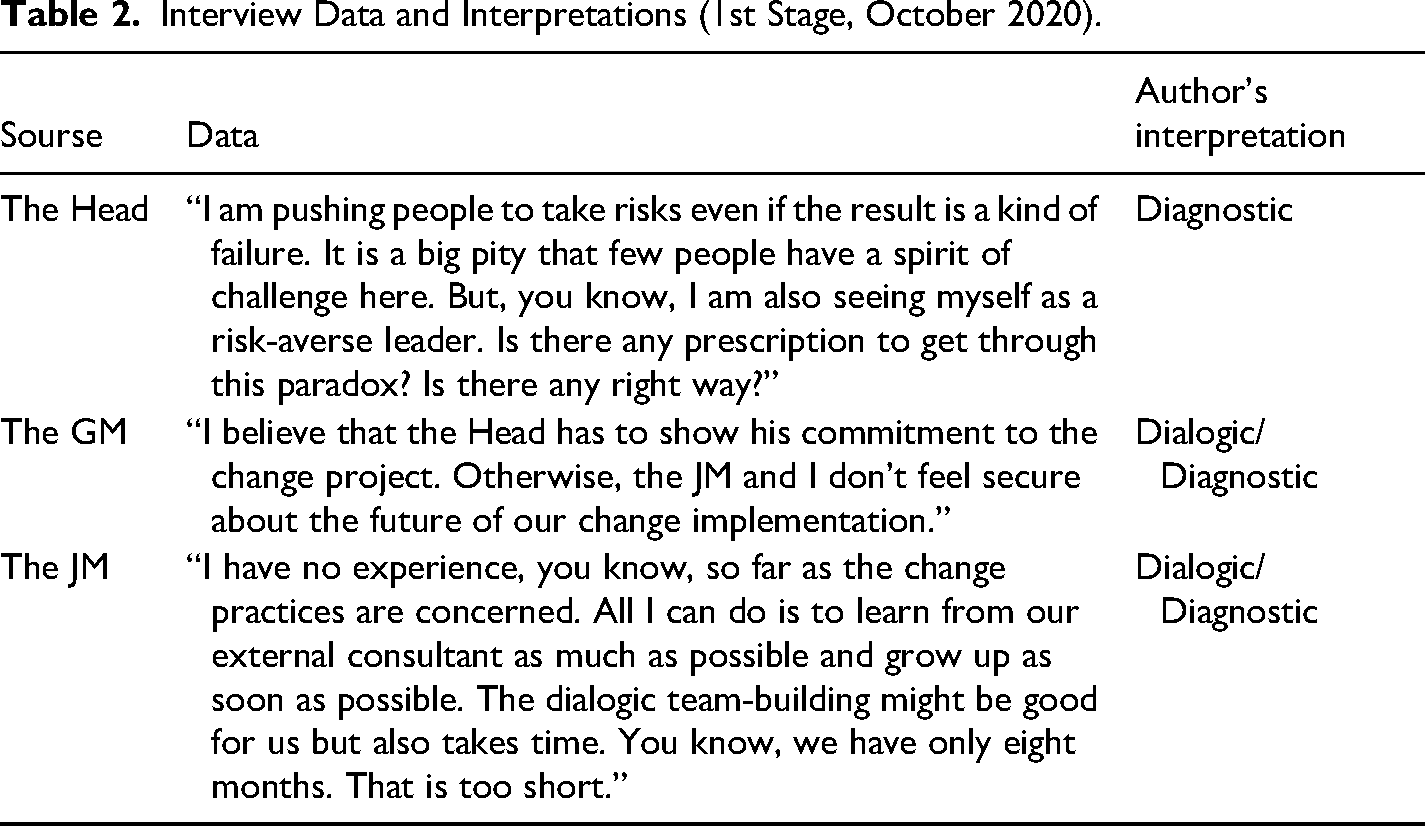
One of the most critical events was an online live video-streaming of the conversations between the Head and the external consultant (the author) on October 21, 2020, which was the first appearance of the consultant for the BUX members. The two talked about the intentions of the change initiative. Then, the desired outcome (to cultivate an organizational learning culture that creates both competitiveness and healthiness of the BUX) was officially announced at the occasion. The critical follow-ups after the live event include (1) data collection through a survey of all the members of the BUX; (2) a small dialogic event at the headquarters (a free-for-all participation style and about 30 members responded to come); (3) and interviews using the same request, “Please describe your experiences (observations, feelings, thoughts, etc.) of the current change process,” with the three internal practitioners (the Head, the GM, and the JM). This first utterance by the author (the action researcher) was applied to all the interviews executed in the four action research stages. The initial intention of this stage was to explore the members’ candidness about their experiences and invite their entry-level engagement. The collected data at Stage 1 are summarized in Table 2.
The Head responded by saying that they are “pushing people to take risks even if the result is a kind of failure. It is a big pity that few people have a spirit of challenge here. But, you know, I am also seeing myself as a risk-averse leader.” The Head named this situation “paradox” and showed their struggle to seek the “right way” for change processes. The GM described that they “believe that the Head has to show his commitment to the change project.” At this point, the GM seemed to expect a more top-down orientation to change and demanded strong commitment and leadership from the top management. The JM confessed that they lacked experience in change initiatives, and all they could do was “to learn from our external consultant as much as possible and grow up as soon as possible.” Their anxiety about being unable to predict the proper process seemed to threaten their psychological need for certainty (Marshak, 2016). The JM also revealed their concern regarding the dialogic approach to team-building because of the time constraint (e.g., “we have only eight months.”). At this stage, the external consultant (the author) recognized that too much anxiety might invite denial and defense of the change initiative. Then, the consultant decided to introduce some diagnostic interventions (data collection and feedback for organizational problem-solving activities) to foster the predictability of the whole picture for sustaining the organization's psychological safety (Nagaishi, 2022).
Interview Data and Interpretations (1st Stage, October 2020).
Stage 2: Large-Scale Interventions for Dialogic Processes
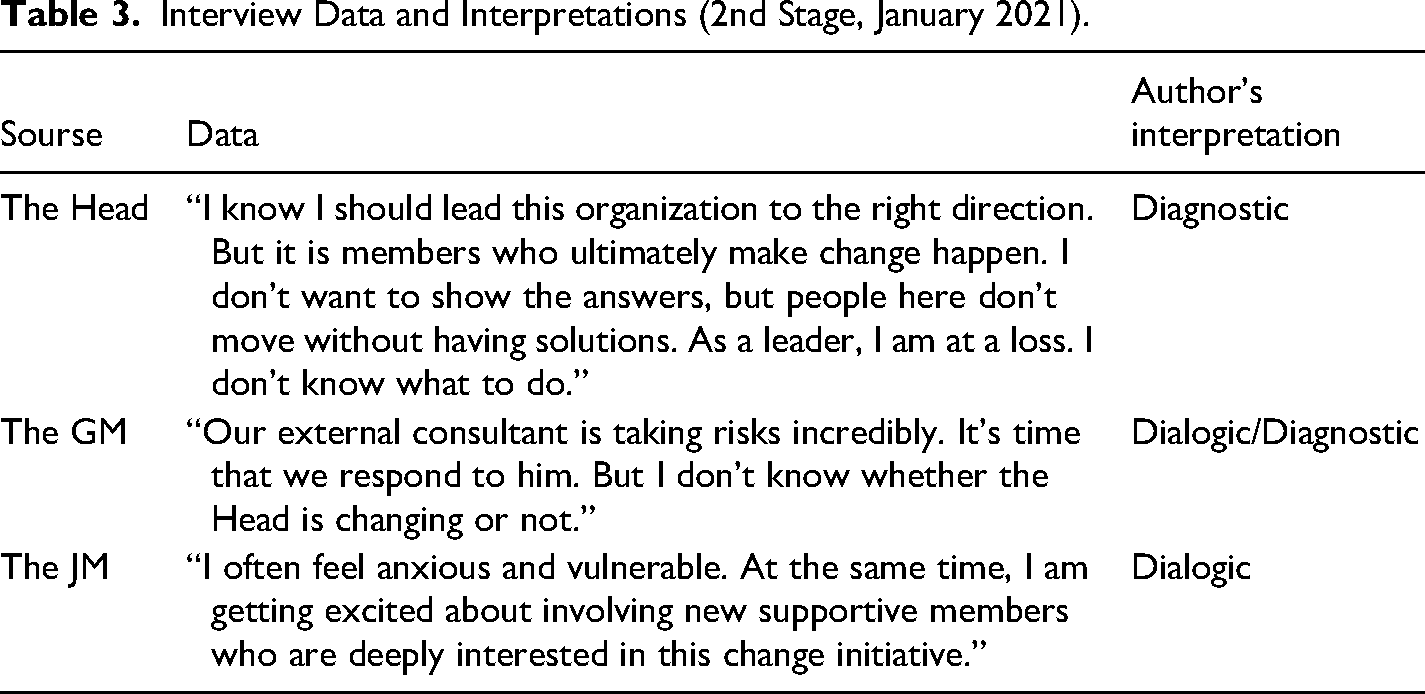
This phase ran from December 2020 to February 2021. During this phase, the primary members (the GM, the JM, and their followers) explored their possibility-centric inquiry into business and organization development (Corrigan, 2015; 2016; Owen, 2008). The hosted dialogic interventions (Appreciative Inquiry < AI > and Open Space Technology < OST > facilitated by the author and the JM) were generative as they invited members’ positive perspective-taking (Barrett & Cooperrider, 1990) and served to break the persistent status quo and invited refreshing conversational patterns by providing an out-of-awareness cognitive structure (Gergen, 1978; Marshak, 2004; 2020). During this stage, the author observed the members’ enthusiasm and anxiety for inviting a flood of change ideas and immediate follow-up actions without scrutinization (Bushe, 2010; Marshak, 2016). The collected data at Stage 2 are summarized in Table 3.
The GM described their experiences at this stage: “Our external consultant is taking risks incredibly. It's time that we respond to him.” The GM's challenging spirit seemed stimulated, but their skepticism was still observed by saying that they “don’t know whether the Head is changing or not.” The JM also turned to exercise their risk-taking. They expressed that they are “getting excited about involving new supportive members who are deeply interested in this change initiative.” Meanwhile, the JM revealed that they “often feel anxious and vulnerable” in the change process. The Head seemed to hesitate to join the organizational change momentum. Here is their confession that “I should lead this organization to the right direction. But it is members who ultimately make change happen. I don’t want to show the answers, but people here don’t move without having solutions. As a leader, I am at a loss. I don’t know what to do.” These statements are not necessarily positive, but they are authentic in the sense that they describe their moment-to-moment experiences (Bushe, 2009). At this stage, the external consultant (the author) focused on fostering the member's challenging spirit by showing the consultant's risk-taking behaviors. The mindset of the external consultant was consistently dialogic since the outset of the change project. Table 3 illustrates the interview excerpts in this stage.
Interview Data and Interpretations (2nd Stage, January 2021).
Stage 3: Cultivating a Dialogic Mindset
The third stage continued from March to April 2021. During this phase, the dialogic mindset started to take root in the organization. The small dialogic events were spontaneously planned and implemented throughout the BUX.
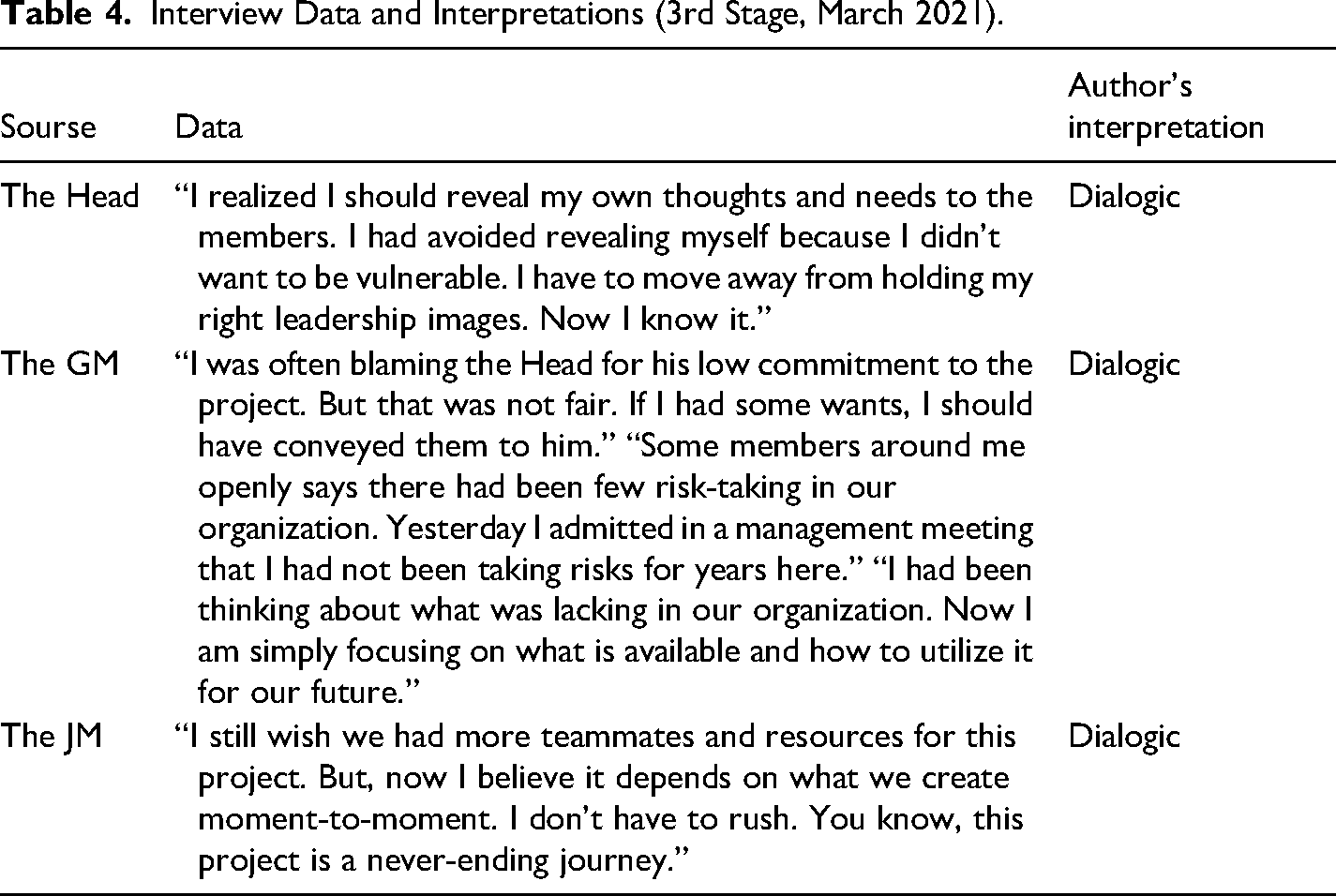
One of the most critical processes at this stage was to create “The BUX Global Visions 2025.” After a series of authentic dialogic opportunities (including spontaneously planned dialogic events), one of the leadership teams proposed, “Keep learning to be a great organization that we all want to embrace,” as the BUX Vision 2025. It seemed to touch people's hearts. In other words, their “generative image” (Bushe & Nagaishi, 2018; Bushe & Storch, 2015) provided novel perspectives to change their current assumptions and conversations. In the dialogic processes, the facilitators (including the author) primarily focused on designing the dialogic inquiries to vitalize the members’ possibility-centric image of actions (Zandee & Cooperrider, 2008). The collected data at Stage 3 are summarized in Table 4.
The Head finally drew their authenticity by saying that “I realized I should reveal my own thoughts and needs to the members. I had avoided revealing myself because I didn’t want to be vulnerable. I have to move away from holding my right leadership images.” At this point, the Head realizes their dialogic mindset as a leader to get curious about what others think and be influenced by it (Marshak & Bushe, 2022). The GM seemed to be getting more adaptive, sharing their thought that “I was often blaming the Head for his low commitment to the project. But that was not fair. If I had some wants, I should have conveyed them to him.” In addition, their confession, “Some members around me openly says there had been few risk-taking in our organization. Yesterday I admitted in a management meeting that I had not been taking risks for years here,” revealed that the GM's dialogic mindset (i.e., being open to be influenced by what others express) was gradually cultivated. The JM's change mindset started to be realistic in their daily practices in this stage. The statement, “I believe it depends on what we create moment-to-moment. I don’t have to rush. You know, this project is a never-ending journey,” represented the emergence of their grounded dialogic mindset. Table 4 summarizes the interview data in this stage.
Interview Data and Interpretations (3rd Stage, March 2021).
Stage 4: Evaluation and Succession
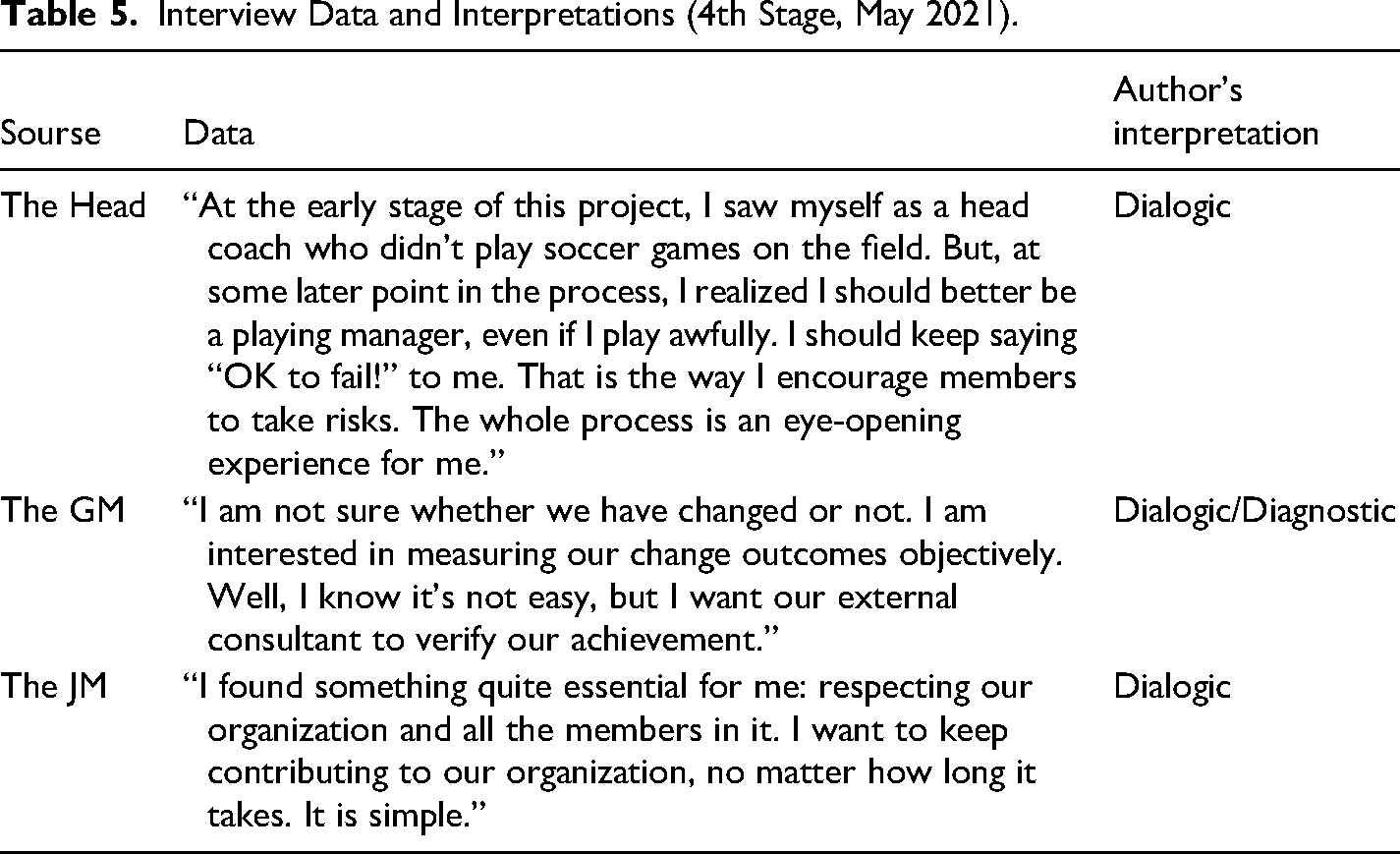
This phase covered the closing process in May 2021. The primary purpose of the stage was to evaluate the whole change initiative and delineate a succession planning process. On the one hand, the change process accelerated, and the resulting change experiences were shared with the BUX group as a whole (including the small subsidiaries, etc.). On the other hand, from the viewpoint of the evaluation and succession of the change initiative, a balanced scorecard system to monitor and adjust the change project was examined and prototyped during the stage. Although the evaluation system developed was a kind of diagnostic one at a glance, the process of prototyping and maintaining it was based on a dialogic (i.e., bottom-up and emergent) mindset. The collected data at Stage 4 are summarized in Table 5.
The Head reflected on the change processes and expressed that “I realized I should better be a playing manager, even if I play awfully. I should keep saying < OK to fail!> to me. That is the way I encourage members to take risks.” Then, the Head also described the whole process as “an eye-opening experience.” The data imply that the Head had become a reflective leader who dealt with his metacognition utilizing the dialogic mindset (Marshak, 2016; Nagaishi, 2023). The GM stated that “I am not sure whether we have changed or not. I am interested in measuring our change outcomes objectively. Well, I know it's not easy, but I want our external consultant to verify our achievement.” At this point, it can be interpreted that the GM seemed to return to the diagnostic mindset, indicating their interest in objectively verifying their change outcome. One of the possible explanations for this point is that the GM was in the position of middle management to be keen to balance the diagnostic and dialogic viewpoints. The JM's descriptions showed their commitment by saying that “I found something quite essential for me: respecting our organization and all the members in it. I want to keep contributing to our organization, no matter how long it takes.” As the stage moved to the evaluation and succession stage, the change practitioners’ mindsets interestingly swung from the dialogic mode of cognitions to the balanced diagnostic/dialogic viewpoints. The author interpreted that Japanese organizational culture (highly respecting the harmony and predictable management mechanisms; Nagaishi, 2020) had an impact on the BUX to blend some goal-oriented and diagnostic mindset, specifically at the wrapping-up stage for sustaining the organization's psychological safety. Table 5 indicates the summarized interview data of this stage.
Interview Data and Interpretations (4th Stage, May 2021).
Data on Mindset-Swinging During Change Processes
The whole process indicates that there is a certain way to inquire into diagnostic and dialogic approaches concurrently in methods and at the mindset level in a change initiative. Based on this observation, the author would like to move to the examination of the important question: Why and how do leaders choose a coapplication of diagnostic and dialogic change processes, and what happens to them at the mindset level during the whole process? On this point, the internal change agents who have reviewed the change initiatives stated: (The GM, May 31st, 2021) “I have some intentions and beliefs on which my behavioral principles are based. If you name it my , sure, it does exist and will not be changed easily. But, at the same time, I have to be practical to survive in an organization. I mean, I have tasks given by the top management, and I have to devote all I can do to achieving desired outcomes. I am sometimes obliged to change my mindset if all I have to do for the desired outcomes is to change it.” (The JM, May 31st, 2021) “I am less experienced among the change team members. I want to learn from the external consultant and my colleagues every single day of the process. I am open to changing not only my behaviors but my mindset, if necessary, to achieve our organizational goals.” “The dialogic approach is quite important for our change. Still, I guess that internal change agents are allowed to blend the different approaches depending on the organizational contexts as long as the external consultant stays at the dialogic mindset.”
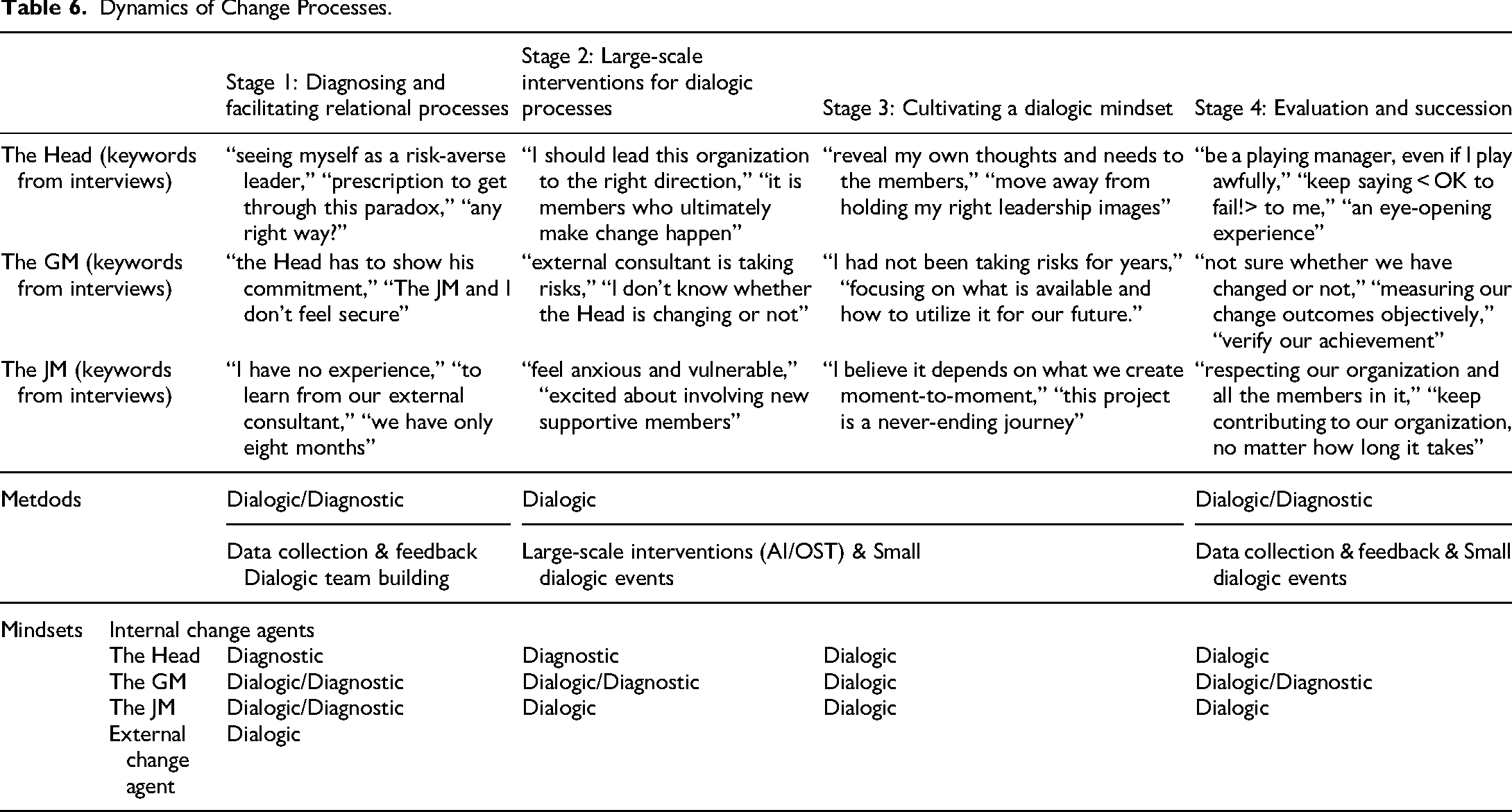
The data indicate that (1) the change practitioners can be open to transforming themselves at their mindset level, and (2) they may coapply diagnostic and dialogic change approaches if they feel it is necessary. These findings imply that diagnostic and dialogic approaches can be inquired concurrently in methods and at the mindset level (Table 6). The detailed discussion and implications of this issue are provided in the next section.
Dynamics of Change Processes.
Discussion and Conclusion
Collaborative inquiry orientation, since its origin in the field of ODC, has been inherited from the founders of the field, embracing the premise that human systems are understandable and changeable if the members of the system are collaboratively engaged in the process of organizational inquiry (Argyris, 1970; Beckhard, 1969; Bennis, 1969; Lewin, 1946; Pasmore & Friedlander, 1982; Schein, 1969). Based on this foundation, the present study suggests that today's ODC can be a challenge to both the journey (creation of generative images with the spirit of collaborative inquiry) and the destination (building a collaboration capability) to realize organizational betterment (Bushe & Nagaishi, 2018).
In the stage of diagnostic/dialogic concurrent interventions (Stage 1), it was the diagnostic and planned methods that visualized the outline of the process and provided some psychological safety to the organization's members (Nagaishi, 2022). On the other hand, the opportunities for dialogic settings inspired the people's spirit of collaborative inquiry and readiness for the coming complex stages (Bushe & Nagaishi, 2018; Gilpin-Jackson & Crump, 2018). During this stage, the mindset of internal change agents generally had a diagnostic orientation to change.
In the following dialogic processes (Stages 2 and 3), the members often highlighted the collaborative inquiry, “how to find out a new mindset to take proper risks in our business development and ways of organizing,” discovered at the large-scale dialogic interventions. The author (the external change agent) highlighted the questions to make novel expressions that cherished the members’ imaginative perceptions (i.e., generative images) emerge. These interventions created a dramatic shift in the mindset of the internal change agent from diagnostic to dialogic. At the final stage (Stage 4), for the sake of evaluation and succession of the change initiative, the internal change agents exercised an integrated mindset that maintained a delicate balance between making diagnostic systems and learning through the adaptive and dialogic process of building it.
Discussion of RQ#1: Under What Conditions is Blending Diagnostic and Dialogic Change Processes Practically Realistic for Desired Outcomes?
Practically speaking, there are various types of practitioners engaging in the same project. Their methods and mindsets are mutually influenced for the success of the change initiative. In the present study, the Head, the GM, and the JM had their distinctive approaches based on their individuated career experiences. In addition, the external consultant's mindset (which was dialogic throughout the change project) impacted the approaches of internal change practitioners. Japanese culture's consequences (e.g., respecting external authority figures; Nagaishi, 2020) fueled the interdependency of the mindsets of the players in the case (e.g., “I want to learn from the external consultant and my colleagues every single day of the process,” stated by the JM, May 31, 2021). The findings are followed by the author's first research question (RQ#1): under what conditions is blending diagnostic and dialogic change processes practically realistic for desired outcomes?
One of the plausible explanations is the shared focus on realizing the desired performance. This inference implies that change practitioners need to be keen to acknowledge the organizational environment in which the goal-outcome orientation emerges and spreads. Some previous studies on the Japanese OD initiatives highlighted that cultivating goal-outcome orientation was one of the critical conditions for overcoming the members’ anxiety to speak up (Nagaishi, 2023; Nagaishi & Nishimori, 2022).
Another potential candidate lies in the role of external change agent. As the JM pointed out, it seems reasonable to assume that internal and external change agents have a specific demarcation in change processes. It is internal change agents who know the organizational contexts well and are obliged to be flexible during the whole process. On the other hand, change initiatives require a kind of “anchor” who gives integrity and common ground throughout the process at the mindset level (Nagaishi, 2022; 2023). In the present study, it was the external consultant (the author) who stayed in the dialogic mindset during the whole change process. However, the BUX case was the first challenge for the author to intentionally exercise the anchoring for developing internal change practitioners’ comprehensive mindsets. In order to realize the intention, the author's focus of the intervention was speaking up about his authentic self-descriptiveness on various dialogic occasions. It fostered the emergence of generative conversations by convincing team members to focus on innovative ways of looking at the context of change processes (specifically, in Stages 2 and 3, described in the previous subsection). This present action research's finding aligns with the earlier frameworks of authentic leadership that have highlighted self-awareness and self-descriptiveness for cultivating organizational learning culture (Barrett, 1995; Bushe, 2009).
Discussion of RQ#2: How can Change Practitioners Successfully Facilitate the Leaders’ Transition from a Diagnostic Mindset to a Dialogic One?
Facilitating leaders’ mindset transition often involves resistance. The discussion of overcoming persistent resistance may suggest future research directions to investigate the process of changing organizations by changing leaders’ mindsets.
Regarding the second question (RQ#2), this abductive study implies that change practitioners need to uncover critical enablers to make members take risks prudently. For example, specifically at the early stage of the change process, members often experience too much anxiety under highly unpredictable situations. Then, it is natural that they are too fearful to take risky behavior (such as finding a new way of organizing and confronting authority figures).
Considering the options in the situation has fostered an inevitable debate. The dialogic OD approach recommends that leaders do “not intervene to fix the situation, but stand aside at the edge of chaos while emergent processes lead to new solutions requiring their active support” (Marshak, 2016, p. 15) since the diagnostic change mindset may eschew the potentially transformational opportunities. On the other hand, the proponents of a hybrid approach assert that organizations continuously utilize both diagnostic and dialogic processes to enable change (Gilpin-Jackson & Crump, 2018; Hastings & Schwarz, 2022).
The findings in the present study dissolve this “either/or” polarity by suggesting a contingency determination. Under the condition in which the member's psychological safety is low in Japanese harmony-orientation culture (e.g., Stage 1 in the case), the diagnostic approach may be a reasonable choice. As the situation's challenge is getting more complex and unpredictable, the dialogic approach to change can be a more hopeful option to inspire emergent and adaptive ways of organizing. Further research could explore how change practitioners help leaders’ flexible transition between a diagnostic mindset and a dialogic one.
Concluding Comments, Limitations, and Directions for Future Research
The present case study provides grounded explanations of how and why the coapplication mechanisms occur in a collaborative inquiry for change. There are two potential enablers for the dynamics: (1) the shared focus on realizing desired performance; and (2) the dialogic anchoring (often provided by external change agents) that fosters the emergence of integrity and generativity at the mindset level. The implications of this paper can be a good benchmark for future research that could explore how much those implications rely on Japanese culture's impacts (e.g., the impact of Buddhism/Zen's philosophy of nondualism on members’ change perspectives) on the change outcomes.
As with any research, this study also involves some limitations. First, to highlight essential data, the author selected the three internal change practitioners as the primary sources to analyze in the present article. The action research process with broader data from other informants involved (e.g., participants and change recipients of the processes) will enhance the richness of the implications for both practitioners and academic professionals. Second, this study is a single case report and intends to create something other than universal knowledge at this contribution stage. Further empirical inquiries (both qualitative and quantitative) in the future would yield rich dividends to examine the validity of the theoretical implications of this study.
Footnotes
Acknowledgments
A previous version of this paper was presented at the Academy of Management Annual Meeting in August 2022. The author is extremely grateful to the anonymous reviewers of the conference paper.
Declaration of Conflicting Interests
The author declared no potential conflicts of interest with respect to the research, authorship, and/or publication of this article.
Funding
The author received no financial support for the research, authorship, and/or publication of this article.
