







Abstract
Post-conflict North Waziristan is experiencing a fundamental shift in the political and economic environment at a very fast pace. This paper examines the complex political economy of post-conflict North Waziristan to assess factors promoting sustainable peace in the region. It identifies the multi-pronged official strategy that is significantly contributing to the transformation of the political and economic environment in the post-conflict setting. These steps include inter alia effective border management to counter illicit trafficking and cross-border terrorism, security sector reforms, improving the mechanism of governance, and diversifying ‘formal’ economic opportunities. The analysis suggests that post-conflict North Waziristan exhibits considerable improvements towards establishing and promoting conditions that are pivotal for sustainable peace.
Introduction
Agar firdaus bar roo-e-zameen ast, Hameen ast-o- hameen ast-o- hameen ast
This Persian verse inscribed on the old prison gate of Miranshah – the district headquarters of North Waziristan District (see Map 1) – is in sharp contrast to the violent image of a region wracked by the insurgency. It, however, provides hope for a more positive and socially meaningful transformation in the post-conflict landscape.
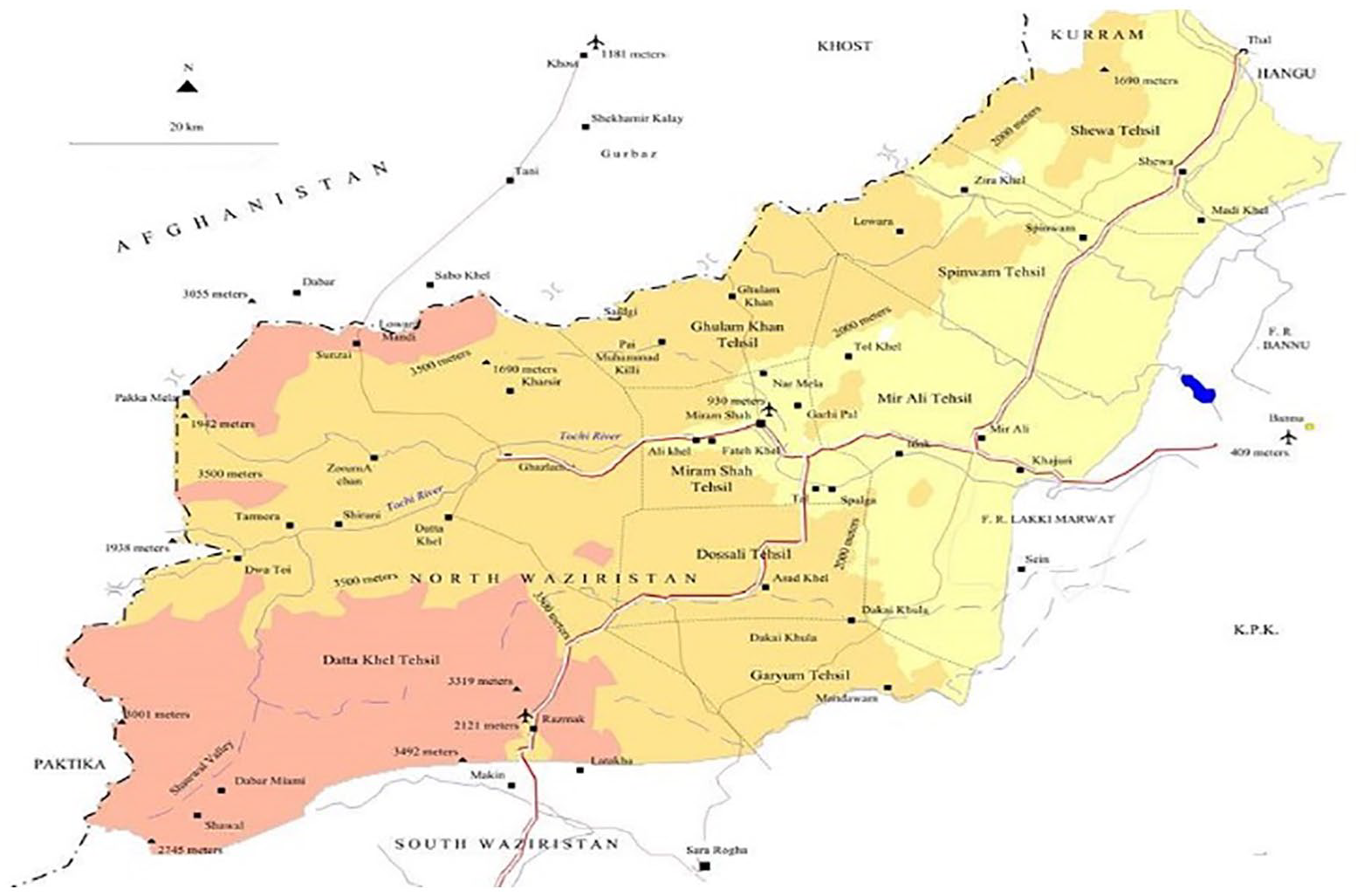
The newly merged district of North Waziristan.
North Waziristan (an erstwhile agency of Federally Administered Tribal Areas (FATA)) had never been a peaceful place, even in colonial times. Over the past four decades, it had witnessed prolonged episodes of unrest and violence. Due to the lax administrative controls, it had become notorious as an attractive site for transnational terrorist networks. When the situation became out of control, the State had to opt for the military option.
The insurgency and the consequent military operations in North Waziristan and other former tribal agencies had a devastating effect on the local population. The trauma caused defies description. The scale of human suffering can be gauged from the fact that more than 80,000 families, that is, almost a million individuals, were internally displaced (Hameed, 2015; Khan and Akhtar, 2016); and an entire system of traditional social capital and communities’ livelihood collapsed. The standard of living, already one of the lowest in the country, plummeted; all human indicators, spatial inequalities and overall economic underdevelopment made the region one of the most impoverished in the whole country (Makki and Yamin, 2020). In the battle to suppress the insurgency, almost 500 soldiers lost their lives, and 3500 militants were killed in military operation Zarb-e-Azb (Javaid, 2015).
The military operations were able to bring back a modicum of stability in 2014. As the dust settled over much of war-torn North Waziristan, the Government of Pakistan and its military took effective measures, not only to maintain the fragile peace but also to pave a pathway towards post-conflict reconstruction and development. The change for the better is fraught with dangers, as an ancient society finds it difficult to part ways with its deadly past.
Owing to their geographical location as the buffer between British India and Afghanistan, North and South Waziristan were at the centre of the British colonial strategy in the Great Game with imperial Russia. The entire borderland was deliberately cut off from the rest of the country. The tribes fought among themselves to wrest scarce resources from each other. Their daily bread came from subsistence farming and sheep herding. In case of drought, the tribesmen would raid the neighbouring settled areas. Having breached the law, the tribal people would brace for the State’s retribution through punitive campaigns or application of the draconian Frontier Crimes Regulation (FCR) (Iftikhar, 2016: 4).
While investigating the case of post-conflict North Waziristan, an effort has been made to incisively examine the literature around the complex phenomenon of (post-)conflict political economy. This also allows inquiry into how multi-disciplinary issues interact and intersect (Vahabi, 2012: 53; Weingast and Wittman, 2006: 3) and into post-conflict development and issues concerning the sustainability of (post-conflict) peace (Collier et al., 2008; Walter, 2010), enabling one to understand contemporary conflicts. However, much of the geographical focus of political-economy-related research has been on Africa and Latin America (e.g. Collier, 2000; Collier and Hoeffler, 1998, 2002, 2004), with scant attention to other areas of perpetual conflicts such as those in the conflict-ridden areas of the Pakistani borderlands (Brasted and Ahmed, 2015: 114–131; Siddiqi, 2015: 57–74). These peripheries mostly span the ruins of the Global War on Terror, with a rising need to contextualize the political economy of (post-)conflict in these (formerly) ungoverned peripheral spaces and fringing borderlands (Morel, 2020).
Furthermore, there is a greater need to understand how borderlands (in terms of geography) matter in understanding the political economy of (post-)conflict. Central to the argument is the fluid nature of contemporary conflicts characterized by cross-border movements, which facilitates new ways of networking with organized crime and conflict entrepreneurs (Traughber, 2007). In this vein, stricter border control measures have not only demonstrated compliance with peace in the post-conflict border regions but also created opportunities for trans-border collaboration, economic interdependence and mutual commitment towards sustainable peace.
Against this backdrop, this paper examines the complex political economy of post-conflict in North Waziristan, marked by the seemingly ungovernable peripheral borderlands. It aims to identify the underlying structural determinants, such as protracted conflict, and the need to prevent conflict relapse (Wennmann, 2019). This paper argues that the unique context of North Waziristan reflects a fundamental shift in its political economy, and does so by articulating the fundamental socio-economic and political changes. It demonstrates how the State is addressing the conditions to contain and defeat transnational violent extremism and terrorism in the region. The paper develops these arguments by elucidating two main strategies adopted by the State in post-conflict North Waziristan. First, it explains the management and (re)regulation of the Pakistan–Afghanistan border under the counter-terrorism efforts to disconnect the cross-border nature of terrorism (Chakma, 2014; Zeb, 2006). Second, it discusses various reforms related to security sector (re)construction, extending and improving the mechanism of governance and diversifying ‘formal’ economic opportunities.
The paper begins by laying the theoretical groundwork, which it does by engaging with the literature on political economy of conflict and development, and then segueing into the relevant literature on (post-)conflict borderland regions. The paper builds from these to explicate how borderlands matter in understanding the political economy of (post-)conflict and then grounds itself in the case of North Waziristan. After detailing the case of North Waziristan, the paper illustrates the post-conflict politico-economic transformation there. It then examines how ‘new’ governance and border management motivated by security and development are working in tandem to ensure sustainable peace in the region. The paper concludes by showing how the terrorism-ridden North Waziristan is being transformed from an ‘unruly’ borderland into a site of peace consolidation.
Understanding the political economy of conflict and development
Several decades of theory and research have yielded a sizeable multi-disciplinary literature on the political economy of conflict. During the 20th century, major emphasis was laid on Cold War events and how the national economies affected the politics of international relations (as an exogenous factor) (Collier et al., 2001). The end of the Cold War did not bring about a much-anticipated peace dividend; in fact, the ‘new era’ exposed the global community to far more individual forms of violent intrastate conflicts. Consequently, the transforming nature of conflicts and the actors involved inspired various scholars to shift the research foci; thus, the debate around political economy moved beyond power politics, realism and international-economy-based factors. As a result, we observed a significant shift in the theoretical understanding of the political economy, particularly during the 1990s and early 2000 (Collier and Hoeffler, 1998, 2002).
With this surge in literature, studies essentially revealed the highly complex intersection between the trends and drivers of ‘new’ conflicts and the processes involved: greed and grievance (Ballentine and Sherman, 2005; Collier and Hoeffler, 2004), deprivation (Gurr, 1970), the economic interests of the protracted conflict resulting in maximizing the functional utility of violence (Berdal and Keen, 1997; Duffield, 2001), the nature of conflict economies (Krause, 2013), and the self-financing aspects of conflicts (Le Billon, 2001; Ross, 2004; Wennmann, 2007). Besides, such inquiries into intrastate conflicts not only highlighted the role of rebel groups and other strategic players but also emphasized the effects of external interventions on conflict intensity. Intrastate conflicts were also found to be fuelled by organized crime (e.g. in Africa and Latin America), political violence (e.g. in the Middle East) and permanent emergencies (e.g. related to the wars in Afghanistan and Iraq).
Several scholars have closely associated the propensity to civil wars with economic stagnation and poverty (e.g. Blomberg and Hess, 2002; Collier, 2000; Fearon and Laitin, 2003). Others have highlighted the causes of reduced economic growth due to conflict (e.g. Arunatilake et al., 2001; Caplan, 2002). Indeed, conflict-ridden societies generally face multiple challenges, but preventing conflict relapse in the post-conflict environment has remained a significant challenge.
Considering the complexities involved, scholars have problematized the notion of the ‘post-conflict’ situation. Keeping the fluidity of the situation in mind, a possible violation of agreed peace deals, violent incidents of an isolated nature, and resistance by terrorists, criminals or conflict profiteers have been cautiously observed. Recognizing the concomitance of multiple factors, Brown et al. (2008) suggest seven indicators or ‘peace milestones’ to the post-conflict environment: cessation of hostilities or violence, signing of a political/peace agreement, demobilization, disarmament and reintegration, repatriation of refugees or internally displaced people (IDPs), establishing a functioning state, achieving reconciliation and societal integration, and economic recovery. The presence of some or all of these is certainly the most desirable post-conflict scenario.
Pointing to an alternative argument, Walter (2010) posits that the literature on the role of the economy in the relapse and perpetuation of conflict is limited, and a heavy reliance is placed on economic development, assuming that this will prevent conflict relapse, something which might disappoint the post-conflict planning. The State’s relapse prevention efforts in the post-conflict phase might also fail due to pre-existing parallel/illegal economies, which, if not disrupted, will continue to provide many lucrative economic alternatives to the locals and conflict entrepreneurs (Traughber, 2007).
Moreover, economic disparity and ethnic cleavages have also been highlighted as the possible causes of conflict recidivism (e.g. Collier et al., 2008; Quinn et al., 2007; Walter, 2004). Similarly, ethno-religious differences can play a significant role in conflict relapse. As Gurr (2000: 66) argued, the identities (based on common descent, language, belief and experience, etc.) tend to be longer-lasting compared to those created through ‘civic and associational identities’. Indeed, the literature on political and economic causes of intrastate conflict is substantial; however, the role of ethnicity, tribalism and identity has yet to be fully explored. In particular, ethno-religious and tribal heterogeneities present unique challenges to a sustainable peace process.
Political economy and borderland
The debate over political economy explains how ungoverned geographies or weak governance in the borderlands foster those informal socio-economic and political systems, that is, conditions which essentially create a dependence on illegal, underground or informal economy, thus creating entrepreneurs of violence (Haass and Ottmann, 2017). However, there is a still greater need to understand how borderlands (in terms of geography) matter in understanding the political economy of (post-)conflict. Central to the argument is the fluid nature of contemporary conflicts, characterized by cross-border movement, which facilitates new ways of networking with organized crime and conflict entrepreneurs.
On these matters, contemporary scholars frequently consider border regions as
Therefore, the ungoverned or poorly governed borderlands abruptly alter the local and regional security environment, thus favouring violent non-state actors such as terrorists, insurgency movements and organized crime syndicates. Additionally, an unregulated cross-border movement can also foster cross-border illicit trade and sustenance of illegal or underground economic channels (e.g. Gheordunescu, 1999). Therefore, we cannot ignore the argument that strict border control measures or border management can prevent the trans-border nature of violent conflict or terrorism. Out of this emerges the necessitated ‘controlled’ cross-border movement in the ungoverned or poorly governed periphery and on borders prone to narco-terrorism, illegal trade, terrorism and lawless hinterlands (Shakirullah et al., 2020).
Methodology
To provide a comprehensive analysis of contextual factors embedded within the tribal culture and to understand the unique manifestation of conflict in North Waziristan, this research employed a qualitative methodology. In doing so, semi-structured interviews, group discussions, informal interactions and field observations were carried out in the highly remote and conflict-ridden district of North Waziristan. Fieldwork was conducted over 7 months, from August 2019 until March 2020. A total of 29 semi-structured interviews and five group discussions (both guided by open-ended questions) were conducted. Visits were made to all three sub-divisions of the North Waziristan tribal district, namely Miranshah, Mir Ali and Razmak (see Map 1). Fieldwork was also conducted at the Ghulam Khan Pakistan–Afghanistan border terminal, where the relevant authorities thoroughly briefed the research team about the border fencing/management and the formalization of cross-border trade in the post-conflict environment.
To capture and articulate varied views over the socio-economic and political trends – the fundamental shift – taking place in North Waziristan, the respondents represented a wide variety of backgrounds, including relevant government officials and representatives, members of the Pakistan Army, local youth, journalists based in North Waziristan, developmental actors, and the local (non-governmental) community-based organizations. To understand the political economy of terrorism in North Waziristan, a group discussion was also held with ex-combatants who have undergone a deradicalization programme.
The interviews and discussions covered a broad range of topics (research themes) such as the socio-economic factors, including spatial and socio-economic inequalities, lack of governance, unique tribal dynamics, the transition from informal and/or illegal cross-border trading to formal border management, post-conflict reconstruction and development and overall ongoing socio-economic transition in the wake of the improved security situation.
The case: North Waziristan
Kaplan (2012) posits that ‘Geography is the backdrop to human history itself’ and is indispensable to the plight of ideas, will and chance. Ironically, Bose (2009: 56) referred to what the British called the ‘Northwest Frontier’ as ‘no frontier at all’, only a geographic incoherence, separating the organic whole – Afghanistan and Pakistan. Before the Durand agreement with the Afghans, the British briefly annexed Waziristan in 1849 (Watteville, 1925: 6), but due to tribal resistance could ‘never fully pacify it’, despite 17 campaigns against this region between 1852 and 1920 (Rabasa et al., 2007: 49).
To find some semblance of governance in these tribal lands, a ‘hereditary class of armed local power brokers’ created by the British (Marten, 2012: 33) was adopted in post-partition Pakistan. This fostered an ‘indirect’ system of state governance within which the local Maliks (tribal elders) inherited their authority rather than drawing it from the tribal tradition. The only set of laws governing the region was contained in the FCR, known to be the most draconian set of laws to govern this region.
Geographically, North Waziristan is one of the remotest and most isolated tribal districts. It is a long strip of 4707 km2 of ‘unutterably rugged country’, mostly stony and barren, always difficult and often dangerous (Wylly, 1912: 2).
For administrative purposes, North Waziristan has been divided into nine Tehsils. Wazir and Dawar (or Daur) are the two major tribes in North Waziristan and have been further divided into sub-tribes. Utmanzai Wazirs are thought to be among the most powerful tribes in the tribal regions and fall under the great Karlanri main tribe (Daur, 2014; Vahid and Rassler, 2013: 26–27; Wylly, 1912: 419). Overall, the Wazirs have always been depicted as ‘lawless Spirits’ who could indulge in ‘daring depredations’ when it came to the defence of their land (Watteville, 1925: 1). As mentioned earlier, Dawar is the second dominant tribe in North Waziristan, and its members are exclusively located along the Tochi River, past Kharqamar (see Map 1). North Waziristan is also home to other small tribes. For instance, the Mehsud (primarily a South Waziristan tribe) are settled in Razmak and Gharyum Tehsils of North Waziristan and have mostly had strained relations with Wazirs (Yusufzai, 2008). Kharsin, Gurbuz, and Zadran (predominantly Afghan tribes), on the other hand, can be located in the highlands on either side of the Durand Line, historically facilitated by the porous nature of the border. Similarly, the Saidgi tribe occupies the Shawal Valley bordering Afghanistan.
As the epicentre of militancy, North Waziristan served as the breeding ground for both the national and transnational movements (such as Al-Qaeda, Haqqani Network, Tehrik-e-Taliban Pakistan (TTP), Islamic Movement of Uzbekistan (IMU), Lashkar-e-Jhangvi (LeJ), etc.), operating across the porous border with impunity (Mitsialis and Jan, 2011; Vahid and Rassler, 2013; Yusufzai, 2008). Therefore, an array of foreign fighters hailing from Uzbekistan, Tajikistan, other Central Asian states, the Middle East and Afghanistan planned, plotted and executed multiple violent operations, in both Pakistan and Afghanistan. Illicit activities in North Waziristan involving both foreigners and locals have manifested in trans-border crimes, smuggling, extortion, ransom and the promotion of illegal and underground economies (Zakaria et al., 2019).
Attending to human development and economic opportunities has been revealing. The industrial base in the district is almost non-existent, and the land-use data records from 2007–2008 note that only 4 per cent of the total land in North Waziristan is cultivated, and the remaining 96 per cent is non-arable, yielding meagre agricultural output (FATA Secretariat, 2008: 4). Consequently, employment or economic opportunities are non-existent, enticing highly vulnerable youth to the illegal economy and militancy. Cross-border intimacy and alternative opportunities attracted significant force, and North Waziristan became a hotbed of lawlessness and terrorism, fermenting a social and physical infrastructure that fostered illegality and sustained ill-governance. The conflict environment in North Waziristan produced a complete annihilation of physical capital/infrastructure (schools, houses, hospitals, roads) and human and social resources (Yousaf et al., 2018).
Despite a porous border facilitating unchecked cross-border socio-economic motion, Pakistan exercised its writ over the known crossing places through the Frontier Corps, a second-line defence force. As mentioned above, peripheral and fragile geography, weak governance structures and the permeable border became ideally suited for conflict, crime, illicit trading and terrorism, subsequently spreading deep inside the country (e.g. Ahmed et al., 2017; Chandran and Rajamohan, 2007).
According to Ballentine and Sherman (2005: 8), ‘in the face of constellations of opportunity, constraint, resources, ideas and leadership, conflicts transform, mutate, degenerate or consolidate’ – an idea very appropriate to this locality. Indeed, this argument might account for why and how a political economy of conflict developed within an environment of violence in North Waziristan. Therefore, examining the political economy is necessary to understand the historical, traditional, and contemporary shift in the tribal governance structure (Marten, 2012: 60). As mentioned above, an arbitrary system of governance created friction among the tribes. Weak and inefficient institutional mechanisms resulted in outside forces influencing the peripheral tribal structures. A Political Agent – the only state-appointed patrimonial authority – governed the entire former agency of North Waziristan, wielding enormous power in his office (local Malik, 28 August 2019, personal communication). The poorly governed spaces led to the ‘privatization’ of the ‘public’ domains, leading to ‘nepotism patronage, bribery, extortion, and other personal or black market relationships’ (Jackson, 1987: 527). As a result, this region experienced an ‘abysmal development record, an arbitrary judicial system, inefficient policing, and a porous border with Afghanistan’ (Marten, 2012: 34).
During an interview with a senior provincial government official, it was mentioned that ‘millions if not billions of dollars’ worth of illegal items including narcotics were smuggled through the border’ (Khyber Pakhtunkhwa (KP) government official, 20 September 2019, personal communication). The respondents further elaborated on the illicit trading and terrorism nexus while stating that the border was minimally monitored. Similar findings were also reported by the International Crisis Group (ICG), which recognized smuggling as the primary funding source among the terrorist groups operating in North Waziristan (ICG, 2018).
As mentioned earlier, North Waziristan has a unique geography which creates a distinct social setting promoting traditionally intermingling communities and tribes inhabiting either side of the border. This peripheral social setting intrinsically challenged the governance structures, a challenge which was further compounded by a general void in explaining and theorizing inconsistent approaches to ruling such areas, reluctance, and haze in the State’s policy towards such borderlands (Destradi, 2017). For centuries these districts remained self-governing entities with unique (indigenous) conflict resolution and justice dispensation mechanisms.
Nevertheless, the district has also witnessed a political and economic shift during the past few decades. The Middle East oil boom in the 1970s resulted in labour migration (led by the residents of both North and South Waziristan), bringing in large remittances (Burki, 1980; Marwat, 2007: 74). The increased access to diasporic remittances created competing economic channels. It also brought about a socio-political change in the district that was primarily observed to challenge the patronage system and centralized authority of Maliks, who played as a conduit between the Political Agent and the local tribes. Secondly, through the North Waziristan Peace Accord of 2006 (signed between the tribes and the government), the tribal elders and Maliks became redundant (Nawaz, 2009). Finally, scores of Maliks were also eliminated through target killings (Malik, 2013; Shakirullah et al., 2019). Consequently, structural inadequacy, negligence, incompetence, corruption and insensitive treatment of the locals have remained key low-points of the governance in North Waziristan during the recent past.
According to respondents of a group discussion, the aforementioned shift in the political and economic environment occurred in three ways. Firstly, remittances sent by the labour migration from the Middle East financially empowered the individual families and Qaum (sub-tribe), and ‘these remittances may have quadrupled the per capita annual income for the households’ (Burki, 1980: 49). Secondly, economic empowerment challenged the traditional power dynamics which were wielded to perpetuate the subordination of the weak and marginalized. As a result, the dependence on the state-backed traditional patronage of Maliks and war-backed economic patronage of warlords and Mullahs diminished. Thirdly, economic empowerment increased the demand for smuggled goods, feeding directly into the illicit cross-border economy (local businessman, Miranshah, 29 August 2019, personal communication). These indigenous and exogenous factors ‘competed against the old state patronage networks to influence the political economy of the region’ (Marten, 2012: 35).
Post-conflict politico-economic transformation in North Waziristan
The regional peripheral and spatial exclusion are transforming in post-conflict North Waziristan. Generally, the post-conflict situations have been characterized by scholars as constituting ‘multiple transition processes’ such as the transition from war to peace, democratization, decentralization, liberalization, and economic stability (Brown et al., 2008). Consequently, the transformation from conflict to peace is a complex process and involves politically and economically ostracized decisions to ensure sustainable peace.
As mentioned in the previous sections, terrorism and the consequent military operations in North Waziristan resulted in the loss of the (informal) economic base, destruction of the physical infrastructure (Arshad, 2010; Naveed et al., 2018), the humanitarian crisis in the shape of internal displacement, a complete collapse of tribal governance mechanisms, and, more importantly, degradation of tribal social capital and related infrastructure (Khan and Rasheed, 2016). Consequently, North Waziristan became one of the most impoverished districts in the country, adding to almost 73 per cent of the population living below the poverty line in tribal areas (UNDP, 2016). Such persistent poverty, coupled with the lack of governance and security, drove this district to the bottom of the development index. Inaccessibility and remoteness hindered outreach by many state-sponsored support programmes such as the Benazir Income Support Programme (BISP) or Ehsas Program. Consequently, the number of beneficiaries of these schemes has been lowest in North Waziristan at 93 recipients (the next higher is 4234 individuals from South Waziristan) (BISP Survey Team, 13 November 2019, personal communication).
The post-conflict context of North Waziristan, therefore, became cluttered with some extraordinary challenges. Some of these challenges included the return of IDPs, post-conflict rehabilitation and reconstruction, creating economic opportunities, security sector reforms and extending the governance and institutional mechanism to supplement the peacebuilding agenda. In this vein, an allocation for Rs.300 billion has been planned by the KP government over the next 10 years for these districts (Ali, 2020). Similarly, with £110 million aid from the UK (see Graph 1), out of which almost £18 million has already been spent, multiple projects have been planned to be completed by 2023 (DFID, 2020):
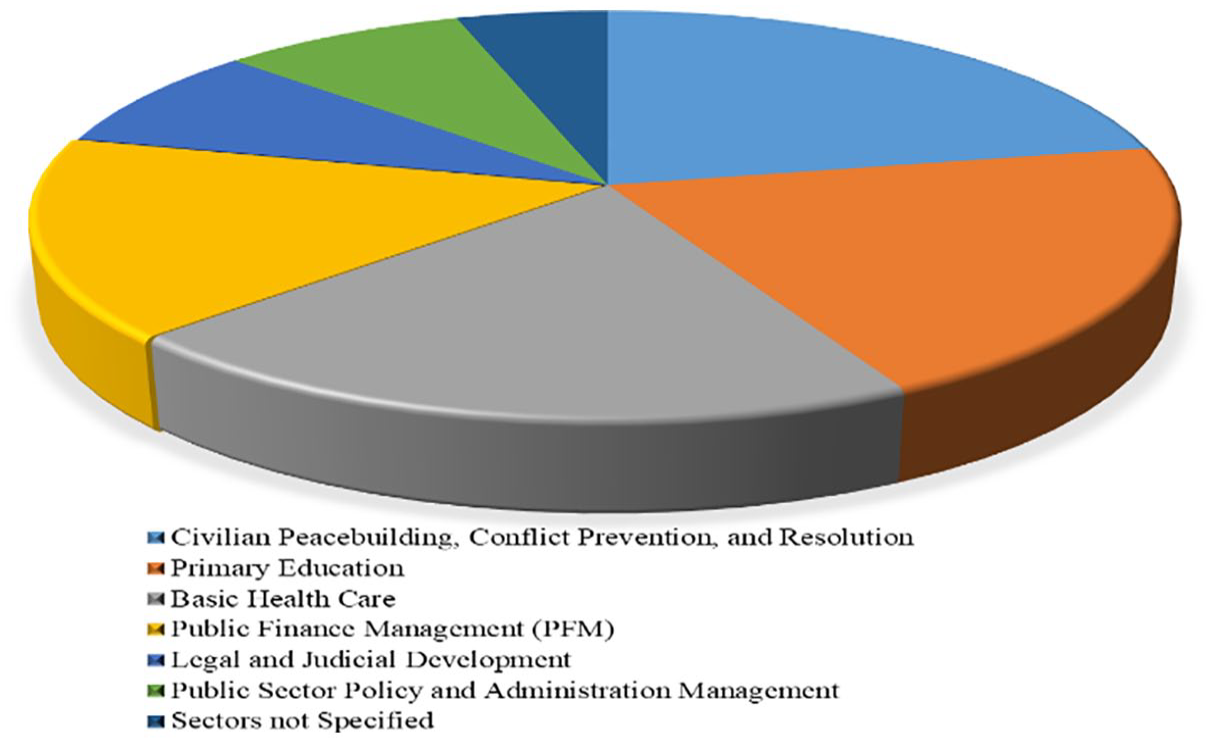
Funding Breakdown in Newly Merged Tribal Districts (NMTDs).
More importantly, the state intervention and North Waziristan–KP merger alter the economic structure from illegal to legal. Improving education and health facilities and creating job opportunities are the key priorities of the post-conflict economic reconstruction and development agenda. As suggested by the data, the State is investing in upgrading the existing education and health-related infrastructure (teachers at Mir Ali Golden Arrow Army Public Schools (GAAPS), 27 August 2019, personal communication). As an acknowledgement, the research team was provided opportunities to visit a few educational facilities (including Cadet College Razmak and GAAPS). As a significant long-term investment, the KP government has allocated Rs.1.5 billion for the development of an Education City in North Waziristan at Pir Kalay Topi (Tribal Malik at Miranshah, 30 August 2019, personal communication). This city will invite leading national universities to establish academic campuses from elementary to the university level. Moreover, special attention is also being paid to female education, empowerment and capacity building.
Redressal of microeconomic grievances has been prioritized on the State’s policy agenda. The locals raised objections against the State’s compensation mechanism for the businesses lost due to terrorism and the consequent military operations; ‘the process is slow, and the payments are far below that of the claimed value’, a respondent explained during a group discussion at Miranshah. A local businessman further pointed out that on returning home from the IDP camps, ‘most of our shops, businesses, and homes were partially or fully destroyed, our warehouses’ inventories were lost’ (see also TNN, 2019; Wazir and Siddique, 2018). These issues were also discussed with the government and military respondents, who claimed that these grievances are being addressed; however, a shortage of funds and other priority engagements have caused some delays.
Governance: Post-conflict North Waziristan
Vital post-conflict development agendas, necessitated by the drive towards sustainable peace in the periphery, include: enhancing the governance structures, an inclusive political process, functional local administration and police force reforms. The legal and judicial system in North Waziristan is only working minimally and is non-functional in far-flung rural areas, necessitating continuity of traditional mechanisms such as Jirga. Some enforcement of contracts, property and land-related issues, and minor disputes have been reported through formal mechanisms at the courthouses established at Bannu (the nearest town outside the district).
The merger of the tribal districts in KP has materialized under the Constitution (Twenty-fifth Amendment) Act, 2018 (Khan, 2019; Mehmood and Mir, 2019). Based on the national governance structures, local administration offices have been established, but the hiring and staffing process is pending transition into practice. Therefore, the provision of smooth utility services such as clean water, electricity, gas and sanitation facilities is lacking. The functioning of the local government is hampered by slow coordination and the existing fragmented structure.
One momentous governance step was the merger of local Khasadar and Levies into the KP Police force. This process has created an almost 4000-men strong police force; however, their training and structuring as a regular force are still in the planning stages. In the post-conflict phase, well-established governance mechanisms are likely to lead the district towards peace and normality.
Border management and the Ghulam Khan trade terminal
Border fencing and restricted cross-border movement have directly affected the local economy, drawing both appreciation and criticism (Gul, 2019). During the fieldwork, the authors had a chance to visit the Ghulam Khan border terminal and were thoroughly briefed about the border fencing spreading over a 2500 km length (Frontier Corps, 31 August 2019, personal communication).
Before the launch of the military operation, border-crossing and business access was controlled by the militants. Due to the military operations, the crossing remained closed for almost 4 years (2014–2018) and reopened in May 2018 (Wazir and Siddique, 2018). The border environment, comprising rugged terrain, high mountains, deep streams and steep valleys, facilitated the infiltrating militants. Several respondents reported that most of the militant groups that operated in North Waziristan have now moved to the other side of the border. It was further elaborated that before the border fencing, the operatives of TTP could easily cross the border and move to Miranshah, and onwards to settled areas such as Bannu (Hussain, 2020).
Insisting on the necessity of a border fence, military officials contend that besides improving the overall security of the region, fencing is also likely to regularize and redirect trans-border movement to the known crossings. However, the locals had reservations related to trans-border movement. For instance, during a personal communication with a local businessman/trader, at Miranshah (29 August 2019, personal communication), it was argued that free cross border movement has been a norm for centuries in the district. Fencing and controlled crossing have severely hampered our trade and businesses. Hundreds of trucks used to cross at Ghulam Khan, and now one can notice only a few per day. The local businesses have dried up.
Additionally, during a discussion with the youth in Miranshah, it was highlighted that, owing to the strict border control and fencing, the average earning of almost Rs.30,000 to Rs.40,000 per month has now dropped to almost nothing. Therefore, the local sentiment regarding the border fencing is in stark contrast to the State’s security narrative. The border is merely a non-existent artificial line from a local perspective, fracturing centuries of profusive socio-economic interaction. With a vague understanding of security threats, locals find fencing a direct threat to their businesses and livelihoods. Ironically, the State uses the same narrative both for peacebuilding through cross-border dependence and to control the regional extra-legal economies intersecting with terrorism.
Consequently, Pakistan’s decision to fence the international border was a measure to control the porous border and to prevent the terrorists from crossing to either side of the border (Saif and Saifullah, 2017). The master plan for fencing the entire Durand Line includes comprehensive and intense surveillance, monitoring, a crossing-control plan and border vigilance. As informed by the military commander, the fencing has been completed across the entire indicated length of deployment of the Tochi Scouts (almost 68 km) and further to the north-east and south-west of Ghulam Khan (see Map 1).
Additionally, almost 150 forts are being built in the area of responsibility of the Tochi Scouts (a constituent unit of the Frontier Corps). Most of these forts are strategically located and operational, ensuring inter-visibility, and they are being manned by almost 4000 soldiers. The forts have been supplemented and inter-connected by construction and by upgrading pre-existing posts along the border every 100–200 m. The fence has further been reinforced with small equidistant check posts, holding mobile troops responsible for round-the-clock patrolling, ensuring the sanctity of the fence and the crossing. As a military supplement to the fence patrolling, ‘defence tracks’ are being developed along the entire length of the fence to facilitate communication and the inter-post and fence vigilance. Routine security measures (such as bomb-sniffing and large troop movements) ensure that violent activities from across the border are pre-empted and reduced to the minimum. However, ‘across the border there are only 27 Afghan Army posts, creating a serious protective void. Moreover, the Afghan border guards are not professionally competent, and posts are under-manned’ argued the military commander at Ghulam Khan Fort (31 August 2019, personal communication).
The post-conflict socio-political and economic approach adopted by Pakistan has followed a two-pronged strategy. While the border control/fencing and crossing terminal have been operationalized to secure the region physically, a more inclusive approach towards the local population is being pursued to spur internally generated socio-economic growth. ‘In the war-torn region, socio-economic transformation is likely to take decades if not years, provided the same peace can be maintained, and crossing management continues’ (Frontier Corps, 31 August 2019, personal communication).
As the first step towards opening up trade with Central Asia, the Ghulam Khan border terminal was inaugurated by former Prime Minister Shahid Khaqan Abbasi in May 2018 (Shalmani, 2018). Ghulam Khan is the third-largest border terminal after Torkham and Chaman. The terminal has been upgraded for round-the-clock operations and by the provision of National Database and Registration (NADRA) and Federal Investigation Agency (FIA) processing terminals. The relevant border management authorities informed this research that the mentioned measures would help monitor, regulate and institutionalize the trade passing through Ghulam Khan terminal.
The blueprint plan for the crossing terminal and inclusion of the Afghan Transit Trade is being coordinated at the governmental level. One of the positive economic indicators is a gradual increase in the number of daily trucks crossing at Ghulam Khan. Since its reopening, the traffic flow between Pakistan and Afghanistan has been more than 11,000 outbound and almost 7000 inbound vehicles. The exact number of monthly crossings averaged nearly 15 vehicles during the initial days of reopening, reached 360 vehicles during May 2019, and 200 during August 2019, which shows a significant upwards trend in ‘legal’ crossings. The usual trade items arriving from Afghanistan include vegetables, fruits, dry fruits, household items, while Pakistan, in addition to these items, also exports flour and cement in large quantities. Due to the proximity of the western artery of the China–Pakistan Economic Corridor (CPEC) – a veritable ‘game-changer’ less than 100 km from the Ghulam Khan crossing terminal – and the ease of crossing because of expansion and planned computerized upgrading, Ghulam Khan is expected to surpass the Torkham and Chaman crossings in the next 5 to 10 years.
The emerging CPEC, in particular, has proved to be a major source of regional cooperation and economic development. Although the NMTDs are not a major constituent of CPEC (the route) per se, the post-conflict transition in the region will undoubtedly impact the overall ‘functioning’ of the corridor (Wolf, 2016: 3). Nevertheless, NMTDs will not only become an essential part of CPEC-led Special Economic Zones, which in turn will address intra-district and intra-province spatial disconnect. Wolf (2016) argues that such an integrated infrastructure within NMTDs can serve as ‘mini-corridors’, providing economic opportunities, ensuring sustainable peace and establishing trade-economic cooperation between Pakistan and Afghanistan. In addition, the idea that economic development will ensure sustainable peace has long underpinned the centre’s approach towards the erstwhile FATA. In particular, the authorities have seen the underdevelopment in the borderland areas such as North Waziristan, combined with the lack of governance and the presence of sizeable illicit/informal cross-border trade as a security risk. Therefore, the process of economic development can also be characterized as an active attempt to consolidate the development of geography – ‘relational space’ (Barney, 2009) – based on transnational connectivity through CPEC.
The second prong of the strategy focuses on local tribes. Three North Waziristan tribes neighbour the crossing terminal: Gurbuz, Khaliwal and Ghulakhel. Regular interaction with these tribes by the military following the norms of local Riwaj (Pashtun tradition), with the support of Maliks, Mashraan, and Jirga, ensures that the issues (mostly related to the border crossing) are heard and responded to adequately. The developmental projects by non-governmental organizations (NGOs), such as water supply projects, tube wells, schools and dispensaries, further facilitate the local tribes. Additionally, the availability of faster computerized processing terminals helps the regular (Gurbuz) tribe crossings, as they frequents either side of the border for marriages, funerals and other social interactions.
Many local respondents pointed out that local livelihood and close socio-economic cross-border relations had traditionally been dependent on drug trafficking, arms peddling and smuggling. Owing to the improved and regulated border management in the post-conflict scenario, the local population is gradually shifting towards more ‘formal’ economic activities, such as farming, livestock, skill development, extractive industry-led opportunities, manufacturing, businesses and provision of localized utilities and services.
Concluding remarks
As posited by Brown et al. (2008), the post-conflict phase is an ongoing process with inherent risks. Therefore, while considering North Waziristan transposing from being the epicentre of violent extremism and terrorism into the post-conflict phase, it is important to address the drivers (socio-political and economic conditions) which facilitated the manifestation of terrorism in the first place. Consequent policy-related interventions are important to ensure sustainable peace in North Waziristan. Therefore, post-conflict reconstruction and development agendas are diversifying the ‘legitimate’ economic and employment opportunities, including regulatory and security sector reforms, extending justice and the rule of law, and regulating cross-border trading via Ghulam Khan terminal.
This research has argued that the post-conflict North Waziristan exhibits a steady yet profound shift in the political economy. Moreover, the structural reforms (related to governance, border regulation, and security reconstruction) are expected to supplement the sustainable peace process. Our analysis suggests that post-conflict North Waziristan has shown considerable improvements towards establishing and promoting the pivotal conditions for peace.
North Waziristan has been embroiled in the protracted conflict not only over these past few decades; in fact, it witnessed violence in colonial times. Absence of the firm writ of the government, peripheral geography, a prolonged insecure environment and porous border intersected with the illicit and illegal economy. Highlighting some of the critical political and economic factors, which contributed to the manifestation of violent conflict in North Waziristan, this paper posits that the district’s distinct social and geographic character largely remains untapped, meriting further scholarly attention. Therefore, this research points to the need for an enhanced understanding of the nuanced contextual realities that signify the tribal region of Pakistan in general and North Waziristan in particular.
Footnotes
Acknowledgements
This article was written as part of the research project ‘Unravelling the Contextual Realities in Post-Conflict North Waziristan Agency’ under the partnership between the Hanns Seidel Foundation (HSF) and Centre of International Peace and Stability (CIPS) of the National University of Sciences and Technology (NUST) in Pakistan. We would also like to express our gratitude to Pakistan Army which provided vital assistance during the data collection phase in North Waziristan.
Funding
This article was written as part of the research project “Unravelling the Contextual Realities in Post-Conflict North Waziristan Agency” under the partnership between the Hanns Seidel Foundation (HSF) and Centre of International Peace and Stability (CIPS) of the National University of Sciences and Technology (NUST) in Pakistan. We would also like to express our gratitude to Pakistan Army which provided vital assistance during the data collection phase in North Waziristan.
