







Abstract
The comprehensiveness of teacher professional identity (TPI) studies conducted by African and Asian researchers highlights the importance of valid TPI indicators across Africa and Asia. Questionnaire TPI indicators are important to obtain valid direct comparisons between teachers in Africa and Asia. The process of developing a questionnaire served as an avenue for researchers from Asian and African regions to learn about TPI pointers from each other. This study used the Delphi technique to achieve consensus on valid TPI indicators across African and Asian regions. Fourteen researchers from the Asia-Africa University Dialogue Network for Educational Development (AAD) were selected using purposive sampling. TPI in this study is defined as a multifaceted concept comprising contextual and personal factors that differ across national borders. The indicators in the questionnaire represented personal, social and institutional factors perceived by teachers and outlined in the literature. In the Delphi study process, the researchers used three rounds to validate the initial 40-item TPI questionnaire. Subsequent analysis of the results indicated high importance and consensus among experts. Owing to its standardized procedure, the TPI questionnaire makes it possible to collect and compare the TPI dimensions from the different socio-economic contexts in which teachers work in Africa and Asia. The findings of this study guide African and Asian researchers on the common understanding of TPI characteristics prevalent across African and Asian regions. Research protocols for fostering quality research toward addressing challenges faced by the teacher education sector in African and Asian countries is also implied.
Introduction
Teacher identity is a complex, multifaceted and dynamic configuration of personal and professional factors that influence each other (Clandinin and Husu, 2017). Forde et al. (2006) ‘argue that teacher identity is not synonymous with an educator’s role as teacher; rather, the concept of TPI is constructed by the individual who carries out the role and is based on a person’s values, feelings, attitudes, ethnicity and culture’.
‘Teacher identity formation is understood as a process that involves the interrelated dimensions of personal experience, professional practice and the external environment’ (Arber et al., 2014: 44). A teacher’s personal experience is related to their personal lives and might include race, class, gender, their own interests and co-curricular activities. The concept of a teacher’s professional practice is related to factors that impact teachers’ professional life such as the school culture, their own professional learning and contextual factors in the educational system. The external environment is related to attitudes and understanding surrounding education, including political ideology and different policies. Tran and Nguyen (2013: 199) argue that ‘teacher identity is anchored in the intersection of the individual teacher’s educational beliefs and practices, institutional policies, sectoral boundaries, and the socio-cultural, economic and political context in which the profession is embedded’. Teacher identity is, however, subject to change across time, space and boundary (Arber et al., 2014).
As mentioned before, identity formation is a dynamic process that cannot be conceptualized without considering the social interplay between the individual and the community they work in. Becoming a teacher implies more than just transposing teaching skills onto an already established personal identity; it means including the identity ‘teacher’ in one’s life (Cross and Ndofirepi, 2015). TPI can therefore be summarized as the interplay between the inward journey to make sense of oneself as teacher and the outward journey to engage with the professional world (Tran and Nguyen, 2013).
The concept of teacher professional identity (TPI) could be described by the answers to the question ‘What am I as a professional?’ The answer to such a question lies on multiple dimensions of individual, social and institutional factors (Belay et al., 2019). The individual psychological perspective defines TPI by relying on the personal meaning associated with the role a teacher plays. For example, a teacher may say ‘I am a mathematics teacher’, or ‘I like teaching mathematics’. The sociological perspectives, on the other hand, use the normative values associated with the teaching profession as internalized by the teacher. For example, a teacher may say ‘My parents like my teaching job’ or ‘My teaching job is accepted by my friends’. Besides, a teacher’s understanding of how institutions, such as schools and the Ministry of Education, value the teaching profession also determines the identity. A teacher may say, for instance, ‘Teaching is an easy profession to join’ or ‘It is not competitive’. TPI is, therefore, defined as the synergy of the meaning constructed by teachers based on personal, social and institutional dimensions of the expected role of being a teacher (Akkerman and Meijer, 2011; Beijaard et al., 2004; Belay et al., 2019; Krzywacki and Hannula, 2010).
Past studies related to teacher professional identity in Africa
A review by means of the search engine Educational Resources Information Center (ERIC) using the search term ‘teacher professional identity’ yielded many studies based on empirical data from developed countries, but few from developing countries. In the past two decades, 4503 peer-reviewed articles/reviews on TPI in developed and developing countries were published in English. Among them, 118 are related to Africa—94 articles to South Africa, followed by Nigeria (nine articles), Kenya (eight articles), and Ghana (seven articles). This sub-section outlines the major research topics in the available articles/reviews produced by the researchers with regard to these countries.
Many studies conducted in African countries have tried to clarify what factors strongly influence the formation of TPI in their own historical, socio-economic and cultural backgrounds. In South Africa, how teachers see themselves as professionals and compose their identities in a young democracy is one of the key research topics (Smit et al., 2010). Various studies also refer to the inequality of the South African education system. Teachers are in the ideal position to address these inequalities; however, the Human Sciences Research Council (HSRC) in South Africa found in 2008 that about 30,000 teachers had left the profession due to low job satisfaction, inadequate remuneration and lack of professional status and respect (Hartell and Steyn, 2019). Nigerian researchers focused on teachers’ professional attitudes, which influence students’ learning achievement, and recommended that their attitudes needed to be strengthened through developing teachers’ professional identities and growth (Okebukola, 2012). In Kenya, processes of teachers’ educational development and how they develop their professional identities have been studied in different educational sub-sectors. Some Ghanaian researchers were interested in the relationship between teachers’ motivation and their professional identities through postcolonial framing.
Past studies related to teacher professional identity in Asia
Many countries have divided the teaching career into different phases and identified standards for teaching competences, e.g. novice teachers (1st phase); teachers with more than three years of teaching experience (2nd phase); well-skilled teachers (3rd phase) and excellent teachers (4th phase) (Bich, 2015). The quality of education depends much on the teaching qualifications of teachers, including their professional knowledge and teaching skills. Within the context of School-Based Learning to Teach in China, Zhang et al. (2018) suggest that there is an issue of potential conceptual confusion regarding the relationship between identity and learning to teach, which is neither linear nor unidirectional, but reciprocal. Similarly, Malaysian pre-service teachers (PSTs) construct their teacher identity during their teaching practice; this can guide educational planners to create more learning spaces and opportunities for PSTs to collaborate and reflect on their practices to become effective teachers (El Masry and Saad, 2016).
In Vietnam, since professional teaching standards were introduced, the researchers usually carry out specific studies on the status of teachers’ teaching skills by subject compared with professional standards or propose specific criteria to assess teaching skills in order to design new programs (Tú, 2014). The first years of teaching are considered an important period in forming a professional identity. However, the novice teachers have not received significant attention and support from education managers. This causes significant obstacles to the creation of career passion and improvement of professional competence, especially for elementary teachers and vocational students (Hai and Giang, 2017).
The working environment of the teachers also plays an important role in their professional development. Malaysian research shows that all of these factors seem to assist positive development of TPI and are incorporated into the teaching experience (Mahaya and Nordin, 2015). It could also explain whether and how Japanese teachers’ professional identities have shifted in the context of heightened testing accountability (Katsuno, 2012). In Vietnam, novice primary teachers interviewed believe in a bright future for the teachers in their respective communities (Hai et al., 2018a).
Purpose of the study
The purpose of this study was to conduct a Delphi survey technique in order achieve a consensus about the indicators of TPI that are valid for African and Asian regions. The targeted panel of experts that were involved with this Delphi study process were African and Asian university researchers who are experts in teacher education
Methodology of the study
The comprehensiveness of TPI studies conducted by African and Asian researchers highlights the importance of determining valid TPI indicators across Africa and Asia. TPI indicators in a questionnaire are important to obtain valid direct comparison between teachers in Africa and Asia. Consistent with the above perspectives, Esser and Vliegenthart (2017) maintain that being cognizant of contextual issues is what makes “comparative research exceptionally valuable” (p. 3). This called for the development of a TPI scale that reflected the overall perception that teachers in different contexts have about themselves as professionals (Karaolis and Philippou, 2019). The Delphi study had the primary purpose of building general consensus on comparable indicators that define teachers’ professional identity as agreed upon by the different research teams in Asia and Africa.
In the Delphi study process, the researchers used three rounds to validate the teacher professional identity (40 items). The first round involved an open-ended discussion to list indicators of TPI. Fourteen experts in the field of education from various universities in Asia and Africa (which are also among the members and researchers of the Africa-Asia University Dialogue for Educational Development (AAD) Network) were invited to participate in this Delphi study. The group of experts constitutes a collaborative relationship among African and Asian universities with the Center for the Study of International Cooperation in Education (CICE), Hiroshima University, Japan. Hiroshima University functions as the secretariat (Center for the Study of International Cooperation in Education, 2011a, 2011b, 2011c, 2012).
Therefore, this Delphi study involved researchers in teacher education from AAD member university institutions. As the AAD member university institutions are located in both Asian and the African regions with varying levels of development, the process of developing the questionnaire also served as an avenue for researchers to learn about TPI pointers from each other. In fact, the genuine collaboration that prevailed during the process of developing the research instrument also allowed researchers to exchange ideas on improving the TPI questionnaire. Moreover, the forum enabled teacher education researchers from the South to tap into the expertise and experience of their counterparts from the North and vice versa. Teacher education initiatives likely to benefit from such research include pre- and in-service programs in AAD member countries in both the South and North. Furthermore, the TPI questionnaire validation process helped to empower individual researchers in AAD member university institutions.
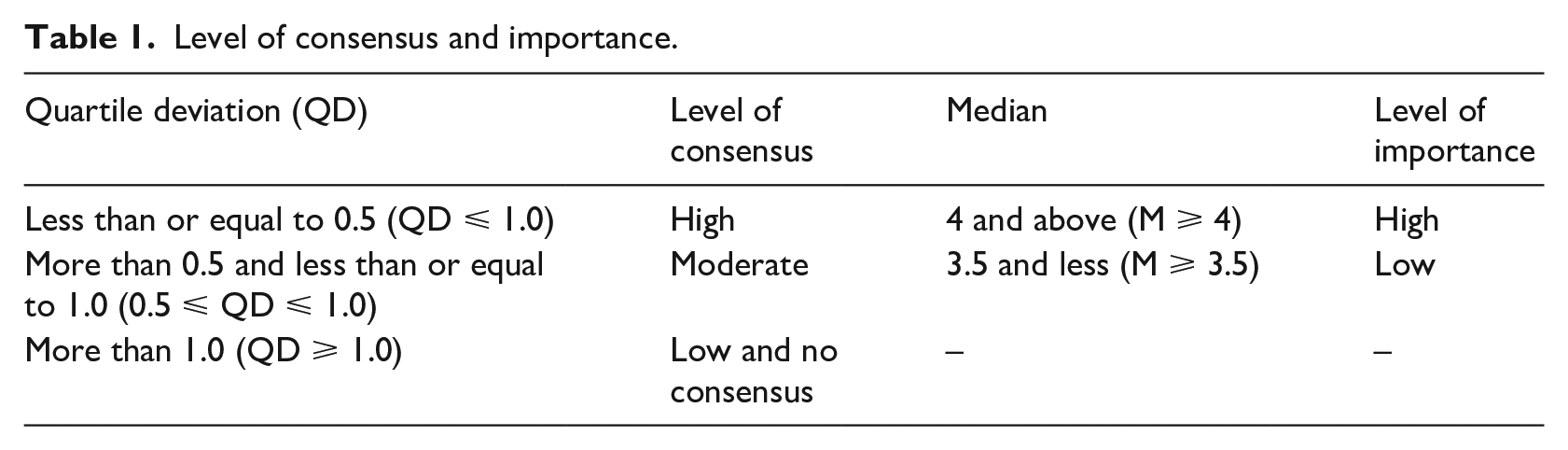
The subsequent round of the Delphi study involved sending a questionnaire consisting of TPI indicators suggested in the first round. The experts were contacted by email and participated voluntarily. In this study, the researcher used Norizan’s (2003) formula as a guideline to establish the level of consensus and the importance of items (refer to Tables 1 and 2). The value of the interquartile range using the formula (Q3-Q1) was determined using Microsoft SPSS version 24.0. The formula used for identifying deviation (QD) is as follows:

Level of consensus and importance.
Description of the classifications.
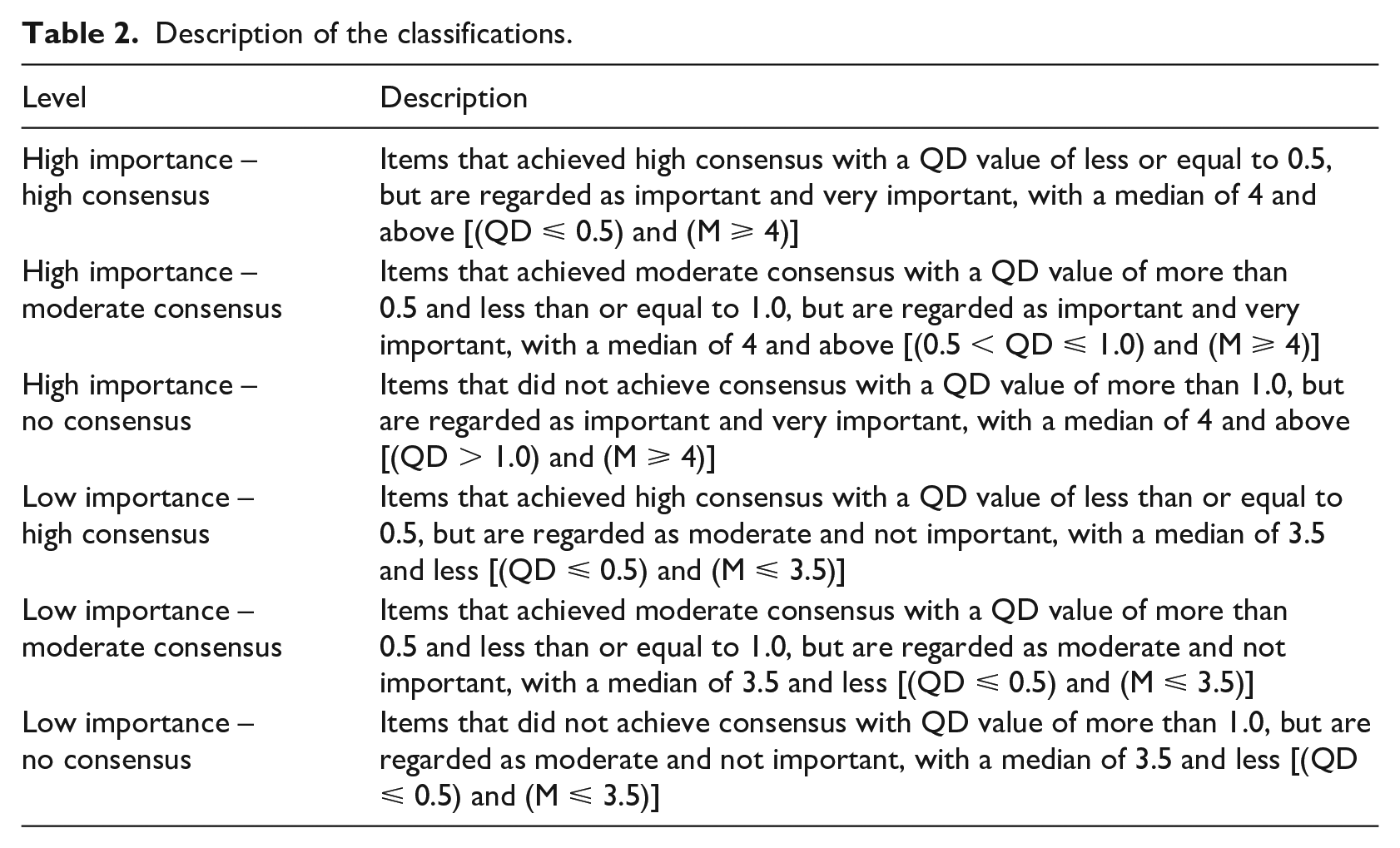
In the following round, the experts were asked to assess the level of relevance of each item, namely, (1) very irrelevant, (2) not relevant, (3) not sure, (4) relevant and (5) very relevant. Responses from the Delphi panels were required to reach agreement about the significance of each indicator. The responses were returned to the main researcher, who then processed the responses. The convergent input of respondents was assessed using the median value and partial quartile deviation (Rowe and Wright, 1999), as depicted in Table 2. The data indicating group responses and rankings were sent back to the experts for the next round. At this point, the experts were provided with an opportunity to review the consensus of the group, reflect on their individual responses, and indicate any changes in response. This last round of data was returned to the main researcher, who then made the final compilation representing group consensus.
Results
First round of the Delphi Study
The first round of the Delphi study involved an open-ended face to face meeting and discussion to gather indicators of TPI. A large pool of items was first collected through focus group discussions among 14 panels of the Delphi study as well as the review of related literature, which yielded the final 40 items, now used in this paper as indicators of the TPI. The indicators were developed based on the three domains of TPI: the personal, social, and institutional dimensions. The personal dimension of TPI refers to the definition of one’s role identity in terms of a teacher’s motivation and competence. The social dimension of TPI refers to the definitions of being a teacher in terms of how one is regarded by society, such as friends, family members, and the community at large. The third dimension, which is the institutional dimension, comprises systemic factors that influence the way teachers define themselves, such as the support and incentive system for teachers.
Second round of the Delphi Study
In this round, the panel responses to each item in the questionnaire were analyzed to determine the quartile deviation (QD) and median. Table 3 outlines the results of round 2 and shows that for all 40 items, the median was more than or equal to 4 (median ⩾ 4), which indicates that the level of importance was high.
Consensus on teacher professional identity in second round.
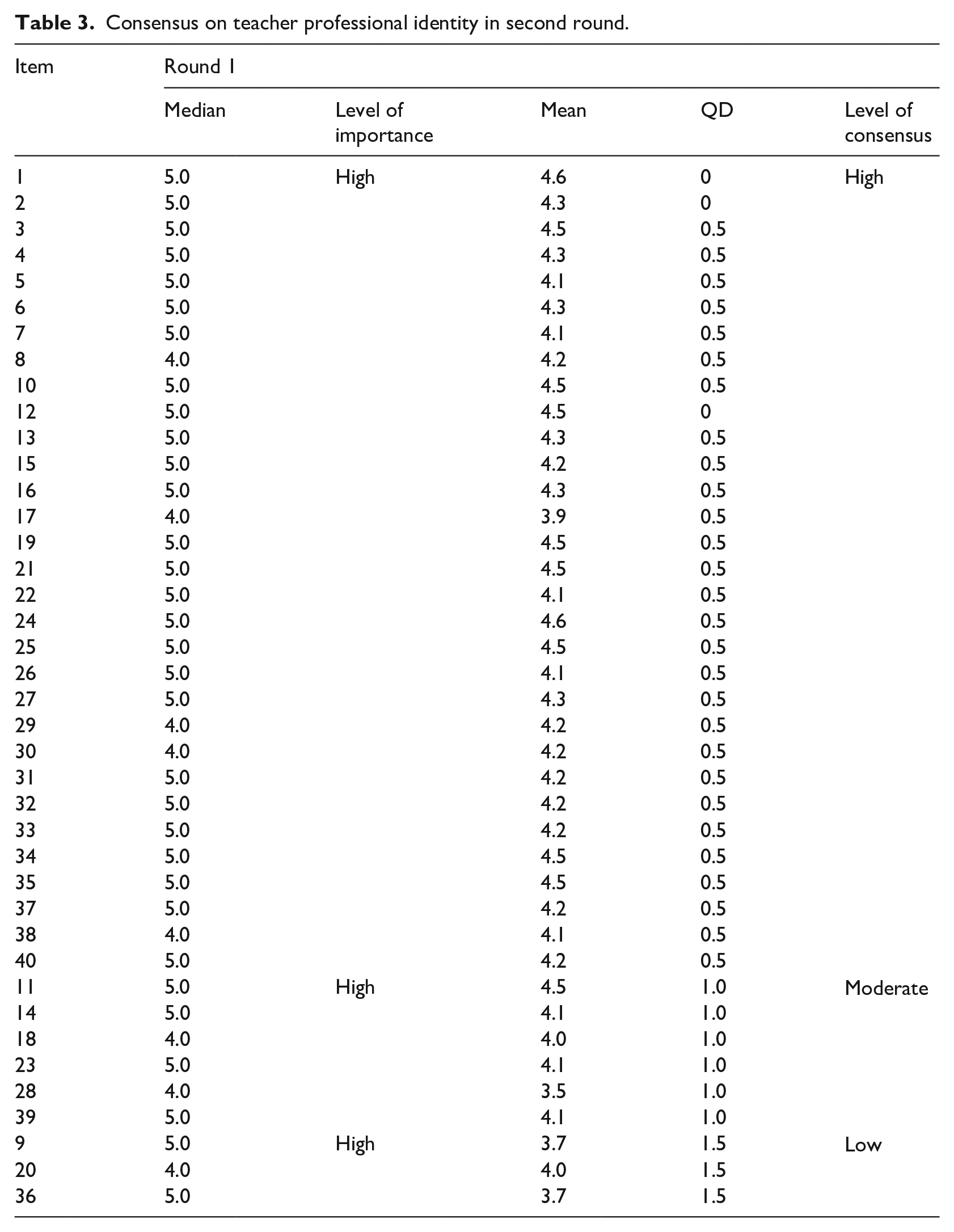
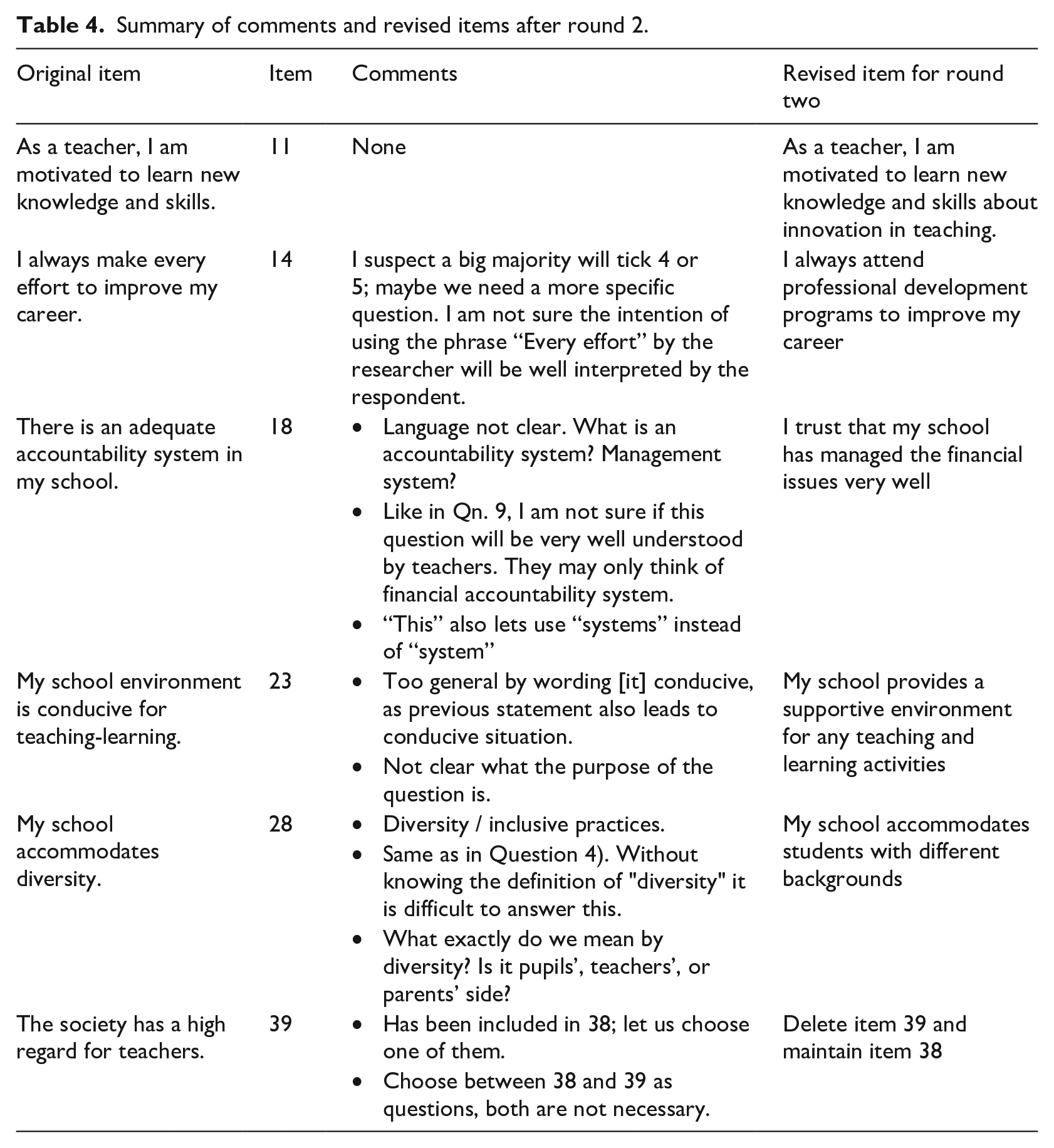
On the other hand, items 1, 2, 3, 4, 5, 6, 7, 8, 9, 10, 12, 13, 15, 16, 17, 19, 20, 21, 22, 24, 25, 26, 27, 29, 30, 31, 32, 33, 34, 35, 36, 37, 38 and 40 show a QD of 0.5 (QD ⩽ 0.5). This indicates that the level of consensus was high. In other words, all expert panels’ responses were rated as 5 (very relevant). For items 11, 14, 18, 23, 28 and 39 the QD is moderate (0.5 ⩽ QD ⩽ 1.0). However, there were three items (9, 20, 36) where the median score was above 4, but the QD score showed a low level of consensus (QD ⩾ 1.0). Therefore, these three items were deleted and were not included in the subsequent round of the Delphi study. Following consideration of the comments given by the panel of experts for items 11, 14, 18, 23, 28, and 39, amendments were made and the revised items were emailed to the panel of experts in the second round. Table 4 summarizes the comments and revised items after the second round.
Summary of comments and revised items after round 2.
Third round of the Delphi Study
Table 5 shows the results of the third round for TPI items 11, 14, 18, 23, 28, and 39. The QD score was used to analyse the level of consensus of experts. In the second round of the Delphi study, the QD of the items was more than 1.0. However, after the amendments based on the comments given in the second round of the Delphi study, the QD score for all of items was between 0.38 and 0.5. It can be concluded that the panel of experts almost reached consensus on the agreement of the six items.
Consensus on teacher professional identity through the third round.
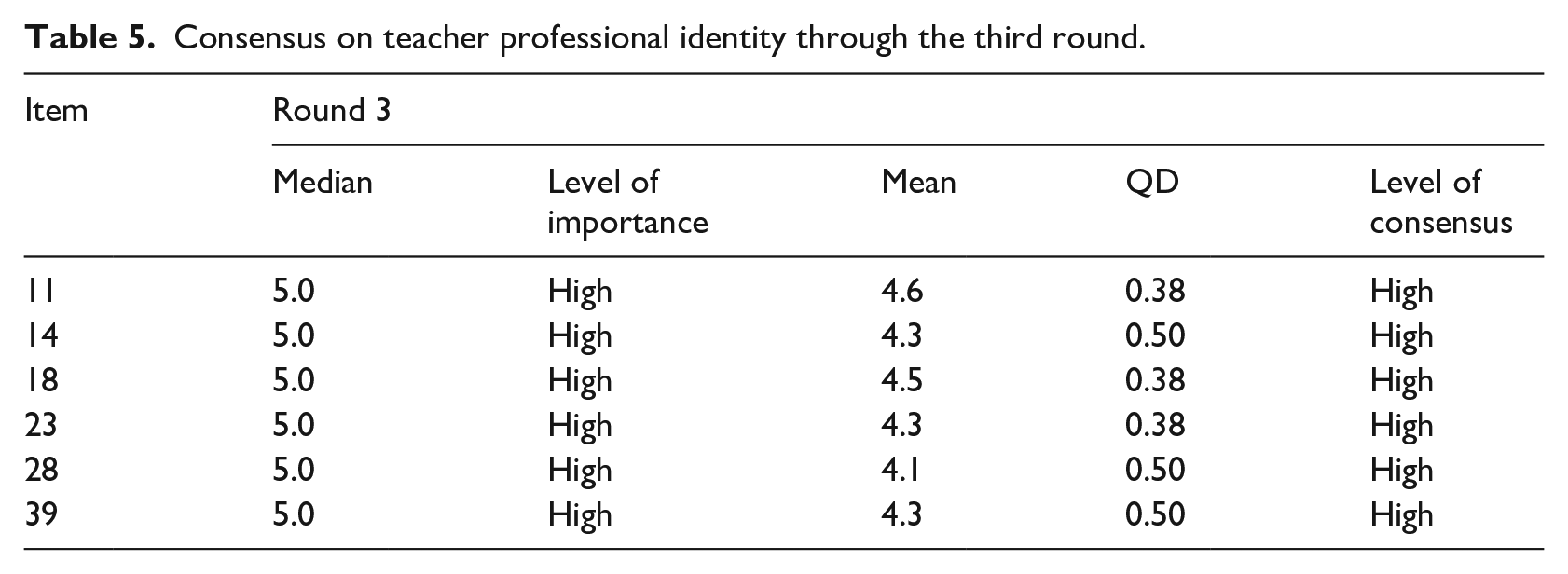
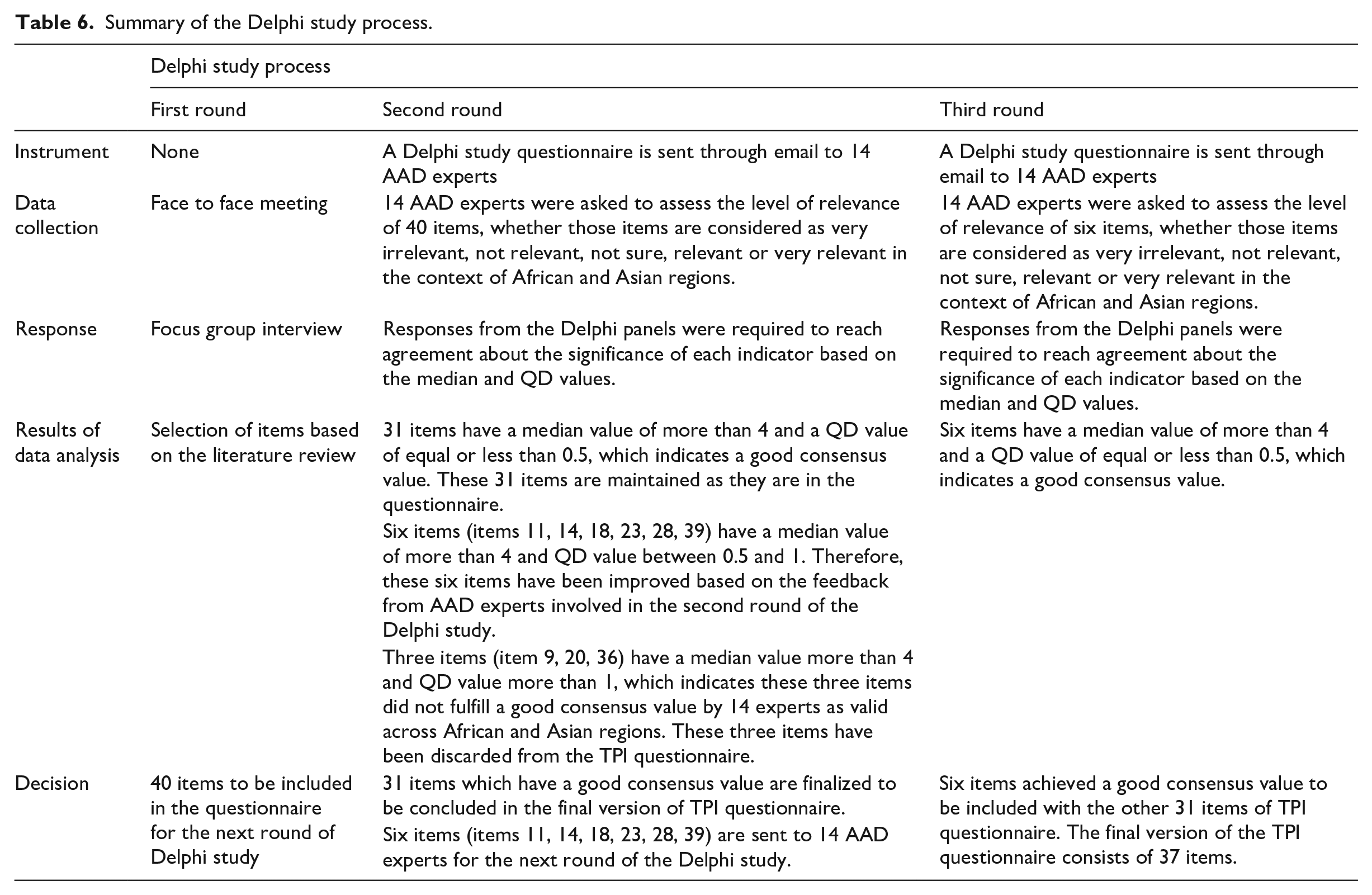
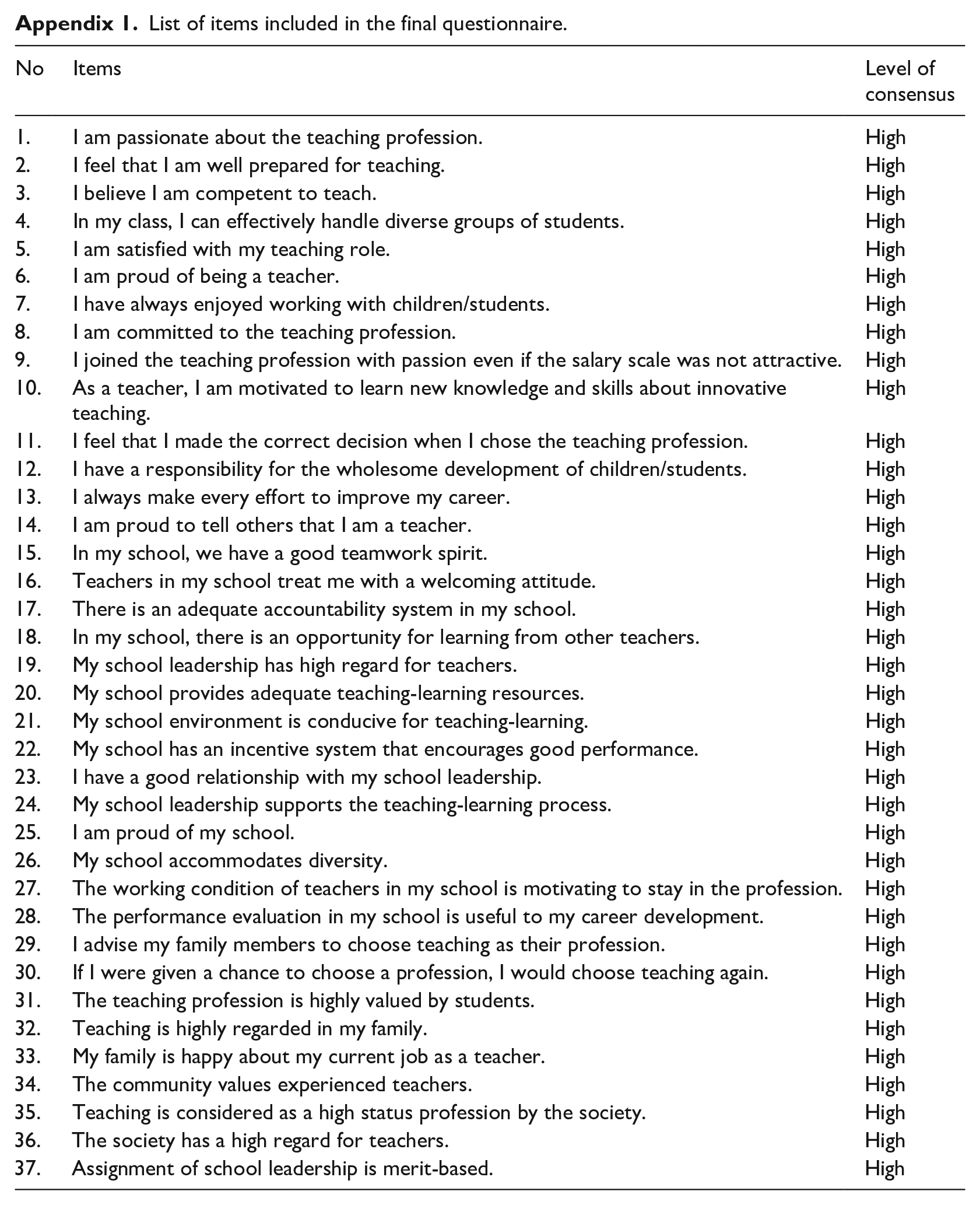
The contextual validity of the instrument was established, i.e., the instrument conformed to its conceptual definition and the variables measured for each construct were unidimensional. The instrument was therefore suitable for measuring TPI in Asia and Africa. Table 6 summarizes the Delphi study process to validate the indicators of the TPI questionnaire are valid across African and Asian regions. The 37 indicators (Appendix 1) could be categorized into the three dimensions, i.e., the personal dimension (15 items): Q1–13, Q25, Q30; the social dimension (12 items): Q14–16, Q23, Q26, Q29, Q31–36 and the institutional dimension (10 items): Q17–22, Q24, Q27–28, and Q37.
Summary of the Delphi study process.
Discussion
Among the six items on which there was moderate consensus in the second round, one item was classified in the personal dimension, two items were in the social dimension and three were in the institutional dimension. The two social-dimension items elicited comments that pointed out that the objectives of the questions were not clear, while the three institutional-dimension items received comments about the clarity of the definition of key terms in the questions, such as "accountability," "system," and "diversity." Although the number of such comments was limited, it was understood that the experts were seriously concerned about possible confusion among respondents from the different social/cultural contexts and from the different socio-economic development levels. Nevertheless, after three rounds this study allowed identification of 37 valid TPI indicators categorized into three dimensions (personal, social, and institutional) across African and Asia countries (see Table 5) based on the consensus of the team of researchers from AAD member universities. The TPI questionnaire reflected general consensus on comparable indicators that define teachers’ professional identity as agreed upon by the research teams from the two contexts. This implies that the newly developed instrument is valid, suitable, and appropriate for data gathering on TPI in Asia and Africa regions.
Globally, TPI is a widely used concept and it is viewed as a vital predictor of “teachers’ commitment to their work and adherence to professional norms” (Xiong and Xiong, 2017). To facilitate national or comparative studies on TPI specifically in the Asian and African regions, a key research tool that has been recommended is the Teacher Professional Identity Questionnaire (TPIQ) (Hantrais, 1995). For cross-regional/comparative studies, researchers (Ginsburg and Megahed, 2009) and results of the Delphi study underscore the importance of constructing a tool that reflects a common understanding of what are considered as the central concepts in the societal contexts in which such studies are to be implemented. This is based on the argument that professional identities are constructed in and hence inevitably affected by “social situations and contexts” (Trent, 2012 in Xiong and Xiong, 2017, p.102; Tran and Nguyen, 2013).
Conclusion and implications
It can be concluded that despite the different social contexts, the results of the Delphi Study indicated a high level of consensus among the research teams from Asia and Africa on most items in the instrument. This may imply that across the two regions there are essentially few differences between the characteristics of TPI in the three domains that were explored. Overall, the final 37-item questionnaire offers a standardized instrument that is suitable for comparative and replication studies on TPI across Asia and Africa. The findings of Delphi study indicate a common understanding of TPI characteristics prevalent in African and Asian countries, including research protocols for fostering quality research geared toward addressing challenges faced by the teacher education sector across African and Asian regions.
Footnotes
Appendix
List of items included in the final questionnaire.
| No | Items | Level of consensus |
|---|---|---|
| 1. | I am passionate about the teaching profession. | High |
| 2. | I feel that I am well prepared for teaching. | High |
| 3. | I believe I am competent to teach. | High |
| 4. | In my class, I can effectively handle diverse groups of students. | High |
| 5. | I am satisfied with my teaching role. | High |
| 6. | I am proud of being a teacher. | High |
| 7. | I have always enjoyed working with children/students. | High |
| 8. | I am committed to the teaching profession. | High |
| 9. | I joined the teaching profession with passion even if the salary scale was not attractive. | High |
| 10. | As a teacher, I am motivated to learn new knowledge and skills about innovative teaching. | High |
| 11. | I feel that I made the correct decision when I chose the teaching profession. | High |
| 12. | I have a responsibility for the wholesome development of children/students. | High |
| 13. | I always make every effort to improve my career. | High |
| 14. | I am proud to tell others that I am a teacher. | High |
| 15. | In my school, we have a good teamwork spirit. | High |
| 16. | Teachers in my school treat me with a welcoming attitude. | High |
| 17. | There is an adequate accountability system in my school. | High |
| 18. | In my school, there is an opportunity for learning from other teachers. | High |
| 19. | My school leadership has high regard for teachers. | High |
| 20. | My school provides adequate teaching-learning resources. | High |
| 21. | My school environment is conducive for teaching-learning. | High |
| 22. | My school has an incentive system that encourages good performance. | High |
| 23. | I have a good relationship with my school leadership. | High |
| 24. | My school leadership supports the teaching-learning process. | High |
| 25. | I am proud of my school. | High |
| 26. | My school accommodates diversity. | High |
| 27. | The working condition of teachers in my school is motivating to stay in the profession. | High |
| 28. | The performance evaluation in my school is useful to my career development. | High |
| 29. | I advise my family members to choose teaching as their profession. | High |
| 30. | If I were given a chance to choose a profession, I would choose teaching again. | High |
| 31. | The teaching profession is highly valued by students. | High |
| 32. | Teaching is highly regarded in my family. | High |
| 33. | My family is happy about my current job as a teacher. | High |
| 34. | The community values experienced teachers. | High |
| 35. | Teaching is considered as a high status profession by the society. | High |
| 36. | The society has a high regard for teachers. | High |
| 37. | Assignment of school leadership is merit-based. | High |
Funding
The author(s) disclosed receipt of the following financial support for the research, authorship, and/or publication of this article: The authors received financial support from the Asian African Dialogue for the research of this article.
