







Abstract
In this paper, I examine the relationship between three distinct attitudes of mothers (pro-boy, egalitarian, and pro-girl) and stunting among boys and girls of age 0–14 years in India using the Indian Human Development Survey (IHDS) 2004–2005. Probit model estimates suggest that mothers’ pro-girl attitudes are associated with less likelihood of observing stunting among girls and boys. Additional analysis by wealth categories shows that stunting among girls reduces when they have mothers with pro-girl attitudes and live in wealthy households. Robustness tests conducted with “severely stunted” as the dependent variable confirm the findings.
Introduction
India is facing a malnutrition crisis, holding one-third of the world’s stunted population under age 5 (Development Initiatives, 2018). In fact, India tops the list of countries with the largest number of stunted children. Out of 150.8 million children aged 0–59 months who are stunted in the world, 46.6 million live in India.
Stunting is essentially one of the primary indicators to measure progress toward the second Sustainable Development Goals to end hunger, achieve food security, and improve nutrition. Stunting is a form of growth failure among children which is generally associated with inadequate food intake or incorrect feeding practices for a prolonged period. It is also related to the prevalence of frequent infections and diseases and living in poverty that leads to growth deficiency. Evidence suggests that stunting impedes cognitive and non-cognitive development, and in adult lives, stunting can lower earnings and productivity (Black et al., 2013). In addition, as mother’s health is correlated to the health of children, stunted females may face complications during childbirth (Black et al., 2013).
Existing studies defining either son-preference based on the birth order and sex composition of children or parental preferences for the ideal number of sons and daughters show that the Indian culture of son-preference plays a crucial role in determining the nutritional outcomes of children in India. Jayachandran and Pande (2017), Dasgupta (2016), Pillai and Ortiz-Rodriguez (2015), Pande and Malhotra (2006), and Pande (2003) find that son-preference (pro-boy) is negatively related to the anthropometric status of girls in India. In addition, Pillai and Ortiz-Rodriguez (2015) using two types of indicators, preference for boys and preference for girls, find that although pro-boy attitudes are associated with an increased probability of stunting among girls, pro-girl attitudes do not correlate with an increased probability of stunting among boys. Dasgupta (2016) shows that when both parents have son-preference, or when mothers have son-preference with household decision-making power, anthropometric measures of girls suffer the most. Besides, the health and nutrition of girls fare worse for those who have older sisters, but the same cannot be said for boys with same-sex siblings (Pande 2003; Pande and Malhotra, 2006). Examining childhood feeding, immunization, treatment-seeking, and nutritional status of children based on their birth order, Mishra et al. (2004) find that discrimination against girls is most visible for those with a short supply of brothers and more sisters.
This paper builds on this existing evidence of son-preference and children’s nutritional outcomes by using the 2004–2005 Indian Human Development Survey (IHDS) data. The paper aims to specifically examine the association between mothers’ beliefs/attitudes and stunting among children in India using a value-based measure of sex-based preference, in the process lending support to the existing literature on son bias and its social and economic consequences. In doing so, this paper indicates that the value-based measures of parents’ sex-based preferences can also be used in future research in examining the association between norms, beliefs, and children’s economic outcomes. Note that as attitudes are the ways individuals respond to people and situations that arise from the beliefs, values, and assumptions individuals hold, the term attitude is used broadly in this paper.
Mothers’ beliefs/attitudes are critical in determining children’s health outcomes. As primary caregivers, mothers play a vital role in caring for and ensuring the nutritional status of their children by controlling activities including, but not limited to, food preparation, feeding, and day-to-day care (Carlson et al., 2015). This study particularly inquires on whether having an egalitarian attitude or equal treatment of girls and boys, or pro-girl attitude of mothers brings an equal or inverse nutritional outcome for boys and girls. Rather than only considering son-bias, in this study, I consider three types of attitudes of mothers, namely, pro-boy (or son-preference), egalitarian (or no child preference), and pro-girl (or daughter preference).
In this paper, I use the value response of mothers on children’s education in determining the parental preference for investing in their children. Parents invest in their children directly by providing them with resources, time, and care, which support the positioning of a child in a social hierarchy and develop their skills (Geary, 2005). Nonetheless, a parent may well be egalitarian about health investments, irrespective of their views regarding the educational investment, which may be determined based on parents’ expectations of who they anticipate being their support at old age. However, to maximize the return, parents who have particular sex-based preferences regarding the educational investment of children also generally end up investing their time, care, and resources in those they believe to be the bread earners and their old-age support. This discrepancy in resource allocation is likely to instigate daughters’ neglect and affect daughters’ health differently than sons.
To evaluate whether the sex-based attitudes of mothers regarding children’s education is, in fact, associated with their general sex-based preferences, I test its correlation with the existing construct of son-preference by Dasgupta (2016), Pillai and Ortiz-Rodriguez (2015), Mishra et al. (2004), and Pande (2003) based on the birth order and/or sex-composition of children or parents’ desired number of sons and daughters. Dasgupta (2016) defines son-preference as when the ideal number of sons is strictly greater than the ideal number of daughters parents would have had at times if they did not have any children and had the choice to determine the number of children they could have. Similarly, Pillai and Ortiz-Rodriguez (2015) measure son-preference as the ideal number of boys desired by parents as a proportion of the total ideal number of boys and girls. Alternatively, while Pande (2003) uses a measure with the sex-composition of child’s older siblings, Mishra et al. (2004) principally consider whether the individual has a brother to determine sex-based preferences. Based on mothers’ fertility history and responses to the ideal number of sons and daughters they would have preferred, I construct these existing measures using the IHDS 2004–2005 data. The correlation statistics suggest that mothers’ sex-based attitudes regarding children’s education are indeed significantly correlated with the existing measures of son-preference. 1
In this paper, I specifically examine the relationship between mothers’ pro-girl, egalitarian, and pro-boy attitudes and stunting among children aged 0–14 years. To the best of my knowledge, all the papers on son-preference and nutritional outcomes in India focus on children aged below 5 years. Hence, little is known about the relationship between son-preference and the well-being of children after infancy. While stunting primarily occurs in the early years of life, there is evidence that given the appropriate condition and care, children may catch up and transition to “not-stunted” later in their childhood (Georgiadis et al., 2017). Alternatively, “not-stunted” children may also transition to “stunted” due to sustained nutritional deficiencies, neglect, and frequent diseases. Accordingly, examining stunting among children after age 5 is also relevant.
A calculation of the percentage of stunted children of age 0–14 years in the population of India using the IHDS data of 2004–2005 provides evidence of catch-up growth among boys and girls. Overall, the rate of stunting falls from 47.5% to 41.3% among boys and 48.7% to 42.1% among girls as they move from age group 0–5 to 6–10 years. For boys, stunting further declines to 37.1% in the age group of 11–14 years, but for girls, the rate of stunting goes up again to 47%. 2
This paper estimates a probit model to test the association between mothers’ pro-boy, egalitarian, and pro-girl attitudes and stunting among girls and boys in India. Stunting is measured using the World Health Organization (WHO) referred growth standards. The findings suggest that mothers’ pro-girl attitudes are associated with 6.6 and 9.7 percentage points less likelihood of being stunted among girls and boys, respectively, compared to children who have mothers with pro-boy attitudes. However, I do not find any significant robust relationship between egalitarian attitudes among mothers and stunting among children.
Further analysis by expenditure quantile indicates that wealth constraints matter in determining stunting among children in India. In the lower quantile, having pro-girl attitudes is related to a 16.3 percentage point lower stunting among boys. Once the resource constraint is relaxed, and parents can choose to spend flexibly, in the upper expenditure quantile, mothers’ pro-girl attitudes correlate with a 13.9 percentage point lower likelihood of stunting among girls.
This paper is organized as follows: Section “Analytical framework ” provides an analytical framework. Section “Data and sampling” discusses the data and sampling. Section “Empirical models and results” discusses the empirical model and presents the results. Finally, section “Conclusion” concludes the paper.
Analytical framework
The interplay of economic reasons and social factors generally drives the behavior of parents toward their sons and daughters. Expectations like who would financially support the parents or who would they live with in their old age make parents prefer one sex over the other. Social institutions also play a major role in forming expectations. Social norms around systems of marriage and kinship, property rights, and economic opportunities available for boys and girls influence parental behavior. Parents prefer to raise a child who has characteristics, status, and economic potential that are valued socially. This preference creates gender biases and affects the welfare of the less preferred sex.
In India, the prevalence of son-preference mainly places women in an unfavorable position in society. In addition to being breadwinners, men are expected to be responsible for their parents as they age, even though often times it is the wife or daughter-in-law who actually performs eldercare giving (Das Gupta et al., 2003). On the other hand, girls leave their parents’ house and become a part of their husbands’ households. Girls instead are obliged to provide care to in-laws and are not expected to care for their own parents (Klaus and Tipandjan, 2014). Moreover, the culture of dowry in India makes girls a liability and very expensive to raise, whereas boys turn out to be economically gainful (Srivastava, 2017). Parents are required to pay money to marry daughters, whereas boys bring money as dowry payments from parents of girls instead (Srivastava, 2017).
Preferences of parents are also closely related to property rights. In patrilineality, male heirs inherit the productive assets and carry forward the family name (Das Gupta et al., 2003). The status of women in the household and their empowerment are highly correlated to whether they can provide a son to carry forward the family lineage.
Religion and caste also dictate the rules and regulations in society. In the Hindu religion, only sons can light the funeral pyre of the deceased parents and help them attain salvation (Bhaskar and Gupta, 2007). Hindu religion constitutes 80.5% of the population in India (Office of the Registrar General & Census Commissioner, India, 2001). Alternatively, Muslim women practice Purdah or veil, which can restrict their movements and also lower their labor force participation (Desai and Temsah, 2014). The caste system also strictly enforces the system to uphold the subordination of women. In fact, the higher caste is stricter in maintaining the norms than the lower castes (Bhaskar and Gupta, 2007). Women in lower castes generally live in poverty and hence need to work outside for a living (Mitra, 2008).
Basically, existing institutions not only make girls dependent on boys and disempower them, but they also make daughters less valuable than sons. In such systems, parents prefer sons over daughters and are more willing to invest in sons than daughters, resulting in a skewed sex ratio in India.
The resultant skewed sex ratio in India has been a cause of concern for a long time. According to Census 2011, there are 940 females per 1000 males in India (Office of the Registrar General & Census Commissioner, India, 2011). Nevertheless, there is considerable heterogeneity in the sex ratio, as such gender bias, across states. The skewed sex ratio in India is mostly visible in the northern states. For instance, the state of Haryana, located in the Northern region, has the lowest female-to-male ratio of 877 females per 1000 males. Meanwhile, southern states show more balance in this regard. The number of females is slightly higher than males in two of the southern states, Puducherry and Kerala. In Kerala, there are 1084 females per 1000 males. Klaus and Tipandjan (2014) confirm this North–South gradient in son-preference. They find that mothers in North India are more likely to demonstrate son-preference than mothers in South India. Klaus and Tipandjan (2014) also find that the likelihood of son-preference among mothers increases with a higher expectation of son-benefits and daughter-costs.
Research suggests that son-preference is one of the significant causes of excess infant and child mortality among females (Kashyap and Behrman, 2020). In fact, compared to any other country in the world, India has the highest number of deaths among babies, where girls are more likely to die than boys (Hug et al., 2018). The preference for sons escalates a host of discriminatory practices against daughters, with boys getting better nutrition and care compared to girls. The disturbing consequence of son-preference is that parents are less likely to treat a sick baby girl than a boy, lowering the probability of survival of female infants. Moreover, studies find that parents allocate less food to girls than boys and nutritional value is also low in the food that girls consume, causing higher malnourishment and morbidity among girls than boys (Fledderjohann et al., 2014; Mishra et al., 2004).
Sen (1992, 2003) first identified that women in India are going missing due to nutrition deficiency, infections, diseases, neglect of daughters, and abortion of female fetuses. Statistical estimates in the Economic Survey of 2017–2018 show that the prevalence of son-preference in India has led to 63 million women going missing in the population of the country (Ministry of Finance, 2018). The Economic Survey of 2017–2018 also finds that, in India, over 2 million women go missing every year across all age groups.
Given that, in India, social and economic institutions widely favor boys, having no child preference (egalitarian) may not be enough to reduce stunting among girls. The economic reasons are likely to make parents invest more in their sons than in their daughters. In the presence of the strong male bias in Indian culture, an indifferent attitude simply allows for these gender biases embedded in social, legal, and economic institutions to prevail. In such a case, having proactive mothers (pro-girl) in terms of addressing the discrimination against daughters by advocating their rights and acting in an affirmative action manner is necessary to make a difference. Pillai and Ortiz-Rodriguez (2015) and Jaitley (2018) find that in India, education of mothers and wealth status are positively associated with mothers’ pro-girl attitude. Jaitley (2018) shows that higher wealth status is correlated with women’s greater participation in decision-making. Hence, when pro-boy attitudes of mothers can correlate to higher stunting among girls, a pro-girl attitude might help the girls at least to be treated equally.
Data and sampling
This paper uses the IHDS 2004–2005 for analyzing the relationship between mothers’ pro-boy, egalitarian, and pro-girl attitudes with stunting among children. 3 The IHDS is a nationally representative survey that has been jointly organized by researchers from the University of Maryland and the National Council of Applied Economic Research (NCAER). The IHDS 2004–2005 contains information on 41,554 households. The rural stratified random sampling was done initially based on a previous NCAER survey of 1993–1994. The urban sample follows a stratified sample of the cities and towns within the Indian states. The sample was selected by probability proportional to population. The 2004–2005 sample covers 384 districts in India out of 593 districts in 2001. The household sample is drawn from 1503 villages and 971 urban blocks (Desai et al., 2018). It is a multi-topic survey that collects household and individual-level information.
IHDS records anthropometric information, height, and weight of individuals. Using the height and weight information, I construct the z-score of height-for-age (HFA) based on the WHO growth standard separately for 0–5 years and 6–19 years:

Children with z-score below −2 standard deviations (SDs) from the reference population median (z-score = 0) are considered stunted (=1). As a robustness check, I also investigate severely stunted children with z-score below −3 SDs.
IHDS also has a separate module for the ever-married women of age 15–49 years, which collects information on gender relations. The gender relations module particularly asks women about whether they think girls should be educated as much as boys or whether they believe it makes more sense to educate boys more than girls. 4 Three distinct attitudes can be measured from the value responses. First, a pro-boy (=1) attitude reflects son-preference, where women believe boys should be educated more than girls. Second, an egalitarian (=2) attitude is where women believe boys and girls should be equally educated. Finally, a pro-girl (=3) attitude reflects the preference for girls, where women believe girls should be more educated than boys.
For the construction of the sample of children, I merge the eligible women information with the individual-level files of children to identify the responses of their mothers. There is a constant debate in India regarding who is considered a child. Nevertheless, for statistical purposes, the United Nations (n.d.) defines children as those persons aged 0–14 years. Hence, in this paper, the sample consists of children who are between 0 and14 years of age.
Figure 1 presents the distribution of children aged 0–14 years by the beliefs/attitudes of their ever-married mothers of age 15–49 years. I group the sample of children by three distinct preferences of their mothers—pro-boy, egalitarian, and pro-girl. There are 23,643 children in the sample for whom all the data relating to child, mother, father, household, and regional characteristics are available. 5 A majority of the children have mothers who believe in equal education of boys and girls (85%). Only 2.9% of the children have mothers who prefer the education of girls over boys, and 12.1% of mothers prefer the education of boys over girls.
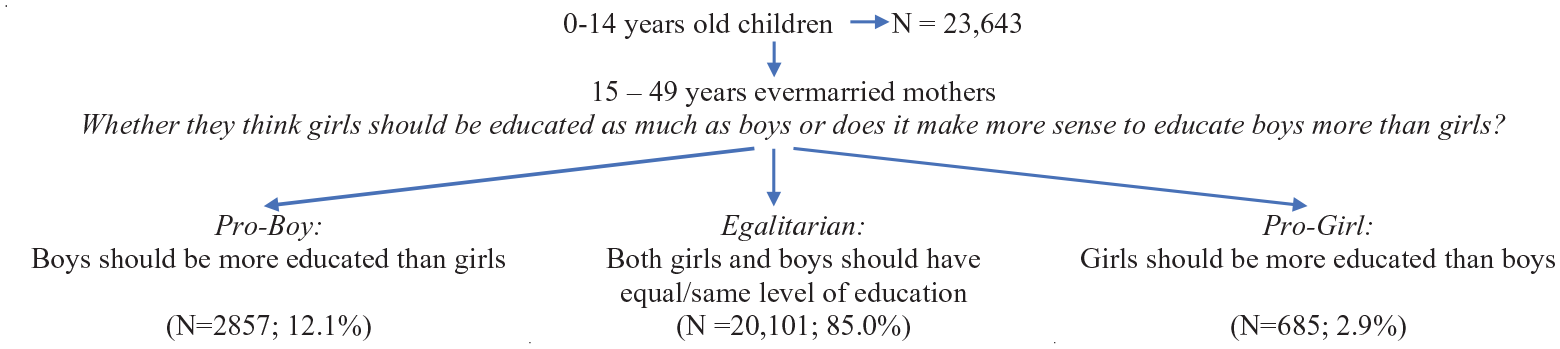
Distribution of mothers’ attitudes toward the education of children aged 0–14 years.
I then divide the total sample of 23,643 children aged 0–14 years by their sex. There are 11,721 children in the sample of girls and 11,922 children in the sample of boys. Table 1 shows that, in the sample of girls, 3.3% of the girls have mothers with pro-girl attitudes, and a majority, 85.1%, have mothers with egalitarian attitudes. For the sample of boys, 2.5% have mothers with pro-girl attitudes, and again, a majority, 84.9%, have mothers with egalitarian attitudes. Given the Indian context of the prevalence of son-preference, a large percentage of children in the sample having mothers with egalitarian attitudes indicates that there may be some response biases in the survey. 6 It can be the case that mothers may like to consider or claim themselves as egalitarian, but, in fact, they may nurture their sons and daughters differently in their day-to-day lives. However, given the data limitation, it is beyond the scope of this paper to test such response biases.
Distribution of mothers’ attitudes by the sample of girls and boys aged 0–14 years.
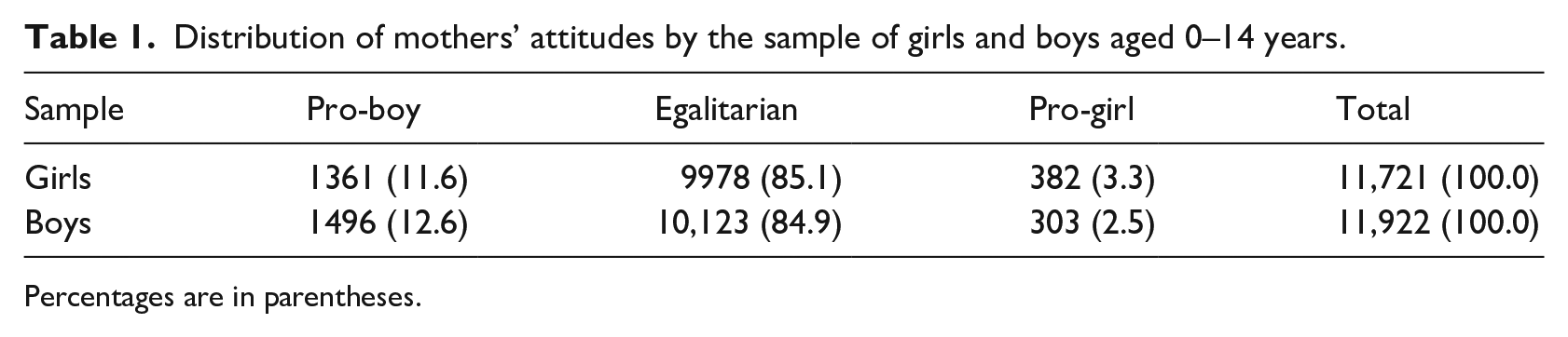
Percentages are in parentheses.
Table 2 evaluates the individual, parental, and regional characteristics by mothers’ sex-based attitudes. I first assess the individual, mother, father, household, and regional characteristics of the children in pro-boy and pro-girl groups and compare them to those in the egalitarian group. The children in the egalitarian group have mothers with neutral preferences (favoring neither daughters nor sons over the other). Table 2 suggests that children in the pro-boy group have mothers who are less educated compared to children in egalitarian and pro-girl groups. The percentages of children who have illiterate mothers and fathers are higher for pro-boys (73.3% and 41%, respectively) than for egalitarians (51% and 26.8%, respectively). Moreover, the wealth status of the children in the egalitarian group is higher than that of the children in the pro-boy group. The average log of per capita income among the children of the egalitarian group is around 30% higher than that of the children in the pro-boy group. Furthermore, the children in the egalitarian group have about three more additional durable assets, 11.1% of them use flushed toilets, and 8.7% of them use improved water sources than the children of the pro-boy group. The children in the egalitarian group also tend to belong to higher castes—3.6% more egalitarians are Brahmin compared to the children of pro-boy group.
Comparison of the characteristics by mothers’ attitudes in a sample of children aged 0–14 years.
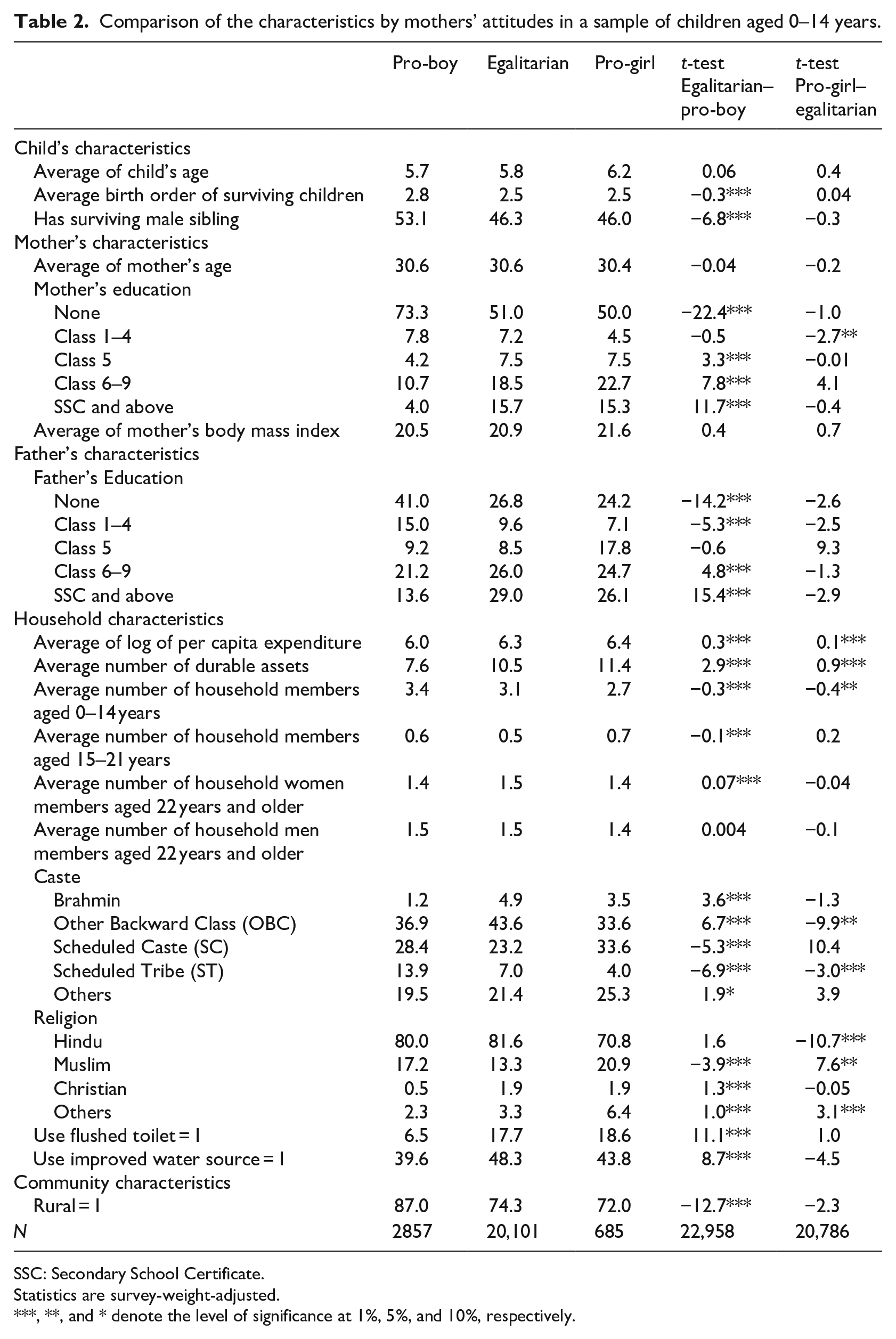
SSC: Secondary School Certificate.
Statistics are survey-weight-adjusted.
, **, and * denote the level of significance at 1%, 5%, and 10%, respectively.
The comparison between the children in pro-girl and egalitarian groups provides some interesting insights. First, the wealth status of the children in the pro-girl group is higher than those in pro-boy and egalitarian groups. The average wealth among groups increases with the movement from pro-boy to egalitarian to pro-girl. The average log of the per capita expenditure is 10% higher among pro-girls than egalitarians. Second, the higher wealth status among the pro-girl group than the other two groups can happen because the pro-girl group also has the lowest number of household members. The average number of household members in the age group 0–14 years reduces with the movement from pro-boys to egalitarians to pro-girls. Third, the pro-girl group also has an average of about one additional asset compared to egalitarians.
From the analysis in this paper, it is not possible to identify all the factors that move parents to be pro-girl in a country like India with a predominance of son-preference. Unobservables such as customs in families and communities determine both the pro-girl attitude of mothers and other factors such as wealth status. Nonetheless, the findings in this paper, as well as the existing evidence, suggest that wealth status is positively correlated with the pro-girl attitude of mothers (Jaitley, 2018; Pillai and Ortiz-Rodriguez, 2015). The positive correlation between wealth status and pro-girl attitudes can happen because wealth status is also correlated with mothers’ empowerment (such as decision-making ability, freedom of mobility, less tolerance for violence, etc.) and labor force participation (Jaitley, 2018). An empowered mother may choose to be pro-girl and actively advocate and act in an affirmative action manner for the rights of her daughter.
Because pro-girl attitudes can also be related to mothers’ empowerment, Table 3 further evaluates the empowerment indicators of mothers by pro-boy, egalitarian, and pro-girl groups. In the absence of information on the mothers’ labor force participation in the survey, I use whether the mother gets cash in hand to spend on household expenditure as a proxy indicator of mothers’ access to income. In addition, as an analysis of mothers’ empowerment by groups, I explore whether mothers have the most say in decisions of cooking and when a child falls sick. The findings in Table 3 indicate that children in egalitarian and pro-girl groups have more empowered mothers than the children in the pro-boy group. The mothers of the children in the egalitarian group are 8.9 percentage points more likely to receive cash to spend on household expenditure than the mothers in the pro-boy group. In addition, the mothers of the children in the pro-girl group are 19.2 percentage points more likely to have most say when a child falls sick than the mothers in the egalitarian group.
Comparison of mothers’ empowerment indicators by mothers’ attitudes in a sample of children aged 0–14 years.
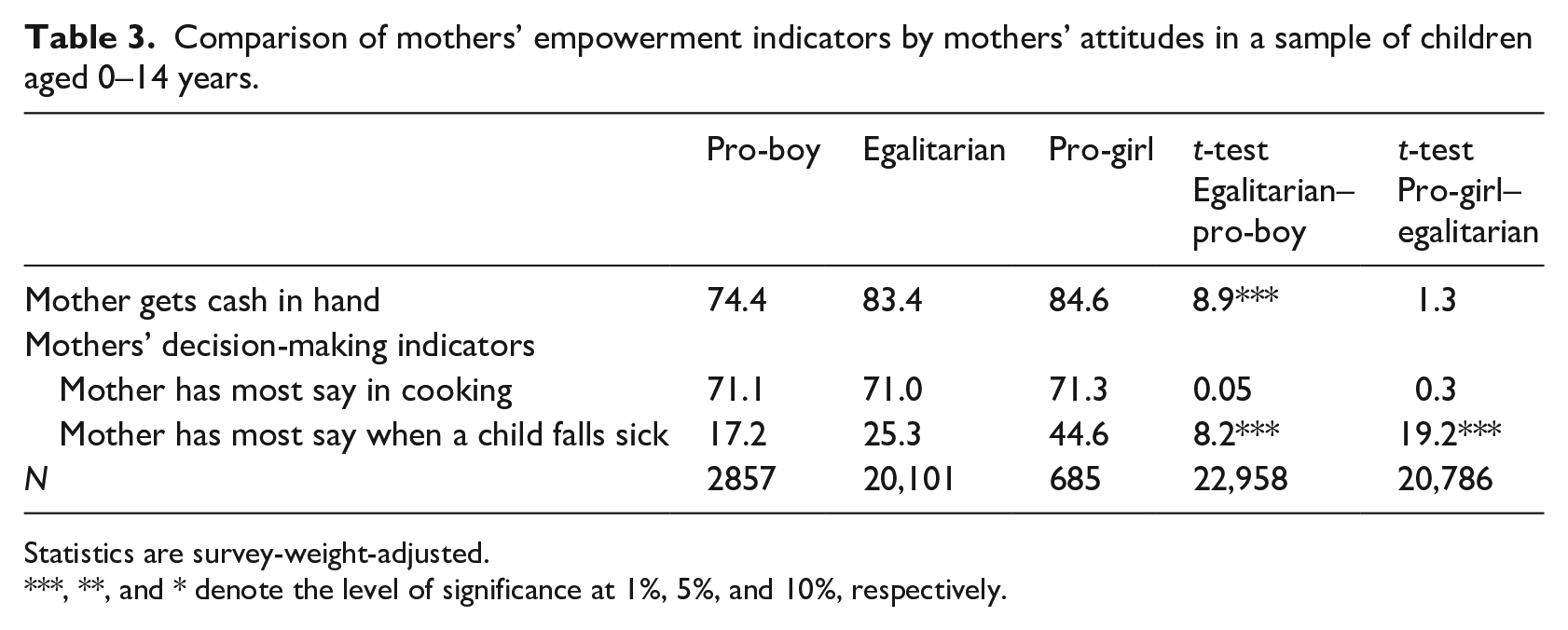
Statistics are survey-weight-adjusted.
, **, and * denote the level of significance at 1%, 5%, and 10%, respectively.
Empirical models and results
In this paper, I test the association between mothers’ attitudes toward boys and girls and the nutritional status of children in India. A simple descriptive analysis in Table 4 helps understand the possible correlation between parental attitudes and stunting among children aged 0–14 years. Table 4 shows that the average HFA z-score of children increases with the movement from pro-boys to egalitarian to pro-girl attitudes. Pro-girl attitude is expected to be associated with lower stunting among daughters. However, surprisingly, the descriptive analysis indicates that having pro-girl attitudes is also related to less stunting among sons. The pro-girl attitudes of mothers are associated with 8.9 and 17.2 percentage points lower stunting among daughters and sons, respectively, compared to mothers with the egalitarian attitude. Furthermore, in comparison with pro-boy attitude, the egalitarian attitude of mothers is related to a 4.3 percentage point lower stunting among girls, but it is not related to stunting among boys.
Nutritional status of children aged 0–14 years by mothers’ attitudes.
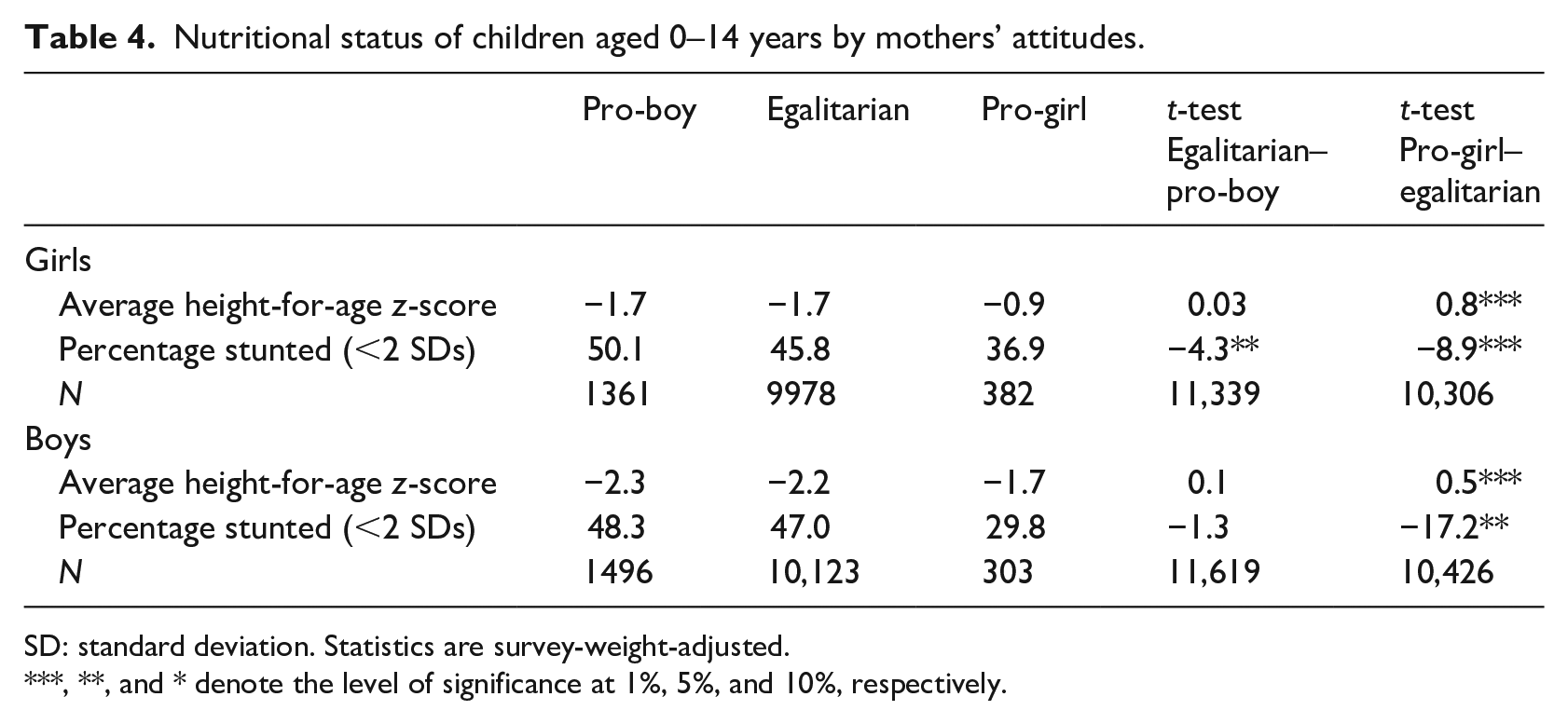
SD: standard deviation. Statistics are survey-weight-adjusted.
, **, and * denote the level of significance at 1%, 5%, and 10%, respectively.
Empirical analysis
In this paper, I estimate a probit model to empirically test the association between mothers’ attitudes and stunting among children after controlling for child, mother, father, household, and regional characteristics:

where
The probit model is estimated separately for the sample of girls and boys. All the estimates are survey-weight-adjusted. Since communities can demonstrate similar attitudes toward sons and daughters, the standard errors are clustered at the level of the village or urban blocks (primary sampling unit).
The vector
It is important to note that estimates of the above models may suffer from selection endogeneity. The unobservables like customs within families and communities determine both the parental preferences and the nutritional status of children. For example, if mothers live in a family that prefers sons, the mothers are likely to be more pro-boy than pro-girl. In addition, families preferring sons are likely to treat boys favorably than girls, which may in turn influence the rate of stunting among boys and girls. Hence, the estimated parameters of the categorical variable in the probit model may not have causal inference. Nevertheless, I have included extensive controls (characteristics of children, parents, households, and regions) in the empirical model to minimize such selection bias.
Empirical results
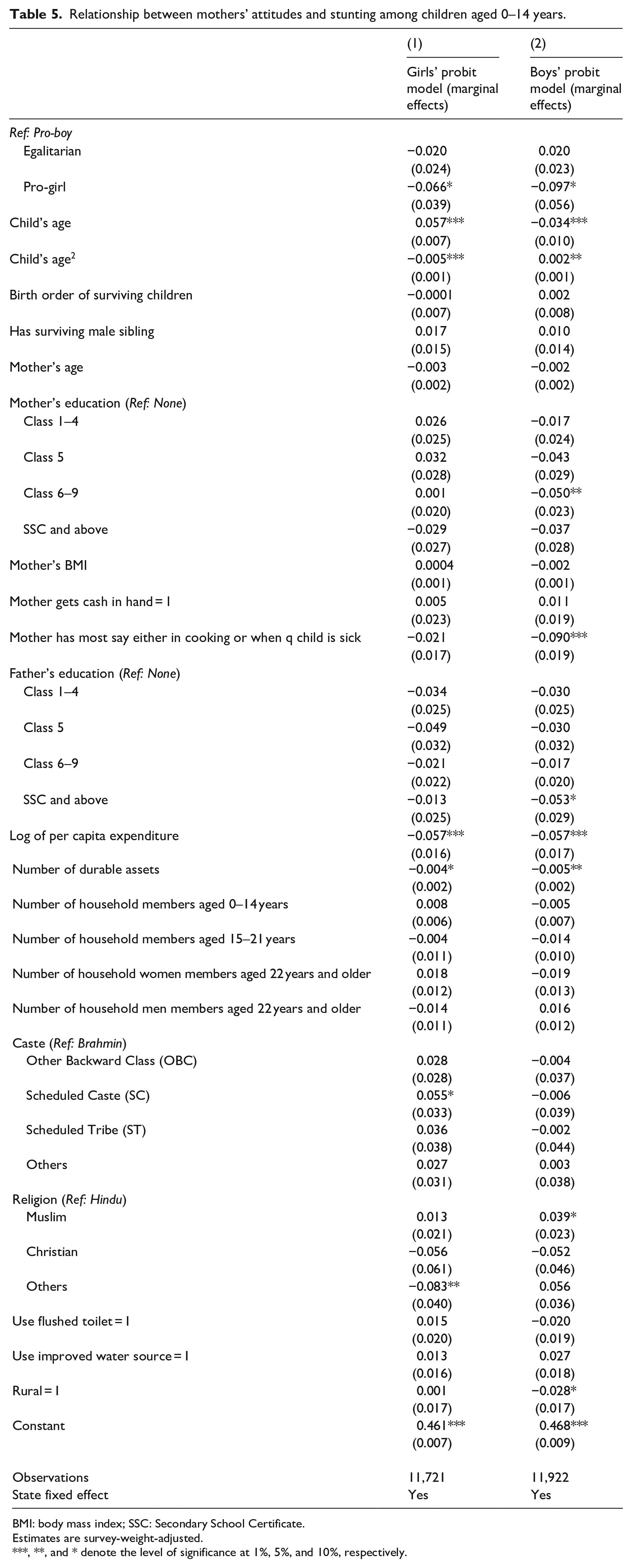
Table 5 presents the marginal estimates of the probit model by the sample of girls and boys. The probit estimates show some interesting patterns. The findings in Table 5 suggest that the egalitarian attitude among mothers is not associated with stunting among both girls and boys, which could imply mothers’ hidden desirability bias. The findings could also reflect institutionalized gender norms where egalitarian preferences of mothers alone do not affect the patriarchal outcomes. With the culture of son-preference in India, where institutions and norms are in favor of boys, parents may still prefer to invest in sons in the expectation of maximizing their return. In that case, mothers’ egalitarian attitude is not sufficient in changing the nutritional status of girls.
Relationship between mothers’ attitudes and stunting among children aged 0–14 years.
BMI: body mass index; SSC: Secondary School Certificate.
Estimates are survey-weight-adjusted.
, **, and * denote the level of significance at 1%, 5%, and 10%, respectively.
Instead, having pro-girl attitudes helps the nutritional status of girls. Mothers’ pro-girl attitude is associated with a 6.6 percentage point lower likelihood of stunting among girls compared to mothers having pro-boy attitudes (Table 5). However, probit estimates also indicate that pro-girl attitudes are not only related to a lower likelihood of stunting among girls, but it is also related to a 9.7 percentage point lower likelihood of stunting among boys compared to mothers’ pro-boy attitudes. Interestingly, if pro-boy beliefs/attitudes (son-preference) hurt girls’ nutritional outcomes, then one might expect that mothers’ pro-girl attitudes should only reduce the rate of stunting among girls because, in the case of pro-girl attitudes, girls are likely to receive preferable treatment than boys. But the results suggest that pro-girl attitudes favor nutritional outcomes of both girls and boys.
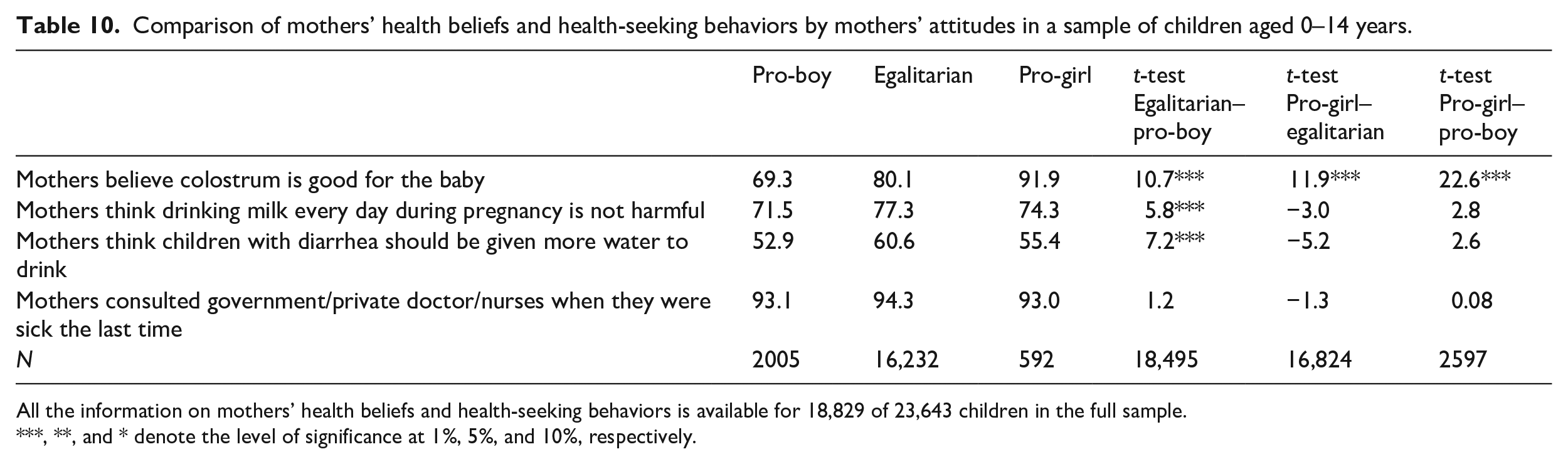
A closer look at the results reveals that children in the pro-girl group have more educated and empowered mothers than those in pro-boy and egalitarian groups (Tables 2 and 3). In such a case, mothers in the pro-girl group may be able to provide the right care to their children. Children in the pro-girl group may have mothers who have proper knowledge of nutrition and are highly aware of the health of children. Hence, the pro-girl attitudes of mothers are likely to reduce stunting among both boys and girls compared to the pro-boy attitude. In the absence of suitable and adequate data, it is not possible to fully understand the nutritional knowledge and awareness, and parenting styles of mothers by groups in this paper. However, a simple descriptive analysis of the health knowledge of mothers indicates that the mothers in the pro-girl group are 22.6 percentage points more likely to rightly believe that colostrum is good for the baby compared to mothers in the pro-boy group (see Appendix 1, Table 10). Mothers’ health beliefs and health-seeking practices by their attitudes are also assessed for indicators such as whether mothers think drinking milk every day during pregnancy is harmful, whether children with diarrhea should be given more water to drink, and who did the mothers consult when the last time they were sick. However, the findings show no significant differences in these additional indicators between pro-boy and pro-girl groups.
Furthermore, the findings in Table 5 highlight that household wealth is significantly related to a reduction in stunting among children. If per capita expenditure of household increases by 1%, the probability of stunting among girls and boys reduces by 5.7 percentage points. The findings in Table 4, the results presented in Table 2, and existing literature (see: Pillai and Ortiz-Rodriguez, 2015) suggest that the wealth status is significantly correlated to mothers’ attitudes and is also associated with the rate of stunting among boys and girls. Specifically, results in Table 2 indicate that children in the pro-girl group live in wealthy households compared to children in pro-boy and egalitarian groups.
Nonetheless, wealth status is not only correlated with mothers’ attitudes and empowerment (as shown in Table 2 and by Jaitley, 2018), but wealth is also an indicator of resource constraint in the households. The wealthier households have more resources to allocate and spend on education and food for both girls and boys than the poor households with less money. Hence, in this paper, to test the variation in parental investment on both girls and boys by the availability of resources, I further estimate the association between mothers’ attitudes and stunting among children at different per capita expenditure quantiles. I divide the entire sample into two wealth categories (making sure there are substantial sample sizes in each category) based on the per capita household expenditure. Each wealth category or quantile is composed of roughly 50% of households. So, there are 5593 observations in the first quantile and 6128 observations in the second quantile in the sample of girls. Similarly, there are 5334 observations in the first quantile and 6588 observations in the second quantile in the sample of boys. The distribution of the sample of girls and boys by expenditure categories and attitude of mothers is provided in Supplementary Online Appendix (Table S1).
Some quantile-specific results in Table 6 are noteworthy. First, in the first expenditure (low-income households) quantile, I do not find any association between pro-girl attitudes and stunting among girls. Instead, the probit estimates show that pro-girl attitudes are significantly associated with 16.3 percentage points lower likelihood of stunting among boys than pro-boy attitudes. Second, in the second quantile, with wealthier households who can spend flexibly among both girls and boys, the finding of the first expenditure quantile alters. Probit estimates in the second quantile with higher per capita household expenditure suggest that the mothers’ pro-girl attitude is associated with a 13.9 percentage point lower stunting among girls compared to pro-boy attitude. These results by expenditure categories indicate that, in a patriarchal country like India, the nutritional status of girls may only improve if parents have not only a pro-girl attitude but also lower resource constraints.
Summary of the relationship between mothers’ attitudes and stunting among children aged 0–14 years by expenditure quantiles.
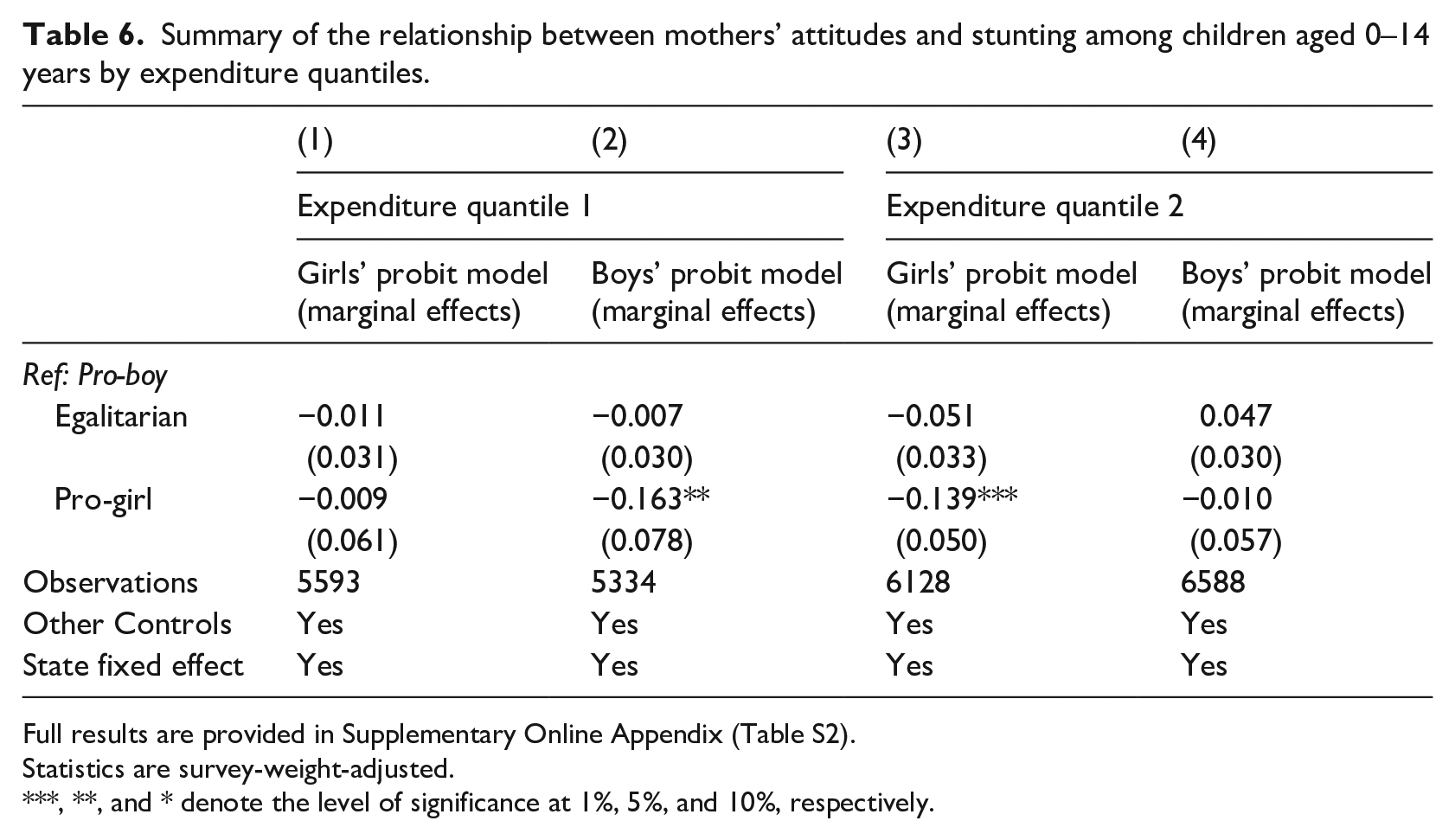
Full results are provided in Supplementary Online Appendix (Table S2).
Statistics are survey-weight-adjusted.
, **, and * denote the level of significance at 1%, 5%, and 10%, respectively.
In India, men are culturally more powerful, institutionally favored, and have more earning opportunities than girls. Hence, irrespective of mothers’ pro-girl values, sons may be provided with proper care in the resource-constrained households as they are likely to provide a better return. Once the resource constraint is relaxed, parents with pro-girl values are willing to help the daughters. In the upper quantile, parents do not necessarily cut back their spending on sons. Instead, in the upper quantile, mothers with pro-girl attitudes who are likely to be more empowered may now be able to spend flexibly on daughters. Nevertheless, given the data limitation, it is beyond the scope of this paper to assess the validity of such possibility. 7
Alternatively, it can also be that wealthier households are less likely to face constraints on investments in children that their survey responses just mirror that. Without an instrument, it is not possible to disentangle such endogenous associations of mothers’ attitudes, wealth, and children’s stunting. Nevertheless, to minimize such wealth-imposed endogenous biases in the results, I explicitly control for the wealth status of the households with per capita expenditure in the empirical estimations. I also add other extensive control variables such as caste, number of durable assets, regions, and access to flushed toilet and improved water, which are usually connected to the living standards of the households.
Robustness and sensitivity test
I test the sensitivity of the result, presented in Tables 5 and 6, using “severely stunted” as the dependent variable. 8 Table 7 summarizes the results of the robustness test. The result broadly confirms the findings of the likelihood of lower stunting among children with mothers having a pro-girl attitude. The probit estimates show that mothers’ pro-girl attitude is related to a 5.9 percentage point lower likelihood of stunting among girls compared to pro-boy attitudes. Having pro-girl attitudes also relates to a reduction in severe stunting among boys by 11 percentage points compared to mothers’ pro-boy attitude. Estimations by per capita expenditure also suggest a similar pattern. Pro-girl attitude is mainly associated with a 15.5 percentage point lower stunting among girls in the upper quantile.
Summary of the relationship between mothers’ attitudes and severe stunting among children aged 0–14 years.
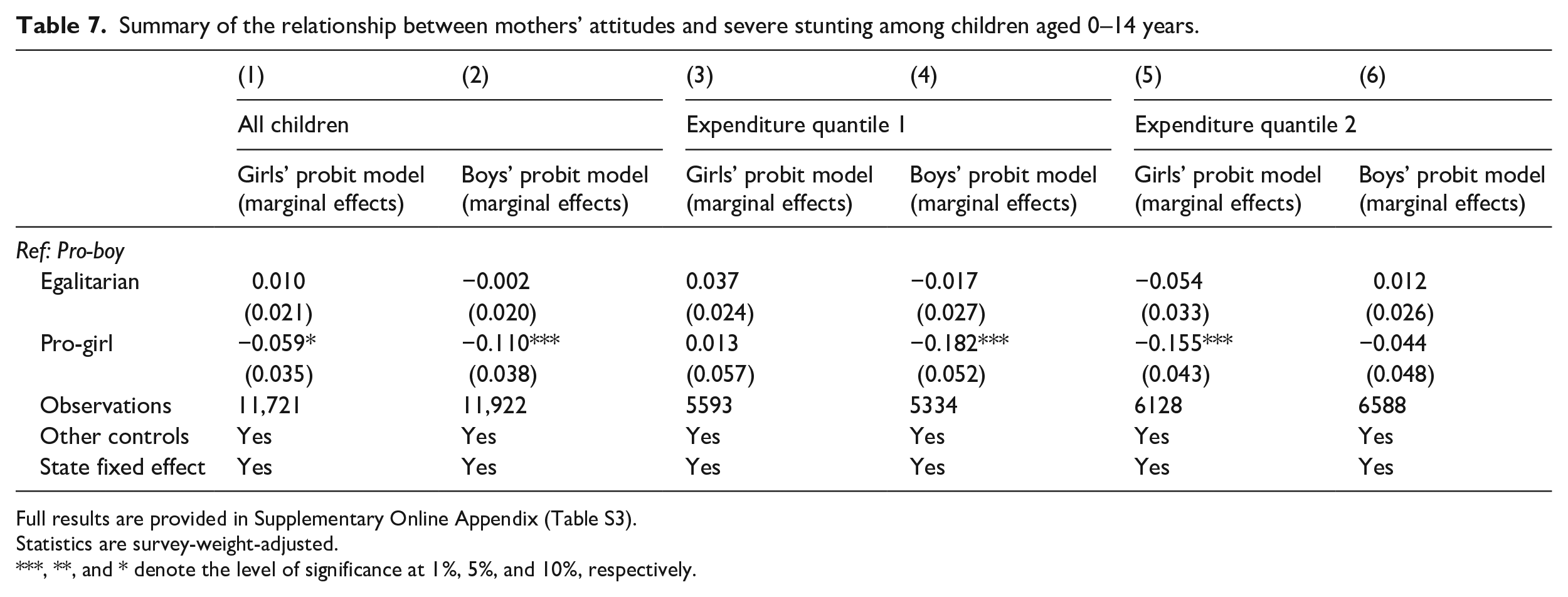
, **, and * denote the level of significance at 1%, 5%, and 10%, respectively.
Full results are provided in Supplementary Online Appendix (Table S3).
Statistics are survey-weight-adjusted.
Conclusion
India has the highest rate of stunting in the world. The malnutrition crisis is severe, especially among girls. Existing research suggests that son-preference leads to discrimination against girls and worsens their health status. This culture of son-preference has led to millions of missing women in India. This paper examines the association between mothers’ pro-boy, egalitarian, and pro-girl attitudes and stunting among their children in India. The paper specifically enquires whether mothers’ egalitarian or pro-girl attitudes change the nutritional outcomes of boys and girls in India.
The findings show that mothers’ pro-girl attitudes are associated with lower stunting among both boys and girls compared to pro-boy attitudes. However, I do not find any significant association between mothers’ egalitarian attitude and stunting among children. The estimation of the models by wealth categories indicates that in India, the nutritional status of girls improves if their mothers have pro-girl attitudes and if they also live in well-off households.
The lack of association between mothers’ egalitarian attitude and stunting among children, in general, has important policy implications. With institutions widely favoring boys, having an egalitarian belief/attitude may not be sufficient to bring gender equality in India. In the presence of institutionalized gender norms, an egalitarian attitude simply allows these gender biases entrenched in institutions to prevail, with parents primarily investing in sons to maximize economic gains. In such a case, it will be hard to improve girls’ nutritional status in India and achieve sustainable development goals without a systemic institutional change. A systemic institutional change is required to make girls valuable in society and parents to realize the economic gains of investing in daughters as much as sons.
Supplemental Material
sj-docx-1-jas-10.1177_00219096221086542 – Supplemental material for Pro-Girl Attitudes and Childhood Stunting in India
Supplemental material, sj-docx-1-jas-10.1177_00219096221086542 for Pro-Girl Attitudes and Childhood Stunting in India by Tanima Ahmed in Journal of Asian and African Studies
Footnotes
Appendix 1
Comparison of mothers’ health beliefs and health-seeking behaviors by mothers’ attitudes in a sample of children aged 0–14 years.
| Pro-boy | Egalitarian | Pro-girl | t-test |
t-test |
t-test |
|
|---|---|---|---|---|---|---|
| Mothers believe colostrum is good for the baby | 69.3 | 80.1 | 91.9 | 10.7*** | 11.9*** | 22.6*** |
| Mothers think drinking milk every day during pregnancy is not harmful | 71.5 | 77.3 | 74.3 | 5.8*** | −3.0 | 2.8 |
| Mothers think children with diarrhea should be given more water to drink | 52.9 | 60.6 | 55.4 | 7.2*** | −5.2 | 2.6 |
| Mothers consulted government/private doctor/nurses when they were sick the last time | 93.1 | 94.3 | 93.0 | 1.2 | −1.3 | 0.08 |
| N | 2005 | 16,232 | 592 | 18,495 | 16,824 | 2597 |
All the information on mothers’ health beliefs and health-seeking behaviors is available for 18,829 of 23,643 children in the full sample.
, **, and * denote the level of significance at 1%, 5%, and 10%, respectively.
Acknowledgements
The author is grateful to Maria Floro, Natalia Radchenko, Jessica Leight, and Emcet O. Tas for their helpful comments on the draft of the paper. The author also thanks Catherine Hensley and the reviewers of the paper for their insights and helpful comments. The author is responsible for any remaining errors and inconsistencies.
Author’s note
The findings, interpretations, and conclusions expressed in this paper are entirely those of the author. They do not necessarily represent the views of the World Bank and its affiliated organizations, or those of the Executive Directors of the World Bank or the governments they represent.
Declaration of conflicting interests
The author(s) declared no potential conflicts of interest with respect to the research, authorship, and/or publication of this article.
Funding
The author(s) received no financial support for the research, authorship, and/or publication of this article.

Supplemental material
Supplemental material for this article is available online.
Notes
Author biography
References
Supplementary Material
Please find the following supplemental material available below.
For Open Access articles published under a Creative Commons License, all supplemental material carries the same license as the article it is associated with.
For non-Open Access articles published, all supplemental material carries a non-exclusive license, and permission requests for re-use of supplemental material or any part of supplemental material shall be sent directly to the copyright owner as specified in the copyright notice associated with the article.
