







Abstract
The study examines the impact of Covid-19-induced economic stressors (such as incomes and job losses) on household alcohol consumption in India. Our analysis, based on eight waves of the Centre for Monitoring Indian Economy–Consumer Pyramids Household Survey (CMIE-CPHS) for the period January 2019–August 2021, confirms an increased consumption of alcohol during the pandemic despite supply restrictions imposed by the state. A spurt was witnessed across socioeconomic groups with varying intensities. This confirms the self-medication hypothesis and stress-response-dampening theory that households responded to the pandemic-related economic and psychological shocks by increasing the consumption of alcohol and is more significant for the poor and the marginalised.
Introduction
The Covid-19 pandemic led to an unprecedented consumption shock across countries. Consumer spending, a major source of economic activity, collapsed as the first wave of the pandemic swept across all countries in early 2020. The lockdowns and mobility restrictions imposed by several governments led to differential economic impacts on households. While some employees who were able to work from home maintained jobs and incomes, accumulating more savings while forced to cut back spending due to travel restrictions and health fears, many lost jobs and incomes or closed down businesses and struggled to meet daily expenses. Several pandemic-induced behaviours such as acceleration of e-grocery shopping, substitution of out of home entertainment with home entertainment and recreation, decrease in travel, switch to remote learning have an impact on consumption spending, with expected heterogeneity across various demographic and socioeconomic categories. Furthermore, the impact of the income shock on essential goods and services (such as food, housing, utilities, fuel, healthcare services, communication services, education, insurance and other financial services) is expected to be different from the impact on discretionary goods and services (such as consumer durables, recreational and cultural services, and hospitality).
Our focus here is on the impact of the Covid-19 pandemic-induced lockdowns, mobility restrictions and economic stressors such as reduced incomes and job losses on alcohol consumption in India. The consumption response in the case of alcohol, a discretionary product, to an unanticipated shock such as Covid-19 pandemic is complex. A systematic review of past economic crises on alcohol consumption by Rehm et al. (2020) suggests two opposing views – first, an increase in consumption due to the distress experienced stemming from the crises, and second, a lower level of consumption due to reduced incomes. The Covid-19 pandemic did lead to increased psychological distress due to uncertainty, income and employment losses, and isolation. Moreover, the state policies on availability and pricing of alcohol during the nationwide lockdown also impacts consumption. First, alcohol shops were shut because the product in question is not only ‘non-essential’, but rather ‘sinful’, not only imposing a disease burden but also resulting in domestic violence, and sometimes accidents and unwanted incidents. Second, the lockdown and consequent acute non-availability of alcohol has both biological and psycho-social consequences such as fatal alcohol withdrawal medical conditions, increased risk of relapse due to isolation, black marketing of alcohol and consumption of illicit products (Nadkarni et al., 2020). There were also increases in the number of suicide attempts and suicides in India because of alcohol withdrawal symptoms (Syed and Griffiths, 2020). Third, most state governments decided to lift restrictions on liquor shops after the first lockdown ended. Alcohol taxes are an important source of revenue for state governments, particularly after the adoption of the Goods and Services Tax (GST). Alcohol is outside the ambit of GST through which states continue to generate their own funds. The reopening saw long queues outside alcohol stores, often violating social distancing norms, and the states responded by imposing higher taxes.
With this background, the present study assesses the alcohol consumption response to the imposition of supply restrictions and economic stressors as a result of the spread of Covid-19 infections in India. Monitoring consumption before and during the pandemic is necessary to better understand the effect of Covid-19 on different groups – such as minorities, the marginalised socioeconomic groups, women, the unemployed and those with co-morbidity conditions. Our results indicate a spurt in alcohol consumption across households belonging to various socioeconomic and religious groups and income distribution, but with varying degree of shifts. This confirms the self-medication hypothesis and stress-response-dampening theory in the context of India that households responded to the pandemic-related economic and psychological shocks by increasing the consumption of alcohol.
This study is organised as follows. The ‘Conceptual and theoretical background’ section describes the conceptual and theoretical background and presents a summary of existing work in this area. The ‘Research objectives and research design’ section describes the research objectives and design of the study and details the data sources used and the methodology employed. The section ‘Results and discussion’ presents and discusses the descriptive and analytical results. The ‘Conclusion and policy recommendations’ section concludes from a policy perspective.
Conceptual and theoretical background
Covid-19 pandemic and the resultant lockdowns have resulted in unanticipated declines in employment and incomes; however, the impact on household consumption expenditures is heterogeneous. Since higher income households have a higher share of expenditure on discretionary items, they would have faced proportionately larger declines in expenditures via-a-vis lower income households, the latter having a higher share of expenditures on essential items. Although alcohol is classified as a discretionary consumption item, it may still be an essential for many or an escape to overcome the distress associated with any financial, psychological or health crisis. And the response to unanticipated income declines may not be as pronounced as other discretionary items.
But since the Covid-19 pandemic-induced lockdowns not only resulted in an income shock but also a supply shock, the resultant consumption expenditure trends and the heterogeneity among socioeconomic and demographic groups need further investigation. While the supply shock was temporary, the duration of income shock (whether temporary or permanent) is expected to have differential impacts on alcohol consumption.
While there are studies examining the impact of previous economic crises and disasters, such as terrorist attacks and natural disasters, on alcohol consumption, alcohol use–associated medical disorders or death, or alcohol attributable violence, the literature on the impact of Covid-19-induced mobility restrictions is scant but evolving. A review by Gonçalves et al. (2020) shows that mass crises such as terrorism (e.g. 9/11), epidemic outbreaks (e.g. SARS in 2003) or economic crises (e.g. 2008’s Great Recession) were associated with increases in alcohol use, related to anxiety and depressive symptoms, and posttraumatic stress disorders, especially in young and single male subjects, who have a higher vulnerability to develop harmful drinking behaviour. The challenges induced by the COVID-19 pandemic are comparable or even harder than the ones associated with previous world crises. Existing research on the impact of the pandemic on alcohol consumption is mostly restricted to studying populations in the developed world, and little evidence is available in the context of developing countries. Furthermore, most of these studies finding evidence of increased alcohol consumption during the Covid-19 pandemic, for instance, Rolland et al. (2020) in the context of France, Rebello et al. (2021) in the context of Spain and Portugal, Oksanen et al. (2021) in the context of Finland and Callinan et al. (2021) in the context of Australia, emphasise psychological distress, stress and anxiety as a result of social restrictions as explanatory factors for the rising alcohol consumption. Individual characteristics, such as age, gender, occupation and education, are other factors examined in the current literature (Glowacz and Schmits, 2020; Schmits and Glowacz, 2022).
Our attempt in this study is to see the impact of Covid-19-induced economic stressors (such as incomes and job losses) on household alcohol consumption, in the context of a developing country (i.e. India) where supply shocks played an important role too. Economic stressors (such as income reductions, job losses) may positively or negatively impact alcohol consumption. A summary of these mechanisms, as reviewed by de-Goeji et al. (2015), is sketched in Figure 1 and described below.
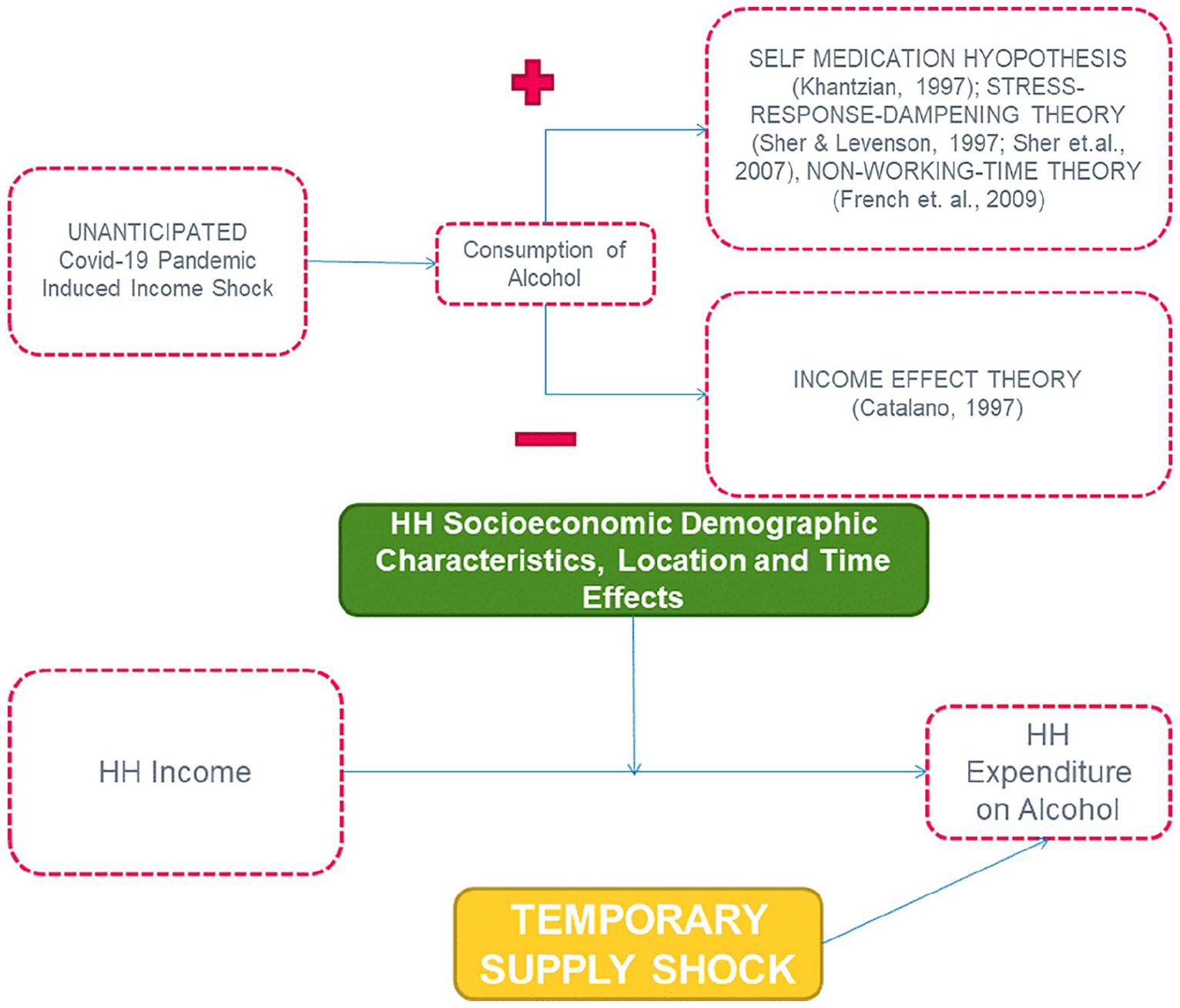
Impact of income shock on alcohol consumption.
As proposed by the self-medication hypothesis (Khantzian, 1997), the use of substances, such as alcohol, can have an easing effect on the psychological sufferings of individuals. On similar lines, the stress-response-dampening theory argues that individuals consume alcohol to reduce the intensity of their response to anxiety and stress, resulting in higher levels of alcohol consumption during economic crises (Sher and Levenson, 1982). These theories suggest how a large proportion of individuals across the globe may have used alcohol as a mechanism to deal with the fears and uncertainties of the pandemic. For instance, Alpers et al. (2021) examines the impact of COVID-19-related worries, joblessness, quarantine, self-reported drinking behaviour, age, gender and occupational situation on alcohol consumption and hazardous drinking behaviour during the initial phase of pandemic measures in Norway. Increased alcohol consumption during lockdown was found to be common among people with economic worries, people in quarantine, and people studying or working at home, consistent with the self-medication hypothesis. Likewise, Wu et al. (2008) found out that Beijing’s 2003 SARS outbreak was followed by an increase in alcohol consumption among hospital employees who were exposed to the infection. The exposure to the infection was measured as an aggregation of exposure to SARS patients at work, being quarantined, the death or illness of a relative or friend from SARS, and exposure to media coverage of the outbreak. The results suggested that being quarantined and working in locations where exposure to SARS patients was common were significantly associated with later alcohol dependence symptoms. Other types of exposures, such as having had family members or friends contract SARS or die from SARS, and exposure to media coverage of the outbreak, were not significantly associated with later alcohol dependence symptoms. De Goeij et al. (2015) also found out an upwards trend in harmful drinking, measured as drinking more than six glasses of alcohol on one day at least once a week, during and post the 2008 economic crisis, among the Dutch working-age population, aged 25–64, using repeated cross-sectional data of men and women living in Netherlands. Mulia et al. (2014), in their study, used multiple regression to estimate associations between economic loss and alcohol volume, monthly drunkenness, negative drinking consequences and alcohol dependence. They established that severe economic loss (job or housing loss) during the 2008 economic crisis was positively associated with negative drinking consequences, alcohol dependence and drunkenness, whereas moderate loss (loss of retirement savings, reduced work hours/wages or trouble paying the rent/mortgage) was not at all associated with alcohol outcomes.
In contrast to the self-medication hypothesis and the stress-response-dampening theory, the ‘Income-effect Theory’ (Catalano, 1997) suggests that crisis-induced income and employment shocks will result in tighter budget constraints for individuals, leading to reduction of expenditure on normal goods, including alcohol. Consistent with the income effect theory, Ruhm and Black (2002) find that heavy drinking declines during bad economic times, and the decrease is concentrated among heavy drinkers, who spend the most on liquor. They measure the variation in consumption patterns of both heavy drinkers and recreational drinkers, during the years 1987–1999, covering different unemployment rates in the United States in that period. They find that a one point rise in the US unemployment rate decreases predicted drinking by over 6% and drinking participation by 3.1%. The estimates in Ruhm’s (1995) study, based in the United States, indicate that increases in a state’s unemployment rate are correlated with lower alcohol consumption. He argues that although liquor may be used as self-medication for increased stress, in aggregate, this effect is more than offset by lower incomes and changes in relative prices, declaring alcohol as a normal good. Ettner (1997) also uses area unemployment rates as an instrument to measure the causal effect of unemployment on alcohol use. This is because the area unemployment rate influences an individual’s probability of being unemployed, but only has indirect effects on his alcohol use. The study uses two measures: average daily consumption of alcohol and degree of dependence on alcohol (measured by a scale: the persistent desire of an individual for alcohol, large amounts consumed over a short period, time spent to recover from alcohol, frequent withdrawal symptoms, occupational/recreational activities given up or reduced due to alcohol consumption, among others). The study concludes that unemployment lowers alcohol consumption and dependence symptoms significantly, probably due to income effects.
Yet another explanation of the link between economic crises and alcohol consumption is provided by the non-working-time theory (French et al., 2009), which postulates that a decrease in working hours (due to job losses or fewer tasks at work) is likely to yield more time for social events and other activities that are often accompanied by alcohol consumption.
The contradictory mechanisms through which an economic crisis affects alcohol consumption is likely to differ across location, and subgroups of population, primarily on the basis of their socioeconomic demographic characteristics. These theories are represented in Figure 1.
Furthermore, the Covid-19 pandemic posed not just an income shock that is likely to affect alcohol consumption through one of these mechanisms but also a supply shock. The non-availability of alcohol due to shutting of shops during the nationwide lockdown, and their subsequent opening after the first lockdown, albeit higher taxes being imposed by state governments is also likely to impact alcohol consumption.
Research objectives and research design
The primary research objectives of our study are as follows. First, our study aims to examine the changes in alcohol consumption expenditures in India as a result of the Covid-19 pandemic-induced first lockdown in March–April 2020 that curtailed the availability of alcohol, and assess spatial, socioeconomic and demographic heterogeneity in these changes. Second, our study aims to examine the response of alcohol consumption expenditures to incomes and supply shocks as a result of the Covid-19 pandemic.
We use the data on monthly household alcohol consumption expenditures, expenditures on other major categories, incomes, and other household demographic and socioeconomic characteristics from the Centre for Monitoring Indian Economy–Consumer Pyramids Household Survey (CMIE-CPHS) over the period January 2019–August 2021. CPHS is a continuous survey administered on a panel of sample households by CMIE. 1 It delivers fast-frequency data on consumption expenditure of households, collected thrice every year. The Consumption Pyramids module of the CPHS provides a detailed break-up of the monthly consumption expenses of Indian households. The income and consumption data at the household level along with household attributes (size, education composition, occupation composition, age composition, gender composition, caste, religion) and spatial characteristics (location – rural or urban) are used in our empirical model described below.
Alcohol is consumed at the level of the individual, but analysis of its consumption demand is done at the household level. Choosing household as a unit of analysis limits detailed intra-household analysis of consumption, but due to unavailability of individual-level consumption data, we use household-level data, as has been done in empirical literature. Moreover, the impact of crises on alcohol consumption may have differential impacts on subgroups in the short term and the long term. For instance, alcohol dependence in adulthood may be a result of long-term impacts of financial and social stressors during childhood (Goeji et al., 2015). The present study focuses on the short-term impacts of household alcohol consumption as a result of income changes across various socioeconomic subgroups, but does not look at the impact on individual members within the household. The income effect hypothesis also suggests that tighter budget constraints mean lower spending on alcohol, which may not necessarily imply lower consumption, but using other strategies such as switching to cheaper alcoholic beverages or substituting drinking away from home with drinking at home. Our data do not allow us to examine these within-category consumption, and we restrict our analysis to total money spent on alcohol.
To assess the impact of the income changes and the supply restrictions as a result of the Covid-19 pandemic on alcohol consumption, we use a multiple regression model with the following specification

where
Furthermore, we are particularly interested in understanding whether alcohol expenditure shares differed between the two regimes: (1) pre-Covid-19, that is, January 2019–February 2020, and (2) Covid-19, that is, March 2020–August 2021. We use the announcement month of the nationwide lockdown 3 in India as the structural break point to split our dataset into two parts and test for the significance of the differences in the coefficients in the two regimes using the Chow Structural Break Test (Chow, 1960). The Chow test is used to statistically determine whether two sets of observations can be regarded as belonging to the same regression model (Lee, 2008).
Our choice of other explanatory variables is guided by the extant literature and our a priori considerations.
The relationship between commodity expenditure and income (the Engel curve) has been at the centre of applied microeconomic analysis (Deaton and Muellbauer, 1980; Leser, 1963; Working, 1943). We use total expenditure as a proxy for ascertaining a household’s position in the income distribution. Quadratic logarithmic models permit goods to be luxuries at some income levels and necessities at others (Banks et al., 1997; Lewbel, 1996), and thus we include the square of the logarithm of total expenditure in our regression model.
Literature on household welfare advocates the role of household size and composition in explaining various aspects of well-being such as expenditures and income and consumption poverty (Deaton, 1997; Ravallion, 1992). Furthermore, gender and religion have a major impact on consumer choices (Akerlof and Kranton, 2000). Empirical evidence suggests that men seem to use drinking as a stress-releasing coping strategy more than women (de-Goeji et al., 2015). Hence, we include these household characteristics as controls in our specification.
The effect of government policies on people’s consumption is largely determined by the resulting changes in incomes and prices and the response of the household to such changes. We use the monthly state-level Consumer Price Indices as an explanatory variable (or a proxy for the current price changes), to measure the household’s alcohol consumption with respect to change in prices. This has been done due to lack of availability of alcohol price data and the complexity in capturing alcohol prices in different states. In addition, we use the lag of the dependent variable and time dummies to capture habit persistence and changes over time. Alcohol supply shocks are captured with a dummy variable, categorised as follows: (1) pre-Covid period (January 2019–February 2020); (2) first nationwide lockdown (March 2020–May 2020) where all alcohol shops were shut; (3) the unlock period (June 2020–Mar 2021), which saw subsequent reopening of commercial establishments, including alcohol stores; and (4) the period of more deadly second wave characterised by lockdowns and a serious health crisis (April 2021 till August 2021). 4 Plus there might have been demand shocks arising from job and income losses.
CPHS provides a detailed break-up of the monthly consumption expenses as well as incomes and its composition by source for a sample of Indian households. Data on monthly household expenditures on alcohol, incomes and other household demographic and socioeconomic characteristics are obtained from the CMIE-CPHS over the period January 2019–August 2021. The summary statistics of all the variables are presented in Table 1.
Summary statistics.
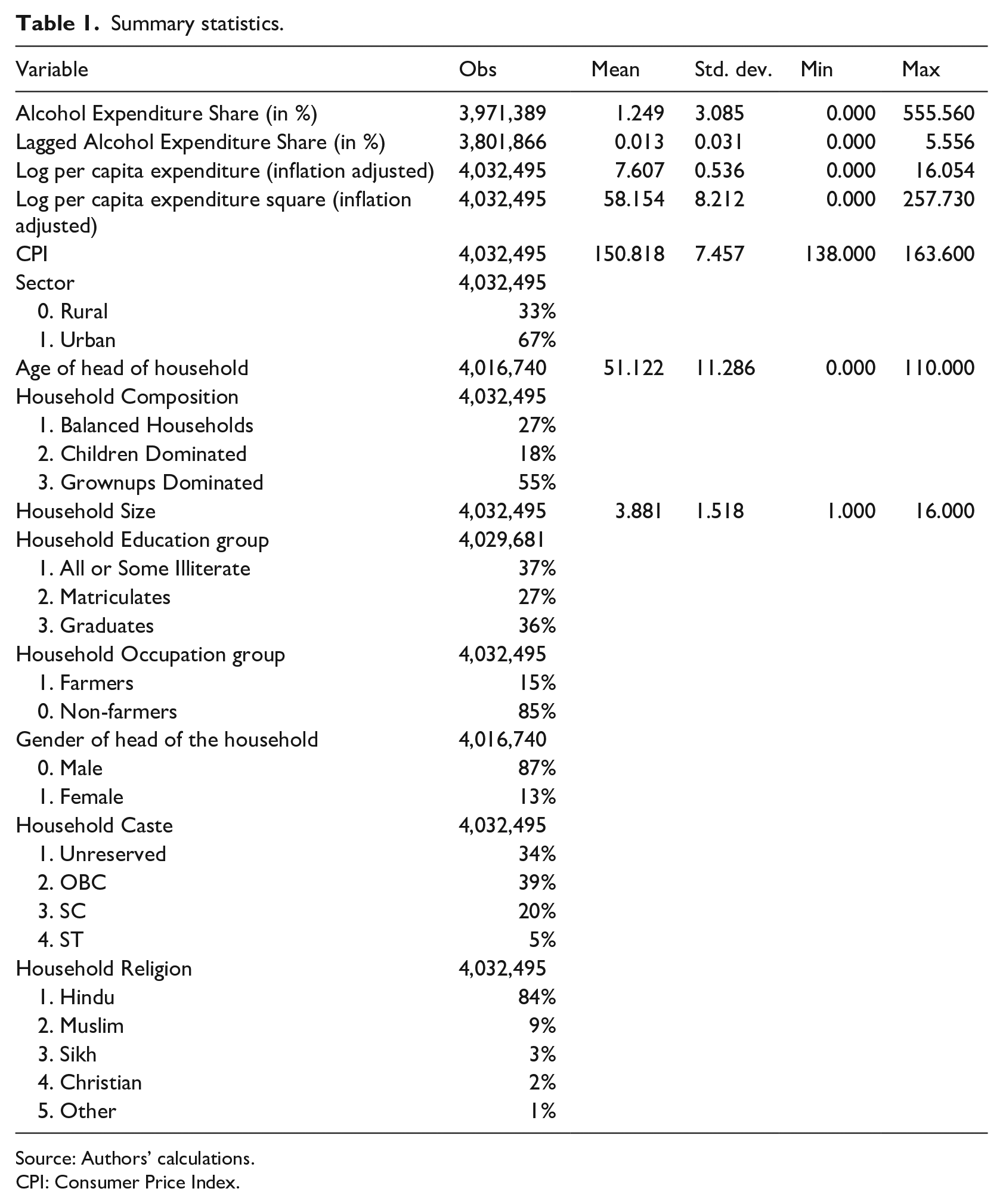
Source: Authors’ calculations.
CPI: Consumer Price Index.
Results and discussion
This section presents the descriptive and analytical results. The ‘Trends in alcohol expenditure shares’ section discusses the trends in alcohol expenditure shares for rural and urban India, and for various socioeconomic groups for our period of study. The ‘Determinants of alcohol expenditure shares and examination of the structural break’ section presents the results of the econometric model with alcohol expenditure share as the dependent variable. First, the model is run for the entire period, and then, it is run for the two regimes separately: (1) pre-Covid-19, that is, January 2019–February 2020 and (2) Covid-19, that is, March 2020–August 2021, followed by testing of similarity or difference in the regression coefficients using the Chow test. The ‘Discussion’ section presents the discussion of the results.
Trends in alcohol expenditure shares
Figure 2 shows the alcohol expenditure shares for households in rural and urban India for the period January 2019–August 2021. We find that the pandemic-induced lockdowns resulted in a sharp increase in the share of alcohol in total expenditure across rural and urban India, and for all income levels. The share of alcohol in total expenditure for rural India ranged from 1.14% to 1.5%, and for urban India from 0.95% to 1.25% in the 14 months preceding March 2020. However, this figure increased to 2.09% for rural India and 1.88% for urban India in April 2020, the period coinciding with strict nationwide lockdown.
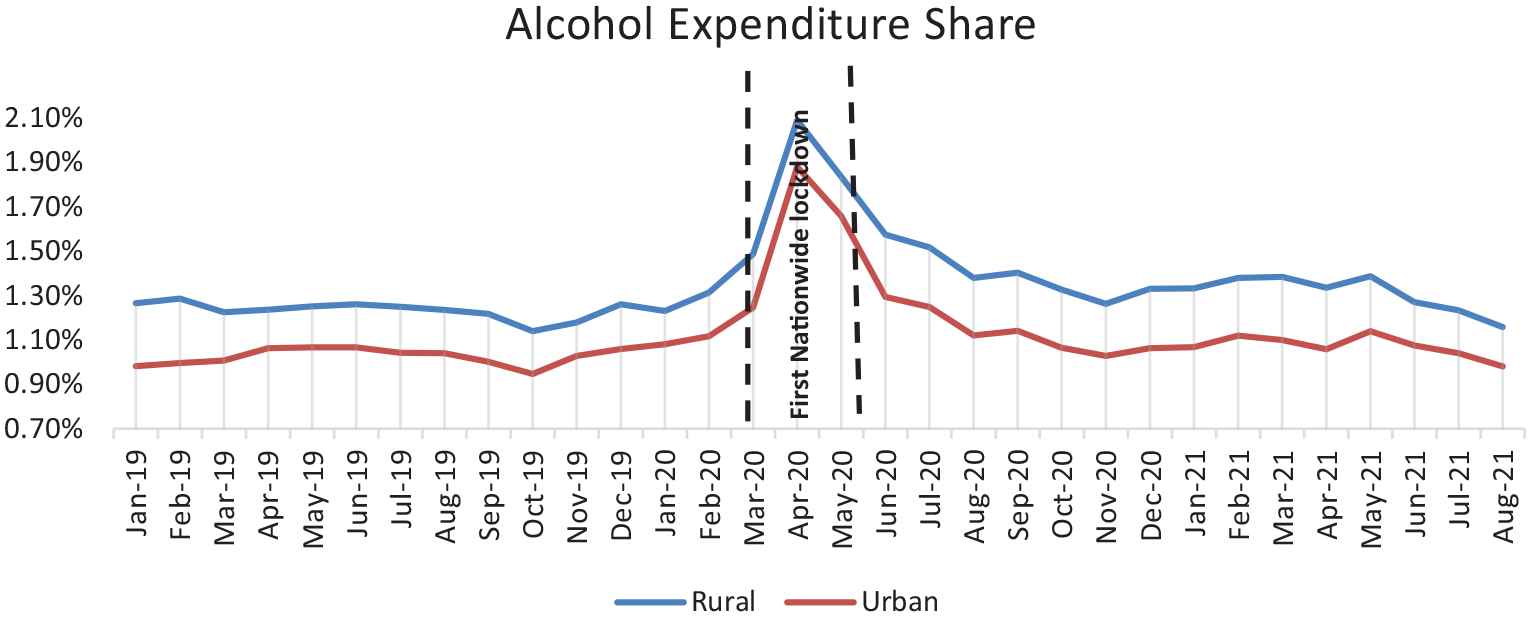
Households’ share of total expenditure on alcohol in rural and urban India.
Even during the period of strict nationwide lockdown, when only the sale of essential commodities was allowed, it is surprising to see higher spurts of alcohol consumption expenditure. The alcohol shops were allowed to reopen only in May 2020. During this period, with rising fear of the pandemic, high levels of inflation and unemployment in the country, people witnessed huge queues in front of liquor shops, and the demand for alcohol shot up. These results suggest how a large proportion of individuals may have used alcohol as a mechanism to deal with the fears and uncertainties of the pandemic.
The intensity of the increase in alcohol consumption shares varied among the households belonging to different income levels. Higher spurts of alcohol expenditure shares during lockdown are observed for households belonging to bottom 30% incomes, in comparison to others. Figure 3 plots the share of alcohol in total expenditure of households belonging to the top 30% and bottom 30% of the income distribution. In April 2020, the share of alcohol expenditure among the bottom 30% income households in rural India rose to 2.56%, a rise of about 57% relative to the previous month. The same figure went up to 1.73% for top 30% households, a rise of only 28% relative to the previous month. Parallel trends are observed for urban households, where the rise in alcohol share in April 2020 is about 85% for bottom 30% income households and 46% for top 30%, relative to March 2020. Higher expenditures are also noticed in May 2021, that is, at the peak of the second wave.
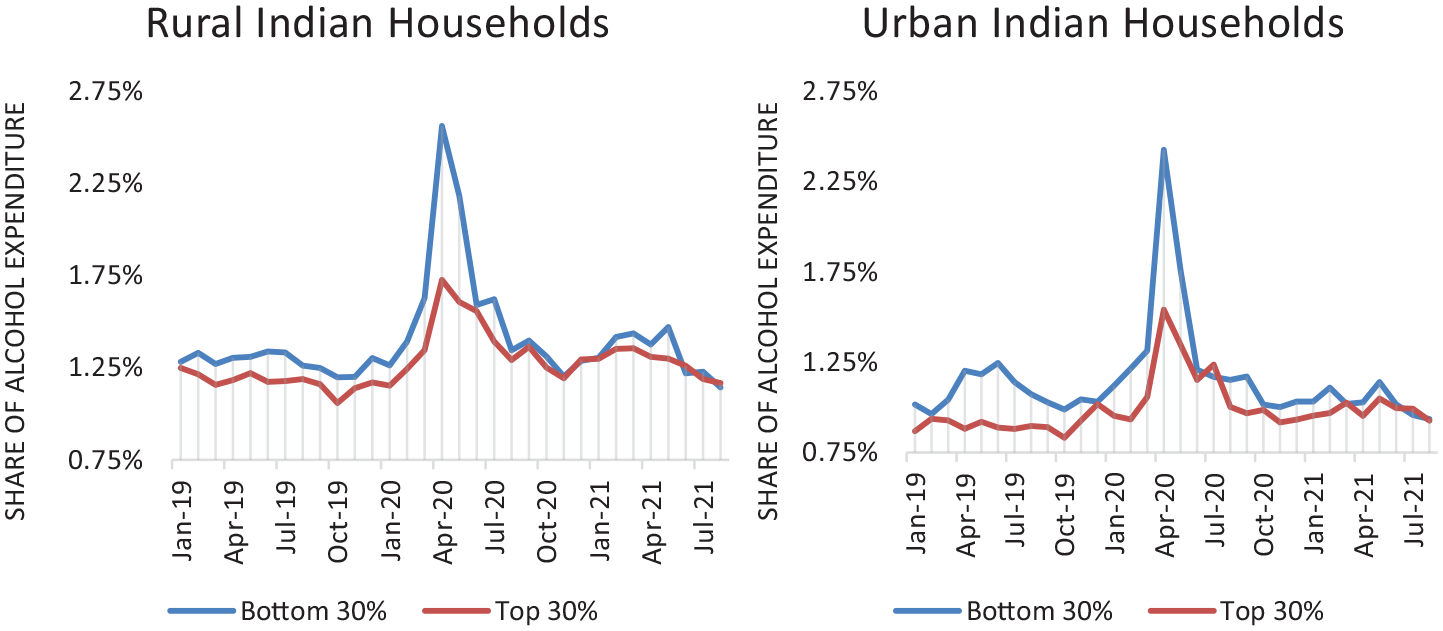
Bottom 30% and top 30% households’ alcohol expenditure shares.
Alcohol consumption also varies by gender. It is universally observed that adult men drink more than adult women, in terms of both volume and frequency of drinking. In an attempt to understand the households’ alcohol consumption during the pandemic, we also look at the impact of gender of head of household on the households’ expenditure shares of alcohol. Figure 4 plots the share of alcohol in total expenditure of households based on the gender of the head. Consistent with the previous results, the households’ alcohol expenditure shares rapidly increased during the Covid-19 lockdown, both in female- and male-headed households. Surprisingly, while on average, the male-headed households have higher shares of expenditures on alcohol, the rise in alcohol consumption during the pandemic was higher in female-headed households. While the rise in alcohol expenditure shares is 43% in the male-headed households in April 2020, the same is about 55% in the female-headed households. This is surprising considering the pre-defined gender norms in the country related to alcohol consumption.
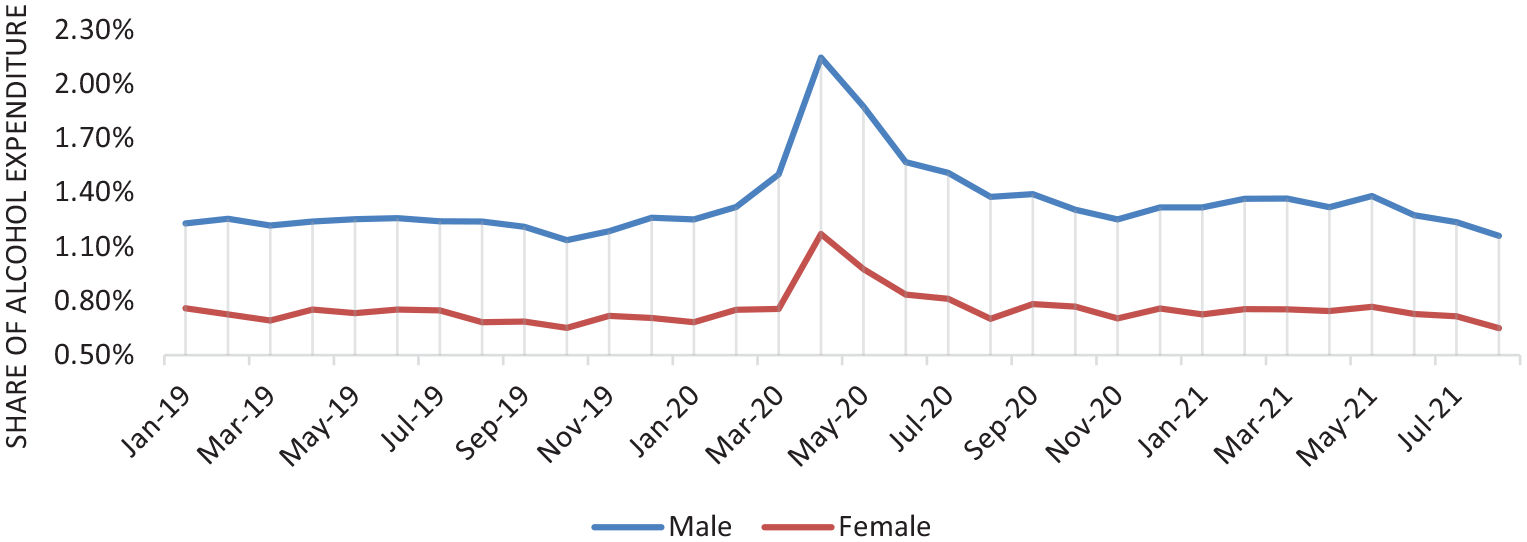
Share of alcohol expenditure by gender of head of household.
Figure 5 plots the share of alcohol in total expenditure of households belonging to different religions. While many religions forbid its consumption, view it as sinful (Muslims), others have allocated a specific place for it, viewing it as a ‘gift of god’ (Christians). Therefore, it is interesting to study the households’ alcohol consumption based on their religions. An increase in shares of alcohol in total expenditure is seen at the onset of the pandemic, across rural and urban India, irrespective of the religion. But the intensity of the increase varied. The sharpest increase in alcohol expenditure share was exhibited by the Christians, with an increase of about 77% in April 2020, relative to the previous month. Due to the religious beliefs of Christians that view alcohol consumption (within healthy limits) as ‘something that makes life more joyous’, Christians consume more alcohol than others, and can be characterised as regular/social drinkers. Among Hindus and Muslims, the rise in alcohol expenditure shares is about 44% and 40%, respectively, while the same is the lowest among Sikhs, that is, 21%, during April 2020. Thus, religious beliefs and practices have a major role in determining alcohol dependence of households in India.
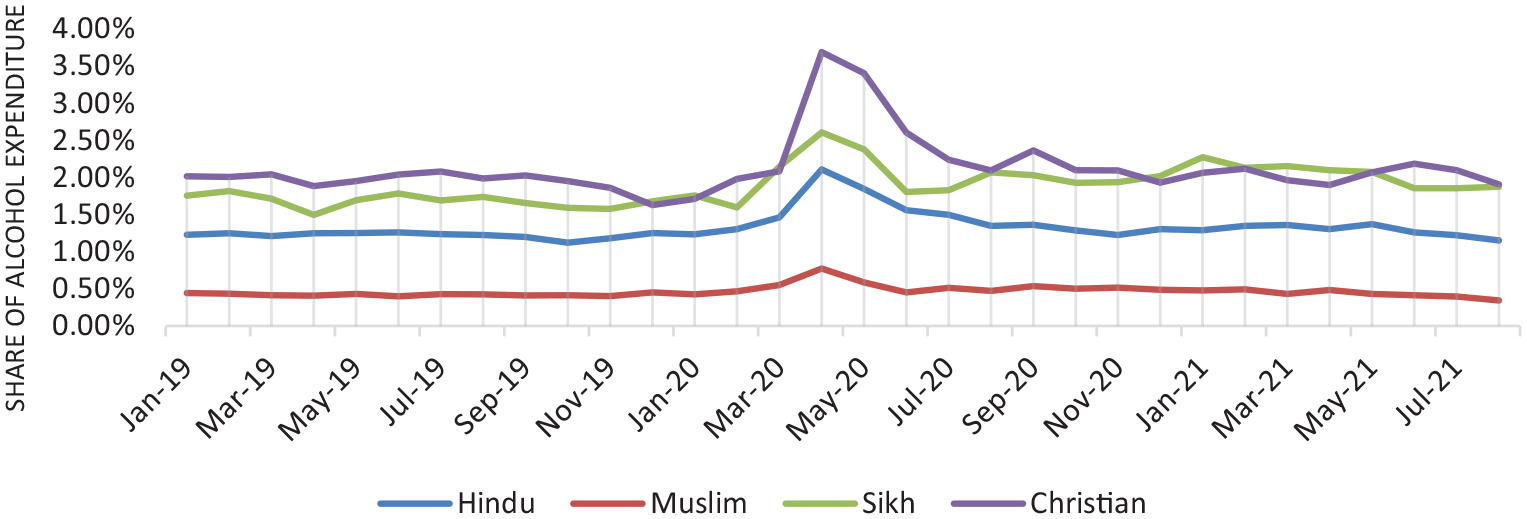
Share of alcohol expenditure by religion of household.
Another interesting insight from our analysis is the different patterns of alcohol consumption among different social groups. For the Scheduled Tribes’ (STs) households, the share of alcohol in total expenditure ranged from 1.7% to 2.36% before March 2020. However, this figure increased to as high as 3.63% in April 2020, the time of strict nationwide lockdown. Similar movement was followed by other social groups, namely, Other Backward Classes (OBCs) and Schedule Castes (SCs). Before March 2020, the share of alcohol expenditure of OBCs and SCs ranged from 1.08% to 1.45%, which increased to 2.07% and 2.11%, respectively, during April 2020. Figure 6 plots the share of alcohol in total expenditure of households belonging to different social groups. The relative changes in alcohol expenditure shares were different for different social groups. The steepest increase in alcohol expenditure shares in April 2020 was shown by SCs (54.3%), OBCs (45.3%) and Unreserved (37.7%). That the more deprived socioeconomic groups used alcohol to deal with the psychological and economic impacts of the pandemic is worrying.
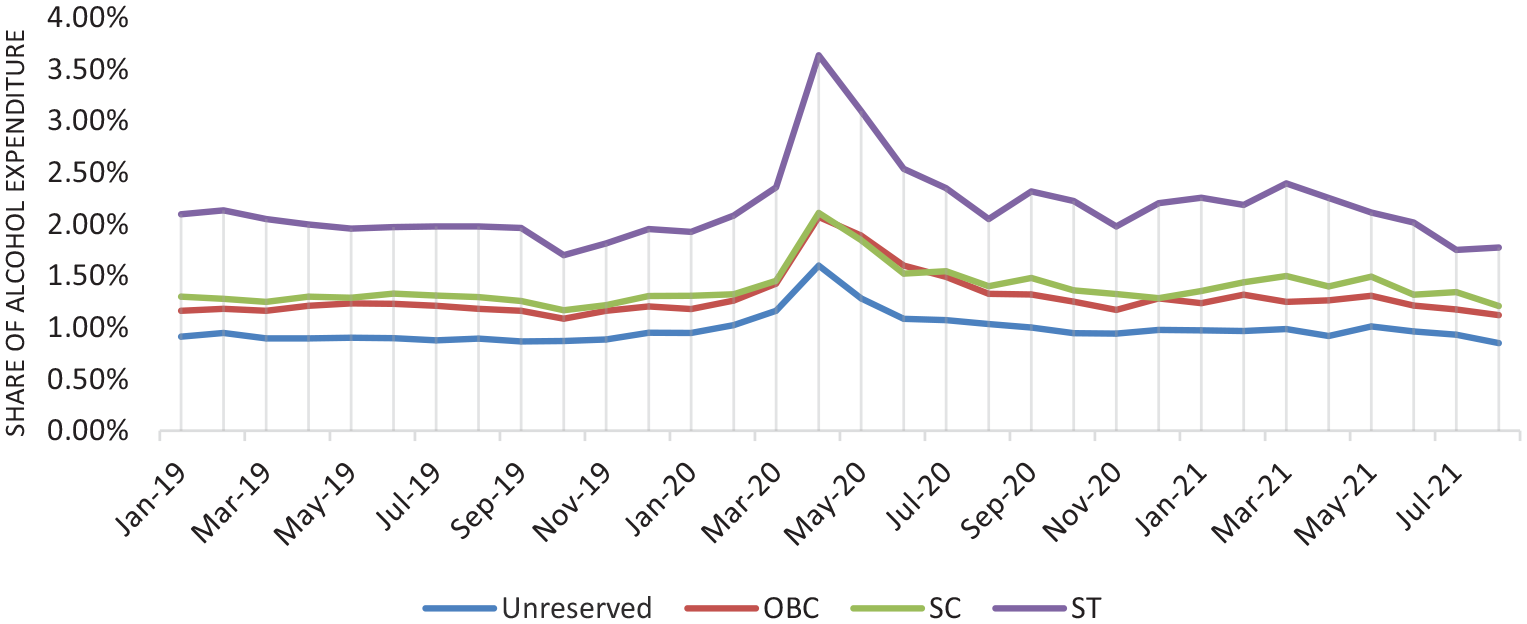
Share of alcohol expenditure by caste of household.
Determinants of alcohol expenditure shares and examination of the structural break
Without structural breaks
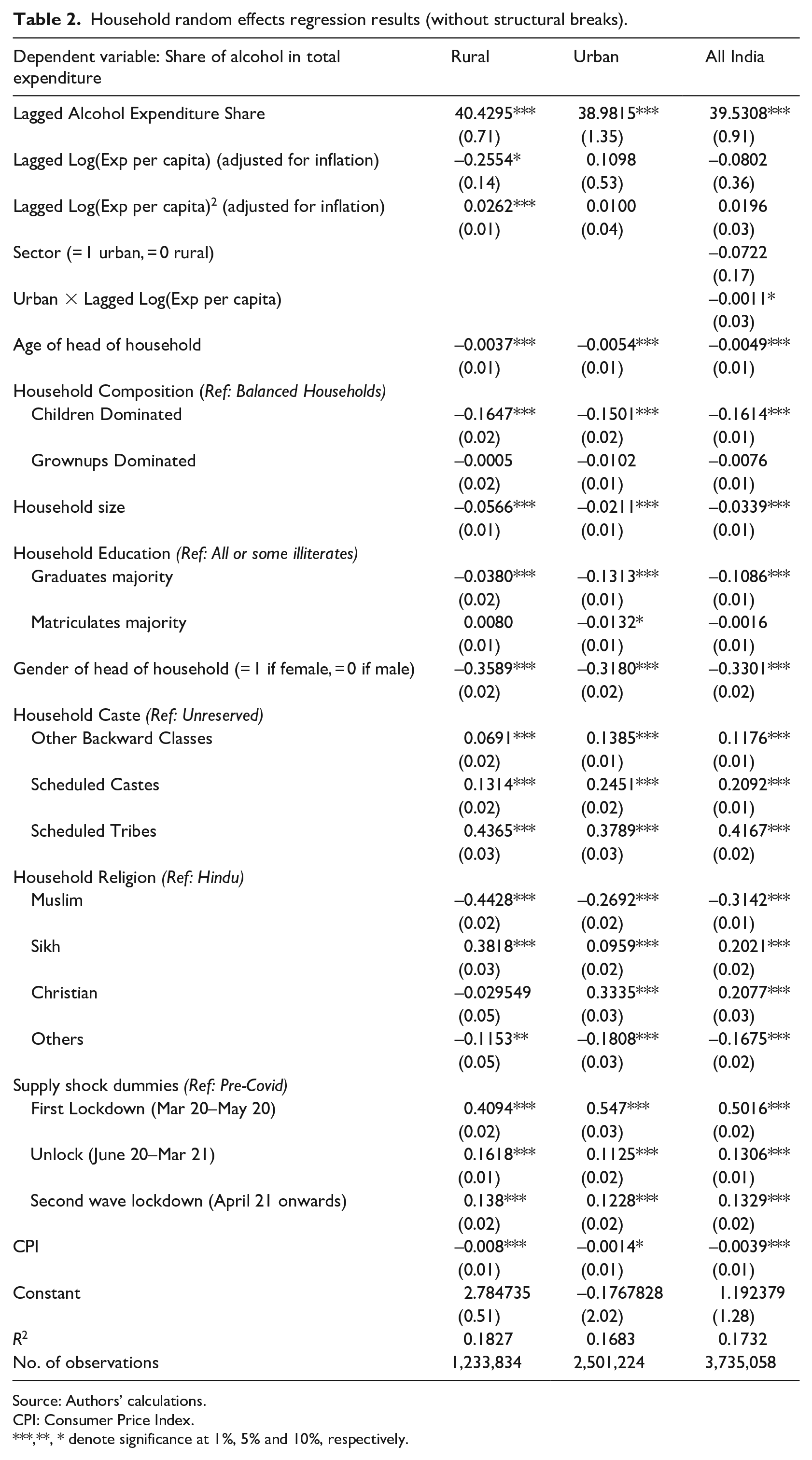
Table 2 presents the results of the household random effects panel data regression model with alcohol expenditure share as the dependent variable without structural breaks. Column 1 presents the results for rural households, column 2 presents the results for urban households and column 3 presents the results at the all-India level.
Household random effects regression results (without structural breaks).
Source: Authors’ calculations.
CPI: Consumer Price Index.
**, * denote significance at 1%, 5% and 10%, respectively.
In rural areas, the positive and significant coefficient of the lagged alcohol expenditure share of households, 40.43, indicates a strong positive relationship between the alcohol expenditure shares of households last month and those of households in current month. Thus, the adjustment is high. The positive and significant coefficient of the lagged alcohol expenditure share of households in urban areas (38.98) as well as at the all-India level (39.53) is consistent with our findings as in the case of rural households.
The negative coefficient of monthly per capita expenditures of rural households and the positive and significant estimate of the squared term, 0.0262, corroborates a concave Engle curve. The households’ alcohol expenditure shares decrease as their total expenditure levels increase, but after the turning point where monthly household per capita expenditure levels are Rs. 130.85, the relationship between the two becomes positive. The coefficients of the monthly per capita expenditure in case of urban households, and the pooled all-India sample are statistically insignificant.
The negative and significant coefficient of Consumer Price Index (CPI) shows the negative relationship between the CPI and the household alcohol expenditure shares, in rural, urban and all-India samples. This is consistent with the law of demand, stating that higher prices lead to lower quantity demand of goods.
The negative and significant coefficient of Urban × Lagged Log (Expenditure per capita) covariate points to the lower elasticities of alcohol demand in Urban areas.
In both rural and urban areas, as well as at the all-India level, the effect of age of head of household has a small but negative effect on alcohol expenditure shares of households. Higher the average age of the head of the household, lower is the household spending on alcohol. Household size has a negative association with alcohol share. As the household size increases by one member, the total spending on alcohol as a share of total expenditure reduces by 0.06% and 0.02% in rural and urban areas. Children-dominated households have, on an average, lower alcohol shares in total expenditure, in rural, urban and all-India results, as compared to balanced households.
Our analysis also suggests that the alcohol consumption is less among the more educated households, on average. Households with majority of graduates have relatively lower average alcohol share expenditures than the households with illiterates, as represented by the negative coefficients in all the specifications. In rural areas, the average alcohol share expenditure of graduate-majority households is lower by 0.04%, as compared to households with illiterates. The same is lower by 0.13% for urban areas.
Households with a female head, on average, have alcohol share lower by more than 0.3 percentage points than a household with a male head, in all the specifications.
The coefficient on Muslim households is negative, implying that they spend lower shares of their total expenditure on alcohol compared to Hindu Households. On the contrary, the coefficient on Christian households is positive, implying higher share of total expenditure spent on alcohol compared to Hindu households. These results are consistent in rural, urban and all-India model specifications.
The lower castes, that is, OBC, SC and ST have positive and significant coefficients, representing that in both rural and urban India, the lower castes have higher expenditure shares on alcohol than the unreserved category. Among the lower castes, the STs have the highest dependence on alcohol, as depicted by the effect size of 0.44% in rural areas, 0.38% in urban areas and 0.42% in all-India results. This is followed by SCs and then OBCs.
In both rural and urban areas as well as at the all-India level, the positive coefficient of first lockdown dummy variable signifies the increase in alcohol consumption, as depicted by expenditure shares on alcohol, relative to the pre-pandemic period. The average increase in alcohol expenditure shares is 0.41% in rural areas, 0.55% in urban areas and 0.5% all-India. Higher alcohol shares are also observed during unlock phases and during the second wave lockdown period.
With structural breaks
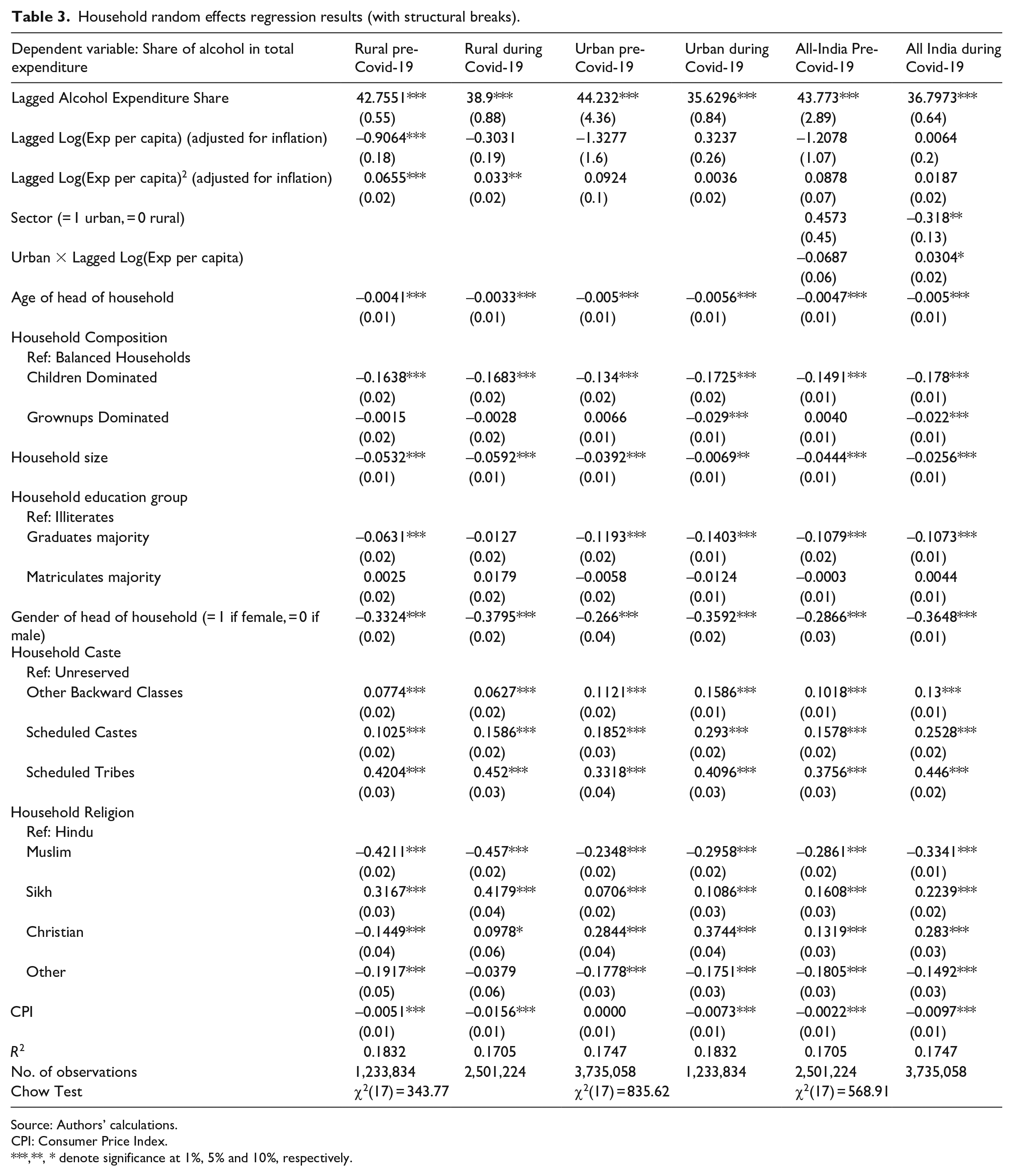
Next, we employ techniques of Household Random Effects regression in our dataset, with the same confounders as earlier, and use ‘test of structural changes’, to determine if there has been a structural break in the data caused due to the pandemic. We are particularly interested in understanding whether alcohol expenditure shares differed between the two regimes: (1) pre-Covid-19, that is, January 2019–February 2020 and (2) Covid-19, that is, March 2020–August 2021. We use the announcement month of the nationwide lockdown in India as the structural break point to split our dataset into two parts and test for the significance of the differences in the coefficients in the two regimes using the Chow Structural Break Test. The results are summarised in Table 3.
Household random effects regression results (with structural breaks).
Source: Authors’ calculations.
CPI: Consumer Price Index.
**, * denote significance at 1%, 5% and 10%, respectively.
The Chow statistics (Table 3) rejects the null hypothesis of no structural break. Hence, there is indeed a structural break in the data, that is, the relationship between the share of alcohol expenditure and the explanatory variables has changed post pandemic. As in the earlier case of no structural breaks, we obtain similar effects and effect sizes of the explanatory variables when accounted for structural breaks in the data. There is a statistically significant difference between the coefficients of pre-and post-Covid-19 pandemic regressions.
In all specifications, the positive and significant coefficient of the lagged alcohol expenditure share of households, both in pre- and post-Covid-19 periods, indicates a strong positive relationship between alcohol expenditure shares of households last month and those of households in current month. The relationship is stronger in period 1, that is, pre-Covid-19 for rural, urban and all-India results. In the post-Covid-19 period, the alcohol expenditure shares of households are relatively less responsive to the changes in the lagged alcohol expenditure shares.
The higher coefficients of the CPI in the post-pandemic period indicate higher price elasticities of alcohol demand post March 2020.
Age of head of household has a marginal and negative effect on average alcohol expenditure shares of households in both periods. Similarly, household size also has a negative effect on average alcohol expenditure shares of households in both periods. However, the effect size/association of household size reduces in the second period across both urban and all-India results.
While the children-dominated households have lower alcohol expenditures on average, as compared to balanced households, the same reduced even more in the post-pandemic period. In all-India results, the children-dominated households have about 0.15% lower share of expenditure on alcohol on average, relative to the balanced households in the pre-pandemic period. The same are lower by 0.18% in the post-pandemic period.
The lower coefficients of graduates-majority households post-pandemic suggest that the average alcohol expenditure of such households became even lower post-pandemic as compared to those of the households with some or all illiterates.
The relationship between the alcohol expenditure shares of households and the gender of head of households remained consistent between both the periods in our analysis, that is, the female-headed households have lower shares of alcohol expenditure than male-headed households on average in both periods. However, households with a female head, on average, have lower alcohol shares post-pandemic, as compared to pre-pandemic period.
Relative to the unreserved category, the shares of alcohol expenditure of lower castes were higher on average and even higher in the post-pandemic period. This implies that while the alcohol consumption is higher in lower caste households, it increased way more post pandemic than the unreserved category households.
Among the different religions, it is observed that Muslims have lower alcohol share expenditures than Hindus. This may be attributed to the religious norms that forbid the consumption of alcohol. The results suggest that the consumption of alcohol in Muslim households was even lower post pandemic.
On the contrary, the positive, significant and relatively higher coefficients in the post-pandemic period suggest that Sikh households spent more on alcohol during the pandemic, as compared to Hindus. Similar inferences can be drawn for Christian households.
Discussion
The trends in alcohol consumption expenditure shares suggest an increase at the onset of the pandemic in India in both rural and urban areas, and across socioeconomic and religious groups and income distributions. The increase may be attributed to the findings of the stress-response-dampening theory that argues that individuals consume alcohol to reduce the intensity of their response to anxiety and stress, resulting in higher levels of alcohol consumption during economic crises. However, the intensities varied and were greater among the more vulnerable, the deprived and the minorities. This implies that the stress-response-dampening effect is greater than the income effect, and much more significant for the poor and the marginalised. These results are consistent with the extant literature that suggests a direct relationship between poverty and alcoholism (Cerdá et al., 2010).
Our analysis of alcohol demand, prior to and during the Covid-19 pandemic, based on nationally representative household consumption and expenditure survey data, is perhaps the first empirical study examining whether the pandemic has had a structural impact on alcohol consumption.
We find a concave (an inverted U-shaped) relationship between alcohol expenditure shares and total expenditures in rural areas. There was a reduction in income elasticity of alcohol demand during the pandemic in rural areas.
We find a negative coefficient on the age of the household head in both rural and urban areas and prior to and during the Covid-19 pandemic in India. This may be due to the following reasons. First, households having more aged members may have to spend more on necessities such as medicines and healthcare leaving less portion of the budget available for alcohol consumption. Second, the younger members may refrain from consuming alcohol and other intoxicants in the presence of the elderly. The negative coefficient of the children-dominated households again signifies that the presence of children in the household could make the adults more responsible in their acts of consumption. A similar argument may also explain the negative coefficient on the household size. A larger household may often mean a greater proportion of the elderly and children – a feature of joint households.
Alcohol shares are higher for illiterate households, as well as households belonging to lower socioeconomic groups, namely, the SCs, STs and OBCs. What is worrying is that the gap between the shares of these marginalised and vulnerable groups and that of the better-off increased during the Covid-19 pandemic.
Male-headed households have higher alcohol consumption shares compared to female-headed households. Our results are consistent with the existing literature that suggests that drinking is more prevalent among men, both in terms of frequency and quantity. Besides, a major reason behind this universally observed result could be the pre-defined gender norms in the country related to alcohol consumption.
That the Muslims spend a lower share of their incomes on alcohol consumption, as compared to Hindus, is well explained by the fact that Islamic beliefs forbid alcohol consumption and view it as sinful. The positive and significant coefficient on Christian households is, yet again, in line with their religious beliefs of viewing it as a ‘gift of god’.
Thus, the increase in alcohol consumption during the first lockdown, despite the supply restriction, is a cause of concern. This increase was more intense in the urban areas. Rising alcohol consumption despite the income shocks and restricted supply suggest the stronger effect of the ‘self-medication’ hypothesis compared to the ‘income effect’. Social mobility restrictions, reduced recreation and eating out, and longer time spent at home may explain higher alcohol consumption shares, especially in urban areas. However, using alcohol as a medium to cope with psychological distresses caused by the pandemic cannot be ruled out.
The policy challenges are delineated below.
Conclusion and policy recommendations
It is evident that the Covid-19 pandemic led to increased psychological distress due to uncertainty, income and employment losses, and isolation and thus, it is interesting to know whether the revealed preferences of consumers do actually indicate alcohol to be an essential commodity during the time of distress. Our present study analyses alcohol consumption among households in India prior to and during the Covid-19 pandemic, based on nationally representative household consumption and expenditure survey data. We examine the changing patterns of consumption and identify possible explanations for varying degrees of shifts. By splitting our dataset into two regimes, prior to and during the Covid-19 pandemic, we examine the differences in the power of the explanatory variables using a structural break test. To our knowledge, this is the first empirical study examining whether the pandemic caused a structural break in alcohol consumption patterns in India.
Our results indicate a spurt in alcohol consumption across households belonging to various socioeconomic and religious groups and income distribution, but with varying degrees of shifts. This confirms the self-medication hypothesis and stress-response-dampening theory in the context of India that households responded to the pandemic-related economic and psychological shocks by increasing the consumption of alcohol. High consumption of alcohol despite the supply restrictions, particularly among the vulnerable, is a cause of concern.
Alcohol consumption and alcohol-related health problems are public health issues that may be positively or negatively affected by a crisis. On one hand, alcohol consumption can play an important role in generating revenue for the states. On the other hand, alcohol consumption has considerable effect on public health, disease burden, alcohol-related crimes, accidents, suicides, financial security for households and societal welfare. Expenditure on alcohol can constitute a significant part of the household budget, reducing spending on basic needs such as food, healthcare and education, among others. This crowding-out effect of alcohol may also result in intergenerational bargain failure when increased alcohol consumption negatively affects investments in children’s nutritional status and education.
As seen during the first nationwide lockdown, the knee-jerk reactions of the government to impose liquor sale bans had many undesirable consequences: smuggling of liquor from neighbouring states which did not ban liquor consumption, switching from safe liquor to home brewed but highly unsafe liquor and fatal withdrawal symptoms including suicides and suicide attempts. This raises ethical questions about the state suddenly stopping access to alcohol when it lacks the capacity and resources to provide adequate care to those who are likely to suffer the ill-effects of such discontinuation.
Our findings highlight the need for efforts on the part of policymakers to mitigate the impact of high-risk alcohol drinking during the pandemic. These include interventions to address behavioural changes and coping mechanisms used by individuals, families and communities in times of distress.
Footnotes
Acknowledgements
The author offers sincere thanks to Prof. Raghav Gaiha, Prof. Sunil Mithas and Ms Aashi Gupta and is particularly grateful to them for their incisive comments on an earlier draft.
Declaration of conflicting interests
The author(s) declared no potential conflicts of interest with respect to the research, authorship and/or publication of this article.
Funding
The author(s) received no financial support for the research, authorship and/or publication of this article.
