







Abstract
This article empirically examined the influence of available electricity on information and communication technology (ICT) usage in East African Community (EAC) countries deploying regression analysis. It operationalized ICT usage in terms of the composite index comprising mobile phone, Internet, and electricity access by the percentage of the population who has an electricity connection. The results indicate that (1) a strong beneficial link exists between power access and ICT usage in three EAC countries (Burundi, Kenya, and Rwanda). (2) Employing data flow assumptions for the linear regression analysis in Burundi, Kenya, and Rwanda means that ICT usage can be determined based on electricity access in each of these countries. (3) There is no direct link between electricity access and ICT usage in South Sudan, Tanzania, and Uganda.
Introduction
It has been established that a strong beneficial link exists between electricity access and information and communications technology (ICT) usage, which also form the bases for achieving some of the Sustainable Development Goals (SDGs) of the United Nations. Therefore, electricity access and available ICT usage enhance the value of education (SDG 4), drive the use of economical and healthful energy (SDG 7), and build a strong foundation that supports an all-embracing and viable automation that cultivates novelty (SDG 9). Although there is remarkable electricity access in East African Community (EAC) countries (EAC), there is still a lack of scientific impact analysis on ICT usage. Using 5 years of panel data for EAC countries (2015–2019), this article empirically examined the influence of available electricity on ICT usage in EAC countries deploying regression analysis. This research operationalized ICT usage in terms of the composite index comprising mobile phone, Internet, and electricity access by the percentage of the population who has an electricity connection. The study developed a regression model to analyze ICT usage as a function of electricity access in EAC countries using the Statistical Package for the Social Sciences (SPSS version 20). The results indicate that (1) a strong beneficial link exists between power access and ICT usage in three EAC countries (Burundi, Kenya, and Rwanda). (2) Employing data flow assumptions for the linear regression analysis in Burundi, Kenya, and Rwanda means that ICT usage can be determined based on electricity access in each of these countries. (3) There is no direct link between electricity access and ICT usage in South Sudan, Tanzania, and Uganda. Policy implications deriving from the conclusions of this investigation focus on policy synchronization that improves the specific target implications of the least-performing countries of the EAC.
In recent years, the energy sector has made significant strides (Gürtler et al., 2019; IRENA, 2018), and access to electricity has been added to the UN Development Program’s Multidimensional Poverty Index (Alam et al., 2018). Achieving universal access to electricity by 2030 is a key UN continual Energy for All (SE4All) drive (Yumkella, 2013). And it has been proven that universal access to electricity can help to solve existing issues in education, health, social life, the economy, and the environment, as well as raise the income of disadvantaged communities (Almeshqab and Ustun, 2019), safe drinking water, and communication services (Asumadu Sarkodie and Adams, 2020). In comparison, the absence of reliable electricity connection hampers the population’s opportunities and quality of life (Riva et al., 2018), as well as government revenues (Asumadu Sarkodie and Adams, 2020). Although the issue is very essential and crucial in terms of developing countries’ economic advancement, the relationship linking electricity connection and ICT usage has received little attention. Very few research studies in the existing literature discuss the relevant issue, especially in EAC countries.
Several researchers identified the factors that contribute to household electrification such as per capita income, population density, and urbanization (Aklin et al., 2018; Tehero, 2021); governance, access to finance, and increased regional trade (Prasad, 2011), and income level and human development (Asumadu Sarkodie and Adams, 2020). While low consumption levels, unequal access, unreliable supply, high electricity cost, power shortages (Prasad, 2011), and corruption (Imam et al., 2019) have been identified as major problems in the electricity sector. In addition, global initiatives to track electrification development have lately increased from 2000 to 2018. The population connected to electricity rose between 78% and 90%, while those without electricity connections reduced to 789 million (UNDP, 2021). Therefore, using EAC countries’ panel data, this research’s findings are supposed to be effective and dependable, resulting in helpful policy recommendations which will have a significant impact on other developing countries’ economies.
Despite the previously discussed importance of electricity access, 13% of the world’s people are without electricity (IEA, IRENA, UNSD, WB, and WHO, 2019). When the number of persons without electricity decreased to 759 million in 2019, 3 out of 4 of them live in Sub-Saharan Africa (United Nations, 2021). The East African region is rich with a variety of energy resources that are dispersed across the region but electricity access is still a challenge in the EA region. Therefore, to overcome the challenge of accessing electricity, the EAC has grasped regional cooperation as a way to develop regional markets and attract additional energy investments in East Africa (Nalule, 2016).
In addition, for boosting electricity access, different strategies have been set in each of the EAC countries. In 2016, Kenya’s national assembly authorized the Investment Promotions Act (IPA) to encourage internal investment by settling tax incentives and exemptions from relevant agencies to attract needed investments in the energy sector (Nalule, 2016). For the Republic of Burundi, the energy policy has changed. The government established the Burundian Investment and Promotion Authority, which is tasked with helping and supporting potential investors (Nalule, 2016). But, still, roughly 89% of the population has no electricity access (Gatoto et al., 2020). Similarly, the Rwandan government also set high ideals for its energy sector by raising the electricity production volume and achieving universal access (100%) by 2024 (Bimenyimana et al., 2018; MININFRA, 2020). The Republic of Tanzania offers favorable investment incentives and promotion in the Lead and Priority Sectors using both fiscal and non-fiscal stimuli (Nalule, 2016). However, Uganda’s electricity sector was at liberty to increase effectiveness by dispersal and differentiation, as well as inviting resources to the sector (Nalule, 2016). Regardless of efforts made previously in the EAC-stated countries; South Sudan is suffering from acute energy challenges because of cataclysmic hostilities and a dependency on fossil fuels (Tiitmamer and Anai, 2018). Also, about 1% of South Sudan’s people have network electricity (Ayik et al., 2018).
However, many developing countries focus on boosting Information and Communications Technology (Maurizio et al., 2001), for its importance in creating previously unimagined opportunities for effectively combating poverty (Alderete, 2019; Maurizio et al., 2001). In addition, it has been proven that developing nations achieve more from ICT innovation compared with rich countries (Appiah-Otoo and Na, 2021). However, in the past, ICT was generally regarded as a luxury good, and thus it was not considered a viable option in the formulation of development policy (Maurizio et al., 2001).
ICT emerges as the primary driving force behind Africa Infrastructure Development Index (AIDI) advancements. In comparison to all other sectors, the ICT sector has driven the most improvements in AIDI ratings over the last decade (Lufumpa et al., 2018). In addition, Africa has the most and fastest-growing mobile user population (Forenbacher et al., 2019). In East Africa, the Kenyan Vision 2030 recognizes ICT usage as a key enabler of the country’s advancement and progress toward achieving middle-income status by 2030 (Kimani, 2017). Burundi was ranked 174th out of 191 countries on the UN’s e-government development index in 2016 (Bizimana, 2020). Furthermore, Rwanda was the first country to integrate the ICT4Development project into its hospitals in Sub-Saharan Africa (Karara et al., 2017). In contrast, the ICT system was one of the most important infrastructures destroyed throughout the nation because of the protracted wars in South Sudan (Brinkman et al., 2017).
Poople and O’Farrell (1971) acknowledged regression analysis is a reliable method of identifying the impact of one variable on another. Its process will help us to confidently determine how electricity access influences Information and Communications Technology in EAC countries. Also, to generate a regression equation that can be used to estimate the ICT level that depends on the electricity access percentage. We will determine how electricity access affects ICT usage in EAC Countries in a panel framework. This will contribute to the literature of electricity access’s importance because there is a gap in the literature on its link with ICT usage, especially in EAC countries.
The research is structured as follows: the second section is the literature review. The third section presents the data and methodology, while the fourth section comprises results and discussion. The fifth section is the conclusion and the sixth section presents the theoretical and program imperatives. Above all, the limitations and suggested future research are presented in the last section.
Literature
Electricity access and ICT linkage
Electricity access is a SDG’s indicator 7.1.1 (United Nations, 2021). Different research studies on the link between electricity access and ICT usage have been conducted. Also, the electricity connection is an independent parameter in the relationship (Houngbonon et al., 2021; Houngbonon and Le Quentrec, 2019; Kouton, 2019). ICT is also an independent variable (Amin and Rahman, 2019; Kouton, 2019; Usman et al., 2021). In this sense, Armey and Hosman (2016) discovered a piece of substantial evidence that increasing electricity supply within deprived countries and allowing electricity to reach a larger proportion of the population, boost the number of Internet users. In contrast, Sadorsky (2012) proved that ICT usage influences power consumption in emerging economies. However, the Kouton’s (2019) findings reveal a two-way connection between mobile cellular users and electricity requirements. There are one-way connections between Internet subscribers and power use, as well as between energy demand and mobile cellular subscriptions.
Connection to generated power is necessary for meeting fundamental social needs while also fostering economic growth. As one of the current energy services, electricity has an impact on communication services (Asumadu Sarkodie and Adams, 2020), and individuals who are not connected to a steady energy source to electrify ICT equipment may not possess a mobile phone (Forenbacher et al., 2019) or a computer (Kimani, 2017). Moreover, the inequalities in access to electricity by regions (i.e. rural vs urban) affect ICT usage. A high level of inequality in electricity access induces inequality in ICT facilities ownership (Mutegi, 2020), as well as the number of hours to access electricity per day (Yaseen et al., 2017).
Some studies about electricity access and ICT usage have been conducted in Tanzania. Muhihi and Pascal (2021) found that the use of ICT devices such as mobile phones had a positive correlation with electricity access in the rural areas of Tanzania. Consequently, Fidelis and Onyango (2021) suggested that if the Tanzanian government accelerates the electricity distribution in rural areas, it would increase electricity access and boost ICT integration. Moreover, the percentage of households in the sectors having electricity connection has a significant and beneficial relationship with the sectors’ ICT access in Tanzania (Otioma et al., 2019). It has been confirmed by Temu (2019) that one of the issues impeding ICT use in public primary schools is a lack of electricity access. This indicates that when electricity is inadequate, the likelihood of using ICT in a specific facility decreases. In addition, it has been proven that electricity access has an impact on the likelihood of Tanzanian youth dairy agripreneurs using various ICT tools (Okello et al., 2020).
In Uganda, access to reliable electricity remains a major concern and it has been identified that it could hurt ICT usage (Abandu et al., 2019). However, another study demonstrated that ICT like mobile ICTs (mobility, connectedness, interoperability, identifiability, and personalization) contributes to energy access in Uganda (Kato et al., 2020). According to Maleghemi et al. (2019), some challenges hinder the use of mobile phones in the safety-contested nations like South Sudan. Due to low electricity access, people need to charge their mobile phones at the power ports of public institutions and this may lead to misunderstandings with the security guard who may think that such a person wants to spy on the government’s information. Regardless of the low level of ICT in South Sudan, mobile money transfer is an activity highly performed using mobile phones. It is significant both for business accomplishment and fiscal growth in South Sudan (Kur and Niu, 2020).
Empirical evidence on the link between electricity access and ICT
Different researchers empirically studied the relationships between electricity access and ICT usage. Yaseen et al. (2017), identified a significant and positive correlation between electricity access and ICT usage, especially in the case of farm households accessing information on cotton crop production in Pakistan. Salam et al. (2017) investigated the integration of ICT in schools and found that it is hampered by a lack of a consistent supply of electricity. The research of Nyarko and Githua Kariuki (2019) identified electricity access as a major factor influencing online learning. Moreover, it has been identified that electricity is an important factor of ICT that requires a steady supply to provide timely information services for a country’s development (Abandu et al., 2019).
Therefore, this article’s immediate goal is to proffer solutions to the following research questions (RQs) concerning EAC countries: RQ1 (Is there a connection between electricity access and ICT usage in EAC countries?). Second, RQ2 (What is the nature of the connection (if any) between electricity access and ICT usage (strong, weak, negative, or positive) in EAC countries?), RQ3 (Does the high percentage of ICT usage belong to the country with a higher percentage of access to electricity?), and finally, RQ4 (How much can be ICT level in EAC countries based on electricity access percentages?). For addressing the above-mentioned RQs, the following research hypotheses have been drawn based on the existing empirical results. We rule out the null hypothesis H01 that there is no link between electricity access and ICT in EAC countries. In other words, the alternative hypothesis HA1: there is the likelihood that electricity access and ICT are linked in EAC countries. In addition, we rule out another no differences hypothesis because no strong association exists between electricity access and ICT usage. Hence, we suggest our second alternative hypothesis HA2: a strong beneficial association exists between power access and ICT usage. Moreover, due to the discussed existing theories, we assume the third null hypothesis that the country with high electricity access will not be the one to have a high percentage of ICT usage. We, therefore, suggest the hypothesis HA3: the country with high electricity access will also have a high percentage of ICT usage. Finally, HA4: ICT usage in EAC countries can be predicted based on the electricity access rates.
In West Africa, there is a growing movement in support of energy and the digital economy. Also, the most recent off-grid and technological solutions, the African Development Bank’s action plan for Africa’s future energy calls for reaching the universal access to energy by 2025. This is consistent with Goal 7 of the SDG 1, where ICT (communication and connection) will be essential to meeting the set objectives. Yan (2018) asserts that there is a direct link between ICT and the world’s energy needs. The data demonstrate that start-ups and creative initiatives that connect Africans without access to energy with batteries, solar photovoltaic, and wireless communications technology have lately begun to solve the growing energy need in West Africa. Wireless sensors are employed to gather energy in wireless communications technology.
In Malawi, a system for gathering and producing energy from the air and the immediate area where the sensors are situated is known as energy harvesting. It follows that wireless technologies may make it possible to create local networks for the installation and development of additional energy solutions, particularly in areas where there is a shortage of access to electricity. The conversion of pressure from vehicles and other forms of road traffic into renewable electricity using a portable system is another intriguing use of wireless technologies created by African entrepreneurs. A secure and sustainable energy system is made possible by ICT, which is well known for its contribution to increasing energy efficiency. Moreover, Sadorsky (2012) noted that if ICT influences energy or power demand, this relationship is likely to influence Malawi’s energy policy as well as steps taken to reduce greenhouse gas emissions caused by energy usage. However, only in a setting where access to energy is assured is it feasible to fully realize the potential and advantages of ICT.
The cost of energy, which may be expensive, especially in the setting of Sub-Saharan Africa, where poverty rates are high and there are many developmental obstacles, may have an impact on greater access to electricity. Accordingly, Mothobi and Grzybowski (2017) found that people are more likely to own a mobile phone in places with stronger nighttime lighting or in homes with access to electricity when using individual-level survey data from Eritrea in 2011. The average night light and a dummy variable representing a household were used in the study to gauge access to electricity in Ethiopia. The importance of energy for ICT use in Ethiopia is thus highlighted in the article. Solar energy, however, might be a substitute source in places with limited access to electricity, particularly in emerging economies, to advance information and communication technologies. This is especially important given the rising industrialization and population growth that are occurring in these emerging nations, as well as the anticipated rise in demand for power in these sectors (Uhomoibhi and Paul, 2012).
Contrary to the scant literature supporting the claim that increased ICT use is driving up electricity demand, this may not be the case. These results seem to be more widely shared in the literature. For instance, ICT, measured using Internet connections, mobile phones, and the import percentage of ICT goods to total imports, was found to positively and significantly influence electricity consumption (Afzal and Gow, 2016). They studied the case of the next 11 (N-11) emerging economies. Based on computed short-run and long-run elasticities of ICT, Sadorsky (2012) concludes that ICT, in the form of Internet connections and mobile phones, increases electricity consumption for a sample of rising economies.
Data and methodology
Data
The specimen countries were chosen based on countries in the EAC. It is a region comprising six countries: Burundi, Kenya, Rwanda, South Sudan, Tanzania, and Uganda. Data are obtained from two main sources: (1) Africa Infrastructure Knowledge Program (African Development Bank Group, 2020) and (2) the viable Energy for All (SE4ALL) database (The World Bank Group, 2021).
The sample period ranges from 2015 to 2019, resulting in five observations for each country. According to Hair et al.’s (2014) rules of thumb, the minimum ratio of observations to variables is 5:1. Moreover, the available data for ICT for all six EAC countries used in this article are up to 2020, while the recently available data for electricity access in EAC countries are up to 2019. Therefore, we come up using 5 years of data in our analyses, starting from 2015 to 2019 for two variables of interest in our research (i.e. electricity access and ICT usage).
Model specification
In this study, two variables were investigated; the dependent variable is ICT usage and the independent (explanatory) variable is electricity access. Each of these variables is expressed as a percentage where electricity connection is defined as the percentage of the people who are connected to electrical power. This study does not specify whether the electricity access is grid-connected or off-grid because this information was not specified in the dataset used. Also, two steps are required to compute the ICT composite index. The first step is the normalization procedure, which involves adjusting the component and assigning it a value between 0 and 100. Second, the ICT composite index is derived from a weighted average of its indicators (mobile phone and Internet access) (Lufumpa et al., 2018).
Since this study has one predictor, the authors performed a simple linear regression (SLR) analysis for predicting ICT usage in EAC countries. The model is, in fact, a theoretical statement for the original relationship between electricity access and ICT usage in the EAC. Knowing the electricity access level, the ICT usage can be estimated after verifying if the parameters’ coefficients are statistically significant. Therefore, we can write up the following SLR equation;



where
Therefore, equation (1) becomes

Data analysis
The data analysis used the Statistical Package for Social Sciences (SPSS version 20). Before generating the regression equation, the authors checked all the required SLR assumptions for the data of six EAC countries.
By observing Figure 1, it can be seen that from 2015, electricity access keeps increasing in the EAC countries. Followed by Burundi, South Sudan is the country with the lowest electricity access in the EAC. However, Kenya is the first country with the highest electricity access among others.
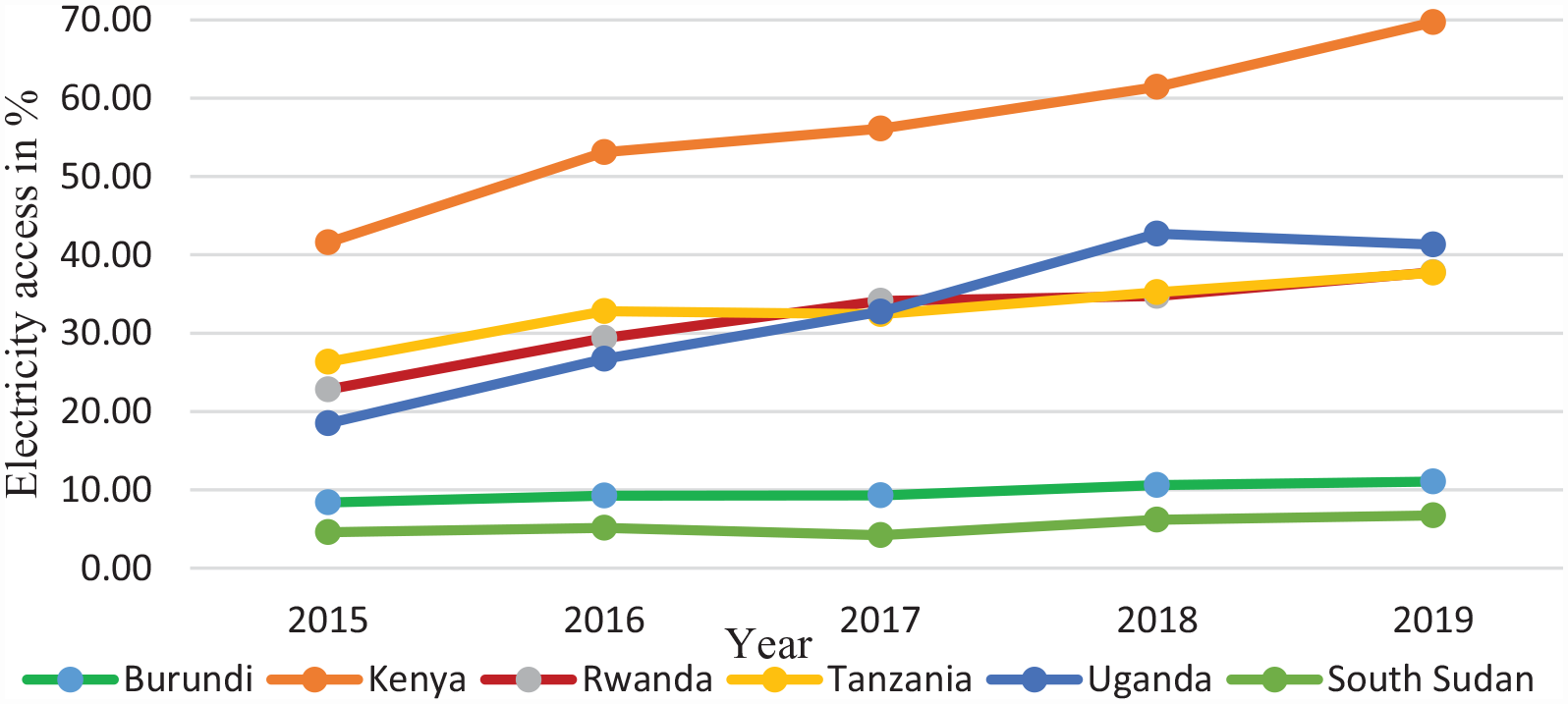
Electricity access in six EAC countries (2015–2019).
Figure 2 illustrates the ICT in EAC from 2015 to 2019. South Sudan appears to be the one with the lowest ICT percentage in the EAC region, while Kenya has the highest level of ICT among other EAC countries.
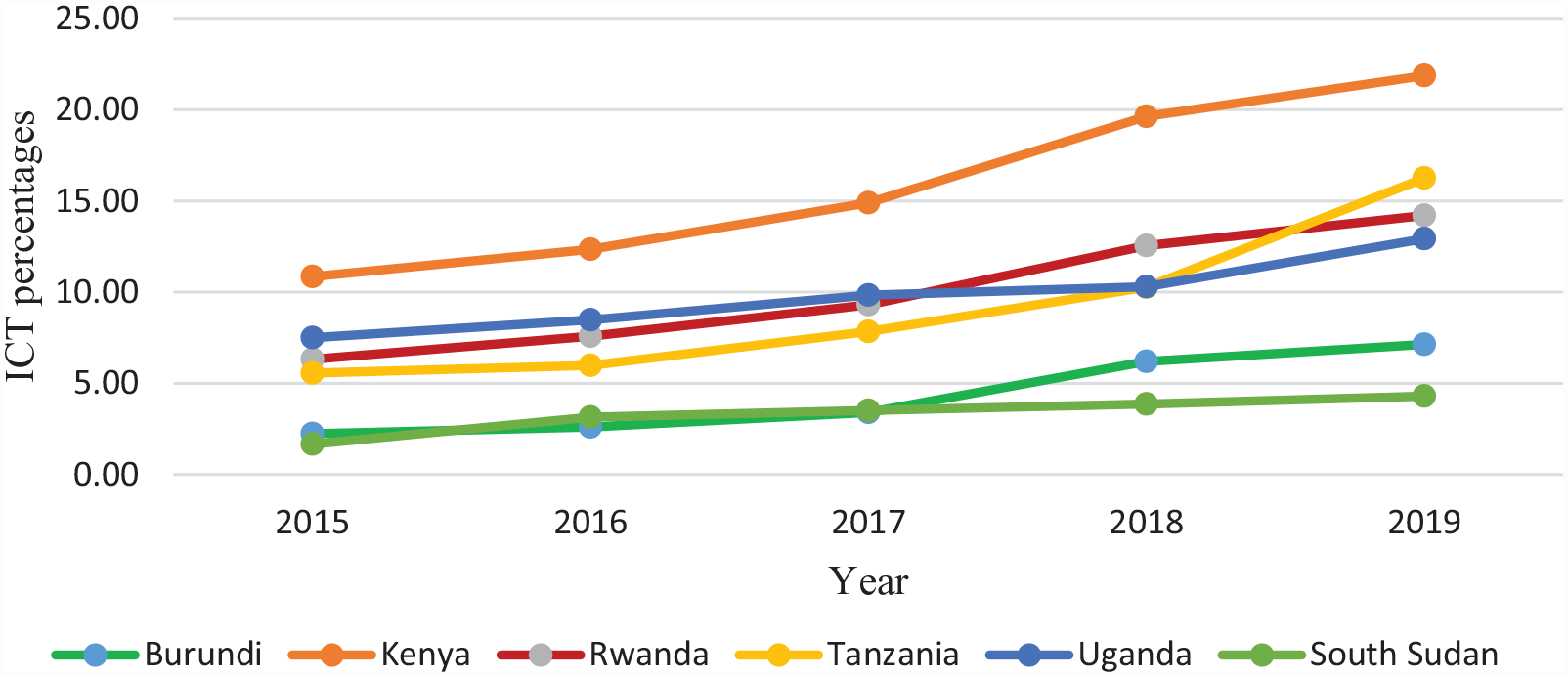
ICT in EAC countries (2015–2019).
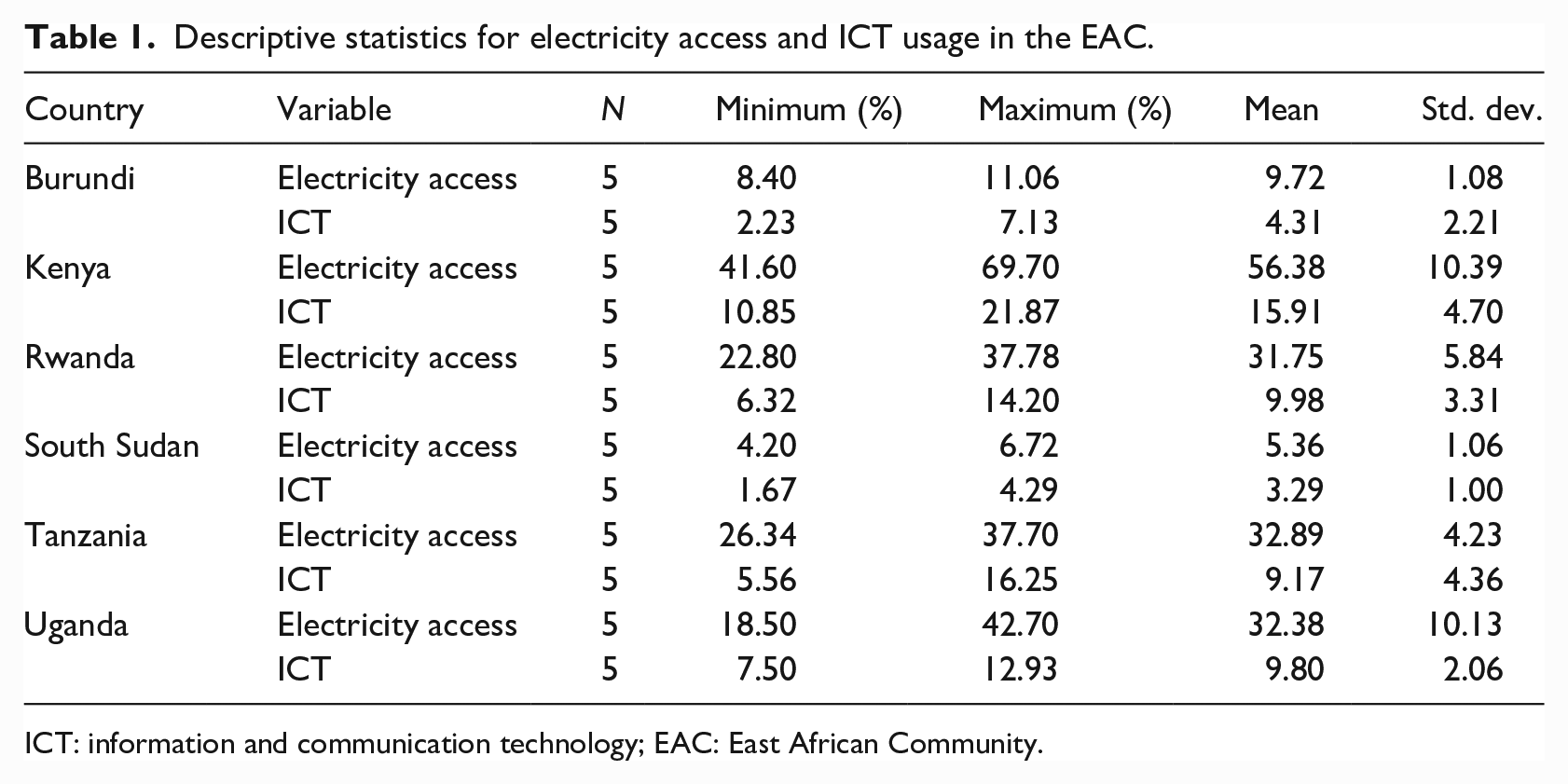
Table 1 summarizes the descriptive statistics for the study’s variables, and we have five observations for each variable of every country. As shown in Table 1, the EAC countries’ access to electricity varies significantly and ranges from 8.40% to 11.06%, 41.60% to 69.70%, 22.80% to 37.78%, 4.20% to 6.72%, 26.34% to 37.70%, and 18.50% to 42.70% for Burundi, Kenya, Rwanda, South Sudan, Tanzania, and Uganda respectively. The mean access to electricity that is required to boost ICT is 9.72%, 56.38%, 31.75%, 5.36%, 32.89%, and 32.38% in Burundi, Kenya, Rwanda, South Sudan, Tanzania, and Uganda respectively. From Table 1, the standard deviation is 1.08, 10.39, 5.84, 1.06, 4.23, and 10.13 for Burundi, Kenya, Rwanda, South Sudan, Tanzania, and Uganda respectively. South Sudan is a country with low access to electricity compared with other EAC countries. The ICT usage in EAC countries increased from 2.23% to 7.13%, 10.85% to 21.87%, 6.32% to 14.20%, 1.67% to 4.29%, 5.56% to 16.25%, and 7.50% to 12.93% for Burundi, Kenya, Rwanda, South Sudan, Tanzania, and Uganda respectively. According to gathered ICT usage data, Kenya has the highest usage of 21.87%, while South Sudan has the lowest ICT usage at 4.29%.
Descriptive statistics for electricity access and ICT usage in the EAC.
ICT: information and communication technology; EAC: East African Community.
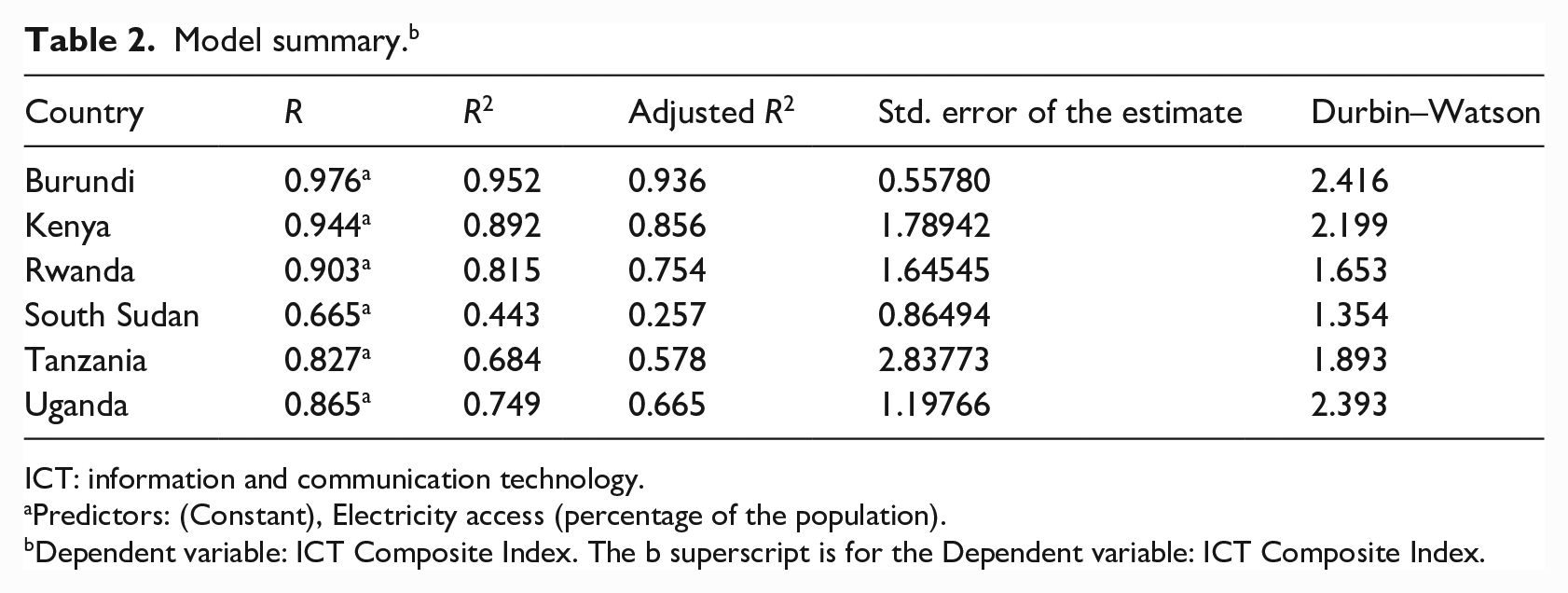
The linearity and homoscedasticity assumptions were met when plotting the data. Standardized residual results reveal that there are no outliers as there are no data points below (− 3) and above (+ 3), (Table 6). Table 2 indicates that the observations for Burundi, Rwanda, Kenya, Tanzania, and Uganda met the independence assumption by the Durbin–Watson statistics as their values are 2.416, 1.653, 2.199, 1.893, and 2.393 respectively. This implies that the residuals are not linearly auto-correlated. As for standard values according to Marshall and Boggis (2016), the Durbin–Watson value must be
Model summary.b
ICT: information and communication technology.
Predictors: (Constant), Electricity access (percentage of the population).
Dependent variable: ICT Composite Index. The b superscript is for the Dependent variable: ICT Composite Index.
Table 2 provides the R and R2 values. The simple correlations among electricity access and ICT usage are represented by R-values in the “R” column and are 0.976, 0.903, 0.944, 0.665, 0.827, and 0.865 for Burundi, Rwanda, Kenya, South Sudan, Tanzania, and Uganda, respectively. The correlations presented in Table 1 indicate a high positive correlation. The lowest correlation is 0.665, which is greater than 0.3. However, we still need to check if these correlation values are statistically significant (Table 7). The R2 values (R Square column) indicate that 95.2%, 89.2%, 81.5%, 68.4%, and 74.9% of the total variation in the ICT usage can be explained by the electricity access in Burundi, Kenya, Rwanda, Tanzania, and Uganda respectively. These R2 values indicate how well our linear regression model fits the data. Although according to Montgomery et al. (2012), even if we may have a larger R2, it does not always imply that our regression model will be an accurate predictor. Therefore, further tests are required.
Table 3 represents the results of the uniformity tests for all six countries’ analyzed data. The results reveal that both the Kolmogorov–Smirnov and Shapiro–Wilk statistics are not statistically significant for both variables
Normality tests.
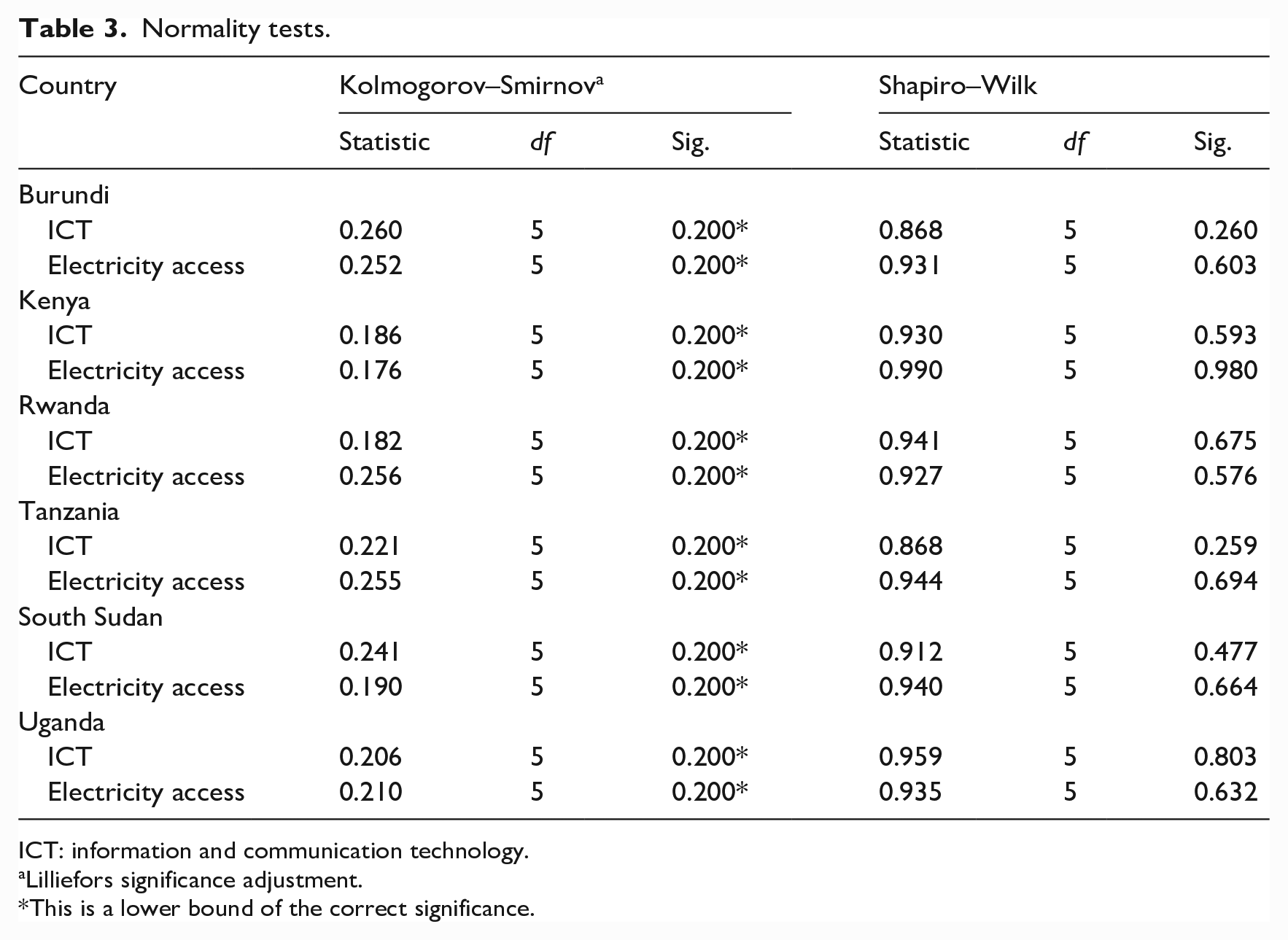
ICT: information and communication technology.
Lilliefors significance adjustment.
This is a lower bound of the correct significance.
The results in Table 4 indicate a strong beneficial interrelationship between electricity access and ICT usage. However, the correlations are statistically significant for Burundi, Kenya, and Rwanda. Also, the correlation between electricity access and ICT usage in South Sudan, Tanzania, and Uganda is not statistically significant. The results in Table 4 partially support the hypothesis that electricity access has a strong positive correlation with ICT usage. The hypothesis is supported only by Burundi, Kenya, and Rwanda.
Correlations between electricity access and ICT usage in the EAC.
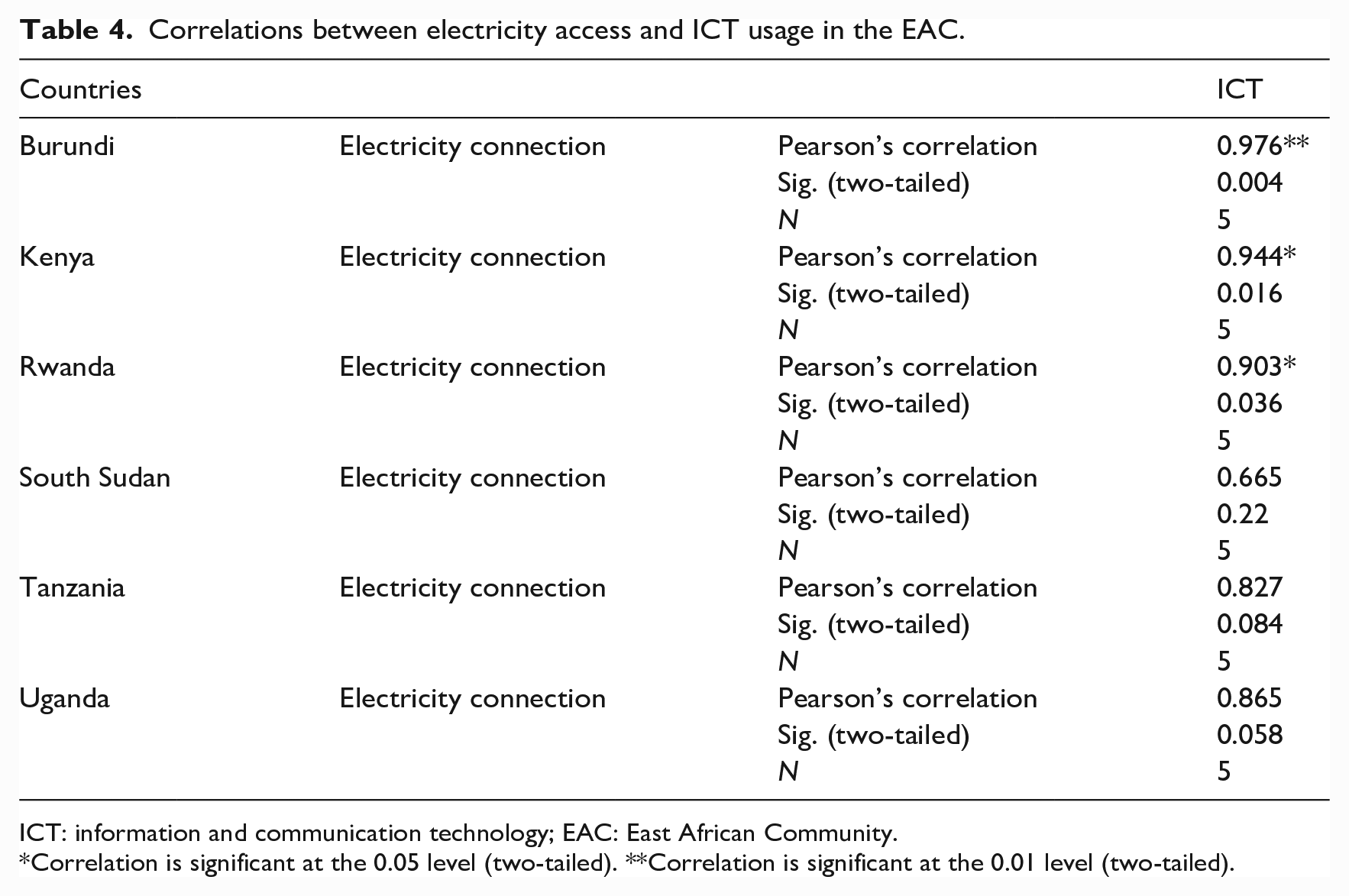
ICT: information and communication technology; EAC: East African Community.
Correlation is significant at the 0.05 level (two-tailed). **Correlation is significant at the 0.01 level (two-tailed).
Table 5 presents the analysis of variance results, which indicate that the model predicts ICT usage significantly well for the first three EAC nations (i.e. Burundi, Rwanda, and Kenya). The model is statistically significant with
Analysis of variance.a
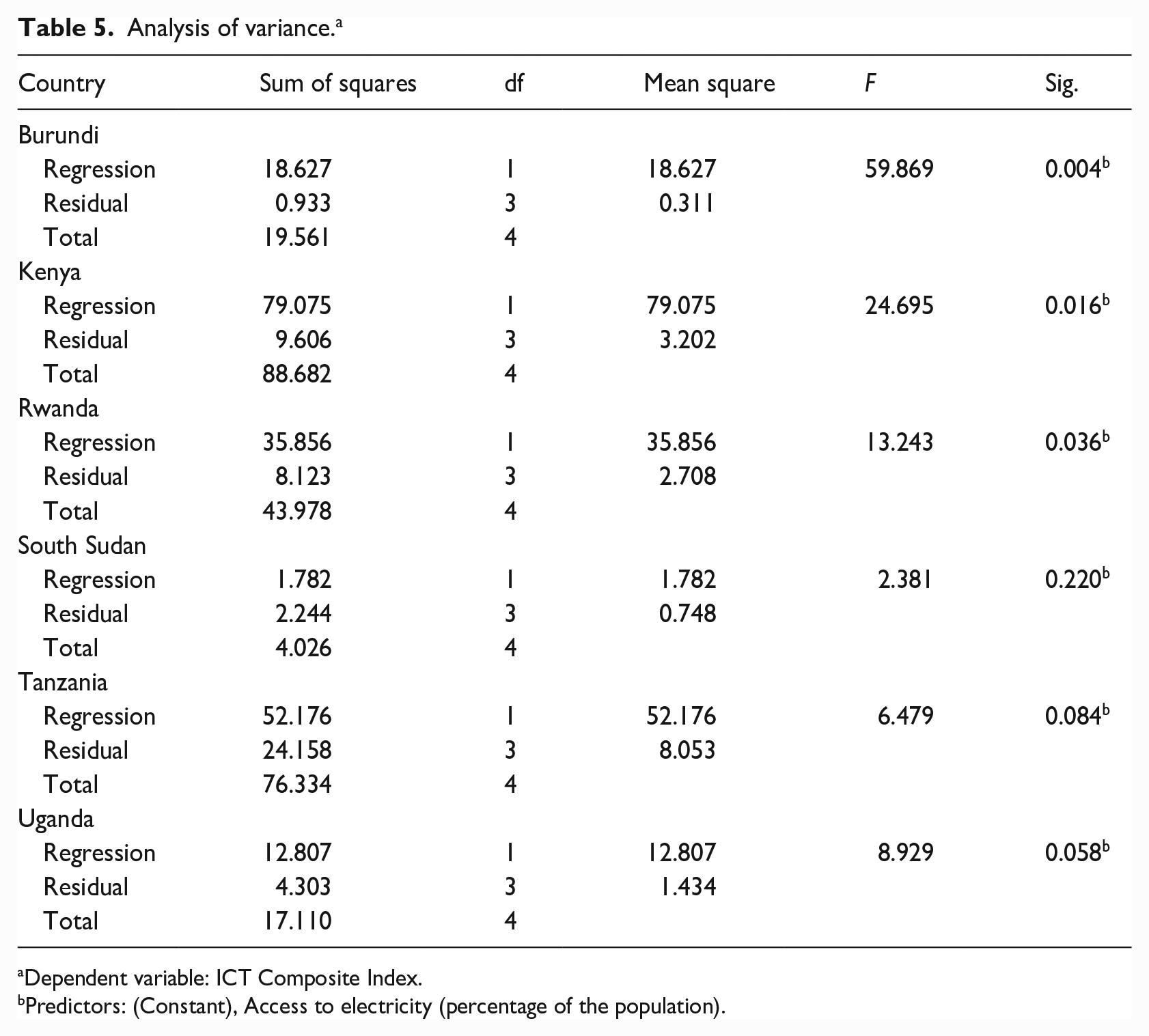
Dependent variable: ICT Composite Index.
Predictors: (Constant), Access to electricity (percentage of the population).
Table 6 has the necessary information for detecting outliers. The unstandardized residuals, standardized residuals, and standardized predicted values have a mean of 0. When observing the values for countries that passed other assumptions (i.e. Burundi, Kenya, and Rwanda), we can see that standardized residuals’ minimum and maximum values are between (− 3) and (+3) for Burundi, Kenya, and Rwanda.
Residuals statistics. a
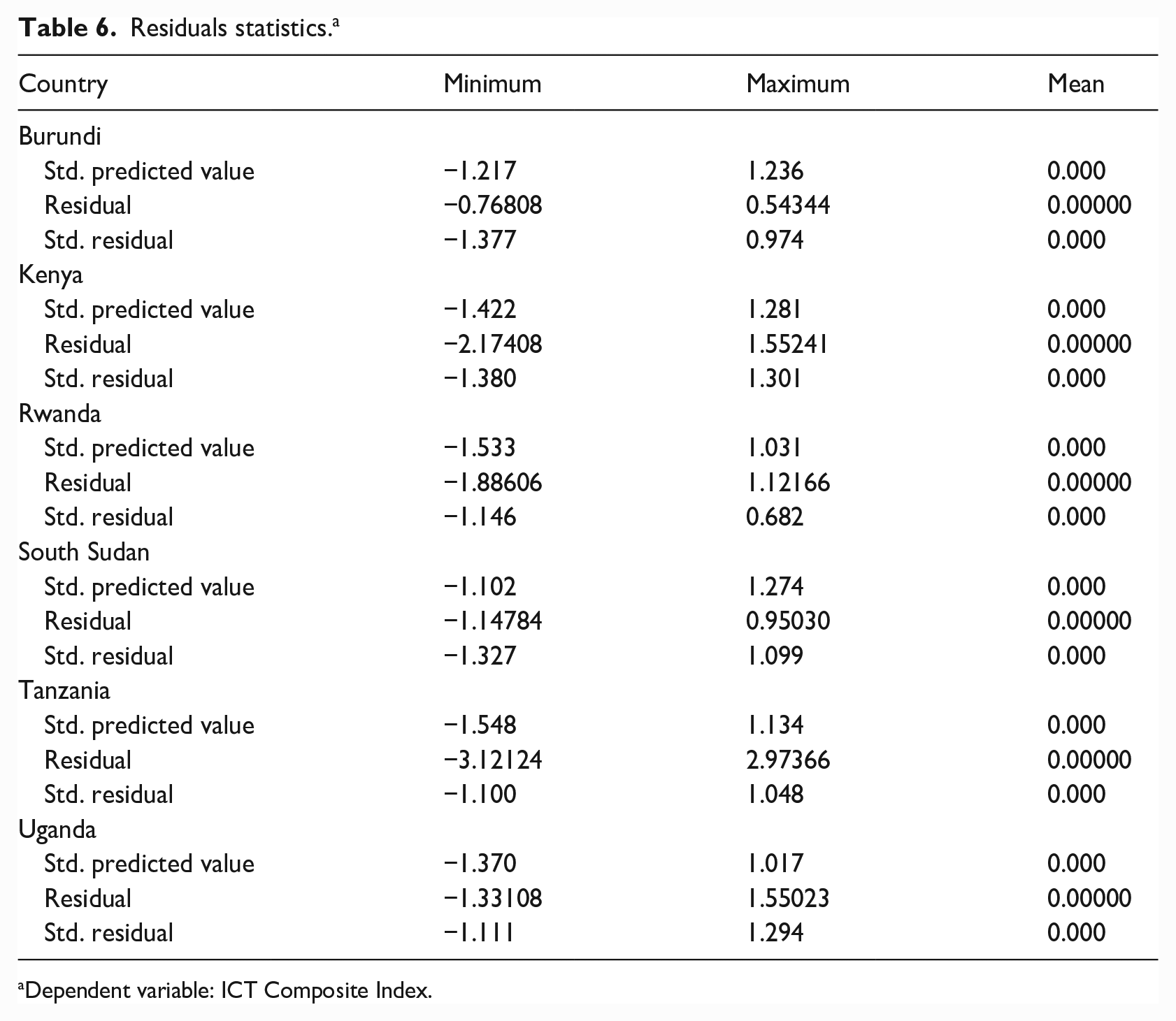
Dependent variable: ICT Composite Index.
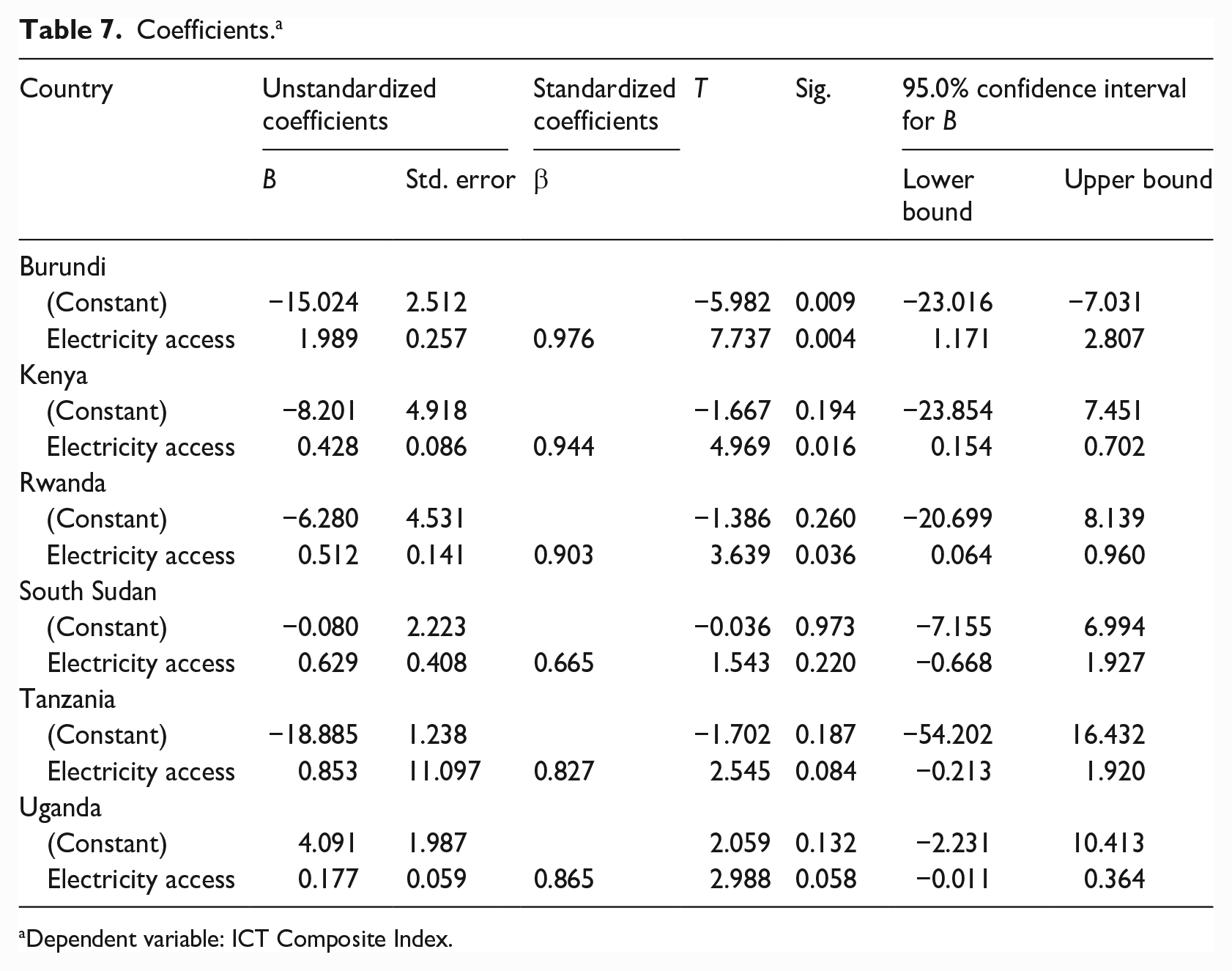
Table 7 provides the needed inputs to predict ICT from electricity access and evaluate whether electricity access has a statistically significant impact on the model. Furthermore, the B values can be used to build the regression equations. The t-test for electricity access is 7.737, 4.969, and 3.639, and is statistically significant for Burundi, Kenya, and Rwanda respectively. That means that the regression coefficients for electricity access in these three countries are significantly different from 0 (Burundi, Kenya, and Rwanda). According to the results in Table 7, we reject the null hypothesis for Burundi, Kenya, and Rwanda and accept the alternative hypothesis that we can predict ICT impact by knowing the percentage of the population who have access to electricity in each of these three countries.
Coefficients. a
Dependent variable: ICT Composite Index.
The coefficient for electricity access in Burundi is 1.989. That means for a unit rise in the percentage of the population who access electricity; we would expect a 1.989% increase in ICT usage. Second, the unstandardized B coefficient for electricity access in Kenya is 0.428 and is statistically significant due to the
However, the Sig. values in Table 7 for South Sudan, Tanzania, and Uganda are 0.220, 0.084, and 0.058, respectively. They are all greater than 0.05 for a 95% confidence interval in this research. Therefore, the null hypothesis is not rejected for South Sudan, Tanzania, and Uganda, which means that there is no significant change in ICT usage because of the electricity access change. The increase in ICT usage in these three EAC countries may depend on other factors that were not investigated in this study. In addition, the constants of the model for Kenya and Rwanda are not statistically significant as their p-values are greater than 0.05 and this implies that those constants are not statistically significantly different from 0.
Conclusion
The research indicates that substantial and important links exist between electricity access and ICT usage in EAC countries. Also, strong linkages exist because a higher percentage of ICT usage belonged to the countries with the highest access to electricity. Furthermore, ICT usage percentage changes depended on one-unit change in the percentage of the population who access electricity in each EAC country. Specifically, the relationship between electricity access and ICT usage (HA1) was checked and found to be partially accepted using Pearson’s linear correlation coefficient (Table 4).
In addition, the results show that substantial statistically significant positive interrelationships exist between electricity access and ICT usage in Burundi, Kenya, and Rwanda. Therefore, HA2 was partially accepted because there was no correlation between electricity access and ICT usage in South Sudan, Tanzania, and Uganda. The strong statistically significant positive correlation existing between electricity access and ICT usage was supported in the three EAC countries and confirmed earlier findings (Acheampong et al., 2021; Amaluddin, 2020; Houngbonon et al., 2021). Furthermore, the ICT usage percentage in Burundi, Kenya, and Rwanda was proven to increase when the percentage of the population who access electricity increased.
We studied the influence of electricity access on ICT usage by estimating the slope of the regression line between the two variables of interest (HA4). As an outcome of the proven correlation between electricity connection and ICT acceptance in Burundi, Kenya, and Rwanda, we find that the ICT usage in these three countries can be predicted based on the percentage of people who have access to electricity. We have theorized that there is a statistically robust positive association between electricity connection and ICT usage in the EAC (i.e. Burundi, Rwanda, and Kenya).
However, the effect of electricity access in the other remaining EAC nations (i.e. South Sudan, Uganda, and Tanzania) cannot be denied, but there might be other factors that could strongly predict the ICT usage in those countries. Figures 1 and 2 also illustrate that Kenya is the only country with both the highest electricity access and the highest ICT acceptance, while South Sudan has the lowest level of electricity access and the lowest ICT usage. Therefore, we disallow the no difference assumption and affirm the alternative proposition HA3 (a country with high electricity access will also be the one with a high percentage of ICT usage).
Policymakers can adopt the outcomes of this study by increasing ICT use in any country by putting much effort into the energy sector and improving the access to electricity, which will, in turn, increase ICT usage in those countries. Also, some of the policies implemented in Kenya that include tax incentives and exemptions that reduce the electricity cost and make electricity more affordable which in turn increases electricity access, could be adopted by other countries to raise their ICT usage rates.
Future research could consider the impact of electricity access on ICT usage by taking care of what type of electricity access is available and for how many years it could last. Also, electricity access data should specify whether it is an on-grid connection or an off-grid connection that was considered in assessing the impact of electricity access on ICT usage in the future.
Theoretical and policy implications
This research is the first that empirically investigates the interrelationship between electricity connection and ICT usage in EAC countries. Therefore, it contributes to the existing literature about access to electricity and ICT at large. In addition, this study’s findings have substantial practical implications for EAC countries and other countries in general.
Kenya as a member of EAC has had rapid electrification over the last decade and it has benefited millions of people. Some of the policies implemented in Kenya include tax incentives and exemptions that reduce the electricity cost and can make electricity more affordable which in turn increases electricity access. Moreover, it has been previously established that electricity access costs are a significant barrier to ICT integration (Salam et al., 2017). Therefore, Kenya can serve as a model for other EAC countries looking to expand their electrification systems and coverage. Conversely, modern power access remains a major issue in Rwanda. However, there is a promise of improvement as time progresses because of the enactment of the Electricity Law that governs the activities of producing, transmitting, distributing, and trading electric power both within and outside the country (Nalule, 2016). As the study findings reveal, an increase in electricity access in Rwanda positively affects ICT usage.
Previous studies pointed out the low level of access to electricity and its impacts on other sectors, which hinder the growth of any nation. Therefore, previous theories have been affirmed by the findings of this research where our results reveal that as electricity access increases, the ICT usage of Burundi, Kenya, and Rwanda will also increase. Therefore, the study results suggest measures that policy-making could consider for increasing the percentage of ICT acceptance levels in Burundi, Rwanda, and Kenya. Policymakers can adopt the outcomes of this investigation in increasing ICT use in a country by putting much effort into the energy sector for improving the access to electricity, which will in turn increase ICT usage in these countries. Therefore, we strongly suggest that the energy laws that aim and strive to increase electricity access must be adapted in the EAC countries.
Limitations and future research
Electricity is extremely important for the use of ICT worldwide. The goal of this research is to analytically identify the influence of electricity access in driving ICT using time series data from six EAC countries. The authors started by assessing the electricity access and ICT percentages in the EAC region and then moved on to assess the influence of electricity connection on ICT usage through a SLR analysis. The regression analysis indicates a statistically robust beneficial association between electricity connection and ICT acceptance in Burundi, Kenya, and Rwanda. Therefore, we moved forward by predicting how much the ICT acceptance will be increased if the percentage of the population who access electricity increases by one unit.
However, this study encounters some limitations, which lead to future research suggestions. First, the data of South Sudan, Tanzania, and Uganda do not pass all assumptions for a SLR analysis. Therefore, we cannot predict ICT usage from electricity access in these three countries. Future studies can expand the model, examine other variables, and check their impact on ICT usage in these countries. The ICT composite index data used in this study are the weight of mobile phone subscriptions and the Internet. Therefore, it will be much better to investigate the relationship between electricity access and ICT usage by considering literacy level as the mediator in this relationship. Second, this study uses data from EAC countries. Future studies can investigate this relationship in other African countries and then compare the results about the effect of electricity access on ICT usage.
Although access to electricity continues to increase in the EAC region, the percentage of the population connected to the national grid is still low. In addition, the technology, which is used in solar home systems (SHS), has limited time usage. So, it will be much better for future researchers to study the impact of electricity access on ICT usage by taking care of what type of electricity access is available and for how many years it can last. For this research, electricity access data did not specify whether it is an on-grid connection or an off-grid connection. Finally, the authors also encountered a challenge in finding electricity access and ICT usage data for many years for all six EAC countries. Therefore, we suggest that future researchers can study the impact of electricity access on ICT using primary data.
Footnotes
Declaration of conflicting interests
The author(s) declared no potential conflicts of interest with respect to the research, authorship, and/or publication of this article.
Funding
The author(s) disclosed receipt of the following financial support for the research, authorship, and/or publication of this article: The authors are grateful to Hebei Social Science Foundation’s major project “Hebei Province Regional Innovation-Driven Development Mechanism Construction in the New Era” (HB19ZD03), the Natural Science Foundation of Hebei Province (No. G2021202001), and Hebei Provincial Department of Education Humanities and Social Science Research Major Project “Research on Hebei Province’s High-quality Development Mechanism Leaded by Innovative Ecosystem Development” (ZD202004).
