






Abstract
Alternative and often disruptive urban processes in the Global South, such as container urbanism, are gradually pushing urban planning institutions towards the margins of urban governance and transformation. Understanding how urban institutional actors perceive and respond to these emerging processes is thus crucial for unravelling the rationalities that actively transform the spatial configuration of cities. Drawing on the concept of spatial rationalities, this article examines the institutional dynamics of the unprecedented spatial diffusion of container urbanism in Accra, Ghana. The article makes two contributions to the literature. First, it shows that the continuation of a neoliberal urban governance agenda has shifted the institutional perception of container urbanism as a form of aberration. Second, it sheds light on how the actions by institutional actors to recuperate spatial order are often eclipsed by political interferences, creating an illusion of control in the management of urban space. Consequently, the article calls for a reassessment of impractical regulatory mechanisms that target container users and other informal modes of appropriating urban space with far-reaching consequences for urban citizenship and the right to the city.
Introduction
Container urbanism has been growing in cities across the world, with increasing attempts to link it to sustainable urban transformation. However, the relationship between containerisation and sustainability is not straightforward and requires a critical examination. Some studies have highlighted the environmental and health risks of using standard shipping containers as building materials, due to their chemical compositions and coatings (Pagnotta, 2011). On the contrary, some advocates of container architecture have praised its energy efficiency, durability, recyclability and affordability, especially for low-income housing (Hu and Cai, 2017; Kristiansen et al., 2021; Satola et al., 2020). Moreover, container urbanism can be seen as part of a broader movement that challenges the conventional modes and scales of architectural production, by introducing more flexibility, responsiveness and adaptability to urban spaces (Schwarzer, 2013). Therefore, container urbanism is not only a technical or material issue but also a social and cultural one, which raises questions about the rights to the city and the role of architecture in shaping urban futures (Klose, 2015; Ling, 2021).
Container urbanism has been analysed in the Global North literature as a potential eco-friendly alternative to conventional construction materials (Shen et al., 2019). In the Global South, this topic has often intersected with the theme of informality that characterises the urban development of many cities (Acuto et al., 2019; AlSayyad and Roy, 2004). Urban informality has been widely studied as the main ‘mode of urbanisation’ in developing countries. The focus has been mainly on the practices of informality (in both formal and informal parts of the cities), their meanings, their dynamics and resilience (Lindell et al., 2019; McFarlane and Waibel, 2012; Roy, 2005; Steel et al., 2014). Less attention has been devoted to the institutional response to alternative and disruptive urban processes such as container urbanism and, in particular, to the institutional actors who have to implement and manage urban development processes at the local level (Kreibich, 2012). This study aims to explore this latter dimension of analysis, focusing on the perceptions of and responses to alternative urbanism developed by institutional actors who operate in Accra, Ghana.
The article is organised as follows: sections ‘The container urbanism’ and ‘Logics of order: spatial rationalities in urban governance’ define the concept of container urbanism and identify the analytical framework for the empirical research. Section ‘Spatial planning and urban policy transformation in Ghana’ provides background information on spatial planning and urban policies in Ghana, contextualising the case study. Section ‘Method’ presents the empirical study and the method used to collect and analyse collected data. Section ‘Findings and discussion’ shows and discusses the main empirical findings. Section ‘Conclusion’ concludes the article with some implications and recommendations for future research.
The container urbanism
The role of the container in the global political economy and critical urban studies has been well documented (Klose, 2015; Ling, 2021; Madanipour, 2017; Parker, 2013; Sorkin, 2001). According to Schwarzer (2013), the container has evolved from an abstract idea drawn on paper to a heterotopic paradigm that has positioned the city as an aggregate work in progress whose dimensions are varied. In many cases, the rise of container urbanism has been interpreted as a symptom of the traditional housing market’s problems, or ‘a measure of a city in crisis . . . in the shadow of globalisation’ (Klose, 2015: 291). In this scenario, the proposed shipping container micro-dwelling for the Cairo Necropolis (Block, 2019) reinforced the heterotopic framework of container urbanism exemplified by Schwarzer (2013). Sorkin (2001) further drew attention to the similarity between the spatial organisation of the container and social control. Ling (2021) showed the relations between container housing, migrant workers and the role of both the state and local authorities that regulate market operations to maximise capital accumulation in Shanghai. Klose (2015), on the contrary, described how the container operationalises the state of exception.
Container architecture has gained popularity in the Global North as an eco-friendly alternative to conventional construction materials (Bertolini and Guardigli, 2020; Blanford and Bender, 2020; Madanipour, 2017; Shen et al., 2019). However, in the Global South, such modes of urbanisation have often emerged as attempts by marginalised groups to assert their right to the city. Recent studies have analysed the increase of informal settlements – which may include container housing – and its implications for inclusiveness, local sustainability, sustainable development and urban livability (Gilbert, 2007; Gouverneur, 2015; Okyere and Kita, 2015). Informal settlements and urbanisation have been especially prevalent in Africa, where more than 50% of the urban population lives in informal conditions and relies on informal services (UN-HABITAT, 2021). Studies in urban planning have linked the growth of urban informality in many African cities to the processes of liberalisation and financialisation, as well as the implementation of structural adjustment programmes (Afenah, 2009; Watson, 2008). In Ghana, the housing deficit was estimated to be at 2 million units in 2020 with a minimum of 200,000 units required annually (Appeaning Addo and Mba, 2022). Moreover, a report by the Inclusive Business Action Network (IBAN) in 2015 revealed that in 2015, only 1% of Ghanaian households could afford the cheapest dwelling (approximately US$25,000) sold by private developers (Appeaning Addo and Mba, 2022; Oppong et al., 2015). As a result, some scholars and local authorities believe that repurposing shipping containers for affordable housing is more cost-effective (Adenaike, 2018; Botes, 2013; Gabriel, 2021; GhanaWeb, 2018), reinforcing Ward’s (1976) treatise that ‘if you were homeless, you would regard one (prefabrication) as heaven; if you were a housing manager you would see them as a confession of failure’ (p. 45).
Container structures have become the most transformative feature of Ghana’s urban landscape. According to the 2021 Population and Housing Census, metal containers, kiosks and wooden structures accounted for 20% of the 10.7 million structures in Ghana (Ghana Statistical Service, 2021). Furthermore, improvised housing (kiosks/containers) are common in Greater Accra and Ashanti metropolitan areas (Bank of Ghana, 2007). Oppong et al. (2015), however, noted that these structures lack standardisation, ‘sustainability and greenness’ and conformity to existing planning regulations.
Logics of order: spatial rationalities in urban governance
The analytics of governmentality, defined as the ‘mentalities and rationalities associated with the practices of governing’ (Hunt, 1996: 167–168) – a distinctly Foucauldian construct – has become increasingly widespread in contemporary urban theory production. More plainly, it is within the analytics of governmentality that the role of space became anchored in the analysis of the ‘art of government’ (Certomà, 2015; Elden, 2007; Ettlinger, 2011; Falt, 2016; Huxley, 2006, 2007, 2008; Rose, 1996; Rose-Redwood, 2006). Huxley (2007) emphasised how space is imprinted in the concept of governmentality through ‘disciplining, fostering, managing and monitoring the conducts of individuals and the qualities of populations’ (p. 185). Exploring the relationship between architecture and regulation in urban areas, Imrie and Street (2011) showed how the expansion of the regulatory capacities of the state normalised ‘rules about conduct in public spaces, the emergence of privatised redevelopment sites that restrict, through formal regulations, rights of access, and an increase in surveillance as part of policy to regularise and normalise citizens’ behaviour’ (p. 4). Citing Foucault (1979, 2004), Imrie and Street (2011) suggested that cities serve as sites of regulation and securitisation characterised by ‘places subject to particular forms of rule relating to the spatial juxtaposition of buildings, roads, and related infrastructure, as well as specifications of what their performance ought to be’ (p. 26).
Fundamentally, three general rationalities – dispositional, generative and vitalist – form the basis of Huxley’s codification of space within the framework of governmentality (Huxley, 2006). Dispositional spatial rationality is a regulatory mechanism particularly directed towards activities of the population that threaten the harmony and order of the city and society at large. More specifically, dispositional spatial rationality aims to create governable spaces by purging the scourge of delinquency and debauchery. Generative spatial rationality, on the contrary, activates ‘medico-biological’ exigencies between the built environment and the population to essentialise ‘environments that would generate self-perpetuating moral regimes of health, productive activity and propriety’ (Huxley, 2006: 778). Finally, vitalist spatial rationality seeks to consolidate the bio-social and non-material processes of urban space under the rubrics of ‘mind, will, and spirit’ (Huxley, 2006: 782).
In general, spatial rationalities in urban governance in the Global South often took the form of misguided attempts to create a utopian vision of a so-called ‘proper community’, characterised by ‘acceptable housing’ devoid of informal structures. These rationalities are promoted by urban planning authorities that are often eager to formalise informal, irregular, or illegal settlements (Watson, 2003: 396). It is, therefore, not surprising that most planners in African cities make assertions about a ‘better life for all in bricks and mortar’ (Myers, 2011a: 96) in an intense campaign to formalise informality. Studying planning practices in South Africa, Watson (2003: 401) suggested that the notion of ‘proper communities’ eschewed by urban managers is in constant conflict with ‘the rationality which informs the strategies and tactics of those who are attempting to survive, materially and politically, in the harsh environment of Africa’s cities’. Hou (2020) recently argued that ‘at a fundamental level, guerrilla urbanism [such as container urbanism] represents disruptions and challenges to the rationalist, technocratic, and post-political paradigm of planning and design that tends to dominate professional discourses and practices’ (p. 124).
The institutionalisation of spatial order has long dominated the urban development and policy agenda also in Ghana (Falt, 2016; Spire and Choplin, 2018; Steel et al., 2014). The fundamental crucible of spatial order is the illegalisation of unauthorised structures, such as containers and restrictions on petty trading in Accra (Spire and Choplin, 2018). In this scenario, the legitimisation of spatial order often normalised punitive planning regulations such as forced evictions and dispossession. Following Falt (2016), this article draws upon Huxley’s theorisation of spatial rationalities to unravel the dispositif of container urbanism in Accra.
Spatial planning and urban policy transformation in Ghana
Spatial planning in Ghana falls within the lenses of colonialism, nationalism and globalism (Grant and Nijman, 2004). During the pre-independence era, spatial planning in Ghana was strongly influenced by the British (Acheampong and Ibrahim, 2016; Fuseini and Kemp, 2015; Wood, 1970). The first spatial planning framework in Ghana was the Towns Ordinance of 1892. Decades later, Gordon Guggisberg, the colonial governor of the Gold Coast (now Ghana), commissioned a more comprehensive National Development Plan. The Guggisberg Plan (1920–1930) prioritised infrastructural and institutional development (Fuseini and Kemp, 2015). The plan was bold and revolutionary during that time, despite its Eurocentric characteristic (Adarkwa, 2012).
Moreover, it was crucial for the subsequent adoption of the Town and Country Planning Ordinance of 1945, also known as CAP84 (Fuseini and Kemp, 2015). Described as a ‘comprehensive spatial planning framework’ (Fuseini and Kemp, 2015: 312), CAP84 was commissioned in the aftermath of the Second World War to align British Planning Frameworks (the English Act of 1932) with that of its colonies (Wood, 1970). An outcome of the 1945 plan was the Town and Country Planning Department supervised by Town and Country Planning (TCP) Boards. Researchers, most notably Mabogunje (1990), argued that the establishment of planning departments was a ‘containment’ strategy by colonial administrations to curb the surge of nationalism in the colonies after the Second World War.
In response to rapid urban population growth and low rental affordability, the government enacted the Defence (Rent Restriction) Regulations of 1942 to criminalise exploitation by landlords (Malpezzi et al., 1990). The regulation of the rental market in Ghana continued through rent control measures such as the 1952 Rent Control Ordinance, the 1960 Rent Control (Amendment) Act, the Rent Act (1963), AFRCD 5 (1979) and the Rent Control Law (1986) (Malpezzi et al., 1990). According to Acheampong (2019), although stakeholders’ participation was encouraged under the 1945 ordinance, the actual implementation of participatory instruments was reserved for the élites.
Housing deficits still dominate the urban landscape in Ghana decades after independence. Poor government policies are evident through low investment in public housing, high cost and accessibility to land, high cost of building materials, limited access to credit, lack of monitoring and evaluation, outdated buildings codes coupled with rapid urbanisation have created a housing deficit in many urban centres (GoG/MWRWH, 2015). Homeownership has also declined, with approximately 60% of all urban households occupying a single room (UN-HABITAT, 2011).
Kwame Nkrumah’s 7-year National Physical Development Plan (NPDP) (1963–1970) dominated spatial planning practices during the independence era in Ghana. The plan seeks to promote development based on the socialist self-reliance approach (Grant and Nijman, 2004). A significant social policy objective of the 7-year plan was to control the growth of slums in the cities (Office of the Planning Commission, 1964). To address the housing deficit and the proliferation of informal settlements, the government established the State Housing Corporation (SHC) and the Tema Development Corporation (TDC) with the express purpose of developing housing for workers in urban centres (Adarkwa, 2012).
In general, the policy direction of the government during the post-independence era (specifically, from the 1950s to 1980) was state involvement in housing provision and rent control measures (Ghana Statistical Service, 2014). The government also earmarked funds for community members to construct houses and improve existing building conditions; it achieved this by establishing the Bank for Housing and Construction (BHC) and schemes such as the Roof Loan Scheme (Adarkwa, 2012; Ghana Statistical Service, 2014).
From the 1980s to the early 1990s spatial planning policies were strongly influenced by globalisation through the introduction and implementation of structural adjustment policies and a decentralisation programme. One of the preconditions of the structural adjustment policies was the liberalisation of the real estate market. Consequently, the state prioritised private sector participation in housing production (Ghana Statistical Service, 2014). According to Yankson and Bertrand (2012), trade liberalisation facilitated easy access to building and construction materials, contributing to the expansion of urban areas. Accordingly, private real estate developments emerged in urban areas such as Accra and Kumasi, mainly focused on the middle- and upper-class population (Obeng-Odoom, 2010b). Moreover, the establishment of a National Housing Policy and Action Plan (1987–1990) and the National Shelter Strategy (1993) to provide affordable housing and upgrade urban slums did not proceed to the implementation stage (Ghana Statistical Service, 2014).
Spatial planning practices in Ghana in recent years relate to the downward spiral of the professionalism of planning practices, on one hand, and the normalisation of alternative urban processes, on the other hand. In the era of self-organisation, urban planners have become transition managers of the built environment (Korah et al., 2017). Since returning to democratic governance in 1992, successive governments pursued short- and medium-term urban development policies such as the Ghana Poverty Reduction Strategy I (2003–2005), Growth and Poverty Reduction Strategy II (2006–2009), Land Use Planning and Management Project (LUPMP) (2007–2010) and the Ghana Shared Growth and Development Agenda (2010–2013). A crucial component of these policy strategies was to provide affordable housing and slum upgrading/urban regeneration (Ghana Statistical Service, 2014). The implementation of these policies was, however, limited. Consequently, the state established national urban policy frameworks, such as the National Urban Policy Framework (NUPF) (2012), the Draft National Housing Policy, 2013 (Government of Ghana, 2015) and the Land Use and Spatial Planning Act (Act 925, 2016) to ensure a comprehensive urban development strategy. A goal of the National Urban Policy Framework was to sanitise the chaos in urban development and governance in Ghana. The NUPF sought to promote a sustainable, spatially integrated and orderly development of urban settlements with adequate housing, infrastructure and services, efficient institutions, and a sound living and working environment for all people to support the rapid socio-economic development of Ghana.
In urban areas characterised, on one hand, by a pronounced deterioration of infrastructures, poor housing environment, rising demand for shopping and retail spaces and, on the other hand, by various difficulties in the implementation of urban planning programmes, the need for alternative modes of housing and using of urban spaces – such as the containerisation – has increased in recent years (Grant, 2009). Specifically, the conversion of the standard shipping container for construction, modular and transportable factories, pop-up shops and retail centres, and medical, temporal and emergency shelters accelerated. The results from the 2000 and 2010 population and housing census indicated that the proportion of containers (categorised under impoverished homes) in the Greater Accra region alone, the capital of Ghana, increased from 3.7% to 6.1% (Ghana Statistical Service, 2012).
Method
Our study is based on a case study approach (Yin, 2003) to investigate the spatial rationalities of container urbanism. In general, a case study defines the unit of analysis or the entity of the research and, for this case study, we use cities as the unit of analysis. The core study area was the city of Accra (Ghana). The rationale for selecting this city was based on various factors. First of all, Accra showed those complex dimensions highlighted by Myers (2011b: 104) describing African cities as urban spaces that are multifaceted and not loosely based on obvious factors such as neoliberalism, informalisation and governance structures. Accra is one of the fastest-growing cities in West Africa. The population of Accra grew 35 times larger between 1901 and 1970 (Bobo, 1974). Recent statistics indicate that Accra has a population of around 2 million people (Ghana Statistical Service, 2012; Grant, 2009). Moreover, according to Grant (2009):
Accra is a very different city from the typical African city conceptualised primarily in local and regional terms in the earlier nationalist era. This more internationally oriented city represents an incomprehensible city to government policymakers and others who fail to grasp the extent of the transformation, and who instead still situate Accra in national, national regional, and local terms. (p. 3)
The city of Accra thus seemed to have those elements to represent it as a good case study to unravel the dynamics of urbanisation planning and development, such as container urbanism (Figure 1). We employed a qualitative design, combining ethnographic observation, semi-structured interviews and documentary analysis. We thus collected different points of view using different techniques to reinforce and extend the statements emerging from the empirical research, following the principles of argumentation theory (Cardano, 2019; Mason, 2002). Overall, the fieldwork was conducted between August and October 2018 and from March to May 2019.
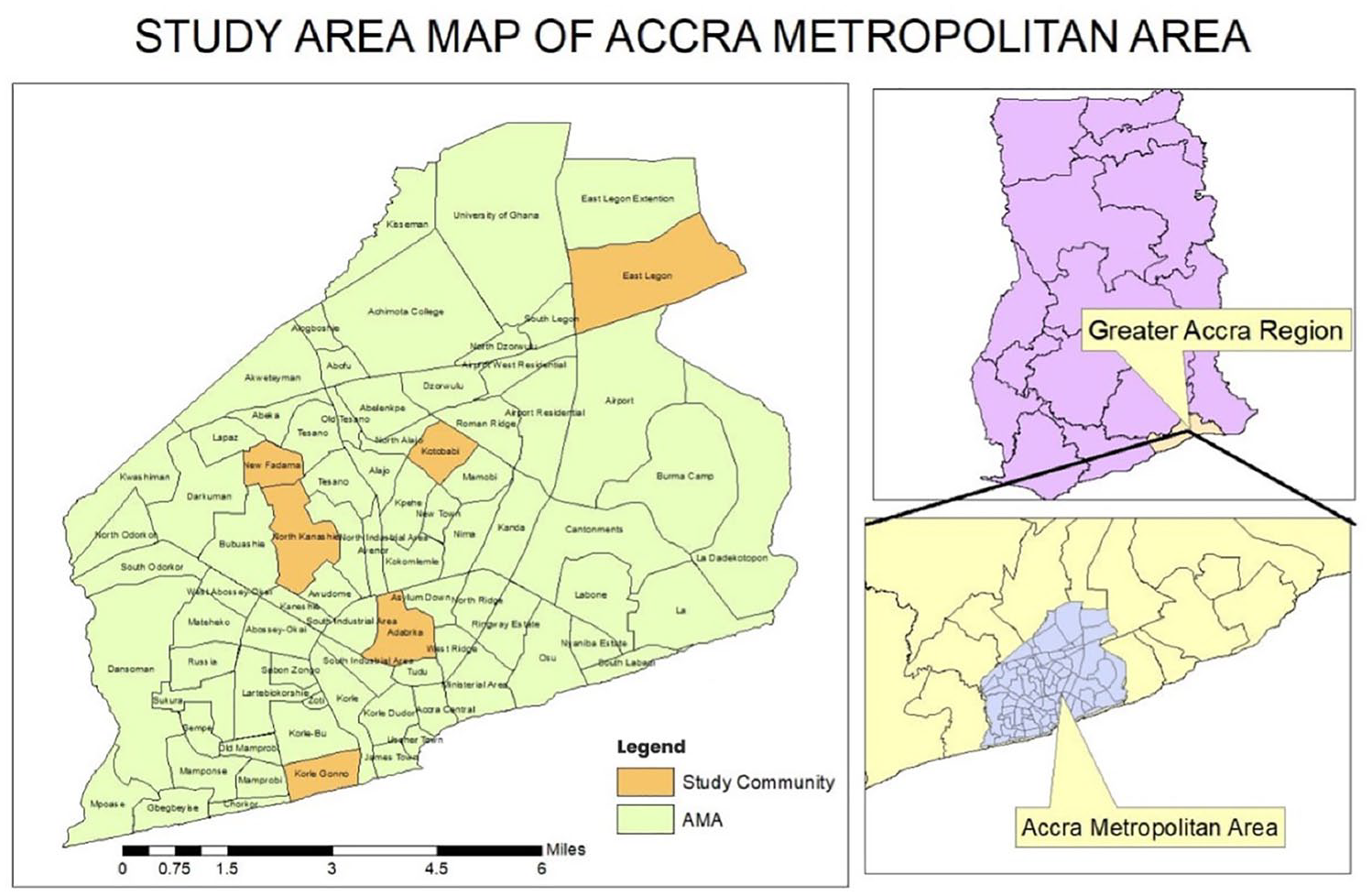
A map showing the studied areas.
The in-depth interviews involved 13 urban institutional actors, who operated in public urban development agencies at both the local and national levels. Specifically, we interviewed people who worked in the Ministry of Spatial Planning; the National Land Commission; the Ministry of Lands and Natural Resources; the Environmental Protection Agency; the National Development Planning Commission; the Ministry of Local Government; the Ministry of Transport; the Accra Metropolitan Assembly. On the contrary, the semi-structured interviews and ethnographic observations involved 20 container operators in five neighbourhoods in Accra, specifically Adabraka, Korle Gono, New Fadama, East Legon and North Kaneshie.
For the in-depth interviews, formal letters were purposively sent to ministries, departments and agencies explaining the research and requesting an opportunity to conduct an interview on urban informality and planning issues. An interview guide was attached to the letter to ensure the participants concerning the contents of the interviews and to establish a first contact with them (De Munck, 2009). In many cases, the interviews were rescheduled due to the multiple schedules of the interviewees.
Moreover, some of the interviewees were concerned about recording the session. Ghana’s heavily politicised terrain could be one cause for this. The fear that politicians or ‘party foot soldiers’ could acquire access to these recordings and misrepresent the contents for propaganda purposes was widespread. We thus decided not to use the tape recorder in those cases where the interviewee clearly showed that she or he was uncomfortable. Each interview session lasted about an hour on average.
We selected the container operators in each study neighbourhood based on purposive sampling. Trained assistants who had in-depth knowledge of the study communities administered the interviews. The research assistants had to meet the requirement of living in the neighbourhood for a certain period of time. In addition, an in-depth interview was held with representatives of People’s Dialogue on Human Settlements (PD), a civil society organisation in Ghana that works against forced evictions from informal settlements.
All the interviews were transcribed and codified to maintain the interviewees’ anonymity. For example, SUO stands for a senior urban official and is followed by the institution and the interview number. Similarly, MCO and FCO denote male and female container operators, followed by their corresponding residence and interview number. SCA is a senior community advocate for Peoples Dialogue. The collected data were thus systematised, and analysed by applying qualitative content analysis based on thematic coding (Scheirer, 2012). This basically involved generating initial codes through the raw data, identifying specific themes and interpreting the identified themes (as conceptual blocks). The following section discusses the interpretation of the main empirical results.
Findings and discussion
Container urbanism and the need for planning
The proliferation of container urbanism has unquestionably gained the attention of urban institutional actors responsible for spearheading Ghana’s urban development strategy. Specifically, the fieldwork shed light that the conflicting urban policy trajectories were often exemplified through the institutionalisation of a top–down and neoliberal urban planning approach. For instance, the central government has long perceived informal settlements – such as Old Fadama, within the Central Business District of Accra – as an obstacle to the neoliberal urban planning agenda (Afenah, 2010). In general, urban institutional actors conceptualised container urbanism based on its ‘momentary existence’ and, in the process, essentialising container structures as a form of aberration. Moreover, the interviews highlighted the need for spatial order. In particular, the urban institutional actors rationalised spatial order to hegemonise the neoliberal urban planning approach, as confirmed in the excerpt:
Most people are not aware of this, but the unregulated use and localisation of containers devalue the surrounding property as well as result in the under-utilisation of the land. (SUO.MLGRD.11)
Relatedly, another senior official at the Ministry of Land and Natural Resources stated:
Aside from the environmental effects and health issues, locating containers all over the place underutilises and undervalues the land. (SUO.MLNR.06)
Consequently, also in this fieldwork, the manifestation of spatial order seemed to have implications for good urban management and efficiency, as suggested in other case studies (Arefi, 2011: 54). However, within this scenario, the urban institutional actors admitted that rising inequality and poverty can develop the basis for the improvisation of containers. In the interviews, some institutional actors noted that the need to survive in the city is a strong predator of the proliferation of container urbanism and informality more broadly:
Containers are part of the landscape, not just on government land . . . It is a means of survival for the people . . . It is just a few places where we can control them [containers], but they are everywhere. People moved into containers because they were more secure. Without containers and the informal sector in general, the unemployment situation would have been disastrous. Even though we have the right to sack them from the area [government lands], we are not motivated to do that because it is their means of survival . . . And some of our markets are not well developed to accommodate everyone. (SUO.LC.07) I think they [containers] serve as a form of improvisation. They are a quick way of securing space in the urban environment. They also are a way of addressing the housing deficit in the city. Most of the containers can be easily removed and moved from one place to the other. Also, people place these containers along the road to attract people. There are some advantages since they are less expensive and can also serve as a temporal structure. (SUO.MLGRD.11)
In this way, the spread of different and improvised uses of containers in the urban spaces seemed to intertwine with the ongoing neoliberal urban governance approach, carrying ‘the inherent danger of setting in motion a path-dependent trajectory of inequality’ (Rogerson, 2017: 1191), which can become hard to alter in the long term.
The perceptions of politicians’ roles in spatial and urban planning
The case study showed that the growing politicisation of spatial and urban planning has relegated key urban institutions to passive actors in the unravelling of emerging forms of urbanisation, as highlighted in previous studies (Abdulai and Hickey, 2016; Gillespie, 2020). The interviewed urban institutional actors confirmed that politics interferes with urban planning decisions with different forms and forces. A senior spatial planner, for instance, expressed his frustration with the superficiality of regulatory frameworks, stating that:
Politics also plays a role in the containerisation of urban space. In certain cases, when district assemblies go and stop people from putting their containers in unauthorised areas, the politicians intervene and stop them from doing so since they see them as poor people who just want to make a living. Moreover, some of the district assemblies are not proactive regarding the regulation of these containers. Therefore, politics and negligence of the technical staff within district assemblies contribute to these problems. (SUO.LUSPA.13)
Arguing along similar lines, a senior officer at the Lands Commission stated that:
I think it is the failure of the government to solve this problem. I believe there should be more regulation. These containers are located indiscriminately, and they destroy the beauty of the urban space. (SUO.LC.08)
The urban institutional actors also mentioned that political interference in instances of demolition and eviction invariably undermined the enforcement of planning legislative instruments. This finding reinforced the perceptions about the dominance of politics in urban planning activities in Ghana (Cobbinah and Darkwah, 2017; Obeng-Odoom, 2010a). Moreover, this finding seemed to confirm Matamanda’s (2020) assertions about how politicians dismiss formal planning systems and normalise informal settlements, mainly to gain public support and sympathy. Nkrumah Agyabeng et al. (2023) also noted that slum dwellers possess policy influence by rejecting politicians who fail to meet their needs. Similarly, Chigwenya (2022) argued that despite repressive regulations, informal traders assert their right to the city through group mobilisations and exploiting political influence.
The fieldwork showed similar perceptions of the urban institutional actors concerning the prevalent attitude that the politicians opt for when they talk about the phenomena of urban informality. For instance, an officer of local administration explained that:
Our existing regulations do not make provisions for these developments [containers]. There are no clear-cut guidelines as far as I am concerned. What the law basically says is that every physical development must be regulated and the way this law defines physical development [. . . ] Even the tilling of land is considered a physical development so certainly putting up a container becomes a physical development [. . . ] I want to believe that the new regulation will make room for things such as containers. So once this law makes provisions for all physical developments, I believe the legislative instruments will make provisions for containers or kiosks or whatever. It is the prerogative of the assemblies to enact by-laws to regulate how these things happen in the urban environment. I know the assemblies have building by-laws that make provisions for such developments, but these are left for discretion as far as I am concerned. (SUO.AMA.01)
Concerning the same issue, an officer at the Environmental Protection Agency pointed out that:
We need a strong commitment from leadership to control the indiscriminate siting of containers in the city. However, given the current state of our politics, I don’t see it occurring anytime soon. No politician would dare to do that. (SUO.EPA.03)
Furthermore, in response to the Minister of Works and Housing’s recent proposal to build container homes (GhanaWeb, 2018), an urban institutional actor argued that:
If they want to use them [containers] for housing, then an architect must redesign and improve their quality. They must also make sure to provide the right location and the right conditions within the environment. I am not saying it is impossible but if we get the proper technology, it will be better this way. Building the container just for people to sleep in should not be allowed. I think formally, it should be redesigned properly to meet the housing code. [. . . ] We have building regulations, codes, and standards that must be adhered to and enforced. (SUO.LUSPA.13)
A senior officer at the Ministry of Land and Natural Resources also stated:
Sometimes, policymakers make mistakes. What is the level of consultation that was done and what is the level of acceptability? Is that what people want? People are poor but it does not mean they want to live in them [containers]. (SUO.MLNR.06)
In general, the local and city officers’ frustration with the Minister of Works and Housing’s suggestions showed a considerable mismatch between politicians’ desire to keep campaign promises and the desire and perceptions of local technical and institutional actors who have the task of planning urban developments and enforcing various regulations.
Illusion of control of urban spaces
Accra’s case study indicated that the lack of a collaborative urban planning decision-making process has generated a sort of illusion of control, with urban institutional actors admitting that:
The current improvisation of containers is largely determined by the users contrary to urban planners,
but staunchly believed that:
City managers should determine where containers should be placed and enforce regulations and by-laws. (SUO.NDPC.10)
Commenting on both the lack of control over physical development and collaboration between assemblies, a senior officer at the Accra Metropolitan Assembly’s Physical Planning Department affirmed that:
The issue is that sub-metropolitan district councils and municipal zonal and town councils handle approvals for containers and kiosks. Unfortunately, these councils grant permits to these container users without regard for planning rules and regulations. As a result, they [containers] are now all over the city, and because we haven’t devised a mechanism to control them, it is unsightly from an environmental standpoint. But I believe that if we formalise them, for example, this may be something we can utilise to deal with our housing situation in the short term. (SUO.AMA.01)
The fieldwork shed light on a common perception of urban institutional actors that the containers’ development in urban spaces has so far taken place without any effective control; at the same time, they showed a sort of illusion of control of urban spaces, which, for instance, manifested itself through the trust in potential formalisation processes. The set of these two perceptions, which are in certain contrasting aspects, highlighted a substantial ‘disjuncture between planners’ ideals and the actual lived reality’ (Myers, 2011a: 97–98) of container operators and urban informal activities (see the following section for more details).
Beautification and medico-biological rationality
The interviewed urban institutional actors emphasised the environmental implications of container urbanism. They contended, specifically, that the proliferation of containers in urban spaces is harmful to the environment, tying the environmental impact to the issues inherent in planning and sustainability legislation:
Developments in urban areas, and Ghana at large, do not conform to the plan. The usual assumption is that planning schemes are not necessary. This can be attributed to the system of bureaucracy whereby securing a land title or a permit from the Lands Commission is a major problem. On the issue of security of land title, most people are scared that someone might take their land away, so they start something that the planning scheme does not prohibit. (SUO.MLNR.06)
Similarly, a senior spatial planner at the Land Use and Spatial Planning Authority argued that:
People living in containers, regardless of design, is not a good idea. Living in containers is hazardous to one’s health. They are designed to transport products rather than people. (SUO.LUSPA.13)
Activating aesthetic issues, an officer at the Environmental Protection Agency added that:
In terms of beauty, most of the containers we see have no washrooms, and some of them even connect electricity illegally, which has consequences. (SUO.EPA.03)
Local institutional actors in Accra seemed thus to justify the regulation of informal urban processes by focusing on generative spatial rationality, specifically, the poor living conditions and health hazards posed by these settlements to the city. Similar motivations and explanations also emerged in other studies concerning Accra (Crentsil and Owusu, 2018; Falt, 2016). More recent studies also showed how central and local public authorities leveraged generative rationalities such as the COVID-19 pandemic to regulate informality (Kamalipour and Peimani, 2021; Muggah and Florida, 2020; Mwonzora, 2022). For instance, situating the analysis in Harare City in Zimbabwe, Mwonzora (2022) found that the central government and city planners legitimised demolitions of informal structures using the pandemic as a catalyst.
However, the Accra case study has brought out another important point of view on the issue and specifically that of the container operators. From their perspective, the economic argument for container adoption outweighed the environmental impact (Figure 2). In an acerbic tone, one of the respondents simply stated:
The container has given me a job, so I do not think there is a negative impact on the environment and the city for that matter. Also, they (containers) do not produce much liquid waste compared to the brick-and-mortar stores. (MCO.A.01)
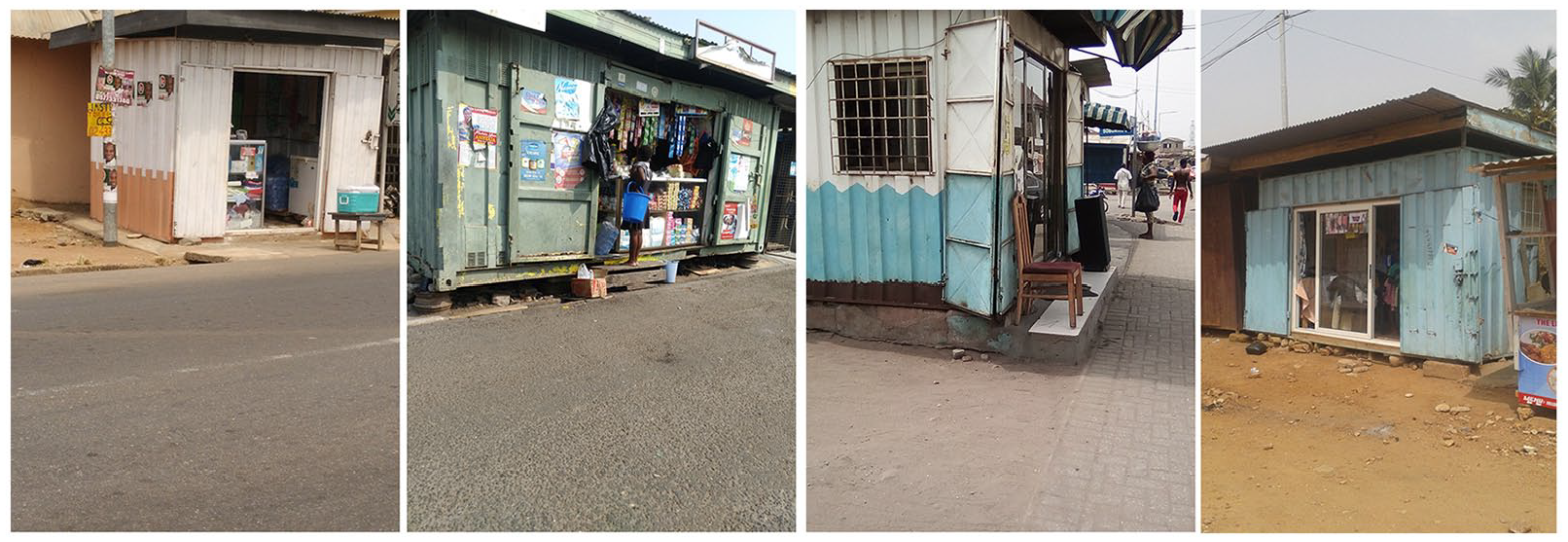
Pictures of container structures in the studied areas.
Another respondent argued that:
I agree that the improper placement of containers makes the city disorganised. However, I think containers help people with little income get a place to do businesses of their own. Also, containers serve as a dwelling space for some of us. So, it goes a long way to help the city. (FCO.NF.18)
Moreover, most container operators interviewed stated that they were notified by city authorities to remove their containers. Most of them ignored these directives, instead regularising their permits and informally negotiating potential evictions with city authorities. Some respondents claimed that:
The AMA [Accra Metropolitan Assembly] agreed to settle the case [. . . ] I went to their office with the landowner, and we worked things out. I had to pay money to city officials, so I did. (FCO.A.03) I was successful in resolving the issue; my landlord intervened and smoothed things out with them [city authorities]. (FCO.EL.06)
Despite city authorities’ claims concerning the temporality and the urgency to regulate container urbanism, the container operators maintained that they would continue to use the containers in the medium to long term if they were unable to secure a permanent brick-and-mortar shop, evicted by landowners. The fieldwork thus pointed out that the regulation by city authorities often was a relatively insignificant deterrent to operators’ continuous improvisation of containers. Other case studies on urban informality have shown similar findings: for example, Crentsil and Owusu (2018) and Steel et al. (2014) found that city authorities’ eviction threats did not stop street vendors or their informal economic activities. Concerning this issue, some of the container operators reiterated that:
Nothing would deter me from using the container shop because I have no other choice. (MCO.NK.12) Container shops are simple, practical, and very affordable for me; therefore, nothing would stop me unless I have enough money to open a traditional brick-and-mortar shop. (FCO.K.14)
Conclusion
A key challenge for policymakers, urban planners and, in general, institutional actors in Africa is how to strike a balance between enforcing planning regulations and ensuring the right to the city in urban spaces where informality has a central role. This article tried to show that it is precisely under the rubric of spatial rationalities that the ongoing neoliberal transformation of urban spaces in Accra can be conceptualised. Specifically, the global housing crisis seemed to give rise to the normalisation of alternative urban processes, such as container urbanism. The rapid adoption of containers as an alternative mode of urban production in Accra was against the backdrop of high-interest rates on housing loans (29%–39% pa. in 2010): a boom in the construction sector and an increase in both migrant and indigene housing land price (UN-HABITAT, 2011).
Within this scenario, the analysis and the discussion of the perceptions of container urbanism by urban institutional actors offered a window into unravelling the rationalities that govern the ongoing transformation of urban spaces in Accra. First of all, from our case study, one gets the sense that institutional perception and governance of container urbanism showed the dominance of dispositional and generative spatial rationalities. For instance, the activation of spatial order and the environmental and health logic to justify the regulation of the socio-spatial practices of container users was clear evidence of this. Moreover, attempts by urban institutional actors to frame container urbanism within temporal logic and weaponise the decongestion of informal structures and beautification of public spaces are rooted in neoliberal governance and the rationalisation of private urban development (Ablo, 2022; Spire and Choplin, 2018). The commodification of urban spaces through speculative and revanchist activities (Falt, 2016) is thus revealed by way of the impact of container urbanism on land use patterns and (de)valuations. Moreover, it emerged that urban institutional actors understood the rationalities behind container improvisation, yet they advanced a neoliberal agenda that exclude operators from realising the right to the city.
Second, this article highlighted that imposing restrictions on container urbanism may exclude vulnerable and low-income households from upward social mobility with far-reaching consequences for urban citizenship and the right to the city. On this point, Pieterse (2008) spoke of the inclination of many urban policymakers to prescribe solutions to urban problems without ‘a deep consideration or appreciation of the agency, skill, endurance, and effort that go into the survival and consolidation strategies of the urban poor’ (p. 113). This attitude seemed to be prevalent also in our study. Furthermore, the account of container operators on evictions and demolitions showed the state of exception that underpins informality (Roy, 2005), as well as the conflicting rationalities between institutional actors and the government on the one hand and these operators on the other (Myers, 2011b; Watson, 2003).
Third, from a design perspective, the interviewed institutional actors argued that the container lacks aesthetic ostentations, regard for the urban environment, and conformity with existing buildings and regulations. In this case, the aesthetic experience and judgement of container improvisation in Accra seemed to be strongly rooted in the class subdivisions. For instance, local authorities perceived the container in a more austere disposition. Furthermore, efforts to control the spread of container urbanism through the institutionalisation of legislative and emergency decrees could be viewed as a state-sponsored rationalisation of neoliberal governance.
Finally, this study related to the contested impact of container urbanism on spatial planning and policy. On the institutional front, legislative instruments can provide local authorities exceptional power to exclude ‘undesirable’ urban processes in the crucible of proper spatial planning; the fieldwork showed deep concern expressed by the urban institutional actors, mainly referring to the implementation process. Specifically, they revealed a gradual de-professionalisation of urban design and planning for an incremental and disorderly manifestation of alternative urban processes. Cobbinah et al. (2019), however, cautioned against blaming urban planners for implementational challenges since planners ‘work within severe constraints’. Also for this reason, further empirical studies are needed in order to better understand and explain the current and effective role of these institutional actors and their actions in planning and implementing urban developments in areas where informality is relevant. More in general, the case study developed in Accra showed that in order to understand how informality works it is fundamental to explore and to know how various social actors (politicians, local institutional actors, planners, street-level bureaucrats, containers operators) conferred different functions and meanings to the informality, and specifically to the container urbanism. This exercise of broader understanding of the urban informality’s phenomena can be crucial in order to design more shared and effective forms of governance of informality.
Footnotes
Funding
The author(s) received no financial support for the research, authorship and/or publication of this article.
