






Abstract
The OLS and logit models were employed to investigate the impact of conflict and women’s empowerment on poverty, using income-based and multidimensional measures. The findings show poverty is rooted in regional marginalization and prolonged conflict, with the highest peace deprivation in Darfur (1.00) and Khartoum (0.65). Women’s mobility is highest in Darfur (86%), reflecting postconflict realities. Conflict correlates with increases of 21% in nominal income due to inflation and war economies, 69% in multidimensional poverty and 38% in income poverty. These findings highlight the limits of income-based poverty measures and support antipoverty strategies grounded in human security and the HDP nexus.
Keywords
Introduction
Genuine and enduring peace cannot be achieved merely by a ceasefire or the signing of a political agreement; it requires a deep engagement with the structural causes of conflict, including poverty, marginalization and lack of opportunities. According to Santos (2023), peace can only be realized when social justice is achieved and balanced development is restored to regions that have long suffered from exclusion and violence, particularly in rural and peripheral areas. Peacebuilding is thus more than a political process; rather, it is a developmental path that seeks to consolidate stability by expanding the foundations of justice and social equity (Alkire, 2003; Asaka, 2022; Gasper and Oscar, 2015; Oscar et al., 2016).
Despite global efforts to eliminate poverty, ongoing conflicts worldwide continue to obstruct progress towards its eradication (Okunlola and Ifeanyi, 2022; Oxford Poverty and Human Development Initiative (OPHI) and United Nations Development Programme (UNDP), 2024). Conflicts hinder progress towards achieving Sustainable Development Goal (SDG) 1 and exacerbate deprivation across its multiple dimensions (OPHI and UNDP, 2024). The percentage of people experiencing deprivation across all global multidimensional poverty index (MPI) indicators is higher in conflict-affected countries than in other nations (Nogales and Oldiges, 2024; OPHI and UNDP, 2024; Sophie et al., 2024; Uppsala Conflict Data Program (UCDP), 2024). Populations in conflict-affected areas not only face the immediate consequences of violence but are also trapped in a cyclical poverty trap that perpetuates their suffering across generations (Collier, 1999; Oscar et al., 2016; Vincent et al., 2021).
Conflicts also represent a significant obstacle to development and overall well-being (Corral et al., 2020). Currently, 40% of the world’s poor reside in conflict-affected countries, while only 10% of the global population lives in war-affected or fragile states. Furthermore, 19% of the world’s poor live in war-affected countries, leading to severe socio-economic consequences. War-affected countries also have significantly higher poverty rates (34.8%) than non–conflict-affected countries (10.9%) (OPHI and UNDP, 2024; UCDP, 2024).
Several African countries have witnessed a high number of violent conflicts (Fjelde and Østby, 2014; Nogales and Oldiges, 2024; Sophie et al., 2024; Okunlola and Ifeanyi, 2022). These violent conflicts have contributed to rising poverty by damaging infrastructure, weakening institutions and reducing productivity, ultimately hindering human security and social development in these countries (Justino and Verwimp, 2013). Sudan is one of these countries. It is one of the largest countries in Africa and enjoys a strategic location, as well as rich natural resources, including minerals; however, the intense conflict that erupted between the Sudanese Armed Forces and the Rapid Support Forces on 15 April 2023 has significantly increased poverty rates, deepened deprivation and inequality, and led to a severe deterioration in Sudan’s humanitarian and economic conditions (ACAPS, 2023; Alwago and Abdalla, 2025; Birch et al., 2024; OCHA, 2024). Poverty remains a significant challenge to achieving the SDGs, particularly in conflict-affected regions like Sudan (Asaka, 2022; Birch et al., 2024). While conflicts have been recognized as a major driver of poverty (Corral et al., 2020; OPHI and UNDP, 2024), the direct quantitative assessment of their impact on income poverty, multidimensional poverty (MP) and women’s empowerment in Sudan remains largely unexplored. Previous studies have examined the relationship between conflicts and poverty (Birch et al., 2024; Fjelde and Østby, 2014; Mahgoub et al., 2024; OPHI and UNDP, 2024; Okunlola and Ifeanyi, 2022; Vincent et al., 2021).
This study quantitatively assessed how conflict and women’s empowerment have influenced MP and income poverty while also estimating the broader conditions of well-being and security across households and regions in Sudan (Gasper and Oscar, 2015; OPHI and UNDP, 2024; Oscar et al., 2016; Sophie et al., 2024; Wei et al., 2021). By addressing this gap, we seek to contribute to sustainable development efforts by providing empirical evidence to assist policymakers in designing effective policies and interventions to enhance sustainable development opportunities in Sudan. I therefore analysed the impact of women’s empowerment on household income using the poverty line approach following Foster et al. (1984). To assess household deprivation across different dimensions of poverty (education, health, living standards, peace and security), I adopted the methodology of Alkire and Santos (2014).
I calculated different MPI measures for each household sample, assigning binary values (1 and 0) to each MPI indicator. First, I determined the total deprivation score for each household by aggregating the weighted values of each indicator. Then created an MPI dummy, which takes the value 1 if the household’s total deprivation score equals or exceeds the 0.25 threshold and 0 otherwise (Alkire and Santos, 2014; Sophie et al., 2024). Finally, I computed the MP intensity score, which equals the deprivation score if the household is multidimensionally poor (MPI dummy = 1) and 0 otherwise. For quantitative analysis, I applied ordinary least squares (OLS) to continuous dependent variables, including income, the poverty gap and MP intensity. Logistic regression models were also used for binary dependent variables, such as the income, poverty and MPI dummies.
How can poverty be meaningfully measured when armed conflict reshapes the very foundations of human security and social organization? This study addresses this question by reconceptualizing MP within an integrated development and peace framework. Rather than treating conflict as an external shock exacerbating deprivation, it positions insecurity and poverty as interdependent and mutually reinforcing processes that define social and economic realities in fragile and conflict-affected contexts. Building on this perspective, I extend the conventional MPI to include the dimensions of peace and human security, thus offering a theoretically robust framework for capturing the structural interaction between armed conflict and multidimensional deprivation.
Empirically, the study draws on recently collected microlevel data from Sudan through the Sudan Labor Market Panel Survey (SLMPS) 2022, producing one of the earliest systematic quantitative assessments of MP in a postconflict setting. These findings offer rare, policy-relevant insights for both scholarly debate and practical interventions. I critically reinterpret female empowerment indicators, showing that expanded roles and responsibilities under conflict do not automatically translate into substantive agency or meaningful access to resources. By embedding the analysis within the nexus of development and peace, the originality of the study is demonstrated, while advancing a holistic understanding of the interconnections among poverty, gender and human security in Sudan and in similar conflict-affected contexts.
Literature review
The capability approach was adopted as the central analytical lens for understanding poverty in fragile and conflict-affected contexts. Rooted in Sen’s (1999) framework and further developed by Alkire (2005), this approach conceptualizes poverty as a multidimensional deprivation of human capabilities rather than merely a shortage of income. In conflict-affected environments, such as Sudan, insecurity itself constitutes a structural form of deprivation that directly constrains individuals’ ability to access education, healthcare, productive assets and social participation. Integrating conflict and human security dimensions into MP measurement is therefore essential to capture the full scope of deprivation in fragile settings and clarify how insecurity shapes household welfare trajectories (Brown et al., 2024; Gasper and Oscar, 2015; OPHI and UNDP, 2024; Rettberg and Dupont, 2025).
Recent literature has increasingly recognized human security as a critical analytical bridge linking conflict dynamics to MP outcomes. Rather than treating insecurity as a contextual background condition, the human security framework conceptualizes exposure to violence, forced displacement, institutional breakdown and restricted access to essential services as direct capability deprivations that shape patterns of vulnerability and inequality at both household and community levels (Brown et al., 2024; Gasper and Oscar, 2015). This understanding has contributed to the emergence of the humanitarian–development–peace (HDP) nexus as an integrated framework that connects humanitarian vulnerability, development constraints and peacebuilding processes within a unified analytical structure (Cho et al., 2025; Rettberg and Dupont, 2025). These interconnections are particularly visible in conflict-affected settings like Sudan, as insecurity simultaneously constrains access to education, health services, productive assets and local governance systems, thereby reinforcing structural and regional inequalities that underpin the dynamics of MP (Cho et al., 2025; OPHI and UNDP, 2024).
Building on this framework, the human security approach provides an analytical explanation for how conflict-related insecurity translates into MP outcomes over time. In fragile contexts like Sudan, deprivation extends beyond material shortages to include deeper forms of structural exclusion associated with service disruption, forced displacement, weakened institutions and unequal access to productive opportunities. This constrains human capabilities and weakens social cohesion, reinforcing cycles of marginalization and undermining prospects for long-term stability and inclusive development. Evidence from conflict-affected regions further suggests that social mobilization often begins with service-related and development-oriented demands (Santos, 2023); however, as violence intensifies and losses accumulate, priorities frequently shift towards demands for justice, reparations and recognition of victims’ rights. When such demands remain unaddressed, perceptions of collective injustice deepen, contributing to the reproduction of grievance-based conflict dynamics across generations.
The MP should thus be understood not solely as an outcome of conflict but also as a mechanism through which conflict may be reproduced over time, particularly when persistent deprivation coincides with weak justice institutions and limited access to public services. Conversely, strengthening the conditions of human security provides a protective pathway, reducing the likelihood of conflict recurrence by expanding access to essential services, improving economic opportunities and promoting inclusive participation in local governance structures. Integrating a peace and security dimension into the extended MPI, therefore, allows the analysis to capture how improvements in security conditions contribute not only to poverty reduction but also to longer-term processes of resilience-building, social contract formation and sustainable peacebuilding in fragile environments.
Context: Sudan
Despite its substantial natural wealth and human capital, Sudan has remained entrenched in protracted conflict. Since 1955, even prior to achieving independence, the country has been trapped in recurring cycles of violence, culminating in the devastating war that erupted in April 2023 between the Sudanese Armed Forces and the Rapid Support Forces (OCHA, 2024). Prolonged instability in Sudan has severely disrupted the delivery of essential public services, with dwindling resources allocated to education and health care (Mahgoub et al., 2024). Ongoing conflict has inflicted widespread damage on critical infrastructure – hospitals, schools and state institutions – plunging the country deeper into a humanitarian and economic crisis (Birch et al., 2024). Civilians thus face deteriorating living conditions, restricted mobility and limited access to basic services, while fundamental human rights essential for national stability and development continue to erode (Keen, 2024; Mahgoub et al., 2024). Decades of internal displacement from the civil war to the conflicts in Darfur, Blue Nile and South Kordofan have further compounded the crisis. The number of displaced people rose from 2.3 million in 2019 (IDMC, 2020) to over 7 million in 2024 (OCHA, 2024), leaving millions in conditions of severe deprivation and MP (Sophie et al., 2024).
The current war in Sudan is widespread and highly complex; its effects pose a serious threat to life and stability in the country. Mortality rates, hunger and asset loss are extremely high among the population (Keen, 2024), and the war has led to rising inflation, a liquidity shortage and the collapse of markets, alongside a severe shortage of income sources (ACAPS, 2023; Ciarli et al., 2015). The system for providing basic services has completely collapsed in some states, with staff being displaced or left unpaid. Public infrastructure has been repurposed for conflict or destroyed, leading to a sharp scarcity in health and educational services (Mahgoub et al., 2024).
The HDP nexus and conflict-torn Sudan
The HDP nexus represents a qualitative shift in international thinking within the United Nations that emerged as a response to the shortcomings of isolated sectoral approaches in addressing prolonged and complex crises (Rettberg and Dupont, 2025). The 2016 World Humanitarian Summit institutionalized what became known as the ‘New Way of Working’, calling for the alignment of humanitarian and development efforts while integrating the peace dimension to achieve the SDGs. Rather than separating emergency relief, development programmes and peace initiatives, this framework is based on the understanding that poverty, fragility and insecurity are structurally interconnected phenomena that cannot be addressed through isolated sectoral policies (Brown et al., 2024; Cho et al., 2025). This perspective has been institutionally reinforced through the adoption of an integrated approach within the UN system and further endorsed by the Organization for Economic Co-operation and Development (OECD, 2022), which emphasized that the effectiveness of the nexus depends on careful contextual analysis and systematic integration of gender, ensuring interventions are designed according to the political, social and power dynamics of each environment.
The HDP nexus distinguishes between peace-making, peacekeeping and peacebuilding, with peacebuilding placed at its core as a long-term transformative process addressing the economic, social and institutional roots of conflict (Brown et al., 2024). Boutros Boutros-Ghali highlighted that sustainable peace requires tackling the underlying economic and social causes of conflict (Rettberg and Dupont, 2025), while Collier and Hoeffler (2002) argue that war constitutes ‘development in reverse’, trapping states in persistent cycles of conflict. Accordingly, poverty is understood not merely as caused by conflict but as a contributing factor, making development a potential tool for promoting peace if designed comprehensively and equitably (Cho et al., 2025).
The Colombian experience illustrates this logic in practice. Following the 2016 peace agreement between the Colombian government and the Revolutionary Armed Forces of Colombia, a ‘regional peace’ approach directed targeted development investments to 170 municipalities historically affected by poverty, fragility and illicit economies. Development was not conceived as a postconflict reward but as a tool to rebuild trust, strengthen institutional presence and address inequalities that had fuelled violence (Rettberg and Dupont, 2025).
In the Sudanese context, this experience offers a framework for reconfiguring state–society relations in conflict-affected areas through locally driven development informed by rigorous contextual and gender analysis, making poverty reduction a practical entry point for supporting sustainable peace rather than a separate economic pathway. This study thus adopted the HDP nexus as an analytical framework to examine the interconnections between poverty, peacebuilding and state-building in Sudan (OECD, 2022; Talisuna et al., 2023).
Empirical studies
Conflicts have intensified in recent years, pushing millions of people into catastrophic humanitarian crises. This escalation increases the number of conflict-affected individuals, accelerating their descent into poverty, causing significant setbacks and hindering poverty reduction plans in both the short and long term (UCDP, 2024). According to the 2024 Global Peace Index, 97 countries have experienced a decline in peacefulness. These conflicts negatively affect the quality of services available to the poor in conflict zones, significantly limiting their opportunities for a dignified life (OPHI and UNDP, 2024).
Recent studies by Sophie et al. (2024), OPHI and UNDP (2024), and the World Bank (2020) highlight a solid connection between conflict and expanding MP. Conflict severely disrupts the development of human security (e.g. education, skills and health), ultimately weakening productivity and reducing people’s capability (Asaka, 2022; Cho et al., 2025; Gasper and Oscar, 2015; Oscar et al., 2016). For example, Bundervoet (2006) identified civil war as a major factor behind the elevated rural poverty level in Burundi. Similarly, Justino and Verwimp (2013) found that households in Rwanda that lost their homes, land or property during the conflict were significantly more likely to fall into poverty. Around a quarter of Rwanda’s poverty rate has been attributed to the genocide (Lopez et al., 2004). In Colombia, conflict-induced displacement led to rapid asset loss and accelerated entry into poverty traps among displaced populations (Ibáñez and Moya, 2009). More broadly, the loss of economic activities and assets because of conflict is a key driver of poverty, particularly among the forcibly displaced (Barrett and Maxwell, 2006).
Conflict has significantly exacerbated poverty and inequality across the Middle East and North Africa, disrupting livelihoods, weakening institutions and undermining people’s capabilities to lead secure and dignified lives (Gates et al., 2010). Galdo et al. (2020) also emphasize that the increase in conflict-related injuries significantly hampers economic activity and the integration of labour markets. This aligns with the findings of Ciarli et al. (2015), who demonstrated that conflict reduces employment opportunities by making investment riskier in affected areas, an effect reflected in rising levels of famine, malnutrition and food insecurity (D’Souza and Jolliffe, 2013). While Alwago and Abdalla (2025) identified women’s empowerment as a key factor in alleviating poverty in Sudan, their study did not consider the critical impact of conflict, highlighting a gap that requires further exploration.
Poverty and conflict are closely intertwined. Countries with low-income levels are more susceptible to civil war, while armed conflicts erode governance and economic stability, thereby exacerbating extreme poverty. Indeed, Collier and Hoeffler (2002) highlight per capita income, dependence on natural resources, inequality and ethnolinguistic fragmentation as critical factors influencing the risk of civil war. Promoting human security may be the most effective strategy to prevent conflict and foster sustainable development (Gasper and Oscar, 2015).
Building on these findings, this study provides a comprehensive regional analysis of MPs and women’s empowerment, offering a precise and in-depth understanding of the substantial disparities across Sudanese states within a conflict-affected environment. It also sought to quantify the profound impact of conflicts and women’s empowerment on poverty, a critical Sudanese issue that remains significantly underexplored in existing research. To address this vital gap, a fourth analytical dimension – peace and security – has been incorporated into MPI, encompassing four key variables: armed conflict, theft, political stability and land disputes.
Methods
Data
I used data from SLMPS 2022, the first wave of a longitudinal study examining human capital development in Sudan’s economy. The survey was designed to explore the complex relationship between labour market dynamics and various socio-economic factors, including education, training, household formation, migration, gender equality, enterprise development, housing ownership and intergenerational mobility. Based on the Living Standards Measurement Study (LSMS+) framework, SLMPS 2022 conducted a nationally representative sample survey of 5000 households across 18 states and 189 localities. However, in terms of the women’s empowerment indicators investigation, our analysis was limited to married women, as empowerment measures often focus on marital experiences, which significantly affect women’s economic well-being, health and family welfare (Sophie et al., 2024; Wei et al., 2021). Empowerment within marriage also contributes directly to women’s well-being and household stability. This approach has been empirically validated in low-income and rural contexts (Alwago and Abdalla, 2025; Wei et al., 2021). After excluding observations with missing data, the final sample comprised 4380 married women.
Variable description
Women’s empowerment indicators
Women’s empowerment is commonly measured through a set of key dimensions (Table 1), including household decision-making power, gender-related norms and attitudes, freedom of movement, control over economic resources, and autonomy from familial control (Alwago and Abdalla, 2025; Rui, 2021; Wei et al., 2021).
Indicators of women empowerment.
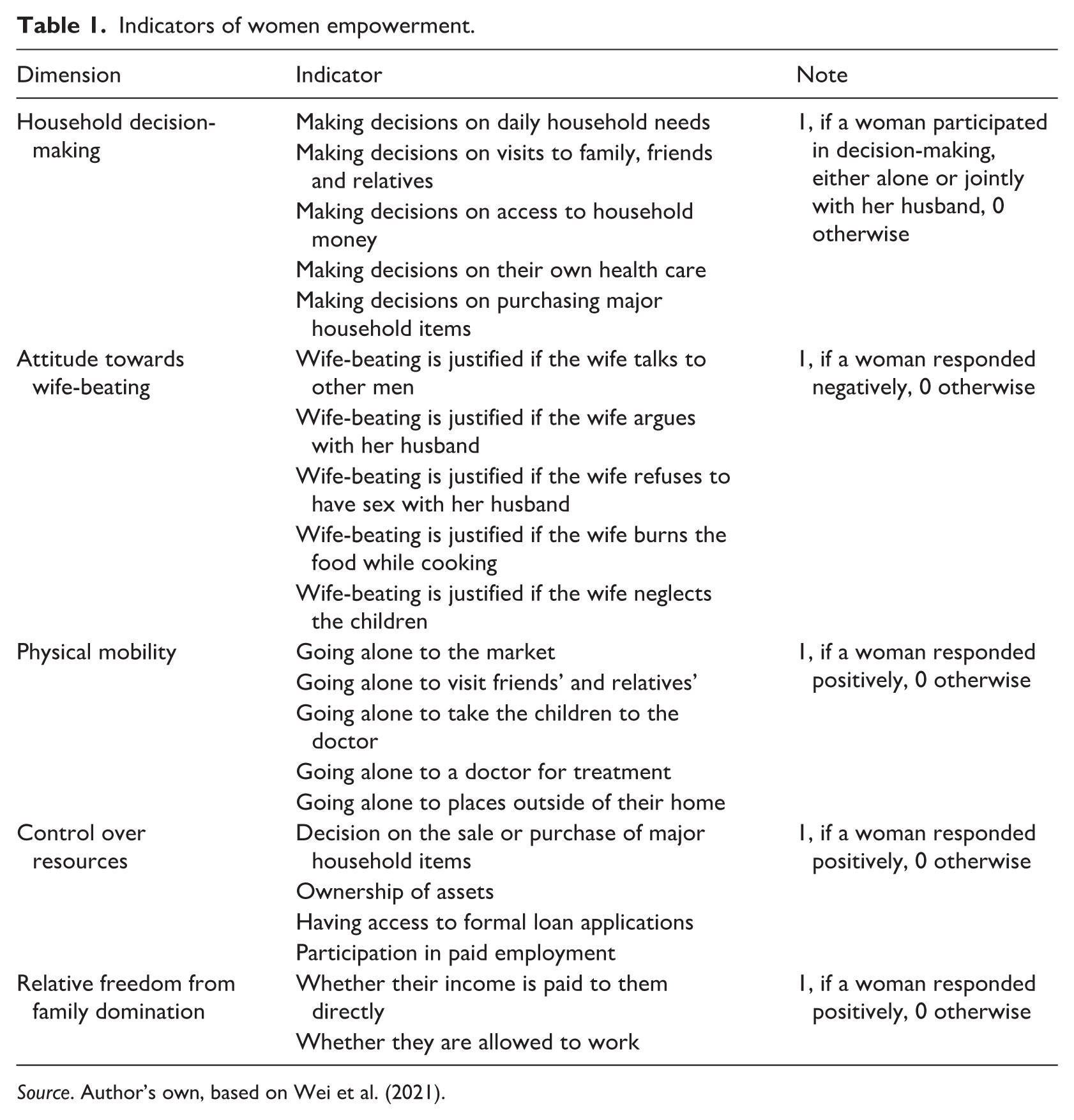
Source. Author’s own, based on Wei et al. (2021).
Measuring income poverty
This section of the study focuses on assessing the poverty levels of the surveyed women and their households using two approaches: (1) the traditional income-based poverty measure and (2) the MPI. To examine the relationship between women’s empowerment and income poverty, we employ the poverty line approach using the (Foster et al., 1984) poverty measures. Household income is converted from Sudanese pounds to US dollars using the purchasing power parity (PPP) exchange rate of 1 USD = 2000 SDG. If a household’s per capita daily income exceeds the international poverty threshold of $2.15, it is assigned a poverty score of zero; otherwise, it is classified as income-poor under this measure.
The MPI structure
I assessed household poverty levels using two approaches: (1) income-based poverty, calculated from daily household income converted to US dollars, and (2) the MPI, which incorporates nonmonetary indicators across four core dimensions: education, health, living standards, and peace and security, including conflict and violence (Alkire and Santos, 2014; Sophie et al., 2024; OPHI and UNDP, 2024), comprising 16 internationally aligned indicators, all of which are coded as binary variables, taking the value of 1 if the household is deprived in the corresponding indicator and 0 otherwise. For education, I considered school enrolment among school-age children and whether all household members had completed at least 5 years of schooling. The health dimension included early marriage, malnutrition and child mortality measured by the death of any child under five within the household. Living standards were assessed based on access to electricity, sanitation, drinking water, flooring materials, cooking fuel and asset ownership (Alkire and Santos, 2014). The peace and security dimension included indicators such as armed conflict, land disputes, political stability and theft (OPHI and UNDP, 2024).
The MPI was estimated using the Alkire–Foster (AF) methodology, which employs a dual-cutoff approach to identify multidimensional deprivation. Individuals/households are first assessed across a set of indicators, with a specific weight assigned to each indicator. The weighted deprivations are then aggregated to obtain a composite deprivation score, and individuals/households are classified as multidimensionally poor if their score exceeds a predefined poverty threshold. The AF methodology generates three core measures: the headcount ratio (H), representing the proportion of individuals who are multidimensionally poor; the intensity of poverty (A), which captures the average share of deprivations experienced by the poor; and the MPI, calculated as the product of these two components (MPI = H × A) (Alkire and Santos, 2014). Following the standard MPI framework, equal weights are assigned to each dimension and its corresponding indicators (Table 2). The poverty cutoff is set at 25%, meaning that individuals with a weighted deprivation score of 25% or higher are classified as multidimensionally poor (Sophie et al., 2024).
MPI dimensions, indicator, deprivation cutoff and weights.
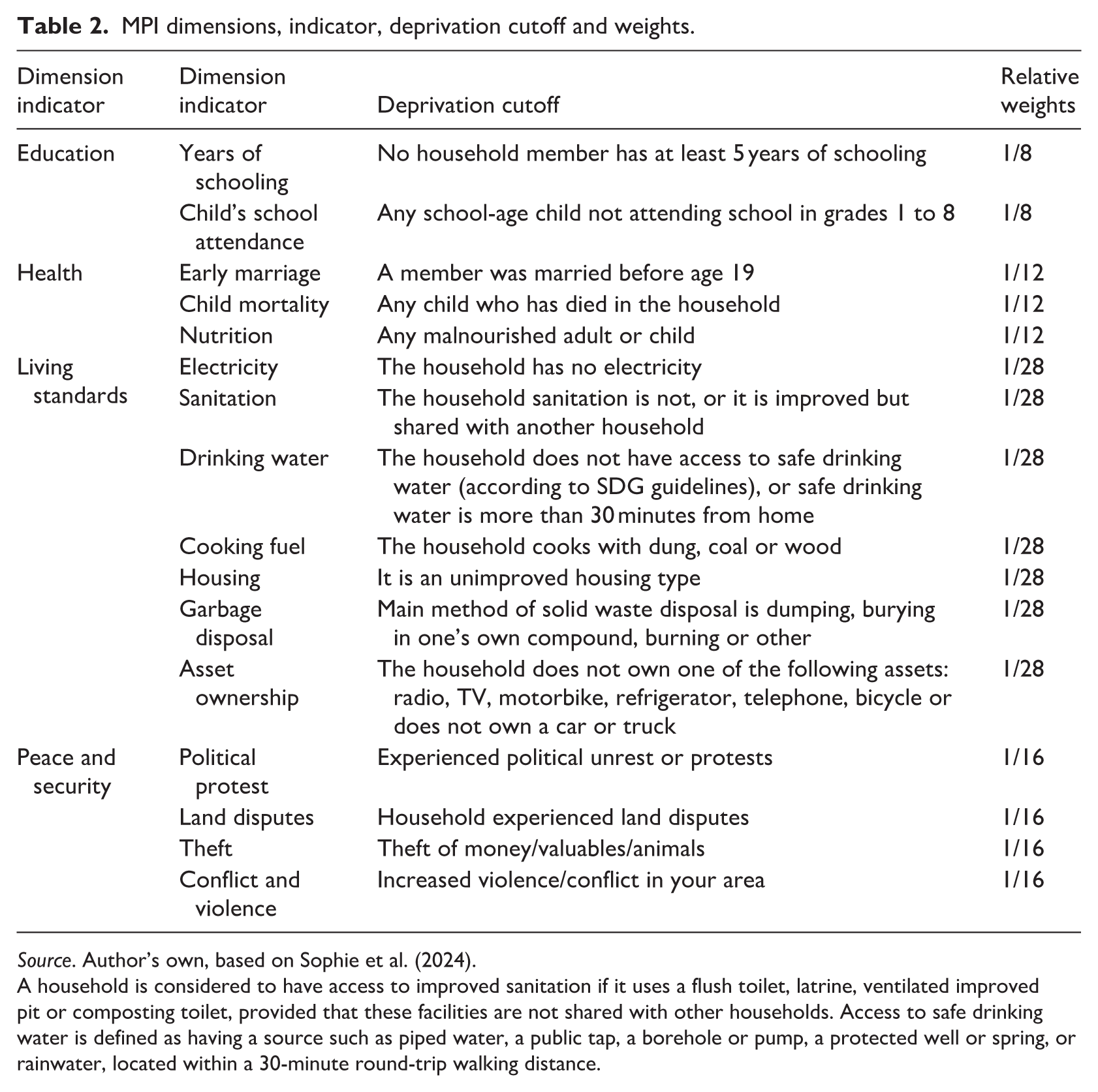
Source. Author’s own, based on Sophie et al. (2024).
A household is considered to have access to improved sanitation if it uses a flush toilet, latrine, ventilated improved pit or composting toilet, provided that these facilities are not shared with other households. Access to safe drinking water is defined as having a source such as piped water, a public tap, a borehole or pump, a protected well or spring, or rainwater, located within a 30-minute round-trip walking distance.
Empirical strategy
The data were then compiled, coded, tabulated and analysed using the STATA 17 statistical software package to address the study’s research objectives. I calculated the income poverty gap as a continuous variable ranging from 0 to 1 (Wei et al., 2021) using the following formula:

where

where

where
The MPI weighting procedure assigns equal weight to each dimension and indicator (Table 2). The poverty threshold is set at a 25% deprivation cutoff, so individuals with a deprivation score of 25% or higher are classified as multidimensionally poor (Alkire and Santos, 2014; Sophie et al., 2024). I calculated the various MPI metrics for each household using binary values (0 or 1) for each of the 16 indicators. First, I computed the total deprivation score for each household by aggregating the weighted values of each indicator, with weights ranging between 0 and 1 (see Table 2). Second, I created a binary MPI dummy that takes the value of 1 for households with a total deprivation score of 0.25 or higher and 0 otherwise (Sophie et al., 2024). Finally, I calculated the MP intensity, which equals the deprivation score for multidimensionally poor households (MPI dummy = 1) and 0 for all other households. The interpretation of MPI intensity is analogous to the income poverty gap (Wie et al., 2021). To assess the impact of women’s empowerment and conflict on MP as a continuous variable, I used baseline OLS estimation, specified as follows:

where

where
The key coefficients of interest are those associated with conflict and women’s empowerment. I expected a negative association between conflict-related variables and household income and a positive association between conflict and the MPI, indicating a poverty-increasing effect. Conversely, I expected women’s empowerment to exhibit a positive relationship with household income (an income-enhancing effect) and a negative relationship with poverty indicators (a poverty-reducing effect).
Results and discussion
Descriptive statistics were employed to assess the status of women’s empowerment based on the indicators outlined in Table 3. Varying levels of empowerment were found across different dimensions. In terms of decision-making authority, 57.99% of women reported having control over household financial decisions. In contrast, fewer women had autonomy over other decisions: 33.87% could decide on visiting family, 29.61% on seeking healthcare for themselves, 27.04% on purchasing daily household items and only 20.95% on buying major assets. These differences highlight how women’s influence within the household varies depending on the nature of the decision.
Descriptive statistics of women’s empowerment.
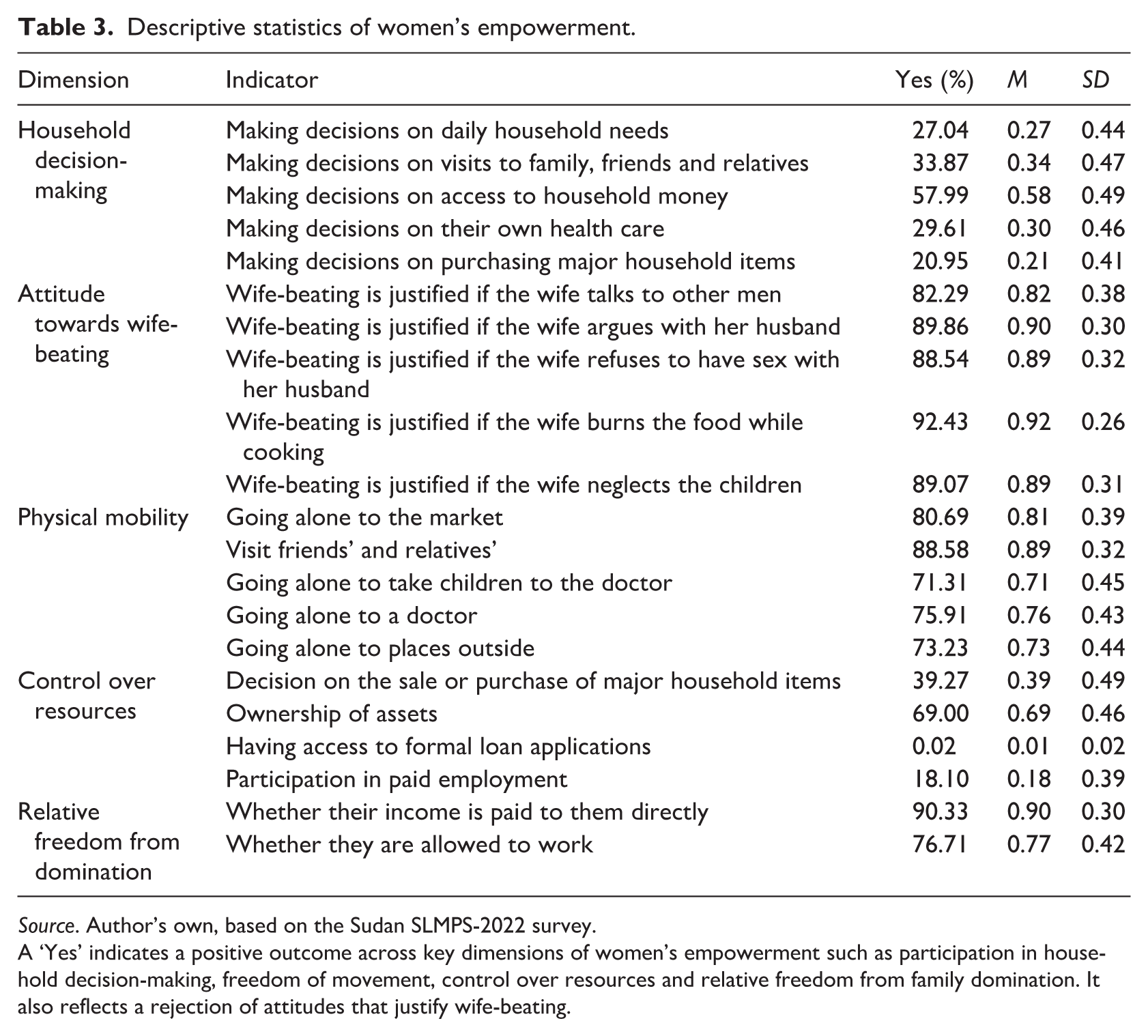
Source. Author’s own, based on the Sudan SLMPS-2022 survey.
A ‘Yes’ indicates a positive outcome across key dimensions of women’s empowerment such as participation in household decision-making, freedom of movement, control over resources and relative freedom from family domination. It also reflects a rejection of attitudes that justify wife-beating.
Regarding attitudes towards domestic violence, the data revealed a strong rejection of spousal abuse. Most women disagreed with traditional justifications for wife-beating. Specifically, 92.43% opposed violence in cases of not cooking or burning food, 89.86% disagreed with it during arguments, 89.07% for child neglect, 88.54% for refusing sexual relations and 82.29% for speaking with another man. These figures suggest a positive shift in societal attitudes towards women’s rights and bodily autonomy. The study showed significant levels of freedom in terms of mobility. About 88.58% of women stated they could visit relatives and friends alone, and 80.69% could go to the market independently. However, mobility related to health care and travel was somewhat lower, with 75.91% able to visit a doctor for their own health, 71.31% for their children’s care and 73.23% permitted to travel if needed.
Concerning control over resources, 69.00% of women reported owning personal assets, indicating a level of economic independence. Yet only 18.10% were able to make major purchasing decisions, and the same proportion participated in paid employment, underscoring limited economic engagement. There were encouraging signs of autonomy within the household. About 90.33% of women received their income directly, and 76.71% were permitted to work.
Finally, access to financial services was nearly nonexistent, with only 0.02% of women reporting access to credit or financing. In the period preceding the conflict, access to formal financial services in Sudan was extremely limited, with clear gender gaps. About 10% of women held formal bank accounts, compared to approximately 20% of men, thus reflecting a significant gender gap in financial inclusion prior to the conflict (OECD, 2023). This gap extends beyond account ownership to access to credit, financing and payment services, placing women at a relative disadvantage in economic empowerment even before the conflict (World Bank, 2023).
Following the conflict, the extremely low access to credit (0.02%) reflects the collapse of the banking infrastructure and the absence of financial institutions, rather than a lack of individual female empowerment, particularly in regions such as Darfur and Kordofan, now under the control of the Rapid Support Forces. The absence of banking services affects the entire population, with a disproportionately higher impact on women due to the historical gender gap in financial inclusion. This indicator should thus be interpreted as evidence of institutional failure as a central driver of MP, with the gendered impact understood within this broader institutional context, rather than as an independent measure of women’s empowerment.
The analysis revealed that a significant proportion of households remain multidimensionally poor (Table 4), as defined by indicators related to child mortality, malnutrition, cooking fuel, waste disposal, asset ownership, and exposure to conflict and violence. Of particular concern are the high rates of child mortality (55.28%) and malnutrition (57.03%). Access to clean cooking fuel also remains limited, with 67.38% of households relying on traditional fuels such as firewood, agricultural waste, charcoal and straw. Waste disposal also poses a major challenge, with 87.84% of households lacking proper waste management systems, in line with prior research (Wie et al., 2021). Access to safe drinking water, however, remains a pressing concern for 33.94% of households. While water sources such as boreholes, hand pumps, dams, canals, flowing water and springs are available, many do not meet the SDG standards for safe and reliable water access. In addition, 26.89% of households lack electricity as their main source of lighting, and 42.10% face challenges in securing adequate housing, relying on materials such as straw or mud for construction.
Multidimensional poverty.
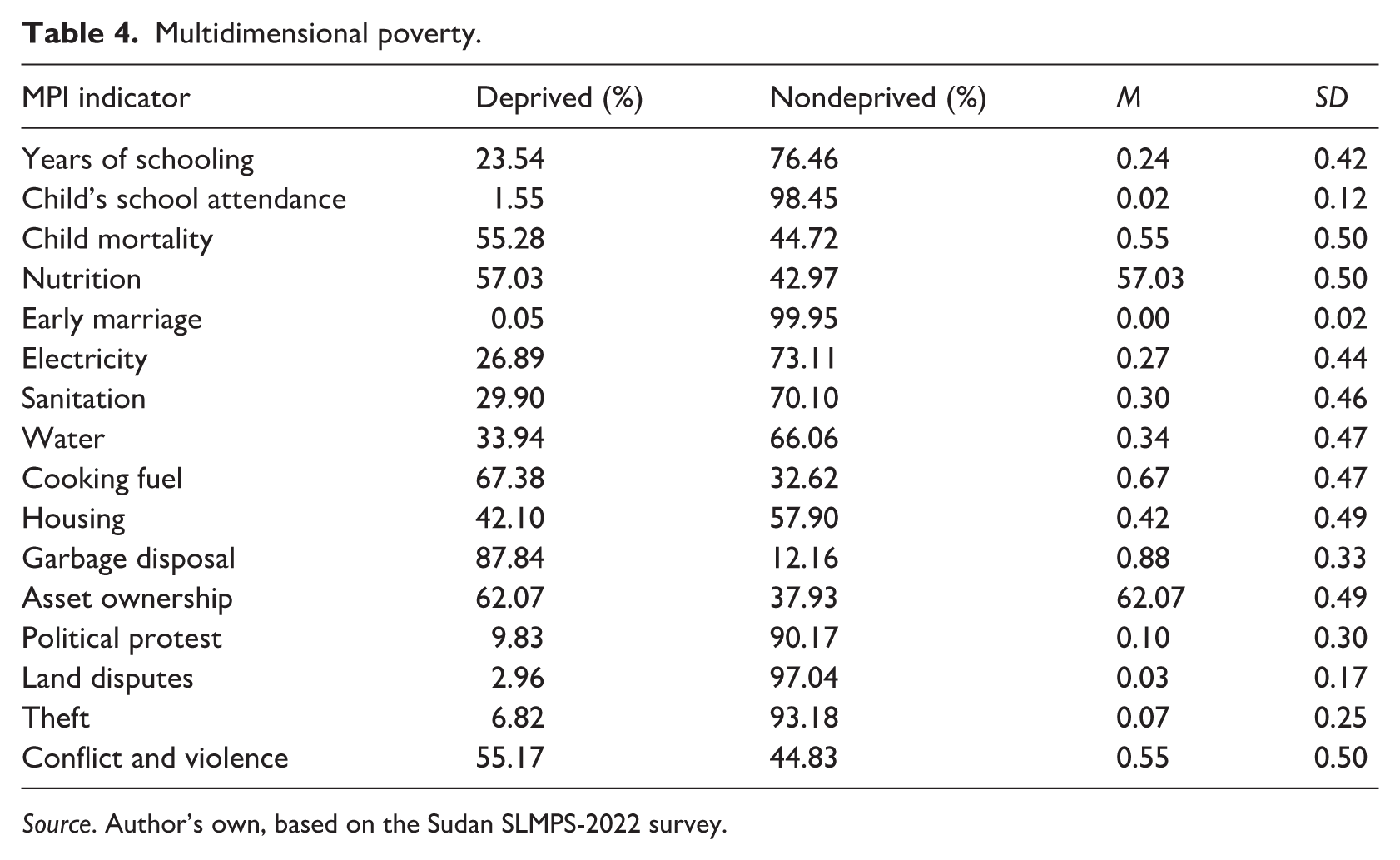
Source. Author’s own, based on the Sudan SLMPS-2022 survey.
Difficulties in property ownership also persist, with 62.07% of households lacking secure asset ownership. A substantial share of families (55.17%) reported experiencing conflict-related instability, largely attributed to the ongoing war that began in 2023, which is in line with prior research highlighting the widespread impact of the conflict (World Bank, 2023). Conflict remains a widespread and persistent issue affecting over half of all households (55.17%), which is consistent with Okunlola and Ifeanyi (2022), who note that Sudan has experienced continuous conflict since its independence in 1956. The most recent war, which erupted in 2023 in the capital Khartoum and rapidly spread to multiple regions, has resulted in large-scale displacement, a refugee crisis and the loss of lives, savings and livelihoods for many Sudanese citizens.
Despite these challenges, relatively strong educational outcomes were found. Approximately 98.45% of school-age children attend school, and the average years of schooling reached 76.46%, in line with prior research (Sophie et al., 2024). Furthermore, 95% of women reported no exposure to early marriage, suggesting significant progress in this area of social development.
Regional women empowerment
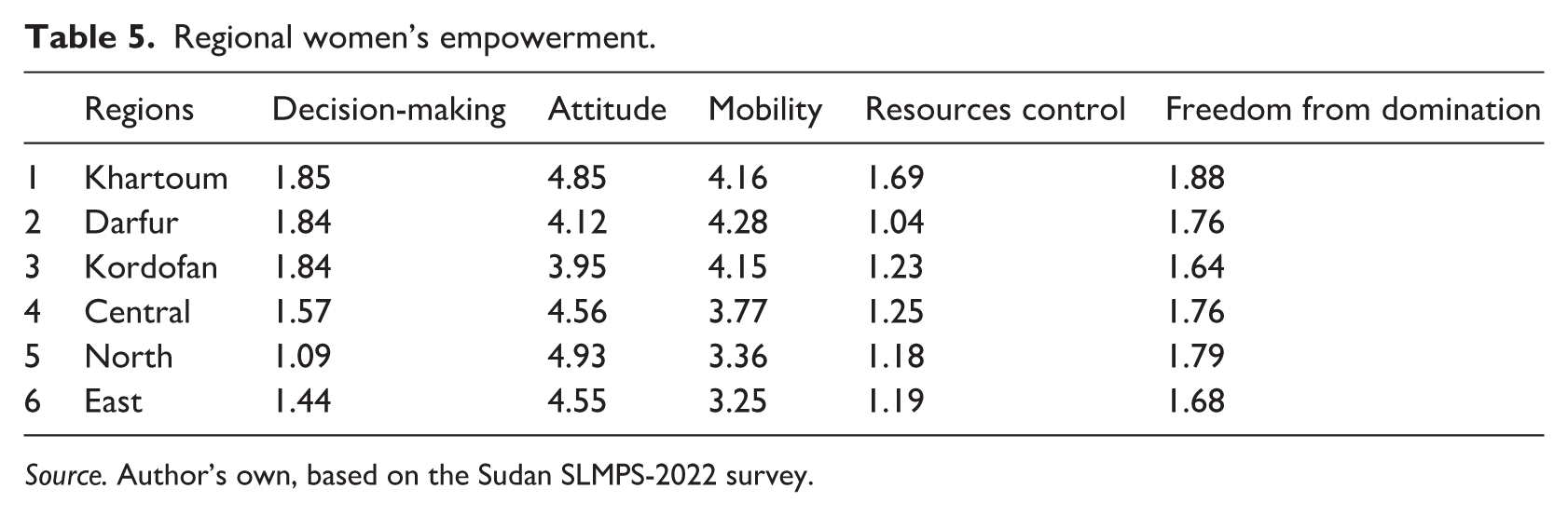
Table 5 presents the results for women’s empowerment across Sudanese regions based on the following dimensions: decision-making, attitude, mobility, resource control and freedom from domination.
Regional women’s empowerment.
Source. Author’s own, based on the Sudan SLMPS-2022 survey.
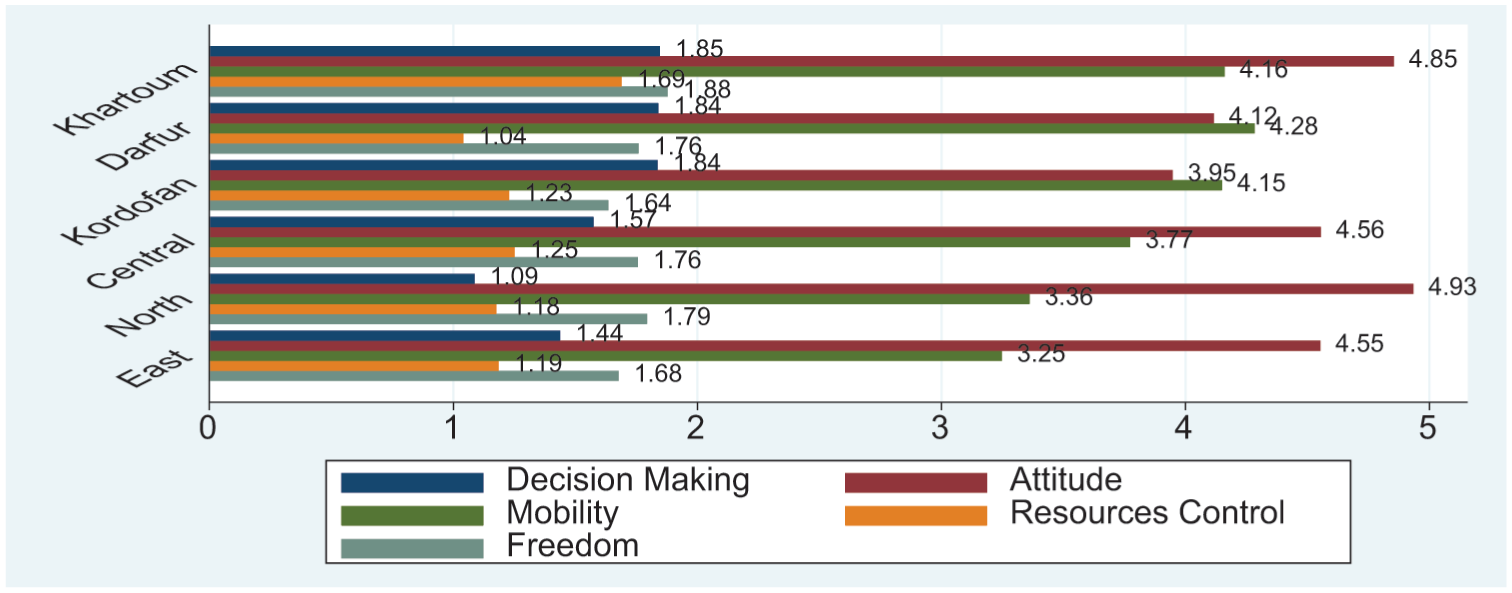
The data extracted from Table 5 and Figure 1 clearly indicate that the attitude indicator is the highest across all regions, reflecting a relative shift in societal awareness towards the role of women, although this shift has not yet translated into practice. For example, the Northern region records the highest value in this indicator (4.93), while indicators such as decision-making, control of resources and freedom remain low in all regions. This reflects the continued structural constraints on women, which remain one of the direct and indirect outcomes of conflict on the fabric of society. The mobility indicator records its highest levels in Darfur (4.28), followed by Khartoum (4.16) and Kordofan (4.15), all regions severely affected by armed conflict and large-scale displacement, with ongoing violence persisting in both Darfur and Kordofan. This elevated mobility should not be interpreted as an expansion of women’s empowerment or choices, but rather as a reflection of coercive conditions shaped by war.
Regional women empowerment.
In conflict contexts, mobility shifts from an expression of agency and choice to a survival-driven necessity, propelled by the collapse of public services, the erosion of social support networks and the absence of male providers due to death, displacement or recruitment (International Crisis Group (ICG), 2024). This dynamic is particularly evident in Darfur, where deprivation in peace and security reaches its maximum level (1.00), alongside the highest level of women’s deprivation in the mobility indicator (4.28). Under these conditions, women bear increasing responsibilities for securing livelihoods and accessing food, healthcare and humanitarian assistance, a phenomenon widely described in the literature as the feminization of responsibility (Khader, 2019). This highlights the importance of interpreting empowerment indicators within their security and political context, as heightened mobility here reflects increased vulnerability, greater exposure to risk and deeper forms of deprivation, rather than a positive shift in gender norms or a genuine expansion of capabilities.
Regional MP
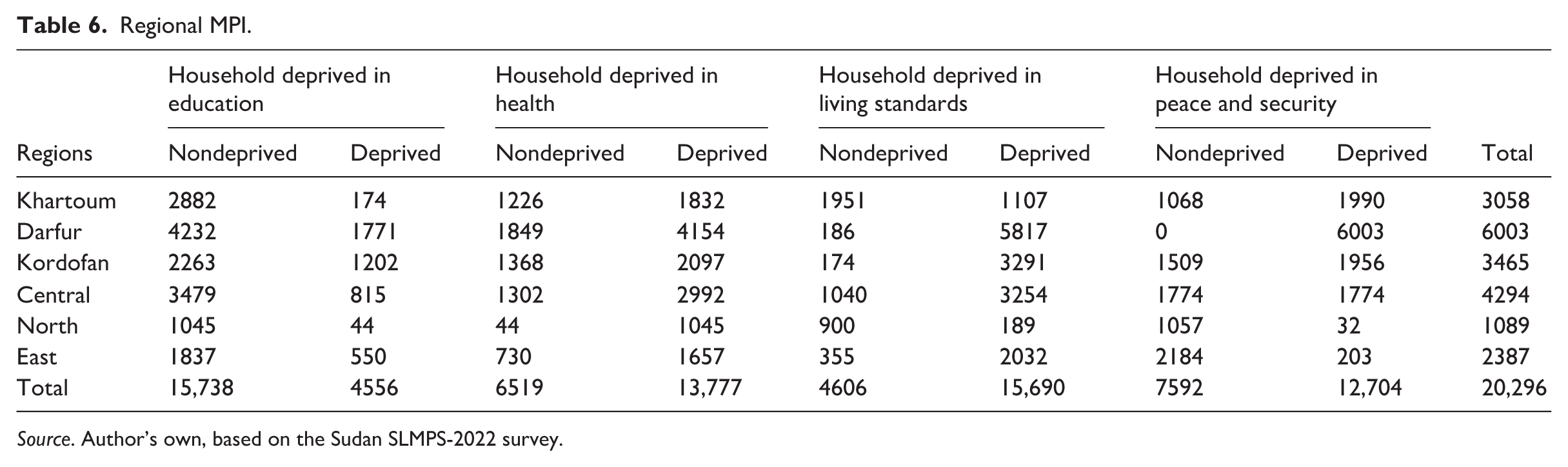
Table 6 illustrates the levels of deprivation across Sudanese regions based on the indicator’s education, health, living standards, and peace and security.
Regional MPI.
Source. Author’s own, based on the Sudan SLMPS-2022 survey.
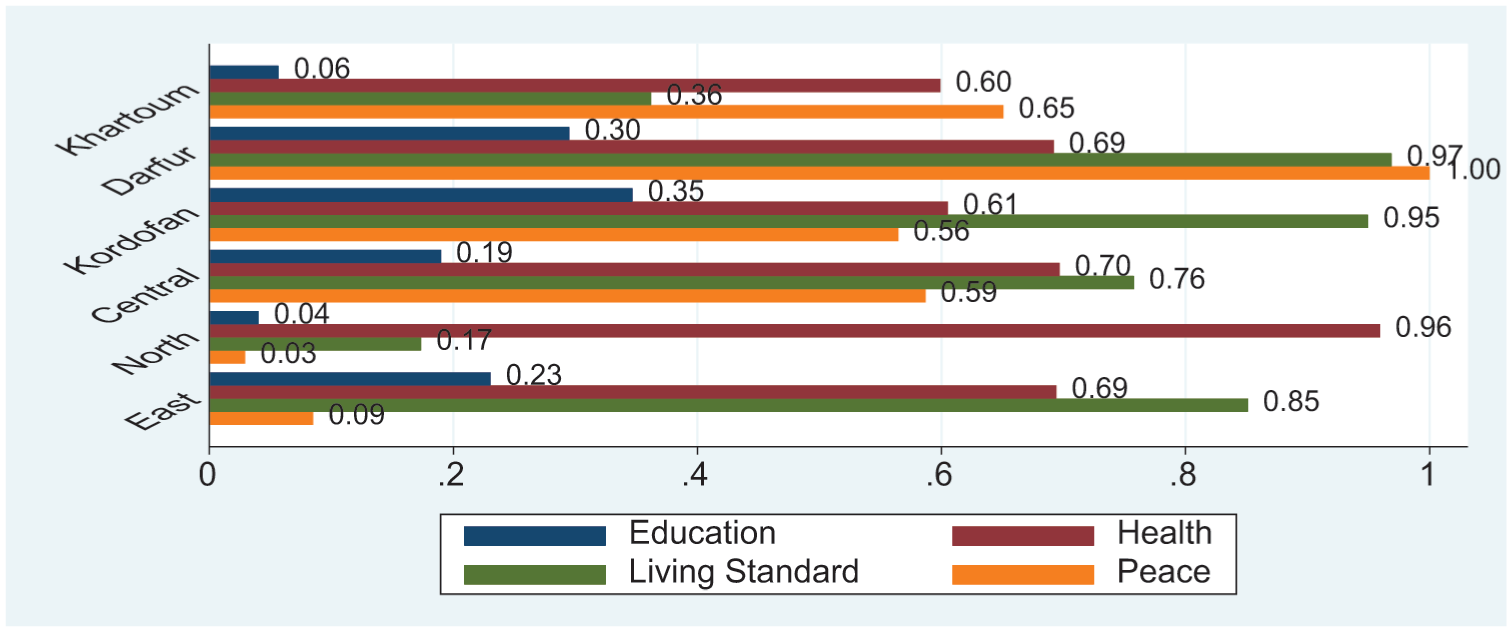
As shown in Figure 2, the peace indicator registers the highest levels of deprivation across most regions. Darfur records the highest deprivation (1.00), reflecting a long history – spanning more than two decades – of conflict in the region (ICG, 2024). It is followed by Khartoum (0.65), Central (0.59) and Kordofan (0.56). These values underscore the widespread absence of peace as a common denominator in the country, affirming that the lack of security and stability remains the core challenge overshadowing other development dimensions and limiting their effectiveness. This result is consistent with Vincent et al. (2021).
Regional MPI.
In contrast, deprivation levels in education, health and living standards vary across regions. The lowest levels of educational deprivation are observed in the North (0.04) and Khartoum (0.06), followed by Central (0.19), indicating relatively good access to education in these areas. The highest educational deprivation, meanwhile, appears in Kordofan (0.35), Darfur (0.30) and the East (0.23). Regarding health, the North tops the deprivation index (0.96), followed by Central (0.70) and both Darfur and Kordofan (0.69). This suggests a severe lack of access to or the poor quality of healthcare services, with no region scoring below 0.60, which means over 60% of households are deprived of proper health care.
As for living standards, Darfur again records the highest deprivation (0.97), followed by Kordofan (0.95), the East (0.85) and Central (0.76). The lowest levels of deprivation are found in the North (0.17) and Khartoum (0.36). These results clearly indicate that historically conflict-affected areas like Darfur and Kordofan suffer from compound deprivation, extending beyond the absence of peace to include deteriorating basic living conditions.
Model results
This section presents the results of the impact of women’s empowerment on household income, income poverty and MP. The conceptual limitations of monetary poverty measures, particularly their assumption that all needs can be met through market transactions, were a key motivation behind the development of the MPI introduced by the UNDP (Alkire and Santos, 2010). Such assumptions are especially problematic in developing and conflict-affected contexts, where markets are often incomplete or absent and where monetary indicators fail to capture essential dimensions of well-being such as care, security and social participation (Alwago and Abdalla, 2025; Kim, 2019).
Household-level MP measures may also conceal important patterns of individual deprivation and provide limited guidance for designing interventions tailored by gender or age (Pinilla-Roncancio et al., 2020; Vijaya et al., 2014). In contrast, individual-level analysis enables the identification of women and children who are exposed to severe deprivation, even within nonpoor households (Alkire and Ul Haq, 2023; Pinilla-Roncancio et al., 2020). Accordingly, this study adopts a gender analytical lens by focusing on married women, consistent with a well-established strand of MP research examining women’s or children’s poverty in low-income settings (Alwago and Abdalla, 2025; Pinilla-Roncancio et al., 2020; Vijaya et al., 2014; Wei et al., 2021).
This section presents the results for the impact of women’s empowerment on household income, income poverty and MP. Although the dependent variables are measured at the household level while women’s empowerment indicators are measured at the individual level, using married women’s empowerment as a proxy for household welfare is a well-established and reliable approach in the literature (Wei et al., 2021). In low-income, conflict-affected contexts such as Sudan, married women exert a direct influence on household decisions related to resource allocation, health and education – core dimensions of MP (Abdalla, 2024).
To ensure methodological consistency, the empirical analysis is confined to one married woman per household, with standard errors clustered at the household level to address potential intrahousehold correlation. The analysis also recognizes the potential endogeneity between conflict exposure, women’s empowerment and poverty outcomes, as these relationships may be mutually reinforcing in fragile contexts (Rettberg and Dupont, 2025). Given the cross-sectional nature of the data, the empirical models focus on identifying statistical associations rather than establishing causal effects, while controlling for key household and socio-economic characteristics to mitigate potential bias (Wei et al., 2021). To further strengthen the robustness of the empirical findings, the analysis was conducted using alternative model specifications and multiple poverty outcome indicators capturing both monetary and multidimensional deprivation dimensions, including household monthly income, the income poverty gap, and the incidence and intensity of MP. The models were estimated to use both OLS and logistic regression techniques to ensure that the results were not driven by the choice of estimation method. Key control variables, including education attainment, cooking fuel type and women’s asset ownership, were also progressively introduced to mitigate potential omitted variable bias.
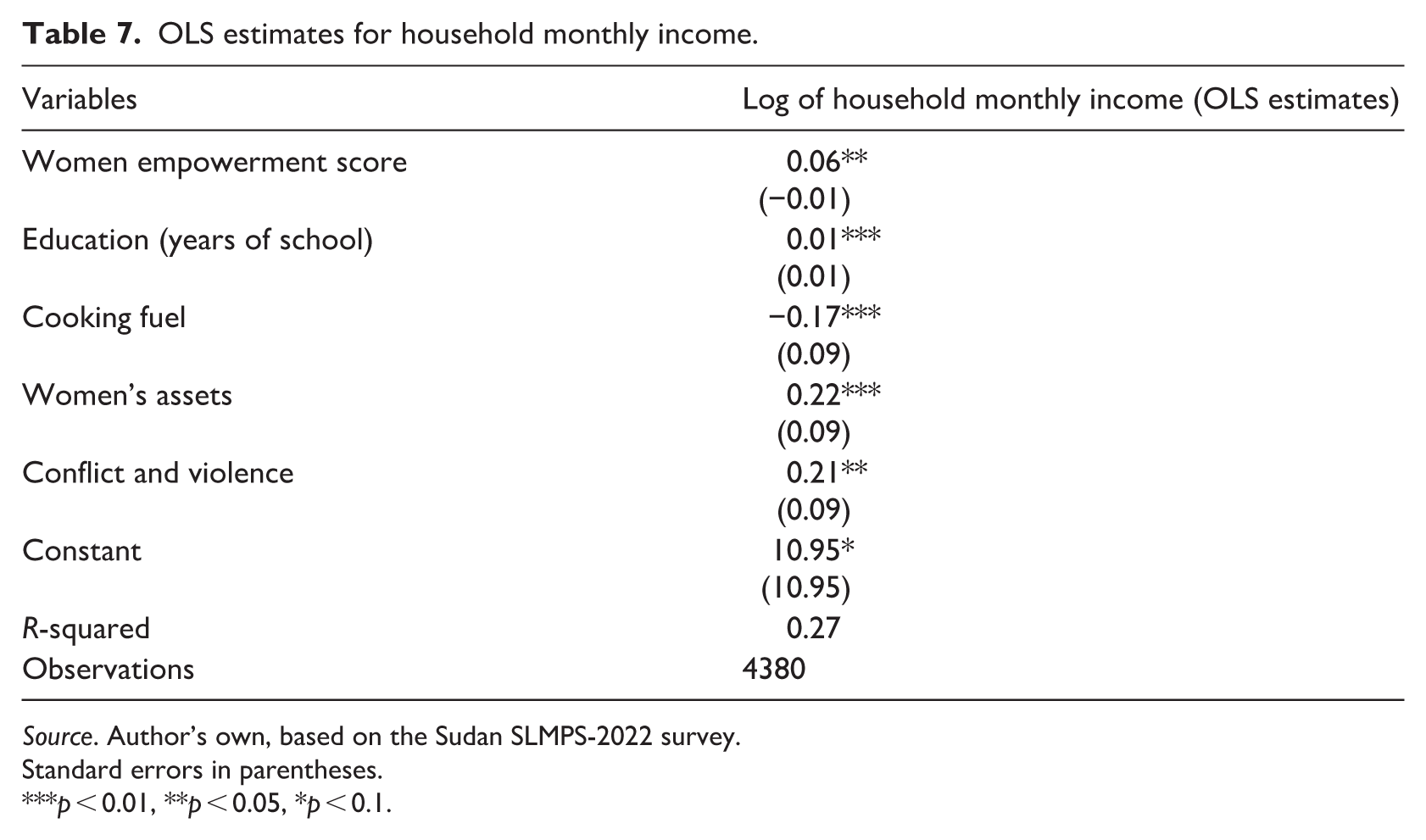
As reported in Tables 7–9, the consistency of coefficient signs and statistical significance across alternative specifications confirms that the estimated relationships between women’s empowerment, conflict exposure and MP outcomes remain stable and robust to alternative model specifications. This approach aligns with the MP literature, which conceptualizes individual capabilities, particularly those of married women, as closely linked to household welfare outcomes (Alwago and Abdalla, 2025; Wei et al., 2021). As shown in Table 7, the findings reveal a statistically significant positive association between women’s empowerment scores and household income; a 1-percentage-point increase in women’s empowerment is associated with an approximate 0.06% in monthly household income, holding other factors constant.
OLS estimates for household monthly income.
Source. Author’s own, based on the Sudan SLMPS-2022 survey.
Standard errors in parentheses.
p < 0.01, **p < 0.05, *p < 0.1.
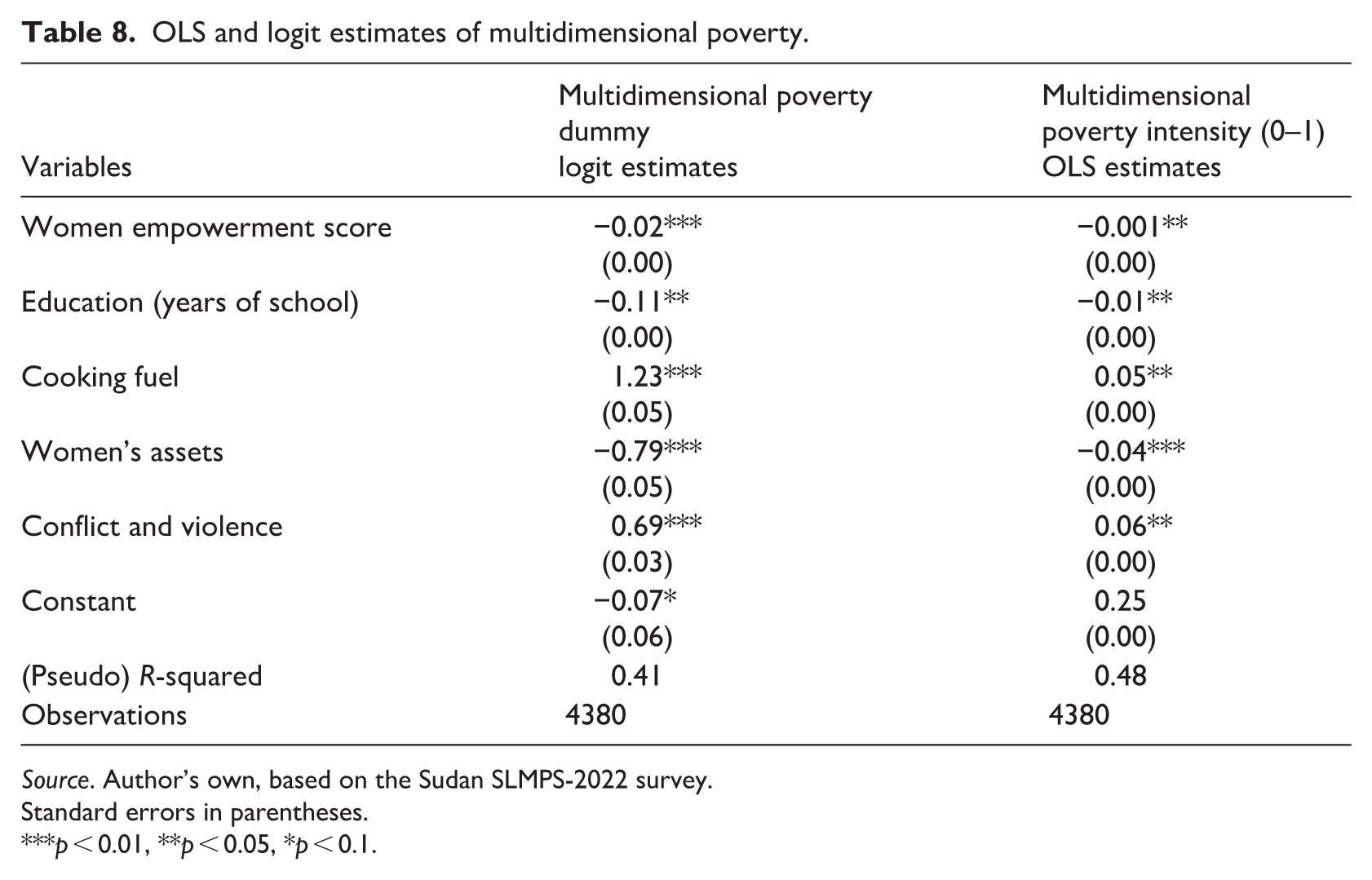
OLS and logit estimates of multidimensional poverty.
Source. Author’s own, based on the Sudan SLMPS-2022 survey.
Standard errors in parentheses.
p < 0.01, **p < 0.05, *p < 0.1.
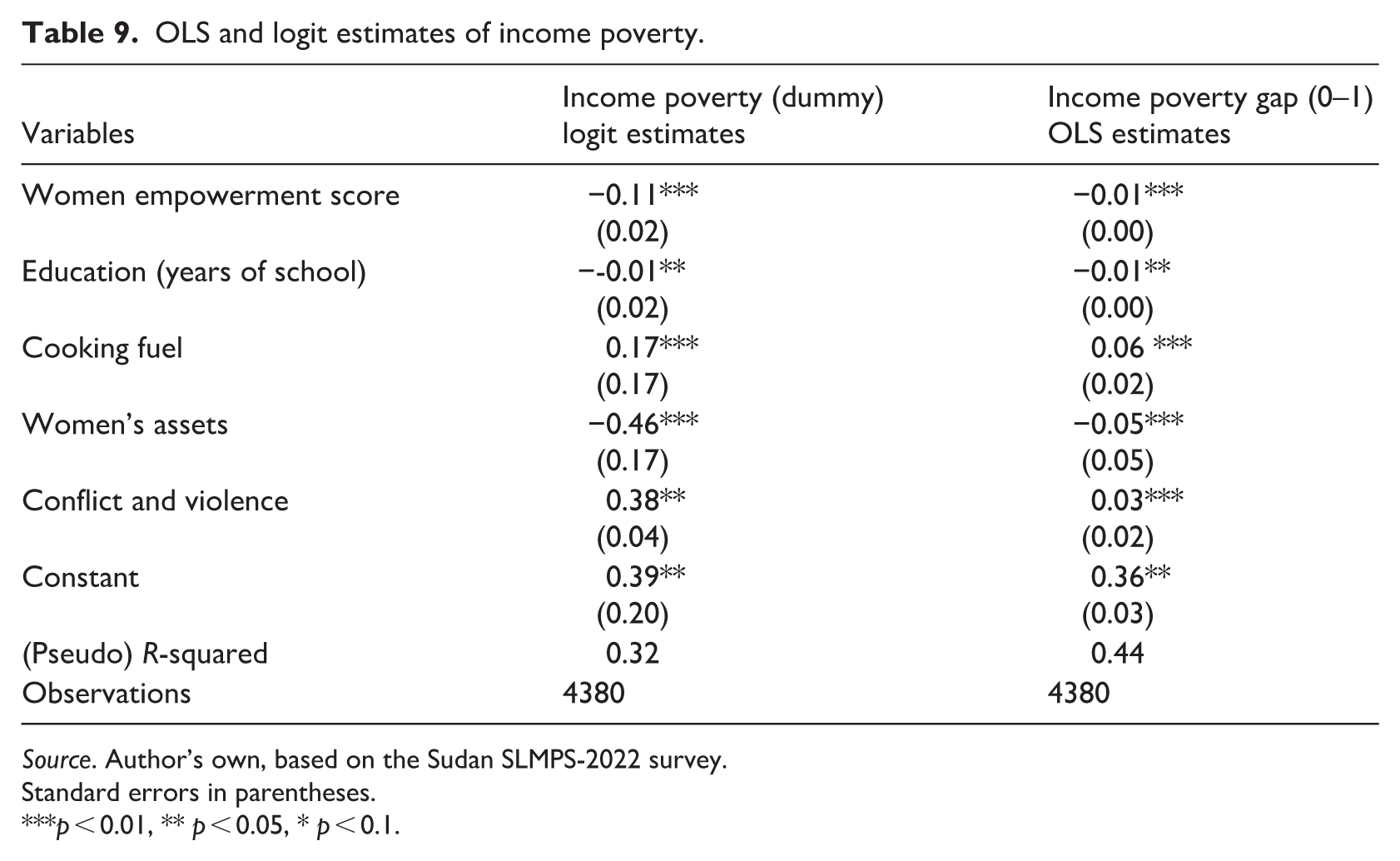
OLS and logit estimates of income poverty.
Source. Author’s own, based on the Sudan SLMPS-2022 survey.
Standard errors in parentheses.
p < 0.01, ** p < 0.05, * p < 0.1.
Both education level (in years) and asset ownership also show a positive effect on household income. An additional year of education increases income by 0.01, while asset ownership raises income by 0.22, underscoring the importance of human and physical capital. The results also indicate a negative relationship between traditional cooking fuel use and income, where greater reliance on such fuels reduces income by 0.17. This is consistent with the finding that 67.38% of households suffer from energy deprivation. Interestingly, a positive association was observed between conflict indicators and household income of 0.21. This may reflect humanitarian aid, remittances, inflation or rent-seeking behaviours in conflict-affected areas (Auty and Furlonge, 2019; Ciarli et al., 2015; Collier, 1999; D’Souza and Jolliffe, 2013).
Higher levels of women’s empowerment are also associated with a reduction in MP (Table 8). Higher education levels and women’s ownership of assets help to lower both the incidence and intensity of MP. Conversely, limited asset ownership among women, along with ongoing conflicts and wars, appears to exacerbate MP and increase its intensity, highlighting the detrimental impact of these factors on household well-being.
The results shown in Table 9 indicate that limited women’s empowerment, low levels of education, limited access to cooking fuel and an increase in women-owned assets are associated with higher levels of income poverty among households, as well as widening the income poverty gap. An increase in conflict and war intensity also contributes to higher levels of income poverty.
Discussion
The quantitative findings, based on regression models presented in Tables 7–9, indicate that enhancing women’s empowerment is a potentially effective strategy for improving household income, reducing MP and narrowing the income poverty gap. Specifically, an increase in empowerment is associated with a 6% rise in household income, an 11% reduction in income poverty and a 2% decrease in MP. Although these findings are shaped by the Sudanese context, they align with global literature on the positive relationship between women’s economic and social empowerment and improved household economic outcomes (Wei et al., 2021). At the same time, the study highlights persistent structural barriers that continue to limit the translation of empowerment into measurable economic impact, chief among them are the low levels of women’s labour force participation (0.18%) and limited access to financial services (0.2%). Following the conflict, the near-total lack of credit reflects the collapse of financial institutions rather than individual female disempowerment, especially in areas under the control of the Rapid Support Forces, such as Darfur and parts of Kordofan. While all residents have been affected, women have felt a disproportionate impact due to historical gender gaps, making this an indicator of institutional failure driving MP.
The observed mobility patterns in Darfur demonstrate the crucial distinction between choice-based mobility, reflecting genuine empowerment and necessity-driven mobility, indicating exposure to risk. With peace and security deprivation at its maximum (1.00), high mobility scores (4.28) reflect coercive conditions imposed by conflict, service collapse and the absence of male providers, rather than a real expansion of agency or positive change in gender norms. Given the feminization of responsibility, women bear disproportionate responsibilities for securing livelihoods and accessing essential services. This underscores the need to interpret mobility indicators within their political and security context to capture vulnerability and deprivation accurately.
Education emerged as a central factor in poverty reduction. The analysis shows that there is a positive connection between education and household income. It reduces MP by 11% and narrows the income poverty gap by 2%. These results are consistent with findings from Rui (2021) and Wei et al. (2021), both of which emphasize that women’s education enhances investment in children’s health and education, increases women’s involvement in household decision-making and significantly improves family well-being. Educated women are also more likely to reject harmful social practices such as domestic violence and child marriage, which is reflected in the study’s finding that 95% of the women surveyed had not experienced early marriage.
The findings also underscore the critical role of asset ownership in fostering genuine economic empowerment. Women who own assets experience a 22% increase in household income, a 79% reduction in MP and a 46% decrease in the income poverty gap. These results are in line with Diiro et al. (2018), who stress that women’s asset ownership strengthens their economic independence, enhances their decision-making power within the household and equips them with the resources needed to influence household-level economic outcomes.
The results also highlight that reliance on traditional cooking fuels poses not only an environmental challenge but also a significant obstacle to poverty alleviation. Using traditional fuels such as firewood and charcoal was found to reduce household income by 17%, increase MP by 123% and widen the income poverty gap by 17%. These results support Wei et al. (2021), who argued that the time and resources women devote to collecting traditional fuels could otherwise be directed towards productive, income-generating activities.
Counterintuitively, the findings of this study indicate that conflicts in Sudan are associated with a 21% increase in nominal household income. While this result may initially appear to contradict conventional economic theories, which generally associate conflict with a decline in economic activity and income, it is, in fact, consistent with insights from the political economy of conflict literature. Collier (2007) argues that resource-rich countries such as Sudan often become fertile ground for rapid economic gains during conflict, as political and economic elites exploit weakened state institutions and the collapse of regulatory systems to grab and control national resources for personal or factional benefit. According to the Rentier Cycle Theory (Auty and Furlonge, 2019), conflicts offer opportunities to inflate nominal profits by extracting resource rents, without contributing to genuine improvements in living standards or societal welfare. In the Sudanese context, the conflict has been accompanied by sharp inflation and severe shortages of basic commodities (Birch et al., 2024; ICG, 2024), which have contributed to rising nominal wages, especially in the informal sector and in activities linked to the war economy or humanitarian aid (Corral et al., 2020; Keen, 2024). This aligns with findings by Galdo et al. (2020), who noted that income inflation in conflict-affected environments is often superficial and does not lead to meaningful welfare gains. As such, the rise in nominal income should be viewed as a surface-level phenomenon that masks the erosion of real purchasing power and worsening access to essential services (Gasper and Oscar, 2015; Oscar et al., 2016).
Despite this apparent increase in the nominal household income, I found that conflict significantly deepens structural poverty and reduces real income (Birch et al., 2024; D’Souza and Jolliffe, 2013). In conflict settings, increases in nominal income should be interpreted with caution, as nominal income reflects the amount of money households receive in monetary terms rather than their actual ability to access essential goods and services. By contrast, real income captures purchasing power – that is, the quantity of goods and services households can effectively obtain. In the Sudanese context, the observed increase in nominal household income during the conflict is largely associated with rising inflation rates, fragmentation of local markets, and the expansion of informal and conflict-related economic activities. These dynamics often expand monetary circulation without generating corresponding improvements in the availability of goods and services.
Inflation typically accelerates during periods of armed conflict due to disruptions in supply chains, declining domestic production, restricted access to markets and rising transportation costs, often exceeding the growth of monetary income. Consequently, increases in nominal income may coincide with a decline in households’ real purchasing power and their ability to meet basic needs. The observed rise in nominal income should thus be understood as reflecting inflation-driven monetary adjustments and war-related economic distortions rather than genuine welfare improvements, which clarifies why household income increased while MP indicators simultaneously deteriorated through reduced access to essential services, weakened institutional capacity and declining human security conditions (Vincent et al., 2021). Table 5 shows that conflict is associated with a 69% increase in MP, as reflected in severe indicators such as child malnutrition (57.03%), child mortality (55.28%) and dependence on traditional cooking fuels (67.38%). Similarly, Table 7 highlights a 38% increase in income poverty, underscoring the contradiction between the rise in income and the broadening of poverty due to deteriorating public infrastructure and essential services.
Regional analysis based on Figure 2 illustrates that MP is unevenly distributed across Sudan. Regions such as Darfur, Kordofan and the Central – areas heavily affected by conflicts – show the highest levels of deprivation when compared to other states. This disparity reflects the cumulative toll of protracted conflict not only in the form of physical destruction but also in the widespread disruption of economic and social systems (Asaka, 2022; Okunlola and Ifeanyi, 2022). The high deprivation in Darfur in the dimension of peace and security (1.00) stems from a long history of marginalization and structural conflict. Although the 15 April 2023 conflict represents Sudan’s most extensive war, Darfur had long experienced instability, beginning with the first civil war in 1983, followed by the second civil war in 1986, which was described at the time as ‘armed looting’. Despite severe losses of life and property, these conflicts received little media or political attention, as the war in South Sudan dominated national and international focus until the South’s secession in 2011 (Mohamed, 2010).
Armed revolution formally erupted in Darfur in 2003, representing a multidimensional struggle over resources, land and power. Initially, the conflict had an environmental dimension after the major 1983 drought, which displaced large groups of pastoralists from the North to the more fertile central regions, particularly the Jebel Marra area. Later, the conflict acquired a pronounced ethnic dimension, with the emergence of entities such as the Darfur Liberation Renaissance Front, based on an African tribal foundation, in contrast to the Arab Alliance, which has an Arab tribal base, while Khartoum’s selective policies deepened divisions by granting privileges to certain tribes and arming some ethnic groups for the South Sudanese war, while simultaneously attempting to suppress early Darfur rebellions. This approach further militarized the region and fragmented its social fabric (Mohamed, 2010).
The historical roots of the conflict in Darfur can be understood within a multidimensional framework that begins with the precolonial political order and extends through the transformations of the modern Sudanese state. Darfur was an independent sultanate from the 17th century until its military defeat in 1916 and its administrative incorporation in 1917, through a campaign that relied not only on military force but also on the manipulation of internal divisions under the supervision of Reginald Wingate and Harold MacMichael (Mohamed, 2010). Over several centuries, the sultanate governed a multiethnic society through the Hakura land tenure system, which regulated the relationship between land, authority and belonging through flexible arrangements between farmers and pastoralists. Relations between these groups were not characterized by permanent conflict but by seasonal interaction combining cooperation and regulated competition. The militarization of the region can be traced in part to the Mahdist period (1881–1898), which saw extensive mobilization of local populations (Kostelyanets, 2019). Following the subjugation of the sultanate under British colonial administration, Darfur shifted from an autonomous political entity to a peripheral appendage of the emerging Sudanese state, without an effective project of political or developmental integration, thereby laying the foundations for a structural marginalization that persisted after independence.
This marginalization was reinforced by weak infrastructure, geographical remoteness – Darfur is approximately 1600 km from Khartoum and more than 2000 km from Port Sudan – and early deficiencies in basic services. For example, intermediate schooling was not established until 1945 through local community initiative, and the first government school was not opened until 1954, reflecting clear institutional developmental neglect (Mohamed, 2010; Niblock, 1987). The introduction of regional government in 1982 and the subsequent division of Darfur into states in 1994 did not address the structural roots of exclusion; rather, they contributed to administrative fragmentation and limited resource capacity. Within this context, the Unregistered Lands Act of 1970 marked a decisive turning point. By declaring all unregistered land to be state property, the law effectively encompassed most of Darfur’s territory, which had traditionally been managed under the Hakura system. Authority over land allocation was thus centralized, weakening the legal standing of customary land rights and expanding opportunities for land redistribution or informal appropriation outside traditional frameworks (De Waal, 2005).
The abolition of the native administration system in the late 1970s further disrupted local mediation mechanisms, intensifying competition over migration routes, grazing land and water resources (De Waal, 2005; Olsson and Siba, 2013). Although Darfur experienced five major drought cycles during the 20th century, three of them between 1950 and 1990, drought itself was not a direct cause of war (Kostelyanets, 2019). Rather, it functioned as a pressure factor that interacted with institutional breakdown and regional militarization. The outbreak of the Chadian Libyan war contributed to the influx of arms into Darfur, transforming localized disputes into high-intensity armed confrontations. The period from 1983 to 1987 was closely linked to environmental and security pressures, while the phase from 1987 to 1993 assumed a more explicit ethnic dimension (Mohamed, 2010).
During the period of the third parliamentary democracy (1985–1989), political polarization, driven by Darfur’s electoral weight, deepened existing local imbalances. At the same time, central governments pursued selective support policies in the productive sectors, strengthening livestock production in western Sudan while prioritizing mechanized agriculture in the East. This reflected the politically driven economic instrumentalization of resources according to power considerations rather than equitable development (De Waal, 2005). The state also systematically reframed conflicts. When clashes occurred among Arab groups, among African groups or between them over land, they were categorized as tribal disputes. However, when community grievances were directed towards the central government, they were labelled as rebellion, and the actors involved were portrayed as inauthentic or alien to the Sudanese state, thereby undermining their political legitimacy. Darfur was thus transformed from a marginalized periphery into a managed arena of conflict, where land legislation, developmental neglect, local militarization, rising ethnic sensitivities and the strategic reshaping of political narratives converged to produce the structural conditions of a multidimensional war (Mohamed, 2010; Niblock, 1987).
Despite several peace agreements – notably the Doha, Abuja and Juba accords – tangible results on the ground were limited and sustainable peace and stability were not achieved. Ethnic and regional tensions persisted, and in the current conflict, the government continues to follow the same approach, favouring certain tribes in struggles over influence and gold, instead of making comprehensive peace. These dynamics have created a resource-rich region plagued by chronic instability, exemplifying the so-called ‘resource curse’ (Auty and Furlonge, 2019; Mohamed, 2010). Accordingly, the crisis in Darfur cannot be understood outside the political equation of the Sudanese state; rather, it must be analysed within it, as a direct outcome of the interaction between power structures and the management of resources within the state.
These results are also supported by the OPHI and UNDP (2024) report, which links armed conflict to the deterioration of health, education and basic living conditions. Poverty in conflict contexts cannot be adequately captured by income-based measures alone but must include nonmonetary dimensions that define human well-being (Alkire, 2003; Alkire and Santos, 2014; Gasper and Oscar, 2015; Oscar et al., 2016). The human security framework, together with the HDP nexus, can thus provide an integrated analytical lens for understanding the complex relationship between conflict and poverty in fragile settings. As conceptualized by Gasper, human security goes beyond mere economic survival to encompass the ability of individuals to live with dignity while free from fear, deprivation and marginalization, within institutional and social conditions that enable human well-being. From this perspective, poverty in conflict-affected contexts cannot be understood solely as a lack of income, but rather as the outcome of the interaction between insecurity, institutional fragility and social deprivation, thus highlighting the importance of integrating security and human dimensions into the analysis of MP (Asaka, 2022; Gasper and Oscar, 2015; Oscar et al., 2016; Rettberg and Dupont, 2025).
The contradiction between rising nominal income and worsening MP echoes what Collier and Hoeffler (1996 and 2002) described as the ‘paradox of plenty within poverty’ – commonly referred to as the resource curse. In such cases, economic gains are concentrated in the hands of a narrow elite, while most of the population endures deepening deprivation (Auty and Furlonge, 2019). Development policies that narrowly focus on increasing income or raising wages without addressing the underlying structural causes of poverty are therefore unlikely to yield sustainable or transformative results. Instead, the findings call for the adoption of development approaches rooted in social justice and comprehensive empowerment, particularly in conflict-affected regions (Asaka, 2022; Gasper and Oscar, 2015; Oscar et al., 2016).
Policy implications and recommendations
While certain nominal income indicators may increase during conflict, such figures mask a broader deterioration in human security, the erosion of essential services and the widening of structural MP. The findings underscore that women’s empowerment, improved education and asset ownership are strategic levers for poverty alleviation; however, their impact remains limited unless supported by political will and security stabilization – and unless development policies are deliberately directed towards historically marginalized regions. Recommendations are presented in the following subsections.
Gender-sensitive social protection
Women’s empowerment plays a central role in reducing MP through its strong association with household income, education outcomes and asset ownership. Building on these findings, poverty reduction strategies in Sudan should prioritize gender-sensitive social protection interventions that are specifically adapted to fragile and displacement-affected contexts. Conditional cash transfer programmes linked to girls’ school attendance, use of maternal healthcare and child nutrition monitoring could help disrupt intergenerational poverty transmission, especially in regions where service access remains severely constrained. Expanding women’s access to mobile-based financial services, community savings mechanisms and conflict-resilient microcredit programmes would further strengthen household resilience in areas affected by institutional collapse and financial exclusion. Complementary asset-support interventions – including livestock distribution schemes, agricultural input packages and women-led cooperative production initiatives – could enhance women’s economic agency and translate empowerment gains into sustained multidimensional welfare improvements consistent with capability-based poverty reduction strategies.
Conflict-sensitive development
Conflict significantly intensifies MP even in contexts where nominal income appears to increase, reflecting inflationary pressures, market fragmentation and the expansion of war-related informal economic activities rather than genuine welfare improvements. These findings highlight the need to integrate poverty reduction strategies within conflict-sensitive development frameworks that address both structural deprivation and human security risks. Such strategies must be linked with broader peacebuilding and stabilization efforts. Establishing a coordinated national poverty reduction strategy supported by a dedicated institutional platform, such as a Supreme Council for Anti-Poverty and Social Justice, could improve policy coherence across federal and regional levels. Priority interventions should focus on restoring primary healthcare services, rehabilitating water infrastructure and reopening basic education systems in conflict-affected localities where multidimensional deprivation is most severe. Strengthening participatory local governance mechanisms and aligning early recovery programmes with long-term development planning under the HDP nexus would further enhance institutional legitimacy, rebuild social trust and support sustainable poverty reduction in fragile environments.
Regional poverty targeting
The results revealed pronounced spatial inequalities in MP across Sudan, particularly in conflict-affected regions such as Darfur, Khartoum and parts of Kordofan, underscoring the importance of geographically differentiated policy responses aligned with regional deprivation profiles. In Darfur, policy priorities should focus on restoring access to basic services, supporting livelihood recovery among displacement-affected households and strengthening local service delivery institutions. In Khartoum, inflation-sensitive urban social protection measures are required to mitigate the erosion of real purchasing power associated with conflict-related price shocks. In Kordofan, improving rural infrastructure connectivity and expanding access to agricultural markets would contribute to reducing service-related deprivation and strengthening household productive capacity. More broadly, targeted public investment strategies prioritizing historically marginalized regions through infrastructure rehabilitation, service expansion and the development of regional production hubs could support inclusive economic recovery while reducing structural drivers of MP.
Structural reforms in land governance and agricultural development
Land tenure insecurity remains a major structural driver of both poverty and conflict in Sudan. The Hakura system, in which large areas of land are held under customary tribal ownership, has often contributed to disputes over land and resources. Addressing this issue requires comprehensive land governance reforms that ensure transparent, equitable and legally recognized land rights. Such reforms should also regulate land-grabbing practices and strengthen institutional oversight of land allocation. Integrating land governance reform with the development of the agricultural and livestock sectors (e.g. protecting pastoral corridors, improving rangeland management and investing in veterinary services) could enhance rural livelihoods while reducing conflicts over natural resources.
Ultimately, addressing poverty and conflict in Sudan requires more than isolated technical interventions. It demands a broader transformation of the country’s political and socio-economic structures, beginning with the cessation of conflict and the restoration of security, followed by inclusive governance and targeted development in marginalized regions. Empowering local communities, strengthening institutions and promoting social justice are essential for ensuring that poverty reduction efforts lead to sustainable and inclusive development.
Data limitations and directions for future research
Despite its high scientific value as Sudan’s first comprehensive national household survey in recent years, the SLMPS 2022 has several methodological and contextual limitations that should be acknowledged. Designed to be nationally representative across both urban and rural areas, the survey covered approximately 5000 households and collected data from all household members aged five and above across multiple units of analysis. However, the absence of a recent national sampling frame (the last population census dates to 2008) posed a major challenge for updating administrative boundaries. To address this limitation, updated locality boundaries (189 localities) and 2020 population estimates derived from remote sensing were used to construct the sampling frame, supplemented with information on refugee and internally displaced persons settlements. Security and logistical constraints also limited access to some locations, which may introduce spatial representation bias and therefore require careful interpretation of the results within these methodological boundaries.
The implementation of household surveys in conflict-affected environments may also introduce additional sources of uncertainty related to sample coverage, population mobility and the reliability of self-reported information. Population displacement, temporary settlement patterns and restricted access to insecure localities can affect the representativeness of household samples, particularly in areas experiencing active conflict. Reporting accuracy on income, employment status and access to services may also be affected by recall bias or underreporting due to insecurity, administrative disruption and fragmentation of local market structures. Data reliability may further be influenced by variations in education levels and limited familiarity with formal survey procedures in some communities, which can affect respondents’ ability to provide complete and precise information. Certain survey topics, including questions related to reproductive health, early marriage practices or female genital cutting, may also be perceived as socially sensitive in some local contexts and therefore subject to response hesitation or partial reporting. Trust constraints between respondents and survey teams, together with the voluntary nature of participation in noncompensated surveys, may also influence response completeness and engagement levels. Conversely, participation-related incentives may, in some cases, encourage socially desirable responses rather than fully accurate reporting. In some local contexts, responses may also be shaped by perceived community expectations or informal guidance circulating within local social structures, which can influence how certain questions are interpreted and answered during field interviews. These challenges represent common methodological limitations in large-scale household surveys conducted in fragile and conflict-affected environments and should therefore be considered when interpreting the results, particularly in relation to regional comparisons and conflict-related welfare indicators (Krafft et al., 2023).
While urban–rural disaggregation would provide additional analytical value, the present analysis was conducted at the regional level. Given the internal heterogeneity of Sudan’s regions, which combine urban centres, rural areas and displacement-affected zones with varying levels of deprivation and access to services, future research would benefit from more granular intraregional analyses. This would allow for a more precise understanding of poverty dynamics and women’s empowerment in conflict settings and would support the design of more targeted and context-sensitive policy interventions across differently affected localities.
Footnotes
Acknowledgements
I would like to express my sincere appreciation to the Oxford Poverty and Human Development Initiative (OPHI), University of Oxford, for the opportunity to present an earlier version of this research during the OPHI Advanced Course on Multidimensional Poverty Measurement and Analysis. The valuable discussions and feedback received during the course contributed to strengthening the conceptual framework and refining the MP analysis presented in this study. I remain deeply grateful for this intellectual engagement and support.
Author note
This manuscript has not been published elsewhere and is not under consideration by another journal.

Ethical considerations
I have approved the manuscript and agree with submission to the Journal of Asian and African Studies.
Funding
The author received no financial support for the research, authorship and/or publication of this article.
Declaration of conflicting interests
The author declared no potential conflicts of interest with respect to the research, authorship and/or publication of this article.
Data availability statement
Data supporting the findings is available upon request.